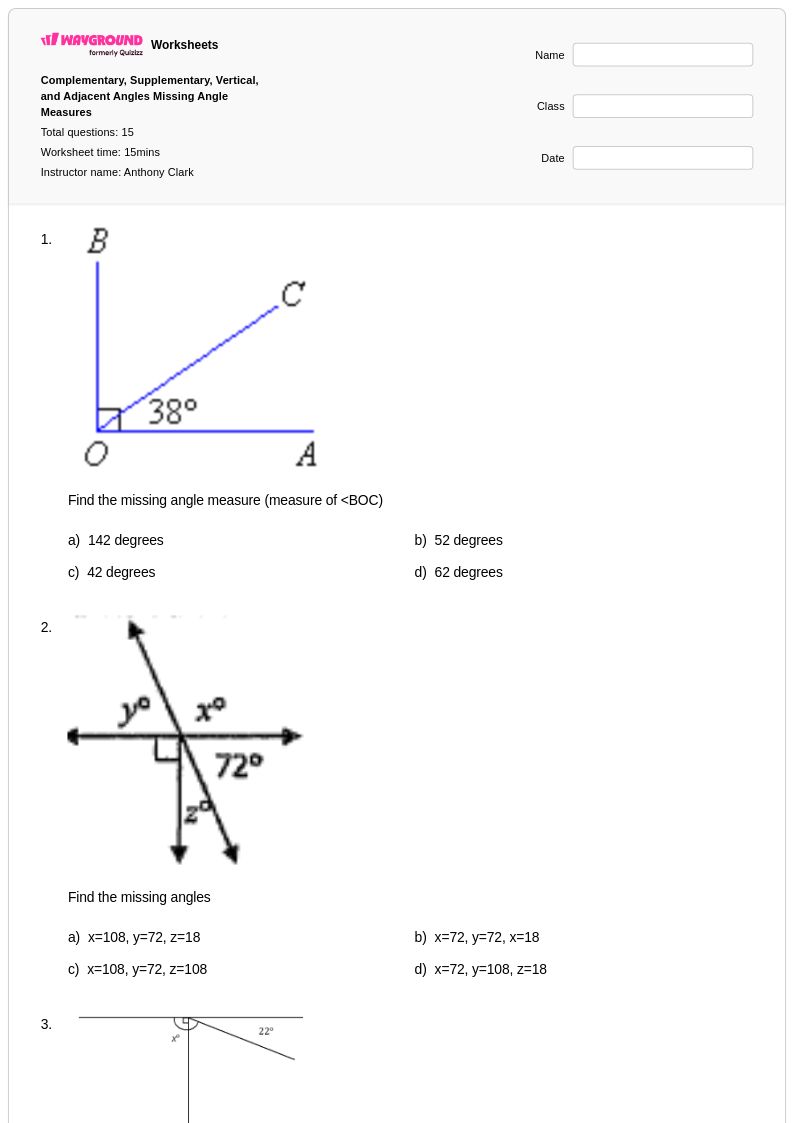
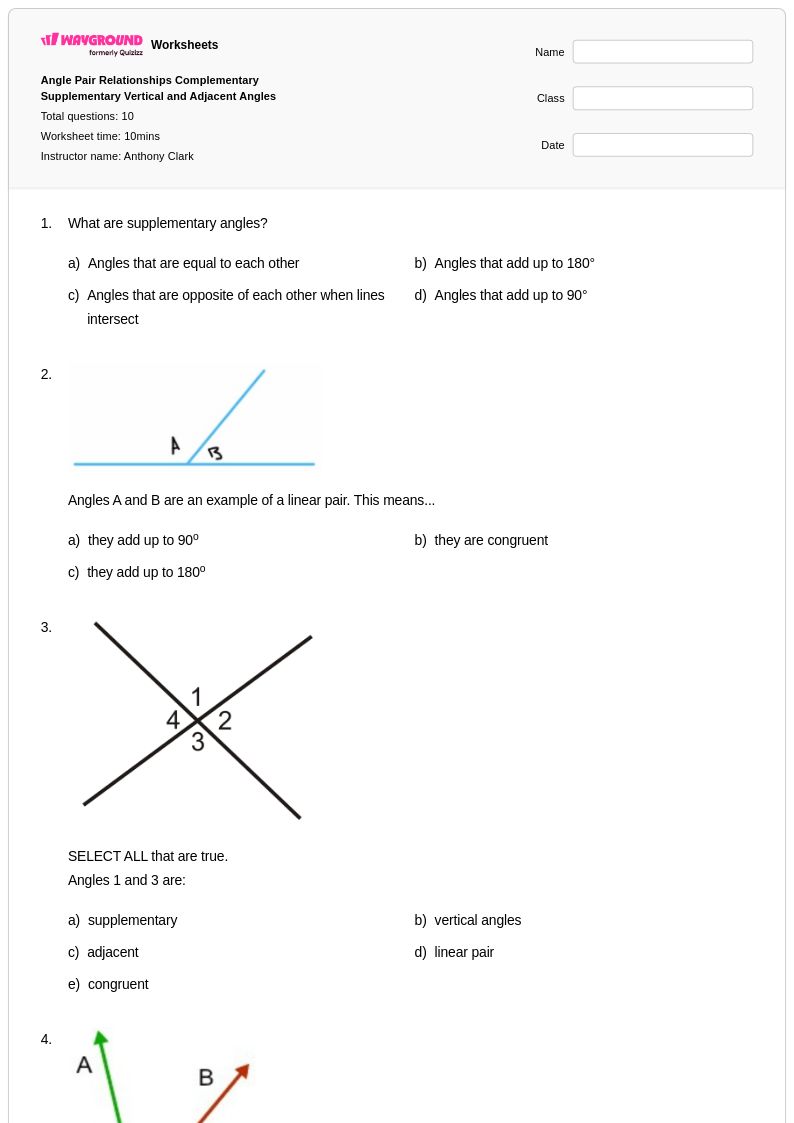
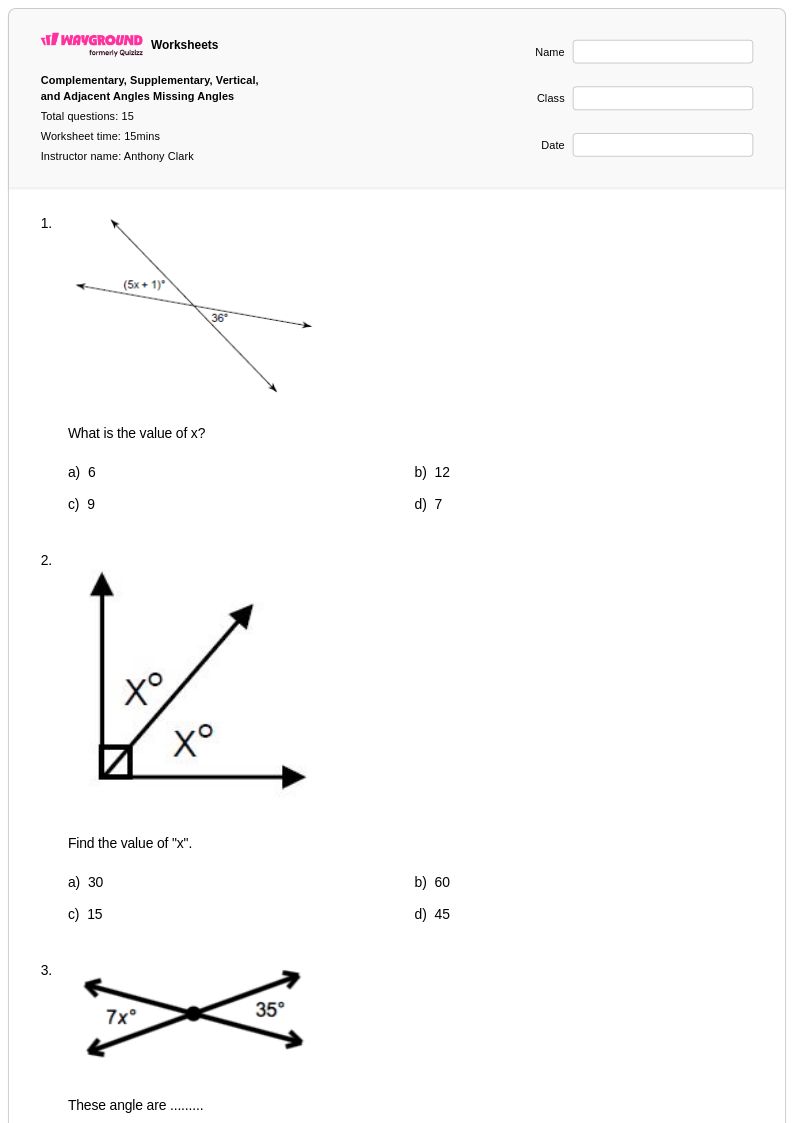
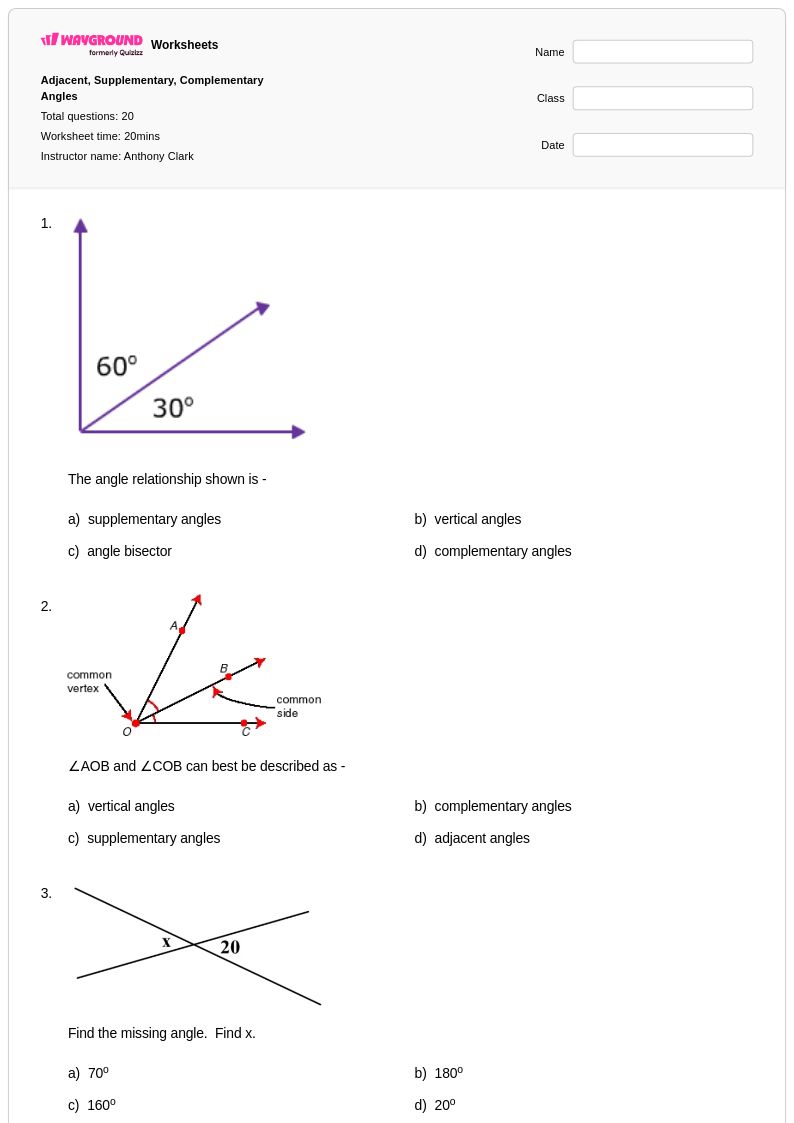
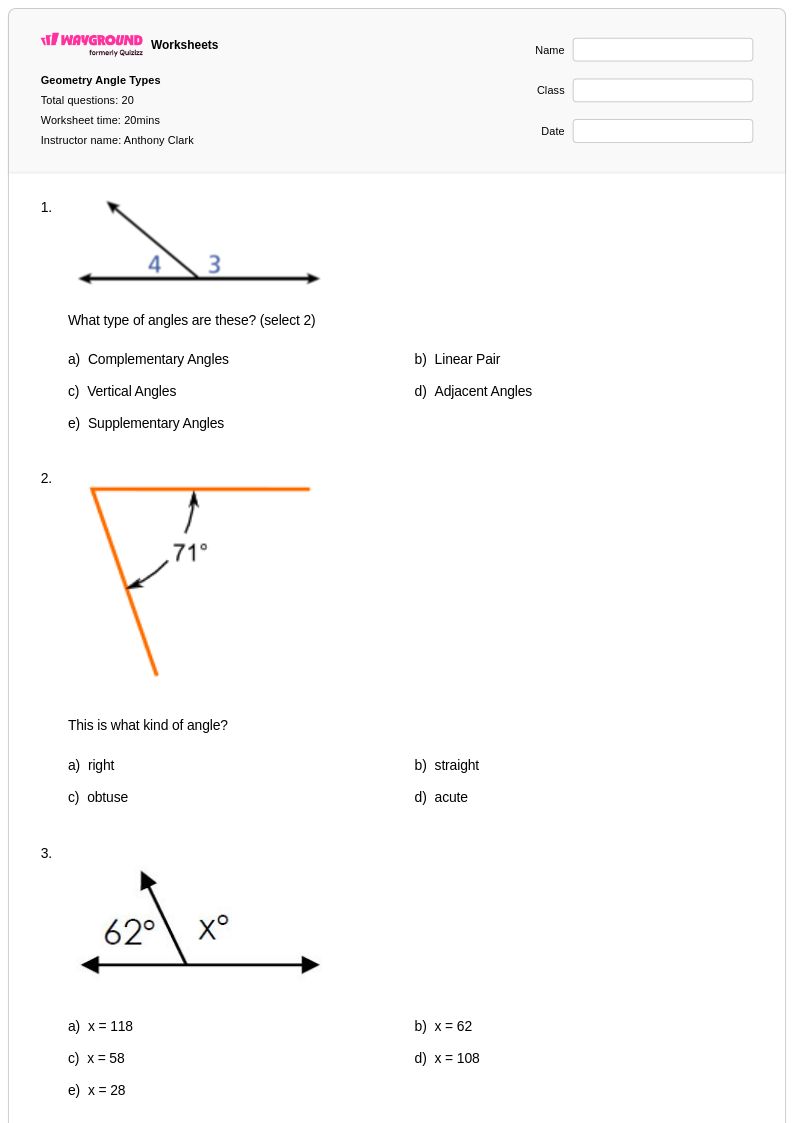
Free Printable Complementary, Supplementary, Vertical, and Adjacent Angles Worksheets for Year 12
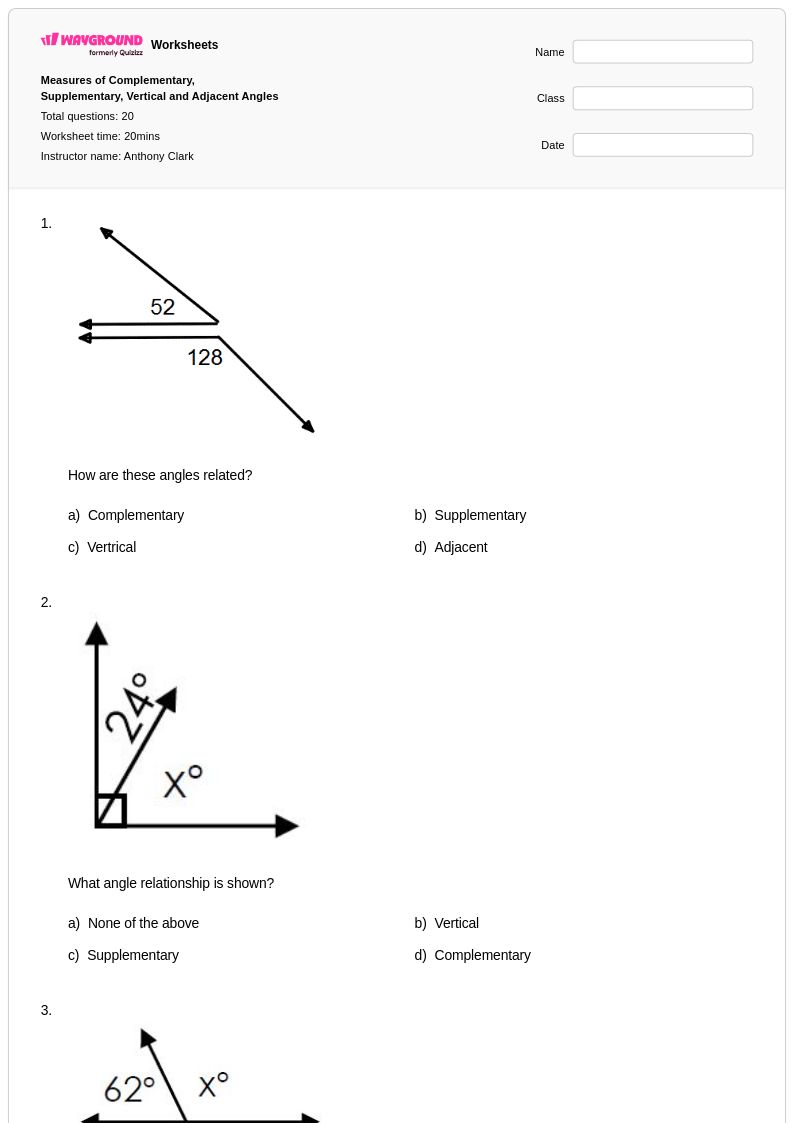
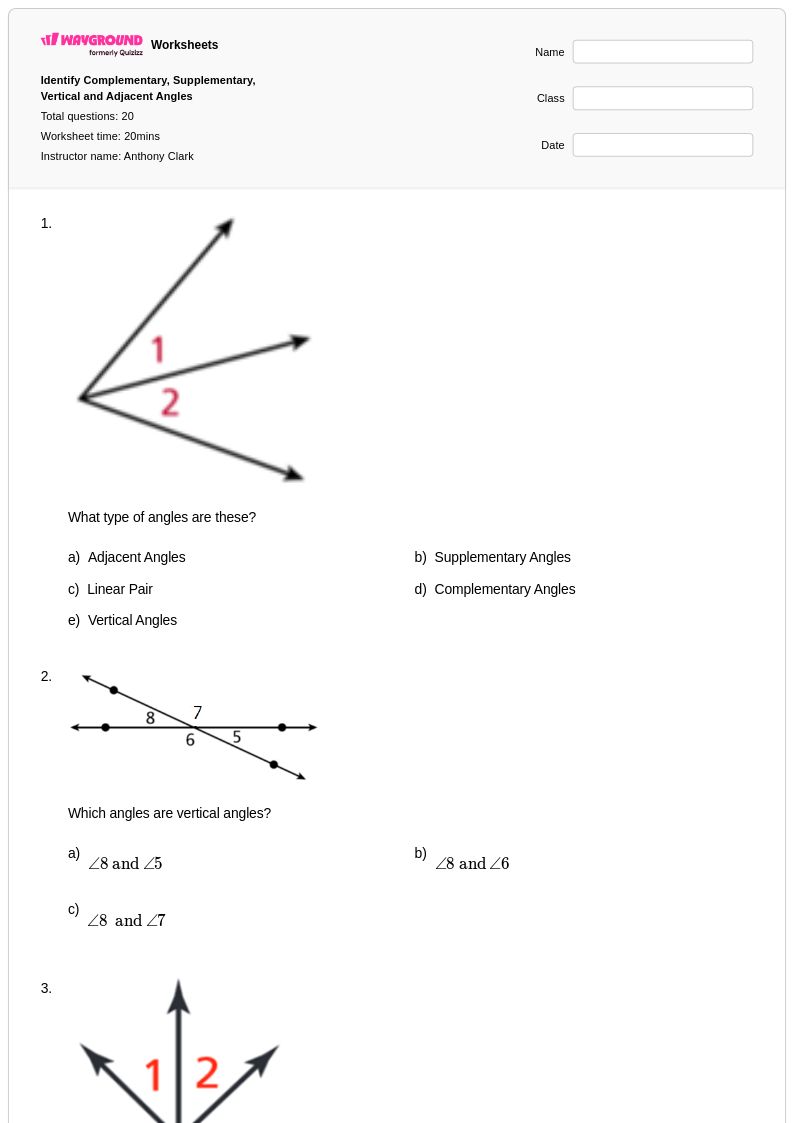
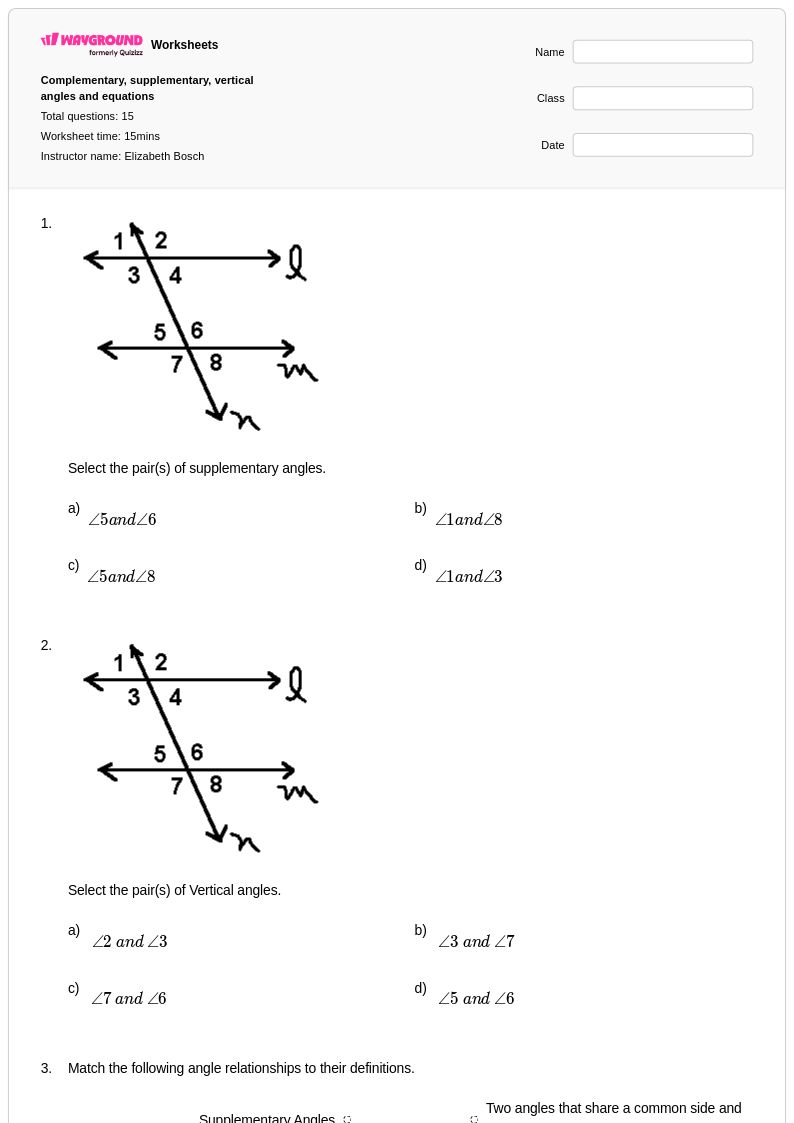
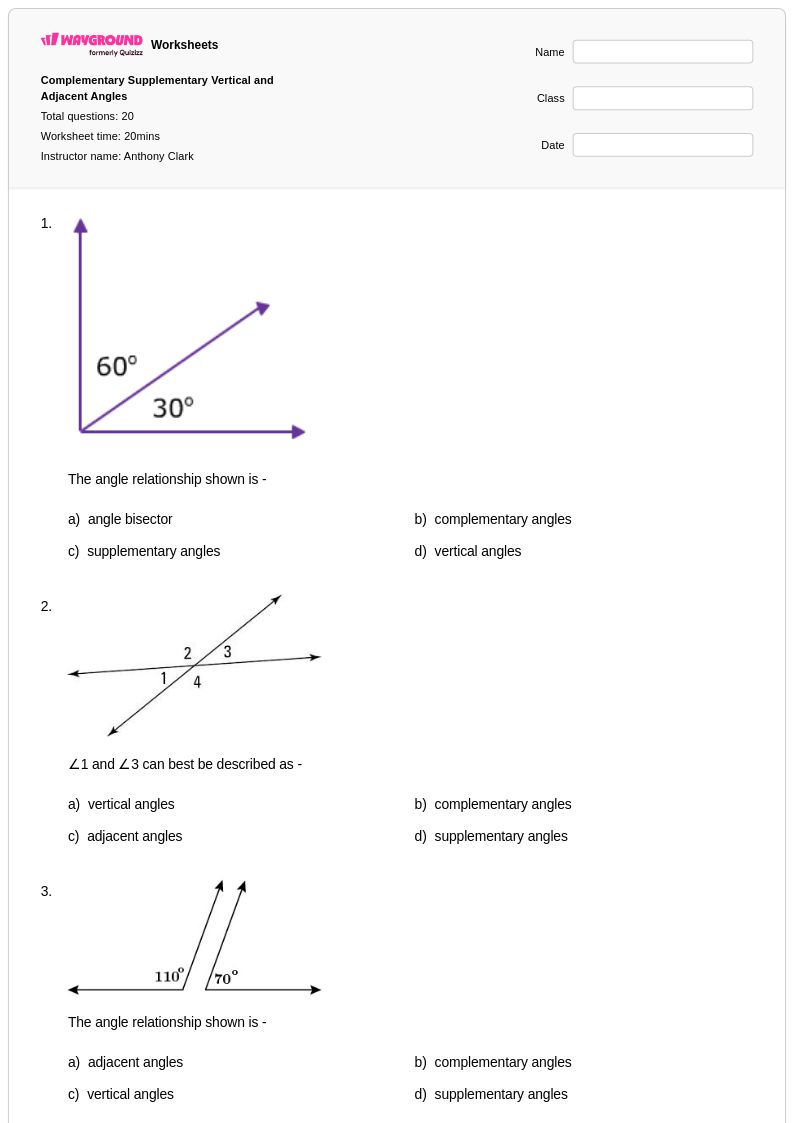
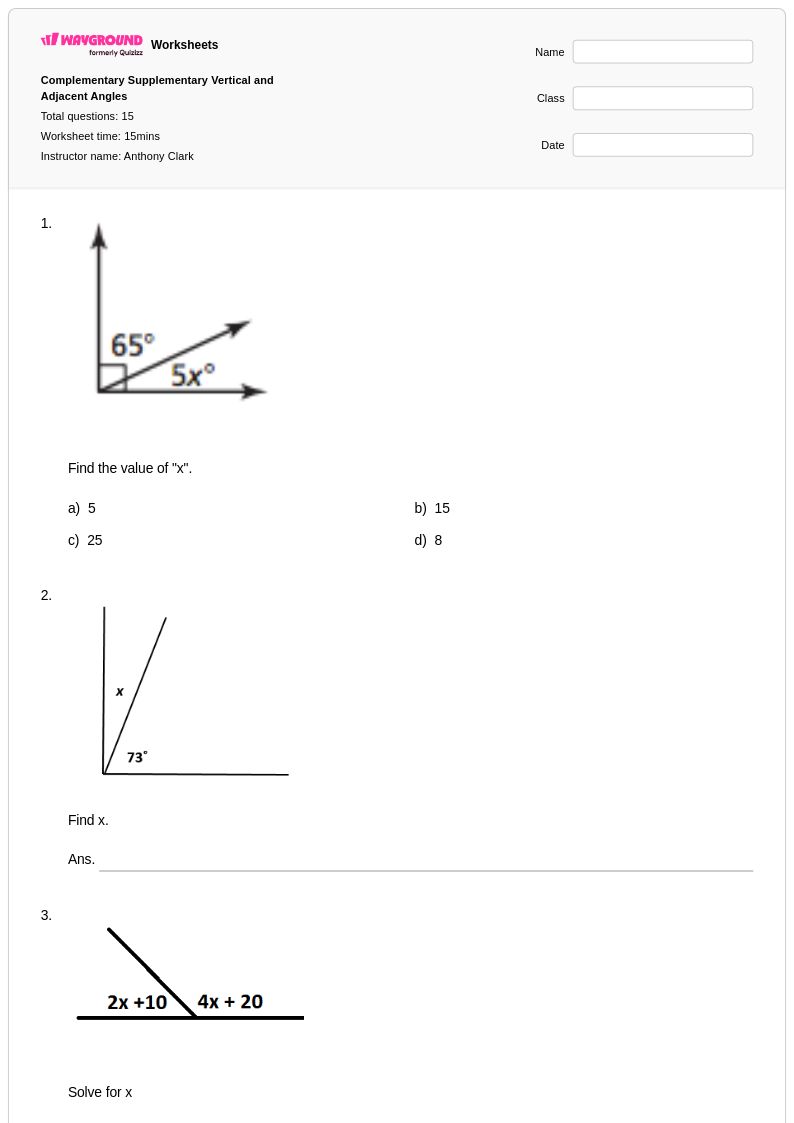
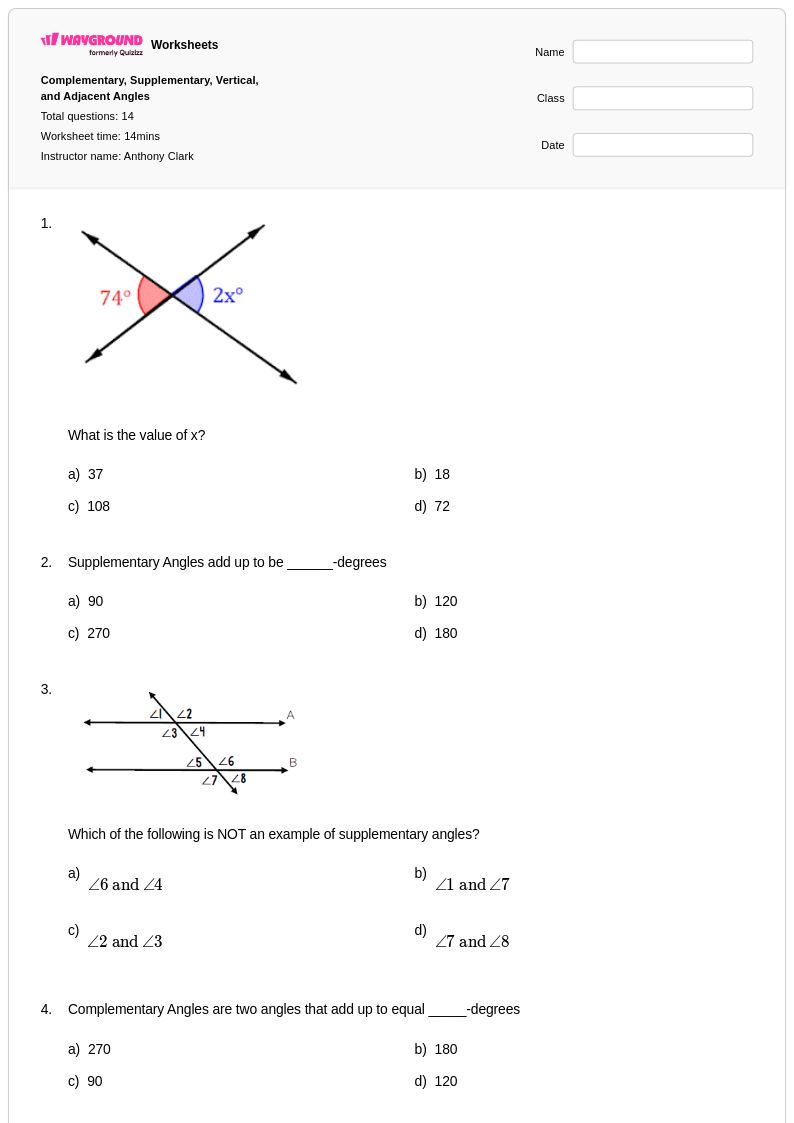
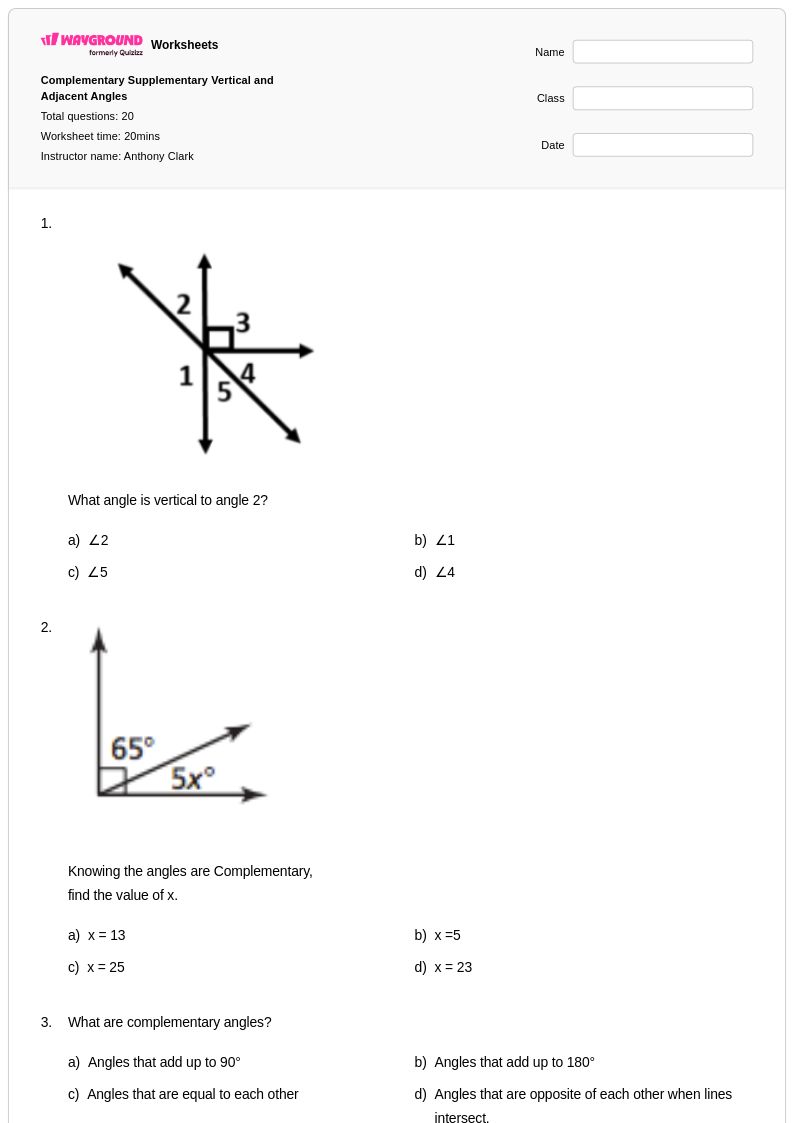
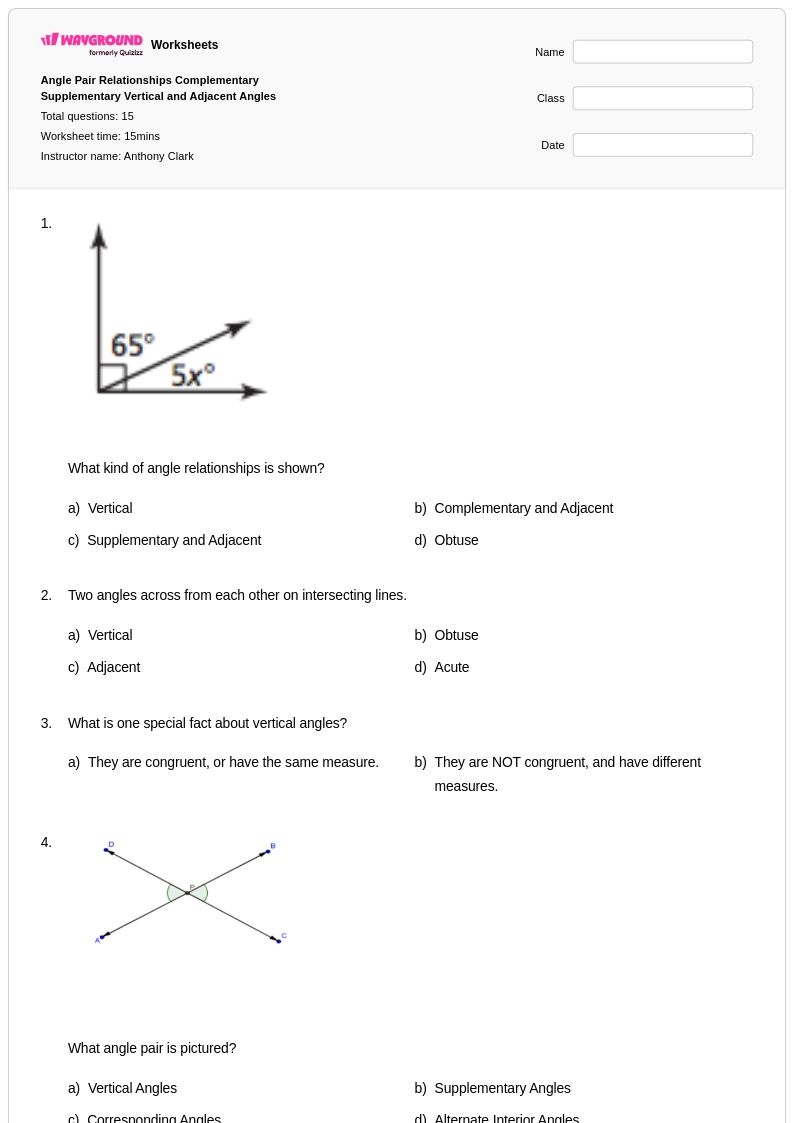
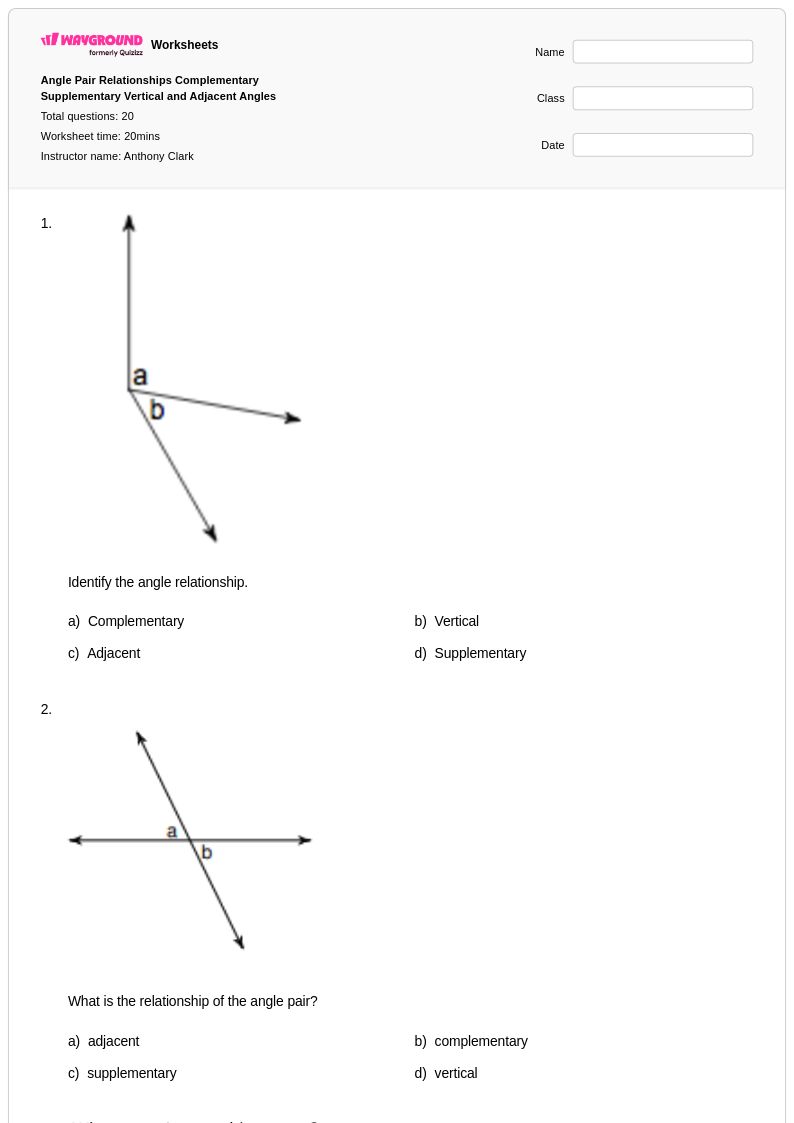
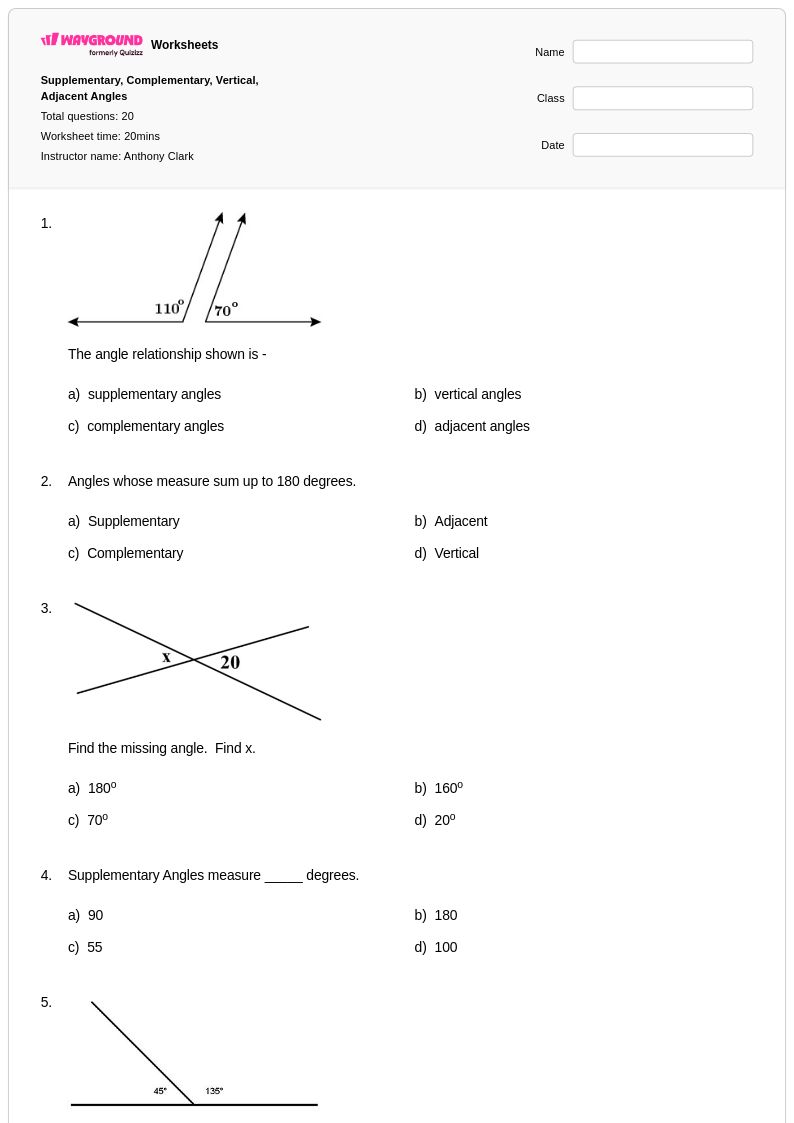
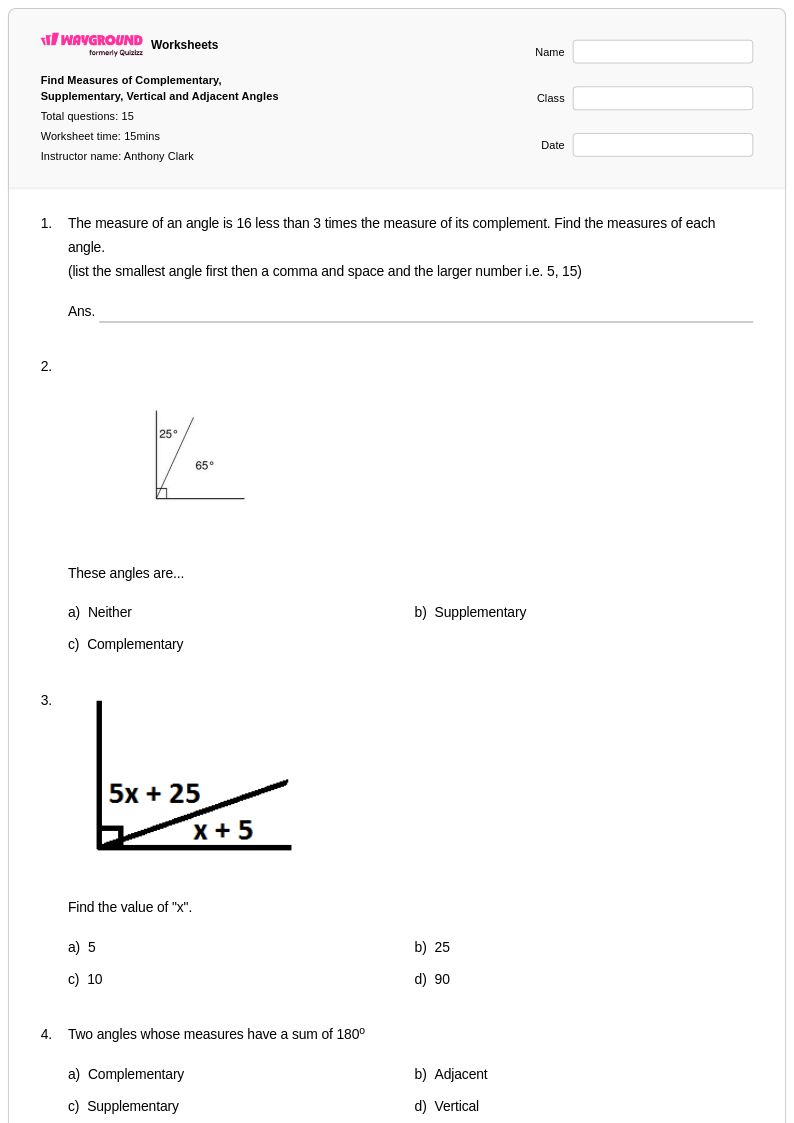
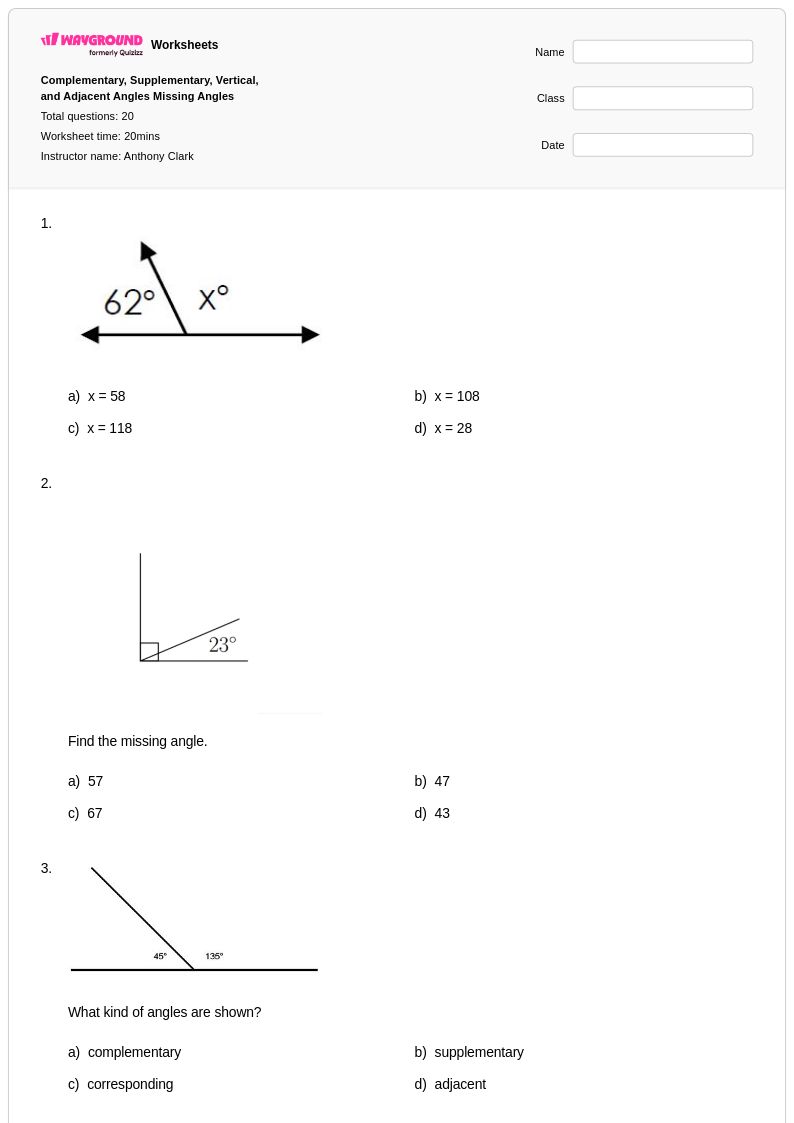
Year 12 mathematics worksheets featuring complementary, supplementary, vertical, and adjacent angles help students master angle relationships through comprehensive practice problems, free printables, and detailed answer keys available as downloadable PDFs from Wayground.
Explore printable Complementary, Supplementary, Vertical, and Adjacent Angles worksheets for Year 12
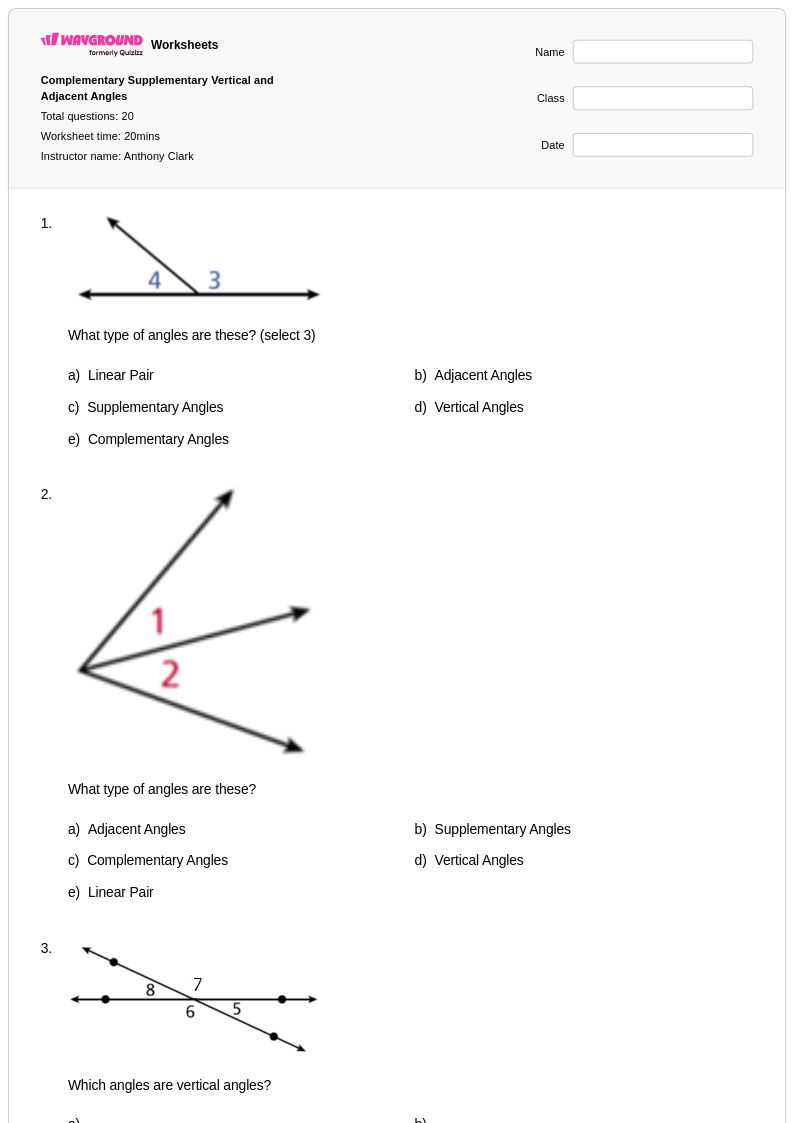
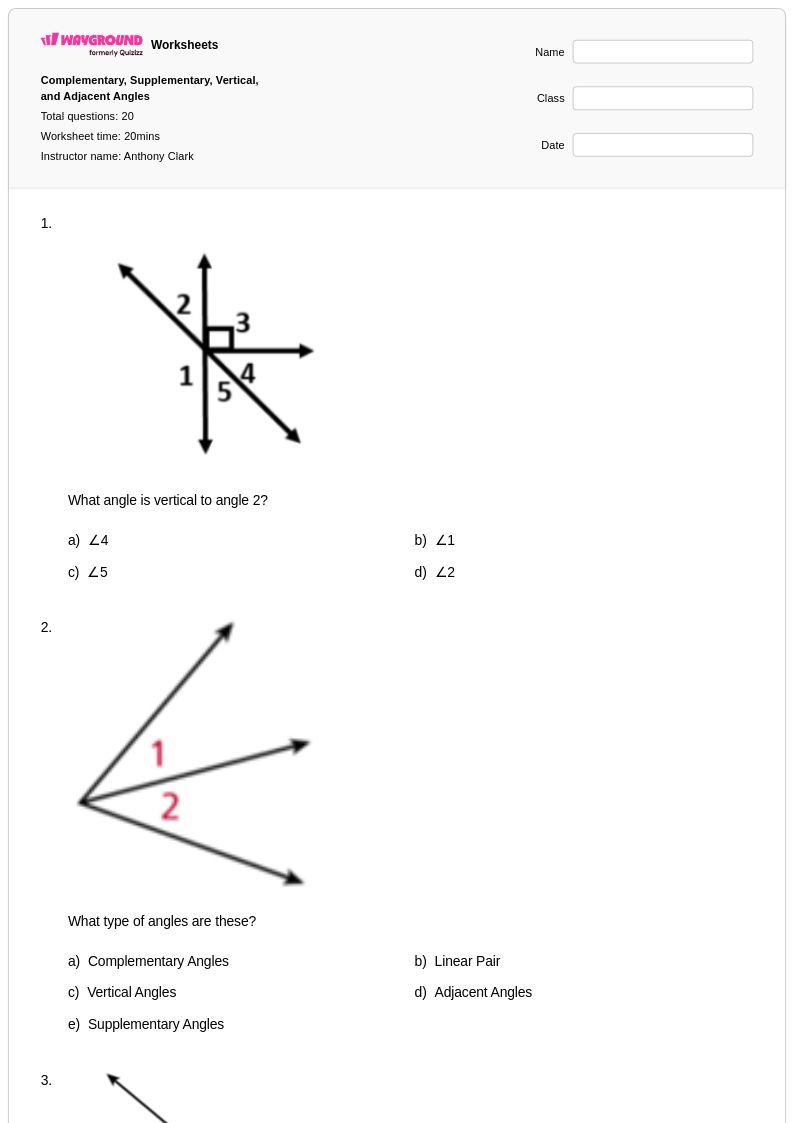
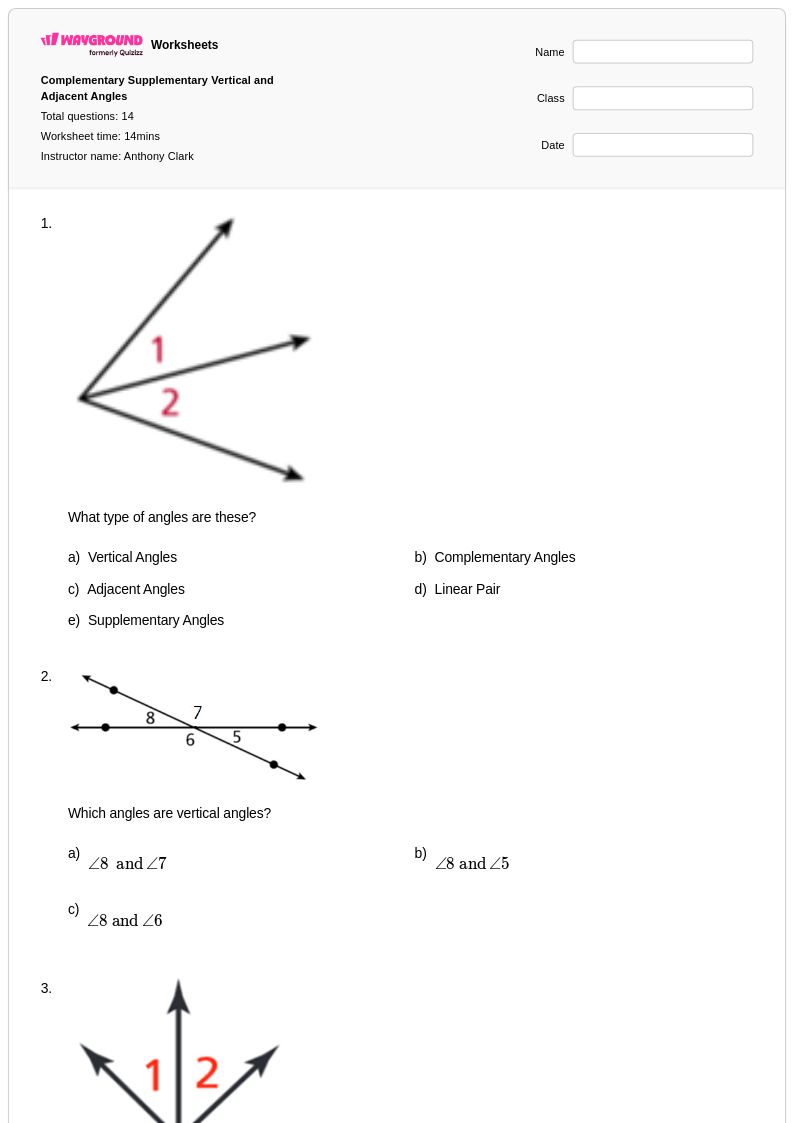
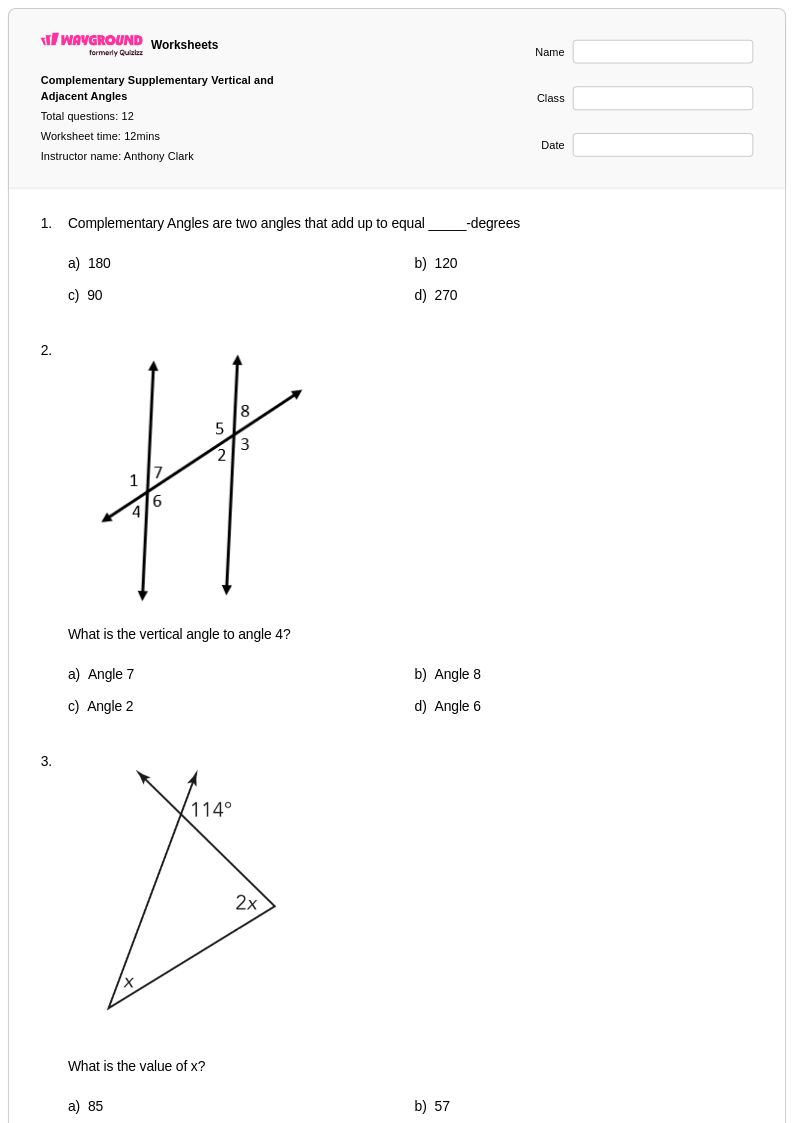
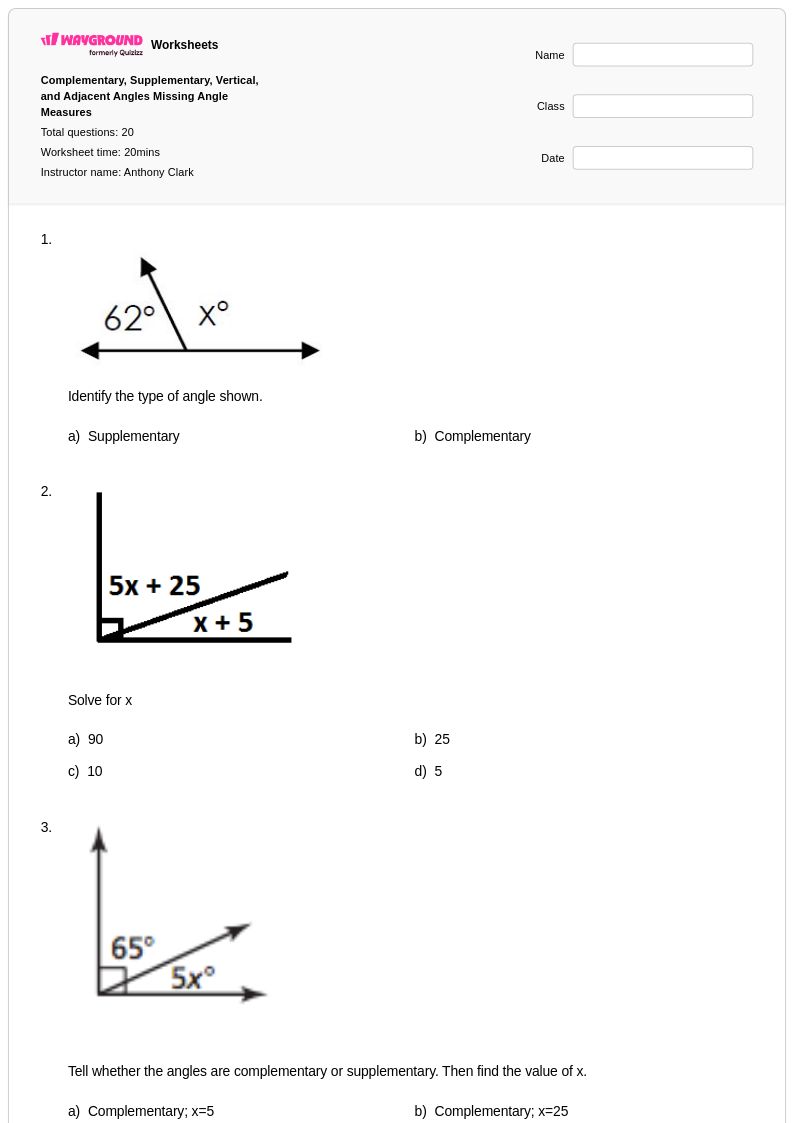
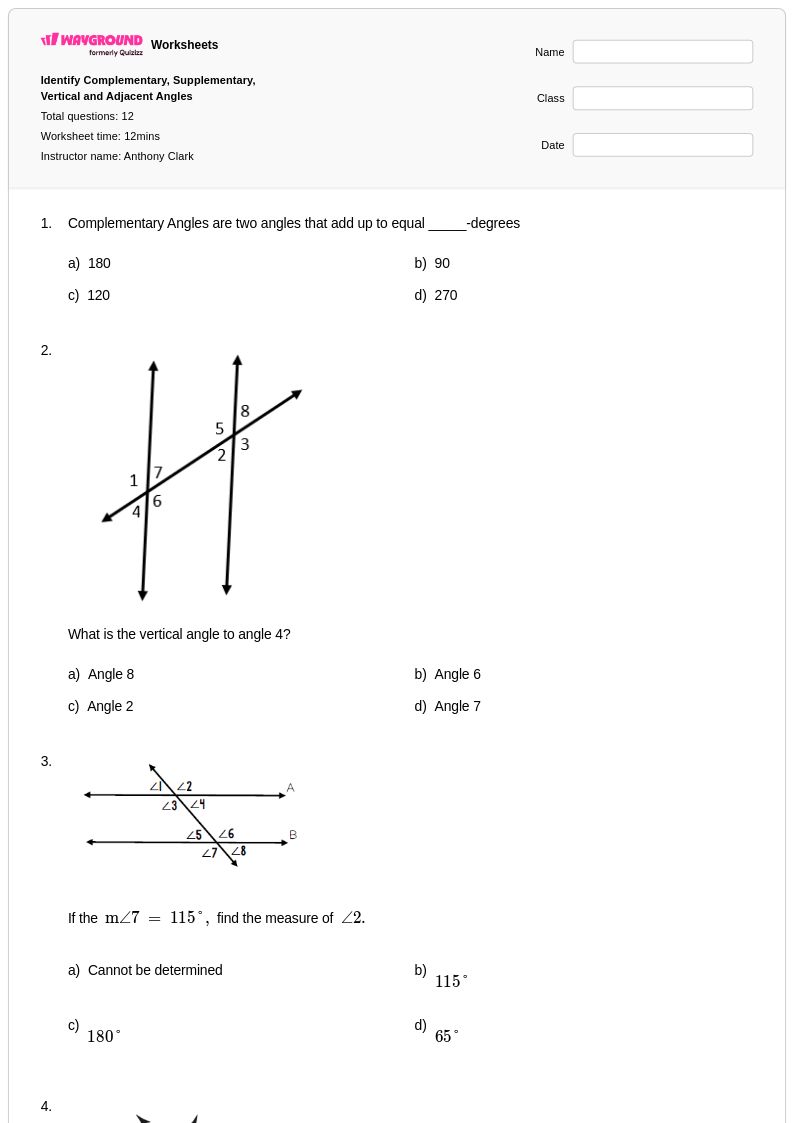
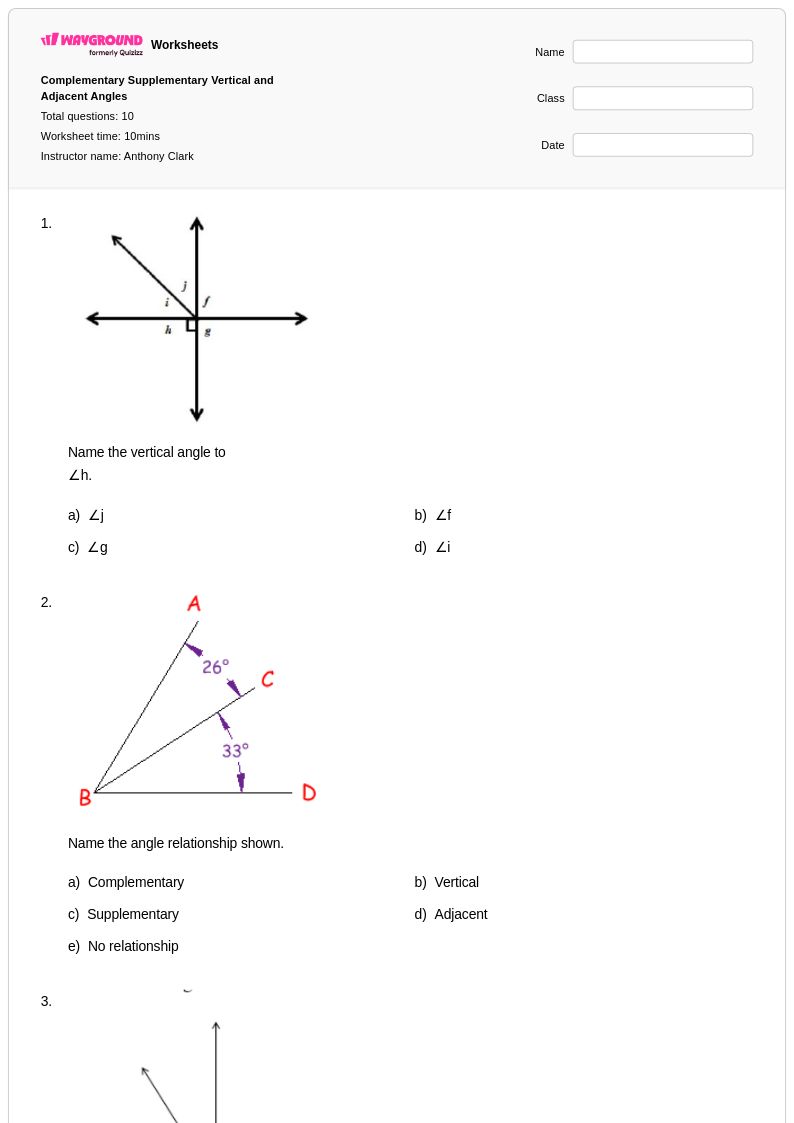
Complementary, supplementary, vertical, and adjacent angles form the foundation of advanced geometric reasoning that Year 12 students must master as they prepare for higher-level mathematics. Wayground's comprehensive collection of angle relationship worksheets provides targeted practice problems that strengthen students' ability to identify, calculate, and apply these fundamental angle concepts in complex geometric scenarios. These carefully crafted printables include detailed answer keys that support independent learning while building confidence in angle measurement and classification skills. The free pdf resources feature progressive difficulty levels, from basic angle identification exercises to sophisticated multi-step problems involving algebraic expressions and proof techniques that challenge students to demonstrate deep conceptual understanding of how these angle relationships interconnect within geometric figures.
Wayground's extensive library draws from millions of teacher-created resources that have been refined through classroom implementation, ensuring that educators have access to high-quality materials that align with rigorous mathematical standards for advanced high school geometry. The platform's robust search and filtering capabilities allow teachers to quickly locate worksheets that target specific angle relationship concepts, while built-in differentiation tools enable seamless adaptation of materials to meet diverse learning needs within the same classroom. These customizable resources are available in both printable and digital formats, providing flexibility for traditional paper-based instruction or technology-enhanced learning environments. Teachers can efficiently plan comprehensive lesson sequences, design targeted remediation activities for struggling students, and create enrichment opportunities for advanced learners, all while maintaining focus on the critical angle relationship skills that serve as prerequisites for calculus, trigonometry, and advanced geometric analysis.
FAQs
How do I teach angle relationships at a Grade 12 level?
Treat the four relationships as tools within advanced problems, not as isolated vocabulary. Use diagrams containing algebraic expressions, several intersecting lines, or proof steps, and ask students to state exactly why two angles are equal or why their measures sum to 90° or 180°.
What exercises make angle relationship practice challenging enough for Grade 12?
Choose multi-step problems in which students must identify more than one relationship, form equations from variable expressions, and justify a proof sequence. Problems that connect angle pairs to trigonometric or advanced geometric contexts are more appropriate than repeated classification alone.
What errors do Grade 12 students still make with complementary, supplementary, vertical, and adjacent angles?
Even advanced students may rely on how a diagram looks instead of its markings, confuse adjacency with a 180° sum, or apply vertical-angle equality to a nonopposite pair. They may also build the correct equation and then lose accuracy during algebraic simplification, so assess the geometric setup separately from the computation.
How can I use these Grade 12 angle worksheets for review or remediation?
The worksheets can be printed as PDFs for paper practice or hosted as digital quizzes on Wayground, accommodating different teaching environments and student preferences. Every worksheet has a complete answer key for checking multi-step reasoning. Teachers using printed copies can scan or capture student work for grading with the Wayground for Teachers app.
How do angle relationships fit into the Common Core progression for advanced high school geometry?
Common Core geometry expects students to use established relationships when constructing arguments and solving unfamiliar problems. Grade 12 work can build from equations involving vertical angles or linear pairs toward proof techniques and trigonometric applications where angle measures must be derived before another method can be used.
How can I differentiate Grade 12 angle worksheets without lowering the mathematical demand?
Adjust access rather than the target skill. Larger fonts or wider spacing can make dense diagrams easier to parse, while extended time supports students completing algebra-heavy proofs. For multilingual learners, a translated worksheet version can clarify directions while preserving the same angle calculations.
Why do Grade 12 students still need to practice basic angle relationships?
These relationships remain prerequisites for advanced geometry and trigonometry. Grade 12 students need to recognize them quickly within complex figures so they can derive missing measures, establish proof steps, and proceed to higher-level calculations.