Free Printable Compound Sentences Worksheets for Year 8
Master Year 8 compound sentences with Wayground's comprehensive collection of free worksheets, printables, and practice problems designed to strengthen grammar skills through engaging exercises and detailed answer keys.
Explore printable Compound Sentences worksheets for Year 8
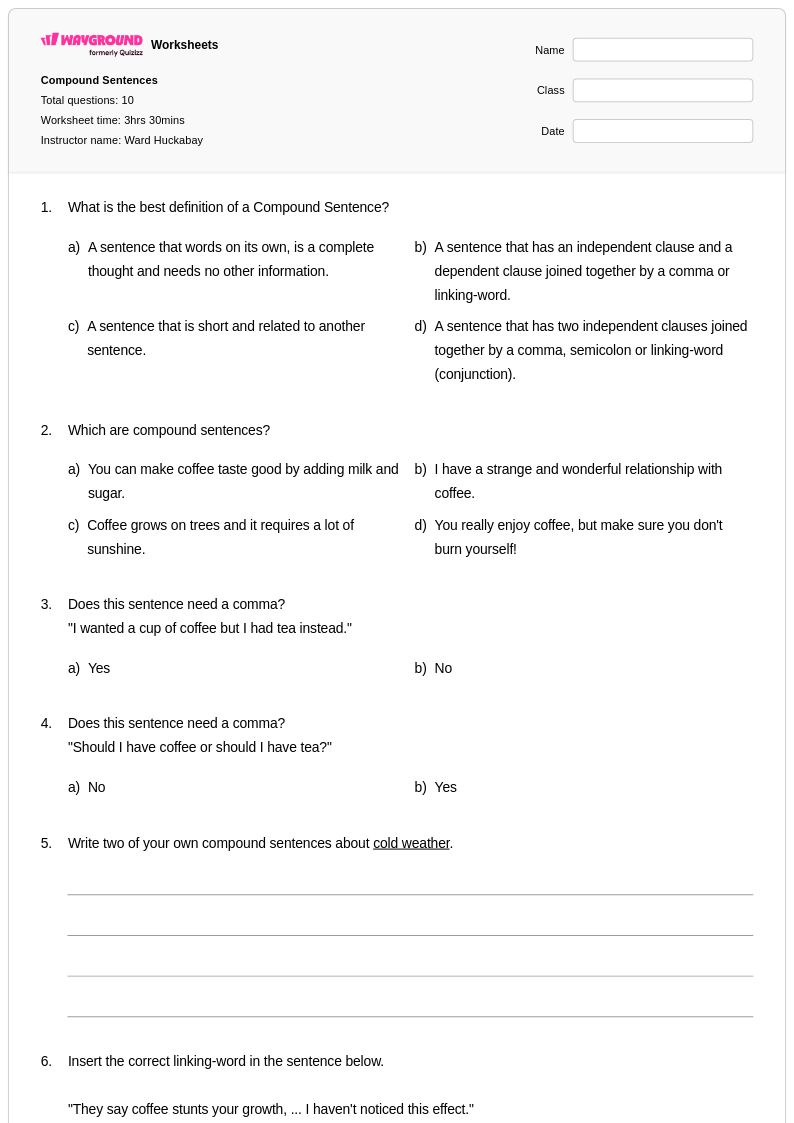
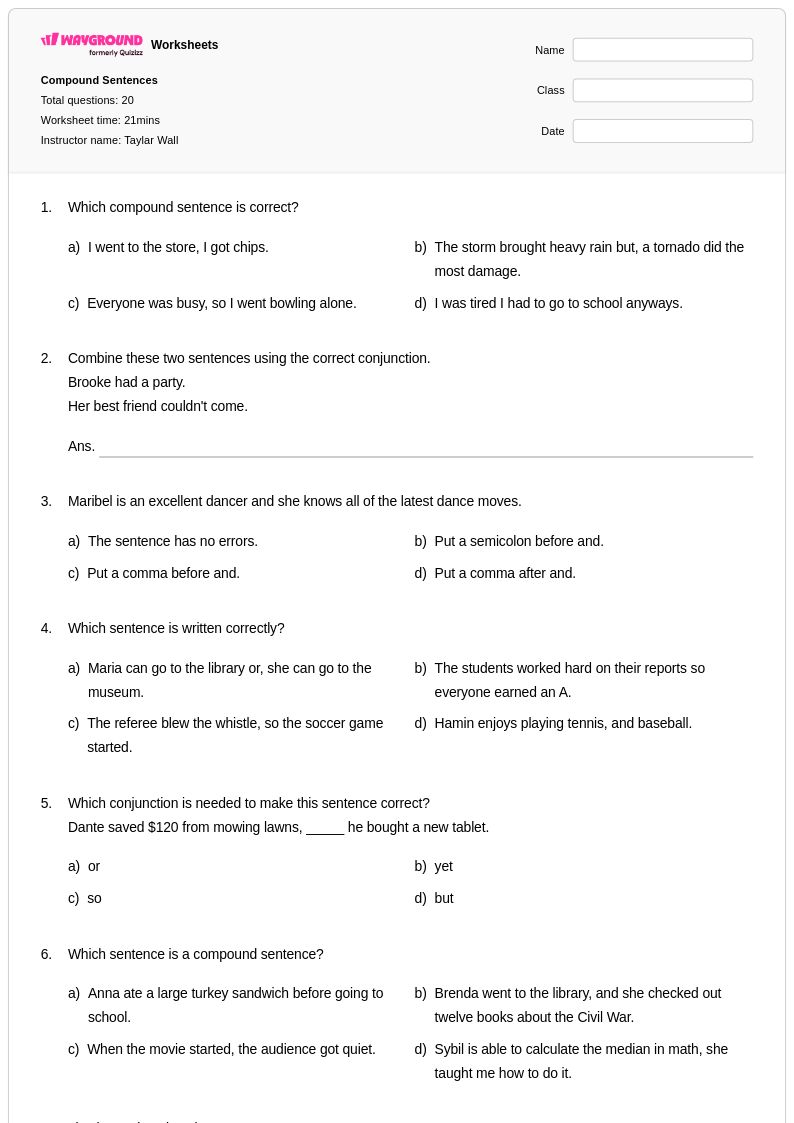
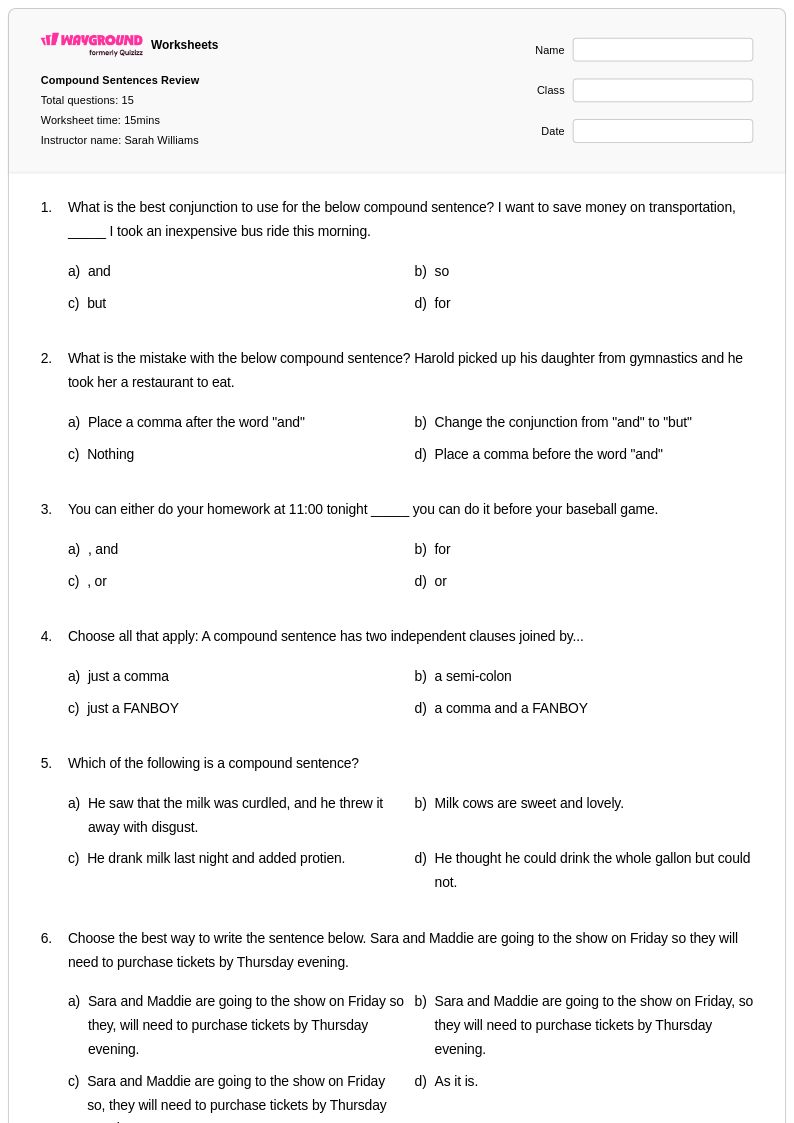
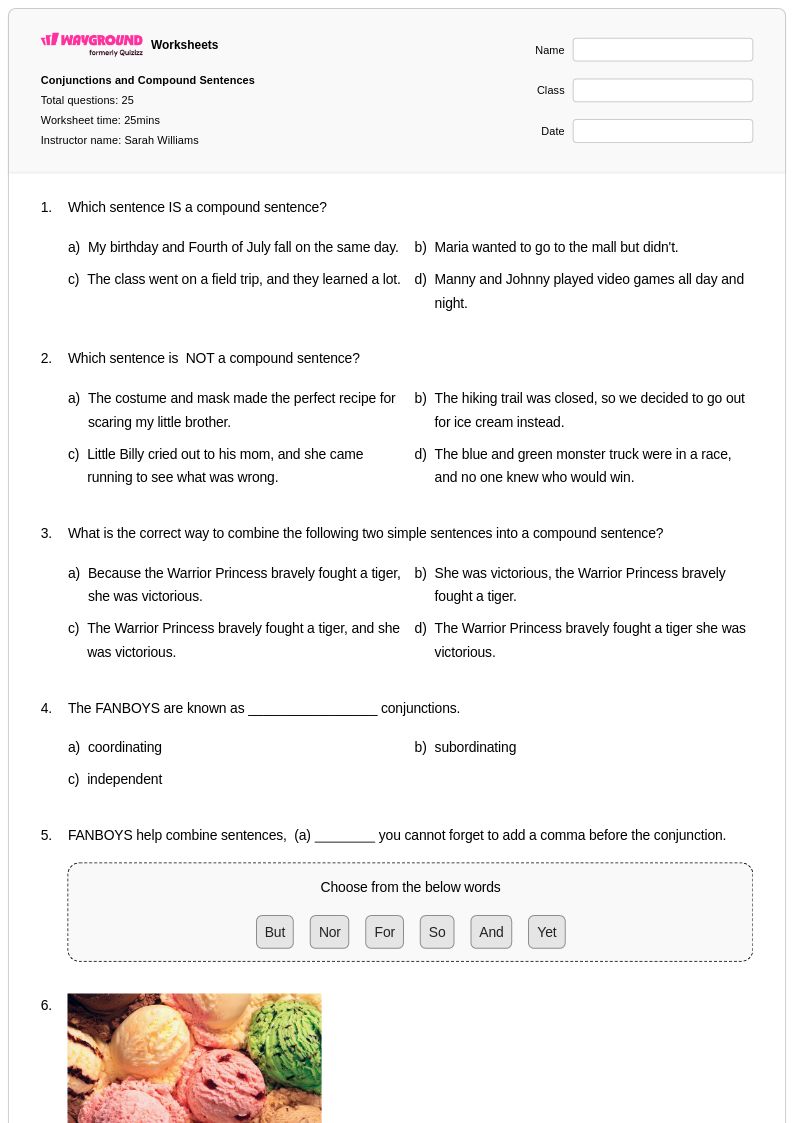
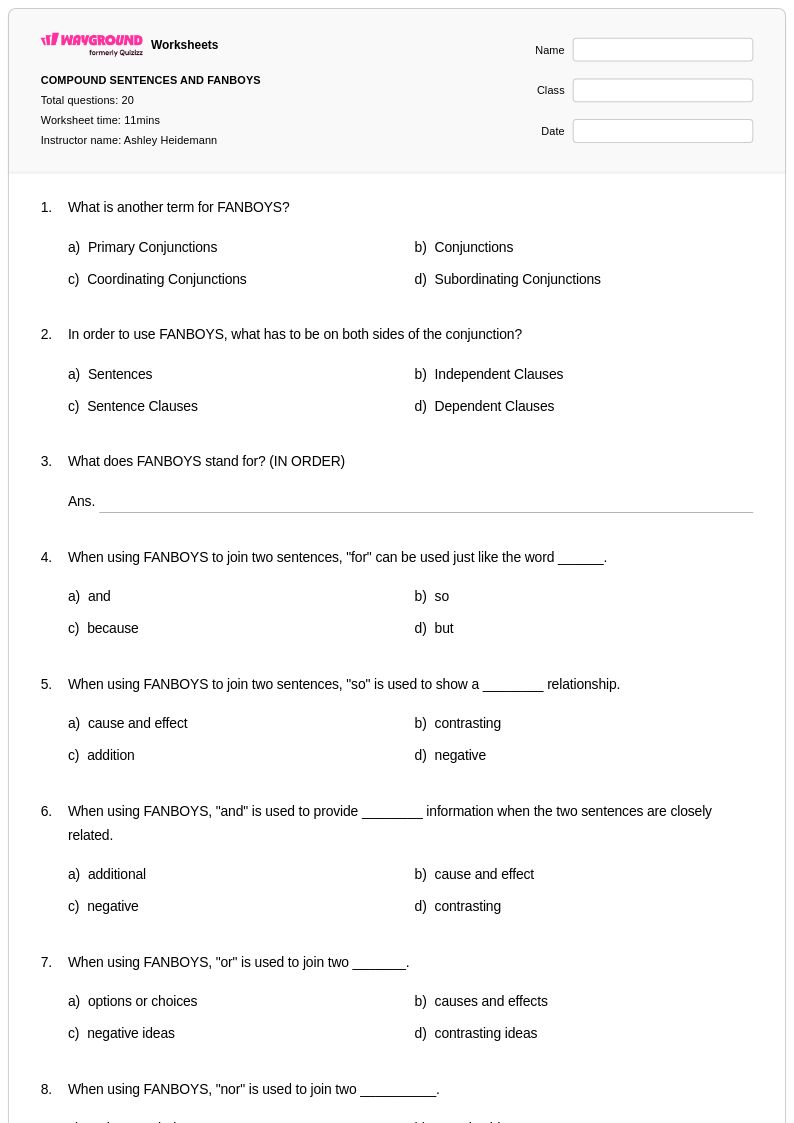
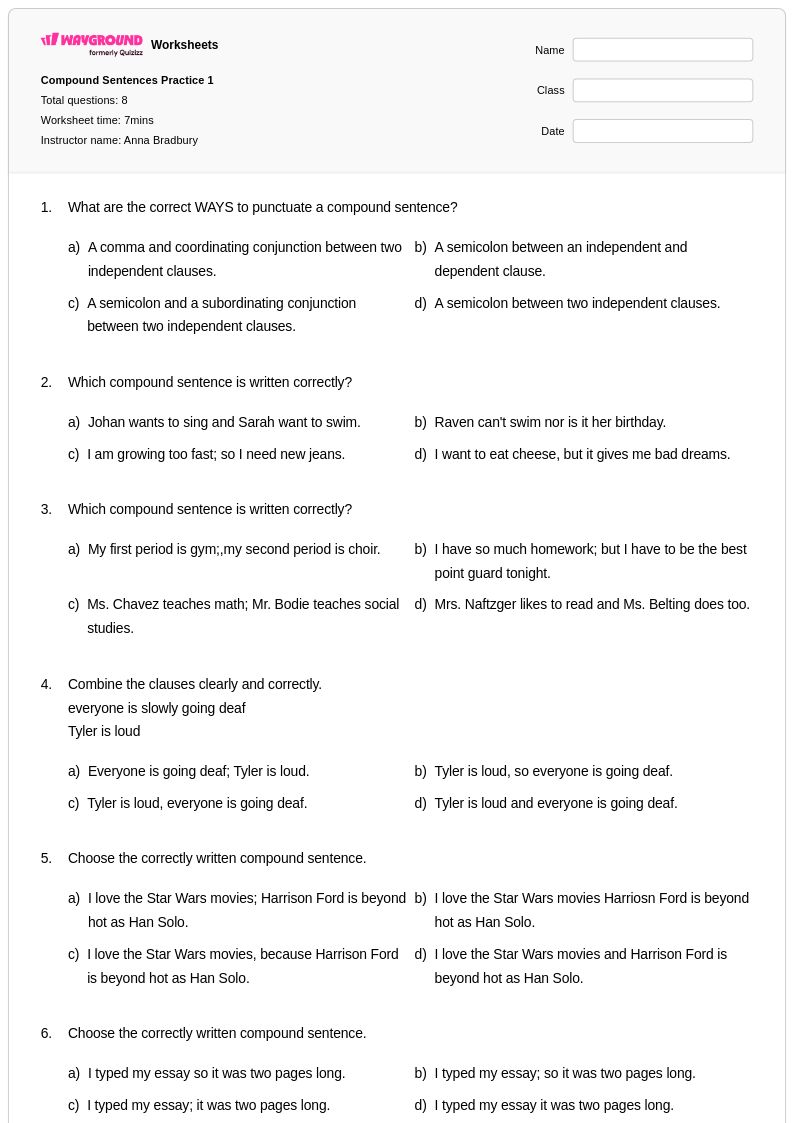
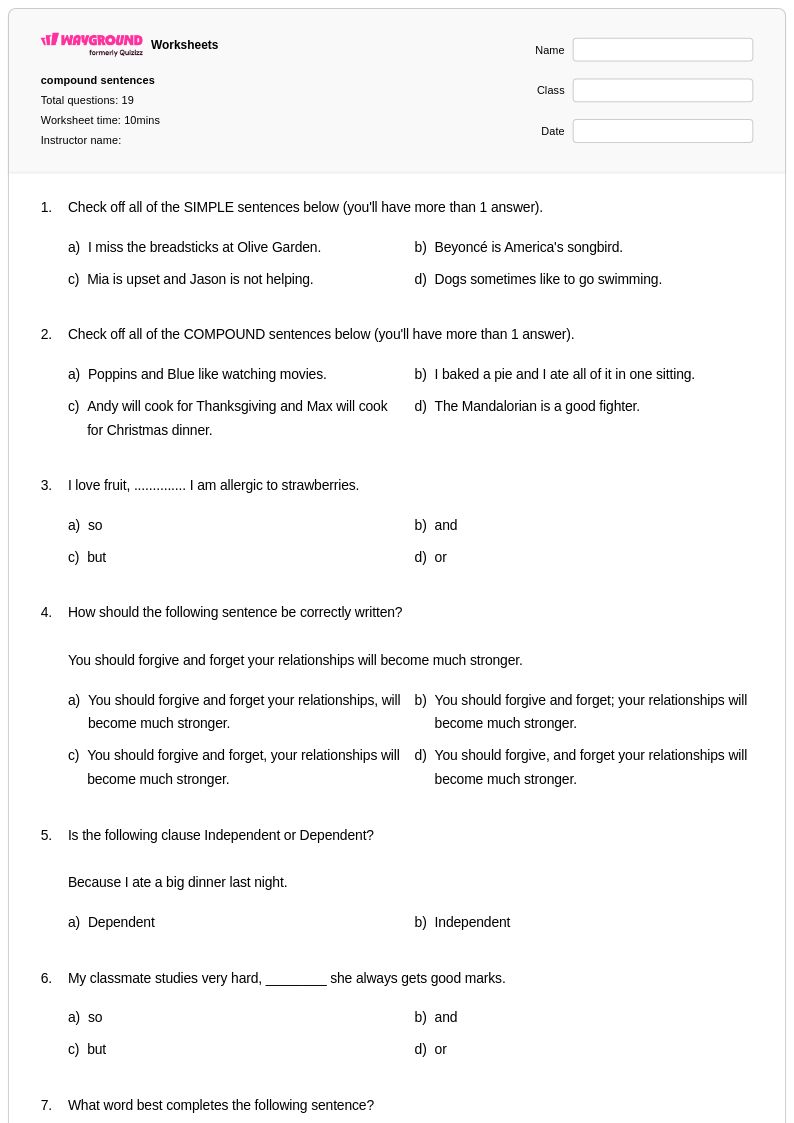
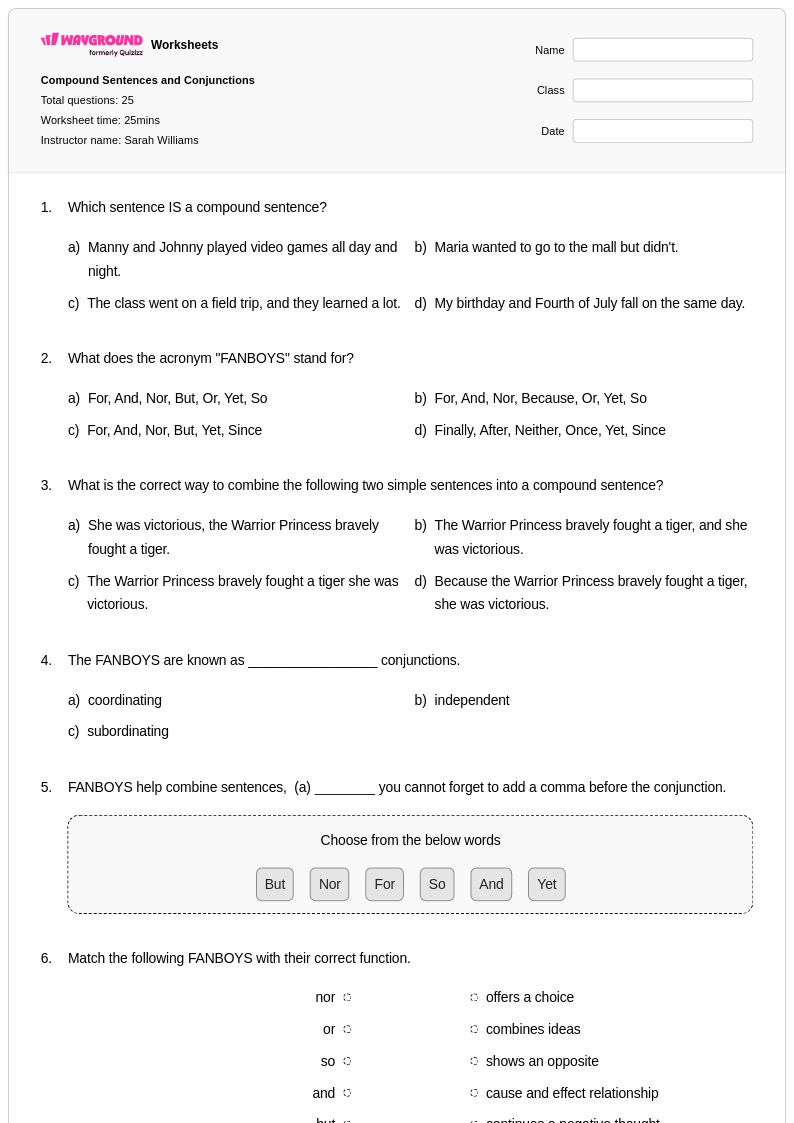
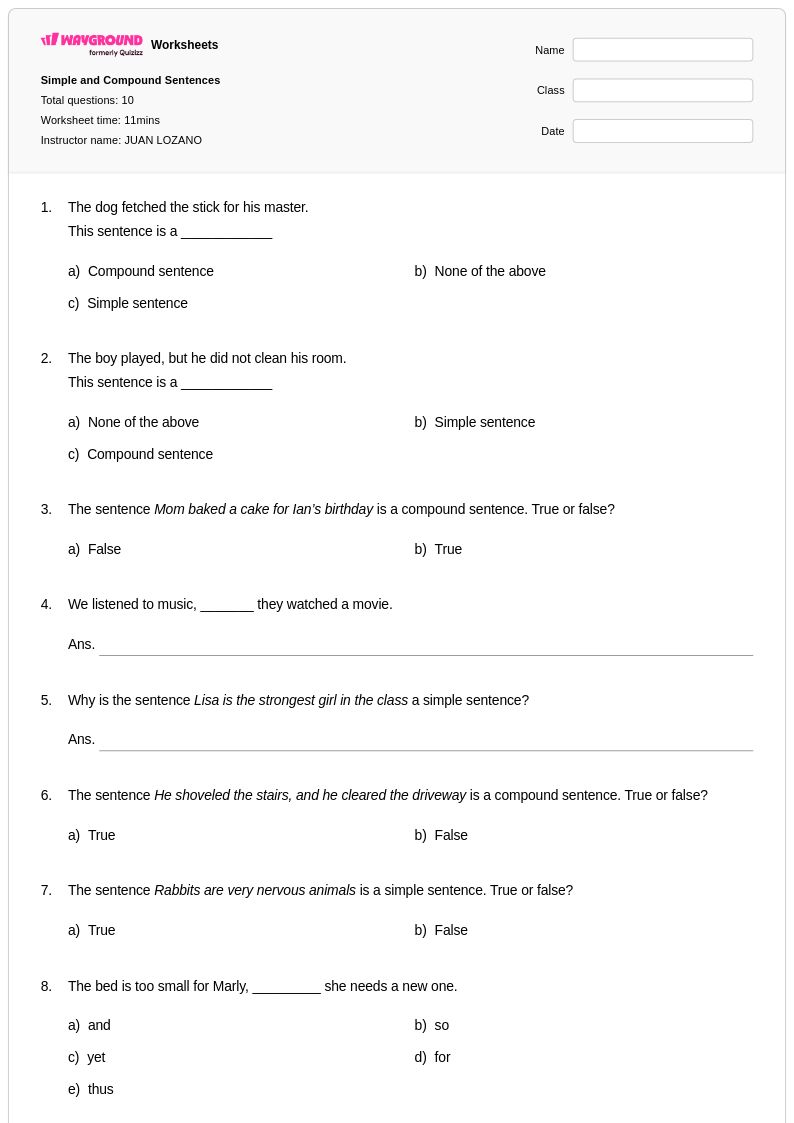
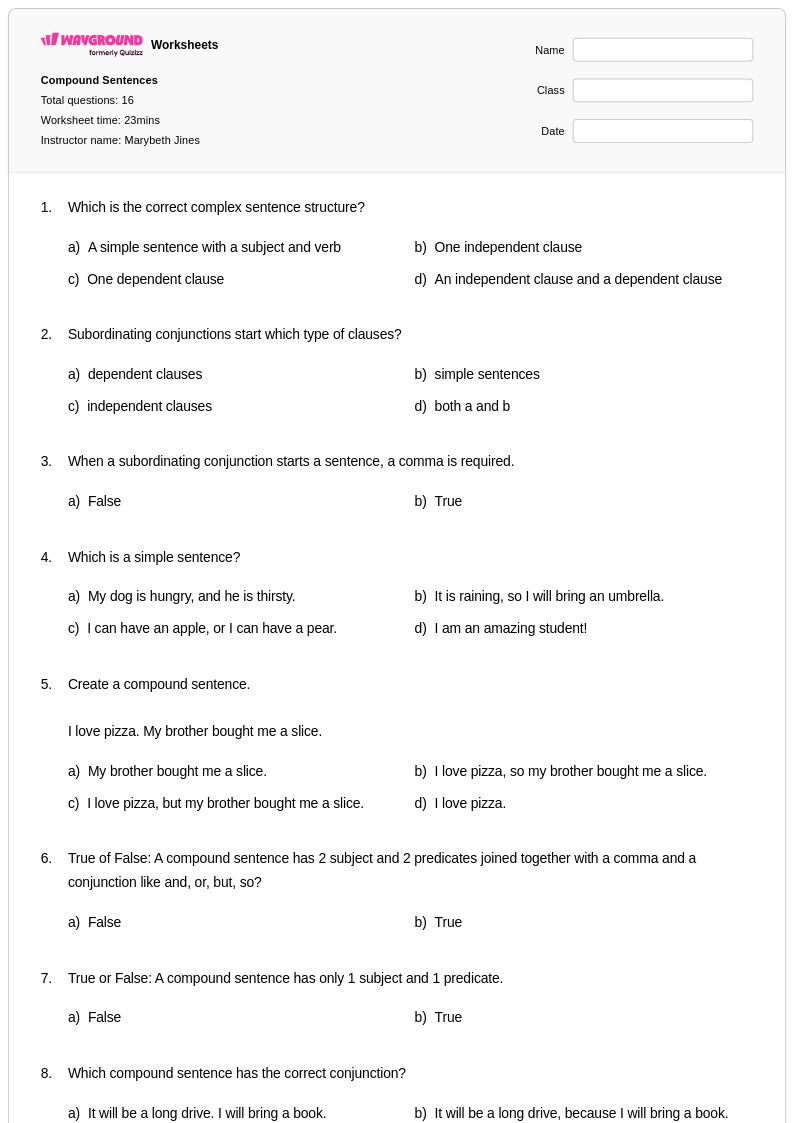
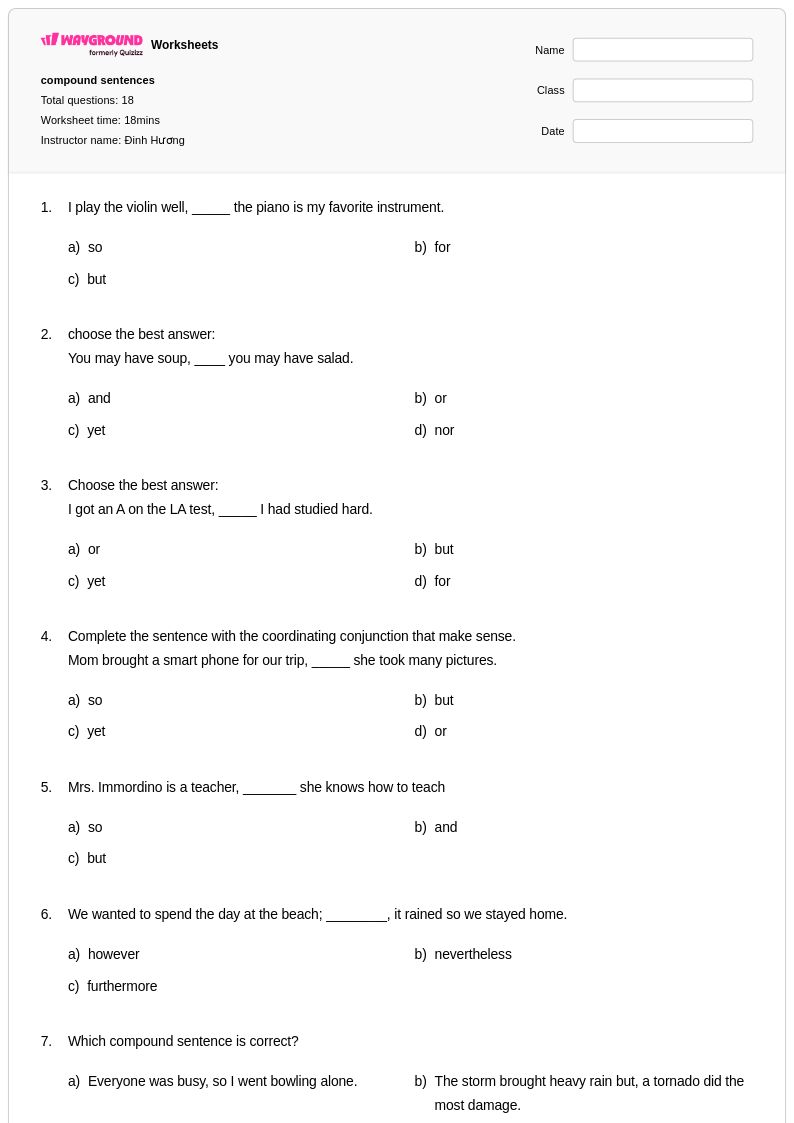
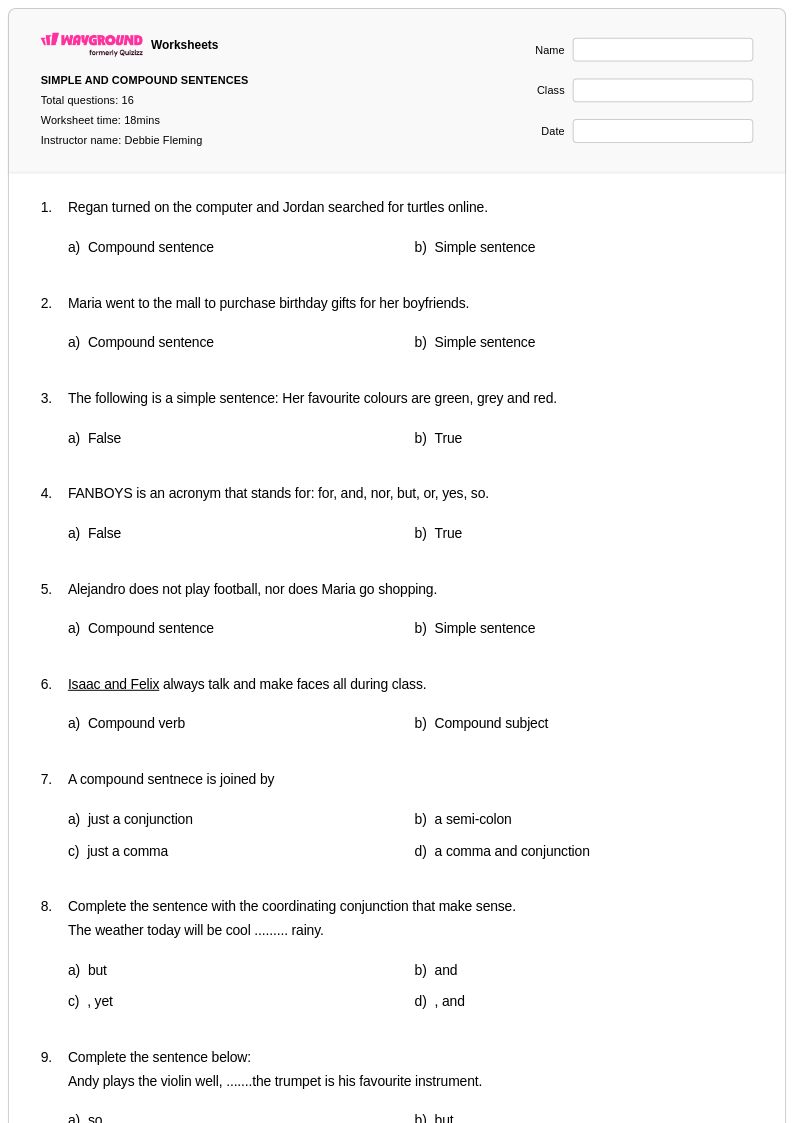
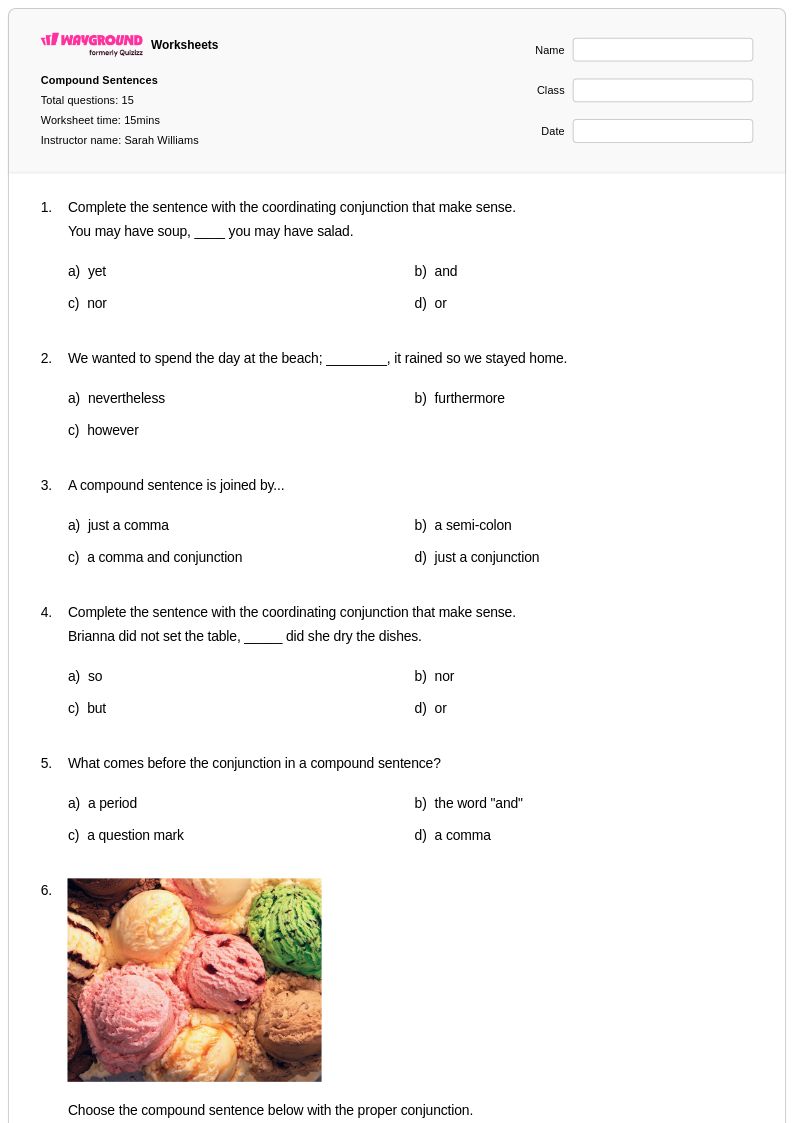
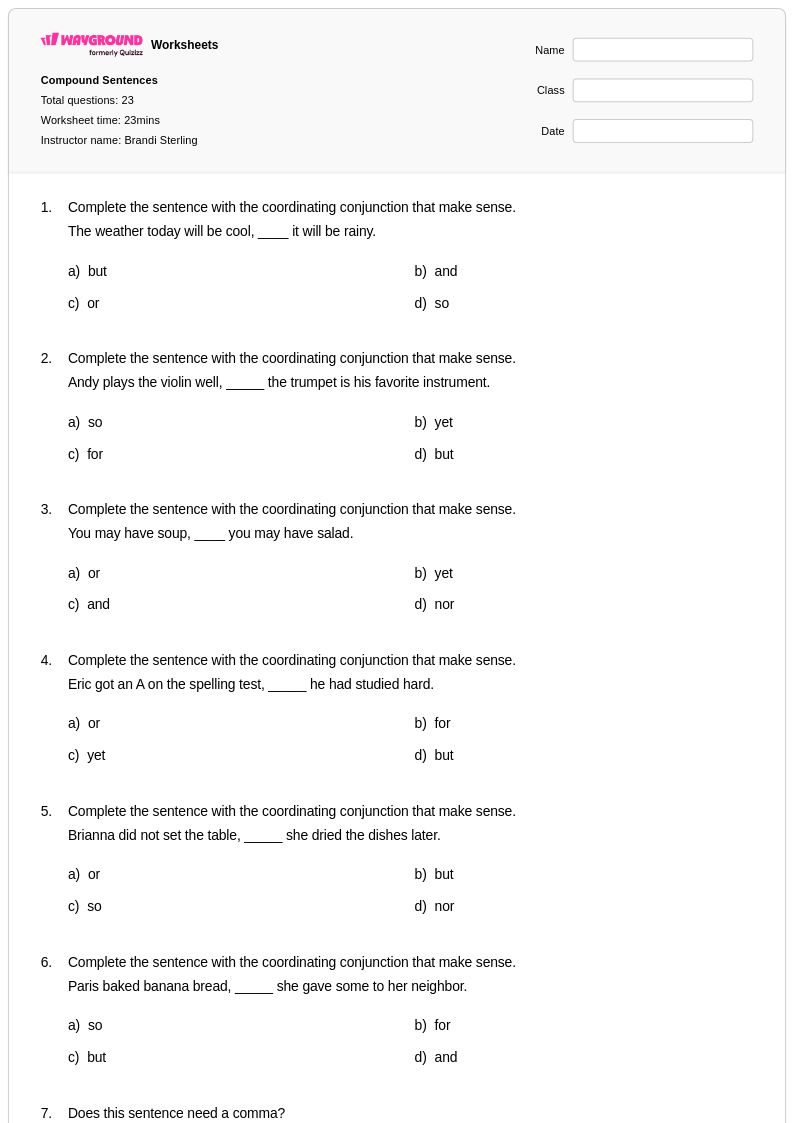
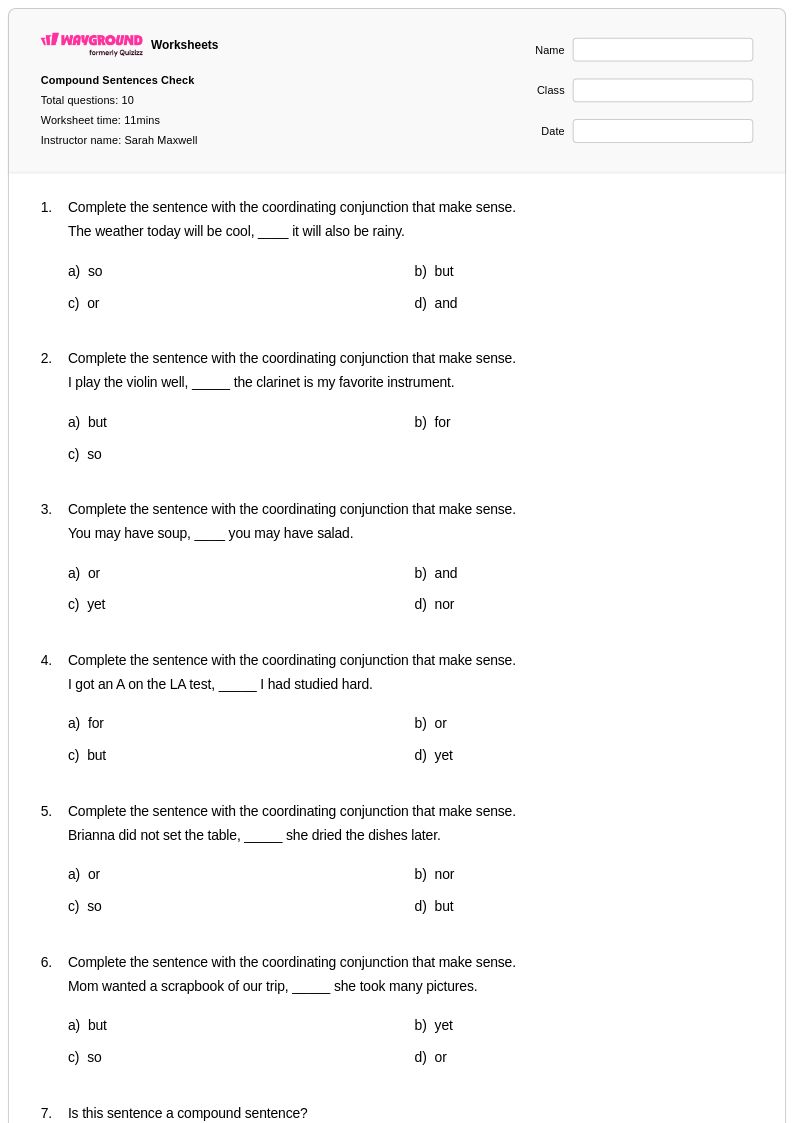
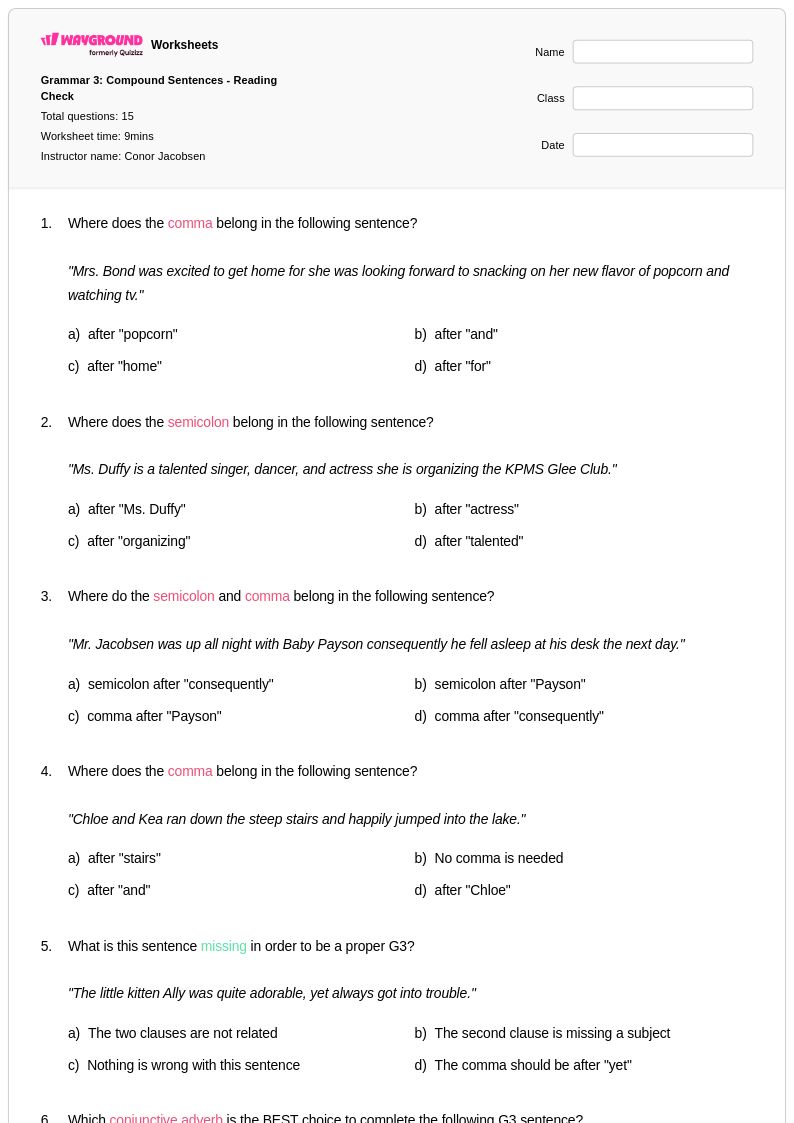
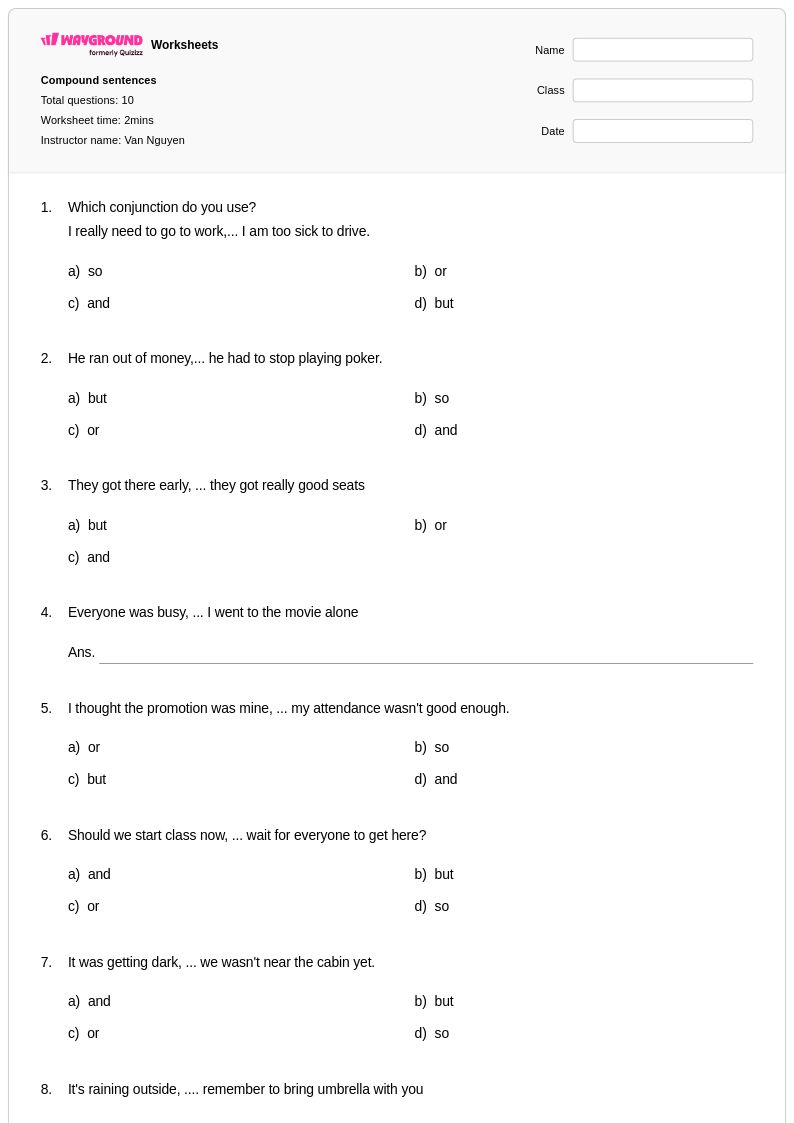
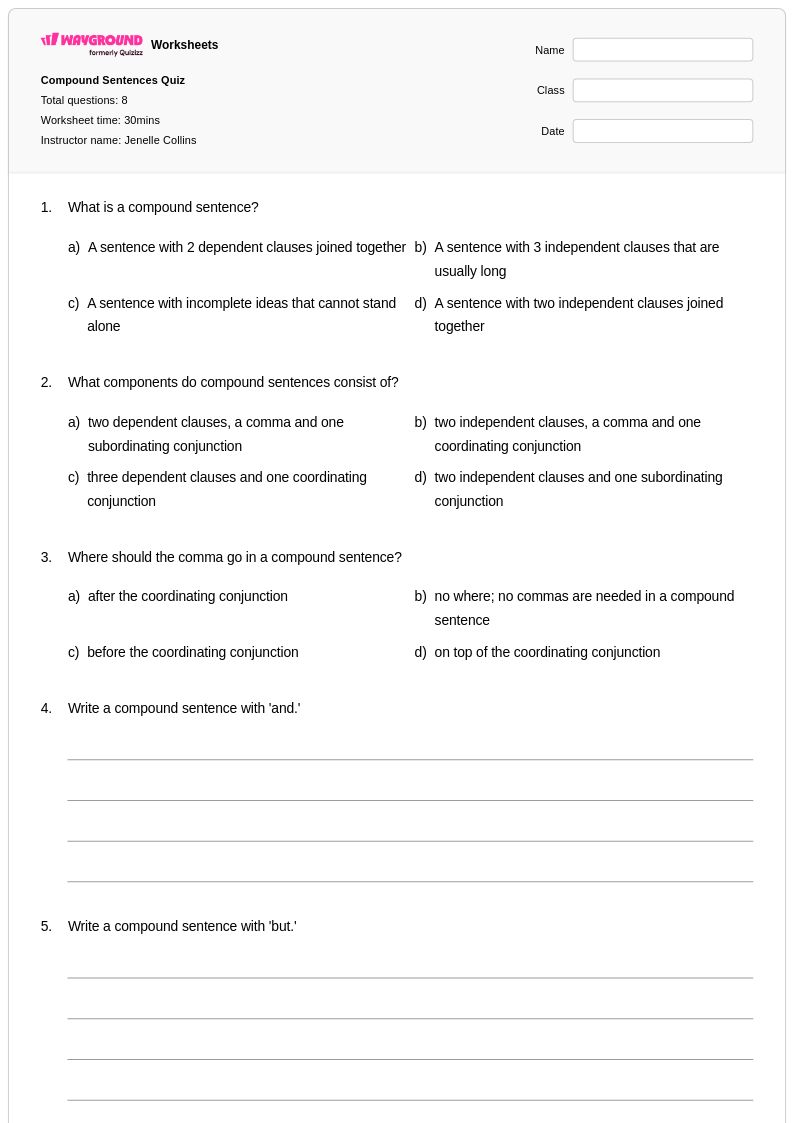
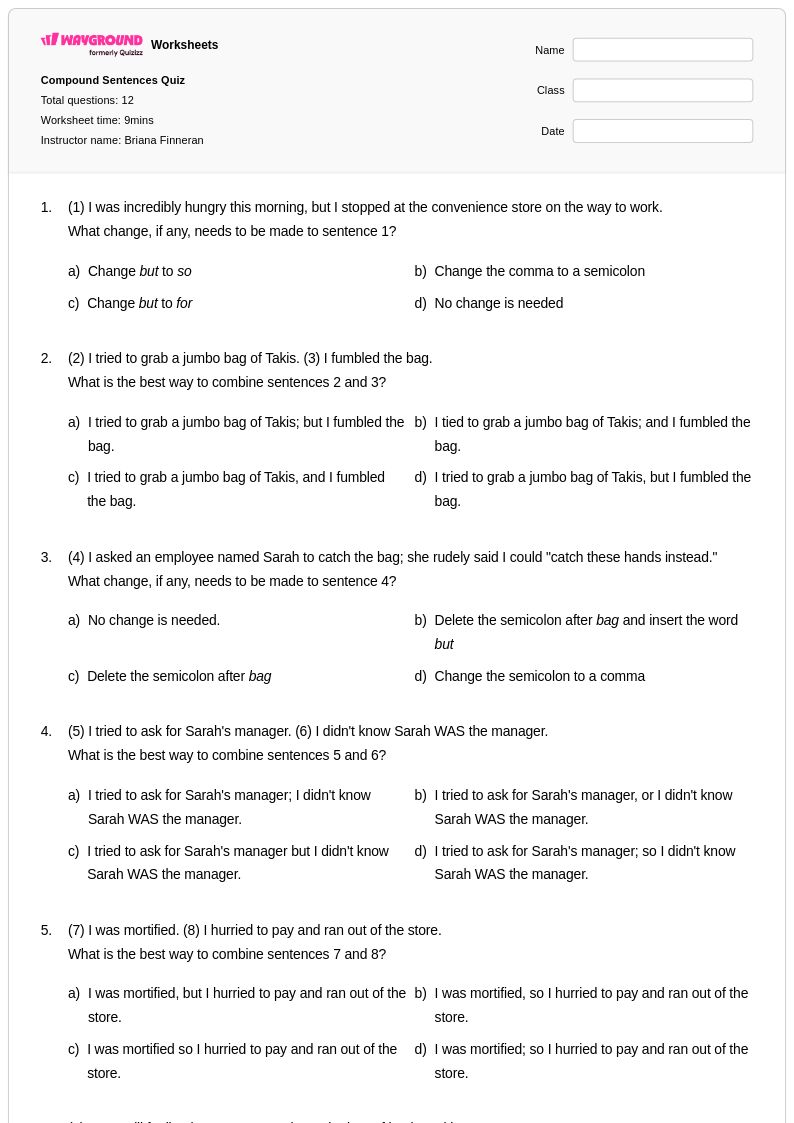
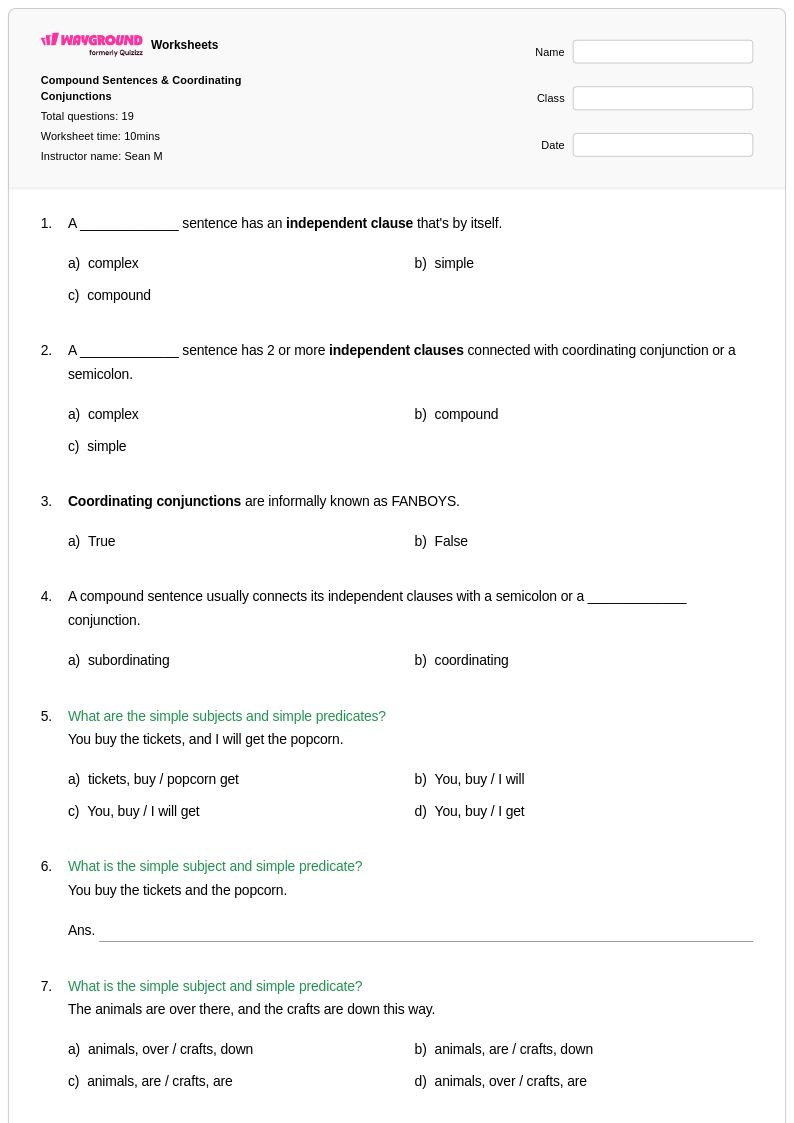
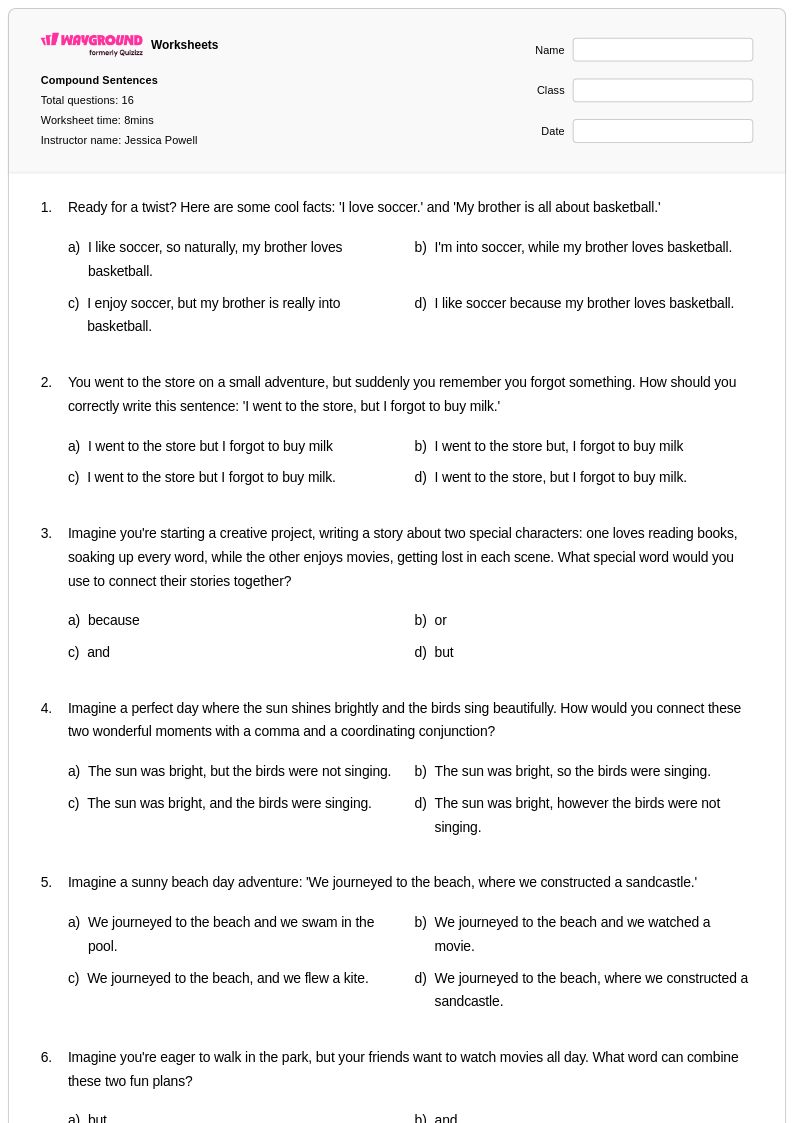
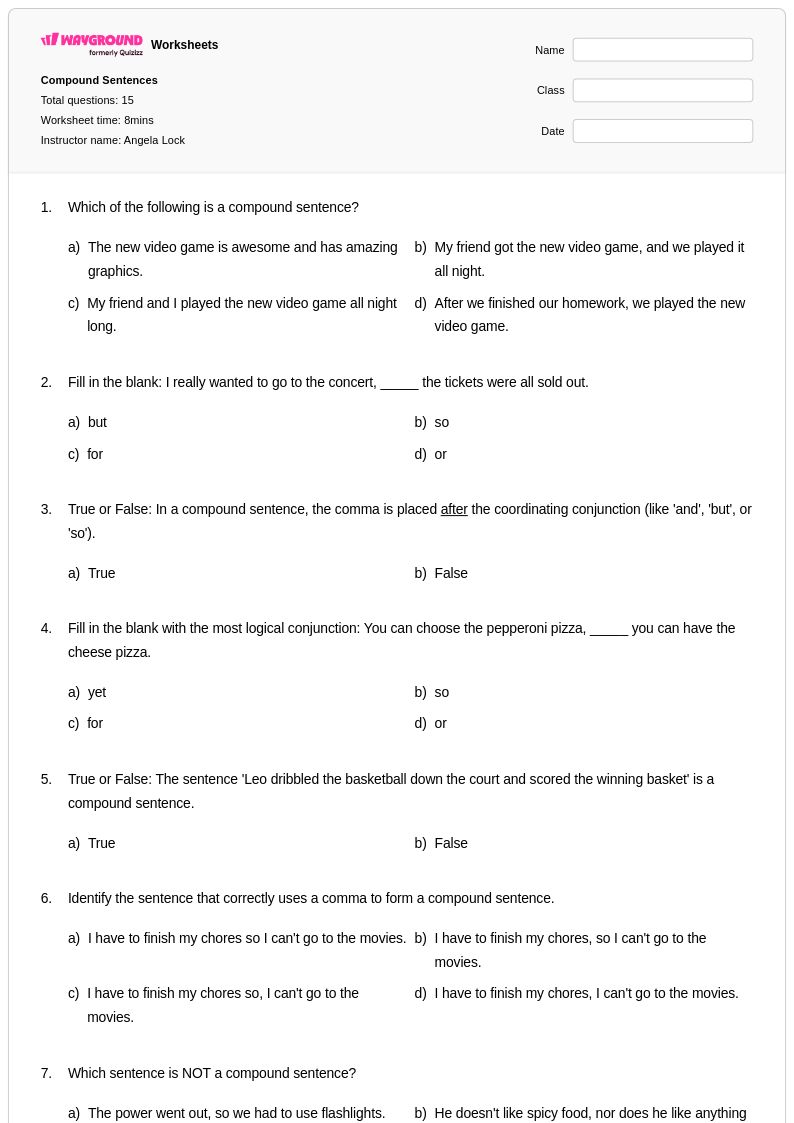
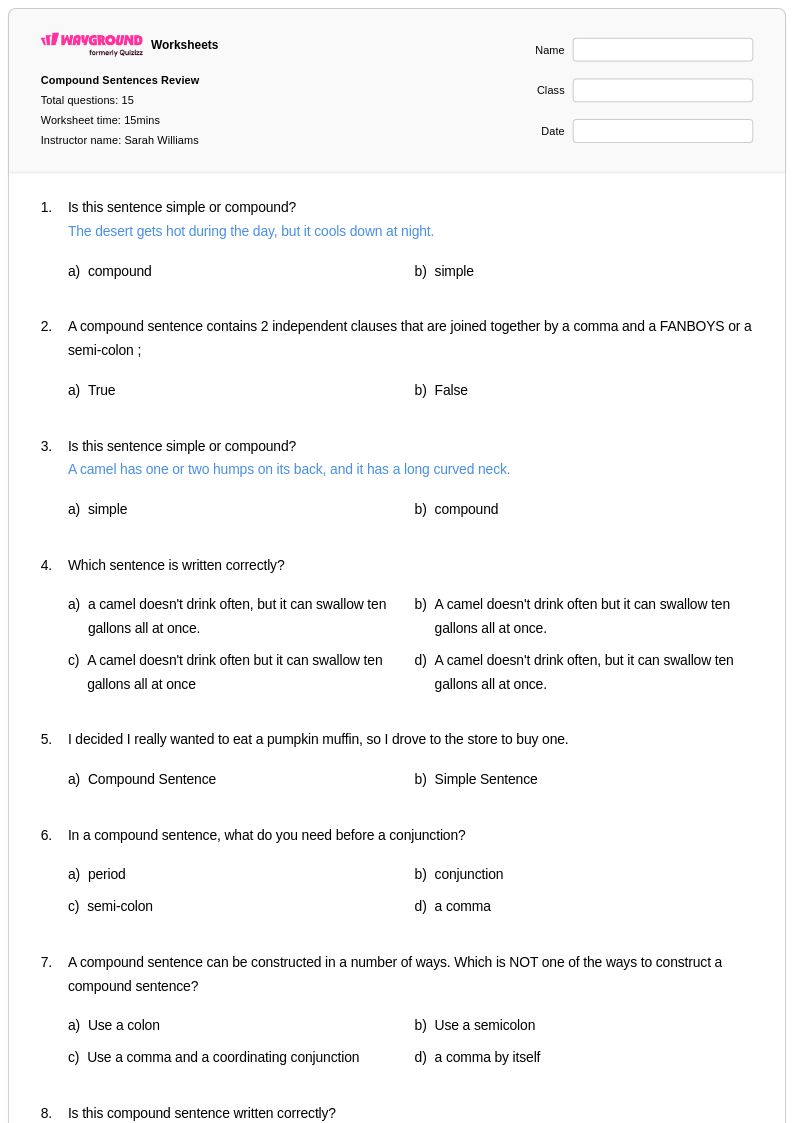
Compound sentences represent a fundamental building block in Year 8 English grammar instruction, requiring students to master the coordination of independent clauses through appropriate conjunctions and punctuation. Wayground's comprehensive compound sentence worksheets provide targeted practice opportunities that strengthen students' understanding of how to properly connect related ideas using coordinating conjunctions like "and," "but," "or," "nor," "for," "so," and "yet." These carefully crafted resources include a variety of practice problems that guide eighth graders through identifying compound sentences, constructing their own complex sentence combinations, and recognizing common errors in sentence coordination. Each worksheet comes with a complete answer key, making them invaluable free printables for both classroom instruction and independent study, while the pdf format ensures easy distribution and consistent formatting across different devices and printing systems.
Wayground's extensive library, featuring millions of teacher-created resources, offers educators an unparalleled selection of compound sentence materials specifically designed for Year 8 English instruction. The platform's robust search and filtering capabilities allow teachers to quickly locate worksheets that align with specific curriculum standards and match their students' varying proficiency levels, supporting both remediation for struggling learners and enrichment activities for advanced students. These differentiation tools enable seamless customization of compound sentence practice, whether teachers need basic conjunction identification exercises or more sophisticated sentence combining challenges. Available in both printable and digital formats, including downloadable pdf versions, these resources streamline lesson planning while providing flexible options for in-class activities, homework assignments, and assessment preparation, ensuring that students receive consistent, high-quality practice in mastering this essential grammar and mechanics skill.
FAQs
How do I teach compound sentences to students who are new to grammar?
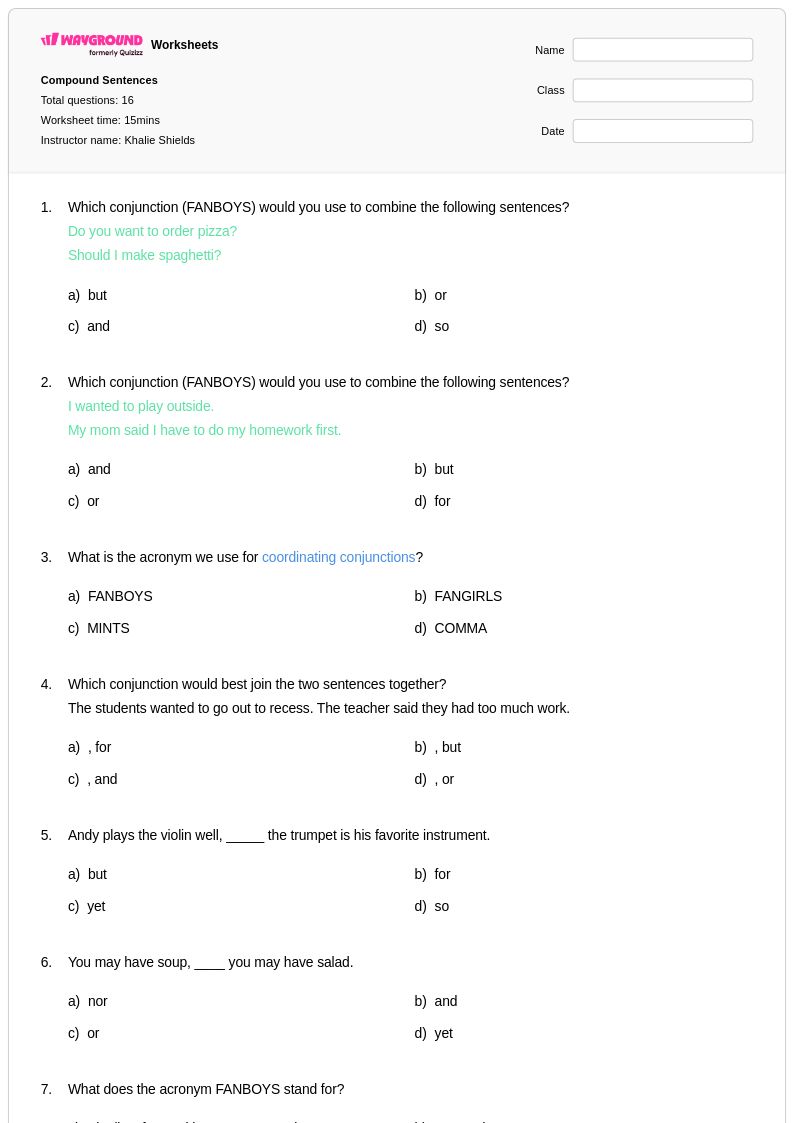
Start by ensuring students have a solid understanding of what an independent clause is before introducing compound sentences. Once they can identify a complete thought, show them how coordinating conjunctions (FANBOYS: for, and, nor, but, or, yet, so) join two independent clauses to form a compound sentence. Use mentor texts from classroom reading to show real-world examples, then move into guided practice where students combine pairs of simple sentences before writing their own.
What exercises help students practice forming compound sentences?
Sentence-combining exercises are the most effective practice format: give students two related simple sentences and ask them to join them using an appropriate coordinating conjunction and a comma. Identification tasks, where students underline both independent clauses and circle the conjunction, build analytical skills alongside production skills. Varied practice that moves from recognition to construction to independent writing helps students internalize the structure rather than just memorize a rule.
What mistakes do students commonly make when writing compound sentences?
The most frequent error is the comma splice, where students join two independent clauses with only a comma and no coordinating conjunction. A related mistake is confusing compound sentences with compound predicates, leading students to add unnecessary commas before conjunctions that connect two verbs rather than two full clauses. Students also frequently misuse conjunctions, choosing 'and' by default even when the relationship between ideas calls for 'but' or 'so', which weakens the logical flow of their writing.
How can I use compound sentence worksheets for different skill levels in the same class?
Differentiate by task complexity: struggling students can work on identification and fill-in-the-blank conjunction exercises, while grade-level learners practice sentence combining, and advanced students write original compound sentences from prompts. On Wayground, teachers can apply accommodations such as reduced answer choices or read-aloud support to individual students, so the same digital worksheet can serve multiple skill levels simultaneously without singling anyone out.
How do I use Wayground's compound sentence worksheets in my classroom?
Wayground's compound sentence worksheets are available as printable PDFs for traditional classroom use and in digital formats for technology-integrated instruction. Teachers can distribute them as take-home practice, use them for whole-class guided instruction, or host them as a quiz directly on Wayground for instant formative assessment. Each worksheet includes a complete answer key, making them practical for independent work stations, substitute lesson plans, or homework review.
How do compound sentences fit into broader writing instruction?
Compound sentences are a critical bridge between simple sentence fluency and complex syntactic control. Teaching students to join independent clauses helps them express relationships between ideas, such as contrast, cause, and addition, rather than listing disconnected thoughts. Proficiency with compound sentences also lays the groundwork for understanding compound-complex sentences, making it a high-leverage grammar skill to prioritize in writing instruction.