
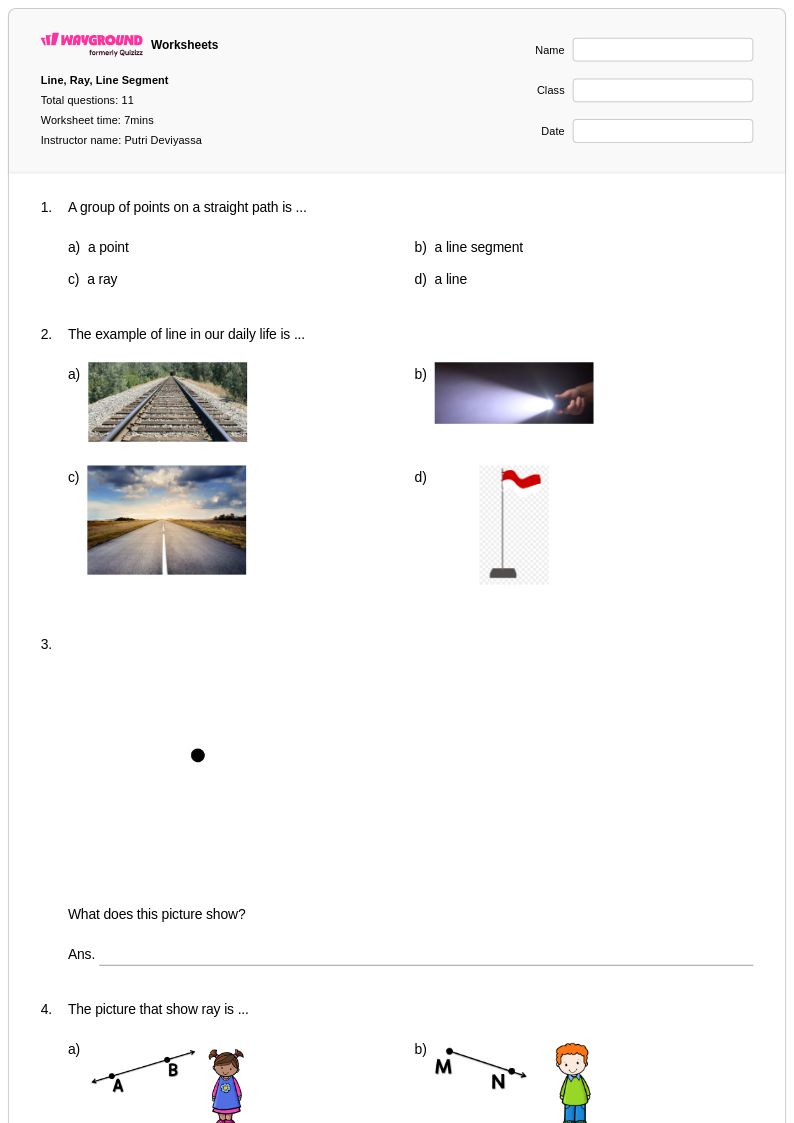
11 Q
2nd
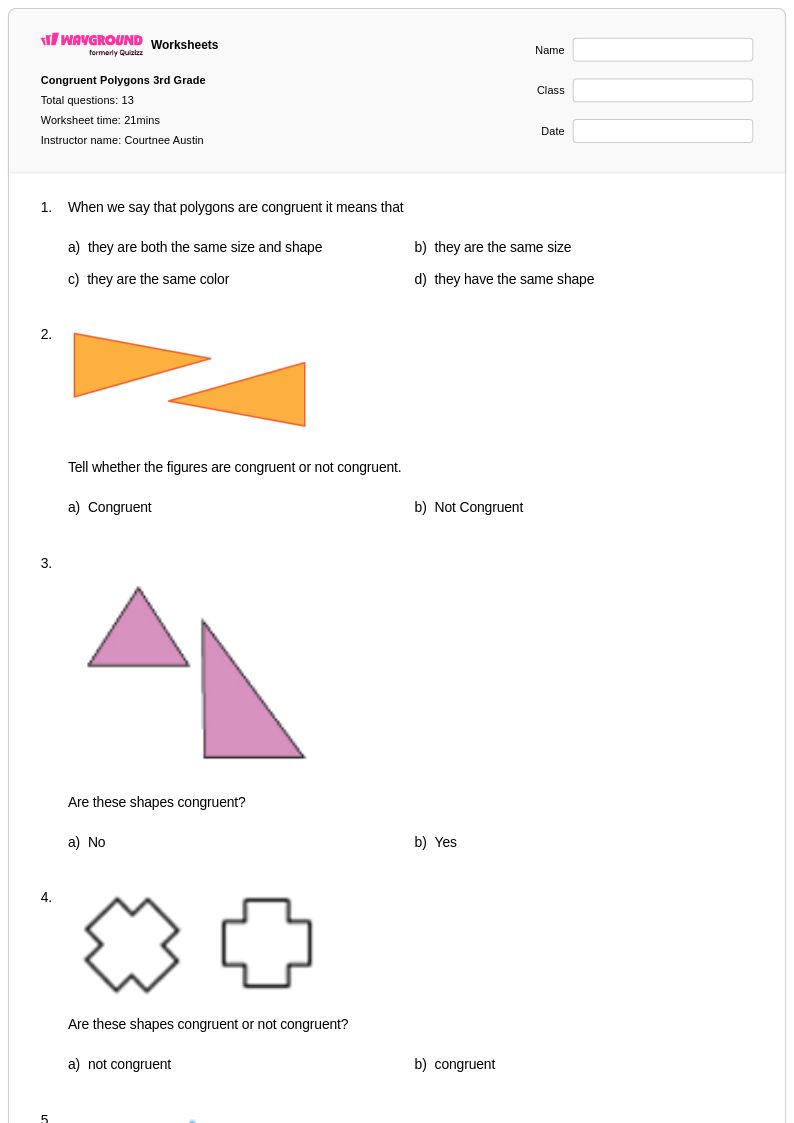
13 Q
2nd - 3rd
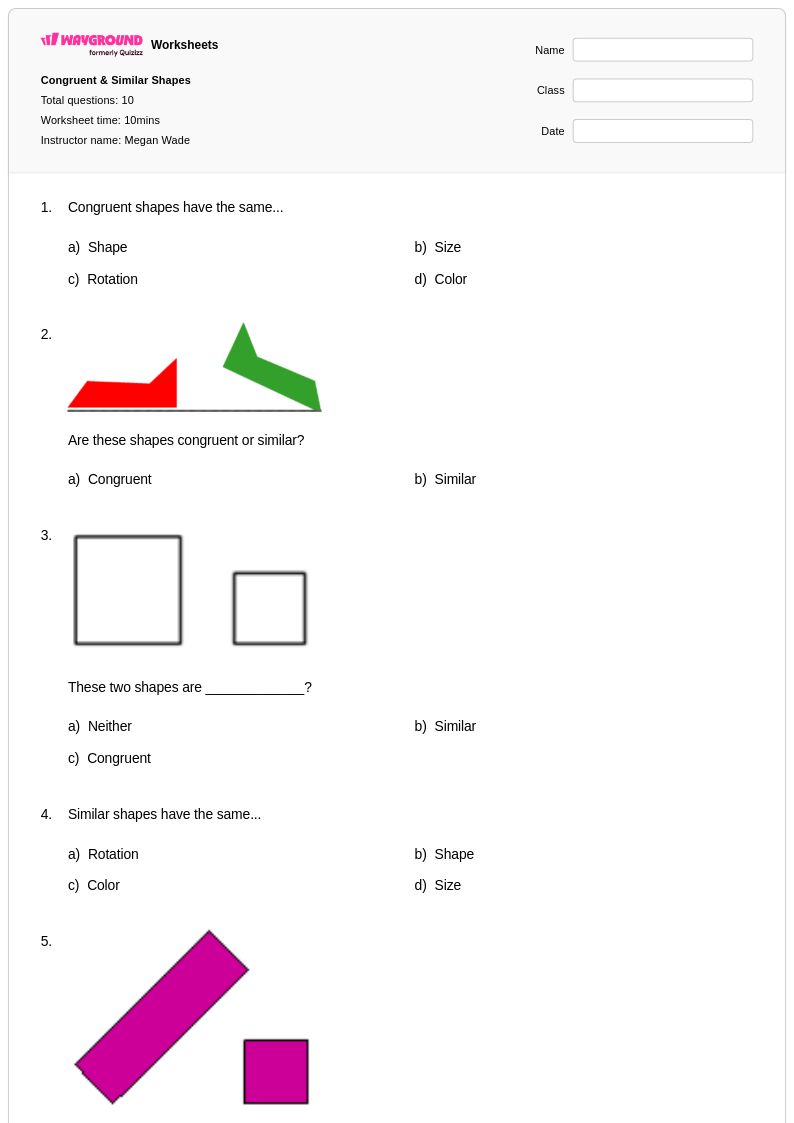
10 Q
2nd - 3rd
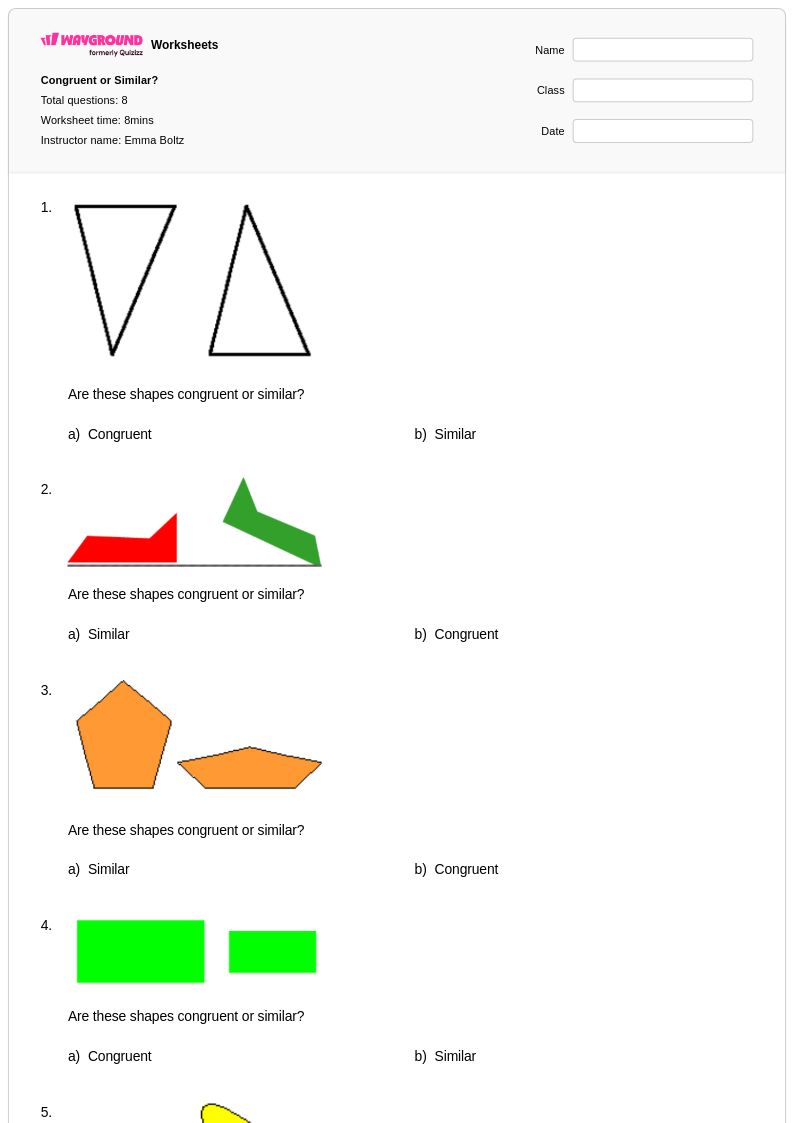
8 Q
2nd - 4th
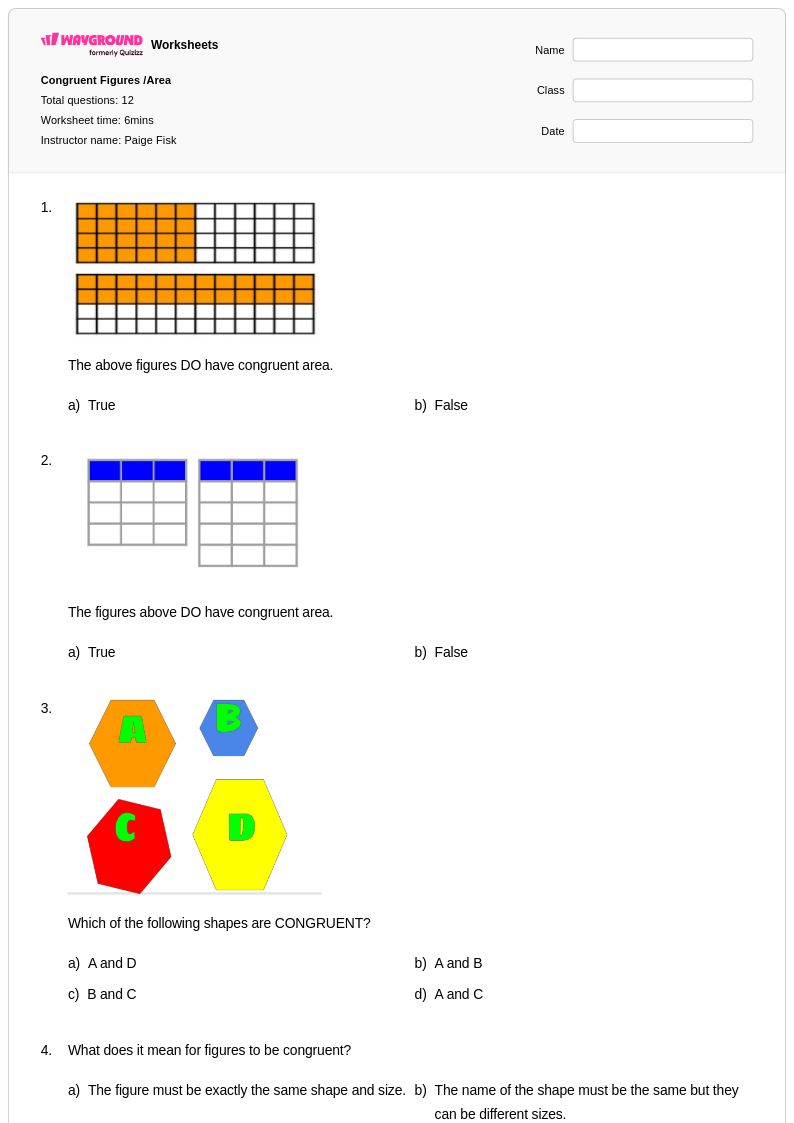
12 Q
2nd - 4th
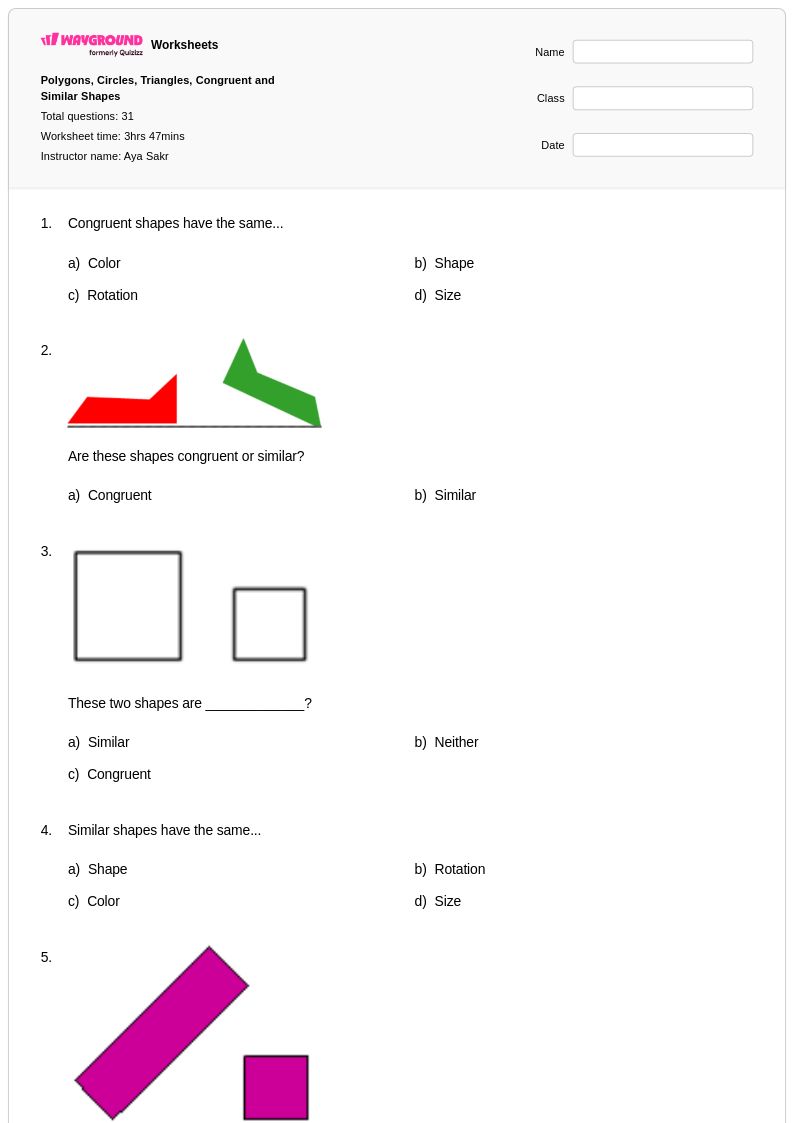
31 Q
2nd - 4th
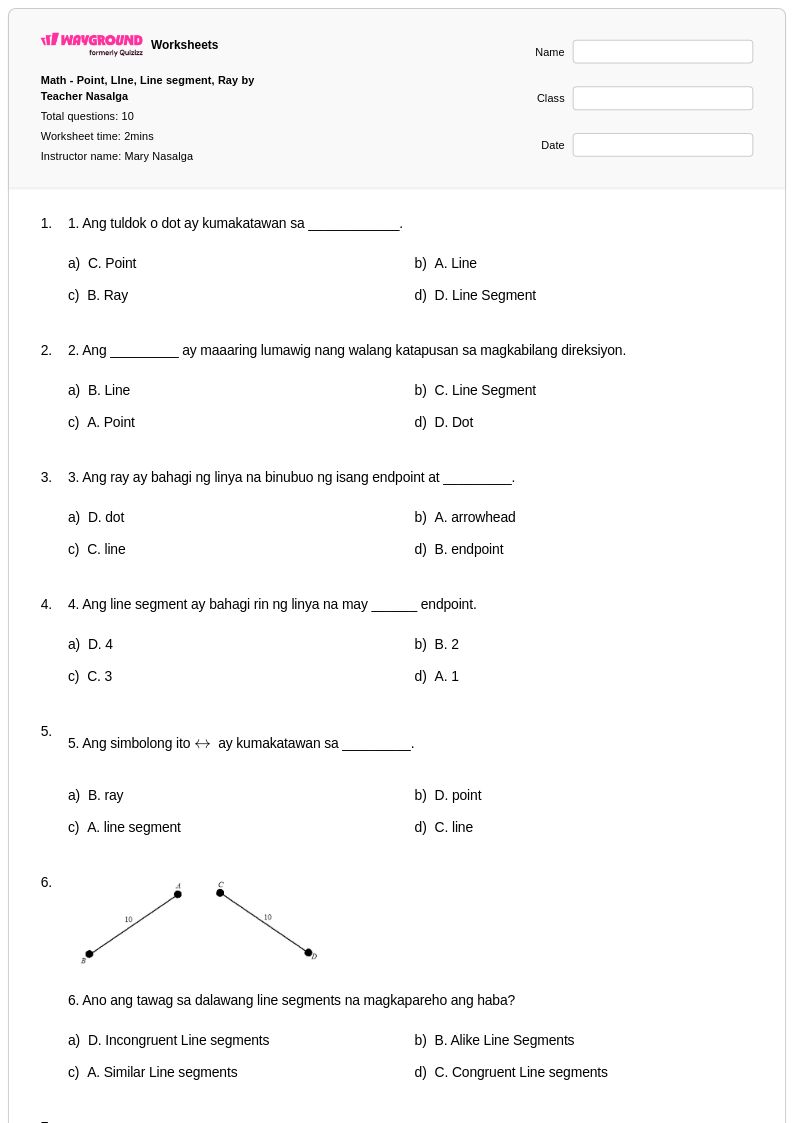
10 Q
2nd - 3rd
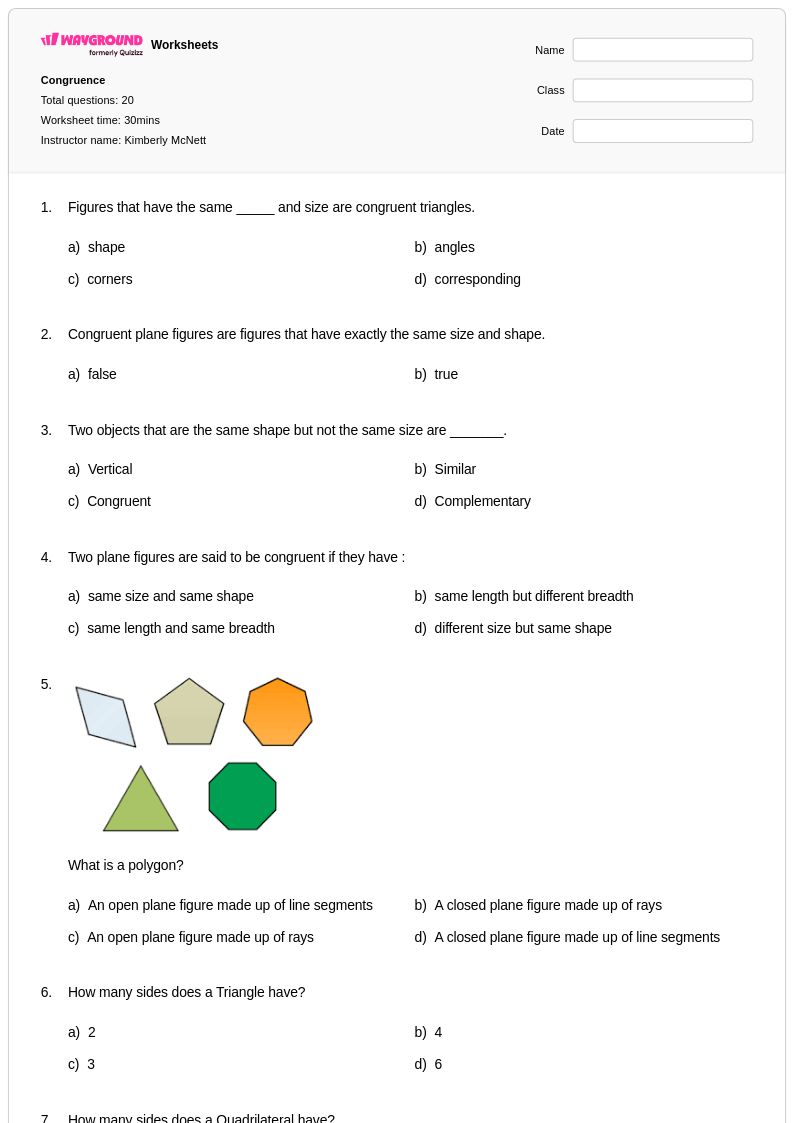
20 Q
2nd - 3rd
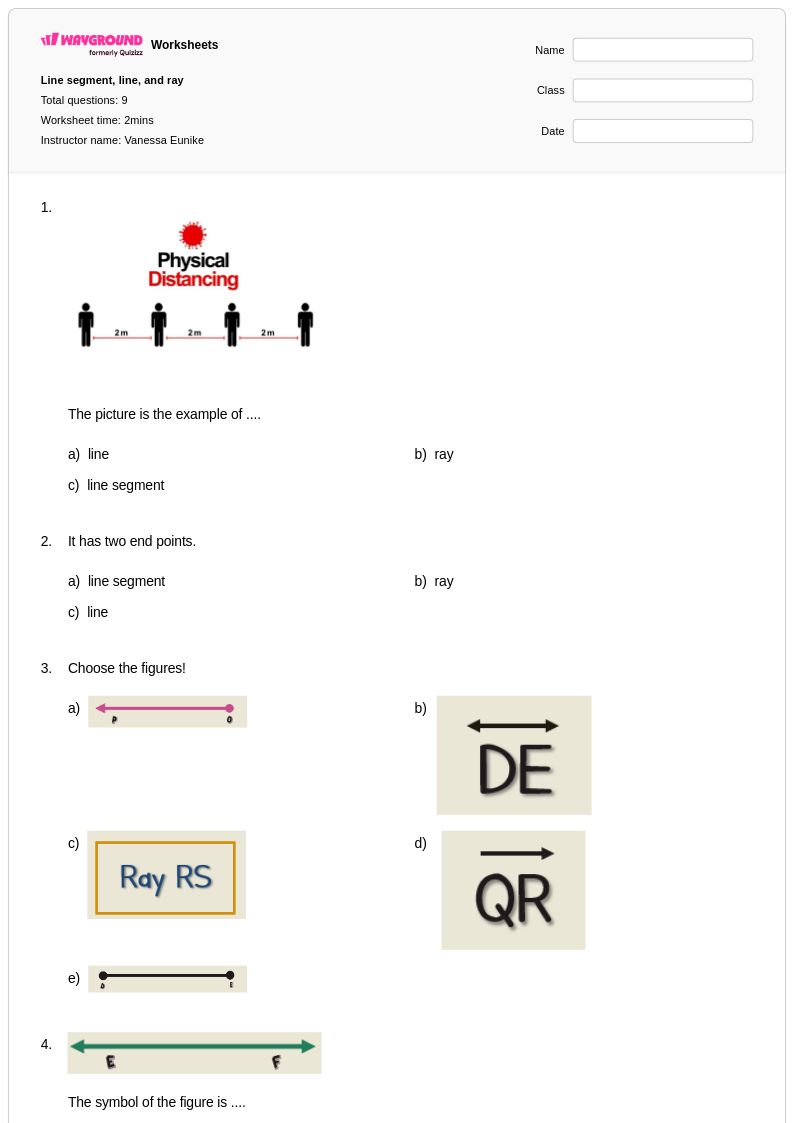
9 Q
2nd
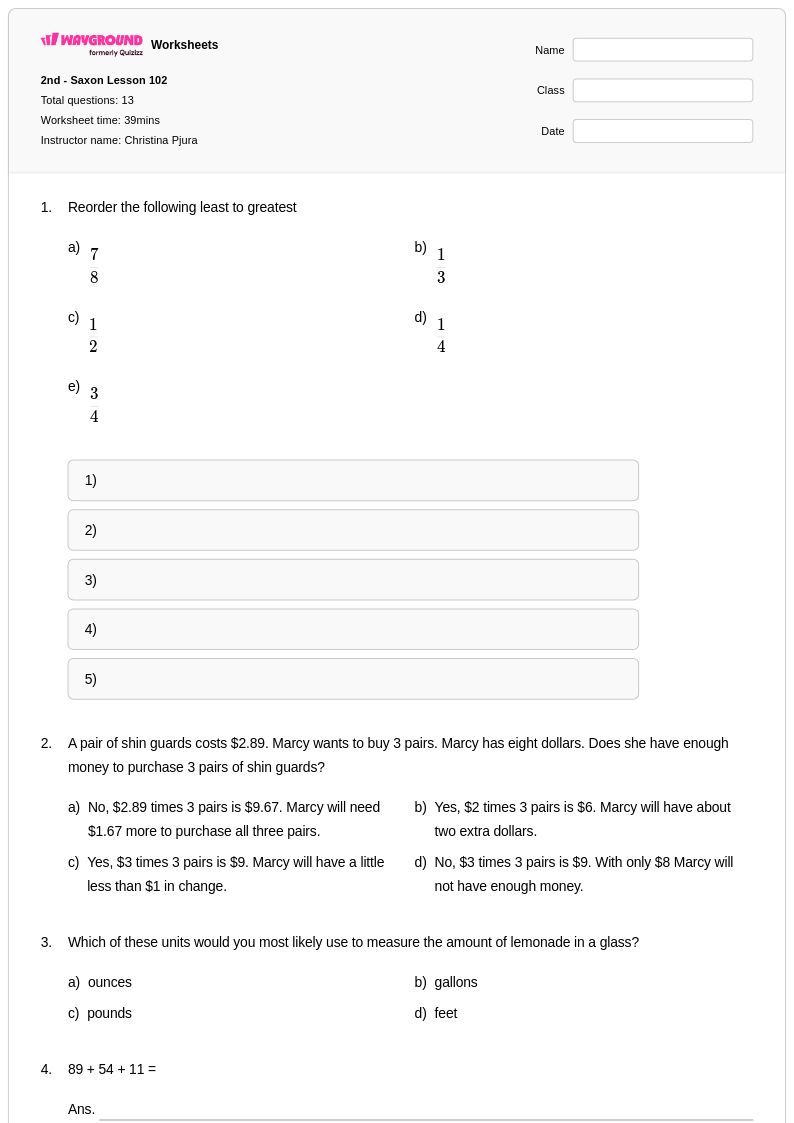
13 Q
2nd
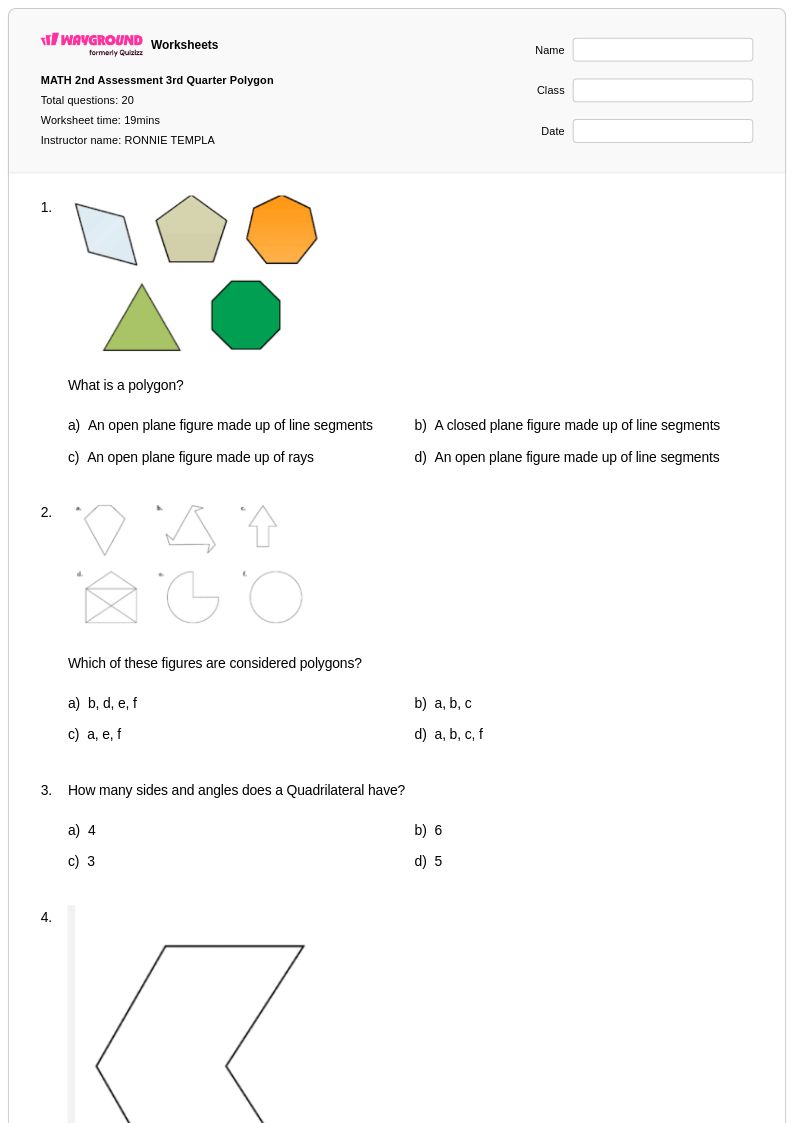
20 Q
1st - 7th
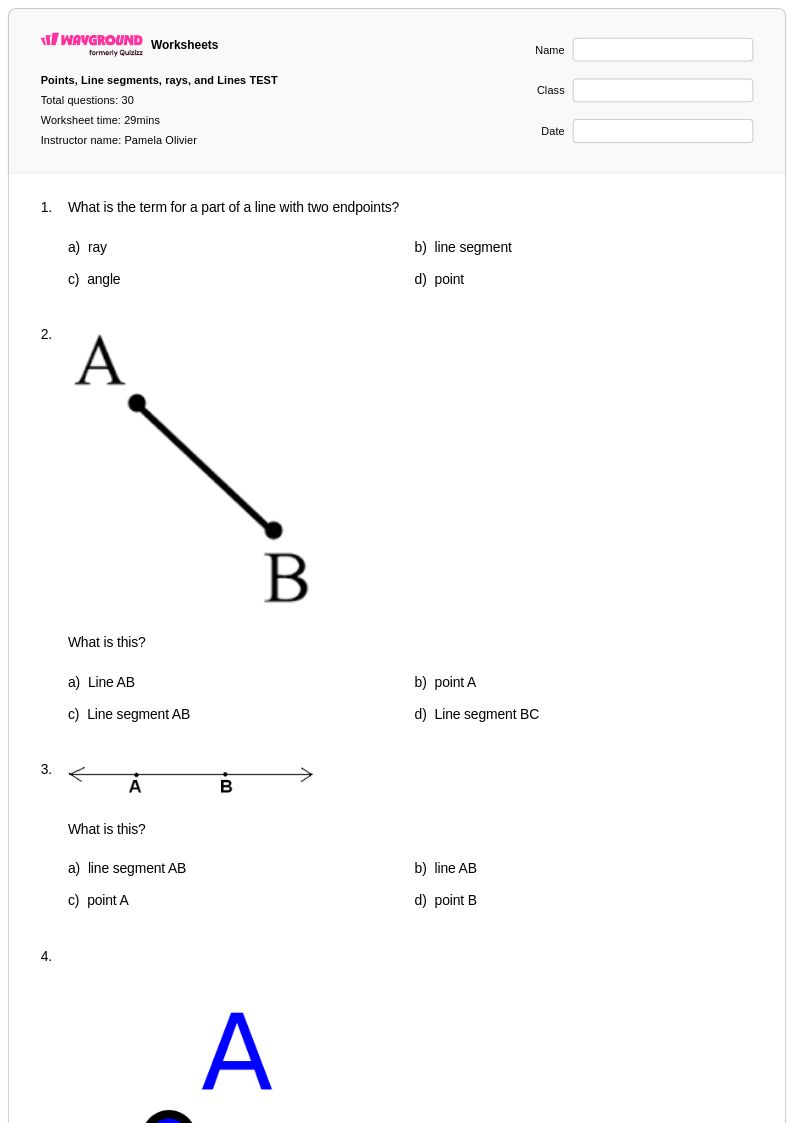
30 Q
2nd
20 Q
2nd
10 Q
2nd - 3rd
20 Q
1st - 3rd
15 Q
1st - 5th
11 Q
2nd
10 Q
1st - 5th
10 Q
2nd
25 Q
1st - Uni
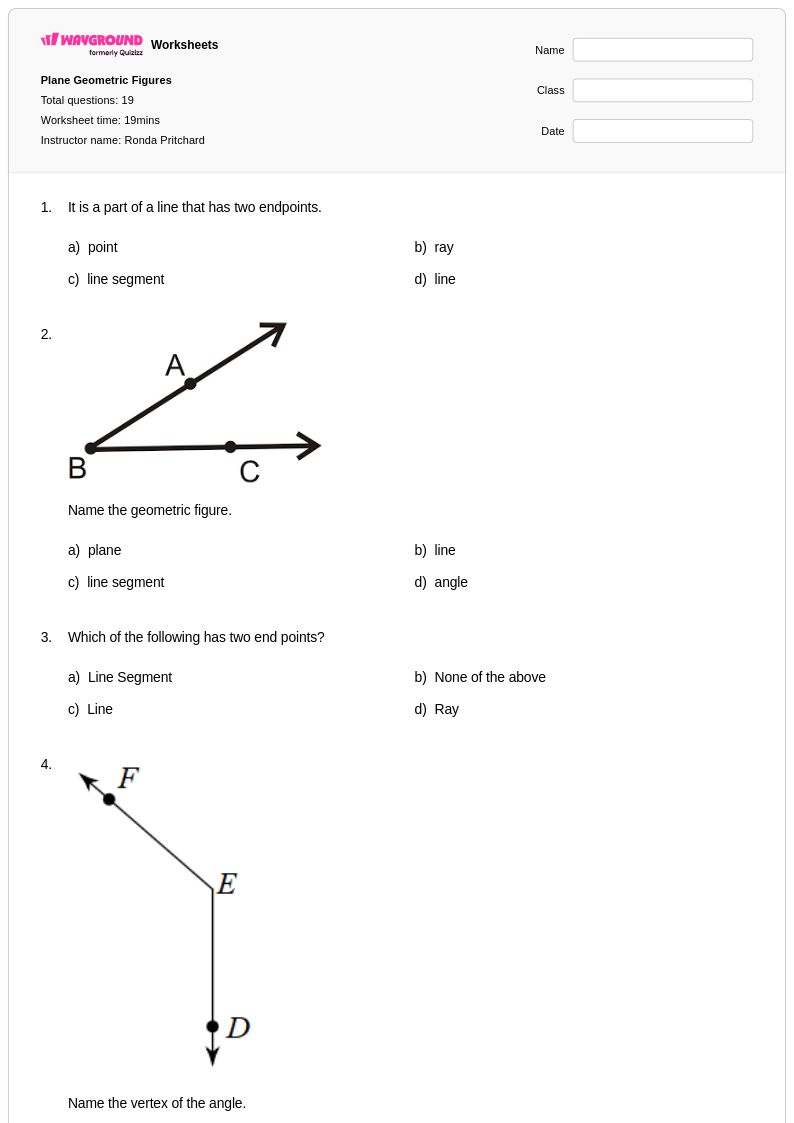
19 Q
2nd - 4th
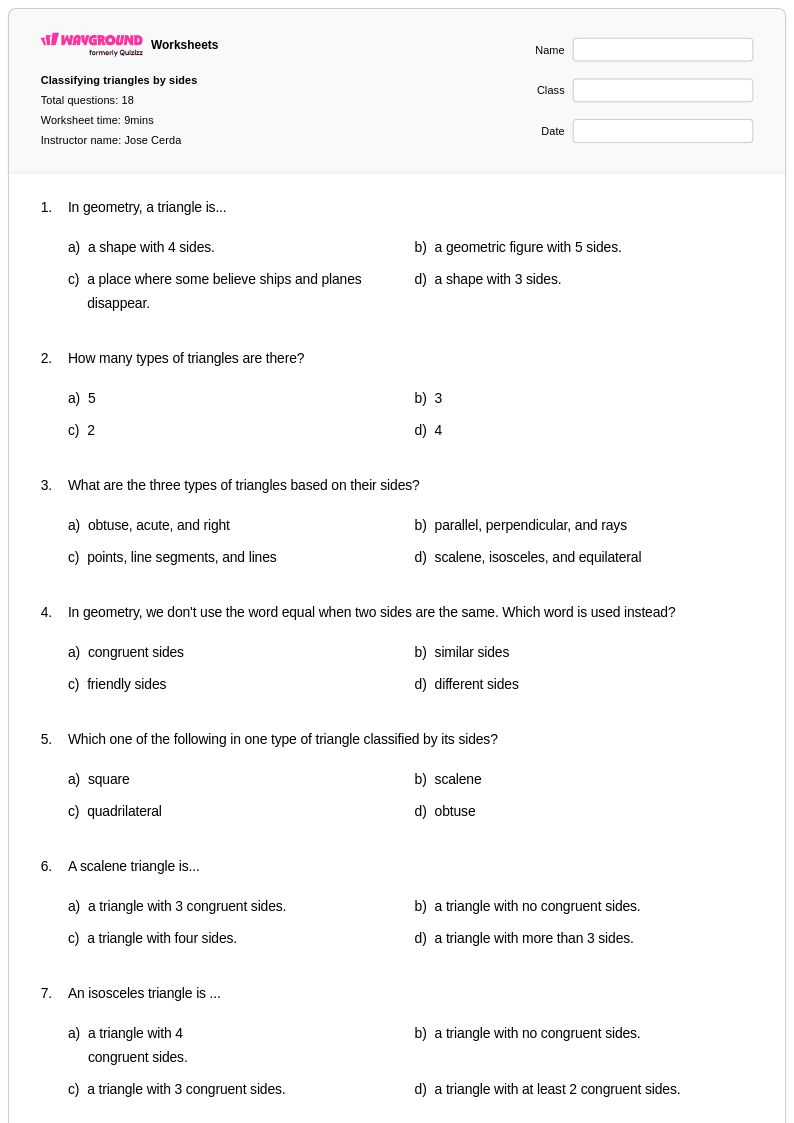
18 Q
1st - 12th
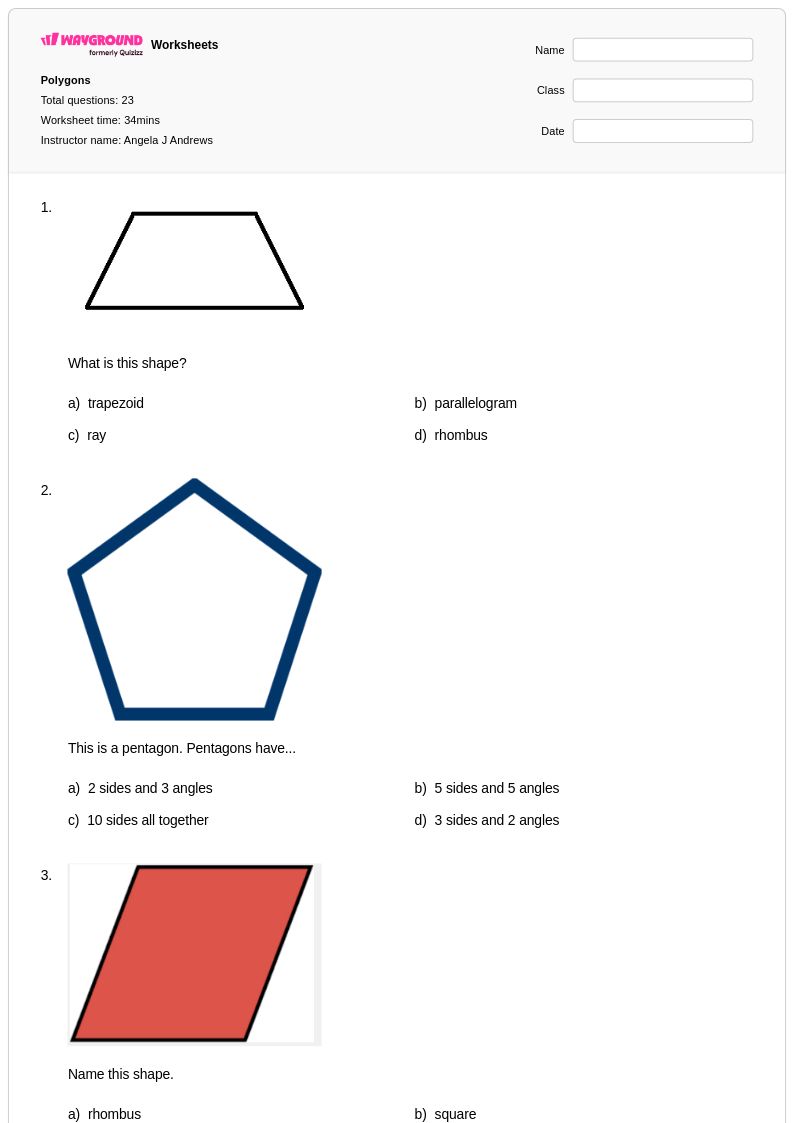
23 Q
1st - 3rd
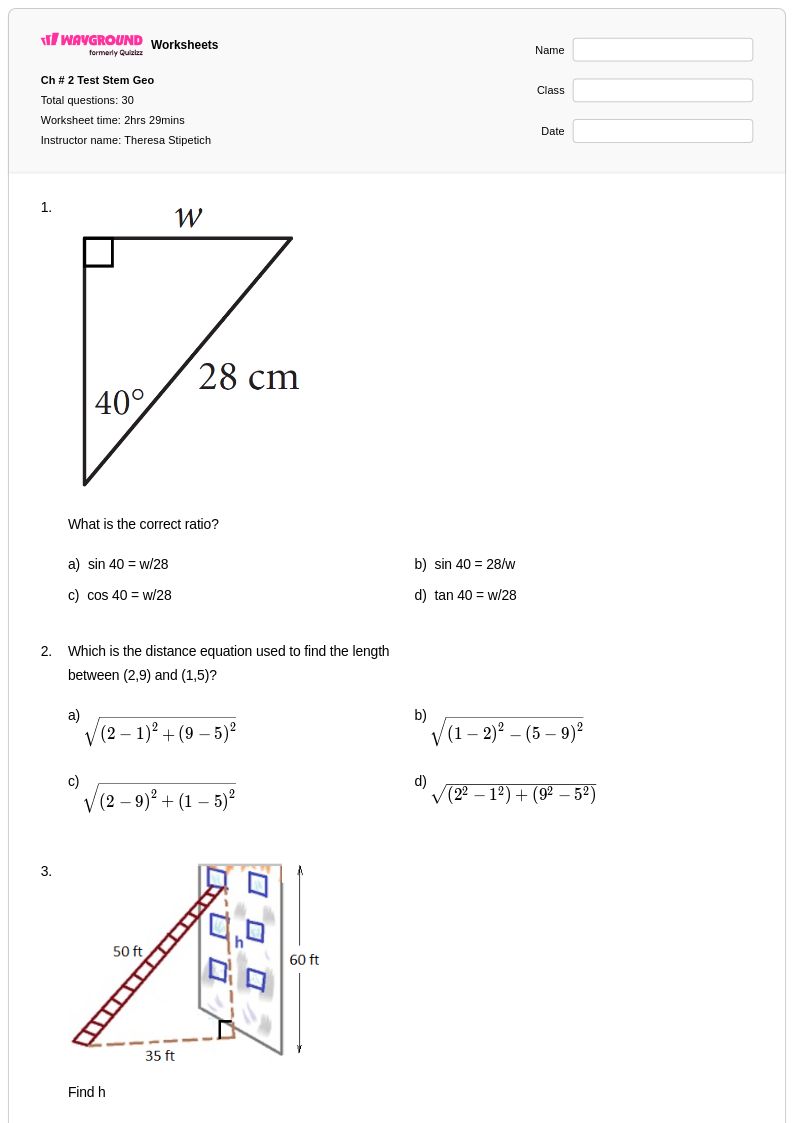
30 Q
2nd
Explore Other Subject Worksheets for year 2
Explore printable Congruent Segments worksheets for Year 2
Congruent segments worksheets for Year 2 students available through Wayground provide young learners with essential foundational geometry practice focused on identifying and comparing line segments of equal length. These carefully designed printables introduce second graders to the concept that congruent segments have the same measurement, helping them develop spatial reasoning and measurement skills through hands-on activities and visual comparisons. Each worksheet collection includes practice problems that guide students through recognizing congruent segments in various orientations and contexts, with comprehensive answer keys that enable teachers and parents to provide immediate feedback. The free pdf resources emphasize concrete understanding through manipulatives, drawings, and real-world examples that make abstract geometric concepts accessible to developing mathematical minds.
Wayground's extensive library of teacher-created congruent segments worksheets offers educators millions of resources with robust search and filtering capabilities that streamline lesson planning for Year 2 geometry instruction. The platform's standards-aligned materials support differentiated learning through customizable worksheets that can be modified to meet individual student needs, whether for remediation of foundational concepts or enrichment of advanced spatial thinking skills. Teachers benefit from flexible format options, including both printable pdf versions for traditional classroom use and digital formats for interactive learning environments. These comprehensive tools enable educators to efficiently design targeted skill practice sessions, assess student understanding of segment relationships, and provide focused intervention support that builds confidence in early geometric reasoning.
FAQs
How do I teach congruent segments to second graders?
What exercises help second graders practice congruent segments?
What mistakes do Grade 2 students make with congruent segments?
How can I use Grade 2 congruent segments worksheets?
How do congruent segments fit the Common Core Grade 2 curriculum?
How can I differentiate congruent segments practice in Grade 2?
Are congruent segments taught in Grade 2?