
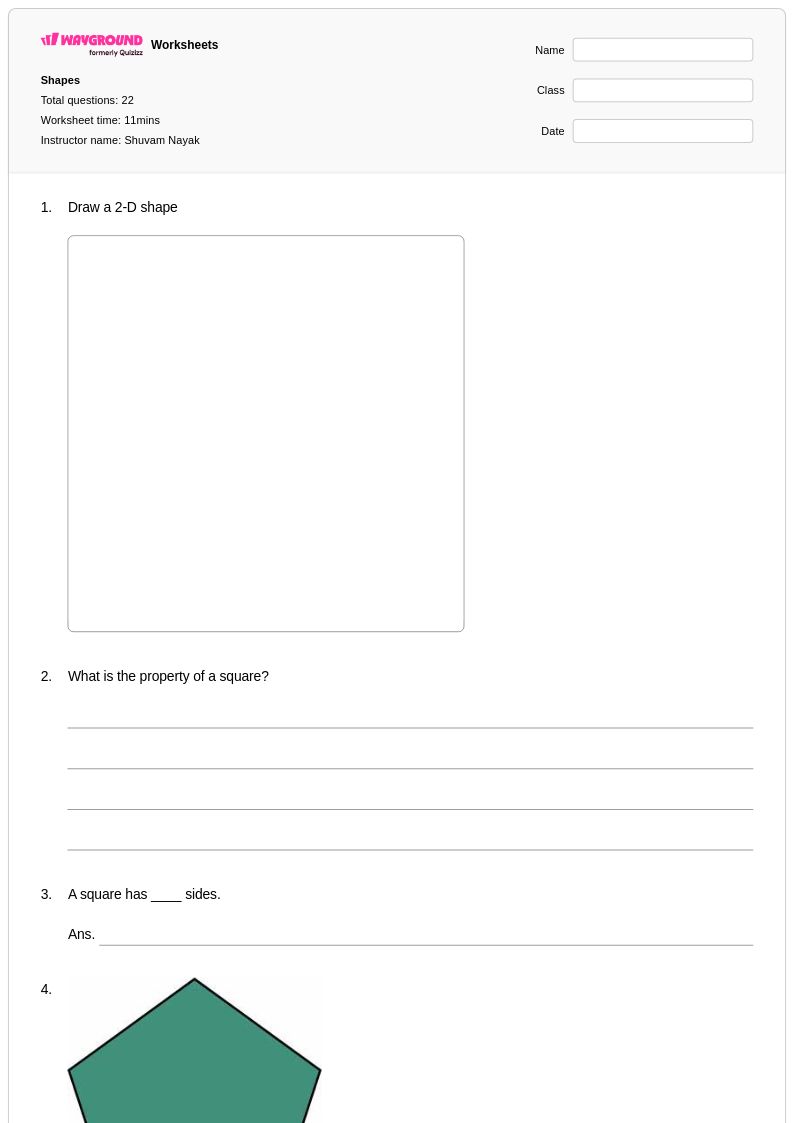
22 Q
1st - 5th
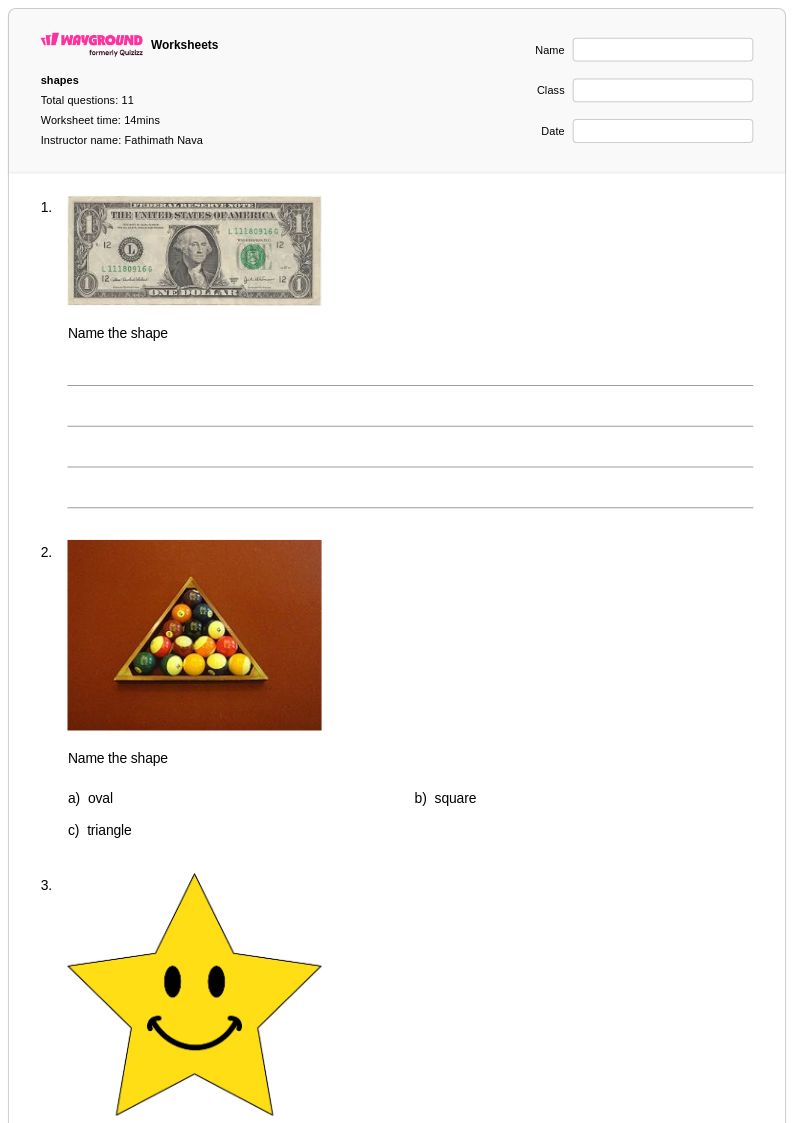
11 Q
2nd
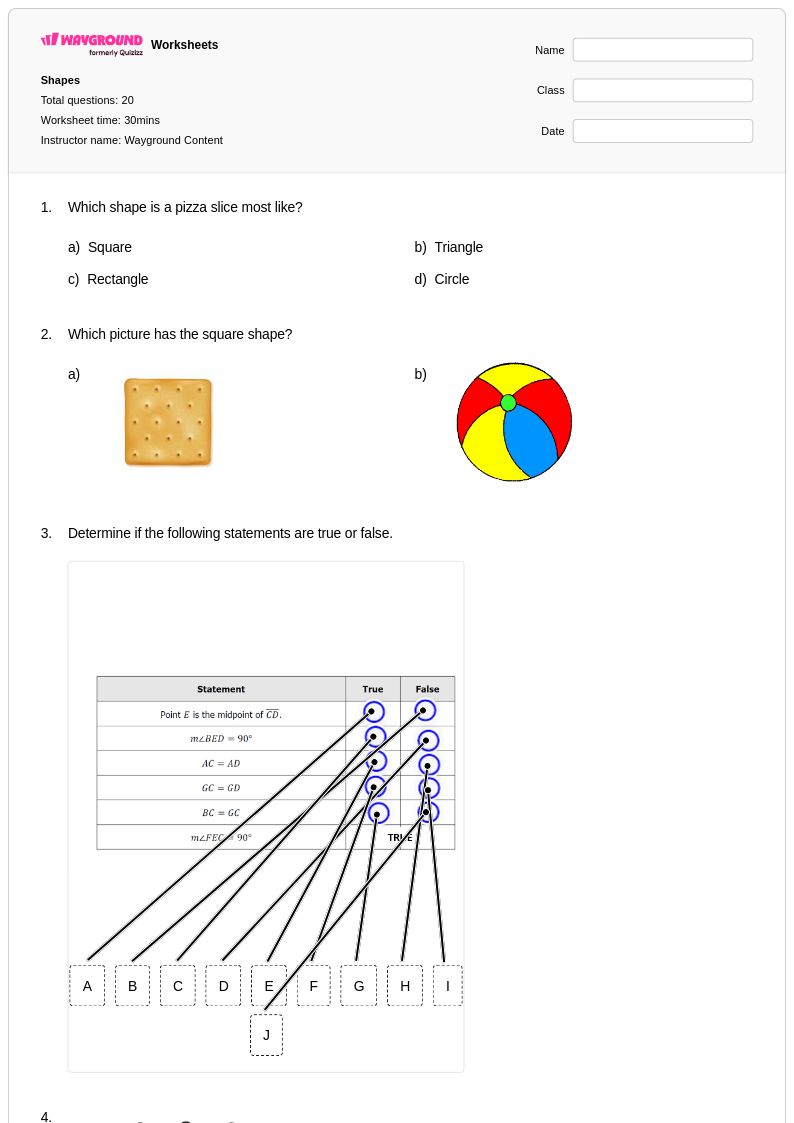
20 Q
1st - 2nd
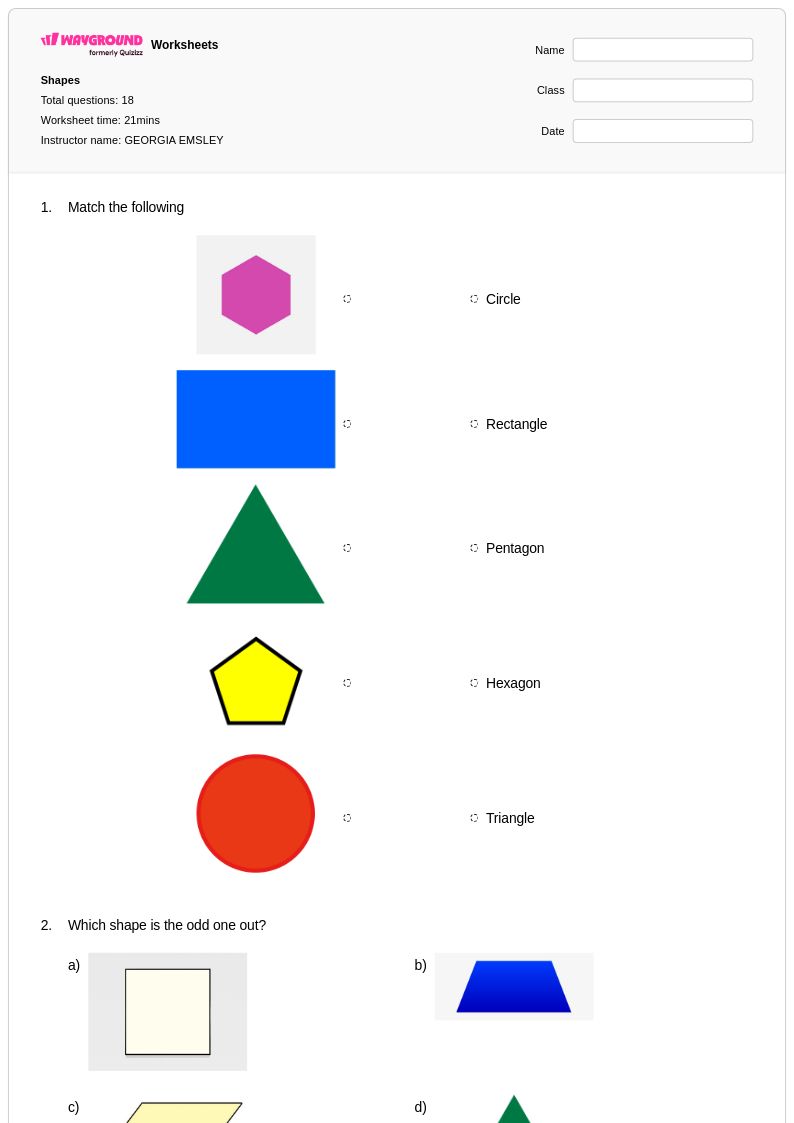
18 Q
2nd
20 Q
2nd
13 Q
2nd
10 Q
2nd - Uni
8 Q
2nd
14 Q
1st - 5th
10 Q
2nd
14 Q
2nd
10 Q
2nd
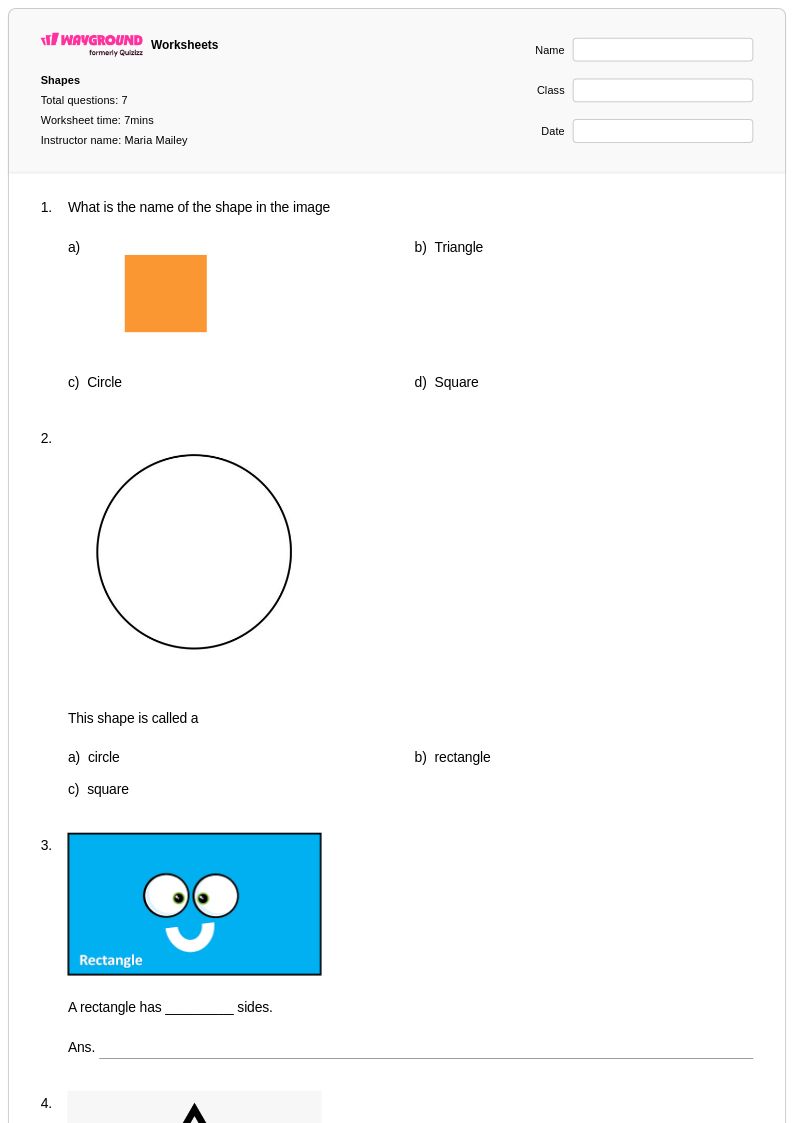
7 Q
1st - 2nd
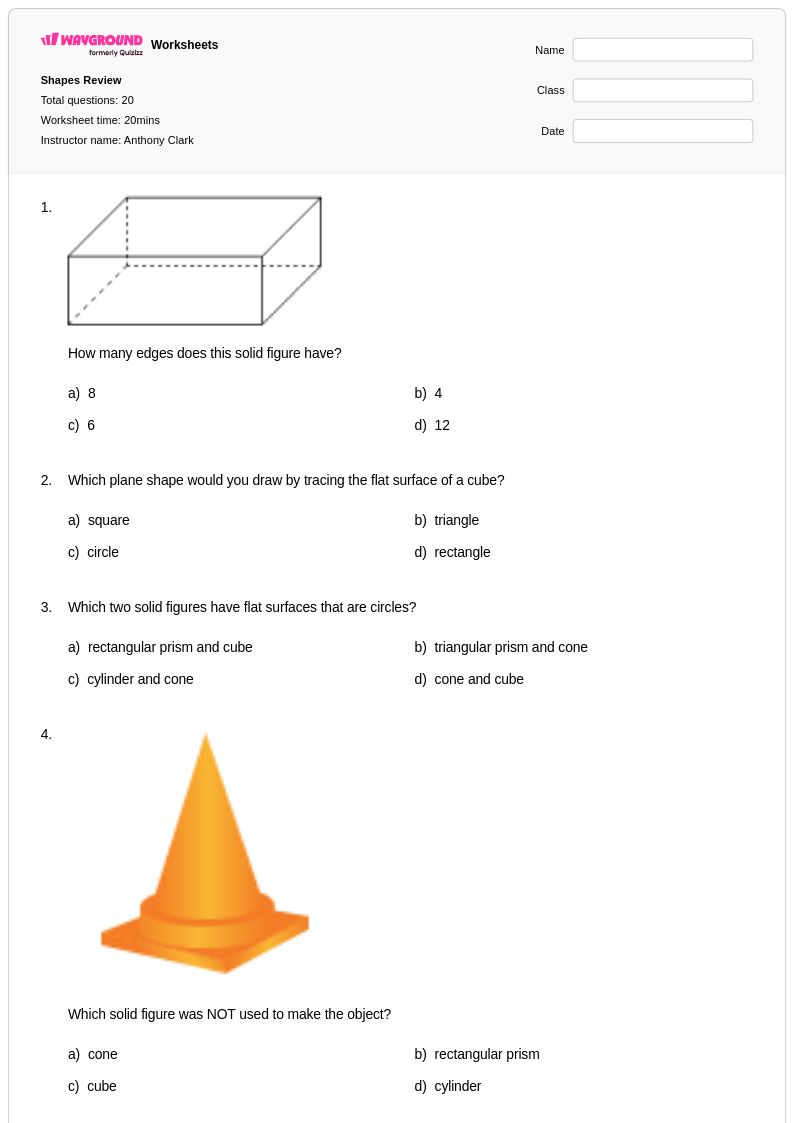
20 Q
2nd - Uni
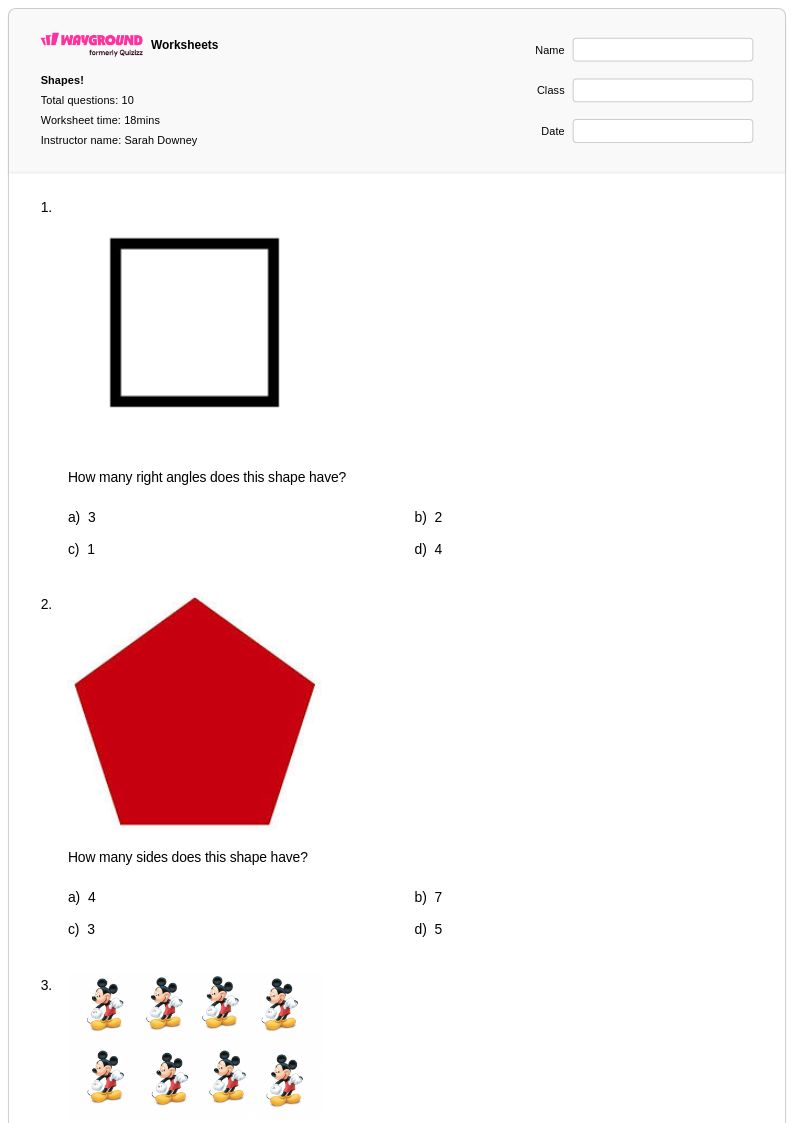
10 Q
2nd
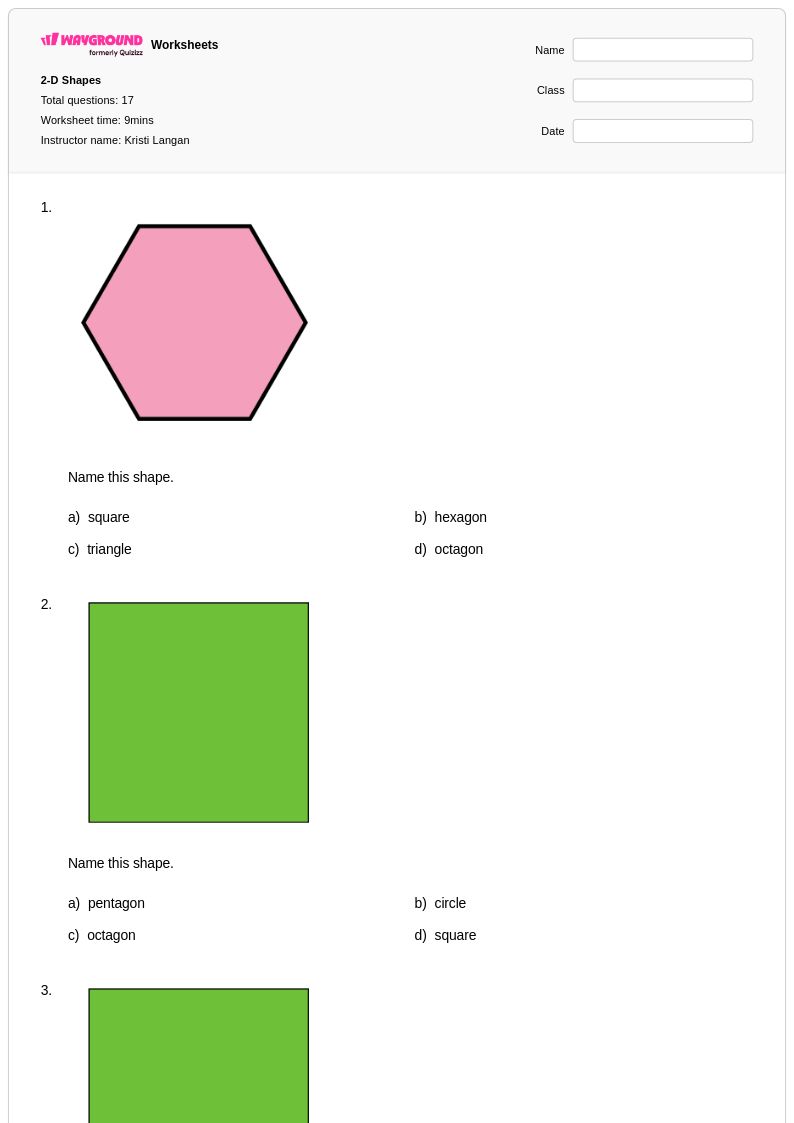
17 Q
1st - 3rd
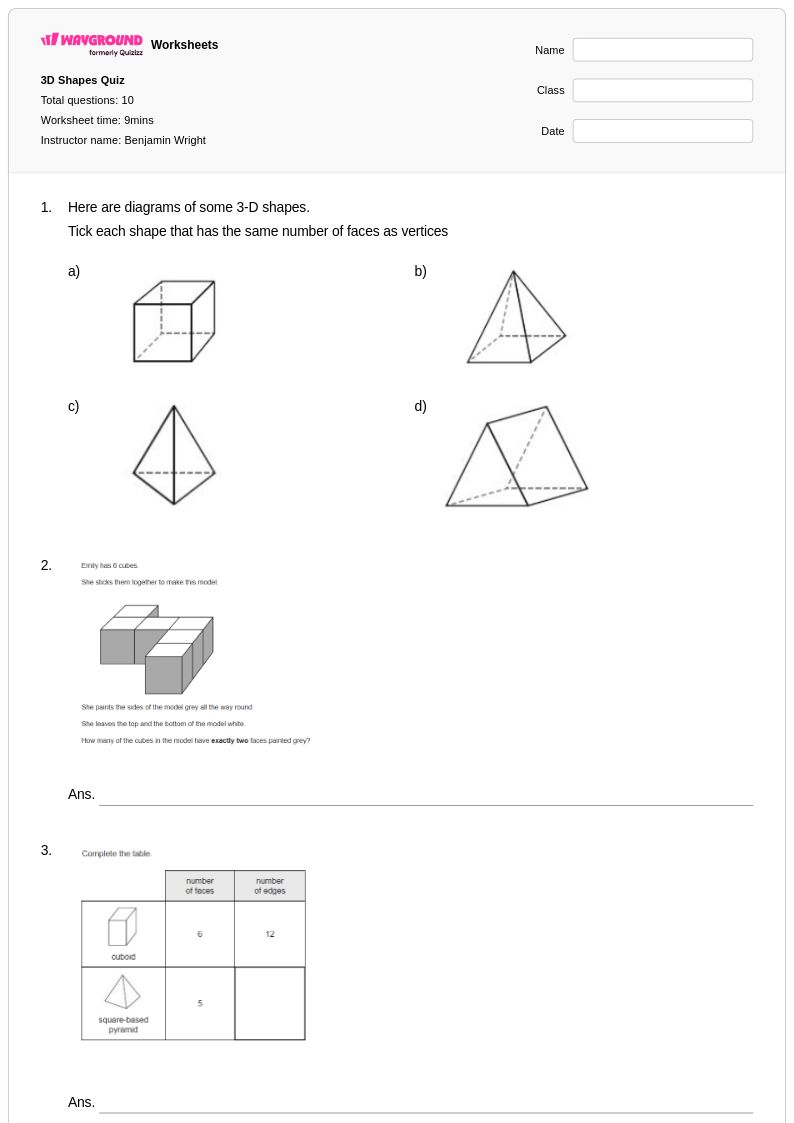
10 Q
1st - 5th
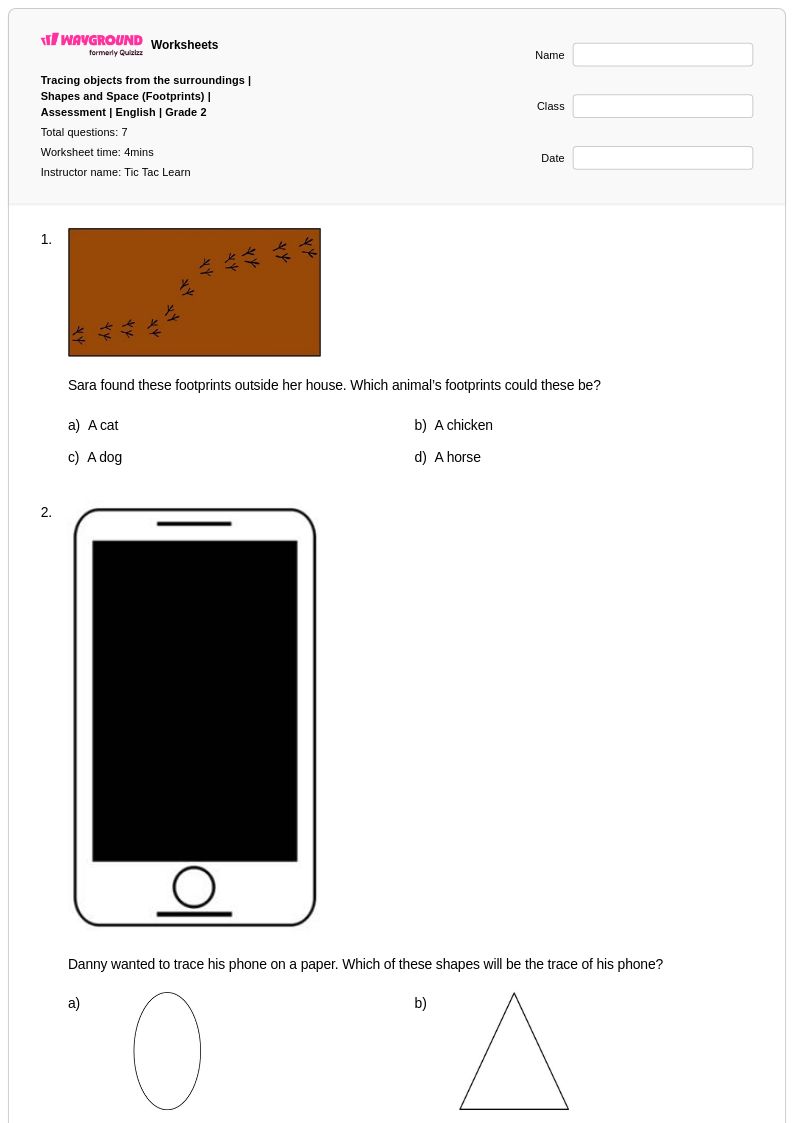
7 Q
2nd
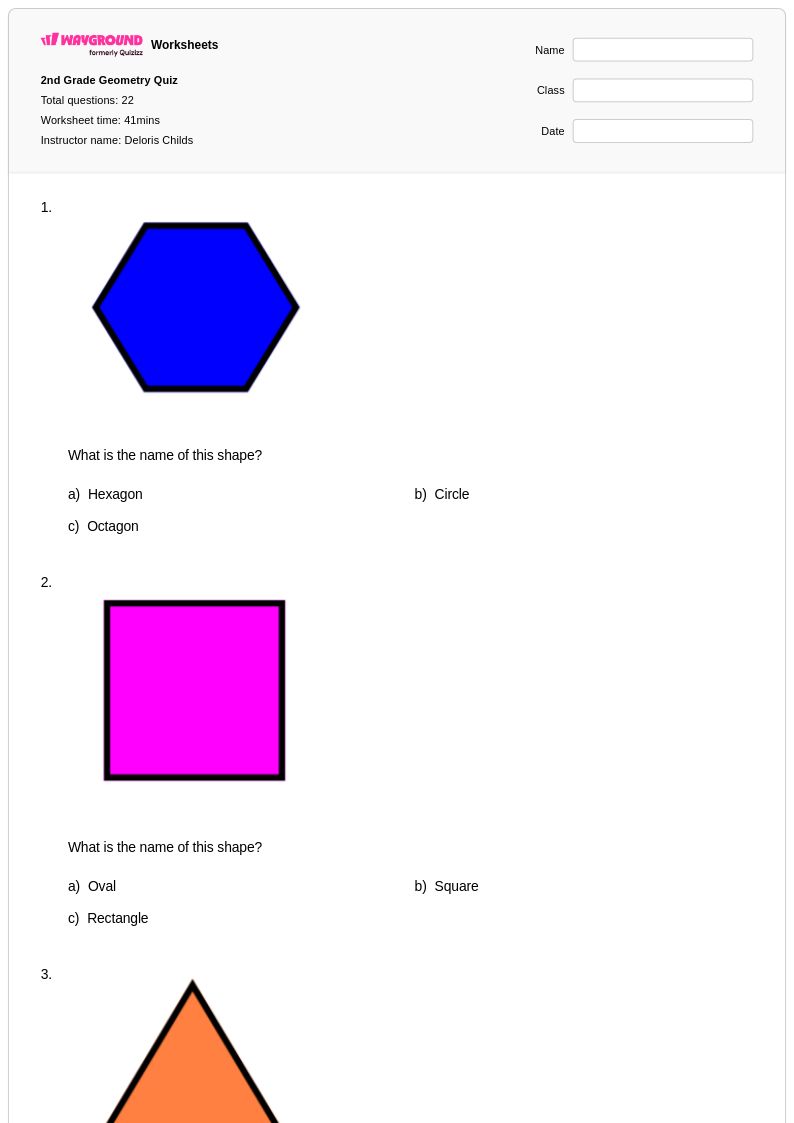
22 Q
2nd
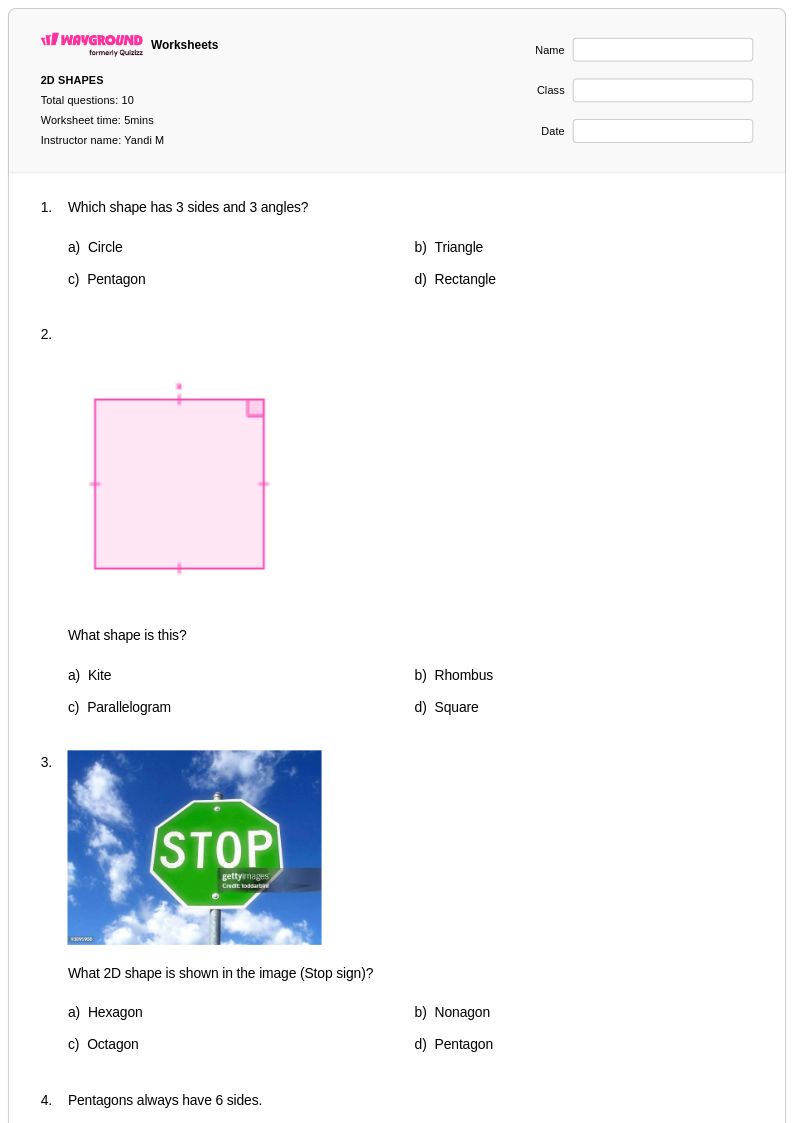
10 Q
1st - Uni
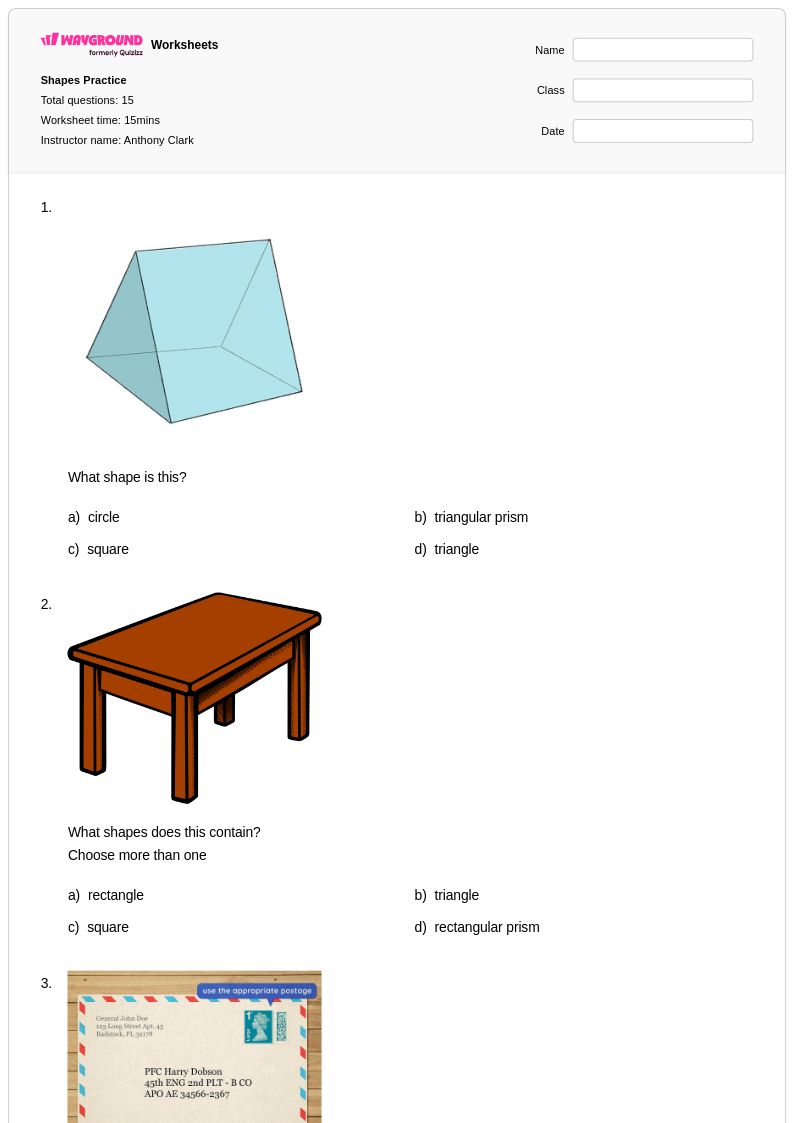
15 Q
1st - Uni
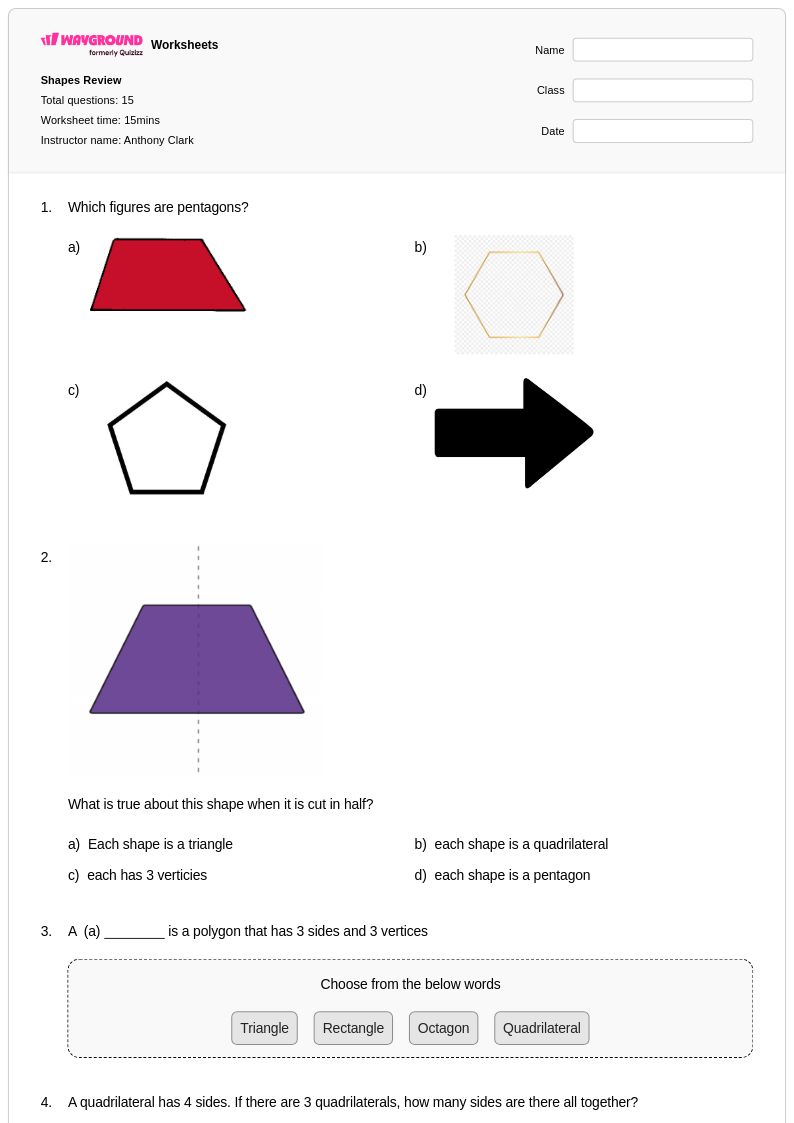
15 Q
2nd - Uni
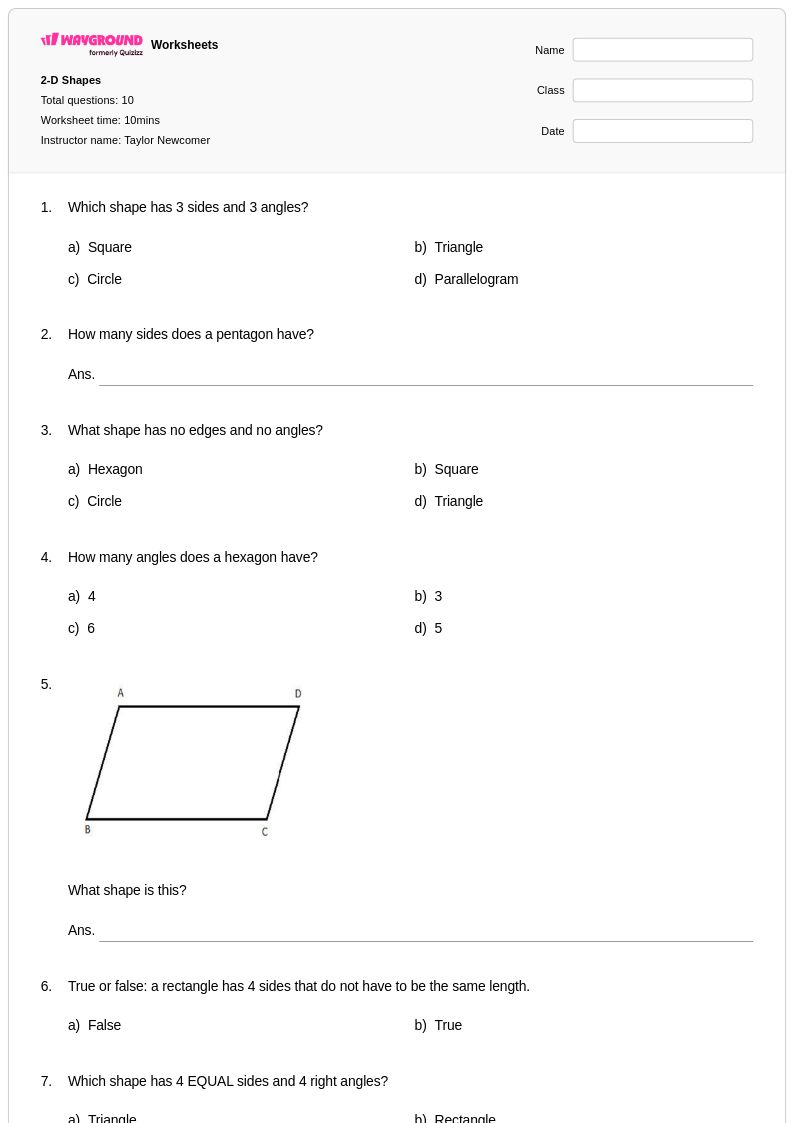
10 Q
2nd
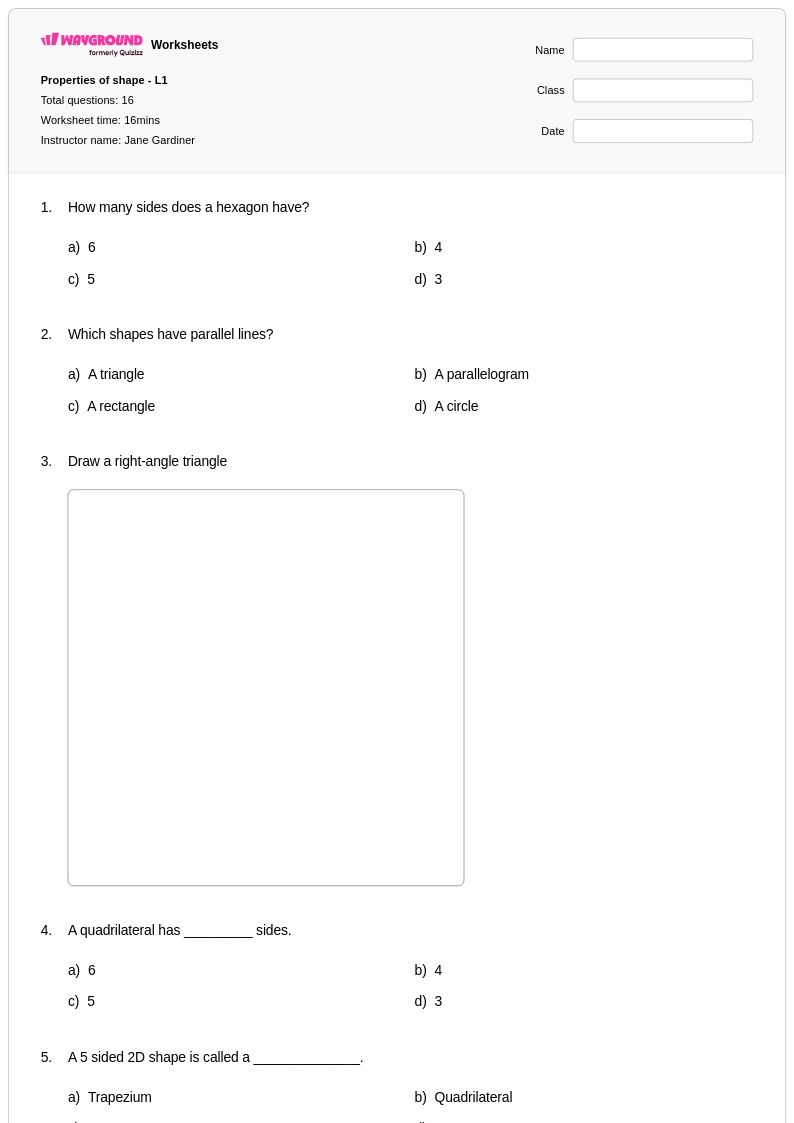
16 Q
1st - 2nd
Explore Tracing Shapes Worksheets by Grades
Explore Other Subject Worksheets for year 2
Explore printable Tracing Shapes worksheets for Year 2
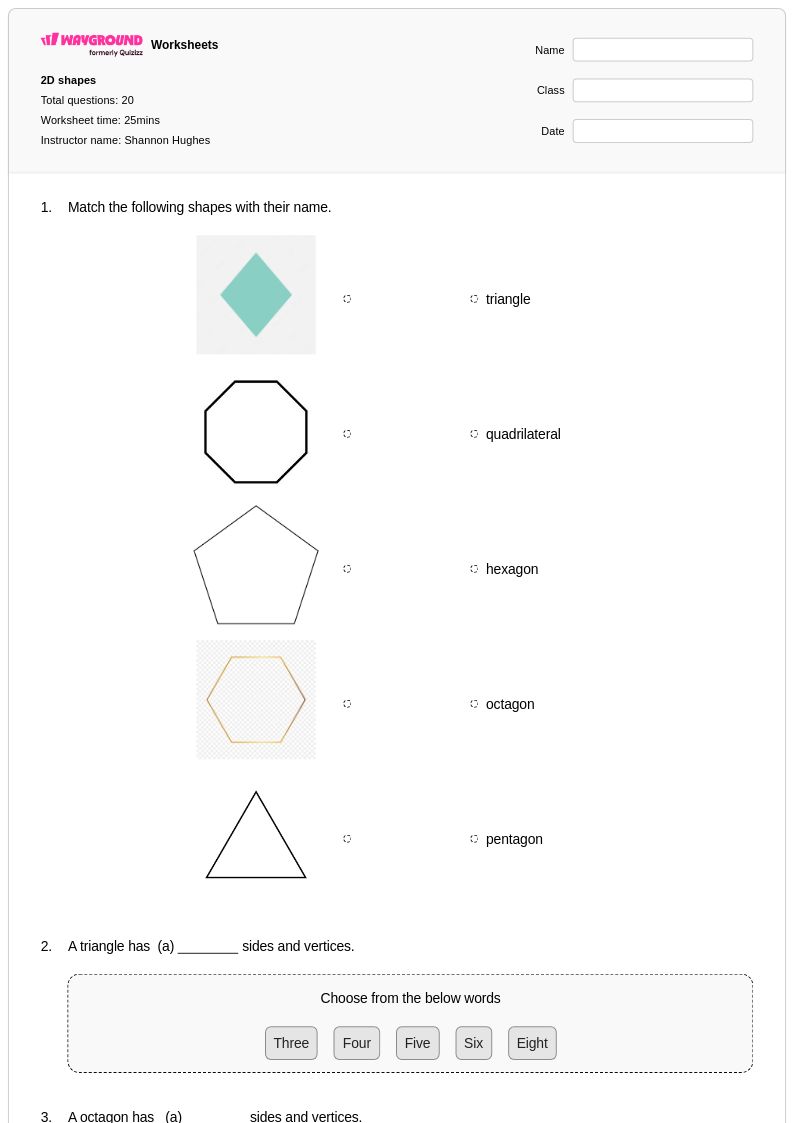
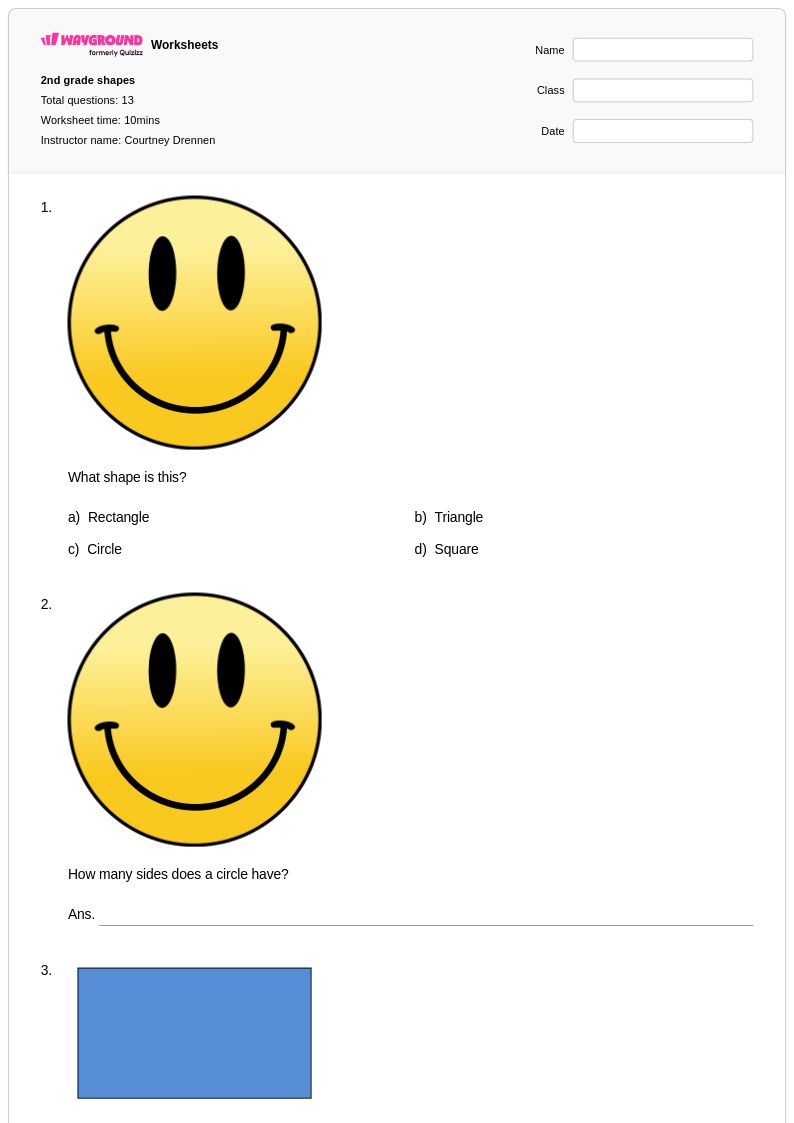
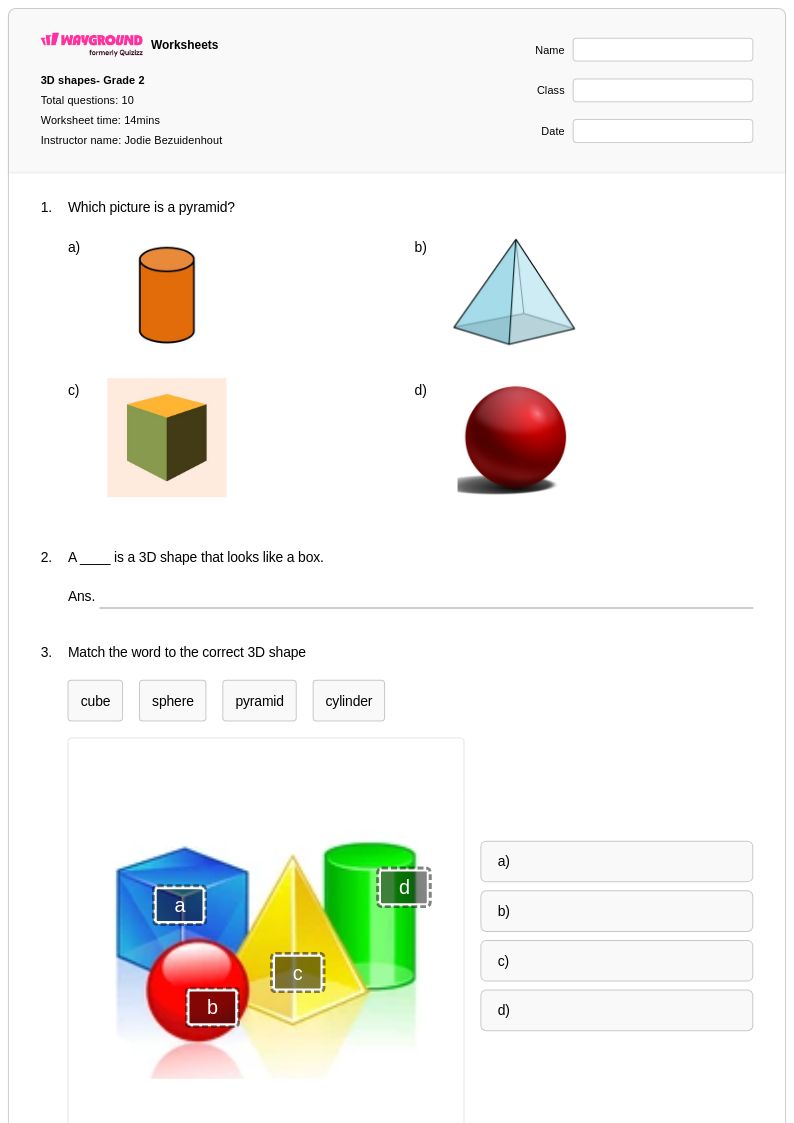
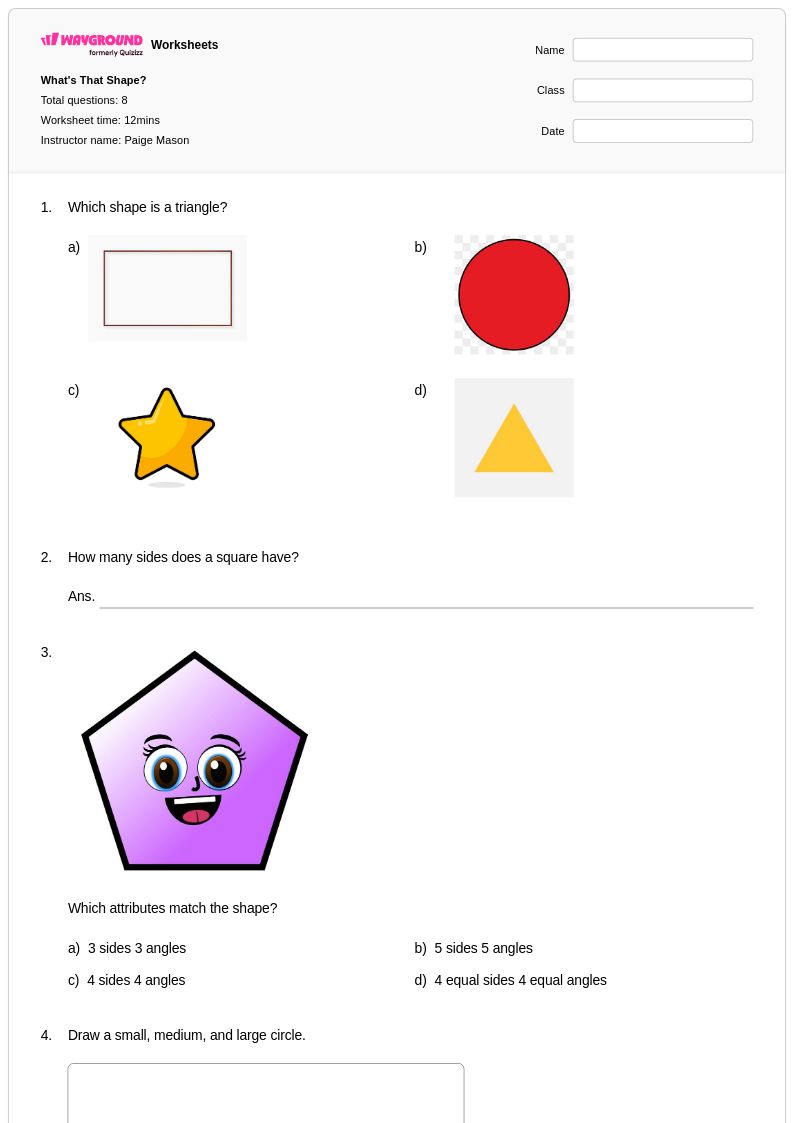
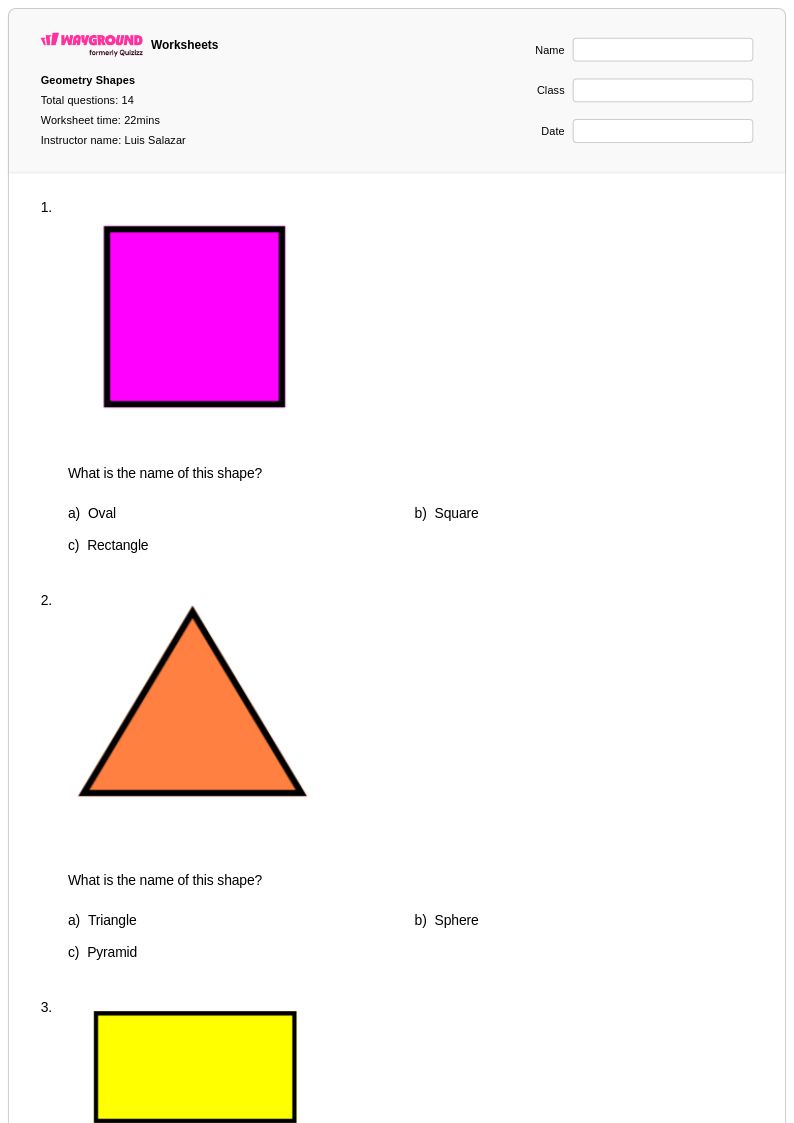
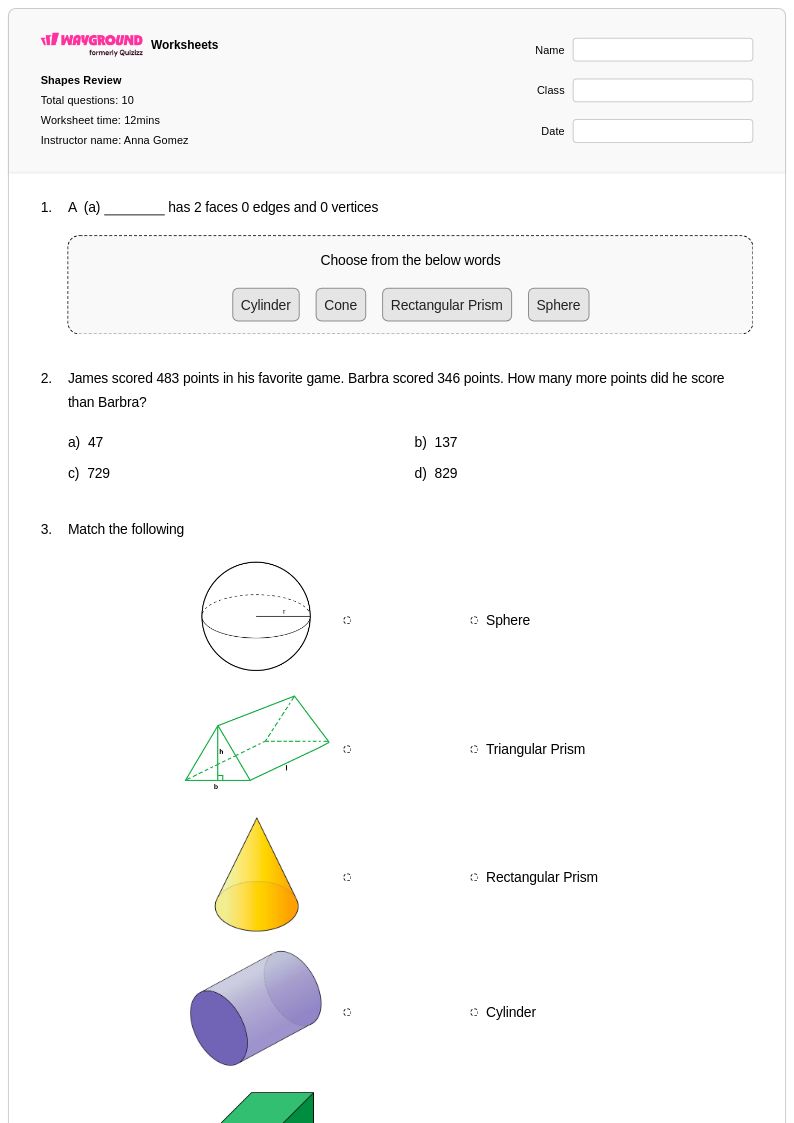
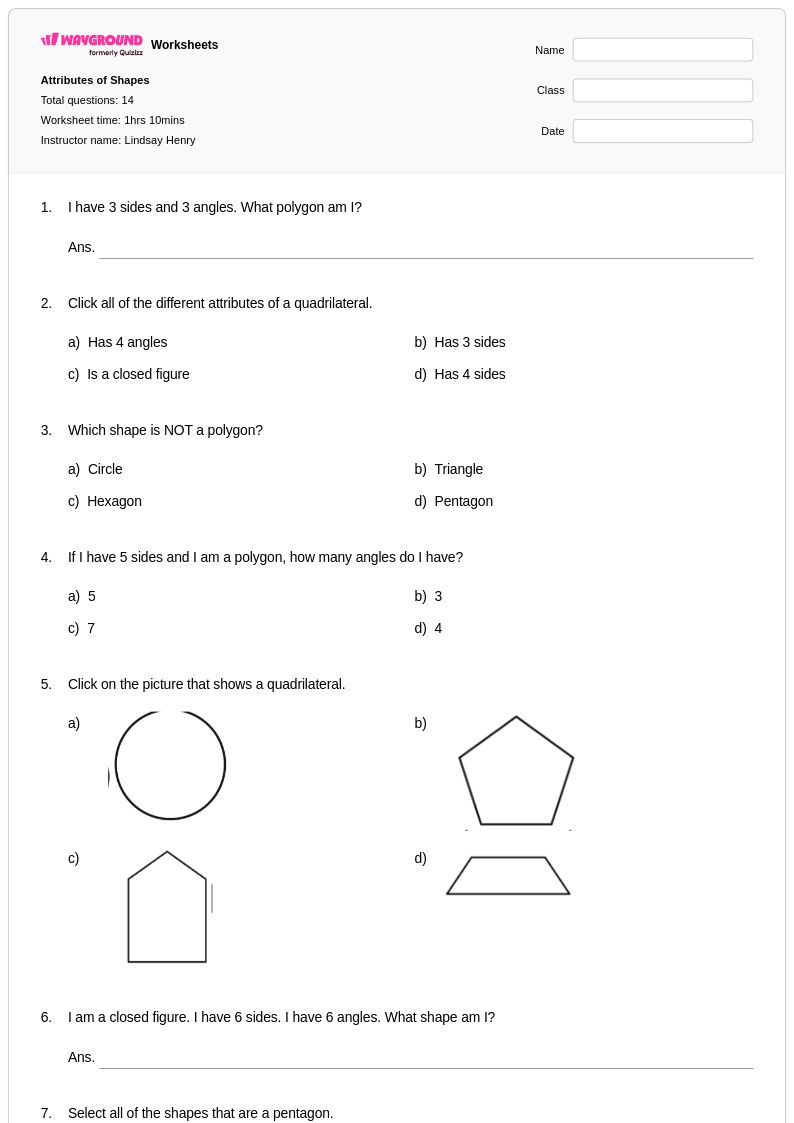
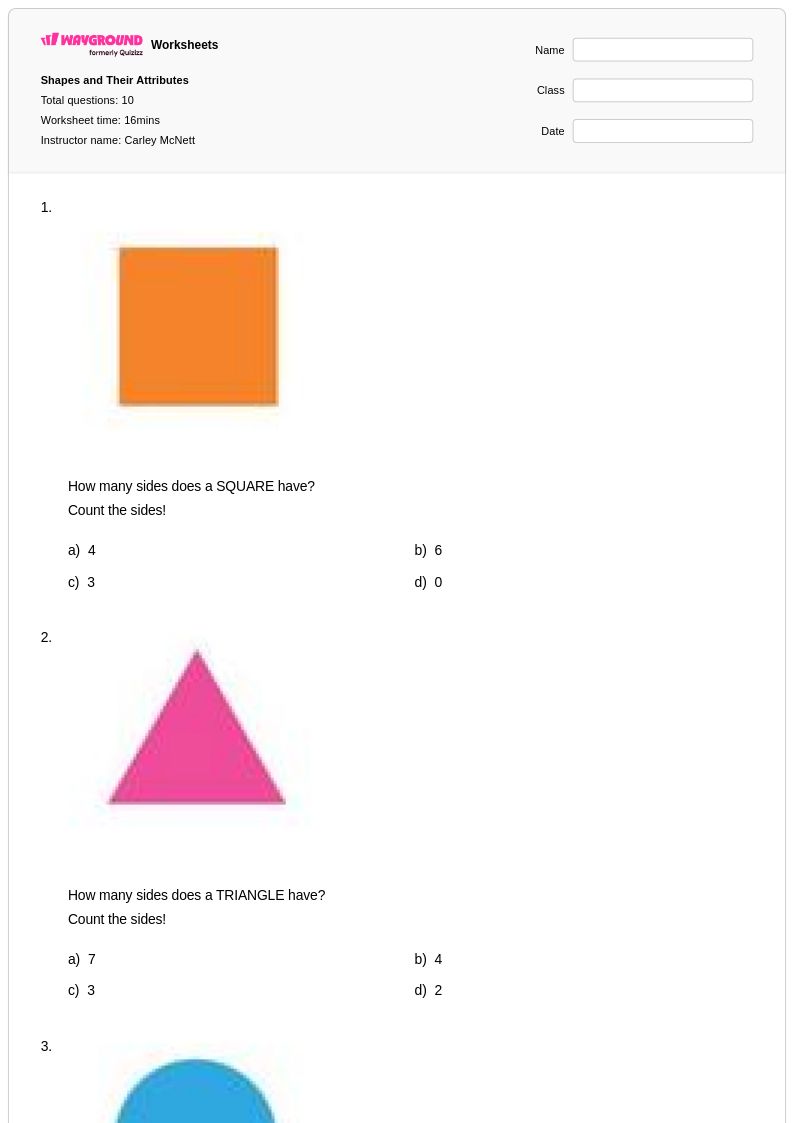
Tracing shapes worksheets for Year 2 students available through Wayground (formerly Quizizz) provide essential foundational practice in geometry fundamentals that young learners need to develop spatial awareness and fine motor coordination. These carefully designed printables focus on helping second-grade students recognize, trace, and understand basic geometric shapes including circles, squares, triangles, rectangles, and other polygons through engaging hands-on activities. Each worksheet strengthens critical skills such as shape identification, proper pencil control, and visual-motor integration while building confidence in early mathematical concepts. Teachers can access comprehensive practice problems that progress from simple single-shape tracing to more complex multi-shape exercises, with answer keys provided to support efficient assessment and immediate feedback during geometry instruction.
Wayground (formerly Quizizz) empowers educators with millions of teacher-created tracing shapes resources specifically designed for Year 2 mathematics instruction, featuring robust search and filtering capabilities that allow teachers to quickly locate materials aligned with curriculum standards and individual student needs. The platform's differentiation tools enable seamless customization of worksheets to accommodate various learning levels within the classroom, from students requiring additional support with basic shape recognition to those ready for advanced geometric challenges. These flexible resources are available in both printable pdf formats for traditional paper-based learning and digital formats for interactive classroom technology, making them invaluable for lesson planning, targeted remediation sessions, enrichment activities, and consistent skill practice that reinforces geometric concepts throughout the academic year.