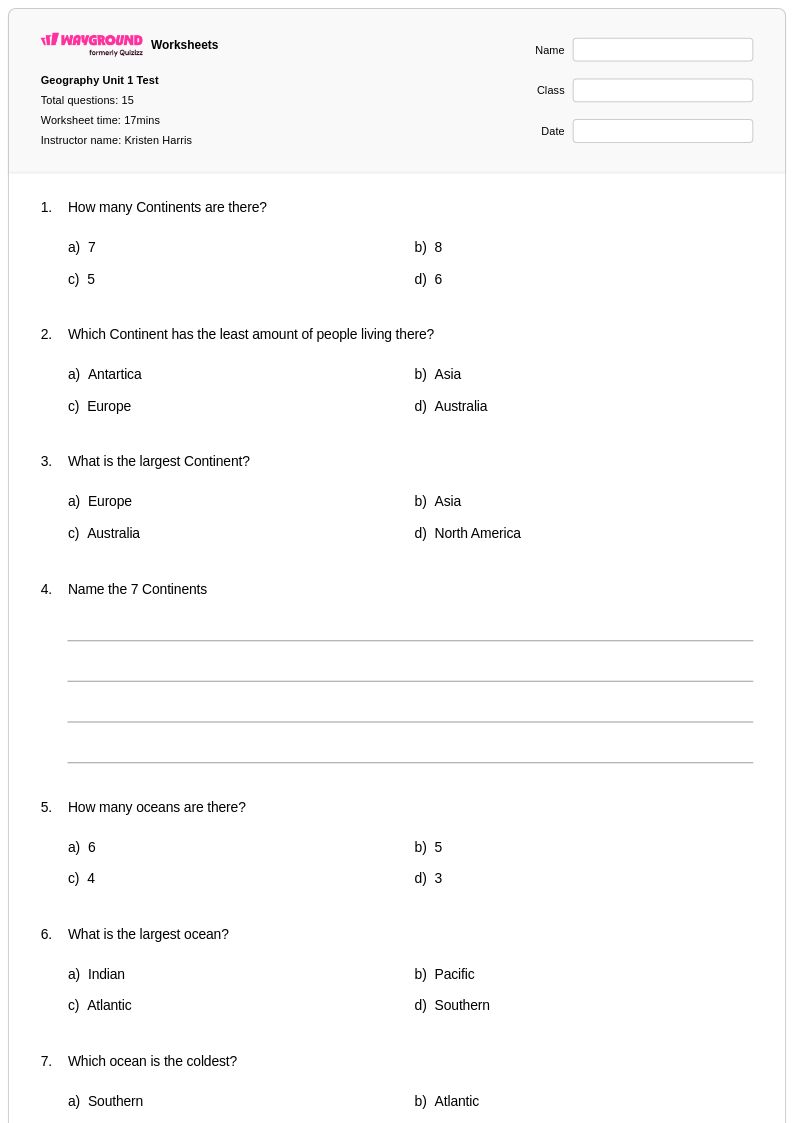
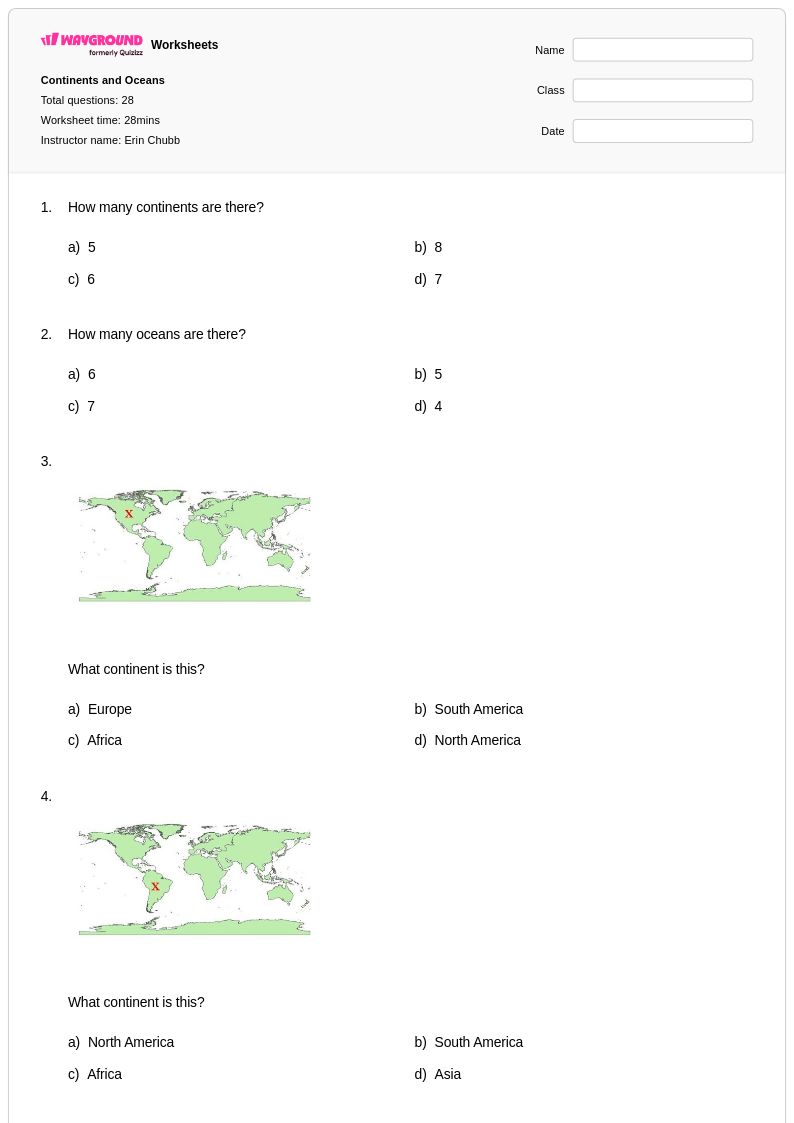
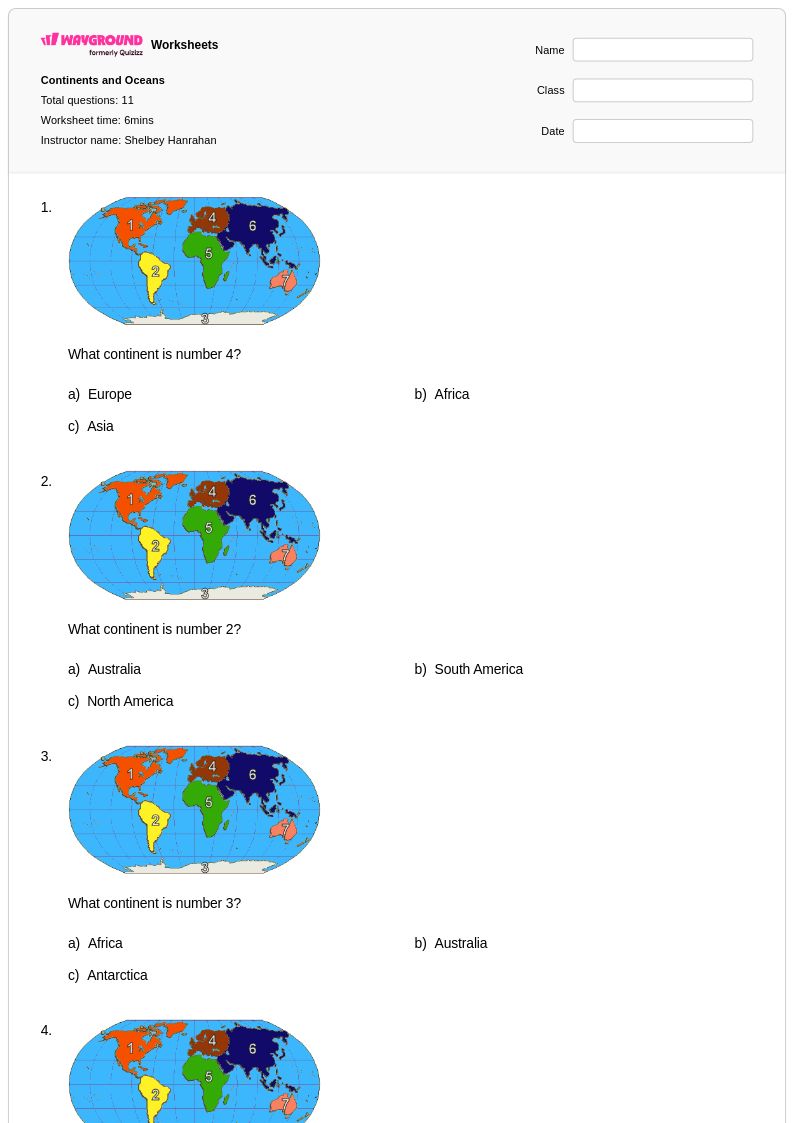
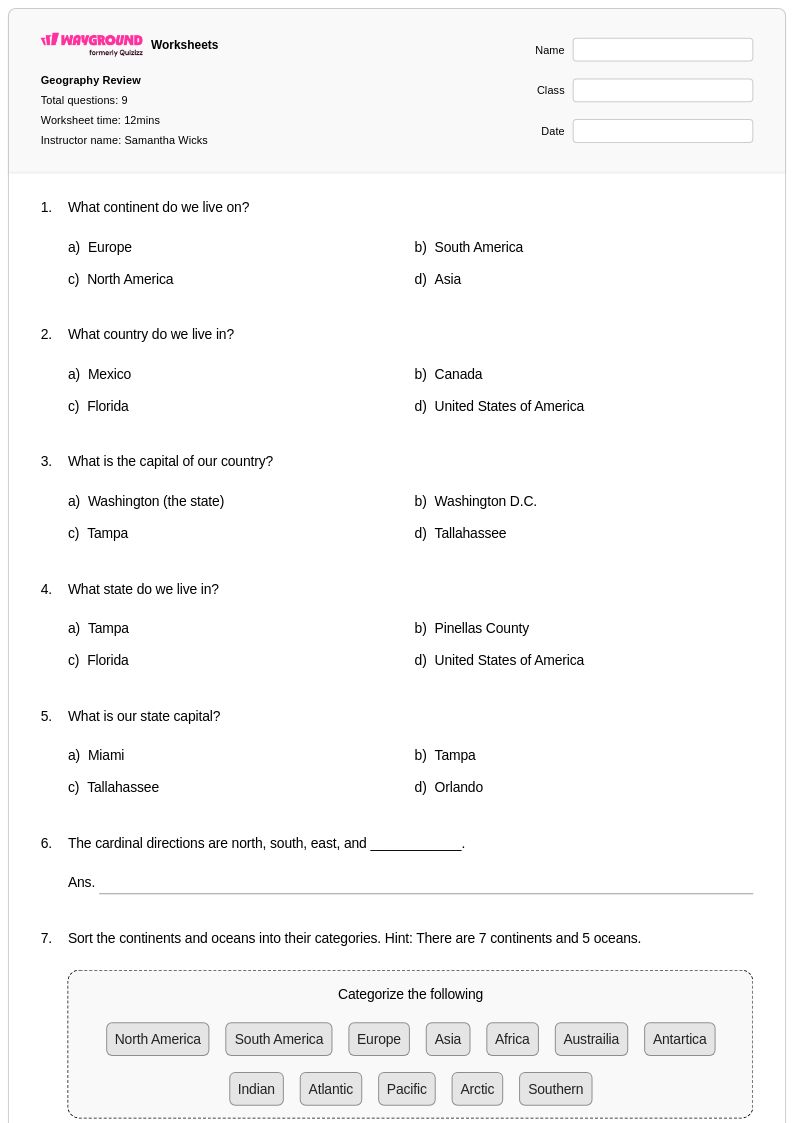
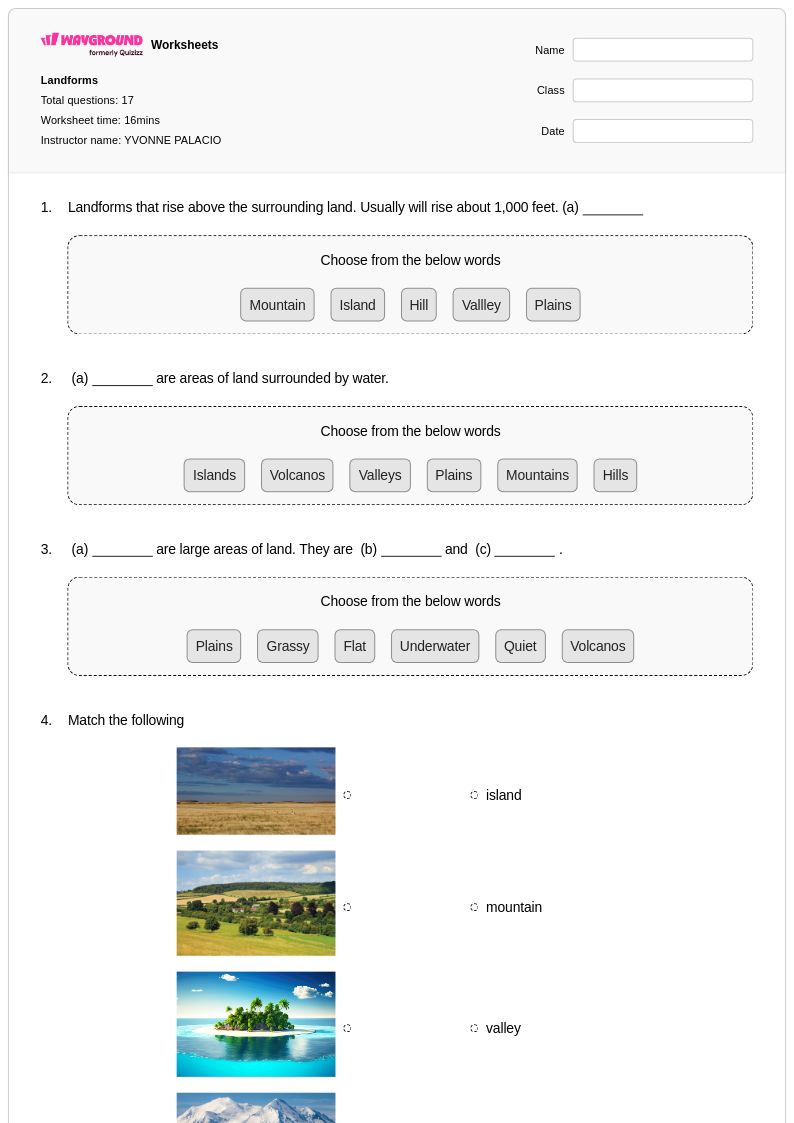
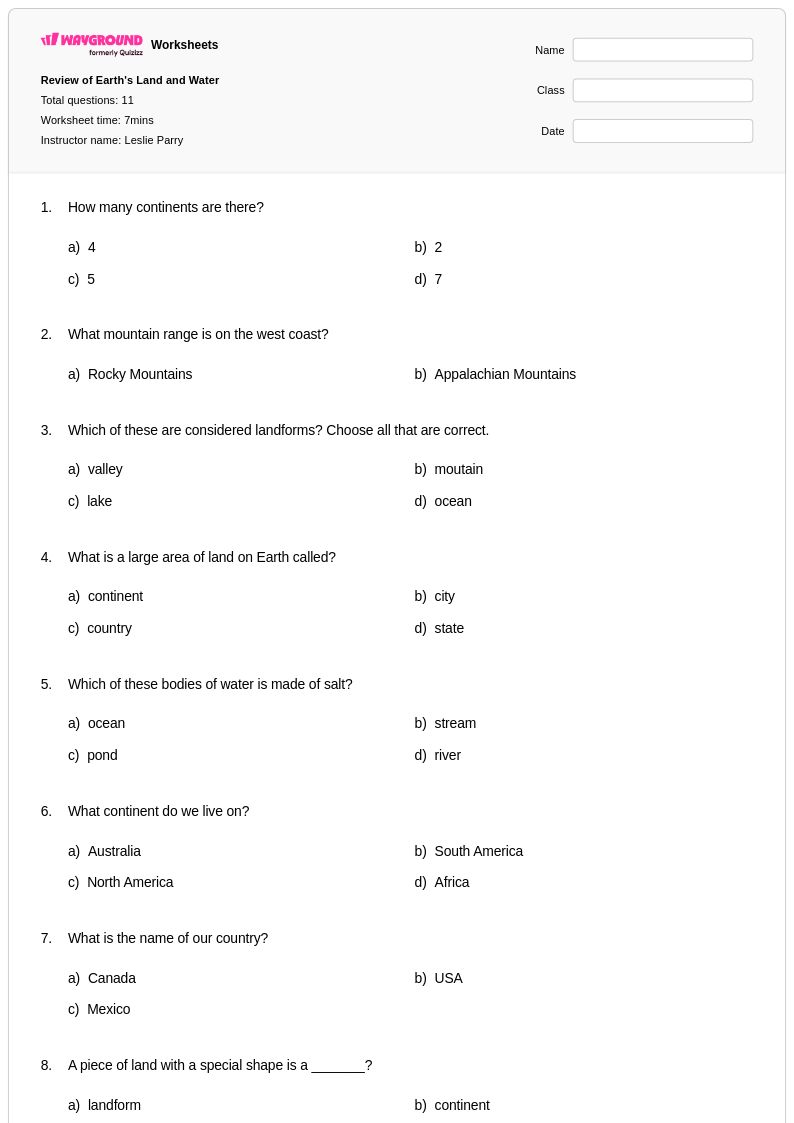
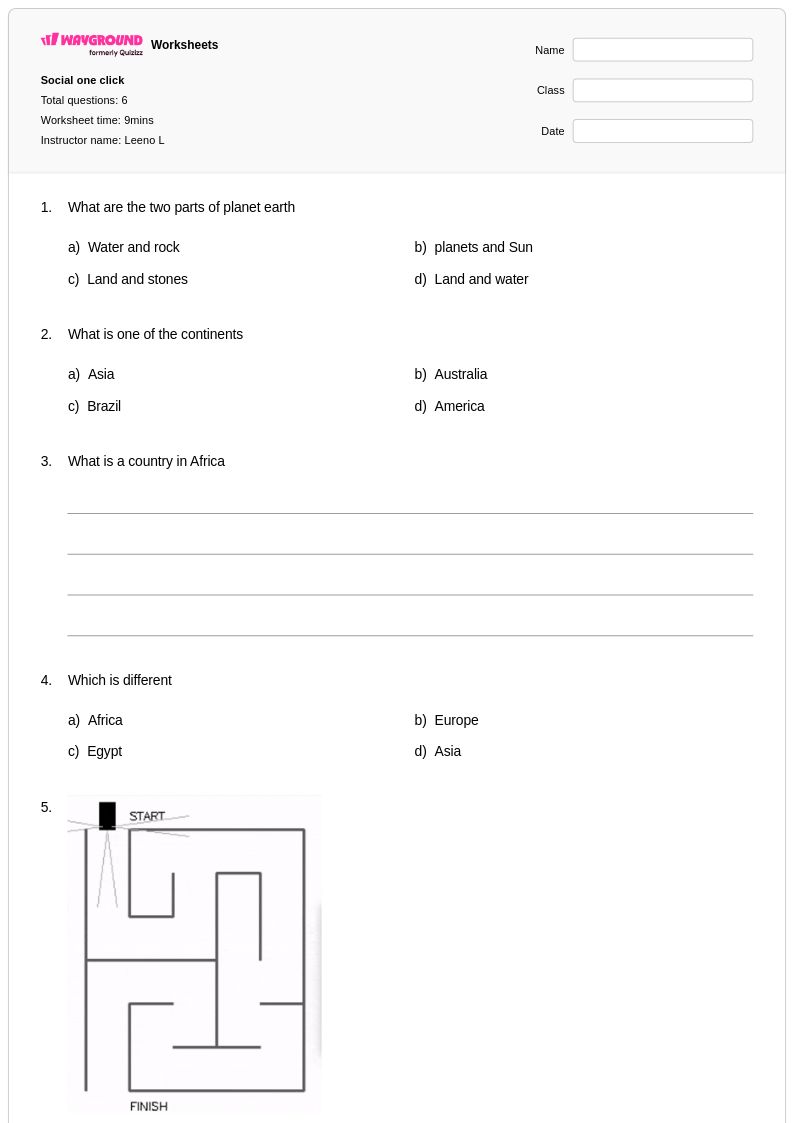
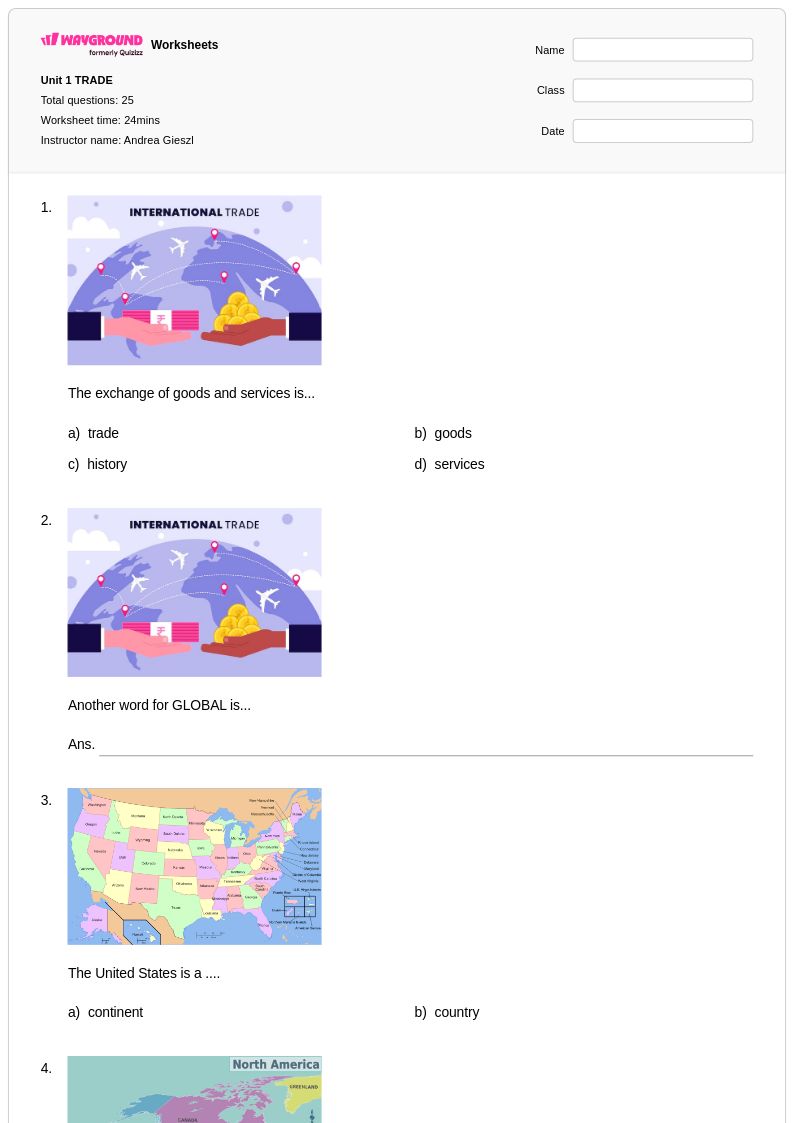
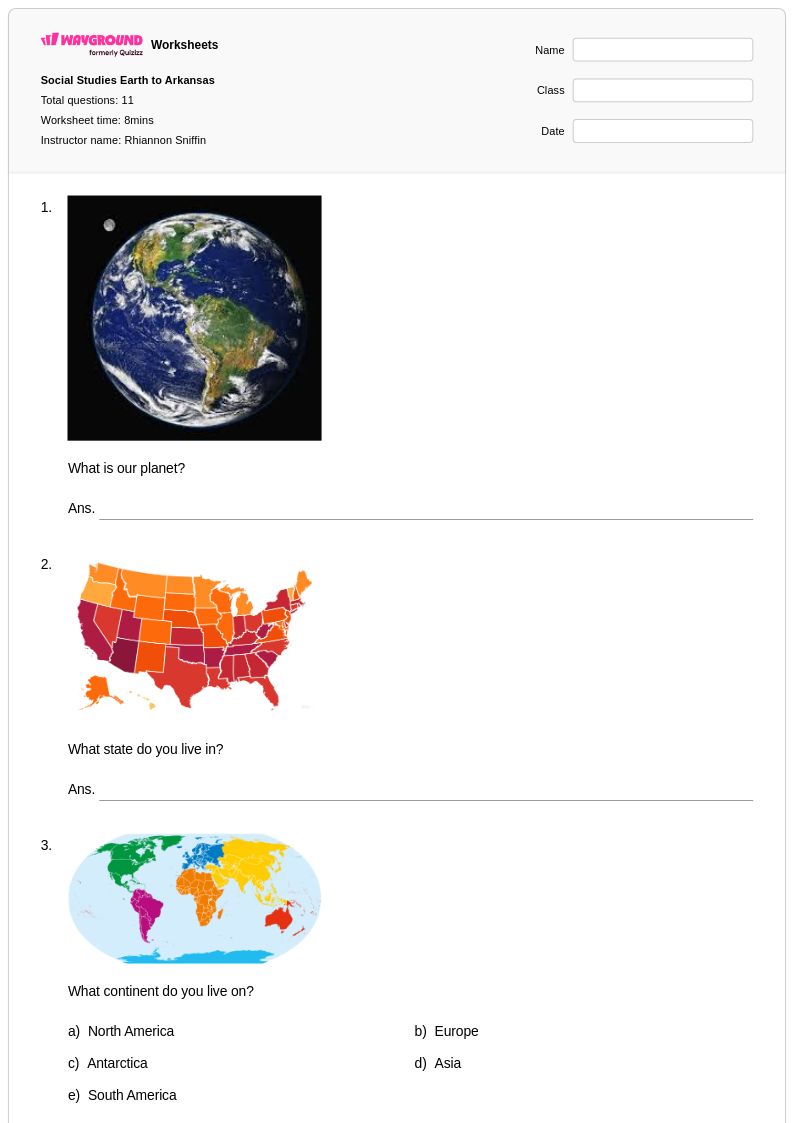
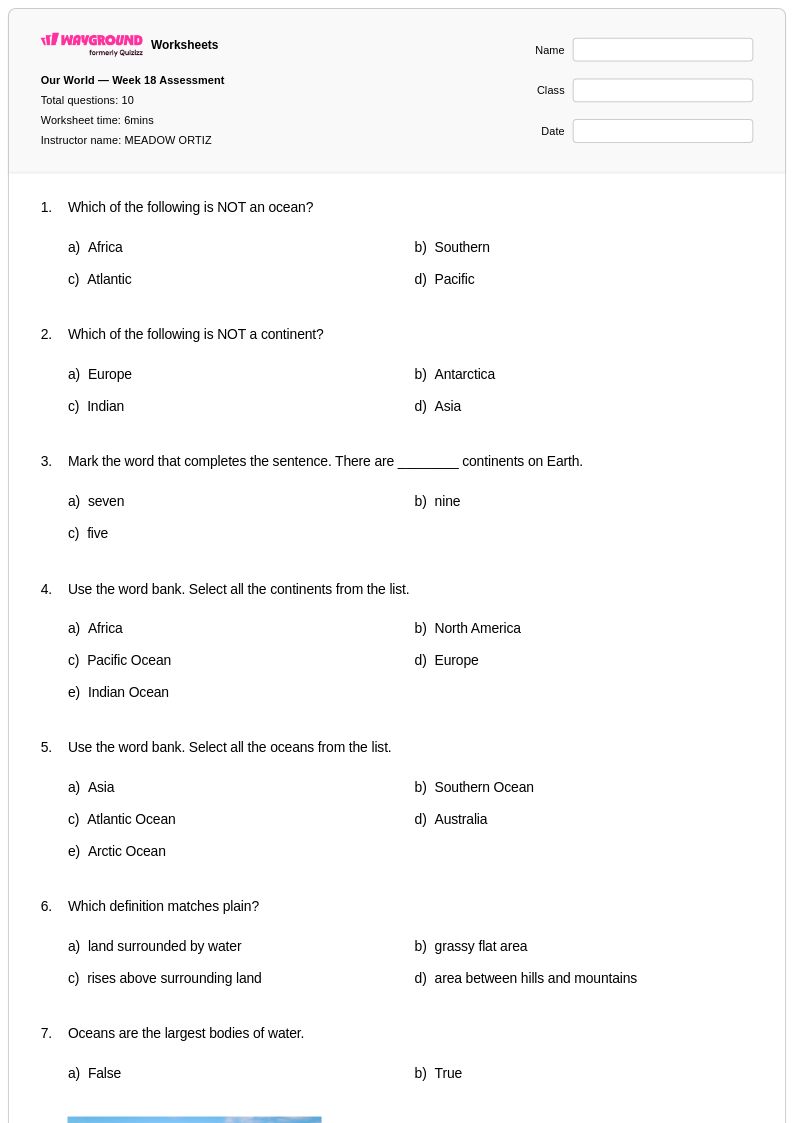
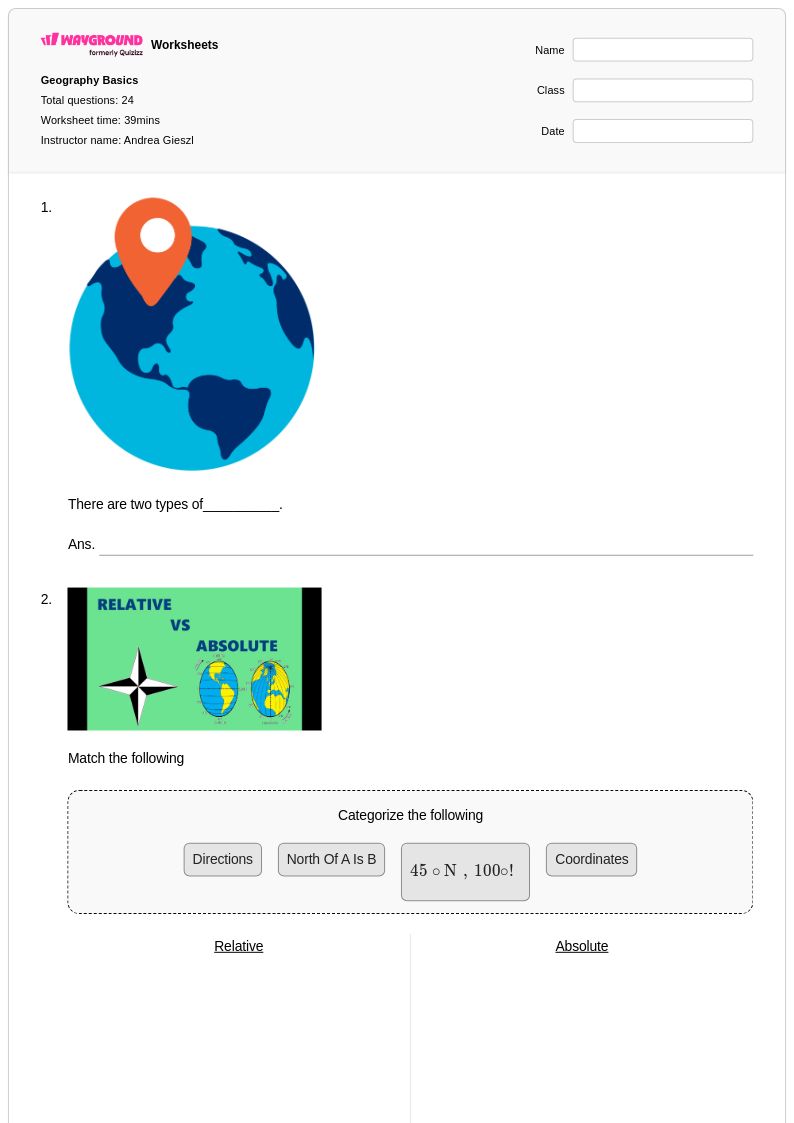
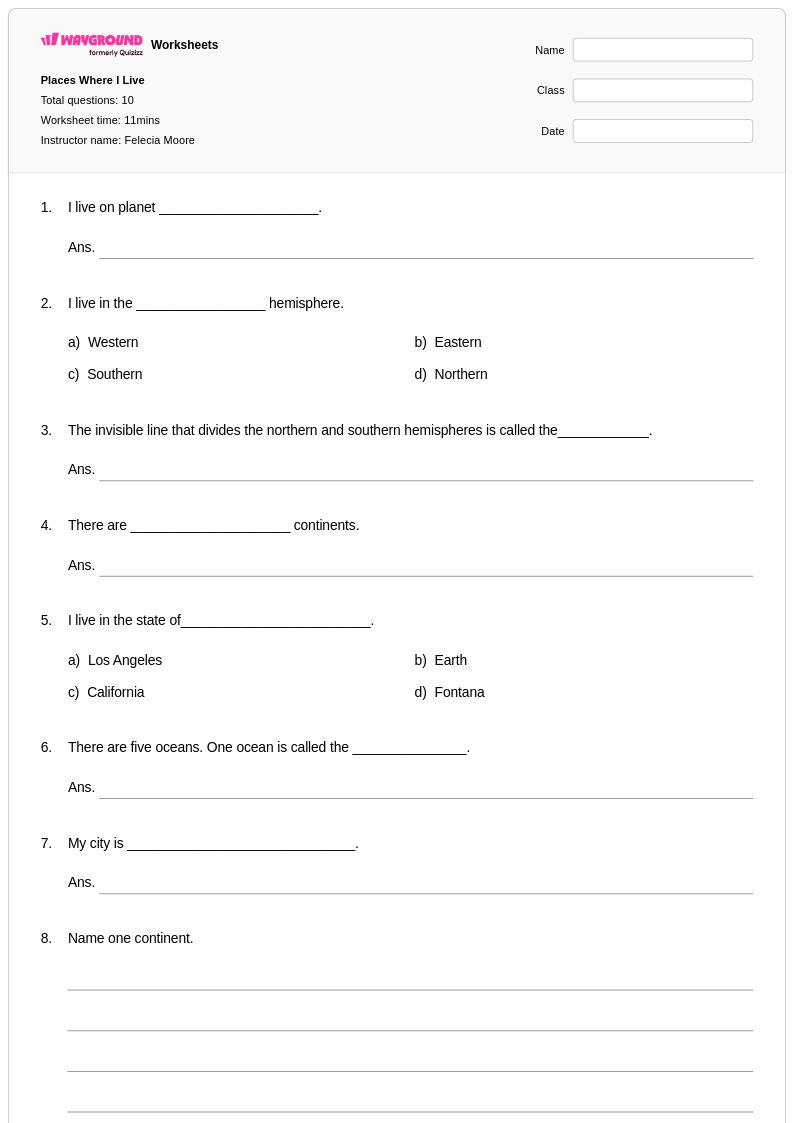
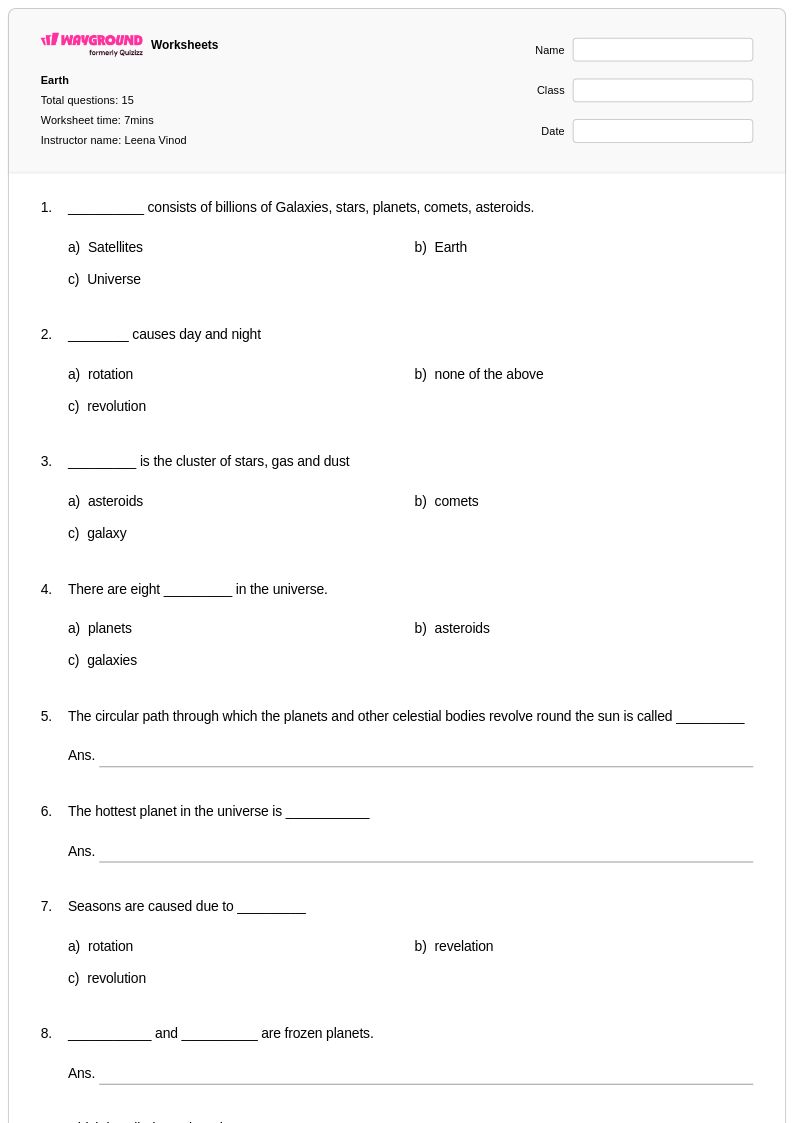
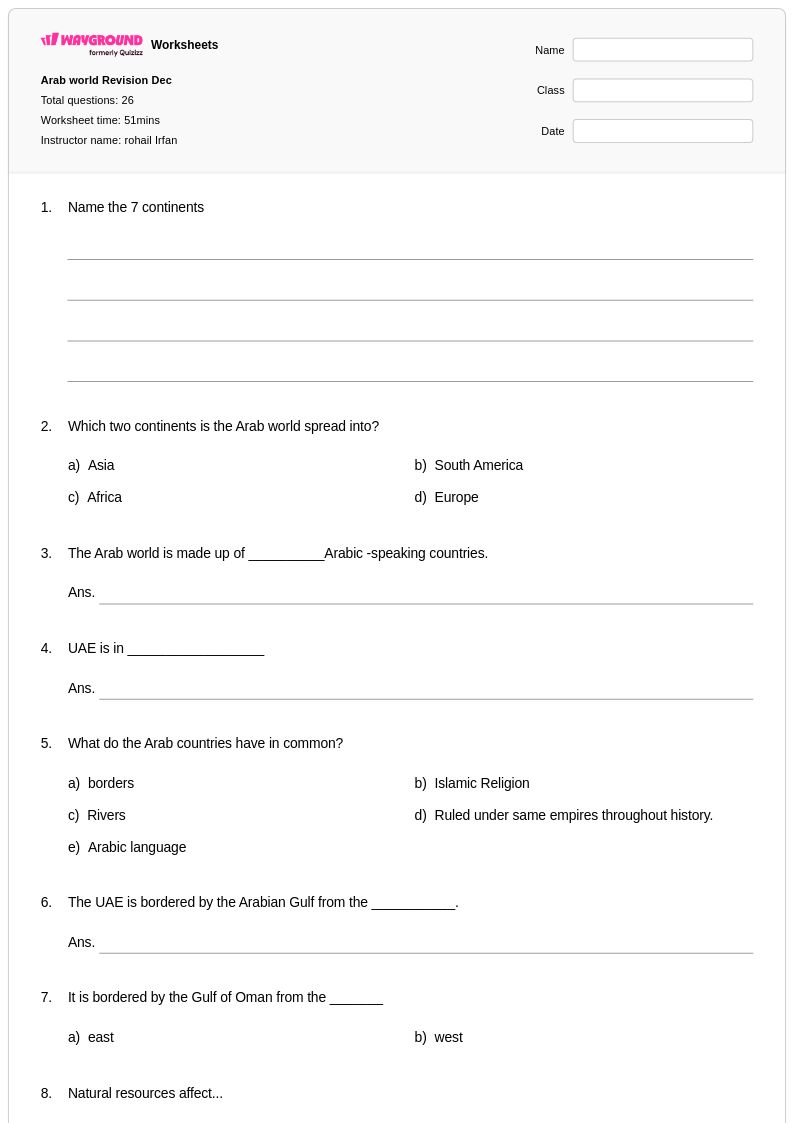
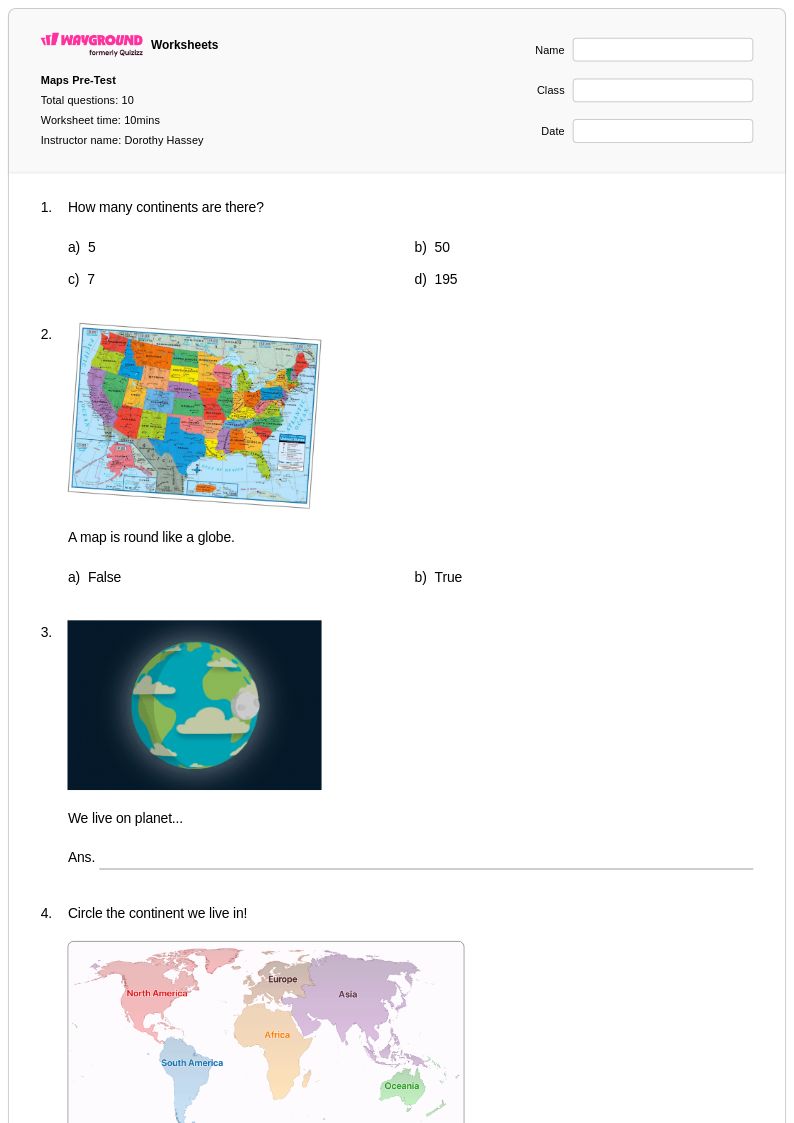
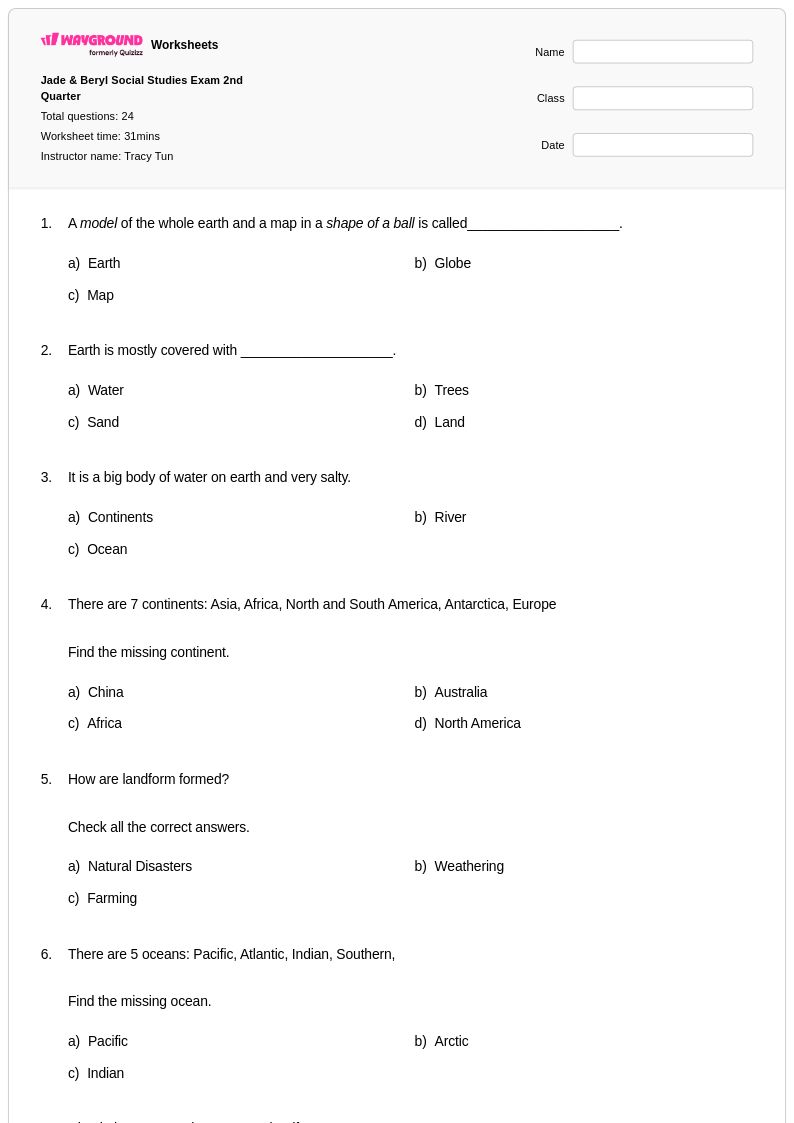
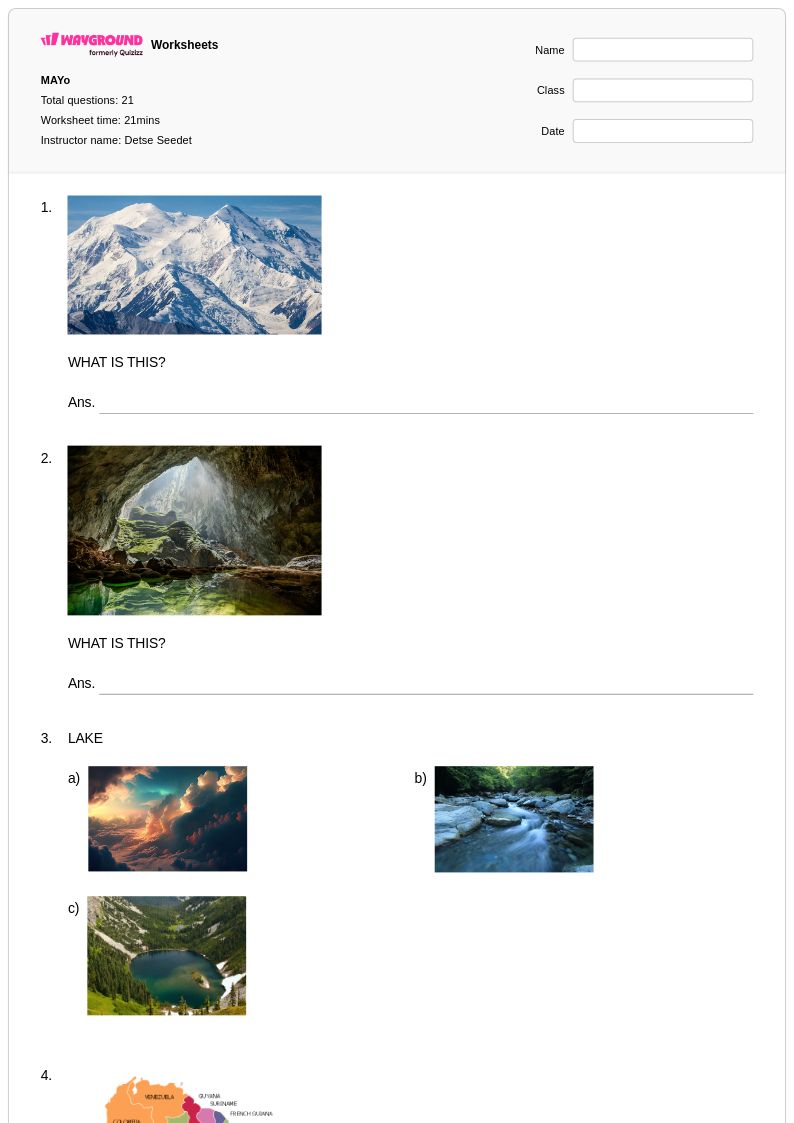
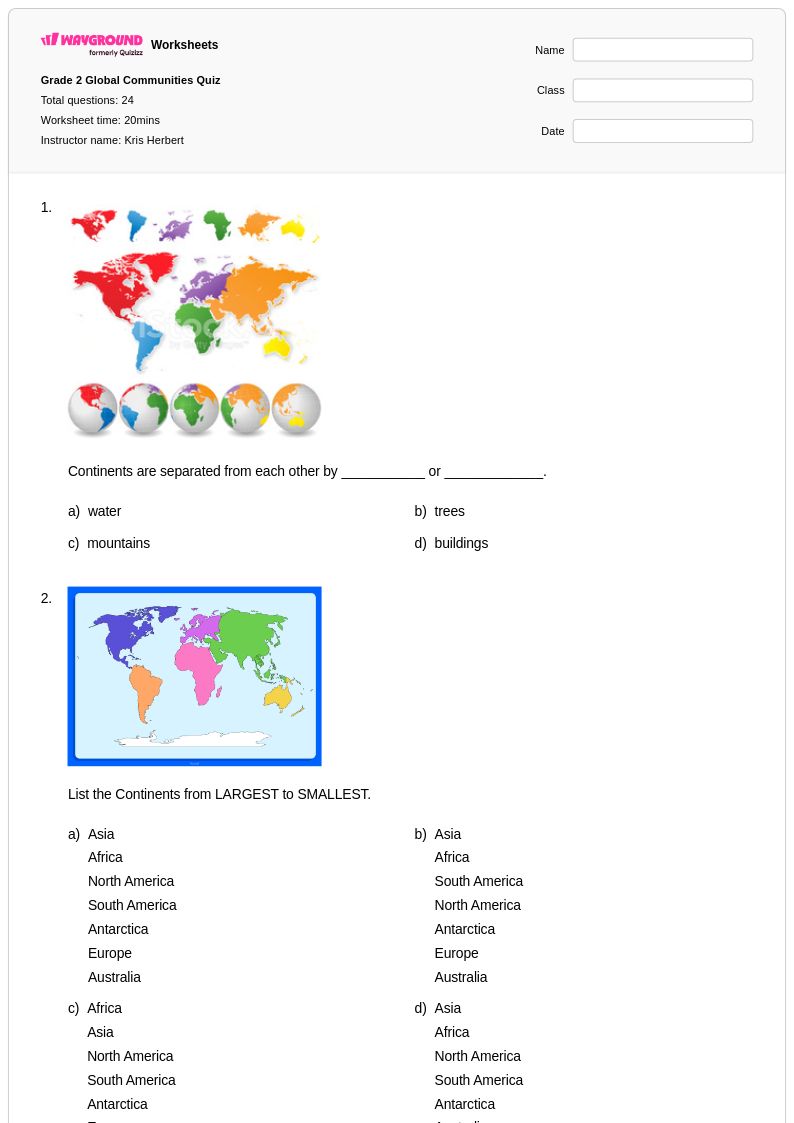
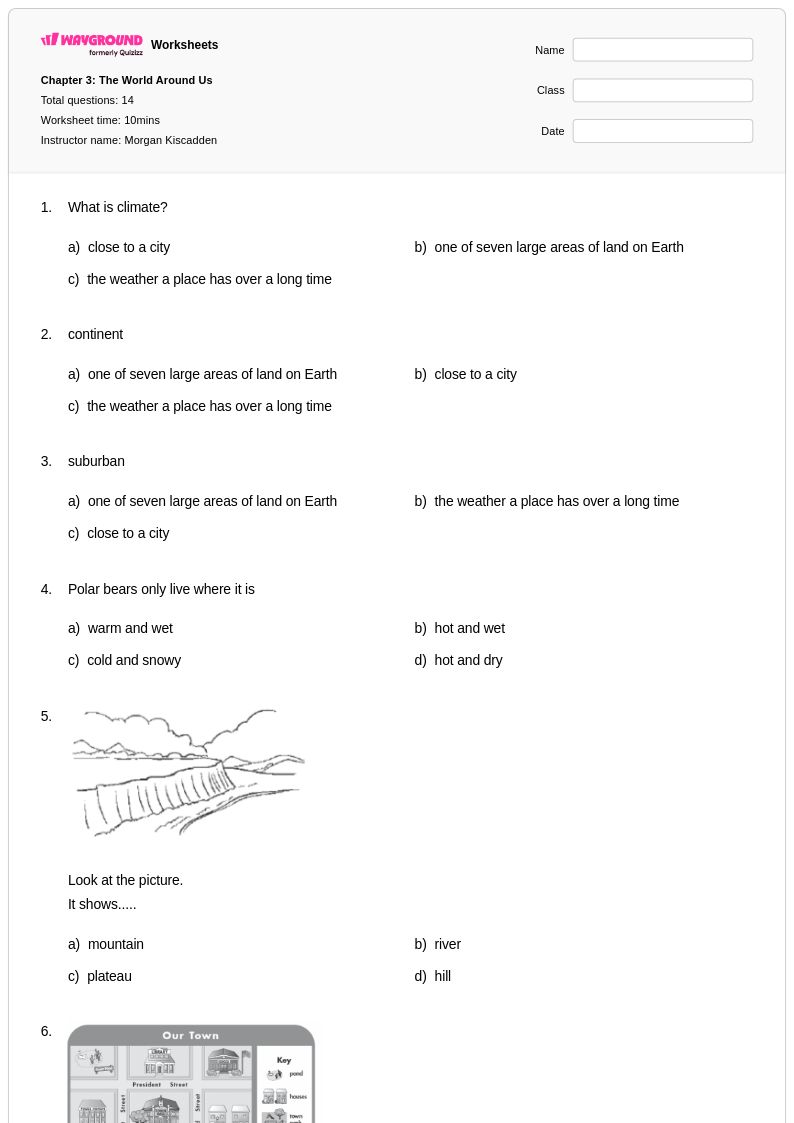
Explore Year 2 continents worksheets and printables from Wayground that help young learners identify and discover the seven continents through engaging practice problems, free PDF activities, and comprehensive answer keys.
Explore printable Continents worksheets for Year 2
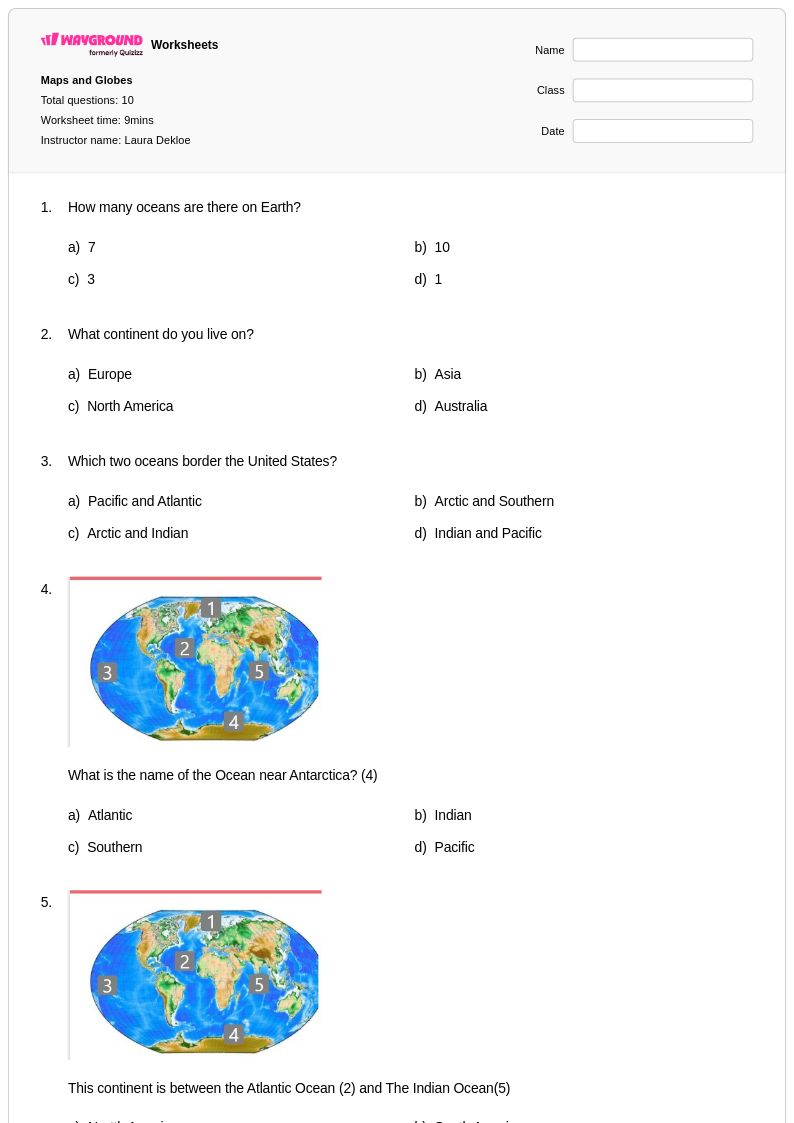
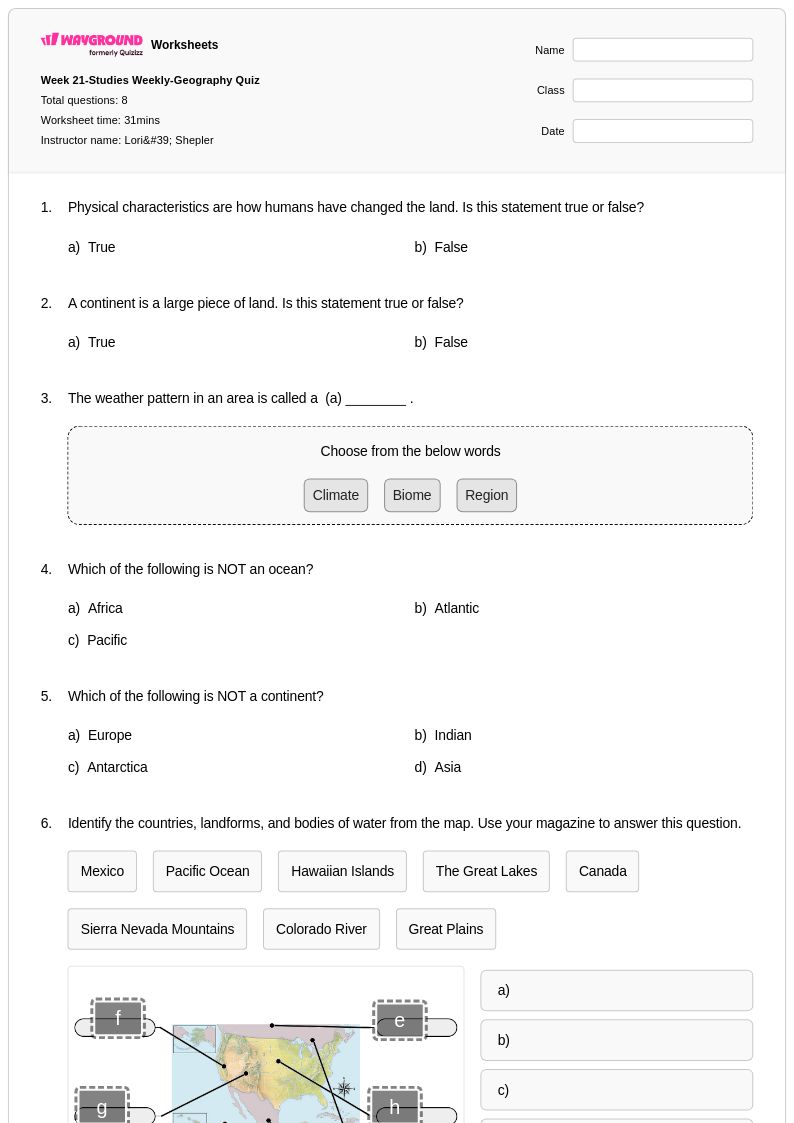
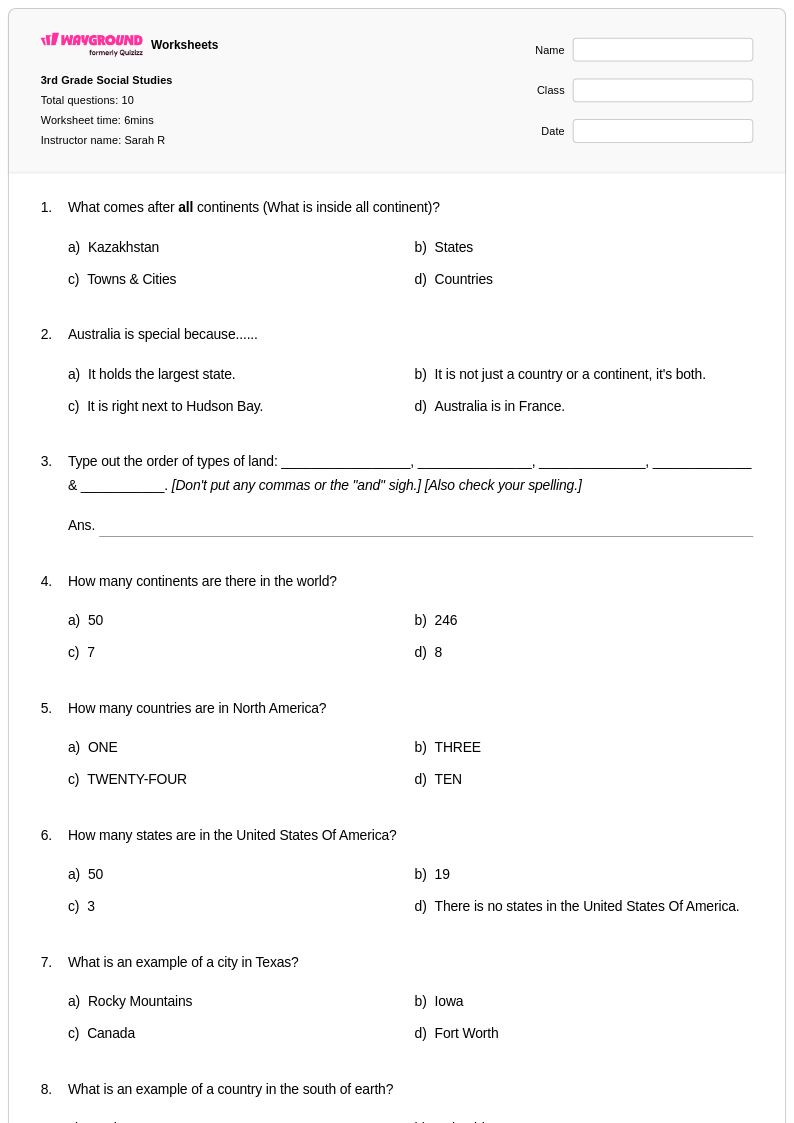
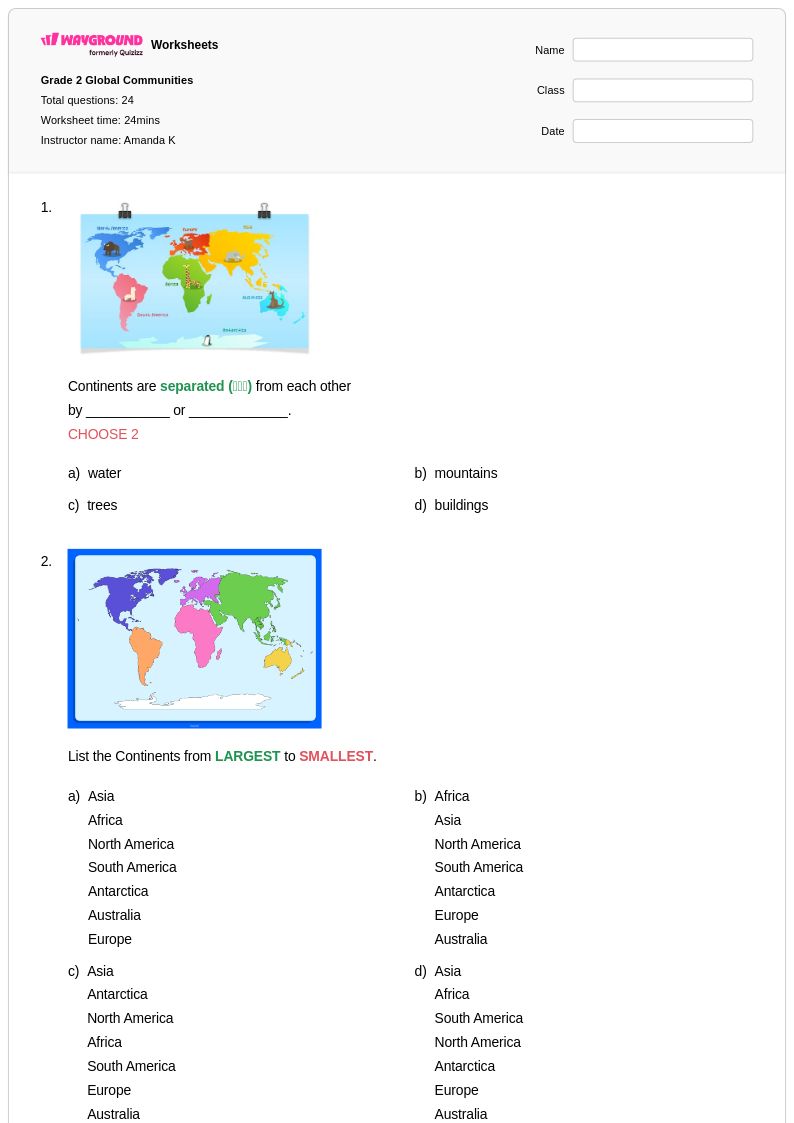
Year 2 continents worksheets available through Wayground (formerly Quizizz) provide young learners with essential foundational knowledge about Earth's seven major landmasses through engaging, age-appropriate activities. These comprehensive printables strengthen critical geography skills including continent identification, basic mapping abilities, and spatial awareness while introducing students to fundamental concepts about how our planet is organized. Each worksheet collection includes detailed answer keys and offers systematic practice problems that help second-grade students develop confidence in recognizing continent shapes, locations, and relative positions on world maps. The free pdf resources support both classroom instruction and independent learning, allowing students to explore geographic concepts through colorful visual aids, simple labeling exercises, and interactive activities designed specifically for developing readers and early geography students.
Wayground (formerly Quizizz) empowers educators with access to millions of teacher-created continent worksheets specifically designed for Year 2 learners, featuring robust search and filtering capabilities that enable quick location of materials aligned with state geography standards and curriculum objectives. The platform's differentiation tools allow teachers to customize worksheet difficulty levels and modify content to meet diverse learning needs, while flexible formatting options provide both printable pdf versions for traditional classroom use and digital formats for technology-integrated lessons. These extensive resources support comprehensive lesson planning by offering varied approaches to continent study, from basic identification exercises for foundational skill building to more complex comparative activities for enrichment, ensuring teachers can effectively address remediation needs while providing appropriate challenges for advanced learners through systematic, scaffolded geography practice.
FAQs
How do I teach the seven continents to elementary students?
Start by anchoring the seven continents to a world map so students can see size, shape, and relative location simultaneously. Use mnemonic devices, color-coded maps, and repeated identification activities to build recognition before moving into comparative work like population or physical features. Hands-on activities such as labeling blank maps and matching continents to defining landmarks are especially effective for building lasting spatial memory.
What activities help students practice identifying and locating the seven continents?
Blank map labeling, continent sorting cards, and fill-in-the-blank identification exercises are among the most effective practice formats for continent recognition. Students also benefit from comparative tasks that ask them to rank continents by size or population, which reinforces both name recall and geographic reasoning. Repeated low-stakes practice across varied formats is key to moving from surface recognition to confident geographic literacy.
What mistakes do students commonly make when learning the continents?
The most common errors involve confusing Europe and Asia as separate entities when they share the Eurasian landmass, and misidentifying Australia as both a continent and a country. Students also frequently misjudge continent sizes, often underestimating Africa and overestimating Europe due to Mercator projection distortion on standard classroom maps. Addressing these misconceptions directly with accurate size-comparison visuals and discussion of map projections significantly improves conceptual accuracy.
How can I use continents worksheets to support students with different learning needs?
Continents worksheets work well for differentiation because the core task, identifying and describing landmasses, can be scaffolded in difficulty from basic labeling to analytical comparison. On Wayground, teachers can apply individual accommodations such as Read Aloud for students who need audio support, reduced answer choices to lower cognitive load, and extended time for students who need additional processing time. These settings can be applied per student without notifying the rest of the class, making differentiation discreet and efficient.
How do I use Wayground's continents worksheets in my classroom?
Wayground's continents worksheets are available as printable PDFs for traditional classroom use and in digital formats for technology-integrated learning environments. Teachers can also host the worksheets as a live quiz directly on Wayground, which is useful for formative assessment or whole-class review. Both formats include complete answer keys, so teachers can use them for independent practice, guided instruction, or quick assessment with minimal prep time.
How do I assess whether students have mastered the continents?
Effective assessment for continent mastery includes both recall tasks, such as labeling a blank world map from memory, and application tasks, such as explaining why Antarctica is classified as a continent despite having no permanent population. Look for accuracy in spelling continent names, correct placement on a map, and the ability to distinguish continents from countries or regions. Short written responses asking students to compare two continents on a specific characteristic, such as size or climate, reveal deeper understanding beyond rote memorization.