Free Printable Continuous Compounding Worksheets for Year 12
Year 12 continuous compounding worksheets from Wayground help students master exponential growth calculations through comprehensive practice problems, free printables, and detailed answer keys for advanced mathematics proficiency.
Explore printable Continuous Compounding worksheets for Year 12
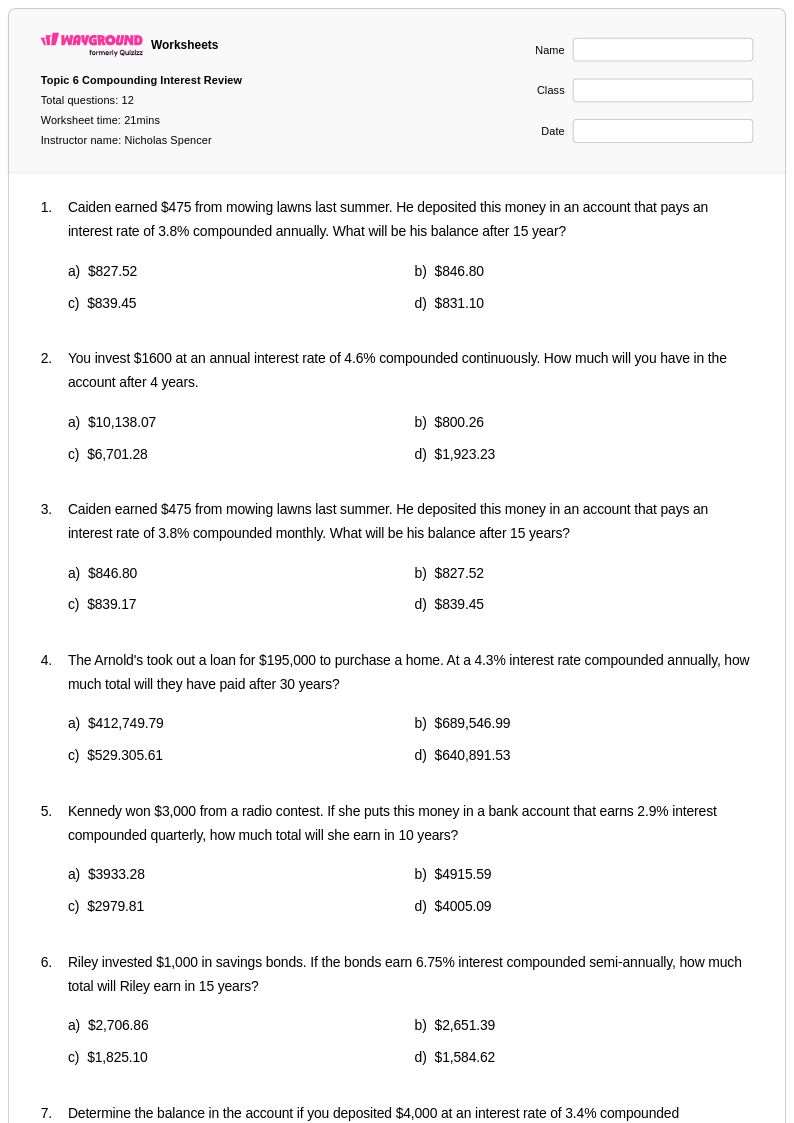
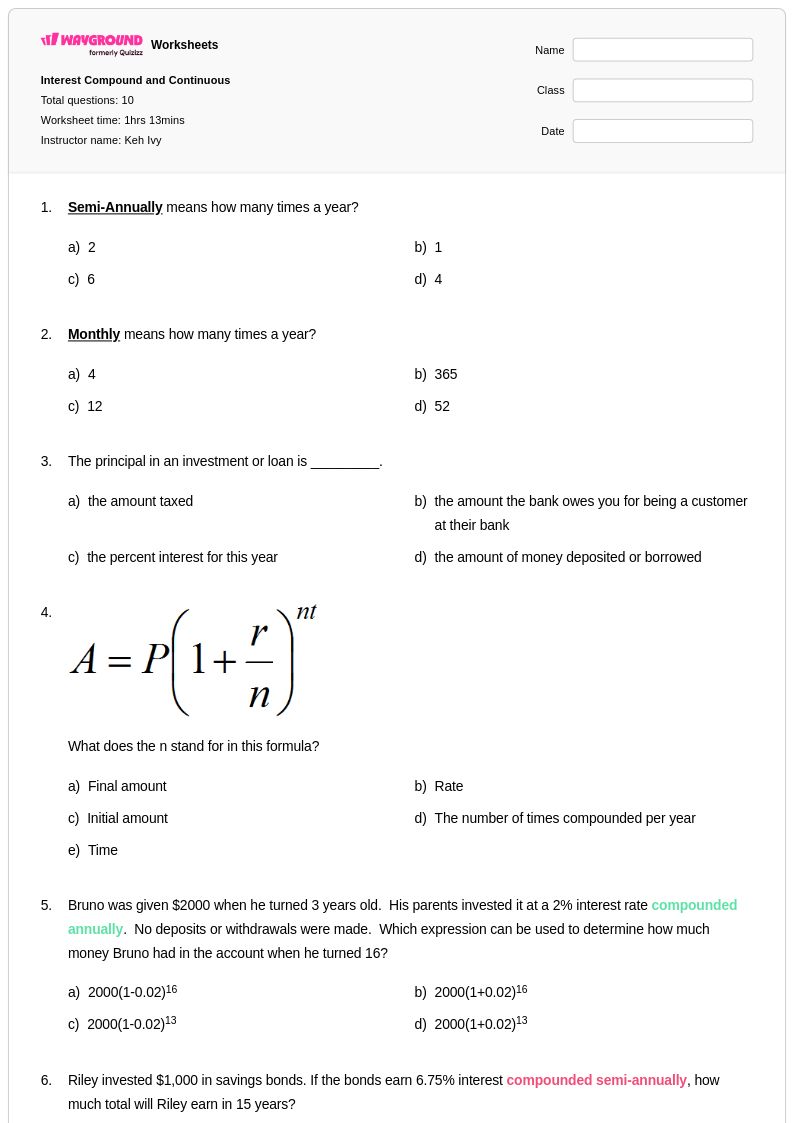
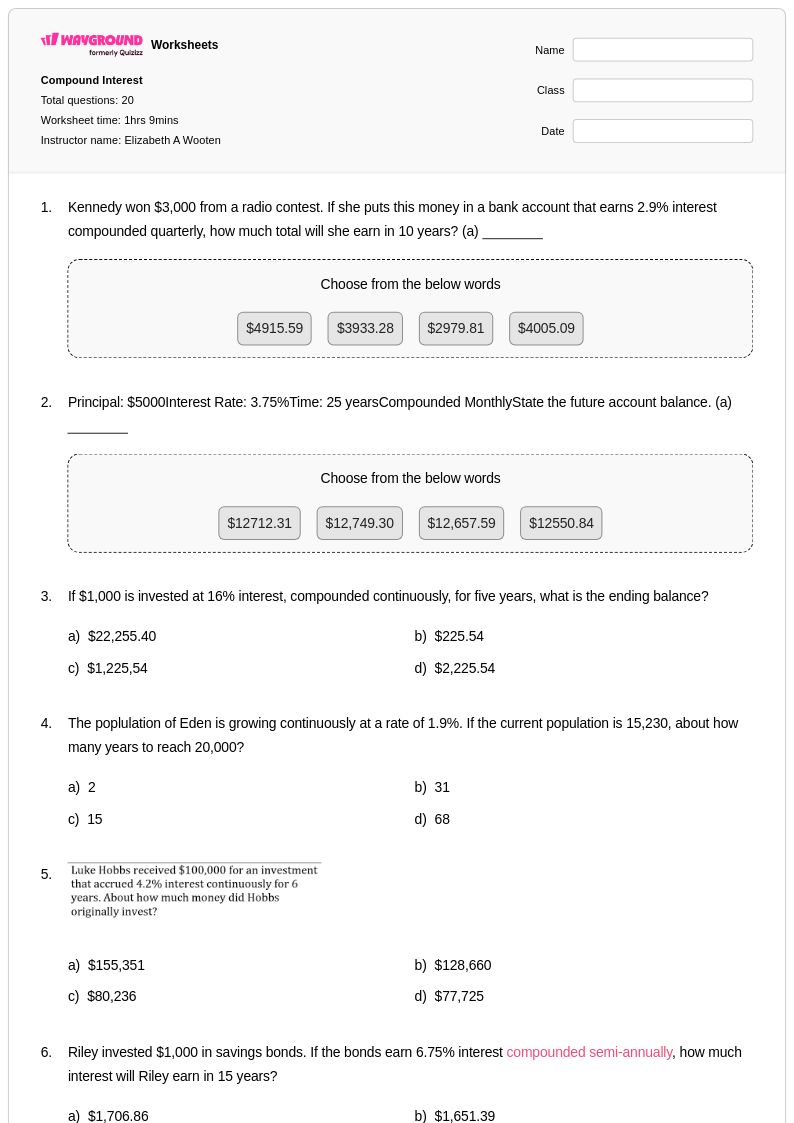
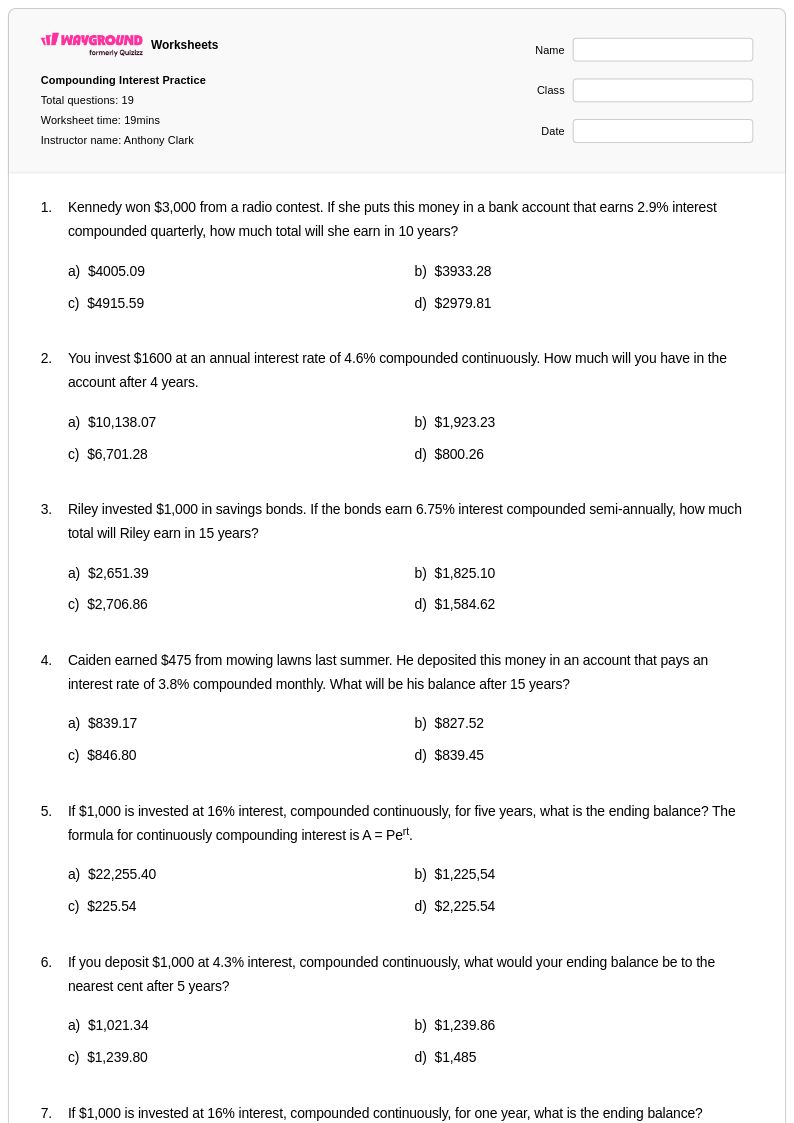
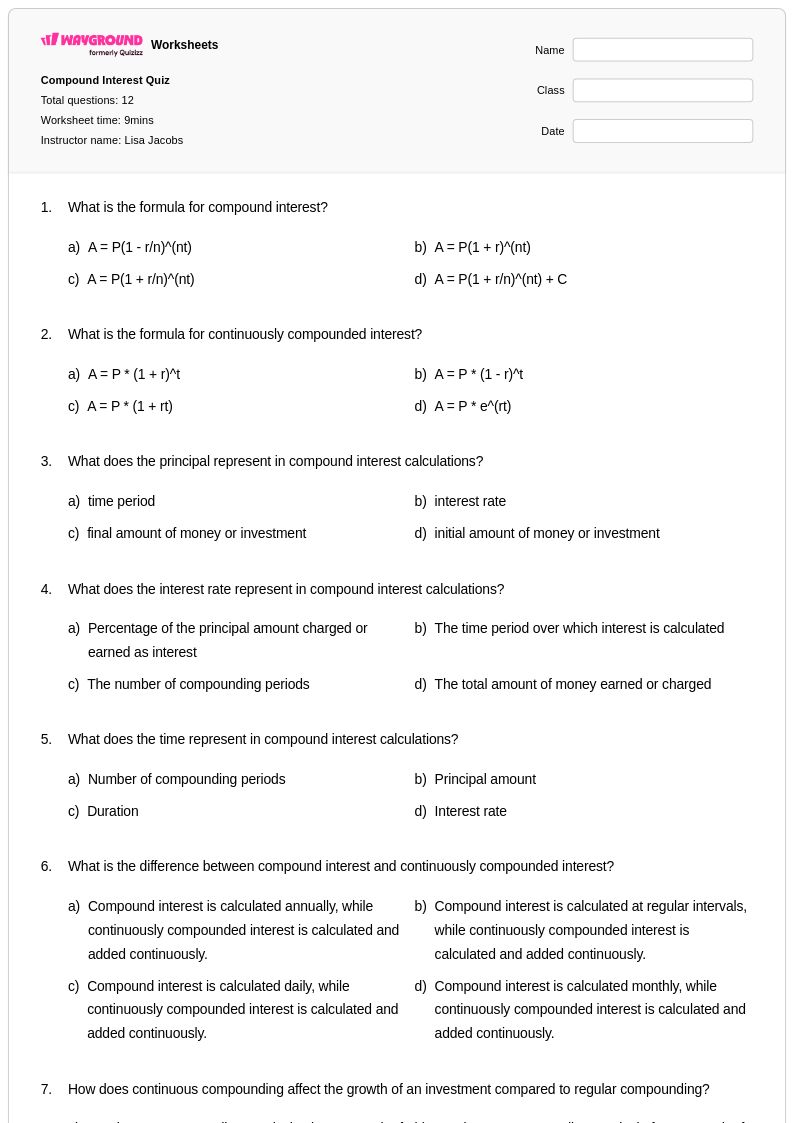
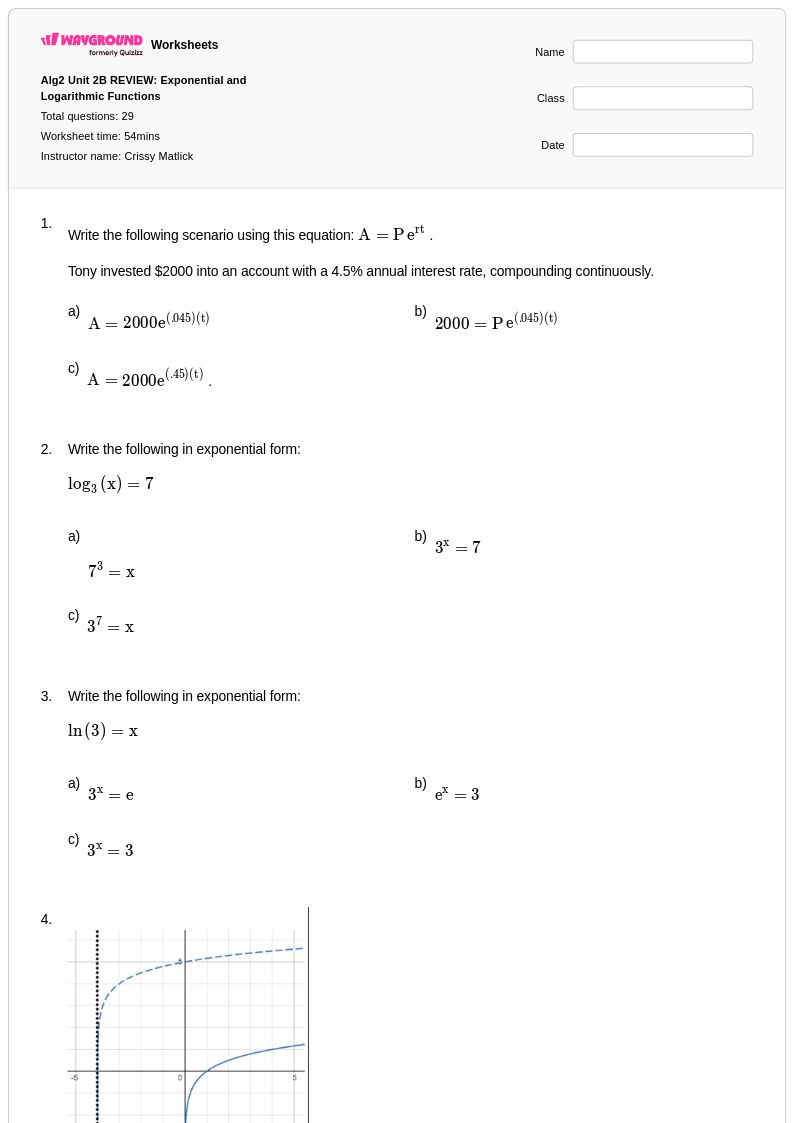
Continuous compounding represents one of the most sophisticated applications of exponential growth in Year 12 mathematics, where interest is calculated and added to the principal continuously rather than at discrete intervals. Wayground's comprehensive collection of continuous compounding worksheets provides students with essential practice in applying the formula A = Pe^(rt), understanding the mathematical constant e, and solving complex real-world financial scenarios. These carefully designed practice problems strengthen critical analytical skills including logarithmic manipulation, exponential function interpretation, and comparative analysis between different compounding methods. Each worksheet comes with a detailed answer key to support independent learning, and the free printable pdf format ensures accessibility for both classroom instruction and homework assignments.
Wayground, formerly Quizizz, empowers educators with millions of teacher-created resources specifically designed to support advanced mathematical concepts like continuous compounding through robust search and filtering capabilities that align with curriculum standards. Teachers can easily differentiate instruction by accessing worksheets at varying complexity levels, from basic continuous compounding calculations to advanced applications involving investment portfolios and loan amortization schedules. The platform's flexible customization tools allow educators to modify existing materials or create targeted assessments for remediation and enrichment purposes, while the dual availability in both printable and digital pdf formats accommodates diverse classroom environments and learning preferences. This comprehensive resource collection streamlines lesson planning while providing the depth and rigor necessary for Year 12 students to master sophisticated financial mathematics concepts.
FAQs
How do I teach continuous compounding in Grade 12?
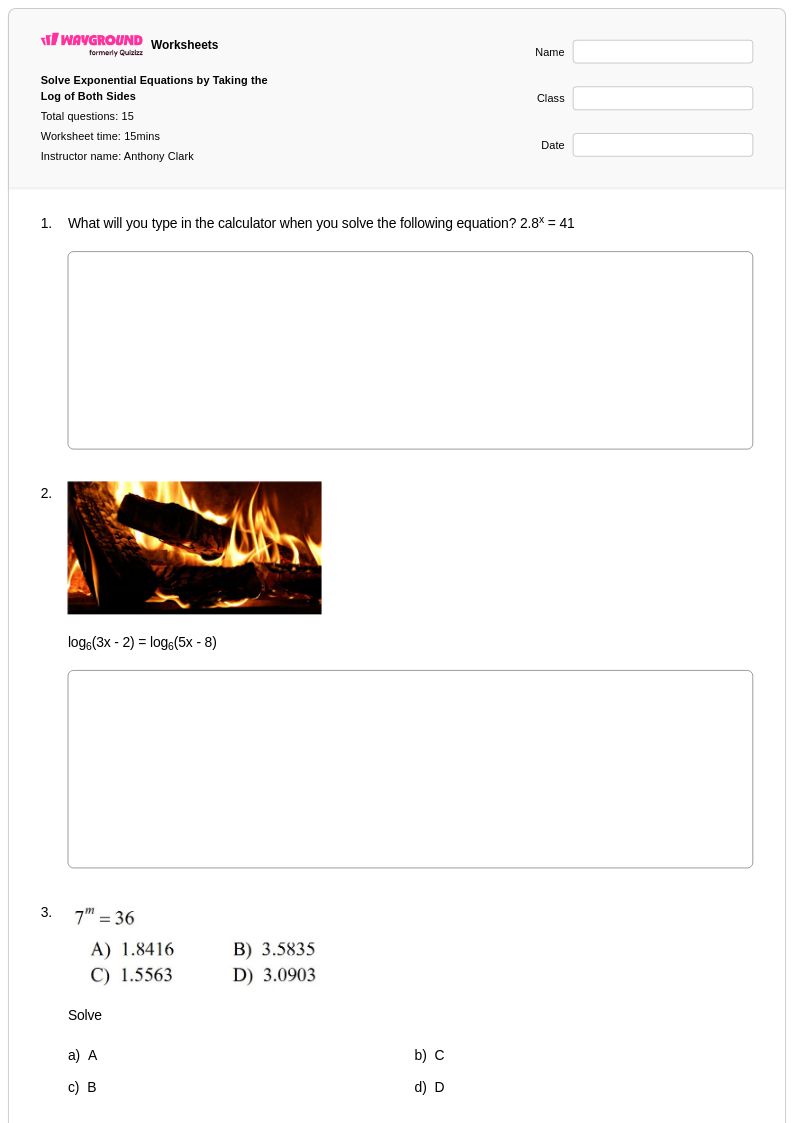
Frame continuous compounding as an advanced exponential-growth model and connect it to the limiting behavior of increasingly frequent discrete compounding. Have students derive or interpret A = Pe^(rt), solve for every variable with logarithms, and evaluate the model in complex financial scenarios.
What continuous compounding exercises are appropriate for Grade 12?
Grade 12 students should calculate accumulated values, isolate principal, rate, or time, and compare continuous compounding with other compounding methods. More advanced practice can use investment portfolios or loan-related scenarios that require students to choose assumptions, analyze results, and explain the effect of each parameter.
What mistakes do Grade 12 students make with continuous compounding?
Even advanced students may confuse nominal percentages with decimal rates, mix annual rates with nonannual time units, or round intermediate exponential values too soon. They may also invert A/P when taking logarithms or apply continuous compounding to a scenario without checking whether that model is appropriate.
How can I use a Grade 12 continuous compounding worksheet?
Wayground worksheets are available as printable PDFs and digital formats for instruction, homework, independent study, or assessment. Teachers can host a worksheet as a digital quiz on Wayground or assign it on paper; printed submissions can then be scanned or captured for grading with the Wayground for Teachers app. Every worksheet includes a complete answer key.
How does Grade 12 continuous compounding align with Common Core math?
Continuous compounding aligns with Common Core's emphasis on building, interpreting, and solving exponential models drawn from real situations. Grade 12 applications can integrate logarithmic manipulation, comparison of competing models, and interpretation of parameters in sophisticated financial contexts.
How can I differentiate continuous compounding work for Grade 12 students?
Use targeted formula practice for remediation, multi-variable financial problems for core instruction, and portfolio or loan-model analysis for enrichment. Wayground supports extended time, Read Aloud, reduced answer choices, and reading mode for individual students, while worksheet versions can be adapted through spacing, font-size, dyslexia-friendly font, and translation controls.
Is continuous compounding a Grade 12 math topic?
Continuous compounding is commonly appropriate for Grade 12 financial mathematics, advanced algebra, or precalculus because it combines exponential functions, e, and natural logarithms. At this level, students should progress from applying the formula to comparing models and evaluating complex financial situations.