
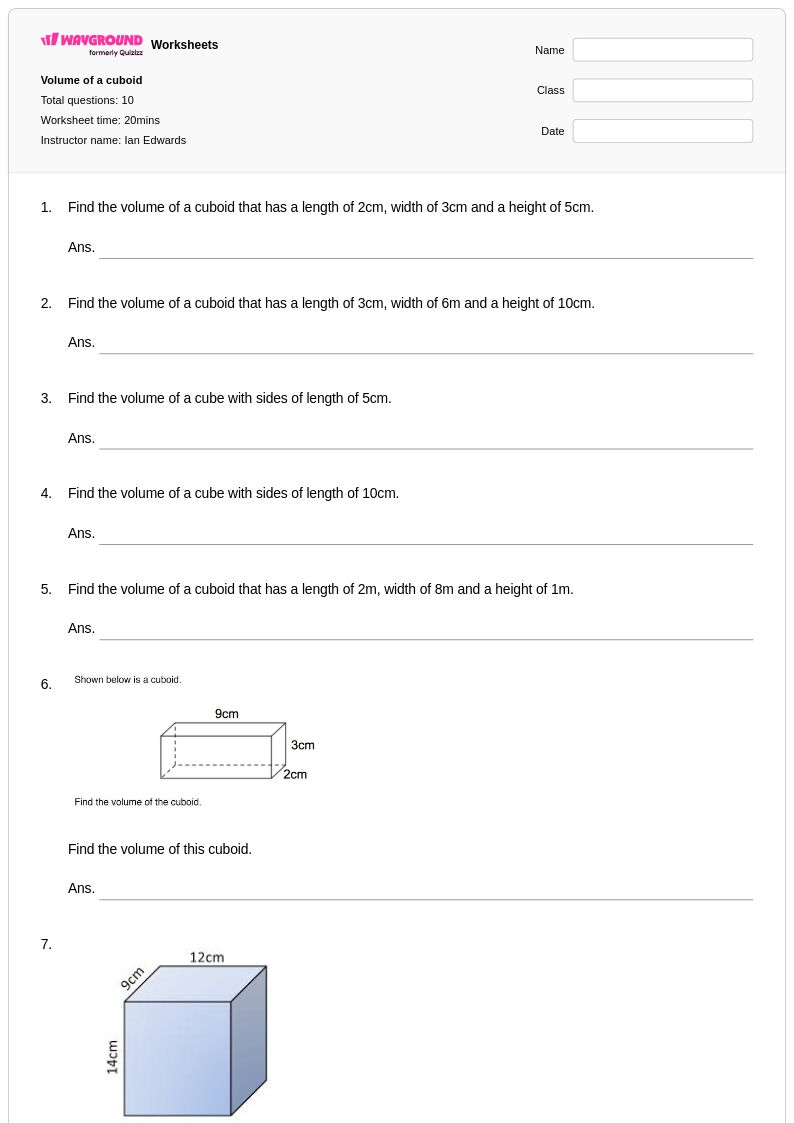
10 Q
2nd - 3rd
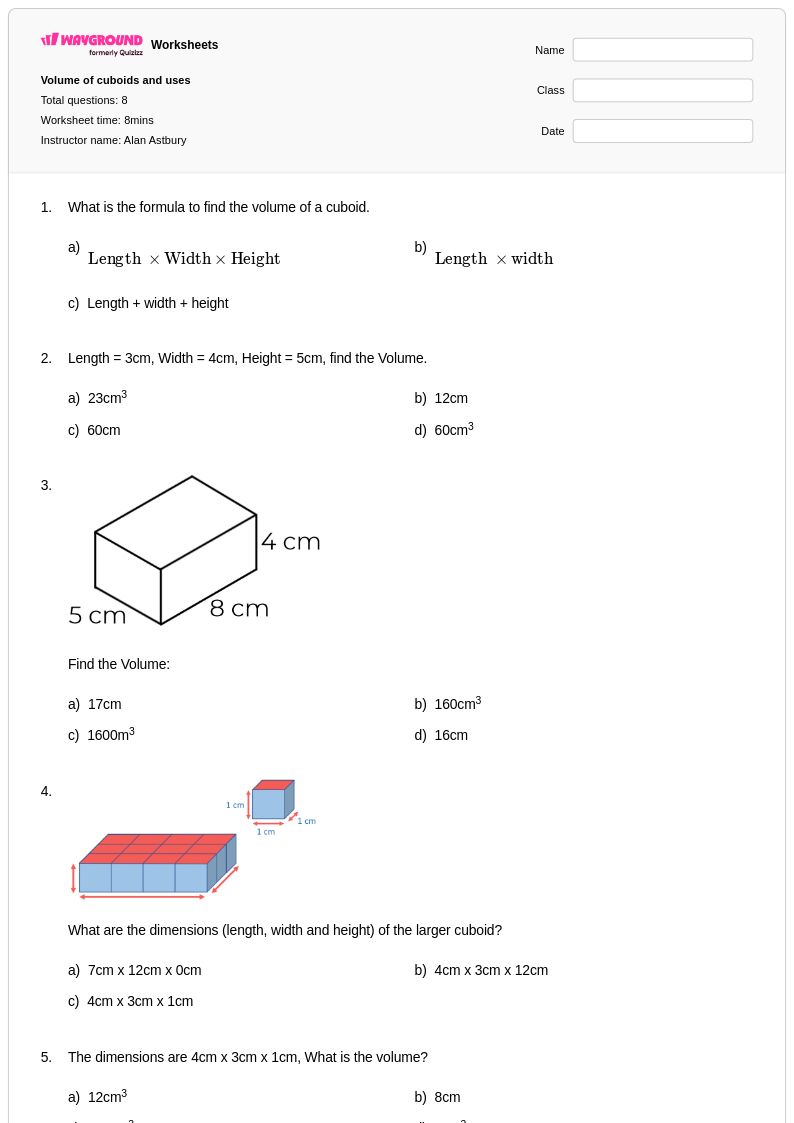
8 Q
3rd - 8th
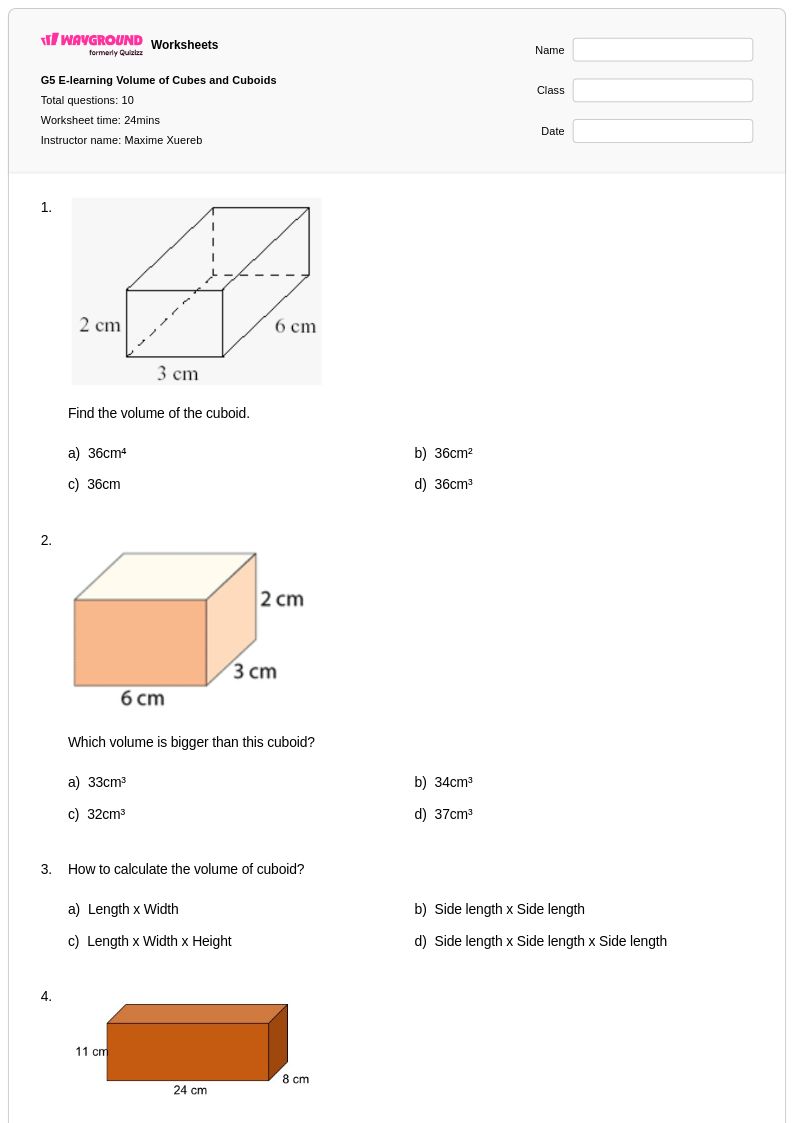
10 Q
3rd - 5th
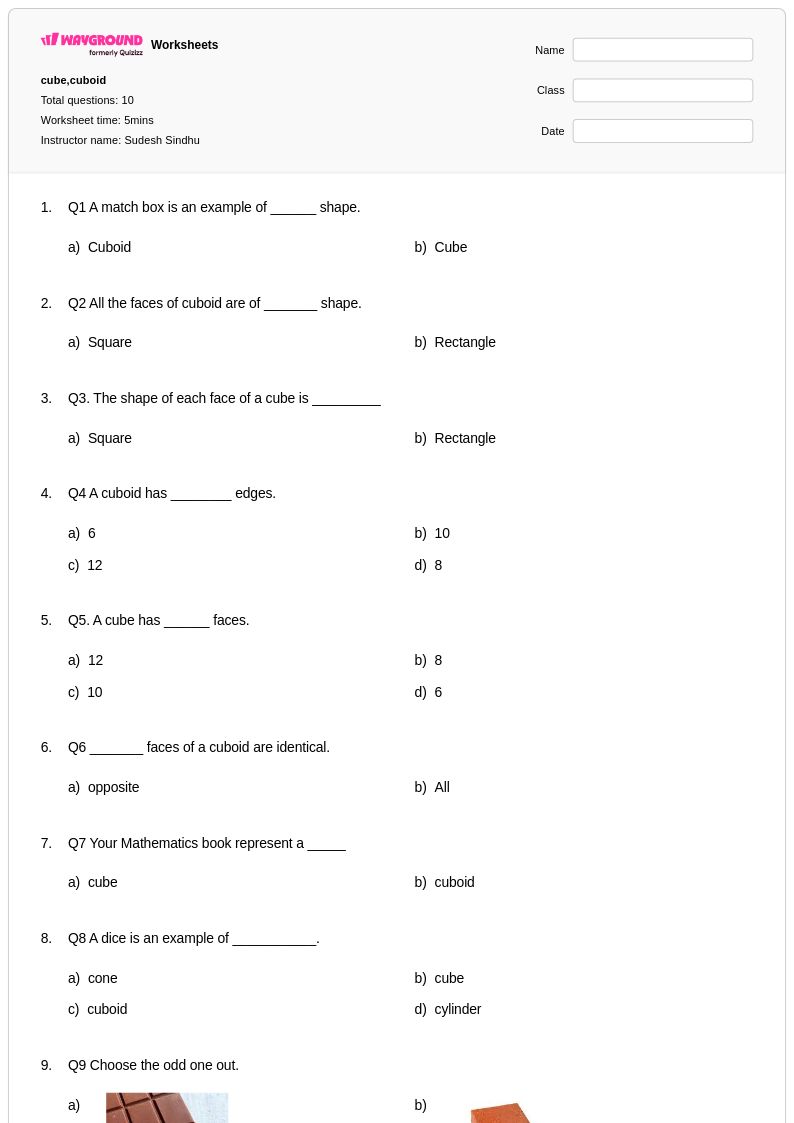
10 Q
3rd
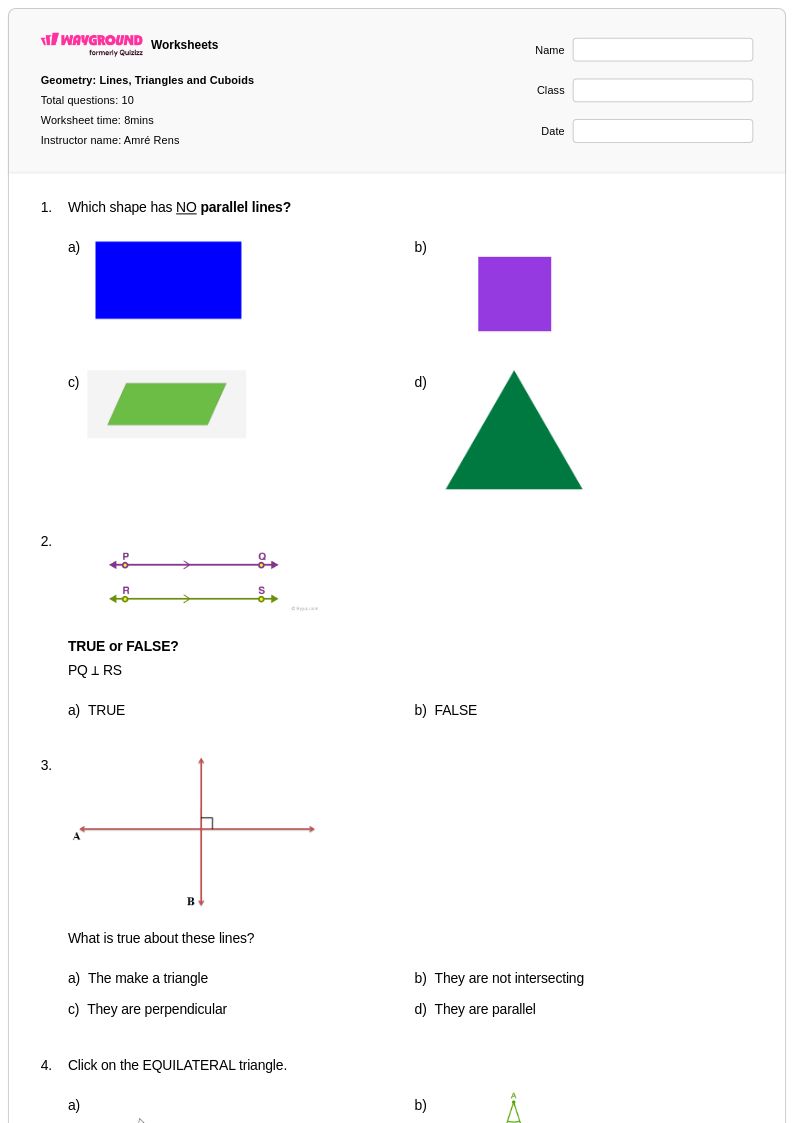
10 Q
3rd - 4th
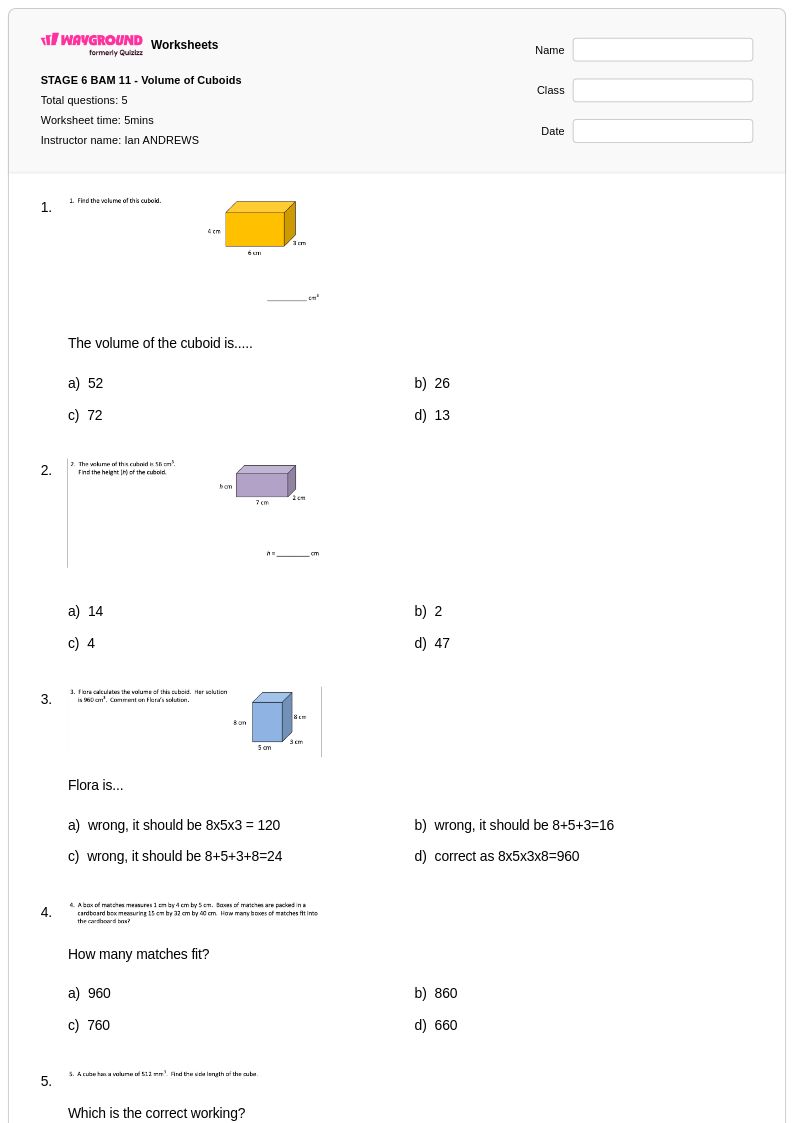
5 Q
3rd - 8th
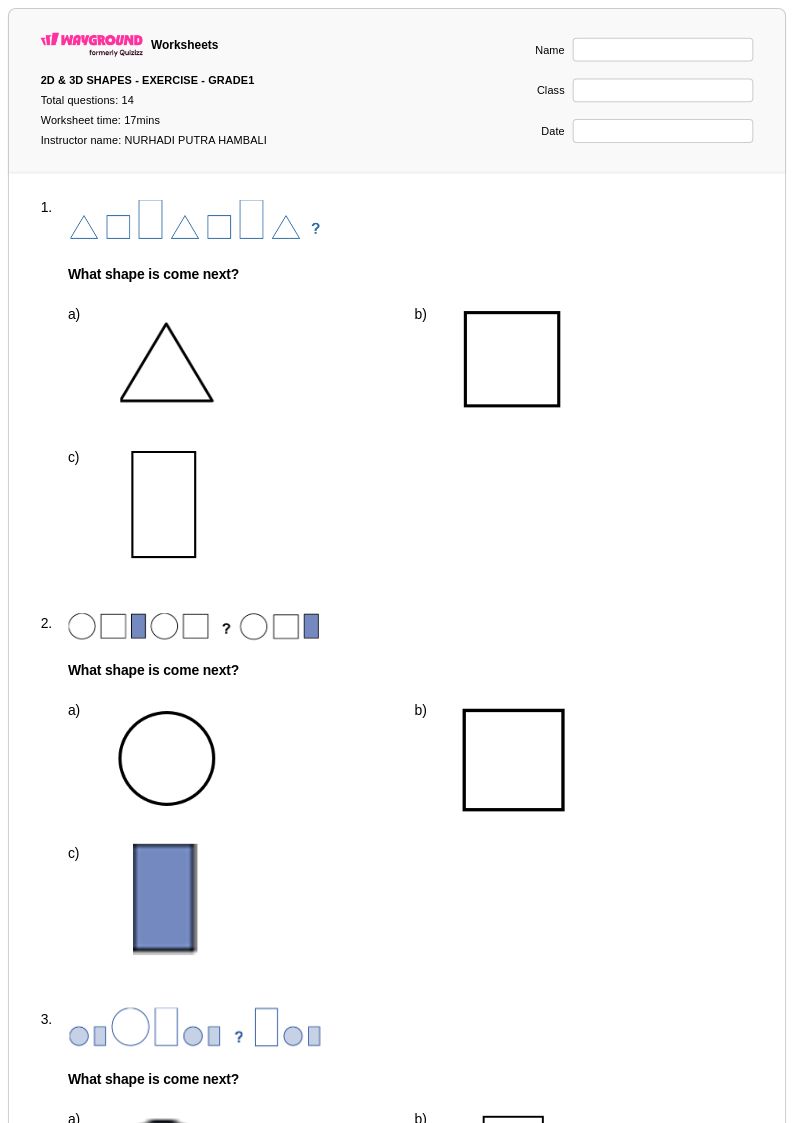
14 Q
1st - Uni
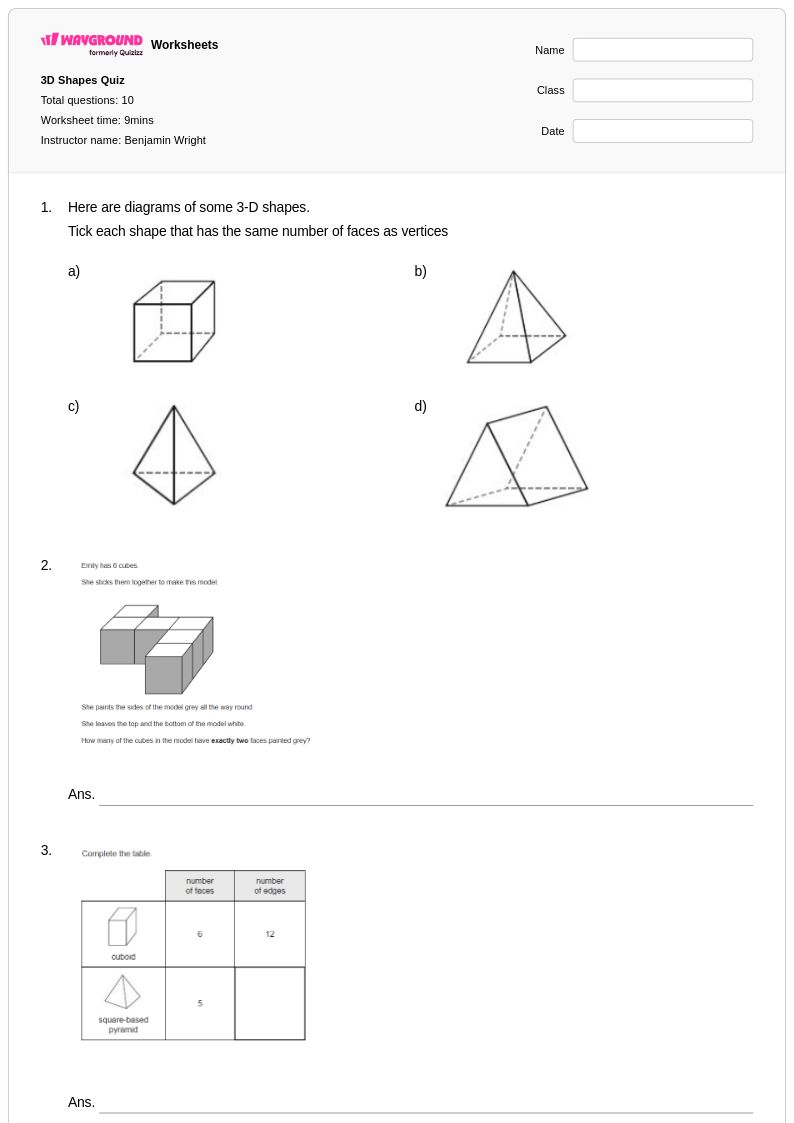
10 Q
1st - 5th
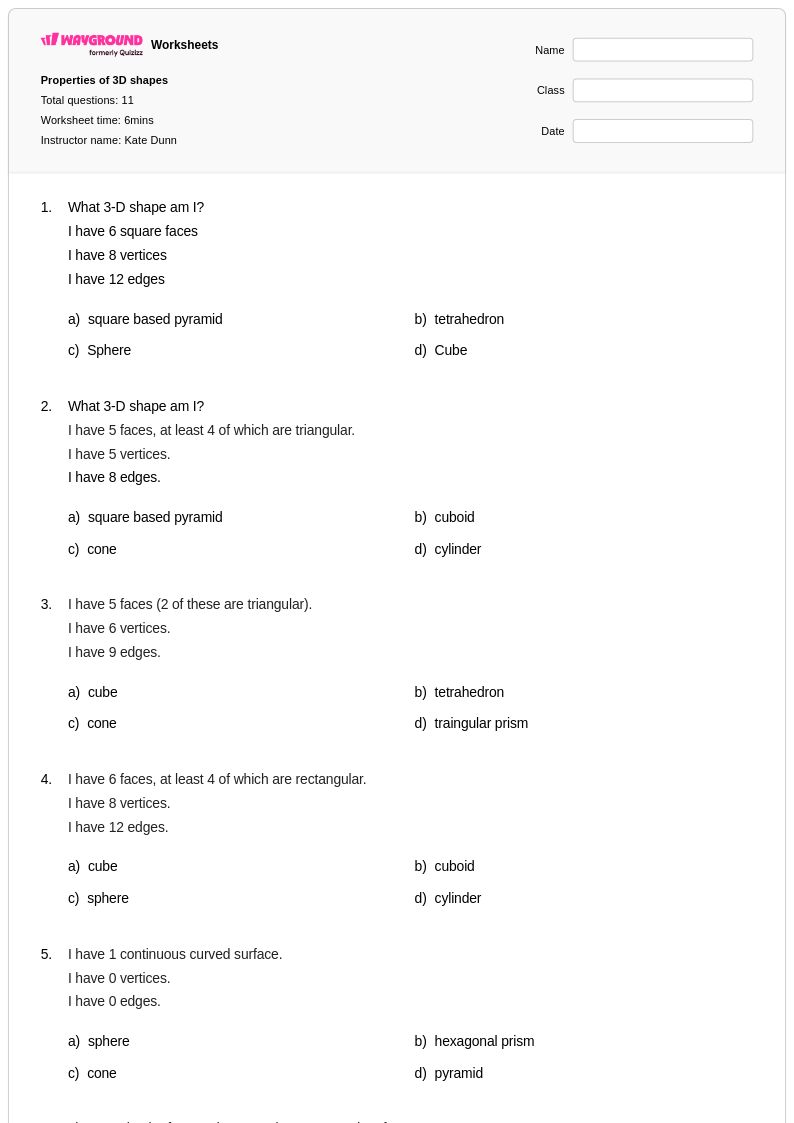
11 Q
3rd
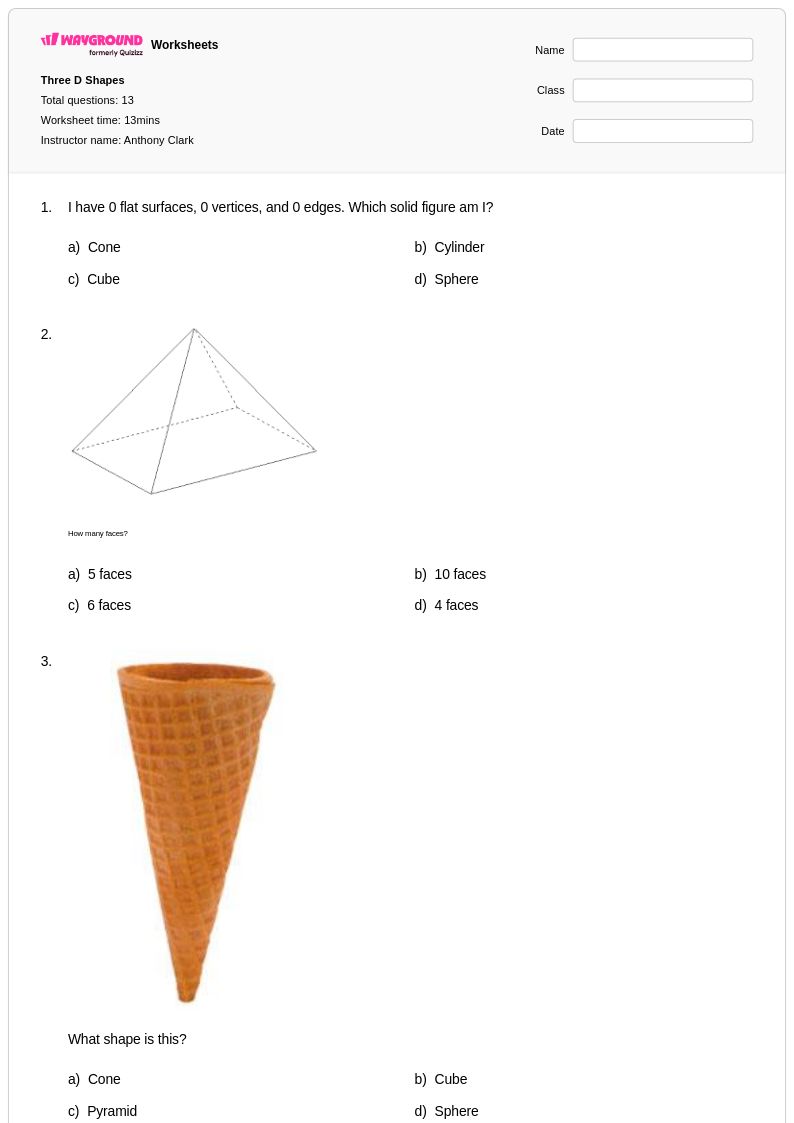
13 Q
3rd - Uni
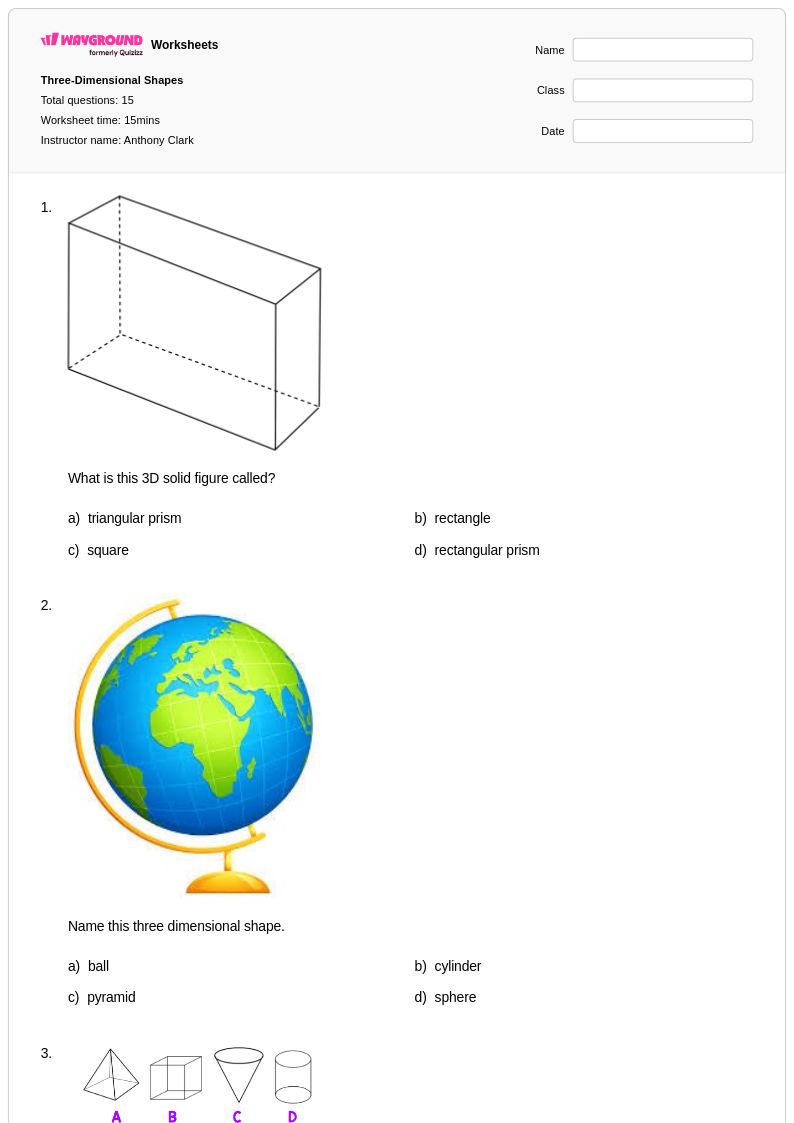
15 Q
3rd - Uni
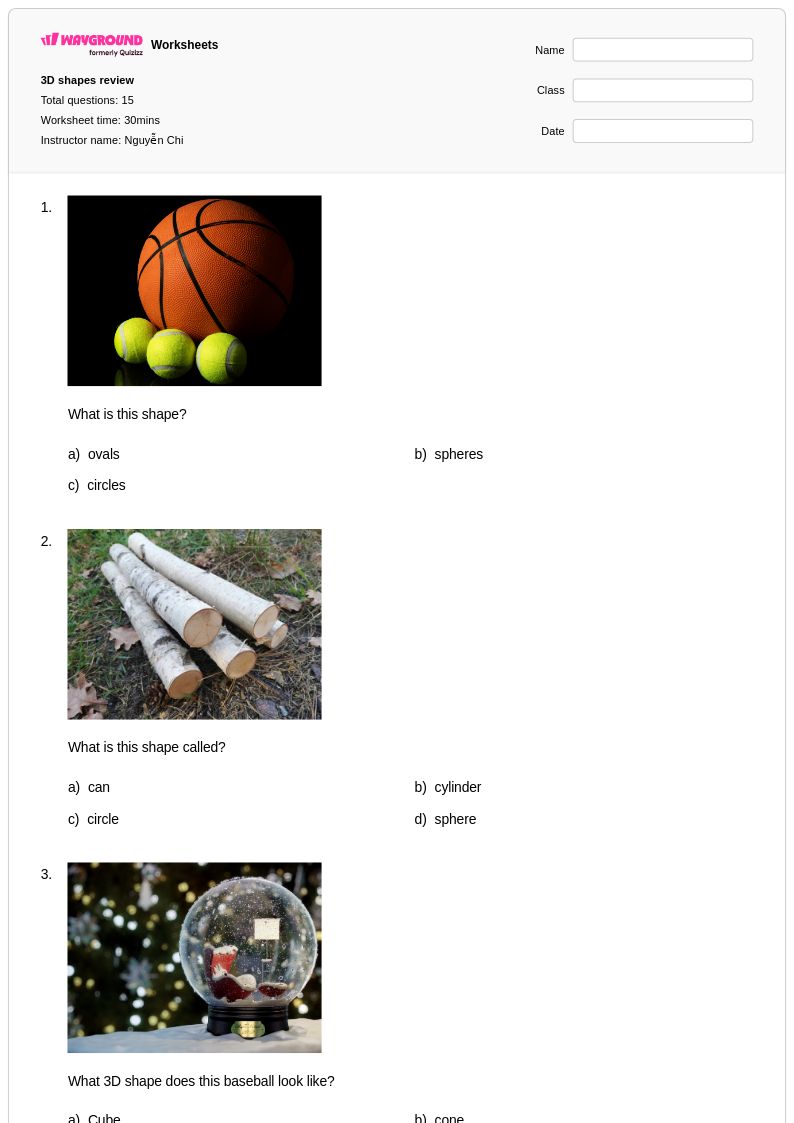
15 Q
1st - 4th
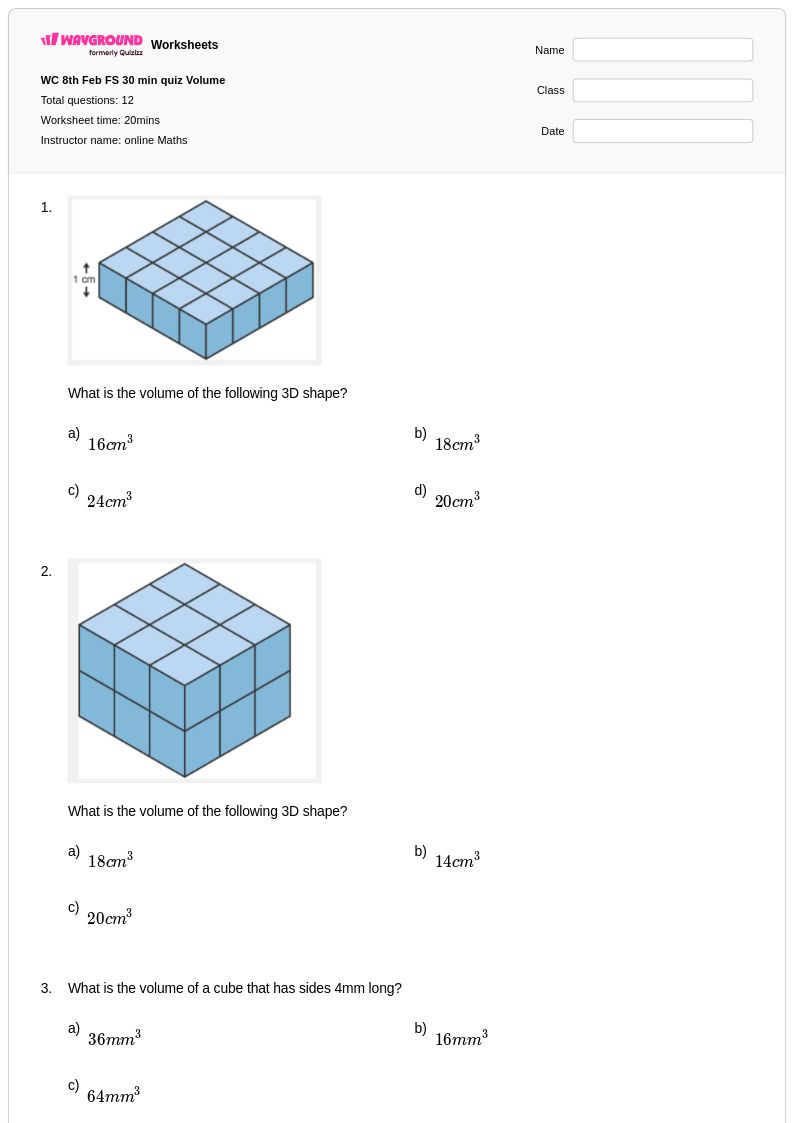
12 Q
2nd - 3rd
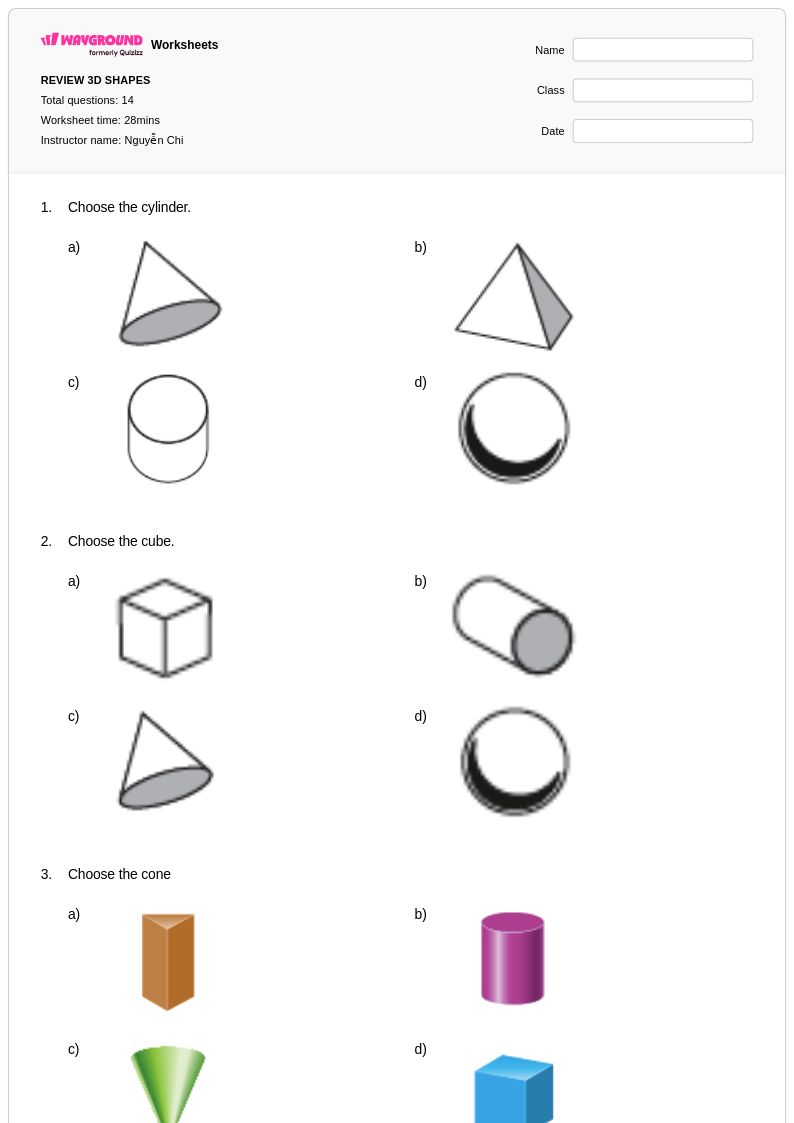
14 Q
1st - 3rd
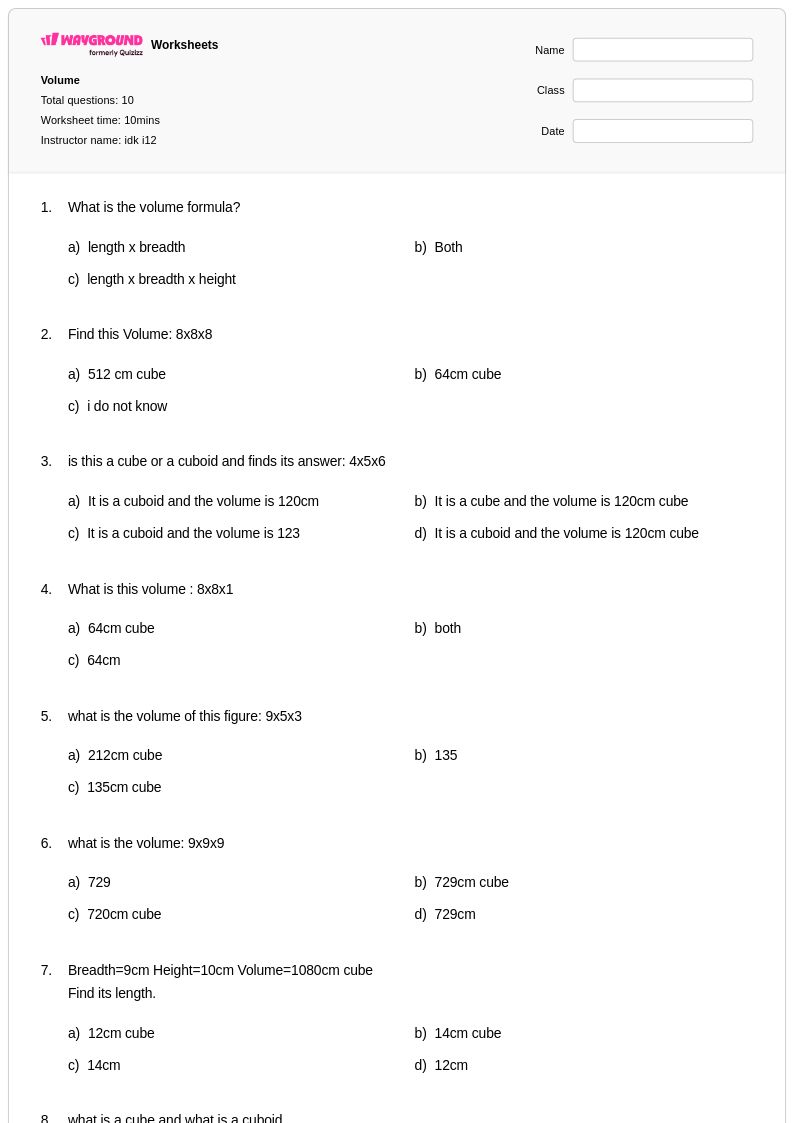
10 Q
3rd - 4th
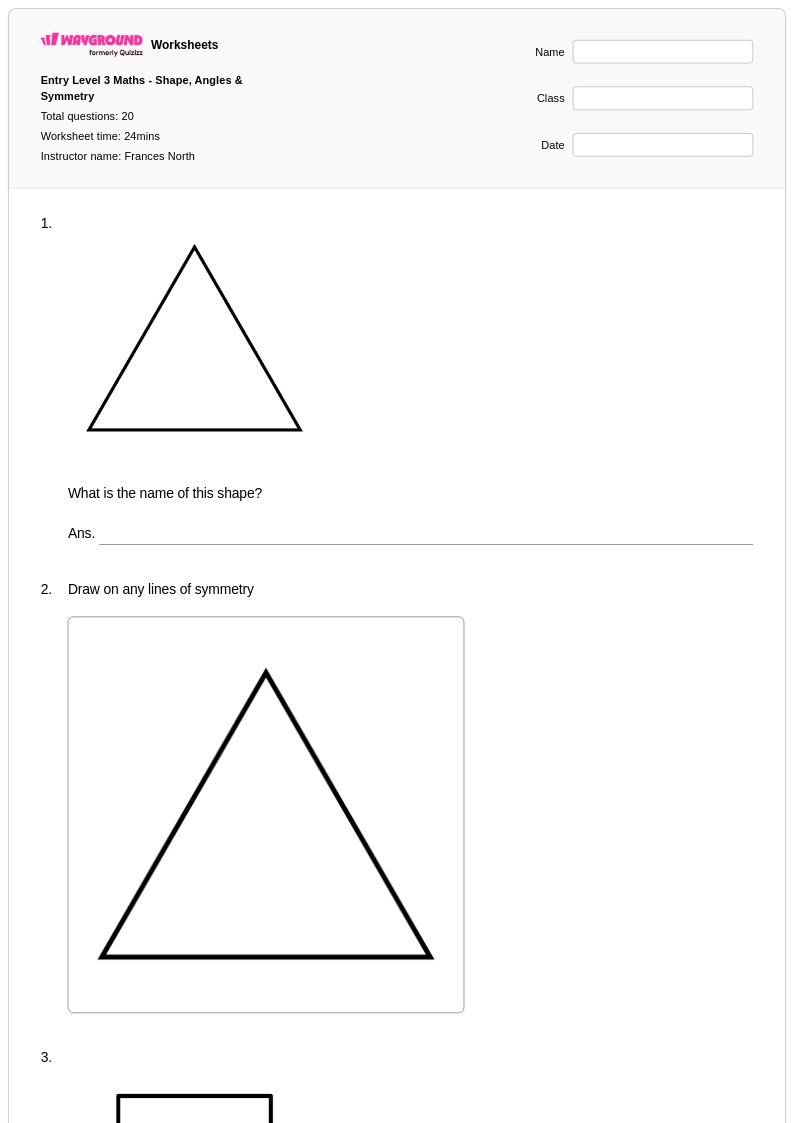
20 Q
1st - 7th
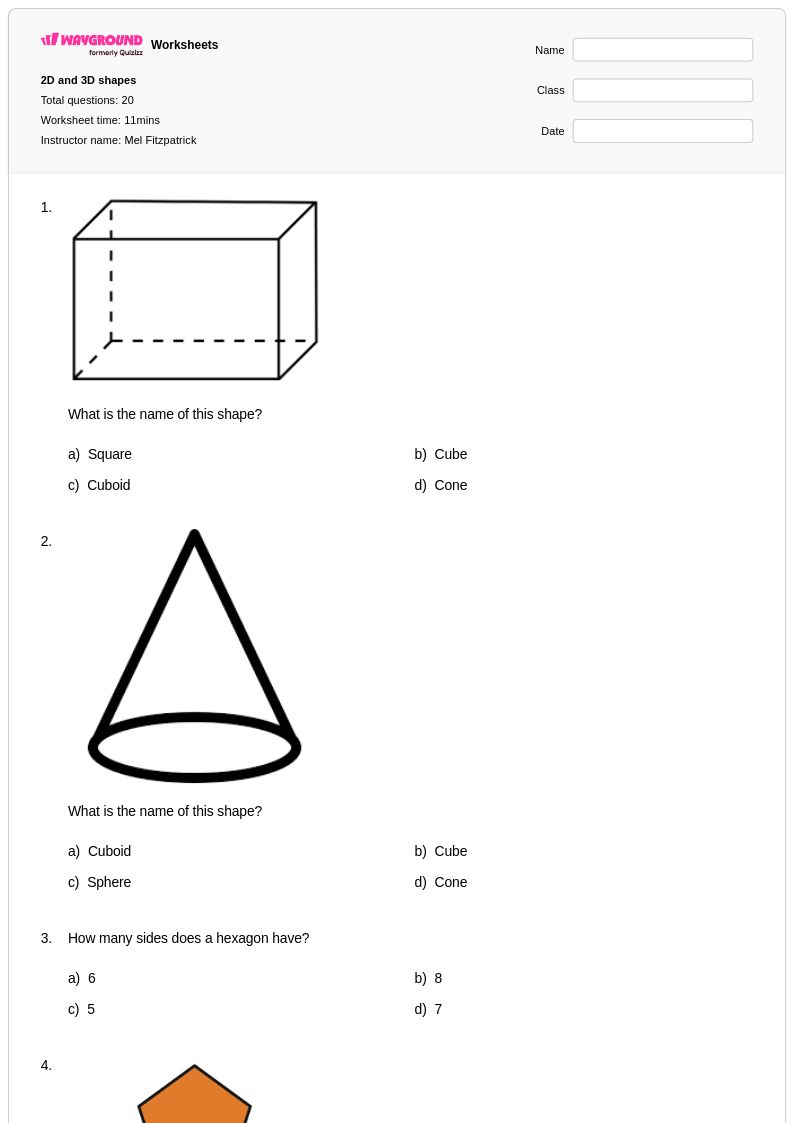
20 Q
3rd - 7th
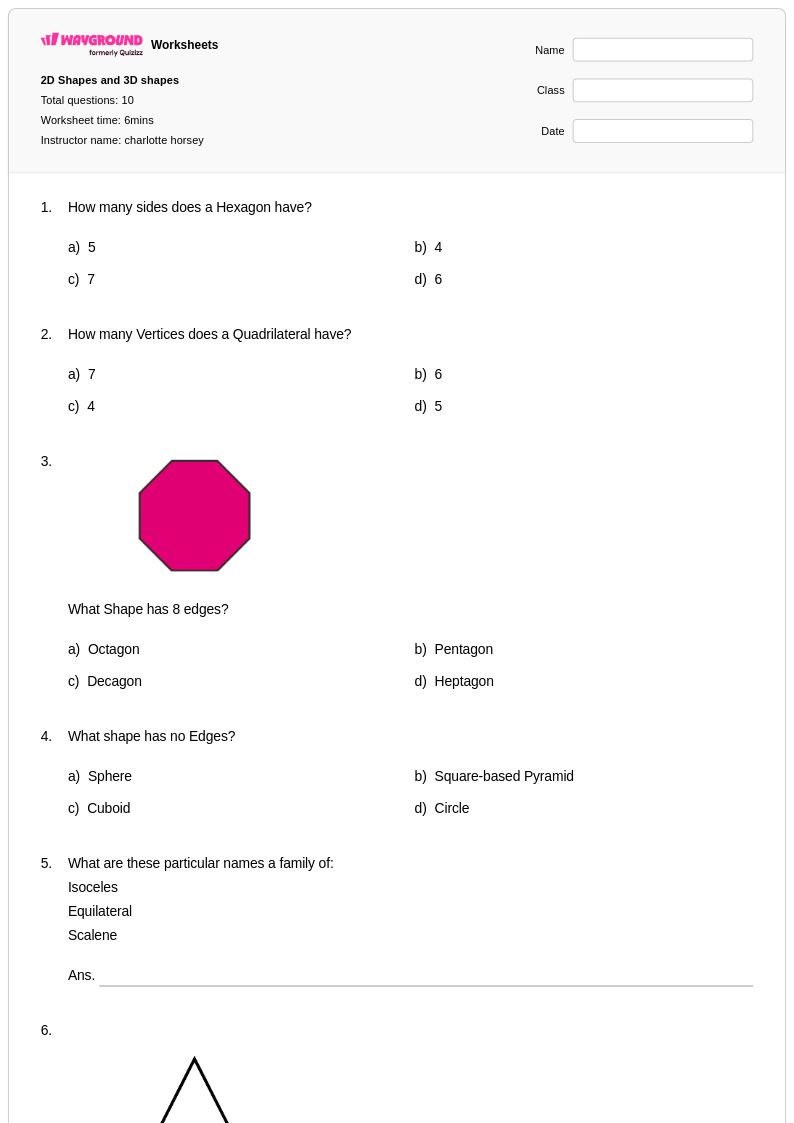
10 Q
2nd - 3rd
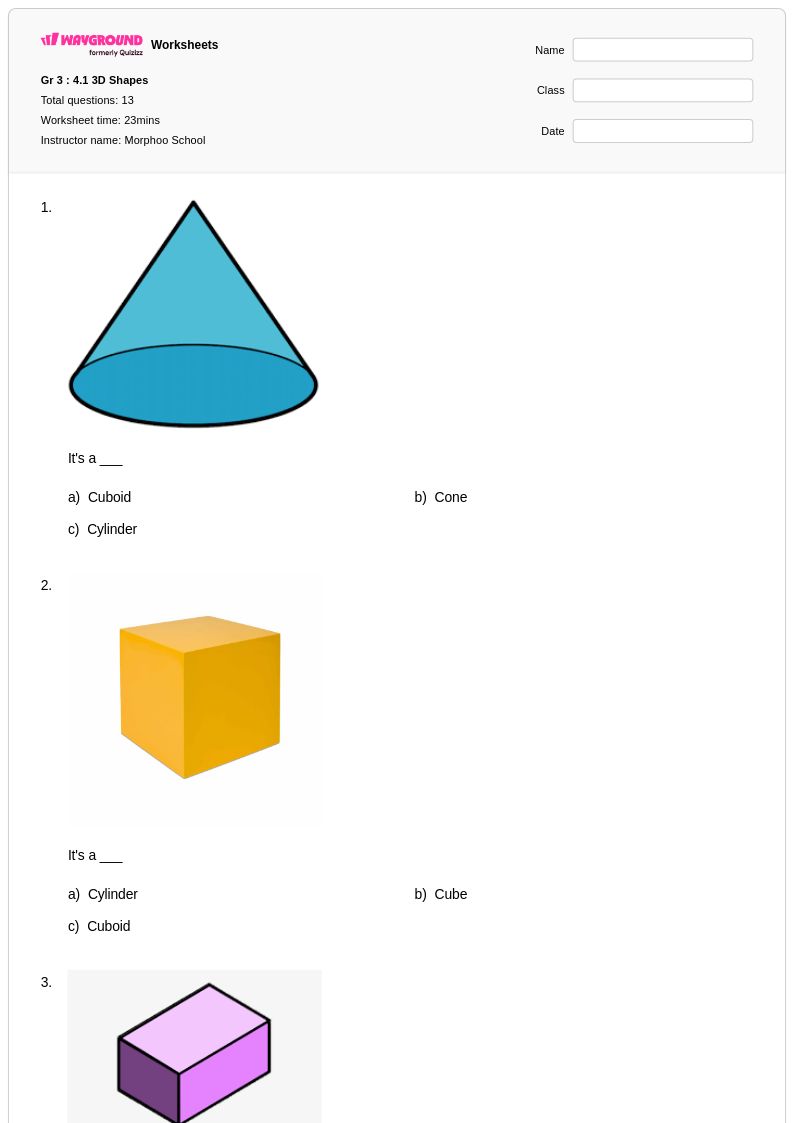
13 Q
3rd
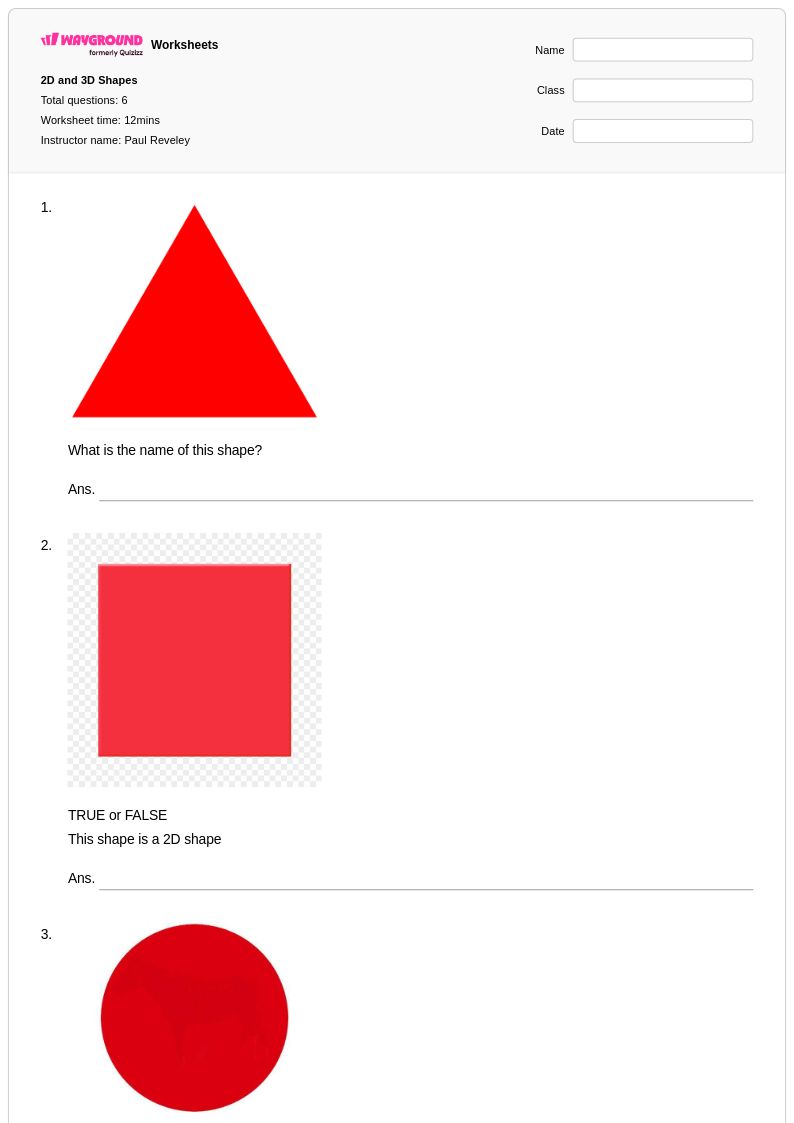
6 Q
3rd - 4th
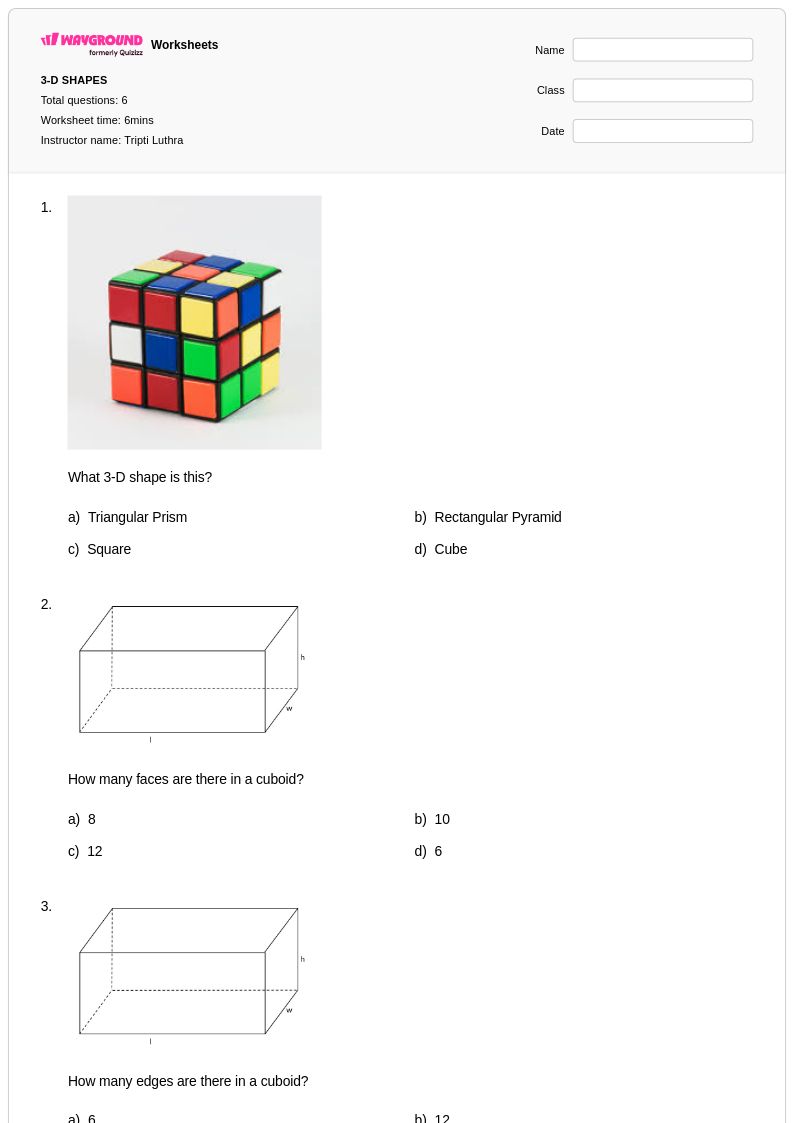
6 Q
3rd

30 Q
2nd - 3rd
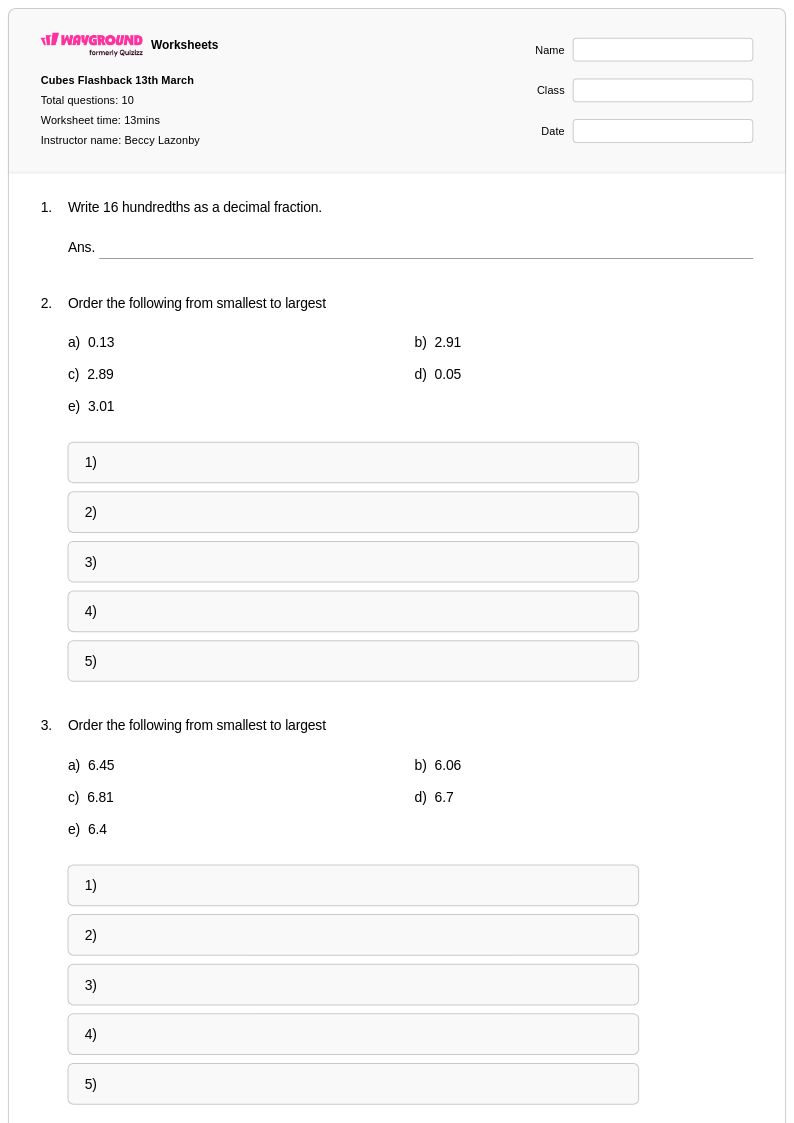
10 Q
2nd - 5th
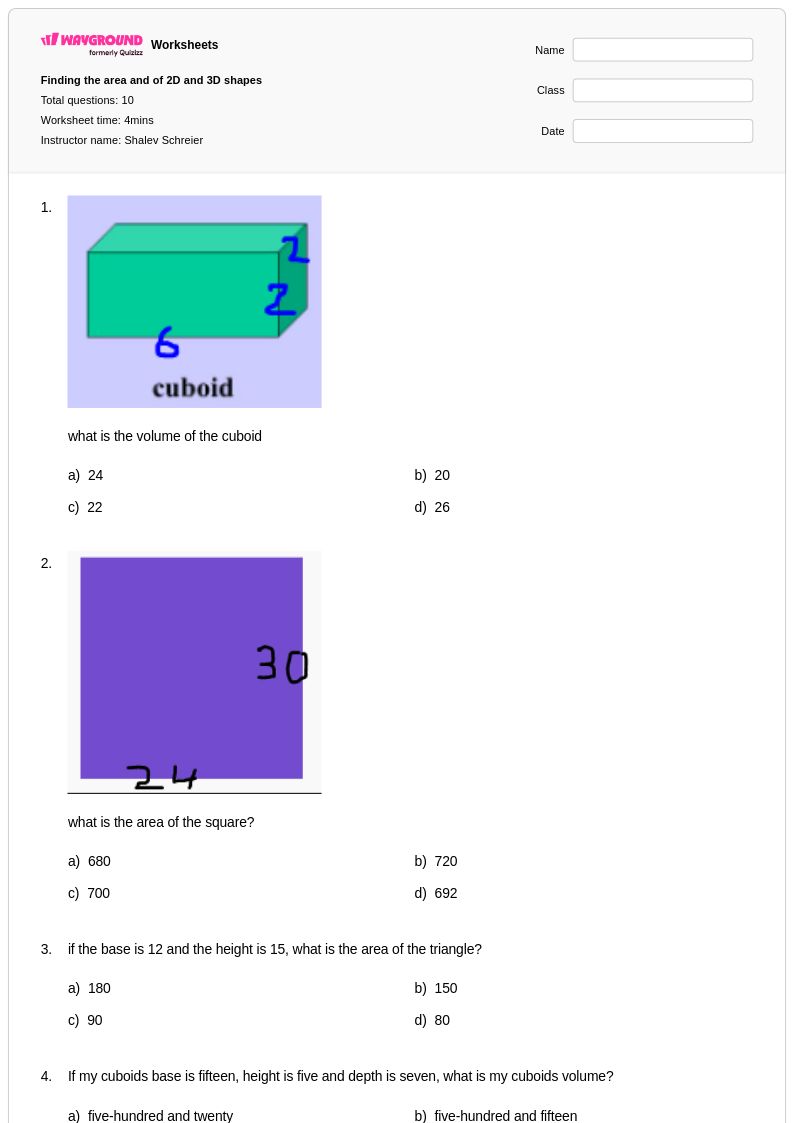
10 Q
1st - Uni
Explore Other Subject Worksheets for year 3
Explore printable Cuboids worksheets for Year 3
Year 3 cuboids worksheets available through Wayground (formerly Quizizz) provide young learners with essential foundational experiences in three-dimensional geometry, helping students recognize, analyze, and understand the properties of rectangular prisms in their everyday world. These comprehensive practice problems guide third-grade students through identifying cuboids among various shapes, counting faces, edges, and vertices, and distinguishing cuboids from other geometric solids like cubes, cylinders, and spheres. Each worksheet collection includes detailed answer keys and printable pdf formats that support independent learning and self-assessment, while free resources ensure that students can explore cuboid characteristics through hands-on activities such as matching real-world objects to their geometric representations and solving problems involving the basic attributes of these three-dimensional shapes.
Wayground (formerly Quizizz) empowers teachers with millions of educator-created cuboids worksheets that streamline lesson planning and provide targeted skill practice for Year 3 geometry instruction. The platform's robust search and filtering capabilities allow teachers to quickly locate resources aligned with specific learning standards and customize materials to meet diverse classroom needs, whether for initial concept introduction, remediation support, or enrichment challenges. These flexible worksheet collections are available in both printable and digital formats, including downloadable pdfs, enabling seamless integration into various teaching environments and learning modalities. Teachers can efficiently differentiate instruction by selecting from multiple difficulty levels and problem types, ensuring that every third-grade student receives appropriate practice with cuboid identification and property analysis while building confidence in three-dimensional geometric reasoning.
FAQs
How do I teach cuboids to third-grade students?
What exercises help third graders practice cuboids?
What mistakes do third graders make when working with cuboids?
How can I use Wayground Grade 3 cuboids worksheets?
How do cuboids fit into the Common Core Grade 3 geometry progression?
How can I differentiate cuboid practice in Grade 3?
What should Grade 3 students know about cuboids?