
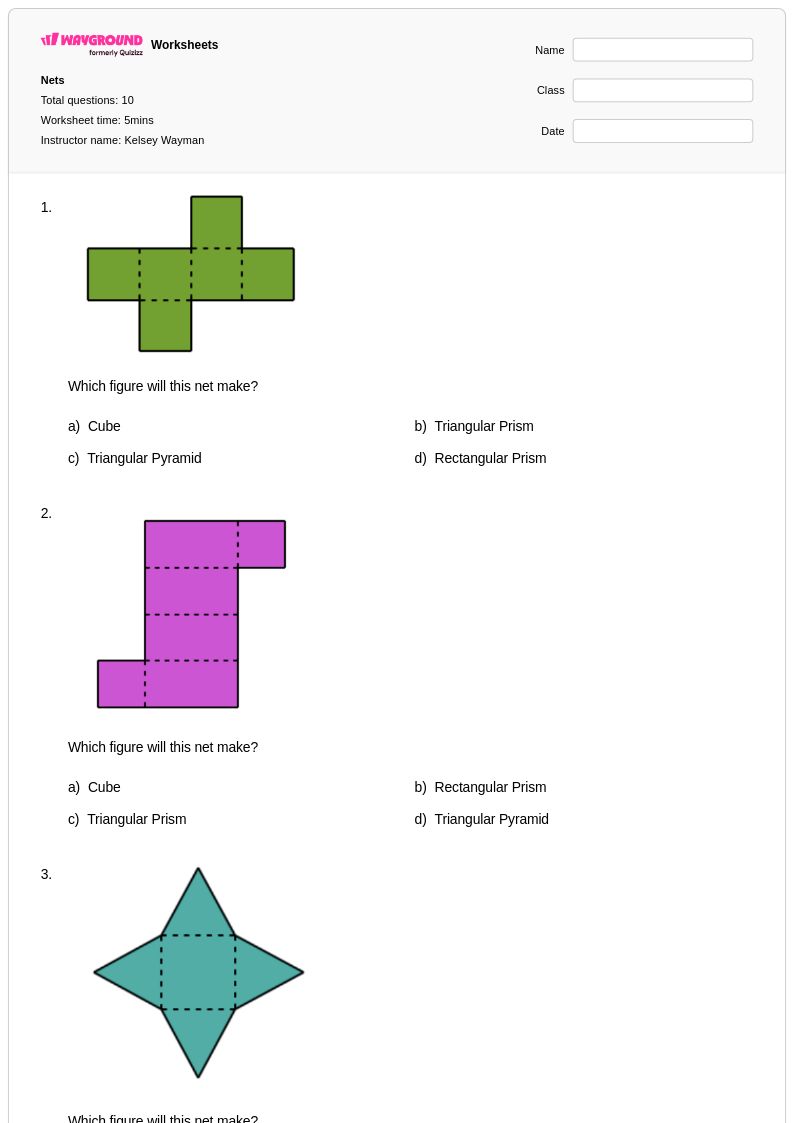
10 Q
3rd - 5th
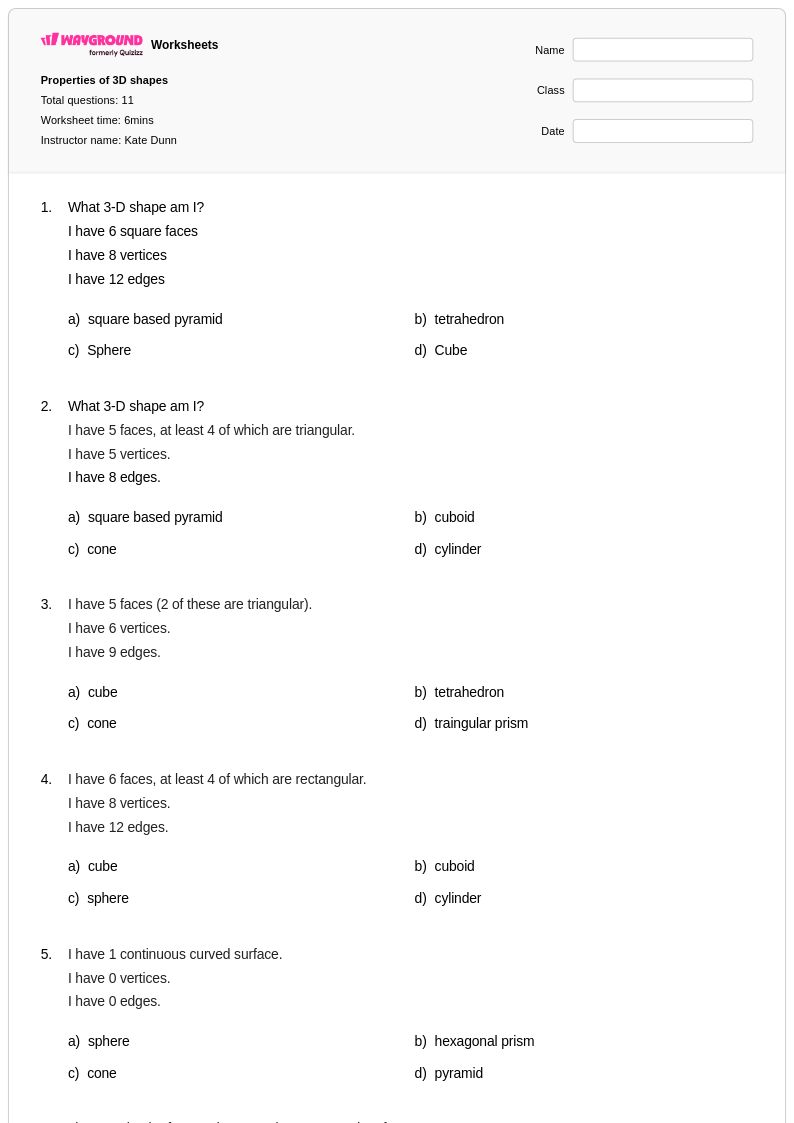
11 Q
3rd
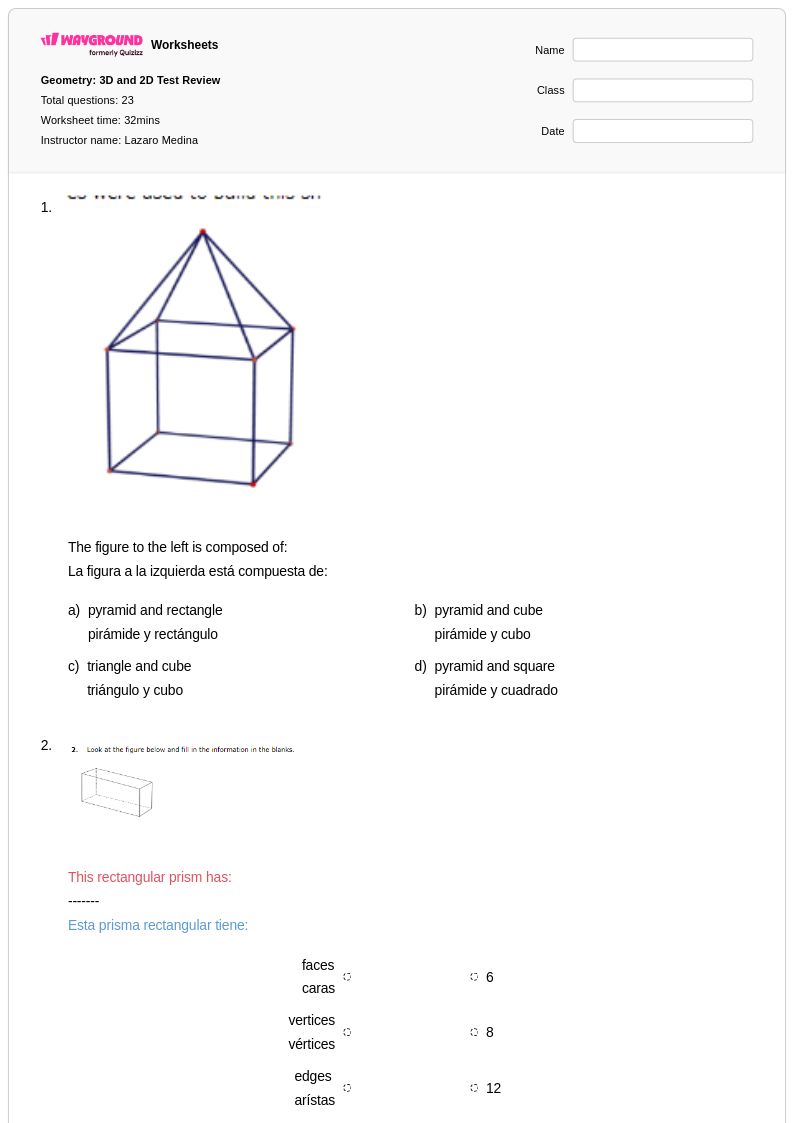
23 Q
3rd
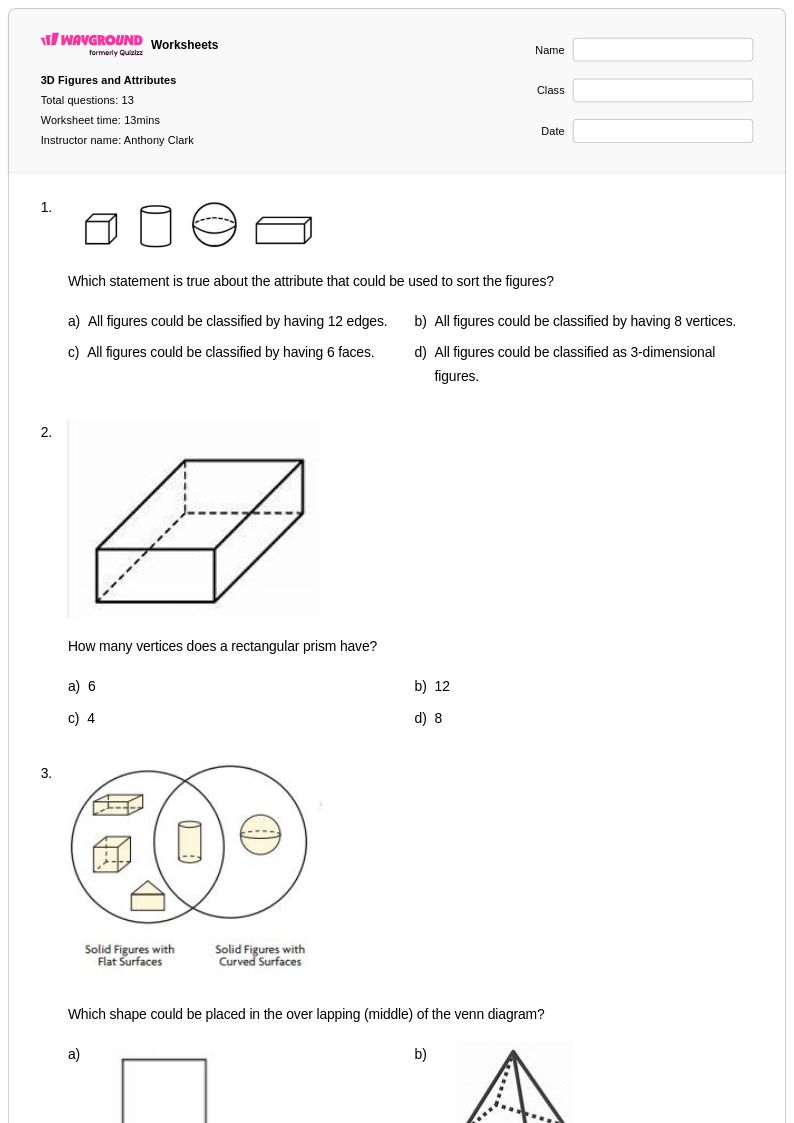
13 Q
3rd - Uni
10 Q
3rd
10 Q
2nd - Uni
22 Q
3rd
11 Q
3rd
11 Q
3rd
21 Q
3rd
8 Q
3rd
20 Q
2nd - Uni
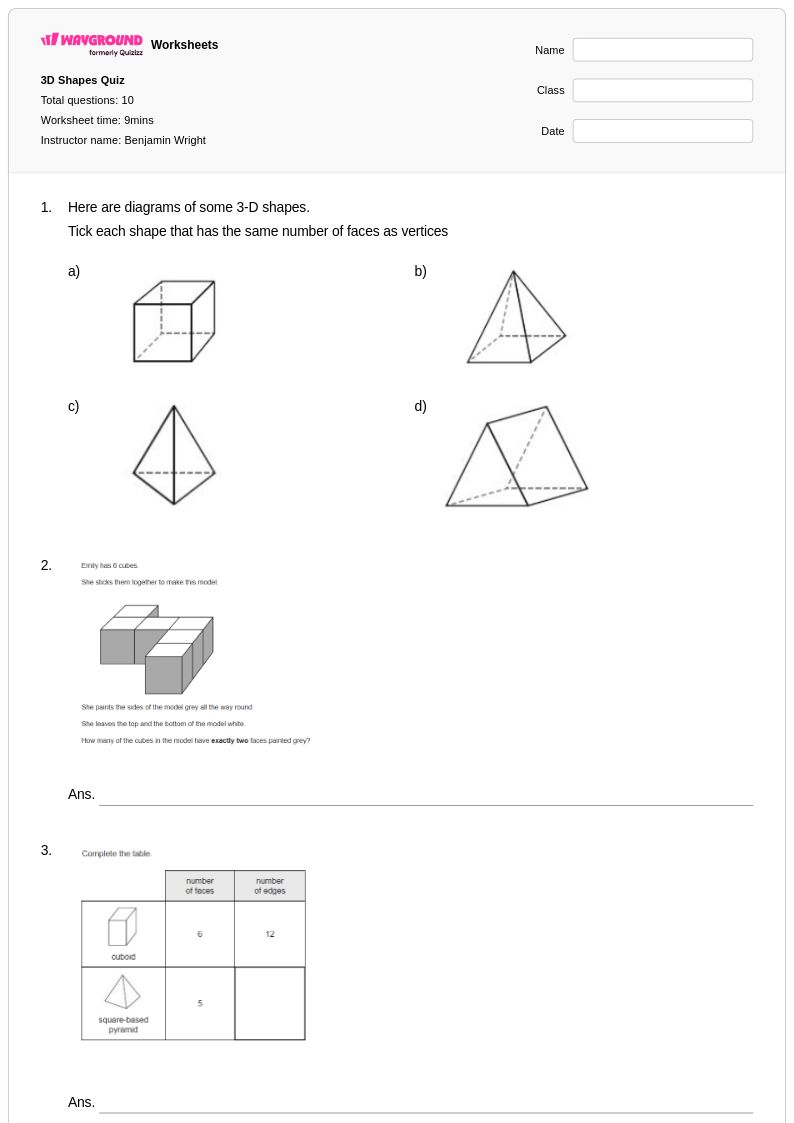
10 Q
1st - 5th
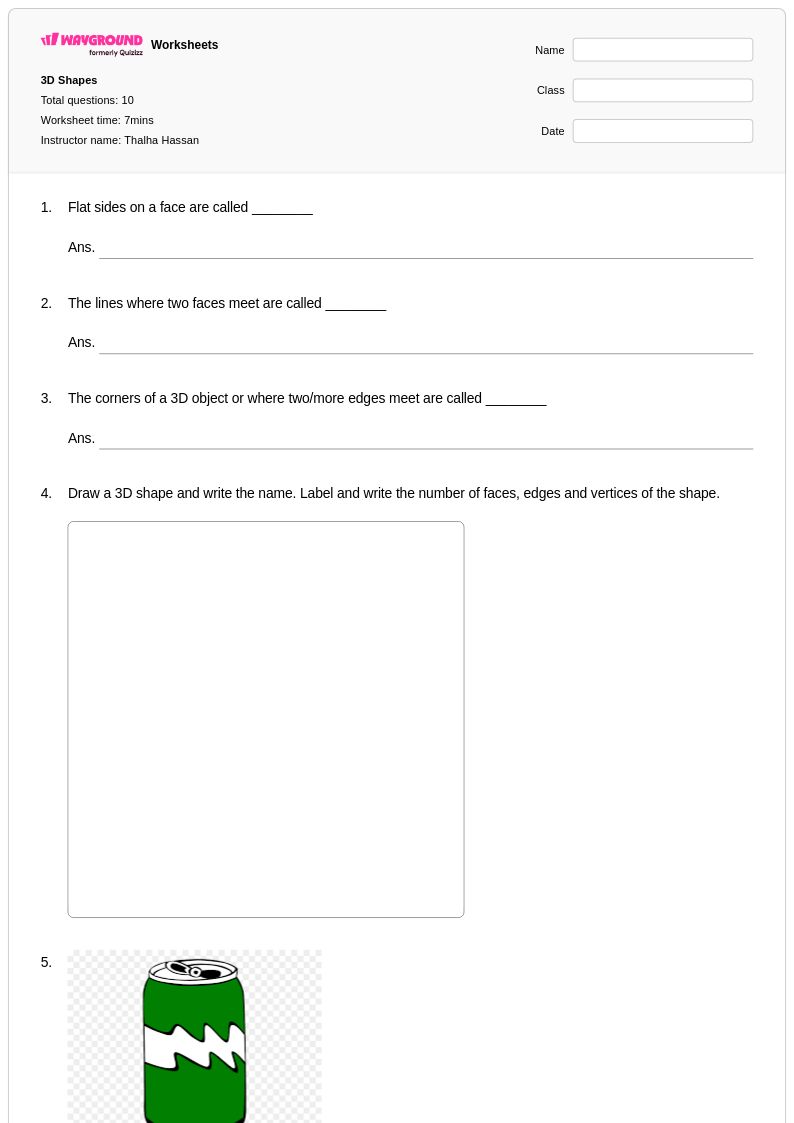
10 Q
3rd - 4th
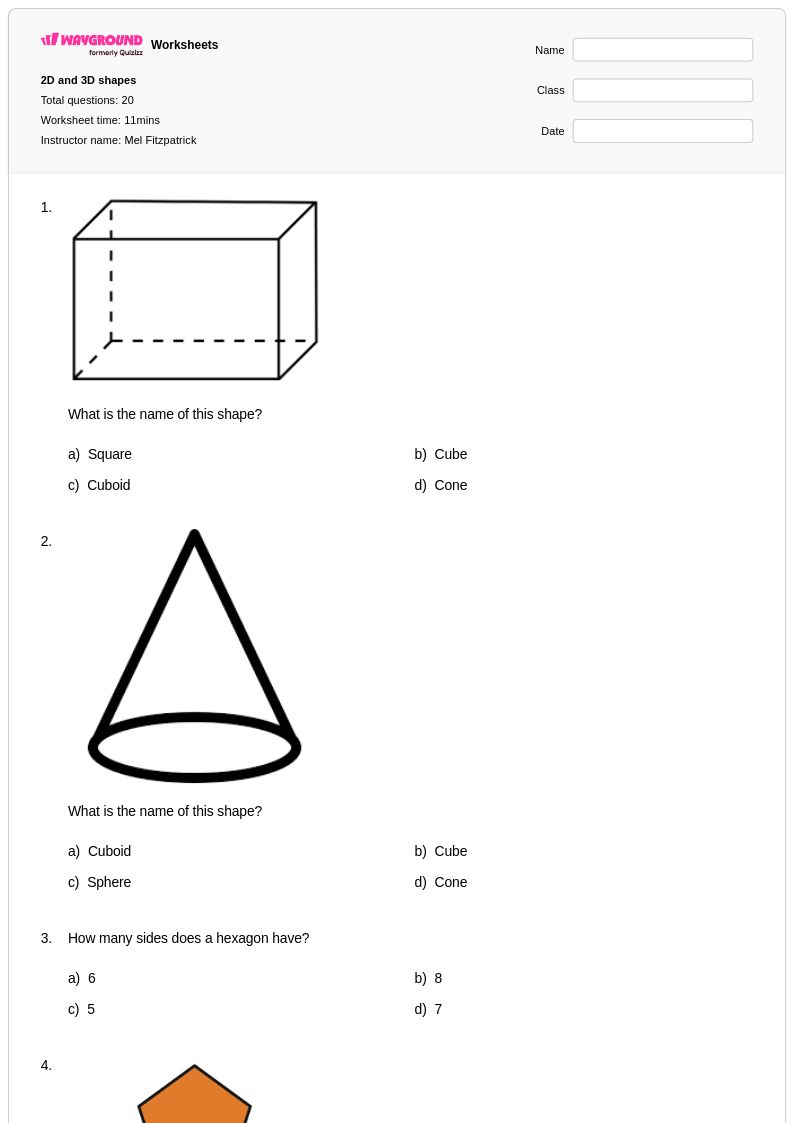
20 Q
3rd - 7th
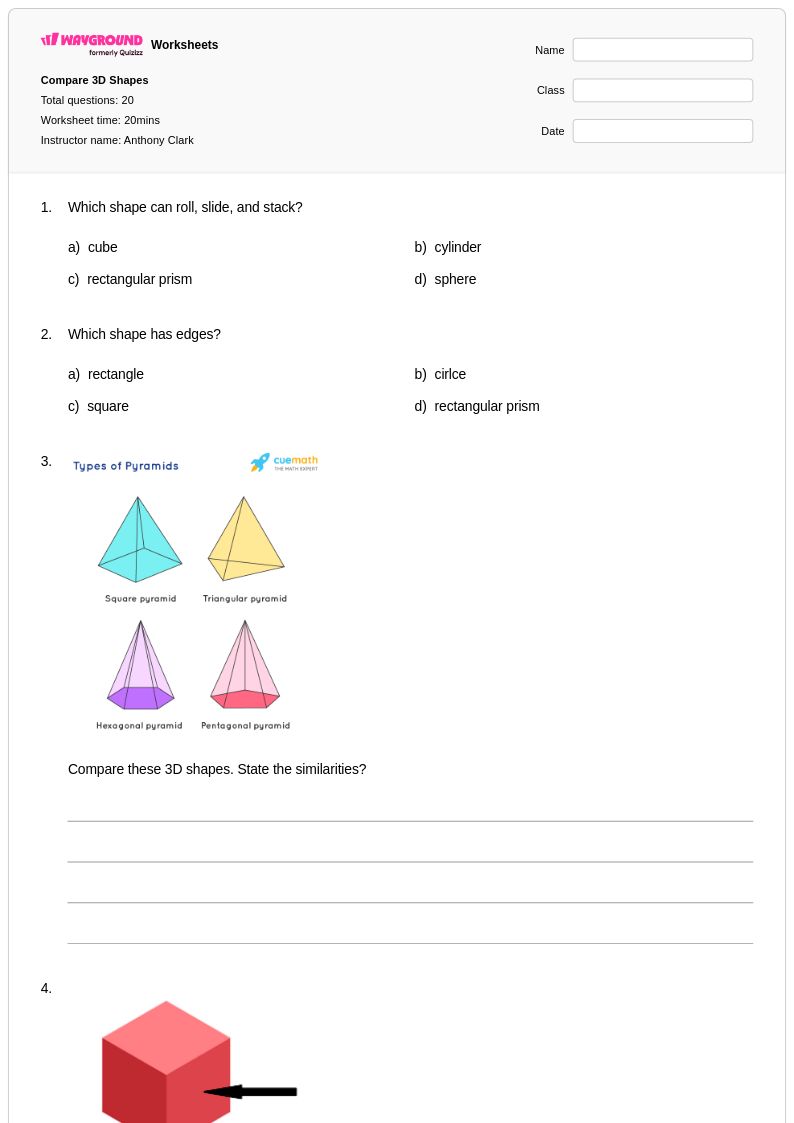
20 Q
3rd - Uni
14 Q
3rd
8 Q
3rd
10 Q
1st - 5th
6 Q
3rd
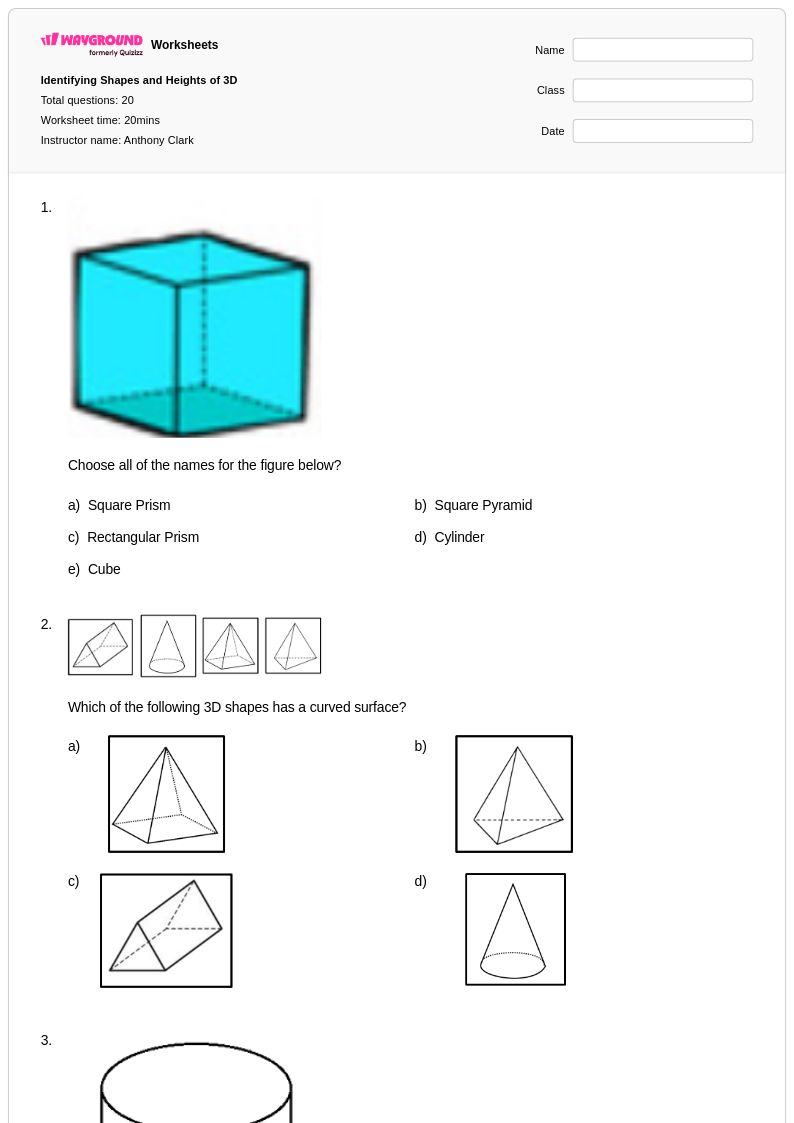
20 Q
3rd - Uni
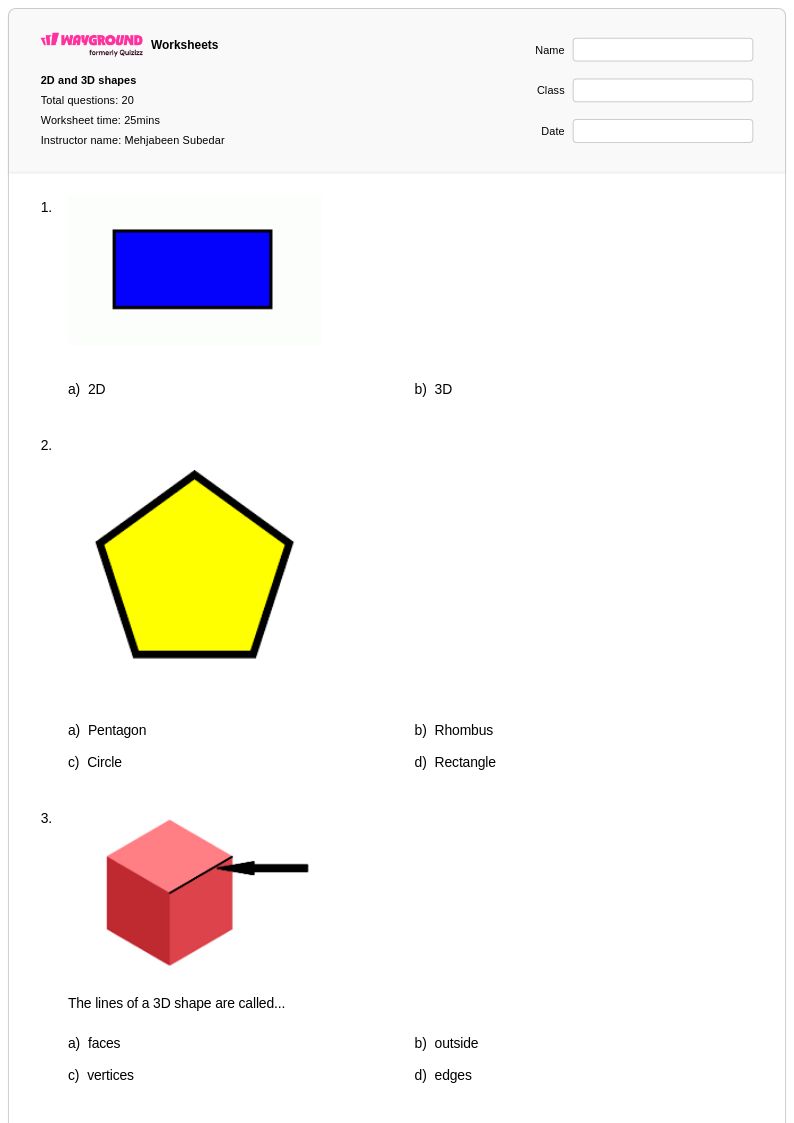
20 Q
3rd
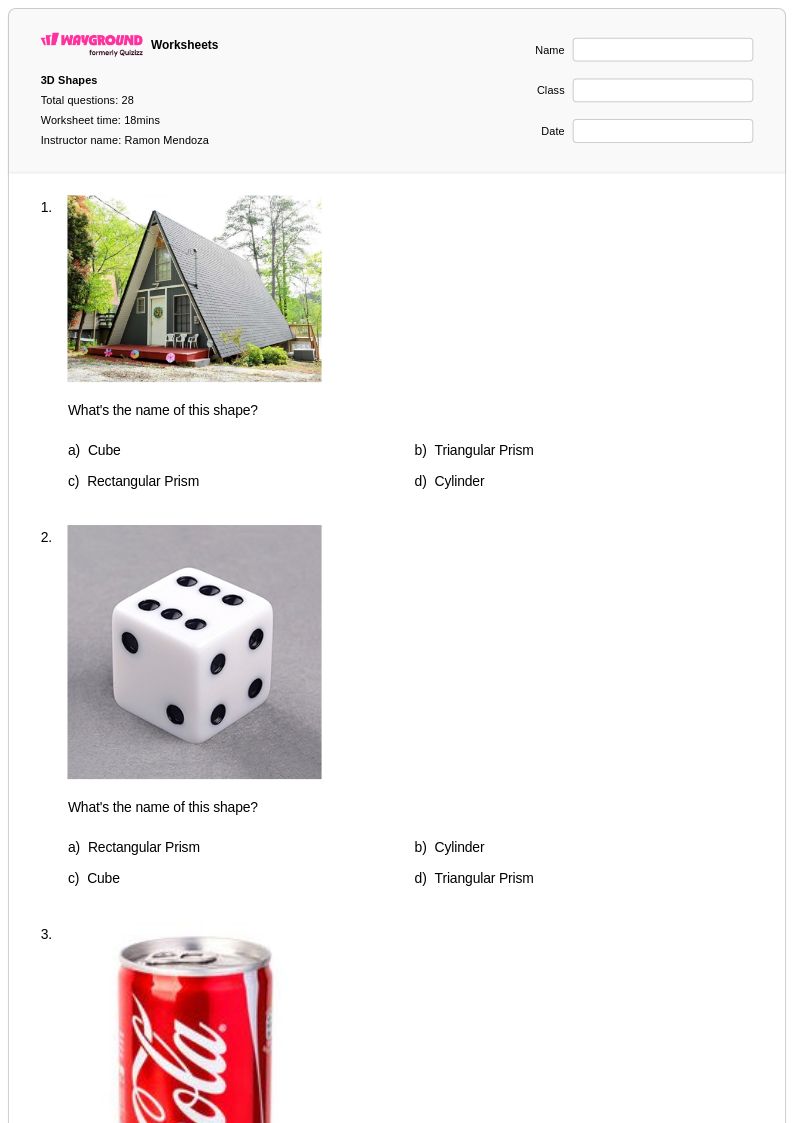
28 Q
3rd
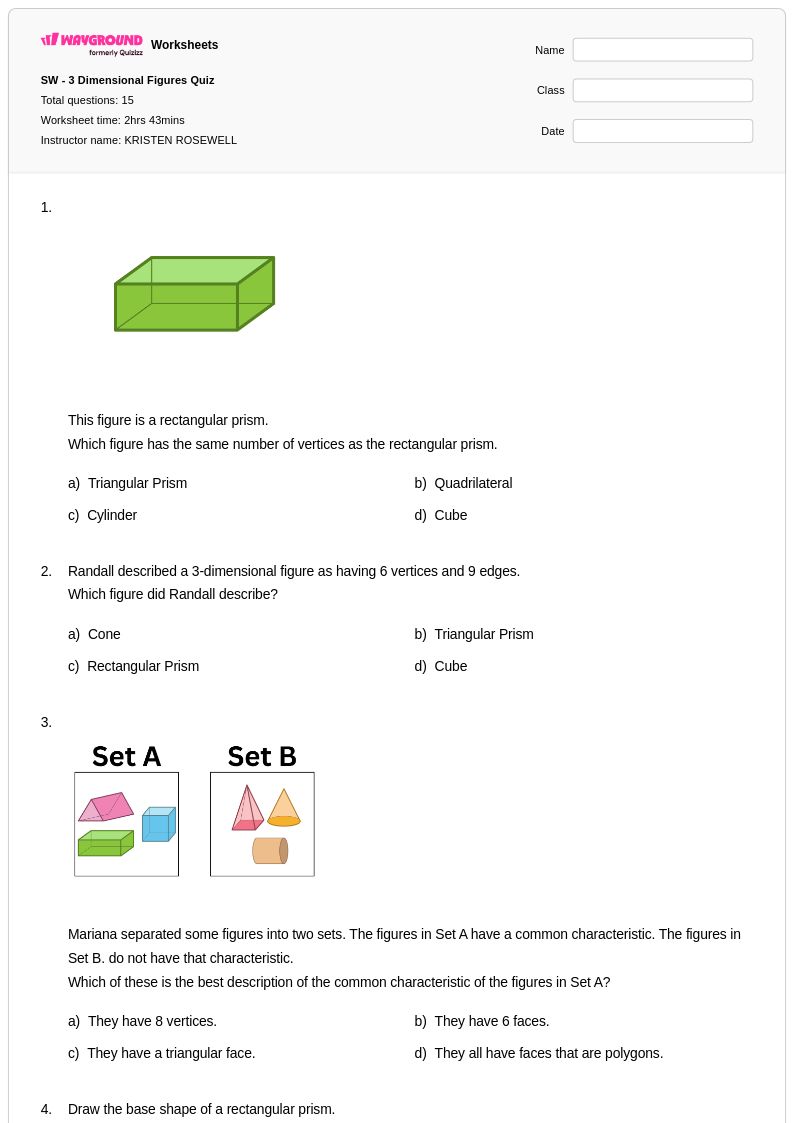
15 Q
3rd
Explore Other Subject Worksheets for year 3
Explore printable Nets of 3d Figures worksheets for Year 3
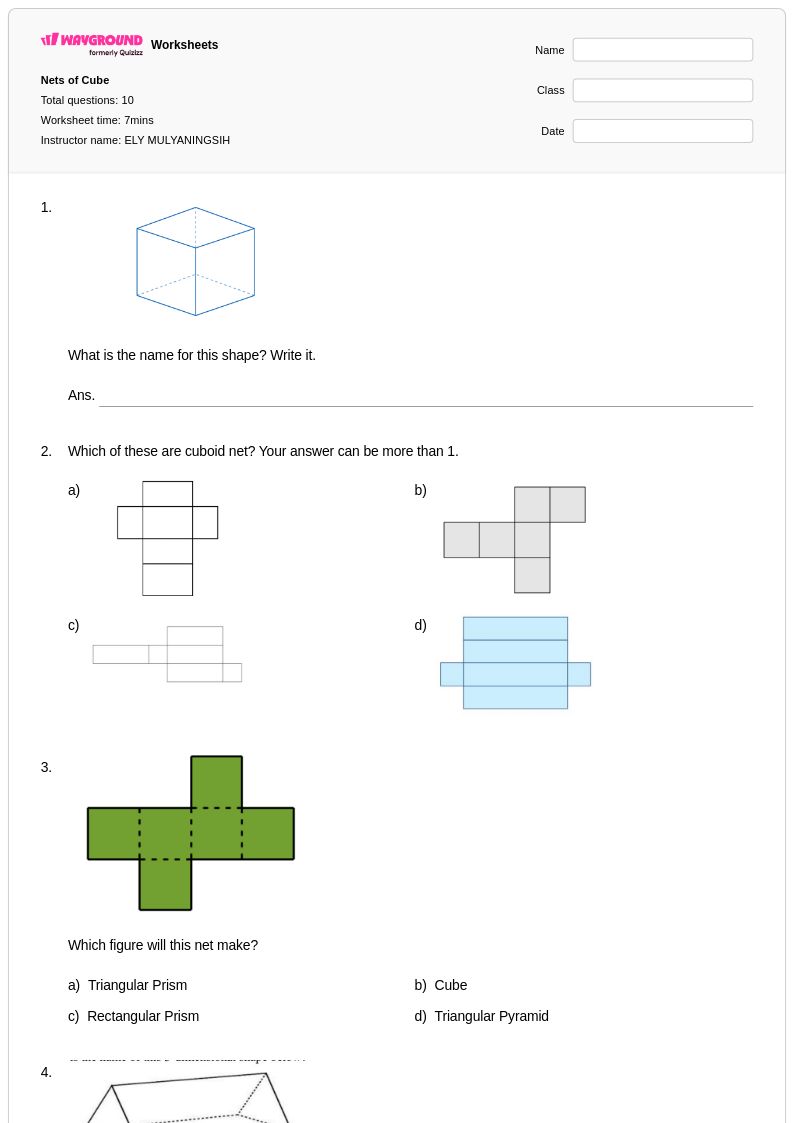
Nets of 3D figures worksheets for Year 3 provide young learners with essential practice in visualizing how flat patterns can fold into three-dimensional shapes. These educational resources help students develop crucial spatial reasoning skills by working with nets of common geometric solids like cubes, rectangular prisms, and pyramids. Through Wayground's comprehensive collection, students engage with hands-on practice problems that strengthen their ability to identify which flat patterns will successfully fold into specific 3D shapes and which will not. The worksheets include varied exercises from basic net identification to more challenging visualization tasks, complete with answer keys that support both independent learning and guided instruction. Available as free printables in convenient PDF format, these resources make it easy for educators to incorporate manipulative-style learning into their geometry curriculum while building foundational understanding of the relationship between 2D and 3D geometric forms.
Wayground, formerly Quizizz, empowers teachers with millions of educator-created worksheet collections specifically designed for nets of 3D figures instruction at the Year 3 level. The platform's robust search and filtering capabilities allow teachers to quickly locate resources that align with their specific curriculum standards and learning objectives, while differentiation tools enable customization for students with varying skill levels and learning needs. Teachers can access these materials in both printable PDF format for traditional paper-and-pencil activities and digital formats for interactive classroom experiences or remote learning environments. This flexibility supports comprehensive lesson planning by providing options for initial skill introduction, targeted remediation for struggling learners, enrichment activities for advanced students, and ongoing practice to reinforce geometric visualization concepts throughout the academic year.
FAQs
What are the expectations for nets of 3D figures in Grade 3?
How do I teach students to identify nets that won't work?
What makes a nets worksheet challenging for a third grader?
How can I assess a third grader's understanding of nets?
How can I use this Grade 3 nets worksheet?
How can I support struggling students with this topic?