
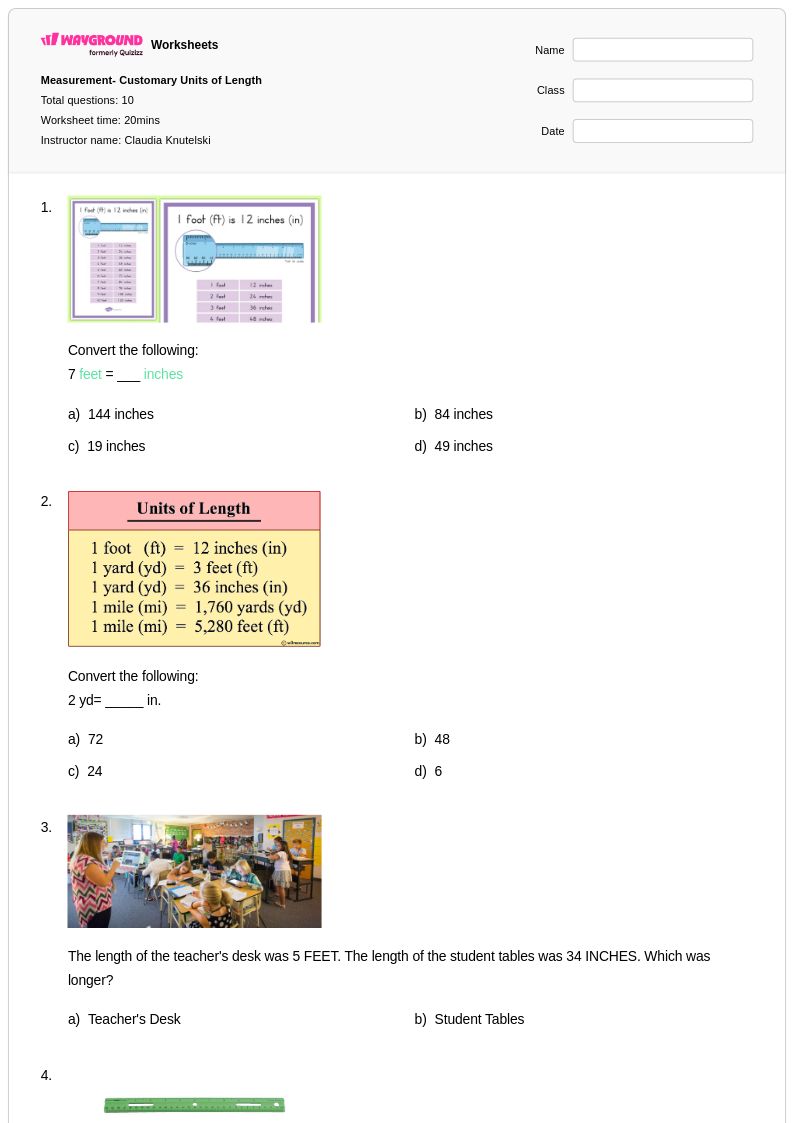
10 Q
3rd - 6th
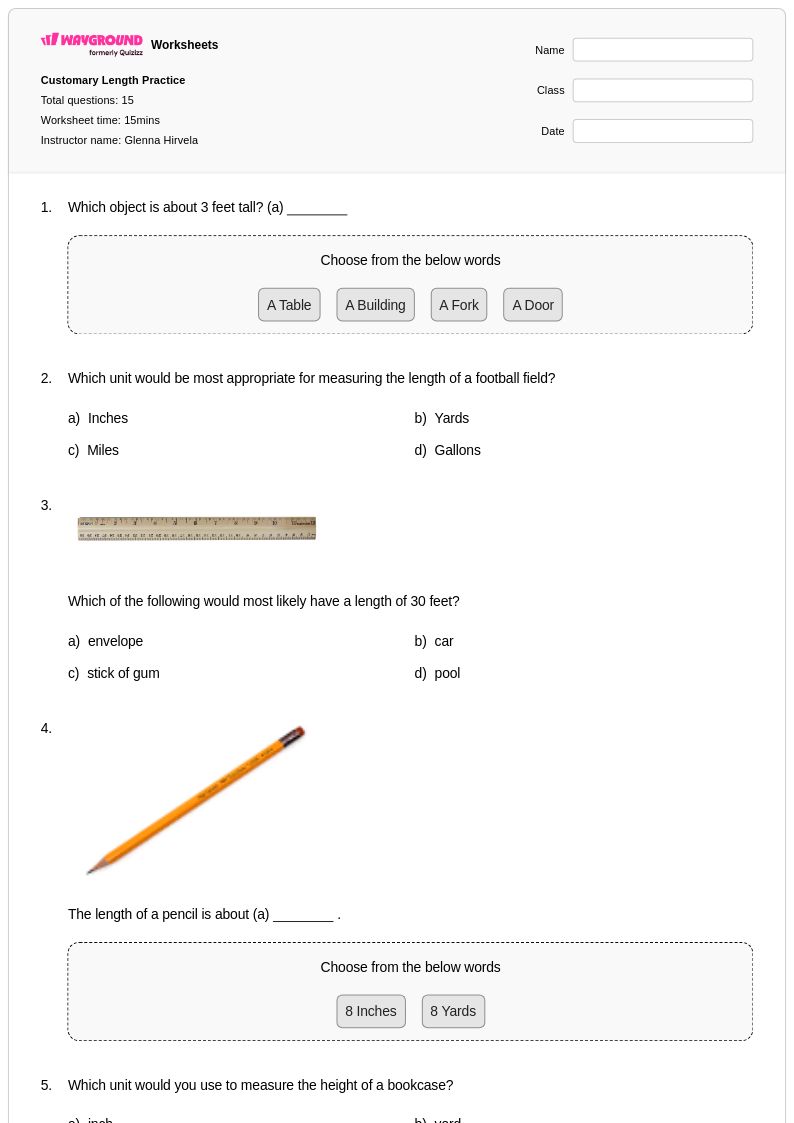
15 Q
3rd
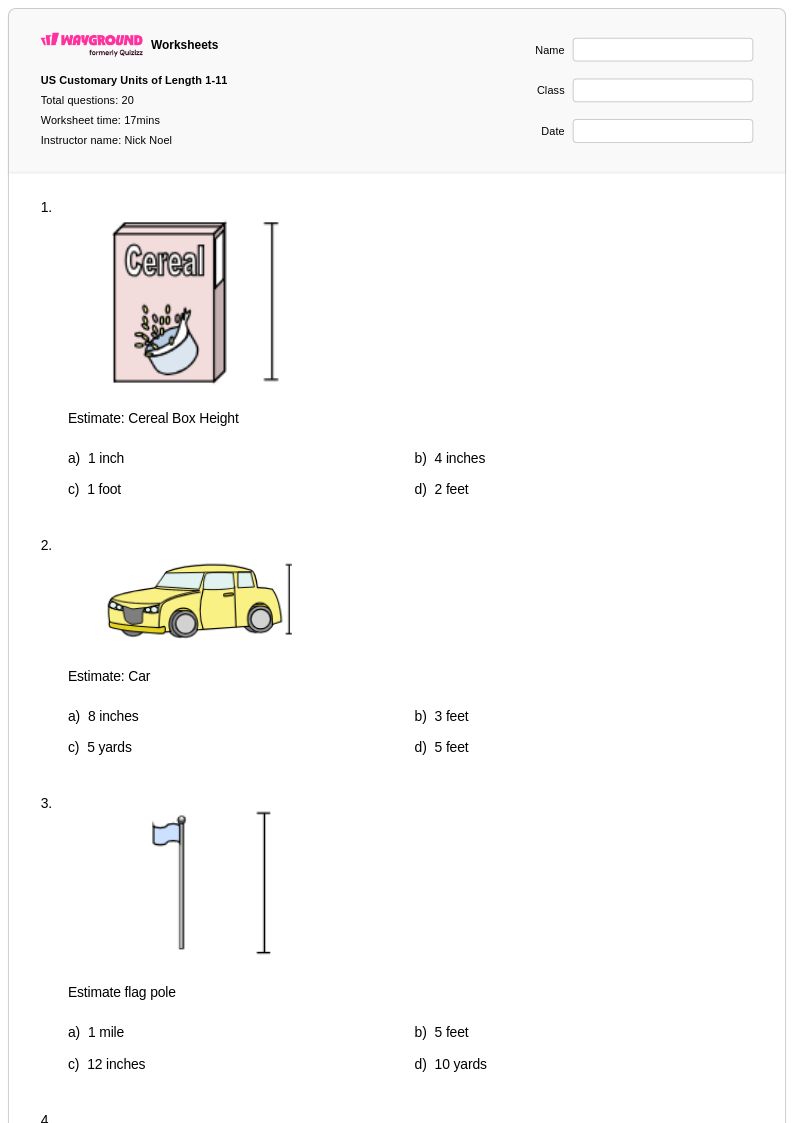
20 Q
3rd - 5th
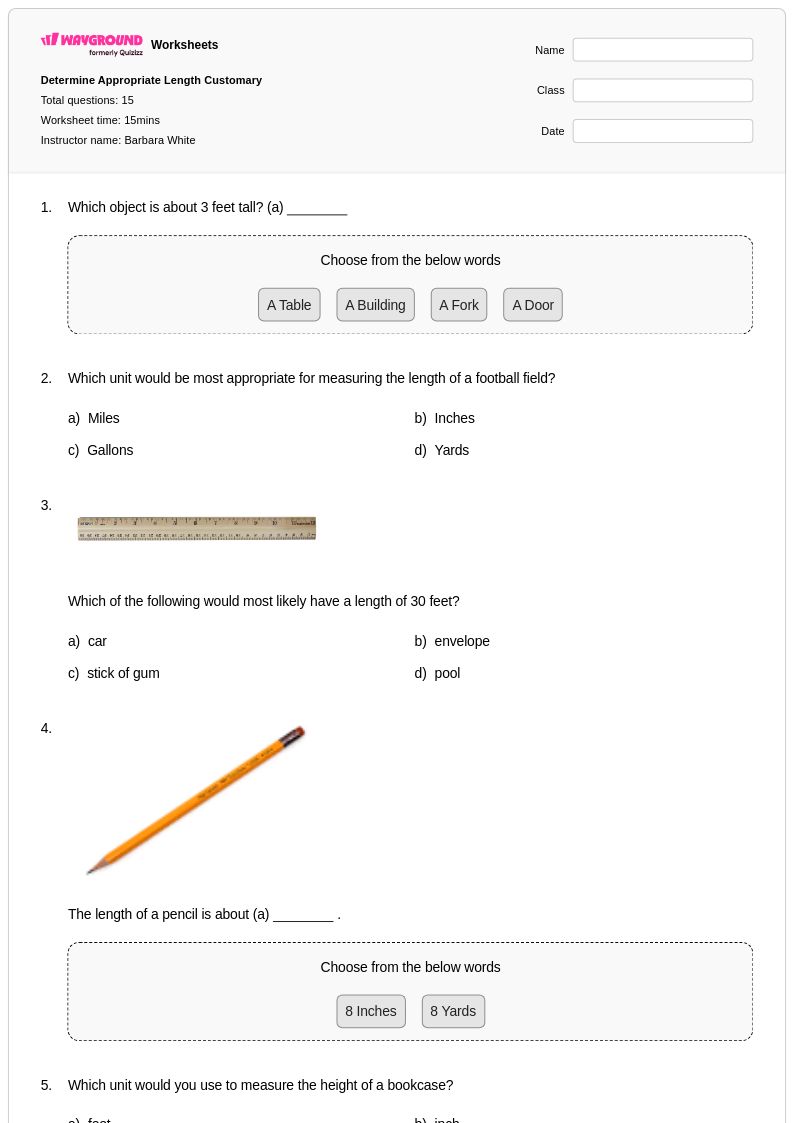
15 Q
3rd
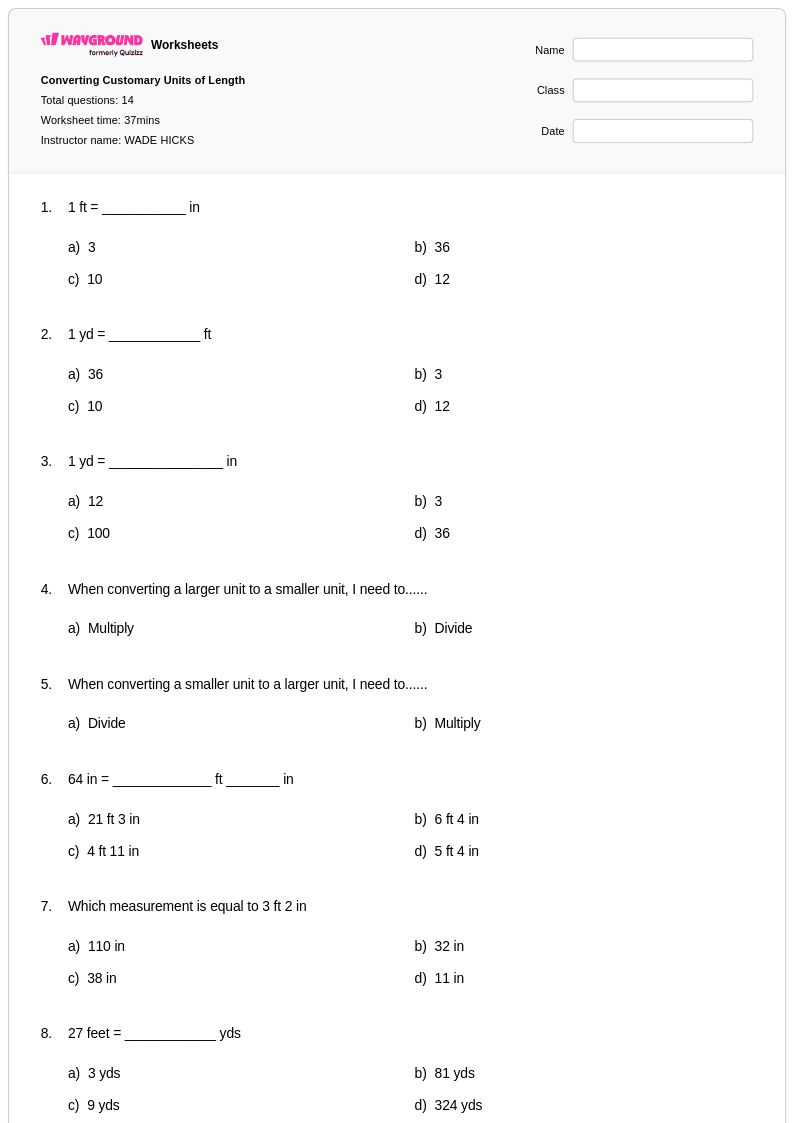
14 Q
3rd - 6th
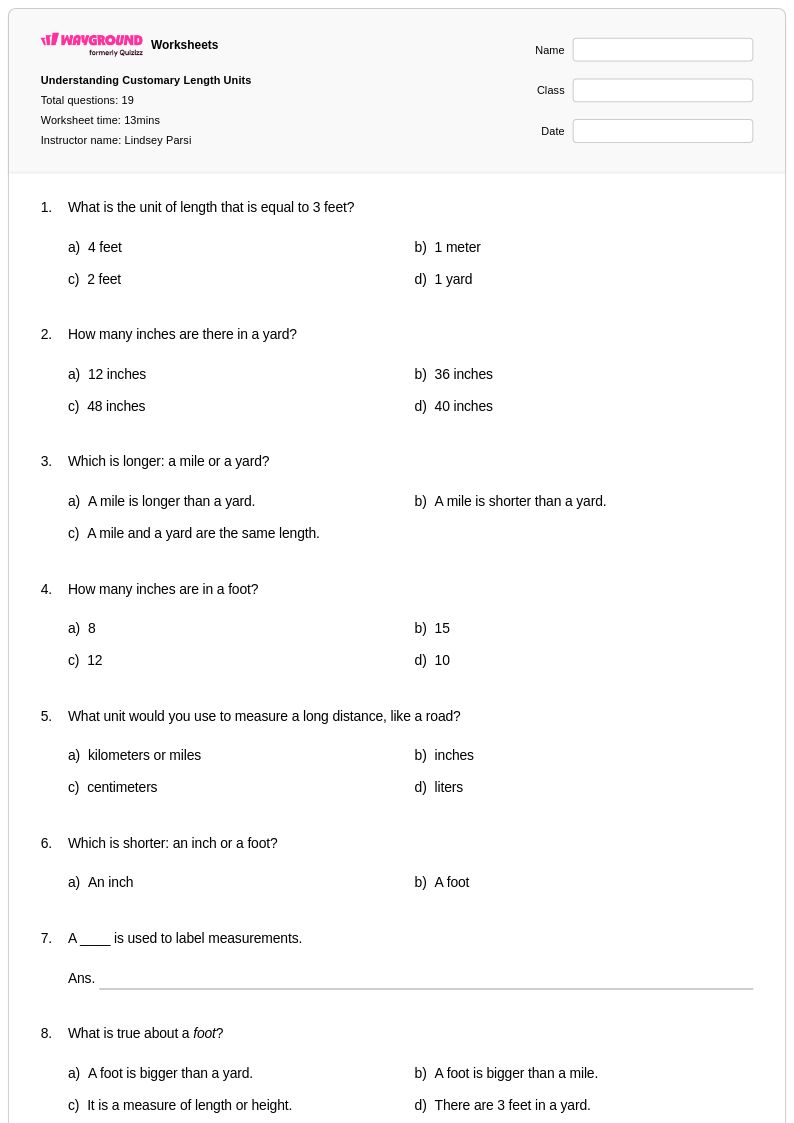
19 Q
1st - 5th
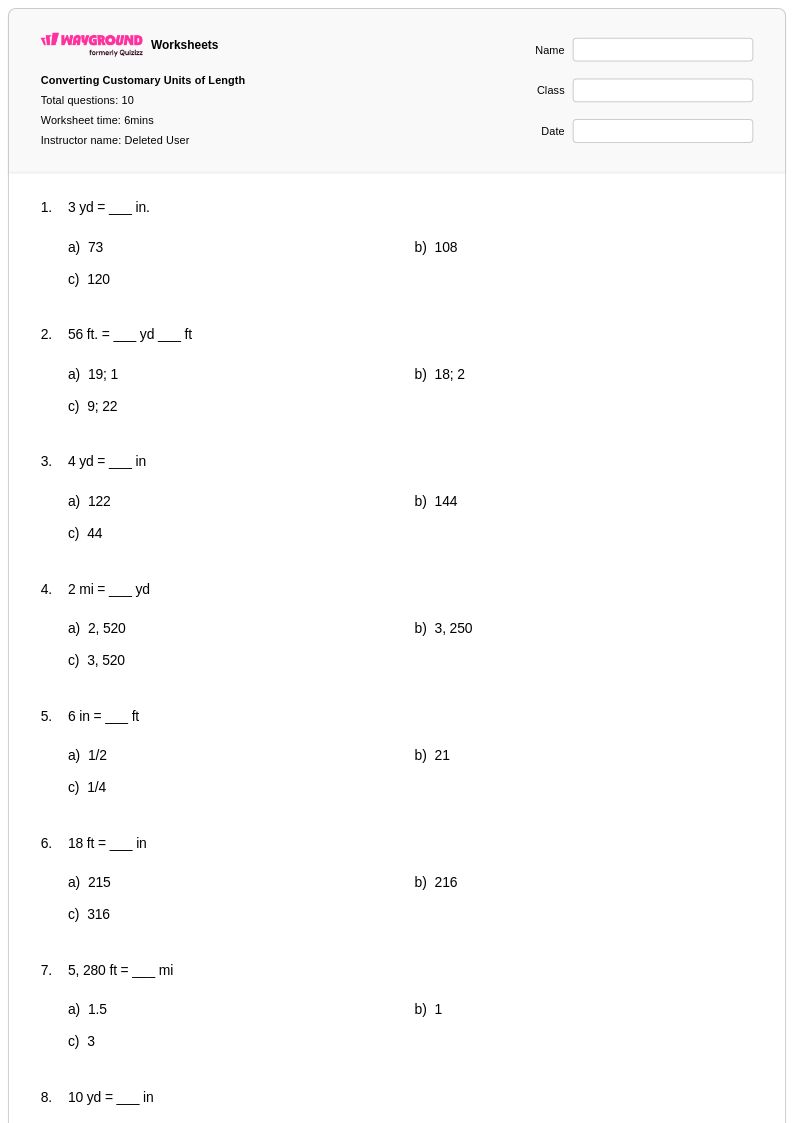
10 Q
KG - Uni
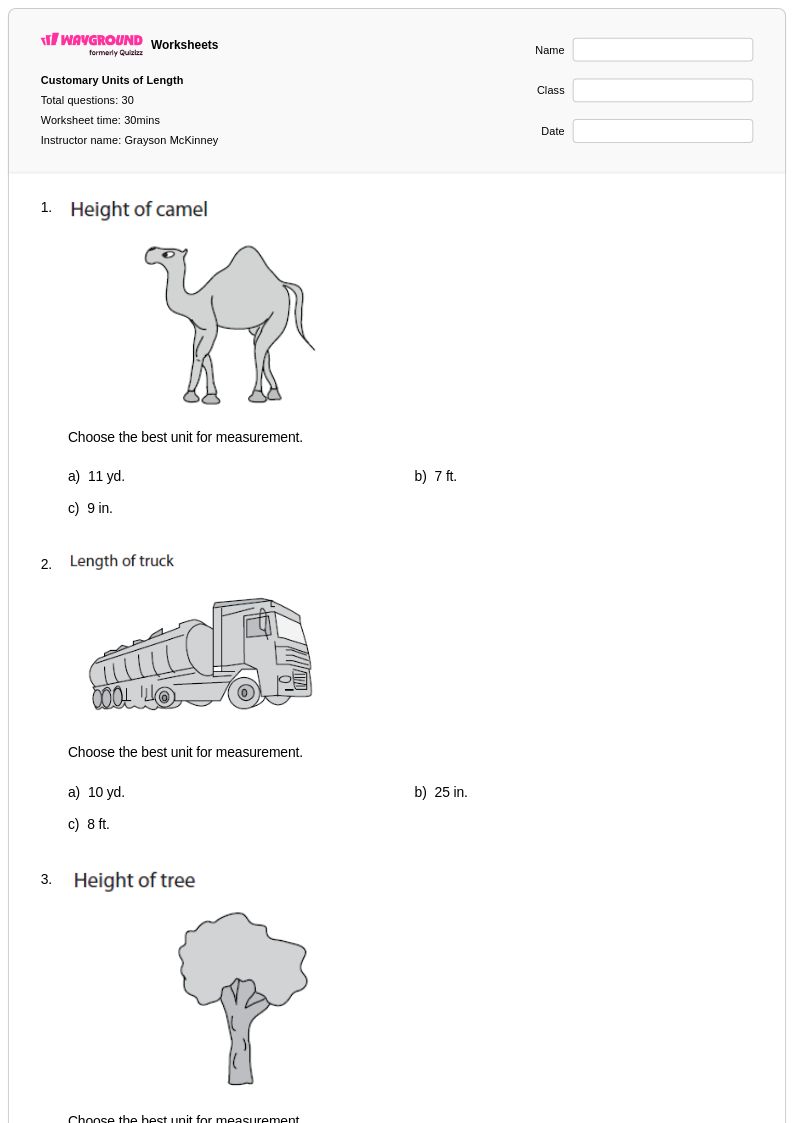
30 Q
3rd - 5th
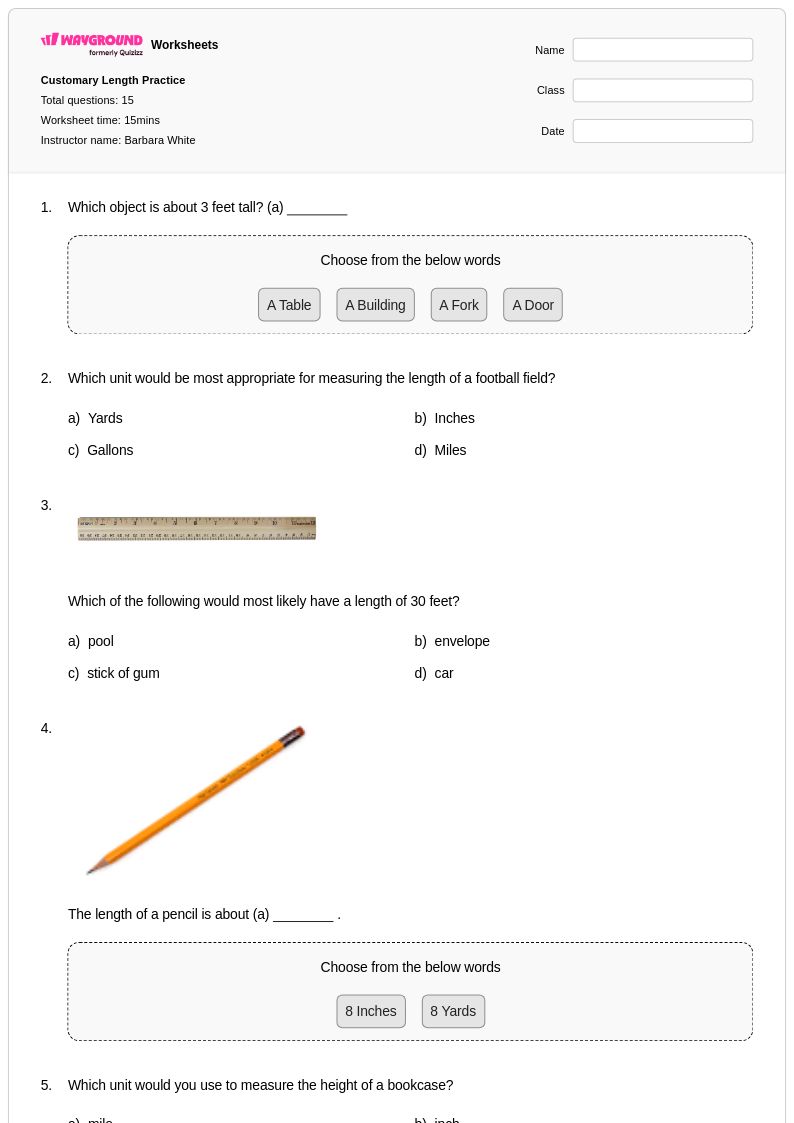
15 Q
3rd
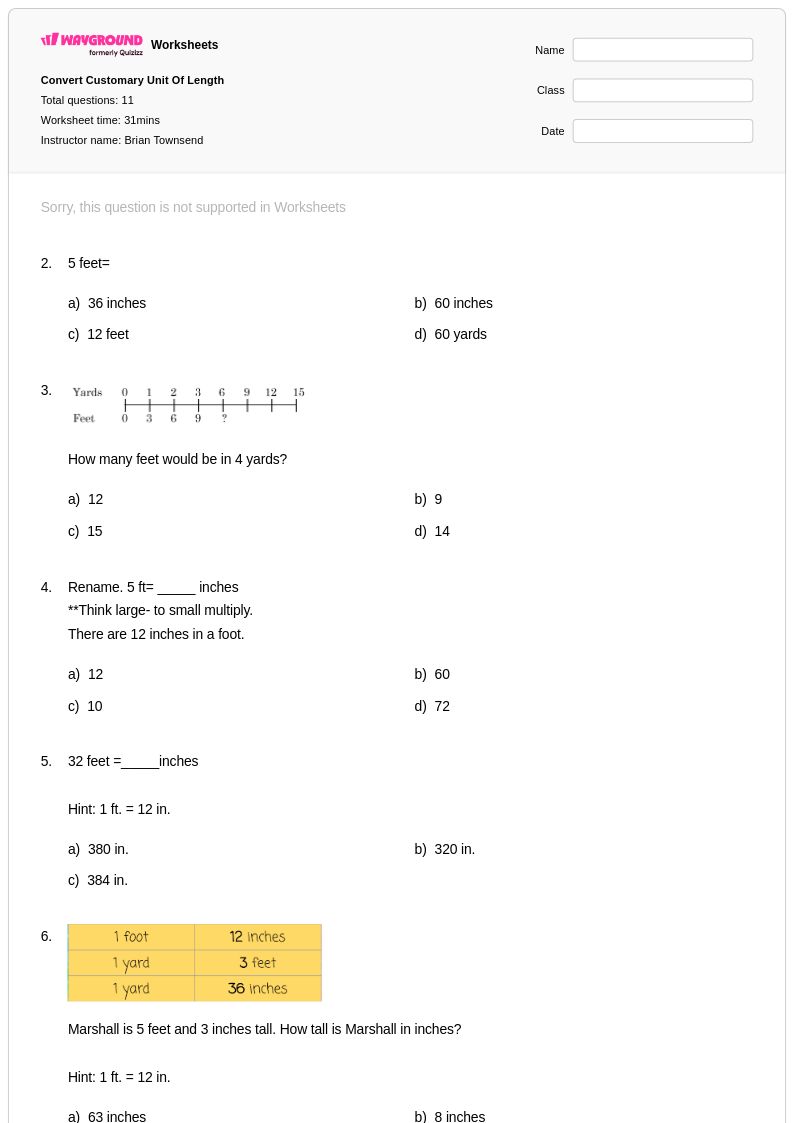
14 Q
1st - 5th
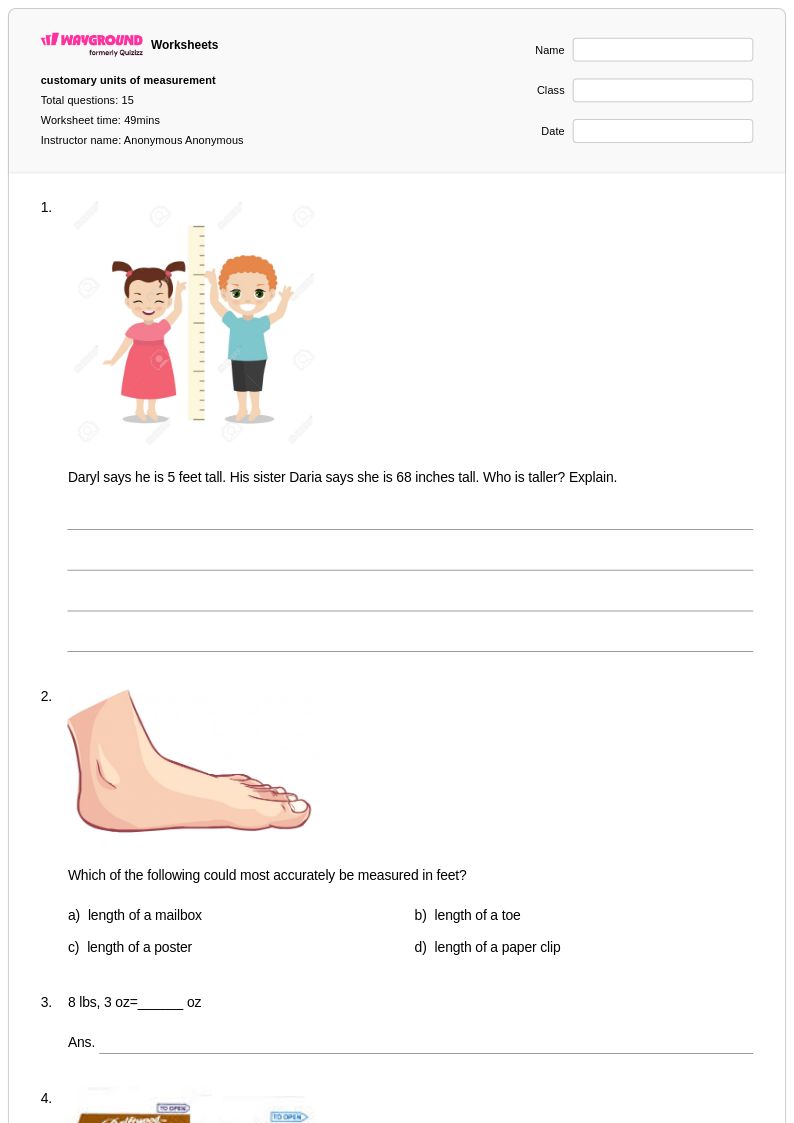
15 Q
3rd
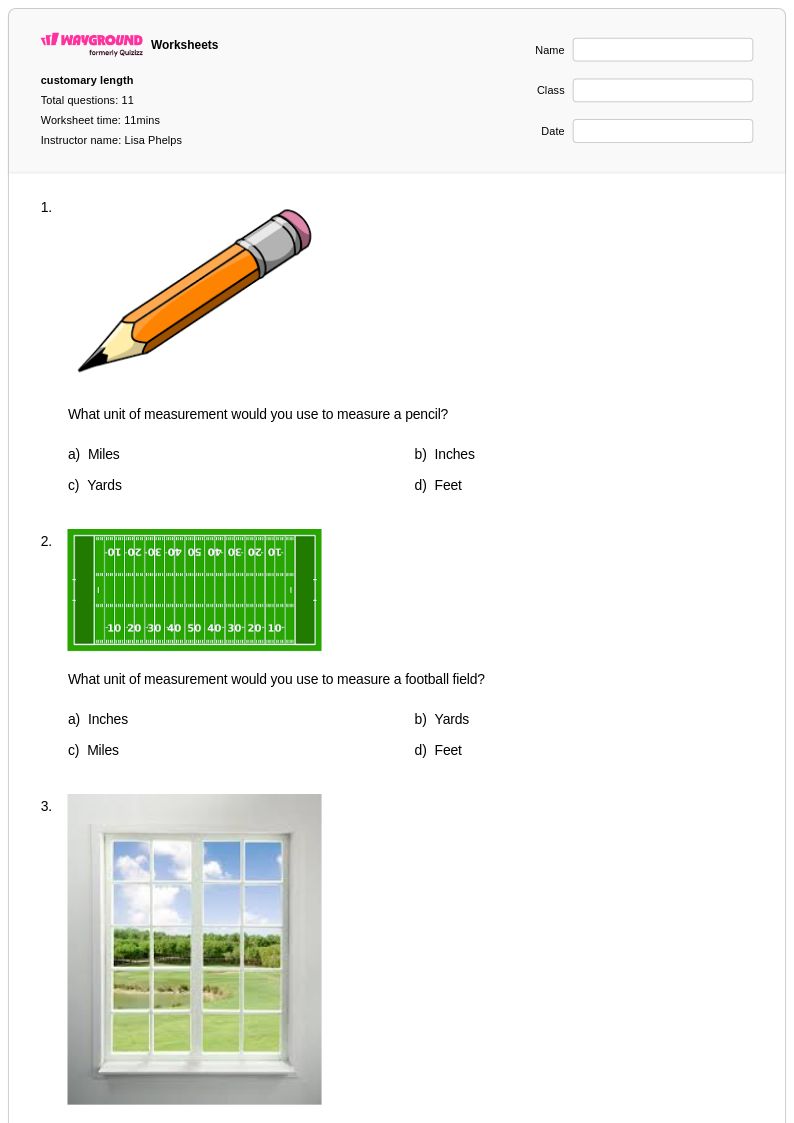
11 Q
3rd
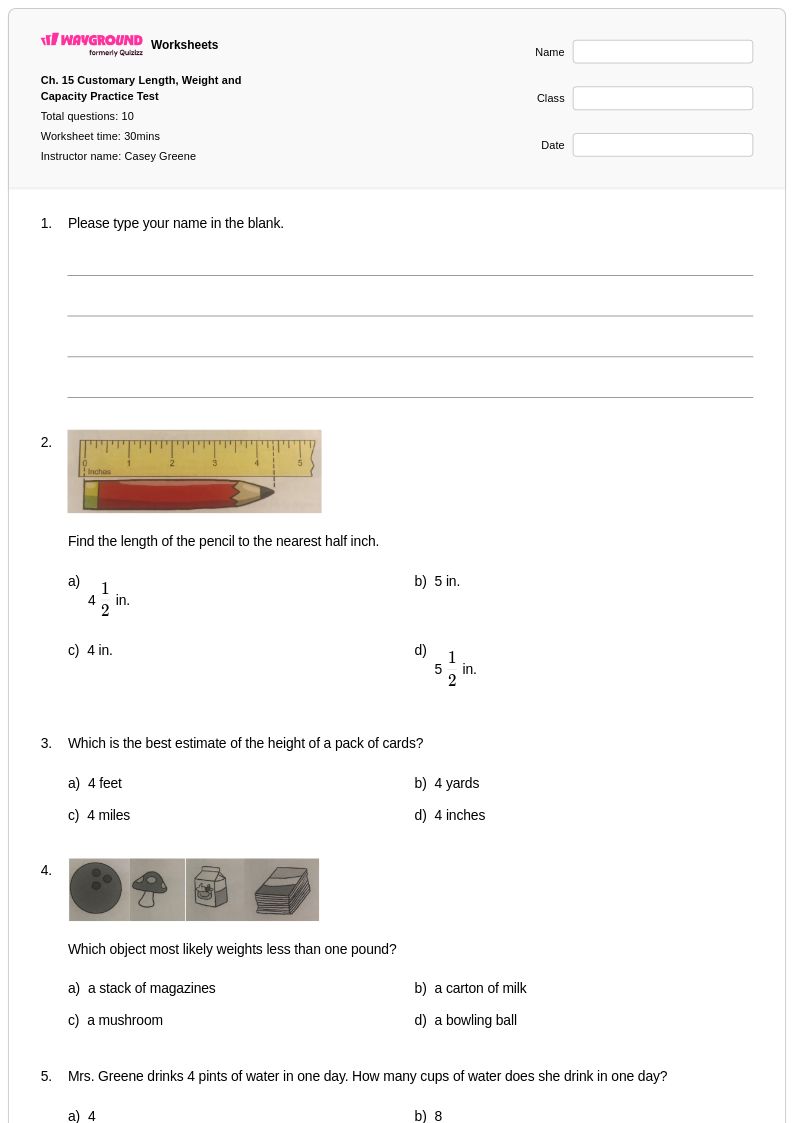
10 Q
3rd
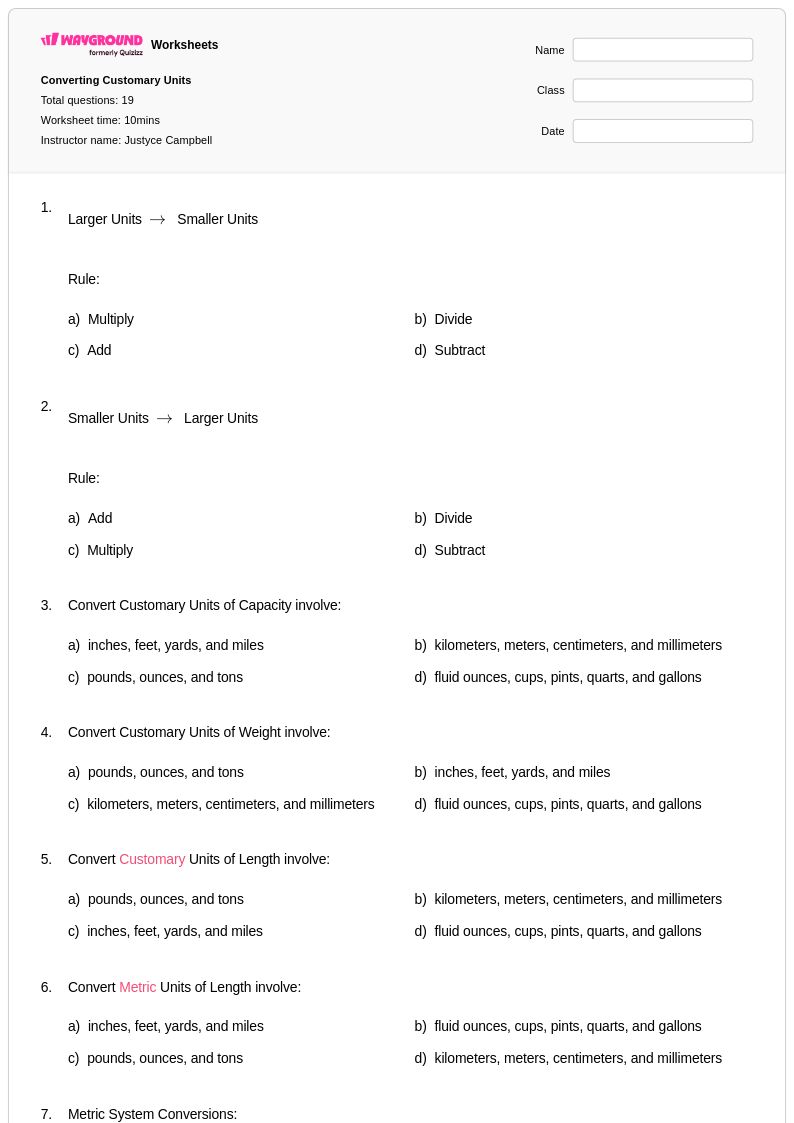
19 Q
3rd - 5th
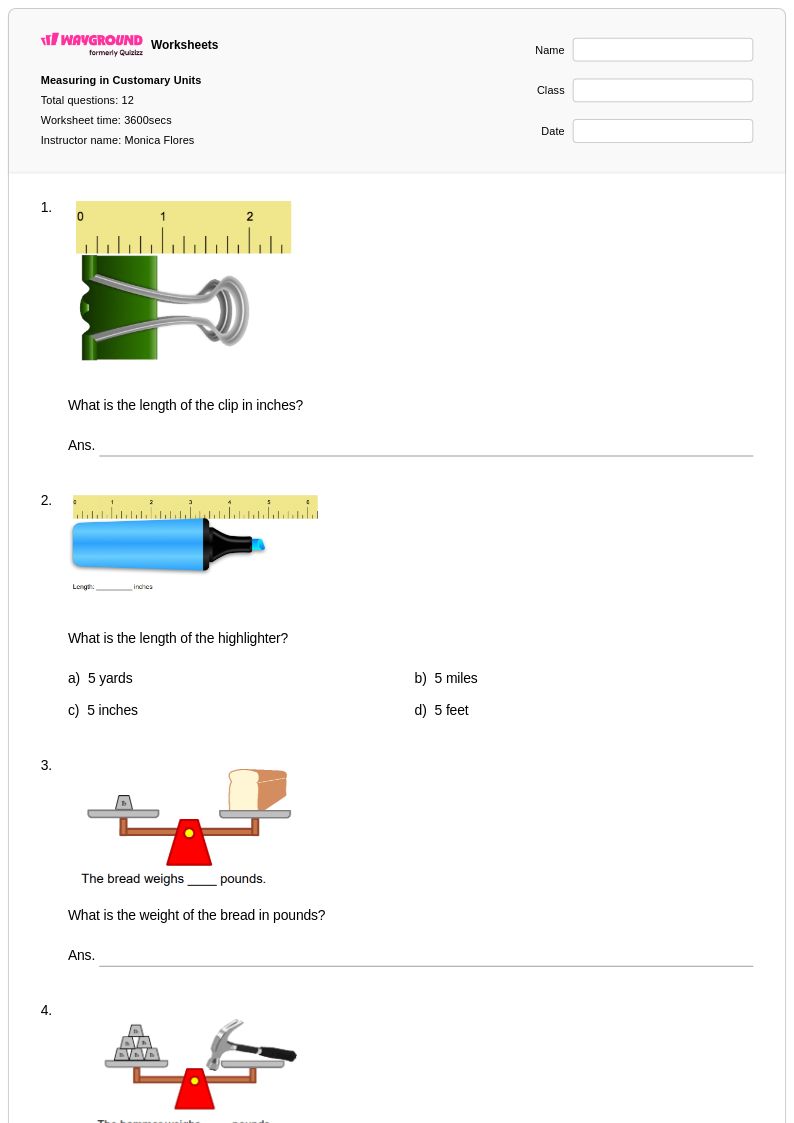
12 Q
3rd - 4th
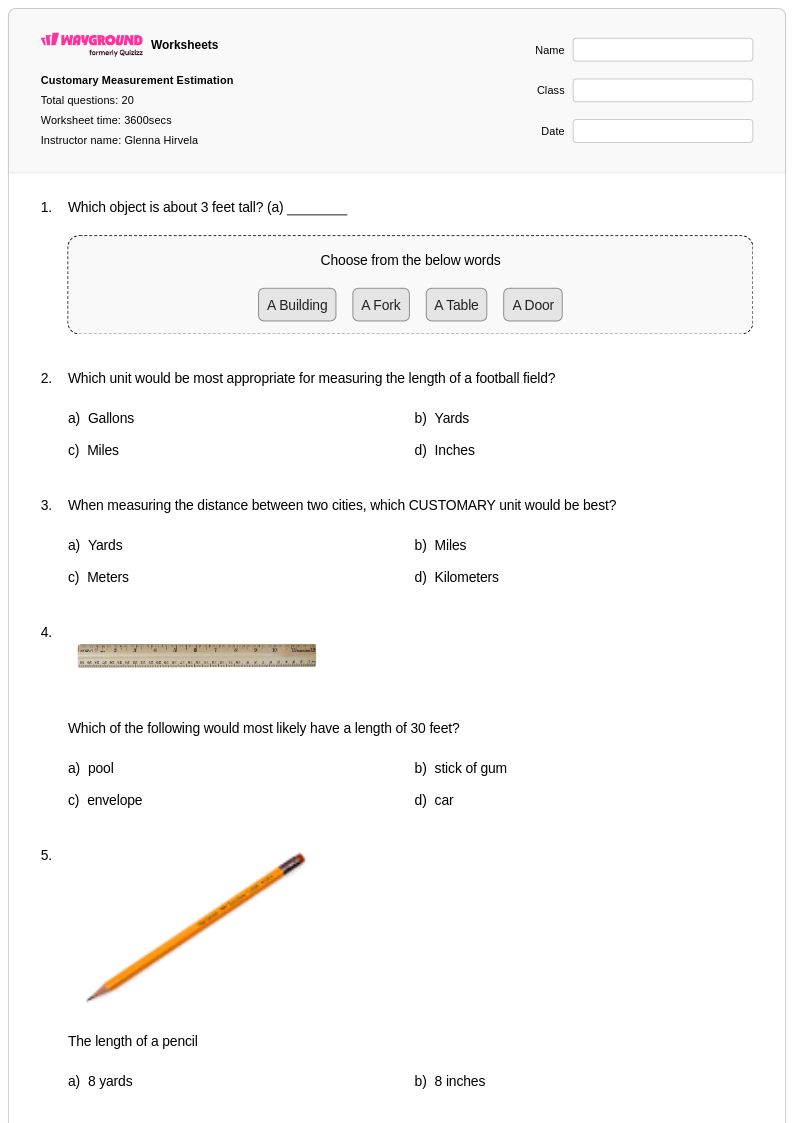
20 Q
3rd
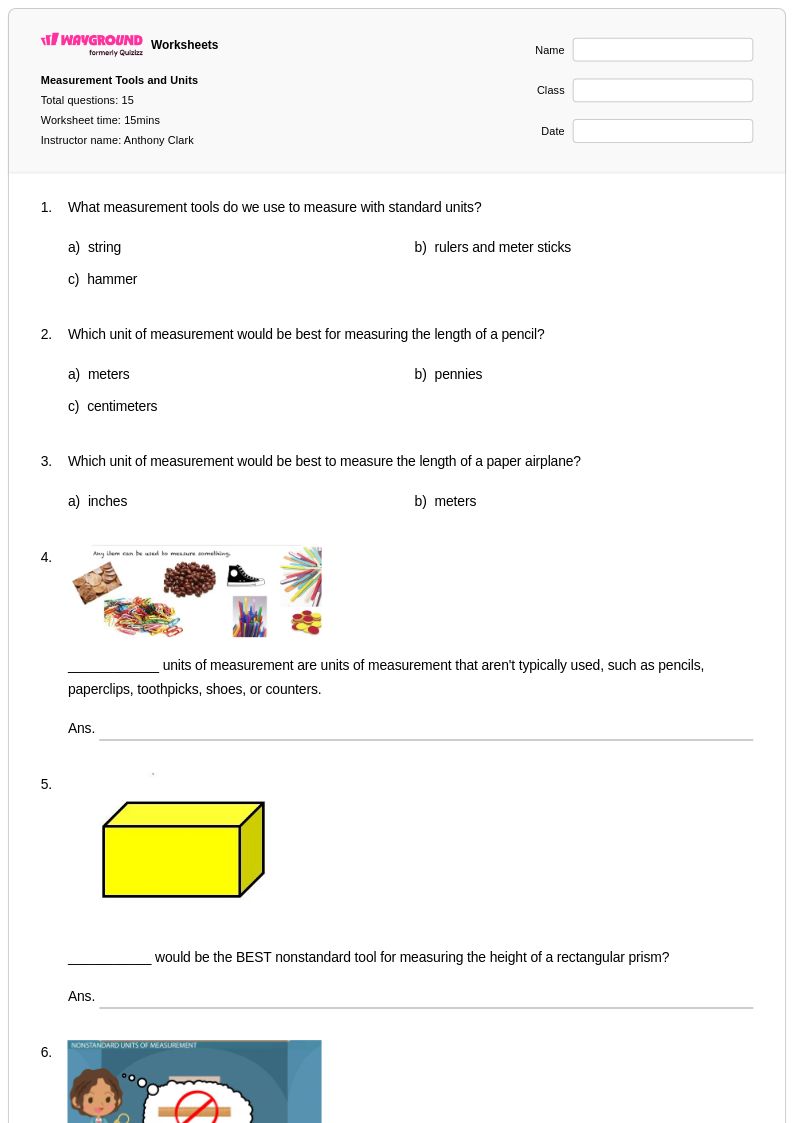
15 Q
2nd - Uni
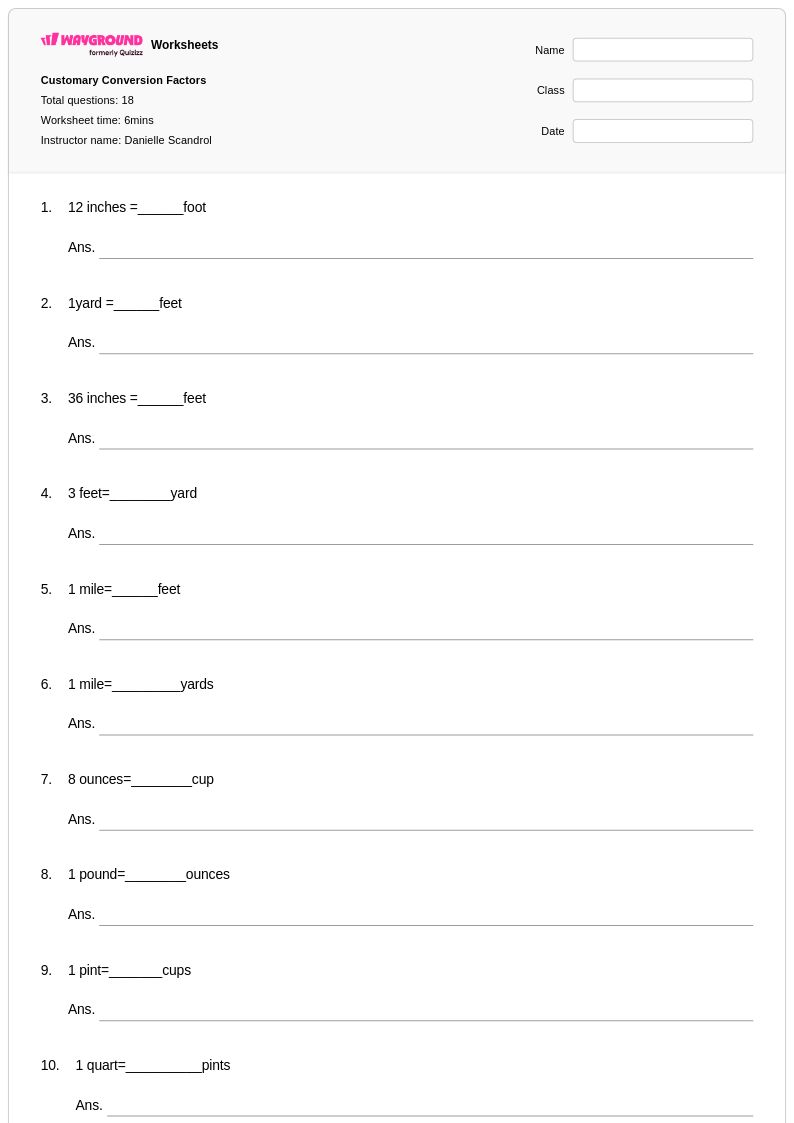
18 Q
3rd - 5th
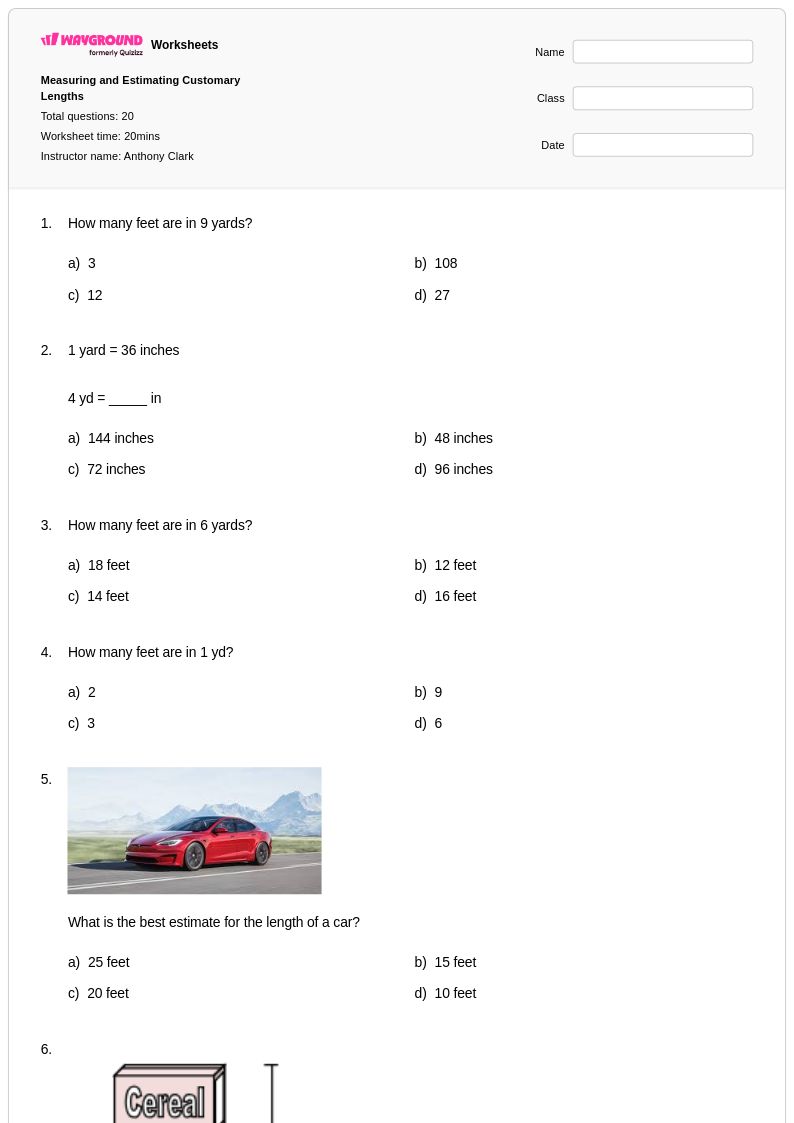
20 Q
2nd - Uni
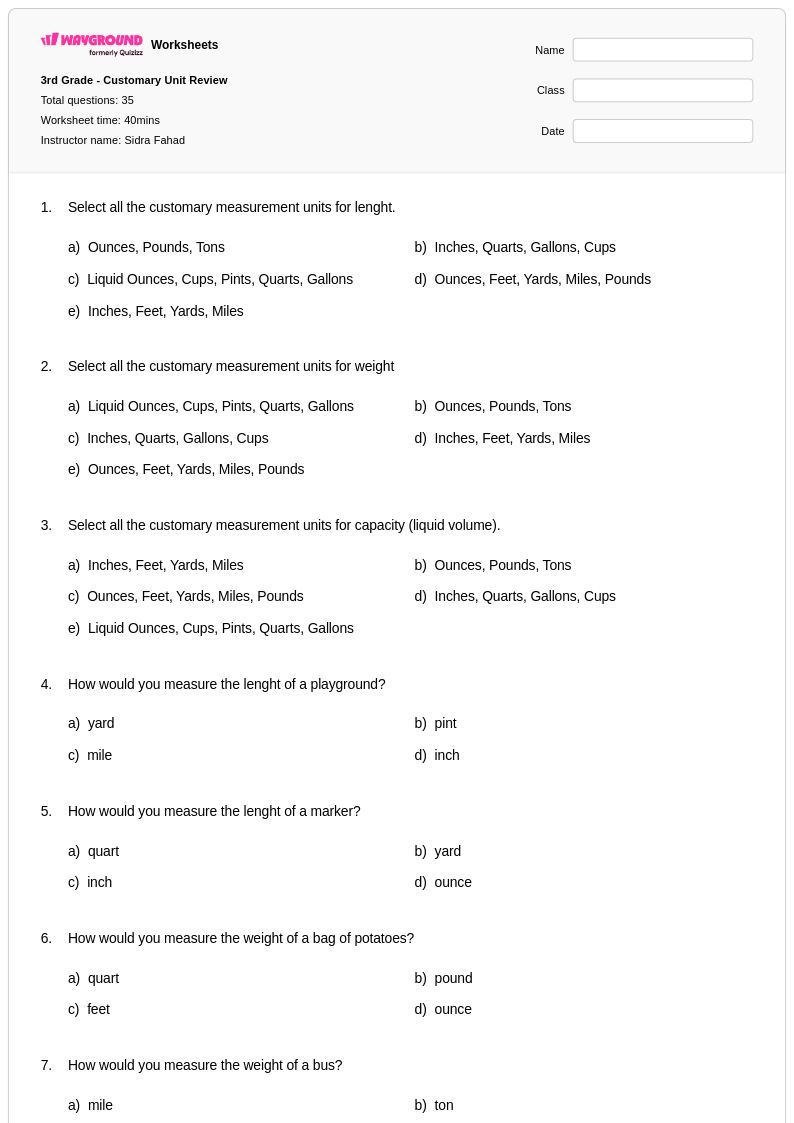
35 Q
3rd

16 Q
3rd
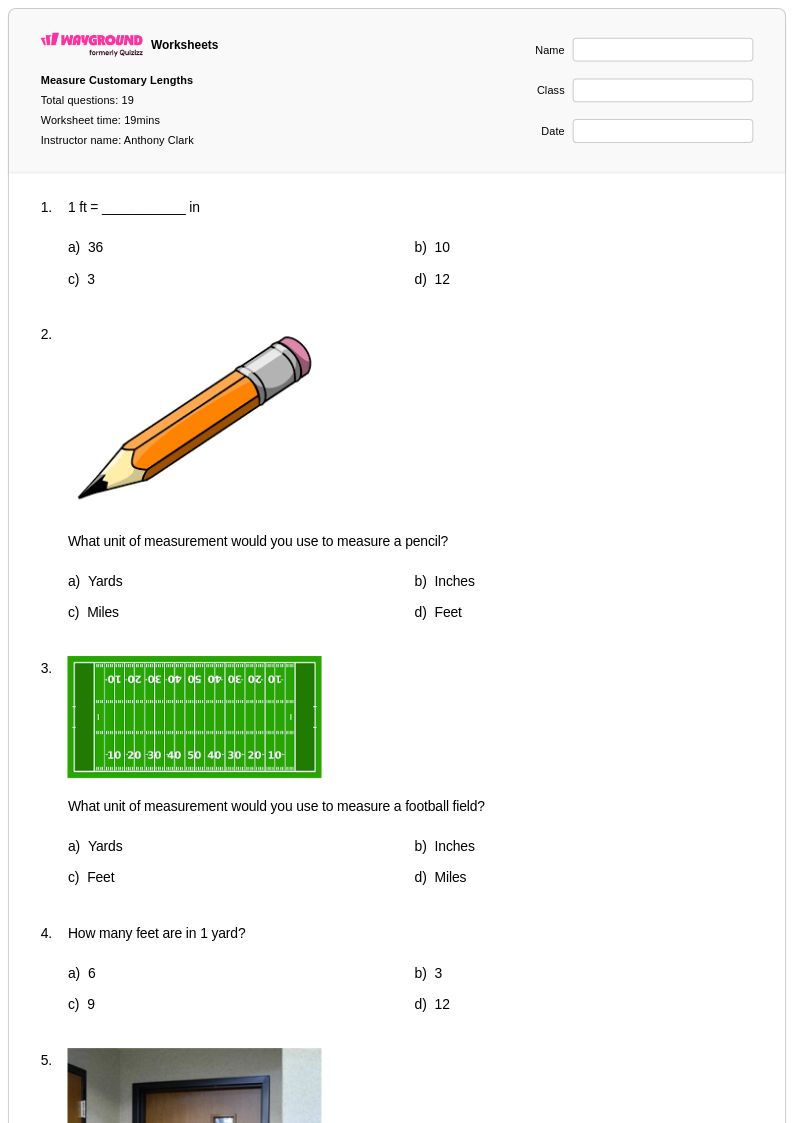
19 Q
2nd - Uni
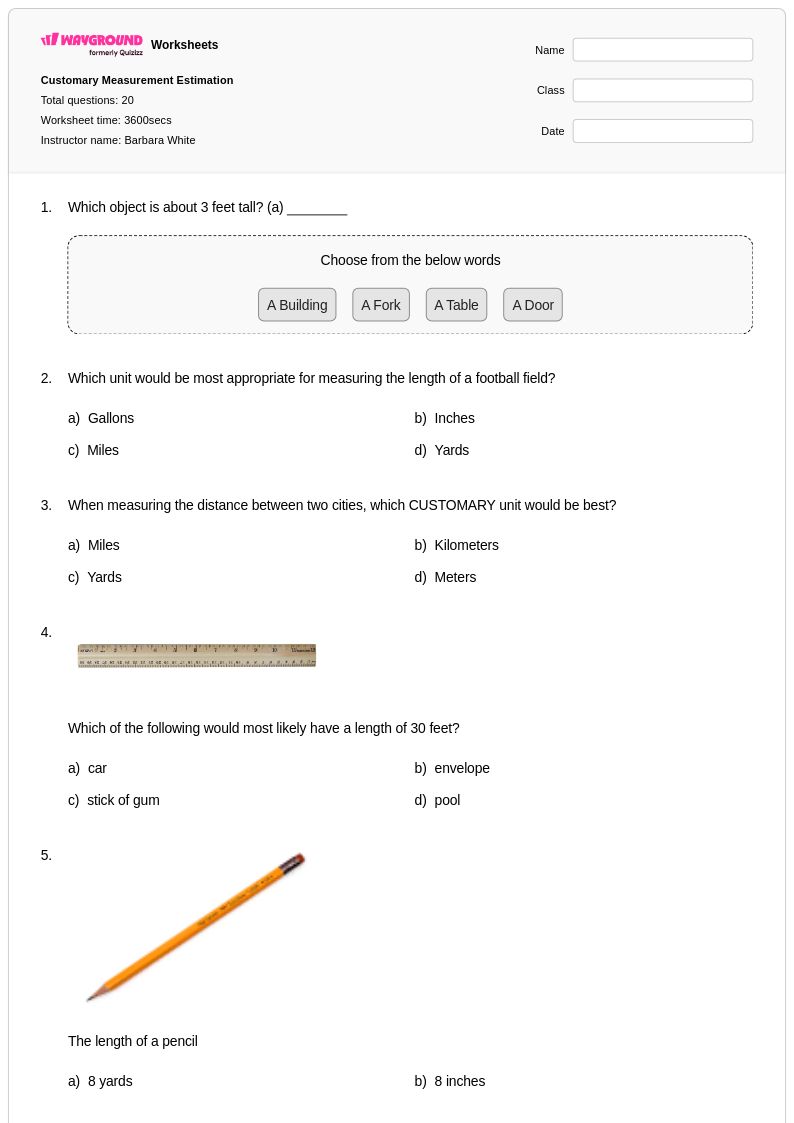
20 Q
3rd

18 Q
2nd - Uni
Explore Other Subject Worksheets for year 3
Explore printable Customary Units of Length worksheets for Year 3
Customary Units of Length worksheets for Year 3 students provide essential practice in measuring and comparing distances using inches, feet, and yards. These comprehensive resources from Wayground (formerly Quizizz) strengthen foundational measurement skills by engaging students in hands-on activities that develop their understanding of standard units and conversion relationships. The collection includes free printables with practice problems that guide students through measuring real-world objects, estimating lengths, and solving word problems involving customary measurements. Each worksheet comes with a detailed answer key, making it easy for educators to assess student progress and identify areas needing additional support. Available in convenient PDF format, these resources help third-grade learners build confidence in using rulers, yardsticks, and tape measures while developing critical thinking skills through comparative measurement tasks.
Wayground (formerly Quizizz) supports elementary educators with millions of teacher-created customary units of length resources that streamline lesson planning and differentiated instruction. The platform's robust search and filtering capabilities allow teachers to quickly locate worksheets aligned with specific grade-level standards and learning objectives, while customization tools enable educators to modify content for remediation or enrichment purposes. These versatile materials are available in both printable and digital formats, including downloadable PDFs that can be used for homework assignments, in-class practice, or assessment preparation. Teachers can easily integrate these measurement worksheets into their mathematics curriculum to provide targeted skill practice, support struggling learners with additional reinforcement activities, or challenge advanced students with more complex measurement scenarios involving multiple units and real-world applications.
FAQs
How do I teach customary units of length in third grade?
What exercises help third graders practice customary units of length?
What mistakes do third graders commonly make with customary length conversions?
How can I use a Wayground Grade 3 customary length worksheet?
How does Grade 3 customary length work fit the Common Core math progression?
How can I differentiate customary length practice in third grade?
What customary length skills should third-grade students know?