
20 Q
2nd - Uni
20 Q
2nd - Uni
15 Q
2nd - Uni
12 Q
2nd - Uni
20 Q
2nd - Uni
13 Q
3rd

20 Q
2nd - Uni
9 Q
3rd - 4th
12 Q
2nd - 5th
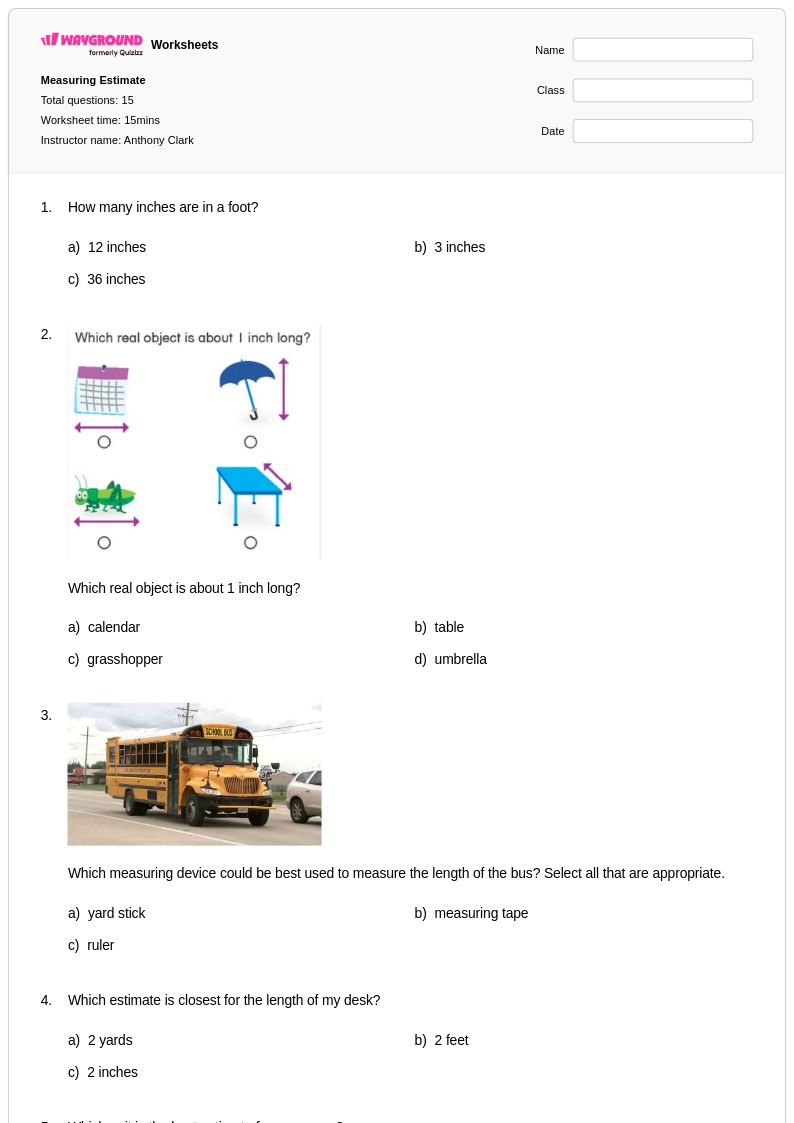
15 Q
2nd - Uni
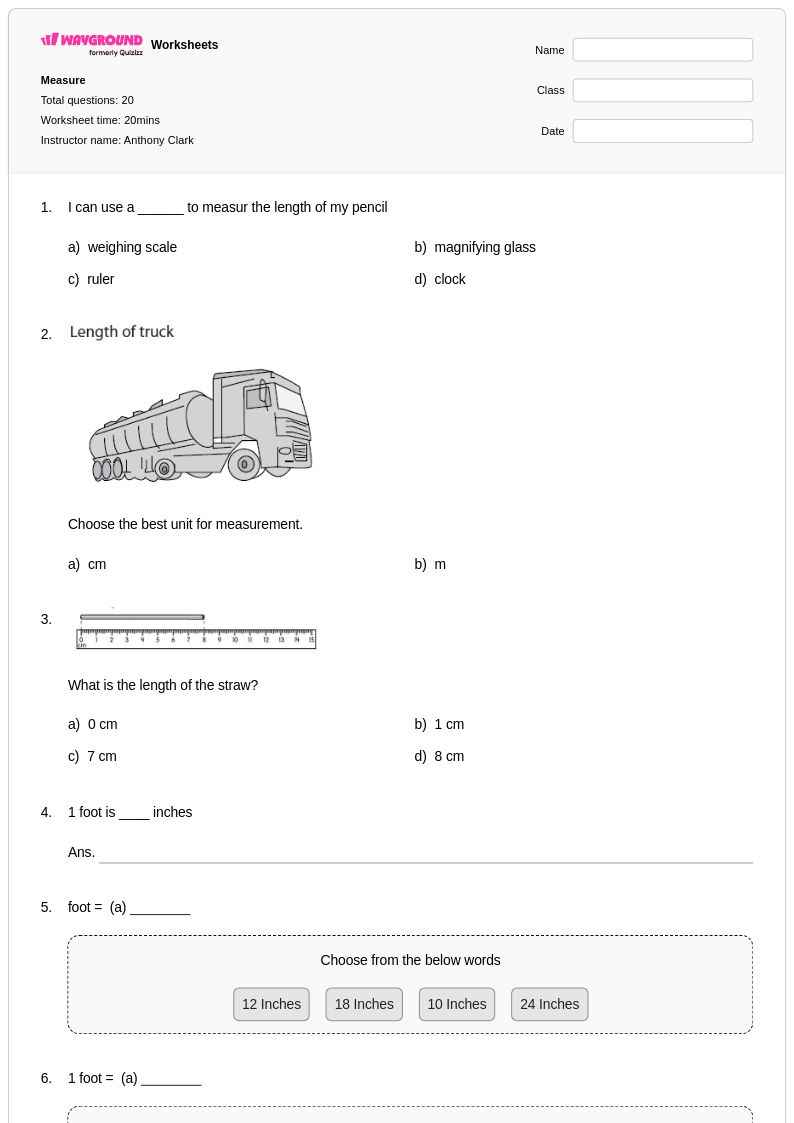
20 Q
2nd - Uni
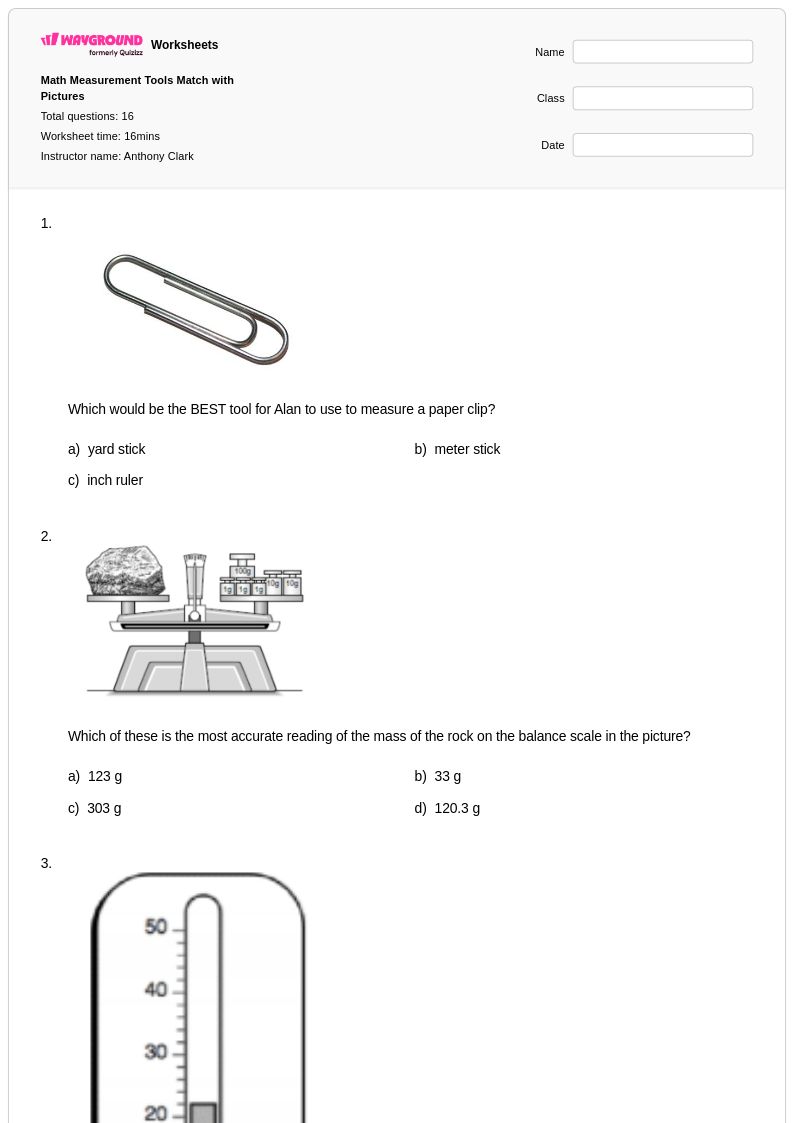
16 Q
2nd - Uni
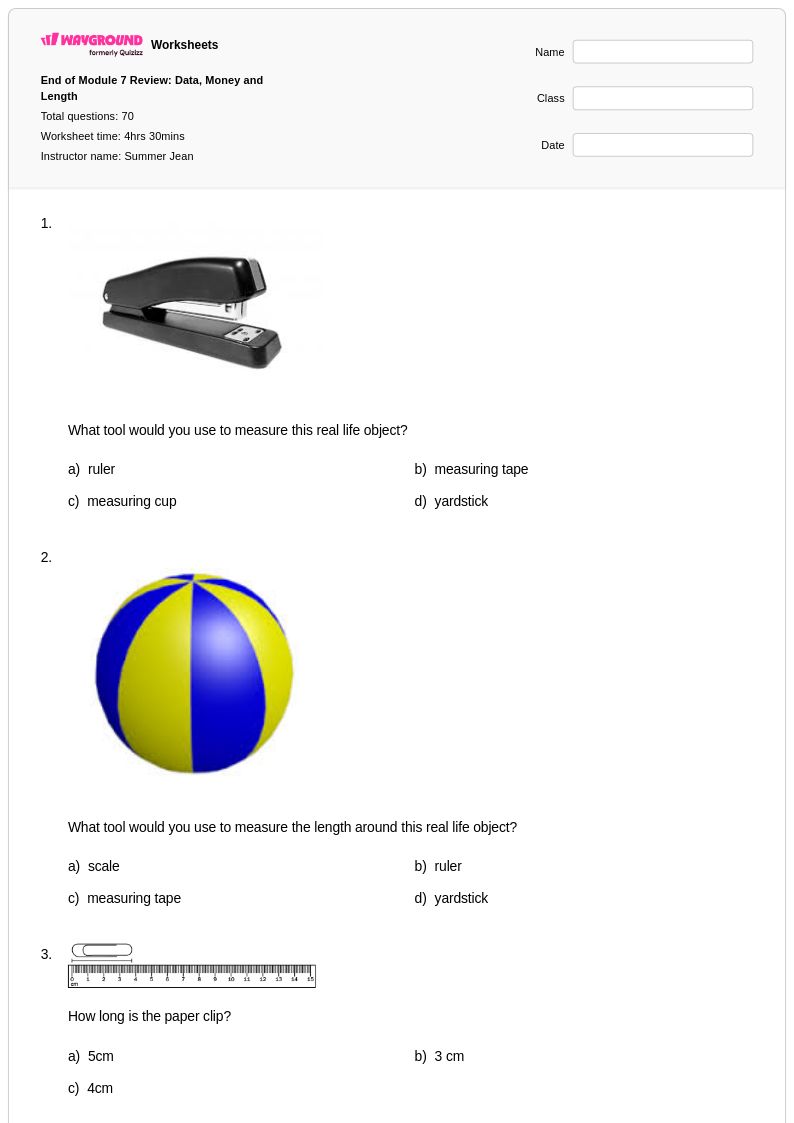
70 Q
2nd - Uni
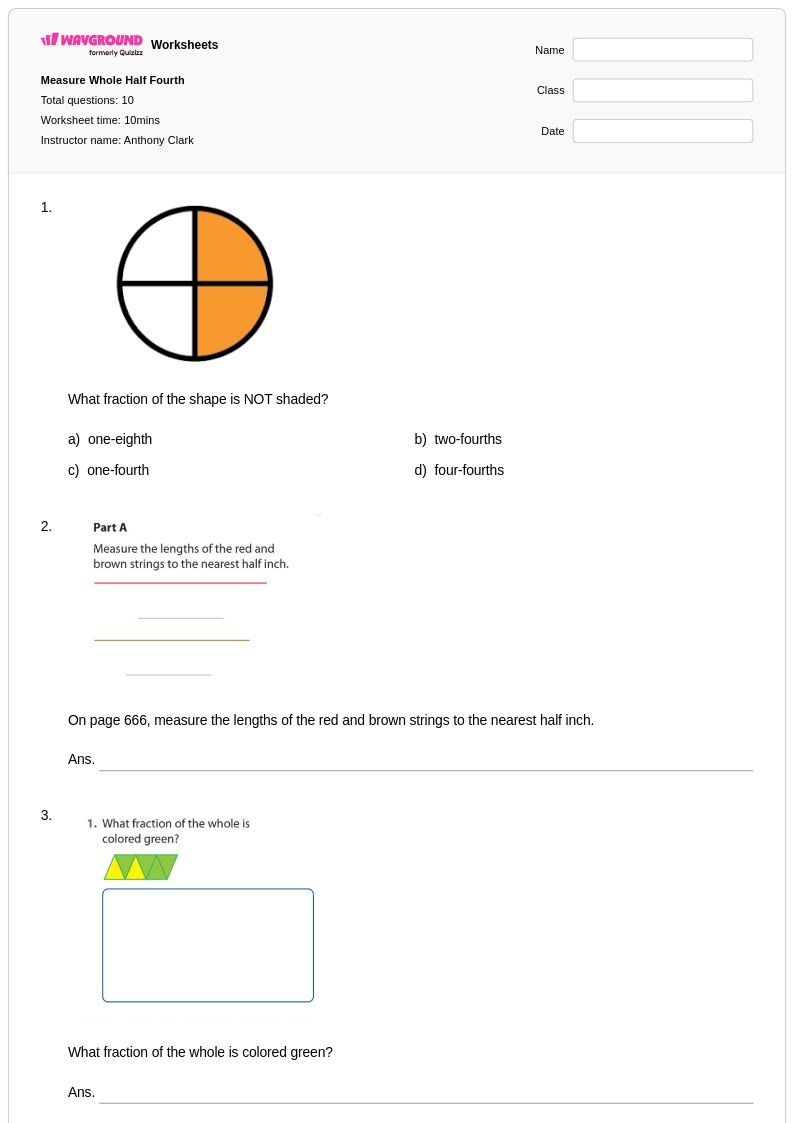
10 Q
2nd - Uni
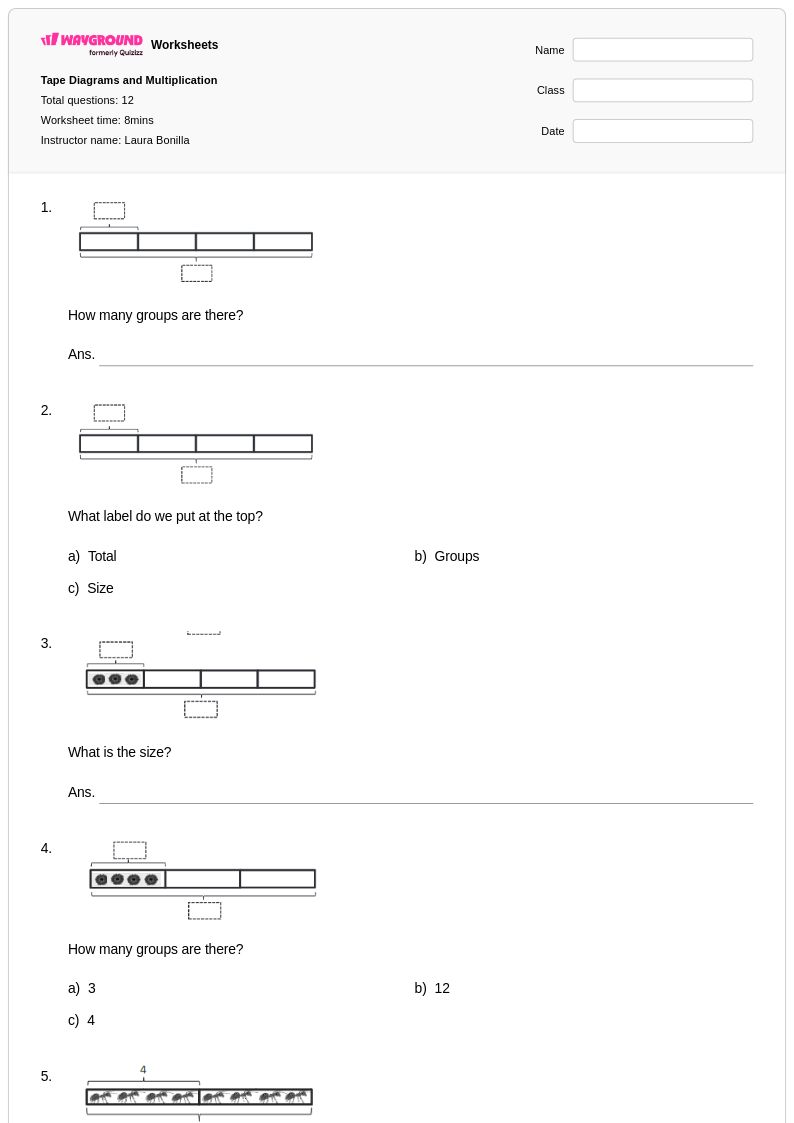
12 Q
3rd
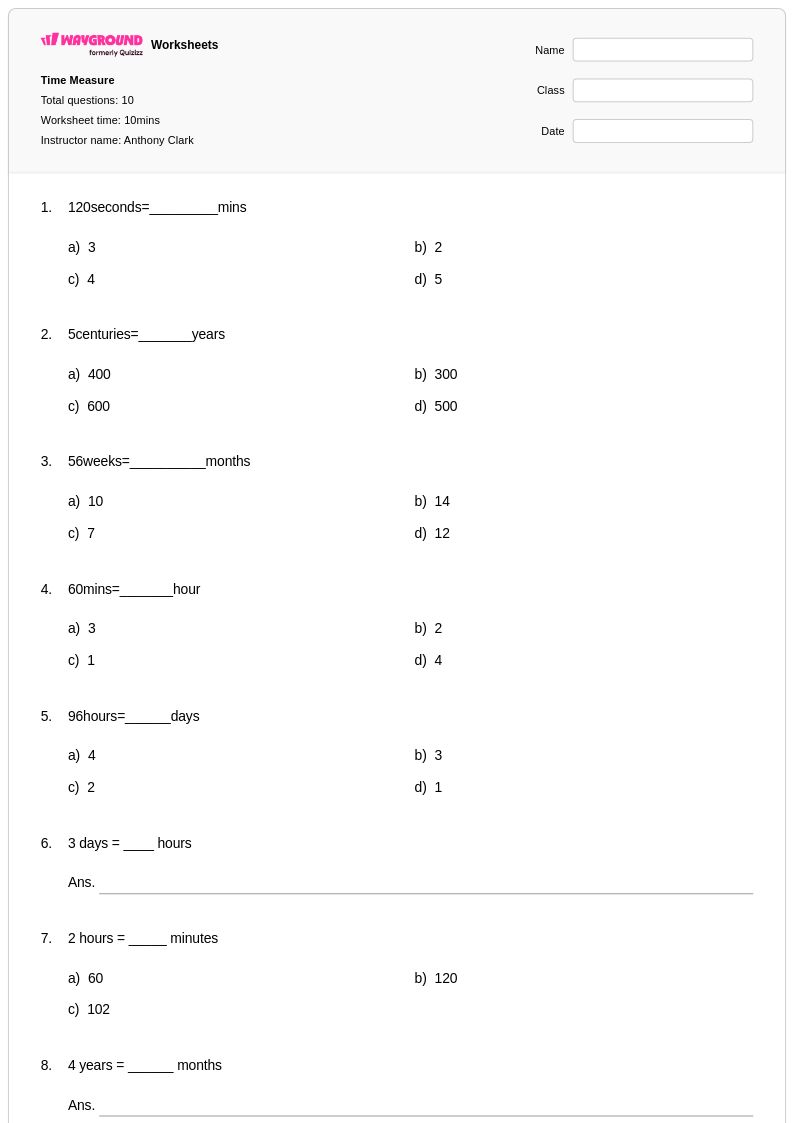
10 Q
3rd - Uni
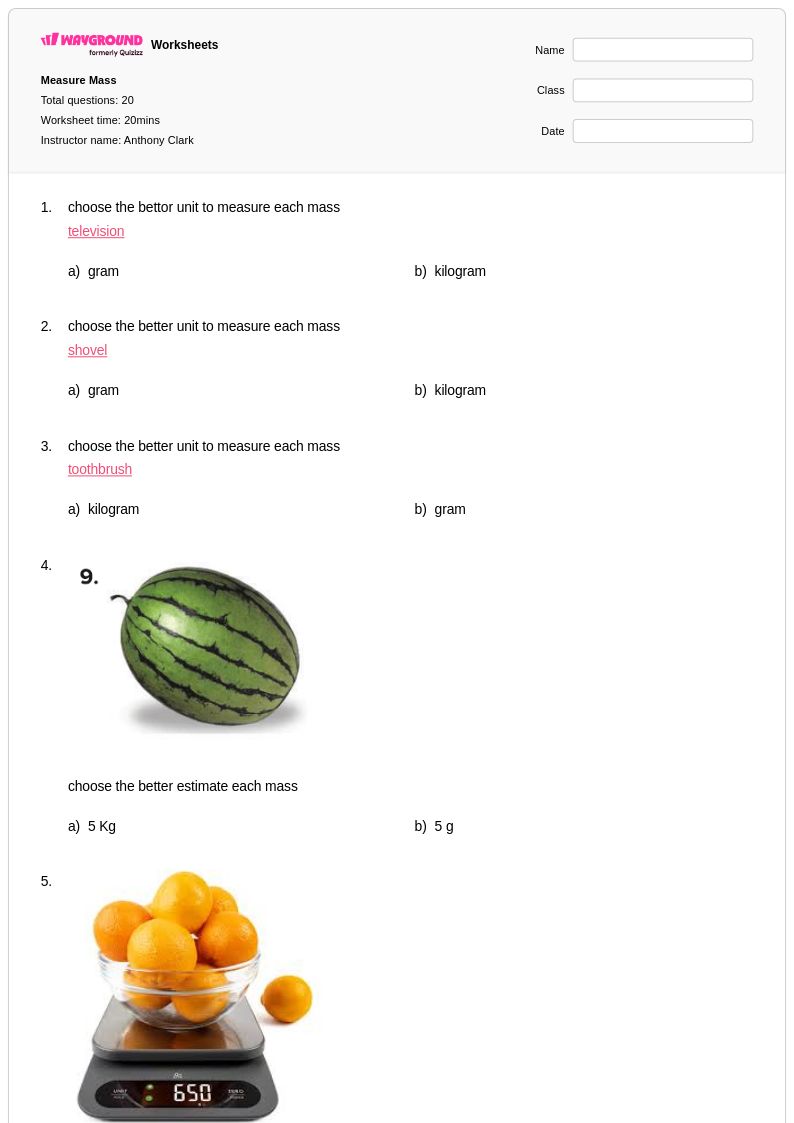
20 Q
3rd - Uni
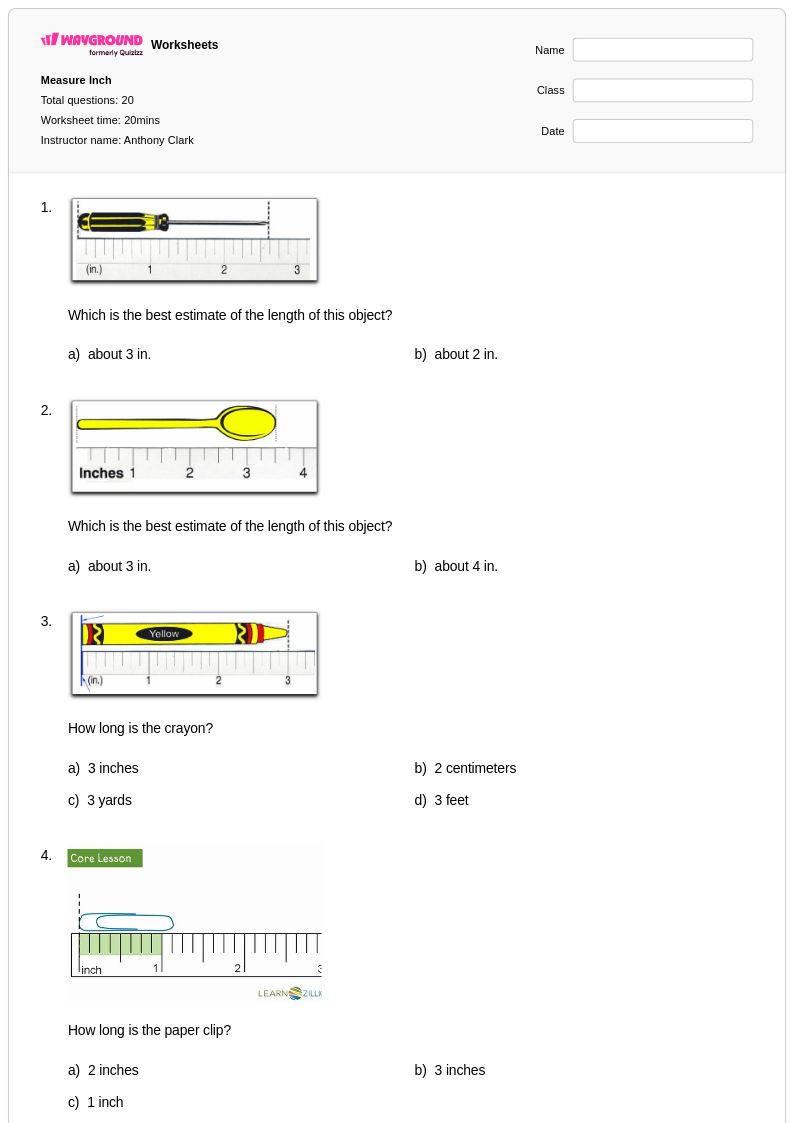
20 Q
3rd - Uni
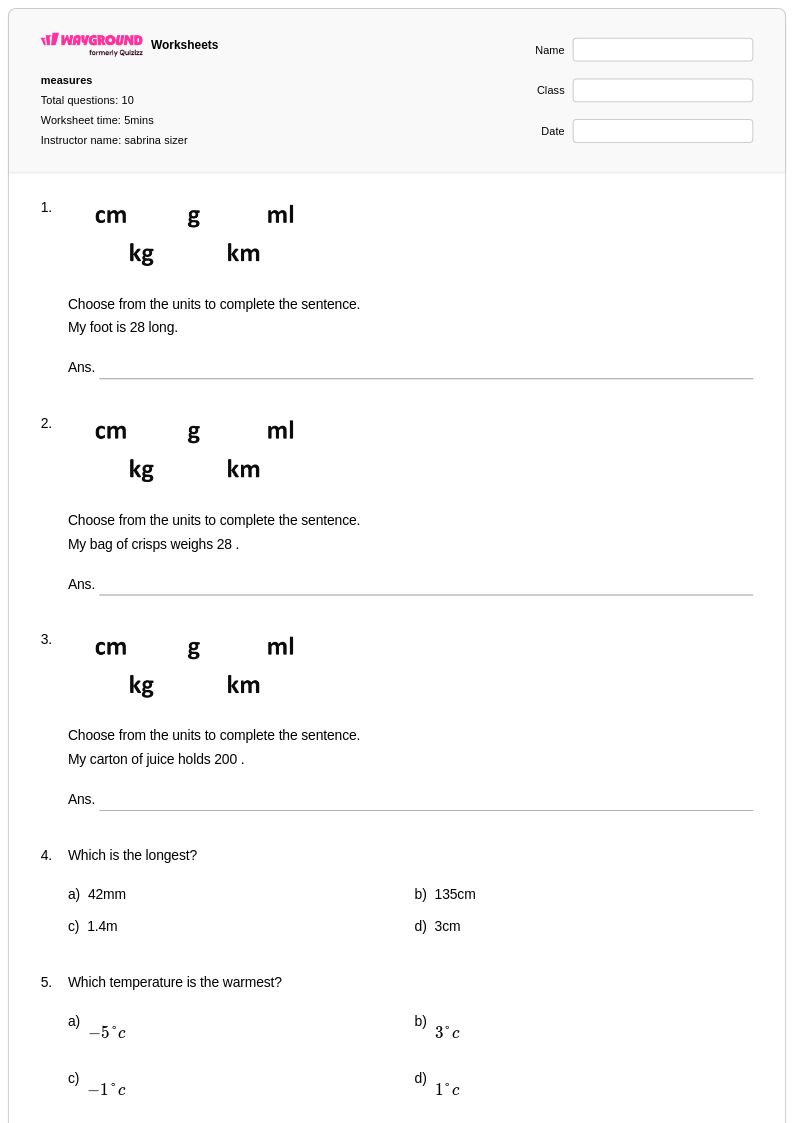
10 Q
1st - 3rd
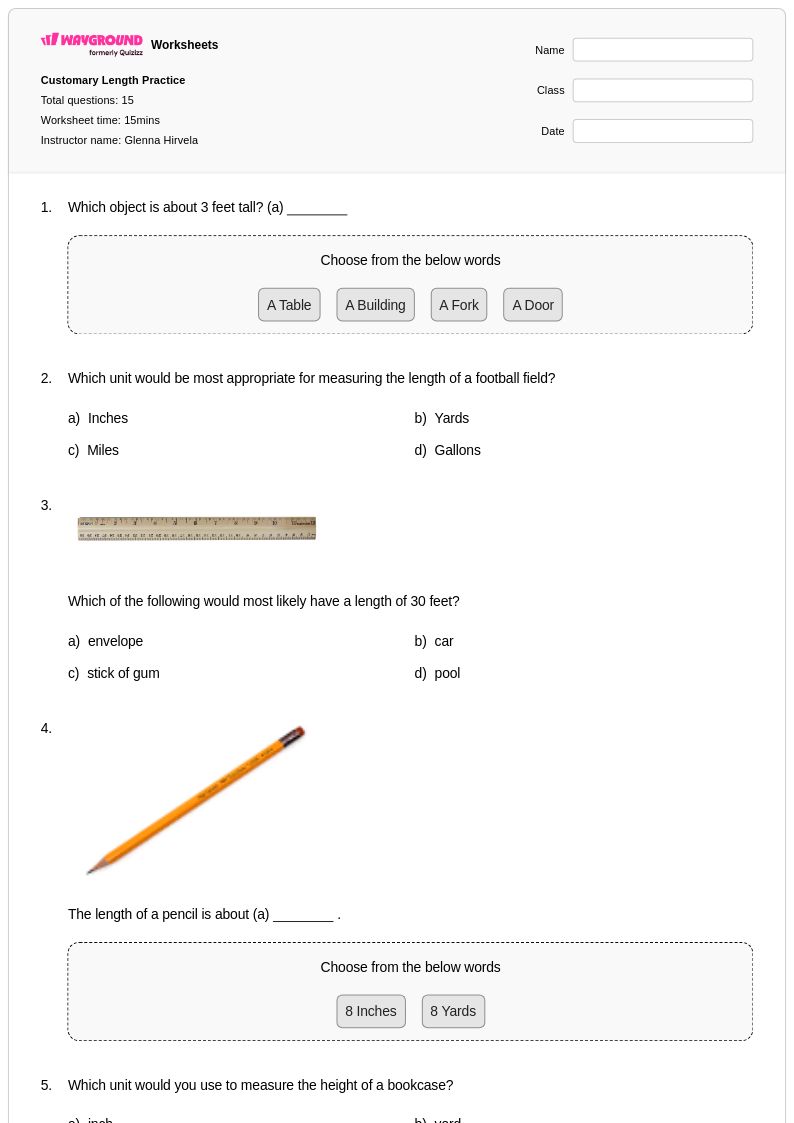
15 Q
3rd

20 Q
3rd
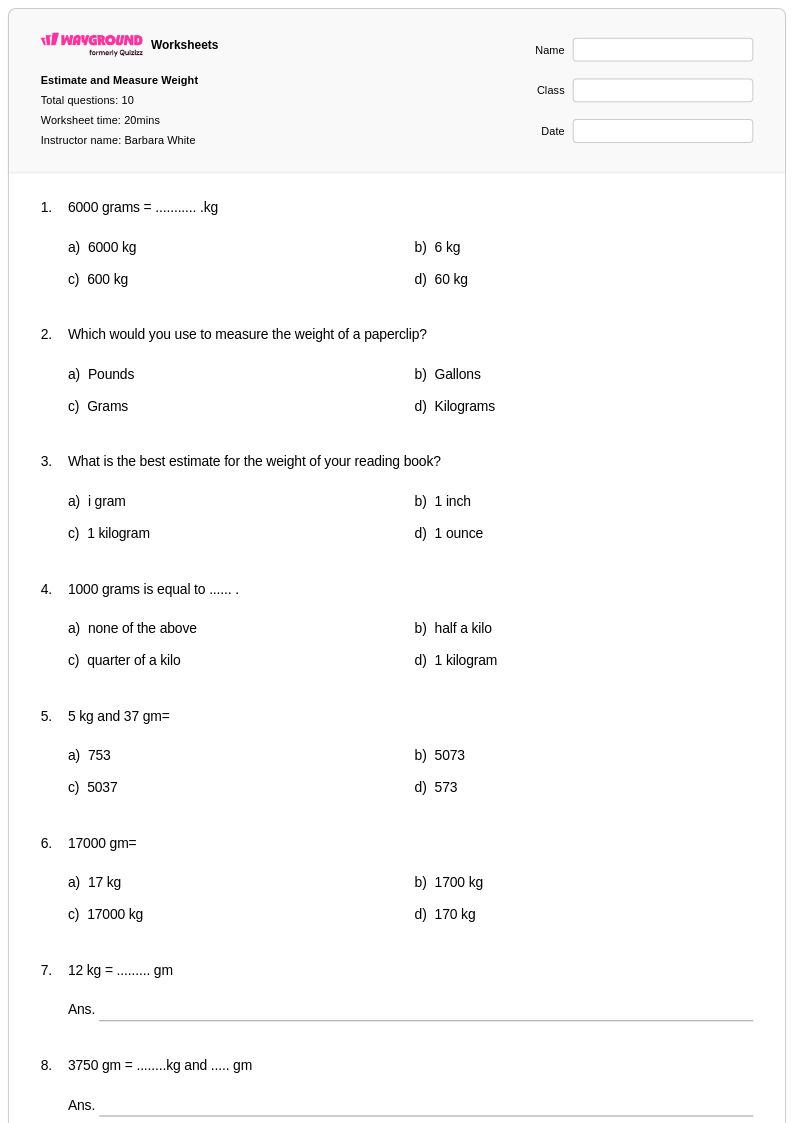
10 Q
3rd
20 Q
3rd
10 Q
3rd
Explore Other Subject Worksheets for year 3
Explore printable Reading a Tape Measure worksheets for Year 3
Reading a tape measure worksheets for Year 3 students available through Wayground (formerly Quizizz) provide essential foundational practice in precise measurement skills that elementary learners need to master. These comprehensive worksheet collections focus on helping third-grade students develop accuracy in interpreting measurement markings, understanding fractional increments, and reading both inches and centimeters on standard measuring tools. The practice problems systematically guide students through identifying whole numbers, half-inch marks, and quarter-inch divisions while building confidence with hands-on measurement scenarios. Each worksheet includes a detailed answer key that enables immediate feedback and self-assessment, while the free printable pdf format ensures accessibility for both classroom instruction and home practice sessions.
Wayground (formerly Quizizz) empowers educators with millions of teacher-created measurement resources specifically designed to support Year 3 reading a tape measure instruction through robust search and filtering capabilities that streamline lesson planning. The platform's standards-aligned worksheet collections offer flexible customization options that allow teachers to differentiate instruction based on individual student needs, whether for remediation of struggling learners or enrichment opportunities for advanced students. Available in both printable and digital pdf formats, these measurement worksheets integrate seamlessly into diverse teaching environments while providing educators with comprehensive tools for skill practice, formative assessment, and targeted intervention strategies that enhance student understanding of precise measurement techniques.
FAQs
How can I use a tape measure to teach fractions in 3rd grade?
How does measuring to the nearest quarter-inch align with 3rd grade math standards?
What skills do these 3rd grade measurement worksheets practice?
What are common errors when students measure to the nearest quarter-inch?
How can I use these Wayground worksheets for my 3rd grade class?
How can I help students who have trouble distinguishing the fractional marks?