Free Printable Dependent Clauses Worksheets for Year 7
Year 7 dependent clauses worksheets from Wayground help students master subordinate clause identification and usage through engaging printables, practice problems, and comprehensive answer keys for effective grammar learning.
Explore printable Dependent Clauses worksheets for Year 7
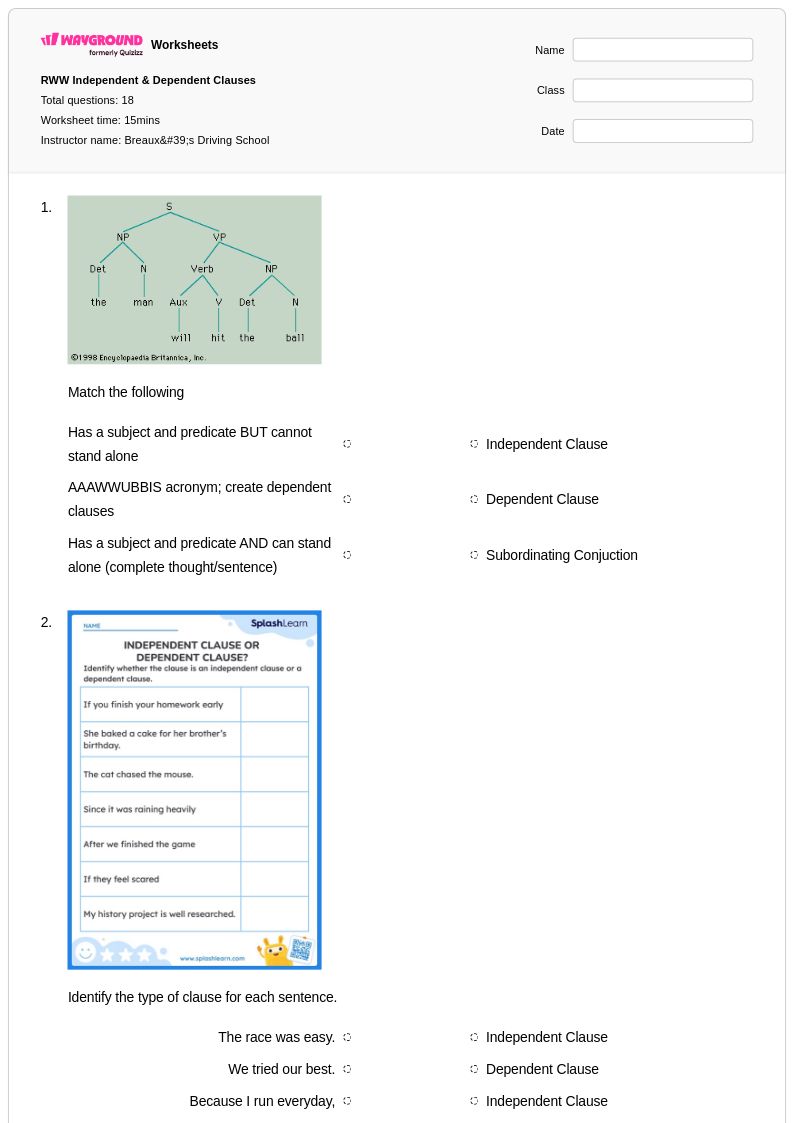
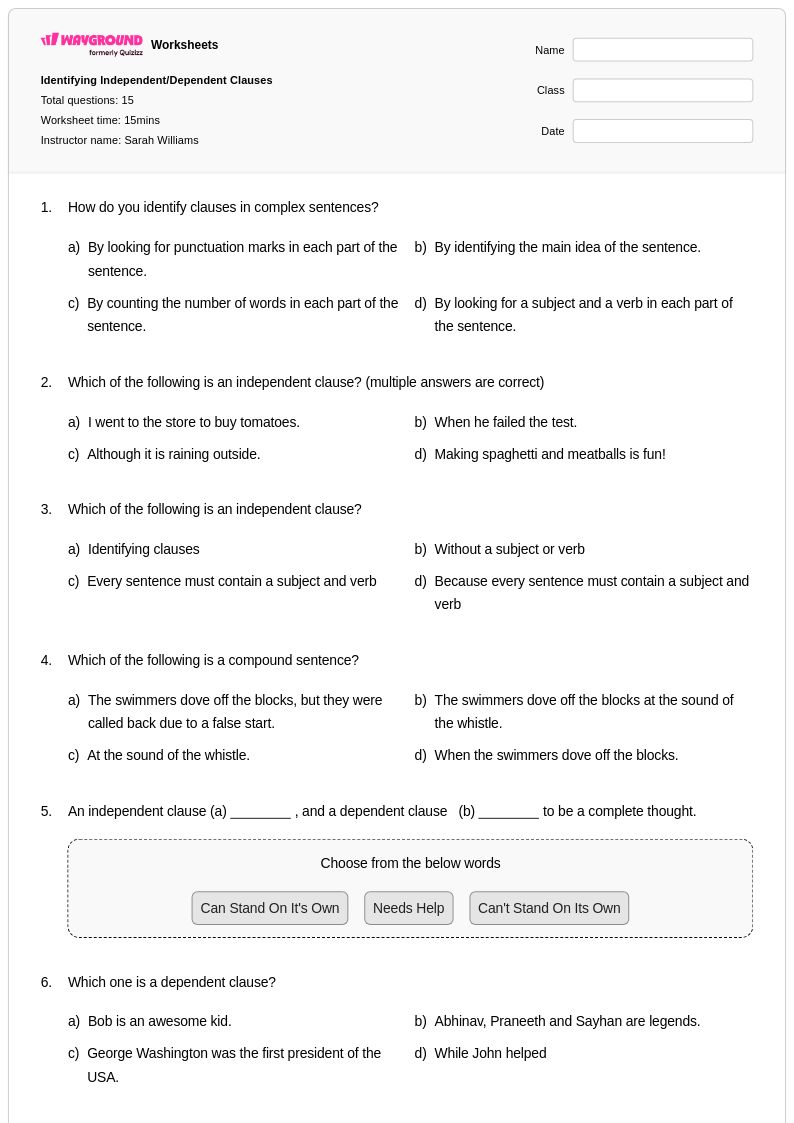
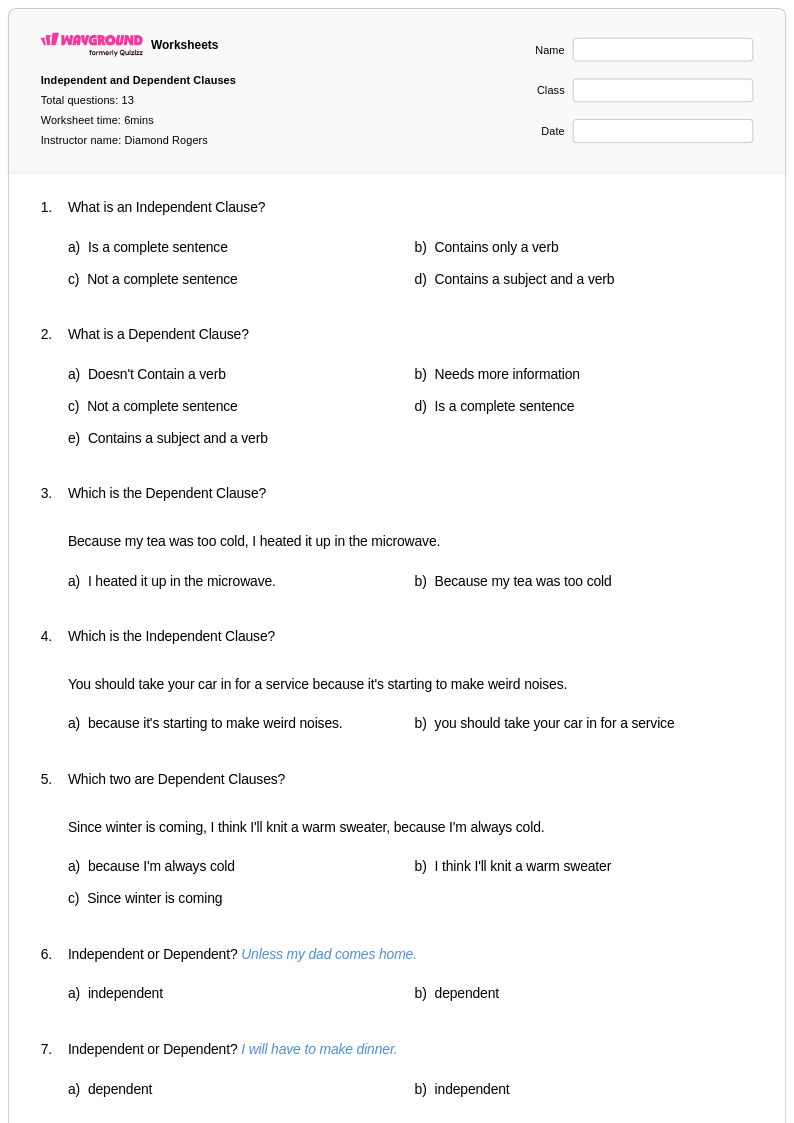
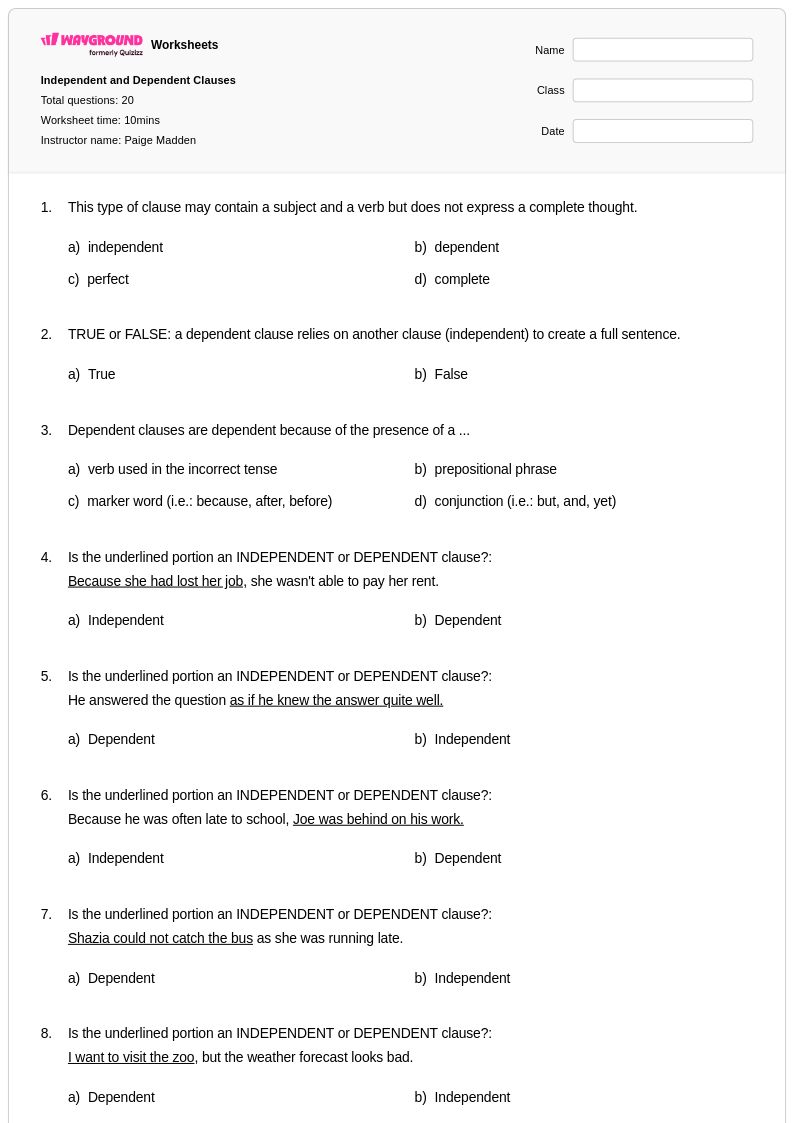
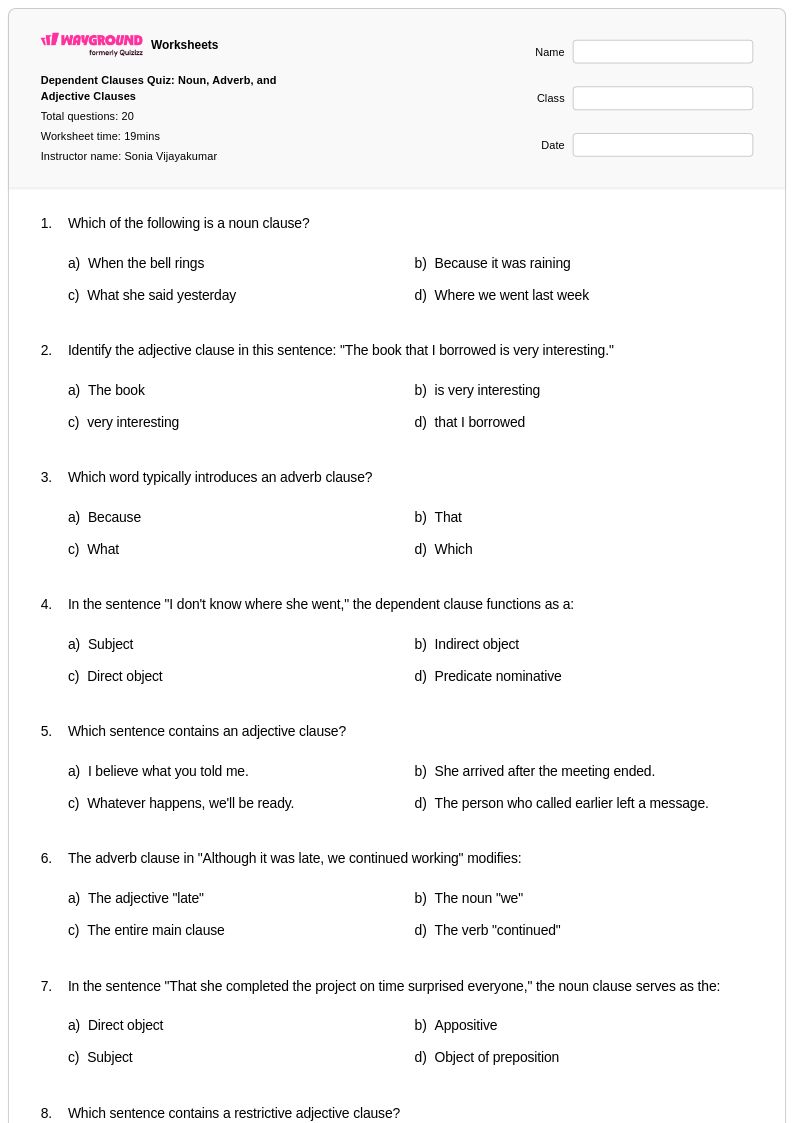
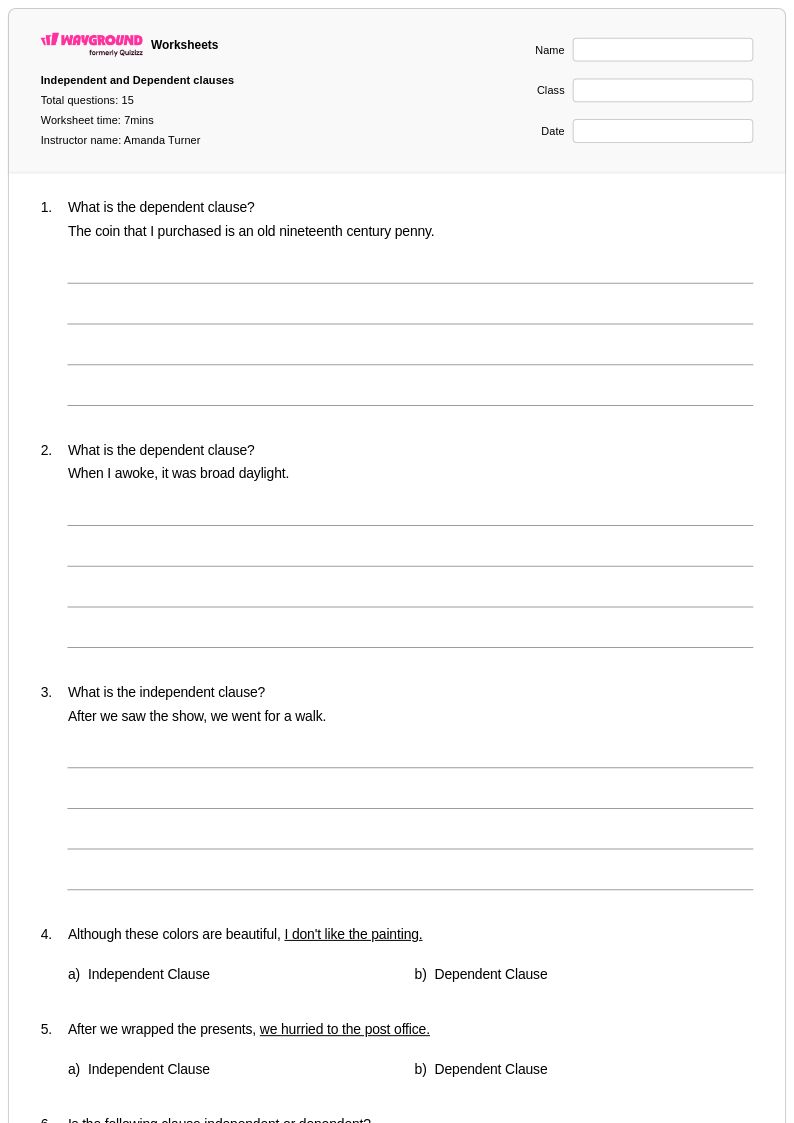
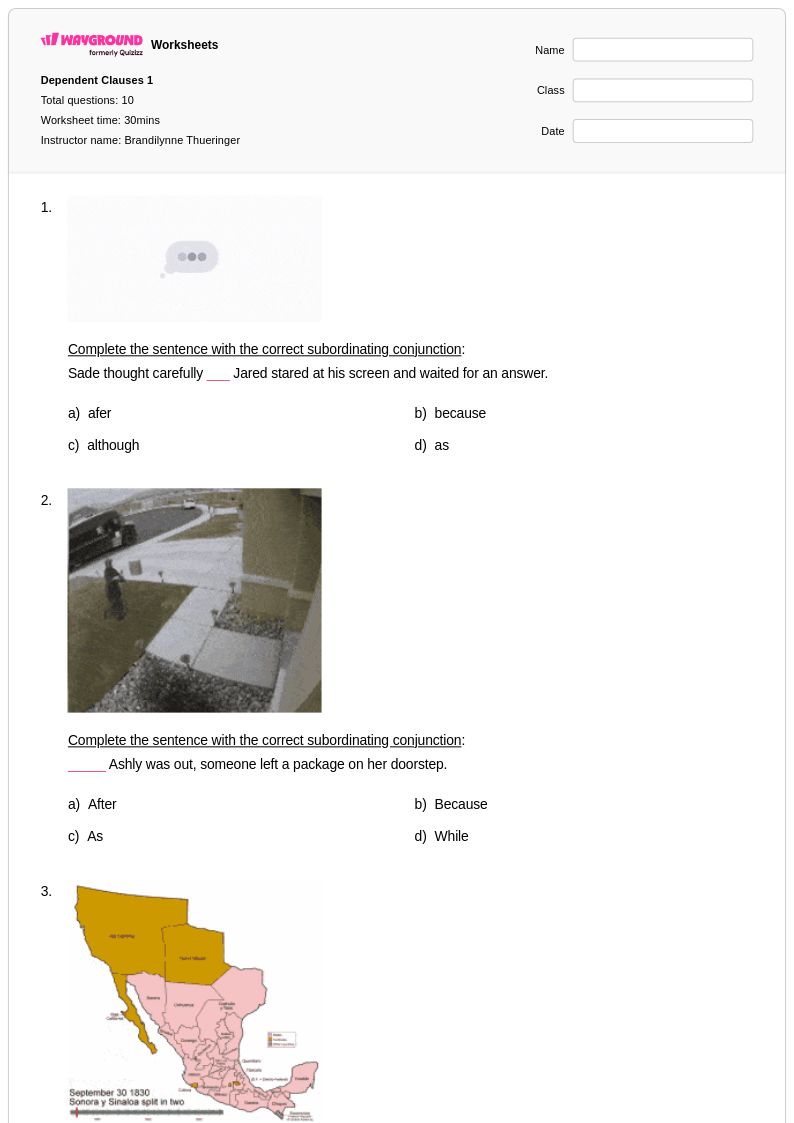
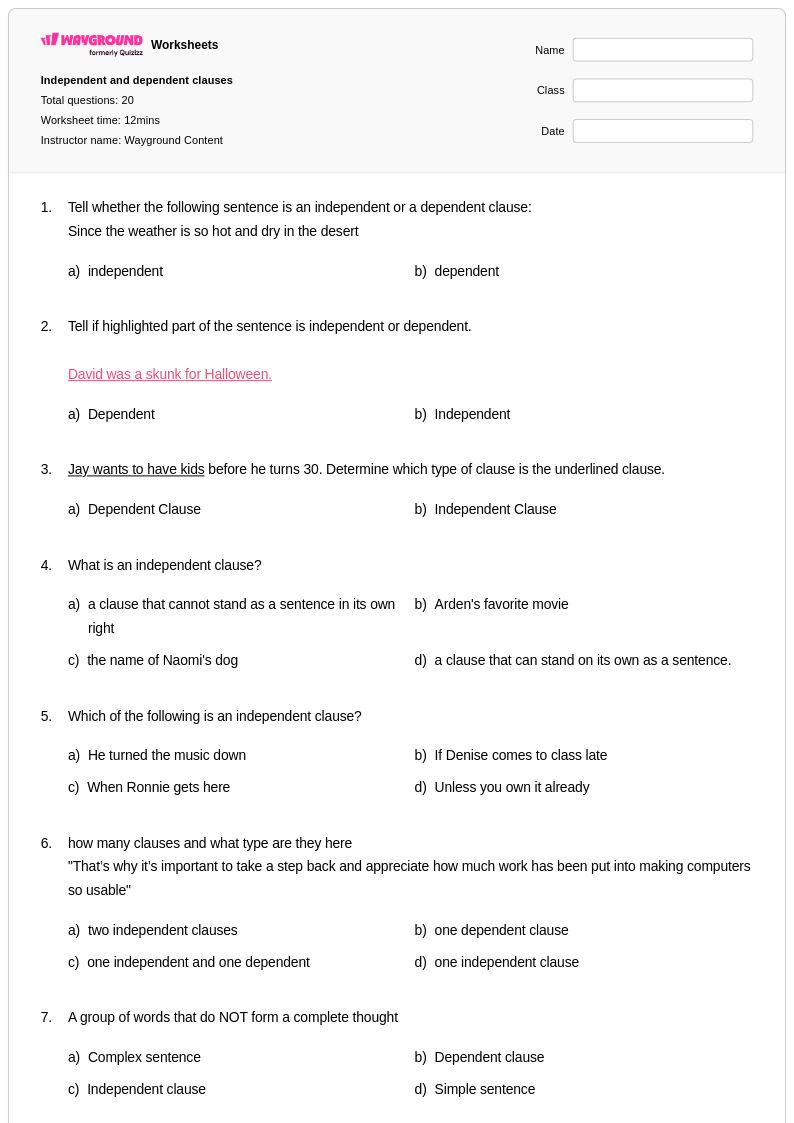
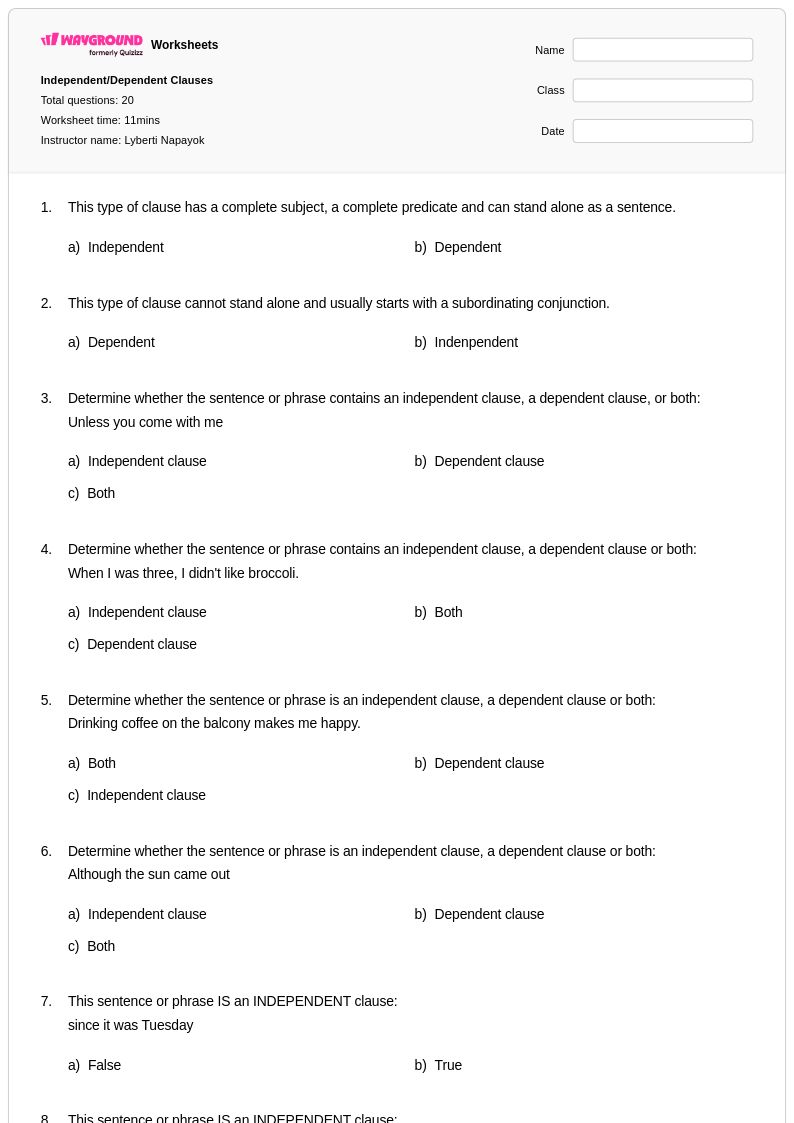
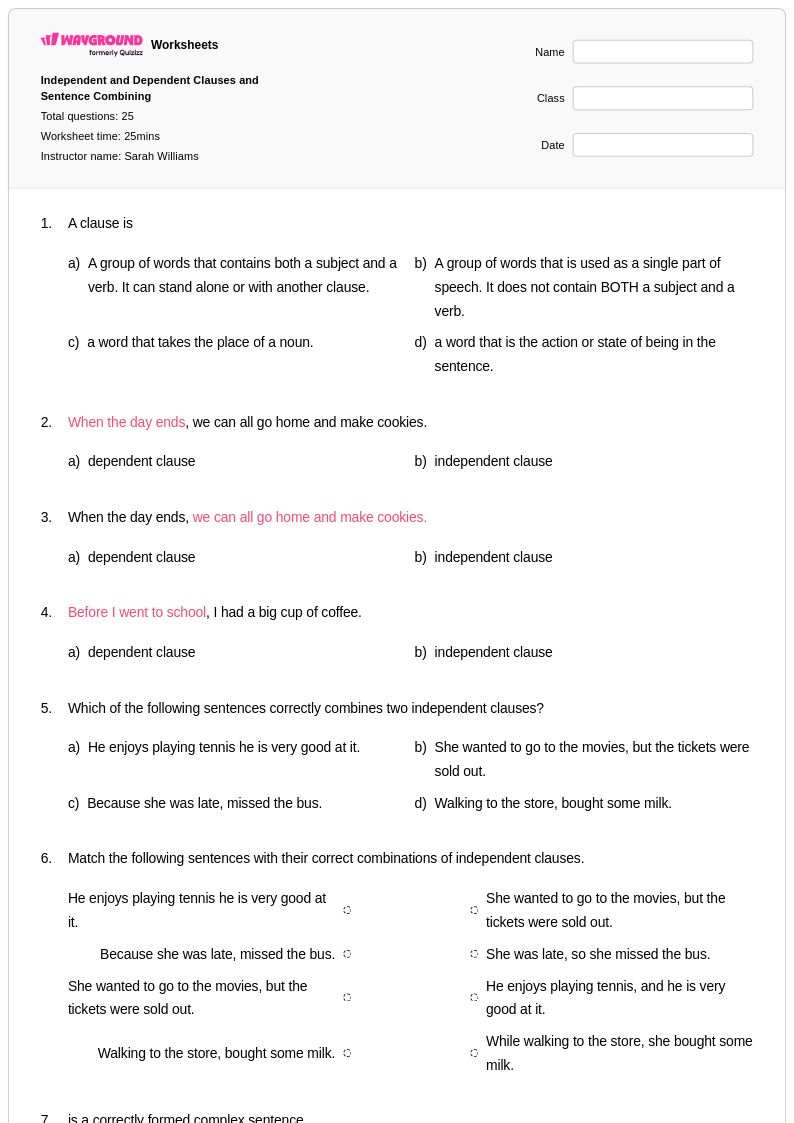
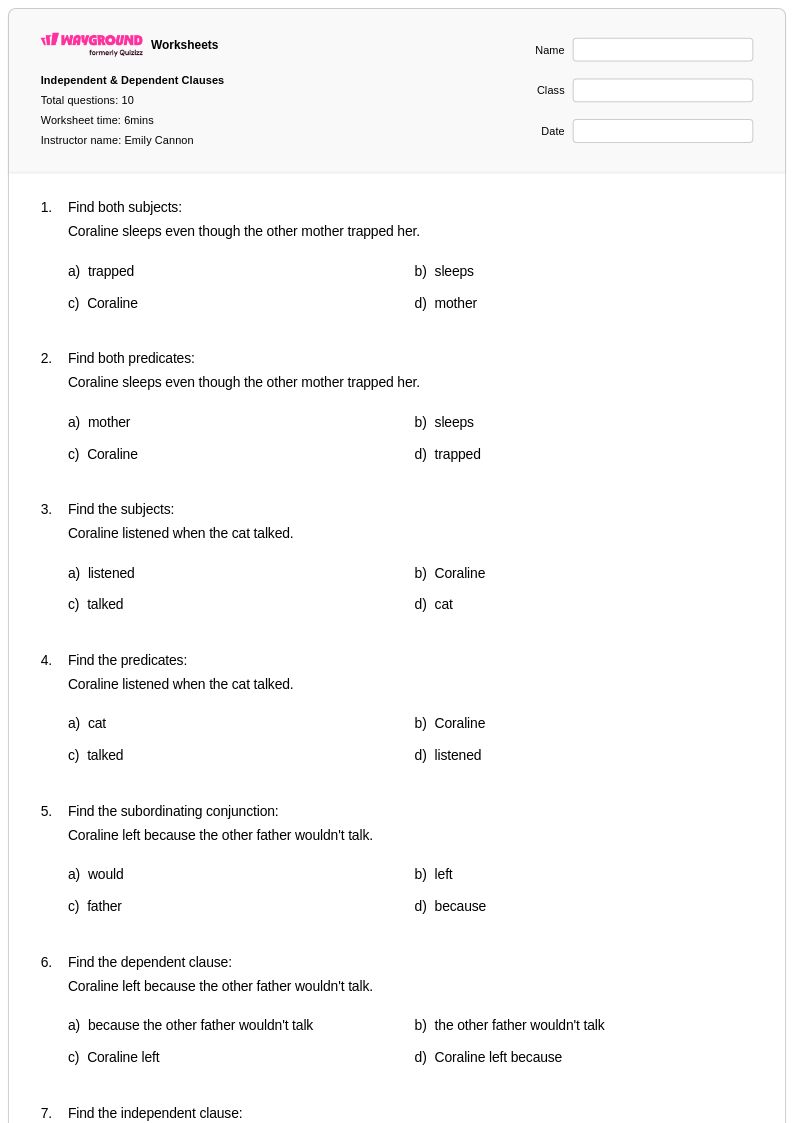
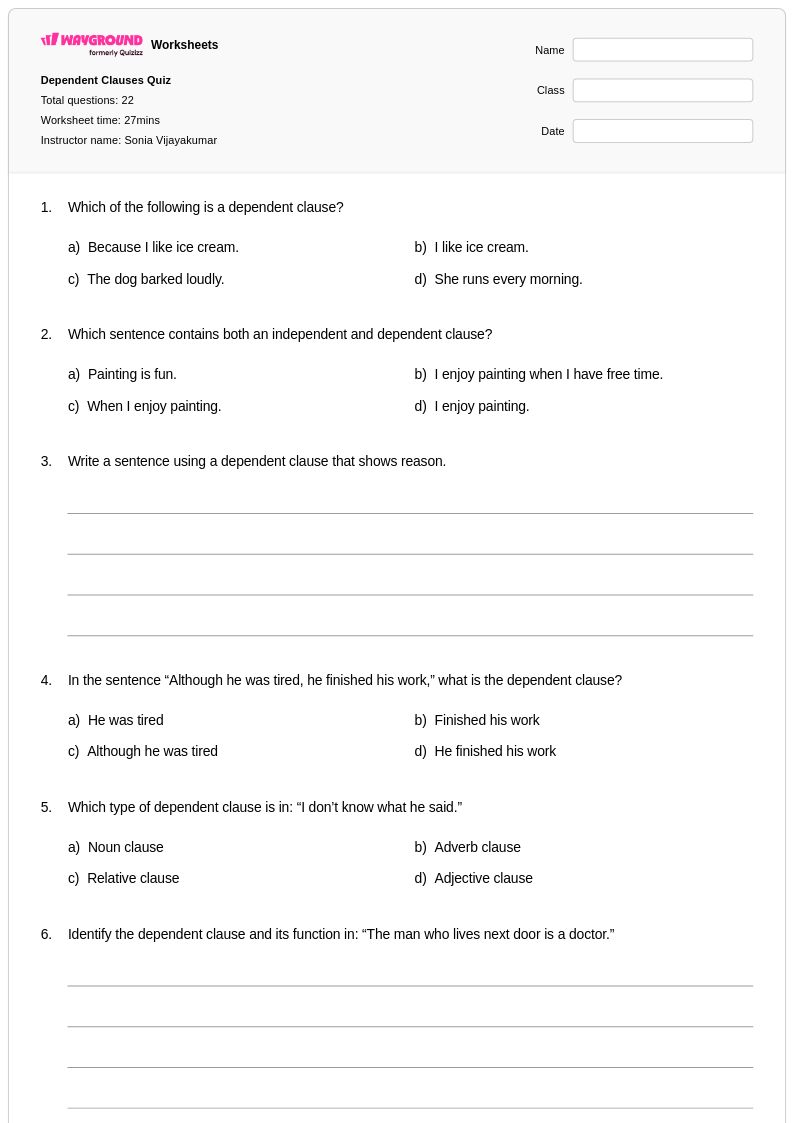
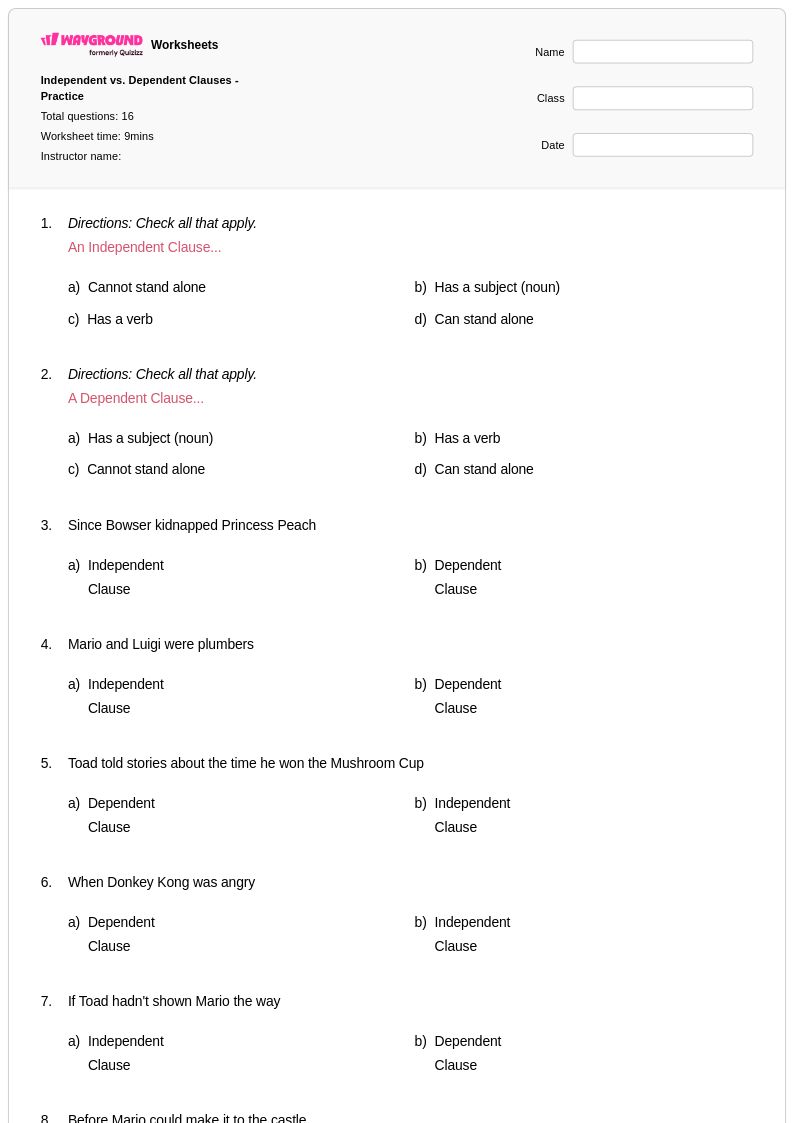
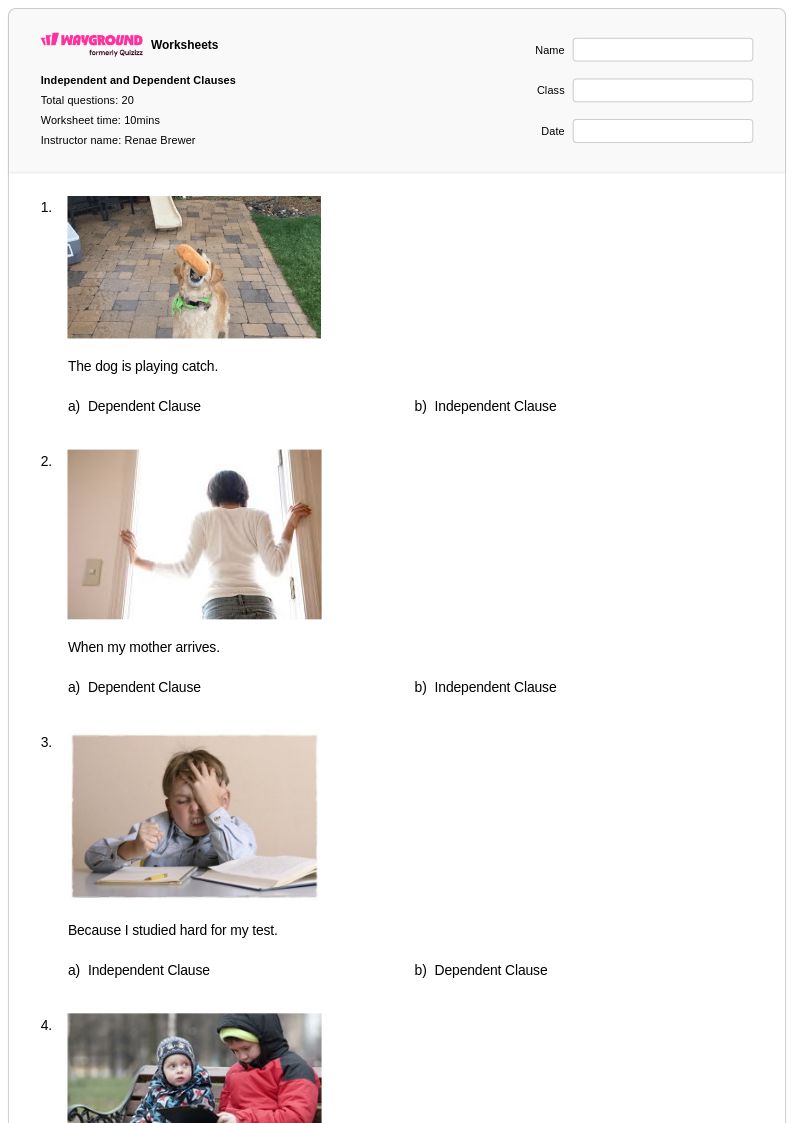
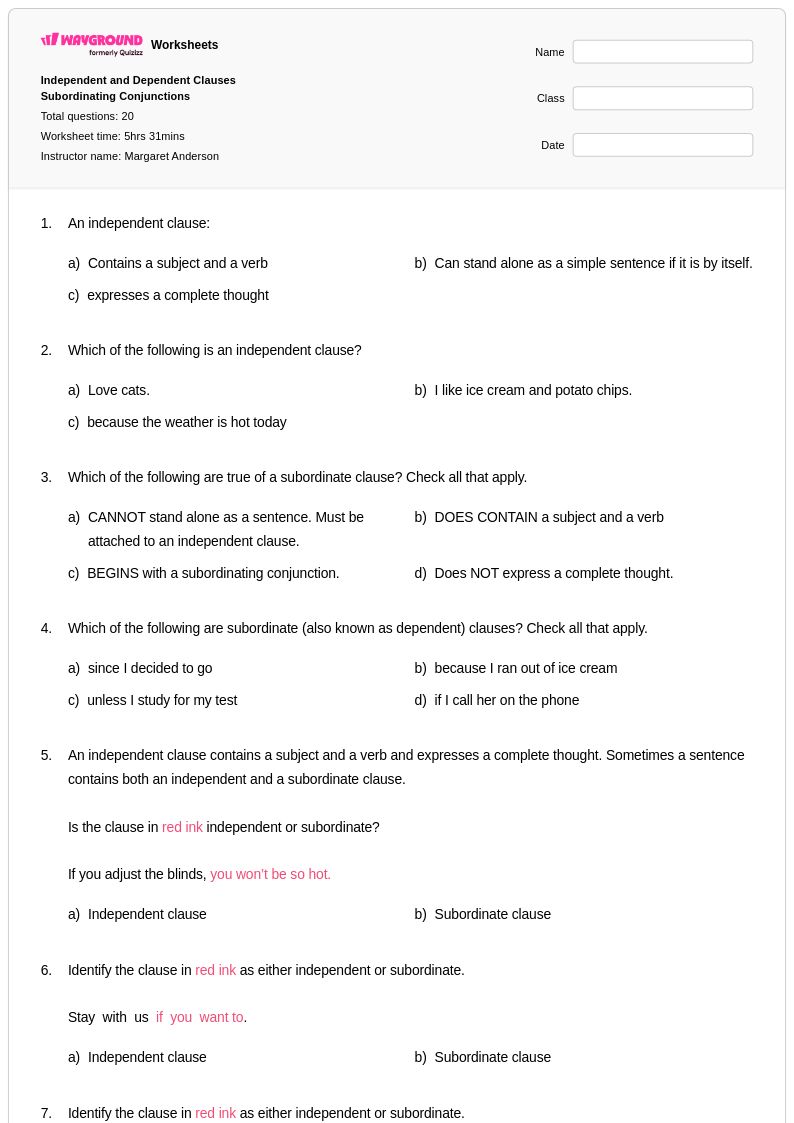
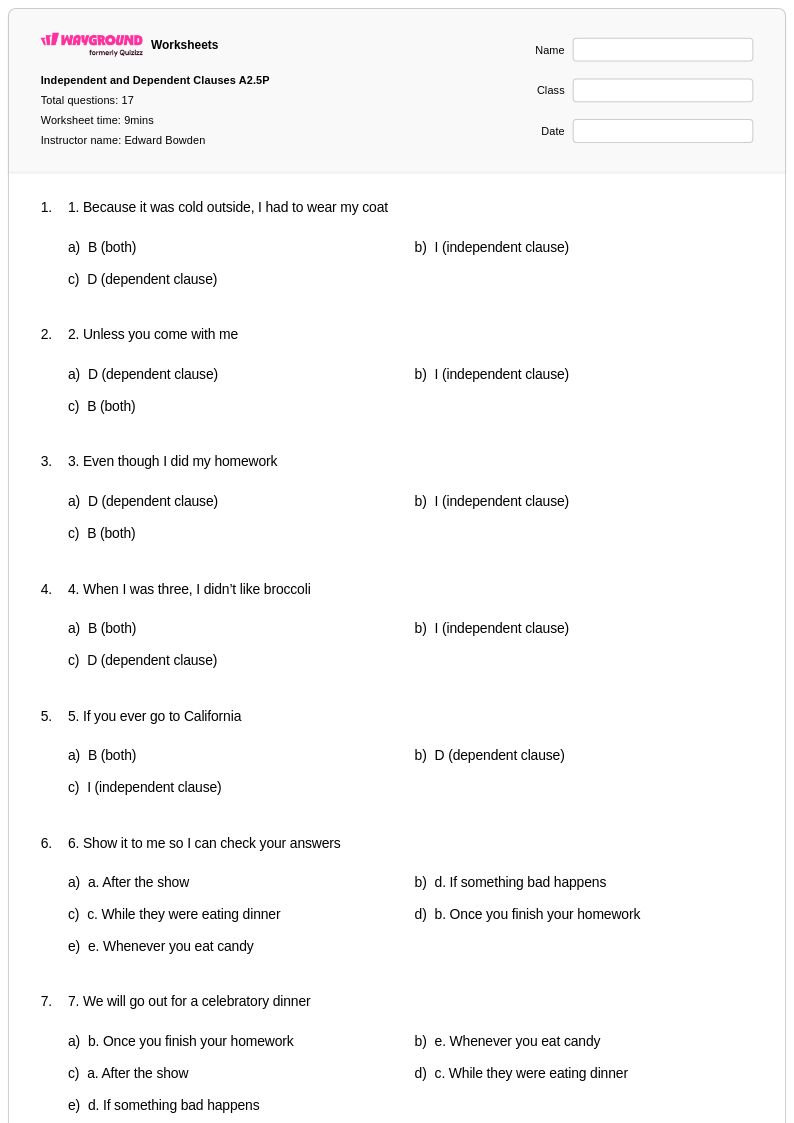
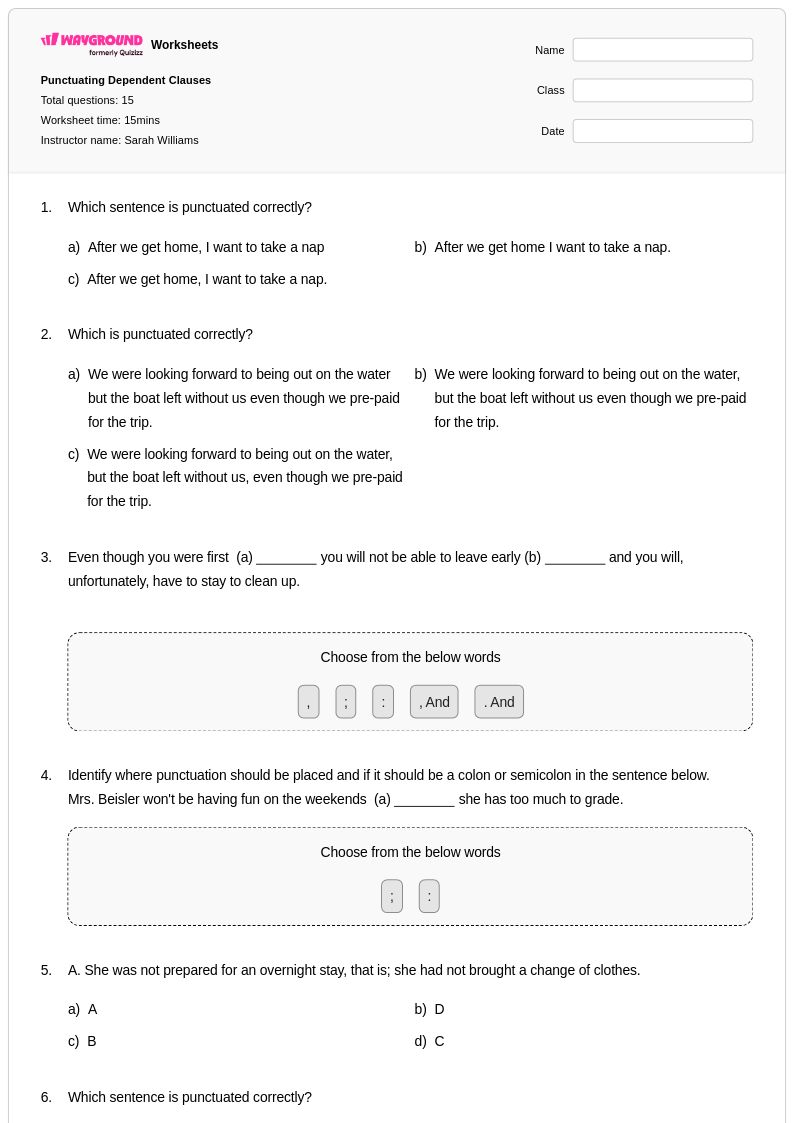
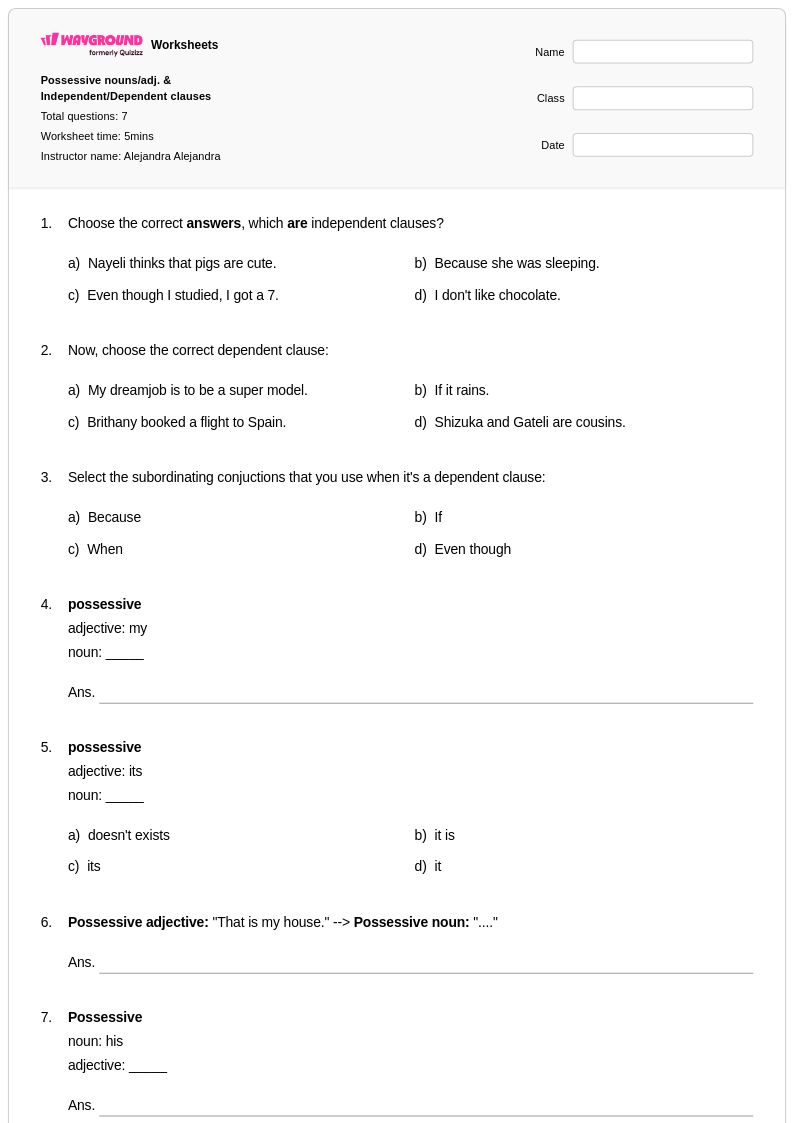
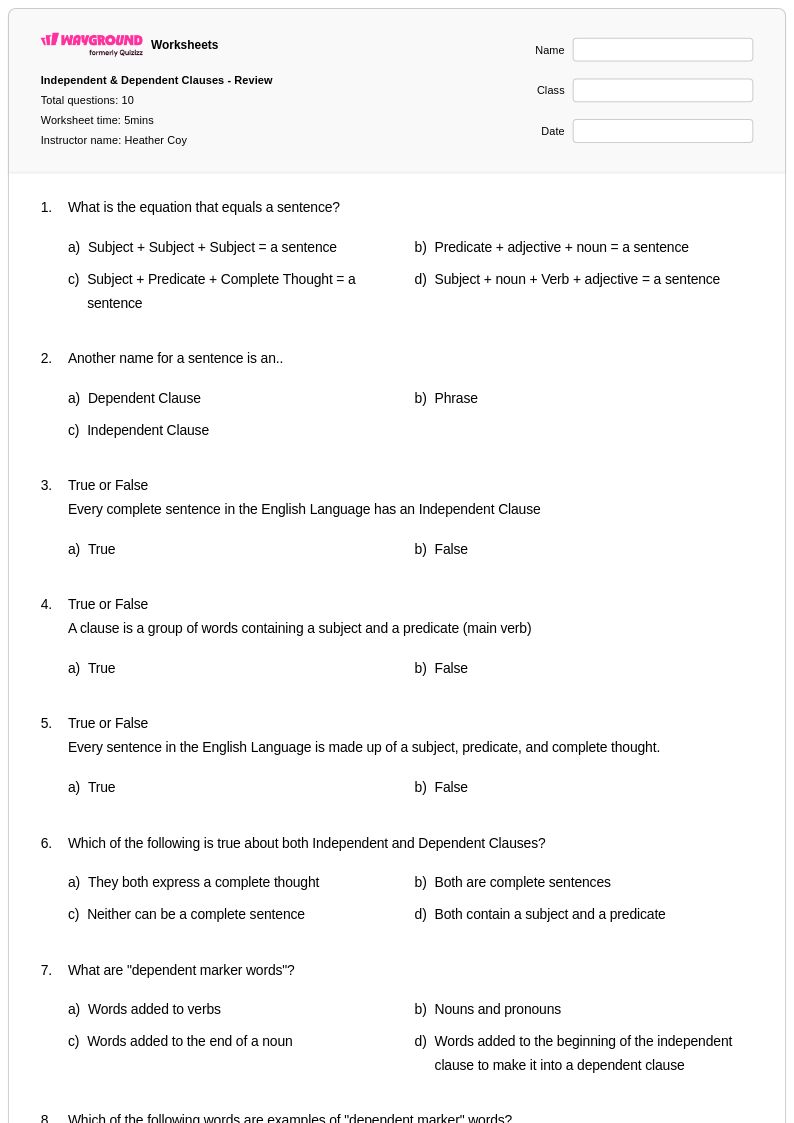
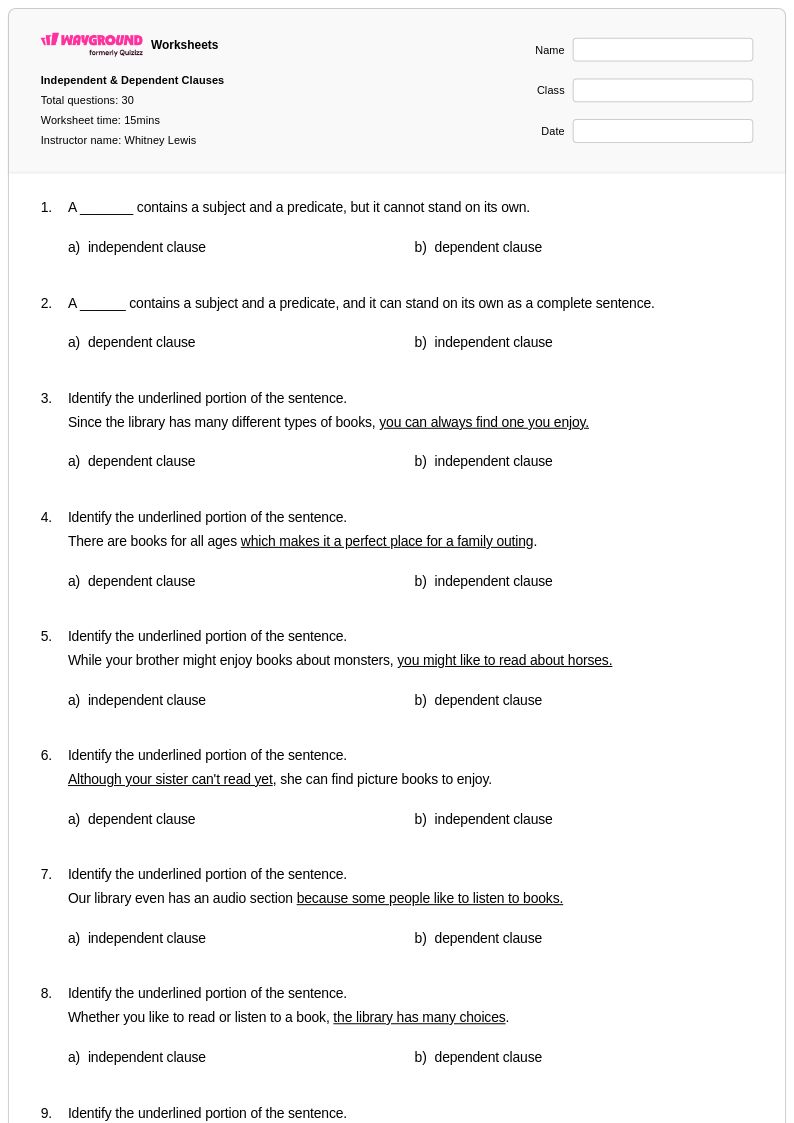
Dependent clauses worksheets for Year 7 students available through Wayground (formerly Quizizz) provide comprehensive practice in identifying and properly using subordinate clauses that cannot stand alone as complete sentences. These educational resources strengthen students' understanding of complex sentence structures by teaching them to recognize dependent clauses introduced by subordinating conjunctions like "because," "although," "when," and "since," as well as relative pronouns such as "who," "which," and "that." The worksheets feature varied practice problems that challenge seventh graders to distinguish between independent and dependent clauses, combine clauses to form complex sentences, and punctuate dependent clauses correctly when they appear at the beginning or middle of sentences. Each worksheet includes a detailed answer key and is available as a free printable pdf, making it easy for educators to incorporate targeted grammar practice into their lesson plans and provide students with immediate feedback on their understanding of these essential sentence components.
Wayground (formerly Quizizz) supports teachers with an extensive collection of dependent clause worksheets drawn from millions of teacher-created resources that have been carefully organized with robust search and filtering capabilities. These Year 7 grammar materials align with common language arts standards and offer differentiation tools that allow educators to customize content based on individual student needs and varying skill levels. Teachers can access these resources in both printable and digital formats, including downloadable pdf versions, providing flexibility for classroom instruction, homework assignments, or remote learning environments. The platform's comprehensive worksheet library enables educators to efficiently plan grammar lessons, provide targeted remediation for students struggling with complex sentence structures, offer enrichment activities for advanced learners, and deliver consistent skill practice that builds students' confidence in understanding and constructing sentences with dependent clauses.
FAQs
How do I teach dependent clauses to students who struggle with sentence structure?
Start by establishing the concept of a complete thought — students need to internalize why a clause like 'because she was tired' feels unfinished before they can reliably identify dependent clauses in context. Introduce subordinating conjunctions and relative pronouns as signal words, and use color-coding or bracketing exercises to visually separate dependent and independent clauses within complex sentences. Building from simple identification toward clause manipulation (moving clauses to the front or end of a sentence) helps students see how clause placement affects meaning and punctuation.
What types of dependent clauses should I cover in my grammar unit?
A complete dependent clause unit should address the three main types: adverbial clauses (modifying verbs, often introduced by subordinating conjunctions like 'although' or 'because'), adjectival clauses (modifying nouns, introduced by relative pronouns like 'who' or 'which'), and nominal clauses (functioning as nouns, often introduced by 'that' or 'whether'). Teaching all three types helps students understand the full range of how dependent clauses function within complex and compound-complex sentences, which directly supports both reading comprehension and writing development.
What exercises help students practice identifying and using dependent clauses?
Effective practice exercises include clause identification tasks where students underline or label dependent clauses within multi-clause sentences, sentence combining activities where two simple sentences are merged using a subordinating conjunction, and error correction tasks that require students to fix comma splices or fragments involving dependent clauses. Practice problems that target punctuation — specifically when a dependent clause leads a sentence versus follows the independent clause — address one of the most common application errors students make.
What are the most common mistakes students make with dependent clauses?
The most frequent error is treating a dependent clause as a complete sentence, resulting in a subordinate clause fragment — for example, writing 'Although the test was difficult.' as a standalone sentence. Students also commonly misplace commas, omitting the comma after a fronted dependent clause or incorrectly inserting one when the dependent clause follows the independent clause. A third persistent mistake is confusing relative pronouns ('who' vs. 'which' vs. 'that'), which affects both clause type identification and proper usage in writing.
How can I use dependent clause worksheets in both print and digital classroom settings?
Wayground's dependent clause worksheets are available as printable PDFs for traditional classroom use and in digital formats for technology-integrated environments, giving teachers flexibility across in-person, hybrid, and remote settings. Teachers can also host these worksheets as interactive quizzes directly on Wayground, enabling real-time student responses and immediate feedback. For students who need additional support, Wayground's platform allows teachers to apply individual accommodations such as read aloud, extended time, and reduced answer choices, ensuring the same materials remain accessible across diverse learners.
How do dependent clauses connect to punctuation instruction?
Dependent clause instruction is a direct gateway to teaching comma rules in complex sentences — specifically the rule that a fronted dependent clause must be followed by a comma, while a terminal dependent clause typically does not require one. Students who understand clause boundaries are better equipped to avoid comma splices and run-on sentences, making dependent clause work foundational to broader punctuation accuracy. Pairing clause identification exercises with punctuation correction tasks reinforces both skills simultaneously and gives students a concrete reason to care about clause recognition.