Free Printable Subject and Predicate Worksheets for Year 7
Year 7 students master identifying subject and predicate through Wayground's comprehensive collection of free worksheets, featuring engaging practice problems, printable PDFs, and complete answer keys for effective grammar instruction.
Explore printable Subject and Predicate worksheets for Year 7
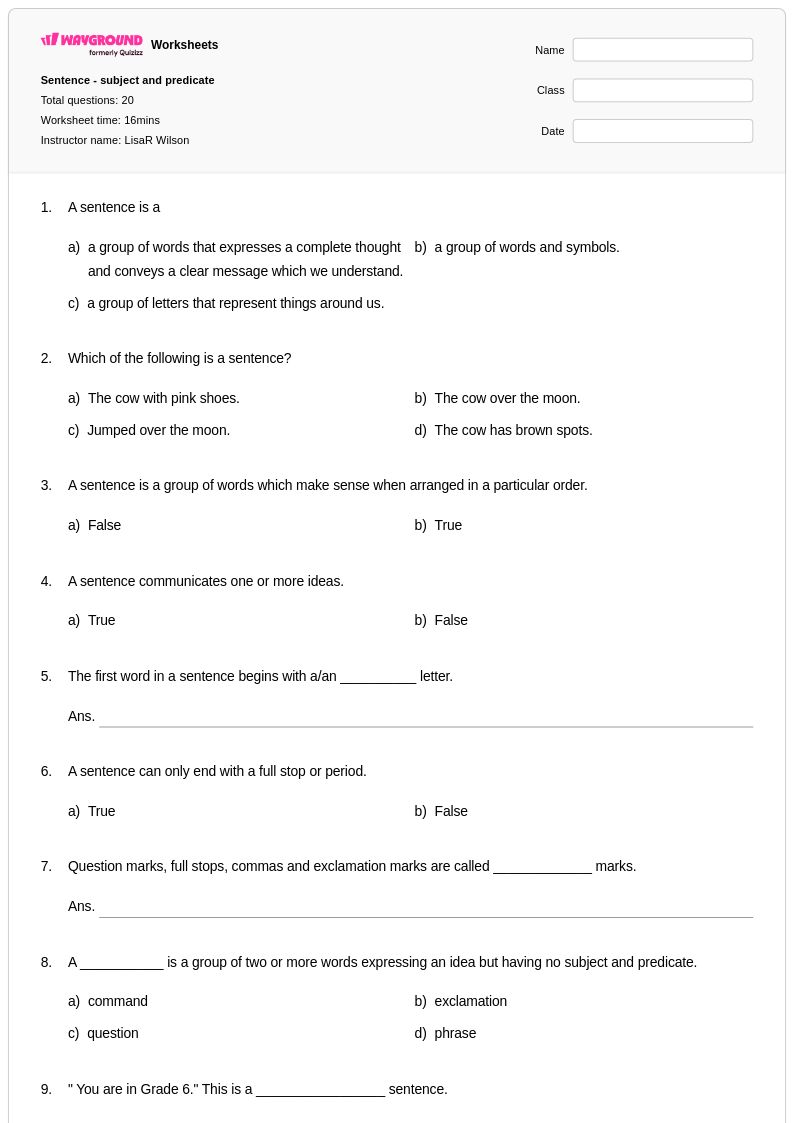
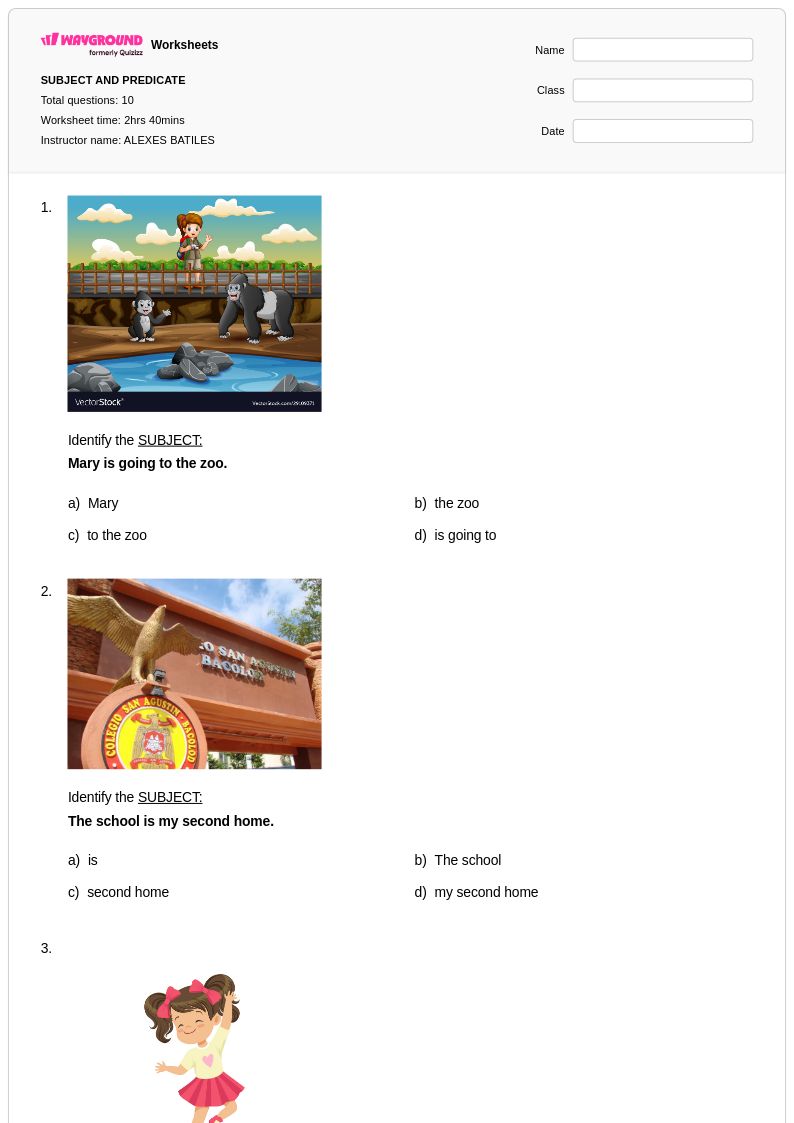
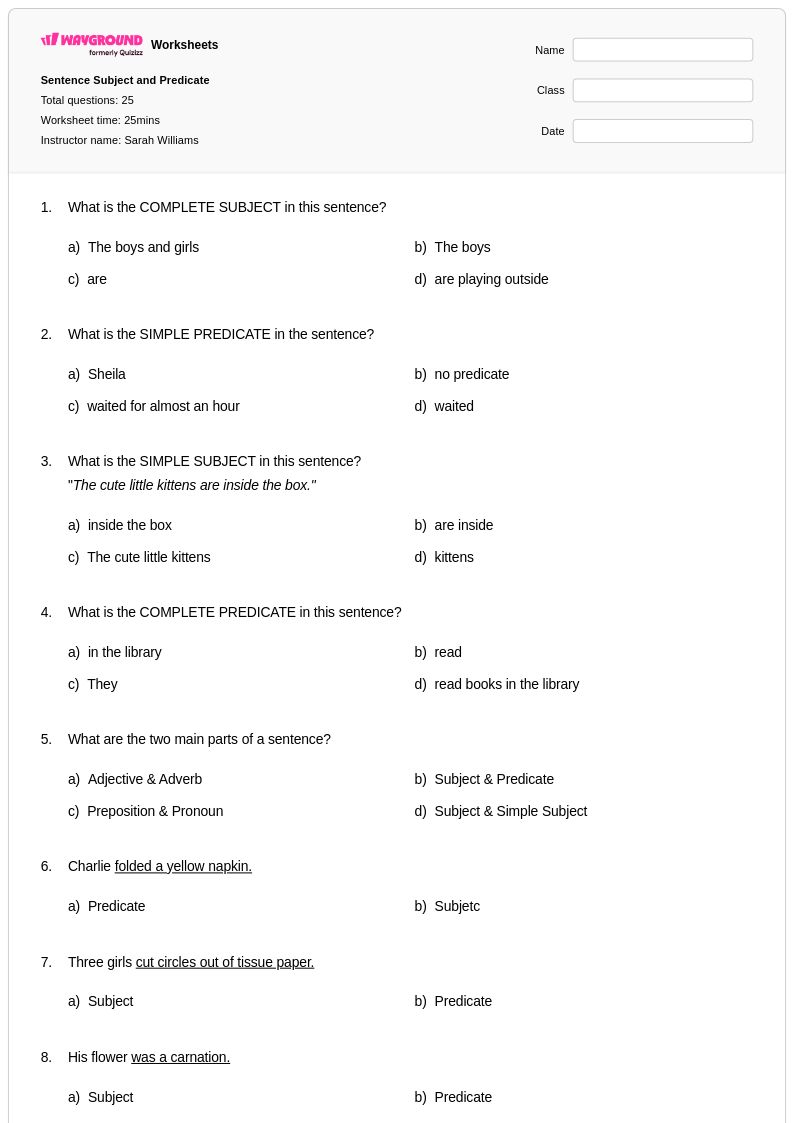
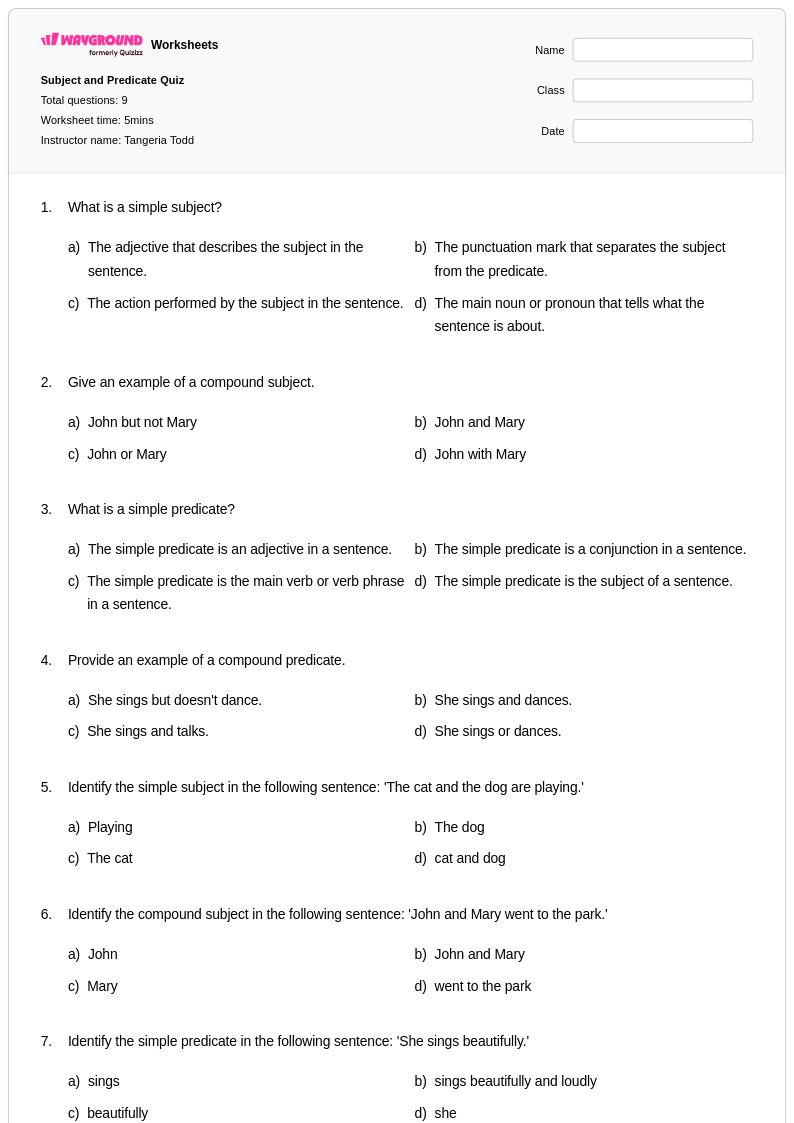
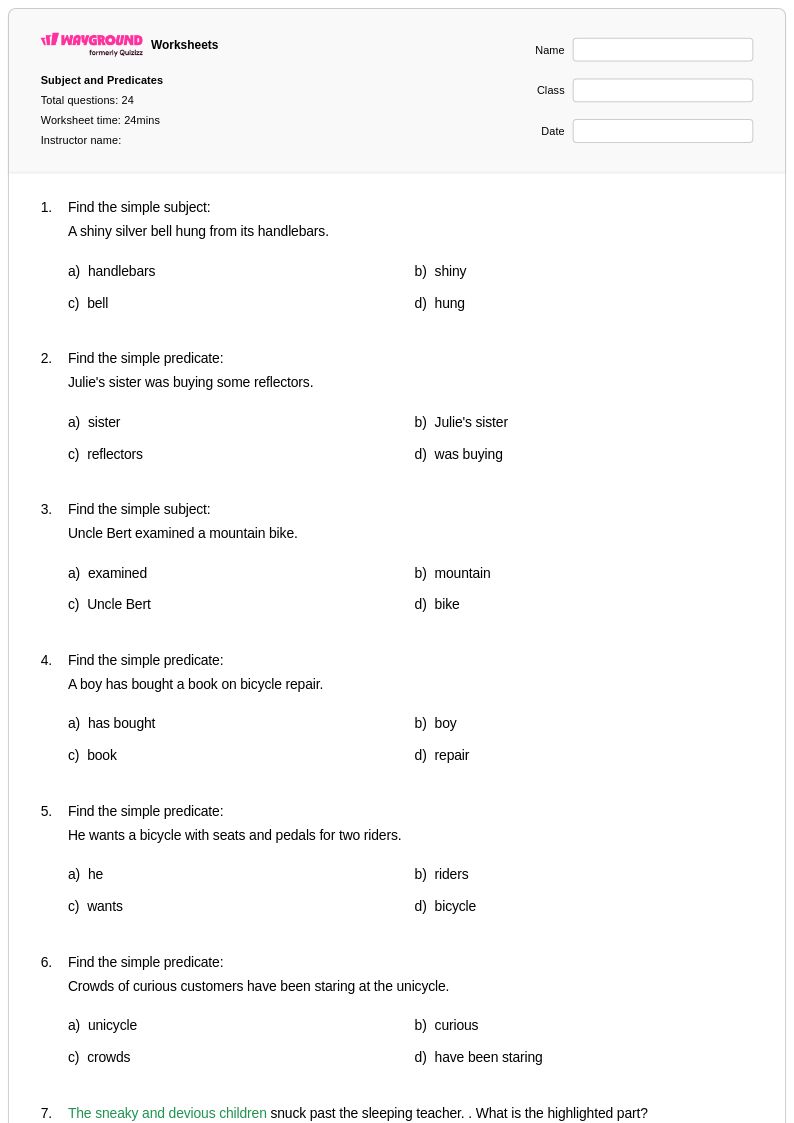
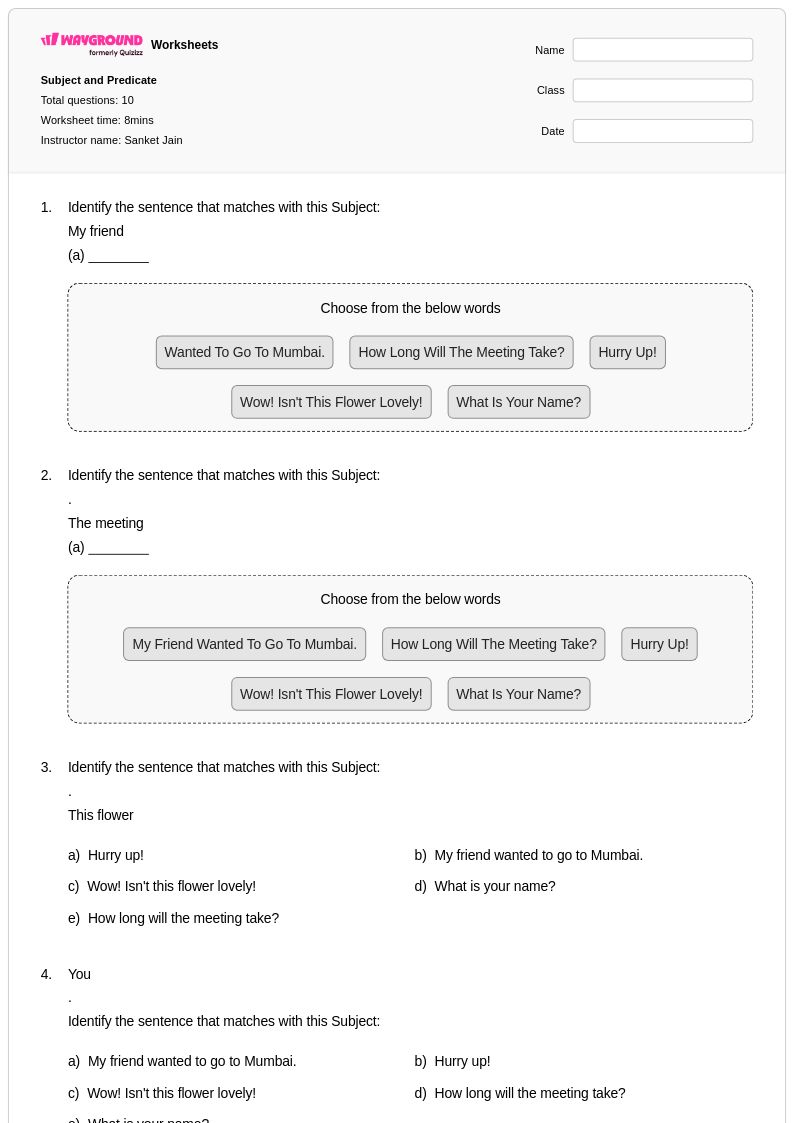
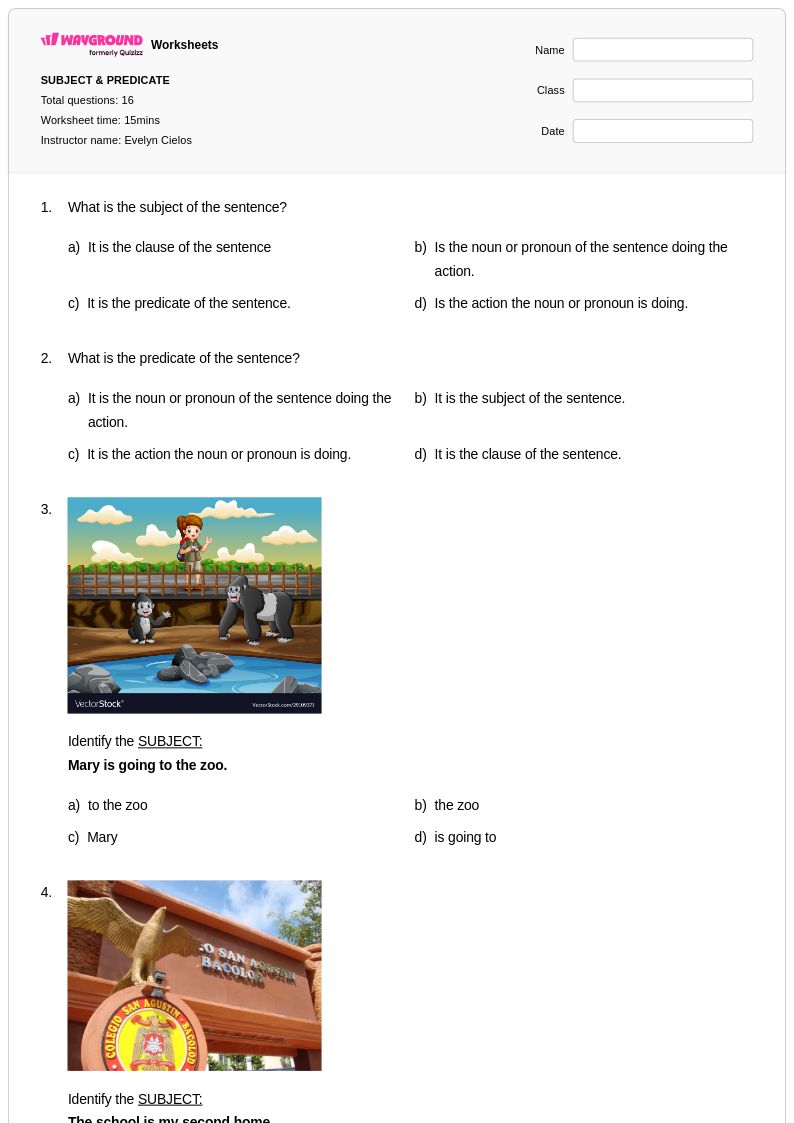
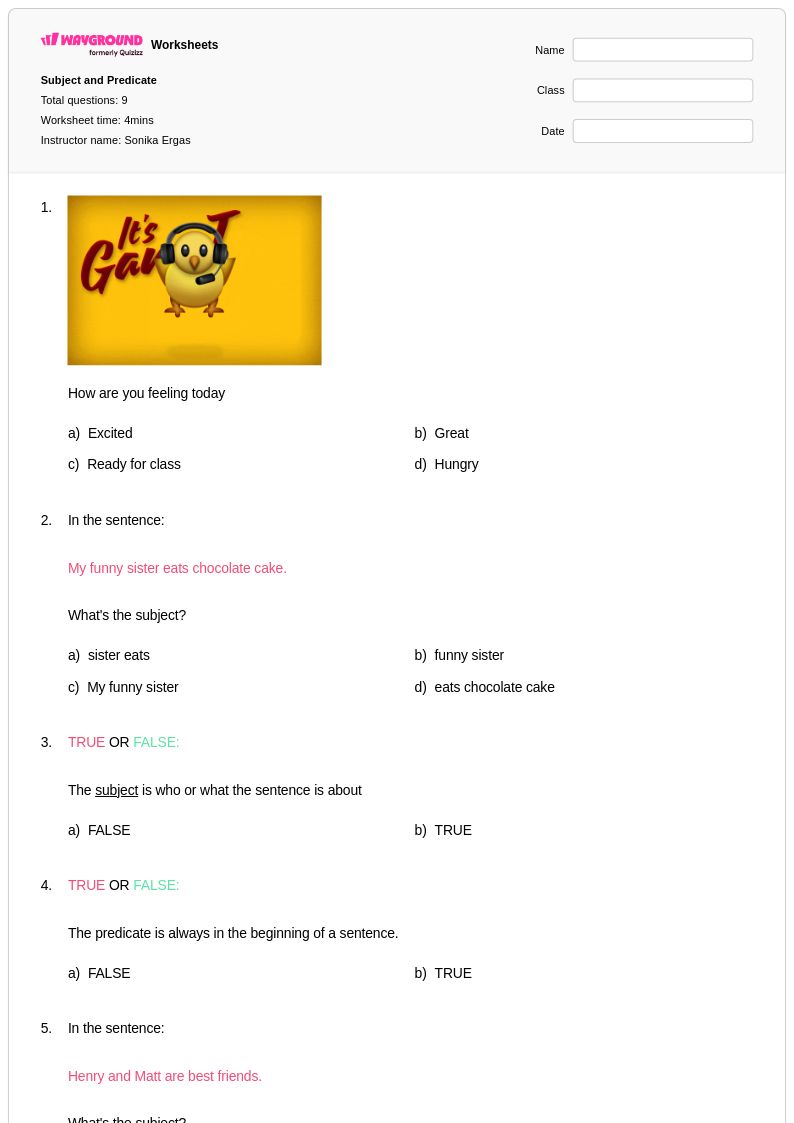
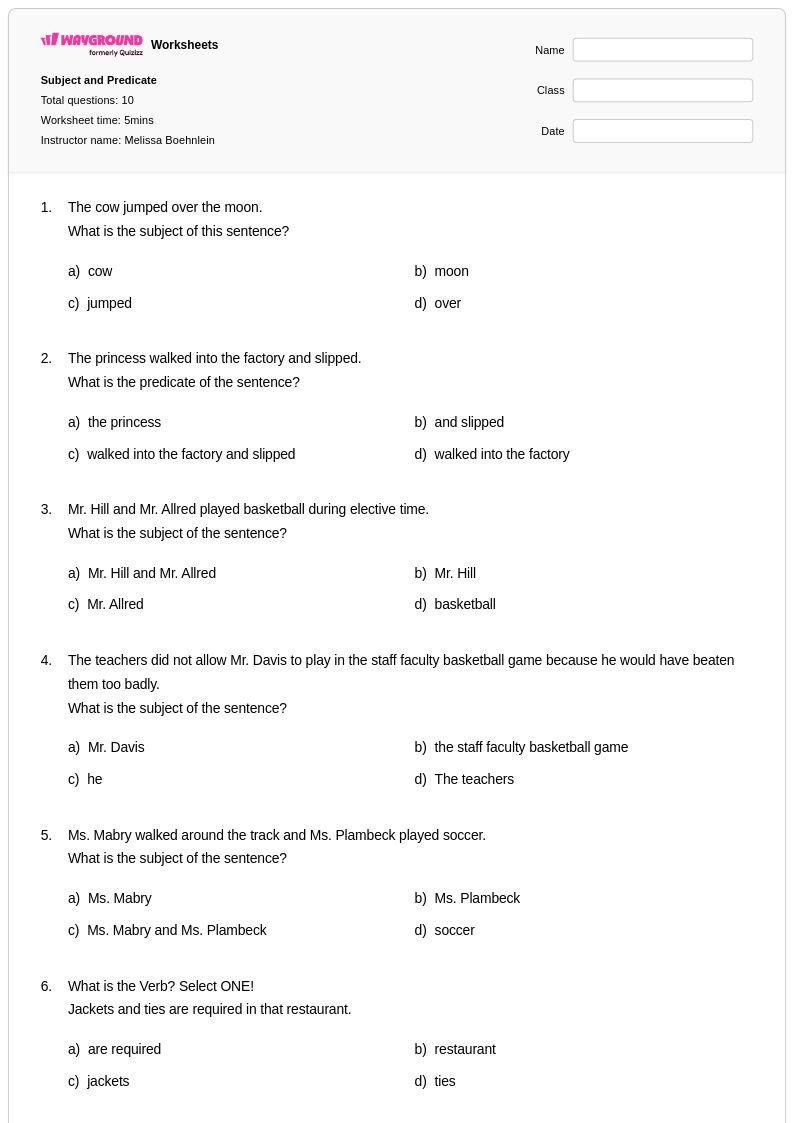
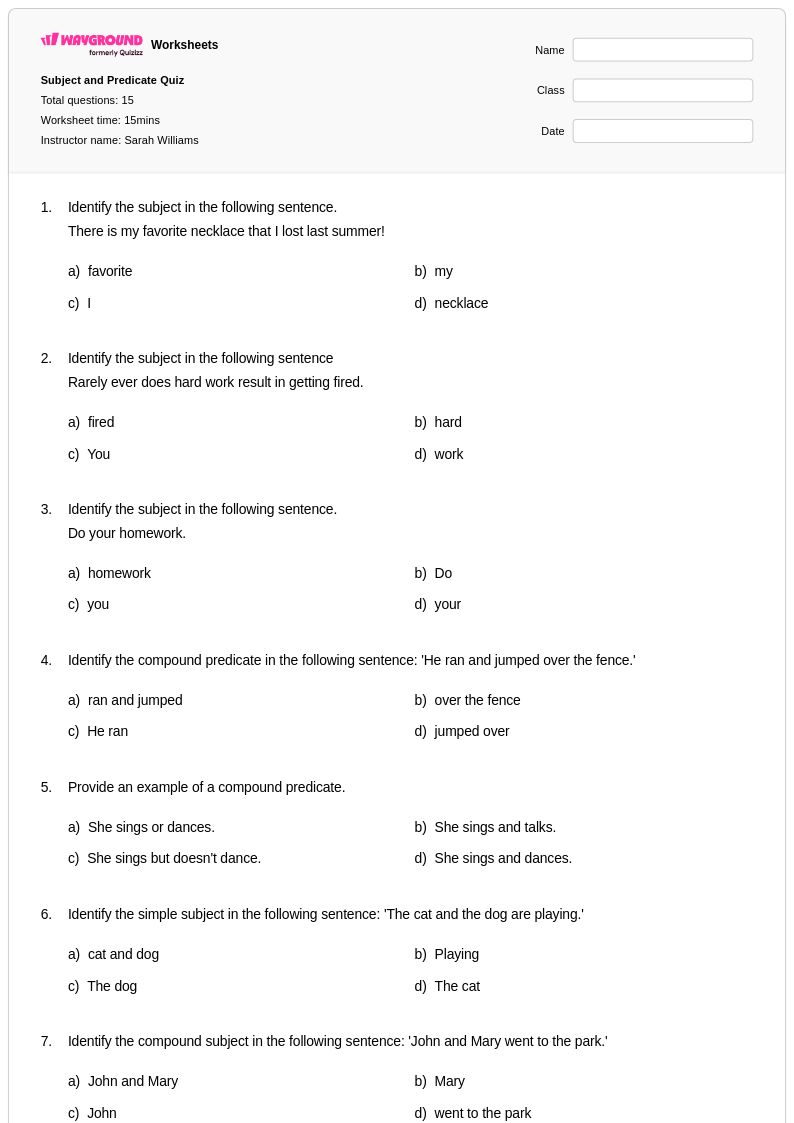
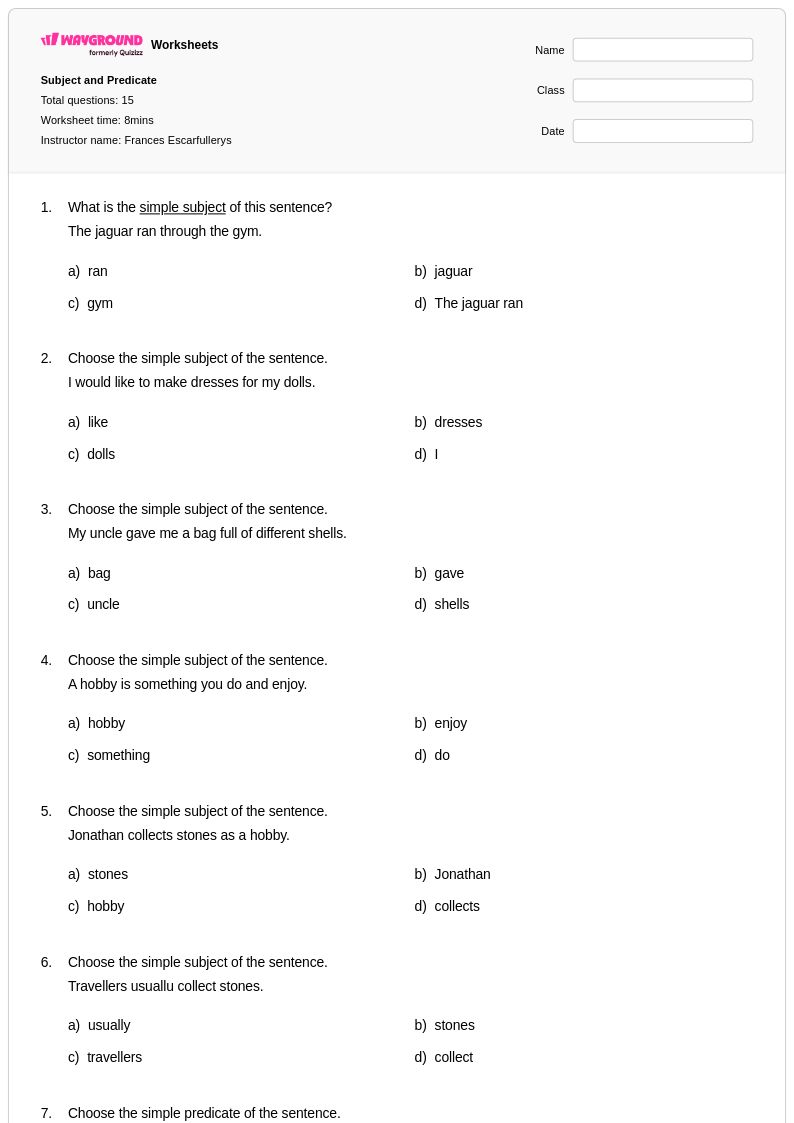
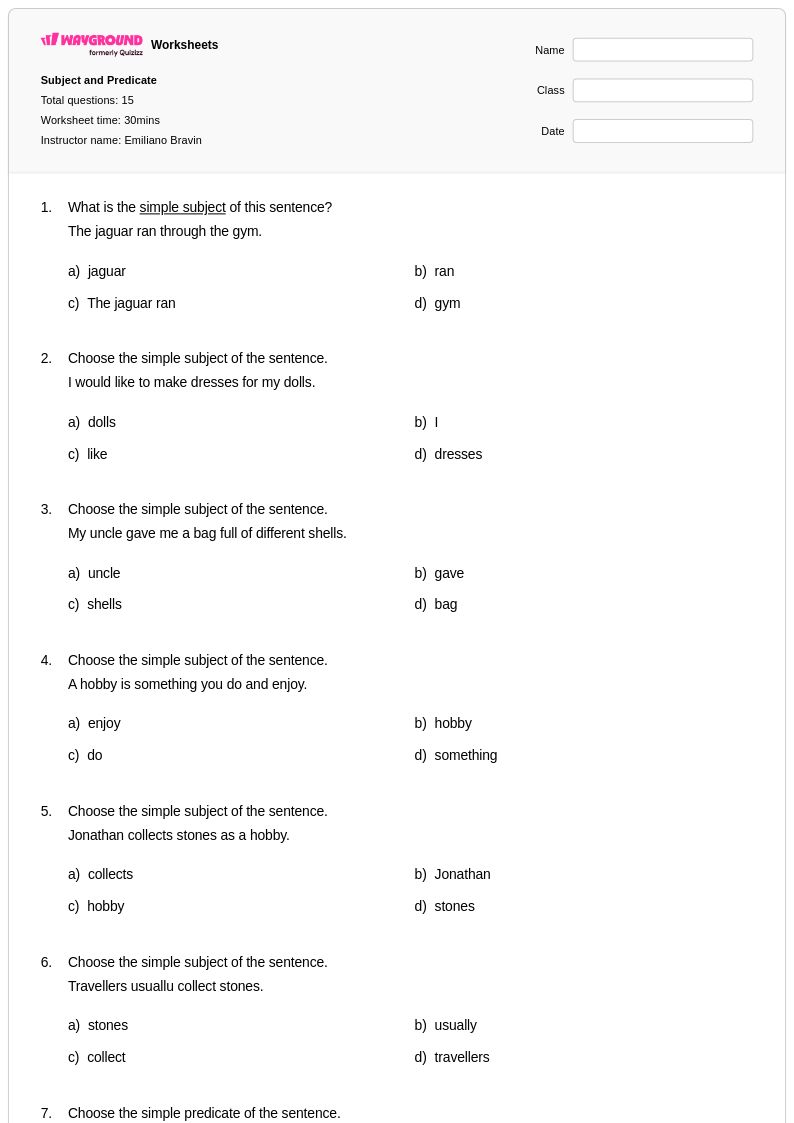
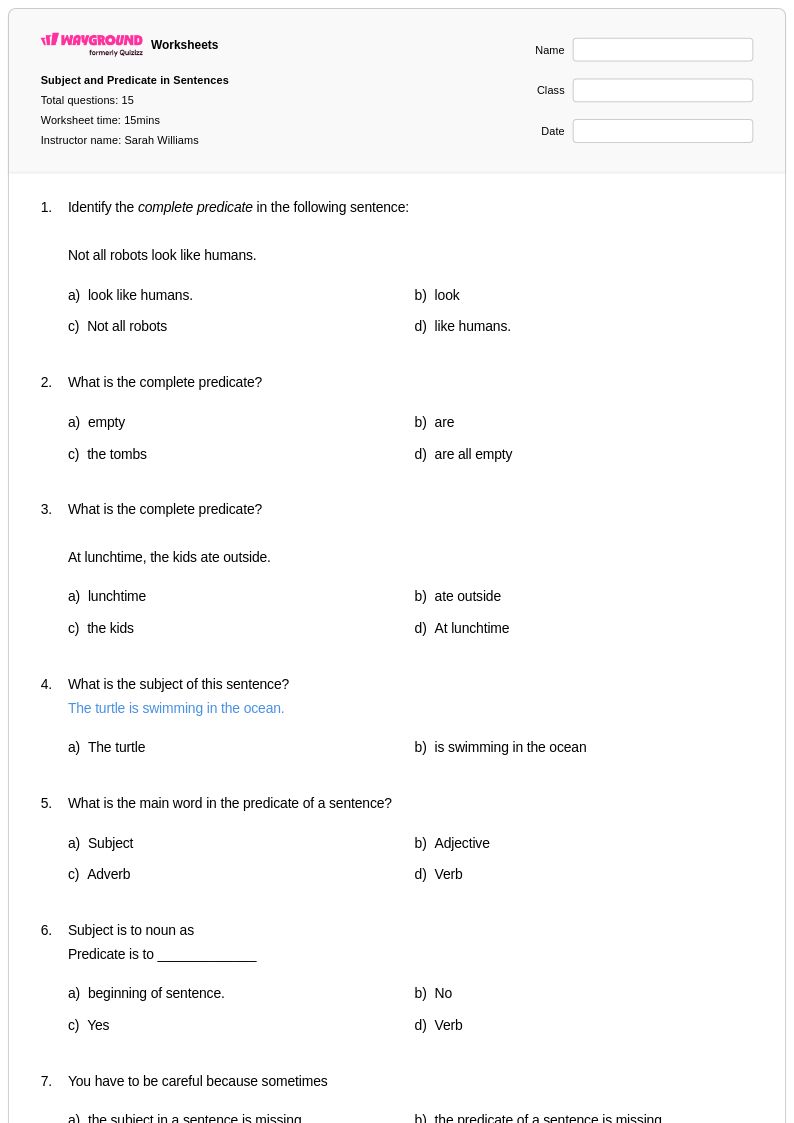
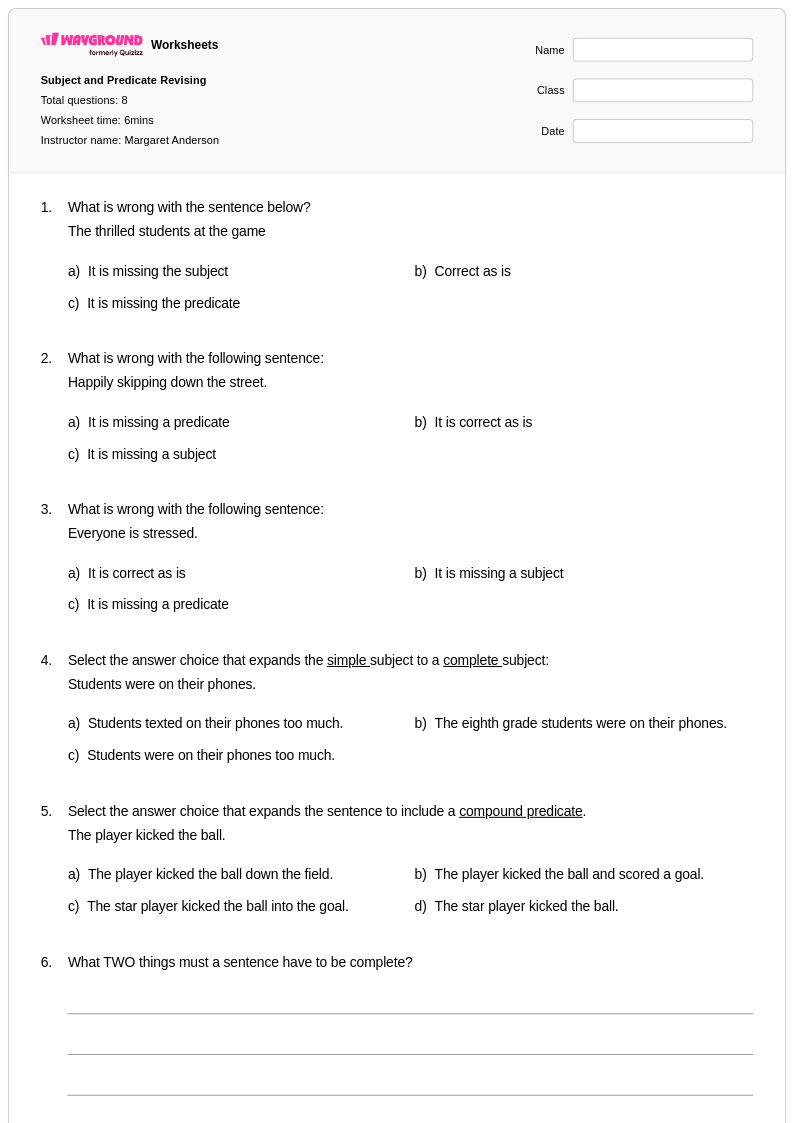
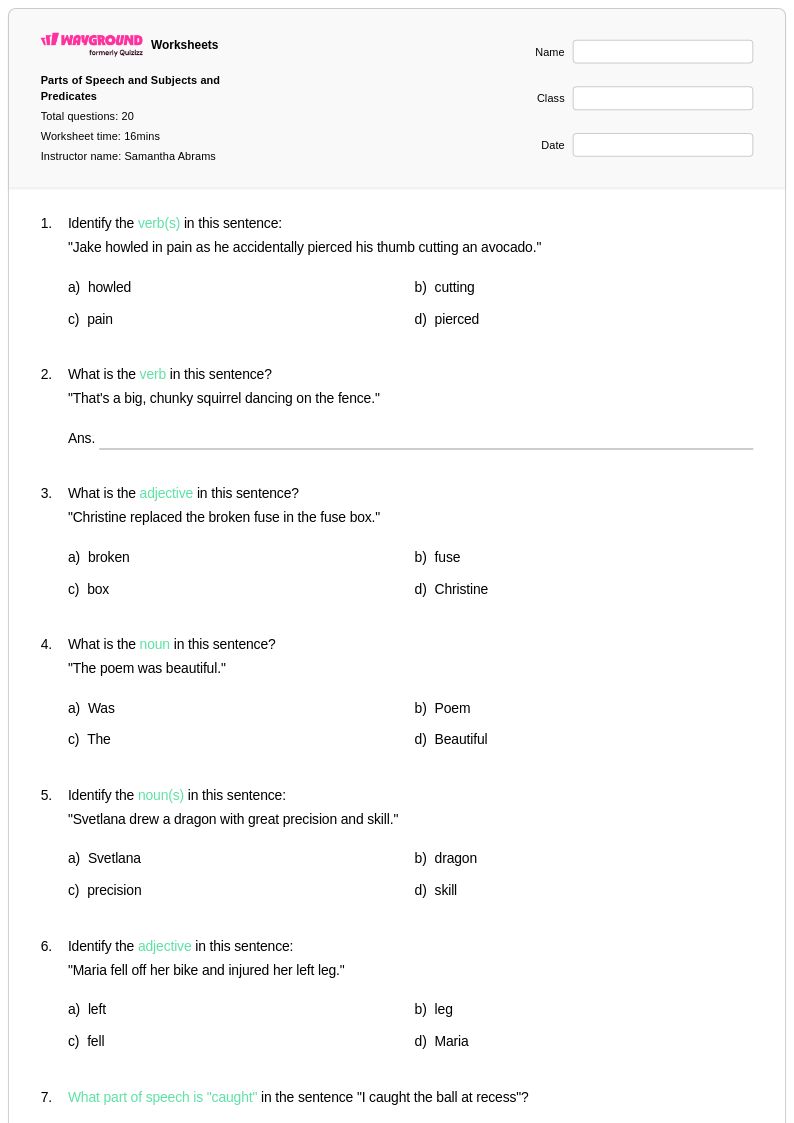
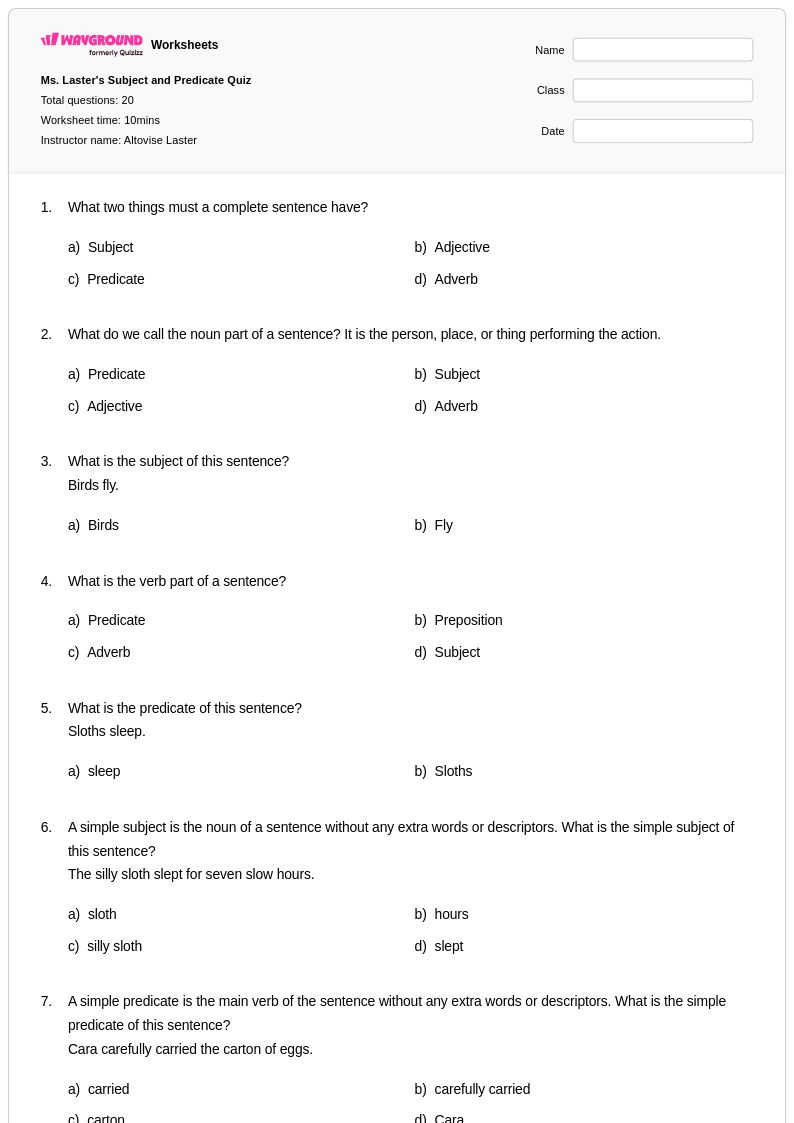
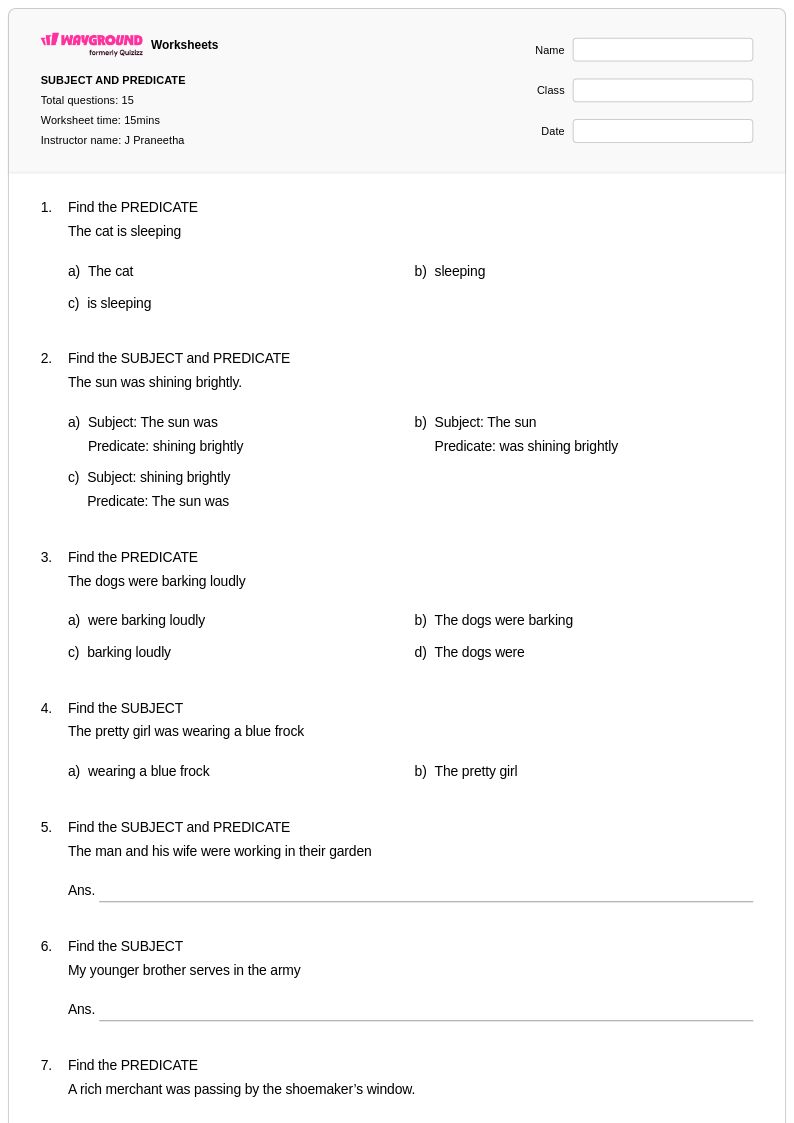
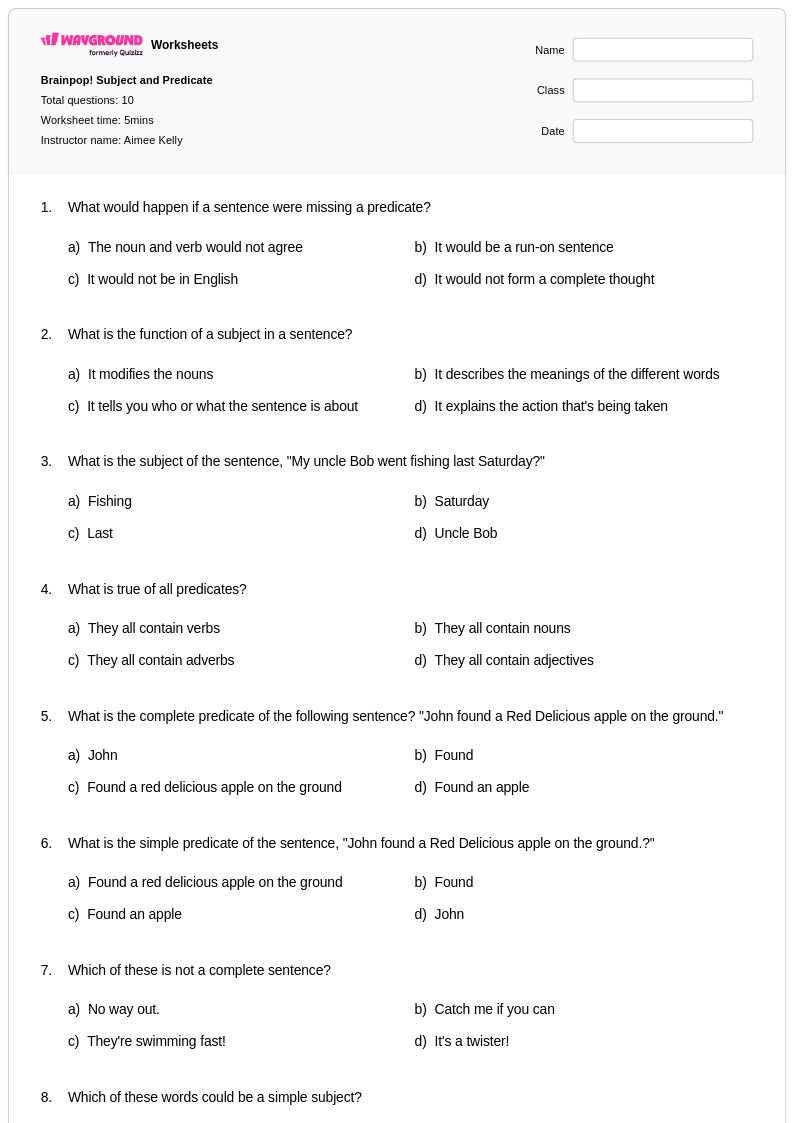
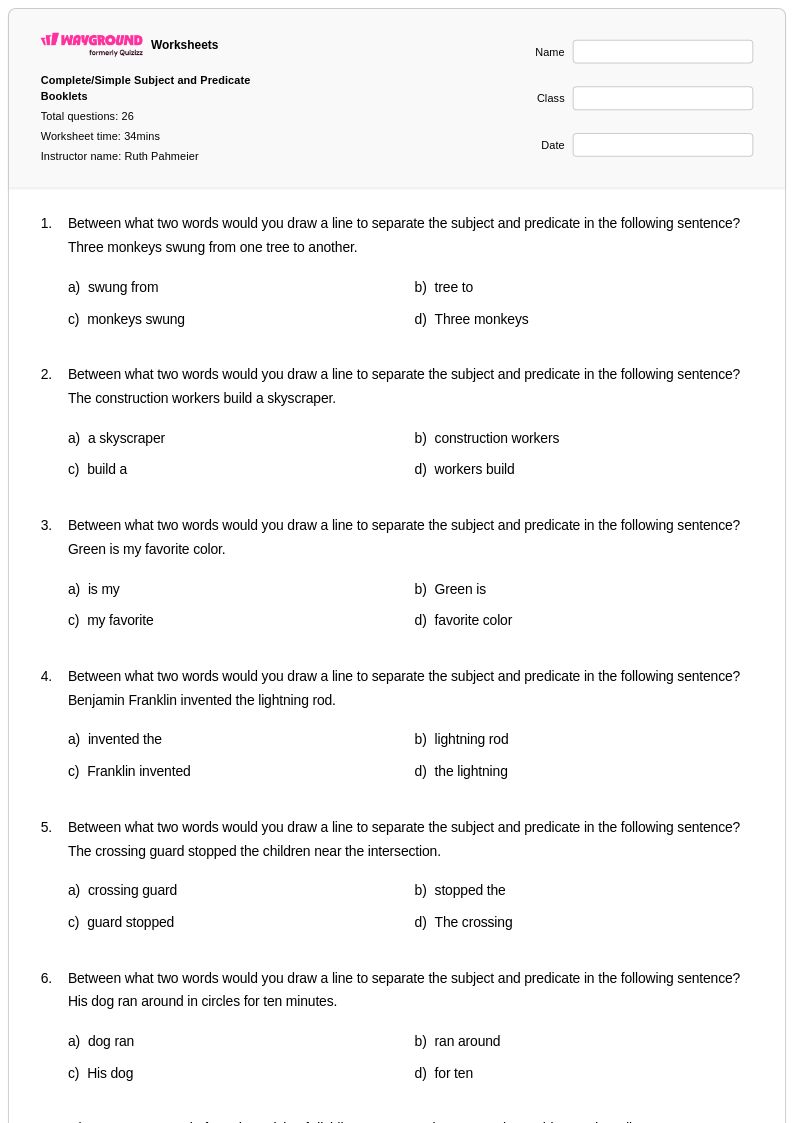
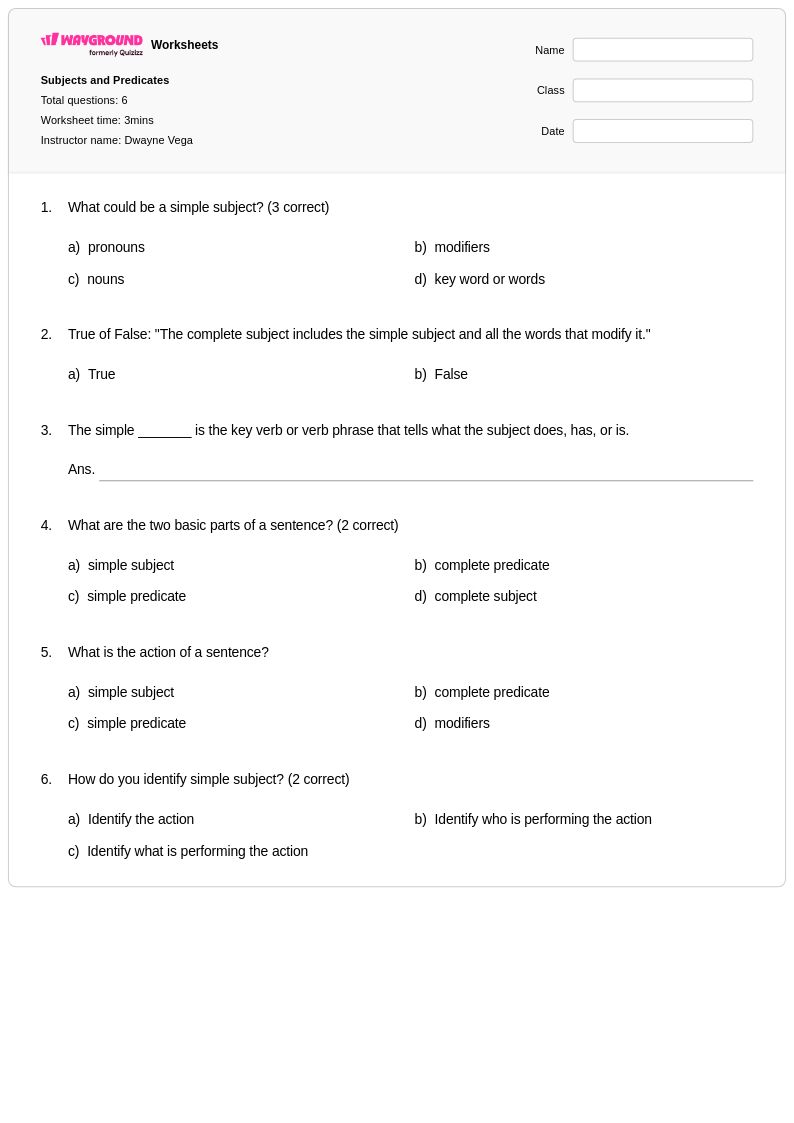
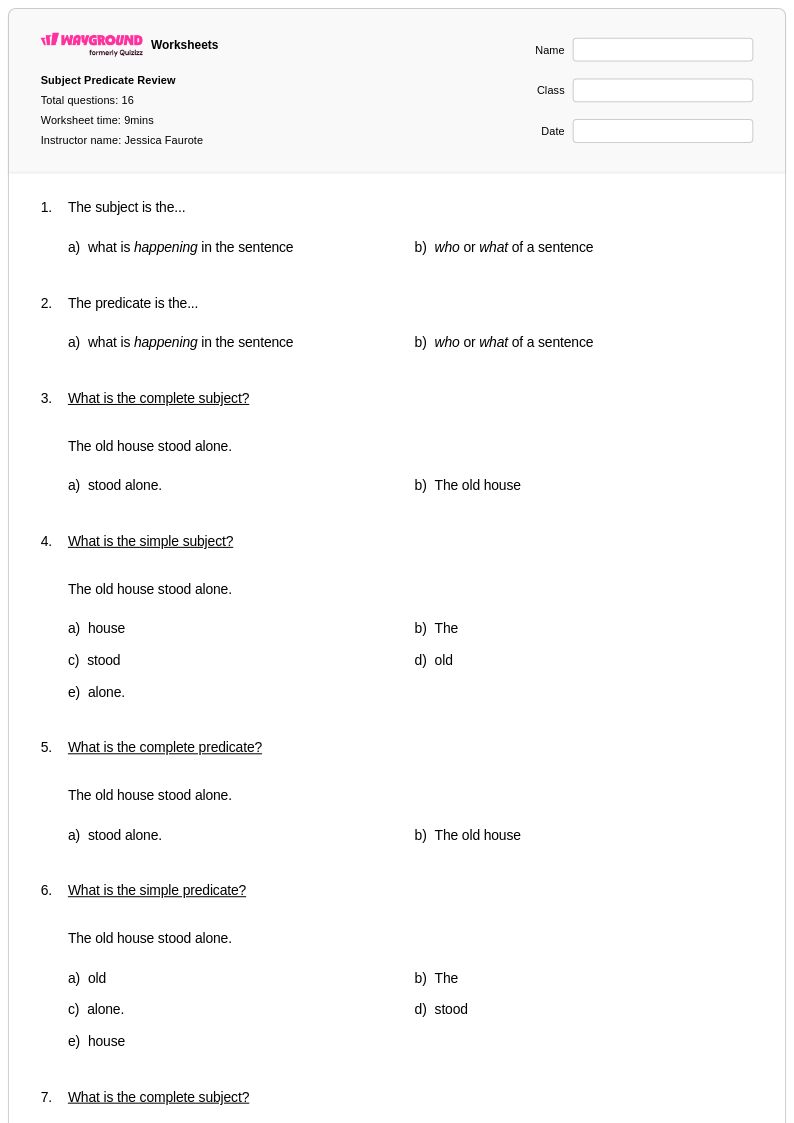
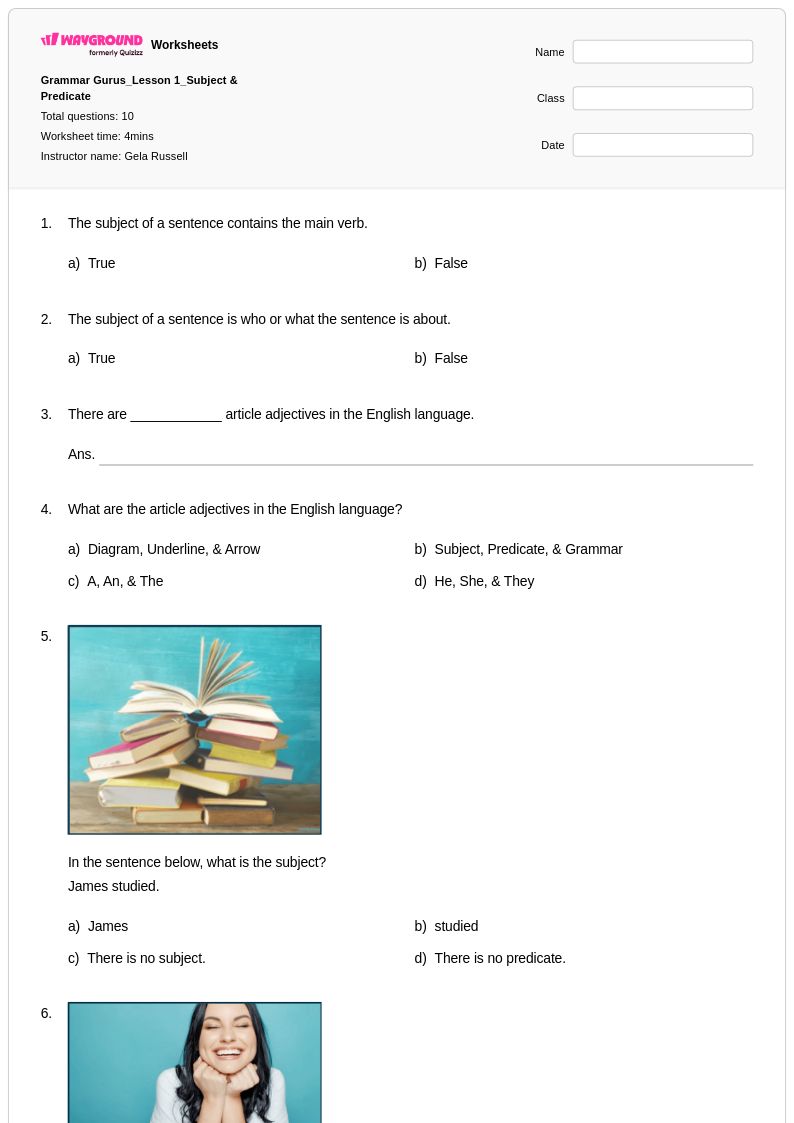
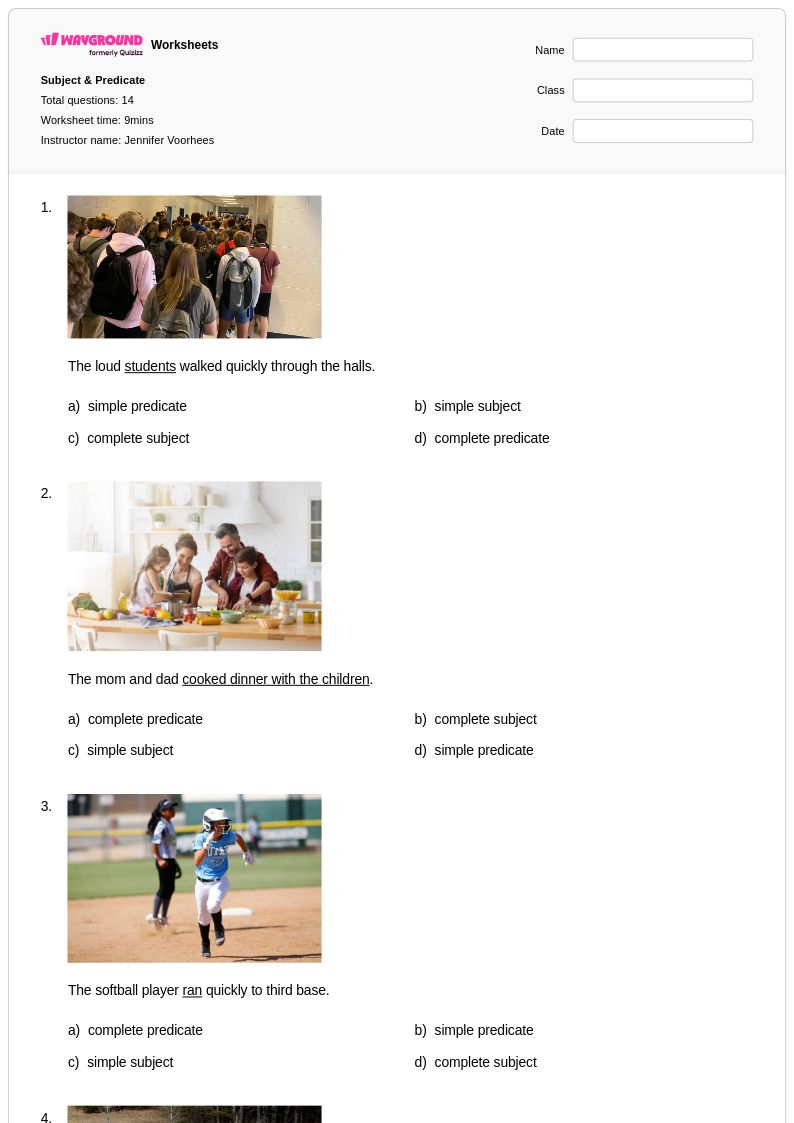
Subject and predicate worksheets for Year 7 students available through Wayground provide essential practice in identifying and understanding the two fundamental components of every complete sentence. These comprehensive printables help seventh graders master the distinction between the complete subject (who or what the sentence is about) and the complete predicate (what the subject does or what is said about the subject), while also teaching them to recognize simple subjects and simple predicates within more complex sentence structures. Students work through carefully designed practice problems that progress from basic identification exercises to more sophisticated analysis of compound subjects, compound predicates, and sentences with multiple clauses. Each worksheet includes a detailed answer key that enables independent study and self-assessment, with free pdf formats making these resources accessible for both classroom instruction and home practice.
Wayground's extensive collection of subject and predicate worksheets draws from millions of teacher-created resources, offering educators powerful search and filtering capabilities to locate materials perfectly suited to their Year 7 grammar instruction needs. The platform's standards alignment ensures these worksheets meet curriculum requirements while providing differentiation tools that allow teachers to customize content for students at varying skill levels. Whether delivered in printable pdf format for traditional paper-and-pencil practice or used digitally for interactive learning, these flexible resources support comprehensive lesson planning and targeted remediation for students struggling with sentence analysis. Teachers can seamlessly integrate these worksheets into their grammar instruction sequence, using them for skill-building practice, formative assessment, or enrichment activities that deepen students' understanding of fundamental sentence structure concepts essential for effective writing and communication.
FAQs
How do I teach subject and predicate to students who struggle with sentence structure?
Start by teaching the two core questions: 'Who or what is the sentence about?' (subject) and 'What does the subject do or what happens?' (predicate). Use short, familiar sentences before introducing compound subjects and predicates or multiple clauses. Color-coding the subject in one color and the predicate in another is a highly effective visual strategy for early learners. Once students can identify these components in simple sentences, gradually increase complexity.
What exercises help students practice identifying subjects and predicates?
Effective practice exercises include sentence parsing tasks where students underline or label the complete subject and complete predicate separately, as well as sentence-building activities where they construct sentences from a given subject or predicate. Exercises that move from simple subject-verb sentences to compound structures reinforce incremental skill development. Varied problem sets prevent rote pattern-matching and push students to analyze sentence meaning rather than rely on word position.
What are the most common mistakes students make when identifying subjects and predicates?
The most frequent error is confusing the simple subject with the complete subject — students often circle just the noun when the full noun phrase is the correct answer. Another common mistake is identifying the first noun in the sentence as the subject regardless of sentence structure, which fails when sentences begin with prepositional phrases or adverbs. Students also frequently misidentify the predicate as only the verb, overlooking the objects and phrases that complete it.
How do I differentiate subject and predicate instruction for students at different skill levels?
For struggling learners, start with sentences that follow a strict subject-then-predicate order and use high-frequency vocabulary so decoding doesn't interfere with grammar analysis. For advanced students, introduce inverted sentence structures, compound predicates, and sentences with subordinate clauses. On Wayground, teachers can apply accommodations such as reduced answer choices or read-aloud support to individual students, allowing the same worksheet to serve multiple learning needs without singling out any student.
How do I use Wayground's subject and predicate worksheets in my classroom?
Wayground's subject and predicate worksheets are available as printable PDFs for traditional classroom use and in digital formats for technology-integrated environments, including the option to host them as a quiz directly on Wayground. Each worksheet includes a detailed answer key, which makes it straightforward to review answers as a class or provide individualized feedback. Teachers can use the platform's search and filtering tools to find worksheets matched to a specific skill focus, such as simple subjects, complete predicates, or compound structures.
What is the difference between a simple subject and a complete subject?
The simple subject is the single noun or pronoun that the sentence is about, while the complete subject includes the simple subject plus all its modifiers. For example, in the sentence 'The tired students in the hallway waited quietly,' the simple subject is 'students' and the complete subject is 'The tired students in the hallway.' Teaching this distinction is critical because many grammar errors stem from students treating modifying phrases as separate from the subject they belong to.