Free Printable Distance Between Two Parallel Lines Worksheets for Year 8
Year 8 students can master calculating the distance between two parallel lines with Wayground's comprehensive collection of free worksheets, featuring step-by-step practice problems, printable PDFs, and detailed answer keys.
Explore printable Distance Between Two Parallel Lines worksheets for Year 8
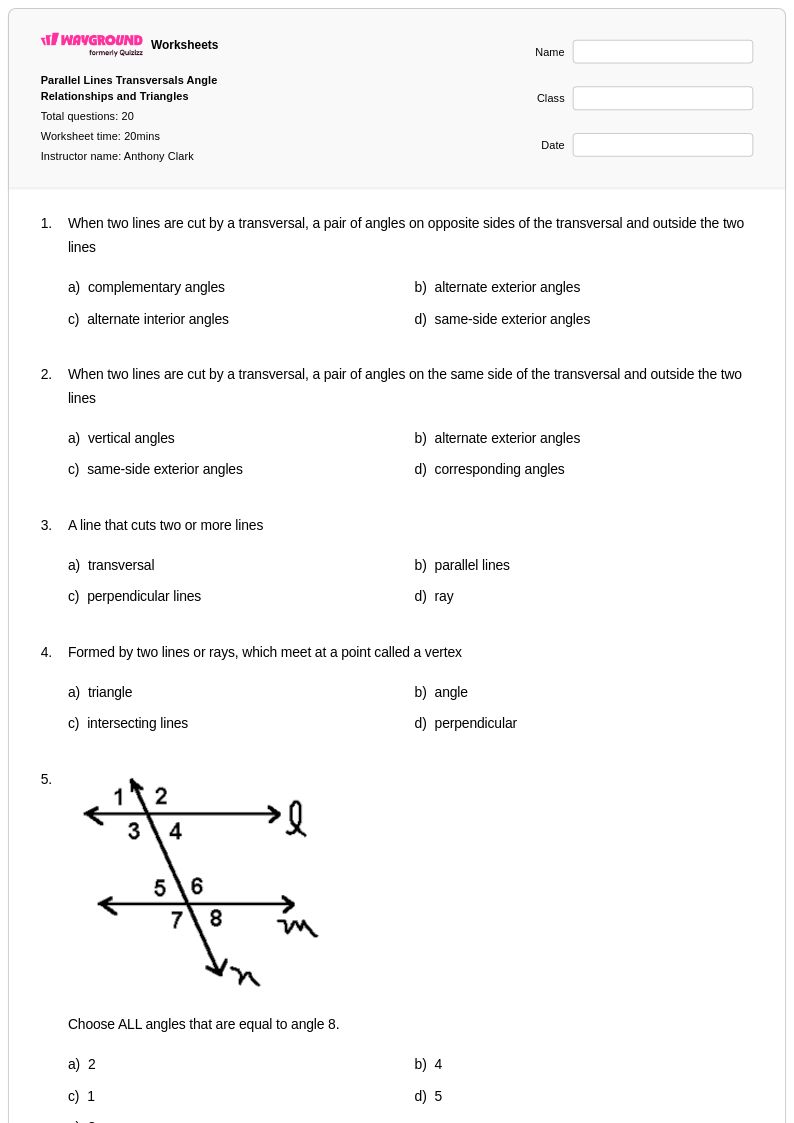
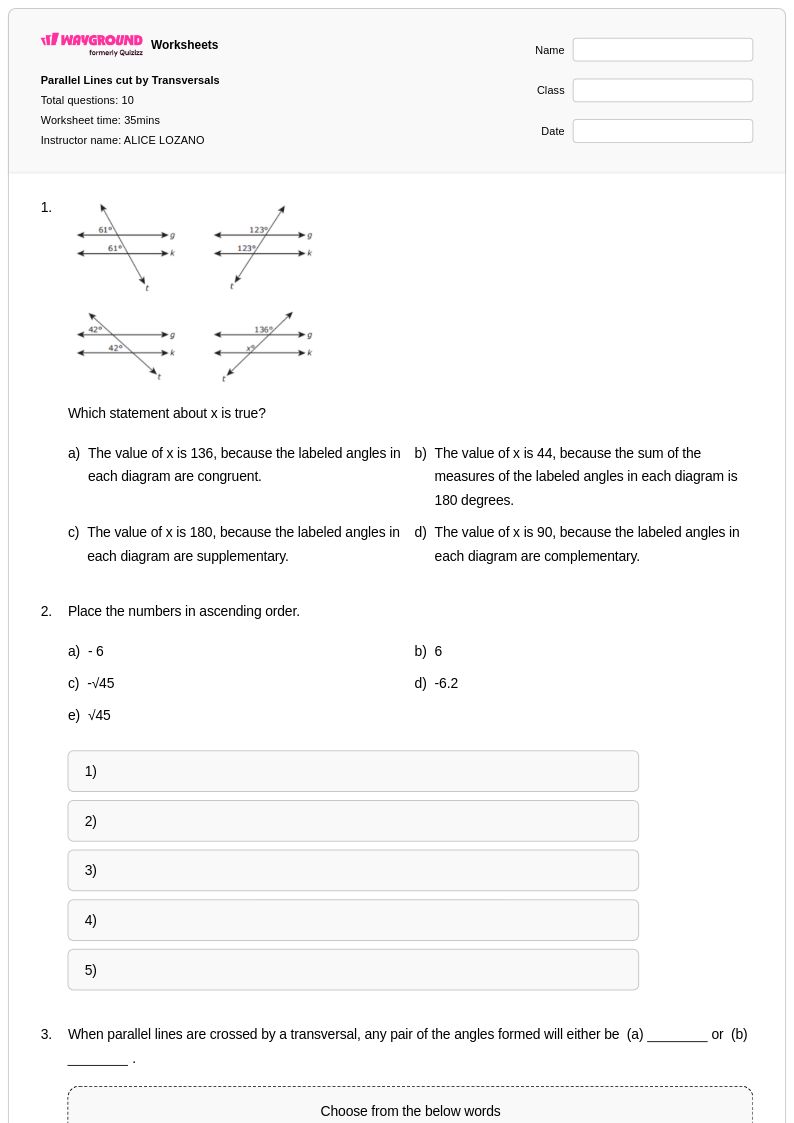
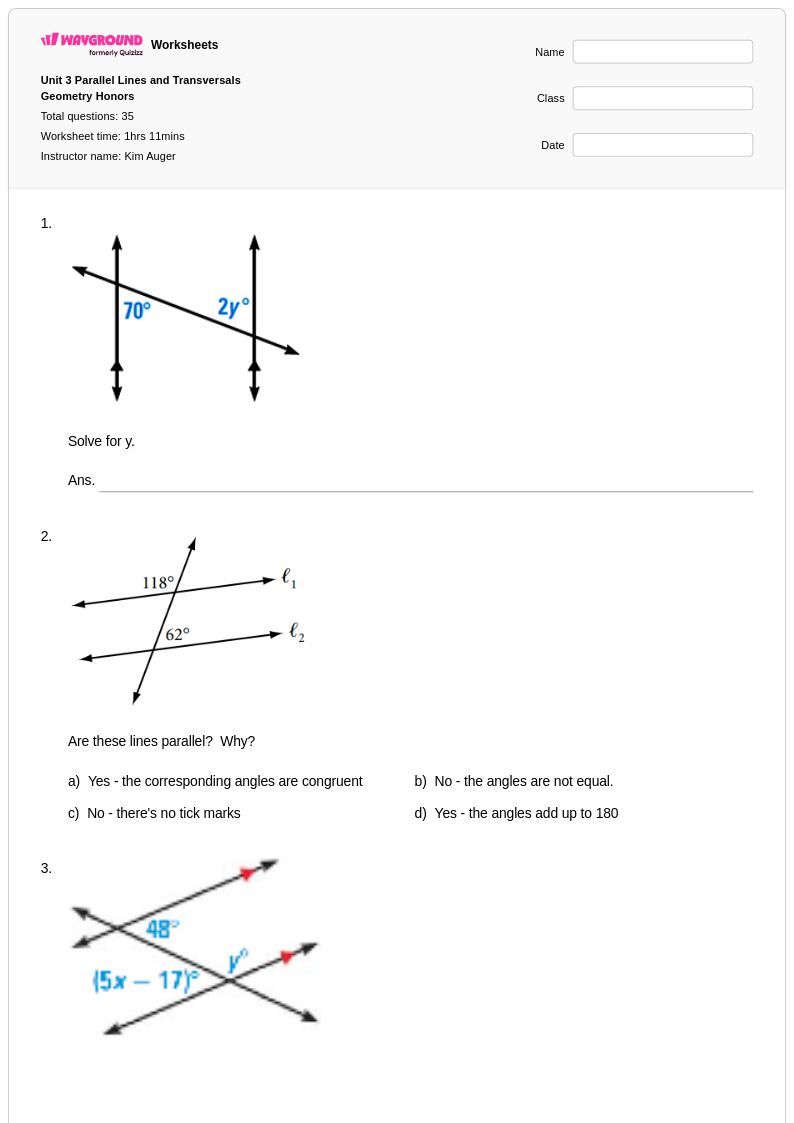
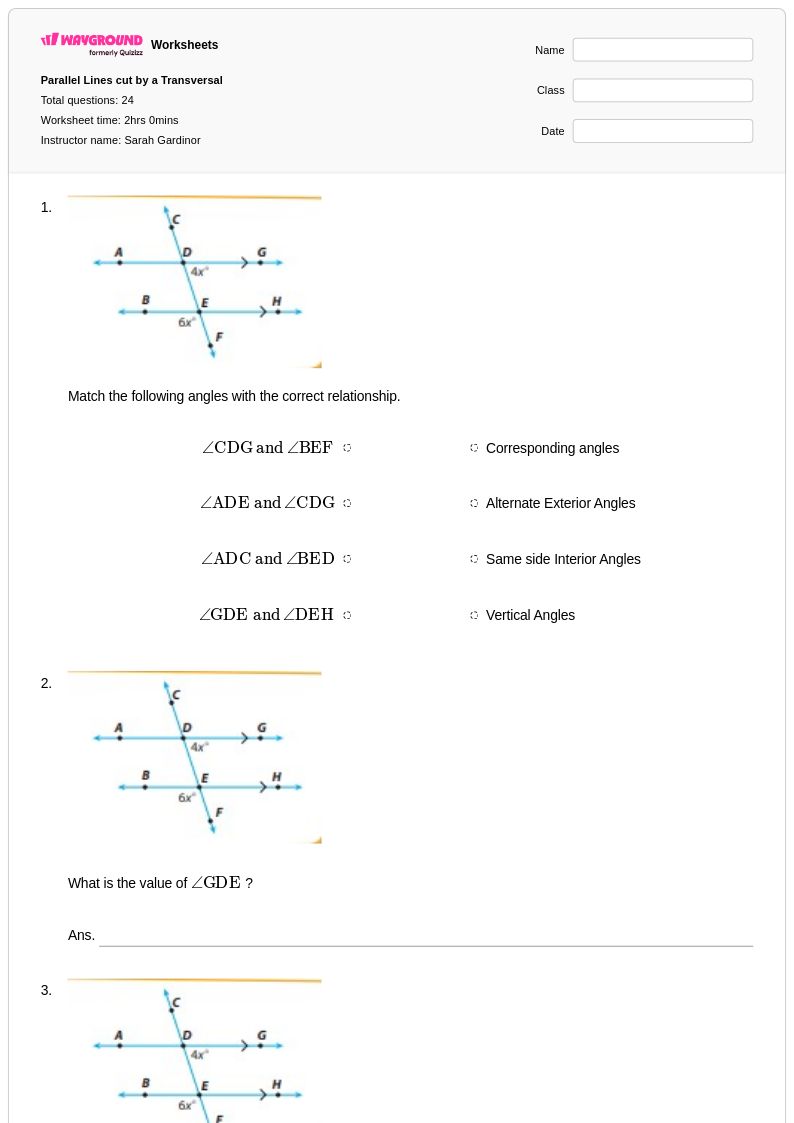
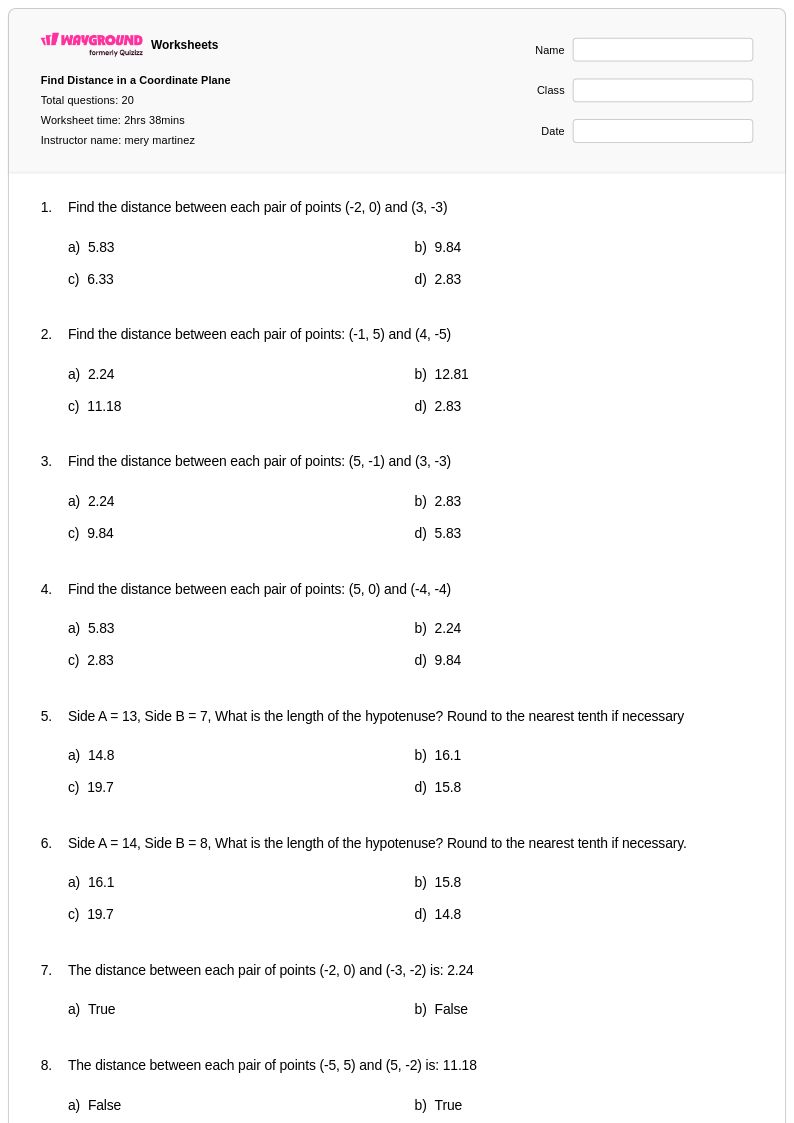
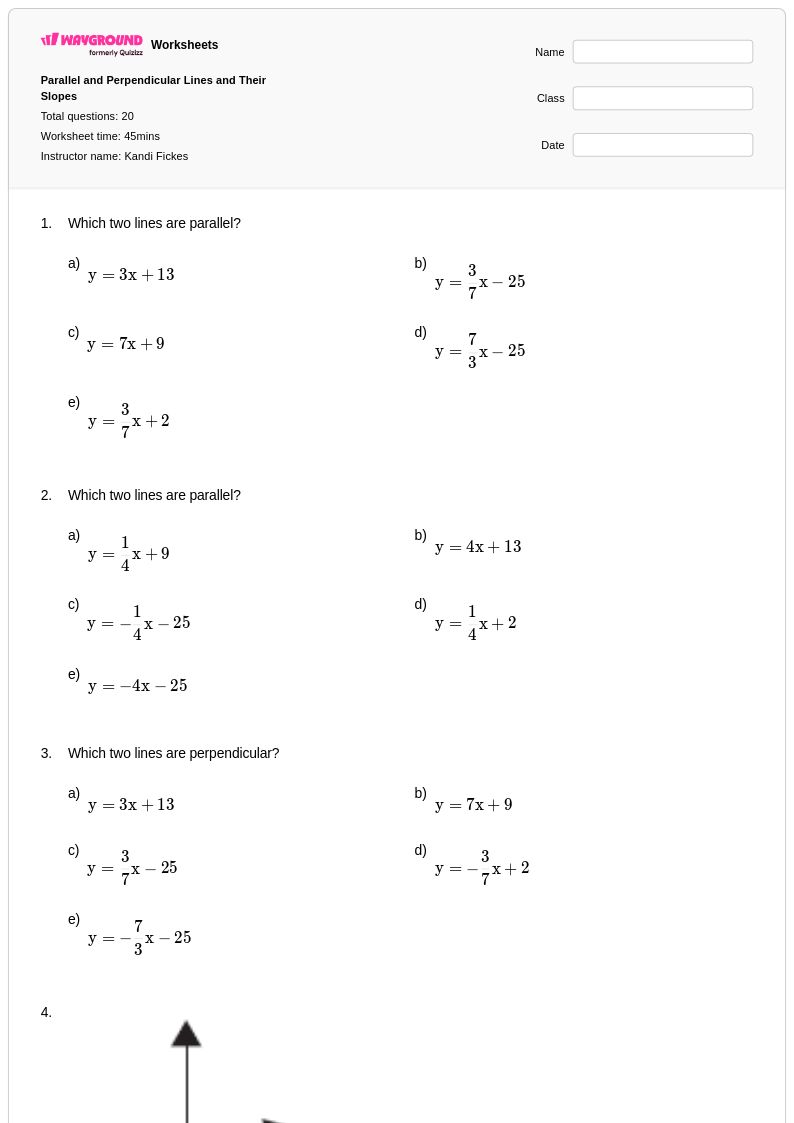
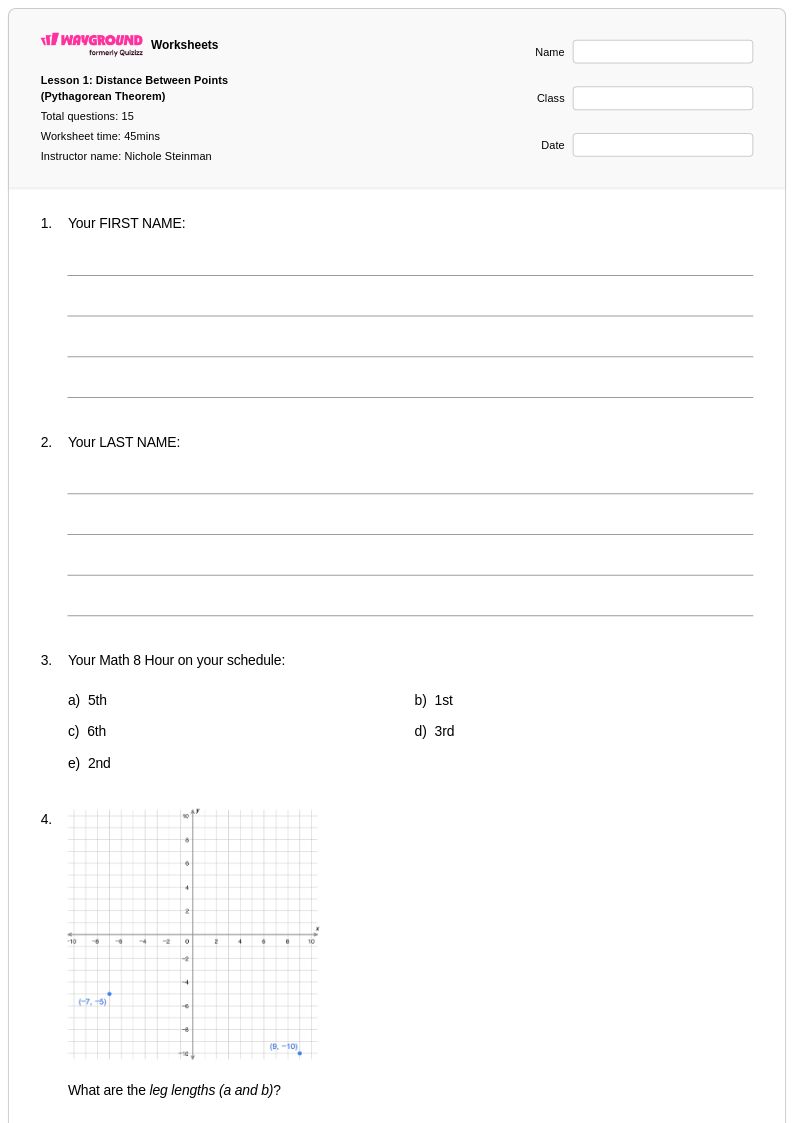
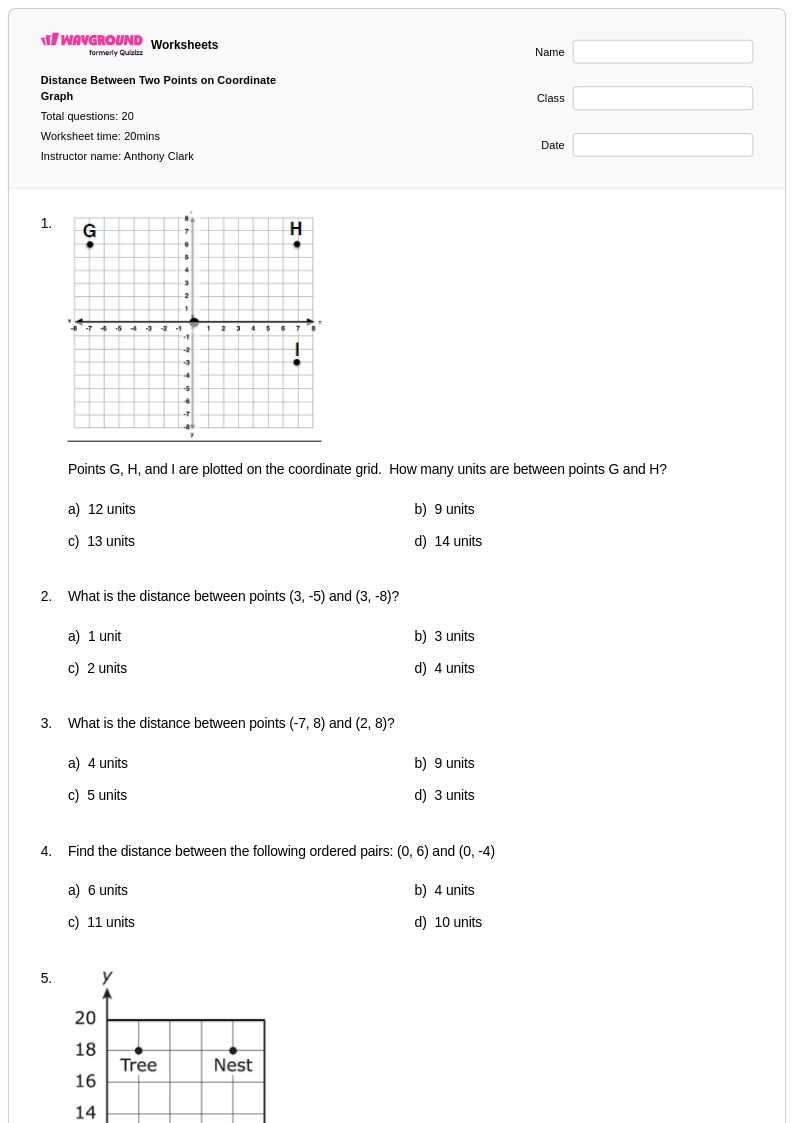
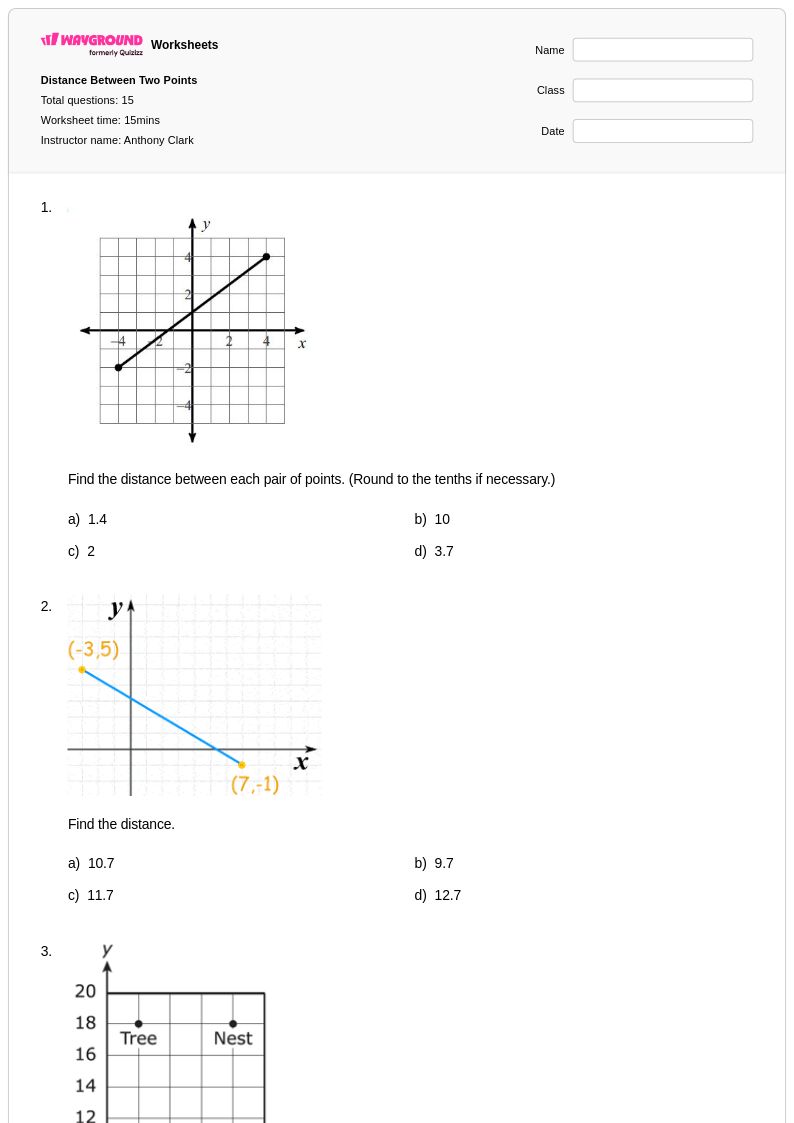
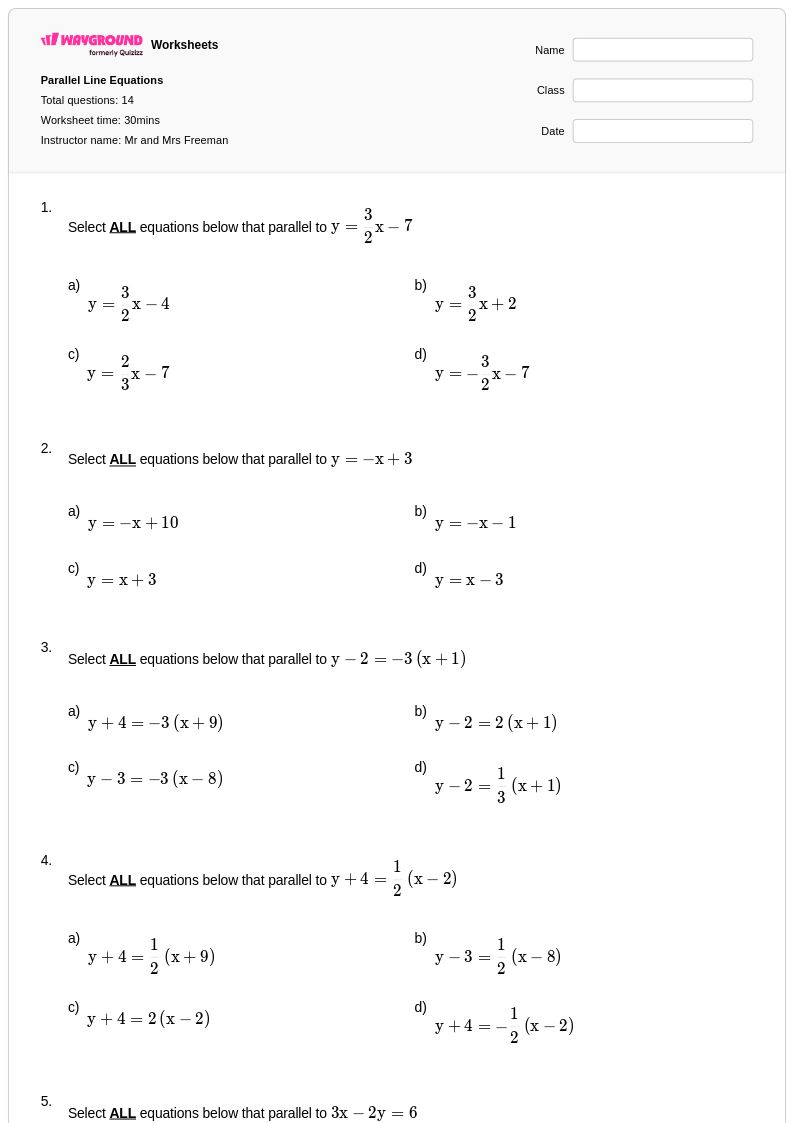
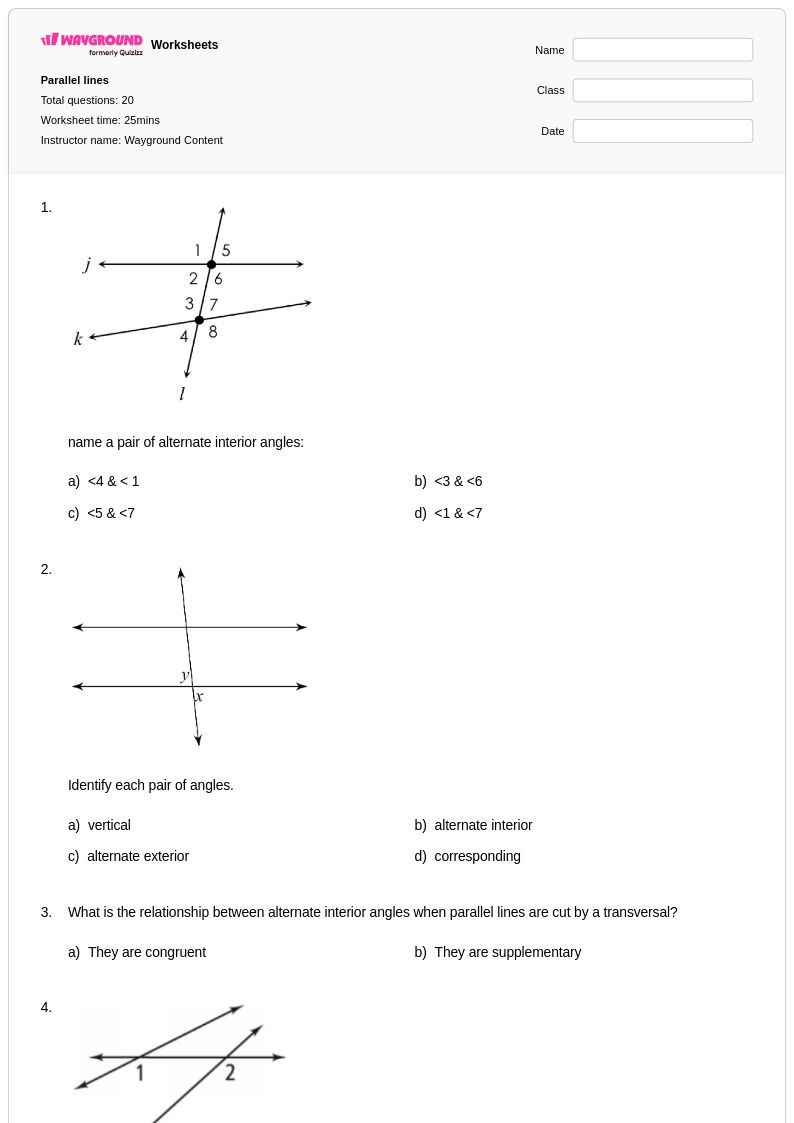
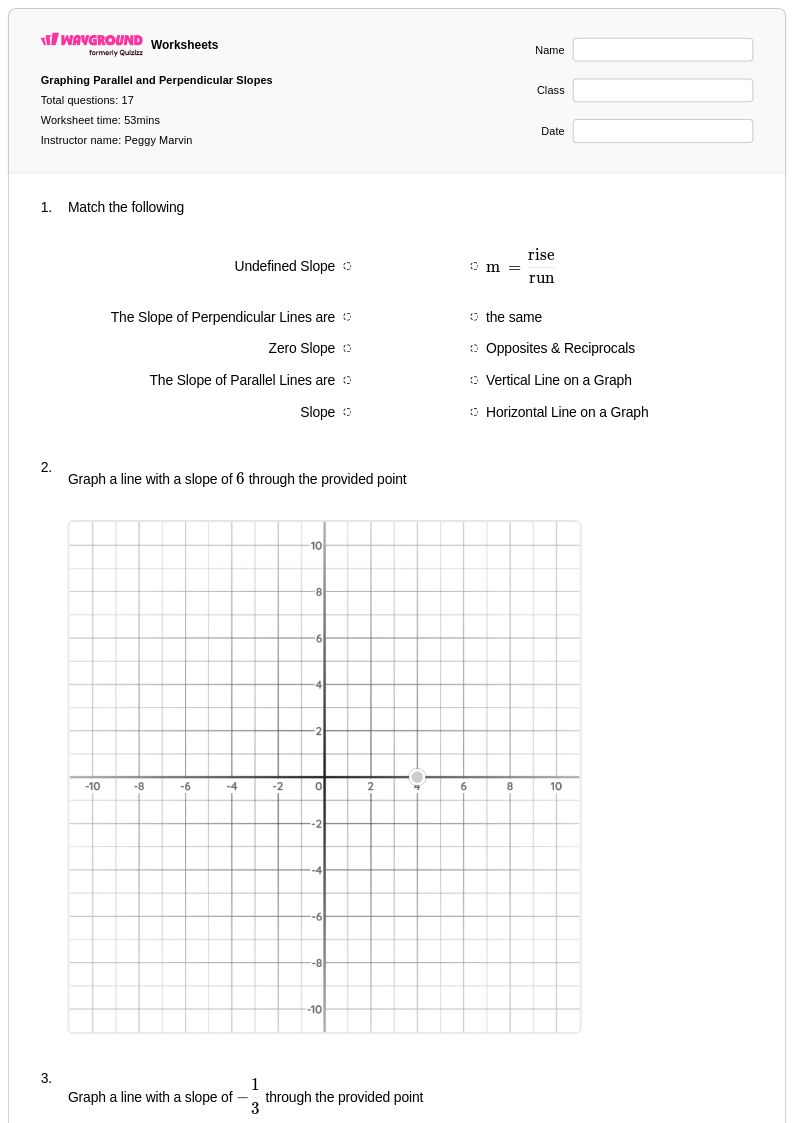
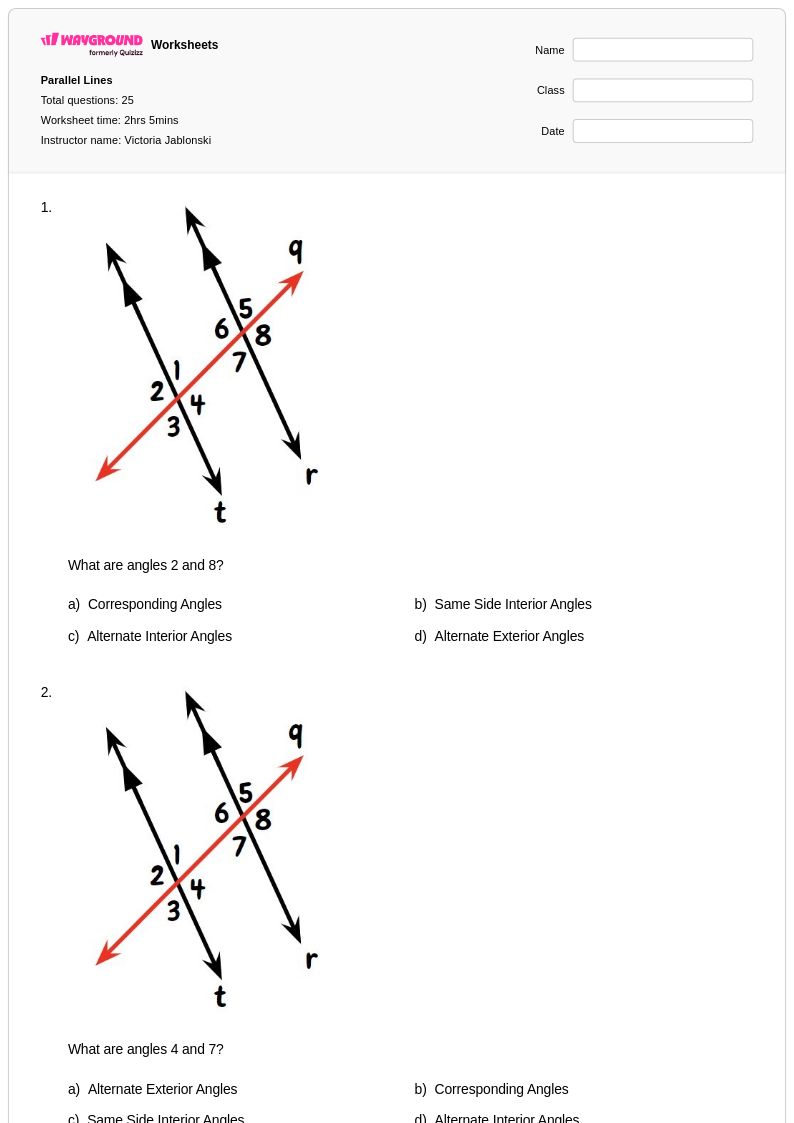
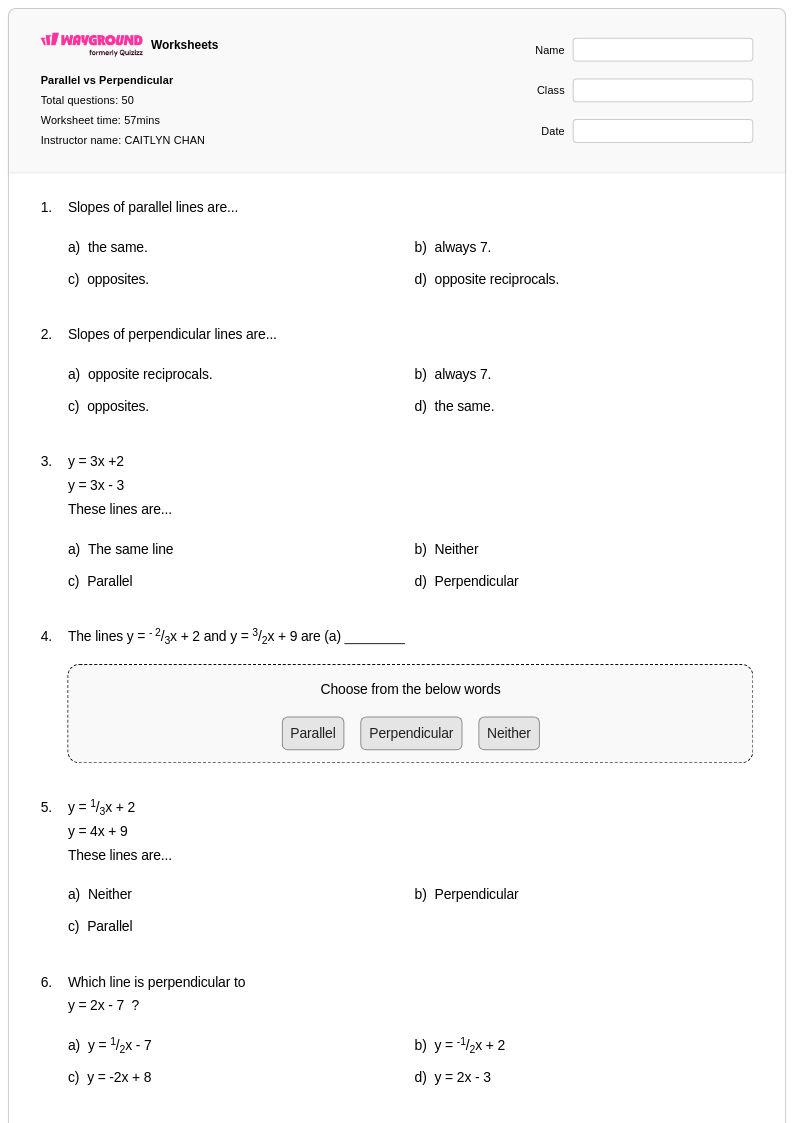
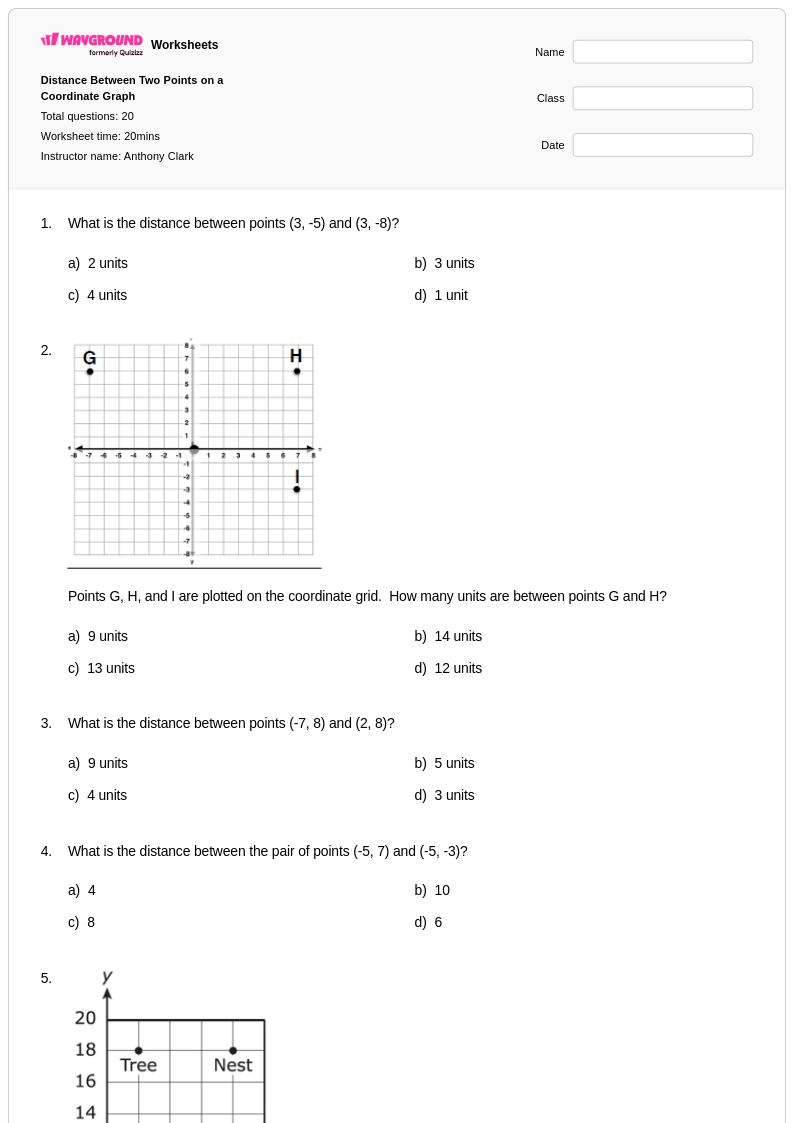
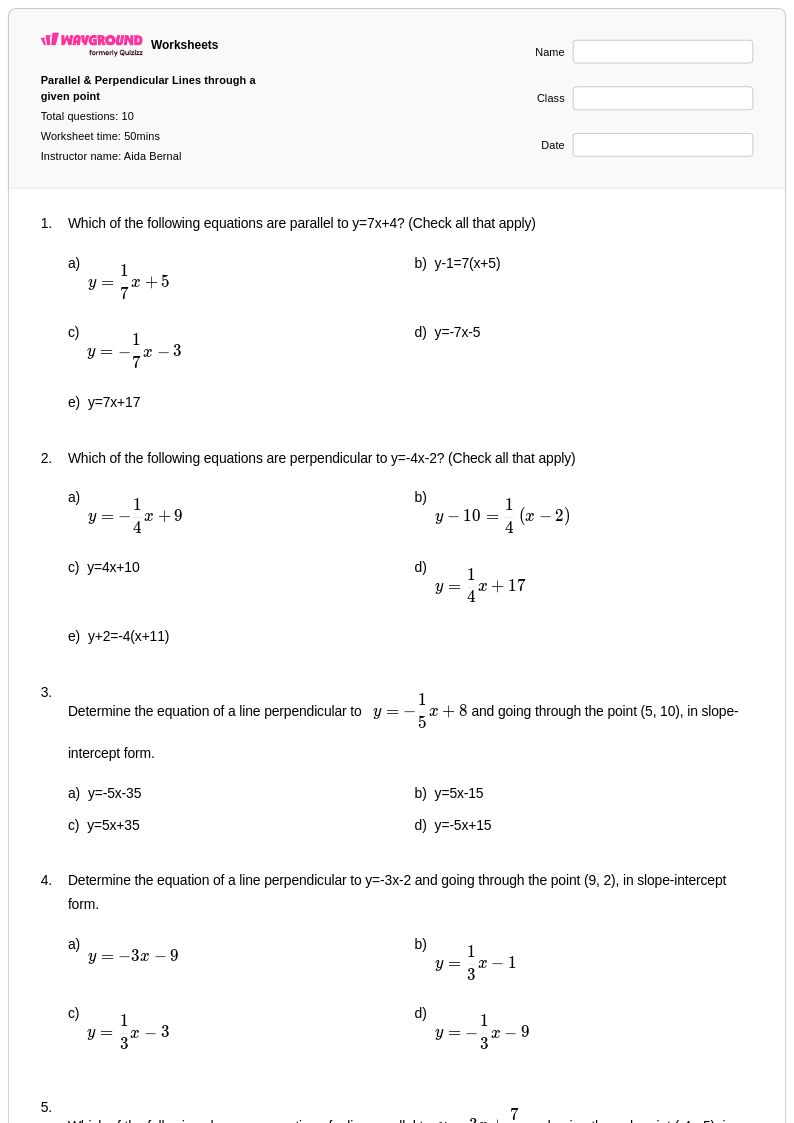
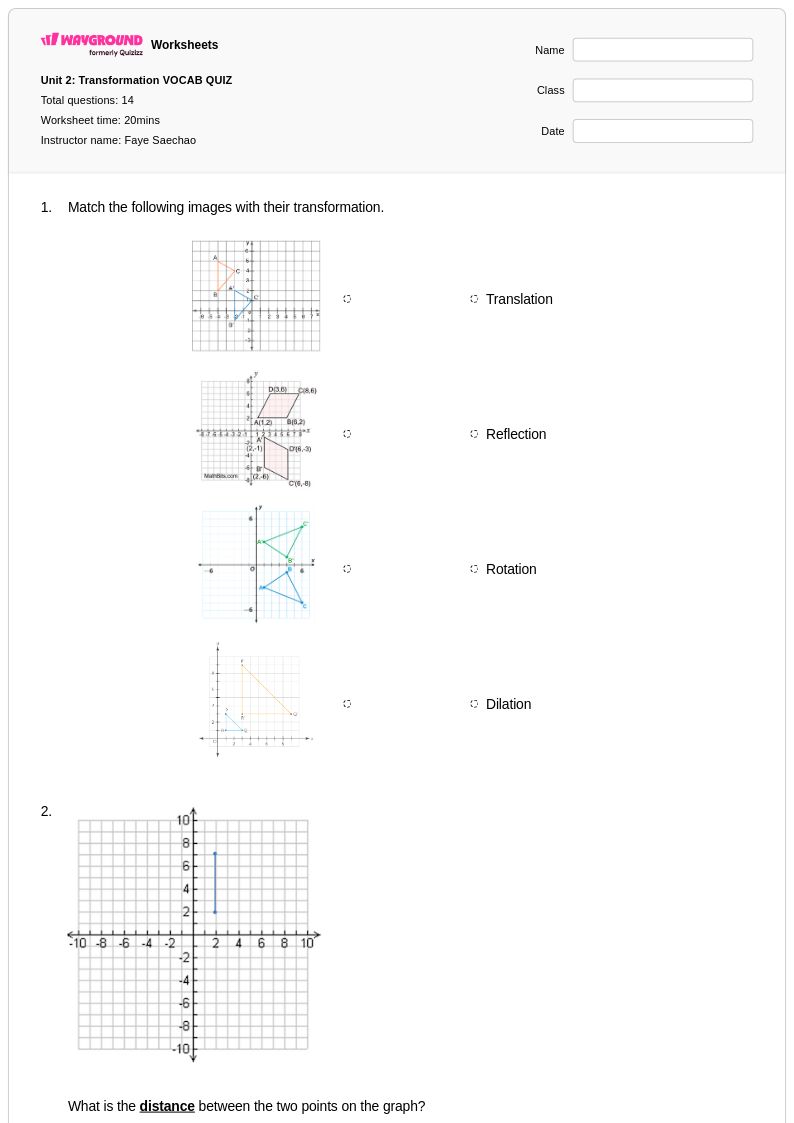
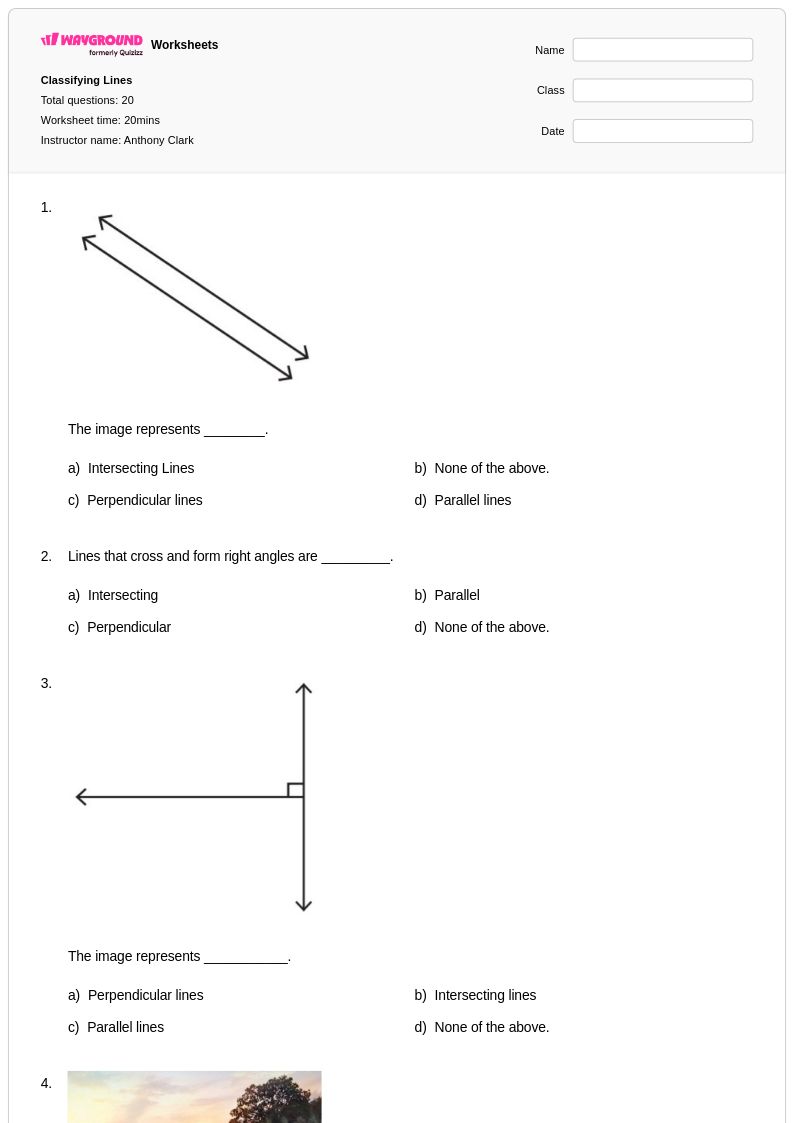
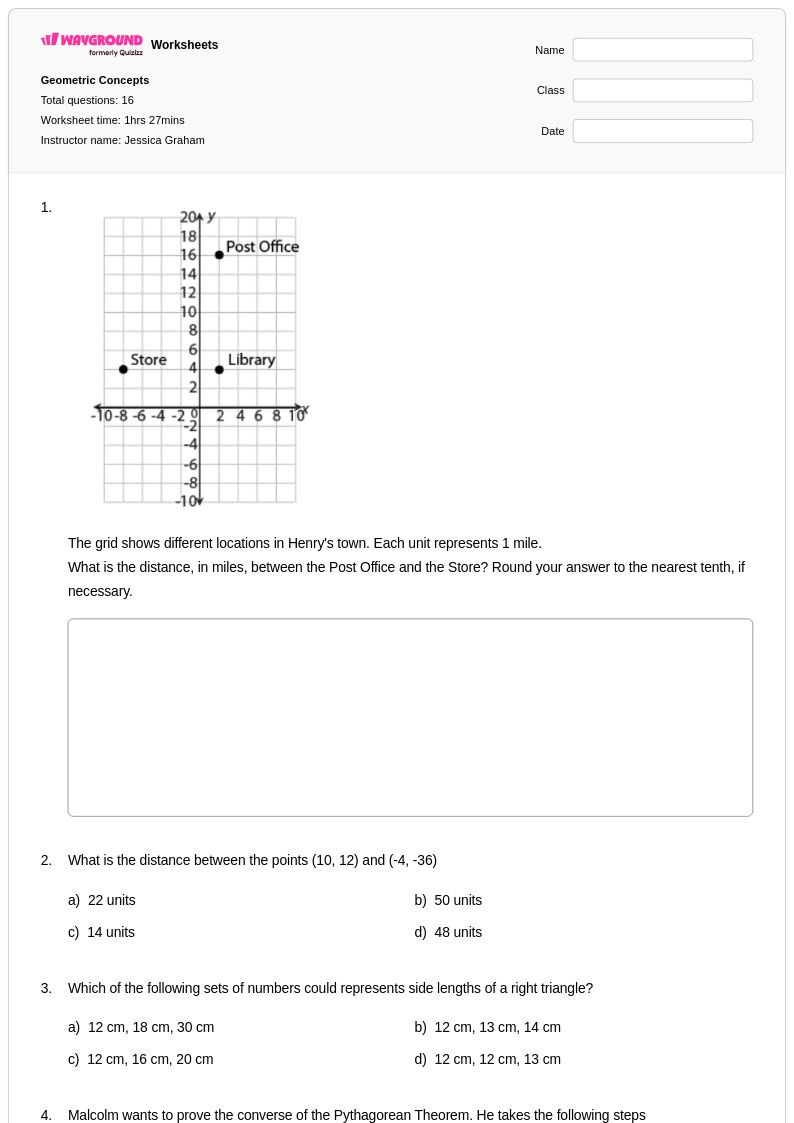
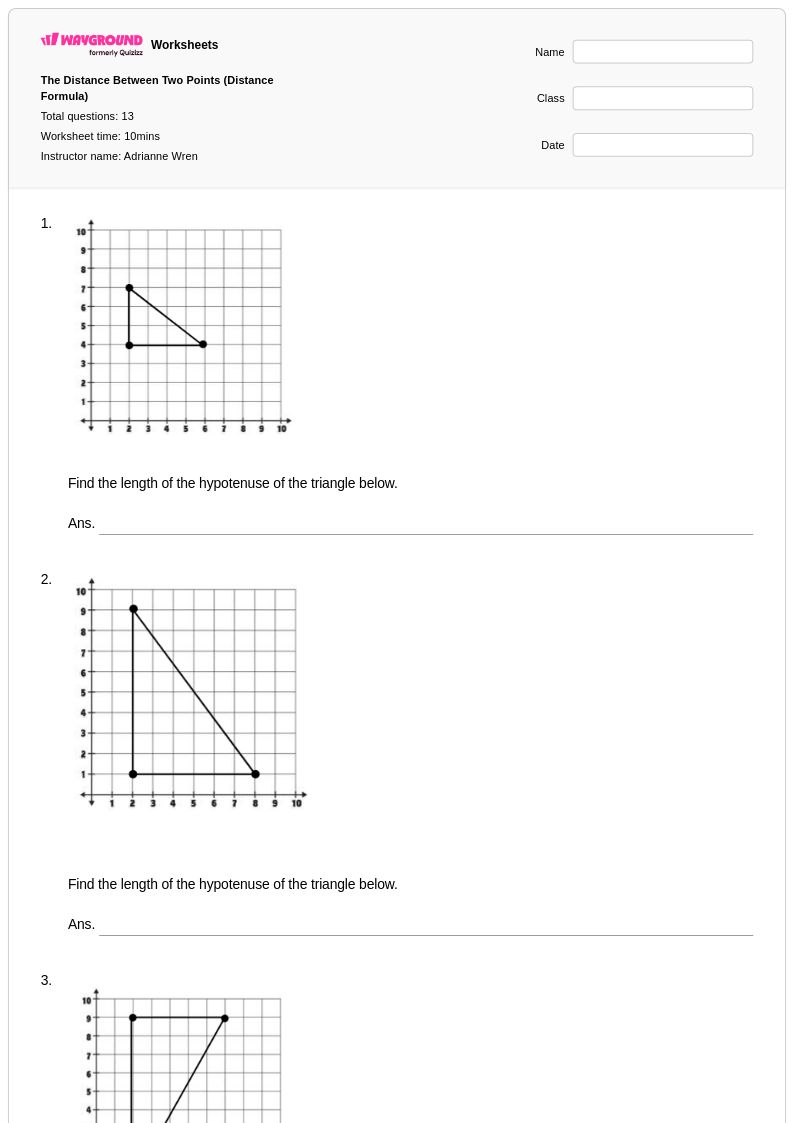
Distance between two parallel lines worksheets for Year 8 provide comprehensive practice opportunities for students to master this fundamental geometric concept through Wayground's extensive collection of educator-developed resources. These carefully crafted worksheets guide students through calculating perpendicular distances using coordinate geometry methods, applying the distance formula, and understanding the relationship between parallel lines and their constant separation. Students work through practice problems that reinforce key skills including identifying parallel lines on coordinate planes, using slope-intercept and standard forms of linear equations, and applying distance formulas systematically. Each worksheet collection includes detailed answer keys and is available as free printables in convenient PDF format, allowing students to develop confidence through structured repetition and self-assessment of their mathematical reasoning.
Wayground's robust platform empowers teachers with access to millions of teacher-created distance between two parallel lines worksheets, all organized through powerful search and filtering capabilities that align with state mathematics standards for Year 8 geometry instruction. The platform's differentiation tools enable educators to customize worksheet difficulty levels and problem types to meet diverse student needs, whether for remediation support or enrichment challenges. Teachers can seamlessly integrate these resources into lesson planning by selecting from both printable PDF versions for traditional classroom use and digital formats for technology-enhanced learning environments. This flexibility supports targeted skill practice sessions, formative assessment opportunities, and individualized instruction approaches that help students build strong foundational understanding of parallel line relationships and distance calculations in coordinate geometry.
FAQs
How do I introduce the distance between two parallel lines to 8th graders?
At Grade 8, students are still building fluency with the coordinate plane, so anchor the concept visually before introducing any formula. Draw two parallel horizontal lines and ask students to measure the vertical gap — then tilt the lines and ask why that same measurement no longer works. That moment of confusion is the entry point for explaining perpendicular distance. From there, connect to the slope and distance formula work they already know, so the new formula feels like an extension rather than something brand new.
What practice exercises are appropriate for 8th graders learning this topic?
Start with lines in slope-intercept form so students can focus on the distance calculation without also managing equation conversion. Once that's solid, introduce problems where they first need to rewrite equations in standard form. Problems set on a coordinate grid — where students can visually confirm their answer makes sense — are especially useful at this grade level. These worksheets are structured to build in that order, moving from guided setups to independent multi-step problems.
What errors do 8th graders typically make with parallel line distance problems?
The most common issue is confusing perpendicular distance with the straight-line distance between two points on the lines. Students at this level have the point-to-point distance formula fresh in memory and often reach for it by default. A second stumbling block is identifying whether two lines are actually parallel — 8th graders sometimes skip that check and apply the formula to non-parallel lines. Building the habit of comparing slopes first prevents most of these errors.
How do I use these Grade 8 worksheets in my class?
These worksheets come with full answer keys, making them practical for self-paced practice or homework. You can assign them digitally as a hosted quiz on Wayground, or print the PDFs for in-class work and use the Wayground for Teachers app to scan and grade paper submissions. The digital format also lets you set individual accommodations — like extended time — for students who need it, without disrupting the rest of the class.
Is the distance between two parallel lines part of the 8th grade Common Core curriculum?
It sits at the edge of the Grade 8 Common Core scope. The standard Grade 8 geometry strand focuses on transformations, congruence, and the Pythagorean theorem, but the coordinate geometry skills required here — slope, linear equations, and the distance formula — are solidly Grade 8 content. Many teachers introduce parallel line distance as an extension or enrichment topic that bridges Grade 8 coordinate geometry to the formal analytic geometry students encounter in high school.
How can I support struggling 8th graders with this concept?
For students who need more support, Wayground's Read Aloud feature can help those with reading difficulties process multi-step problem prompts independently. You can also generate a version of the worksheet with wider font spacing and larger text, which reduces visual clutter on problems that involve equations and coordinate pairs. Pairing those adjustments with reduced answer choices on digital assignments gives struggling students a more manageable entry point without changing the underlying math.