
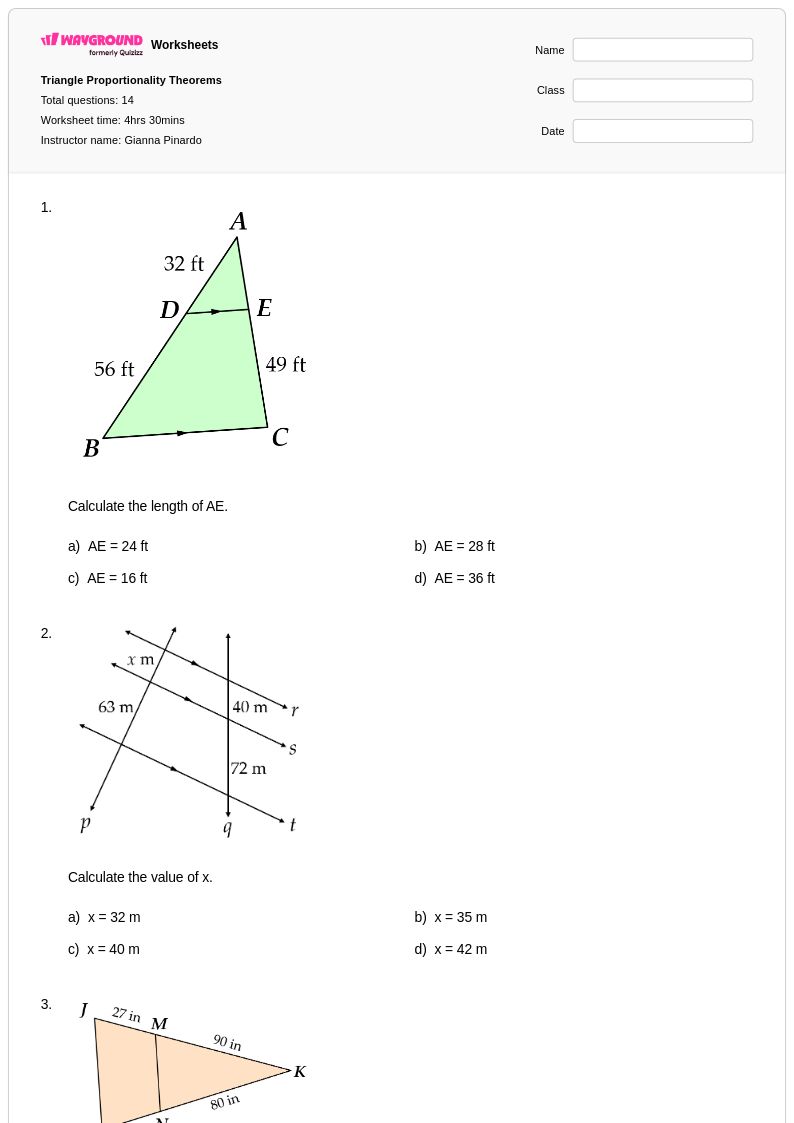
14 Q
7th - 12th
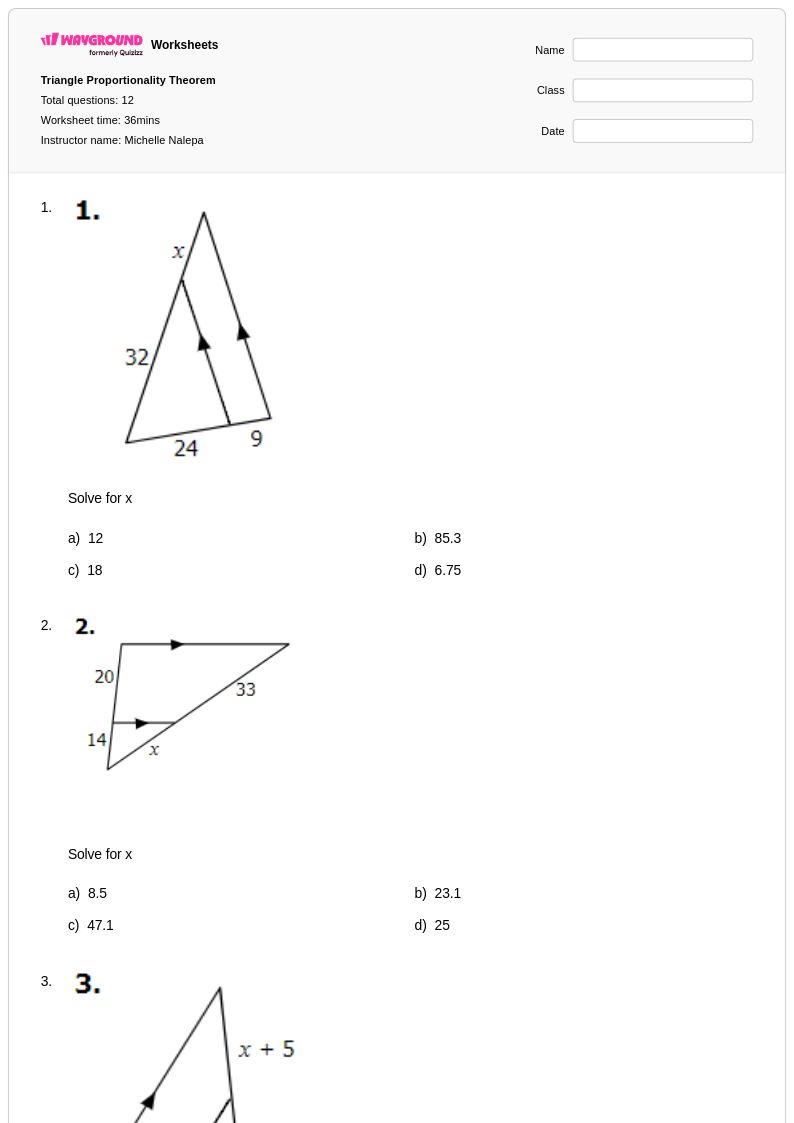
12 Q
8th - 12th
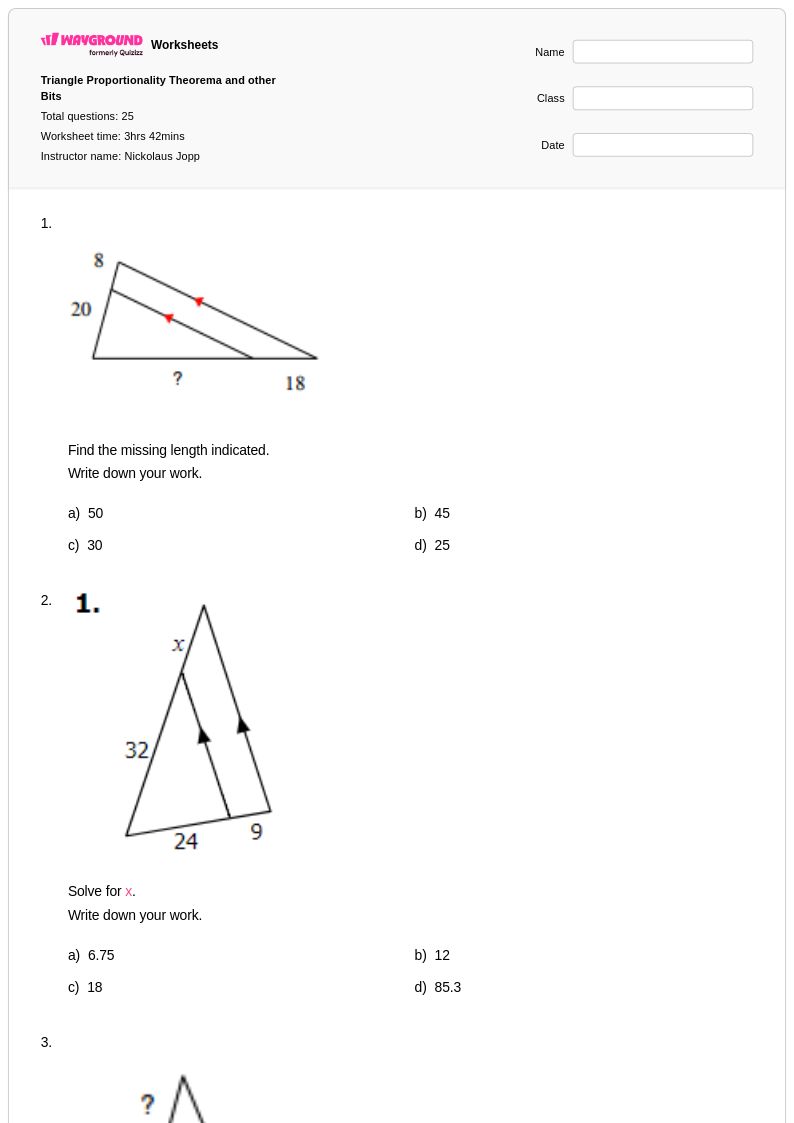
25 Q
8th - 10th
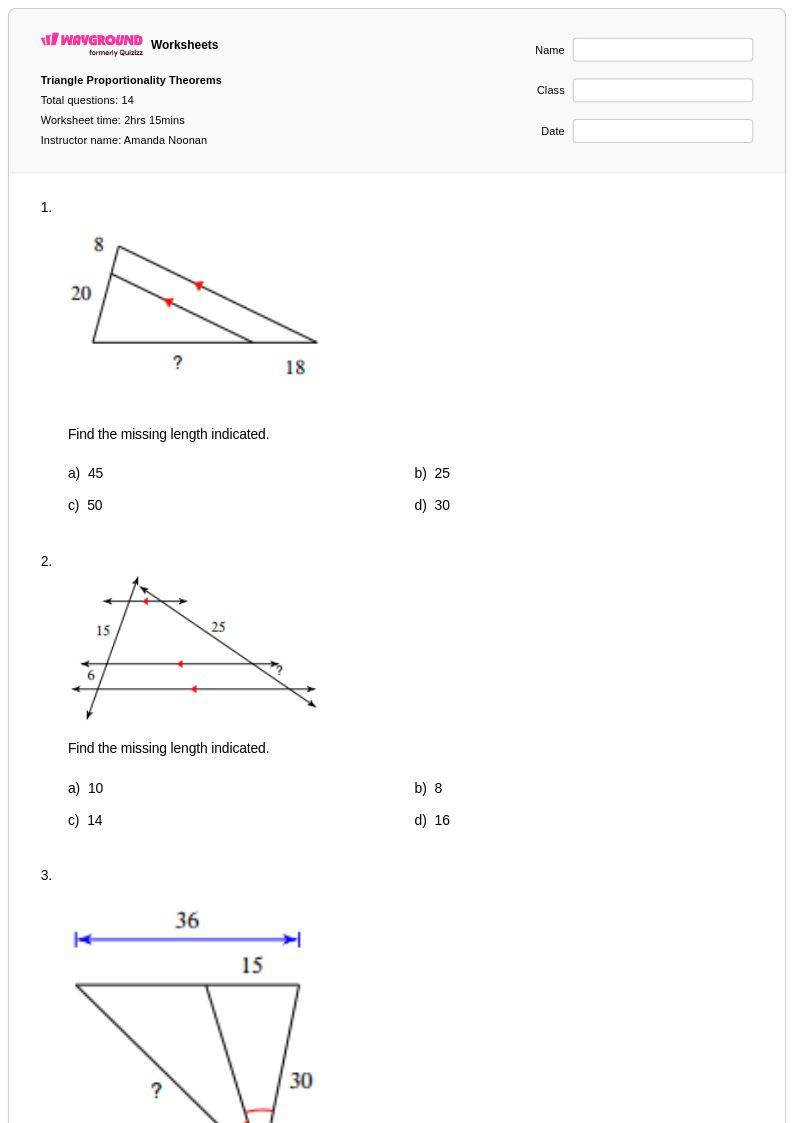
14 Q
8th - 10th
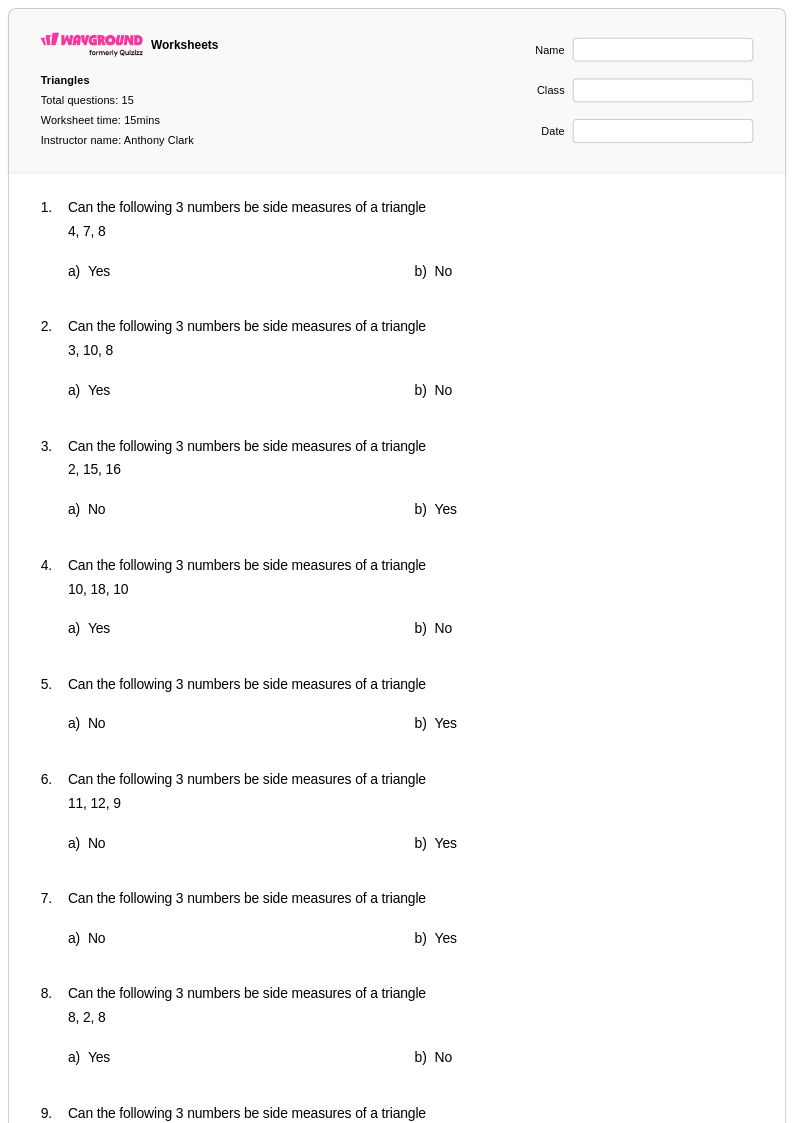
15 Q
5th - Uni
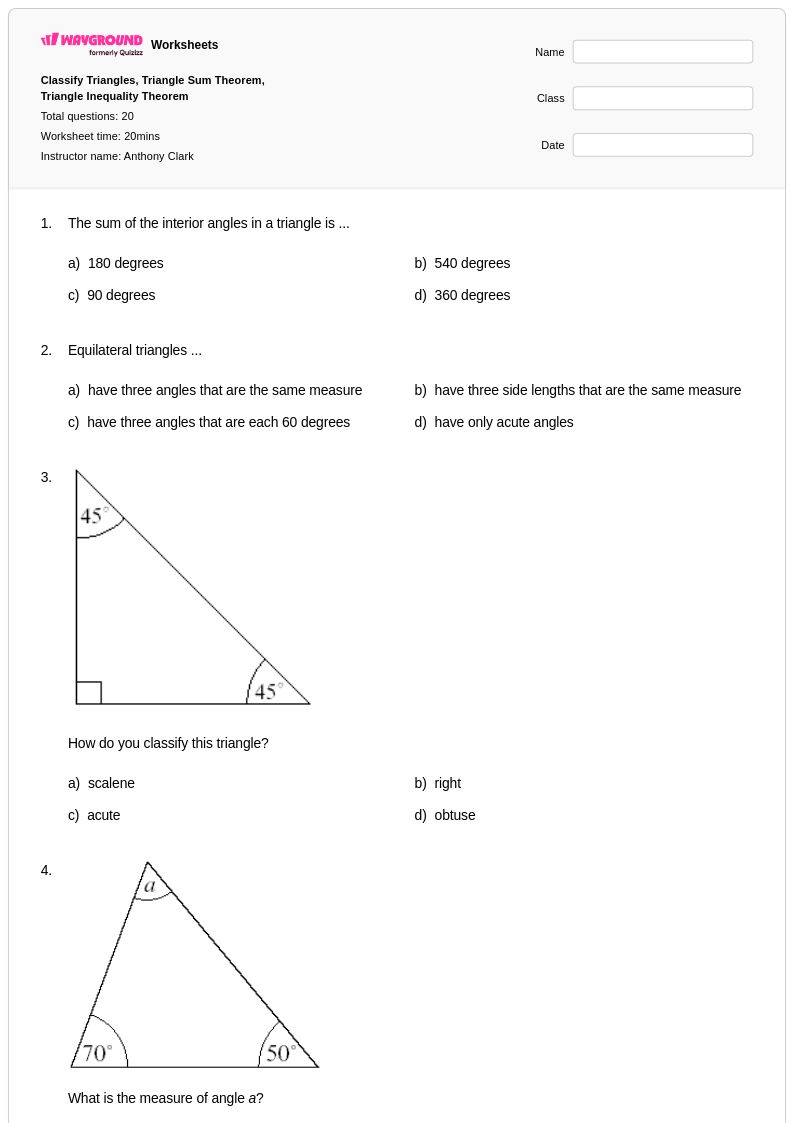
20 Q
7th - Uni
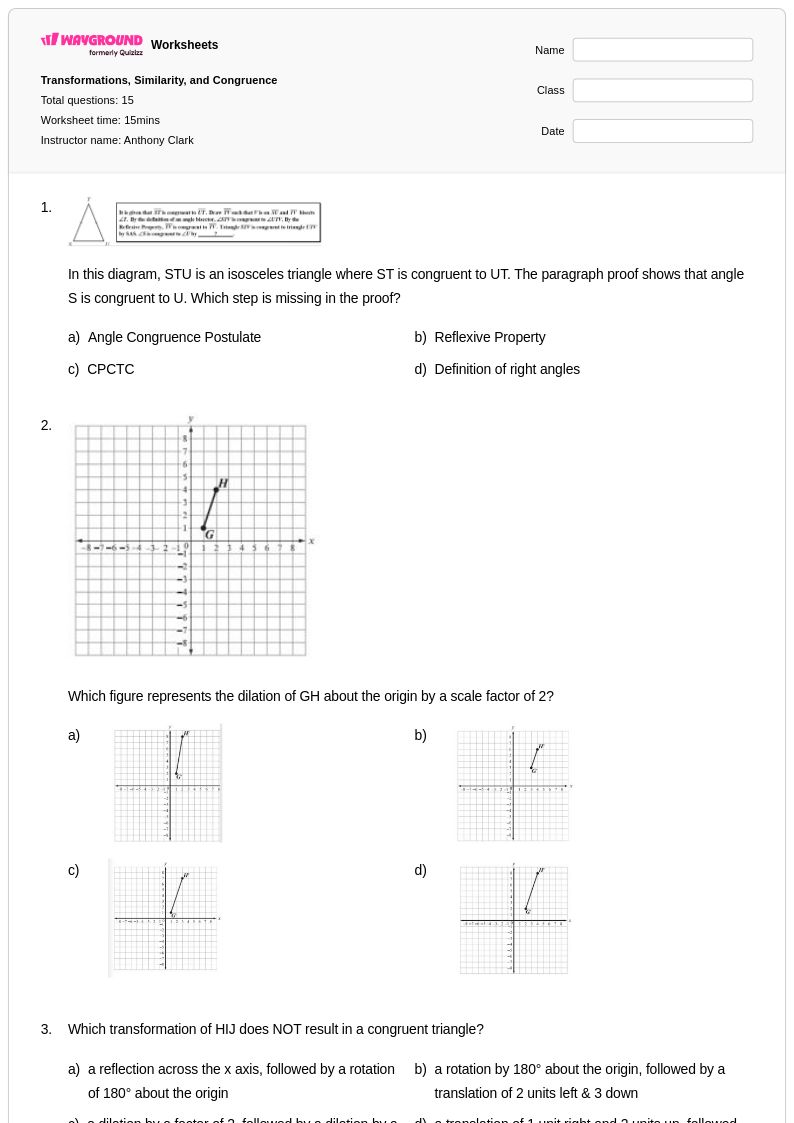
15 Q
8th - Uni
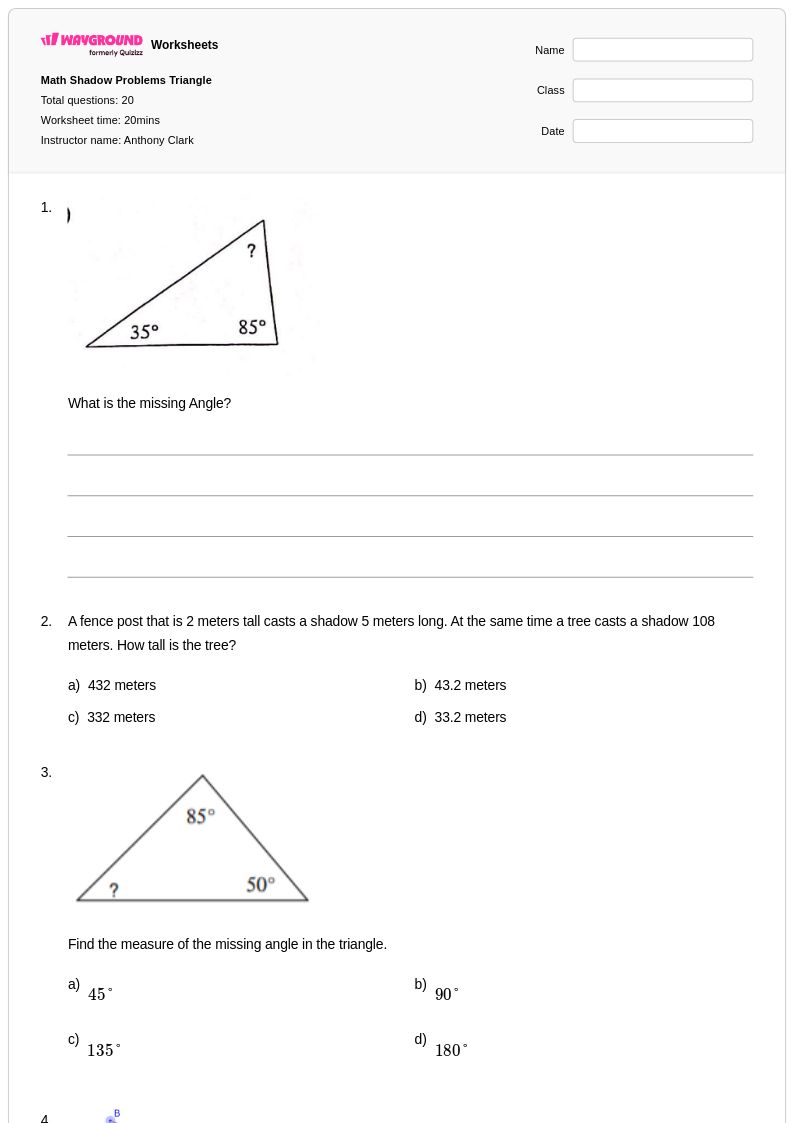
20 Q
7th - Uni
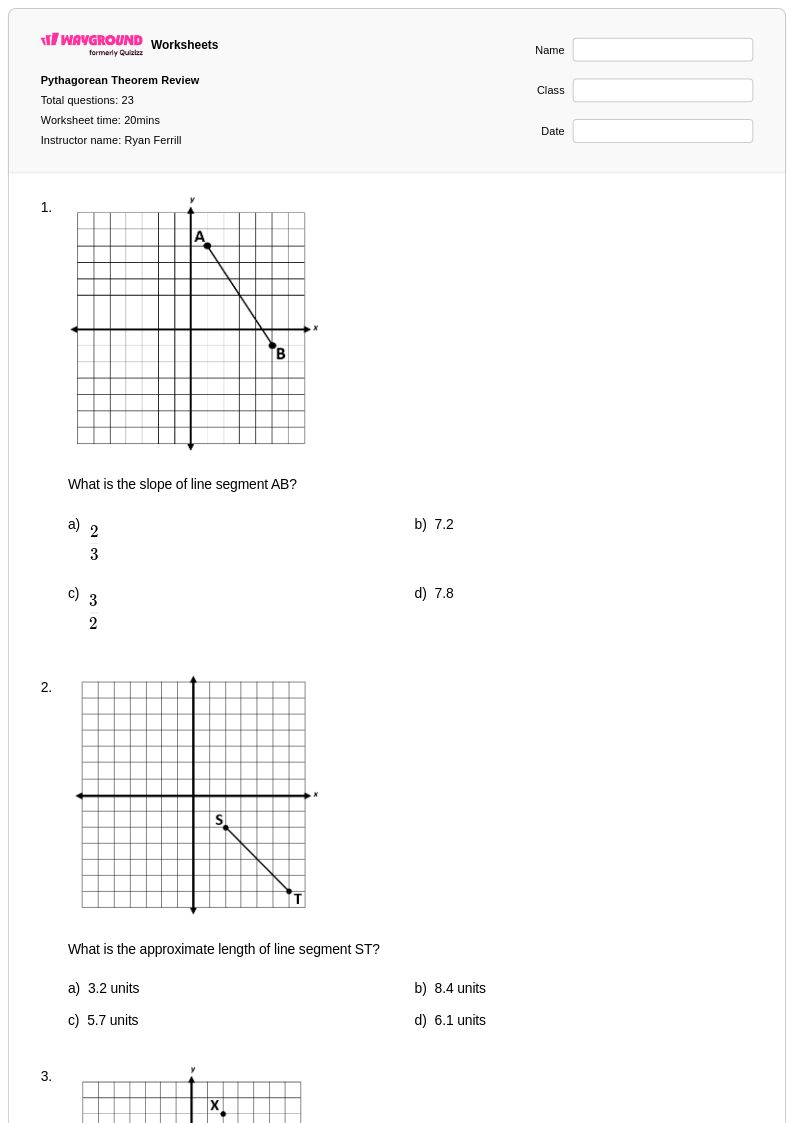
23 Q
8th
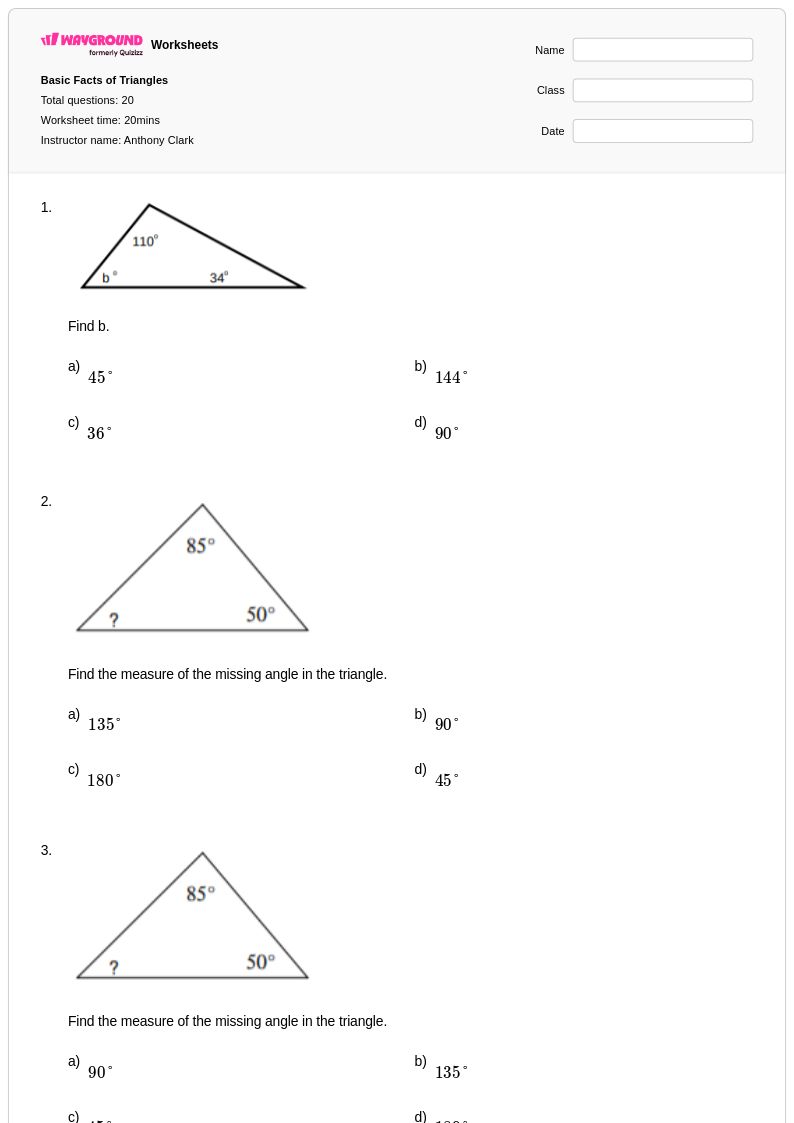
20 Q
3rd - Uni
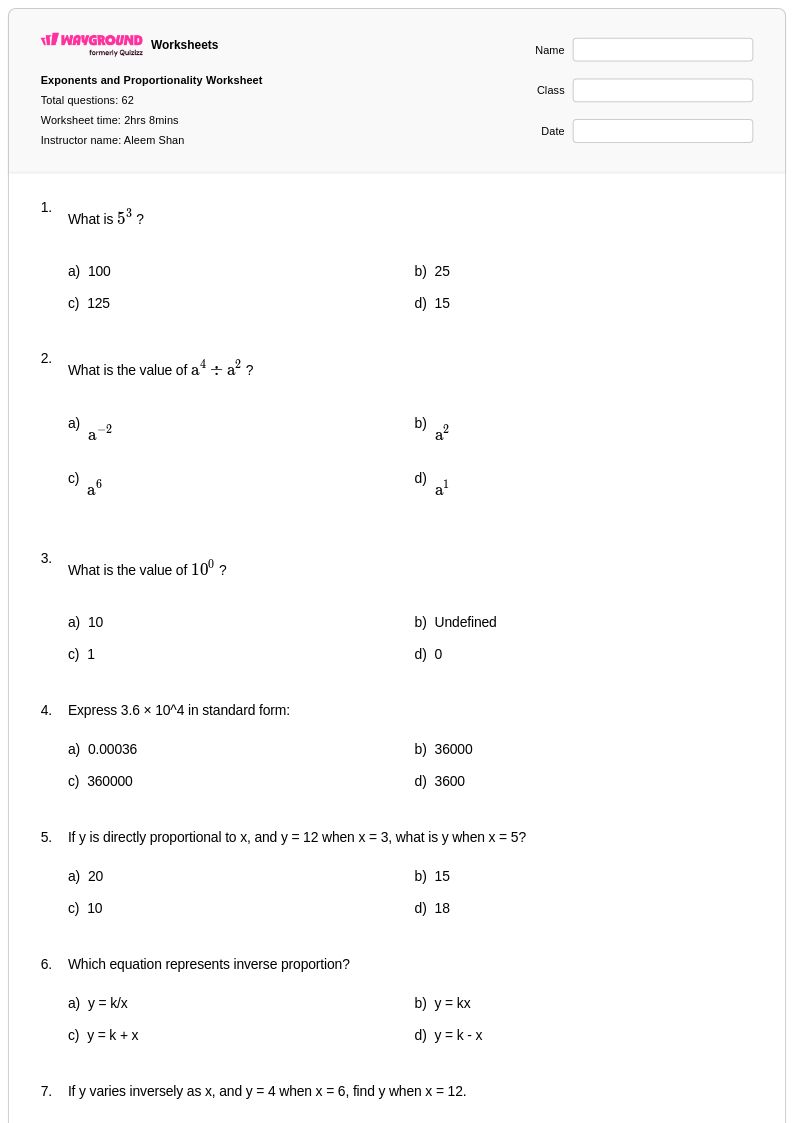
62 Q
8th
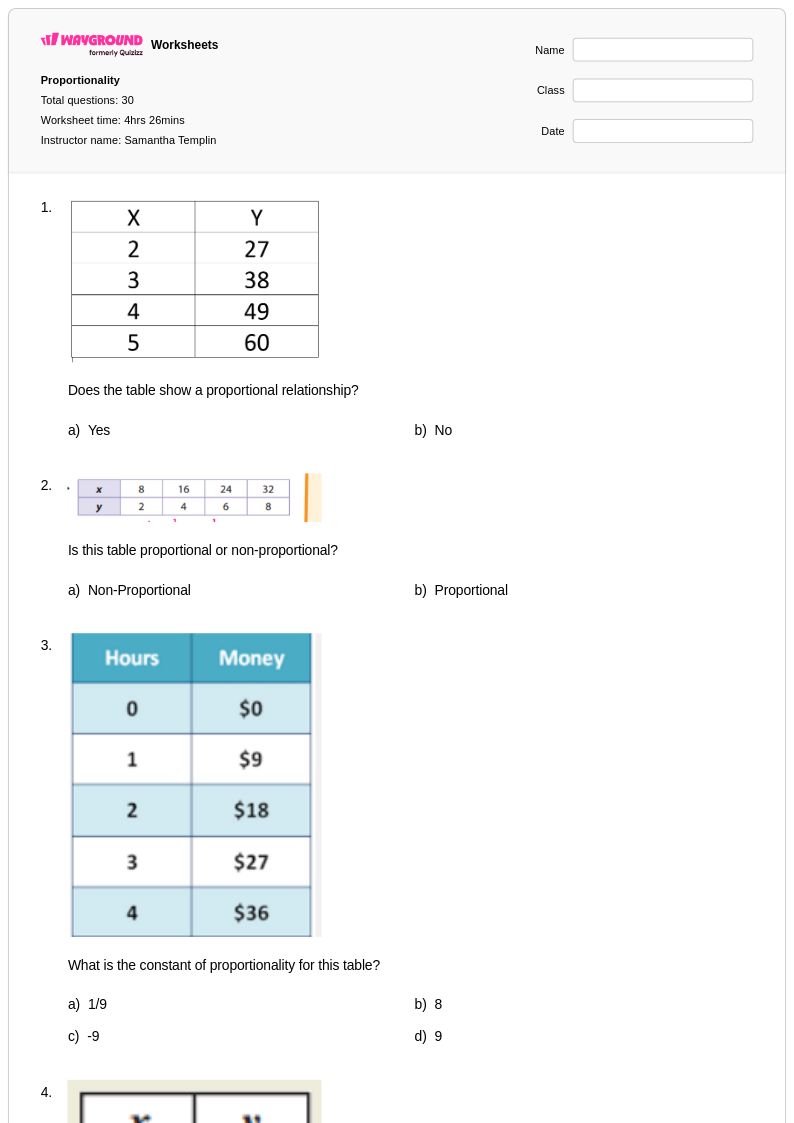
30 Q
8th
15 Q
8th - Uni
10 Q
8th
20 Q
8th
20 Q
8th
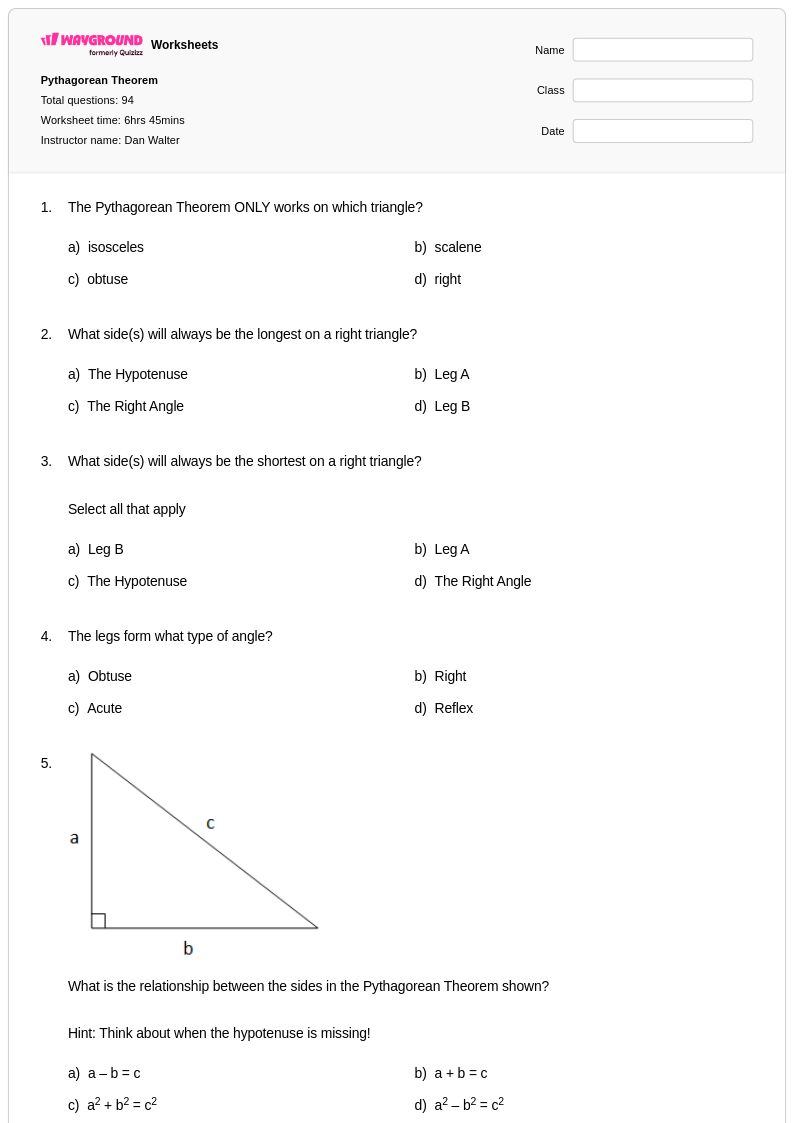
94 Q
8th
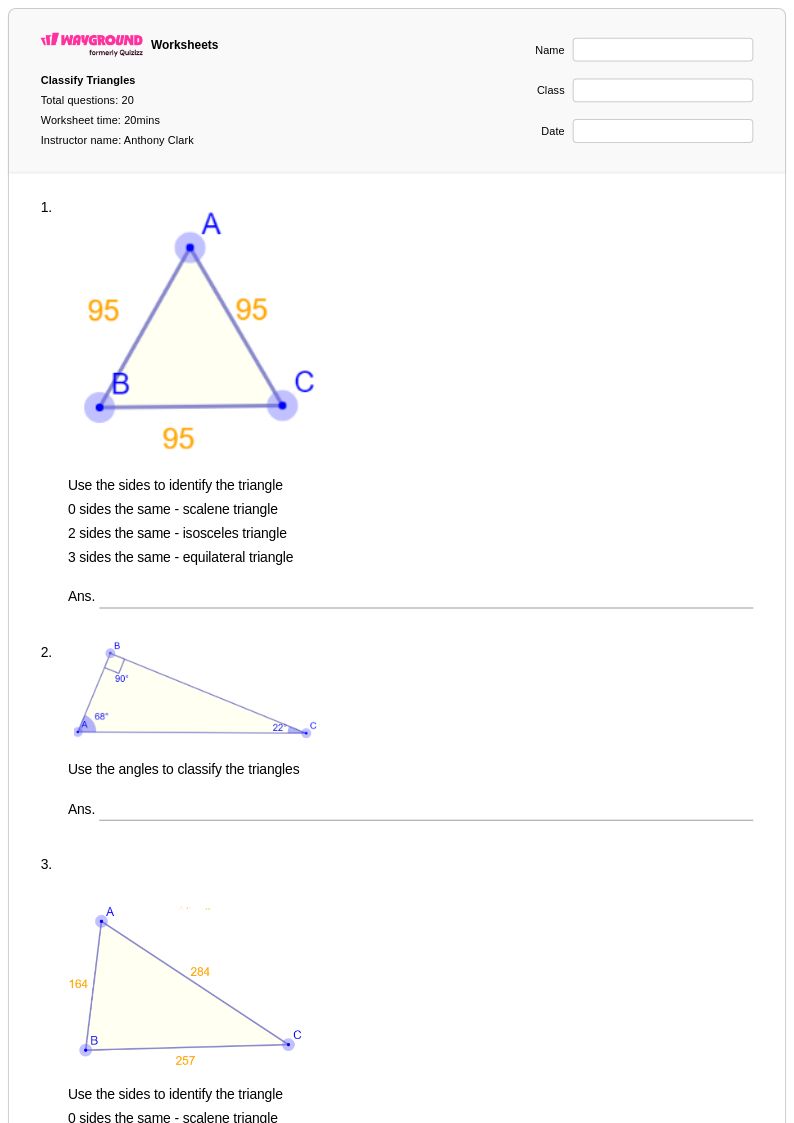
20 Q
5th - Uni
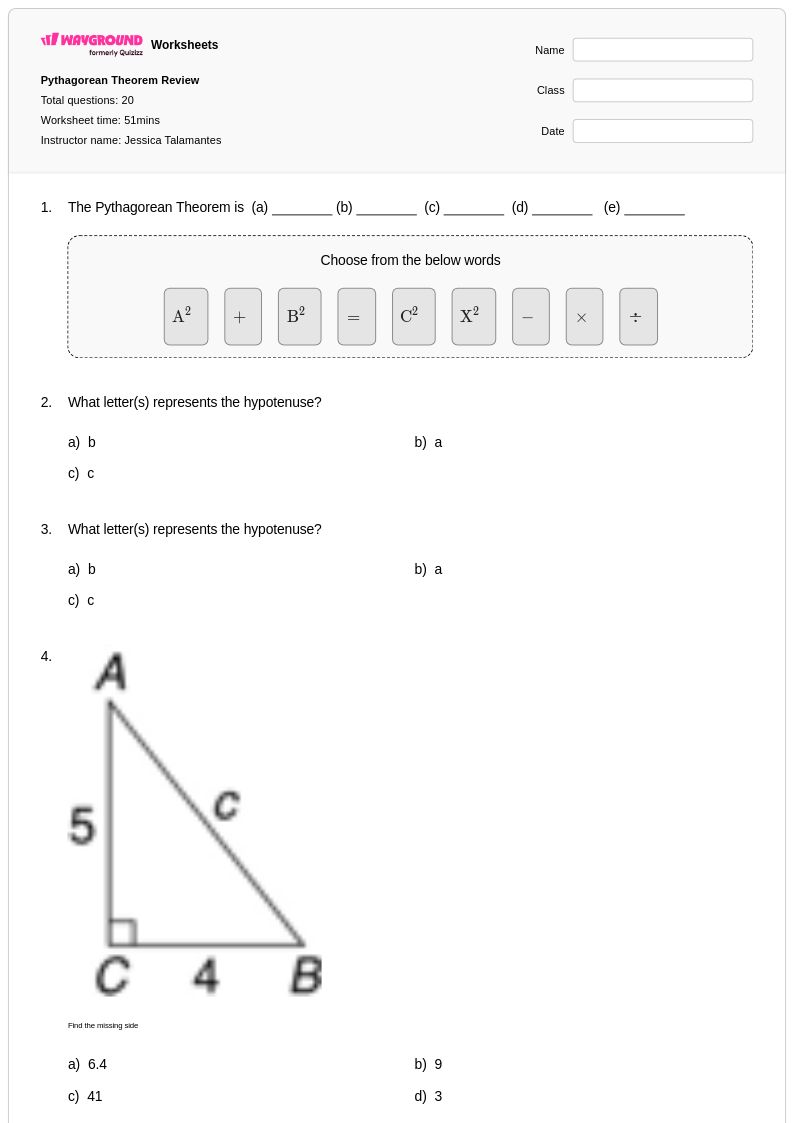
20 Q
8th
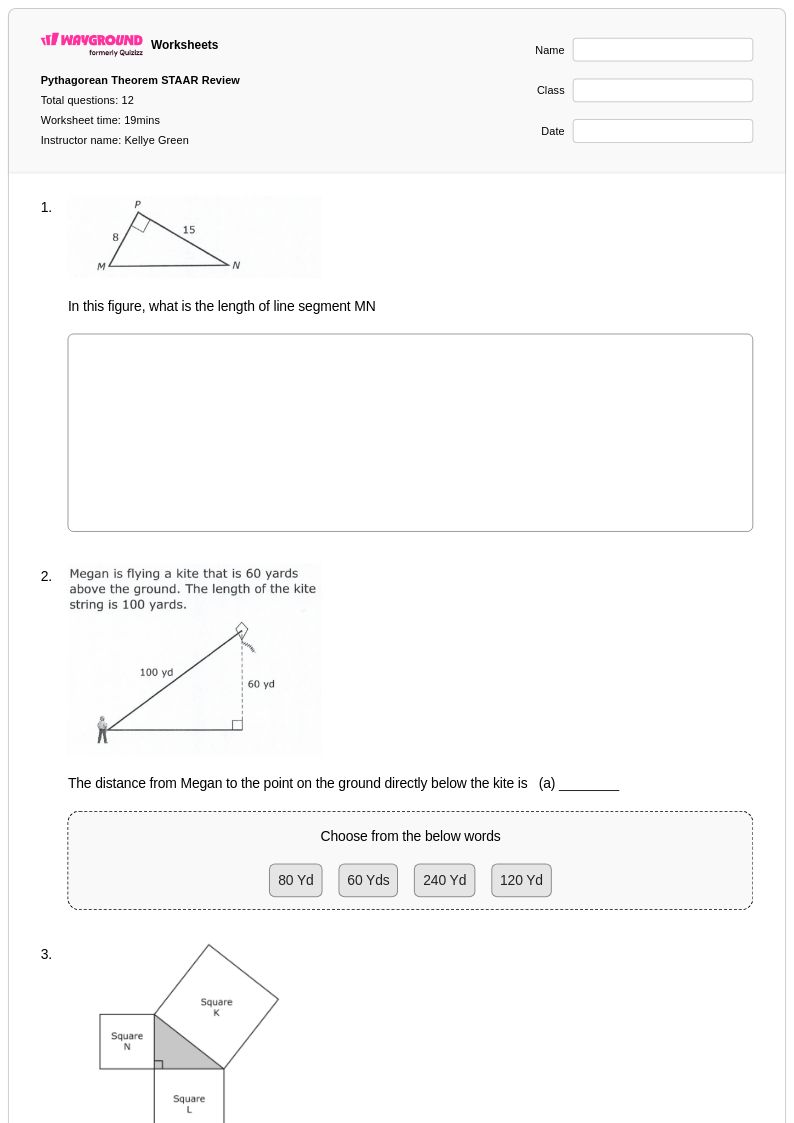
12 Q
8th
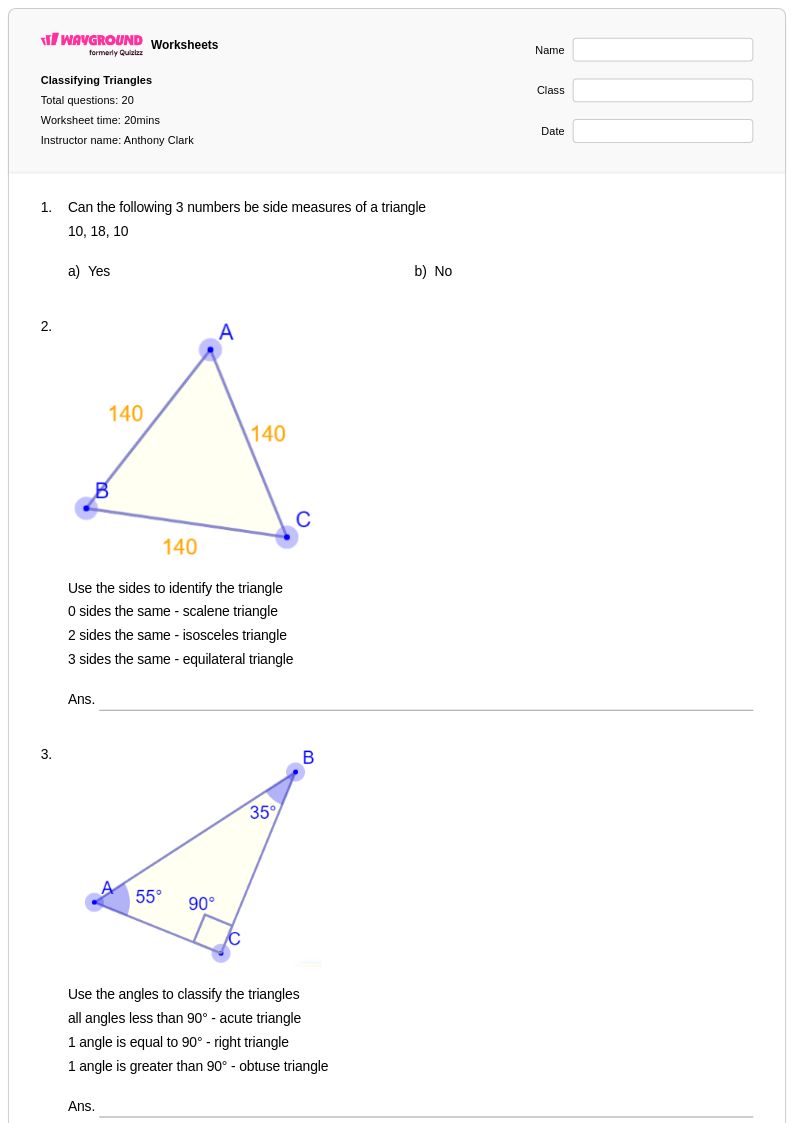
20 Q
7th - Uni
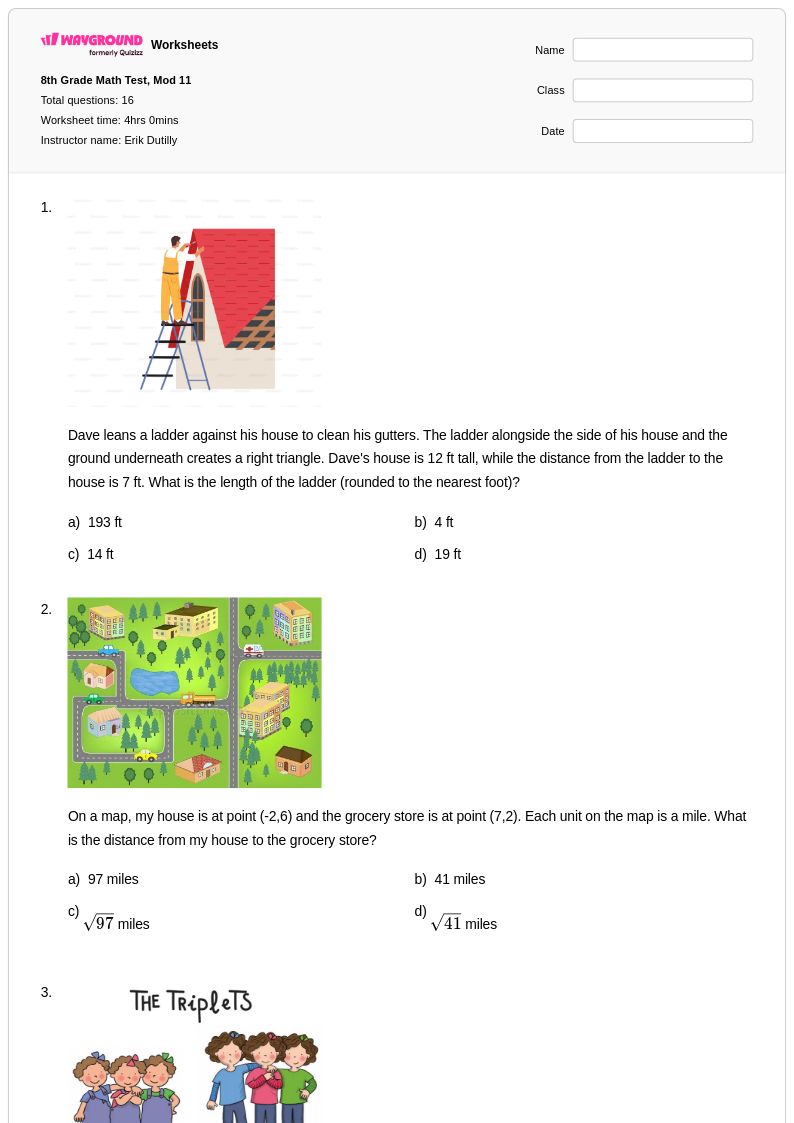
16 Q
8th
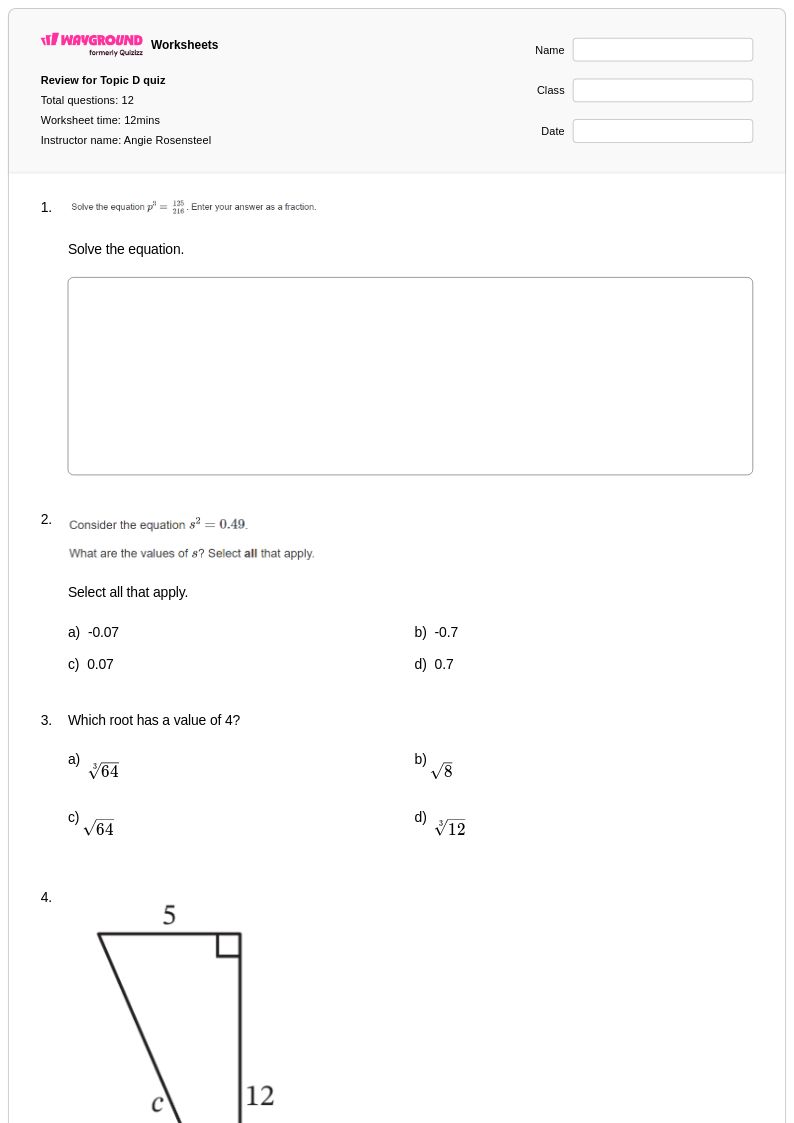
12 Q
8th
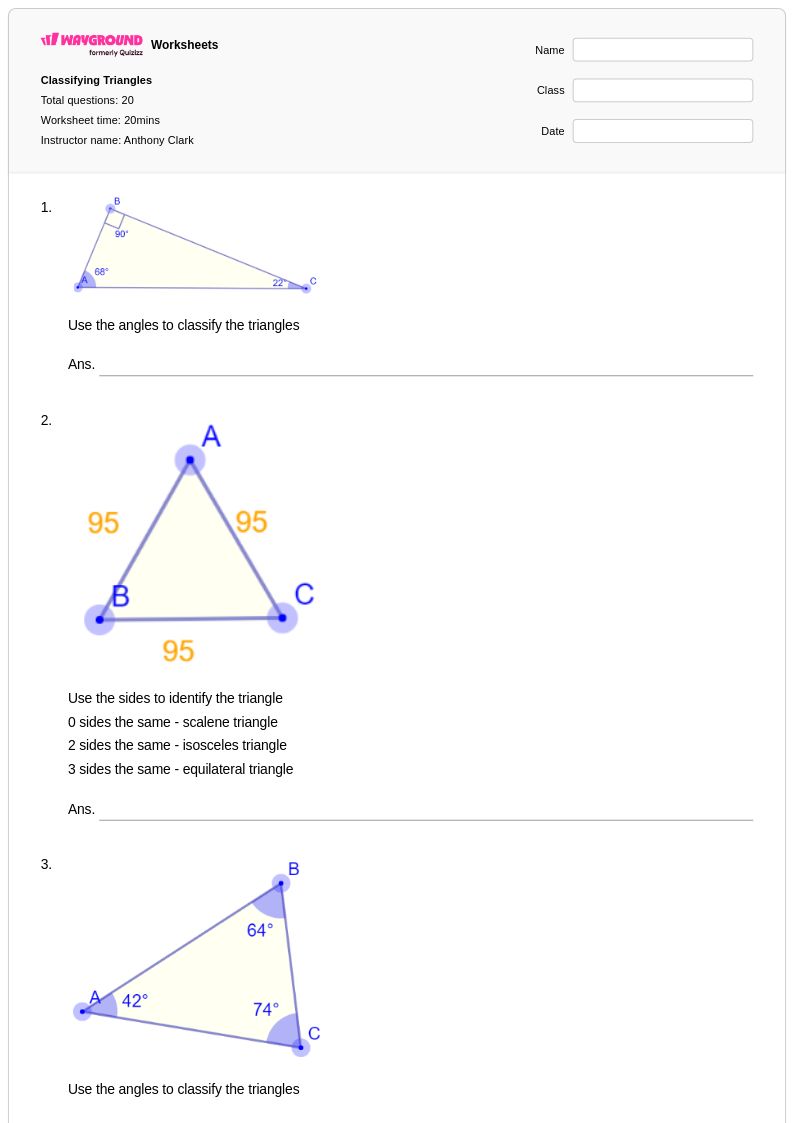
20 Q
7th - Uni
Explore Triangle Proportionality Theorem Worksheets by Grades
Explore Other Subject Worksheets for year 8
Explore printable Triangle Proportionality Theorem worksheets for Year 8
Triangle Proportionality Theorem worksheets for Year 8 mathematics provide students with essential practice in understanding how parallel lines create proportional segments within triangles. These comprehensive worksheets available through Wayground (formerly Quizizz) focus on developing students' ability to identify proportional relationships, set up and solve proportions, and apply the theorem to find missing side lengths in geometric figures. Students work through carefully structured practice problems that reinforce their understanding of this fundamental geometric concept, building confidence in their ability to recognize when segments are proportional and calculate unknown measurements. Each worksheet collection includes detailed answer keys and is available as free printable PDFs, making it easy for educators to provide targeted practice that strengthens students' geometric reasoning skills and prepares them for more advanced triangle relationships.
Wayground (formerly Quizizz) supports mathematics teachers with an extensive collection of Triangle Proportionality Theorem resources created by millions of educators worldwide. The platform's robust search and filtering capabilities allow teachers to quickly locate worksheets that align with Year 8 geometry standards and match their specific instructional needs. Teachers can customize these materials to differentiate instruction for diverse learners, providing additional scaffolding for students who need extra support or enhanced challenges for advanced learners. The flexible format options, including both digital and printable PDF versions, accommodate various classroom environments and teaching preferences. These tools prove invaluable for lesson planning, targeted remediation sessions, skill-building practice, and enrichment activities, helping teachers ensure all students master this critical geometric theorem through repeated, meaningful practice.