Free Printable Distance Between Two Parallel Lines Worksheets for Year 9
Year 9 students can master calculating the distance between two parallel lines with Wayground's free worksheets featuring comprehensive practice problems, printable PDFs, and detailed answer keys to strengthen their geometry skills.
Explore printable Distance Between Two Parallel Lines worksheets for Year 9
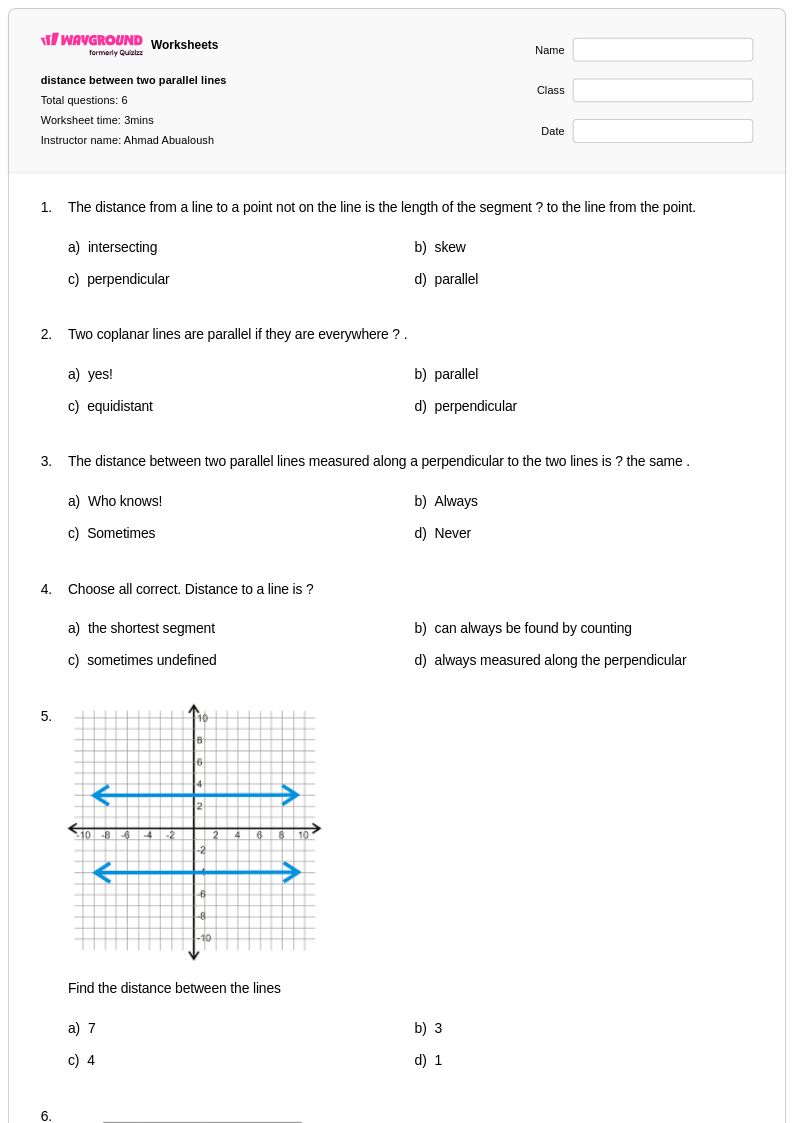
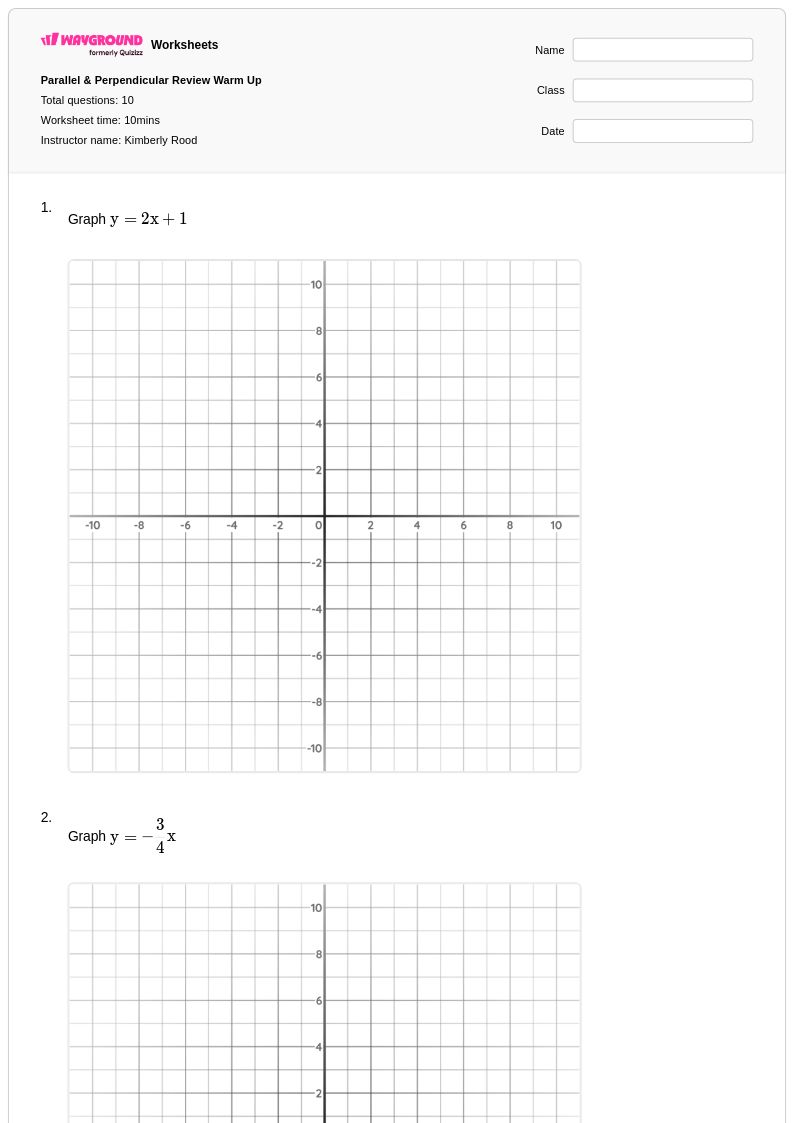
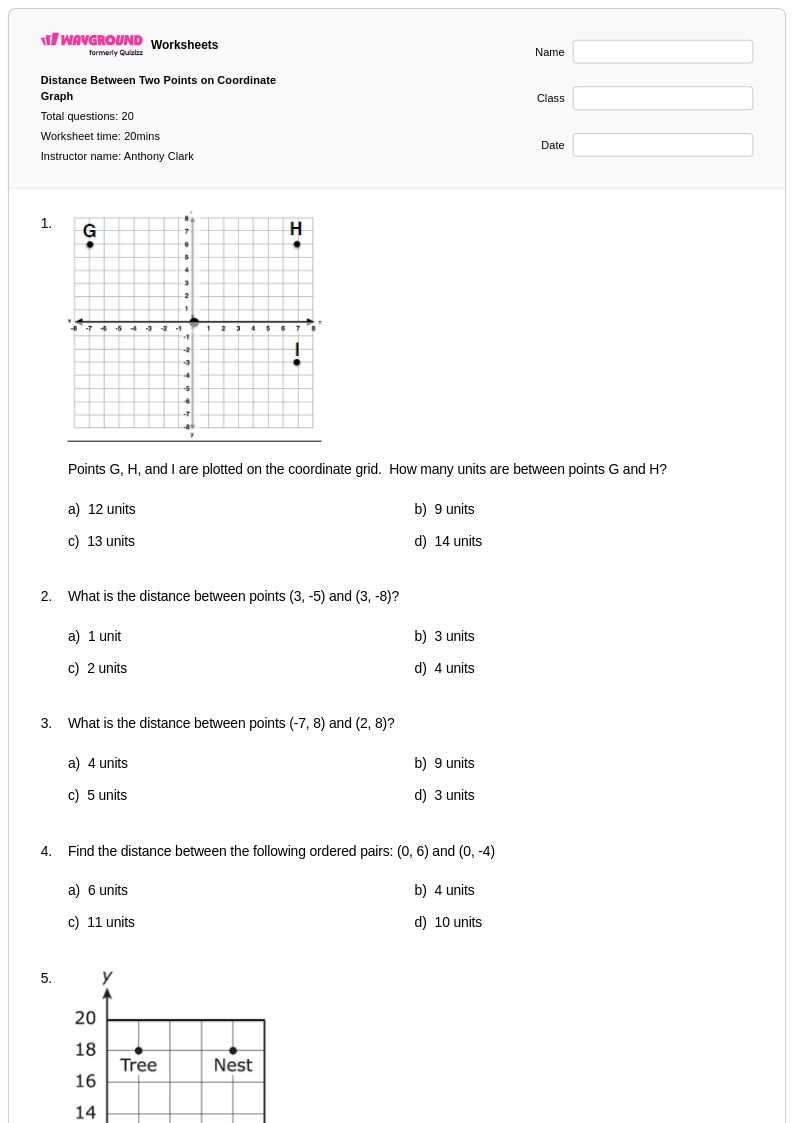
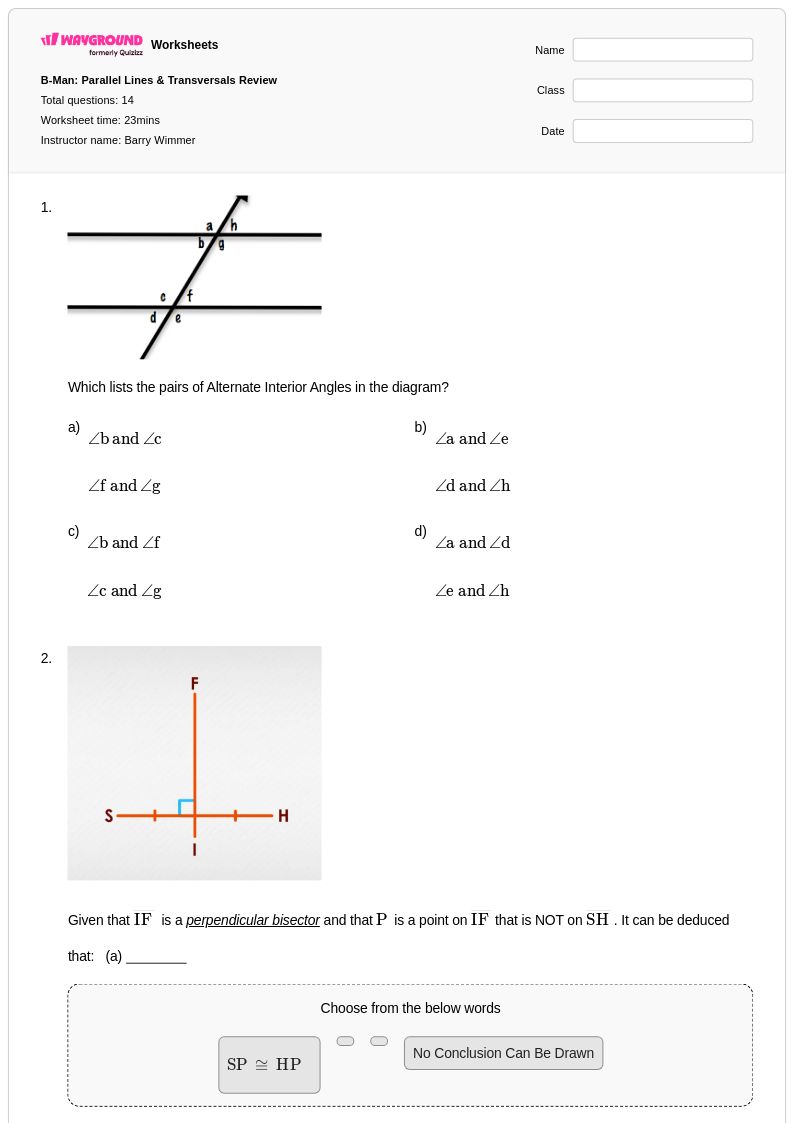
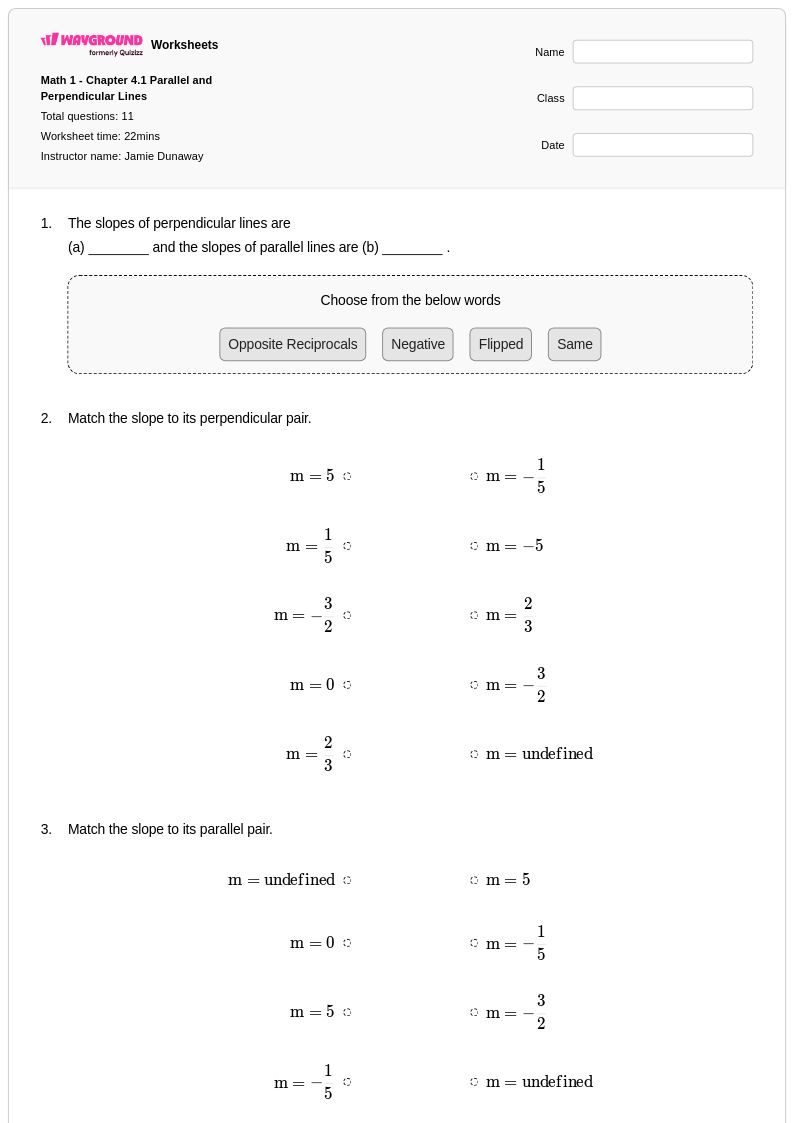
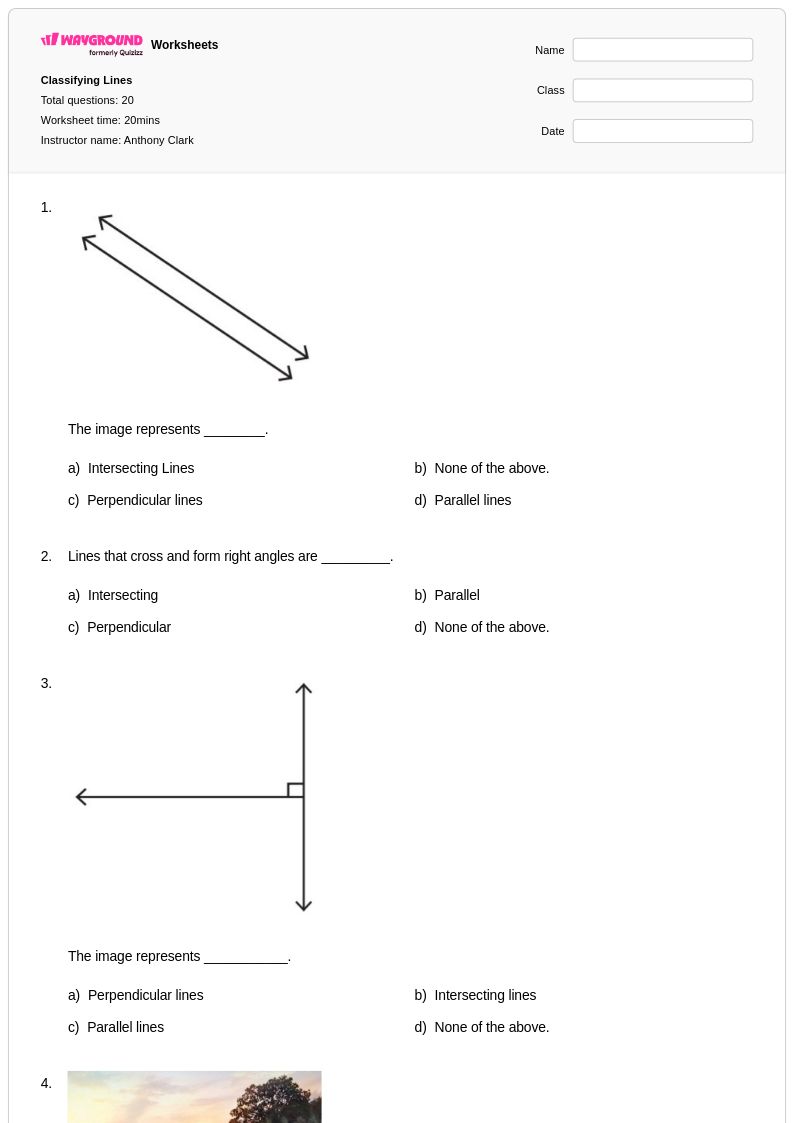
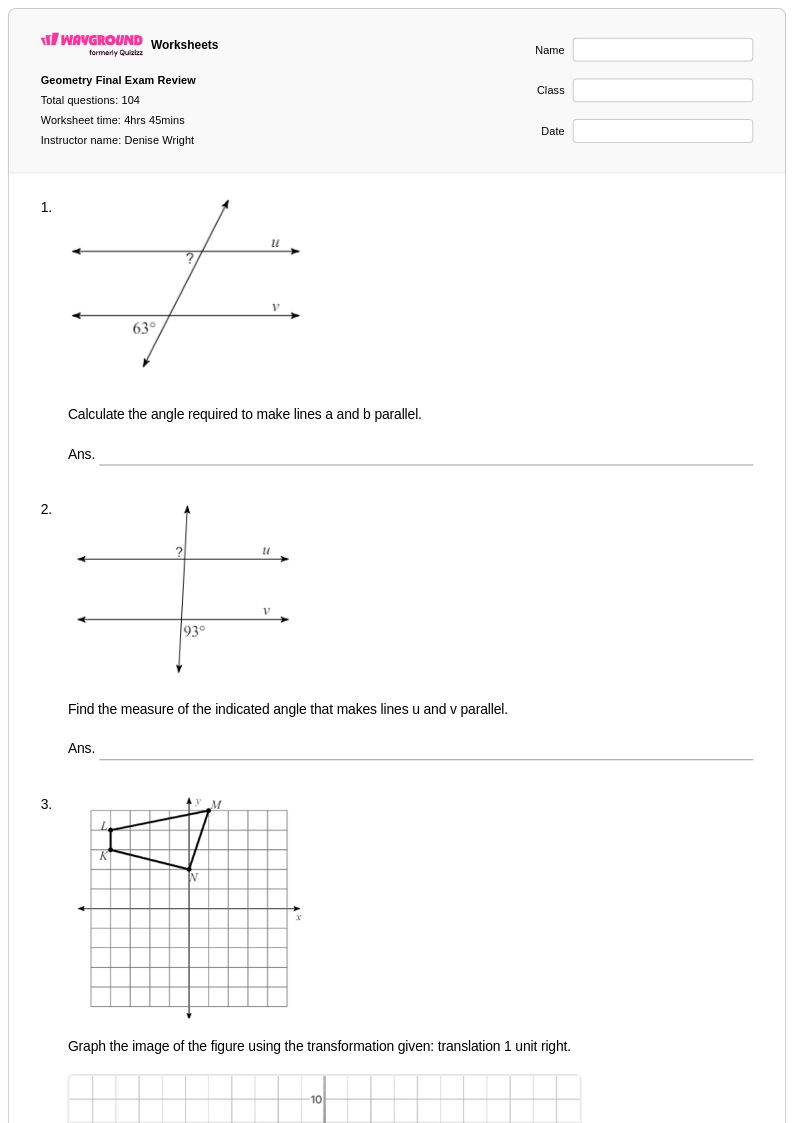
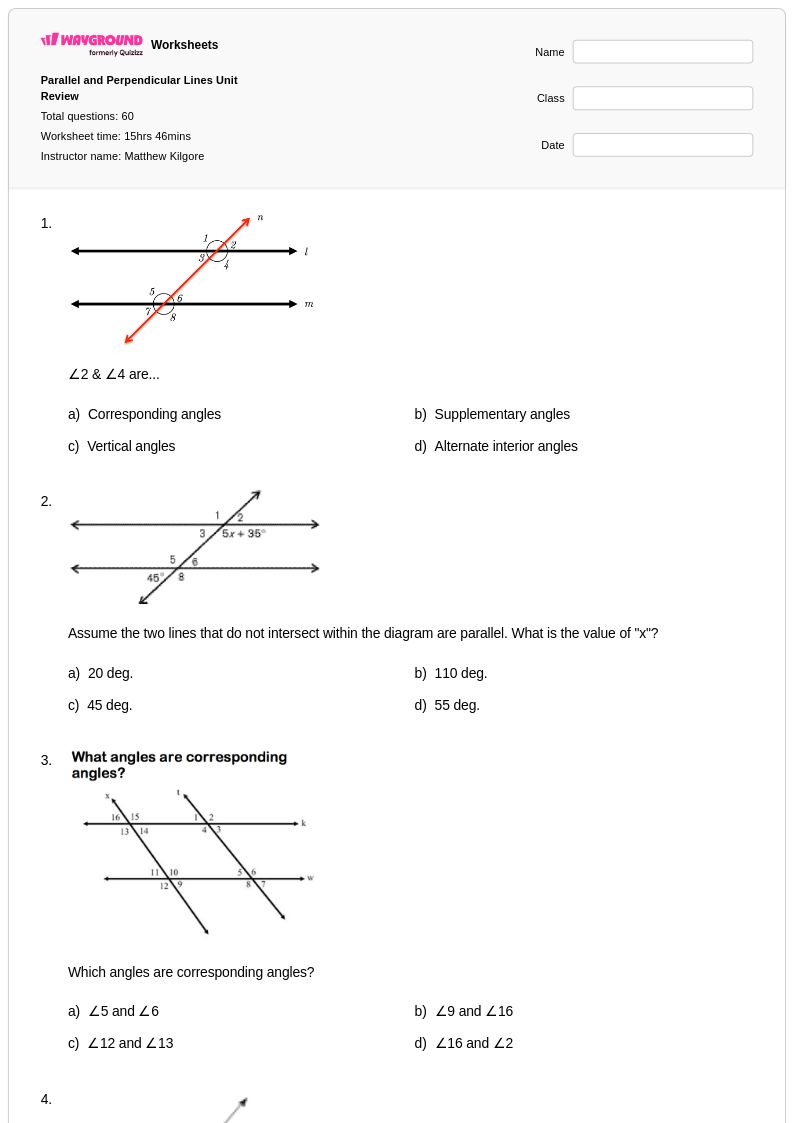
Distance between two parallel lines worksheets for Year 9 students available through Wayground (formerly Quizizz) provide comprehensive practice with this fundamental geometric concept that bridges coordinate geometry and analytical methods. These carefully structured worksheets strengthen students' ability to apply the perpendicular distance formula, work with linear equations in various forms, and understand the geometric relationship between parallel lines in the coordinate plane. Students engage with practice problems that require them to identify parallel lines, determine perpendicular distances using both algebraic formulas and geometric construction methods, and solve real-world applications involving parallel structures. Each worksheet collection includes detailed answer keys and step-by-step solutions, with materials available as free printables in pdf format to support both classroom instruction and independent study.
Wayground's extensive library of teacher-created resources offers educators millions of distance between two parallel lines worksheets specifically designed for Year 9 mathematics instruction, with robust search and filtering capabilities that allow teachers to quickly locate materials aligned with specific curriculum standards and learning objectives. The platform's differentiation tools enable instructors to customize worksheet difficulty levels, modify problem types, and adapt content to meet diverse student needs, whether for remediation of foundational coordinate geometry skills or enrichment activities involving complex parallel line applications. These flexible resources are available in both printable pdf formats for traditional paper-based learning and digital formats for interactive online practice, making lesson planning more efficient while providing teachers with versatile tools for skill practice, formative assessment, and targeted intervention in geometric reasoning and analytical problem-solving.
FAQs
How do I teach the distance between two parallel lines in a Grade 9 geometry class?
Grade 9 students typically have enough algebra background to handle the perpendicular distance formula, but they still benefit from seeing the geometric reasoning first. Show why any non-perpendicular segment between the lines is longer than the perpendicular one — a quick diagram makes this obvious. Then derive the formula together from the point-to-line distance formula so students understand where it comes from, rather than memorizing it cold. That derivation also reinforces the standard form of a linear equation, which is worth revisiting at this stage.
What types of problems should 9th graders practice for this topic?
A well-rounded practice set at Grade 9 should include: converting lines from slope-intercept to standard form before applying the formula, problems where students must first confirm the lines are parallel, and at least a few real-world setups (like finding the width of a road or the gap between two rails) that require them to model the situation before calculating. These worksheets cover that range and include step-by-step answer keys so students can identify exactly where they went wrong.
What misconceptions do 9th graders have about parallel line distance?
A persistent misconception is that the distance between parallel lines changes depending on which two points you pick — students who haven't internalized the "constant separation" property will get different answers each time and not realize something is wrong. Another common error is mishandling the absolute value in the distance formula, which leads to negative distances. Asking students to estimate the distance visually on a graph before calculating is a quick way to catch both types of errors.
How do I use these Grade 9 worksheets effectively?
The worksheets include complete answer keys, so they work well for independent practice, homework, or in-class review. Print the PDFs for paper-based sessions — offline practice is straightforward to grade using the Wayground for Teachers app — or host the same content as a digital quiz on Wayground if you want automatic scoring. Both routes use identical problems, so you can mix formats across your class without creating equity gaps.
How does this topic fit into the 9th grade Common Core geometry progression?
Common Core's high school geometry strand expects students to use coordinates to prove geometric relationships algebraically, and the distance between parallel lines is a direct application of that expectation. At Grade 9, it builds on the slope and linear equation work from middle school and sets up later topics like geometric proofs involving parallel lines and the use of coordinates in triangle and polygon problems. Specifically, students move from knowing that parallel lines have equal slopes to quantifying exactly how far apart those lines are — a meaningful step toward analytic geometry.
Can I use these worksheets for students with different ability levels in the same class?
Yes. Wayground lets you create alternate versions of the same worksheet with adjusted font size, spacing, or a dyslexia-friendly font for students who need it. For digital assignments, you can enable Read Aloud for specific students so they hear problem prompts read aloud, and set extended time individually — other students see nothing different on their end. That lets you run one assignment across the whole class while quietly tailoring the experience for students who need support.