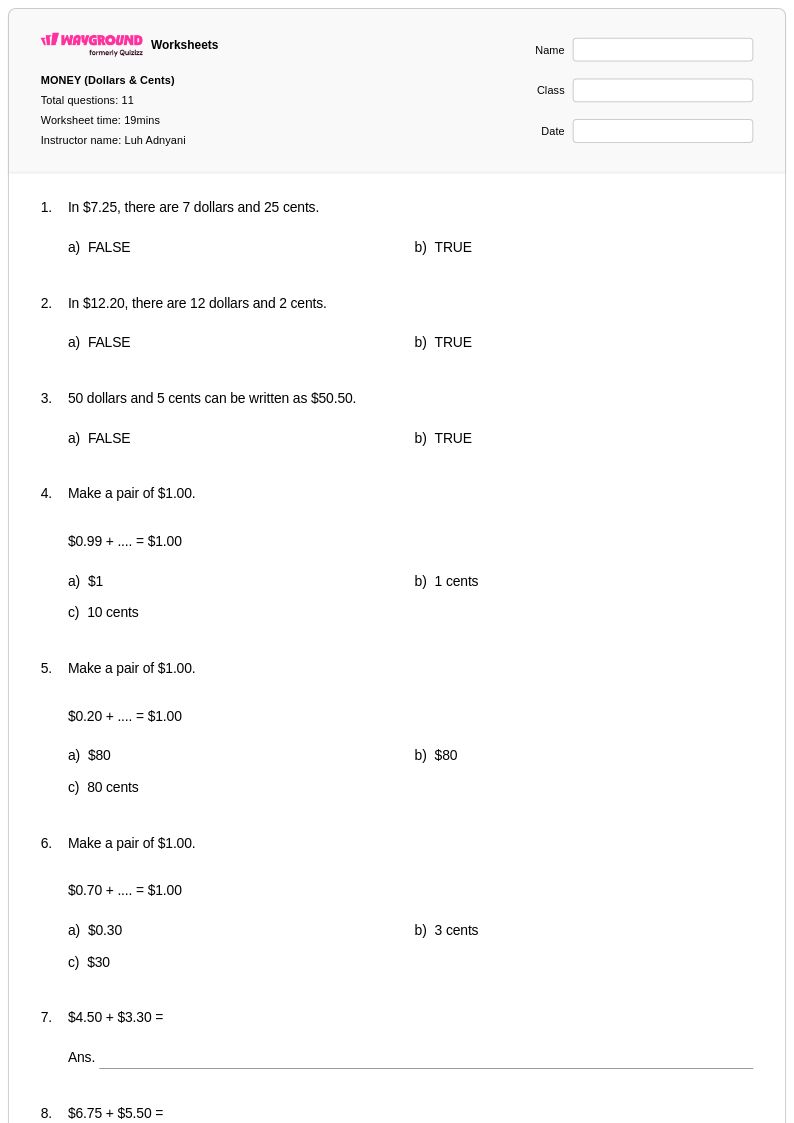
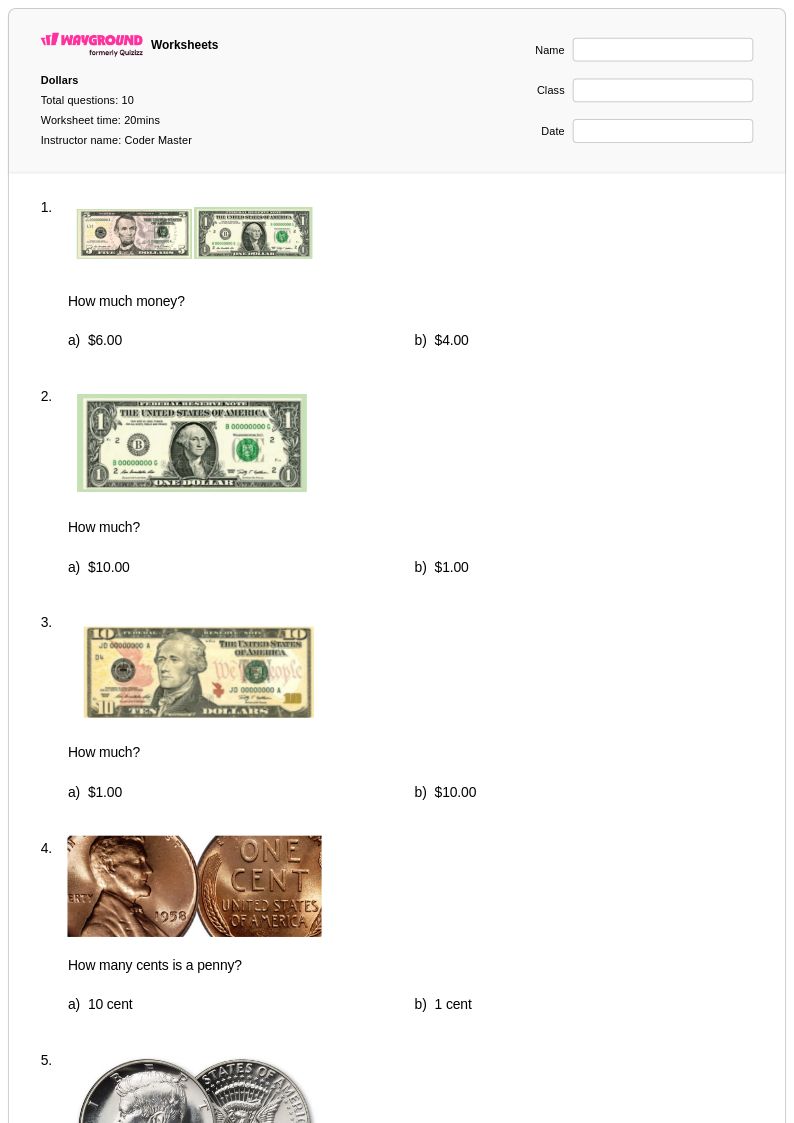
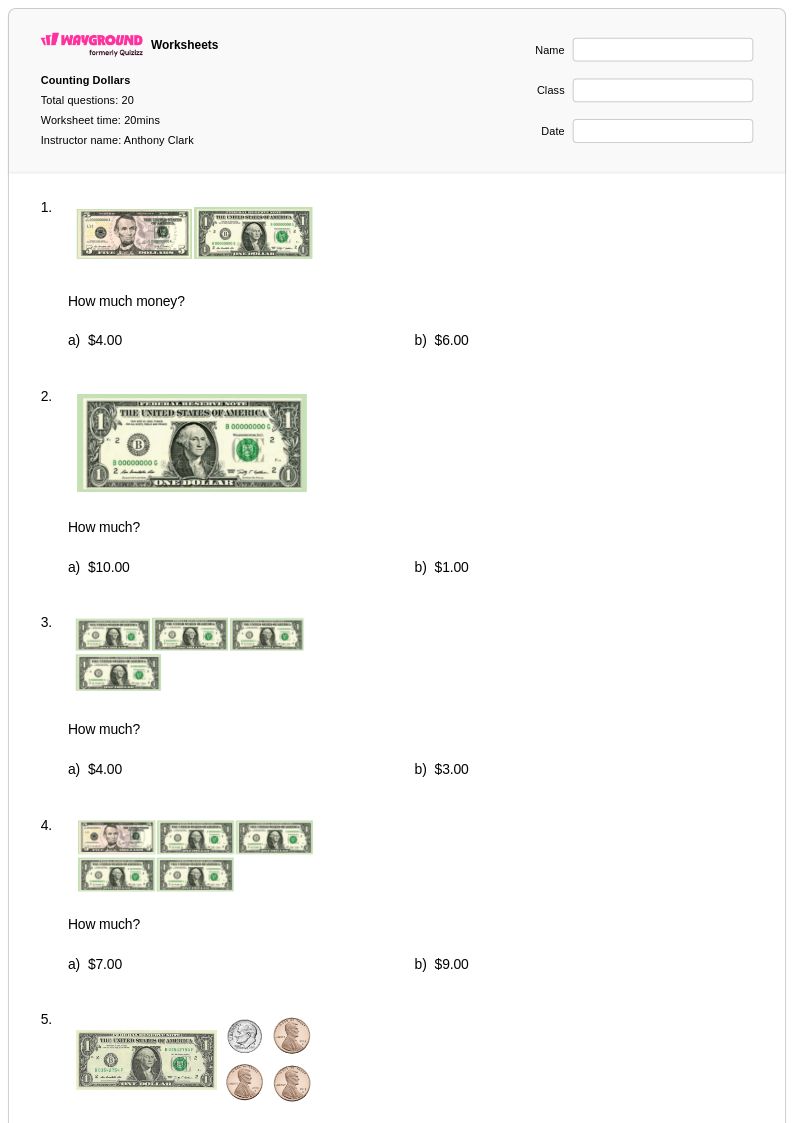
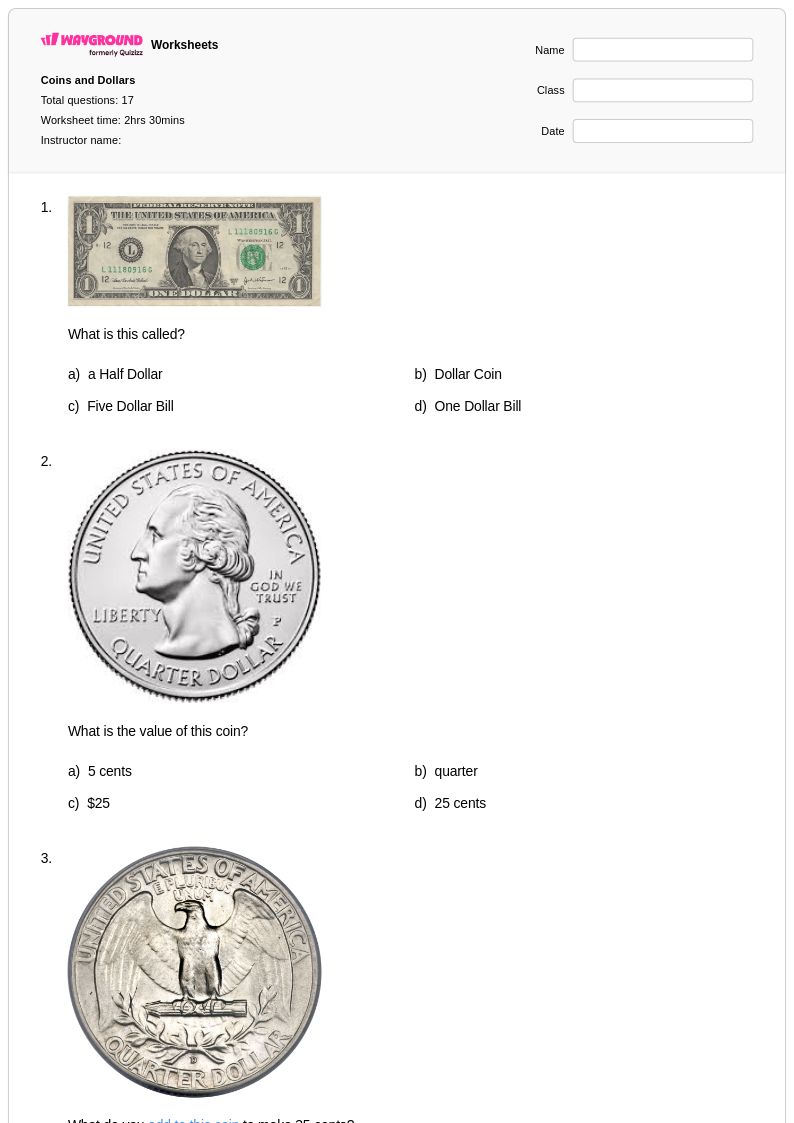
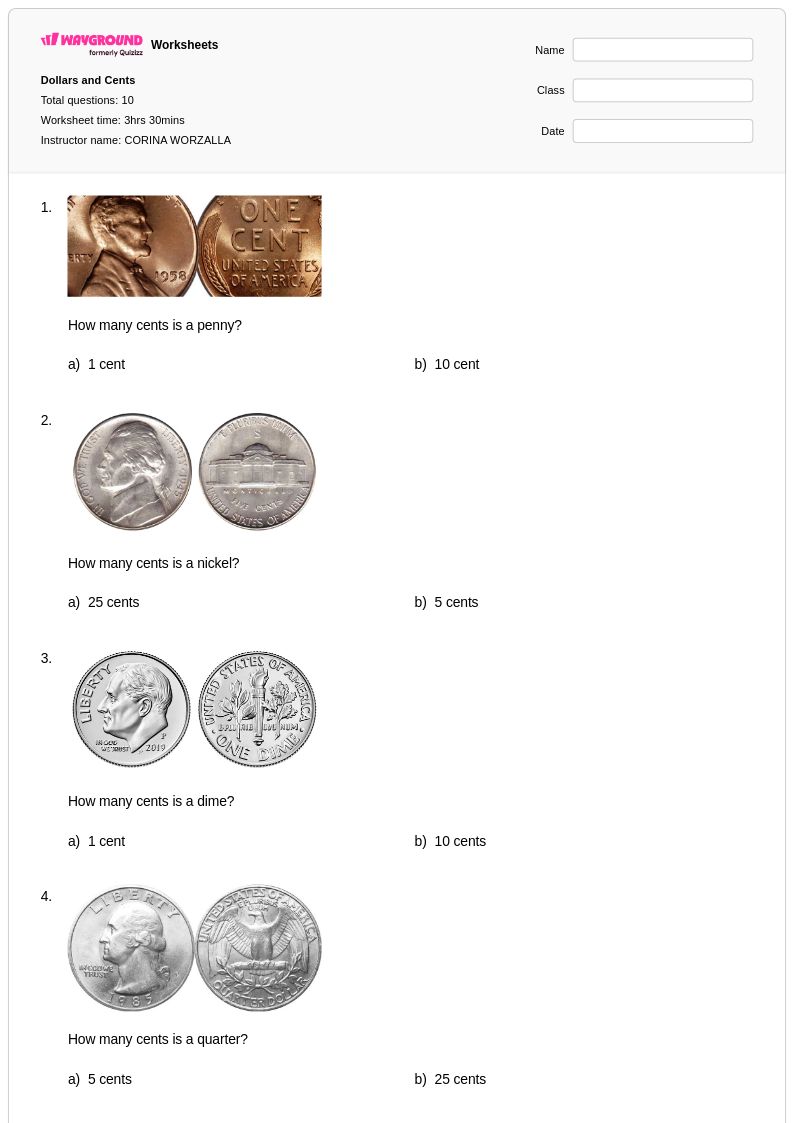
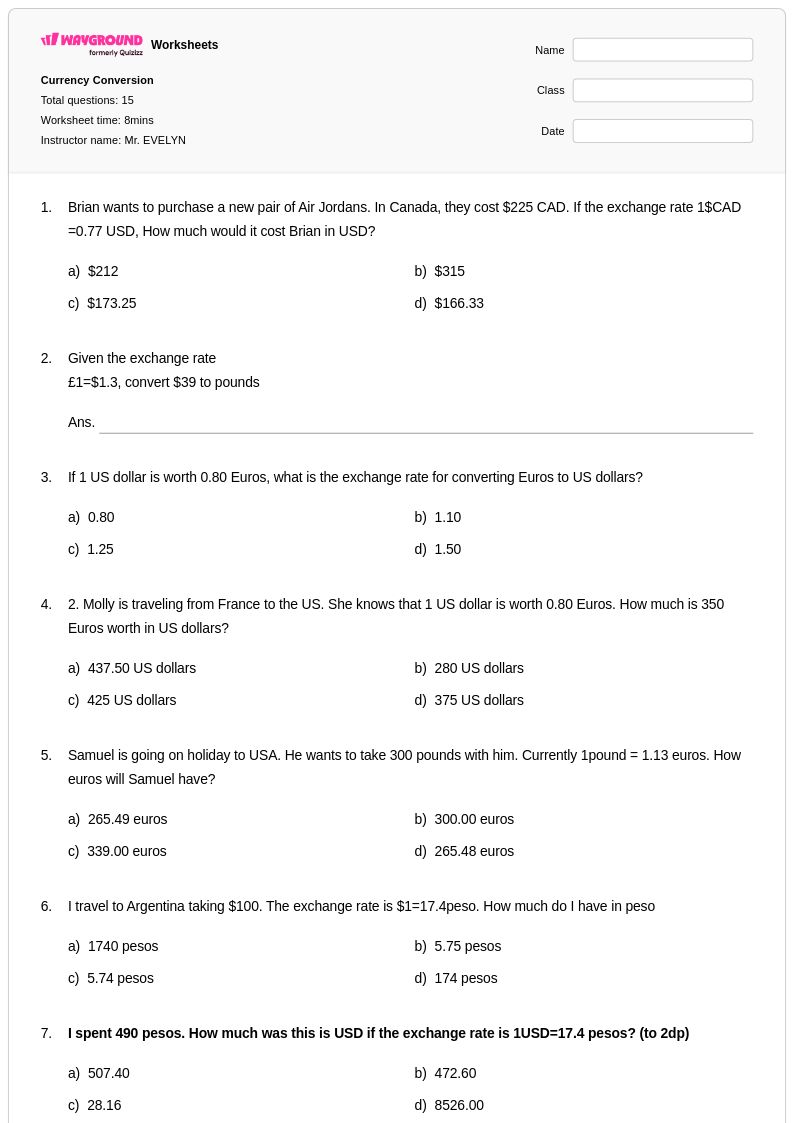
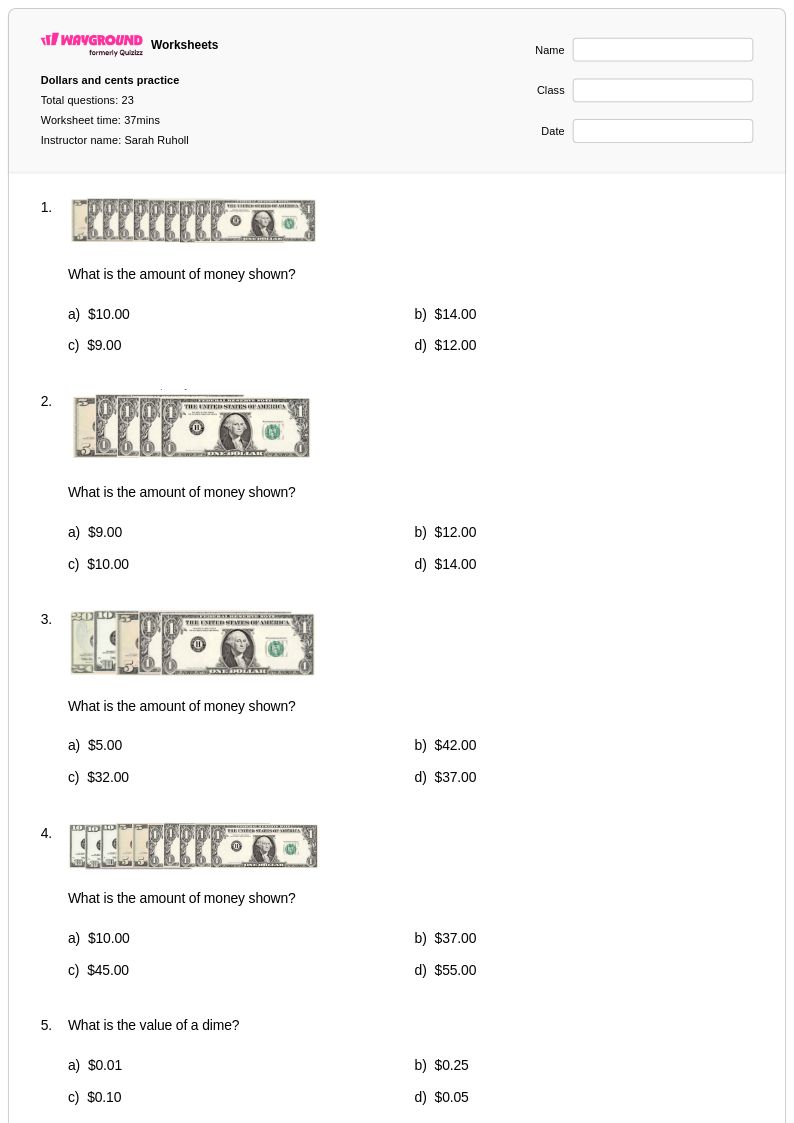
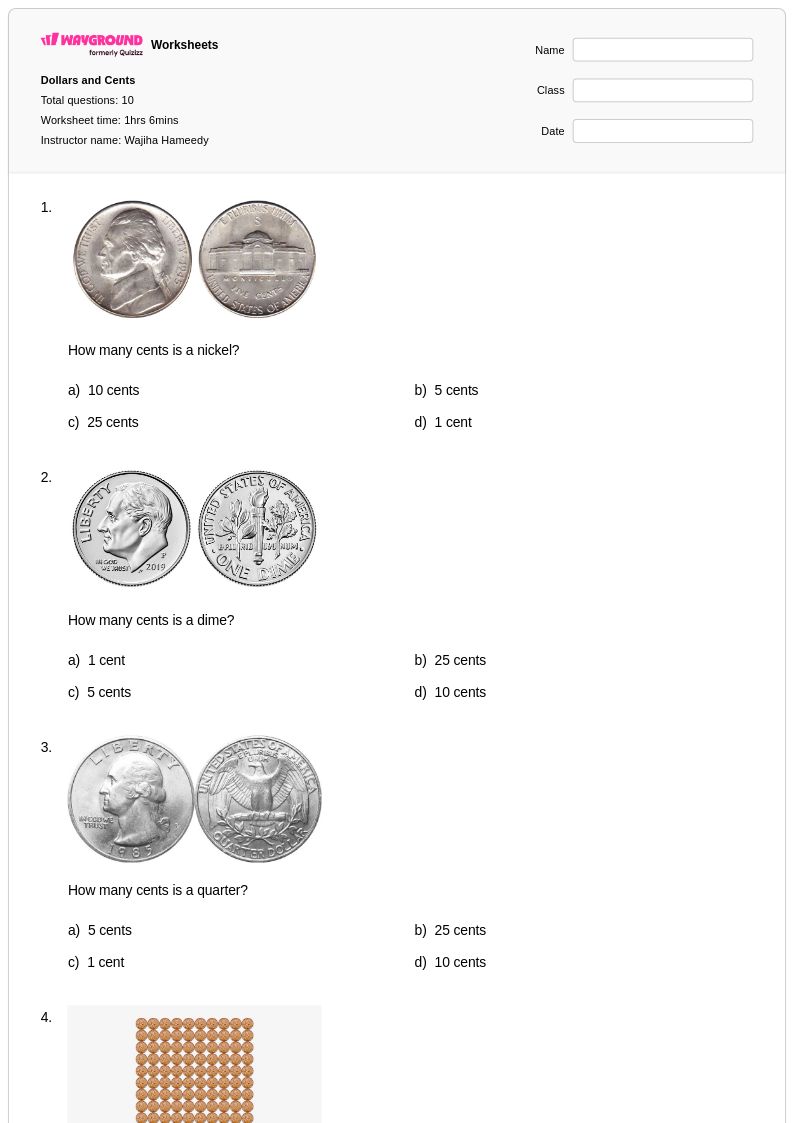
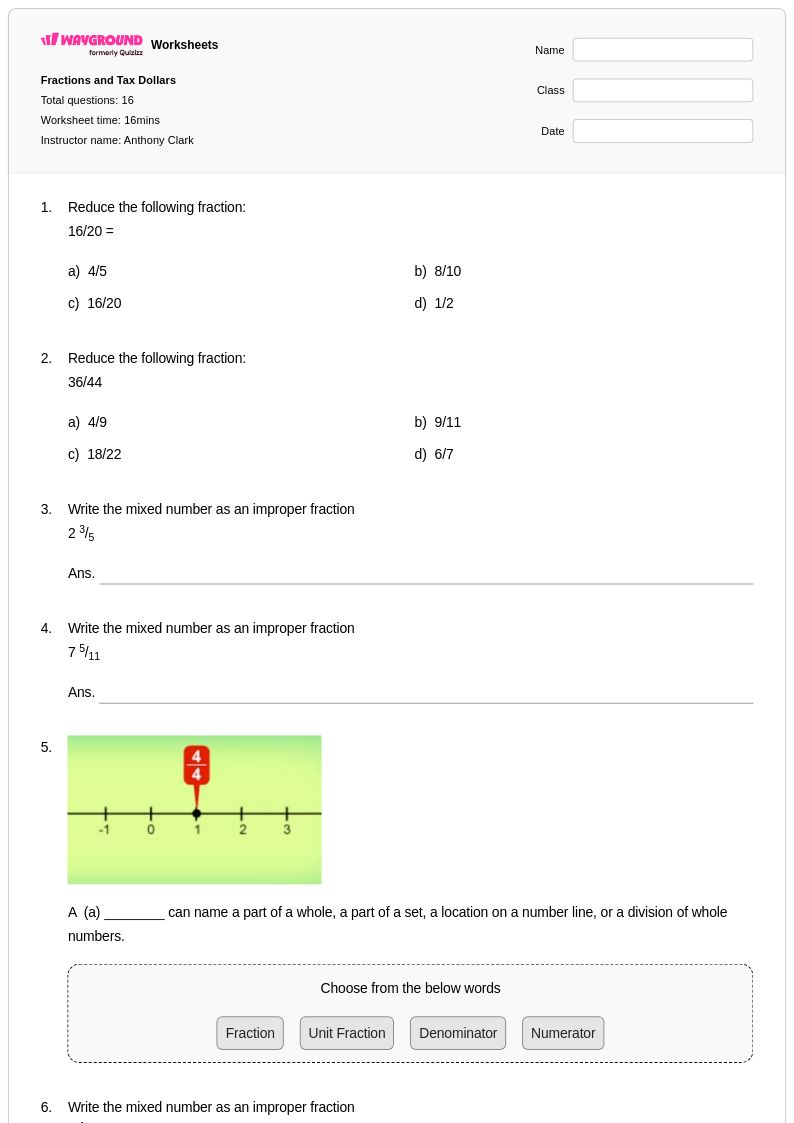
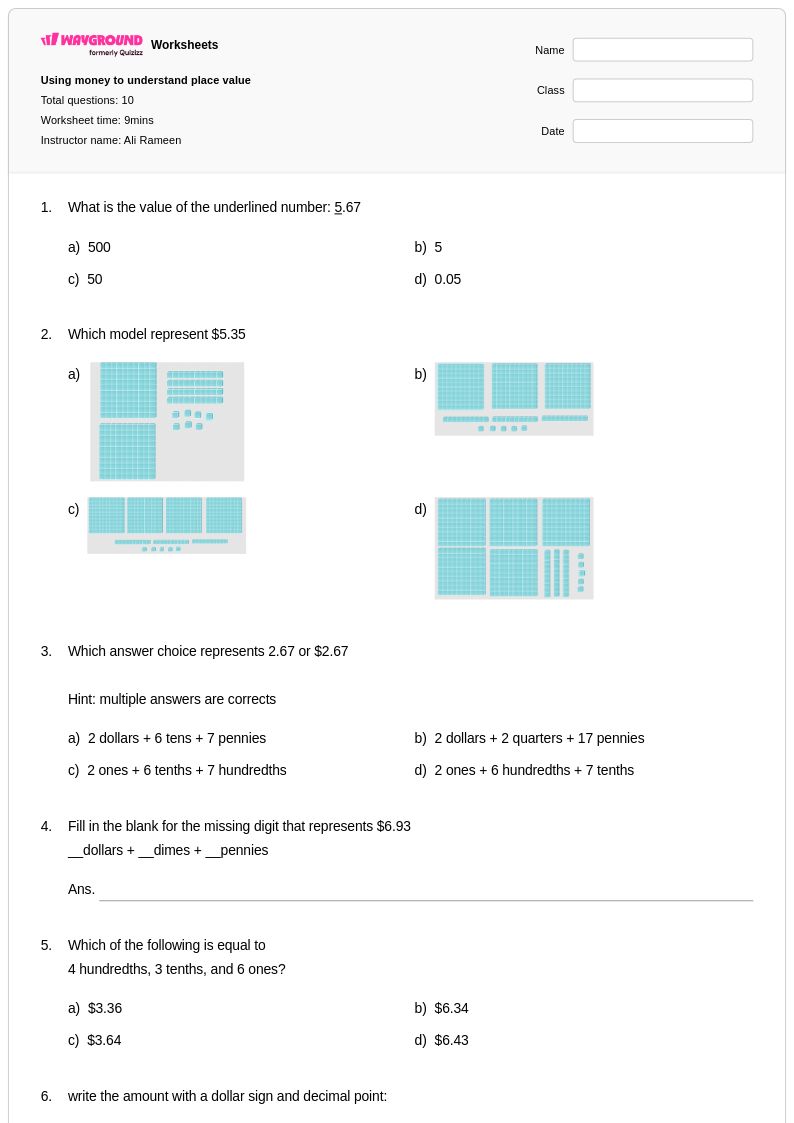
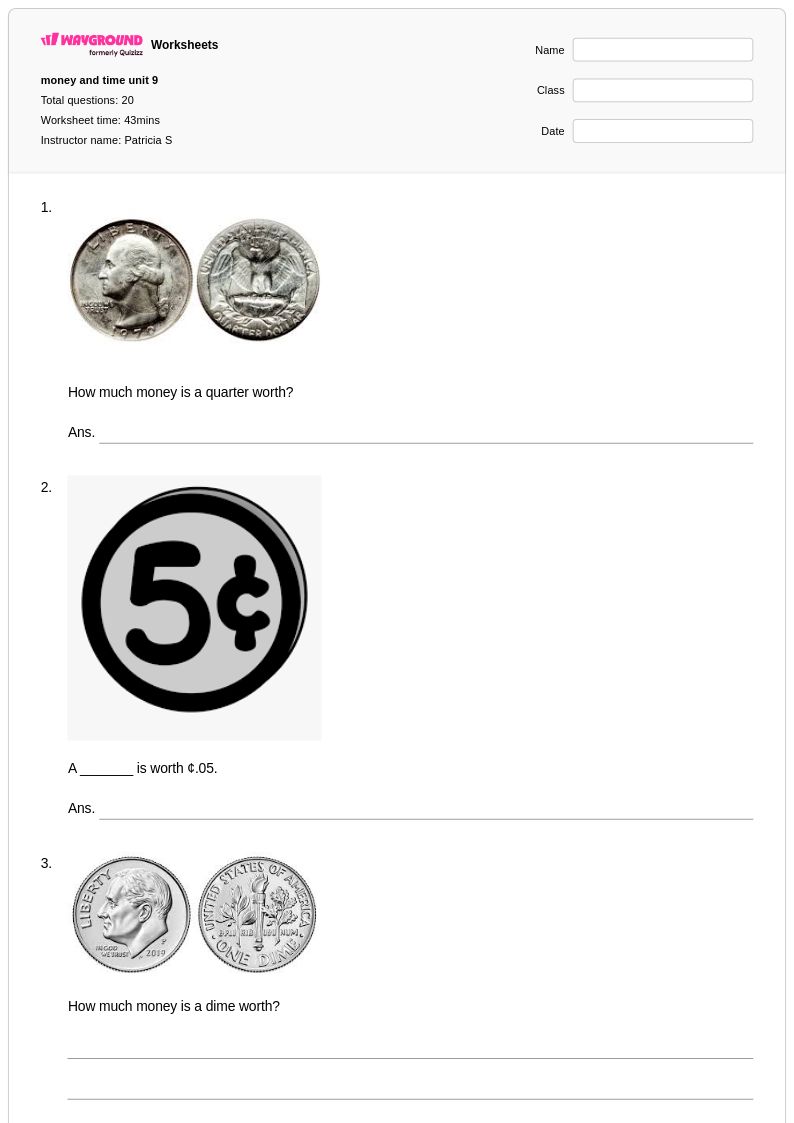
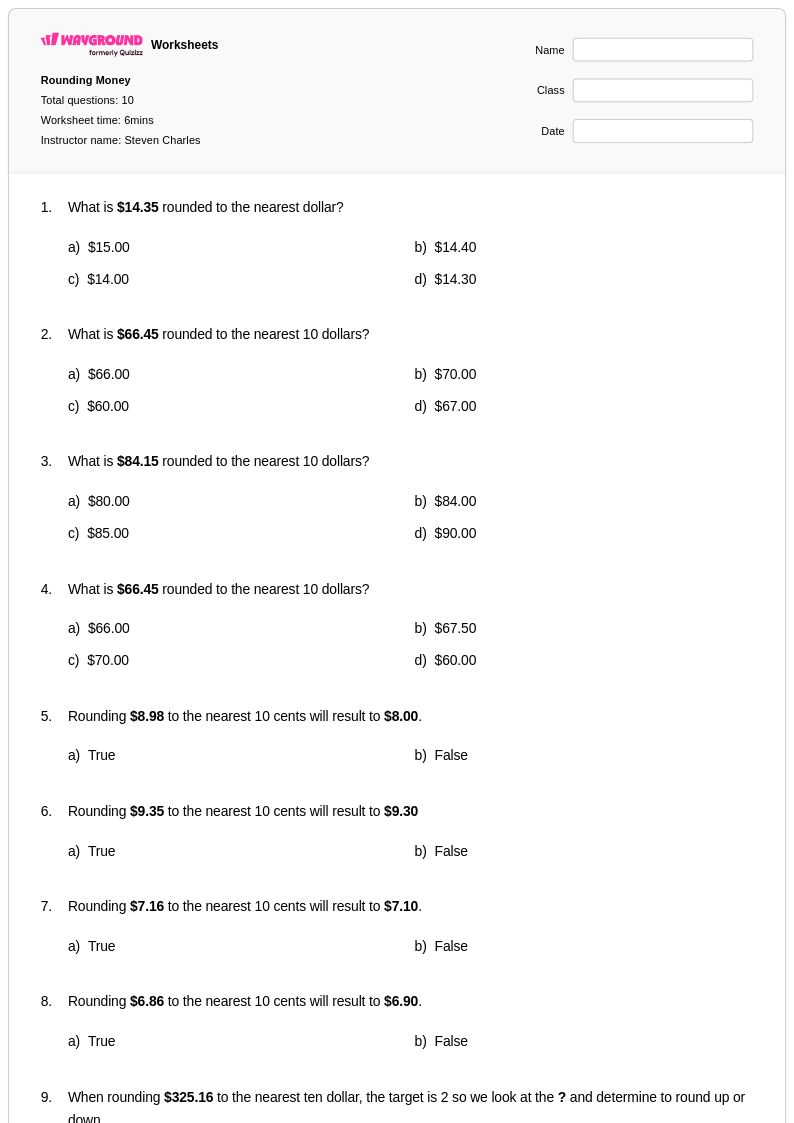
Free printable worksheets and practice problems help students master identifying dollars through engaging exercises with answer keys and PDF downloads available on Wayground.
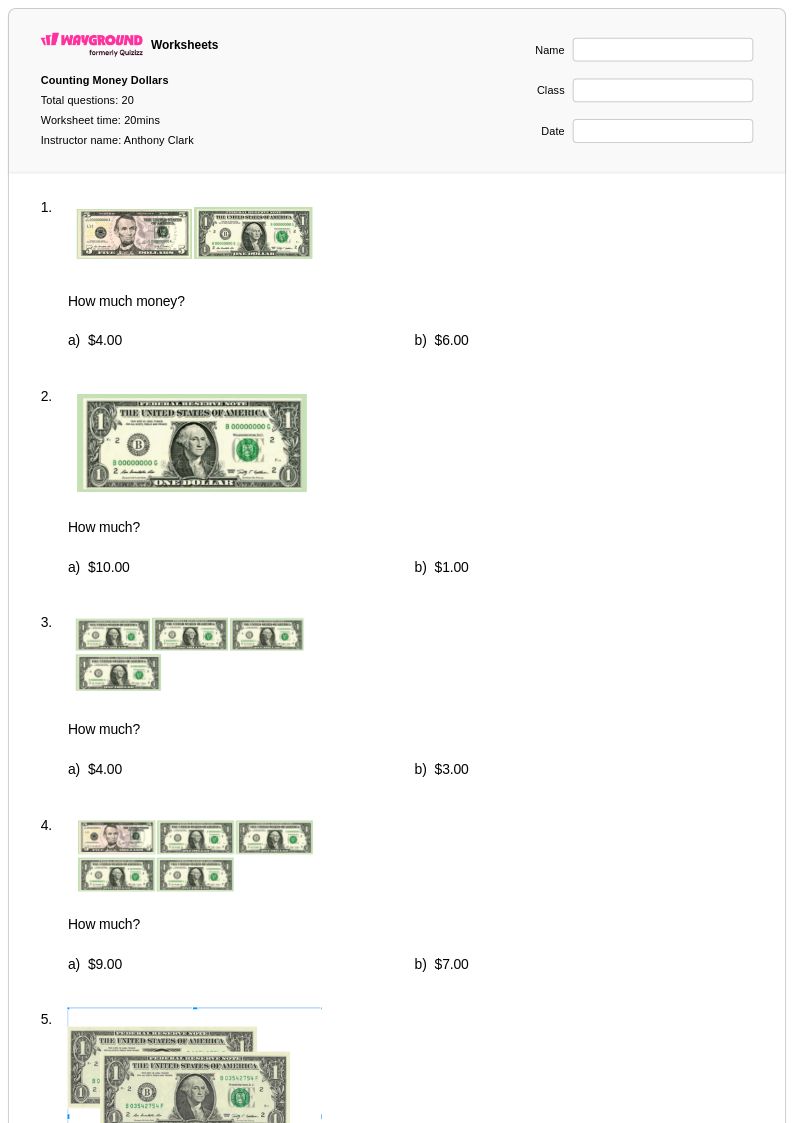
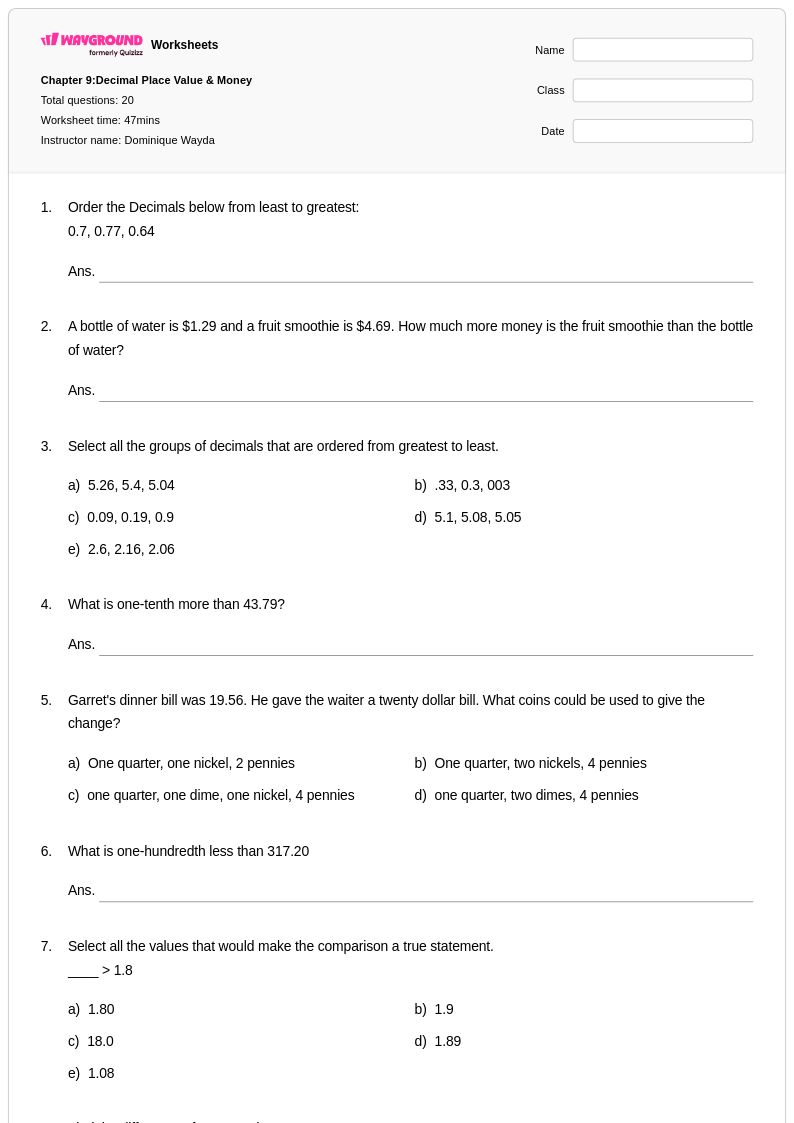
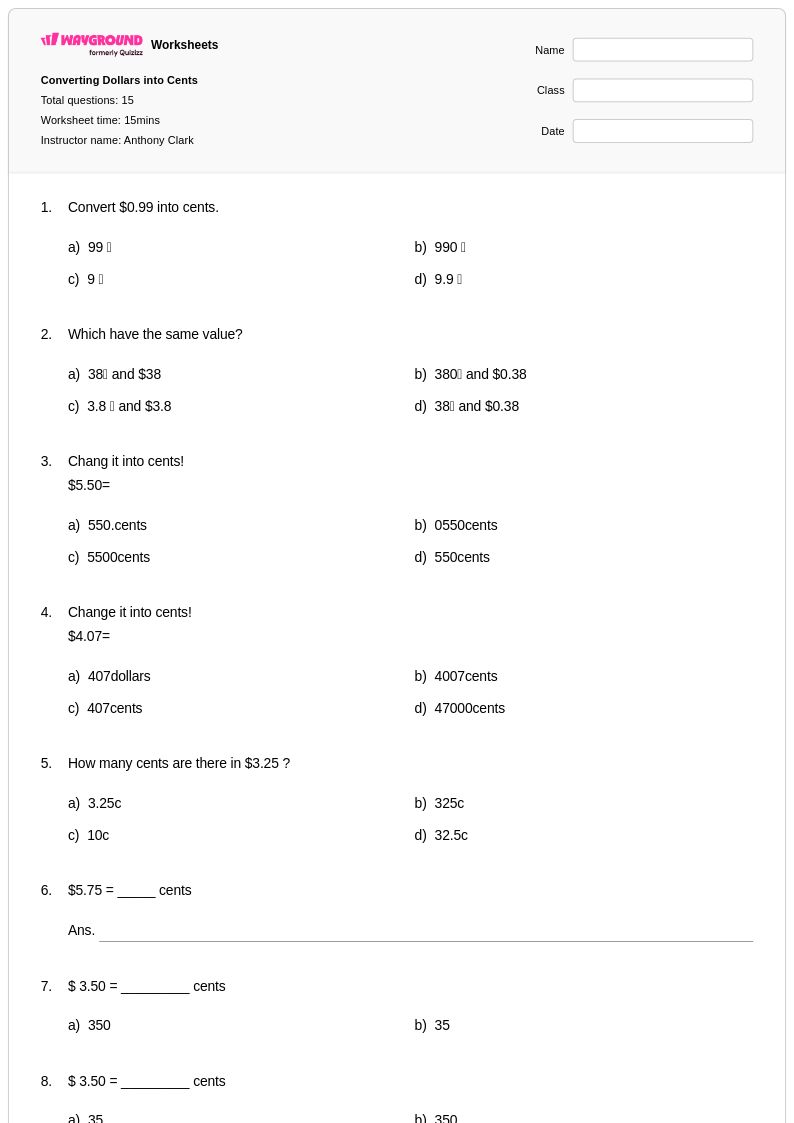
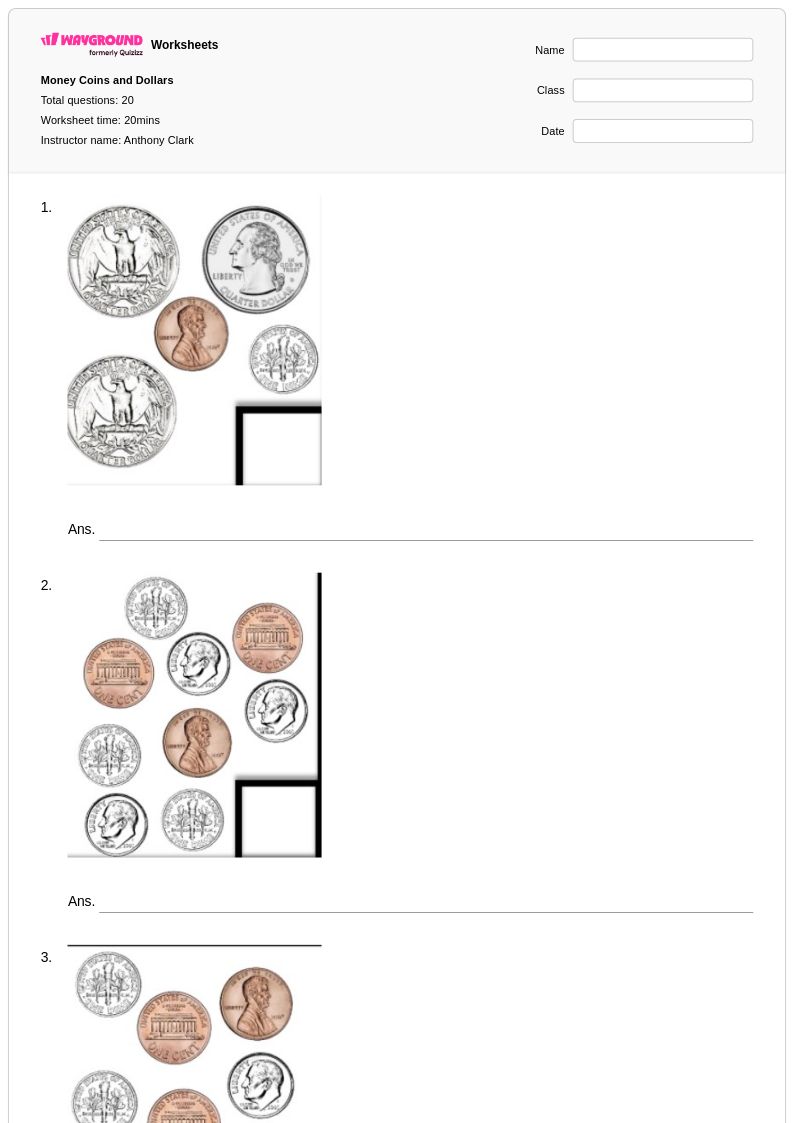
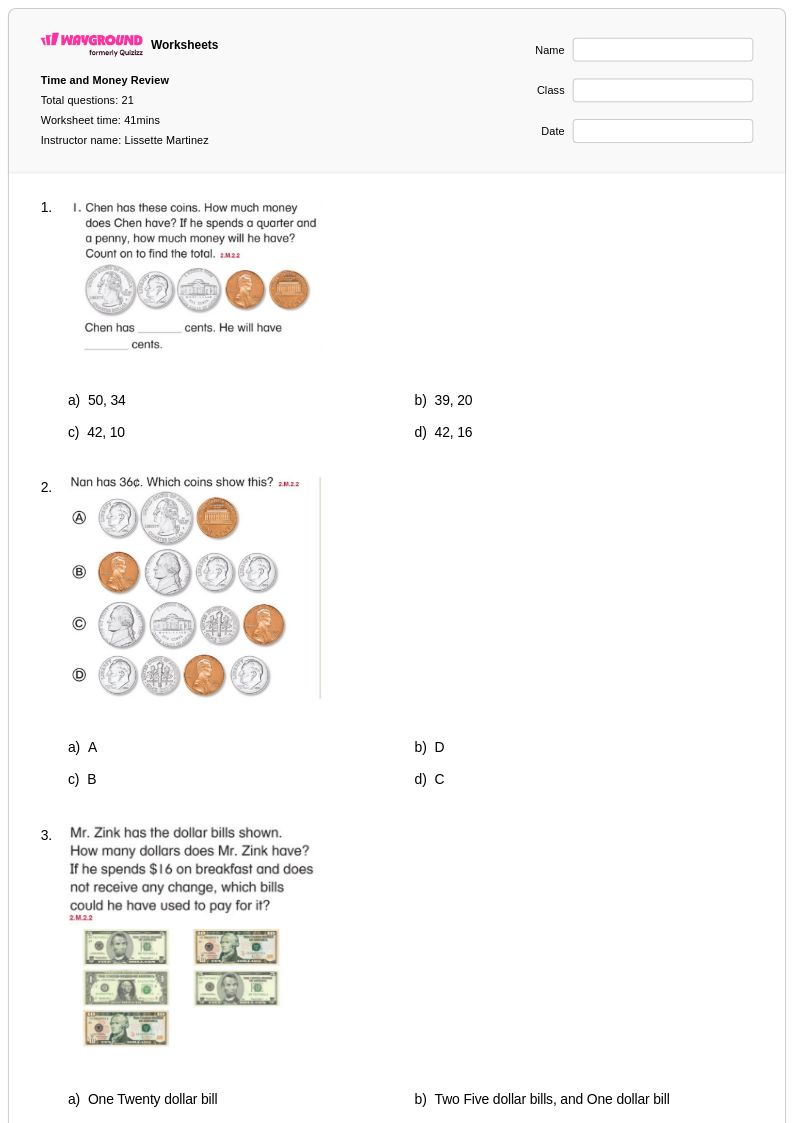
Dollar identification worksheets available through Wayground (formerly Quizizz) provide comprehensive practice for students learning to recognize and work with paper currency denominations. These expertly designed printables focus on developing critical money recognition skills, including identifying dollar bill values, understanding currency features, and building foundational financial literacy concepts. The worksheet collections include varied practice problems that challenge students to distinguish between different dollar denominations, recognize security features, and apply their knowledge through realistic scenarios. Each resource comes complete with detailed answer keys and is available as free pdf downloads, making it easy for educators to implement immediate assessment and provide targeted feedback on student understanding of paper currency identification.
Wayground (formerly Quizizz) empowers teachers with access to millions of educator-created dollar identification resources that streamline lesson planning and differentiated instruction. The platform's robust search and filtering capabilities allow educators to quickly locate worksheets aligned with specific learning standards and customize materials to match individual student needs. Teachers can seamlessly transition between printable pdf formats for traditional classroom use and digital formats for technology-integrated learning environments. These versatile tools support comprehensive instructional approaches, from initial skill introduction and guided practice to remediation for struggling learners and enrichment activities for advanced students, ensuring that all learners develop confident dollar recognition abilities essential for real-world financial interactions.
FAQs
How do I teach students to identify dollar bills?
Start with the $1 bill as the anchor — students learn its features first, then compare each new denomination against it. Focus on three distinguishing details: the portrait, the large numeral in the corners, and the color tint (the $10 is slightly orange, the $20 green). Once students can name those reliably, move to realistic scenarios like making change or identifying a bill in a wallet image. Hands-on practice with real or replica bills alongside printed worksheets tends to stick better than visual exercises alone.
What exercises help students practice recognizing dollar denominations?
The most effective practice types are: matching bills to their values, sorting mixed denominations into groups, and fill-in tasks where students identify a bill from a partial image or description. Wayground's dollar worksheets cover this range, giving students repeated exposure across different formats so recognition becomes automatic rather than effortful.
What mistakes do students commonly make when identifying dollar bills?
The most common error is confusing the $5 and $10 — both feature relatively similar layouts and students often rely on color alone, which is subtle. A second frequent mistake is ignoring the portrait entirely and guessing from the numeral, which breaks down when the numeral is partially obscured. Point students to at least two confirming features before they commit to an answer.
How do I use Wayground's dollar worksheets in my classroom?
Each worksheet is available as a printable PDF and as a digital quiz hosted on Wayground, so you can assign the same content whether students are at desks or on devices. Every worksheet includes a complete answer key. If you go the paper route, the Wayground for Teachers app lets you scan or capture student work to grade it quickly without manual tallying.
What grade levels cover dollar bill identification?
Dollar recognition is typically introduced in kindergarten and first grade, with more structured practice — distinguishing multiple denominations and applying them to simple transactions — running through second and third grade. By fourth grade, the focus shifts from identification to computation with money, so these worksheets are most relevant for K–3.
How can I differentiate dollar recognition practice for mixed-ability learners?
For students who struggle with visual discrimination, Wayground's Read Aloud accommodation reads question text aloud, and reduced answer choices lowers the cognitive load when students are still building confidence. For printed versions, you can apply a larger font size or wider spacing to make bill images and labels easier to parse. Advanced students can move to multi-denomination sorting or making-change scenarios on the same platform without needing a separate resource set.