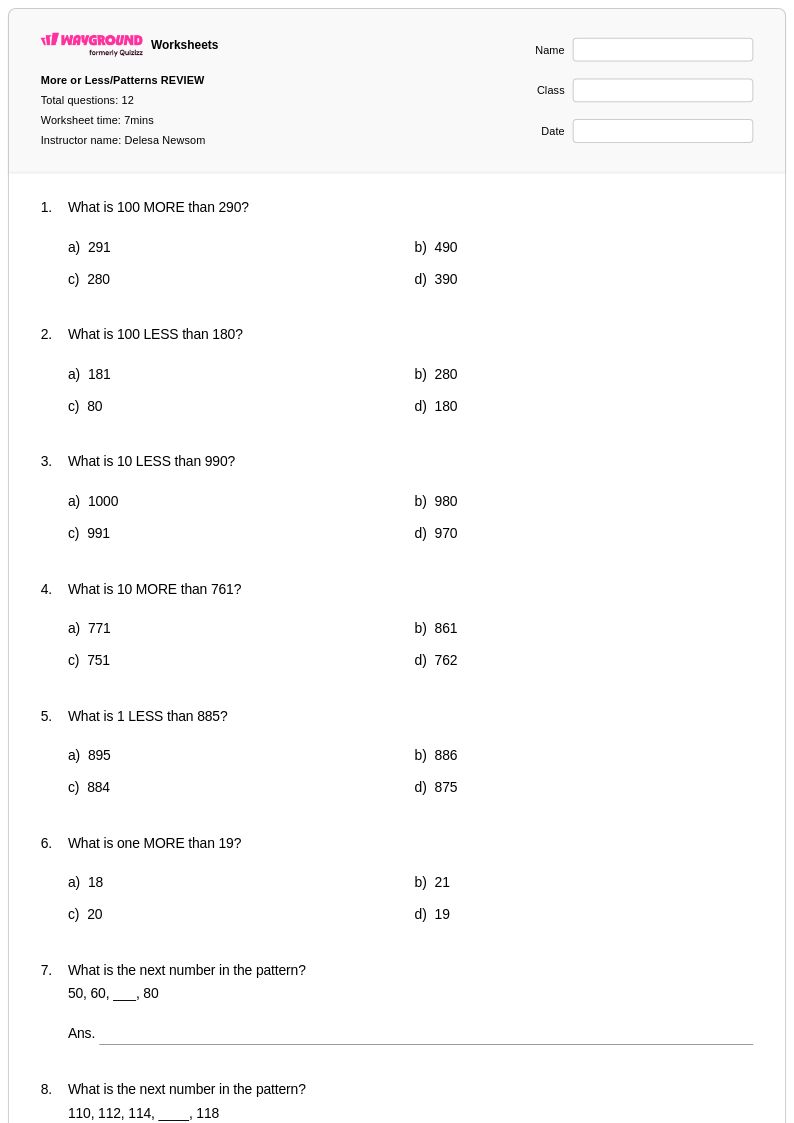
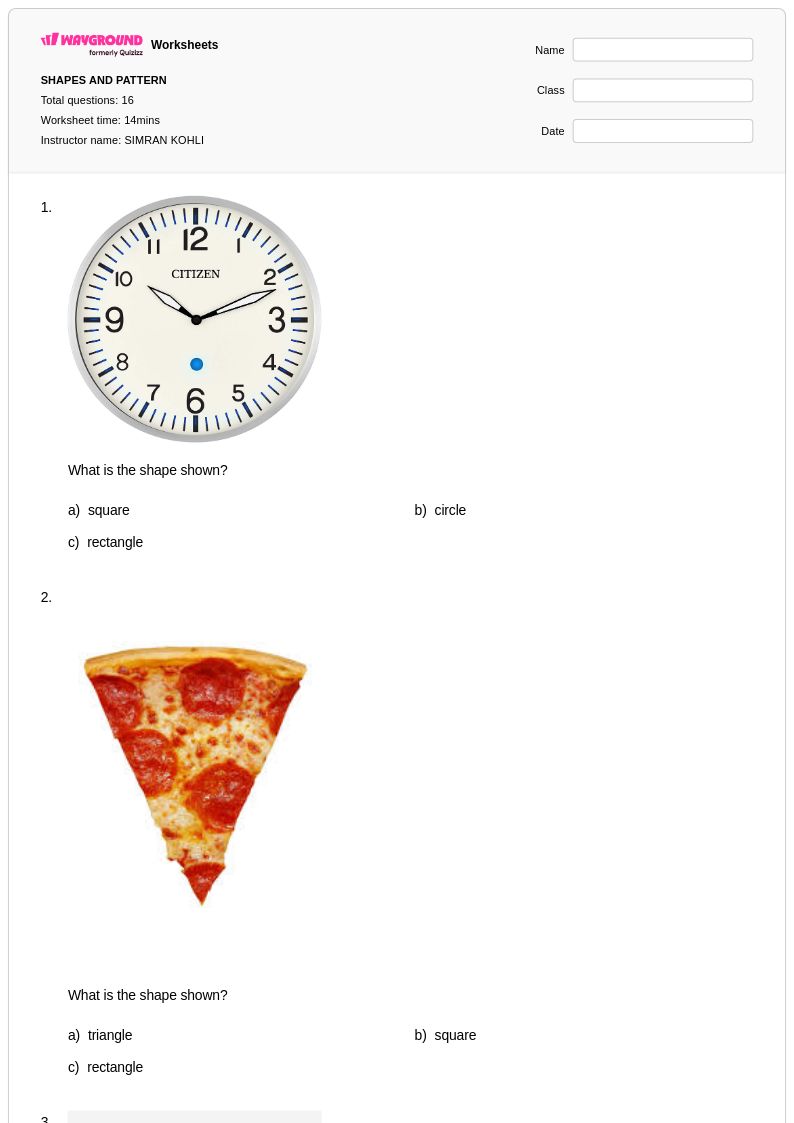
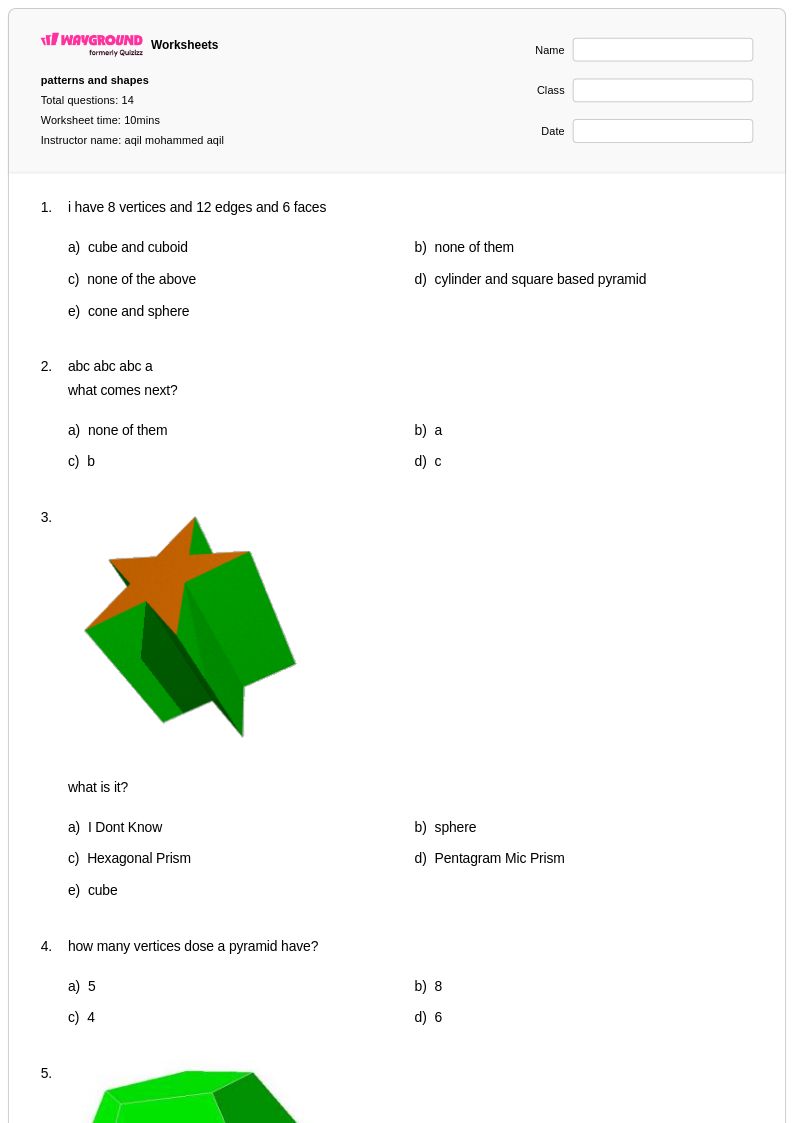
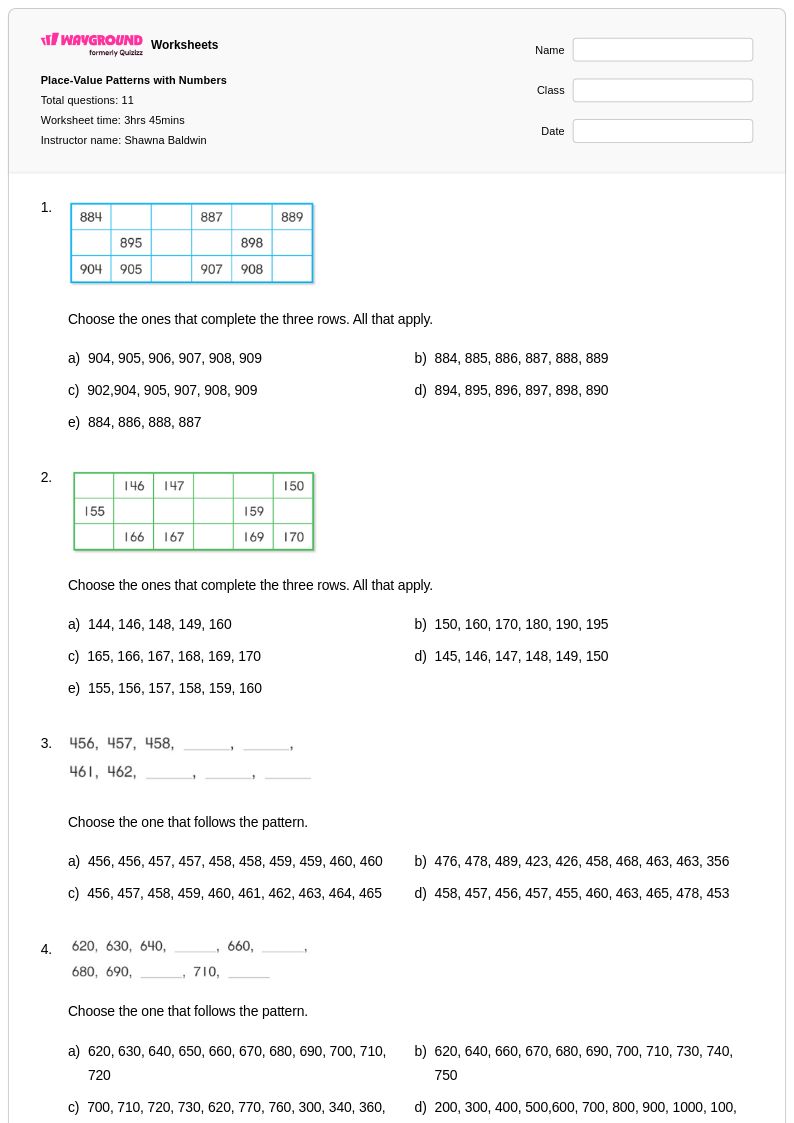
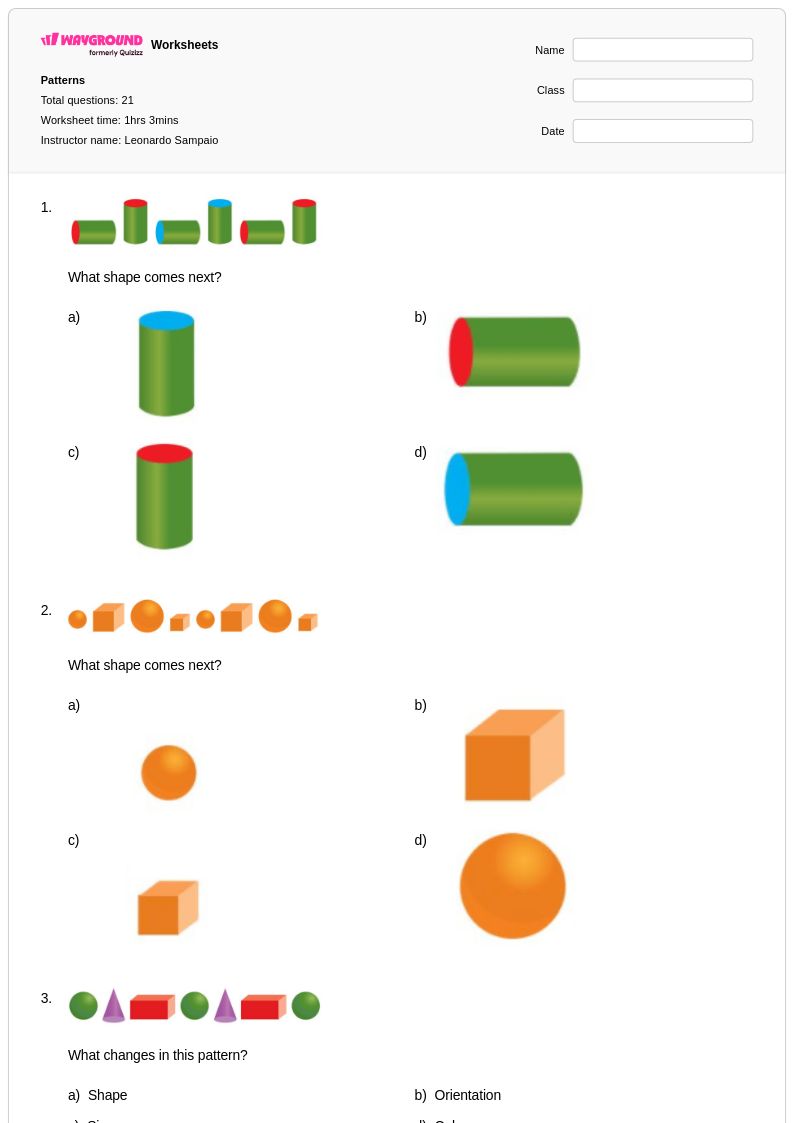
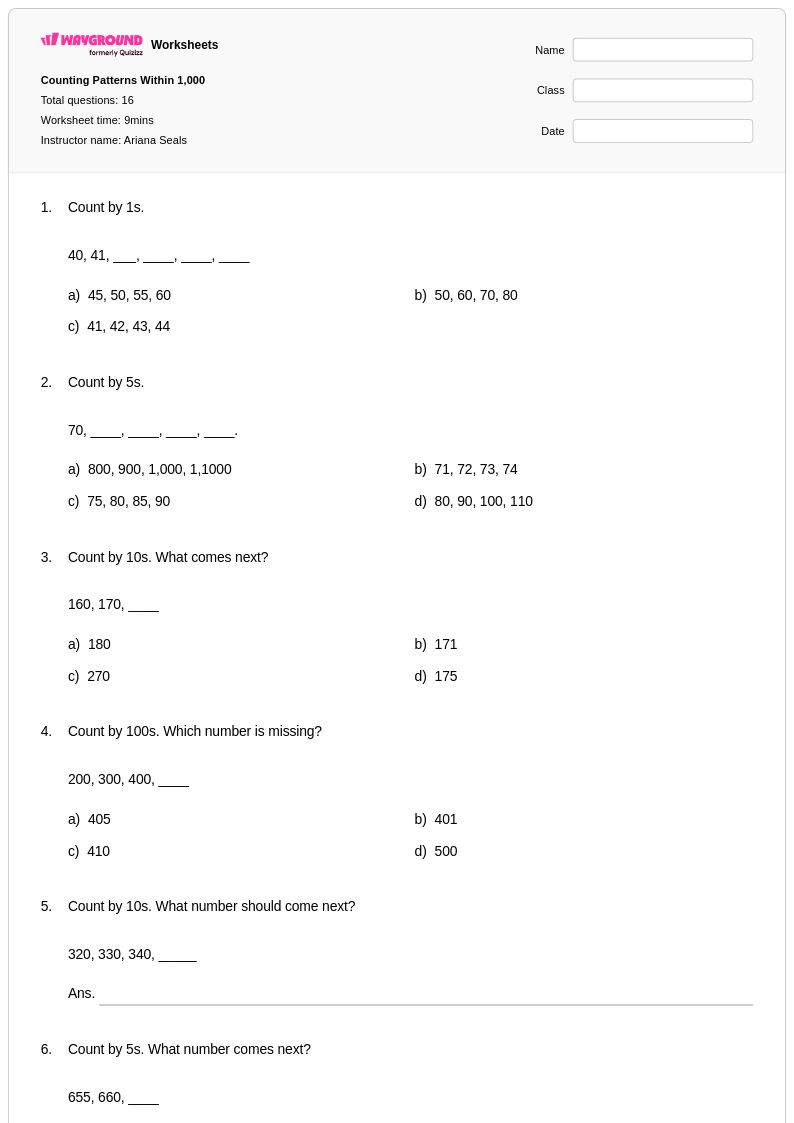
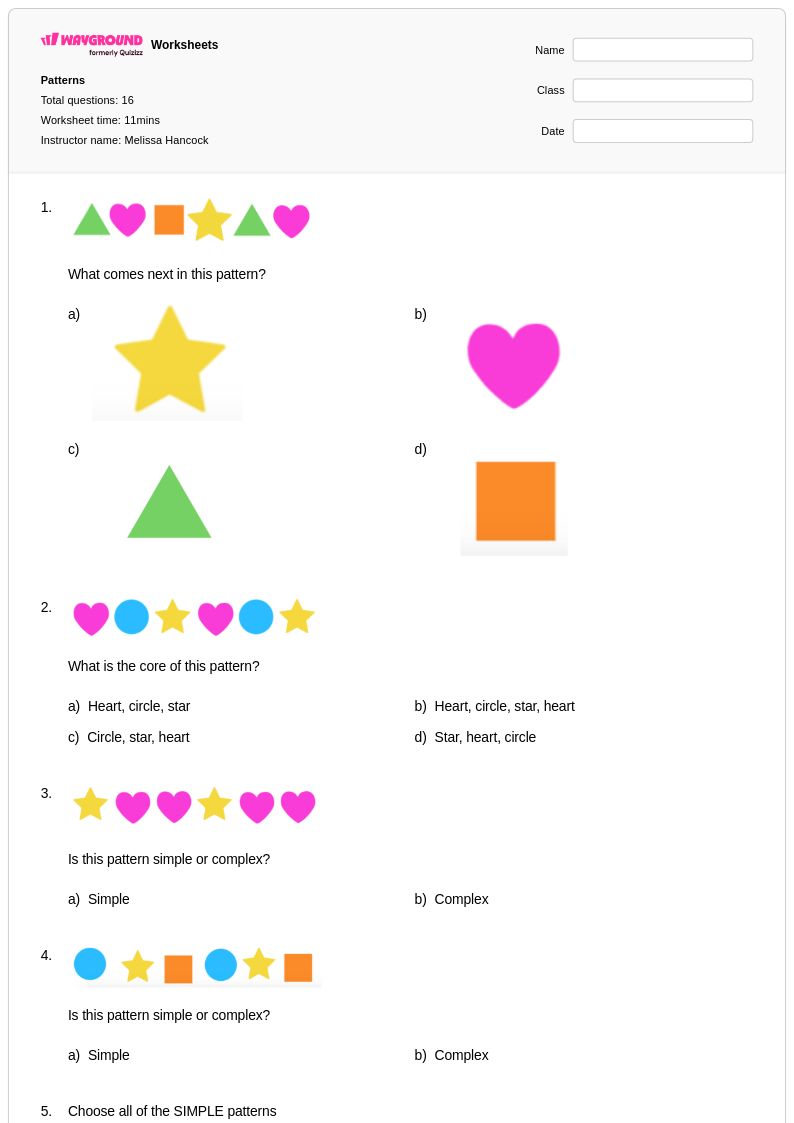
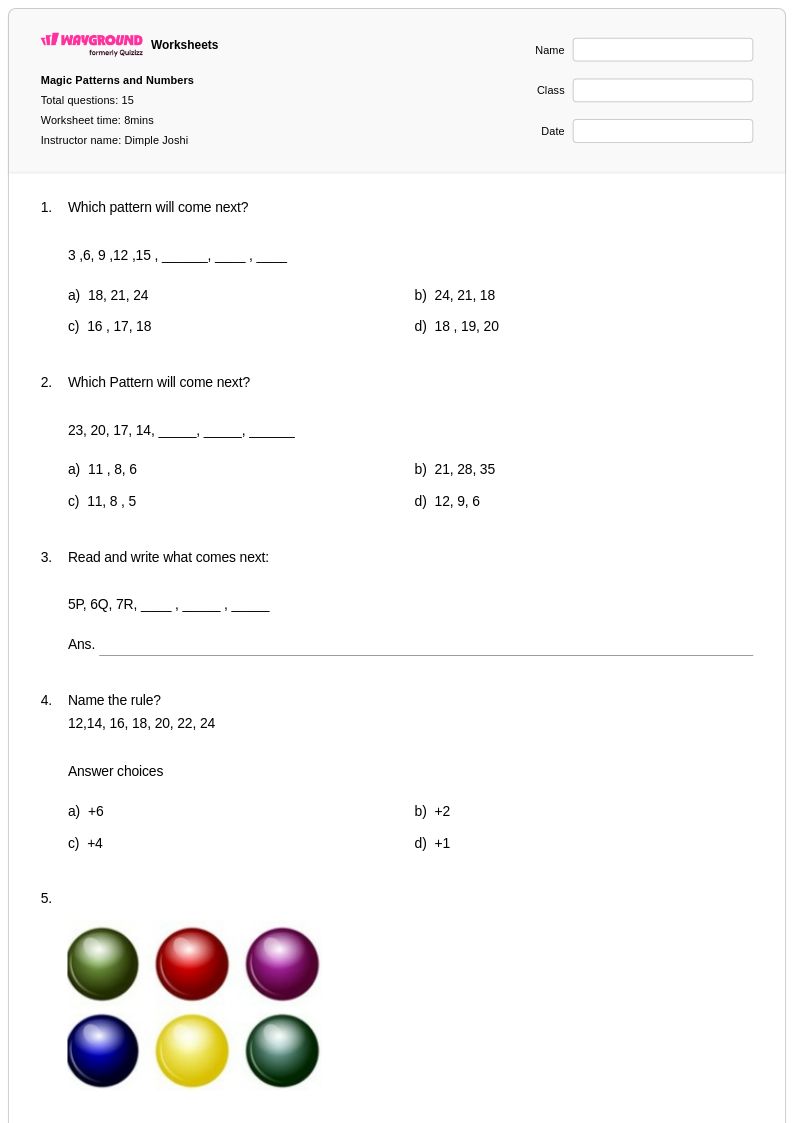
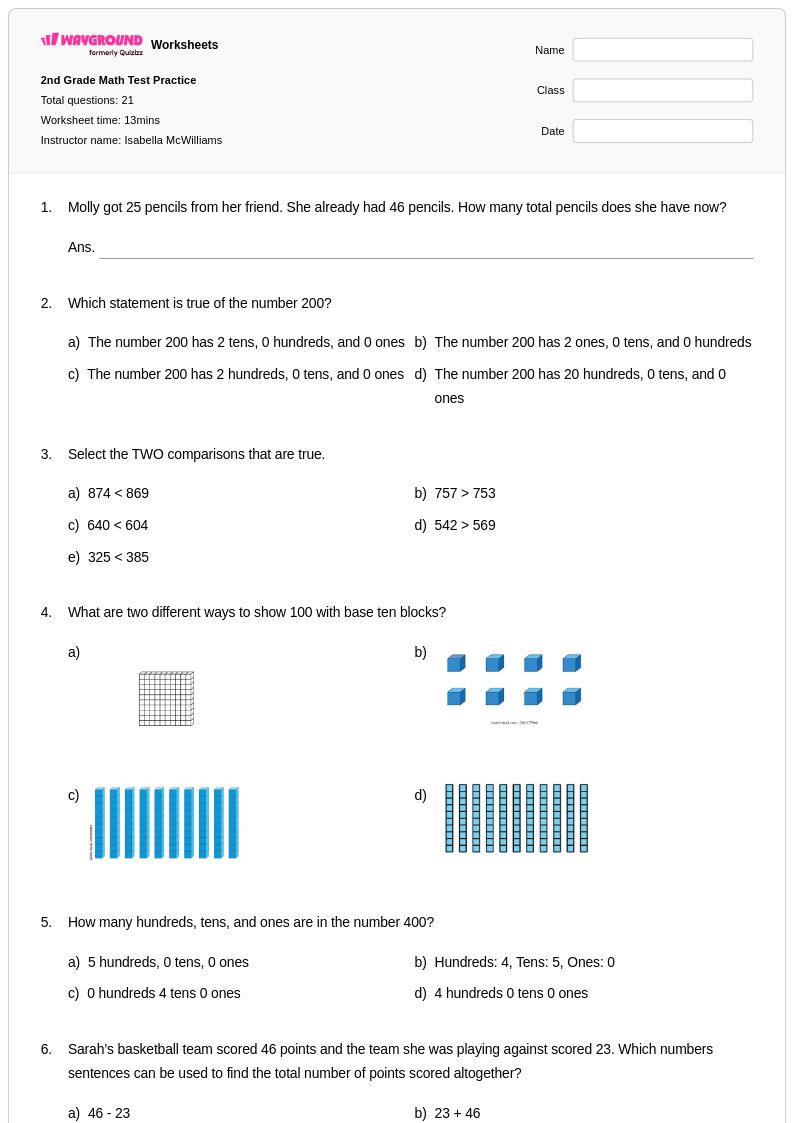
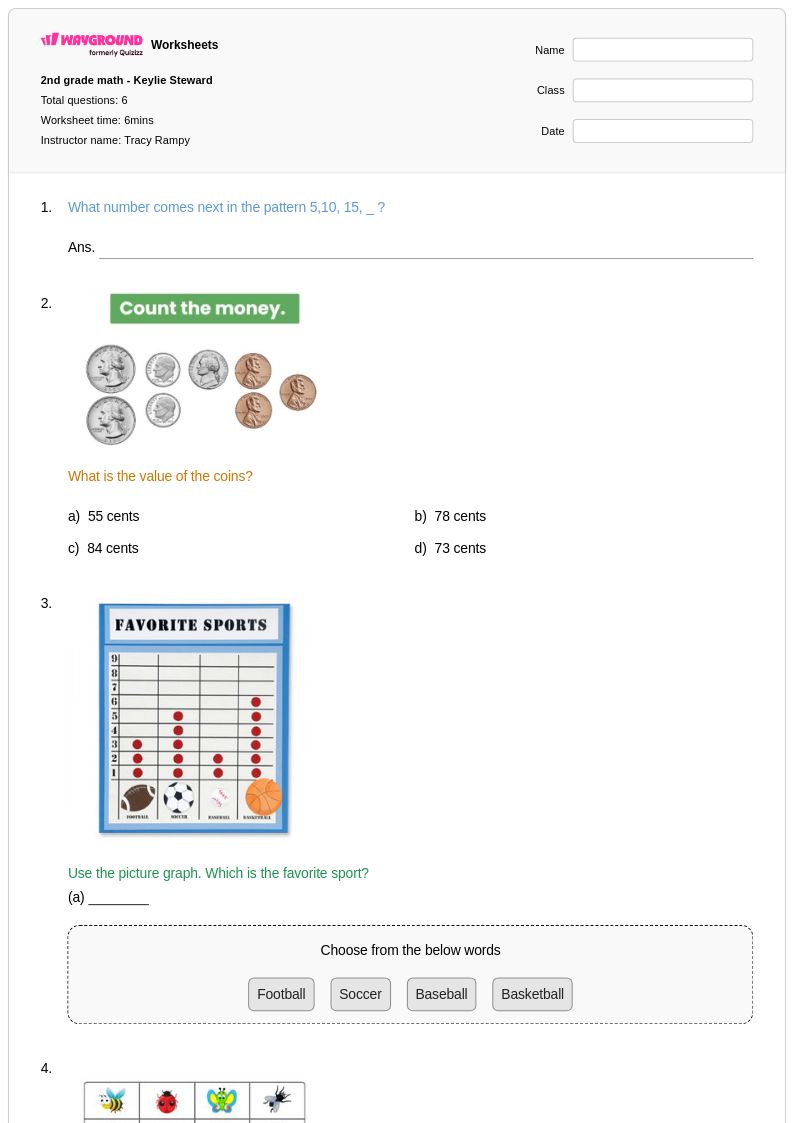
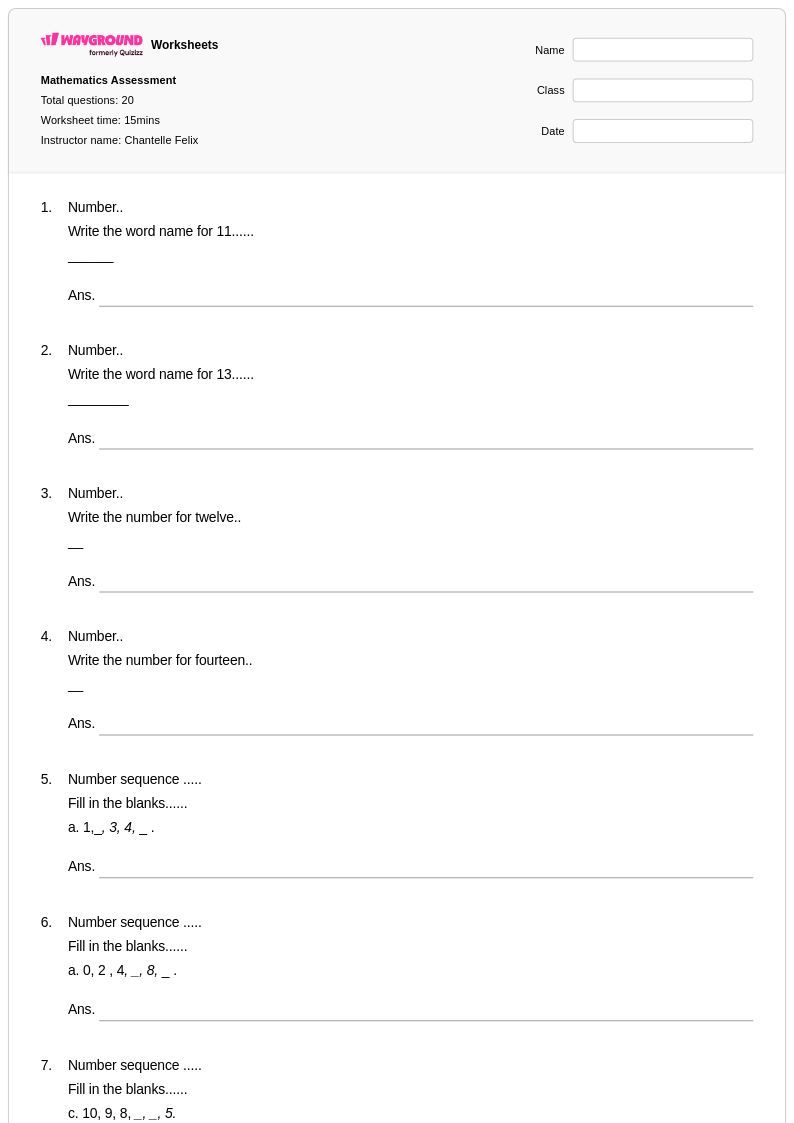
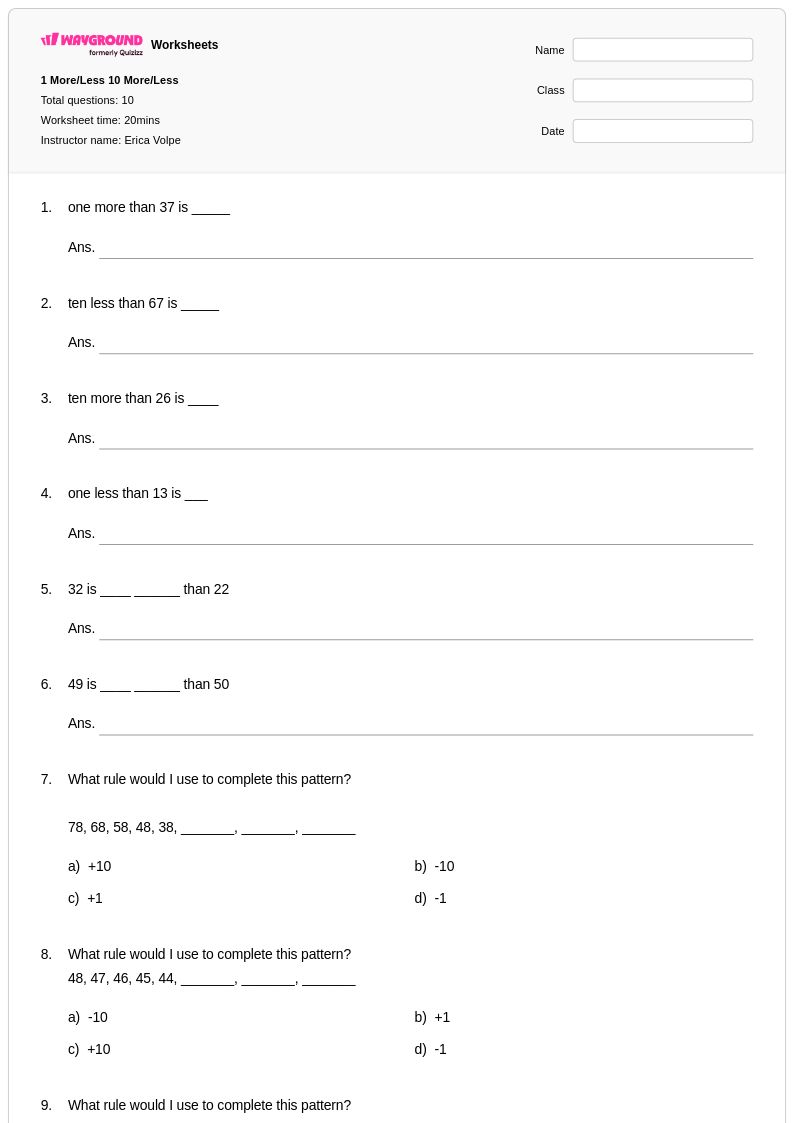
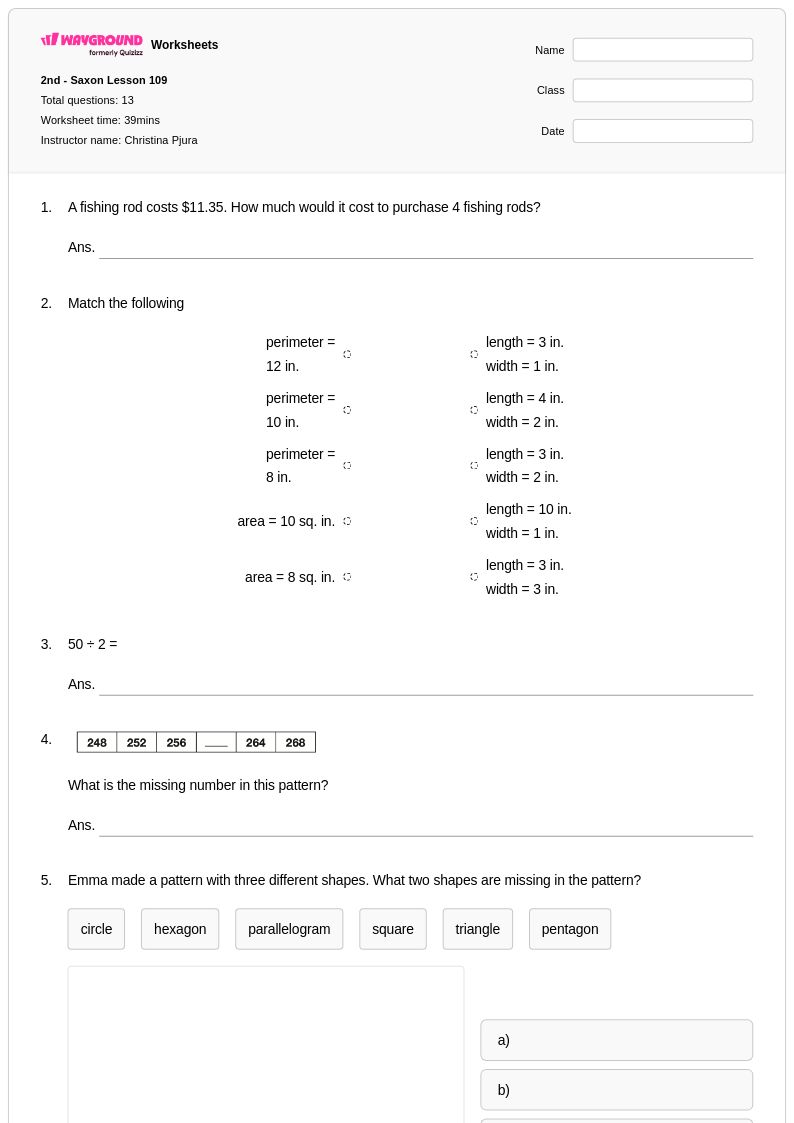
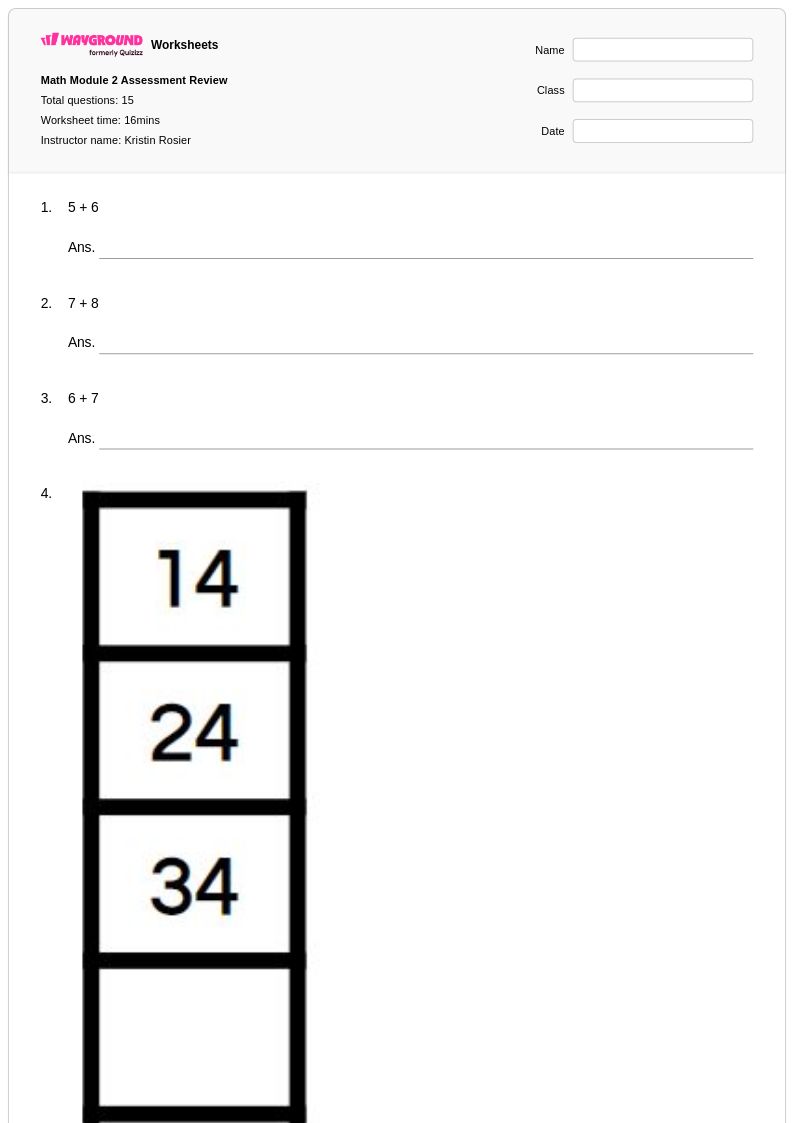
Year 2 dot patterns worksheets help students develop number sense through engaging printables that feature practice problems with visual pattern recognition, available as free PDF downloads with complete answer keys.
Explore printable Dot Patterns worksheets for Year 2
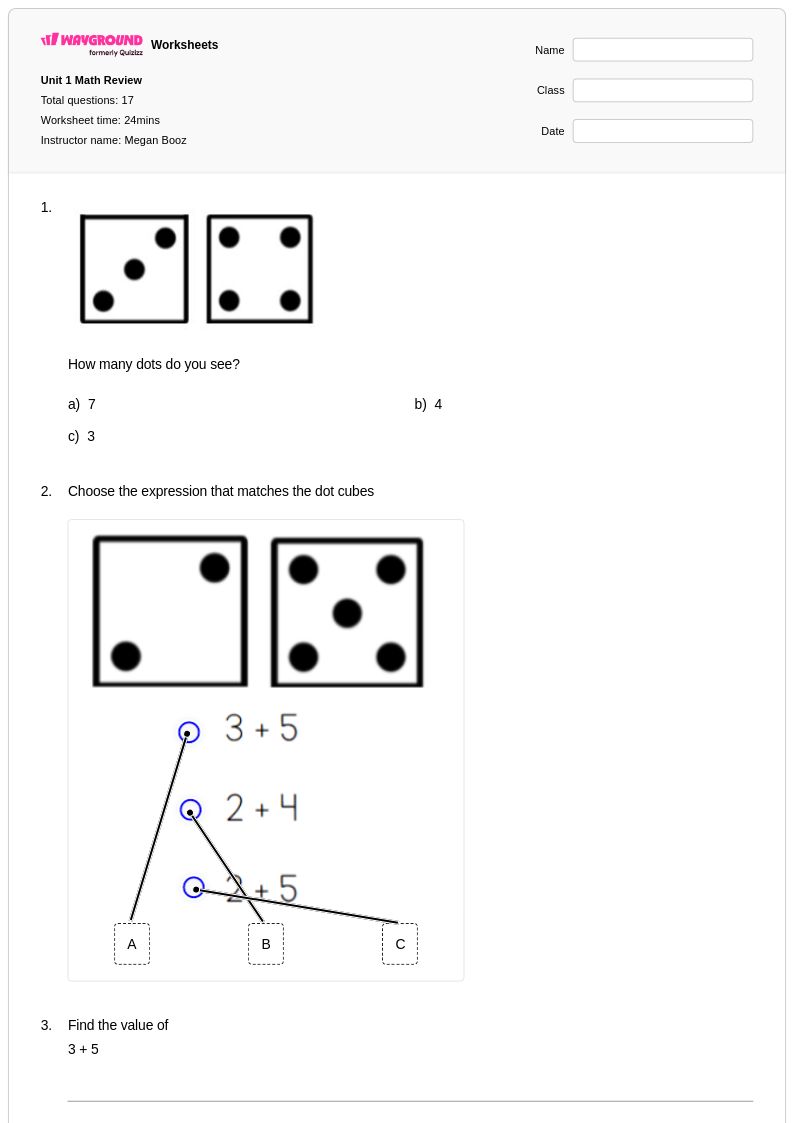
Dot patterns worksheets for Year 2 students available through Wayground (formerly Quizizz) provide essential foundation-building practice for developing number sense and visual mathematical reasoning. These carefully designed printables help young learners recognize quantity without counting, strengthen subitizing skills, and build mental math fluency through systematic exposure to various dot arrangements. Students work with practice problems that feature dots organized in familiar patterns such as dice configurations, ten frames, and arrays, enabling them to quickly identify numbers and understand numerical relationships. Each worksheet includes comprehensive answer keys and free pdf downloads, making them accessible resources for consistent skill reinforcement both in classroom settings and at home.
Wayground (formerly Quizizz) empowers educators with an extensive collection of millions of teacher-created dot pattern resources that support diverse learning needs in Year 2 mathematics instruction. The platform's robust search and filtering capabilities allow teachers to quickly locate worksheets aligned with specific standards and differentiated for various skill levels, from basic pattern recognition to more complex numerical reasoning tasks. These customizable materials are available in both printable and digital pdf formats, providing flexibility for lesson planning, targeted remediation, and enrichment activities. Teachers can seamlessly integrate these dot pattern worksheets into their number sense curriculum, using the visual representations to bridge concrete and abstract mathematical thinking while building students' confidence in numerical fluency and pattern recognition skills.
FAQs
How do I teach dot patterns to second graders?
In second grade, dot patterns shift from basic subitizing toward supporting mental math and early multiplication thinking. Use arrays — rows and columns of dots — to help students see that 3 rows of 4 is the same quantity as 4 rows of 3. That visual experience with equal groups is the conceptual groundwork for multiplication, even before students encounter the operation formally. Dice and ten-frame arrangements are still useful for students who need fluency reinforcement.
What do dot pattern worksheets help second graders practice?
At this level, the most valuable practice involves: recognizing quantities in array arrangements without counting, comparing two dot patterns and explaining which is greater and why, and connecting dot arrangements to addition expressions (e.g., a 2×5 array as 5+5). These tasks move students from passive recognition to active reasoning about how numbers are structured.
What mistakes do second graders make with dot patterns?
Students at this level often revert to counting by ones when an arrangement is unfamiliar, even if they can subitize standard dice or domino patterns — which reveals that their recognition is tied to specific shapes rather than quantity understanding. On array tasks, a common error is counting the perimeter dots rather than all dots in the interior, especially in larger grids. Both errors are worth catching early because they'll resurface in multiplication.
How do I use these Grade 2 dot pattern worksheets in my class?
The worksheets are printable PDFs with complete answer keys included. They work well as a daily number sense warm-up or a targeted small-group activity. You can also run them as digital quizzes on Wayground for a paperless session. For paper submissions, the Wayground for Teachers app lets you scan and grade student work without manually re-entering responses.
How do dot patterns connect to the second-grade Common Core math progression?
Common Core introduces rectangular arrays in second grade as a foundation for understanding multiplication — students are expected to use repeated addition to find totals in rows and columns. Dot pattern work in arrays directly supports this: a student who can look at a 3×4 dot array and see 'three groups of four' is already thinking in the way Common Core builds toward when multiplication is formally introduced in third grade.
Can I use dot pattern worksheets with second graders who are at very different skill levels?
Yes. Students still working on basic subitizing can use simpler dice and domino arrangements, while students ready for more challenge work with larger arrays and comparison tasks. Wayground lets you produce alternate versions of the same worksheet with adjusted font size or spacing, and you can apply the Read Aloud accommodation for students who need question prompts read to them — without changing anything for the rest of the class.