Free Printable Dred Scott Decision Worksheets for Year 9
Year 9 students can explore the landmark Dred Scott Decision through Wayground's comprehensive collection of free worksheets, printables, and practice problems with answer keys that help develop critical thinking about this pivotal U.S. History case.
Explore printable Dred Scott Decision worksheets for Year 9
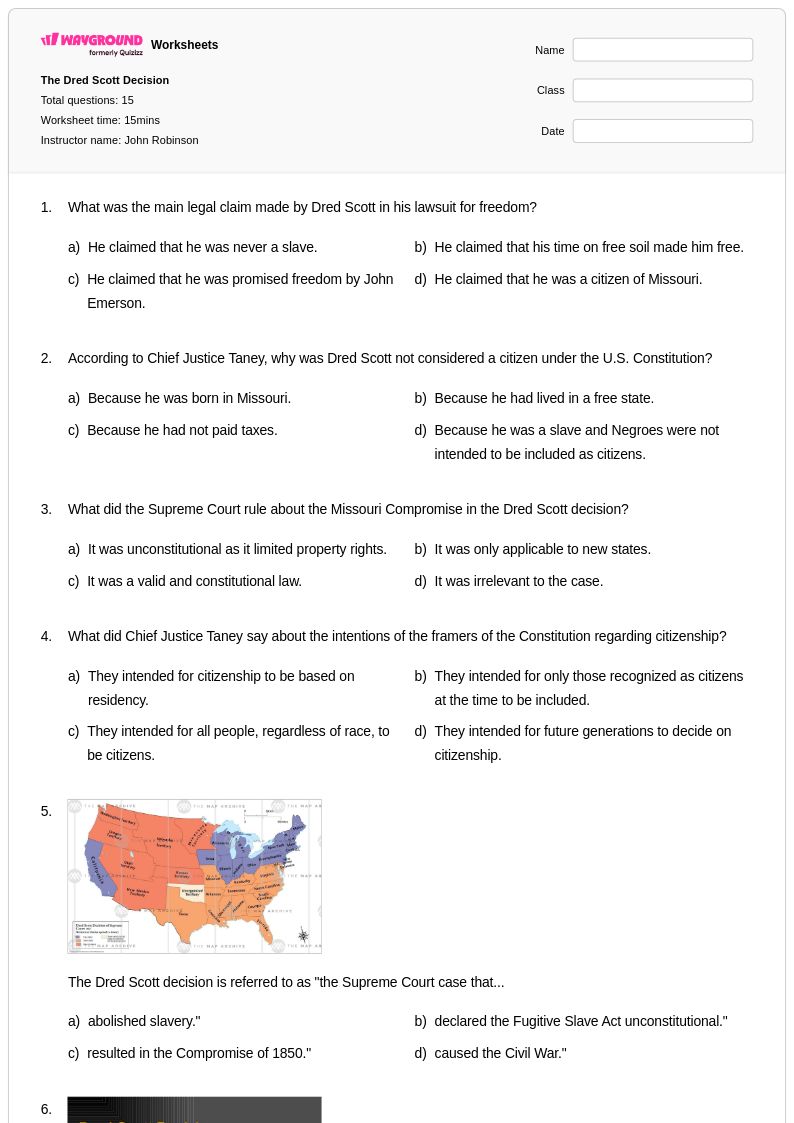
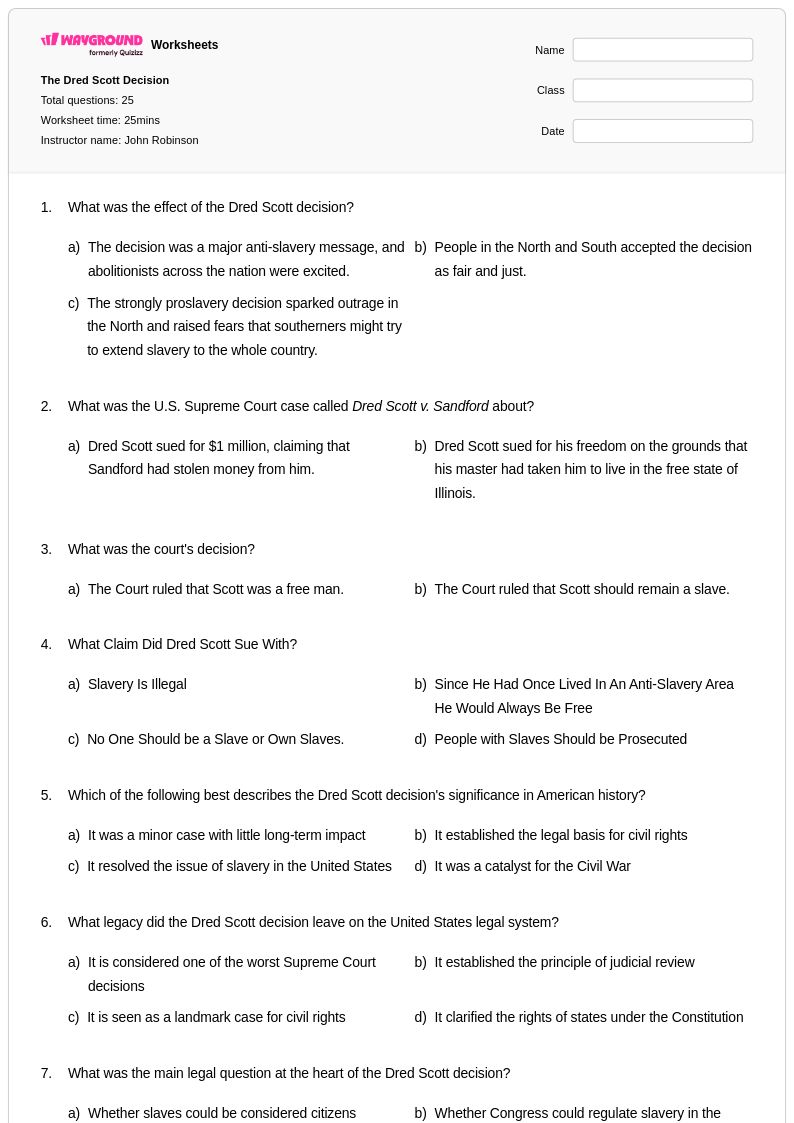
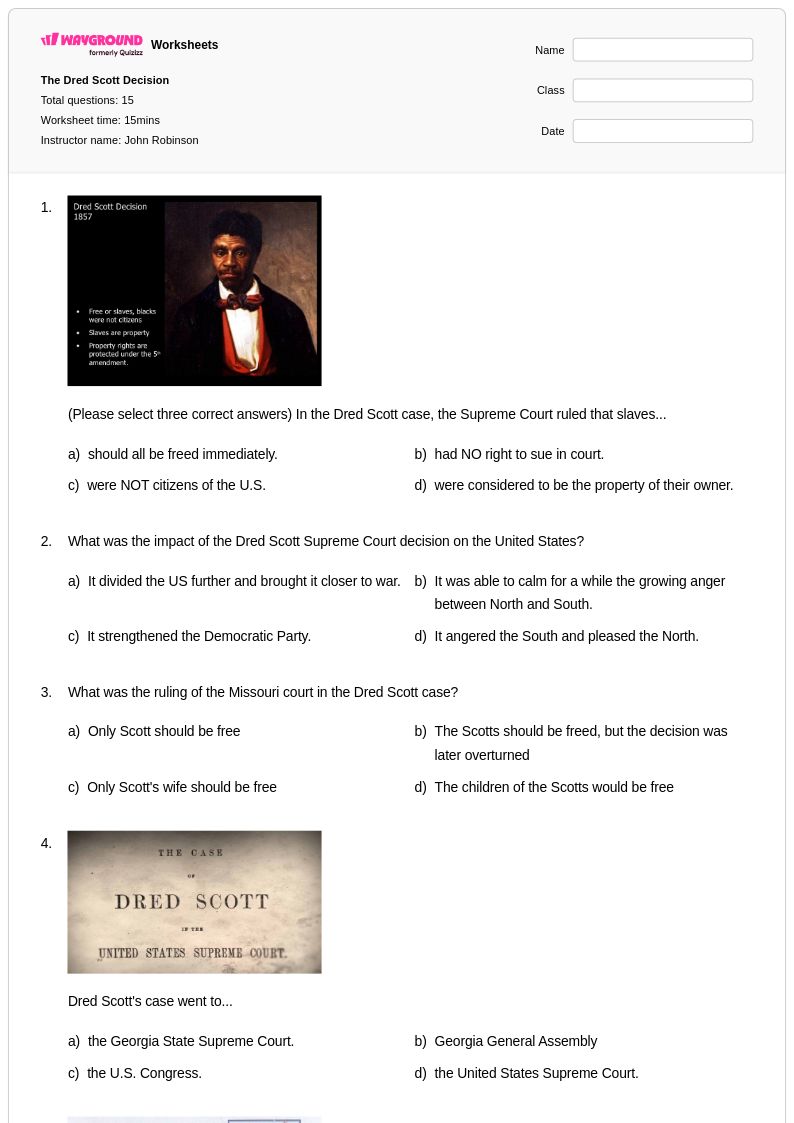
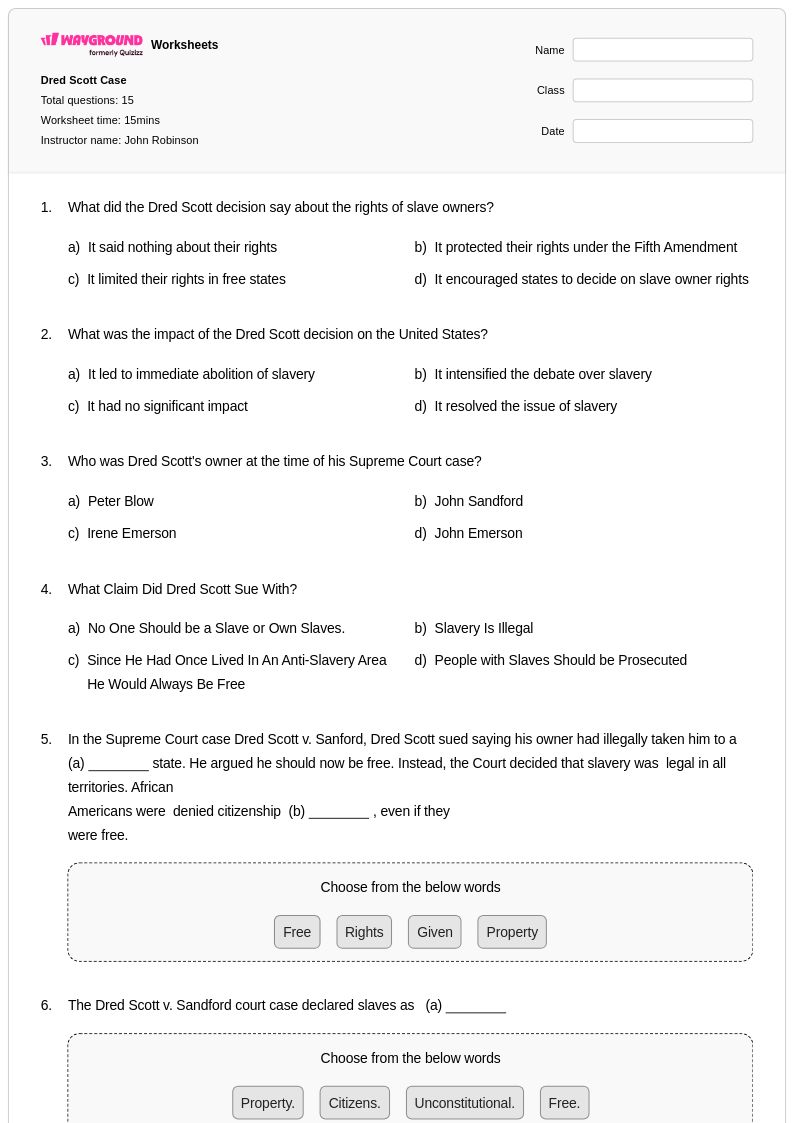
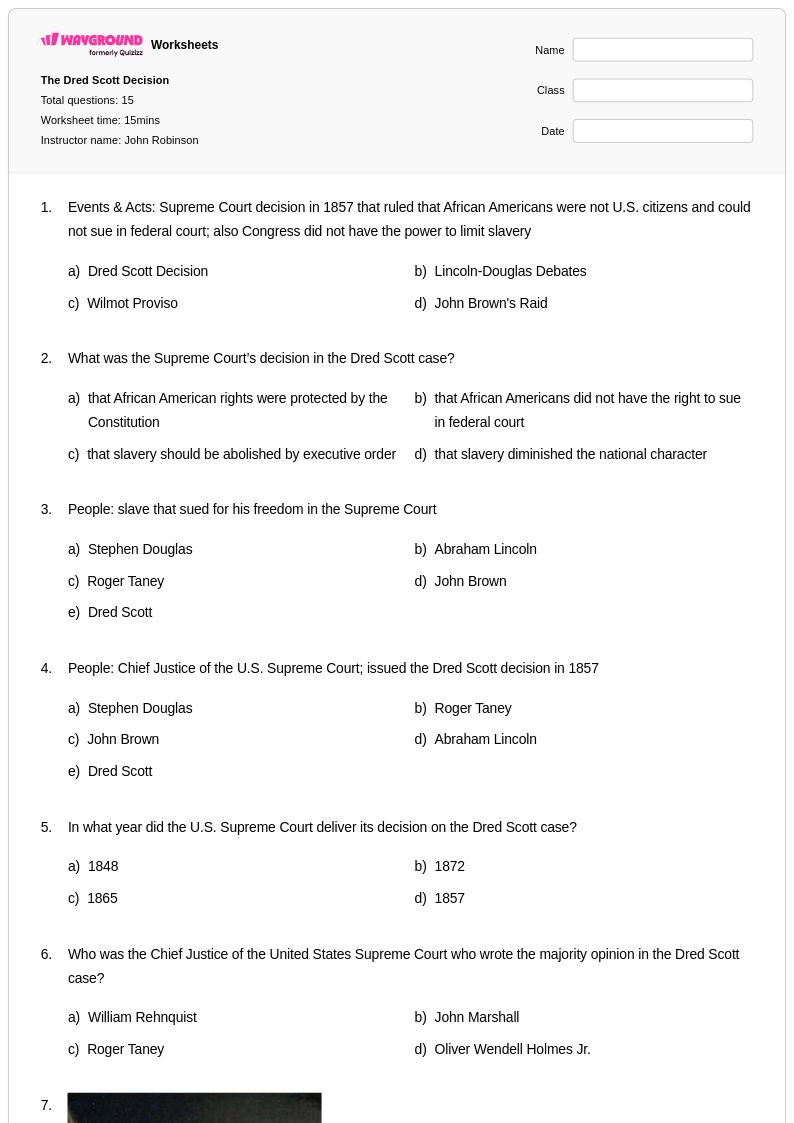
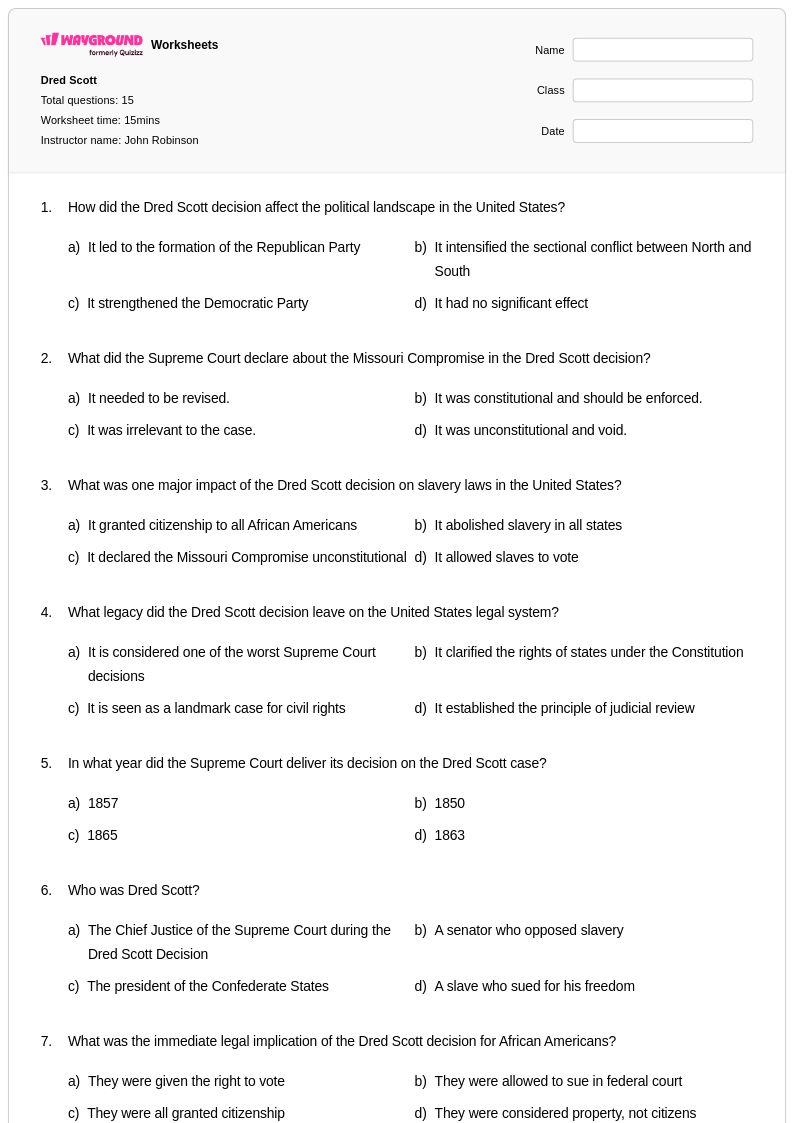
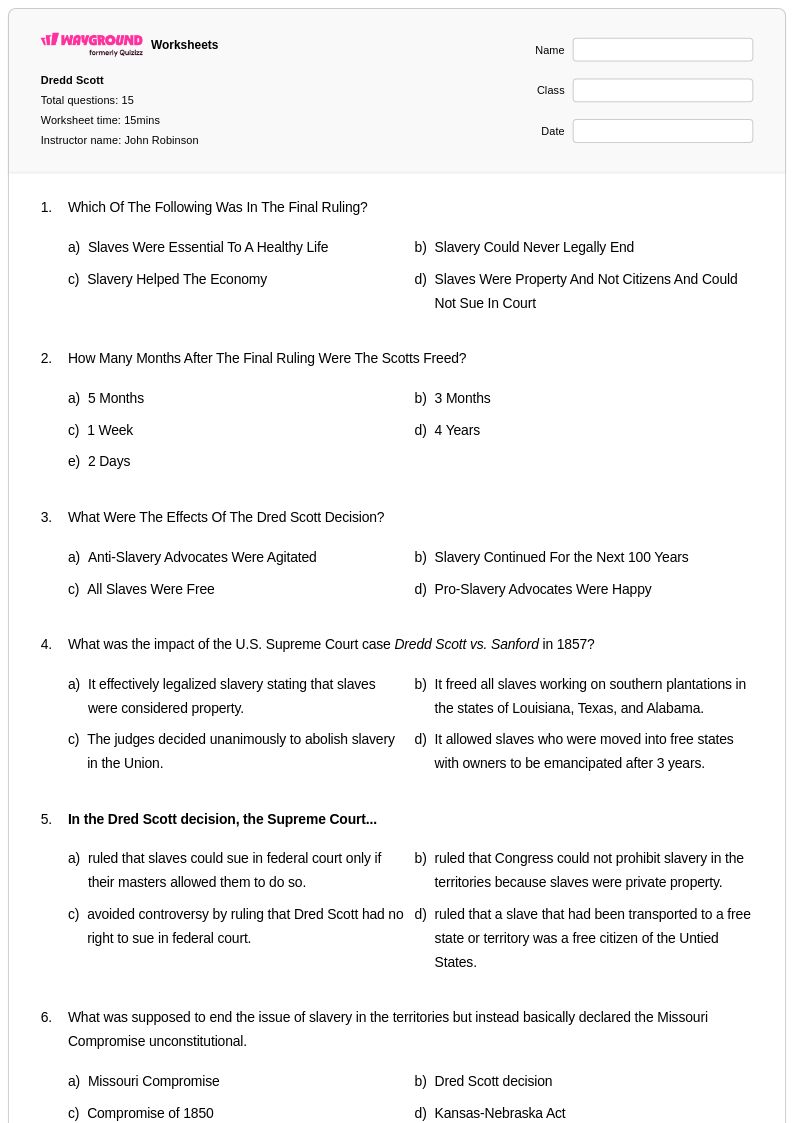
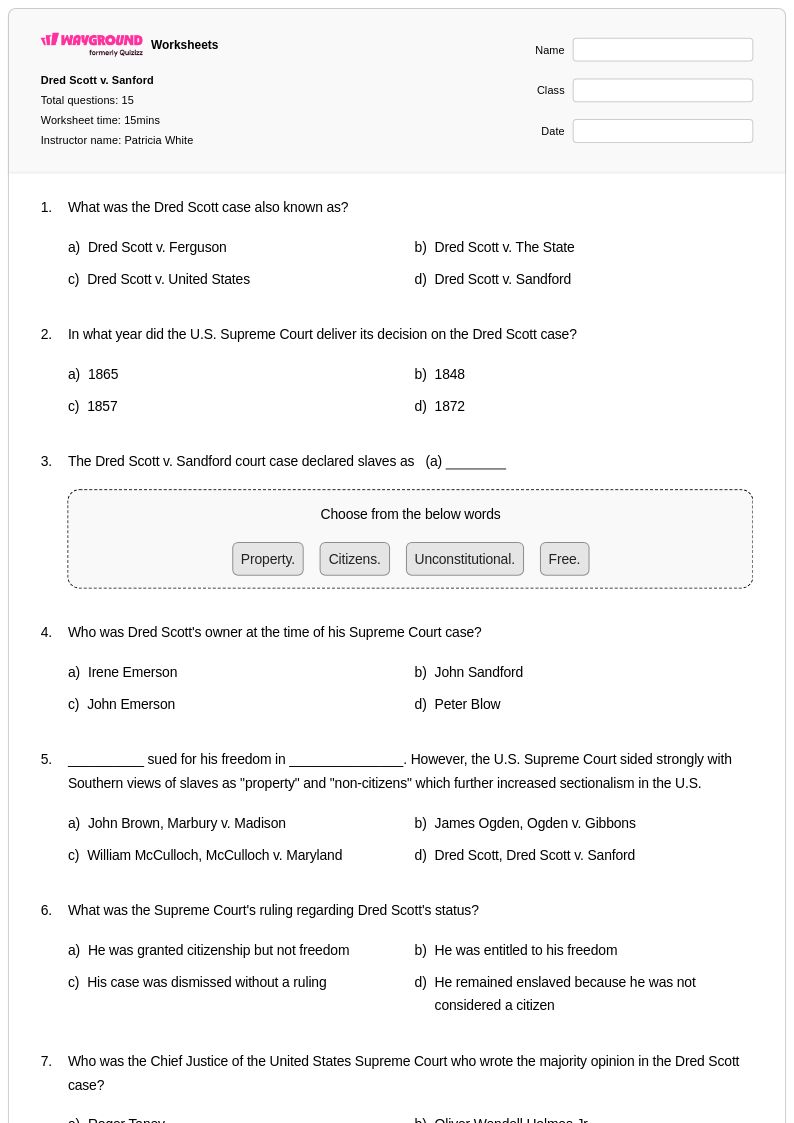
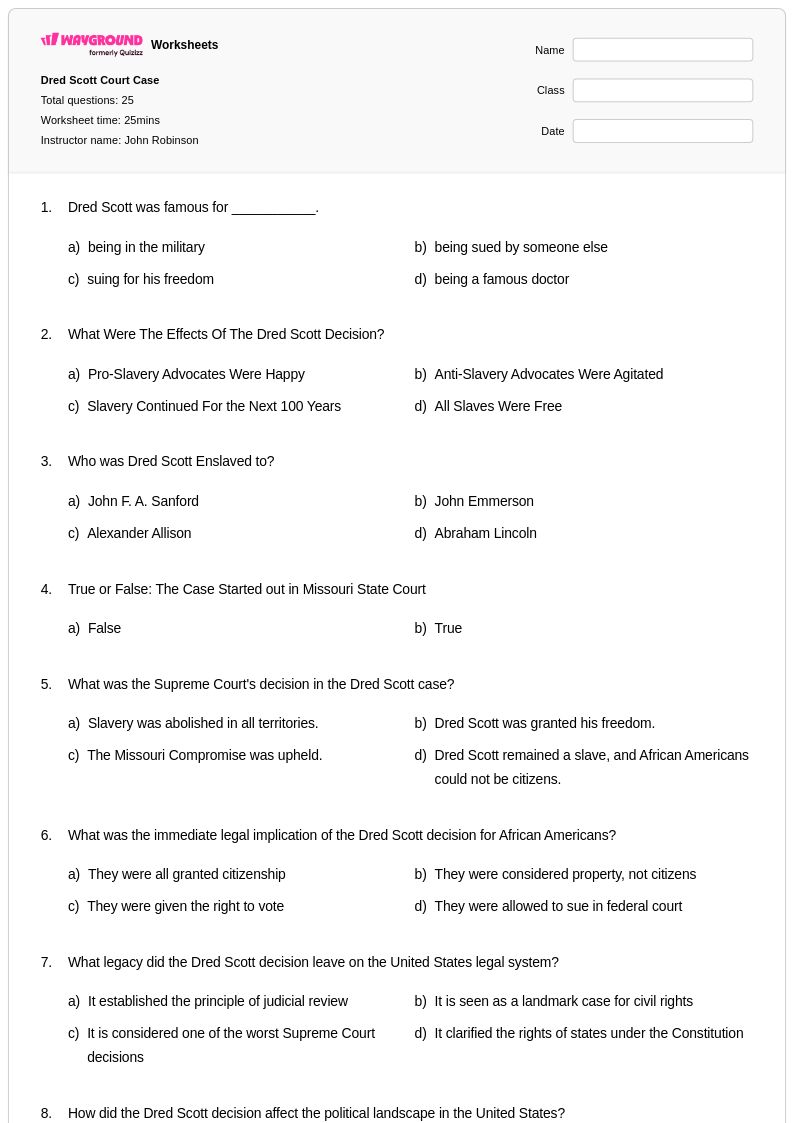
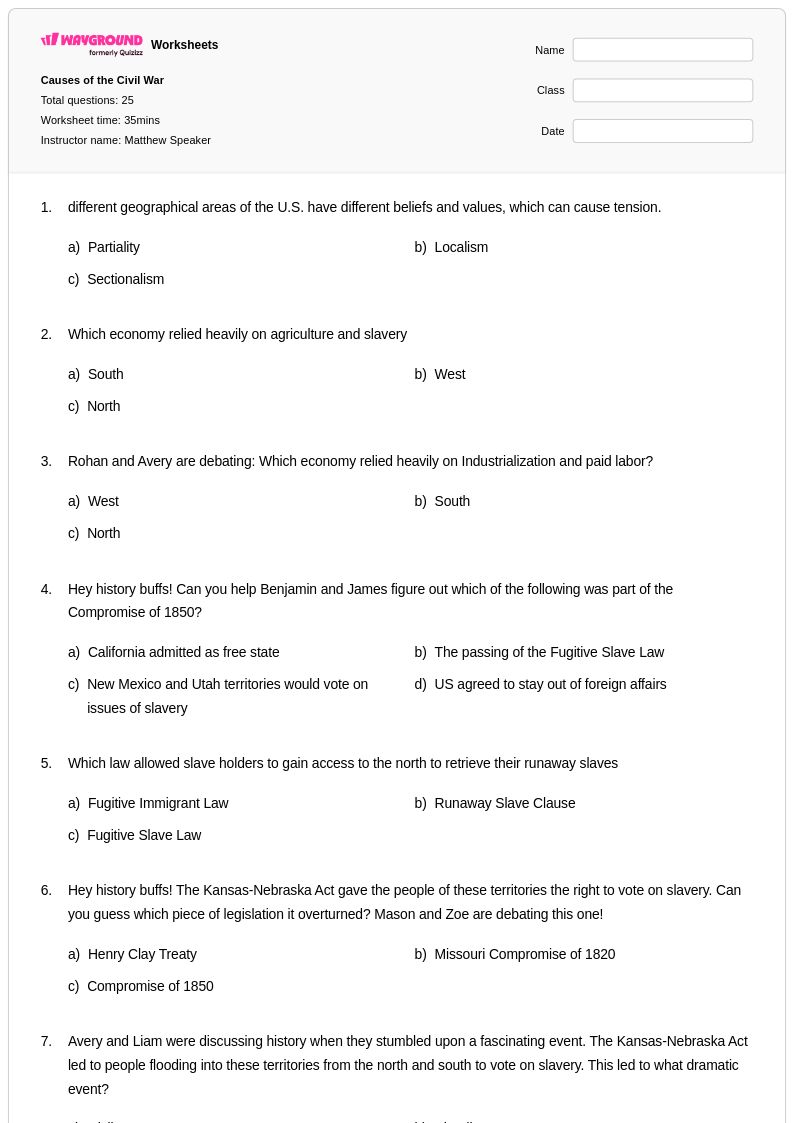
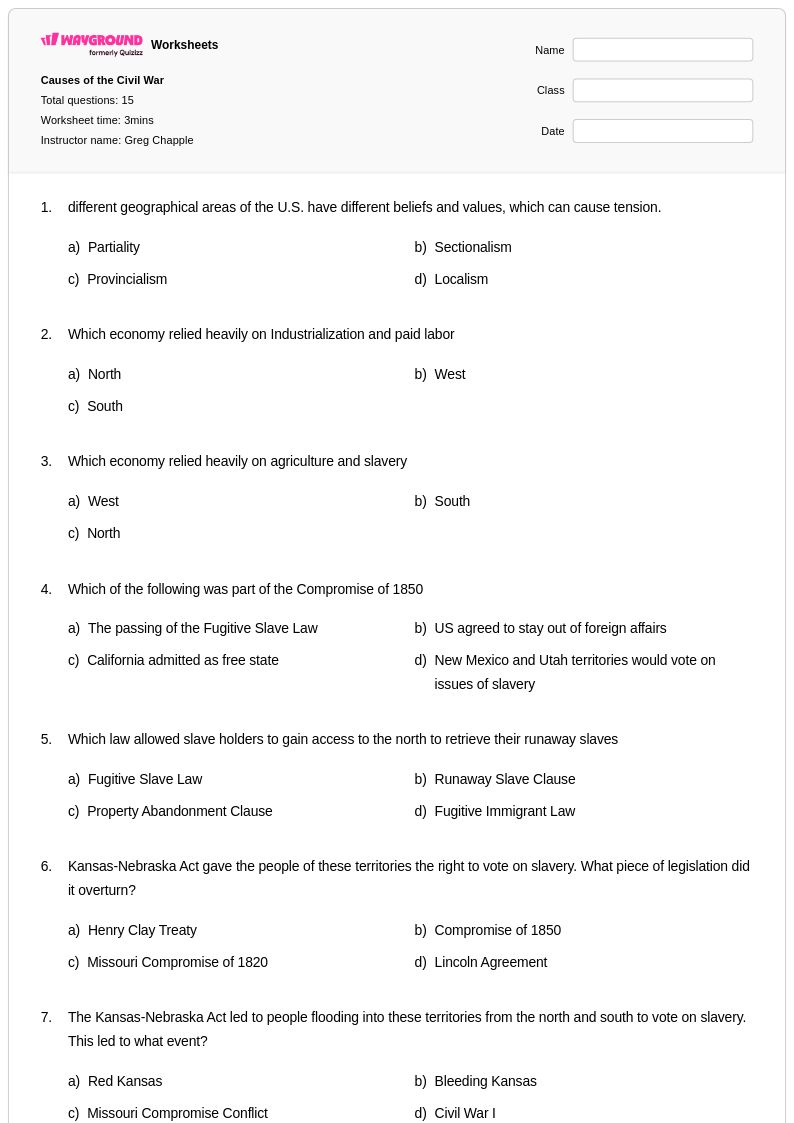
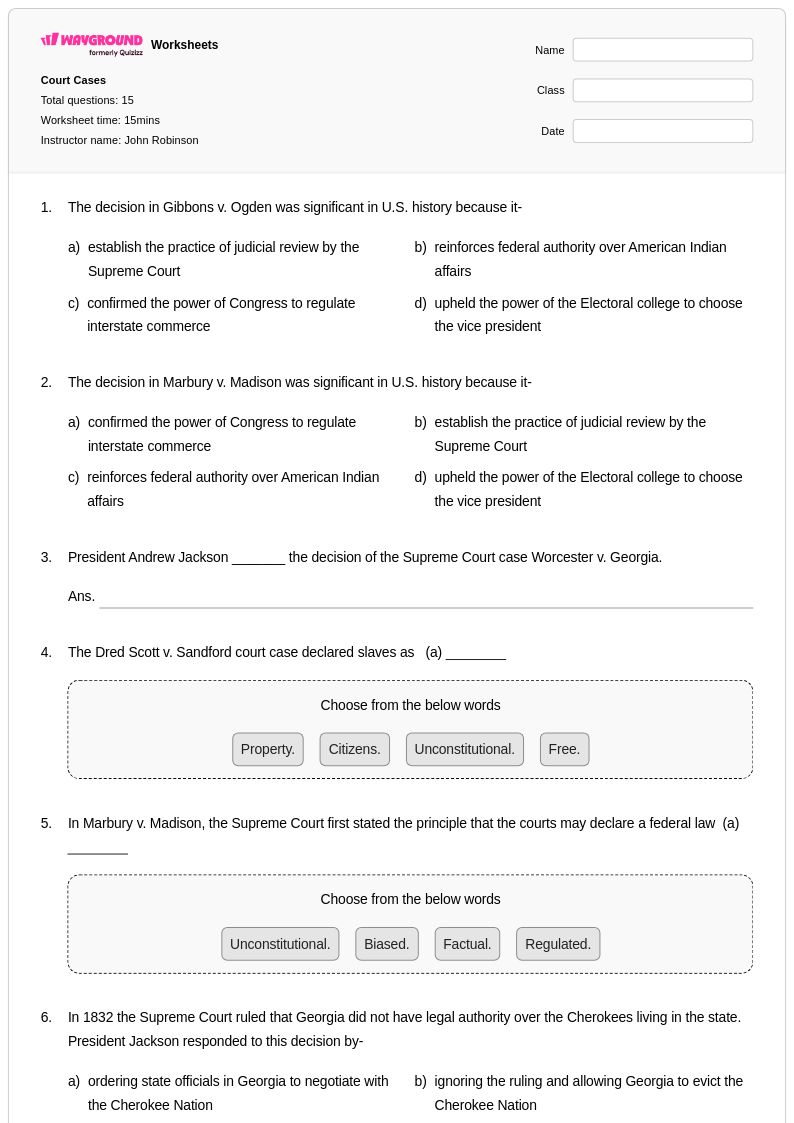
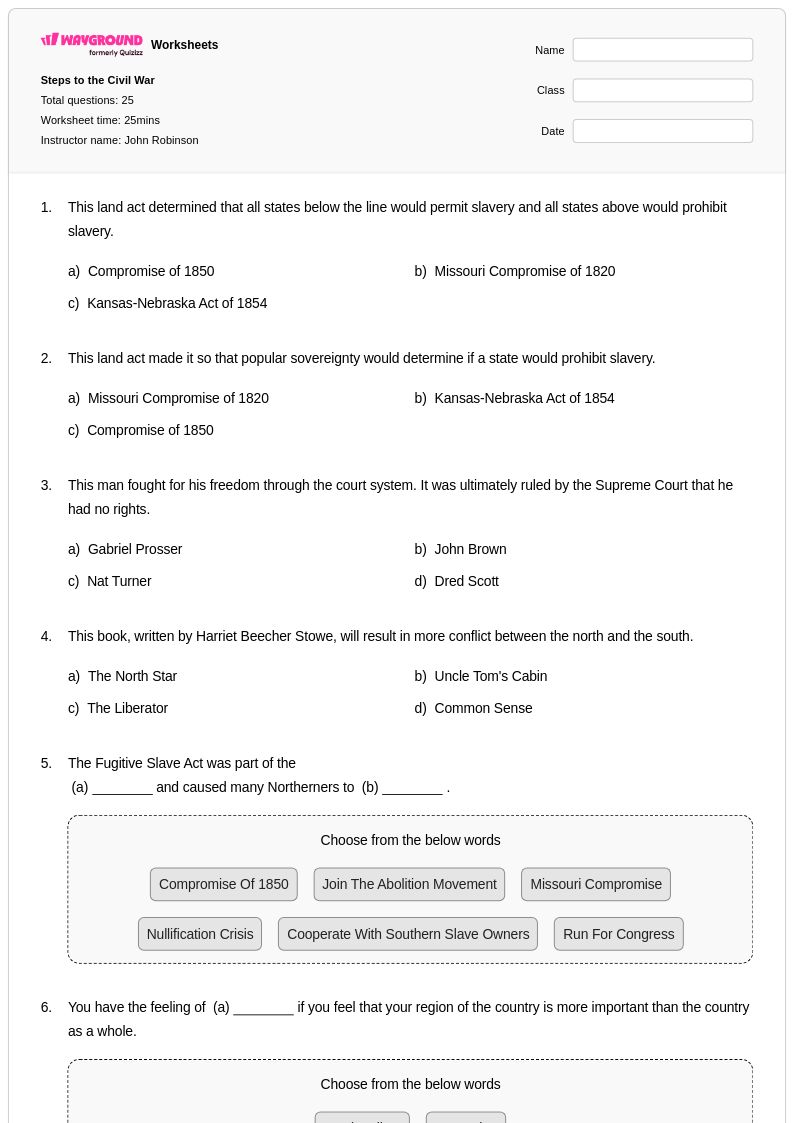
The Dred Scott Decision worksheets available through Wayground (formerly Quizizz) provide Year 9 students with comprehensive resources to examine one of the most controversial Supreme Court cases in American history. These expertly crafted materials guide students through the complex legal, social, and political implications of the 1857 ruling that declared African Americans could not be citizens and that Congress lacked authority to prohibit slavery in federal territories. Students engage with primary source documents, analyze Chief Justice Roger Taney's majority opinion, and explore the decision's role in escalating tensions between North and South prior to the Civil War. The worksheets strengthen critical thinking skills through document analysis, cause-and-effect relationships, and historical interpretation while providing answer keys and free printables that support both classroom instruction and independent practice problems focused on this pivotal moment in constitutional history.
Wayground (formerly Quizizz) empowers educators with millions of teacher-created resources specifically designed to bring complex historical concepts like the Dred Scott Decision to life in Year 9 classrooms. The platform's robust search and filtering capabilities allow teachers to quickly locate standards-aligned materials that match their specific curriculum requirements and student needs. Differentiation tools enable instructors to customize worksheets for various learning levels, while the availability of both printable pdf formats and digital versions provides maximum flexibility for diverse classroom environments. These comprehensive resources support effective lesson planning by offering ready-to-use materials for initial instruction, targeted remediation for struggling learners, and enrichment activities for advanced students, ensuring that all ninth-graders can master the historical significance and lasting impact of this landmark Supreme Court case through meaningful skill practice and engagement.
FAQs
How do I teach the Dred Scott Decision to middle or high school students?
Teaching the Dred Scott Decision effectively requires grounding students in the constitutional debates over citizenship and federal authority before presenting the 1857 ruling itself. Start with the legal question Dred Scott raised, then walk students through Chief Justice Roger Taney's majority opinion, focusing on the two core holdings: that African Americans were not U.S. citizens and that Congress could not ban slavery in federal territories. Connecting the ruling to the broader timeline leading to the Civil War helps students understand why historians consider it one of the most consequential and damaging Supreme Court decisions in American history.
What primary sources can I use when teaching the Dred Scott Decision?
Chief Justice Roger Taney's majority opinion is the most essential primary source, as it lays out the constitutional reasoning behind both the citizenship and territorial slavery holdings. Supplementing with abolitionist responses, newspaper coverage from 1857, and excerpts from dissenting opinions by Justices Curtis and McLean gives students a fuller picture of how the decision was received. Asking students to compare Taney's argument with the language of the Declaration of Independence or the Fifth Amendment deepens their analysis of the constitutional contradictions at the heart of the case.
What exercises help students practice analyzing the Dred Scott Decision?
Effective practice exercises include document analysis tasks where students evaluate the constitutional arguments in Taney's majority opinion, compare the majority and dissenting opinions, and trace the legal reasoning step by step. Case study prompts that ask students to assess the decision's impact on the abolition movement, federalism, and the road to the Civil War build both content knowledge and historical thinking skills. Structured response questions requiring students to connect the ruling to broader themes of citizenship and judicial power are particularly useful for reinforcing comprehension.
What mistakes do students commonly make when learning about the Dred Scott Decision?
A common error is treating the Dred Scott Decision as solely about one man's freedom rather than recognizing it as a sweeping ruling with two distinct constitutional holdings that affected all African Americans and the entire question of slavery in U.S. territories. Students also frequently confuse the ruling's effect on congressional authority, mistakenly believing it only addressed Dred Scott's personal legal status. Another misconception is underestimating the decision's role in accelerating sectional conflict; teachers should explicitly address how the ruling inflamed tensions between North and South in the four years leading to the Civil War.
How can I use Dred Scott Decision worksheets in my classroom?
Dred Scott Decision worksheets on Wayground are available as printable PDFs for traditional classroom use and in digital formats for technology-integrated environments, including the option to host them as a quiz directly on Wayground. Printable versions work well for close-reading and annotation activities, while digital formats support independent practice, remote learning, or flipped classroom models. Each worksheet includes a complete answer key, making them practical for both guided instruction and self-paced student work.
How does the Dred Scott Decision connect to the causes of the Civil War?
The 1857 ruling directly intensified sectional tensions by invalidating the Missouri Compromise and declaring that Congress had no authority to prohibit slavery in federal territories, effectively removing the legal framework that had managed the slavery debate for decades. For Northern opponents of slavery's expansion, the decision signaled that the courts could not be trusted to contain the institution, strengthening the Republican Party and figures like Abraham Lincoln. Teaching this connection helps students understand the Dred Scott Decision not as an isolated legal event but as a catalyst that made political compromise over slavery increasingly impossible.