Free Printable Lewis and Clark Expedition Worksheets for Year 9
Explore Year 9 Lewis and Clark Expedition worksheets and printables that help students learn about this pivotal westward journey through engaging practice problems, free PDF resources, and comprehensive answer keys.
Explore printable Lewis and Clark Expedition worksheets for Year 9
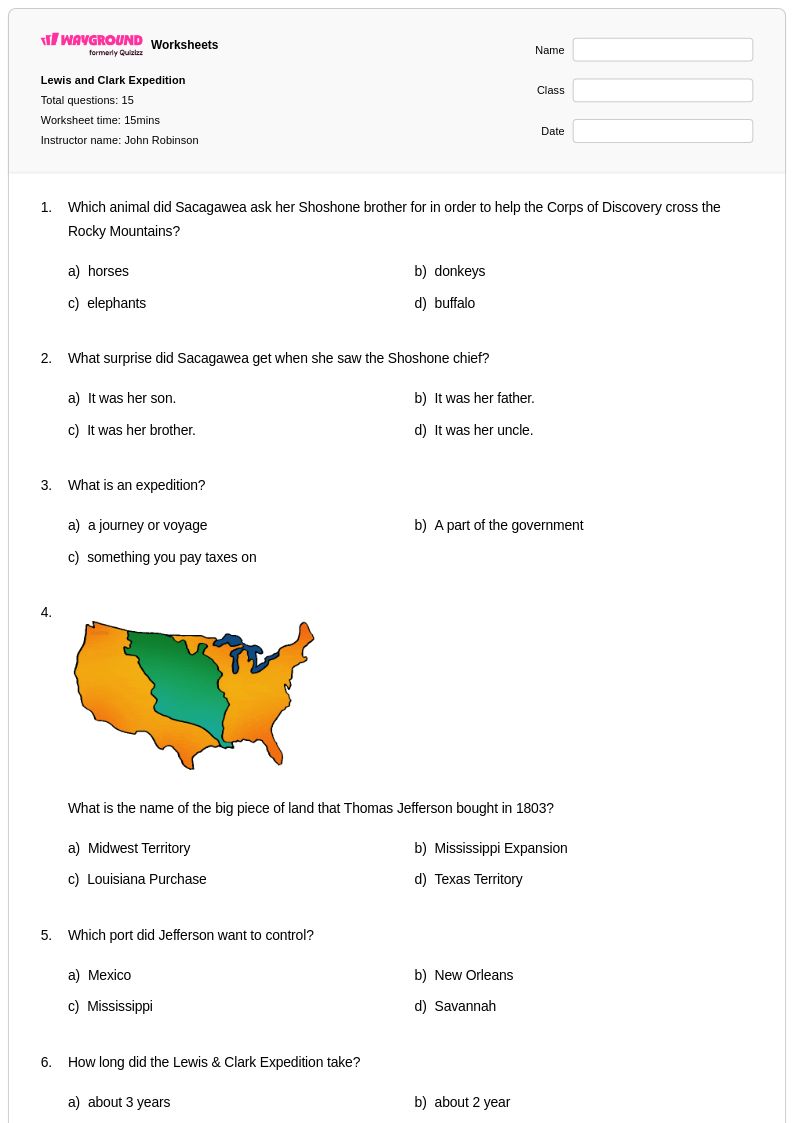
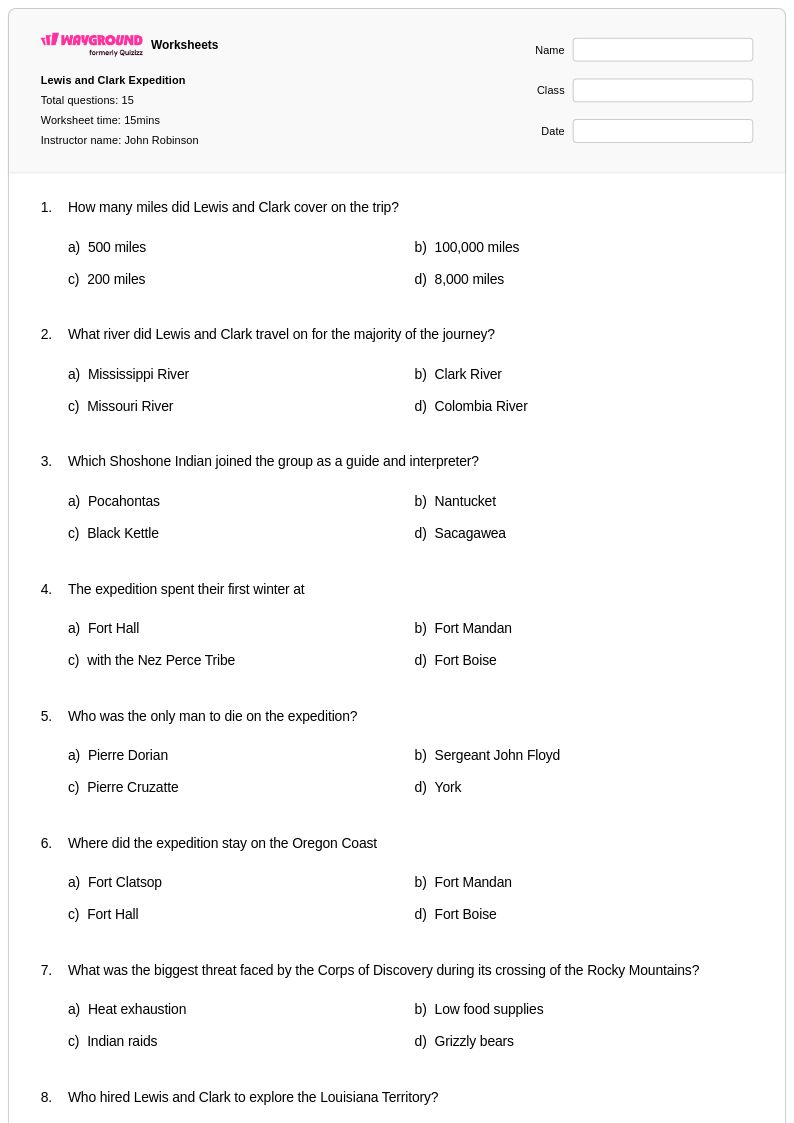
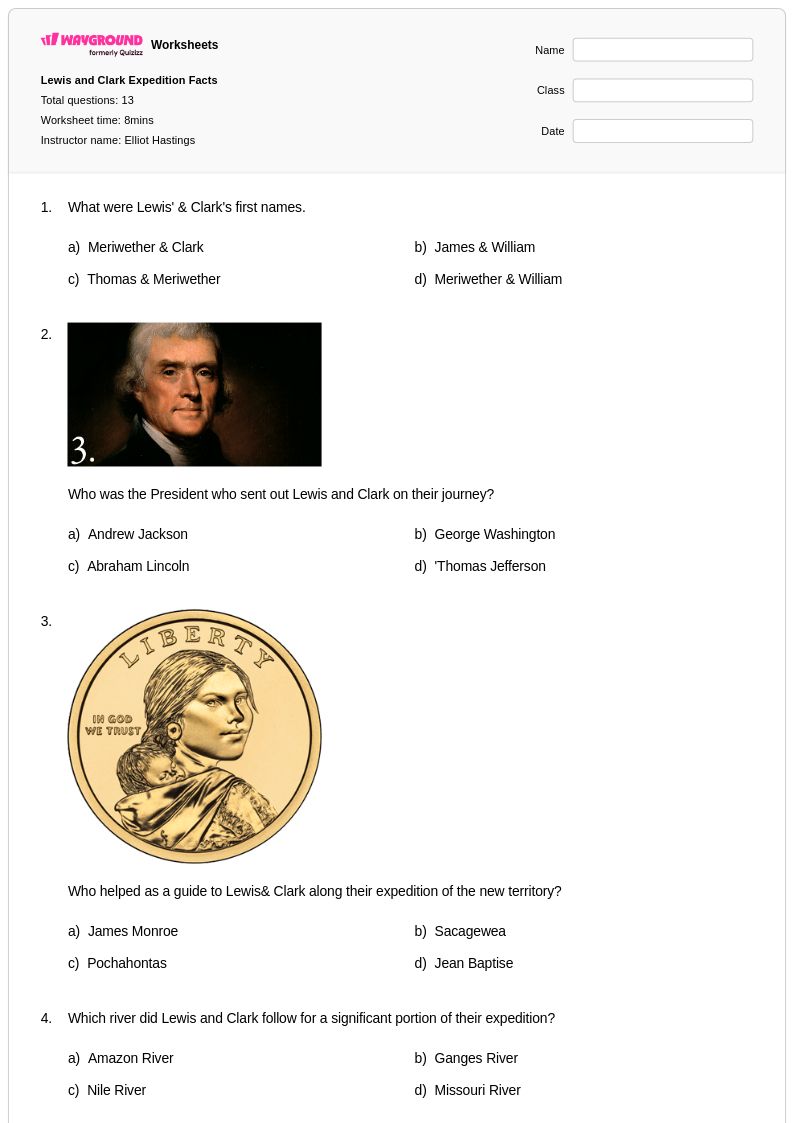
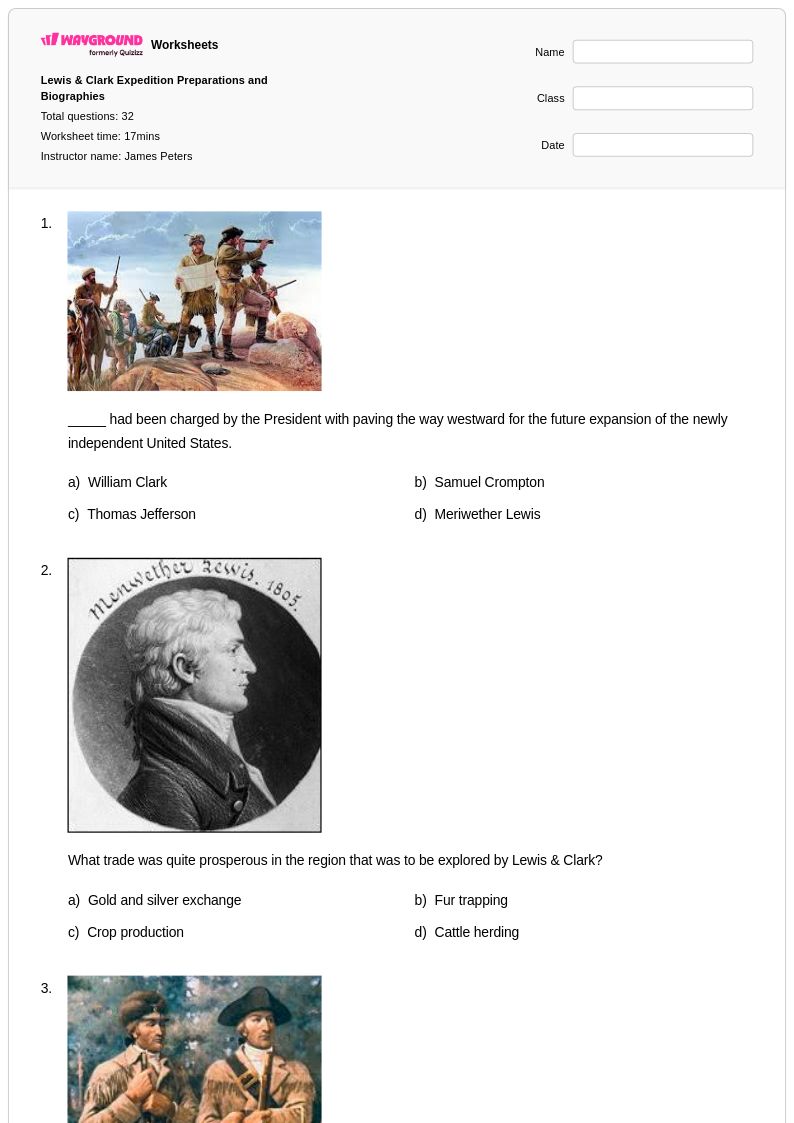
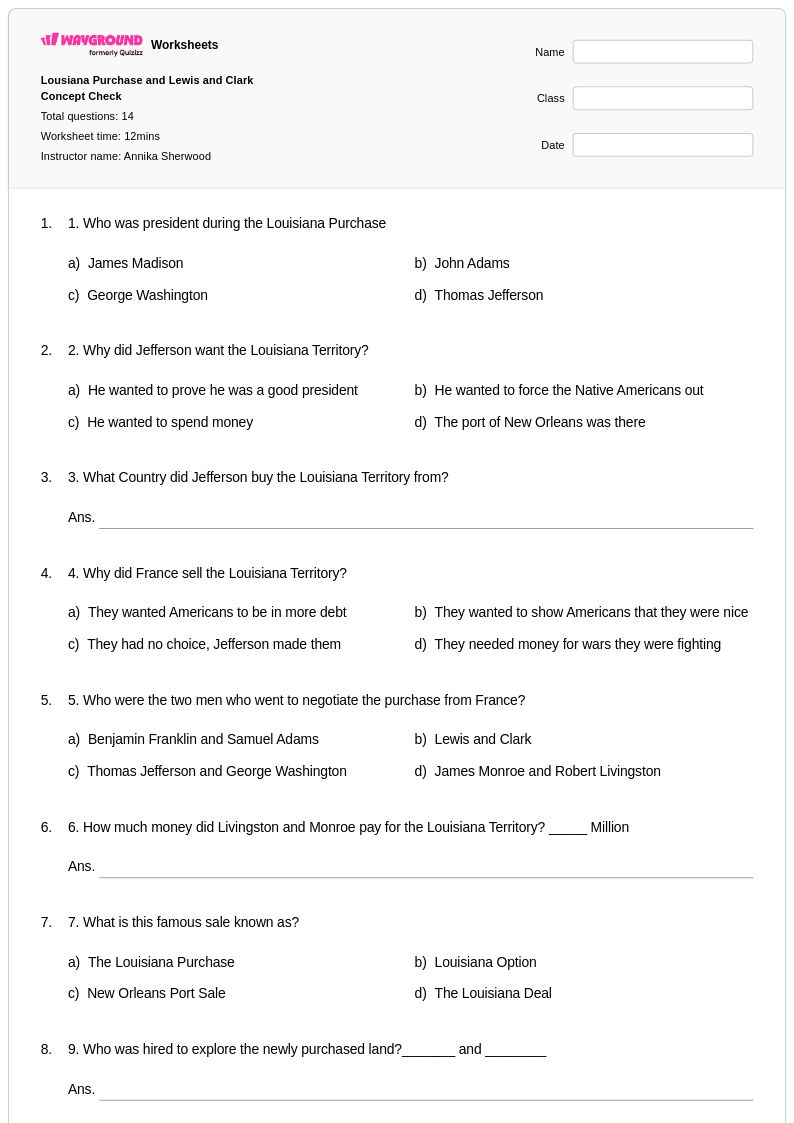
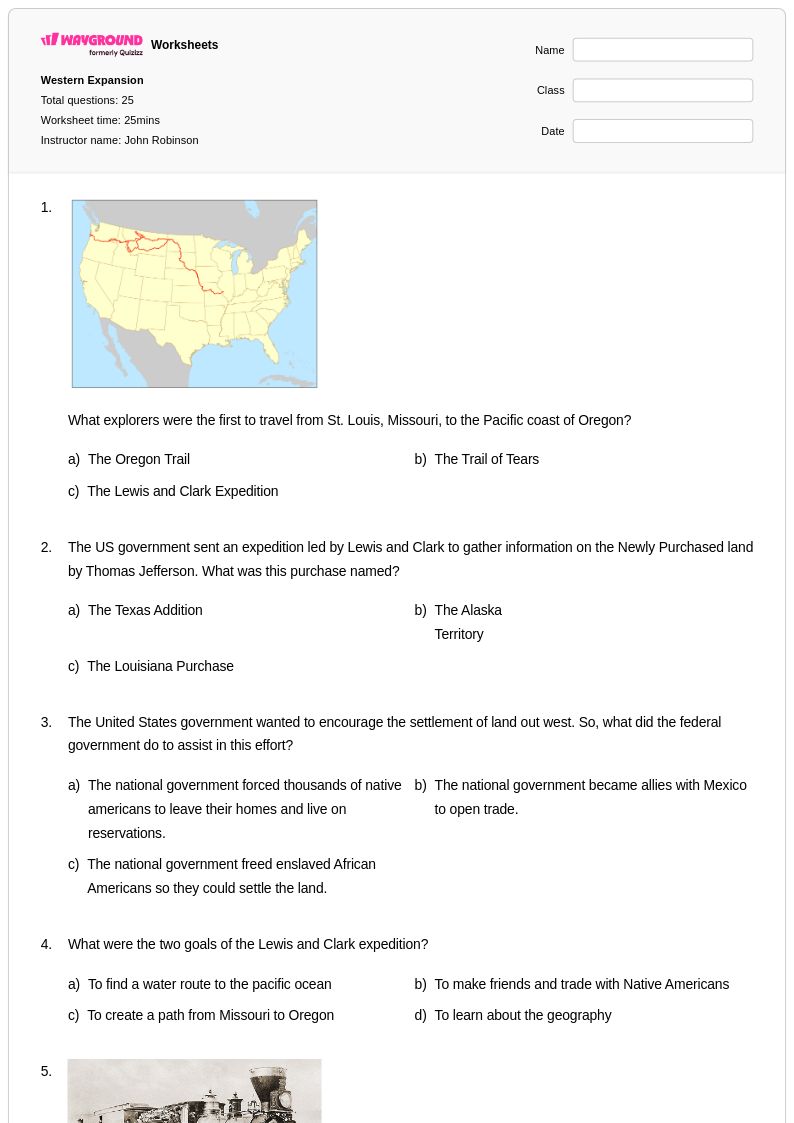
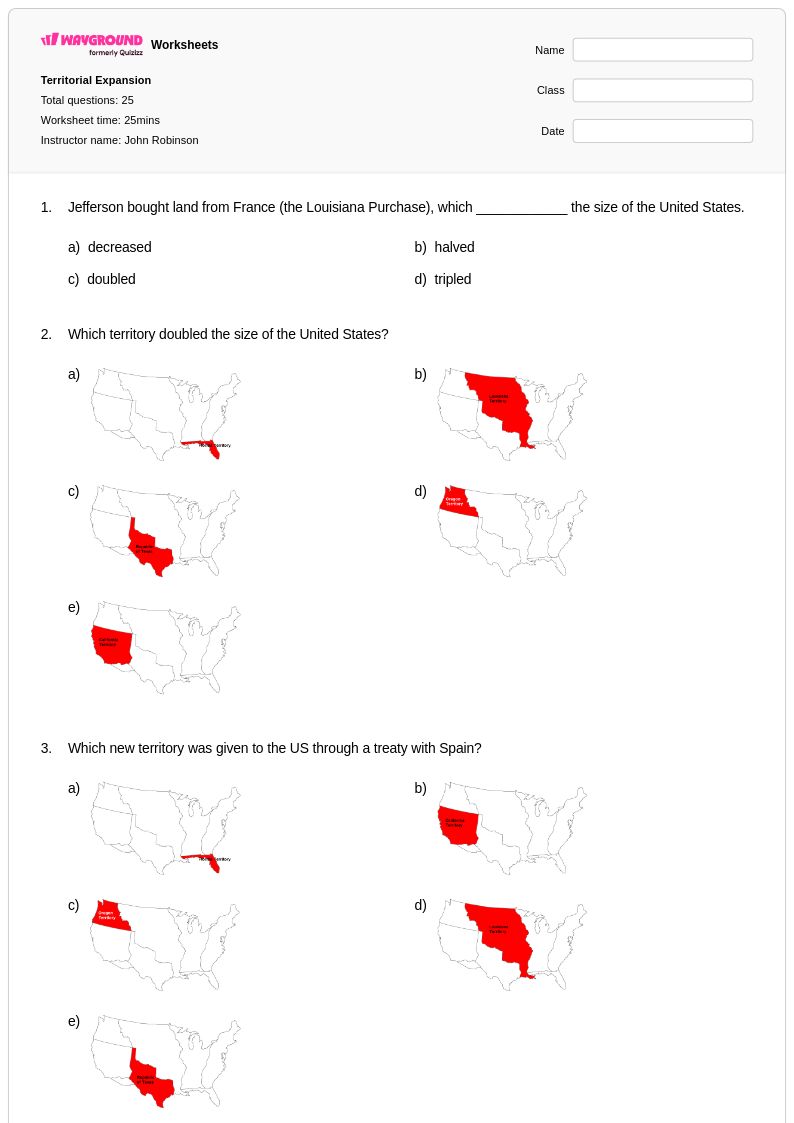
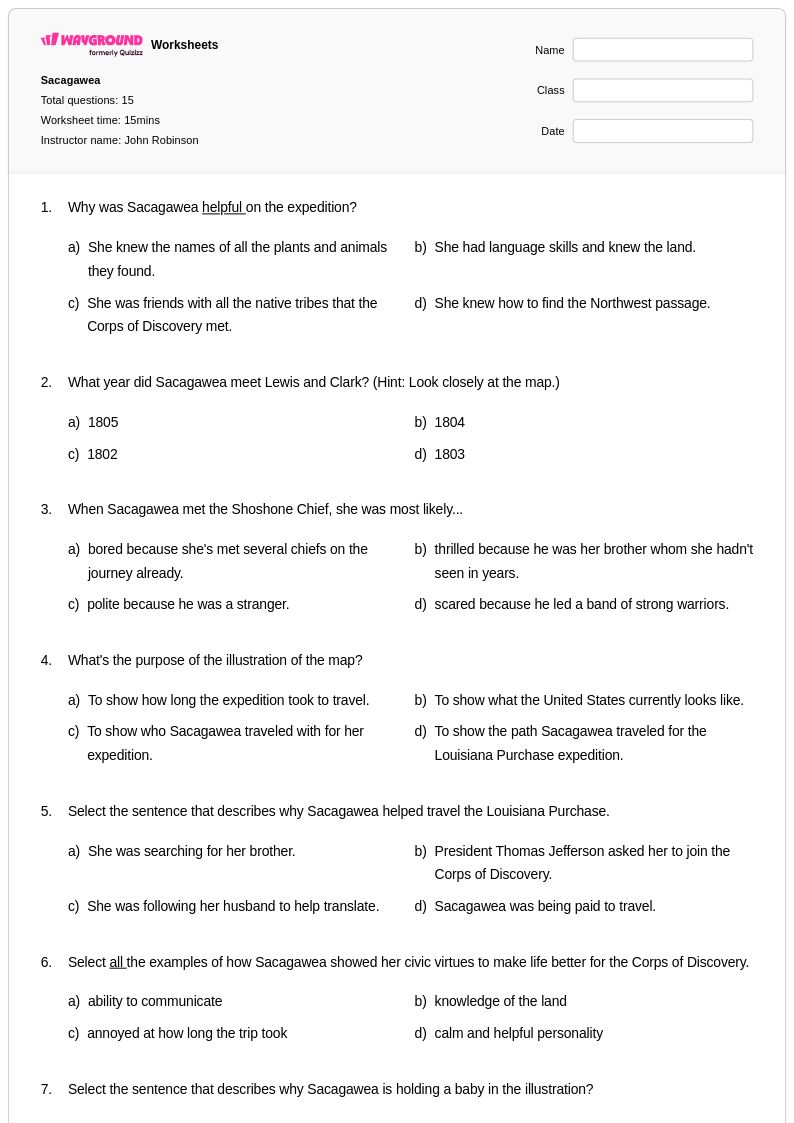
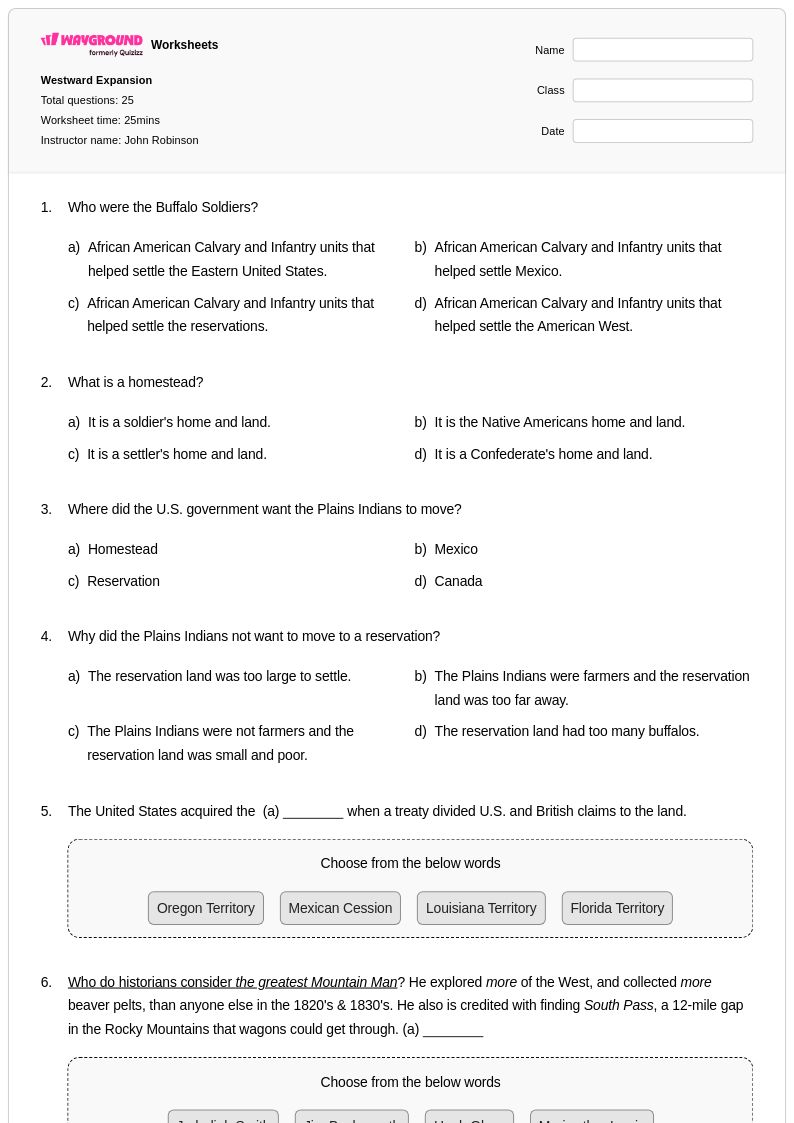
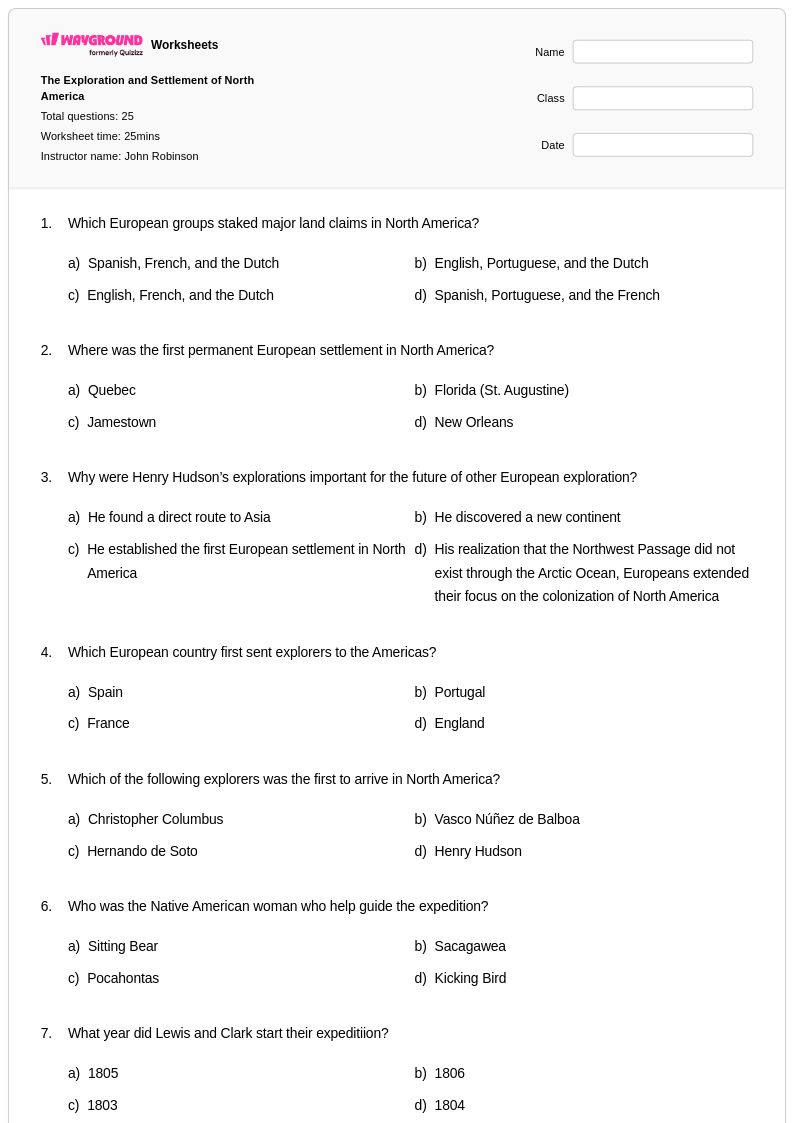
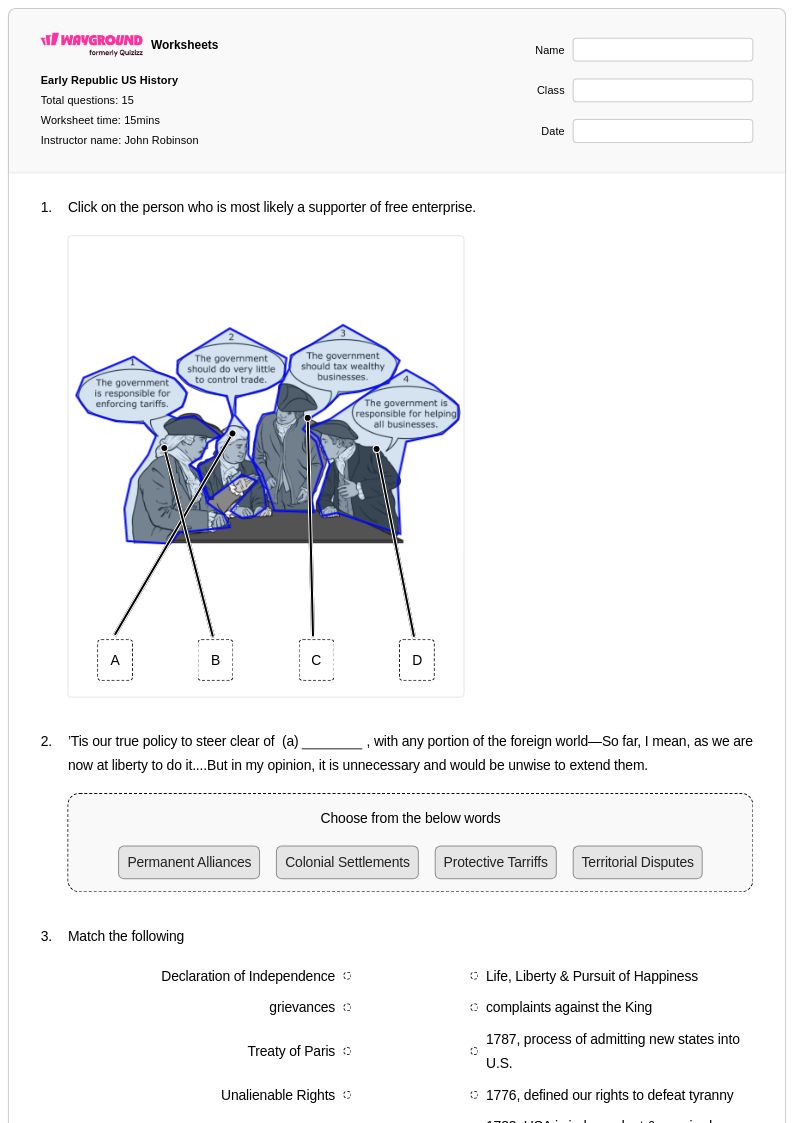
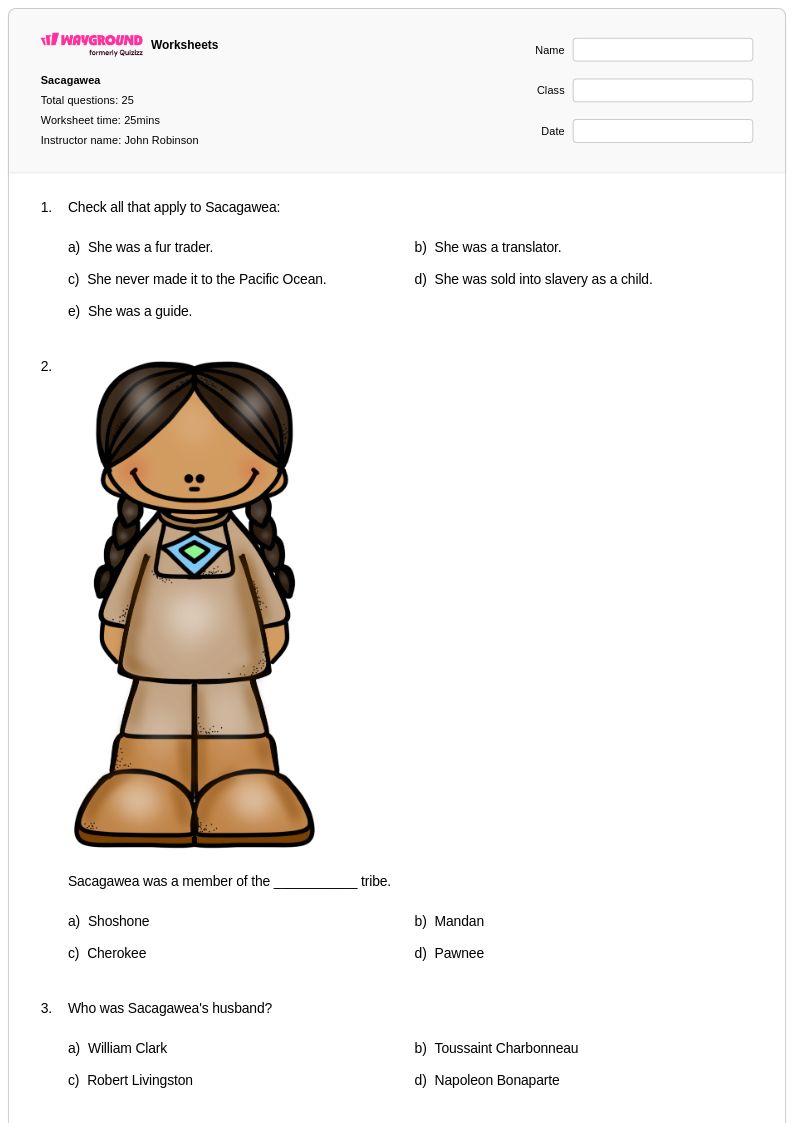
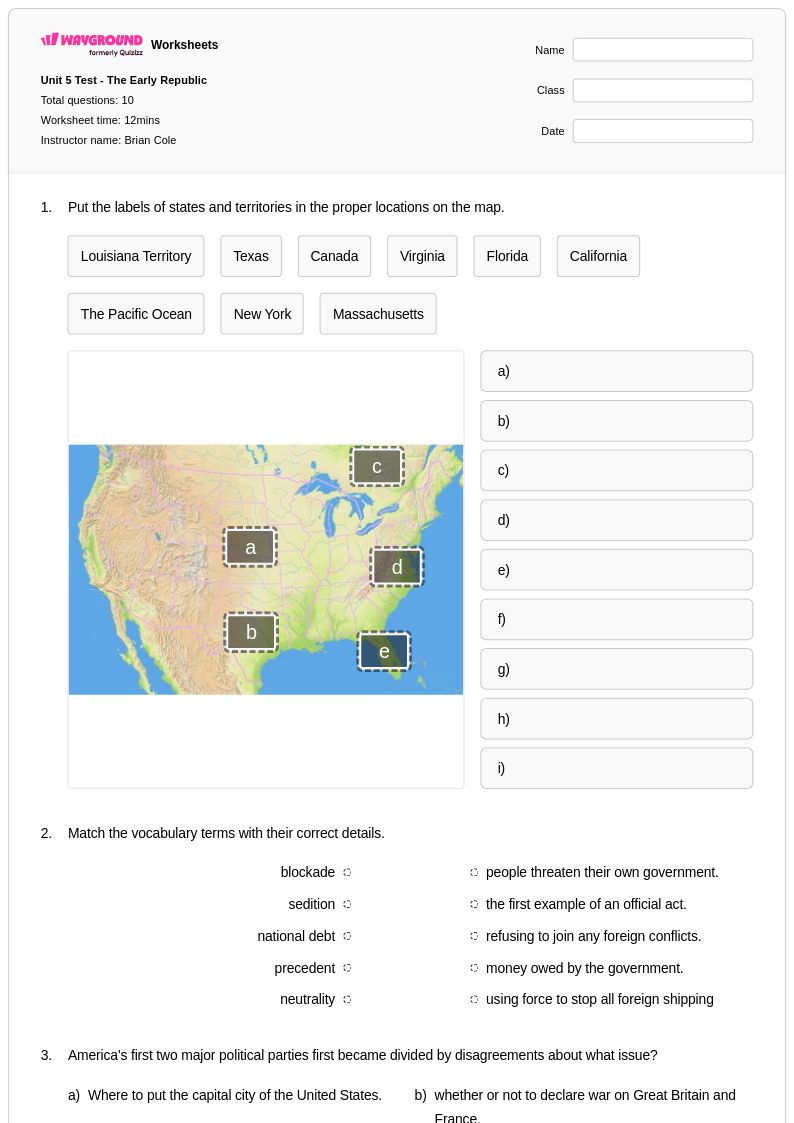
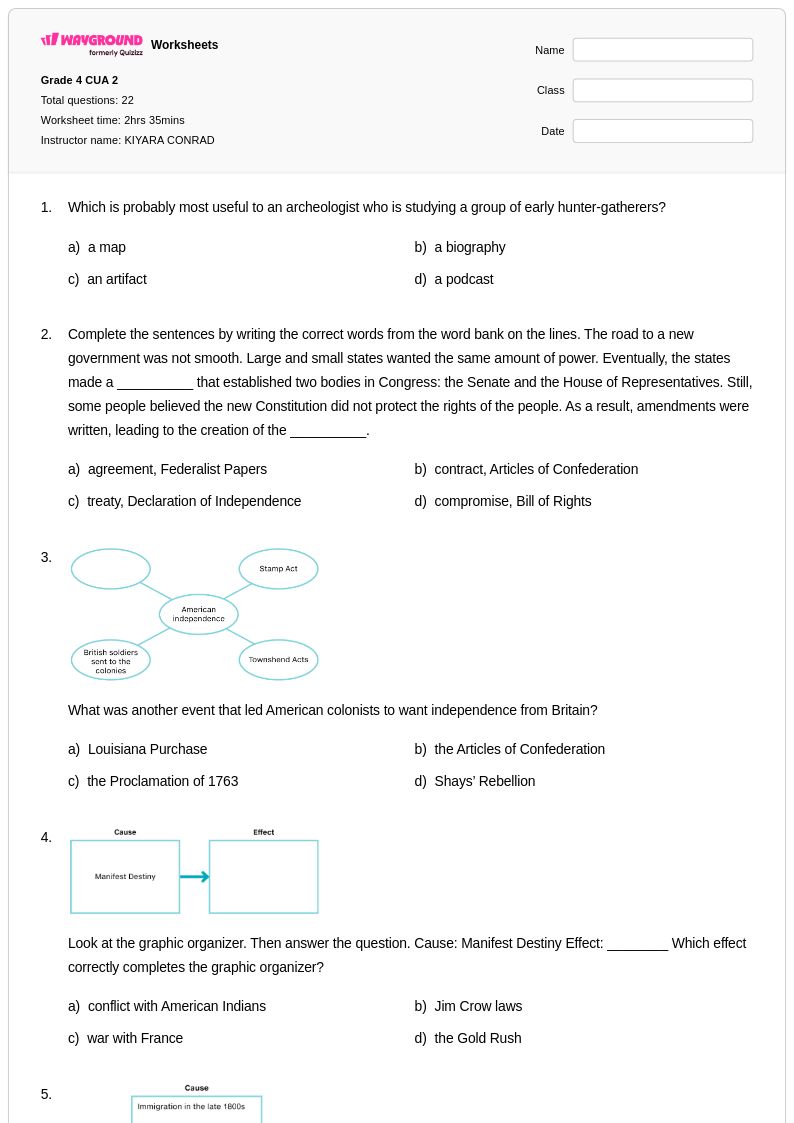
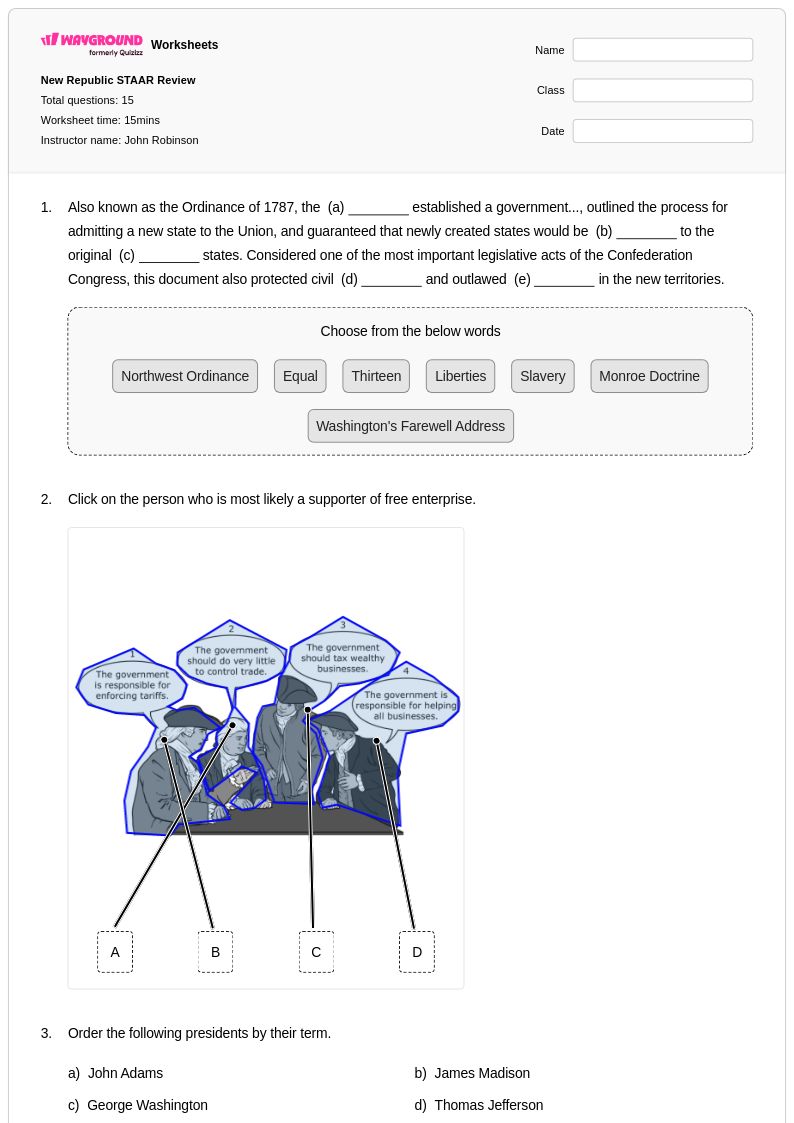
Lewis and Clark Expedition worksheets for Year 9 students provide comprehensive exploration of this pivotal moment in American westward expansion through Wayground's extensive collection of educational resources. These expertly crafted worksheets guide students through the Corps of Discovery's historic 1804-1806 journey, examining the expedition's scientific discoveries, diplomatic encounters with Native American tribes, and the crucial role of Sacagawea as guide and interpreter. Students develop critical thinking skills by analyzing primary source documents, mapping the expedition's route, and evaluating the long-term consequences of this exploration on territorial expansion and indigenous populations. Each worksheet includes detailed answer keys and practice problems that reinforce understanding of key concepts, while free printable pdf formats ensure accessibility for diverse learning environments and study sessions.
Wayground, formerly Quizizz, empowers educators with millions of teacher-created Lewis and Clark Expedition resources that streamline lesson planning and enhance student engagement with this fascinating chapter of U.S. History. The platform's robust search and filtering capabilities allow teachers to quickly locate worksheets aligned with specific curriculum standards, while differentiation tools enable customization for various learning levels and academic needs. These versatile materials are available in both printable and digital pdf formats, providing flexibility for classroom instruction, homework assignments, and independent study. Teachers can seamlessly integrate these resources into their existing curriculum for skill practice, remediation support for struggling students, or enrichment activities for advanced learners, ensuring that all Year 9 students develop a thorough understanding of how the Lewis and Clark Expedition shaped America's national identity and territorial growth.
FAQs
How do I teach the Lewis and Clark Expedition to middle or high school students?
Teaching the Lewis and Clark Expedition is most effective when students connect the 1804–1806 journey to broader themes like Manifest Destiny, westward expansion, and U.S. relations with Native American nations. Start by establishing the political context of the Louisiana Purchase, then trace the Corps of Discovery's route using primary sources and map analysis. Incorporate key figures — Meriwether Lewis, William Clark, and Sacagawea — to give students concrete anchors for understanding the expedition's scope and significance. Chronological reasoning activities help students see how the expedition shaped early 19th-century American development.
What exercises help students practice and retain knowledge of the Lewis and Clark Expedition?
Document analysis, map reading, and chronological sequencing are among the most effective practice exercises for the Lewis and Clark Expedition. Having students trace the Corps of Discovery's route, identify geographic landmarks, and analyze journal excerpts builds both content knowledge and historical thinking skills. Structured note-taking activities that connect the expedition to concepts like Manifest Destiny and territorial expansion help students move beyond memorization toward deeper comprehension.
What mistakes do students commonly make when learning about the Lewis and Clark Expedition?
A common misconception is that Lewis and Clark 'discovered' the lands they traveled through, when in reality those regions were already home to dozens of Native American nations with established cultures and trade networks. Students also frequently underestimate Sacagawea's role, reducing her to a simple guide rather than a cultural interpreter and diplomatic asset. Another error is treating the expedition as isolated from political context — teachers should emphasize that Jefferson commissioned the journey directly in response to the Louisiana Purchase and the need to assess newly acquired U.S. territory.
How do I use Lewis and Clark Expedition worksheets in my classroom?
Lewis and Clark Expedition worksheets on Wayground are available as printable PDFs for traditional classroom use and in digital formats for technology-integrated or remote learning environments, including the option to host them as a quiz directly on Wayground. Printable versions are ready for immediate distribution, while digital formats allow students to complete work on devices with real-time feedback. Each worksheet includes a complete answer key, making them equally practical for guided instruction, independent practice, or assessment purposes.
How do I differentiate Lewis and Clark Expedition instruction for students with different learning needs?
Wayground's accommodation tools allow teachers to support diverse learners without singling out individual students. For students who need reading support, the Read Aloud feature delivers audio playback of worksheet content, while Reduced Answer Choices can lower cognitive load for students who struggle with multiple-choice formats. Extended time can be configured per student, and Reading Mode offers adjustable font sizes and themes for accessibility. These settings can be applied to individual students or the whole class and are saved for reuse in future sessions.
How does the Lewis and Clark Expedition connect to Manifest Destiny and westward expansion?
The Lewis and Clark Expedition is a foundational event for understanding Manifest Destiny because it was one of the first federal efforts to survey, document, and assert U.S. presence over the vast territory acquired through the Louisiana Purchase. The Corps of Discovery's findings — geographic, scientific, and diplomatic — laid the groundwork for future settlement, trade routes, and U.S. policy toward Native American nations. Teaching this connection helps students understand westward expansion not as an inevitable outcome, but as a deliberate political and military project that began in the early 19th century.