Free Printable Earth Science Worksheets for Year 12
Explore Wayground's comprehensive collection of Year 12 Earth Science worksheets featuring printable PDFs and practice problems with answer keys to help students master fundamental concepts in geology, meteorology, and environmental science.
Explore printable Earth Science worksheets for Year 12
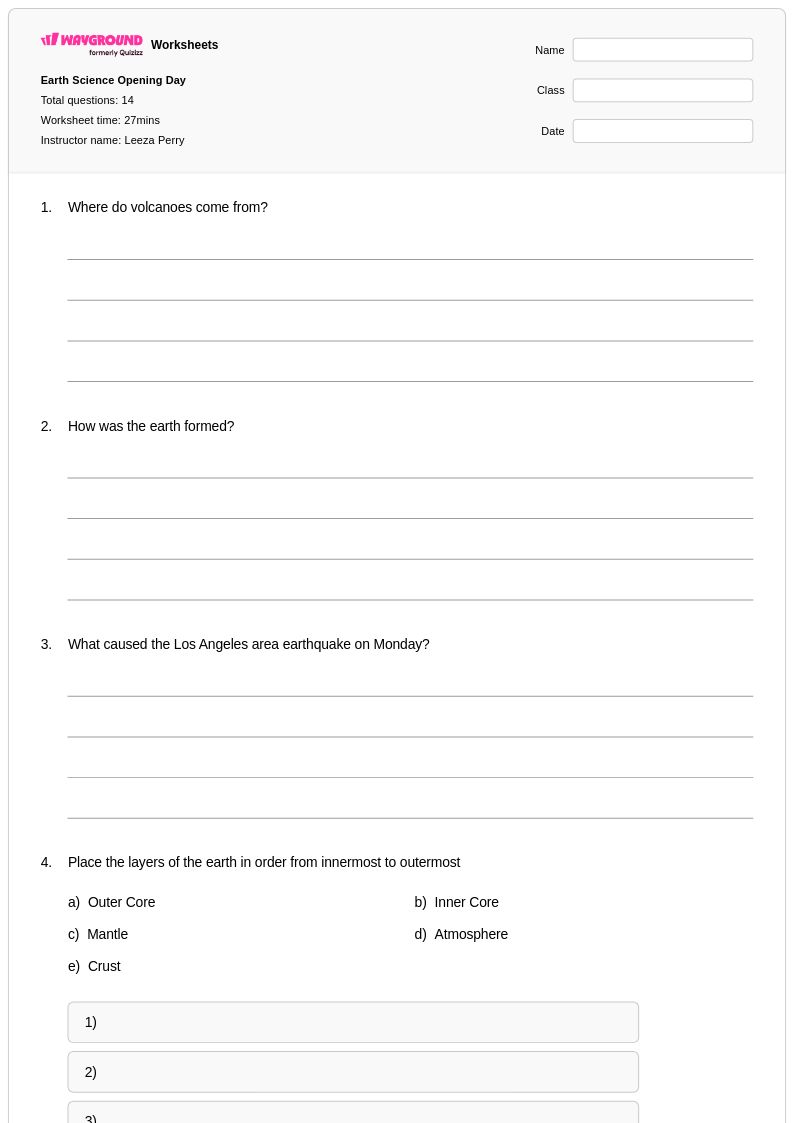
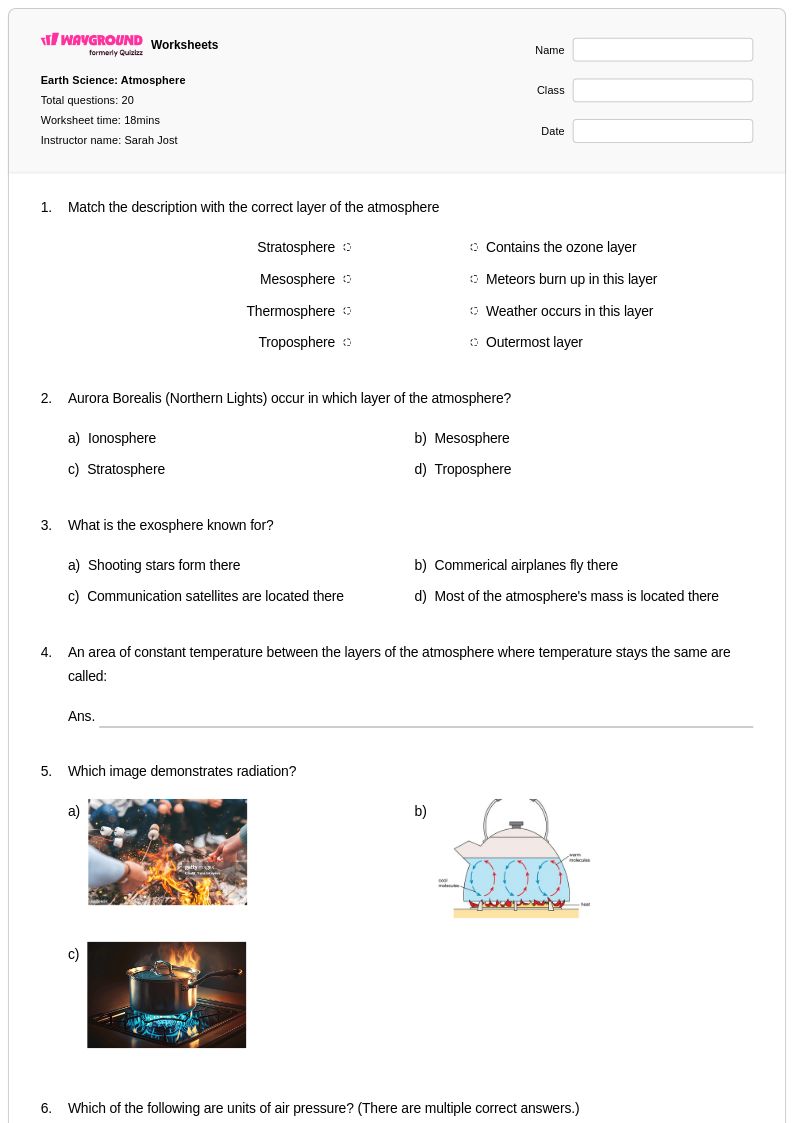
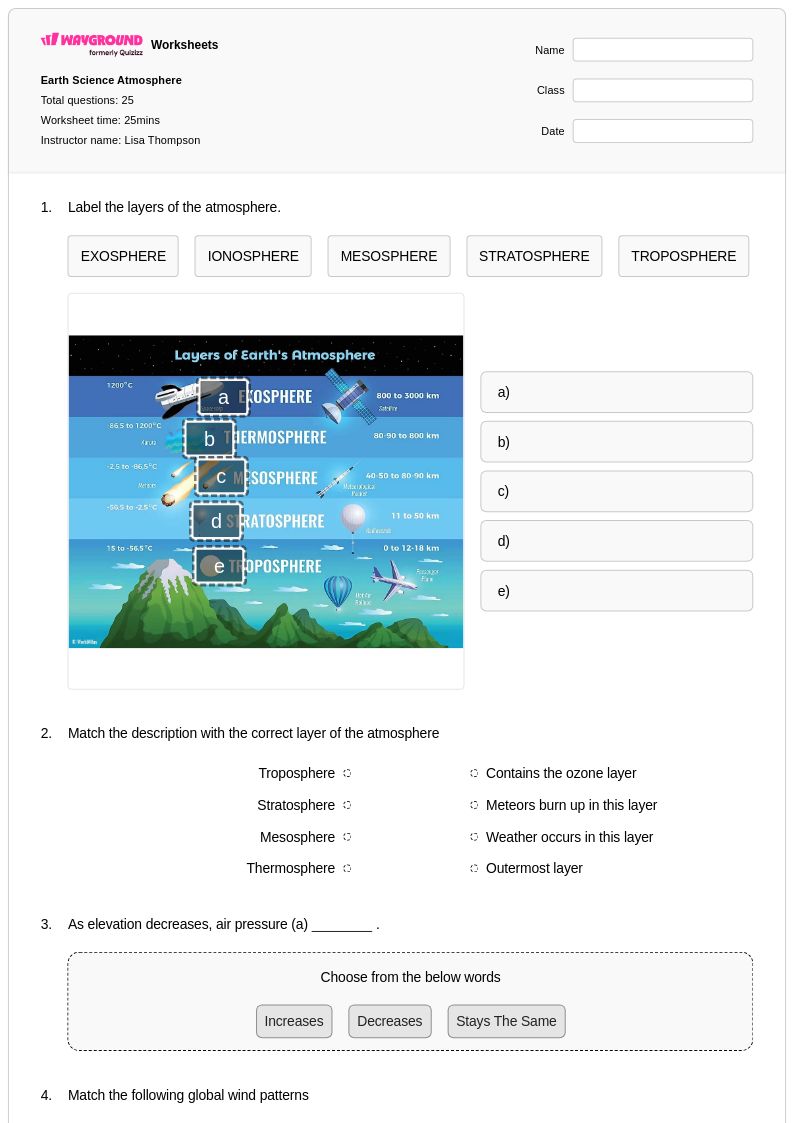
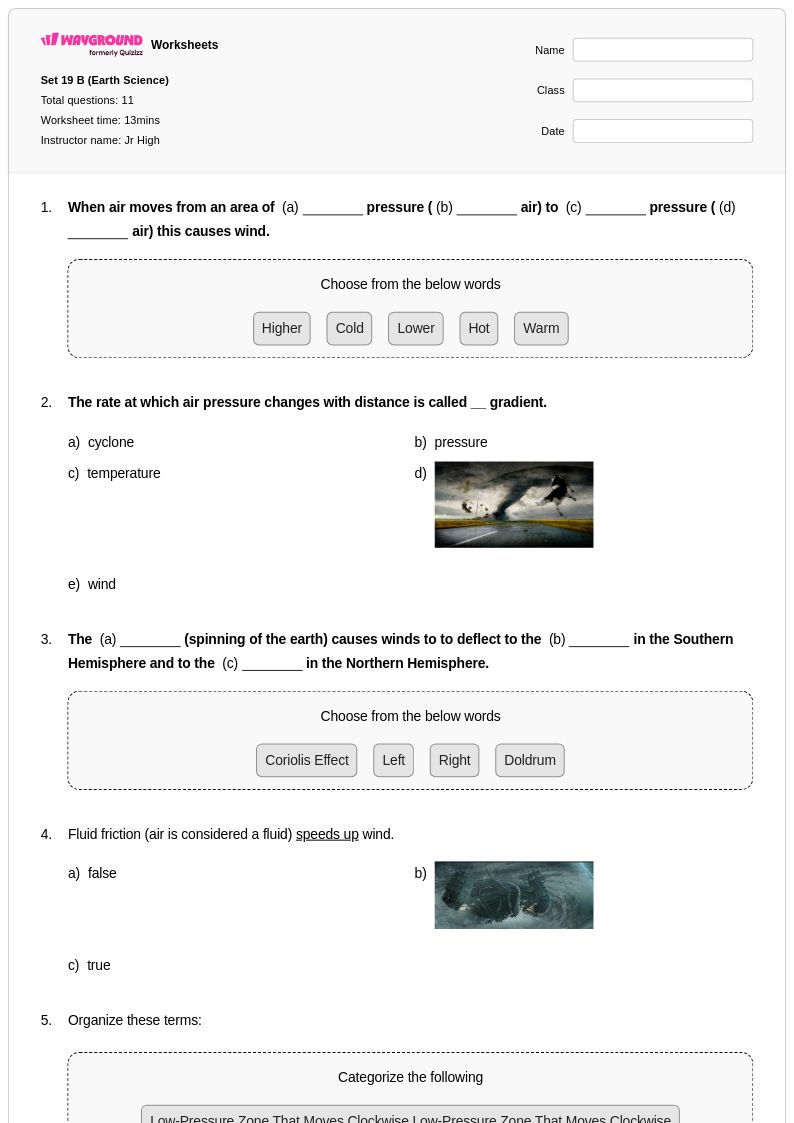
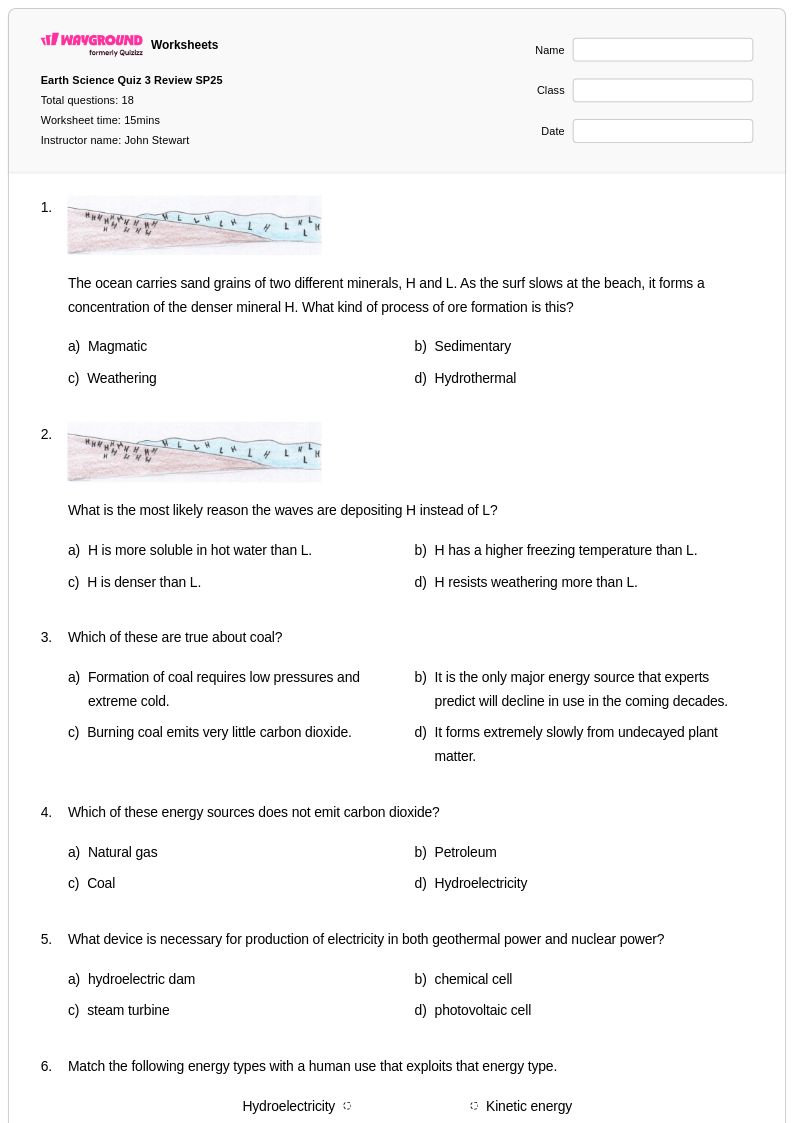
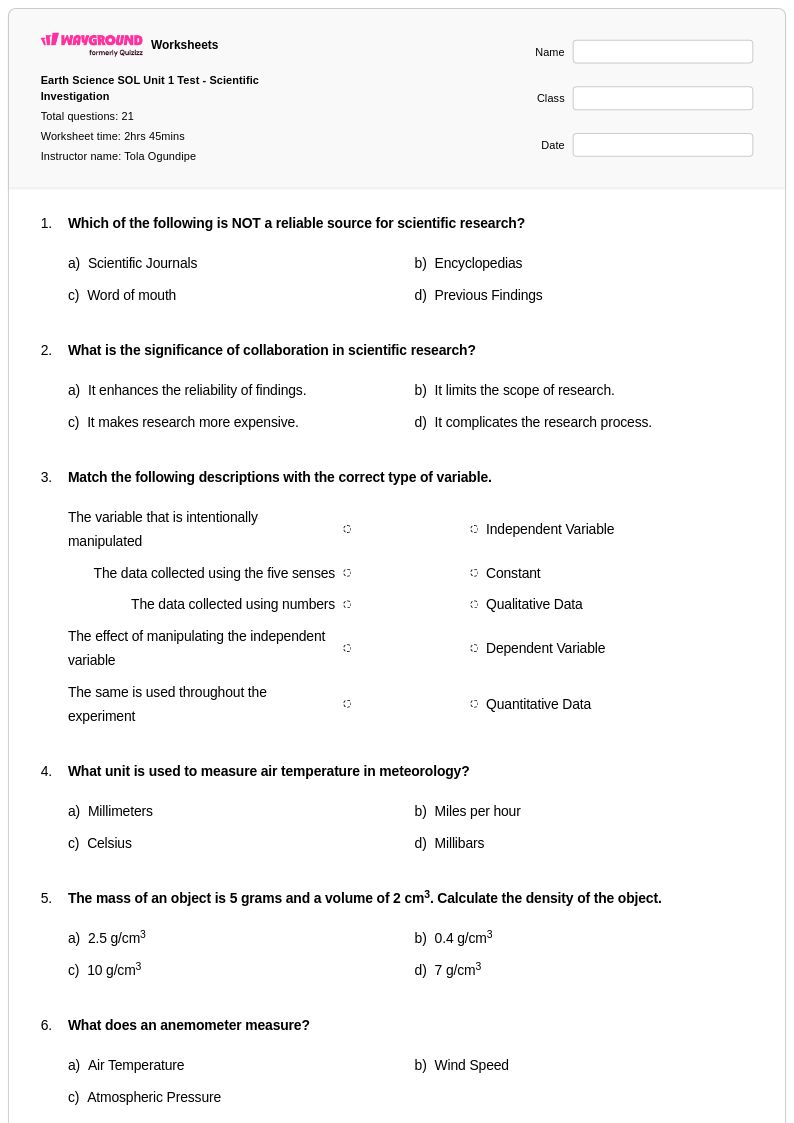
Year 12 Earth Science worksheets available through Wayground (formerly Quizizz) provide comprehensive coverage of fundamental geological processes, atmospheric dynamics, oceanography, and planetary systems that form the foundation of advanced Earth science education. These expertly crafted resources strengthen students' analytical thinking skills as they explore complex topics including plate tectonics, climate systems, mineral identification, rock formation cycles, and the interactions between Earth's spheres. The collection includes detailed practice problems that challenge students to apply scientific principles to real-world scenarios, while accompanying answer keys enable efficient assessment and self-directed learning. Each printable worksheet is designed as a free resource that reinforces laboratory observations and textbook concepts through engaging activities, data analysis exercises, and critical thinking questions that prepare students for advanced coursework and standardized assessments.
Wayground's extensive platform empowers educators with millions of teacher-created Earth science resources specifically curated for Year 12 instruction, featuring robust search and filtering capabilities that allow quick identification of materials aligned with state and national science standards. Teachers benefit from sophisticated differentiation tools that accommodate diverse learning needs, enabling customization of worksheet difficulty levels and content focus areas to support both remediation for struggling students and enrichment opportunities for advanced learners. The platform's flexible format options include both digital interactive versions and downloadable pdf printables, facilitating seamless integration into hybrid learning environments and traditional classroom settings. These comprehensive features streamline lesson planning while providing targeted skill practice opportunities that enhance student mastery of complex Earth science concepts through systematic review and application exercises.
FAQs
How do I teach the rock cycle to middle school students?
Start with hands-on sorting activities where students categorize igneous, sedimentary, and metamorphic rock samples by observable properties before introducing cycle diagrams. From there, progress to labeling and tracing activities that show how rocks transition between types through processes like melting, cooling, compaction, and heat and pressure. A common pitfall is letting students believe the rock cycle follows one fixed sequence — emphasize that rocks can enter and exit the cycle at multiple points depending on environmental conditions.
What exercises help students practice reading weather and climate data?
Graph analysis activities are especially effective — have students interpret temperature and precipitation charts, compare climate data across regions, and identify seasonal patterns from real or simulated datasets. Worksheets that ask students to connect weather variables (air pressure, humidity, wind direction) to observed outcomes build the analytical thinking needed for both assessments and real-world science reasoning. Progressing from simple bar graphs to multi-variable climate comparisons keeps practice appropriately challenging across grade levels.
What mistakes do students commonly make when learning about plate tectonics?
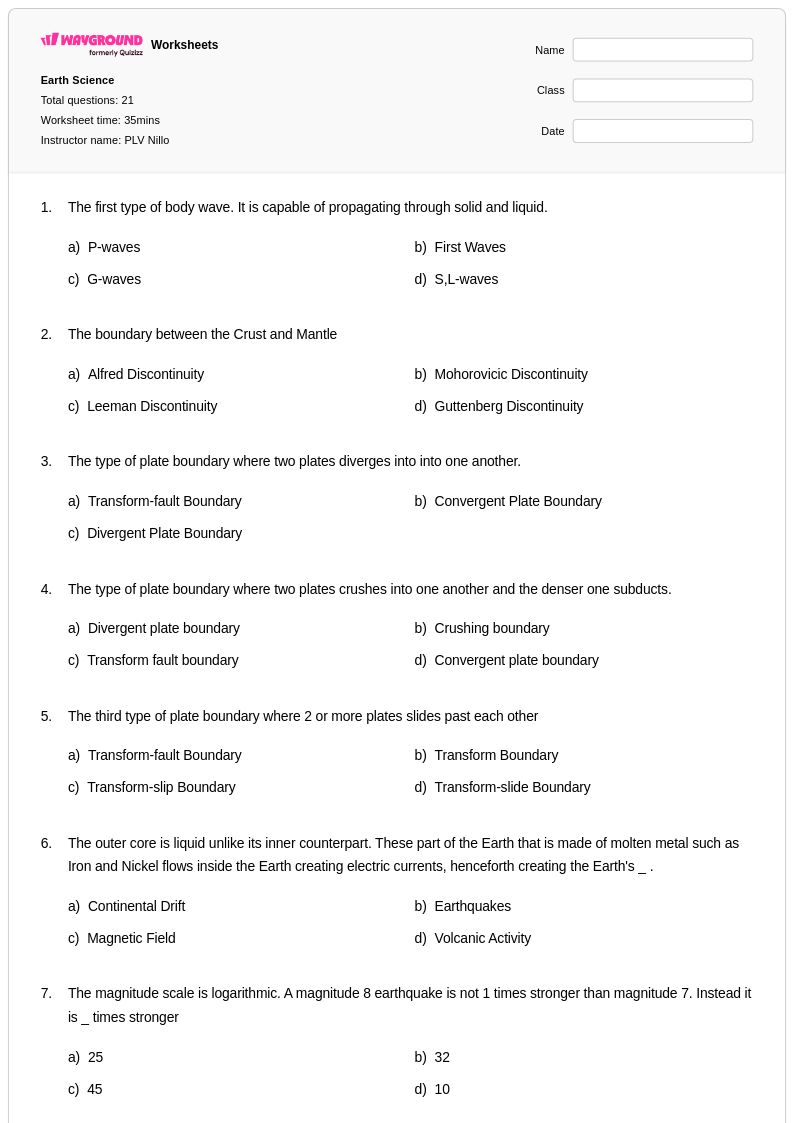
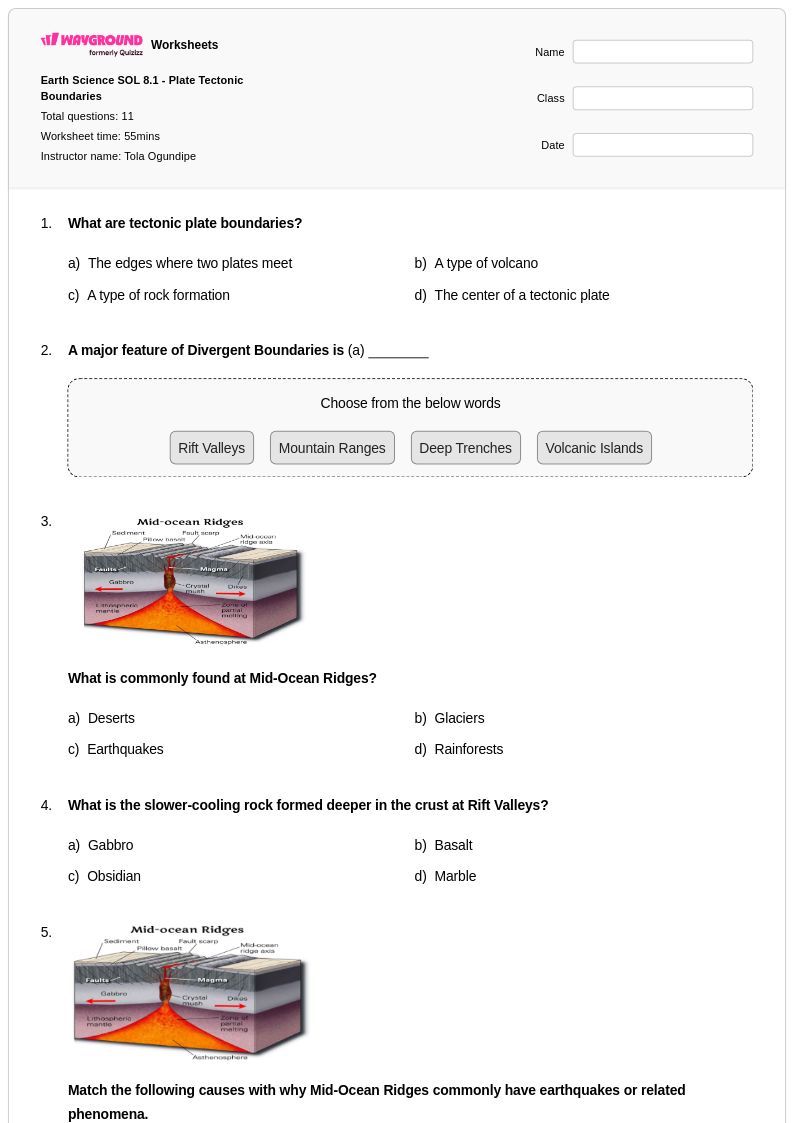
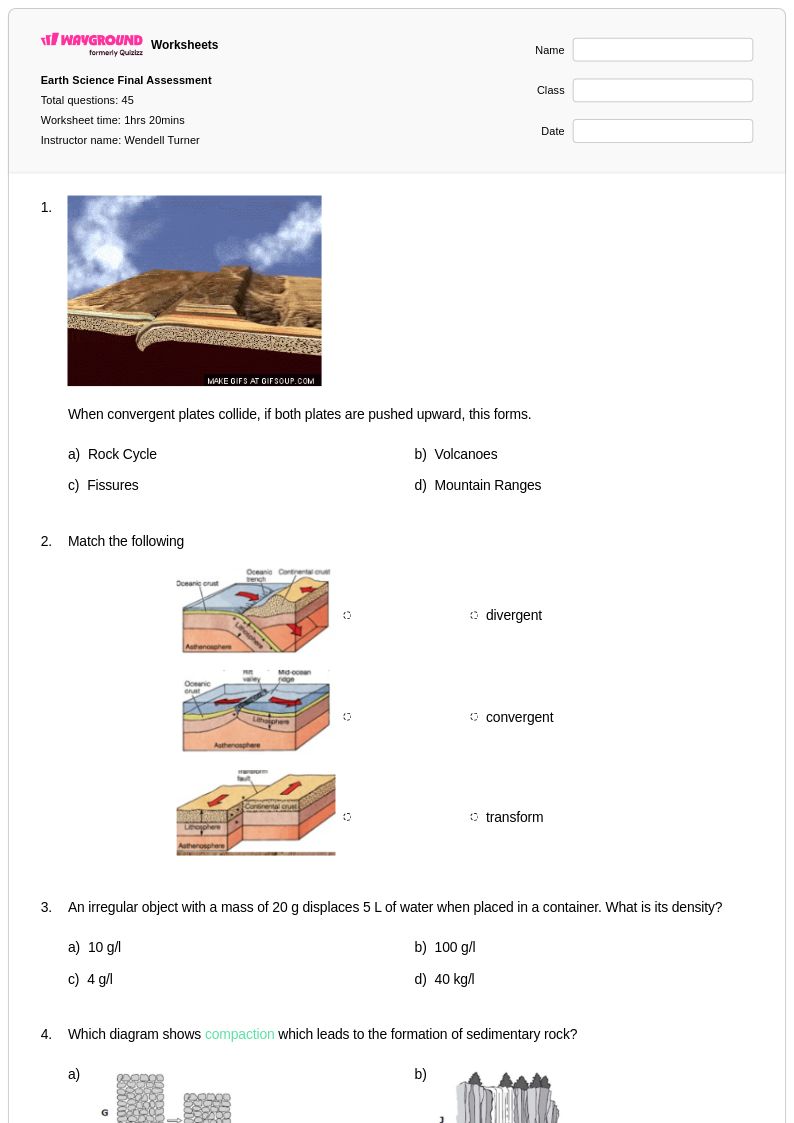
One of the most persistent misconceptions is that earthquakes only occur along visible surface fault lines — students often don't understand that seismic activity originates at depth and that fault lines may not be visible at the surface. Students also frequently confuse the three types of plate boundaries (convergent, divergent, transform) and struggle to connect boundary type to the geological features it produces, such as mountain ranges, rift valleys, or oceanic trenches. Worksheets that ask students to interpret plate boundary diagrams and match them to real-world landforms help address both issues.
How do I help students distinguish between weathering and erosion?
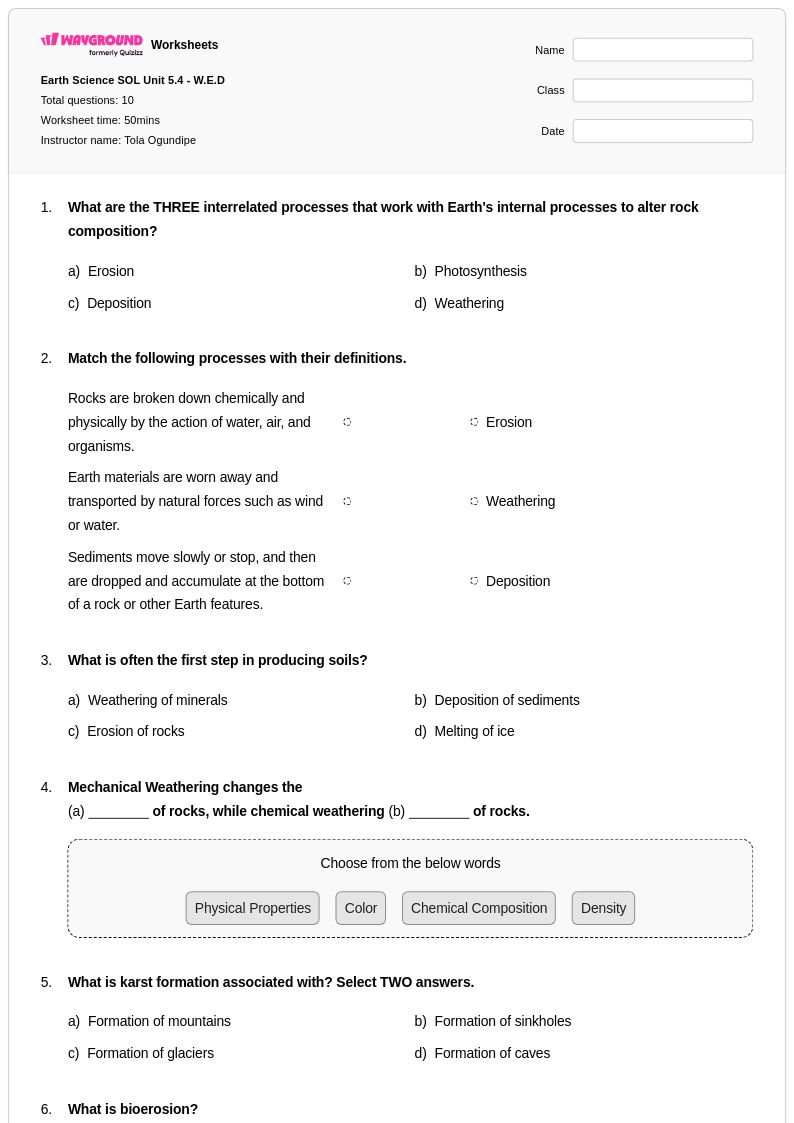
Weathering and erosion are among the most commonly confused concepts in earth science because they are closely related and often occur together. Weathering is the breakdown of rock in place — either chemically or mechanically — while erosion is the transport of that material by wind, water, ice, or gravity. Use side-by-side comparison activities and real-world image analysis to anchor the distinction, and design practice problems that require students to identify which process is occurring and what agent is responsible.
How can I use Earth Science worksheets to support students with different learning needs?
Earth science spans multiple complex systems — geology, meteorology, hydrology, and tectonics — so differentiation is especially important for keeping all learners engaged. On Wayground, teachers can assign individual accommodations such as extended time, read-aloud support for students who need audio access to questions, and reduced answer choices to lower cognitive load for students who are still building foundational knowledge. These settings can be applied to individual students without notifying the rest of the class, so differentiated support stays discreet and consistent across sessions.
How do I use these Earth Science worksheets in my classroom?
Wayground's earth science worksheets are available as printable PDFs for traditional classroom use and in digital formats for technology-integrated learning environments, including the option to host them as interactive quizzes directly on Wayground. Printable versions work well for lab practical companions and in-class review, while digital formats allow for immediate feedback and easier progress tracking. Complete answer keys are included with every worksheet, supporting both teacher-led assessment and independent student review.
How do I connect multiple earth science processes in a single lesson or assessment?
Multi-process problems that require students to connect tectonics, weathering, erosion, and deposition into a coherent geological narrative are the most effective way to assess deep understanding rather than isolated recall. For example, a well-designed prompt might ask students to explain how a mountain range forms through plate collision, then breaks down through weathering, and eventually contributes sediment to a river delta. Building toward these integrated tasks through scaffolded practice — starting with single-process labeling and progressing to multi-step analysis — helps students develop the conceptual framework needed for complex earth science reasoning.