Free Printable Eccentricity Worksheets for Year 10
Explore Wayground's comprehensive collection of Year 10 eccentricity worksheets featuring free printables, practice problems, and answer keys to help students master conic section properties and mathematical relationships through structured PDF exercises.
Explore printable Eccentricity worksheets for Year 10
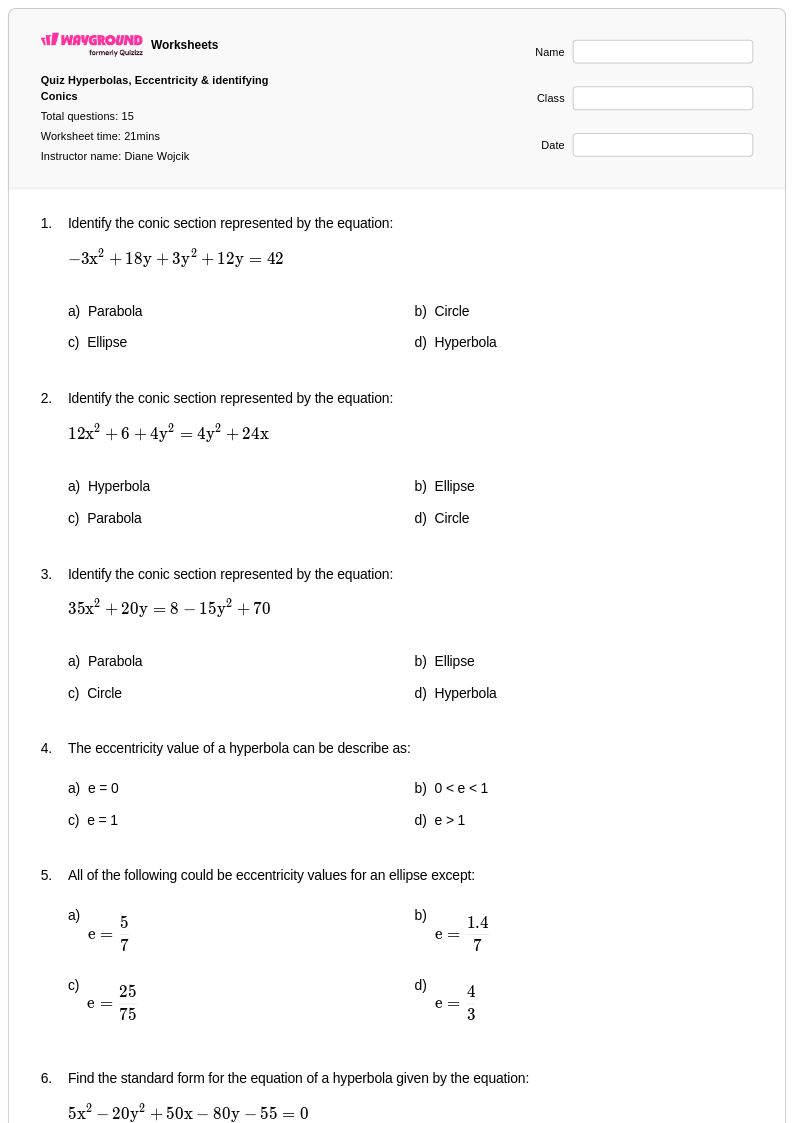
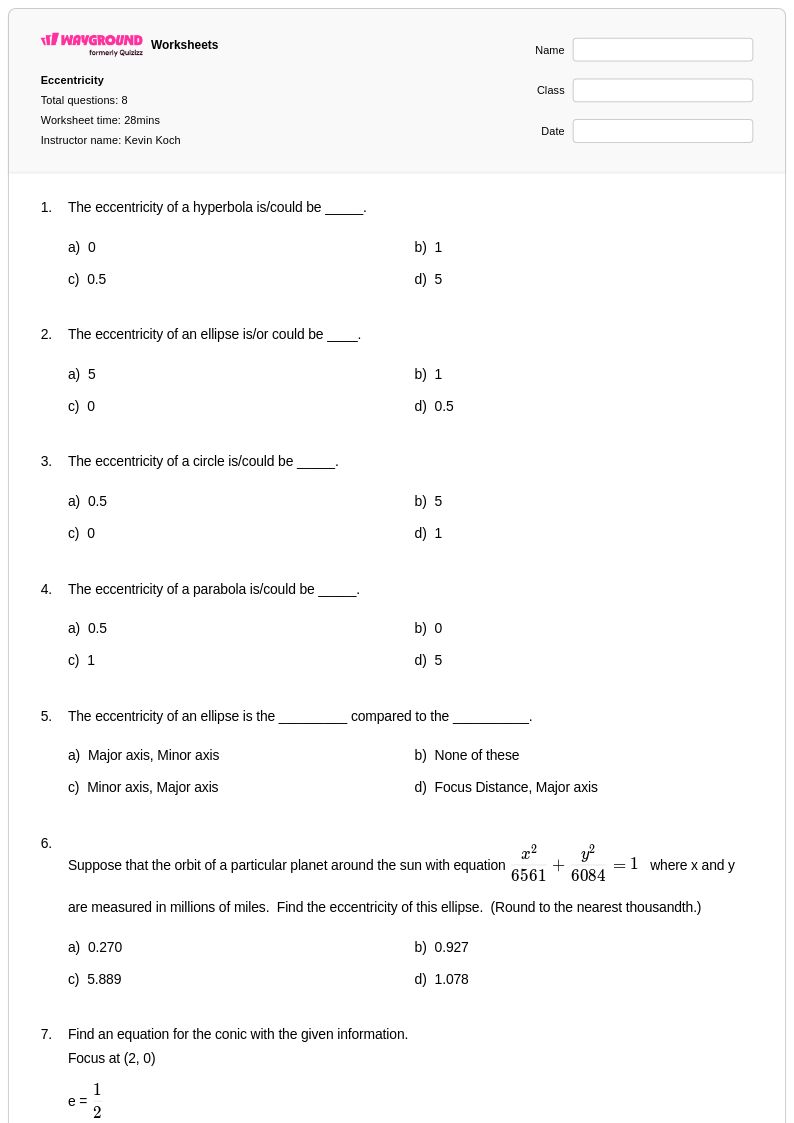
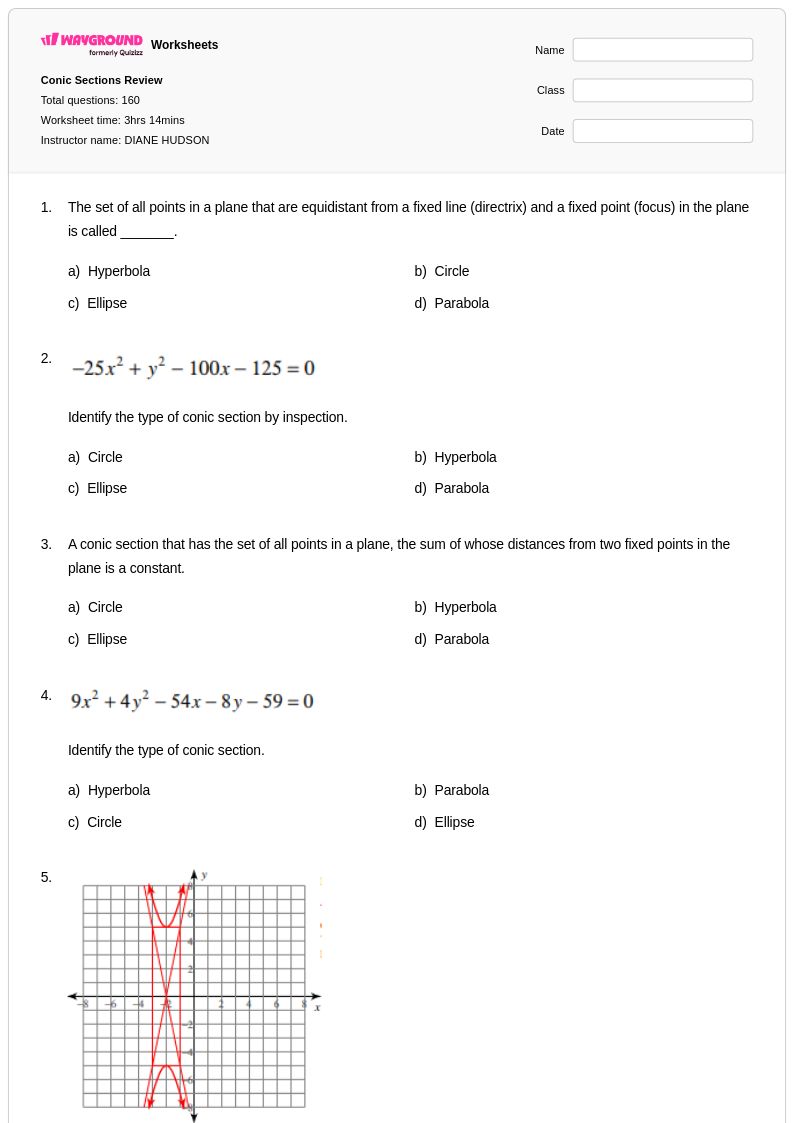
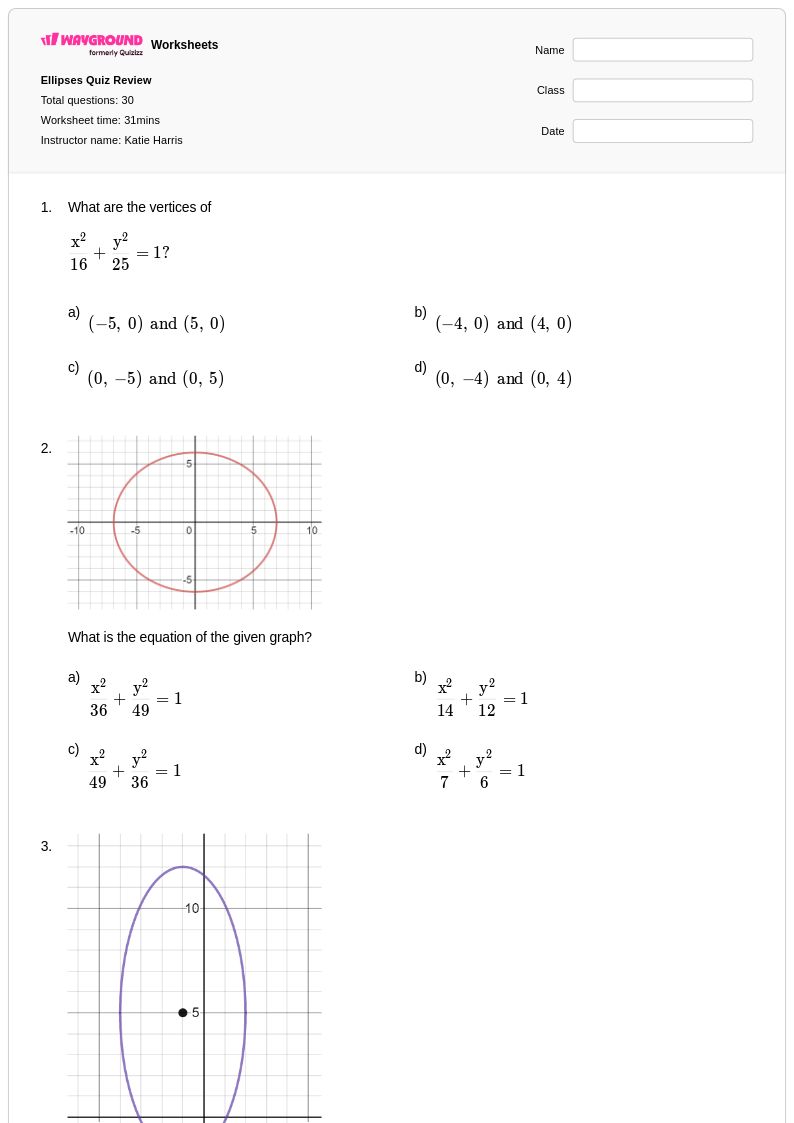
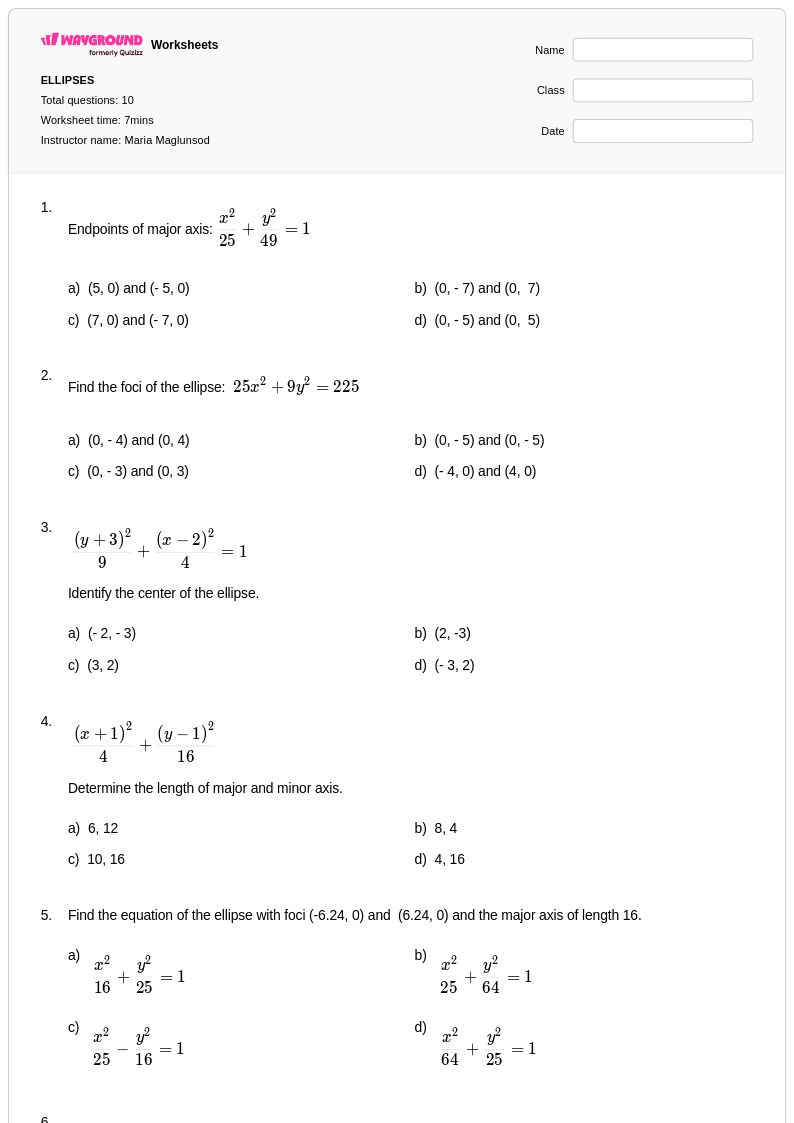
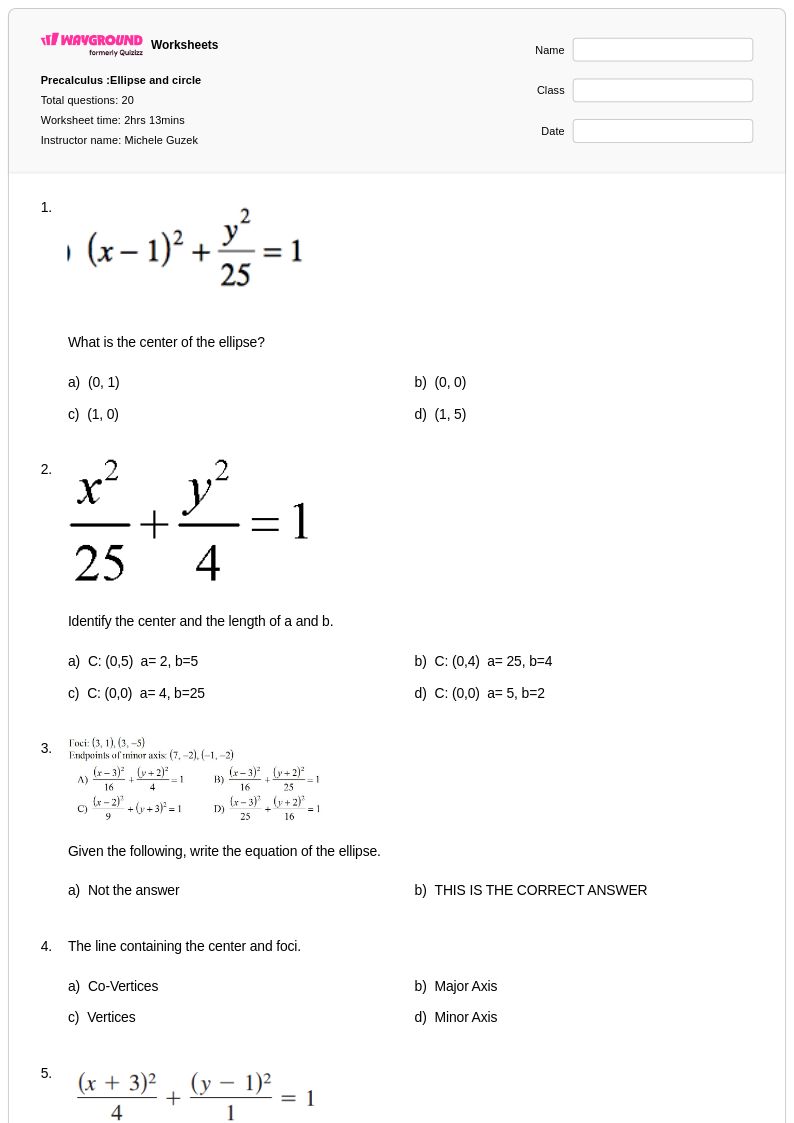
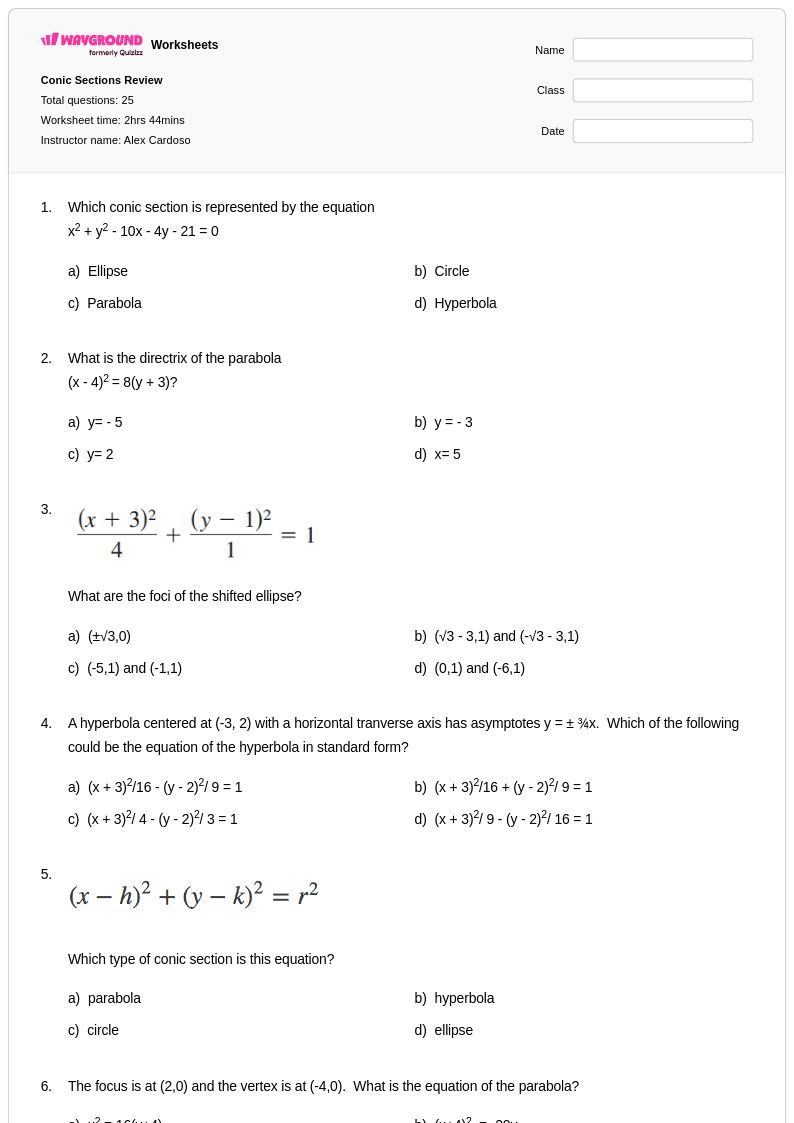
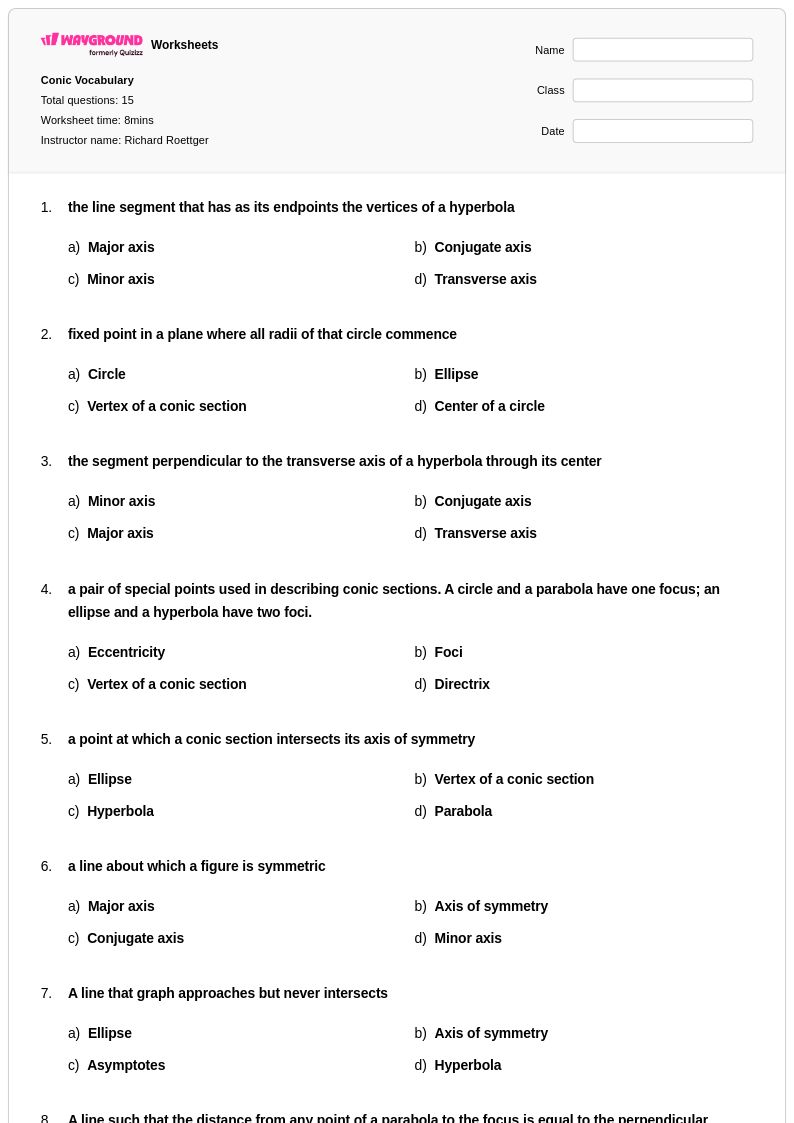
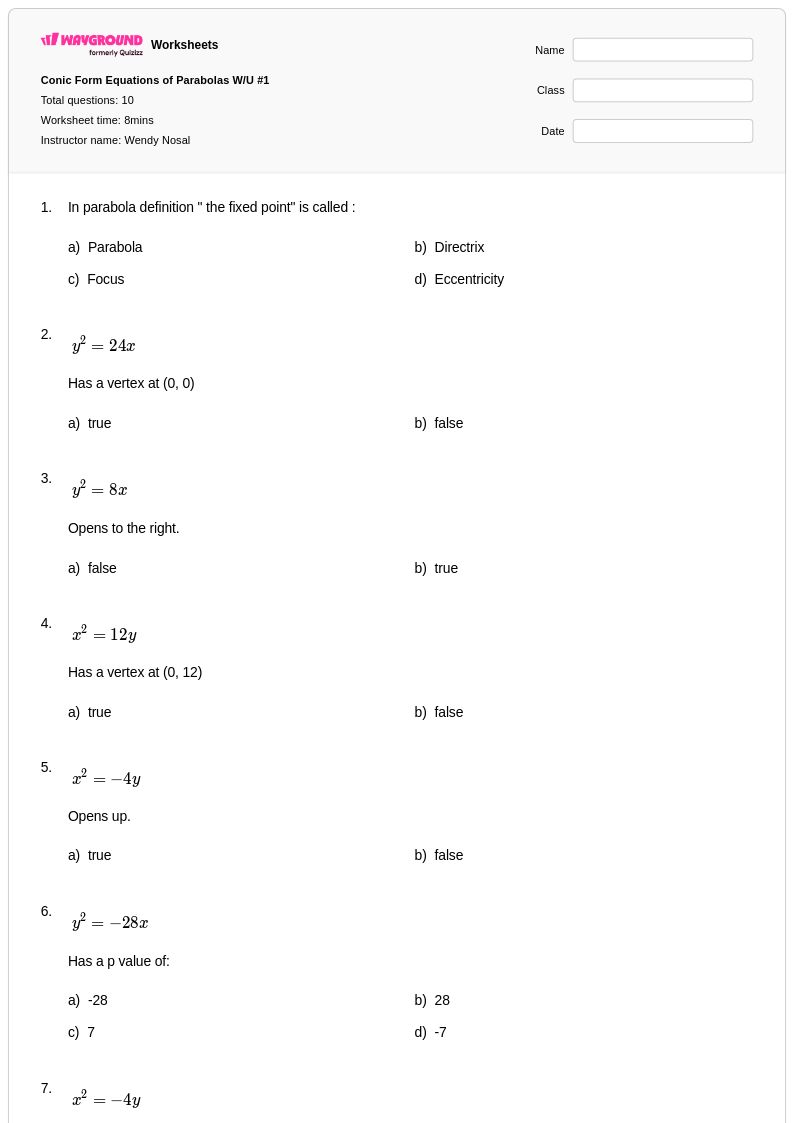
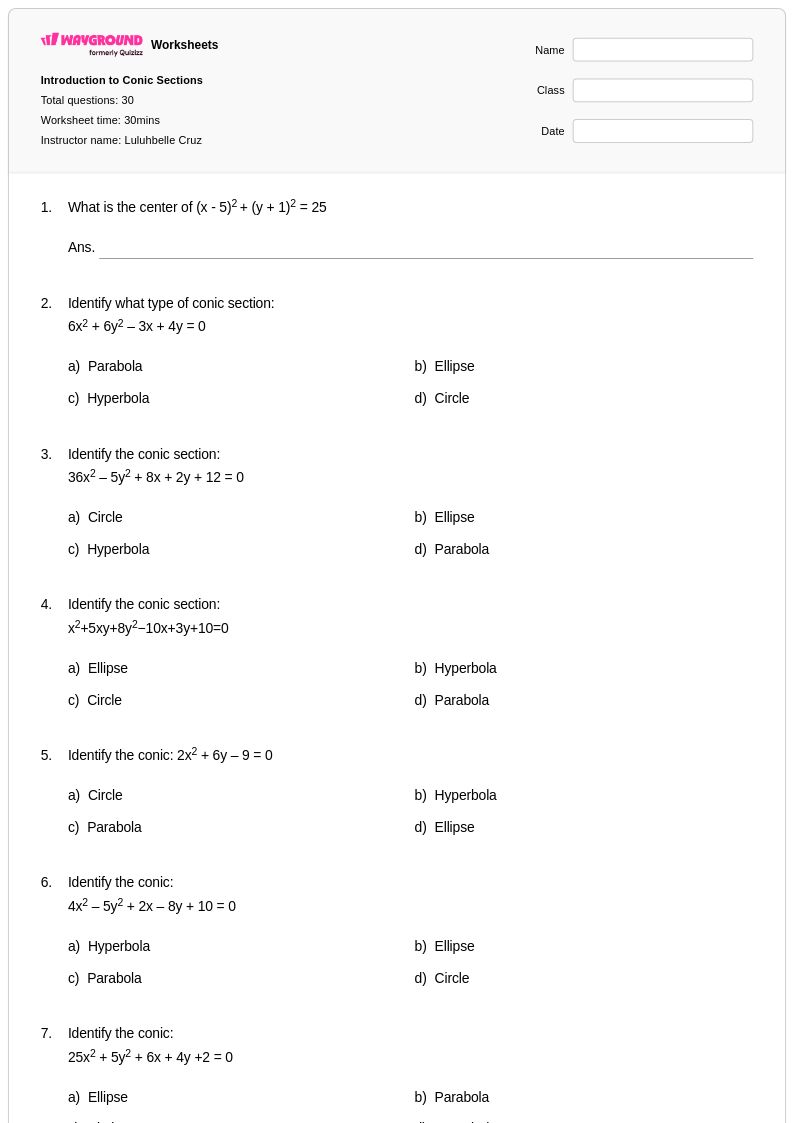
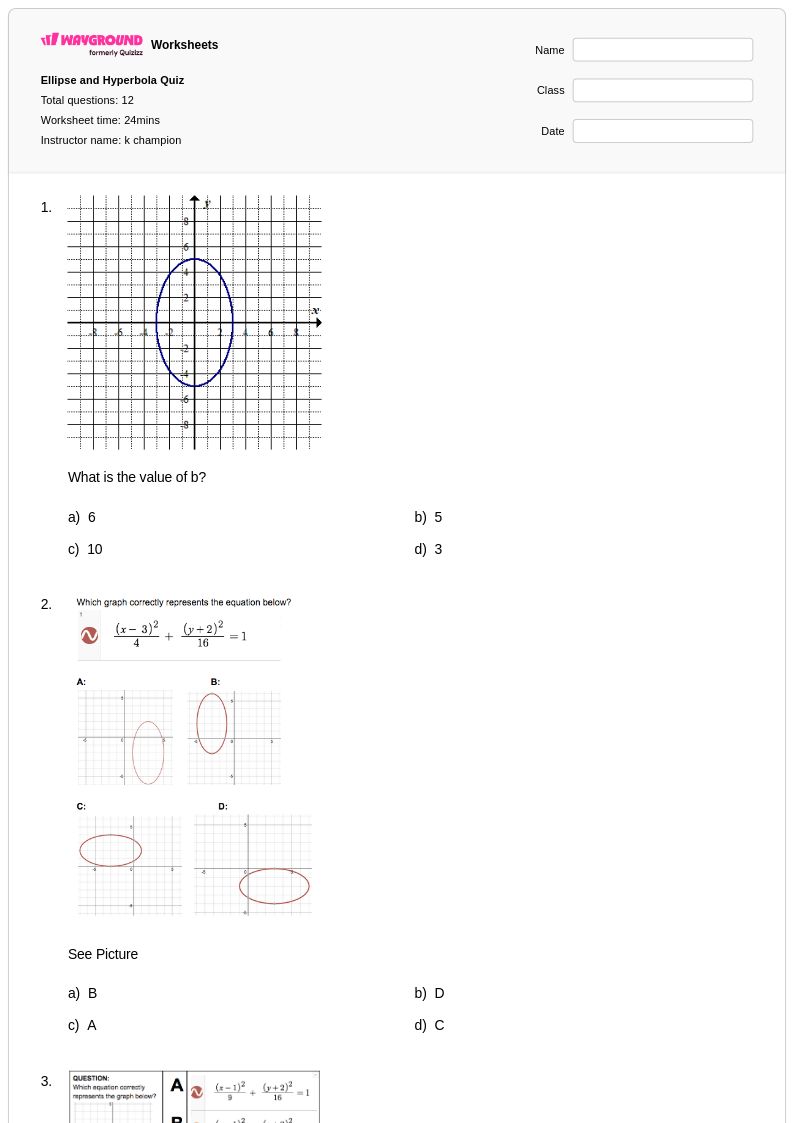
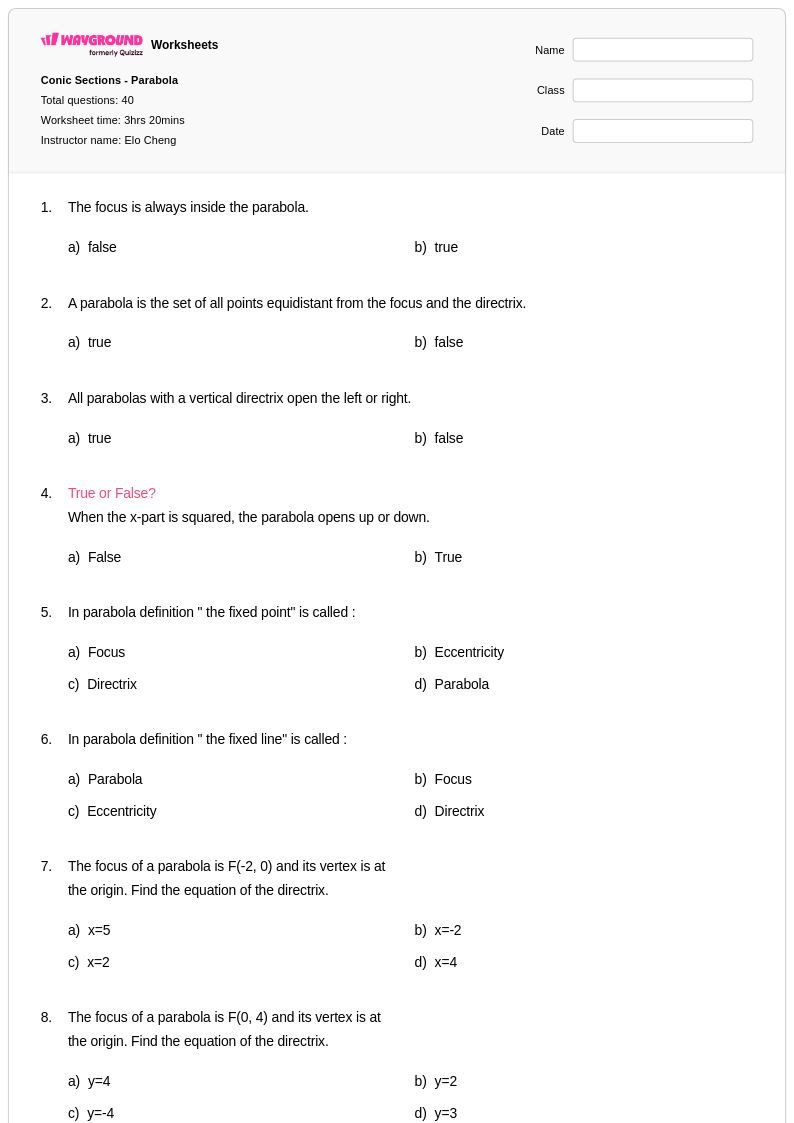
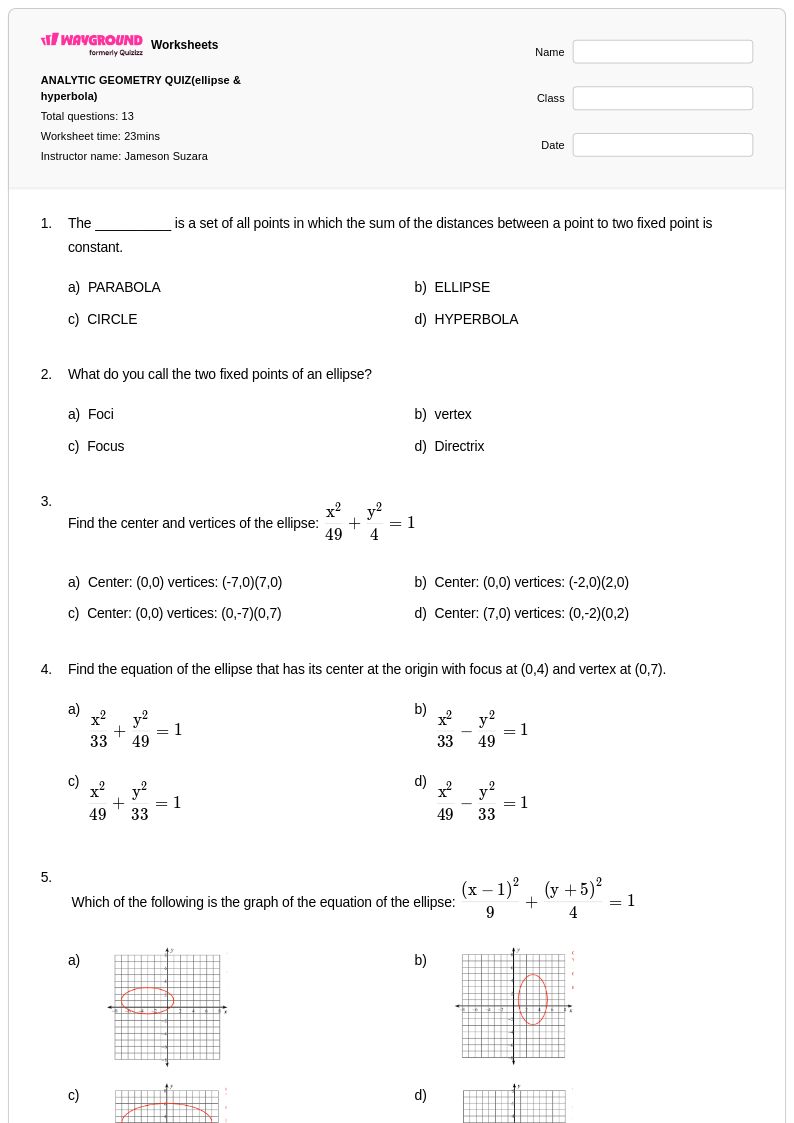
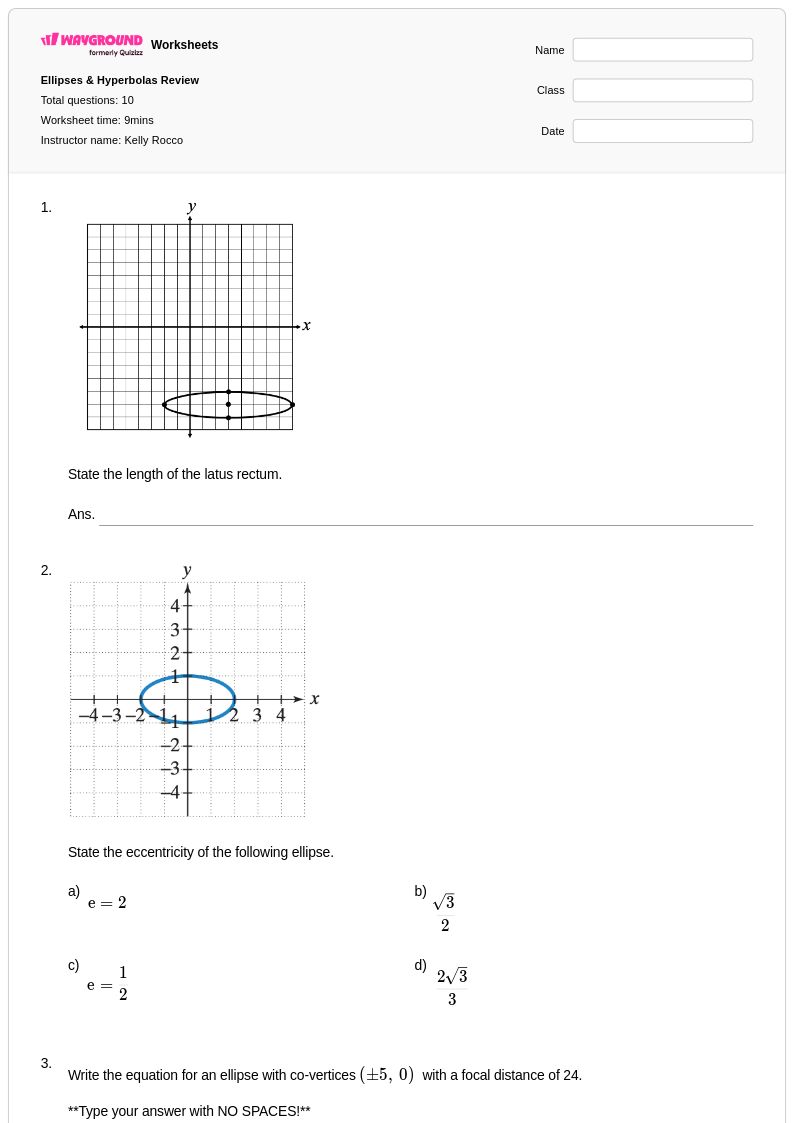
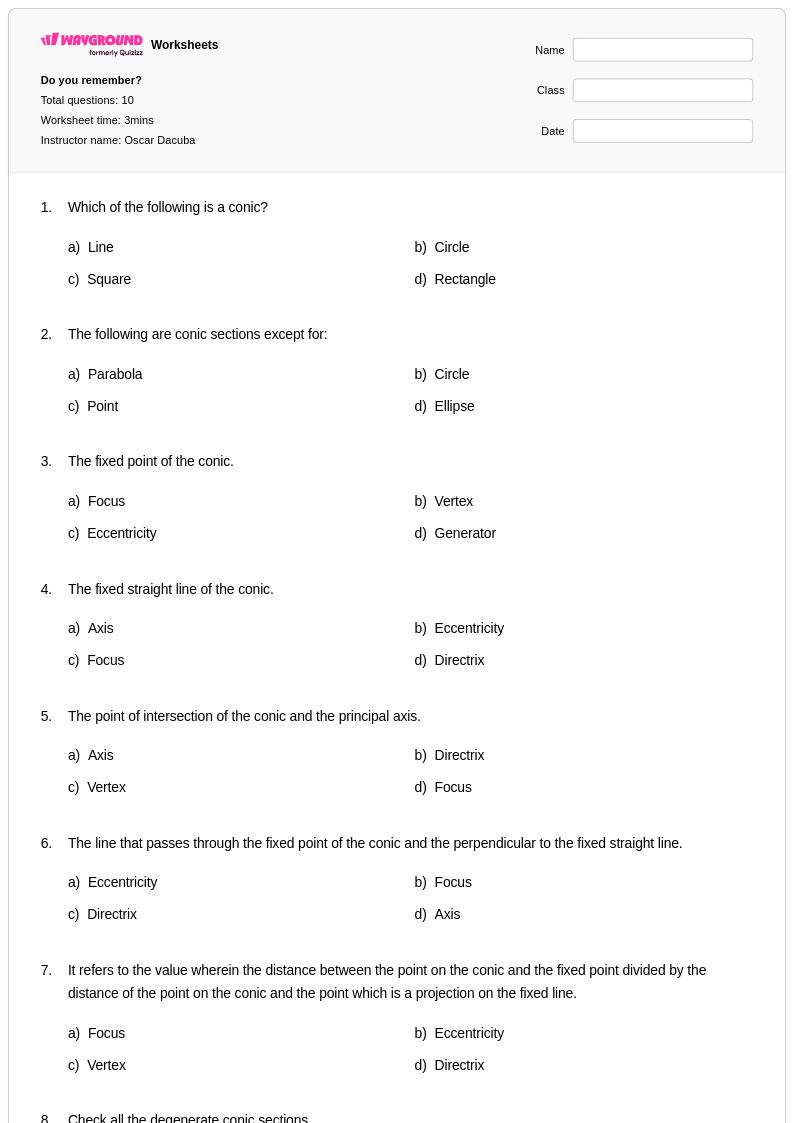
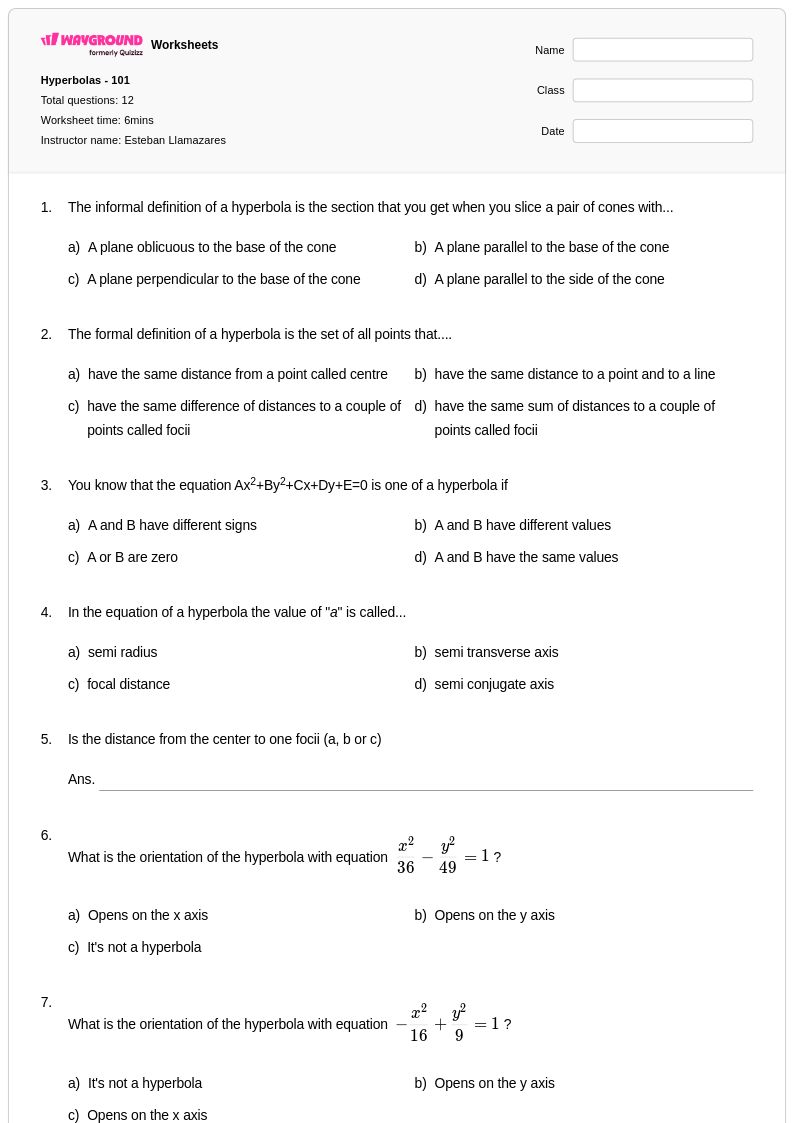
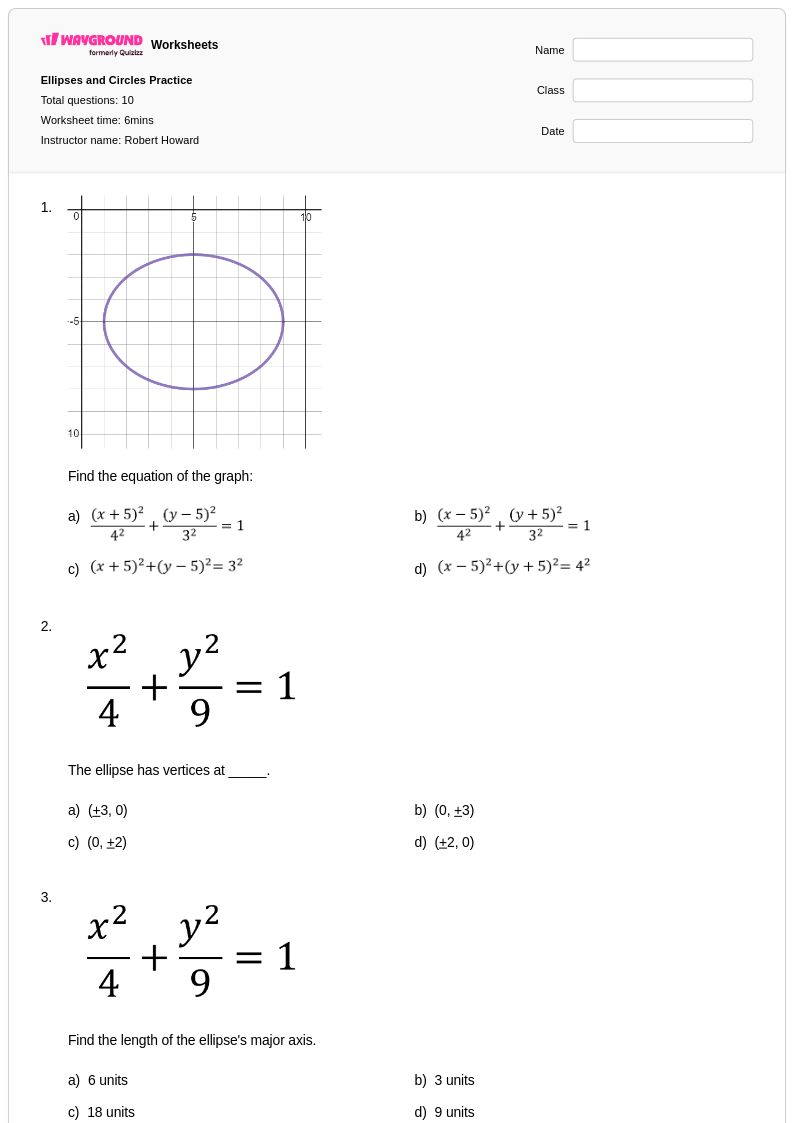
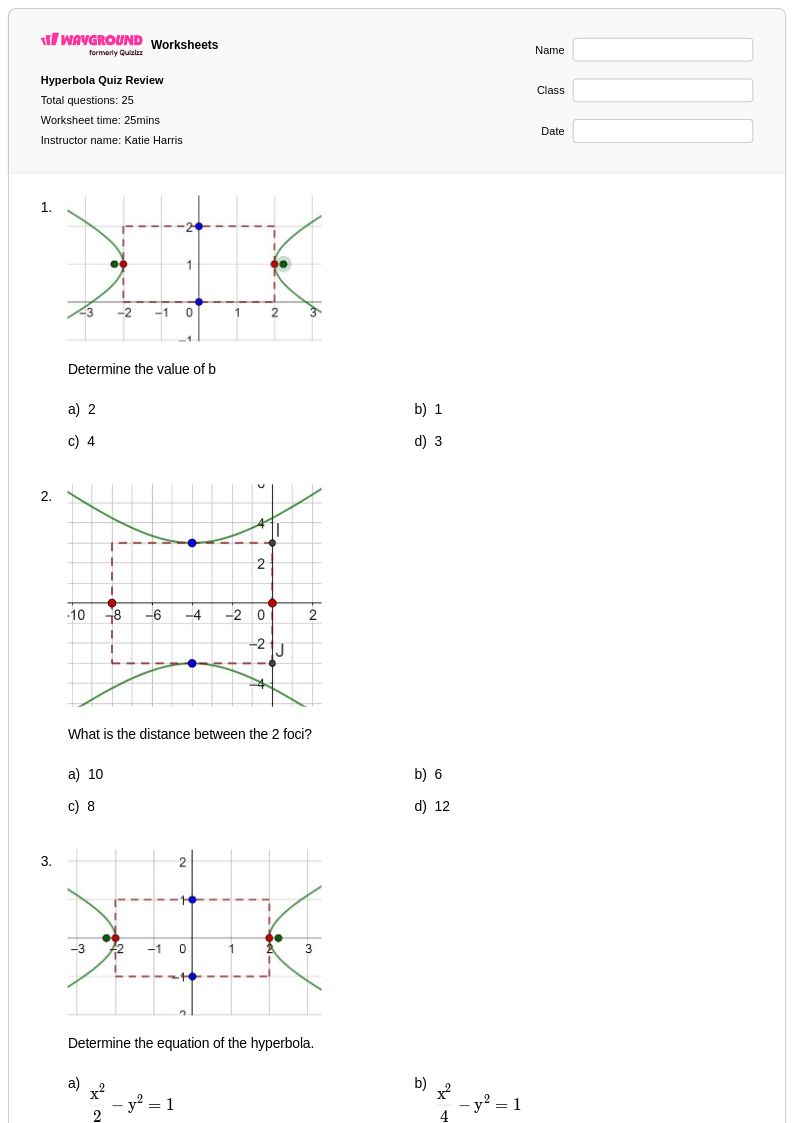
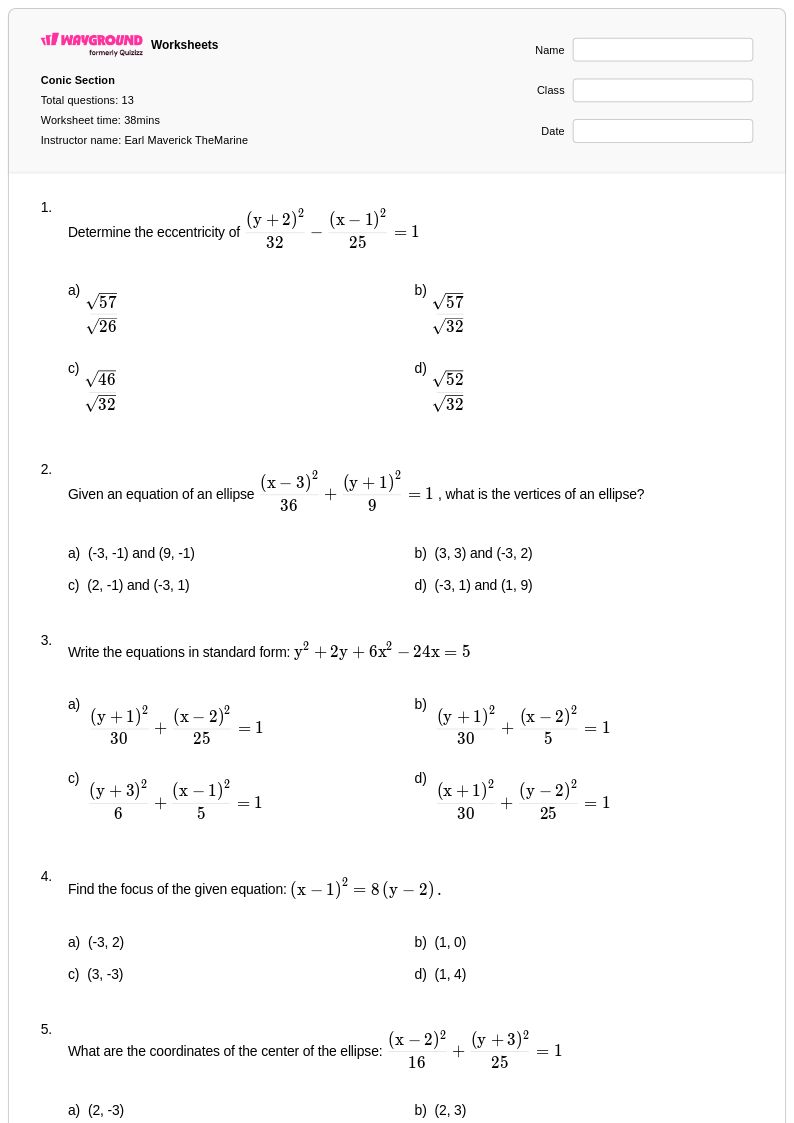
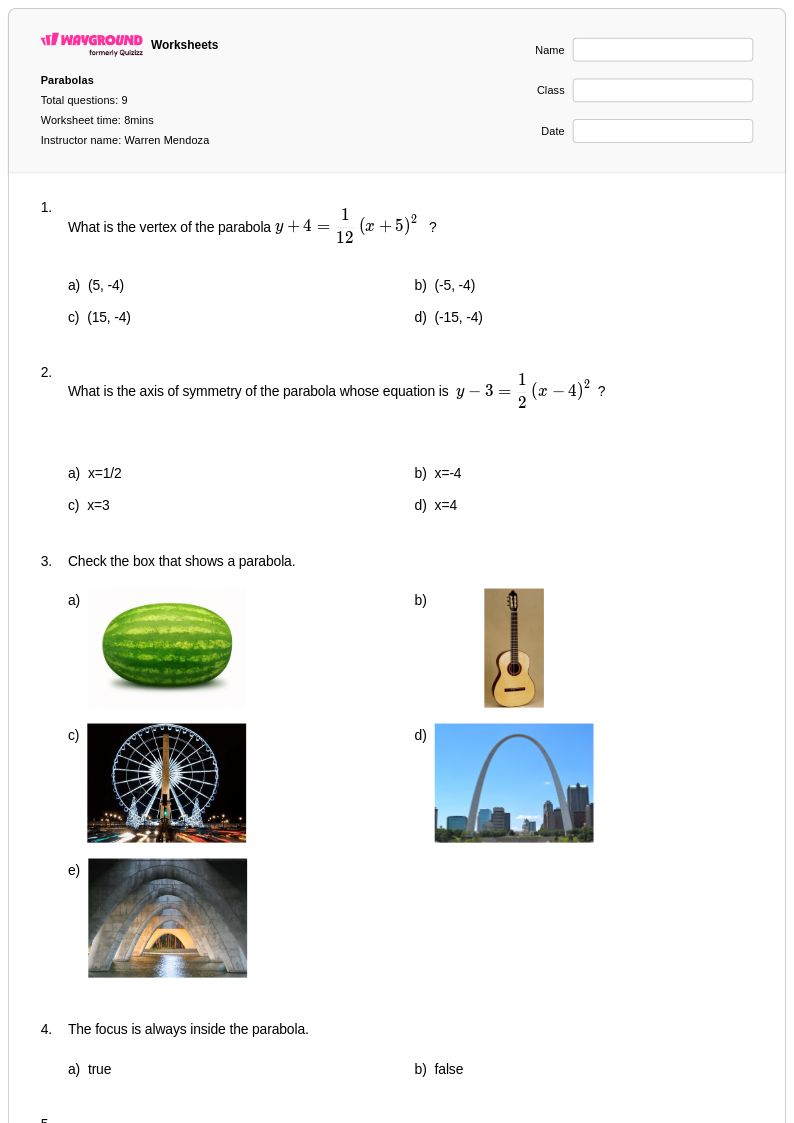
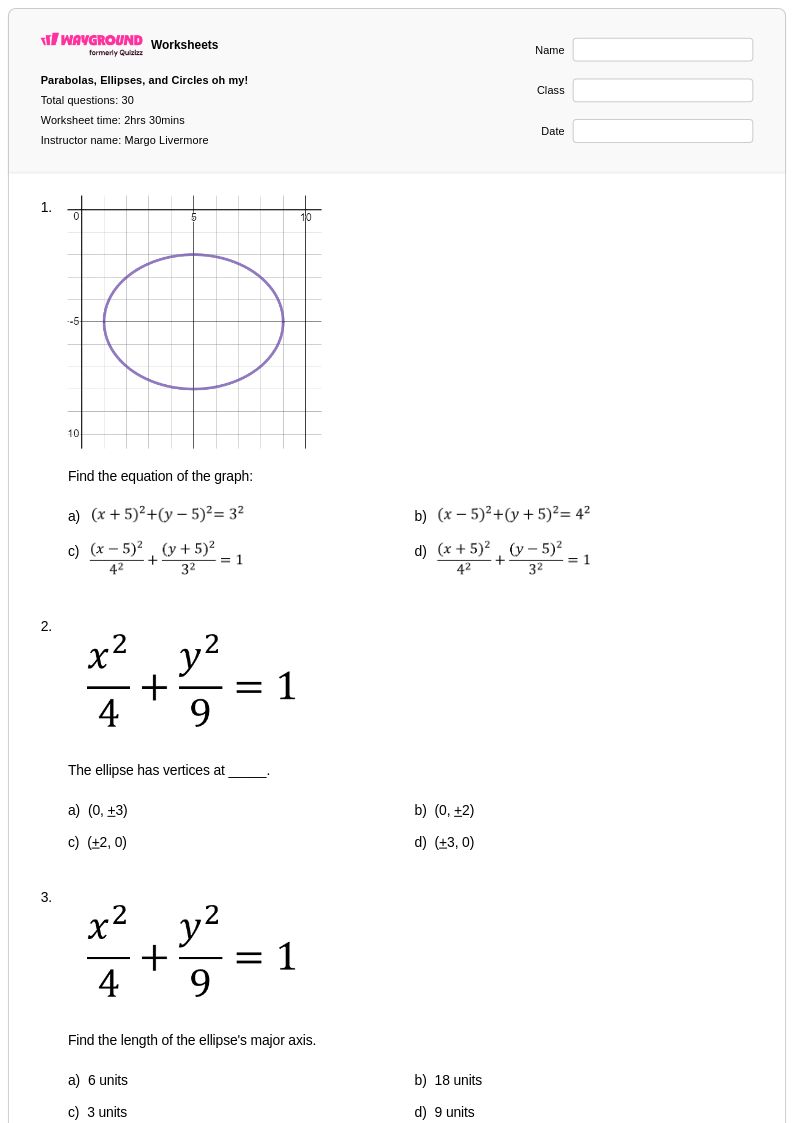
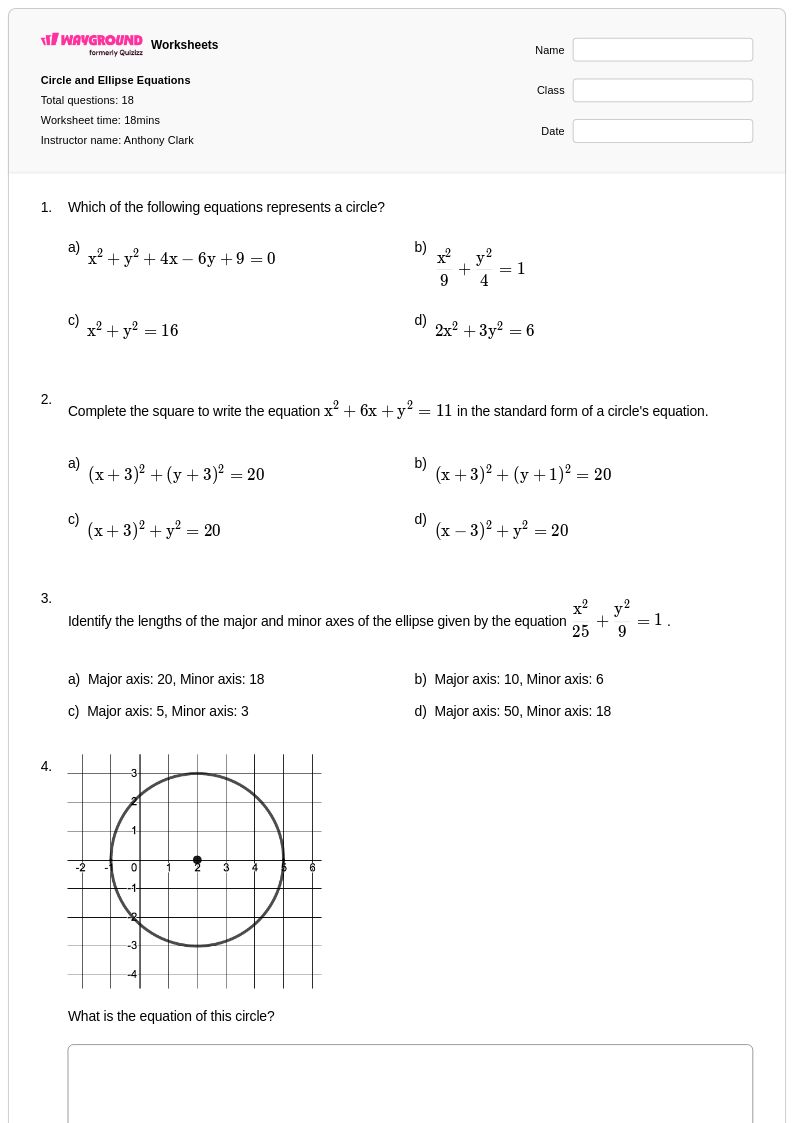
Eccentricity worksheets for Year 10 students available through Wayground (formerly Quizizz) provide comprehensive coverage of this fundamental concept in conic sections geometry. These educational resources focus on developing students' understanding of how eccentricity determines the shape and characteristics of ellipses, parabolas, and hyperbolas, while strengthening their ability to calculate eccentricity values using various formulas and geometric relationships. The worksheets include practice problems that guide students through identifying focal points, vertices, and directrices, then applying the definition of eccentricity as the ratio of distances to classify and analyze different conic sections. Each worksheet comes with a detailed answer key that supports independent learning and self-assessment, and teachers can access these materials as free printables in convenient pdf format for classroom distribution or homework assignments.
Wayground (formerly Quizizz) supports mathematics educators with an extensive collection of teacher-created eccentricity worksheets that leverage millions of resources developed by experienced classroom professionals. The platform's robust search and filtering capabilities allow teachers to quickly locate materials that align with specific curriculum standards and match their students' skill levels, while differentiation tools enable customization for varied learning needs within Year 10 geometry classrooms. Teachers can modify existing worksheets or combine multiple resources to create targeted practice sets for remediation, enrichment, or regular skill reinforcement, with all materials available in both printable pdf format for traditional paper-based instruction and digital formats for technology-integrated learning environments. This flexibility streamlines lesson planning while ensuring students receive appropriate practice with eccentricity calculations, conic section identification, and geometric reasoning skills essential for advanced mathematics courses.
FAQs
How do I teach eccentricity to Grade 10 students?
By Grade 10, students should be comfortable with the distance formula and standard conic equations, so you can move quickly from the geometric definition to algebraic derivation. The key teaching move is connecting the formula e = c/a to the visual: as c grows relative to a, the ellipse stretches. Have students compute e for a series of ellipses with fixed a but increasing c — watching the value climb toward 1 as the shape elongates makes the formula feel like a description, not just a procedure.
What exercises help Grade 10 students practice eccentricity?
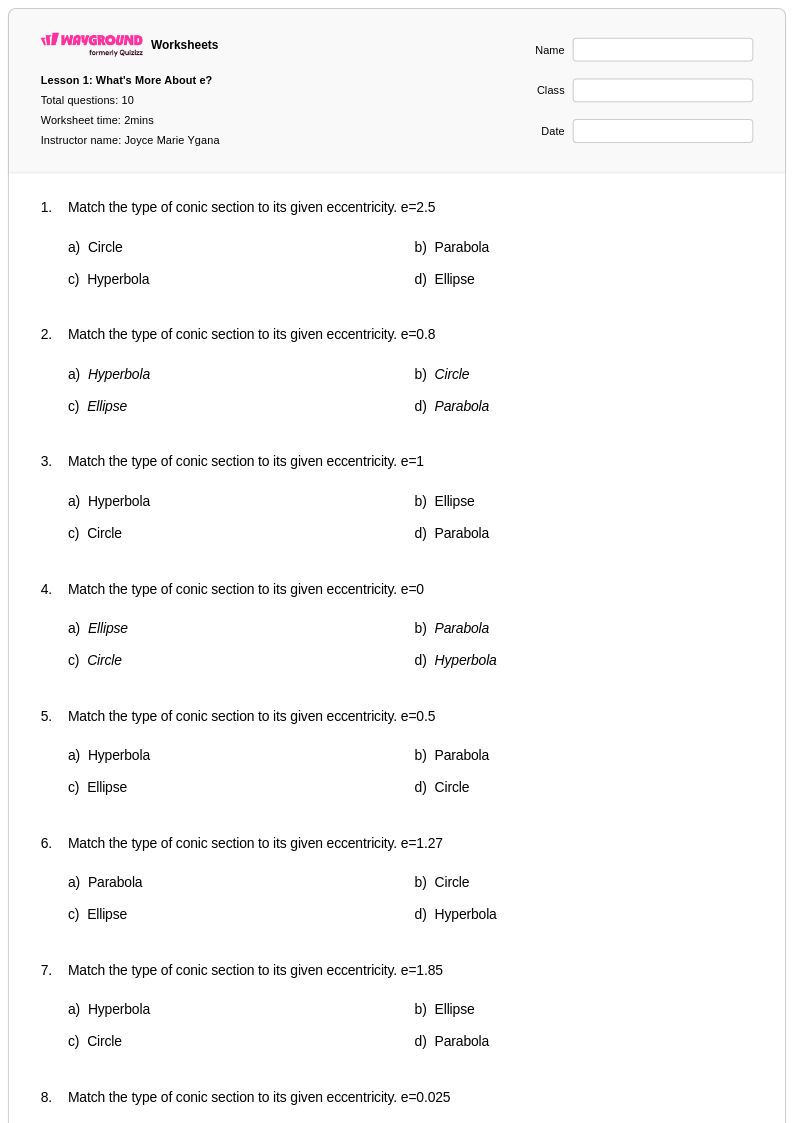
Grade 10 practice should push beyond basic calculation into interpretation and application. Good problem types include: extracting c and a from a conic equation in standard form to find e, identifying the conic type from an eccentricity value alone, and working with focal points and directrices to verify the ratio definition directly. Problems that mix all three in a single set are more effective than drilling one type at a time.
What errors do Grade 10 students commonly make with eccentricity?
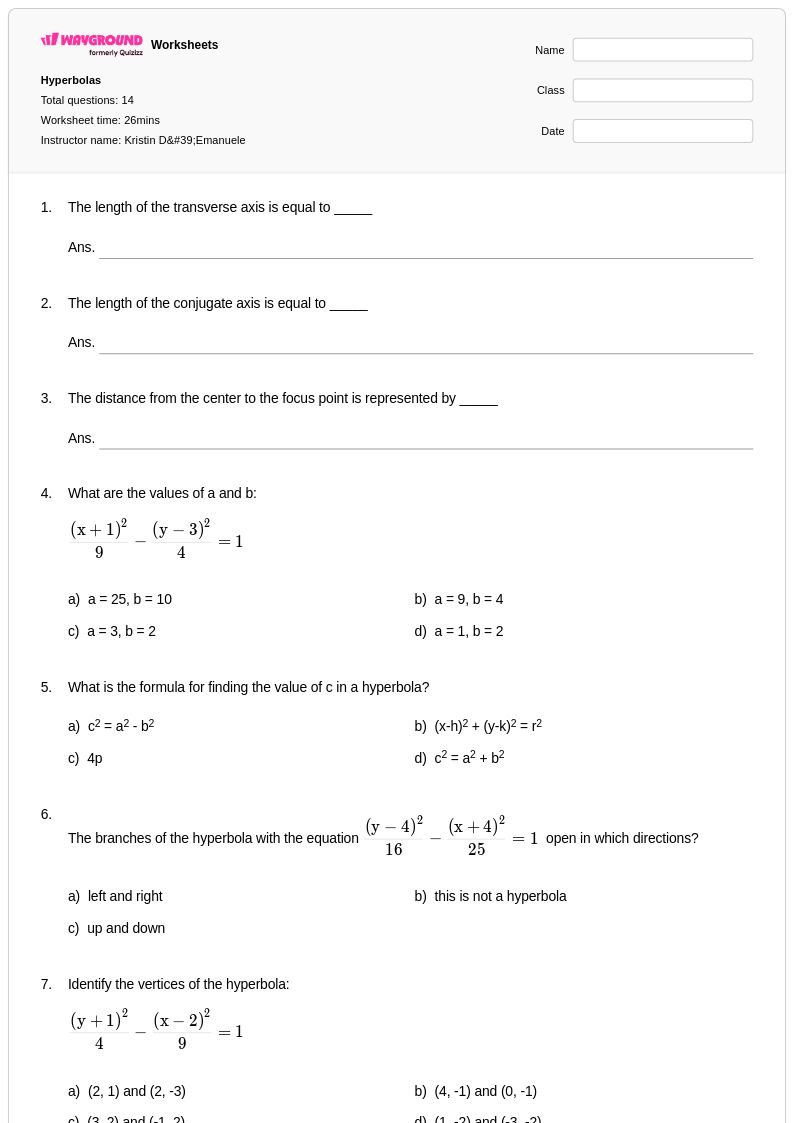
The most common error at this level is misidentifying a and c when working from a standard-form equation — particularly for hyperbolas, where students confuse which term is a² and which is b², then compute c incorrectly from c² = a² + b². A second frequent mistake is applying the ellipse formula (e = c/a) to a hyperbola without adjusting for the different relationship between the axes. Targeted practice that explicitly contrasts ellipse and hyperbola setups side by side reduces both errors.
How do I use Wayground's Grade 10 eccentricity worksheets?
Every worksheet includes a complete answer key, making it straightforward to assign for independent practice or test prep. You can host it as a digital quiz on Wayground for immediate feedback, or print the PDF for paper-based work — the Wayground for Teachers app lets you scan printed submissions for grading so you're not manually checking each paper.
How does eccentricity fit into the Grade 10 math curriculum?
In Common Core-aligned courses, Grade 10 is typically where students formalize conic sections algebraically after building coordinate geometry foundations. Eccentricity at this level connects the geometric definition students may have seen in Grade 9 to the algebraic structure of standard-form equations — specifically, the relationship between a, b, and c. Mastering it here prepares students to work with polar equations of conics and parametric forms in precalculus.
Can I differentiate eccentricity practice for my Grade 10 class?
For students who need scaffolding, Wayground's reduced answer choices option narrows the decision space on classification problems while they build confidence with the formulas. At the worksheet level, you can adjust font size or apply a dyslexia-friendly font for students who need it — without creating a separate assignment. Students working ahead can be directed to problems involving general-form equations or real-world modeling, which the worksheet collection also covers.