
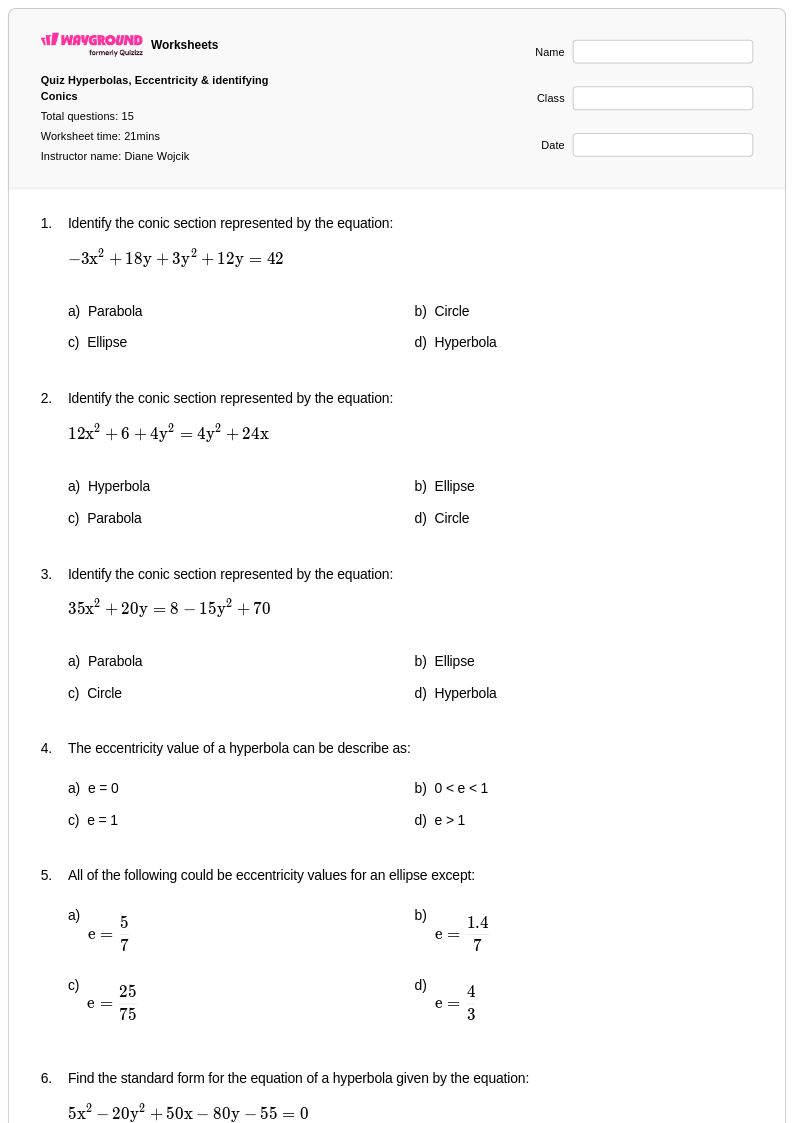
15 Q
10th - 12th
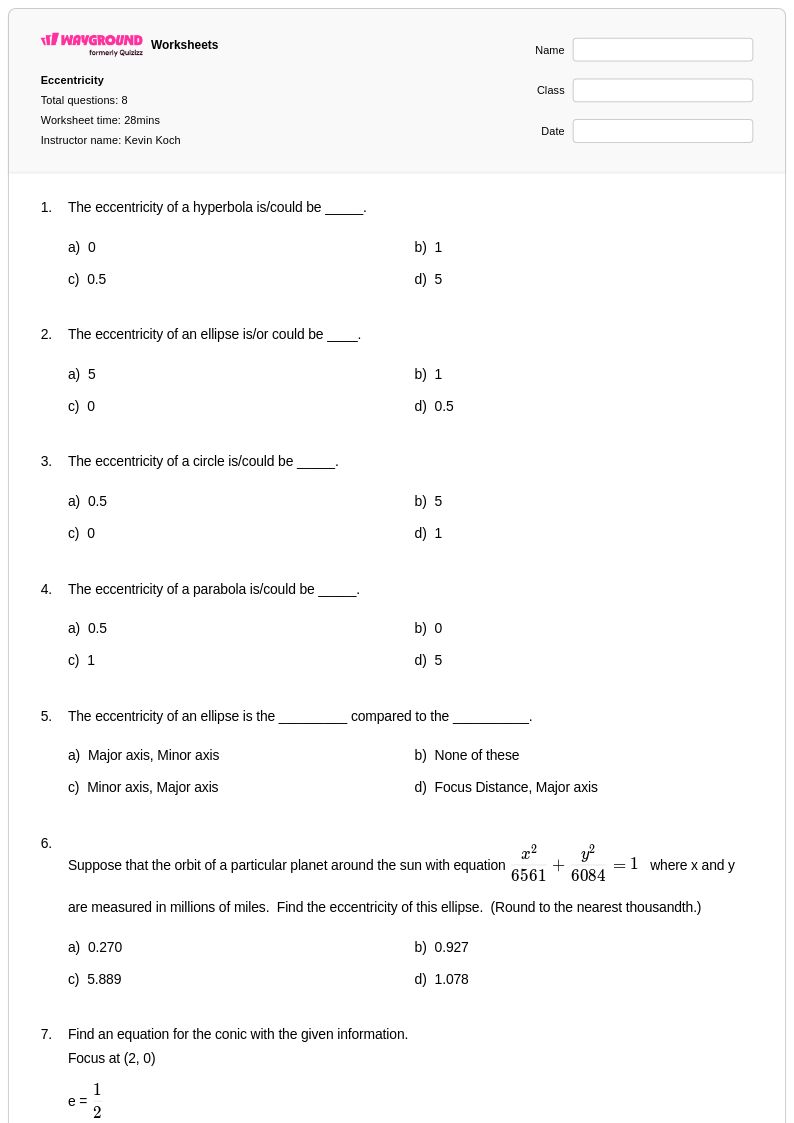
8 Q
9th - 12th
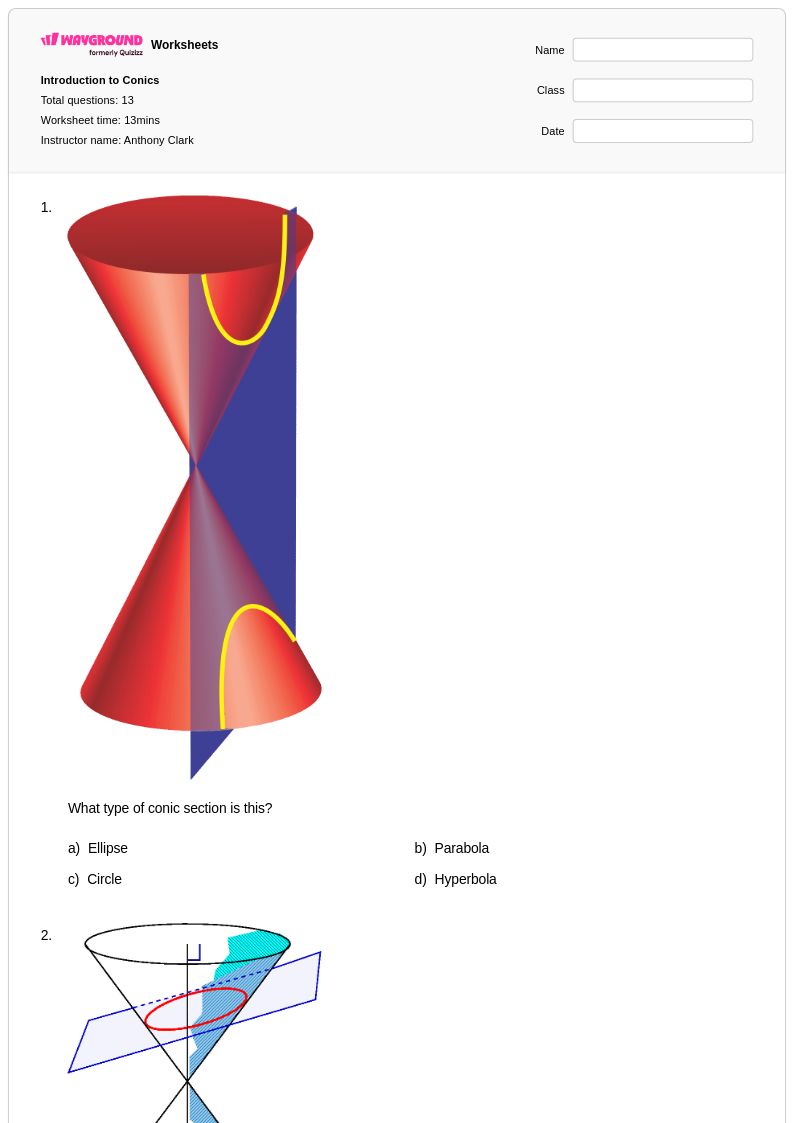
13 Q
11th - Uni
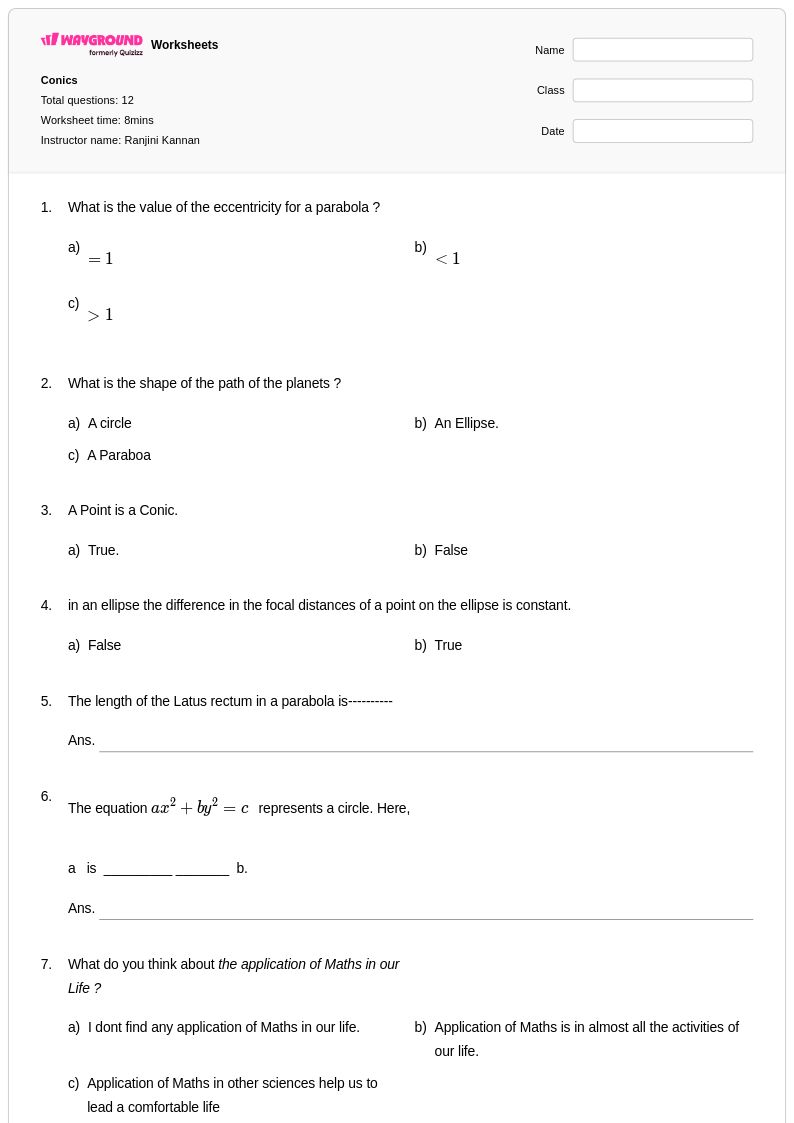
12 Q
11th - 12th
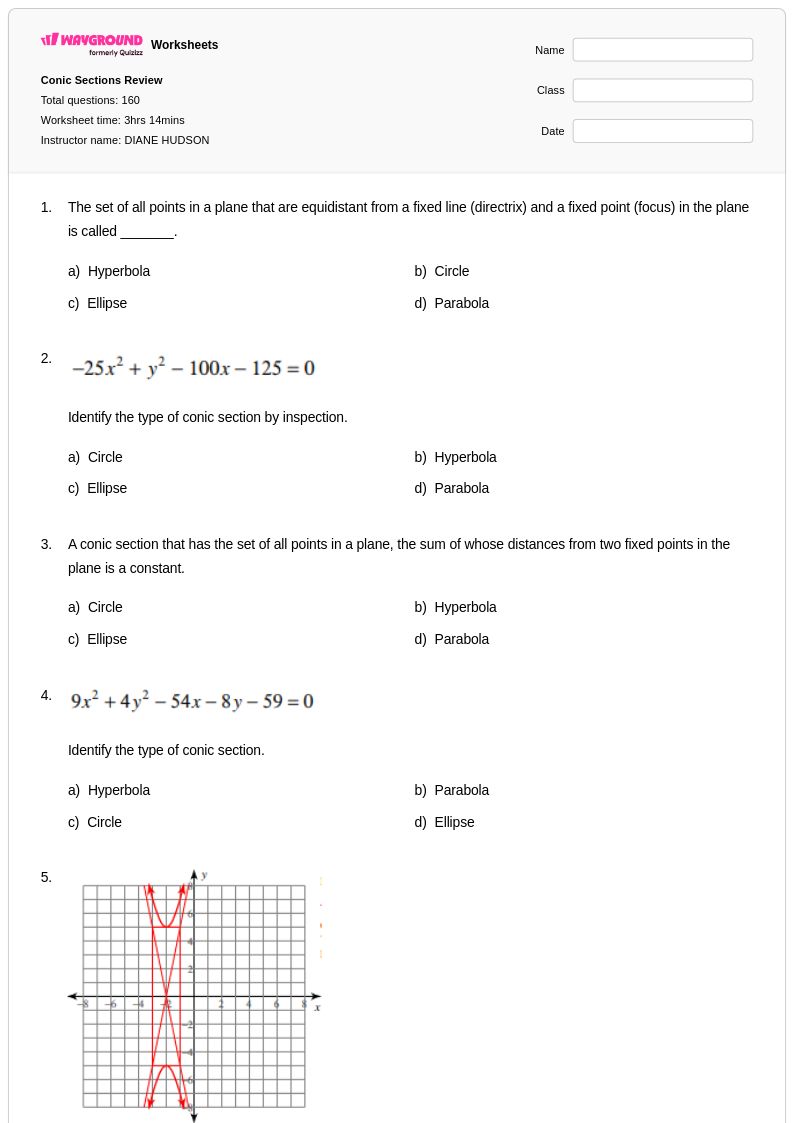
160 Q
10th - 12th
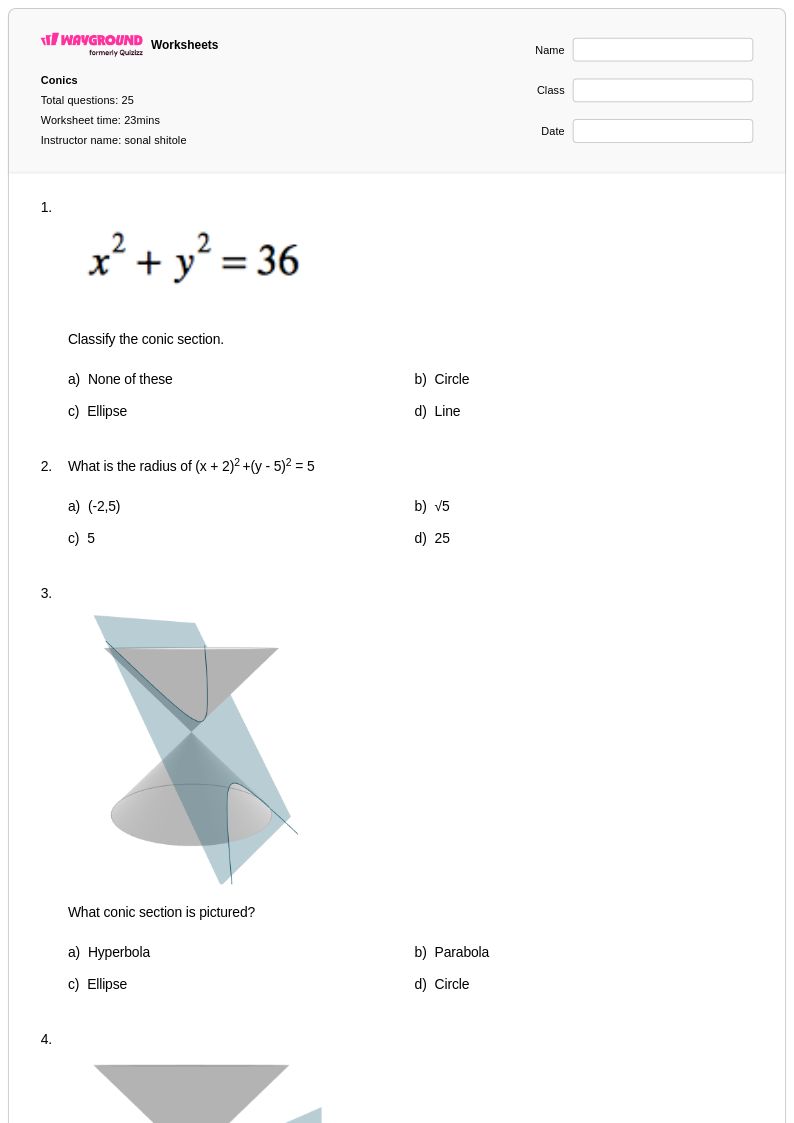
25 Q
11th
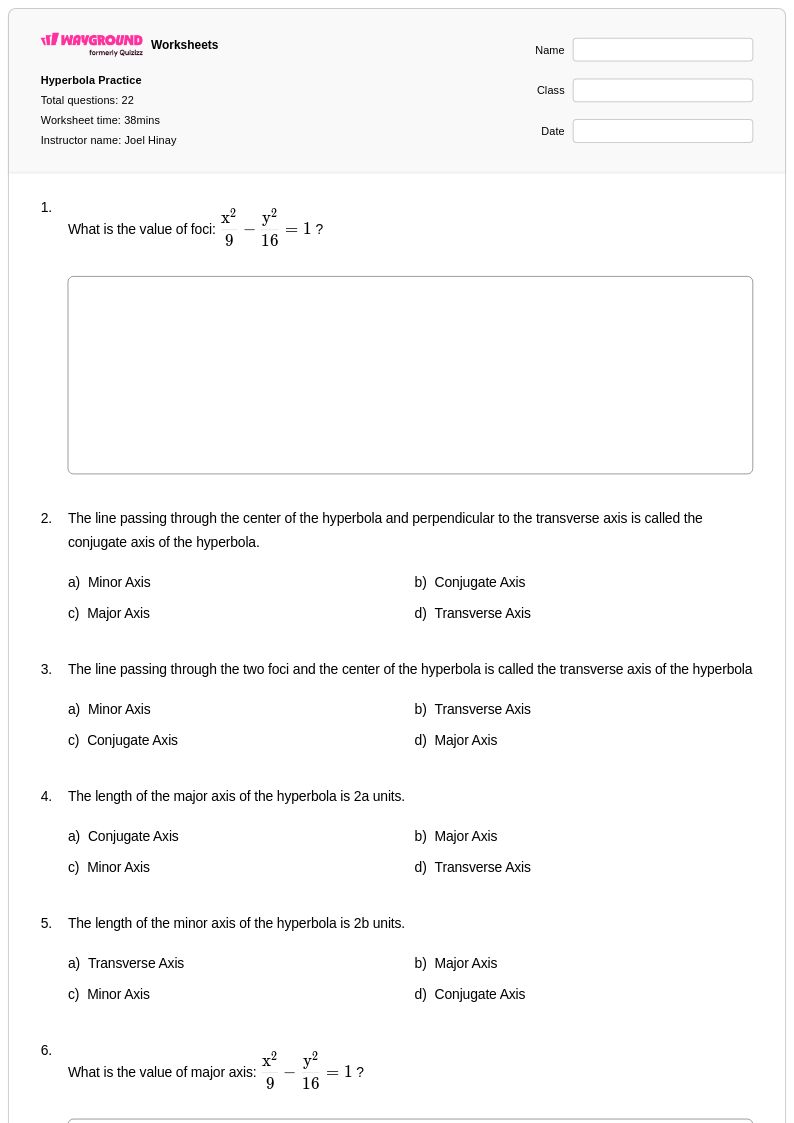
22 Q
11th
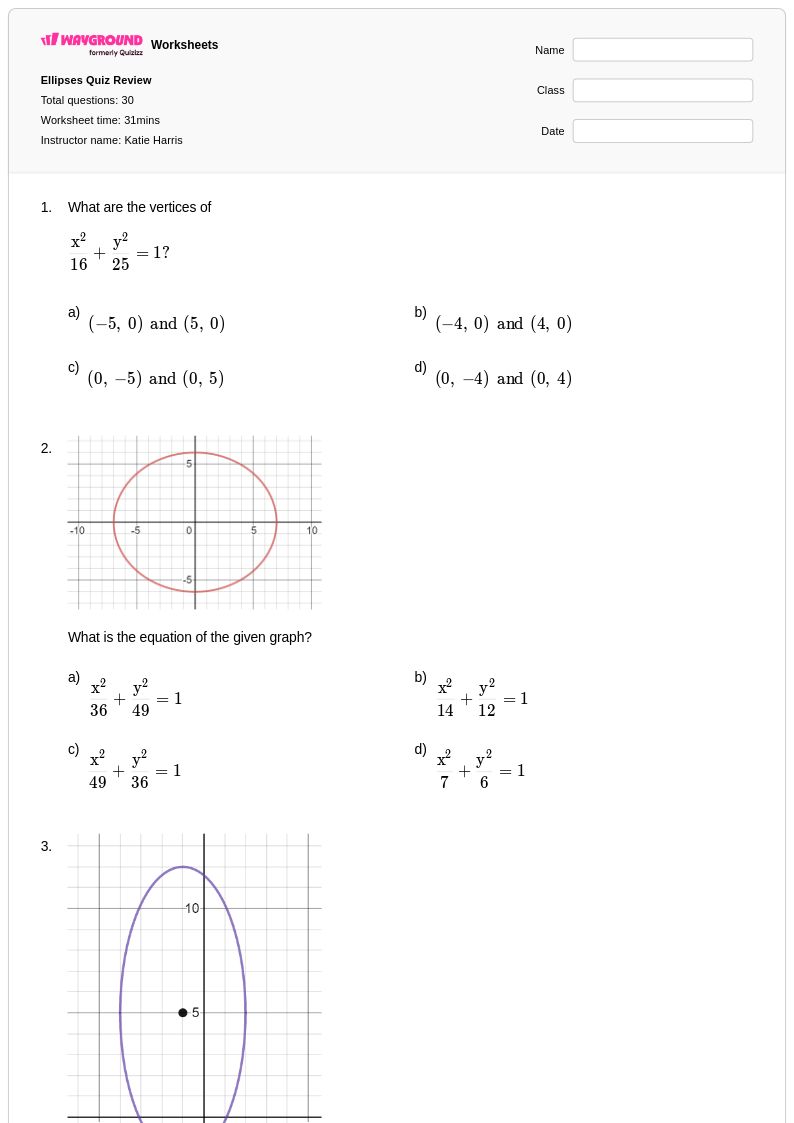
30 Q
9th - 12th
50 Q
11th
10 Q
11th
15 Q
11th
13 Q
11th
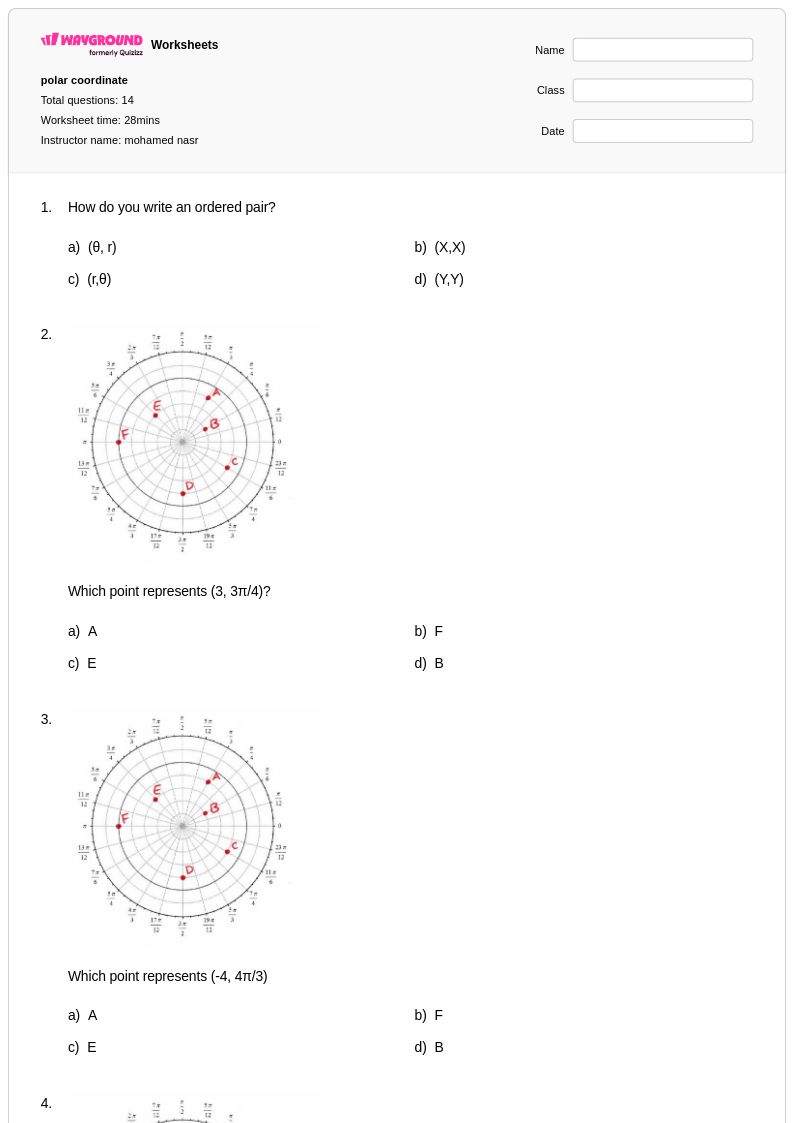
14 Q
11th - 12th
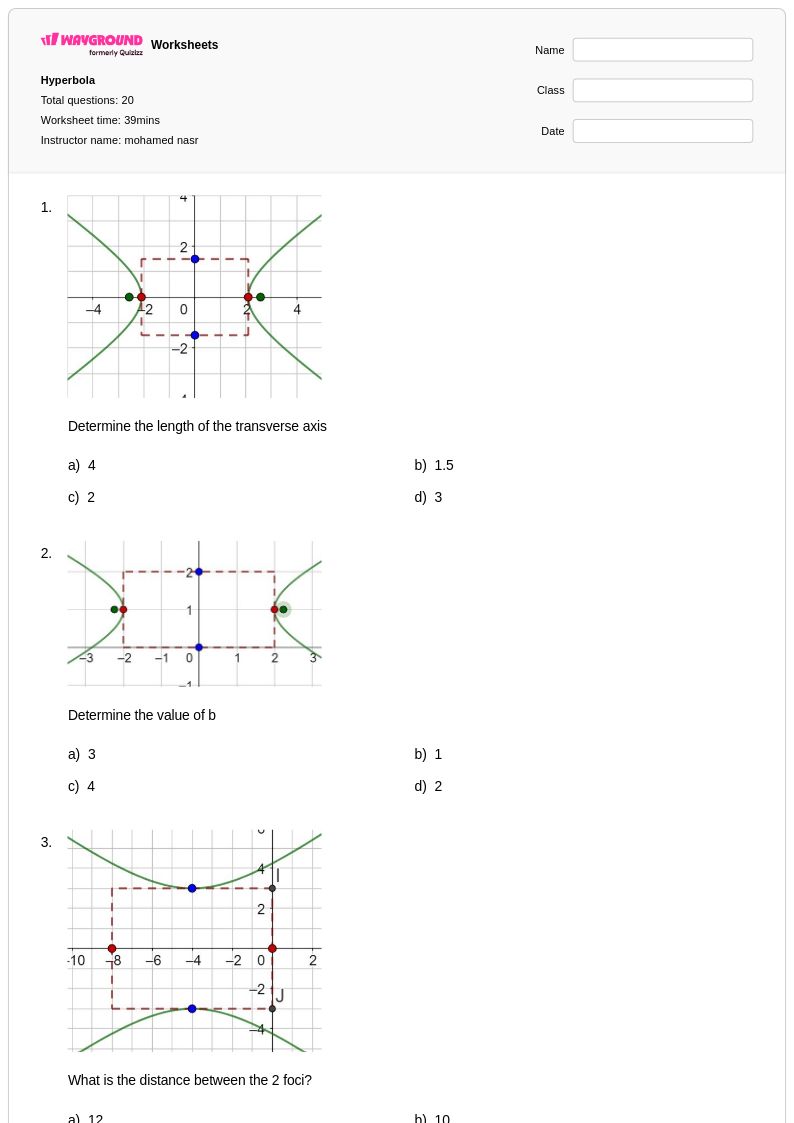
20 Q
11th
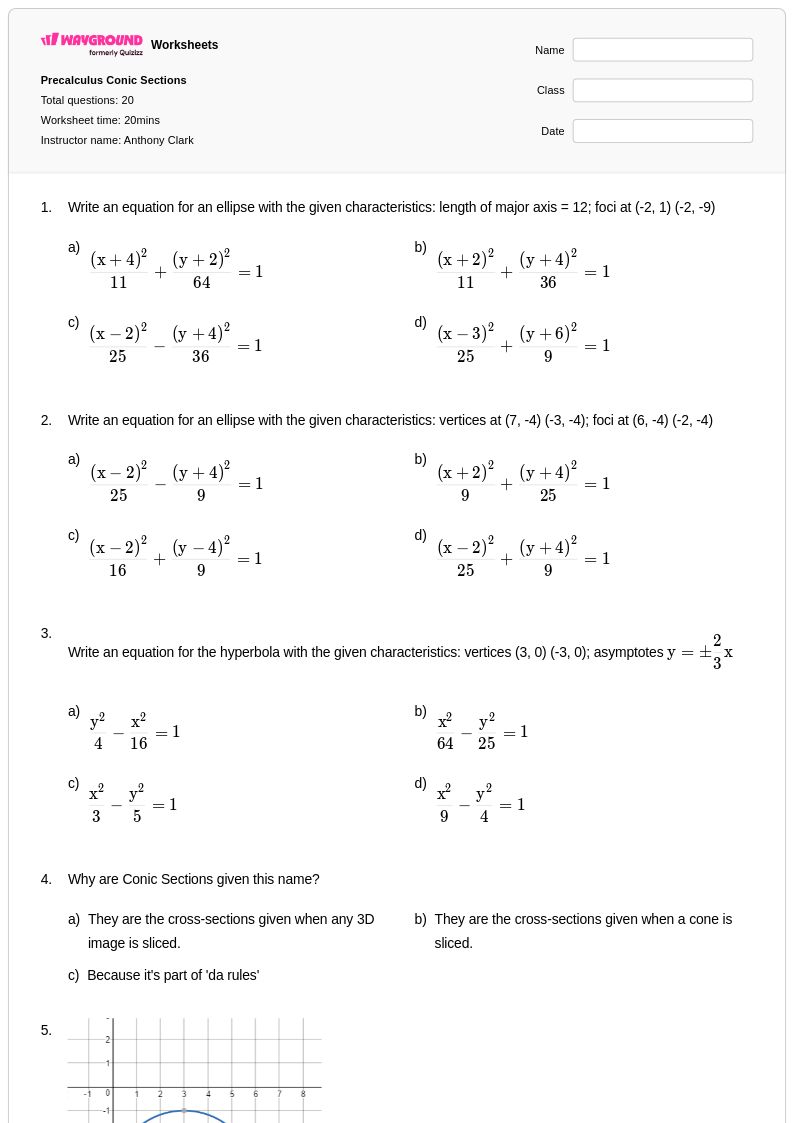
20 Q
11th - Uni
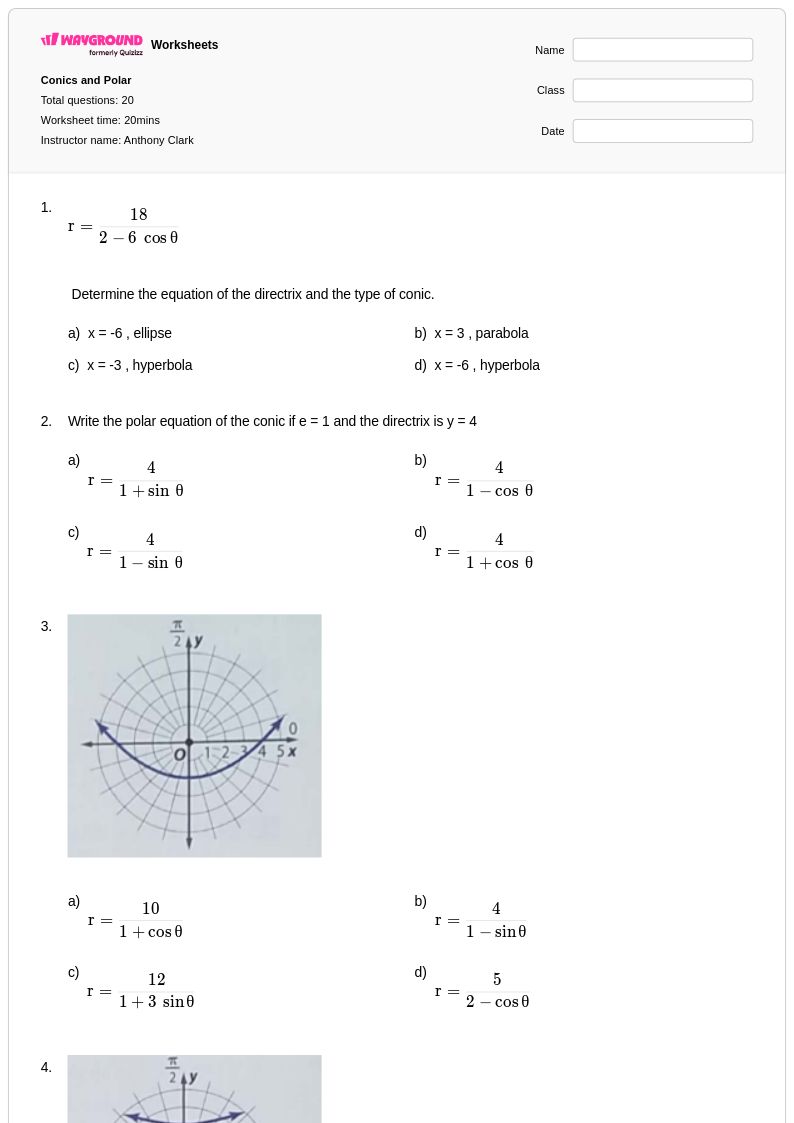
20 Q
11th - Uni
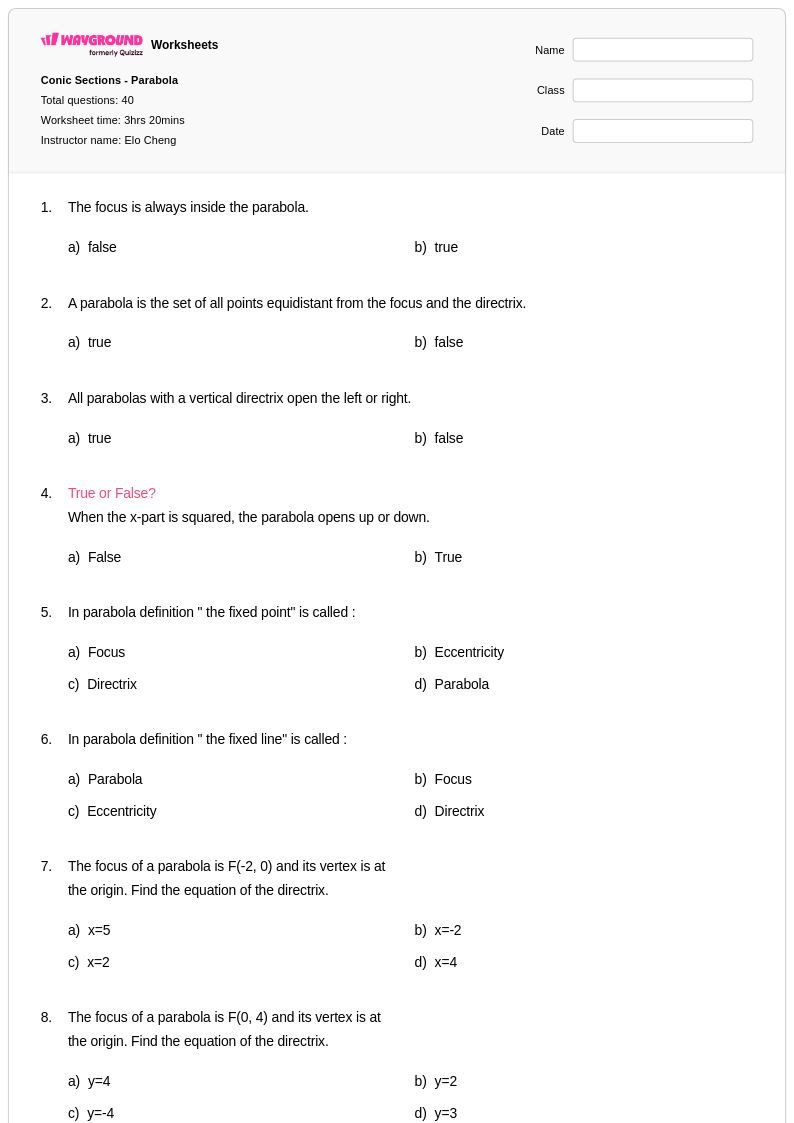
40 Q
8th - 12th
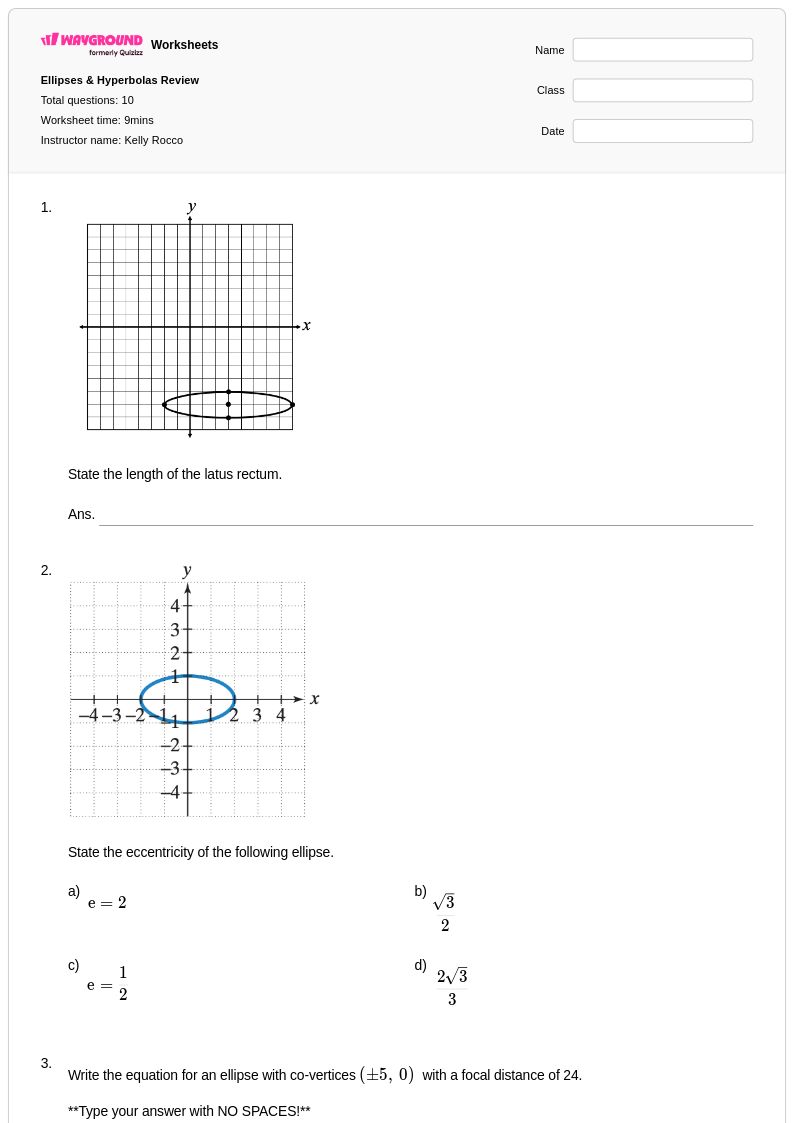
10 Q
10th - 11th
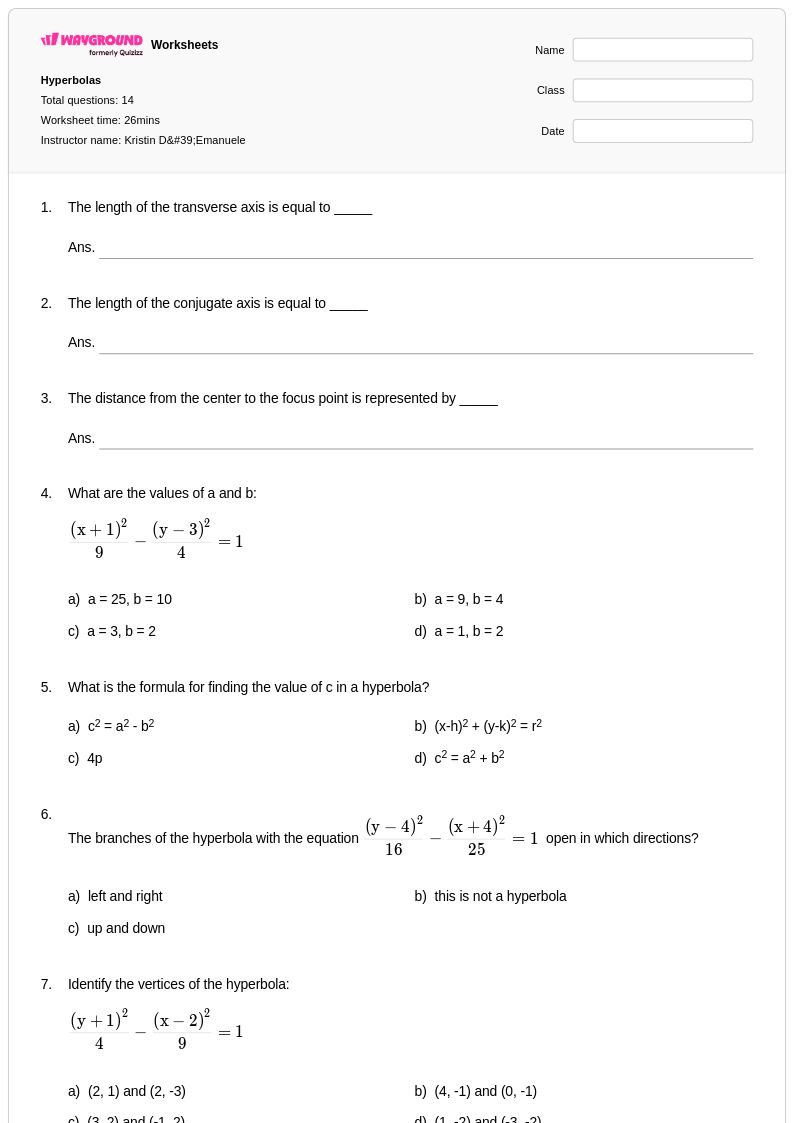
14 Q
9th - 12th
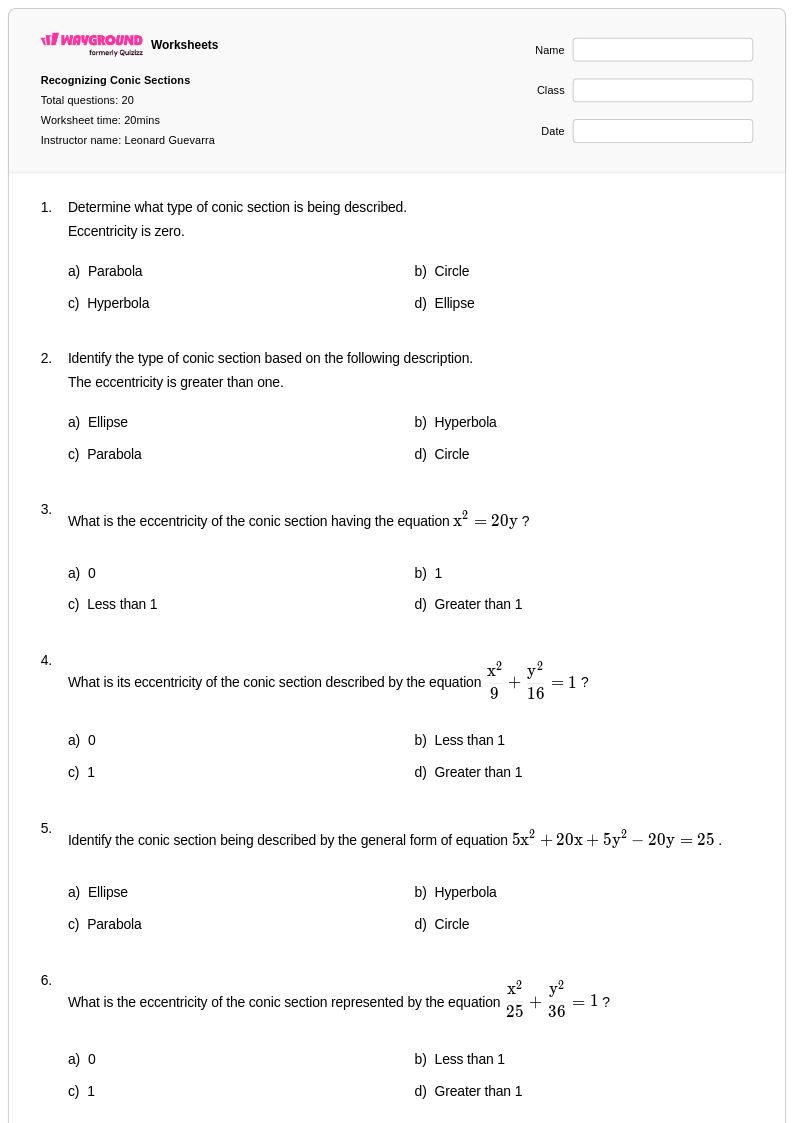
20 Q
11th
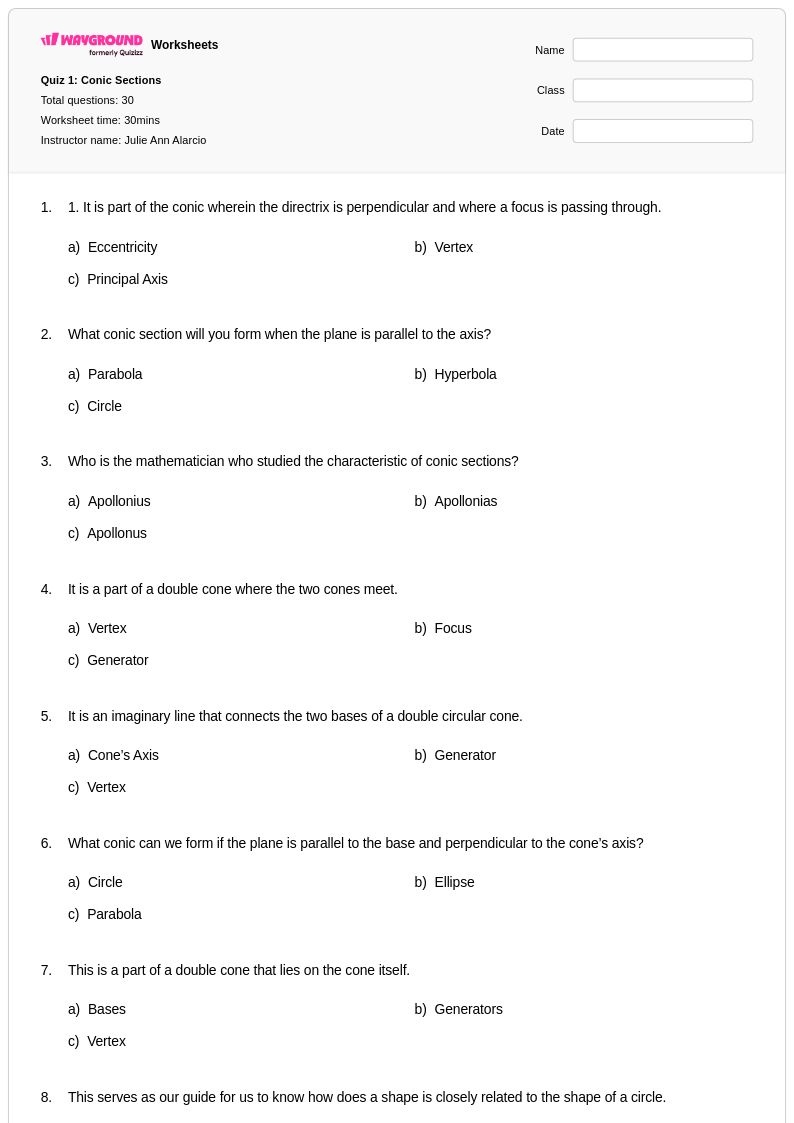
30 Q
11th
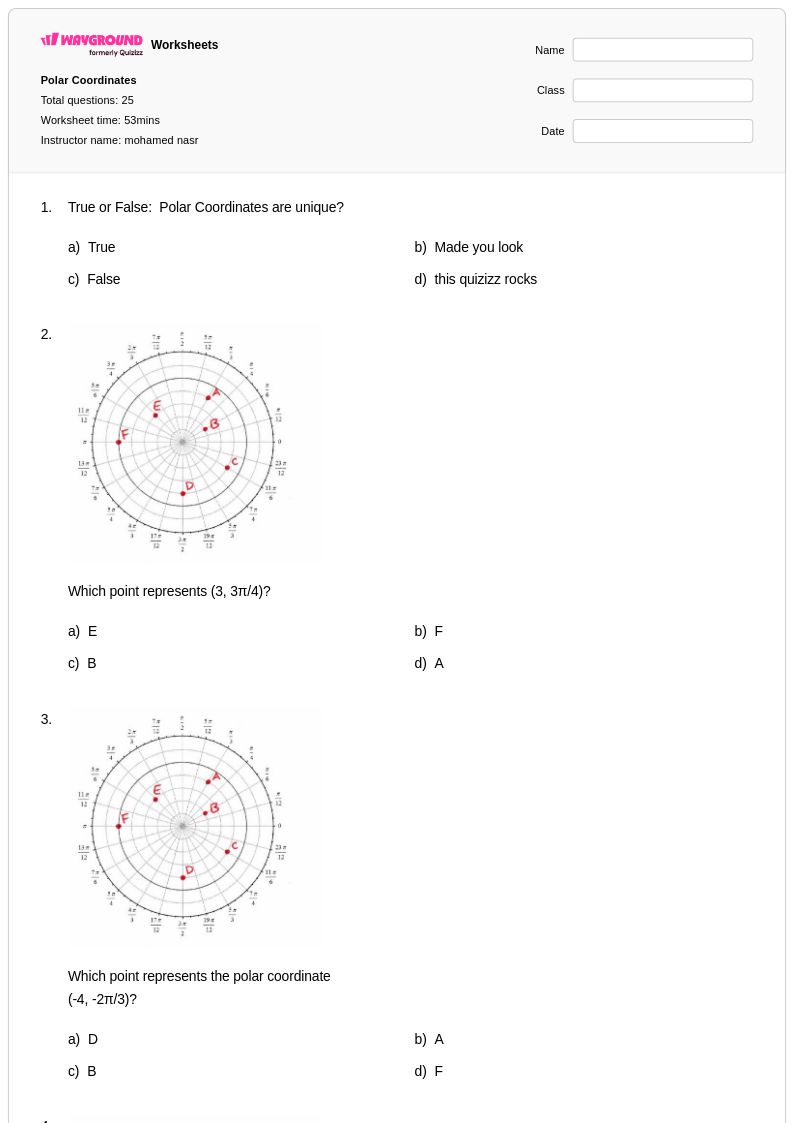
25 Q
11th - 12th
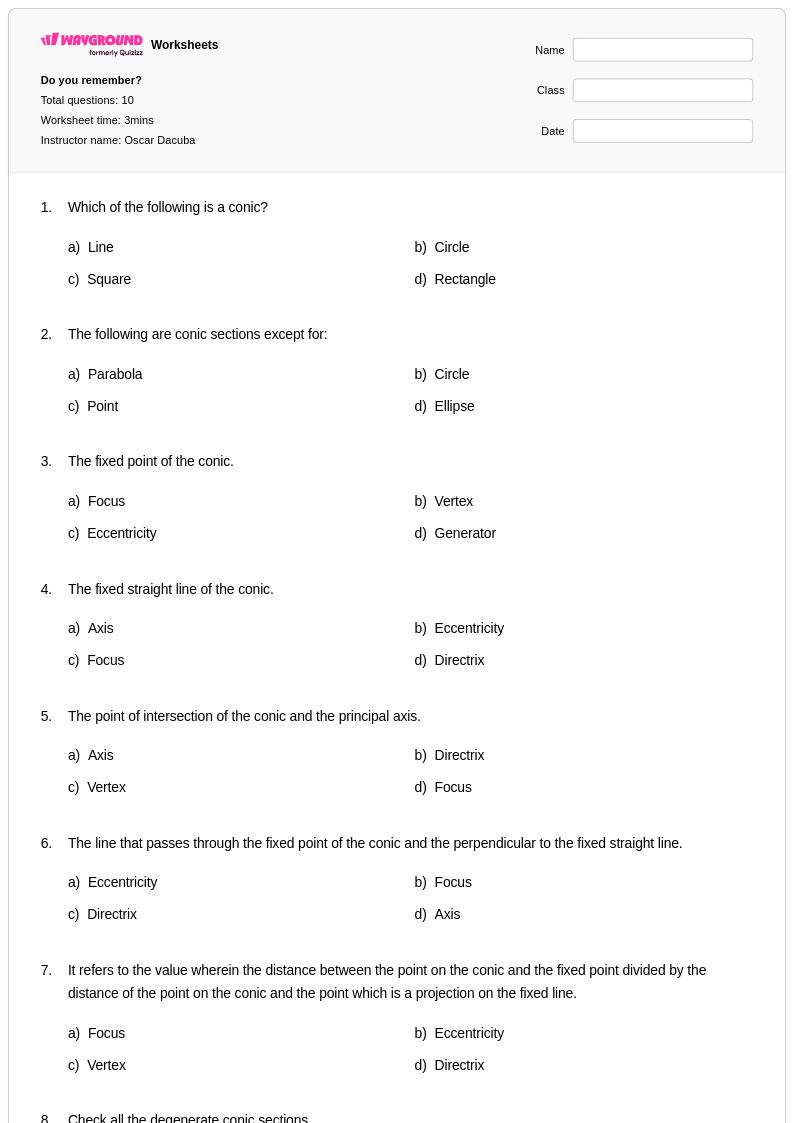
10 Q
10th - 11th
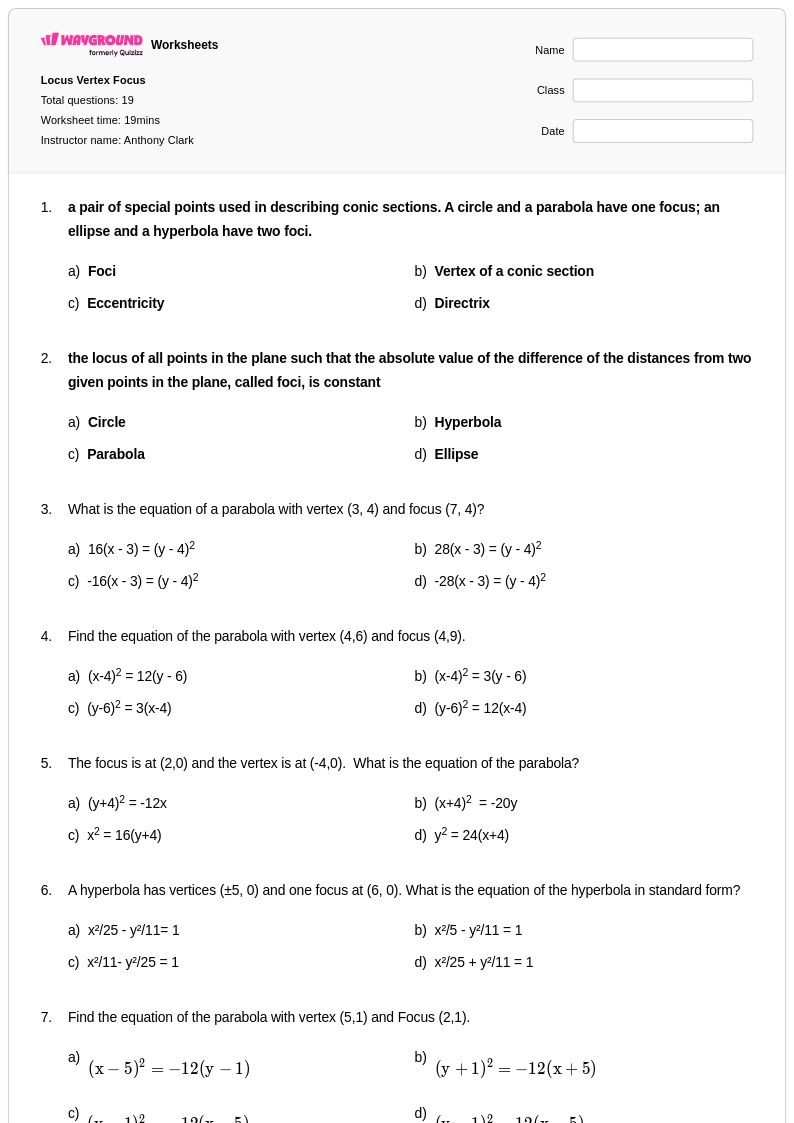
19 Q
11th - Uni
Explore Other Subject Worksheets for year 11
Explore printable Eccentricity worksheets for Year 11
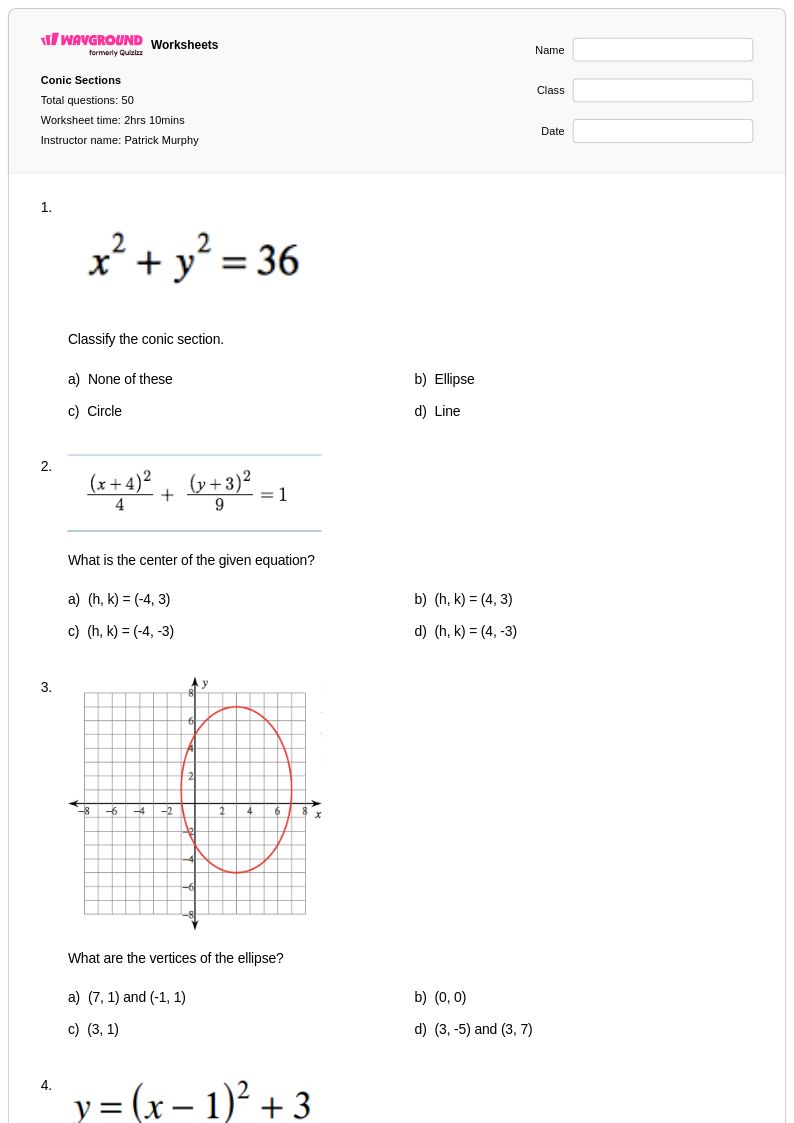
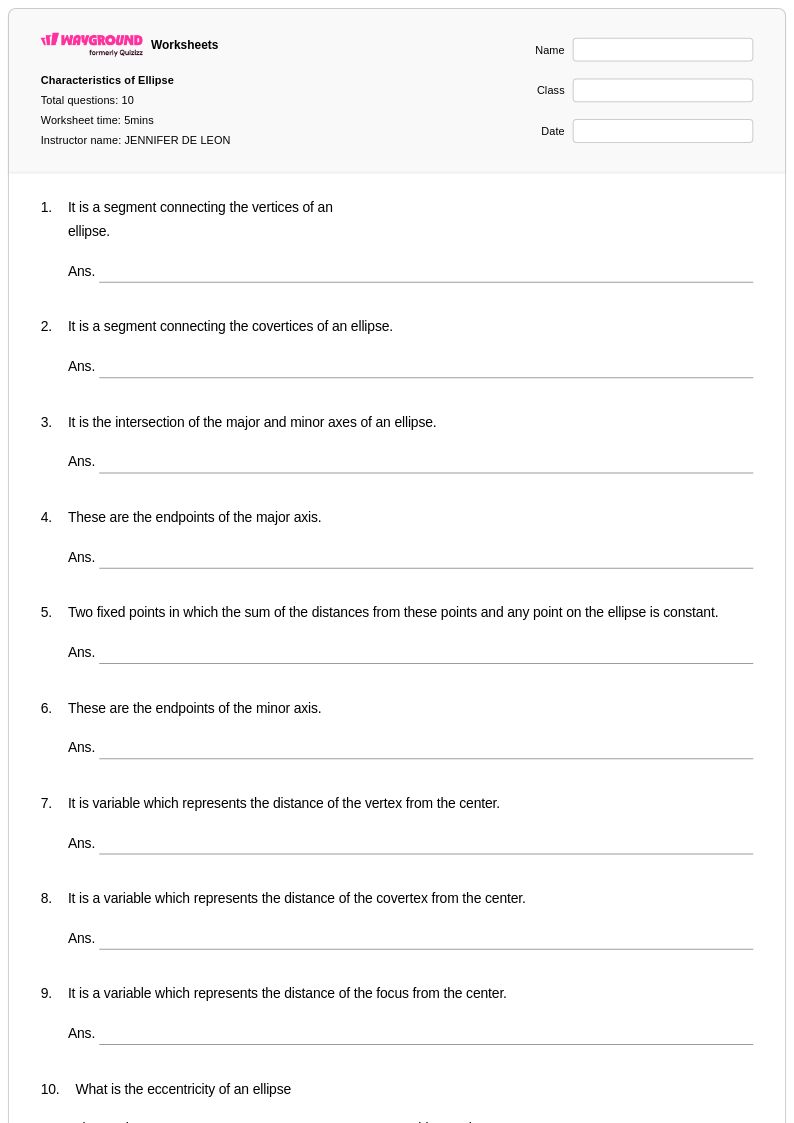
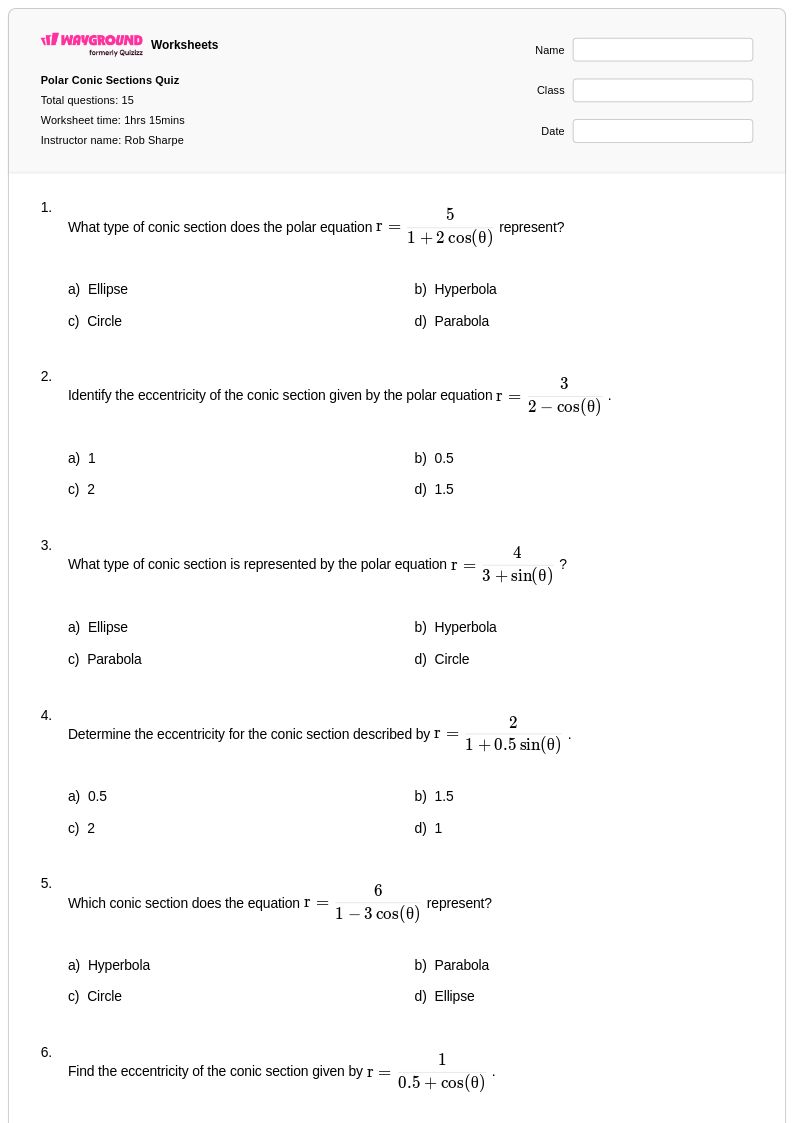
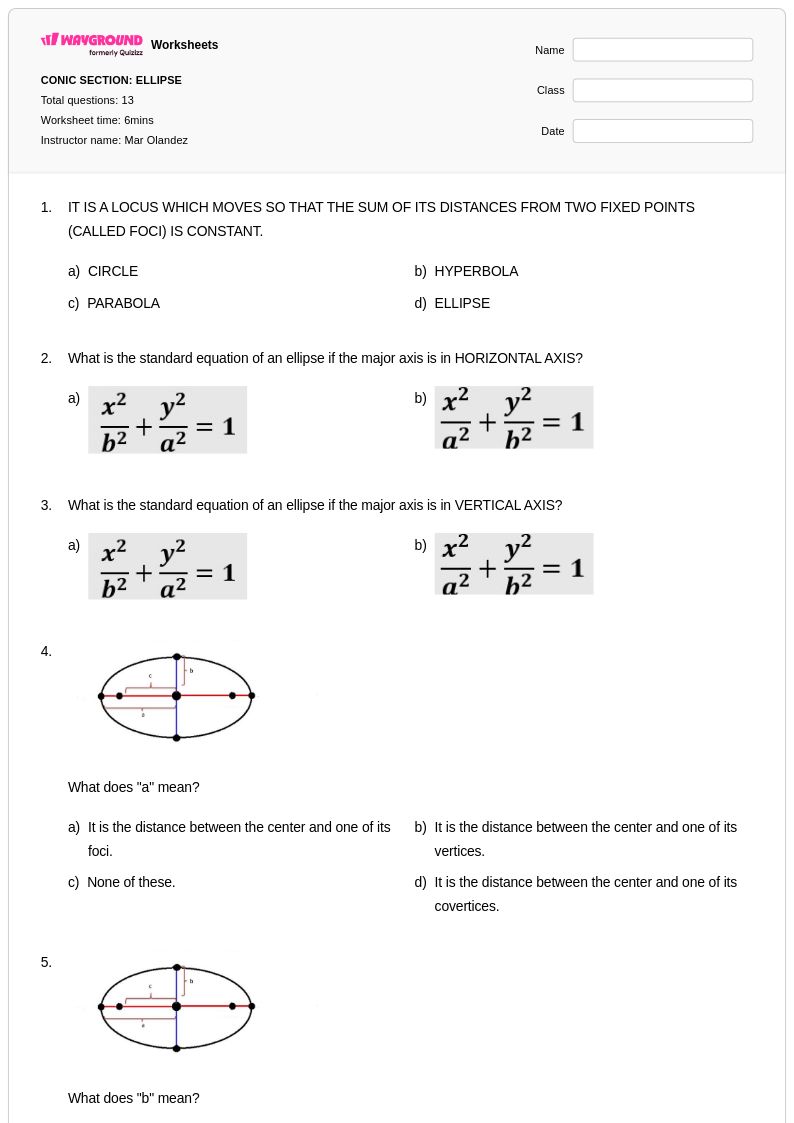
Eccentricity worksheets for Year 11 students available through Wayground (formerly Quizizz) provide comprehensive coverage of this fundamental concept in conic sections geometry. These expertly designed resources help students master the calculation and interpretation of eccentricity values for circles, ellipses, parabolas, and hyperbolas, strengthening their understanding of how this parameter determines the shape and characteristics of each conic section. The worksheets feature systematic practice problems that guide students through finding eccentricity using various methods, including the relationship between focal distance and major axis length, as well as interpreting eccentricity values to classify conic sections. Each worksheet includes a detailed answer key to support independent learning and self-assessment, with free printables available in convenient pdf format for classroom distribution and homework assignments.
Wayground (formerly Quizizz) empowers mathematics teachers with access to millions of teacher-created eccentricity resources, featuring robust search and filtering capabilities that allow educators to quickly locate materials aligned with specific curriculum standards and learning objectives. The platform's differentiation tools enable teachers to customize worksheets based on individual student needs, offering both printable pdf versions for traditional classroom use and digital formats for interactive learning experiences. These comprehensive worksheet collections support effective lesson planning by providing ready-to-use materials for introducing new concepts, reinforcing classroom instruction, and addressing diverse learning styles through varied problem types and difficulty levels. Teachers can seamlessly integrate these resources into their geometry curriculum for targeted skill practice, remediation support for struggling students, and enrichment opportunities for advanced learners exploring the deeper mathematical relationships within conic sections.
FAQs
How do I teach eccentricity at the Grade 11 level?
What exercises are most effective for Grade 11 eccentricity practice?
What mistakes do Grade 11 students still make with eccentricity?
How do I use these Grade 11 eccentricity worksheets in my classroom?
How does eccentricity fit into the Grade 11 math curriculum?
Can Wayground's eccentricity worksheets support students with different learning needs?