
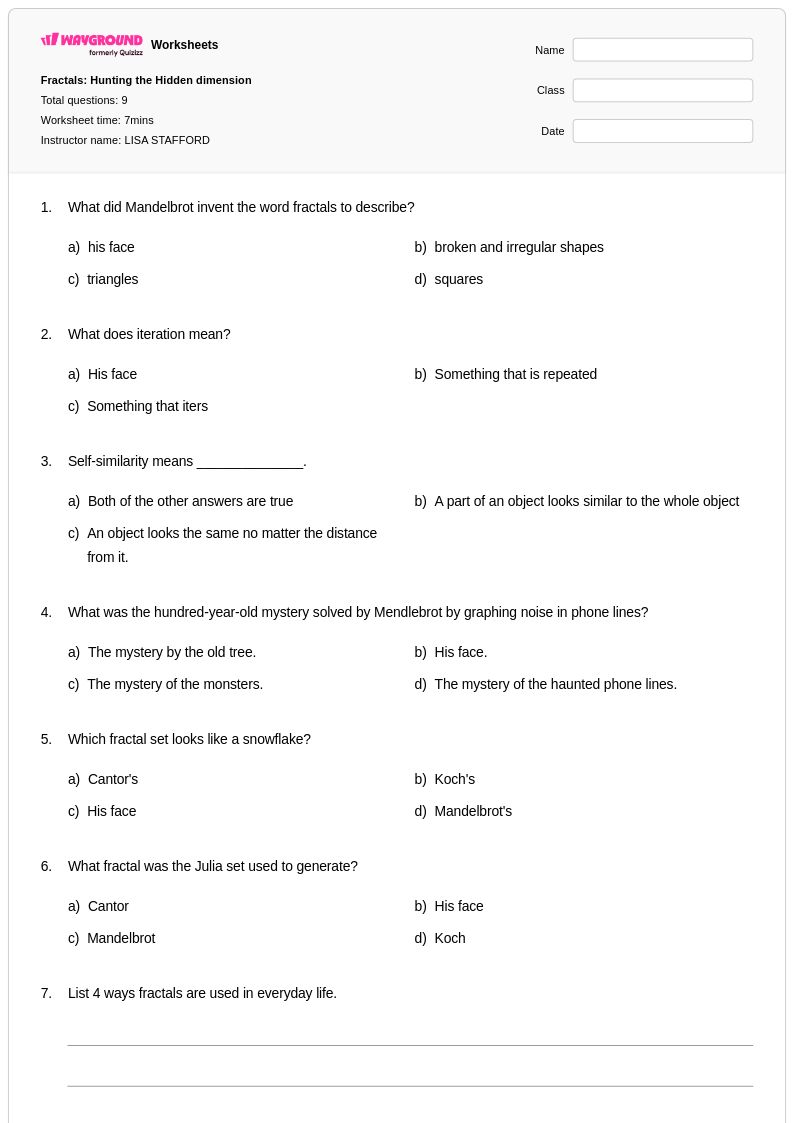
9 Q
10th - 12th
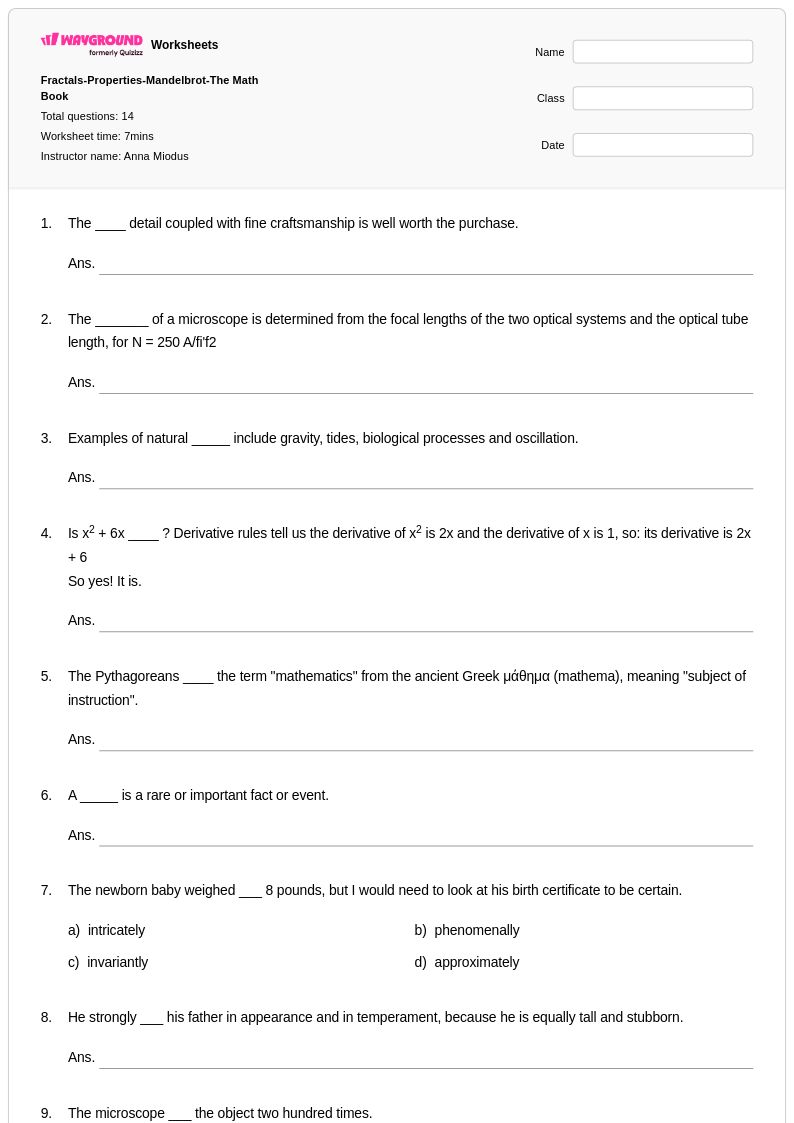
14 Q
9th - Uni
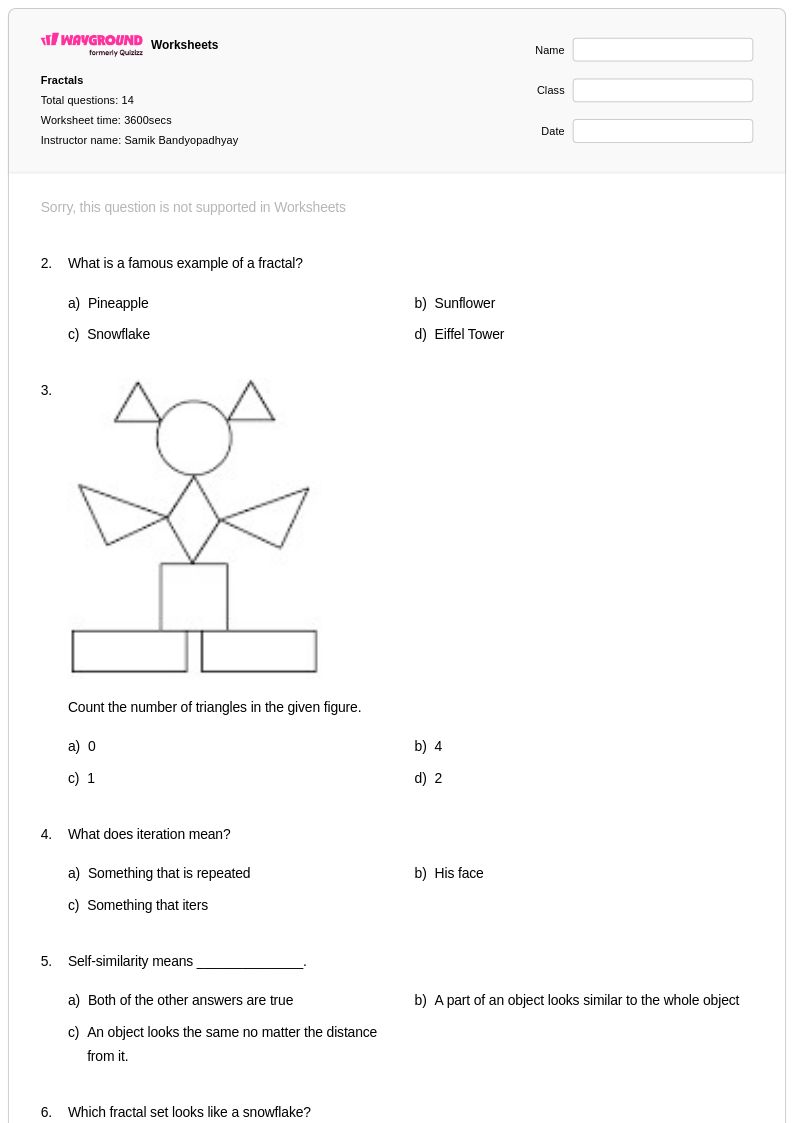
49 Q
9th - 12th
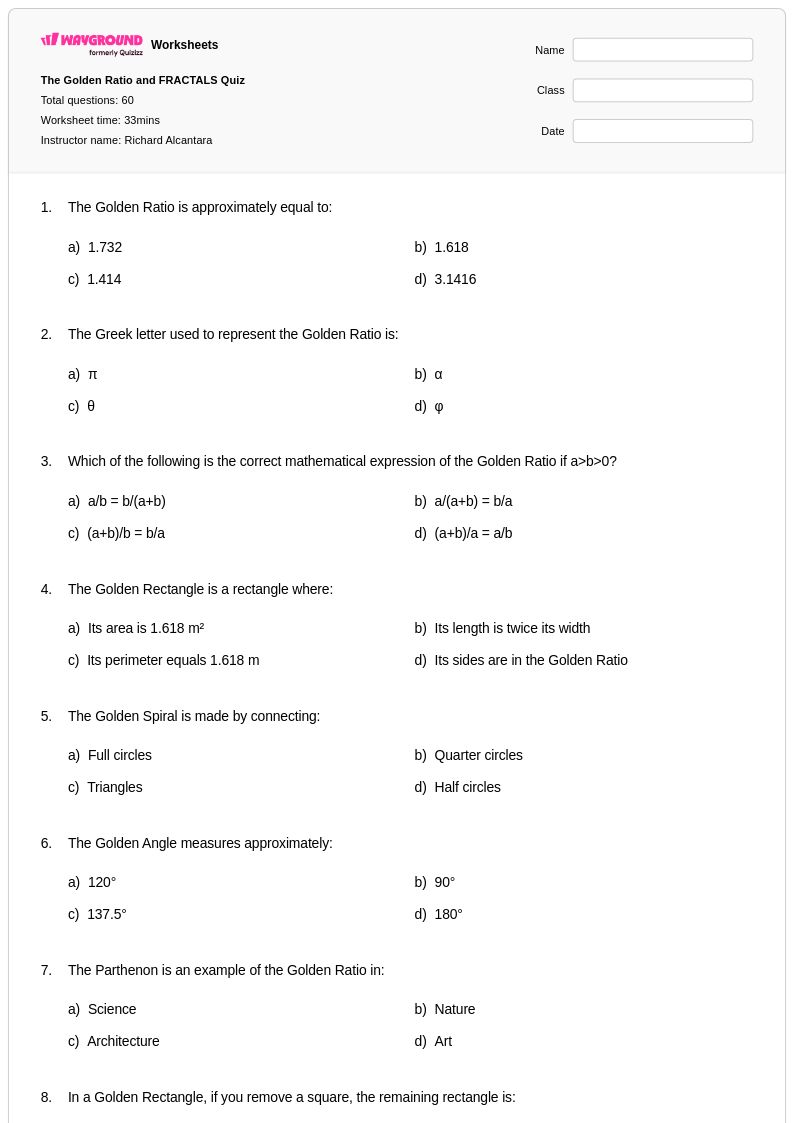
60 Q
11th
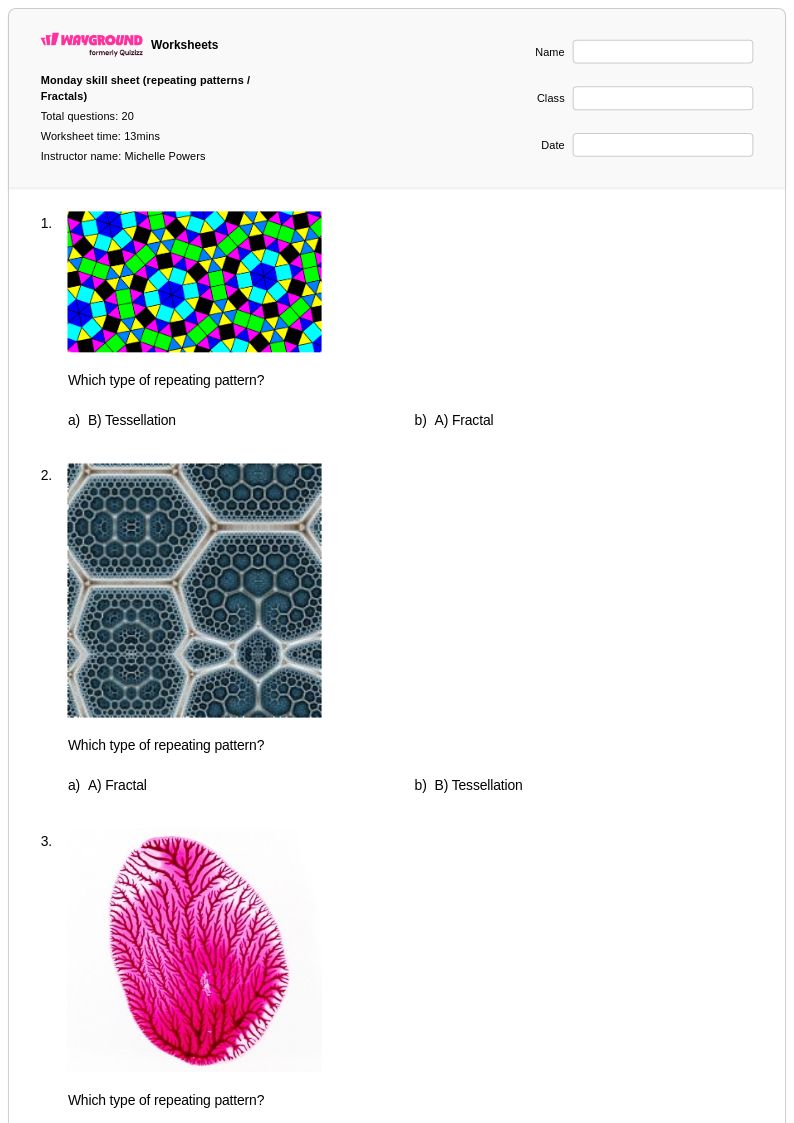
20 Q
8th - 12th
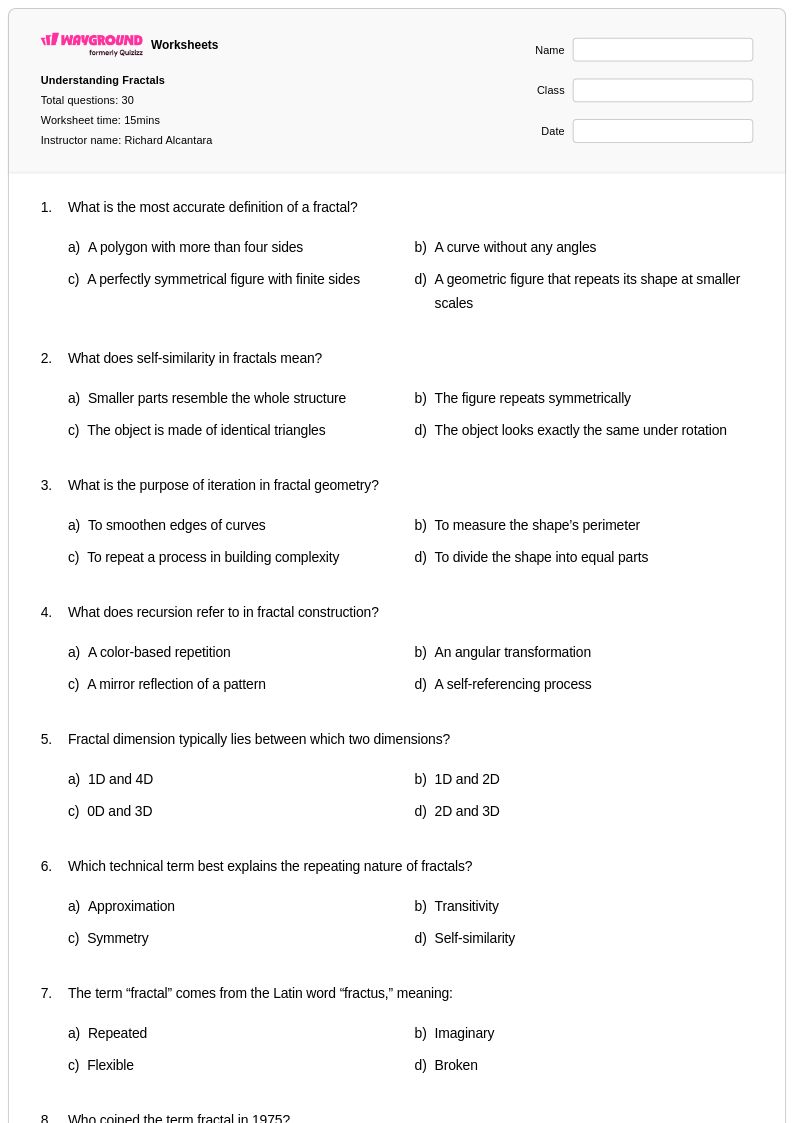
30 Q
11th
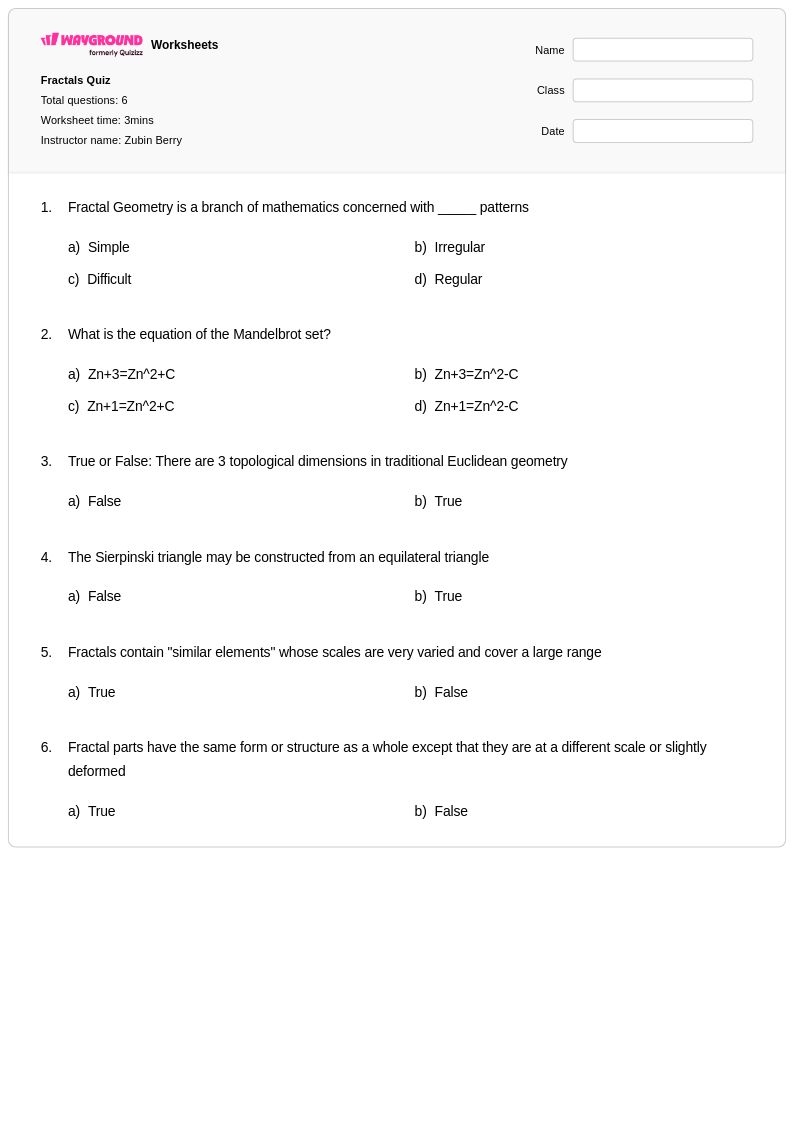
6 Q
KG - PD
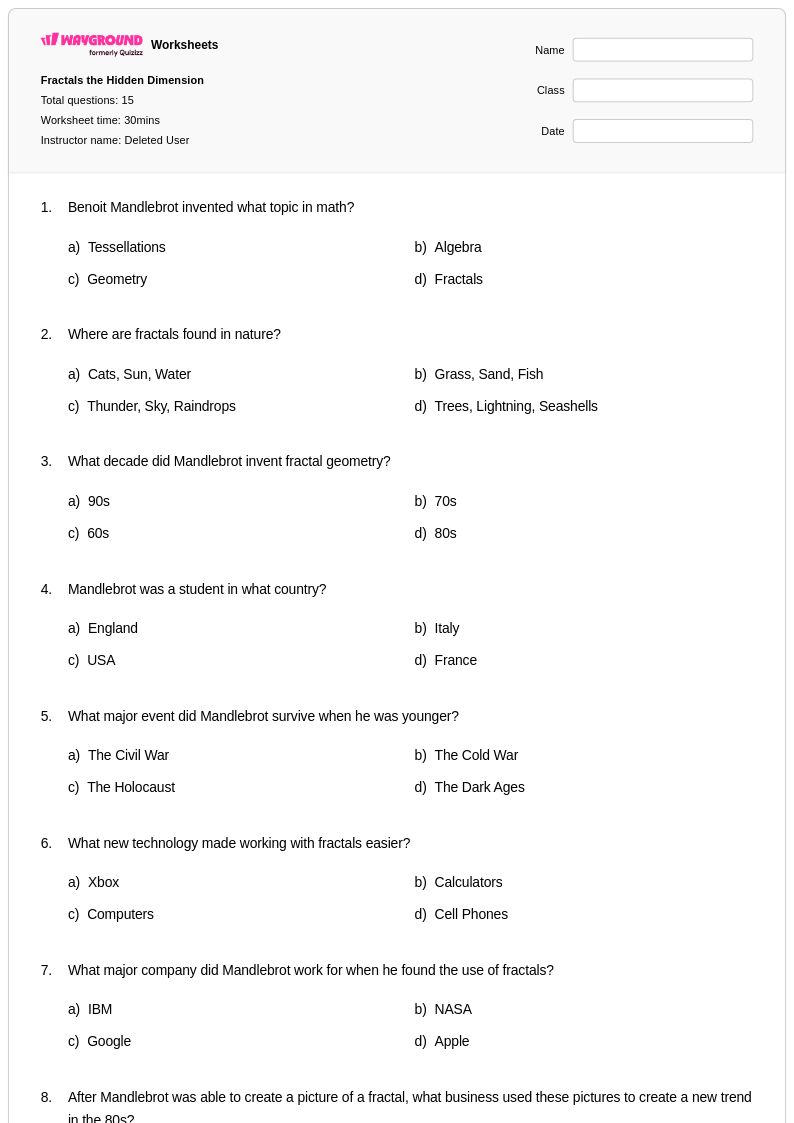
15 Q
6th - 12th
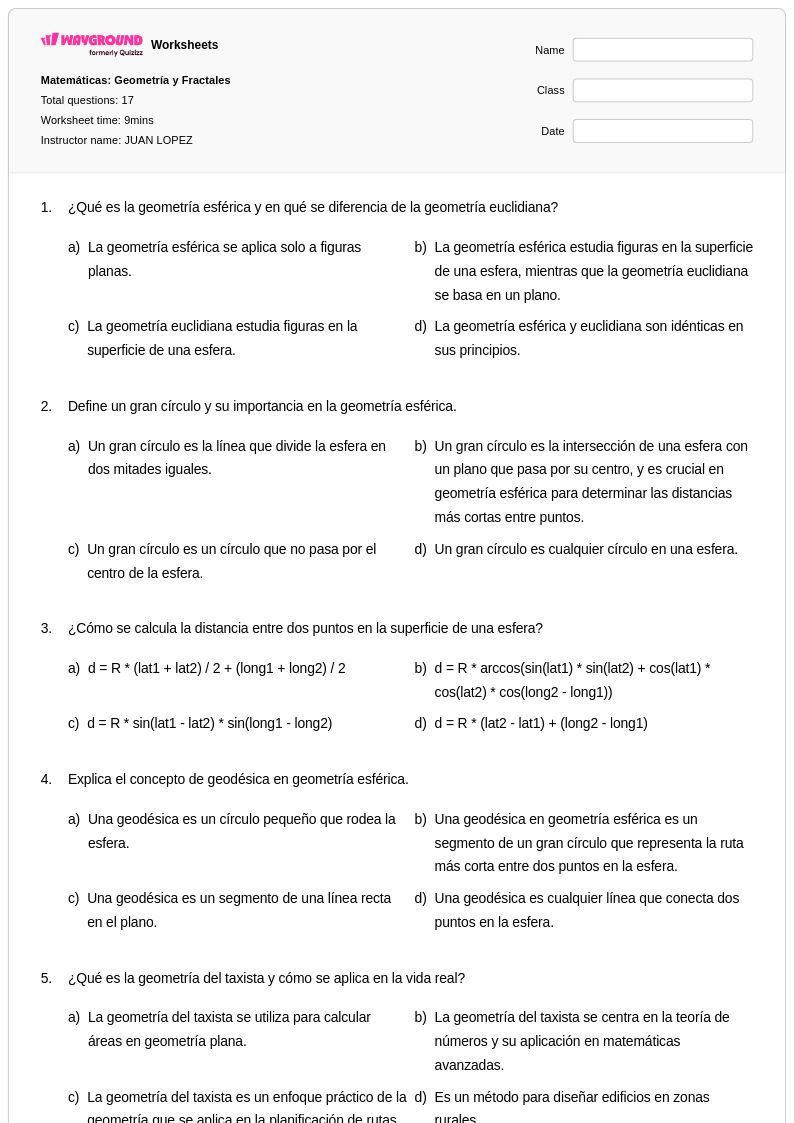
17 Q
11th
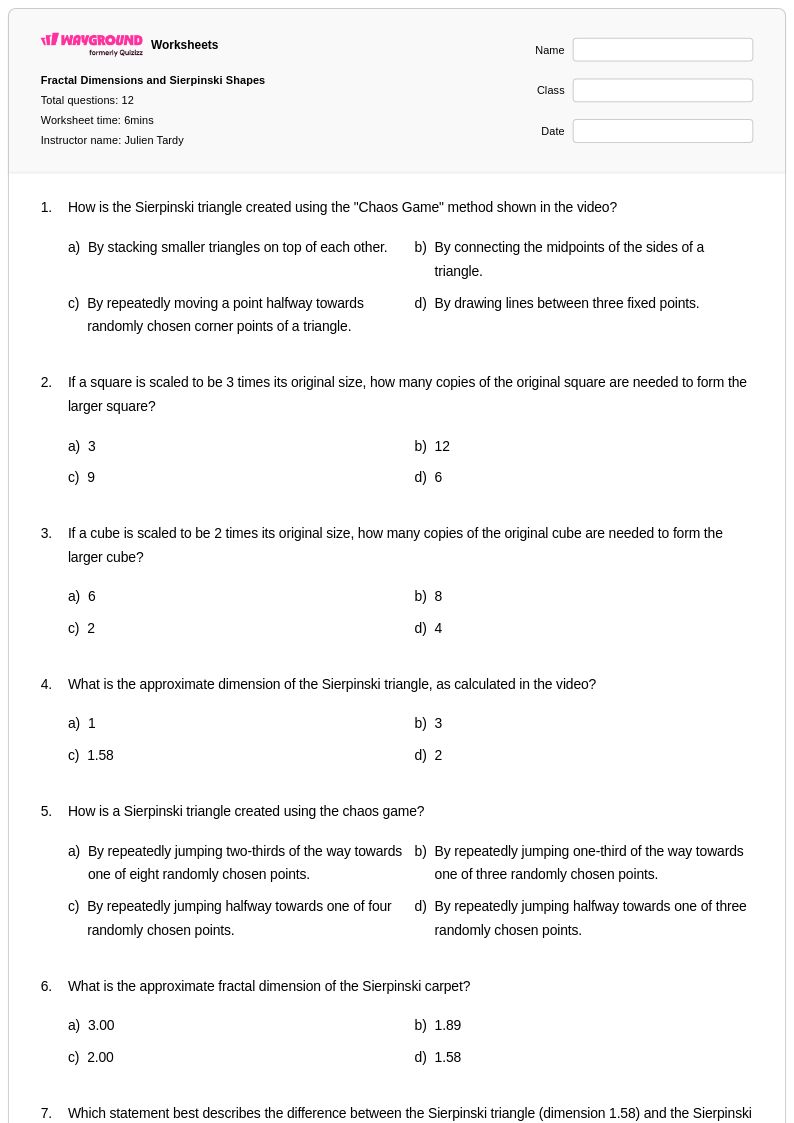
12 Q
8th - Uni
5 Q
4th - 12th
12 Q
10th - 12th
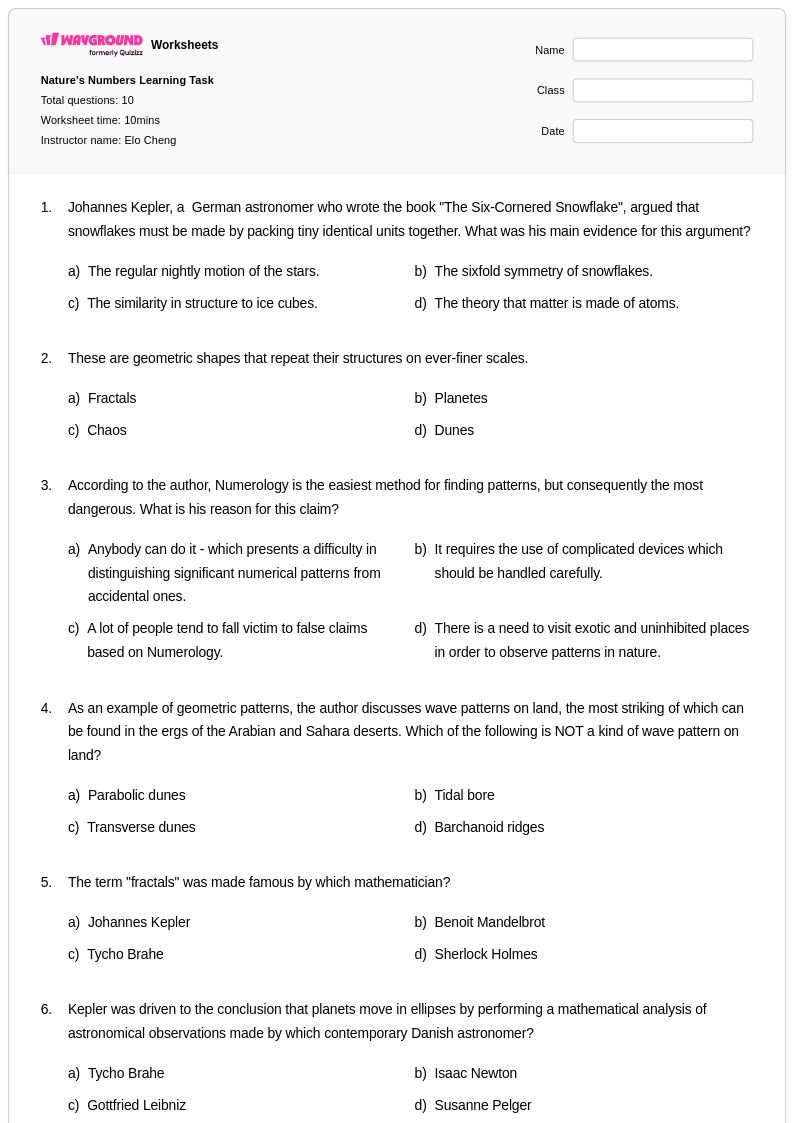
10 Q
11th - Uni
16 Q
9th - 12th
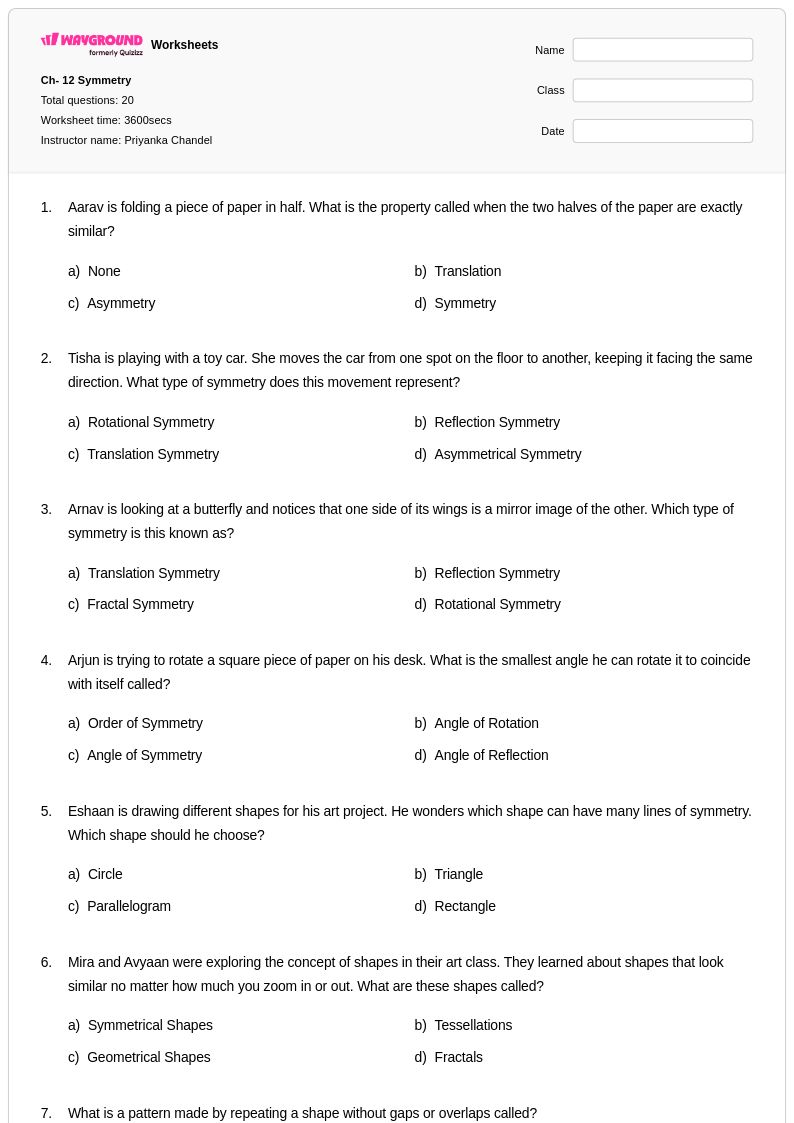
20 Q
7th - Uni
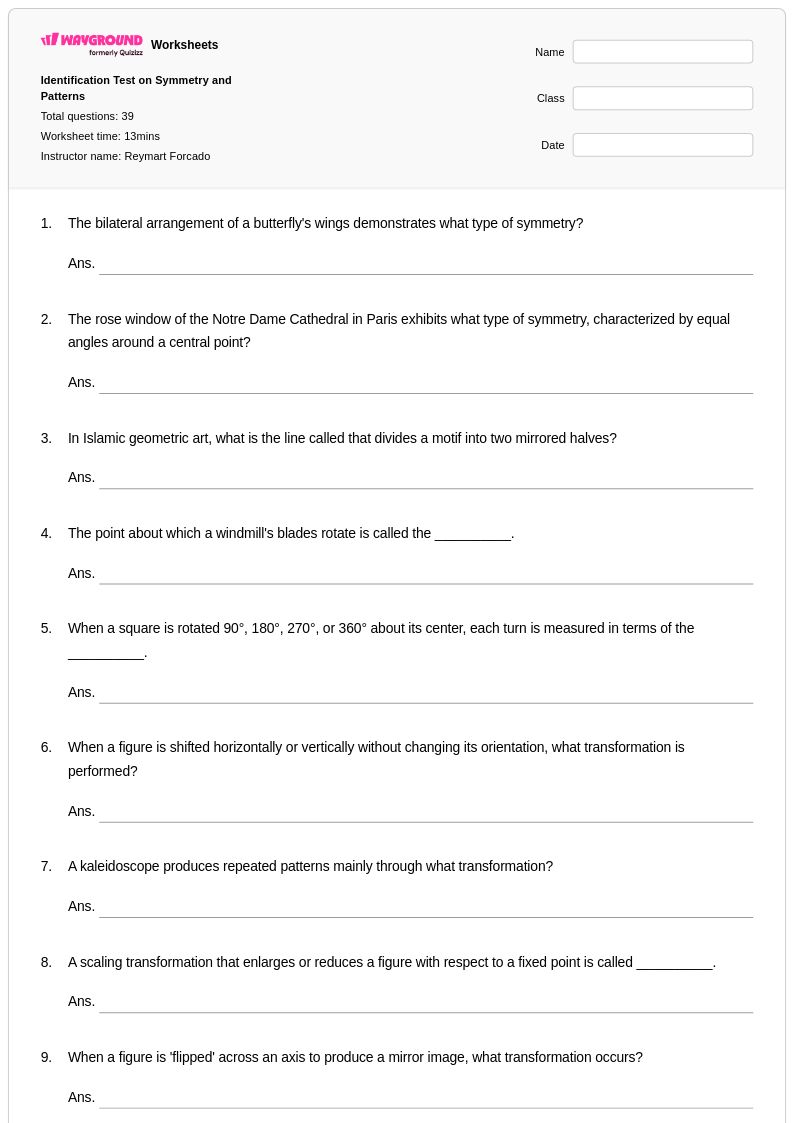
39 Q
11th
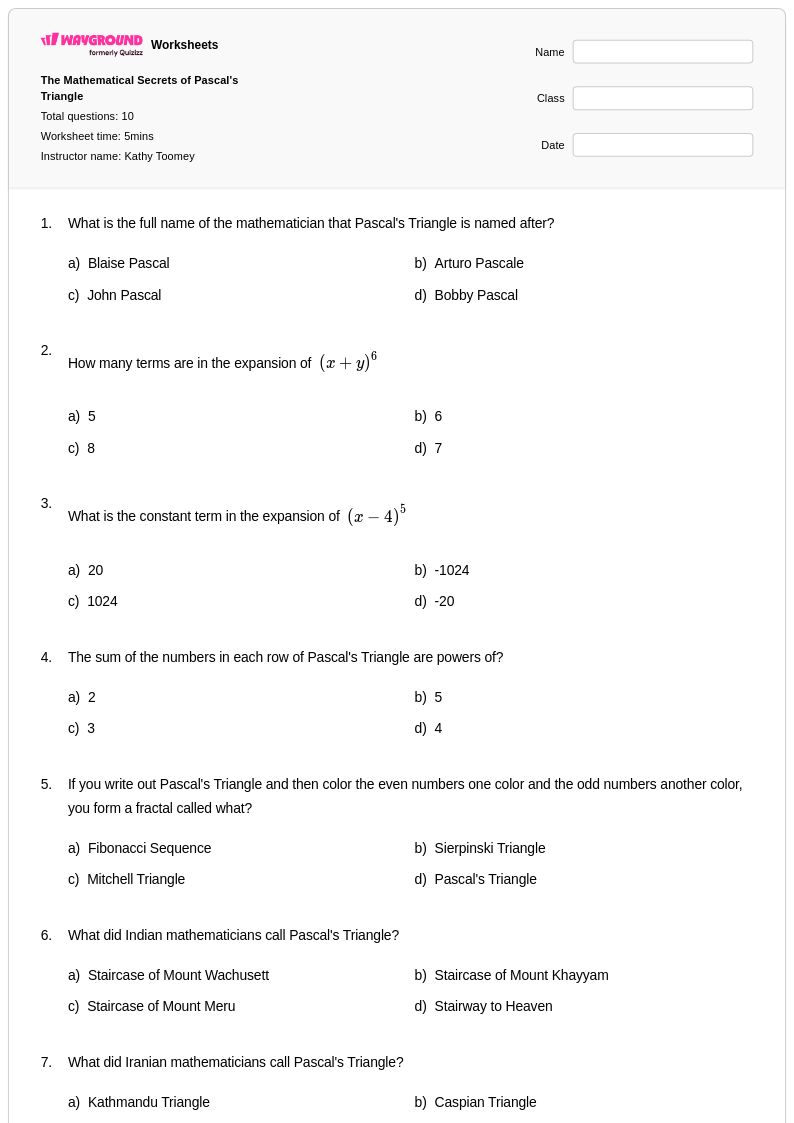
10 Q
9th - 12th
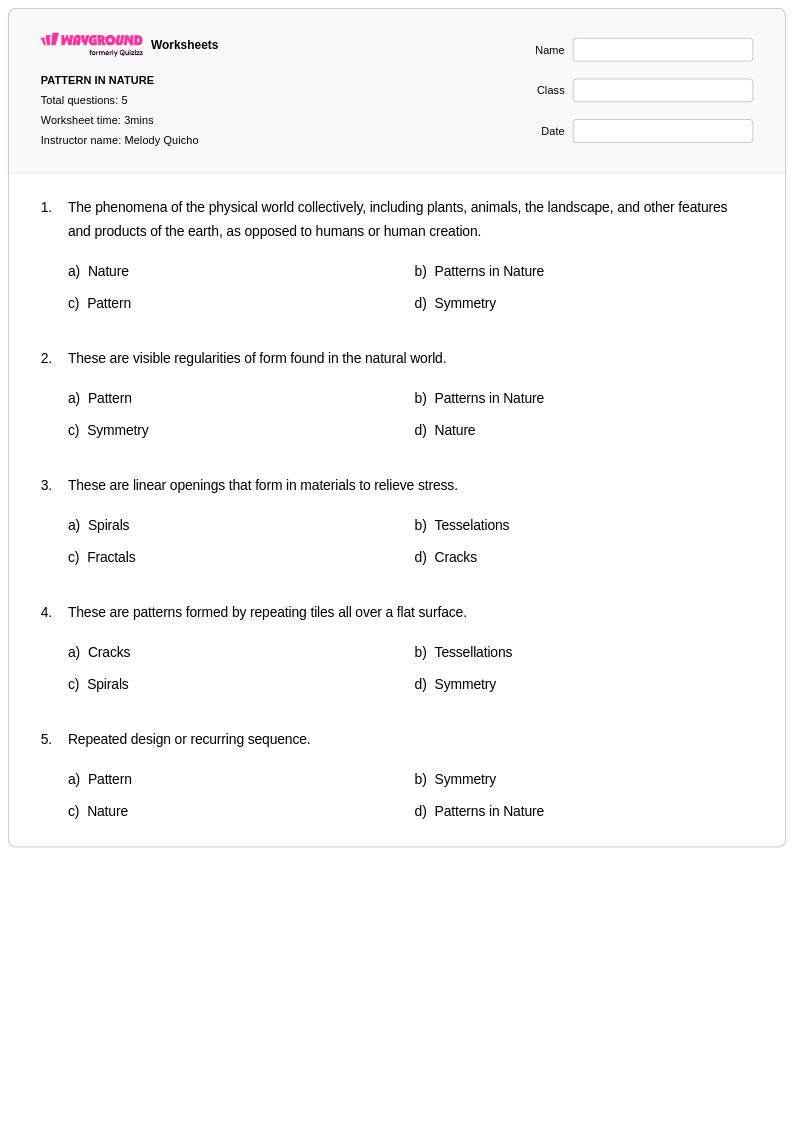
5 Q
10th - 12th
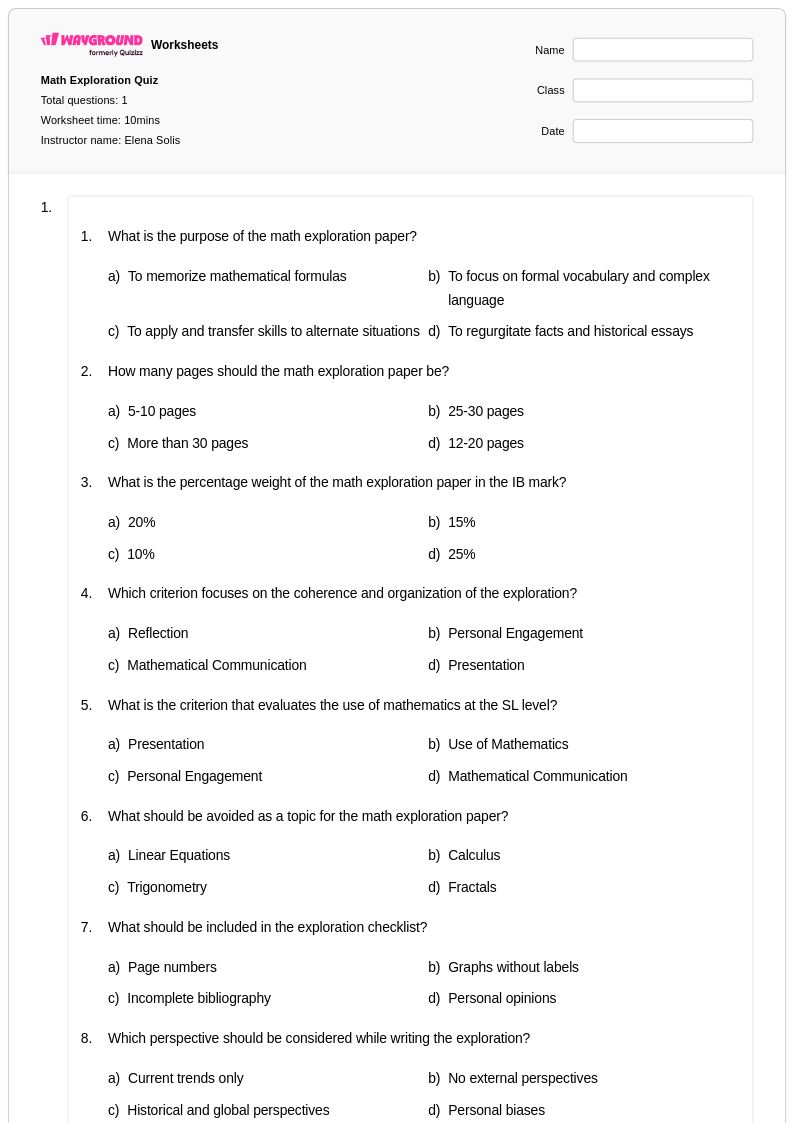
16 Q
11th
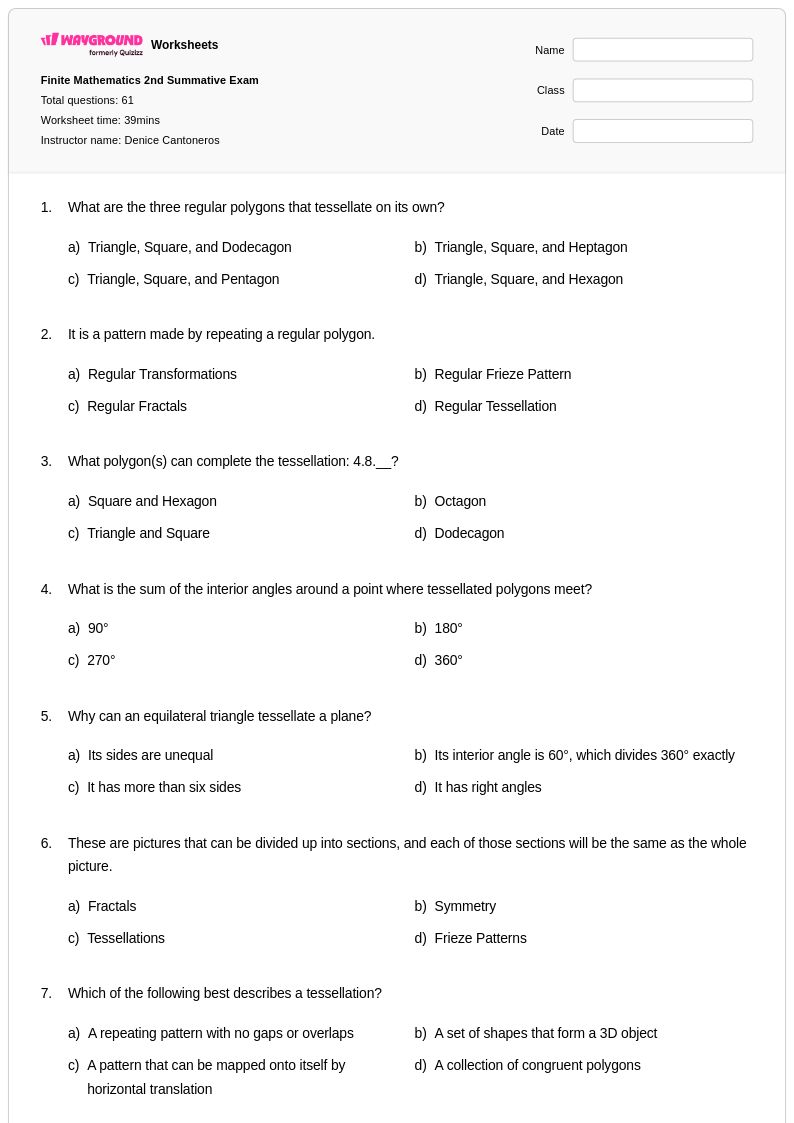
61 Q
11th
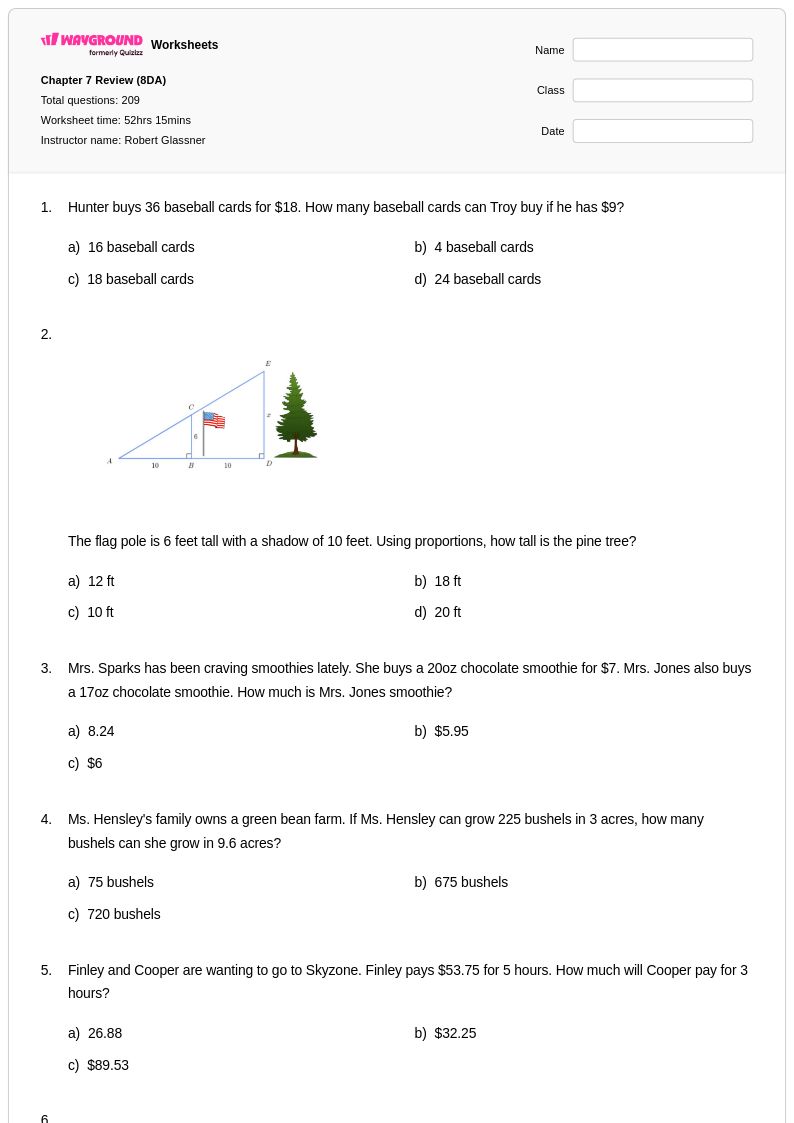
209 Q
8th - 12th
18 Q
6th - 12th
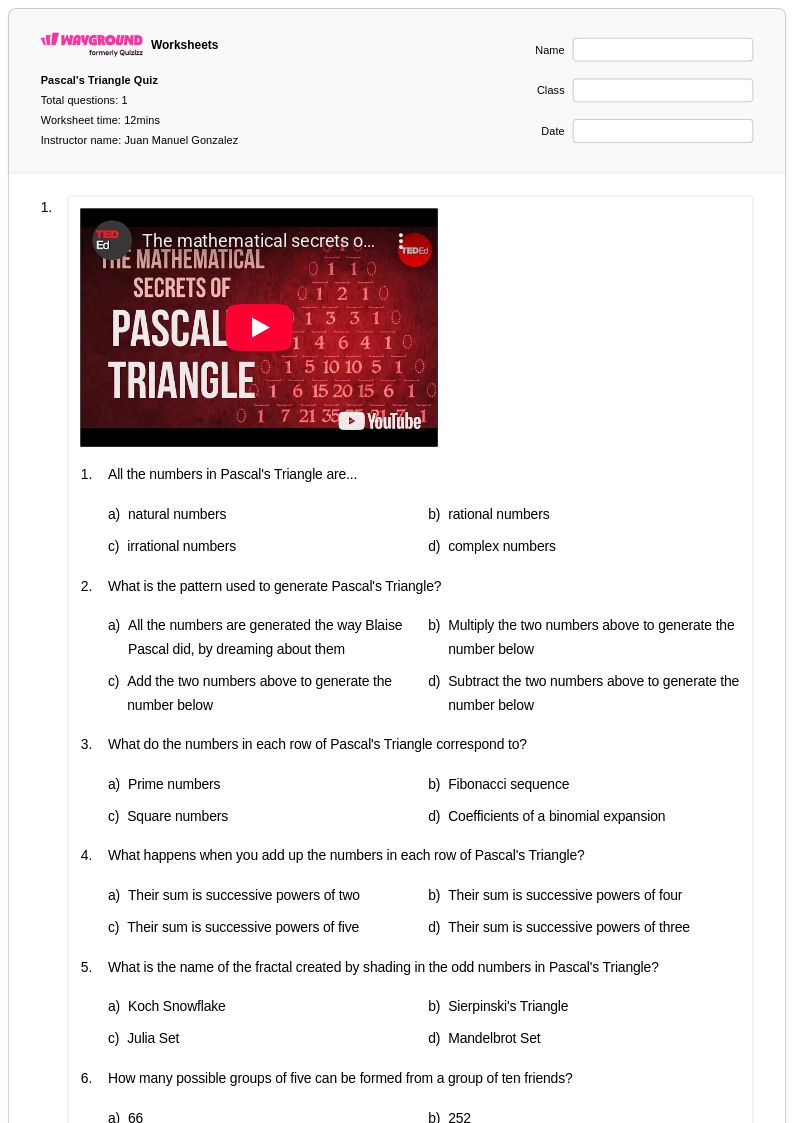
16 Q
9th - 12th
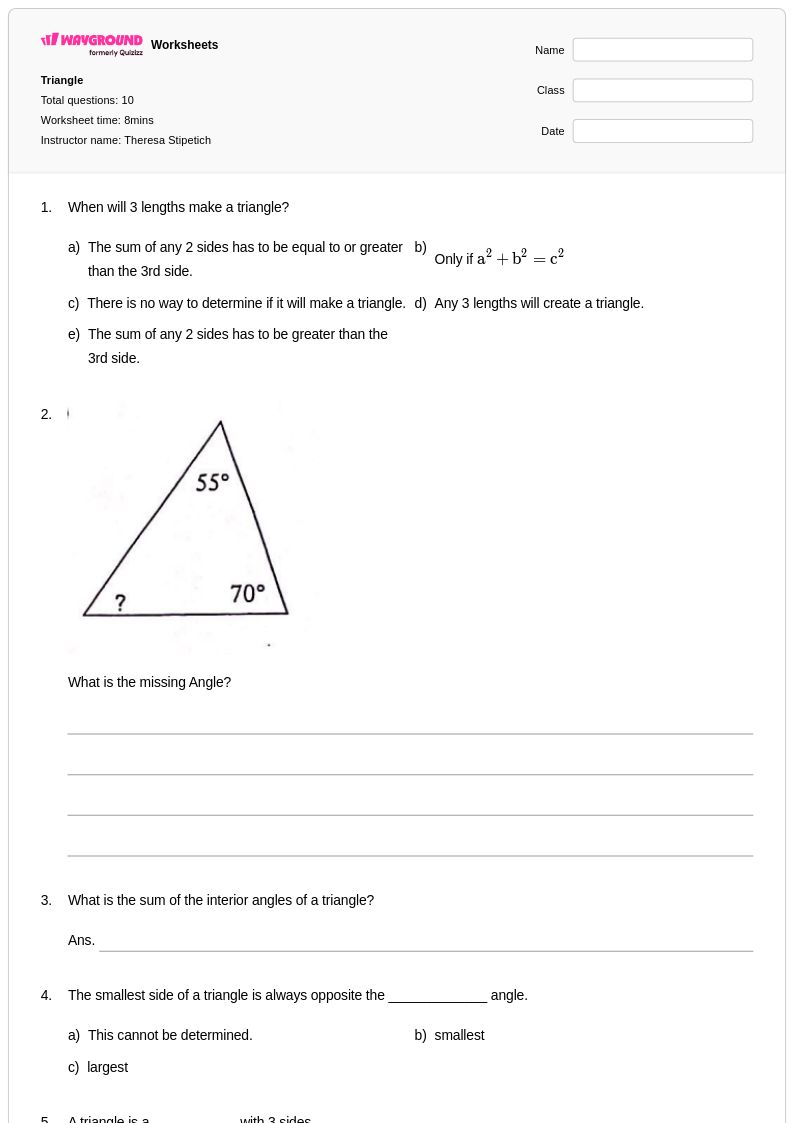
10 Q
10th - 11th
Explore Other Subject Worksheets for year 11
Explore printable Fractals worksheets for Year 11
Fractals worksheets for Year 11 students available through Wayground (formerly Quizizz) provide comprehensive exploration of self-similar geometric patterns and their mathematical properties. These carefully designed practice problems guide students through the fundamental concepts of fractal geometry, including iteration, scaling, and dimension theory. Students develop critical analytical skills by examining classic fractals such as the Sierpinski triangle, Koch snowflake, and Mandelbrot set, while learning to calculate fractal dimensions and understand recursive mathematical processes. The worksheets strengthen mathematical reasoning abilities through hands-on construction activities and theoretical problem-solving exercises, with each printable resource including detailed answer keys to support independent learning and self-assessment. These free educational materials bridge abstract mathematical concepts with visual geometric representations, helping students grasp the infinite complexity that emerges from simple iterative rules.
Wayground (formerly Quizizz) supports mathematics educators with an extensive collection of teacher-created fractal geometry resources specifically aligned with Year 11 curriculum standards. The platform's robust search and filtering capabilities allow teachers to quickly locate worksheets that match their specific instructional needs, whether focusing on basic fractal construction or advanced dimensional analysis. These versatile materials are available in both printable pdf format and interactive digital versions, enabling flexible implementation across diverse learning environments. Teachers can easily customize existing worksheets or create differentiated versions to address varying student ability levels, making these resources invaluable for targeted skill practice, remediation sessions, and enrichment activities. The comprehensive collection streamlines lesson planning while providing educators with reliable, standards-aligned materials that enhance student understanding of this fascinating intersection between geometry and mathematical iteration.
FAQs
How should I introduce fractals to Grade 11 students?
What are good fractal geometry exercises for Grade 11?
What misconceptions should I watch for when teaching fractals?
How can teachers use these Grade 11 fractals worksheets?
Where do fractals fit in the Grade 11 math sequence?
How can I adapt a fractals worksheet for different learners?
Is fractal geometry appropriate for Grade 11?