
20 Q
9th - 12th
20 Q
8th - Uni
15 Q
9th - 12th
19 Q
9th - 12th
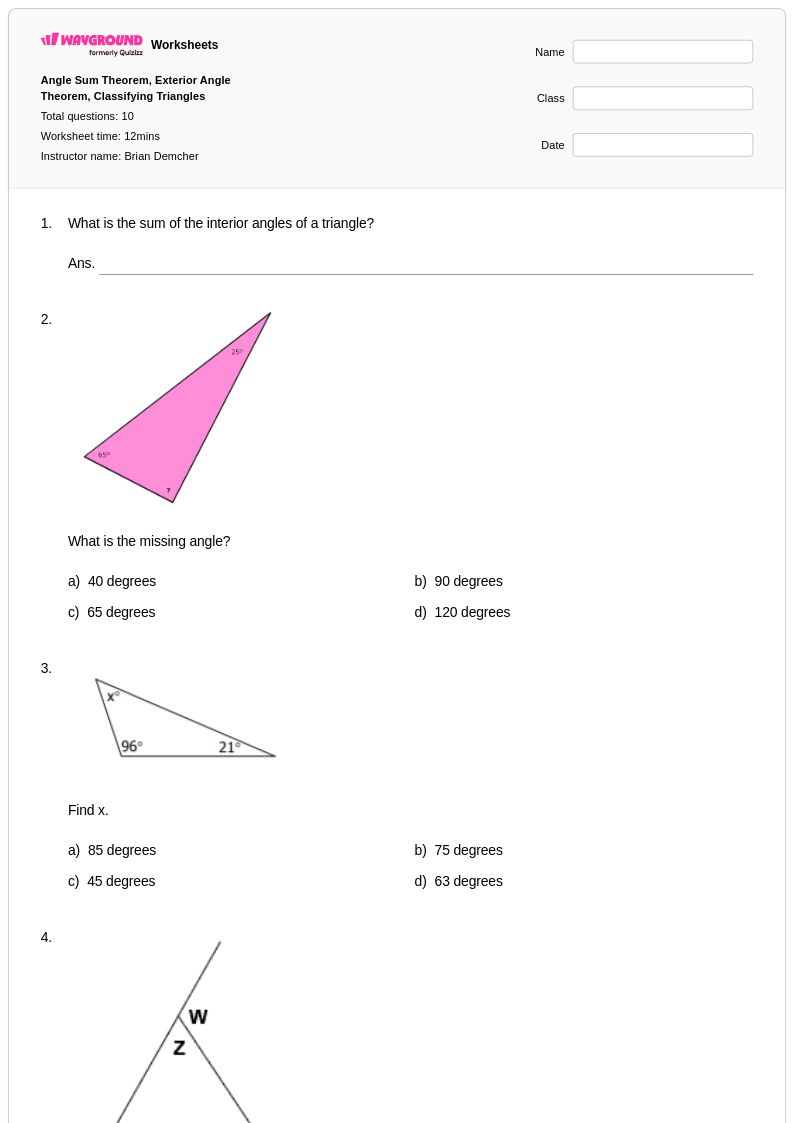
10 Q
9th - 12th
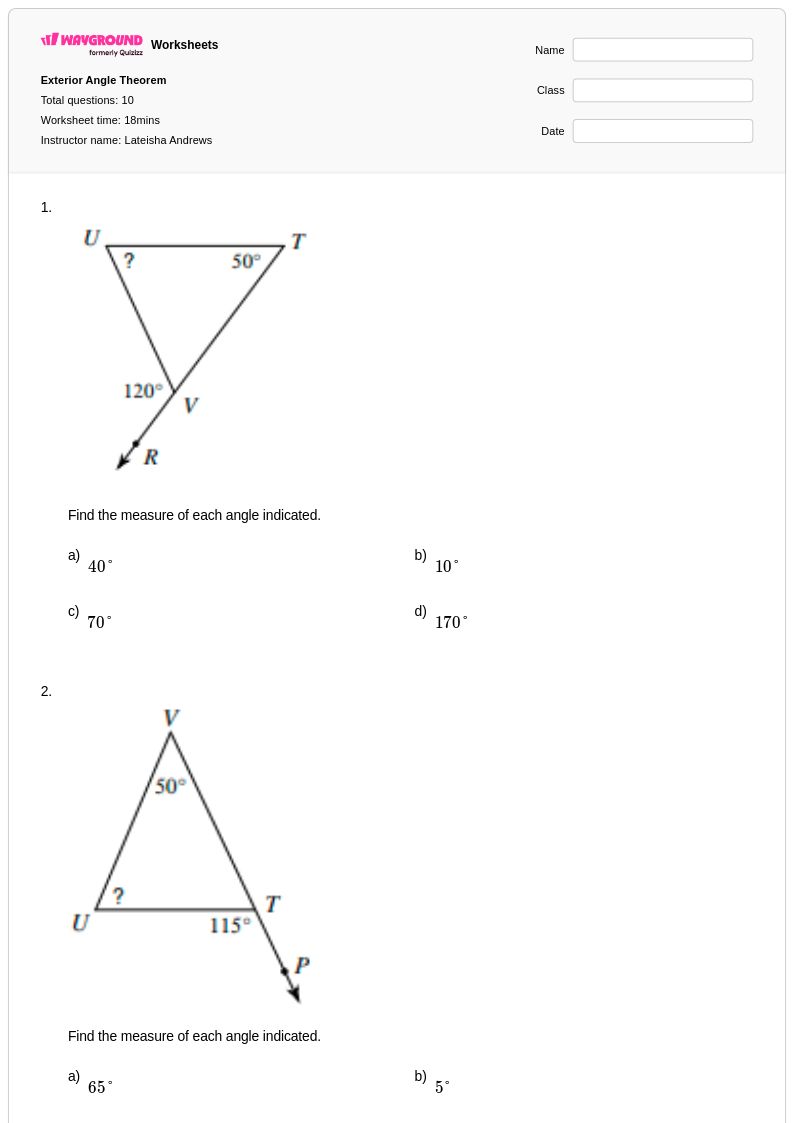
10 Q
6th - 12th
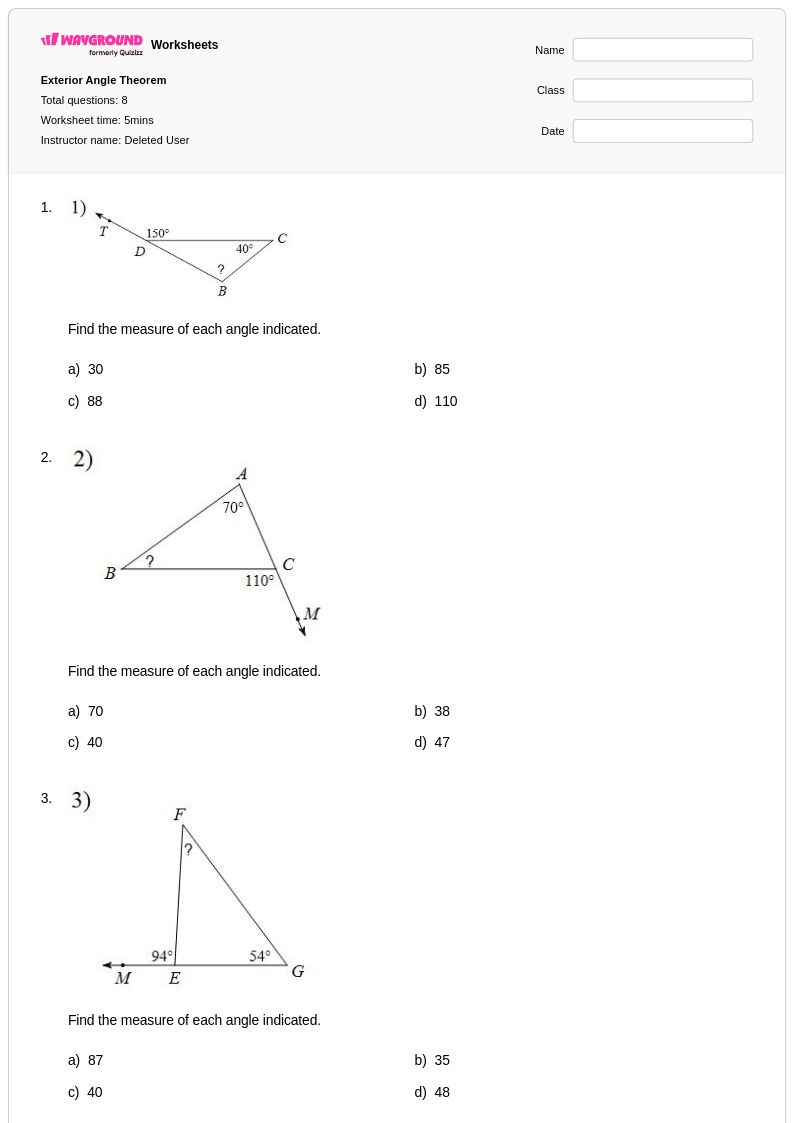
8 Q
9th - 11th
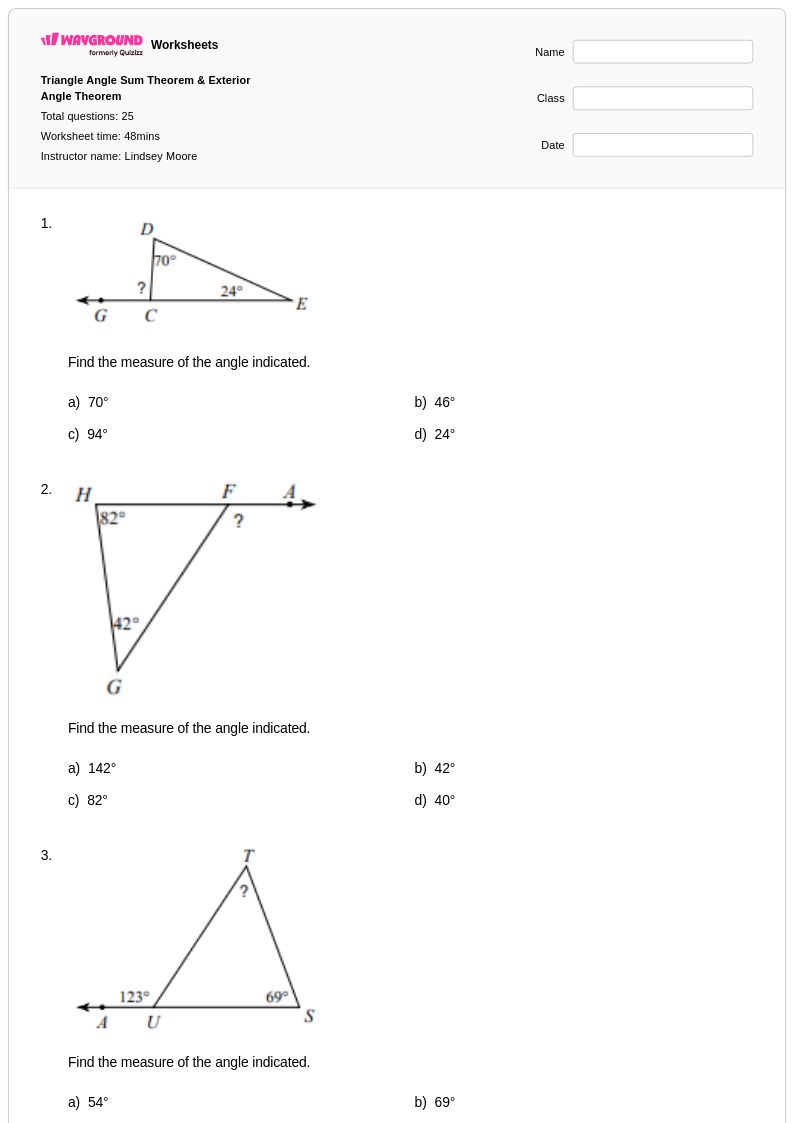
25 Q
9th - 12th
18 Q
7th - 11th
15 Q
10th - Uni
13 Q
10th - Uni
15 Q
10th - 12th
6 Q
7th - 12th
10 Q
7th - 11th
19 Q
10th - Uni
20 Q
10th - Uni
20 Q
10th - Uni
20 Q
8th - Uni
20 Q
8th - Uni
20 Q
8th - Uni
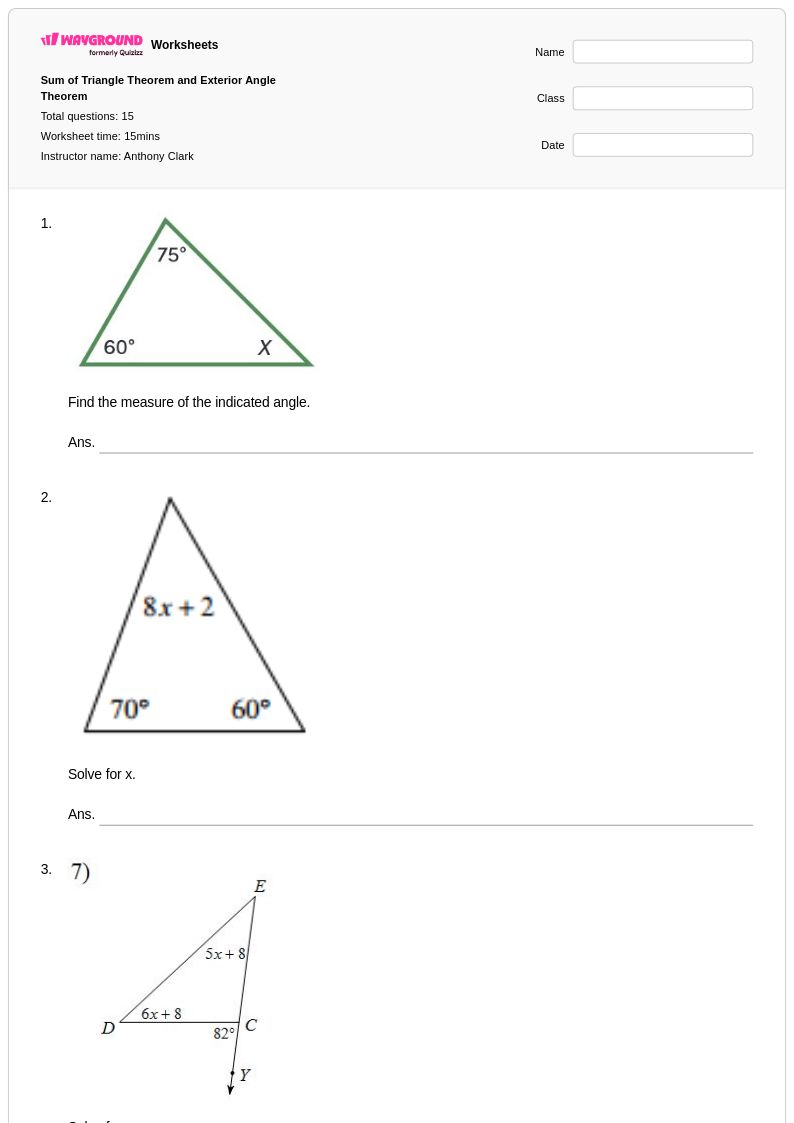
15 Q
8th - Uni
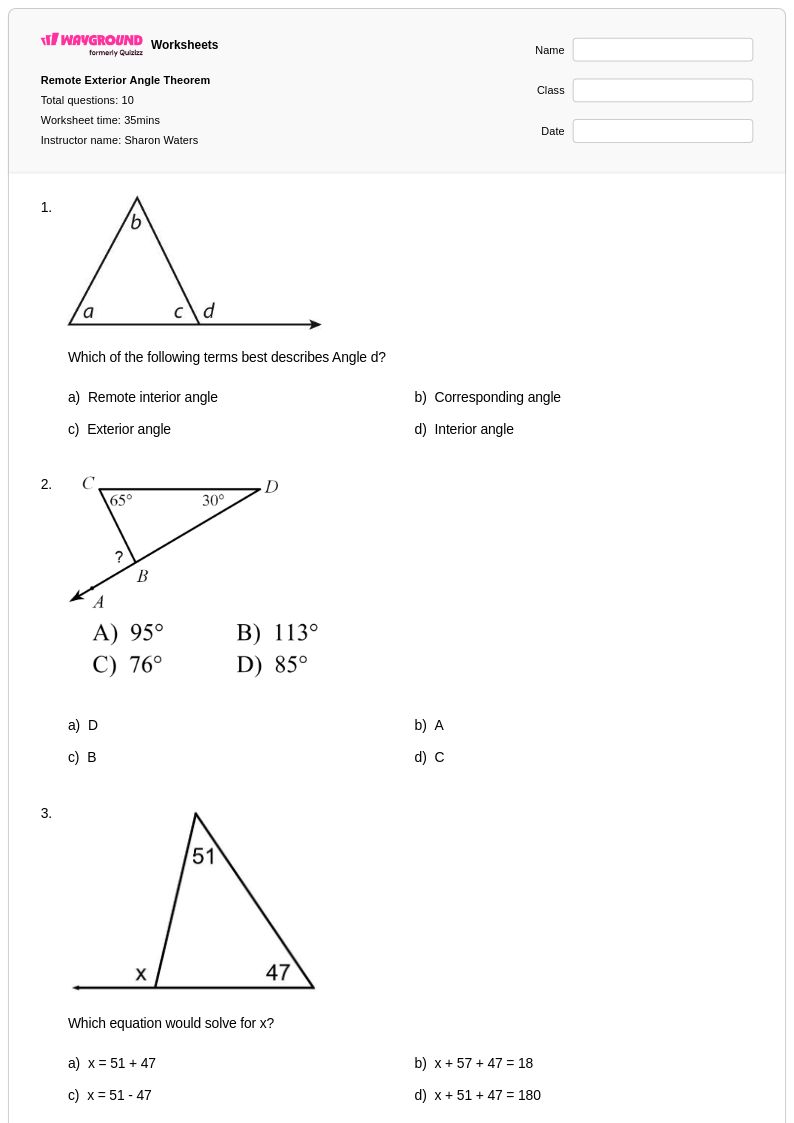
10 Q
10th - 12th
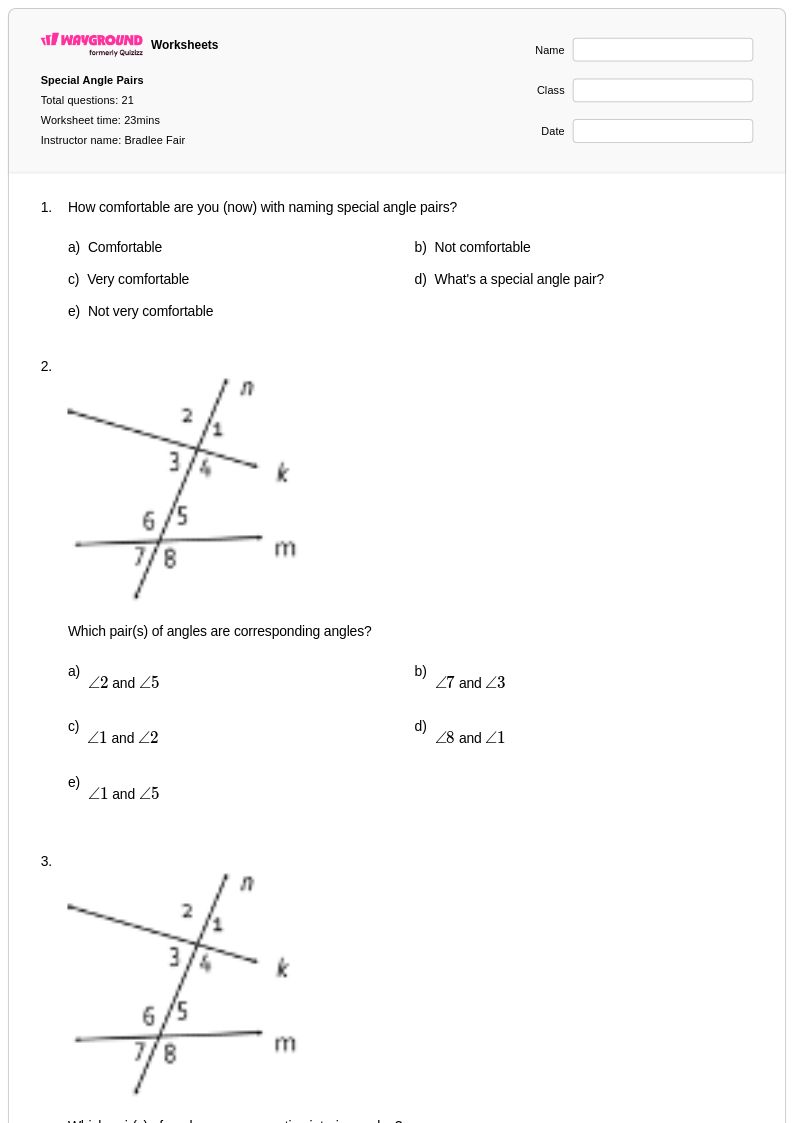
21 Q
9th - 12th
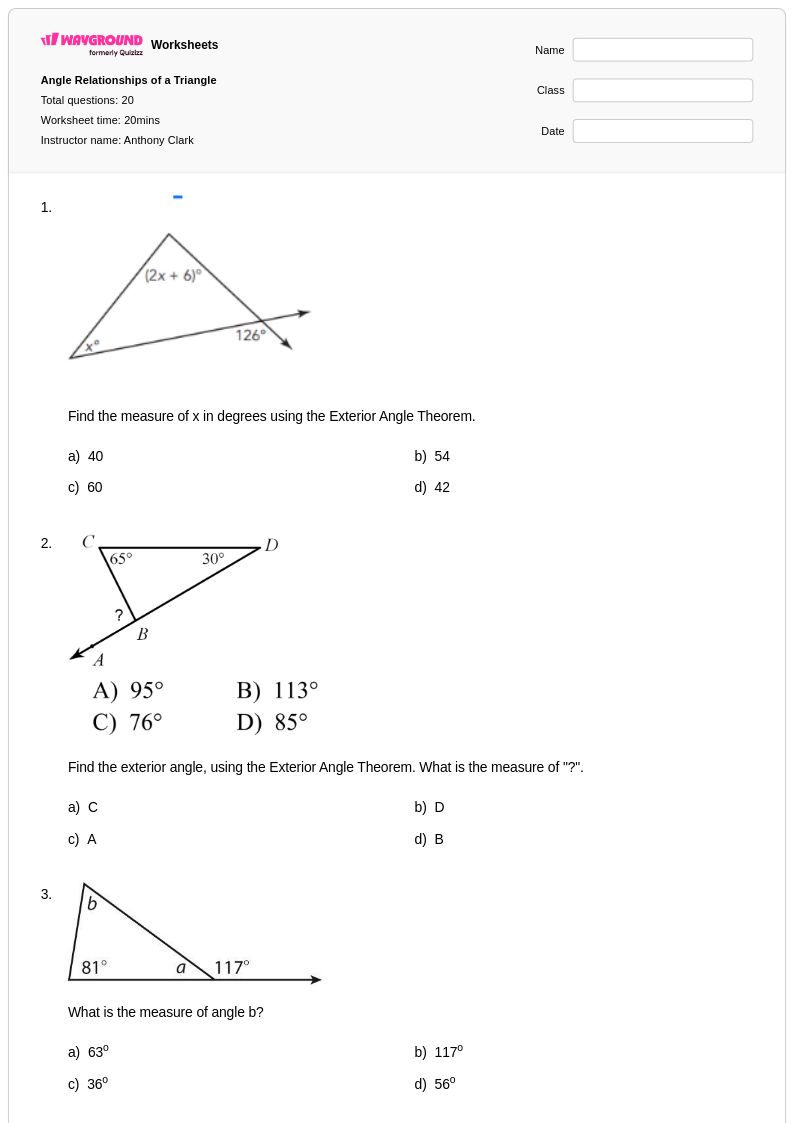
20 Q
8th - Uni
Explore Other Subject Worksheets for year 11
Explore printable Exterior Angle Theorem worksheets for Year 11
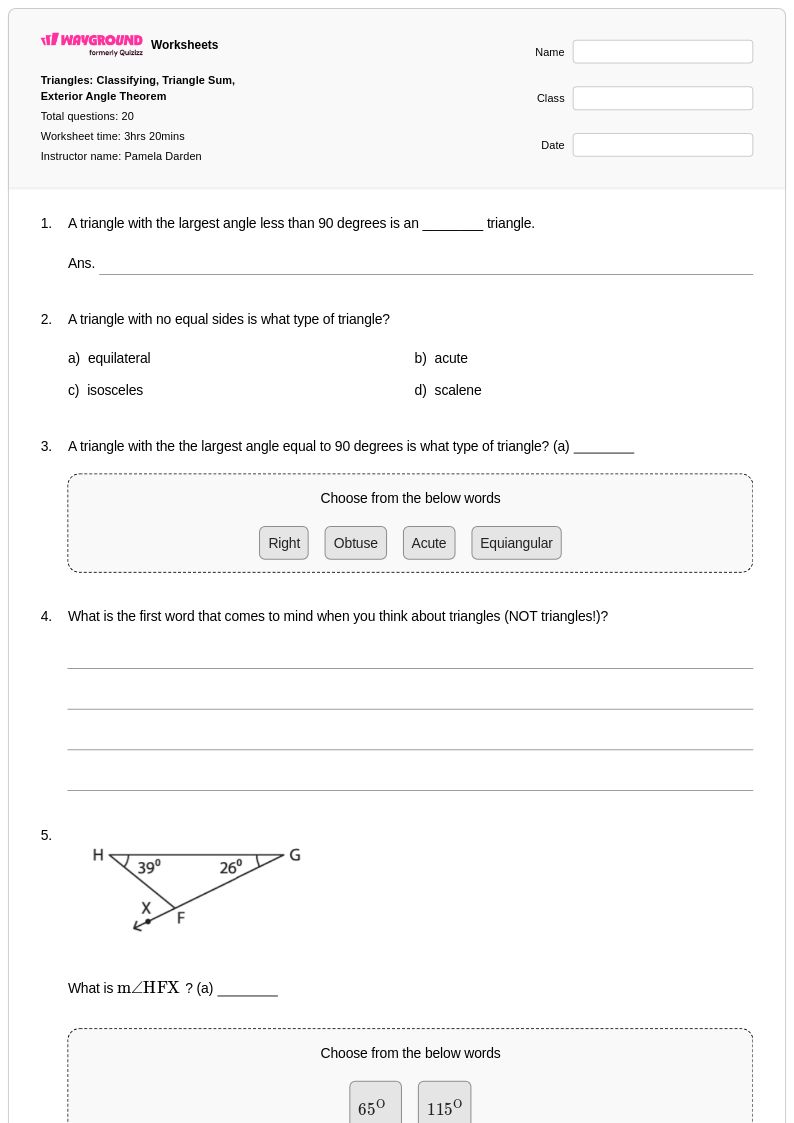
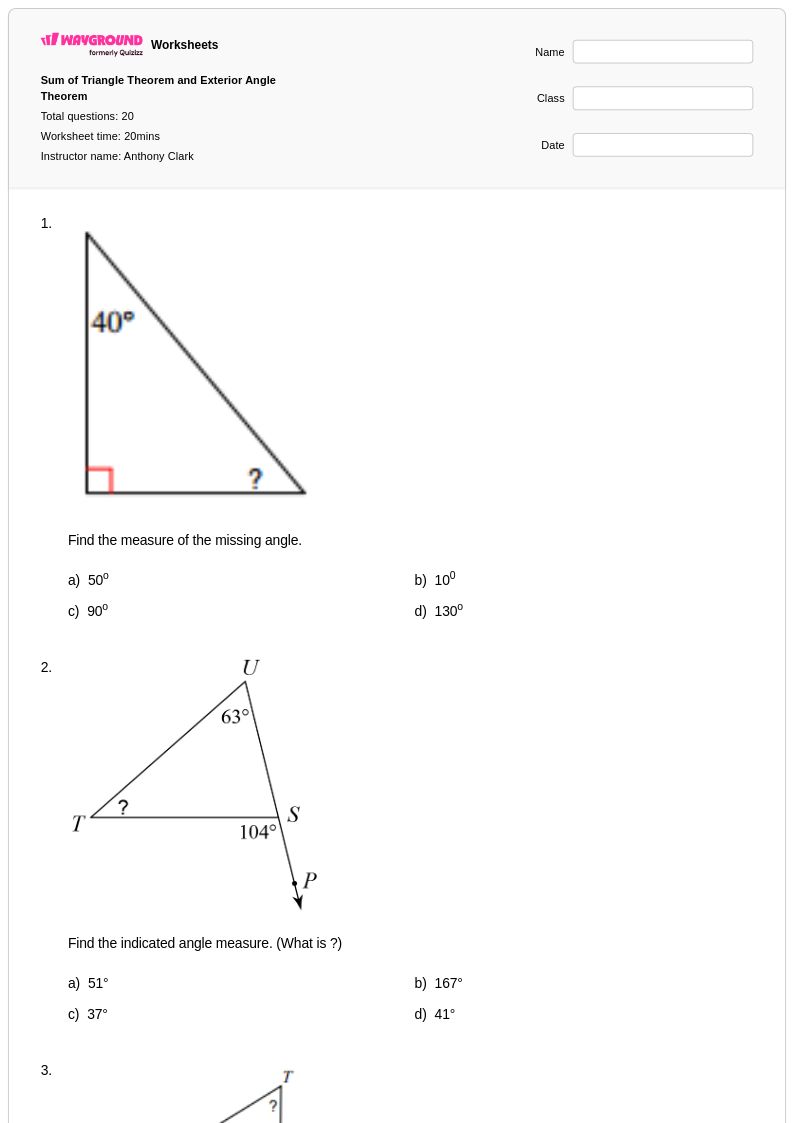
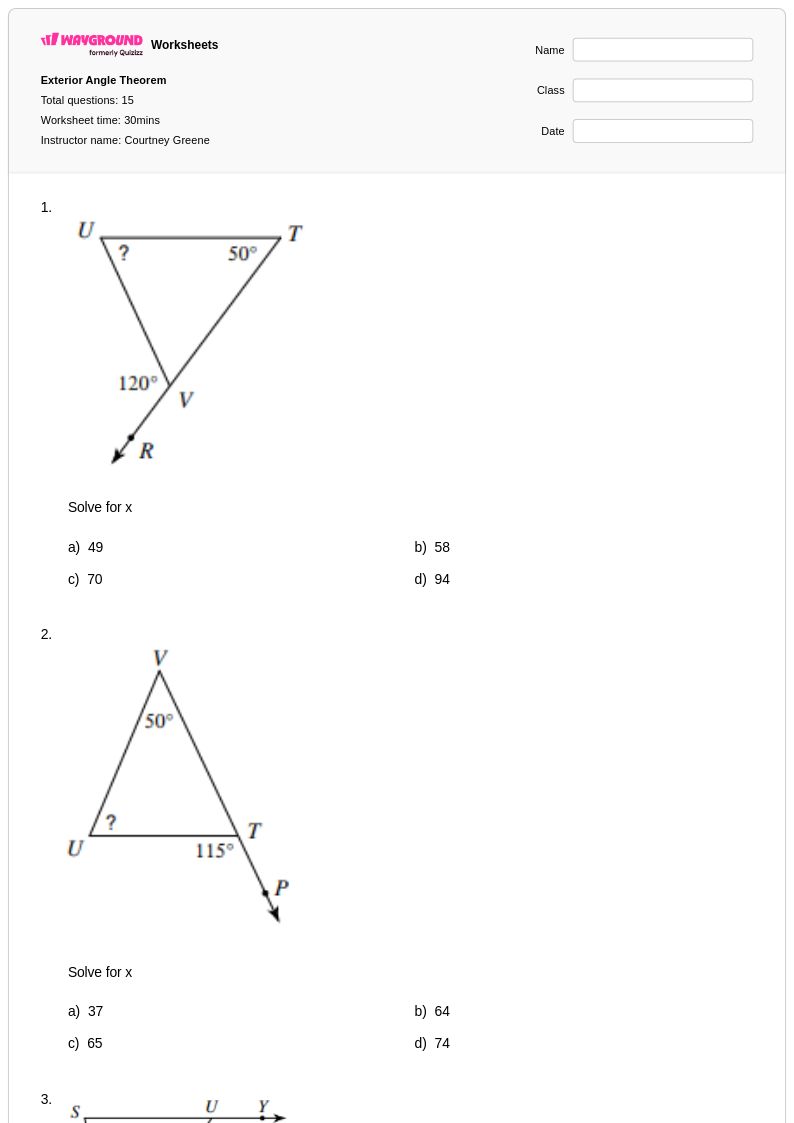
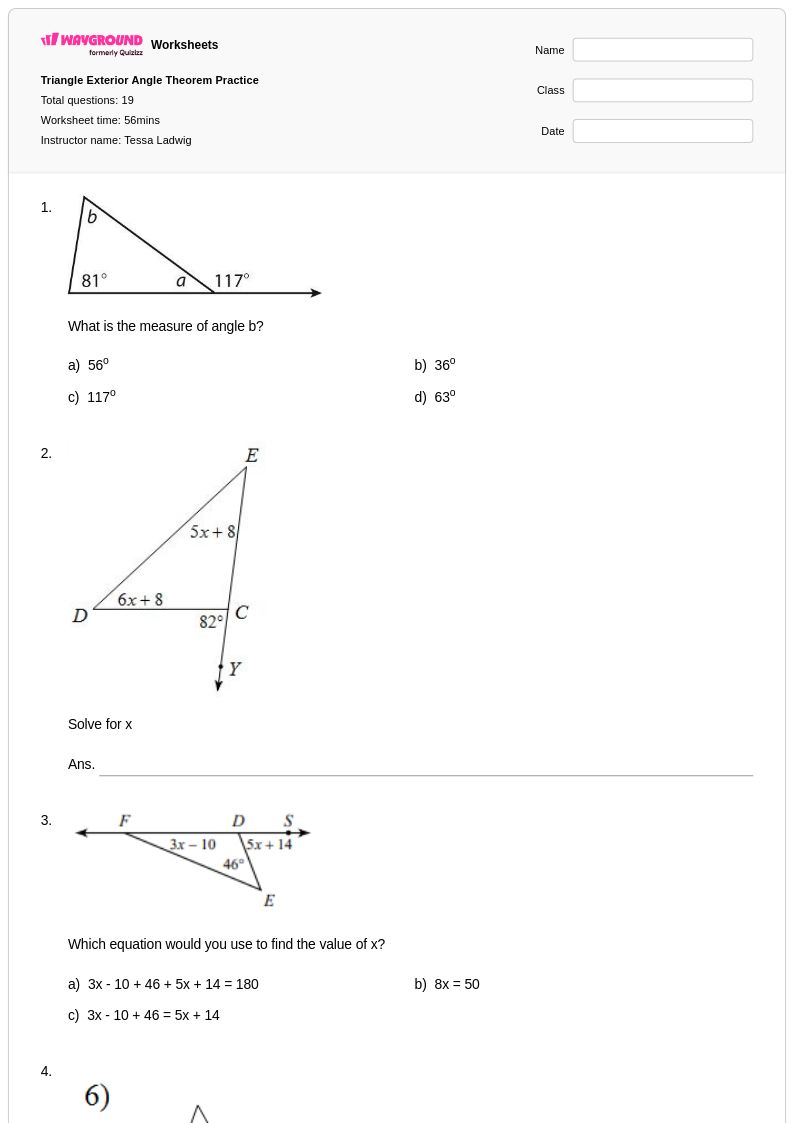
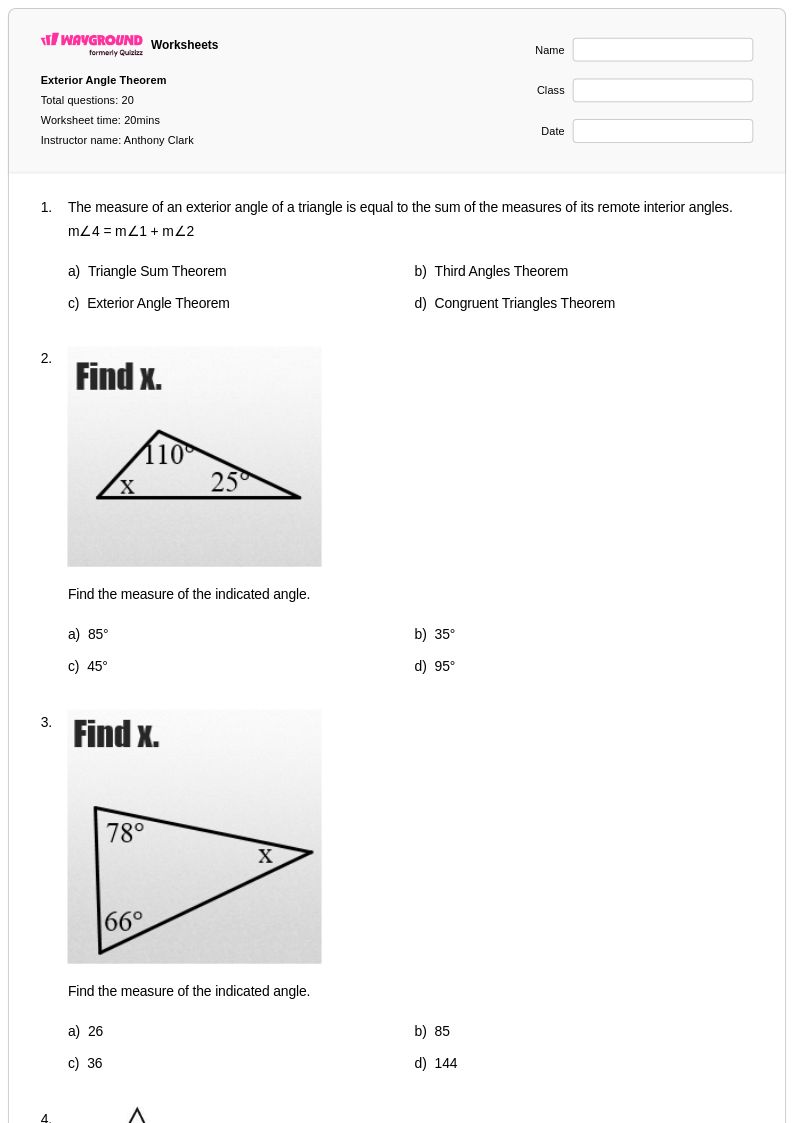
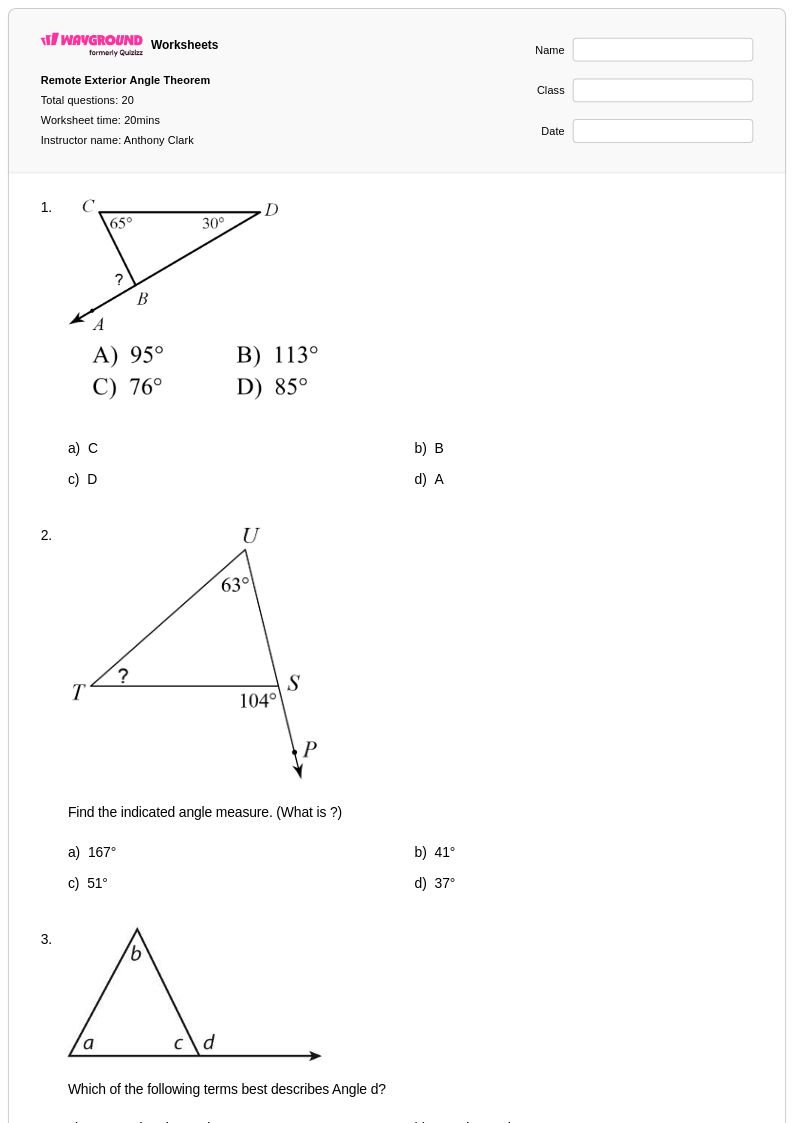
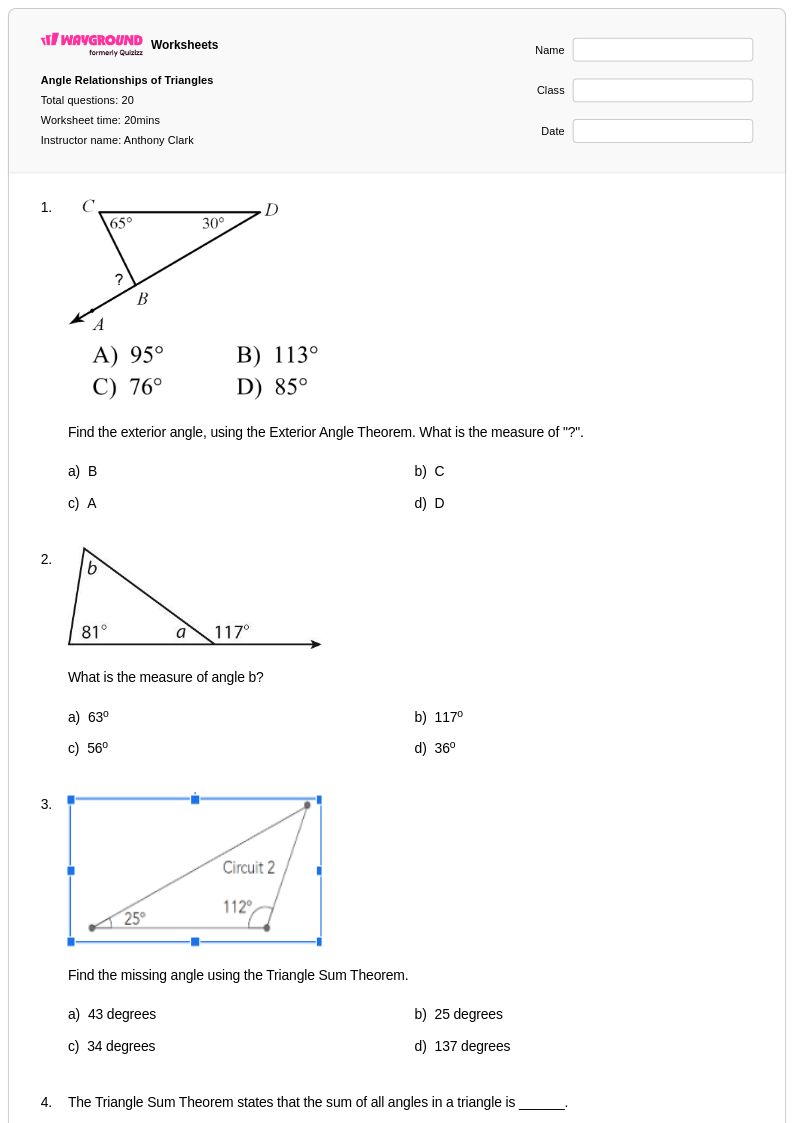
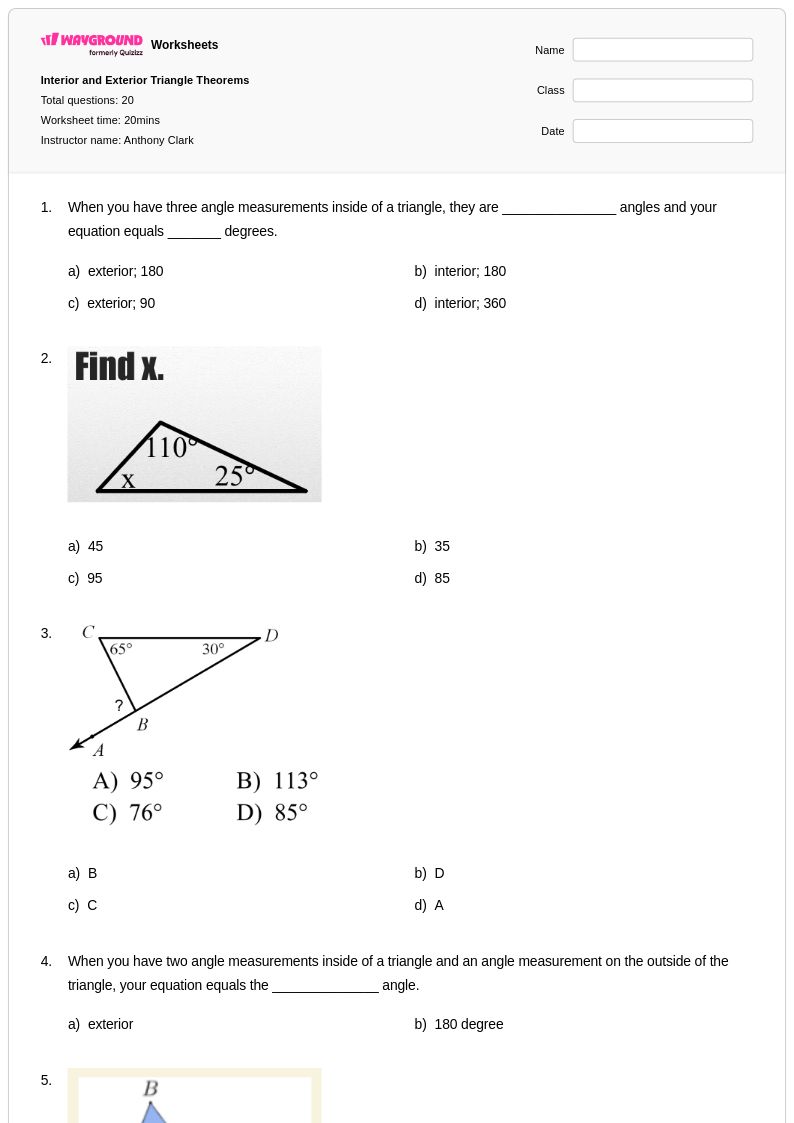
Exterior Angle Theorem worksheets for Year 11 students available through Wayground (formerly Quizizz) provide comprehensive practice with one of geometry's fundamental relationships between interior and exterior angles in triangles. These expertly designed materials strengthen students' ability to calculate unknown angle measures, prove geometric relationships, and apply the theorem that states an exterior angle of a triangle equals the sum of the two non-adjacent interior angles. The worksheets include varied practice problems ranging from basic angle calculations to complex multi-step proofs, complete with detailed answer keys that support independent learning and self-assessment. Students can access these resources as free printables in convenient pdf format, making them ideal for homework assignments, test preparation, or supplemental practice to reinforce classroom instruction.
Wayground (formerly Quizizz) empowers mathematics teachers with an extensive collection of millions of teacher-created Exterior Angle Theorem resources that streamline lesson planning and enhance geometric instruction for Year 11 students. The platform's robust search and filtering capabilities allow educators to quickly locate materials aligned with specific curriculum standards and learning objectives, while built-in differentiation tools enable teachers to customize worksheets for diverse learning needs and ability levels. These versatile resources are available in both printable and digital formats, including downloadable pdf versions, making them adaptable for traditional classroom settings, remote learning environments, or hybrid instruction models. Teachers can effectively utilize these materials for targeted skill practice, remediation support for struggling students, enrichment opportunities for advanced learners, and comprehensive assessment preparation that builds confidence in geometric reasoning and angle relationship applications.
FAQs
How should I review the Exterior Angle Theorem with Grade 11 students?
What Exterior Angle Theorem exercises are useful for Grade 11 students?
What errors should I watch for when students use the Exterior Angle Theorem?
How can teachers assign these Exterior Angle Theorem worksheets?
How does the Exterior Angle Theorem connect to Common Core geometry?
How can I support mixed-ability students with these worksheets?
Why practice the Exterior Angle Theorem in Grade 11?