Free Printable Distance Between a Point and a Line Worksheets for Year 11
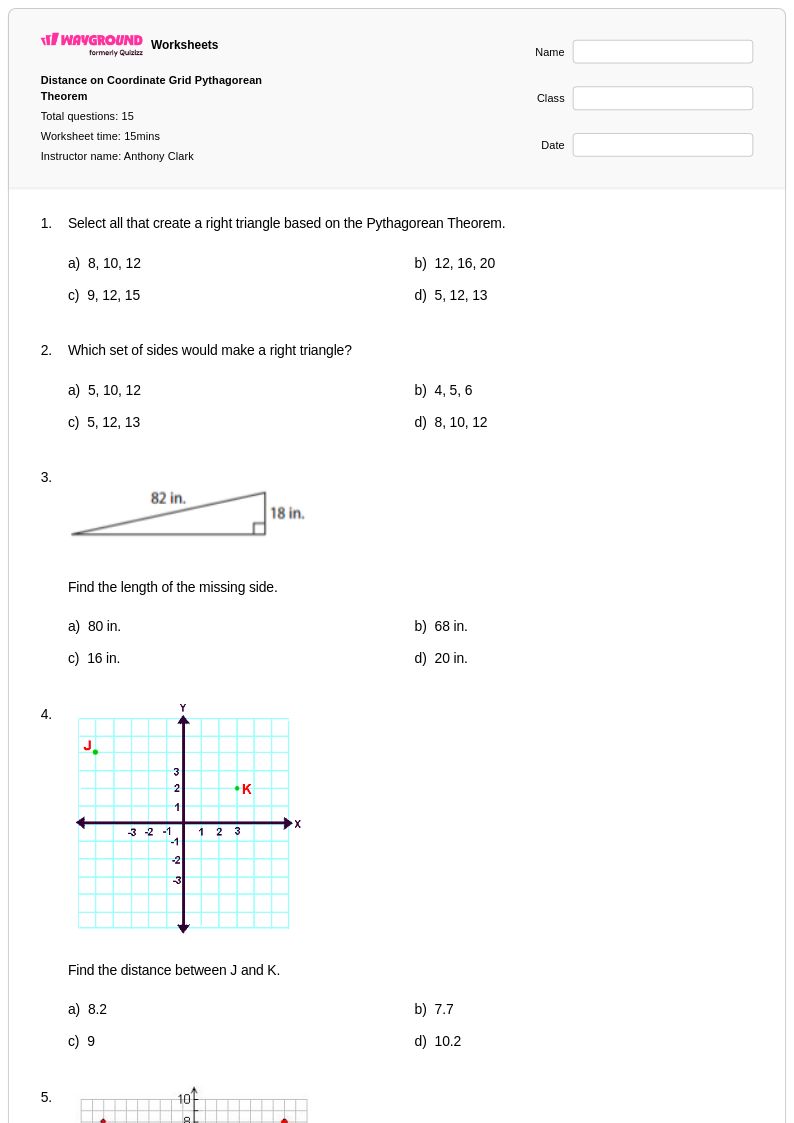
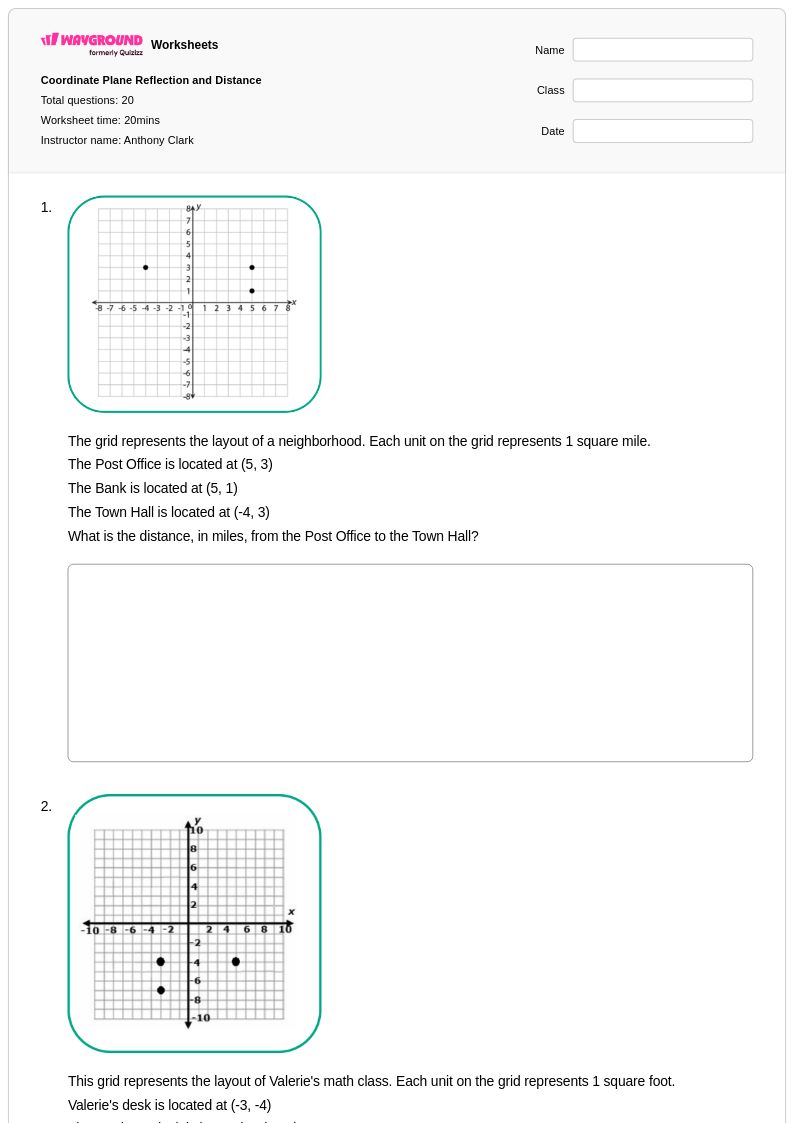
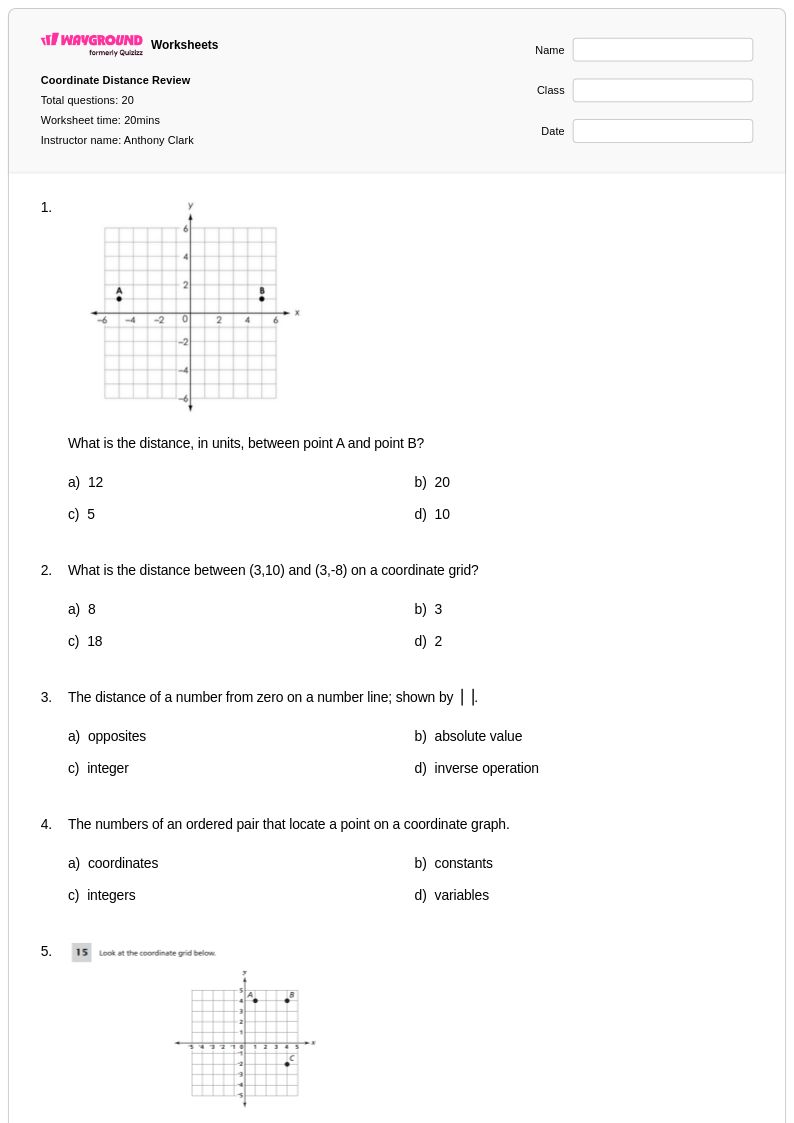
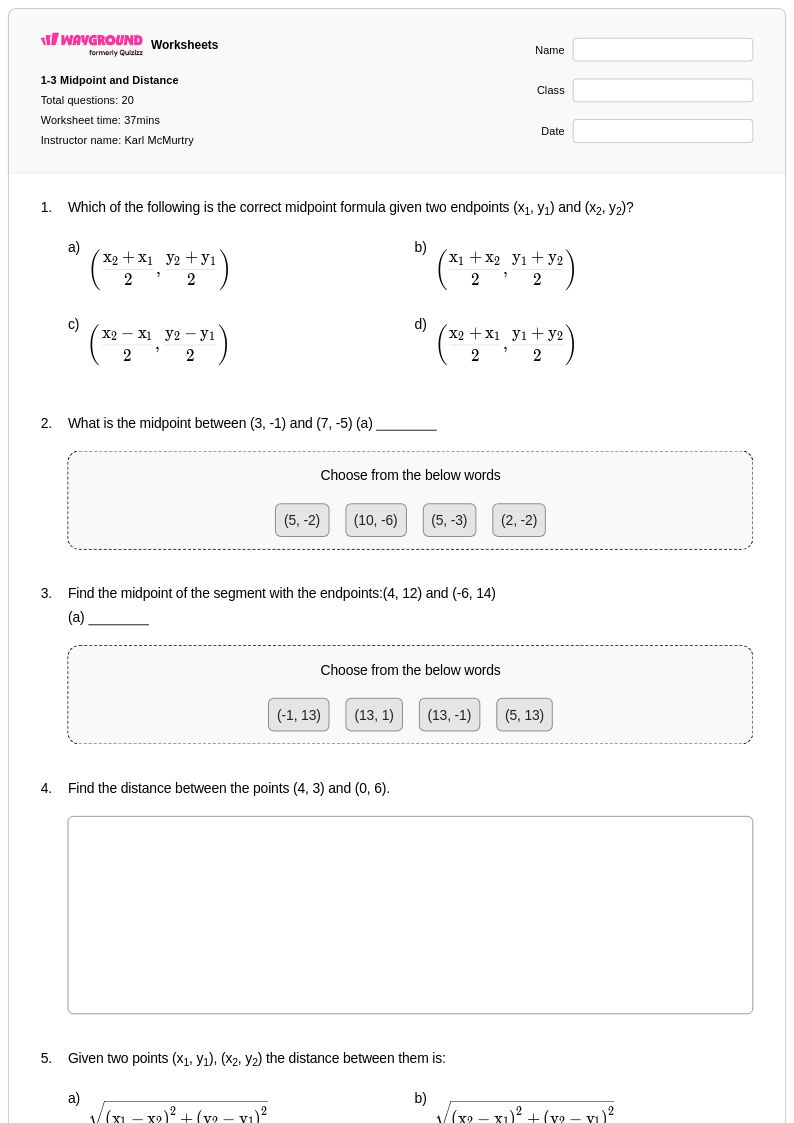
Year 11 geometry students can master calculating the distance between a point and a line with Wayground's comprehensive collection of free worksheets, printable PDFs, and practice problems with detailed answer keys.
Explore printable Distance Between a Point and a Line worksheets for Year 11
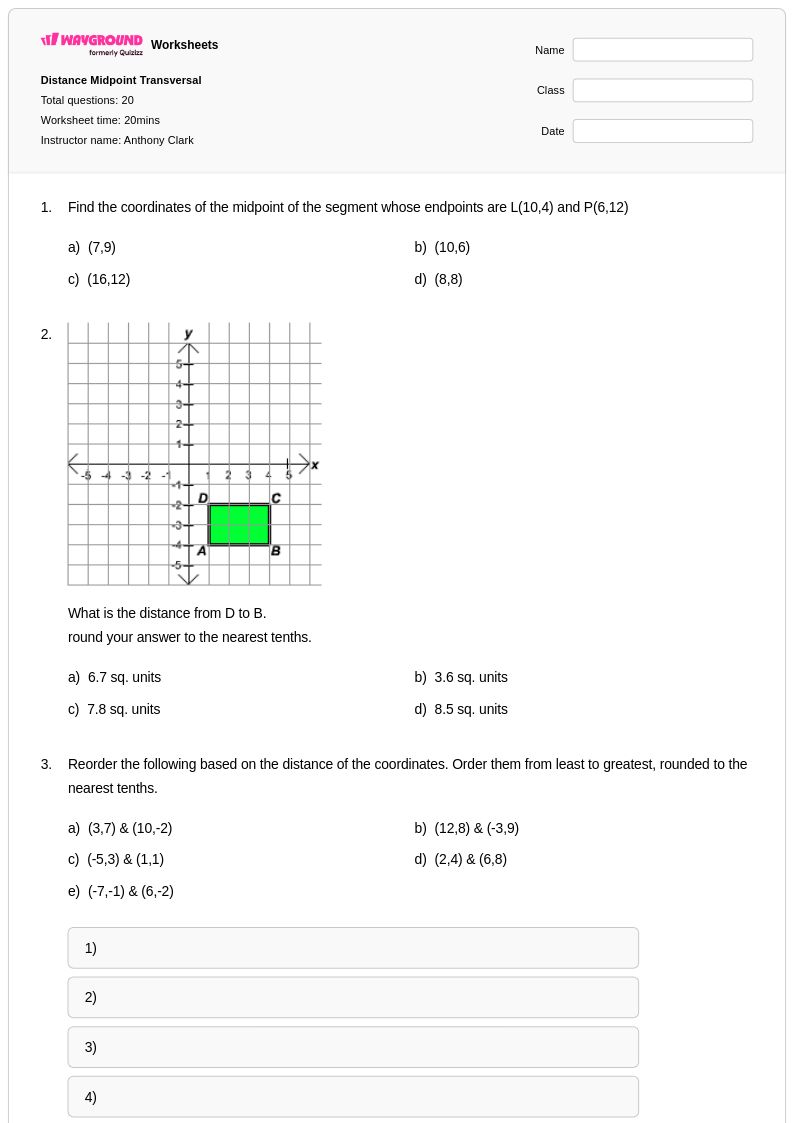
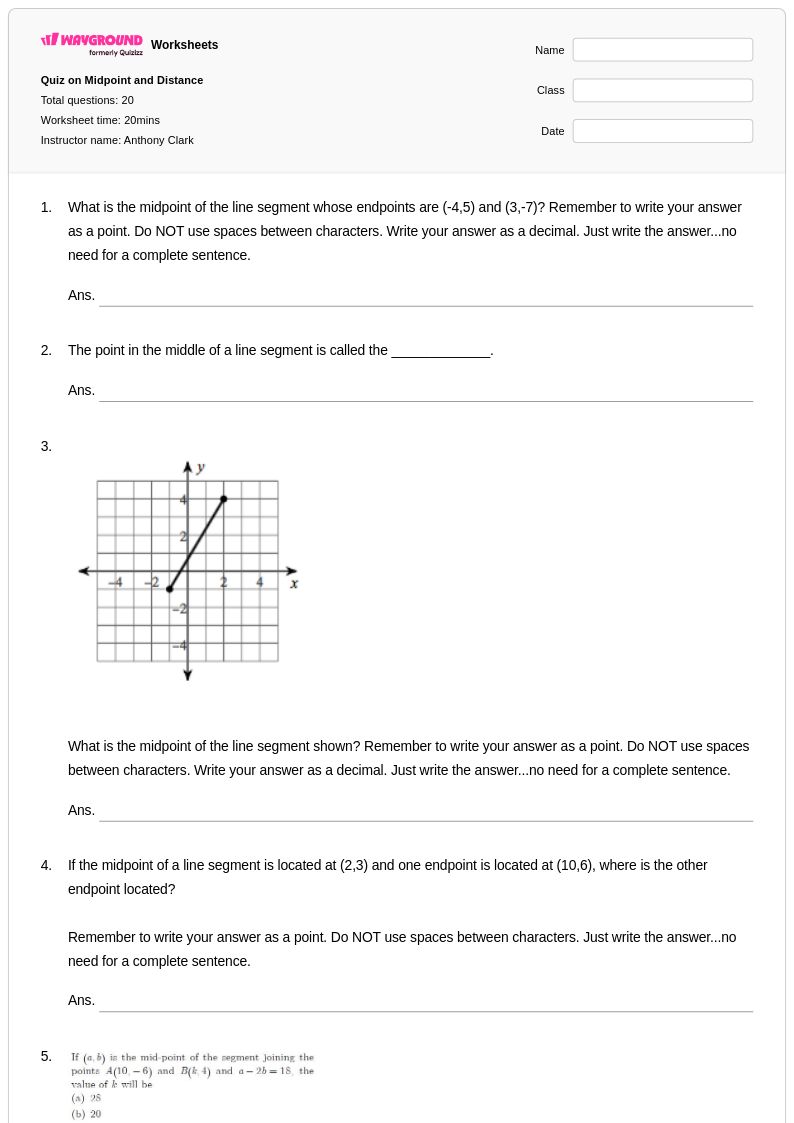
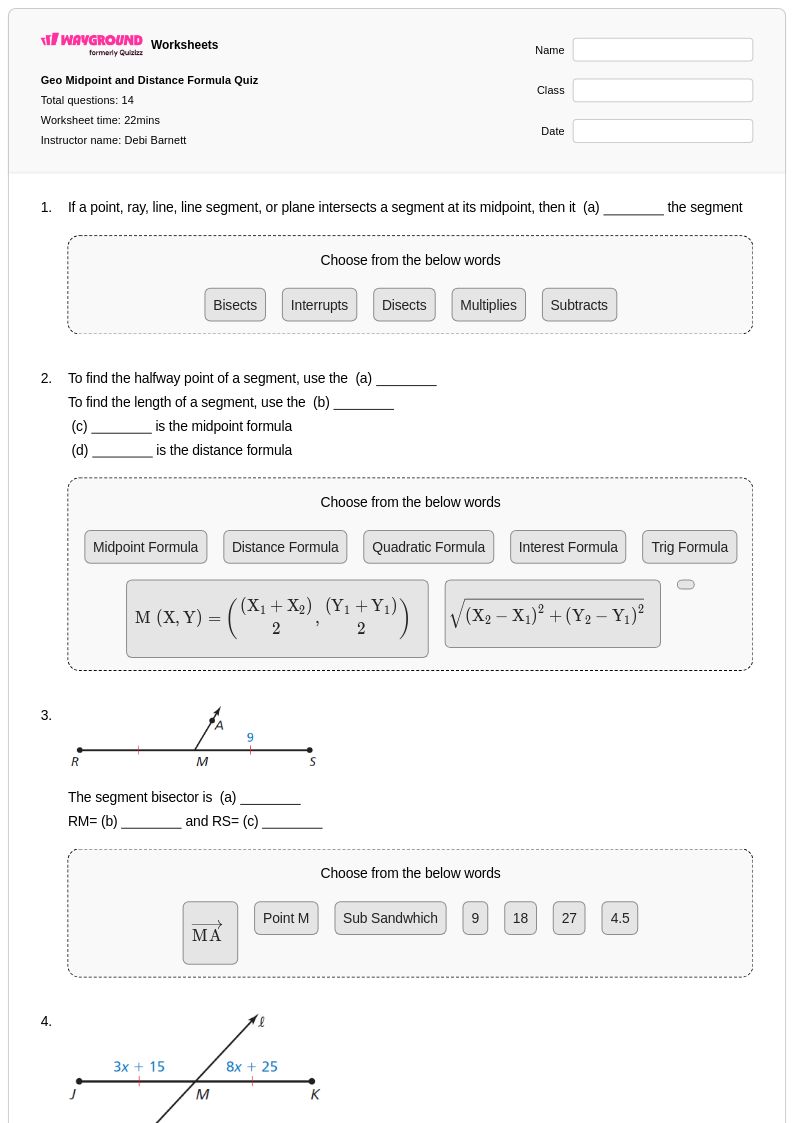
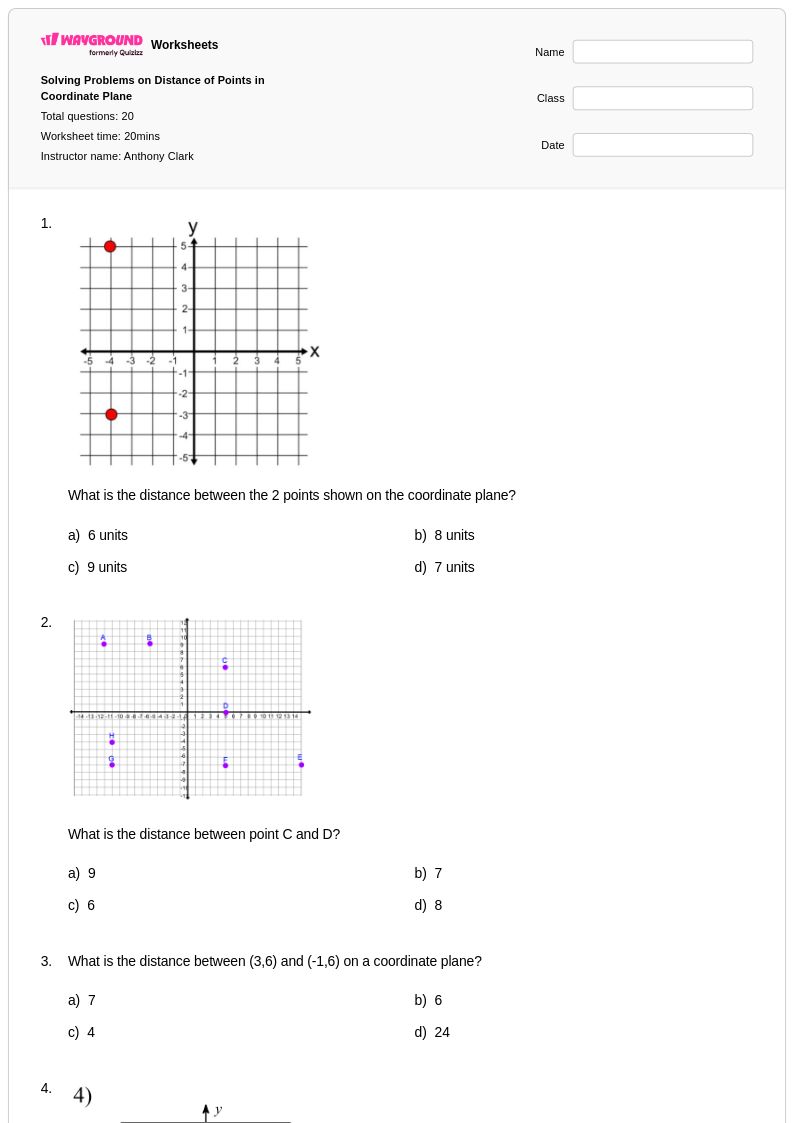
Distance between a point and a line worksheets for Year 11 students provide essential practice in one of coordinate geometry's most fundamental concepts. These comprehensive resources through Wayground (formerly Quizizz) help students master the perpendicular distance formula and develop strong analytical skills needed for advanced mathematical reasoning. Each worksheet collection includes systematic practice problems that progress from basic applications using the standard formula d = |ax₁ + by₁ + c|/√(a² + b²) to complex real-world scenarios involving optimization and geometric proofs. Students work through carefully structured exercises that reinforce their understanding of linear equations, coordinate systems, and geometric relationships, with complete answer keys provided to support independent learning and immediate feedback on their mathematical reasoning.
Wayground's extensive library of teacher-created distance between a point and a line worksheets offers educators millions of professionally developed resources with robust search and filtering capabilities that streamline lesson planning for Year 11 mathematics instruction. Teachers can easily locate materials aligned with state standards and customize worksheets to match their specific classroom needs, whether targeting remediation for struggling students or providing enrichment challenges for advanced learners. The platform's differentiation tools allow educators to modify problem complexity, adjust formatting, and select from both printable pdf versions and interactive digital formats that accommodate diverse learning preferences. These flexible resources support comprehensive skill practice while enabling teachers to efficiently assess student progress in coordinate geometry concepts and provide targeted intervention when needed.
FAQs
How do I teach point-to-line distance at the 11th grade level?
By 11th grade, the formula itself shouldn't be new — the teaching goal is depth, not introduction. Push students toward optimization problems (finding the point on a line closest to a given point), geometric proofs that use the distance formula as a tool, and problems where they must derive the line equation from contextual information before applying the formula. Students who can only execute the formula on a pre-formatted problem aren't ready for the analytic geometry and precalculus work ahead.
What practice problems are most valuable for 11th graders on this topic?
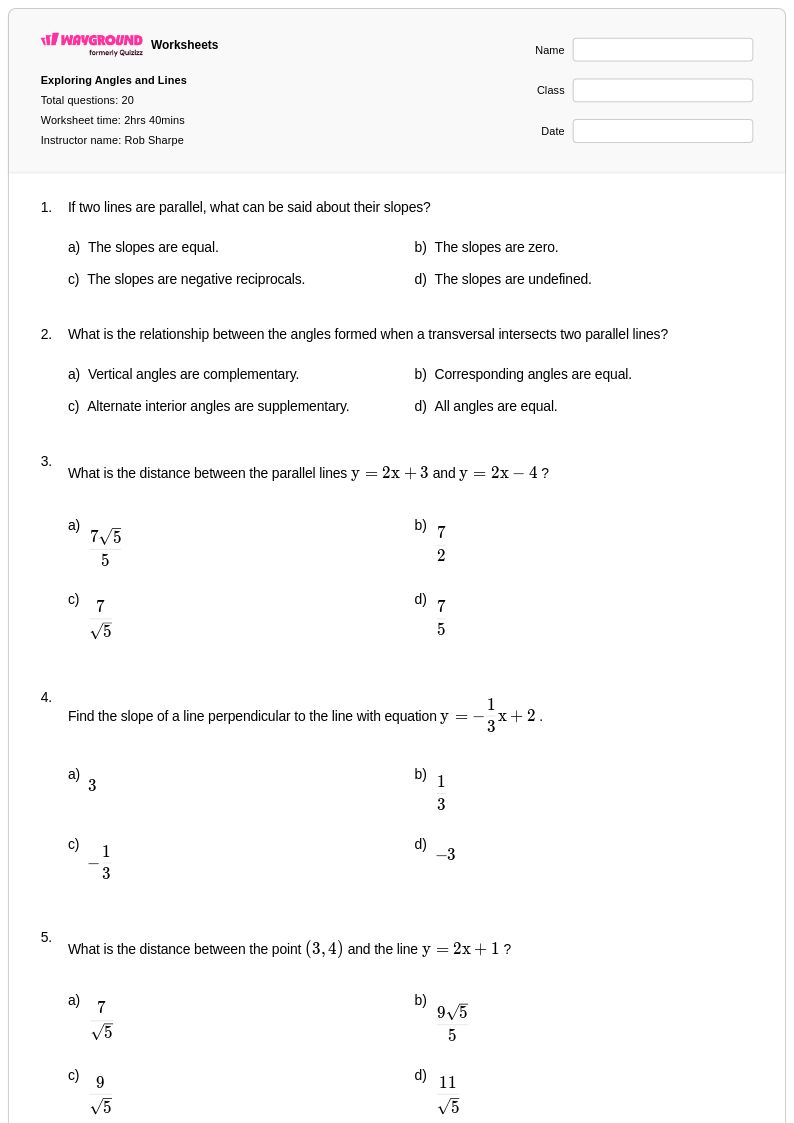
Three problem types build the most at this level: finding the distance between two parallel lines (which requires choosing a point on one line and applying the formula to the other), optimization problems asking for the point on a line nearest to a given point, and proof-based problems where the distance formula is one step in a larger geometric argument. Straightforward substitution problems are useful only as a quick fluency check, not as the core of a practice set.
What misconceptions do 11th graders still carry about point-to-line distance?
The most stubborn misconception at this level is treating the formula as a standalone tool rather than a geometric relationship. Students who don't understand that the formula computes a perpendicular distance will misapply it in optimization problems — for example, finding the distance from a point to a line when they actually need the foot of the perpendicular. A quick conceptual check: ask students to identify the exact point on the line that achieves the minimum distance, not just the distance value itself.
How do I use these Grade 11 worksheets in my class?
Every worksheet includes a complete answer key, which makes them practical for independent work and self-assessment. You can host the worksheet as a digital quiz on Wayground or print the PDF — if you go the paper route, the Wayground for Teachers app lets you scan and grade student submissions directly, which saves time on multi-step problems where partial credit matters.
How does point-to-line distance connect to the broader 11th grade math curriculum?
In Common Core-aligned 11th grade math, this topic functions as a bridge between coordinate geometry and the analytic reasoning that runs through precalculus. Students who are solid on point-to-line distance can handle distance-from-center problems in conic sections, work with tangent lines to circles, and engage with optimization problems that appear in early calculus contexts. At this grade, the concept is less a new skill and more a tool students should be deploying fluently inside larger problems.
How can I differentiate this topic for my 11th grade class?
For students who are still shaky on the algebraic manipulation — converting line forms, simplifying radicals — Wayground's reduced answer choices accommodation on digital assignments lets them focus on setting up the problem correctly rather than getting derailed by arithmetic. For students ready for more challenge, the same worksheet collection includes problems that extend into optimization and proof contexts. You can assign different problem sets to different students within the same session without either group being aware of the difference.