
17 Q
10th - Uni
11 Q
10th - Uni
20 Q
9th - 12th
12 Q
9th - 12th
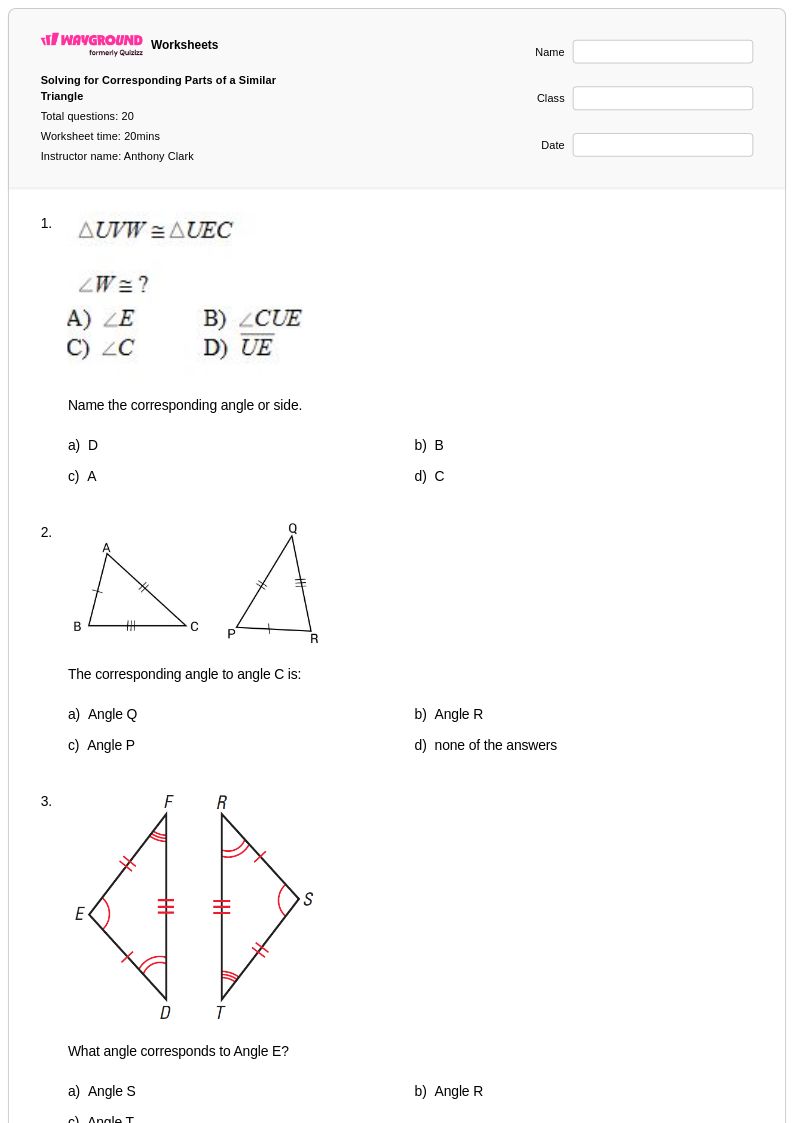
20 Q
10th - Uni
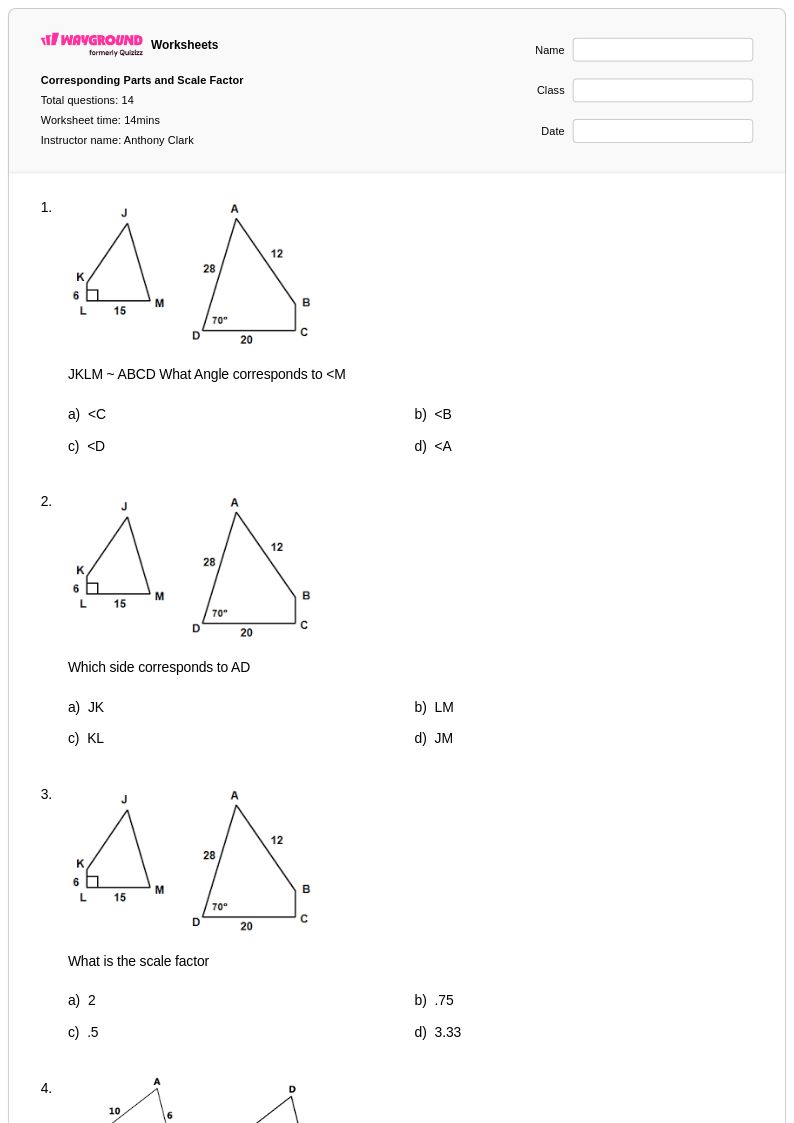
14 Q
7th - Uni
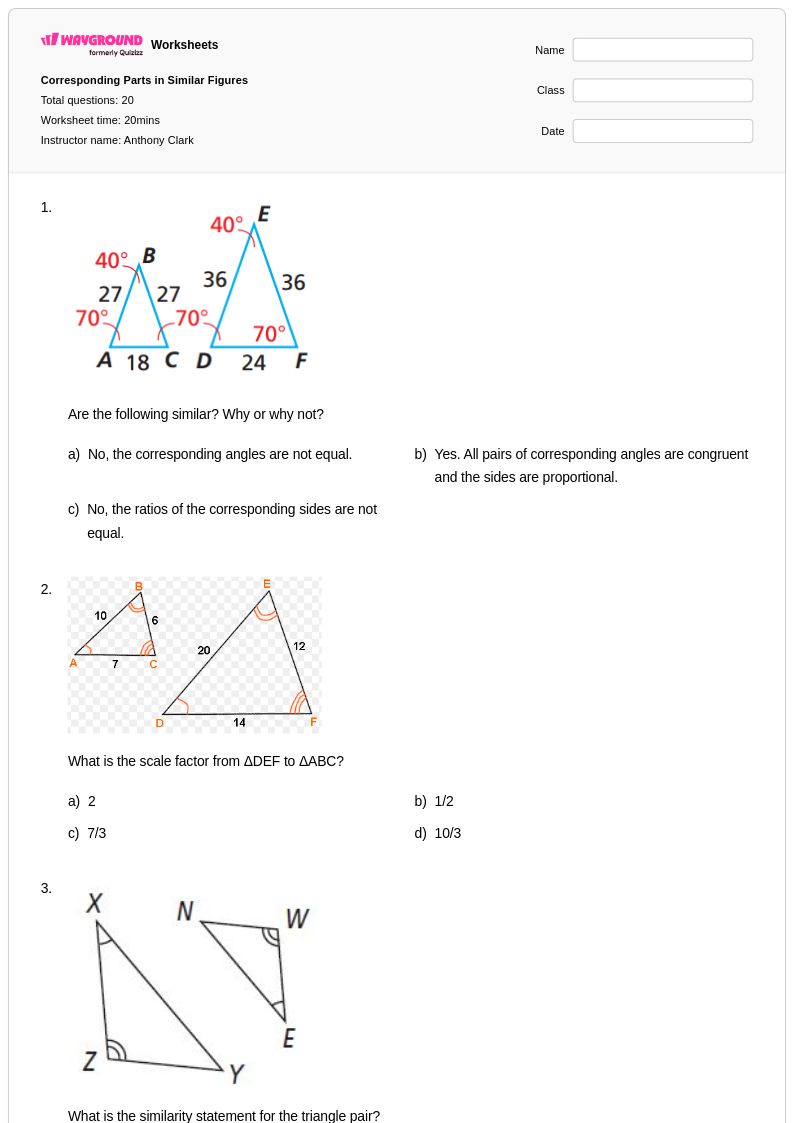
20 Q
8th - Uni
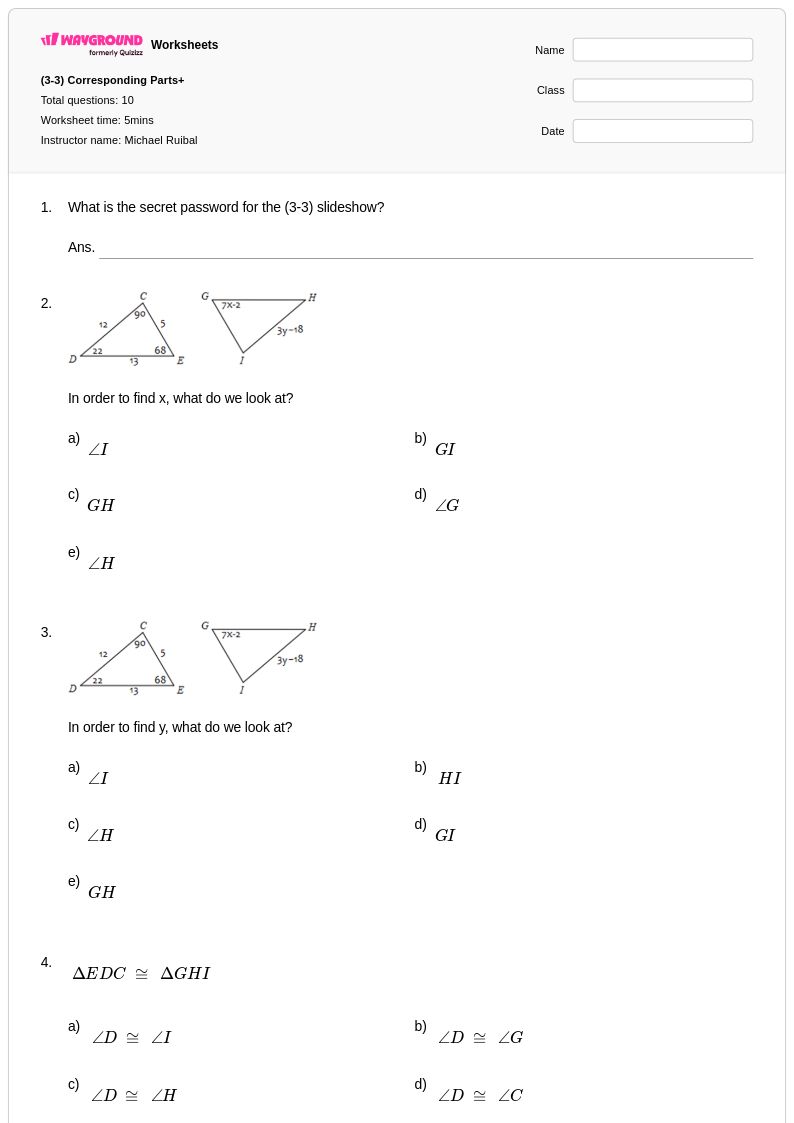
10 Q
10th - 12th
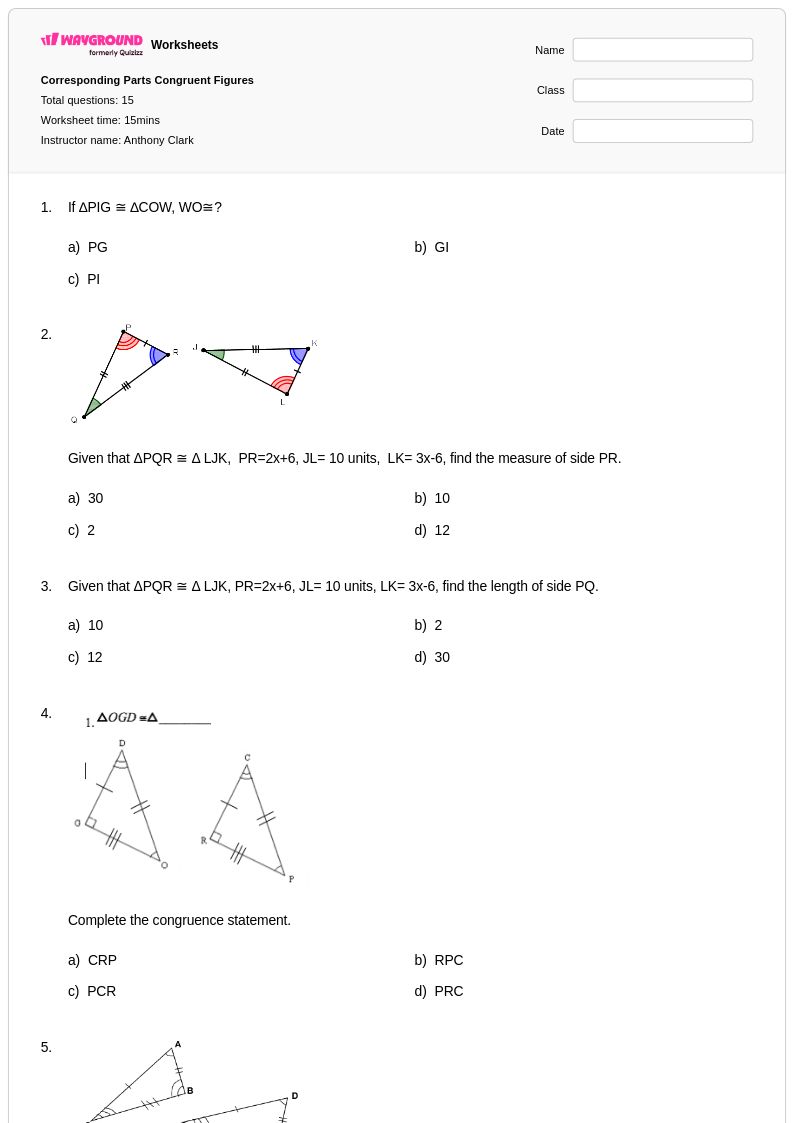
15 Q
10th - Uni
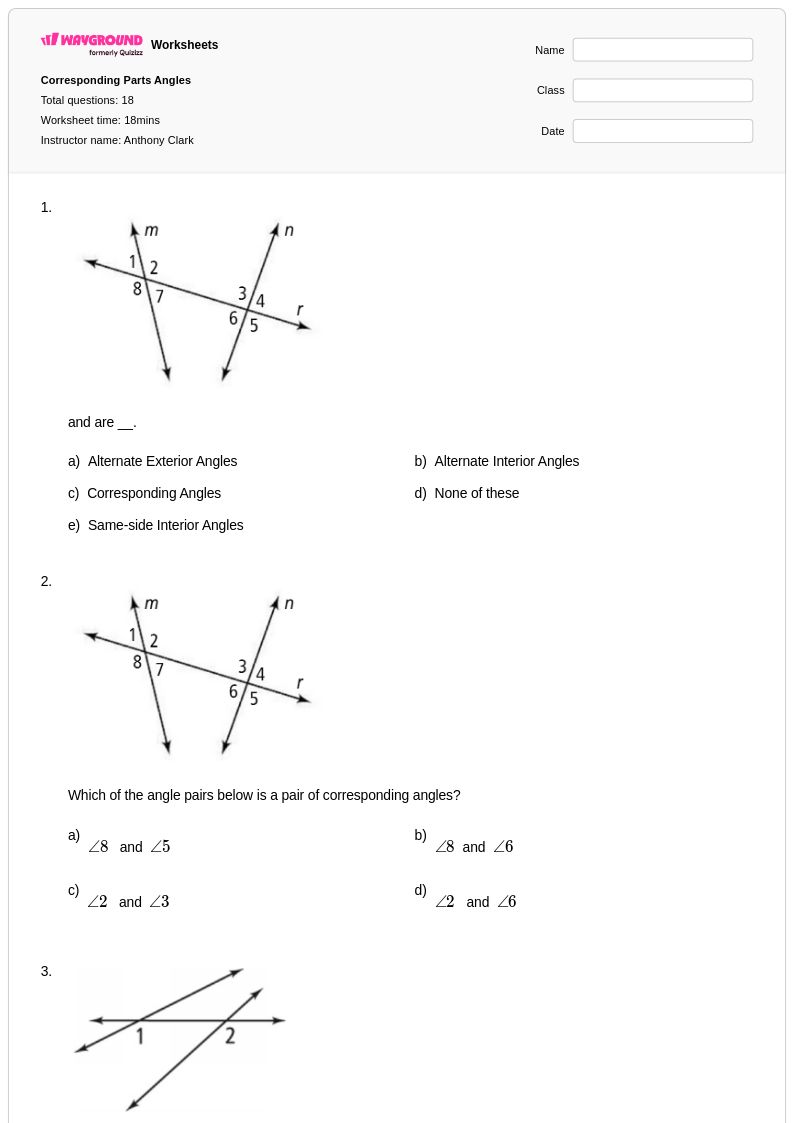
18 Q
9th - Uni
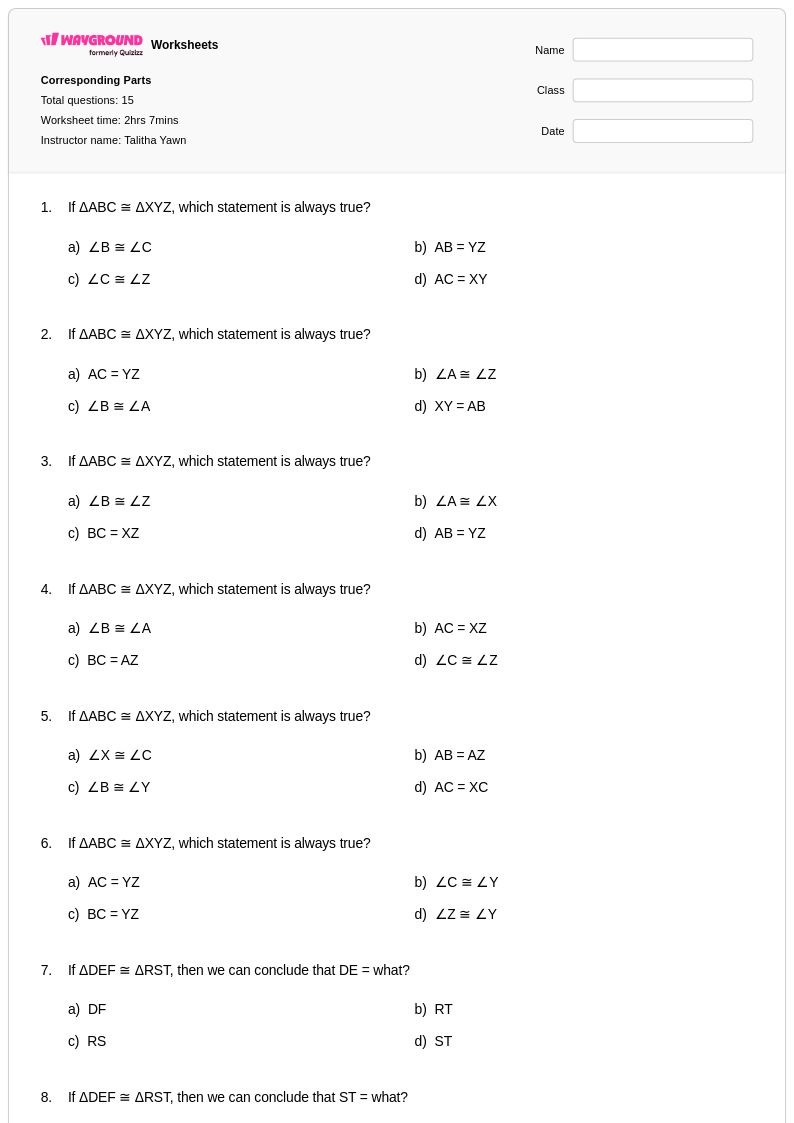
15 Q
6th - 12th
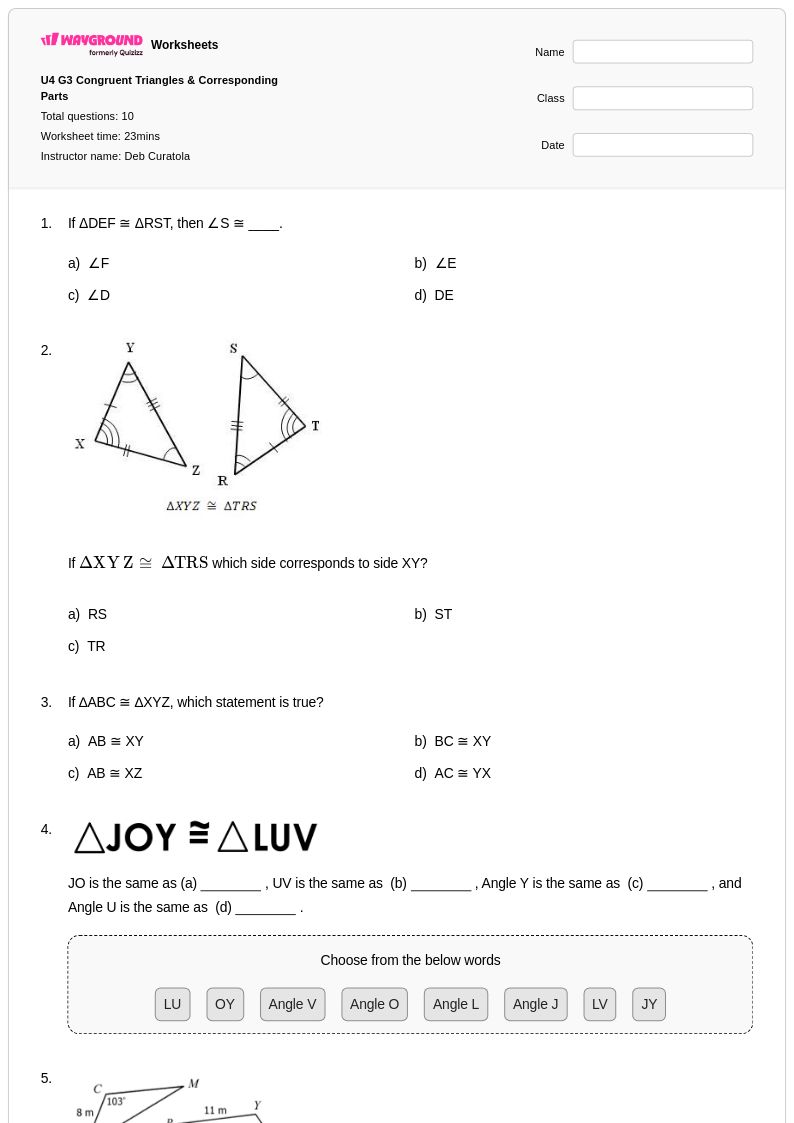
10 Q
9th - 12th
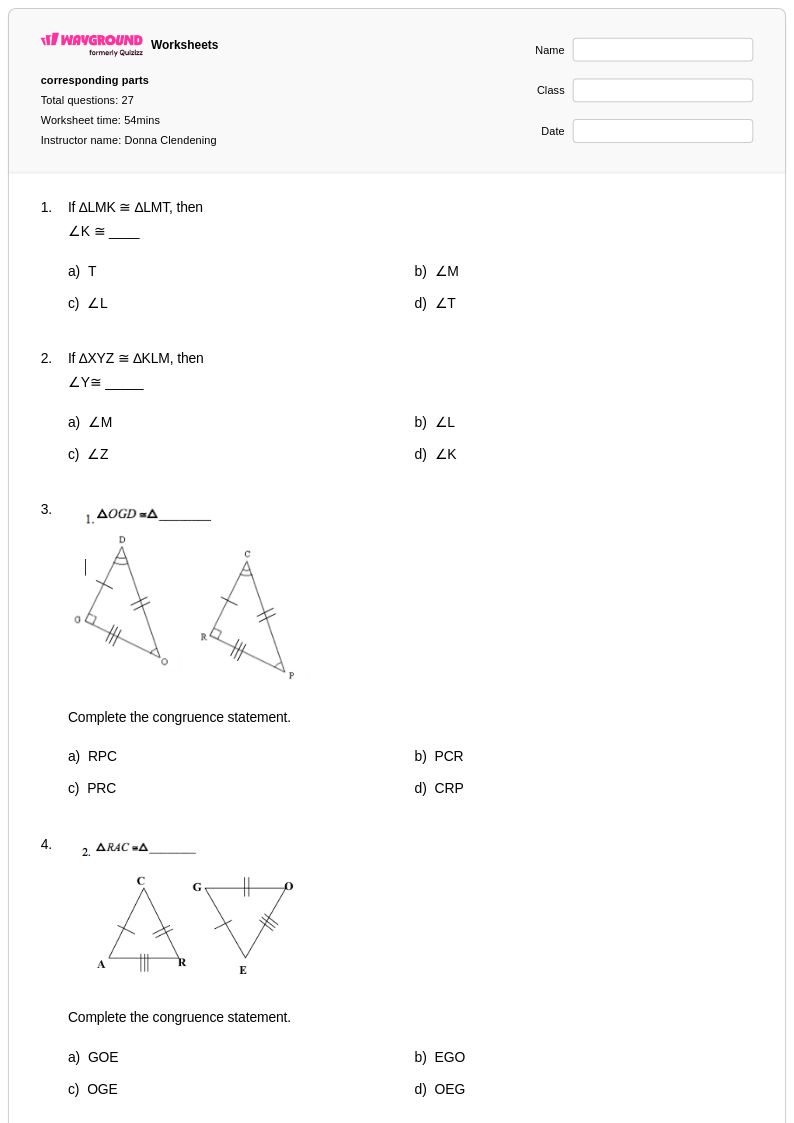
27 Q
9th - 12th
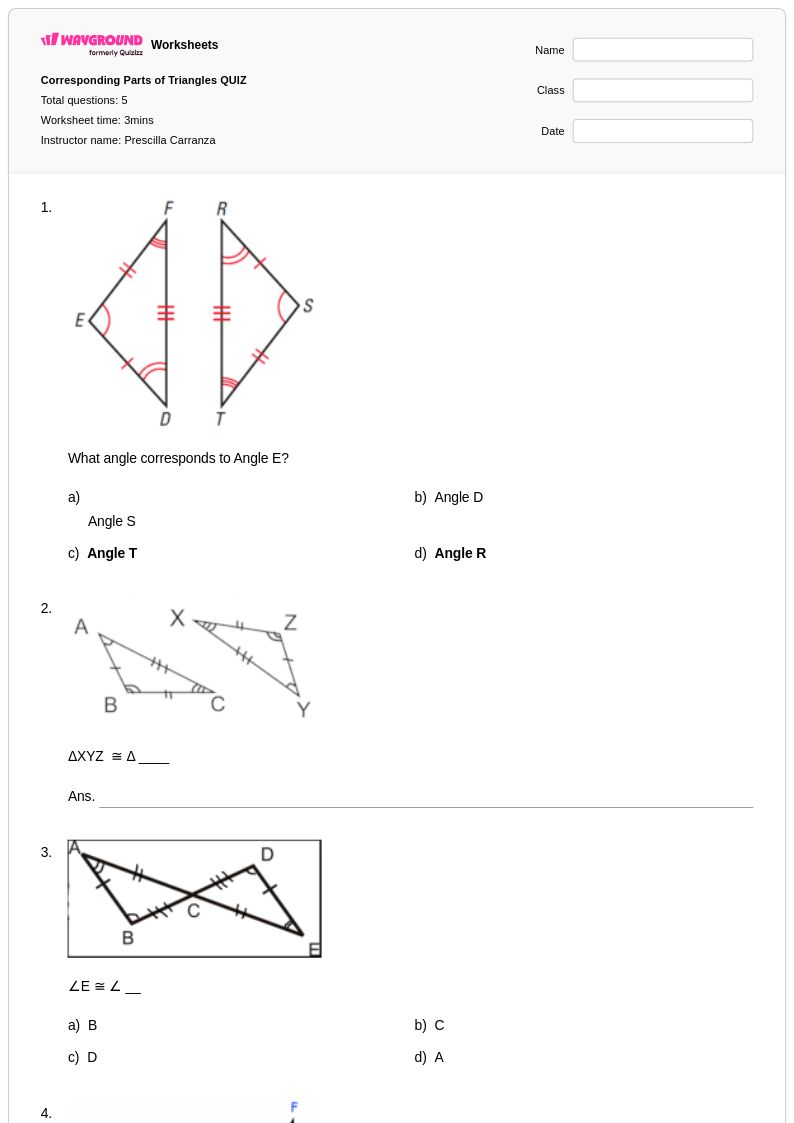
5 Q
9th - 12th
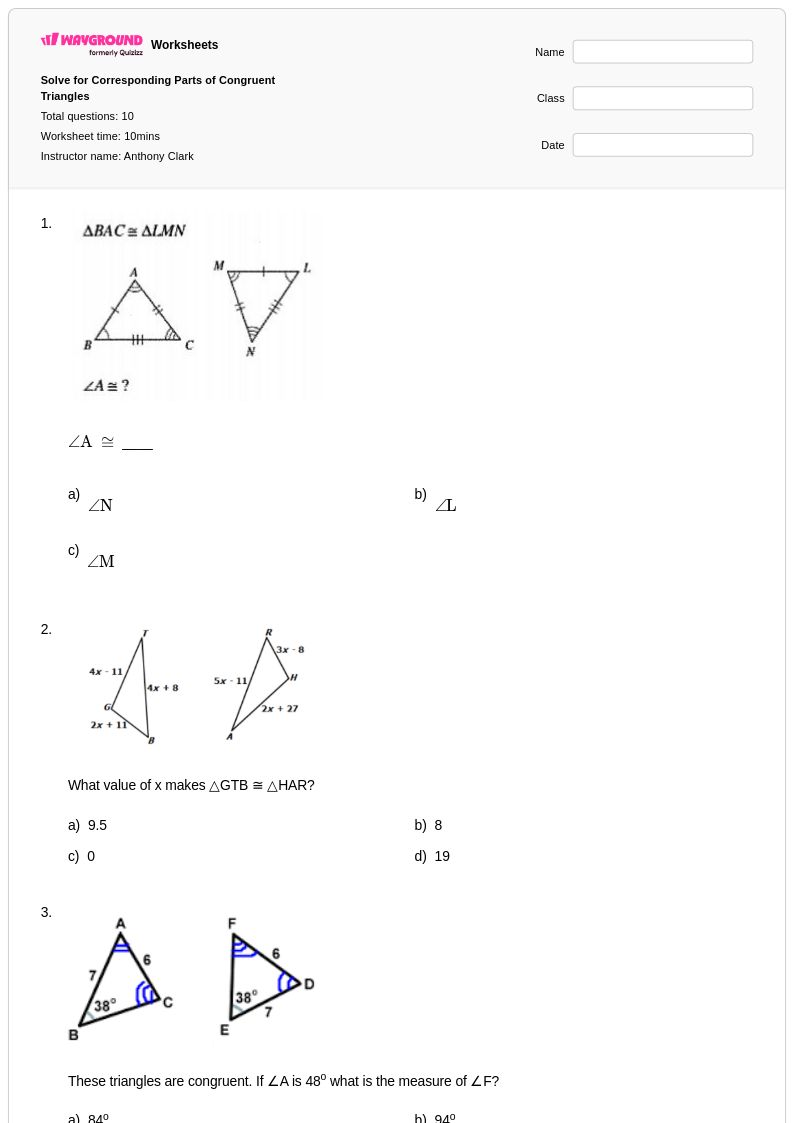
10 Q
10th - Uni
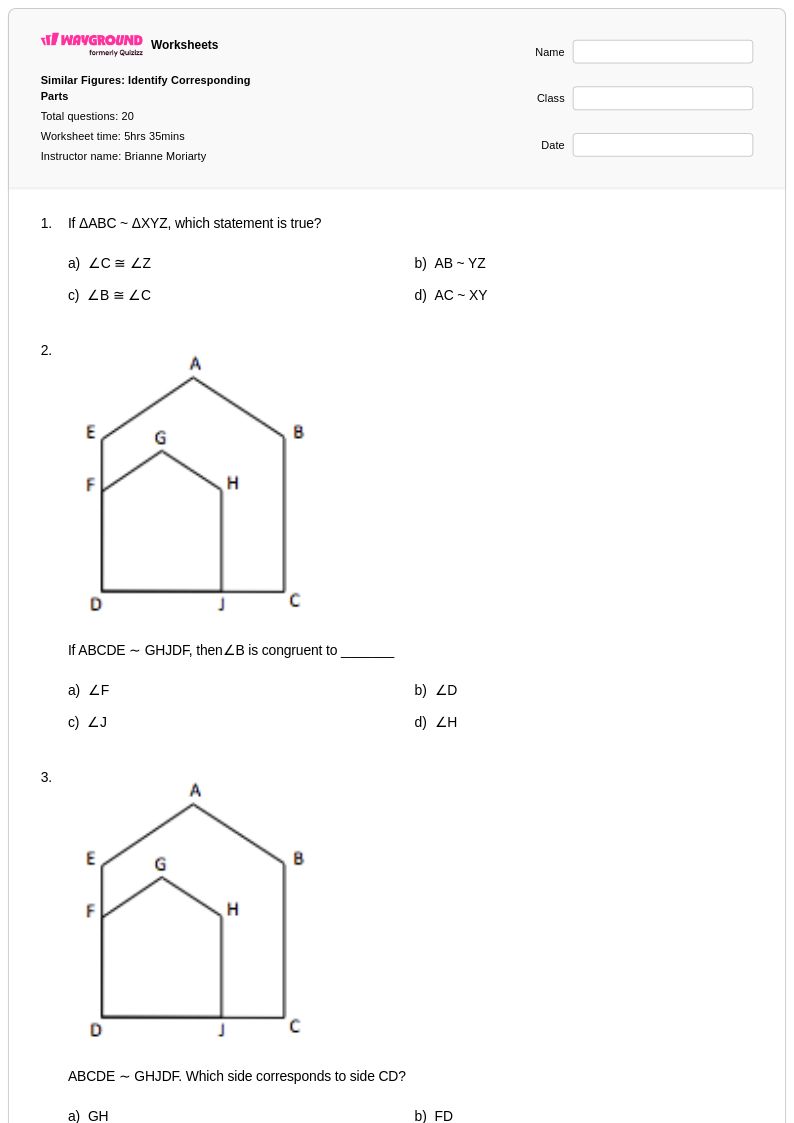
20 Q
9th - 12th
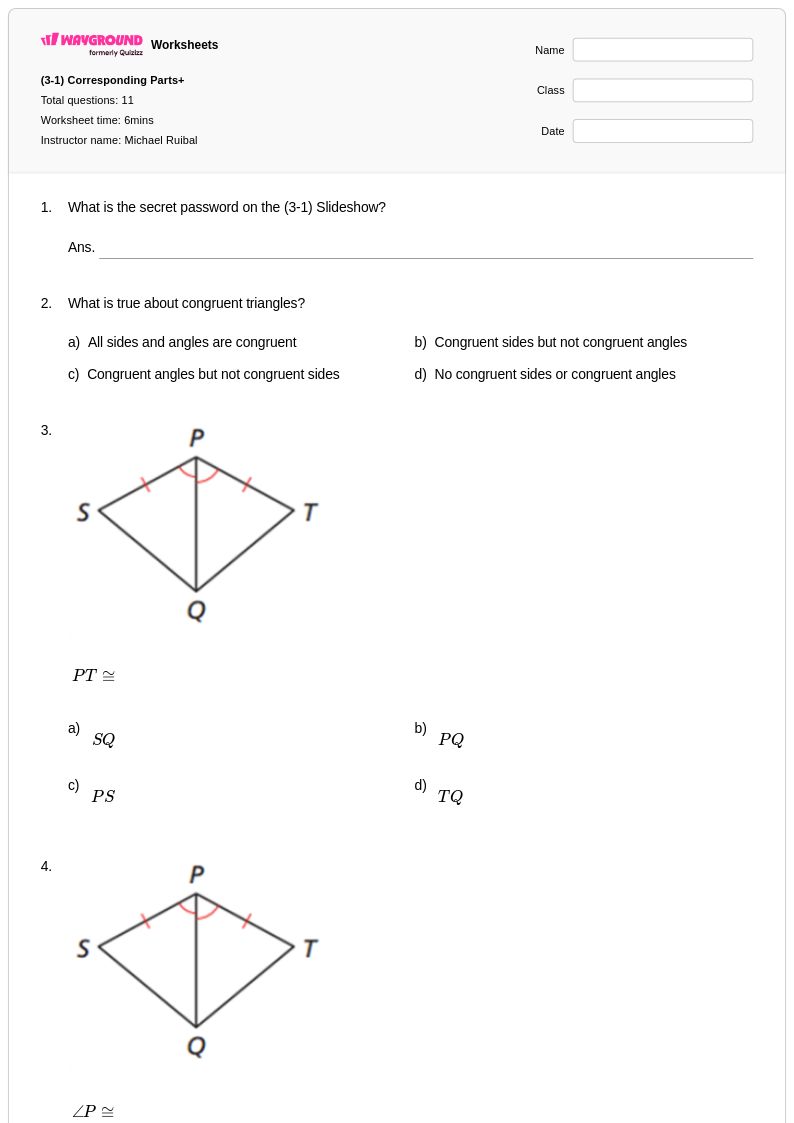
11 Q
10th - 12th
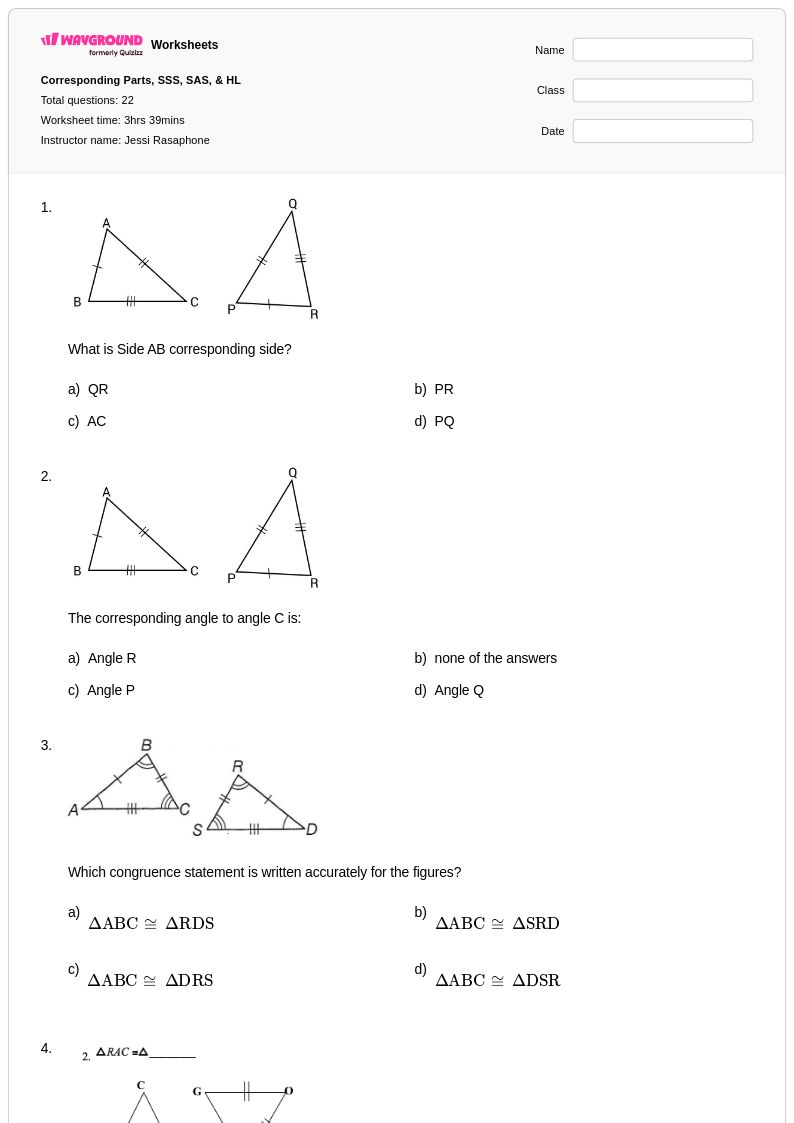
22 Q
9th - 12th
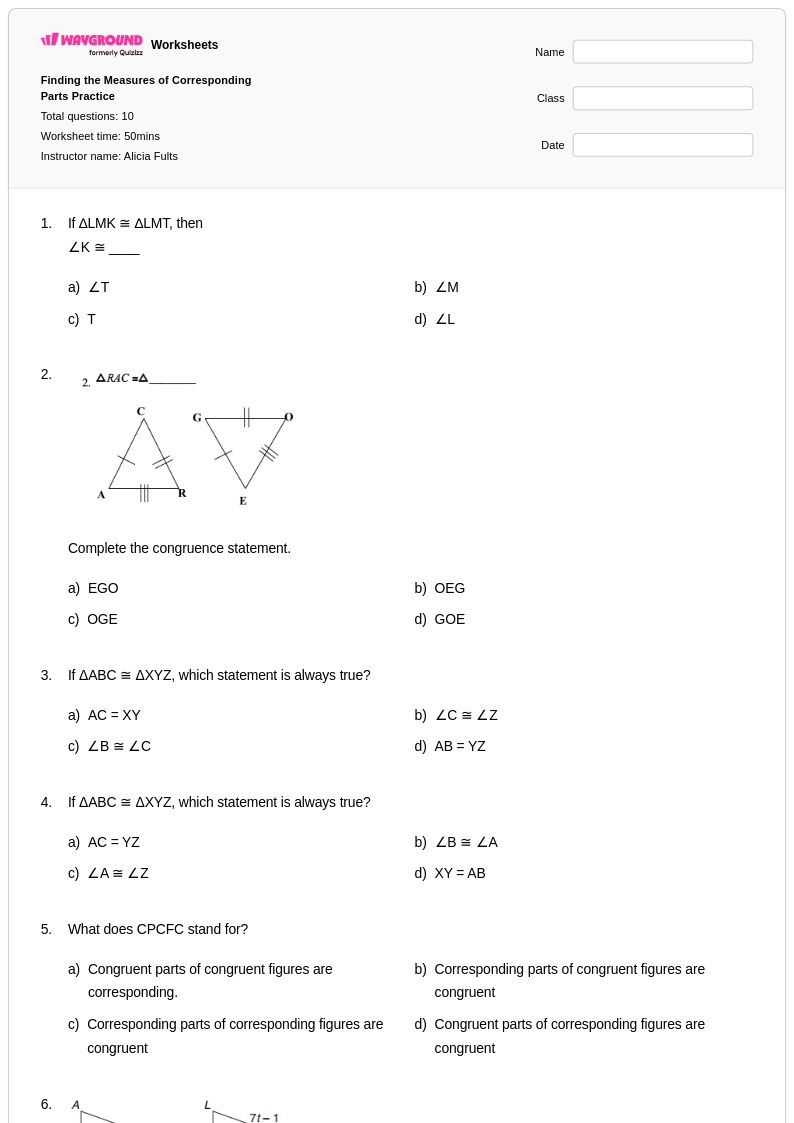
10 Q
9th - 12th
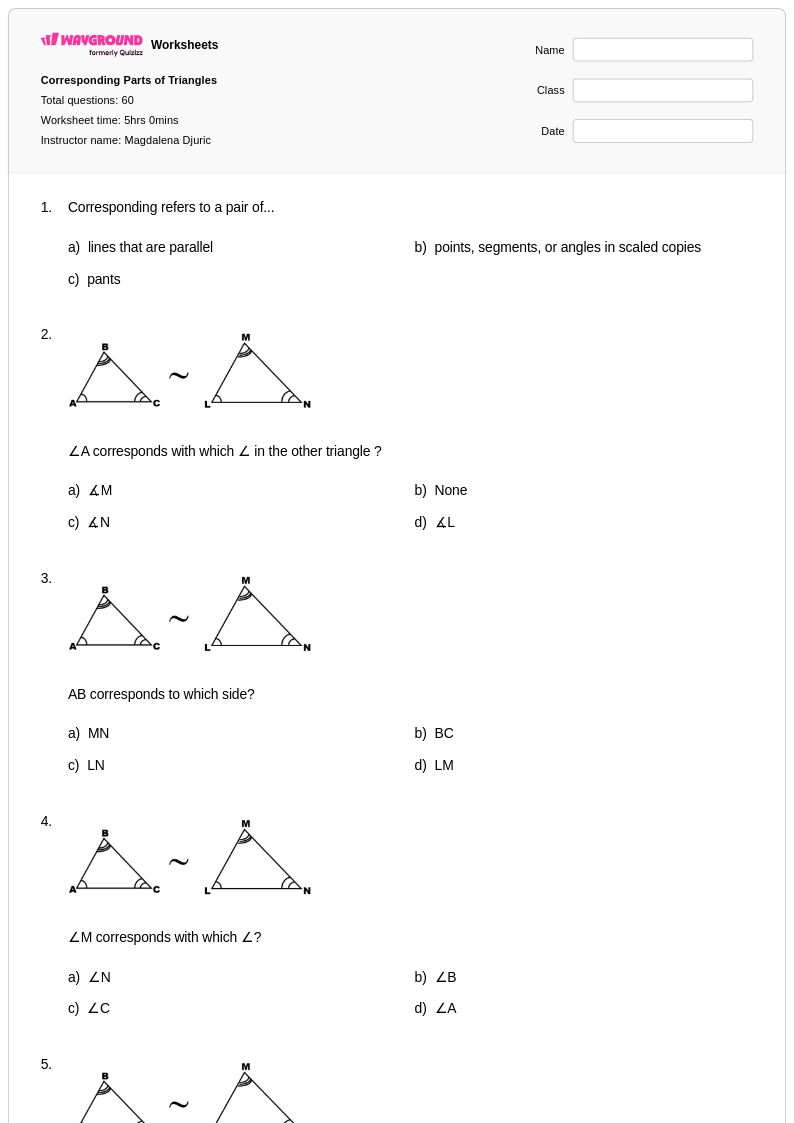
60 Q
6th - 11th
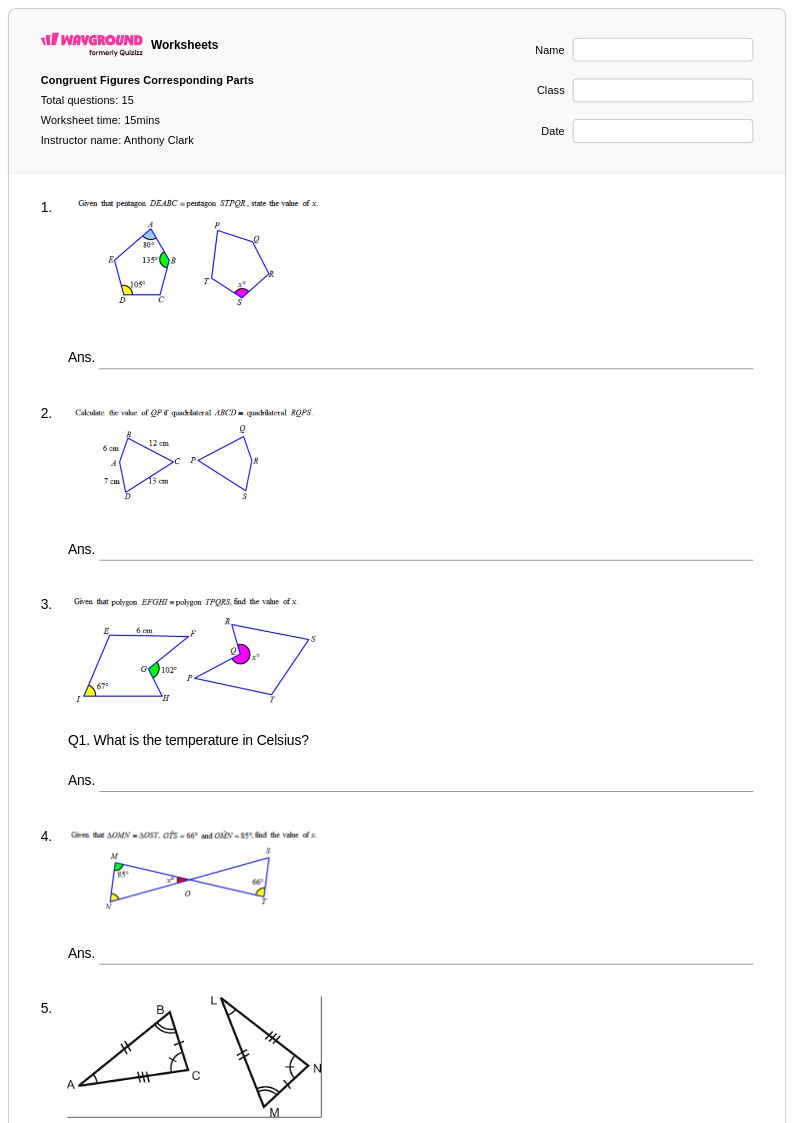
15 Q
10th - Uni
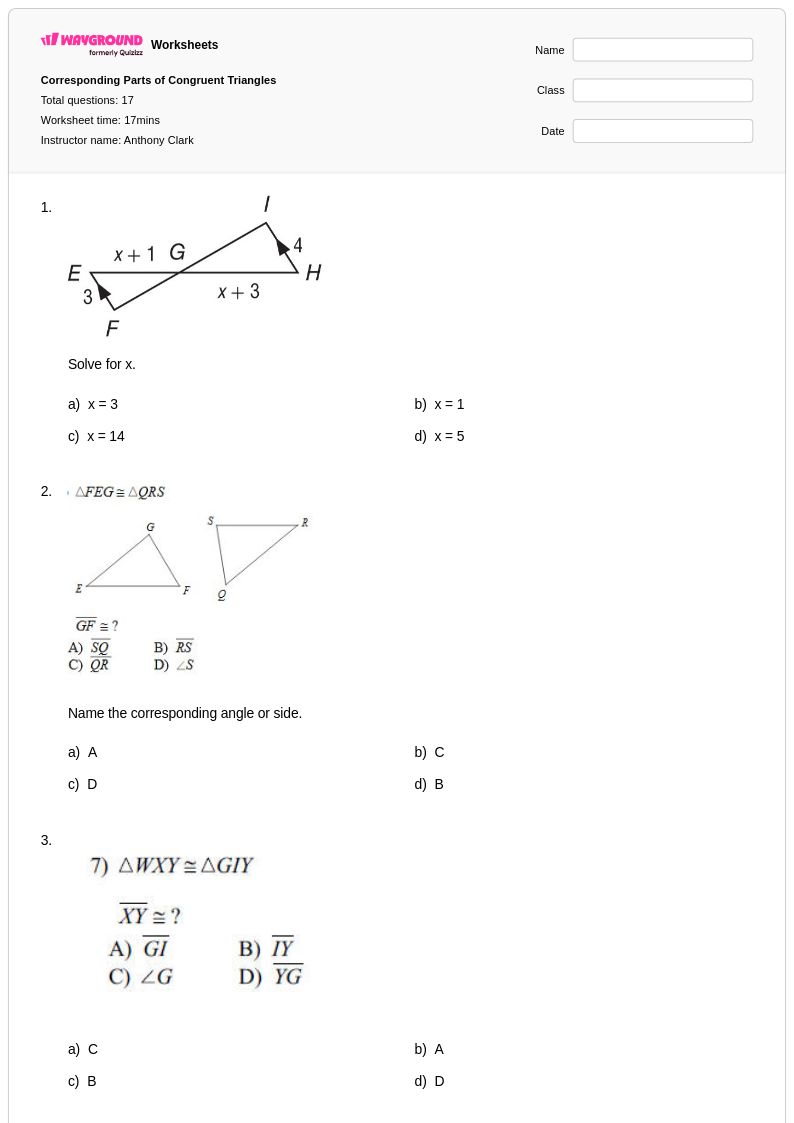
17 Q
10th - Uni
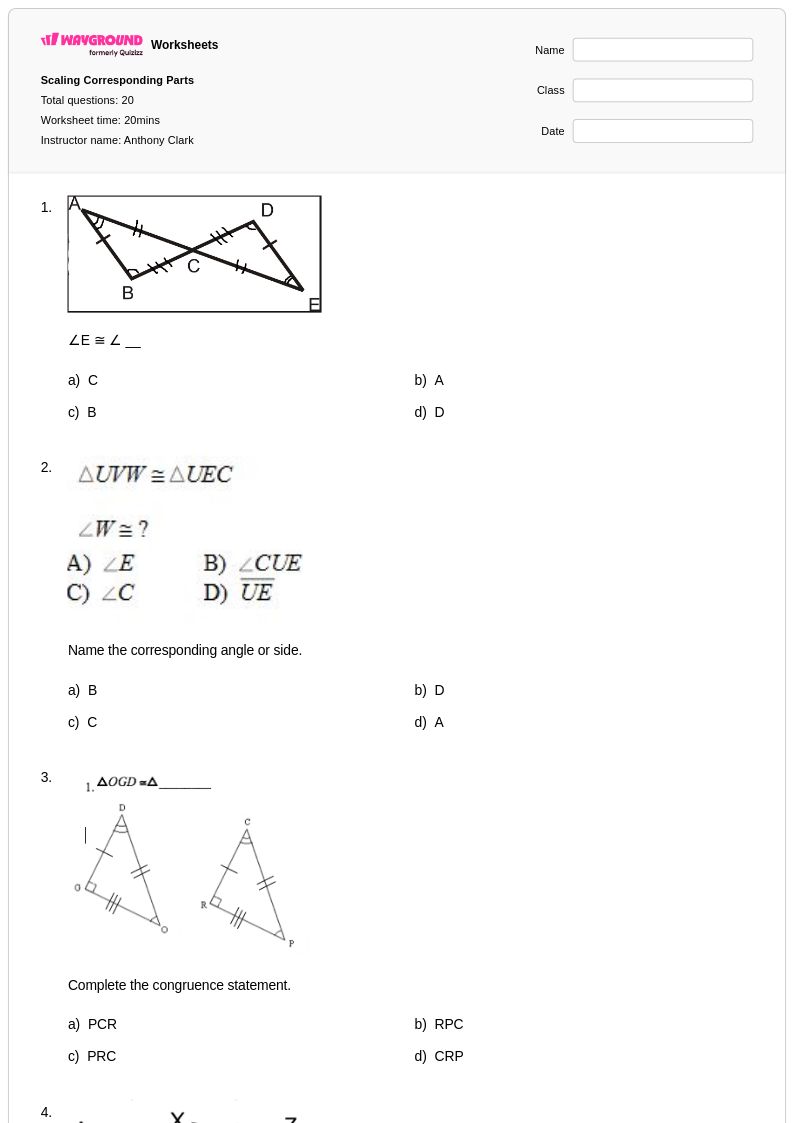
20 Q
10th - Uni
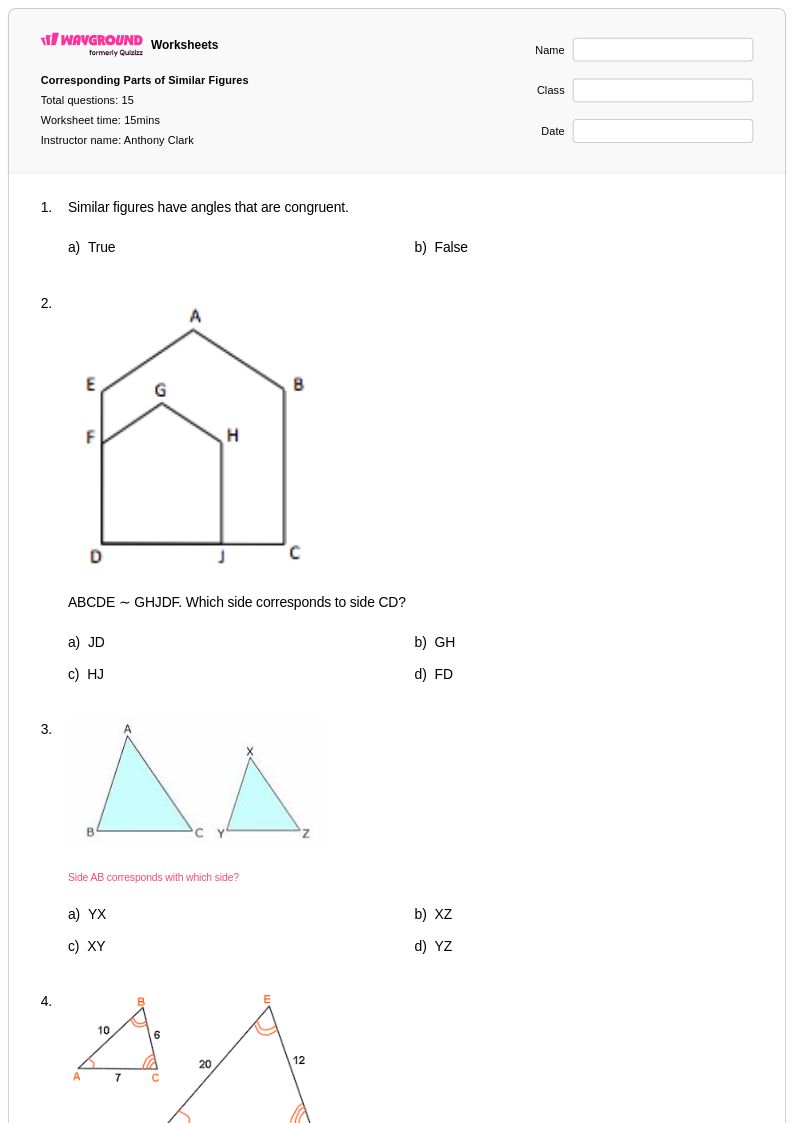
15 Q
10th - Uni
Explore Other Subject Worksheets for year 11
Explore printable Corresponding Parts worksheets for Year 11
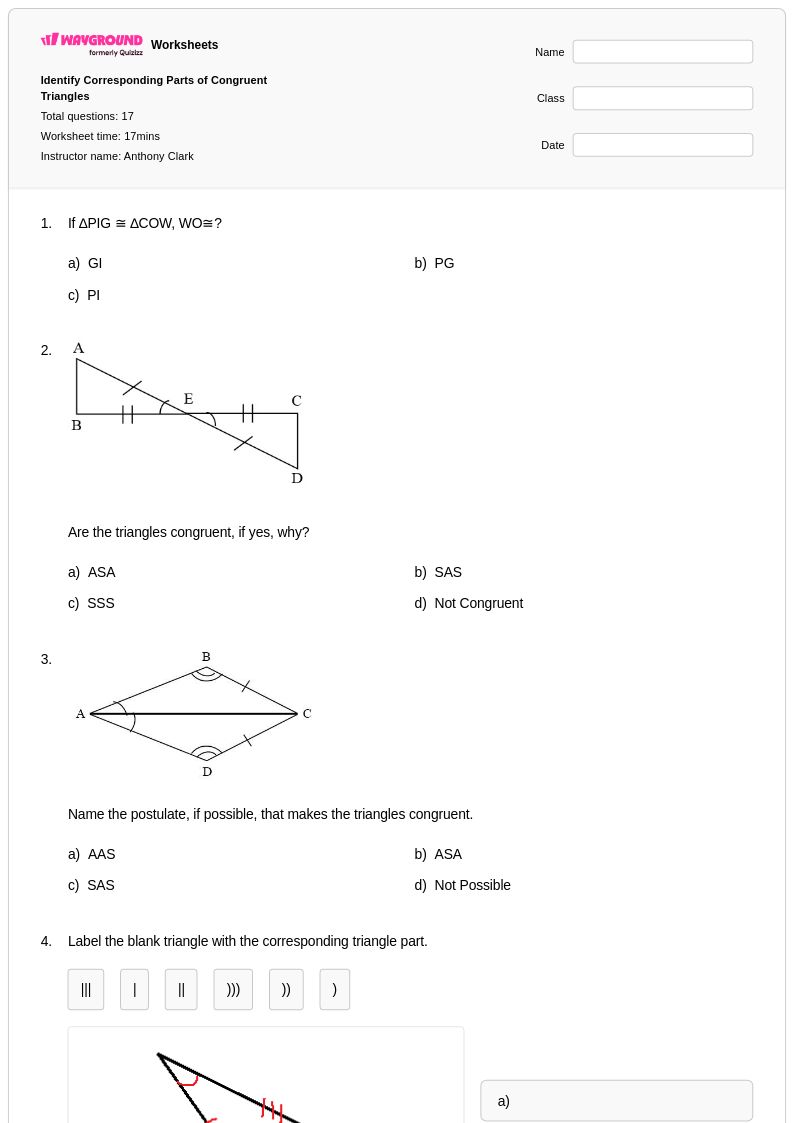
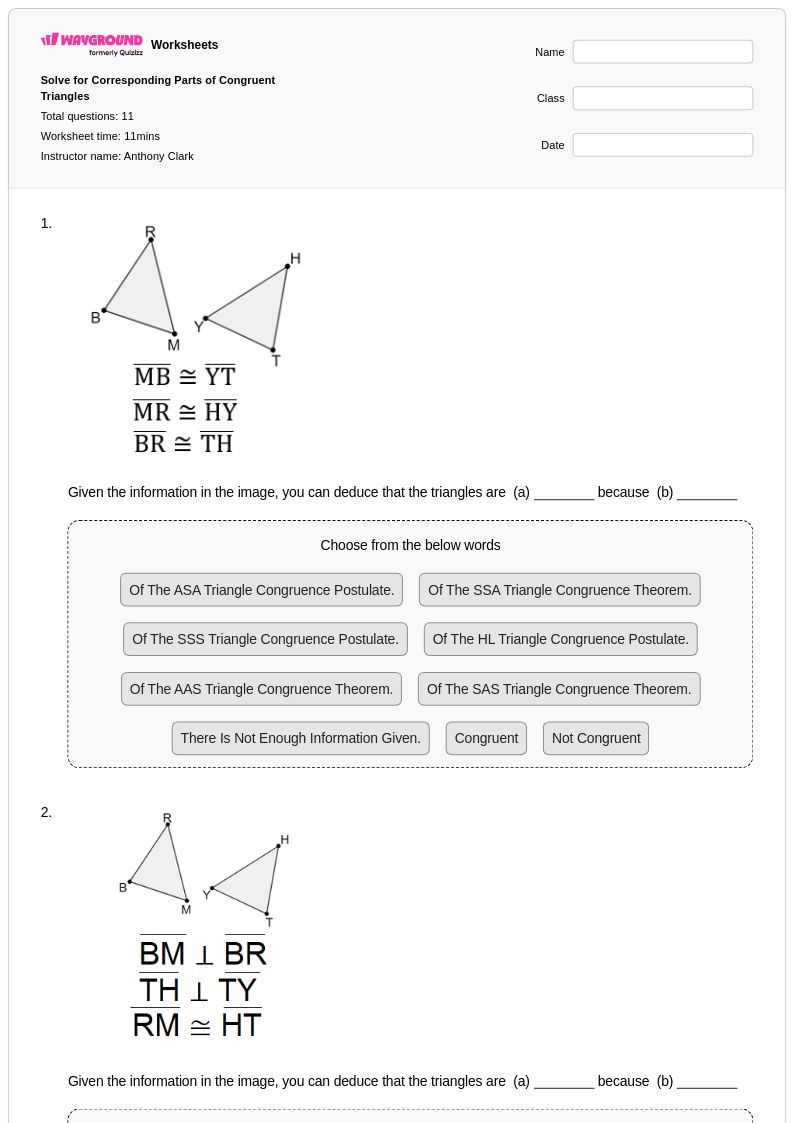
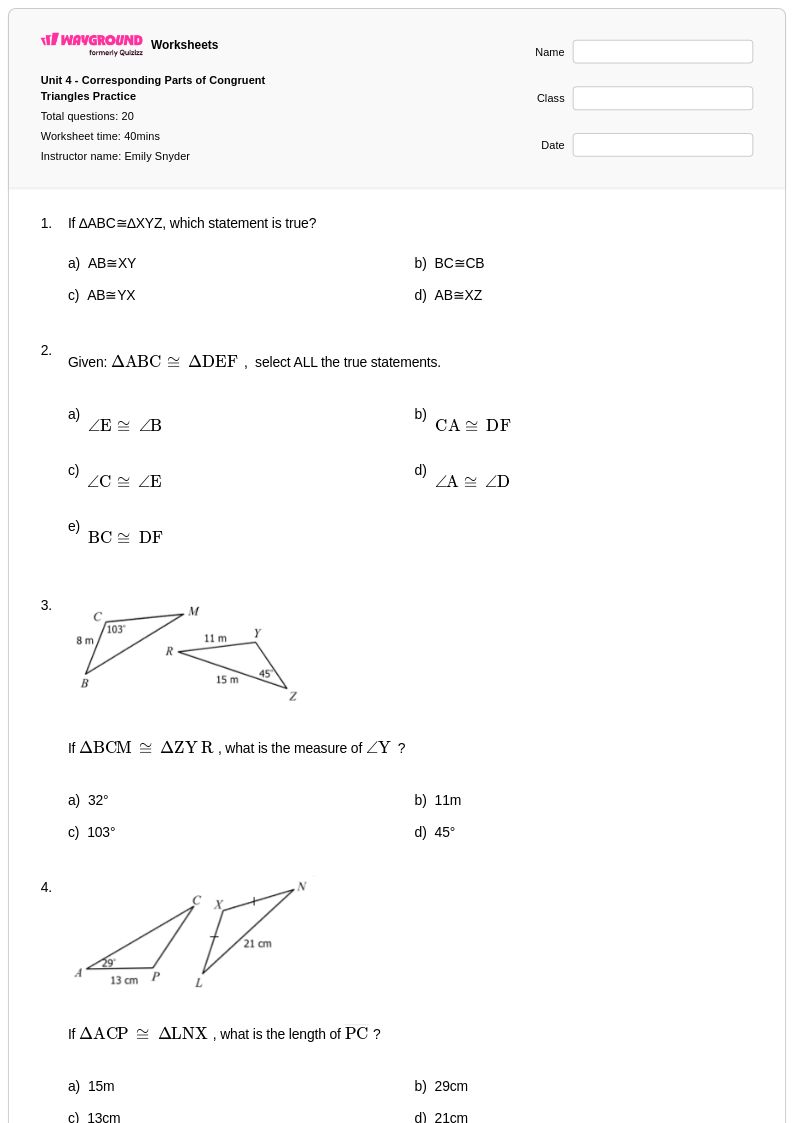
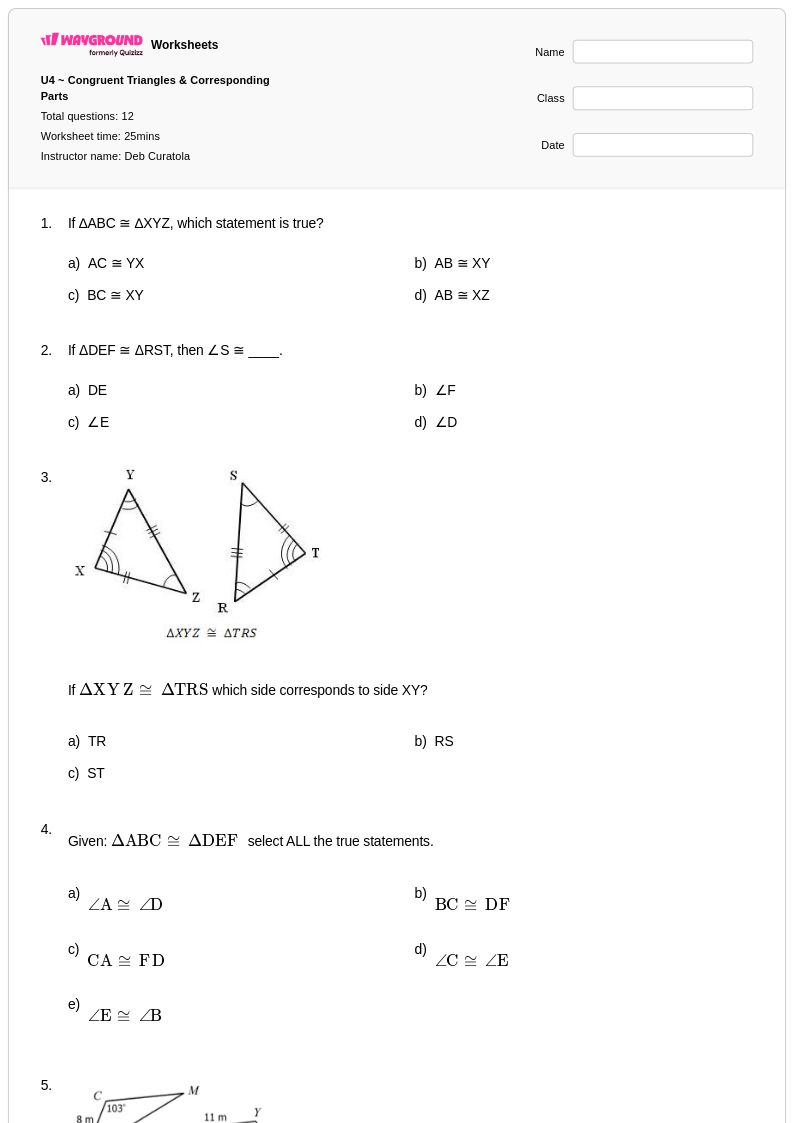
Corresponding parts worksheets for Year 11 geometry provide students with essential practice in identifying and working with congruent segments, angles, and vertices in geometric figures. These comprehensive worksheets available through Wayground (formerly Quizizz) strengthen students' ability to recognize corresponding elements in congruent triangles, polygons, and other geometric shapes, building the foundation for formal proofs and advanced geometric reasoning. Each worksheet collection includes detailed answer keys and is available as free printables in convenient pdf format, offering practice problems that range from basic identification exercises to complex applications involving multiple transformation sequences and overlapping figures.
Wayground (formerly Quizizz) empowers mathematics teachers with millions of teacher-created corresponding parts resources that can be easily searched, filtered, and customized to meet diverse classroom needs. The platform's robust differentiation tools allow educators to modify worksheets for various skill levels, while standards alignment features ensure content matches curriculum requirements for Year 11 geometry instruction. Teachers can seamlessly integrate these materials into lesson planning for initial concept introduction, targeted remediation for struggling students, or enrichment activities for advanced learners, with flexible access to both printable pdf versions for traditional classroom use and digital formats for interactive learning environments.
FAQs
How do I teach corresponding parts in Grade 11 geometry?
What exercises are useful for practicing corresponding parts in Grade 11?
What errors should I watch for when students match corresponding parts?
How should I assign these corresponding parts worksheets?
How does this topic connect to the Common Core geometry curriculum?
Can I differentiate corresponding-parts problems for a mixed-ability class?
Why study corresponding parts in Grade 11?