Explore Wayground's free Year 8 eclipses worksheets and printables that help students master solar and lunar eclipse concepts through engaging practice problems and comprehensive answer keys.
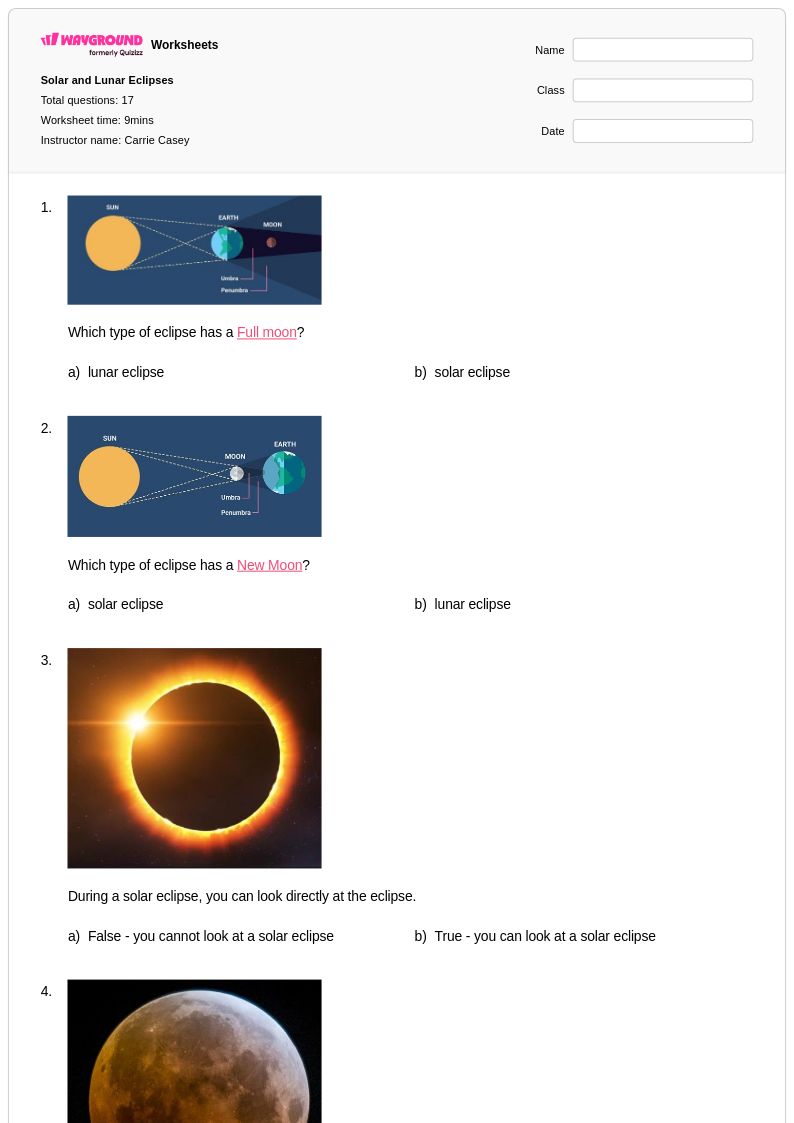
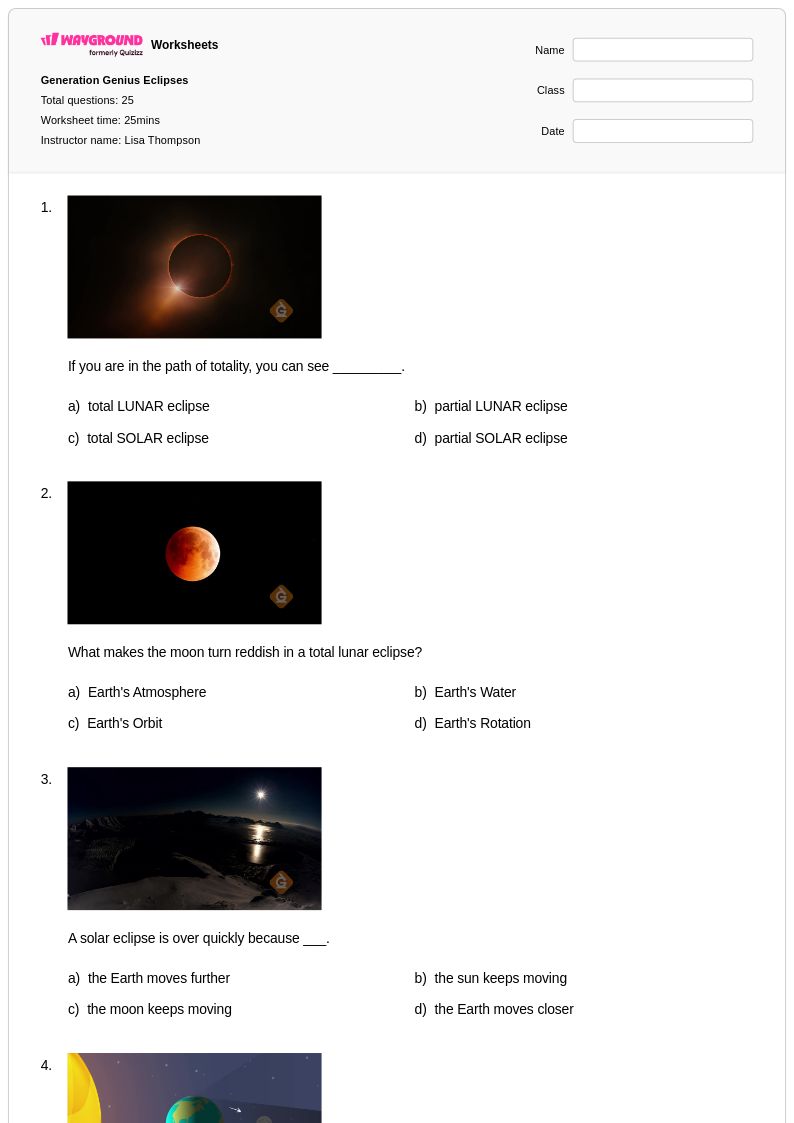
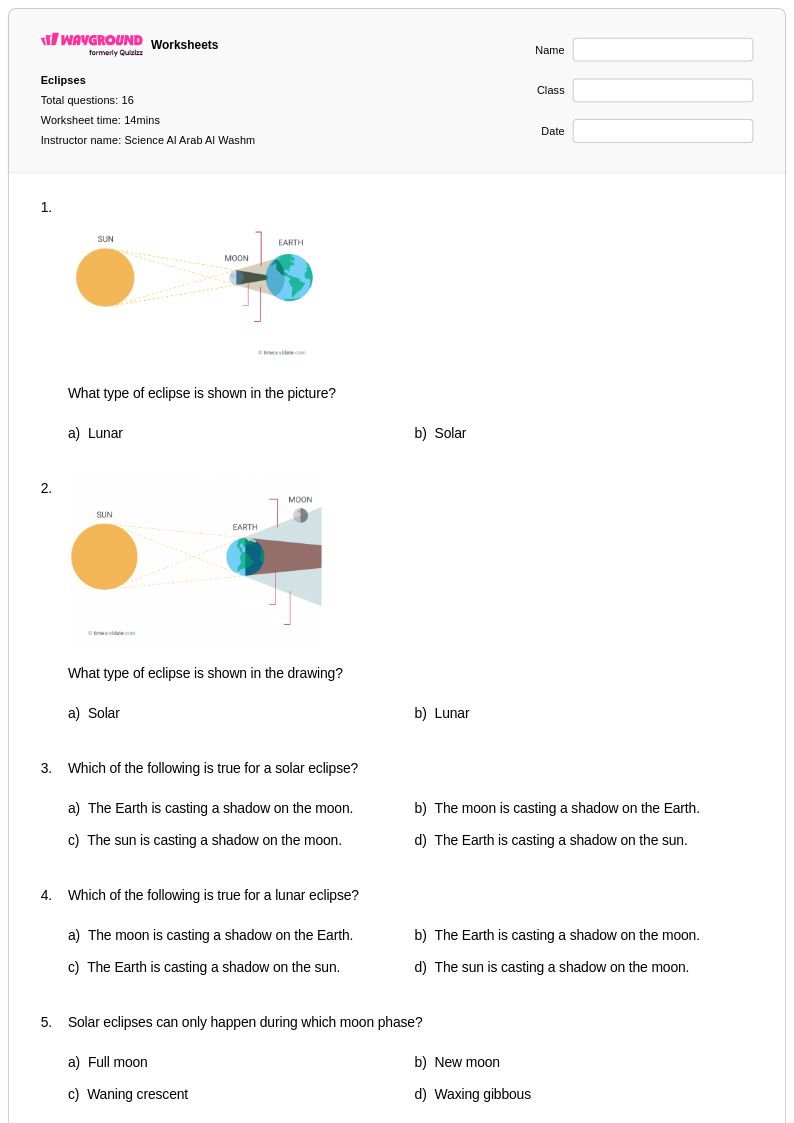
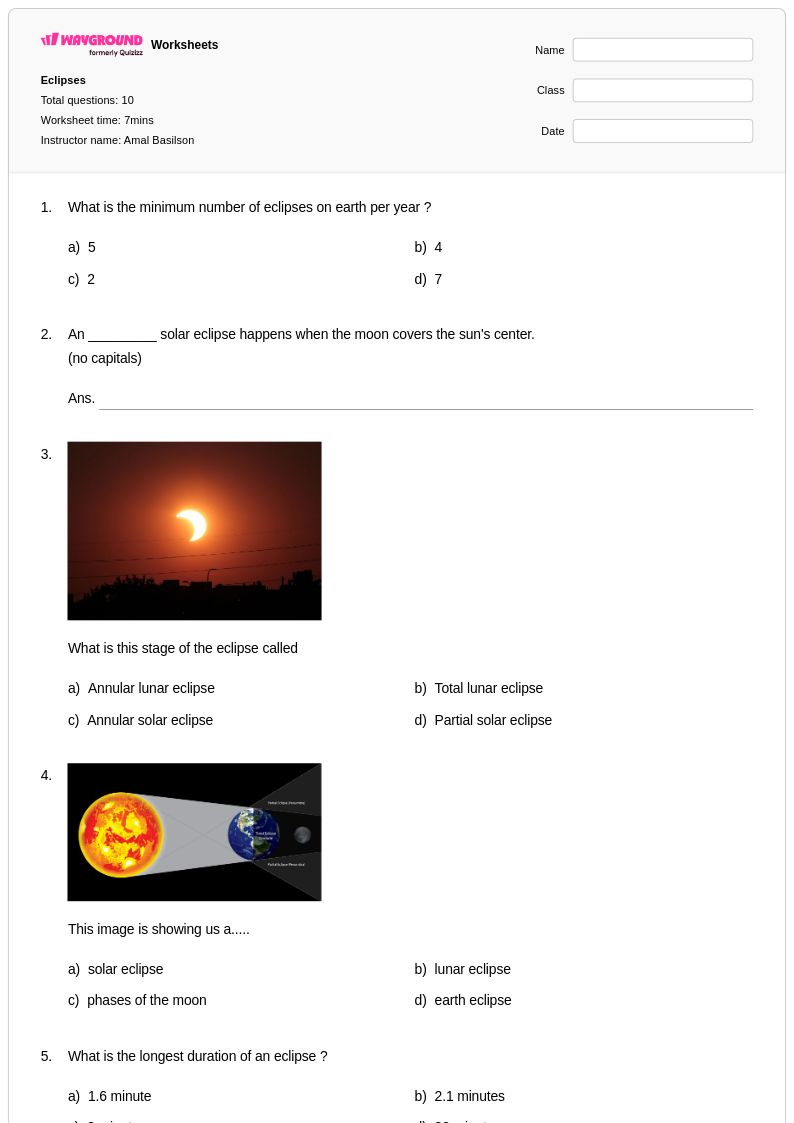
Eclipse worksheets for Year 8 students available through Wayground (formerly Quizizz) provide comprehensive practice materials that help students master the complex astronomical phenomena of solar and lunar eclipses. These carefully designed worksheets strengthen critical thinking skills as students analyze the geometric relationships between the Sun, Moon, and Earth during different types of eclipses, calculate eclipse frequencies and durations, and interpret shadow patterns including umbra and penumbra regions. The collection includes diverse practice problems that challenge students to predict eclipse visibility from various Earth locations, explain why eclipses don't occur monthly, and compare the mechanics behind solar versus lunar eclipses. Each worksheet comes with detailed answer keys that support both independent study and classroom instruction, while printable pdf formats ensure easy distribution and completion whether students are learning remotely or in traditional classroom settings.
Wayground (formerly Quizizz) empowers educators with an extensive library of millions of teacher-created eclipse resources that streamline lesson planning and enhance student engagement with this fascinating Year 8 Earth and Space Science topic. The platform's robust search and filtering capabilities allow teachers to quickly locate worksheets aligned with specific learning standards and differentiate instruction based on individual student needs and abilities. Teachers can seamlessly customize existing materials or create new eclipse-focused assessments, taking advantage of both printable and digital formats including downloadable pdfs that work across various learning environments. These versatile tools support targeted remediation for students struggling with spatial reasoning concepts, provide enrichment opportunities for advanced learners ready to explore eclipse prediction calculations, and offer systematic skill practice that builds conceptual understanding of celestial mechanics and Earth's place in the solar system.
FAQs
How do I teach solar and lunar eclipses to students?
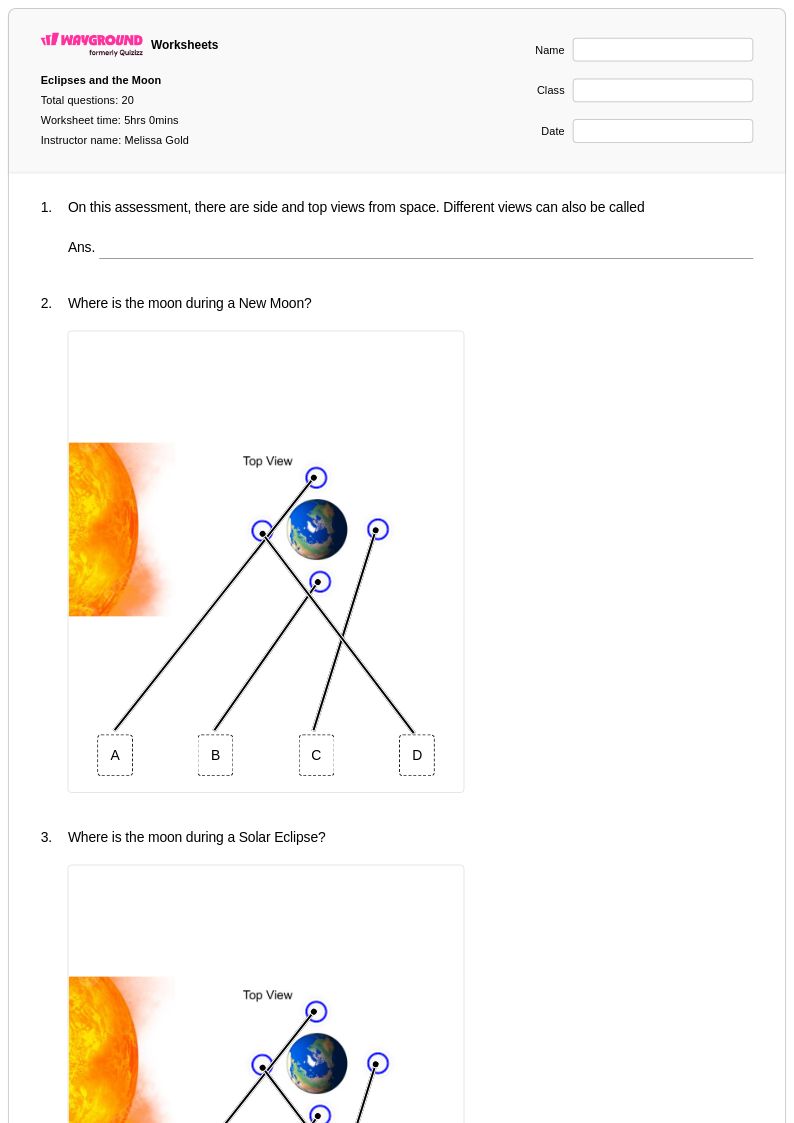
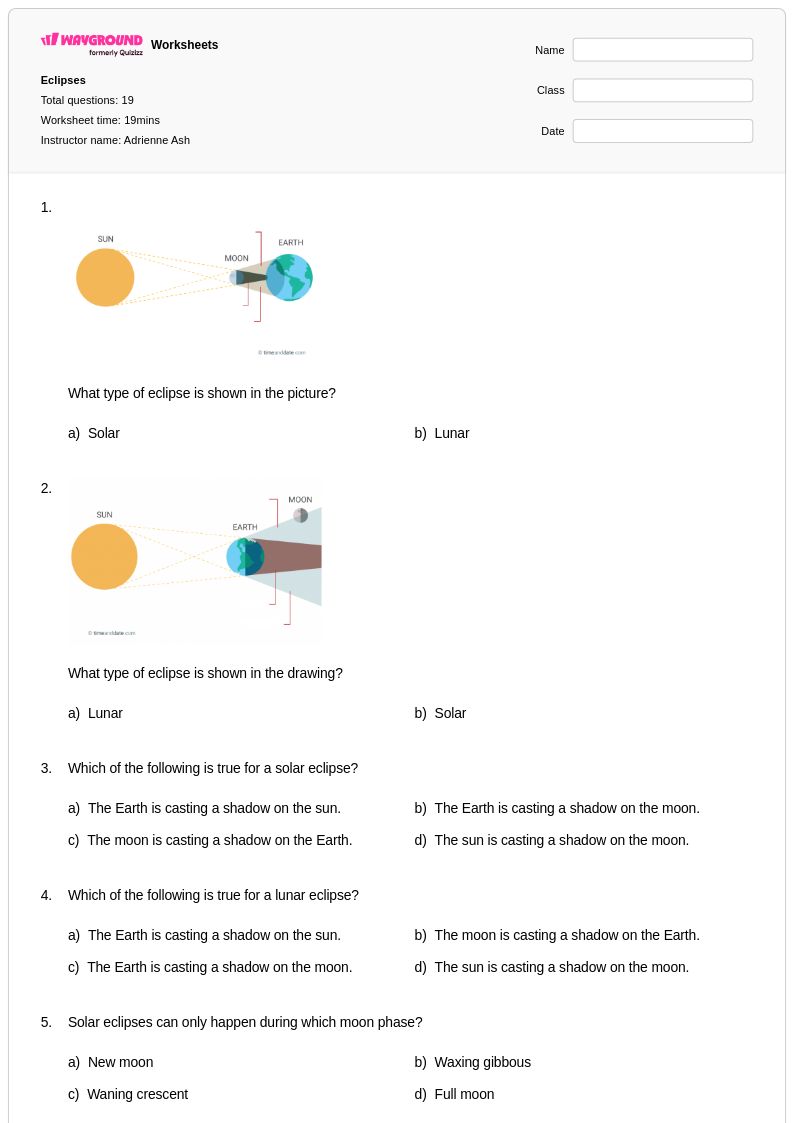
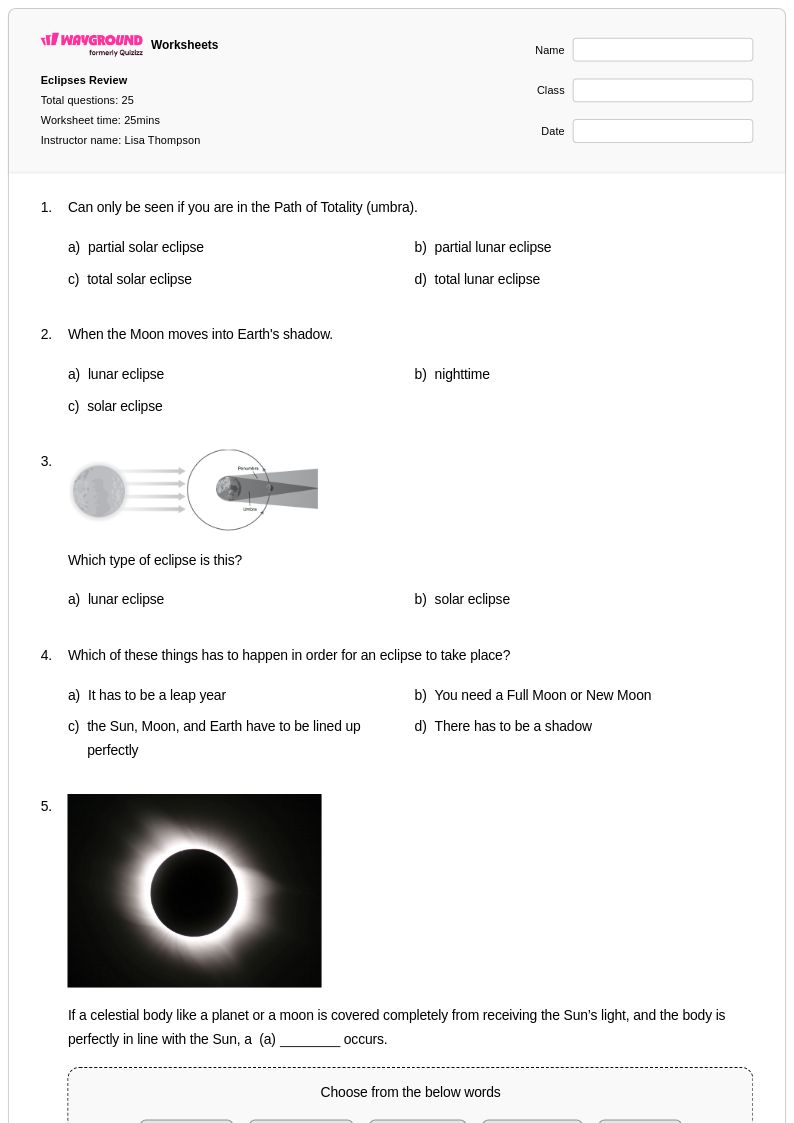
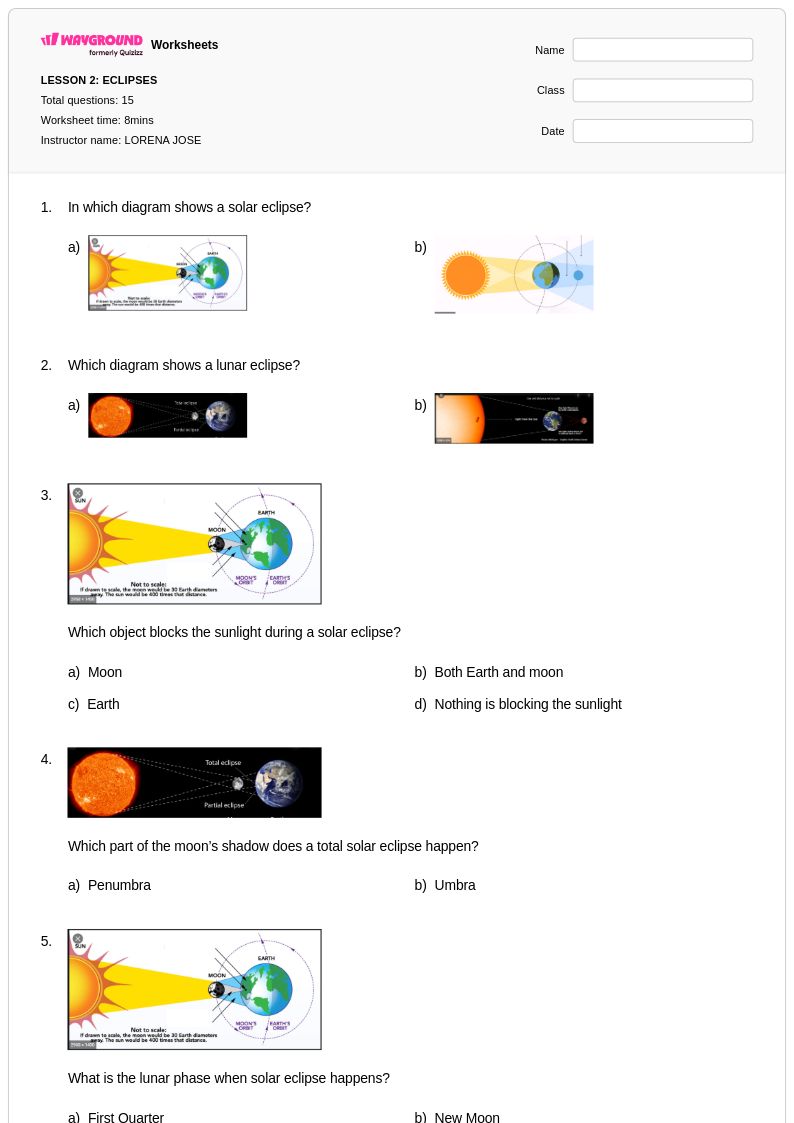
Start by establishing the Earth-Sun-Moon orbital relationship before introducing eclipse mechanics. Use diagrams to show how the Moon's shadow creates umbra and penumbra zones during a solar eclipse, and how Earth's shadow falls across the Moon during a lunar eclipse. Connecting eclipse geometry to students' prior knowledge of moon phases helps them understand why eclipses don't occur every month — the Moon's tilted orbit means alignment is rare. Hands-on modeling with light sources and spheres is especially effective for visualizing shadow formation.
What practice exercises help students understand eclipse concepts?
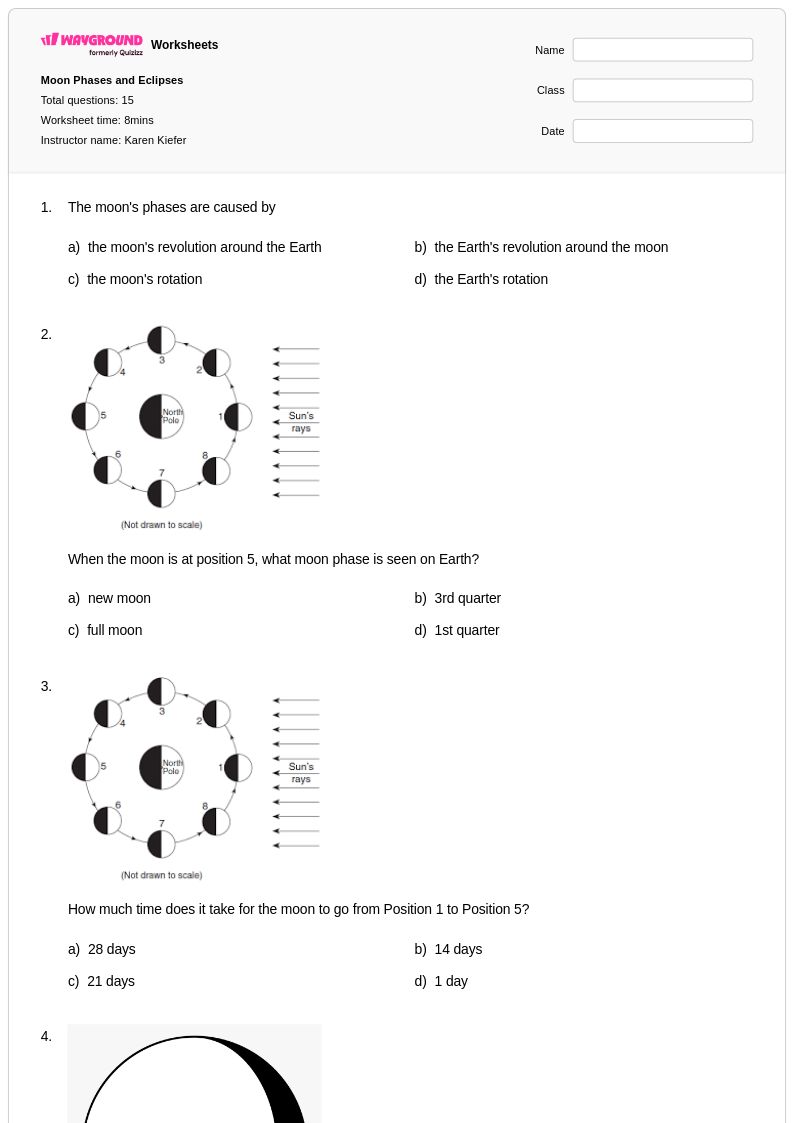
Effective practice for eclipse topics includes labeling diagrams of umbra and penumbra zones, predicting eclipse visibility based on geographic location, and working through duration calculations using orbital data. Students also benefit from comparing solar and lunar eclipse conditions side by side, which reinforces the differences in alignment, frequency, and observability. Sequencing activities — where students arrange the positions of Earth, Moon, and Sun to produce specific eclipse types — build spatial reasoning alongside content knowledge.
What are the most common misconceptions students have about eclipses?
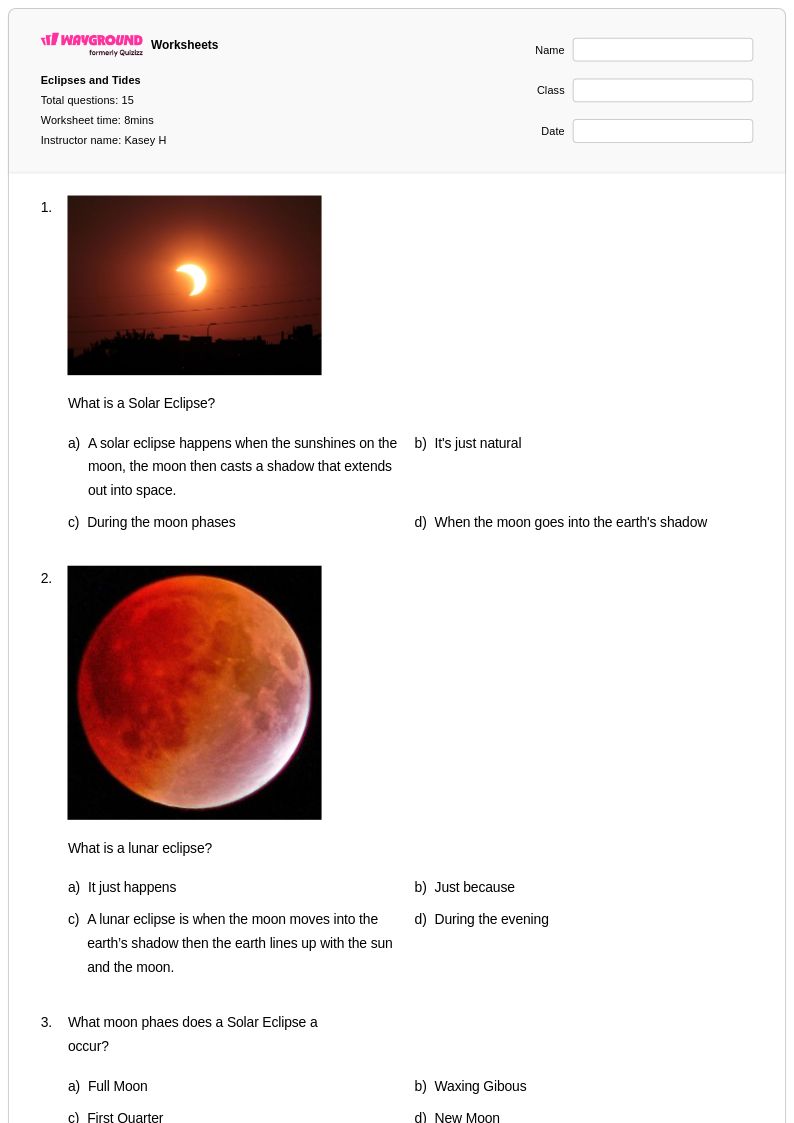
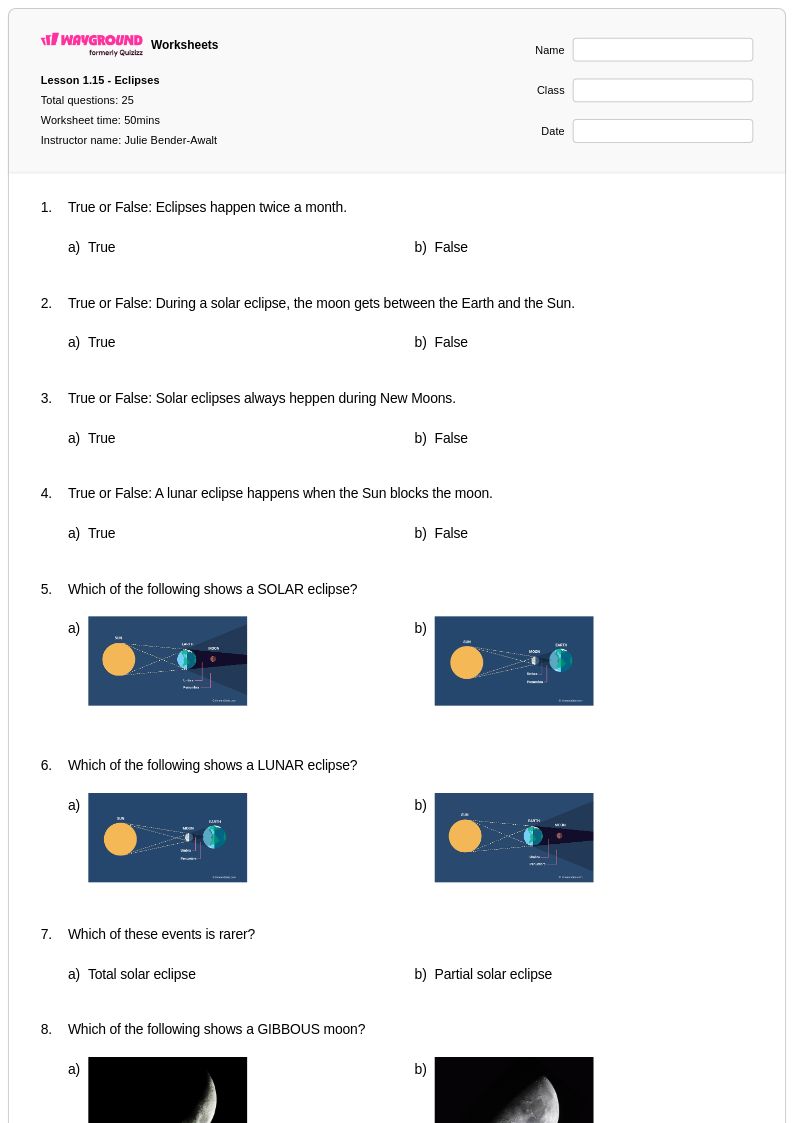
One of the most persistent misconceptions is that solar eclipses occur every new moon and lunar eclipses every full moon — students need explicit instruction on the Moon's orbital inclination to understand why eclipses are infrequent. Another common error is confusing the umbra and penumbra, leading students to misidentify total versus partial eclipses. Students also frequently conflate solar and lunar eclipses, reversing which body casts the shadow and which is in shadow. Targeted diagram labeling and error-correction tasks are effective for addressing these specific gaps.
How do I use Wayground's eclipse worksheets in my classroom?
Wayground's eclipse worksheets are available as printable PDFs for traditional classroom use and in digital formats for technology-integrated environments, making them flexible for in-person, hybrid, or remote instruction. Teachers can also host the worksheets as a live or assigned quiz directly on Wayground, allowing for real-time student response tracking. Printable versions work well for independent practice, stations, or homework, while digital versions support immediate feedback and formative assessment without additional grading burden.
How can I differentiate eclipse instruction for students at different levels?
For students who need foundational support, focus on the basic Earth-Sun-Moon alignment and use simplified diagrams before introducing shadow geometry. Advanced learners can be challenged with eclipse prediction problems, calculations involving the Moon's orbital period and inclination, and analysis of historical eclipse records. On Wayground, teachers can apply accommodations such as read aloud, reduced answer choices, and extended time to individual students, allowing the same core material to be accessed by learners with different needs without singling anyone out.
How do eclipse worksheets support Earth and space science curriculum standards?
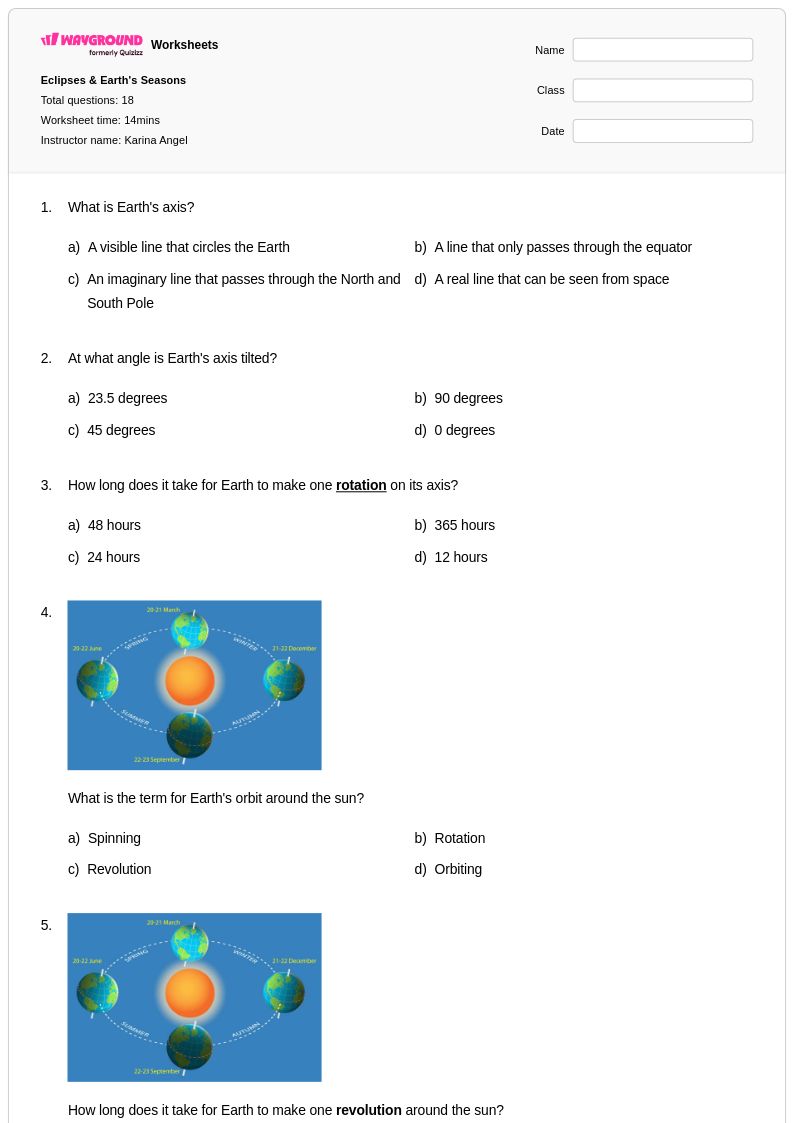
Eclipse worksheets directly support NGSS and state Earth and space science standards related to the patterns of the Earth-Sun-Moon system, gravitational interactions, and observable astronomical phenomena. They provide structured practice for concepts including orbital mechanics, shadow geometry, and the causes of day-night cycles and seasons — all of which appear in middle and high school frameworks. Because eclipse topics connect to broader astronomy units, these worksheets also serve as useful bridge materials between moon phase instruction and deeper content on celestial motion.