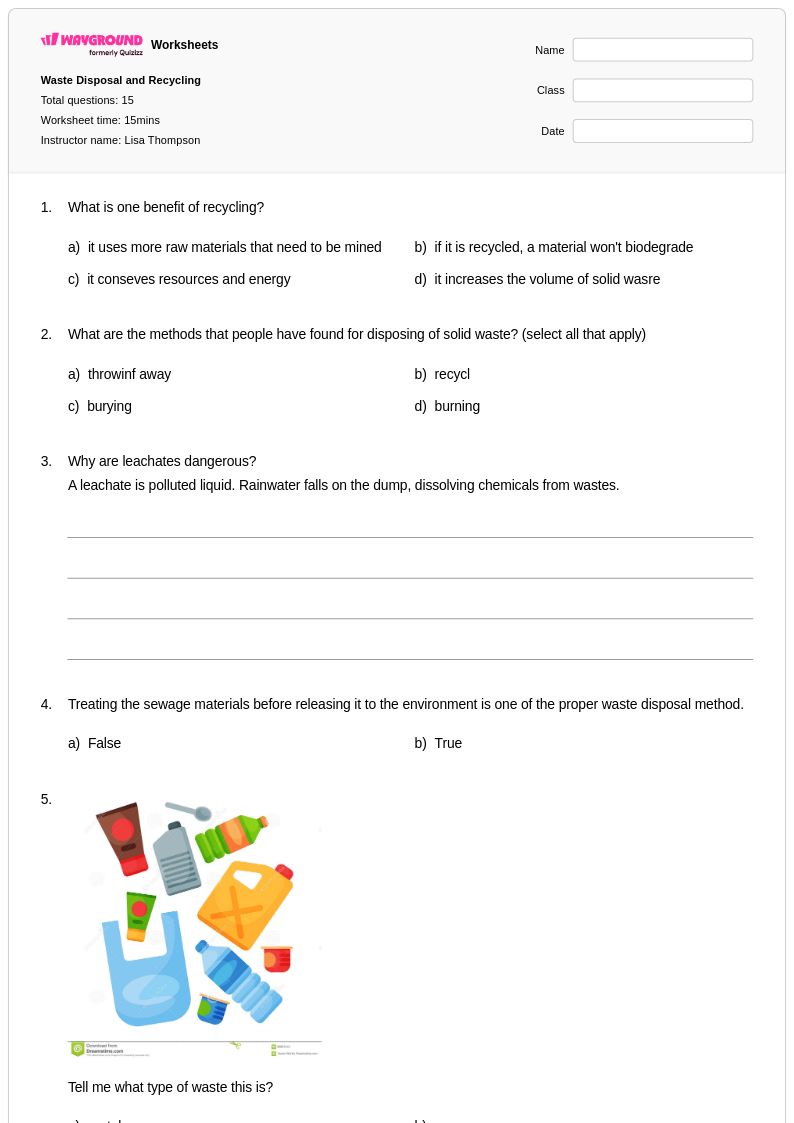
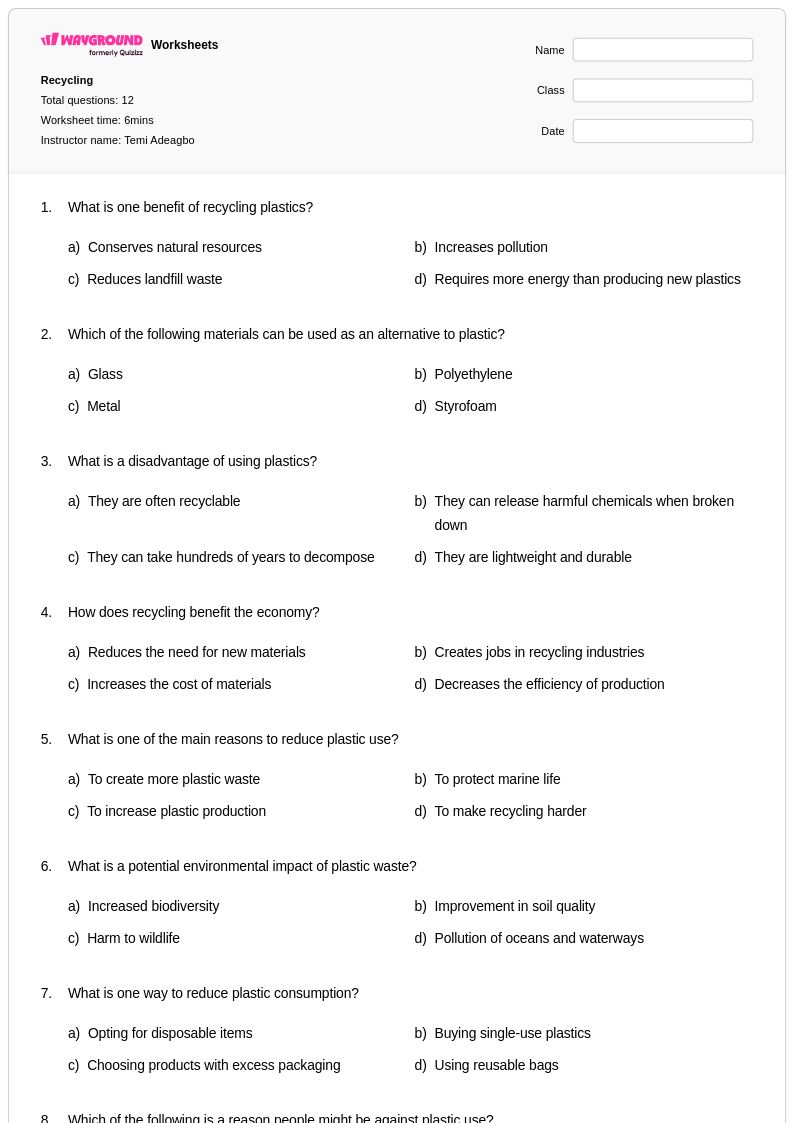
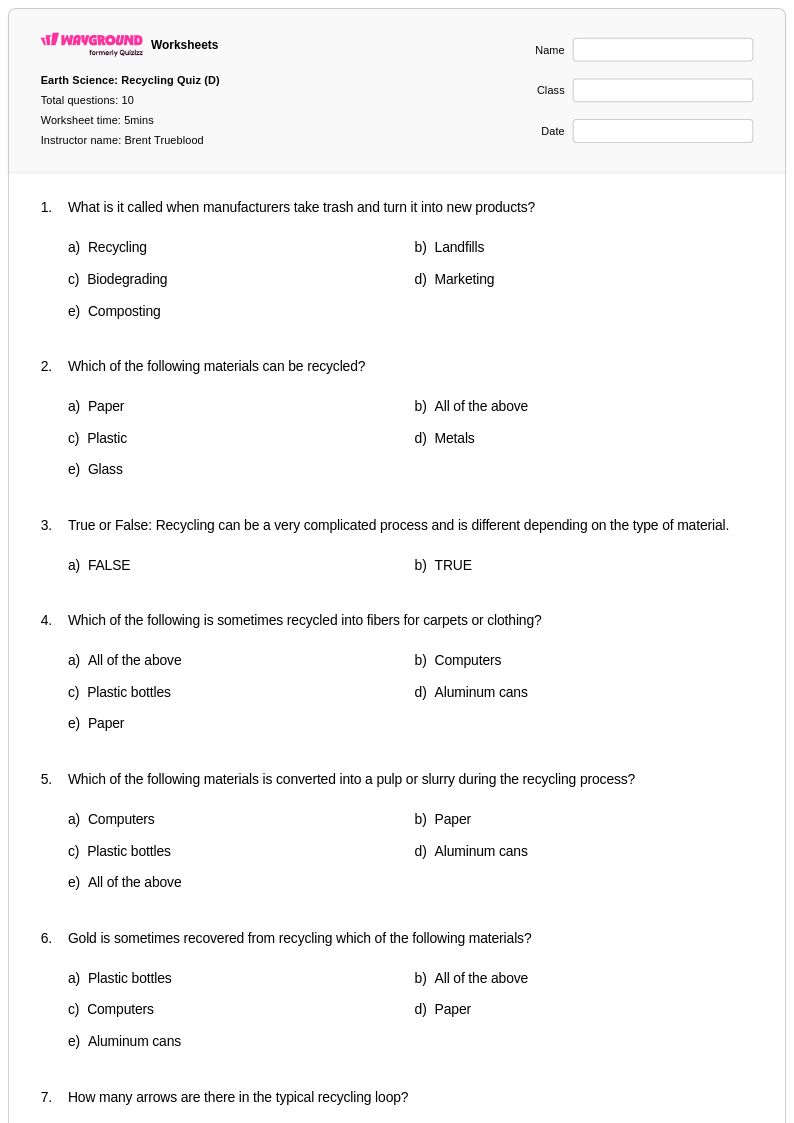
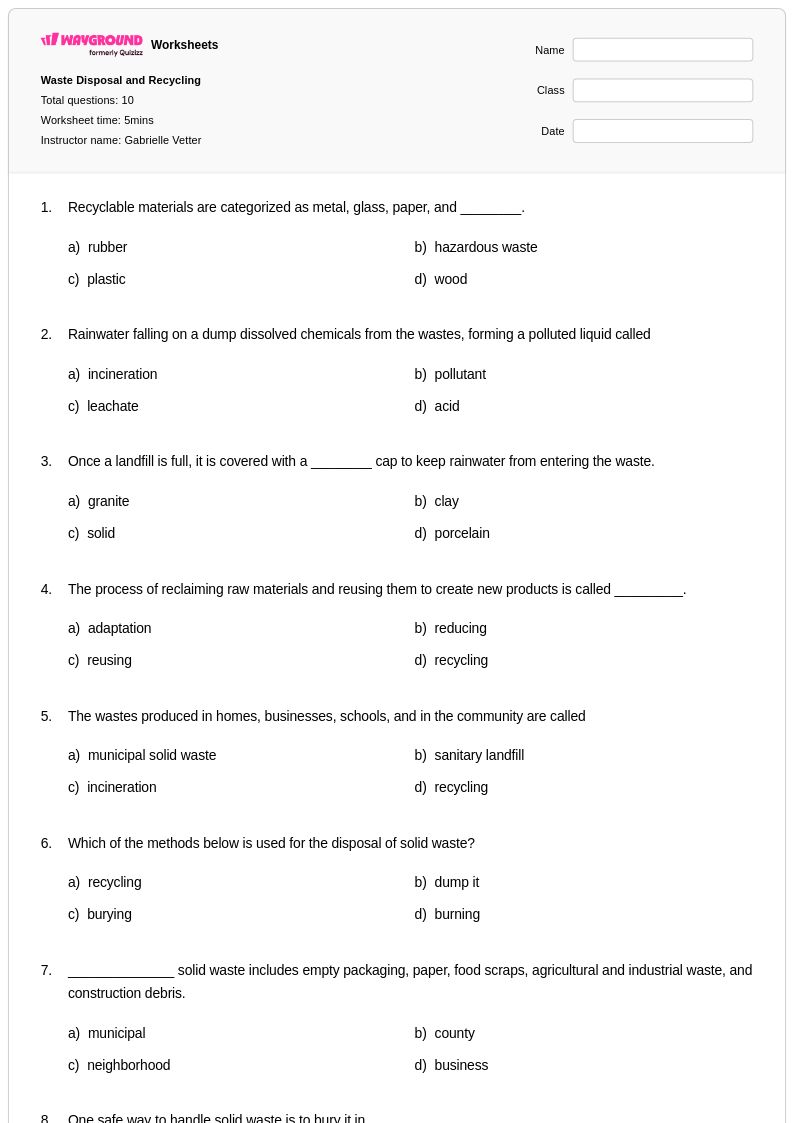
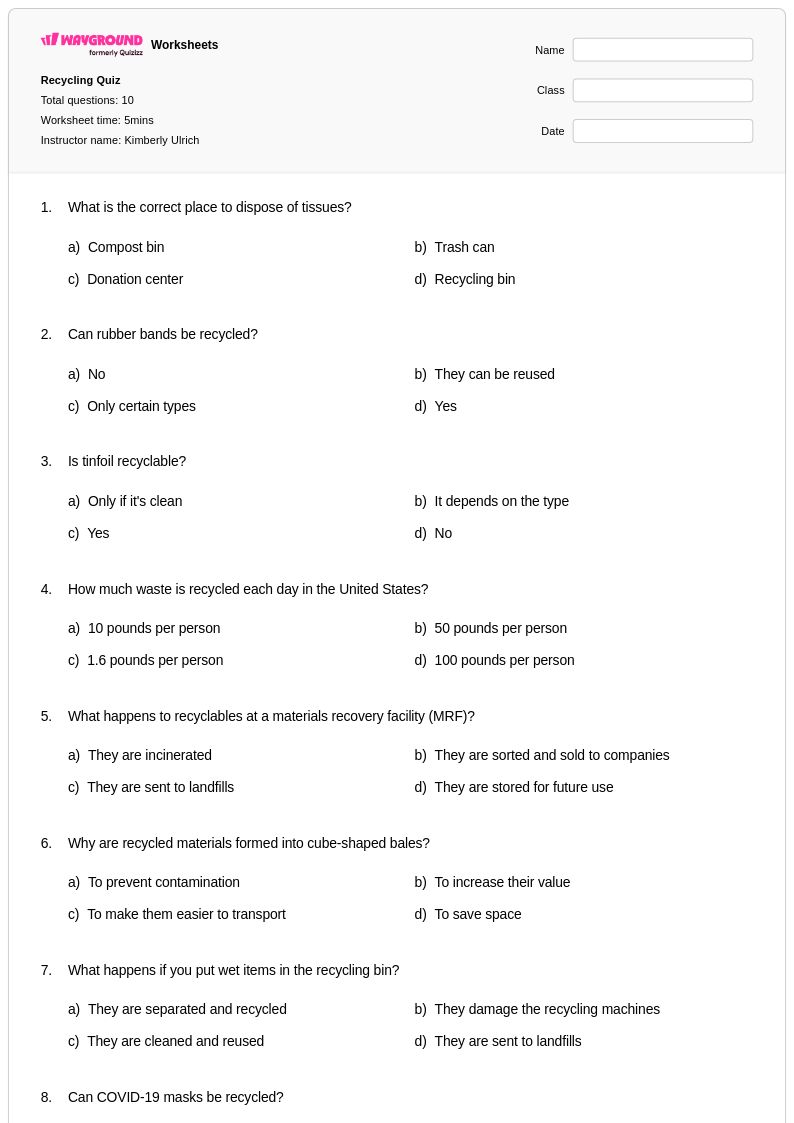
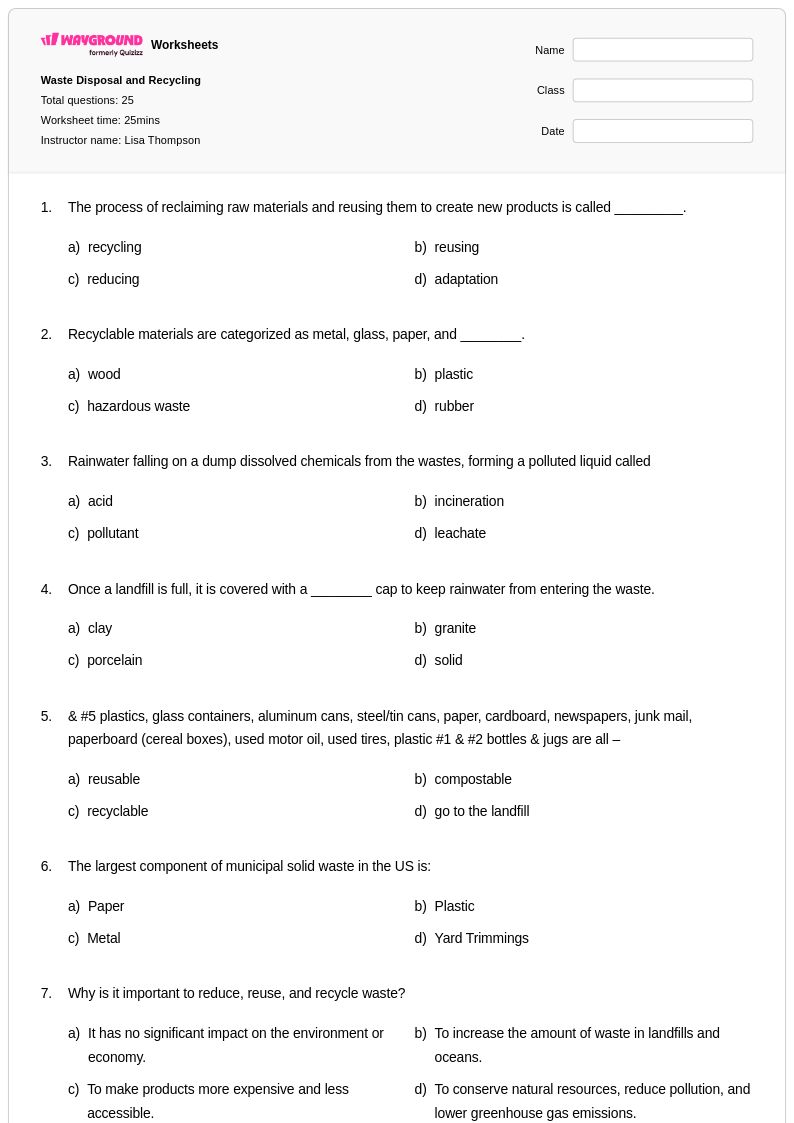
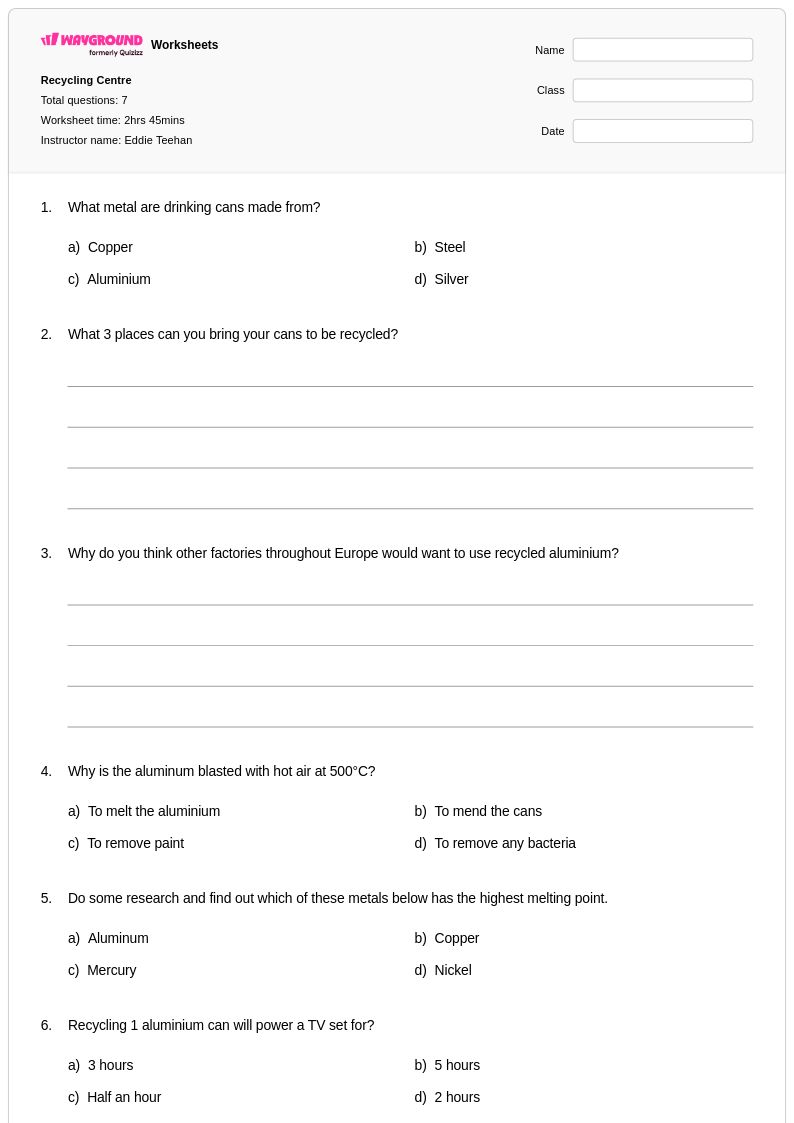
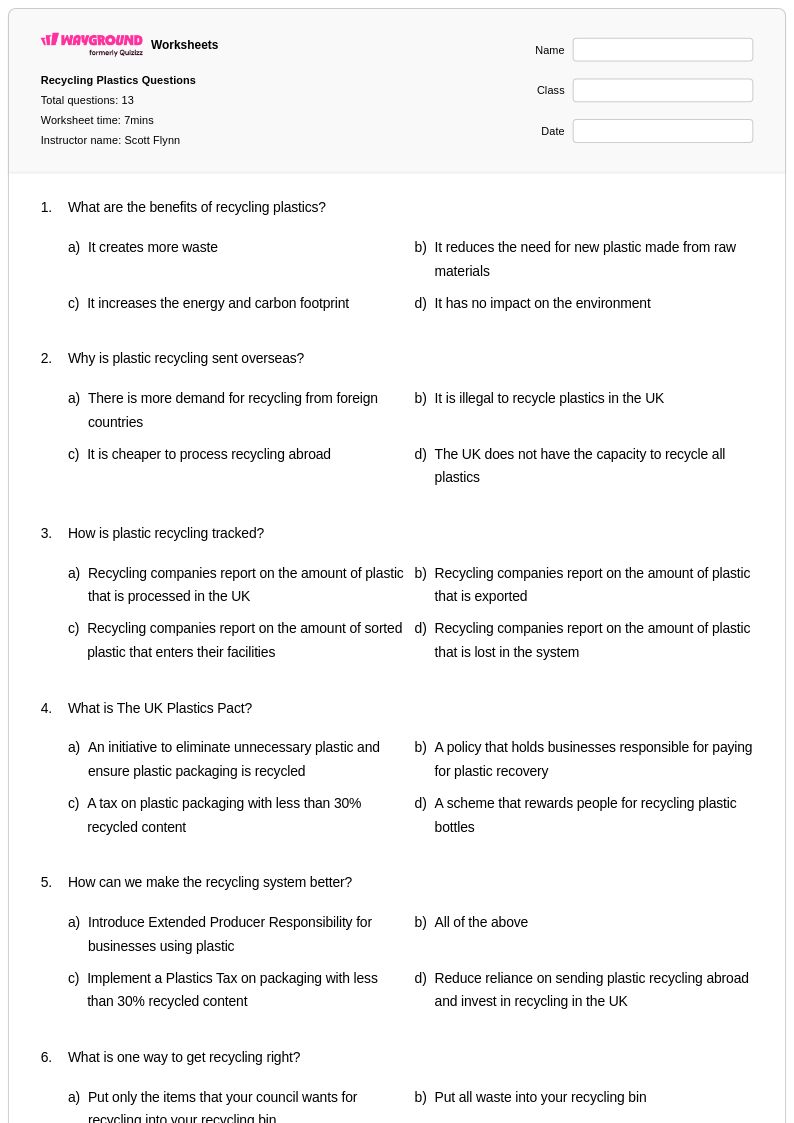
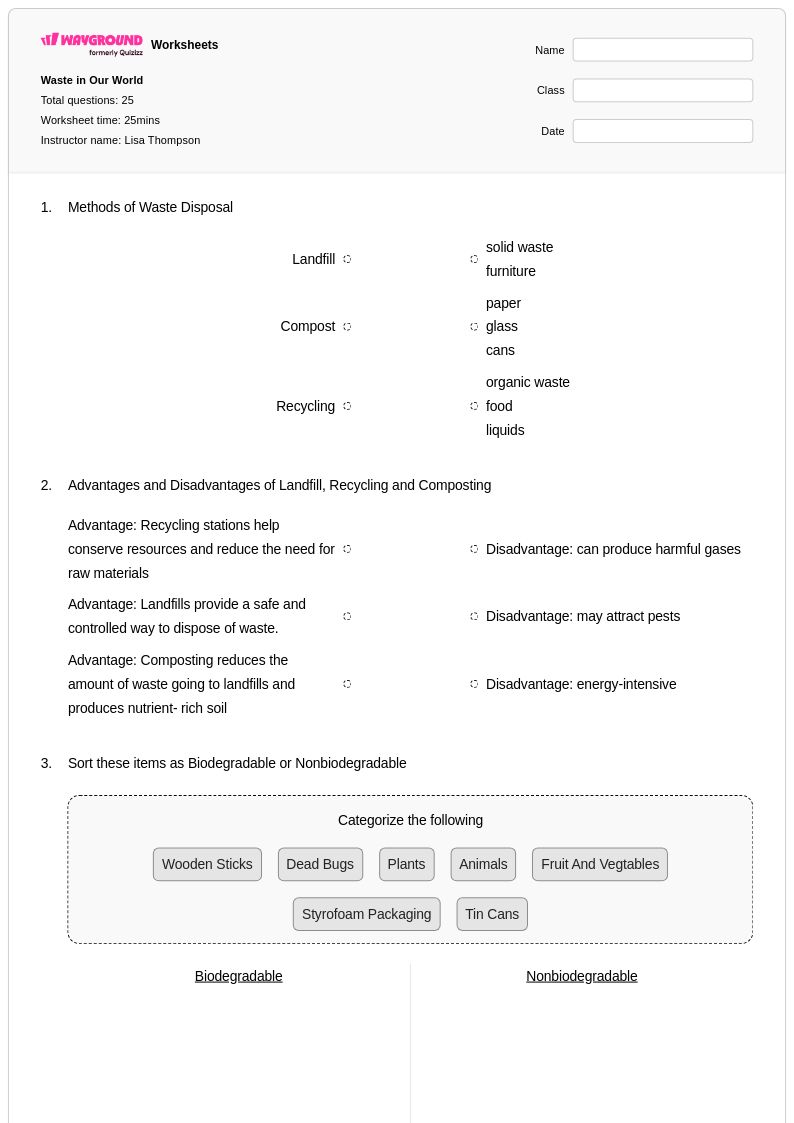
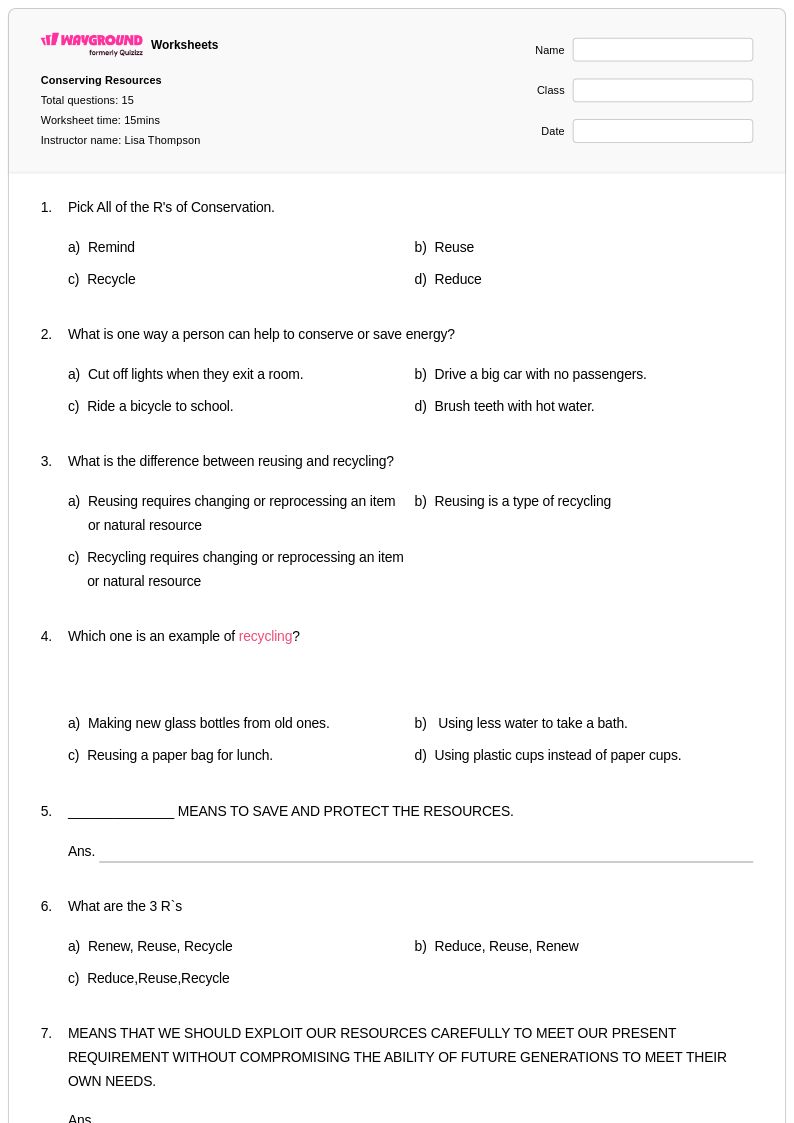
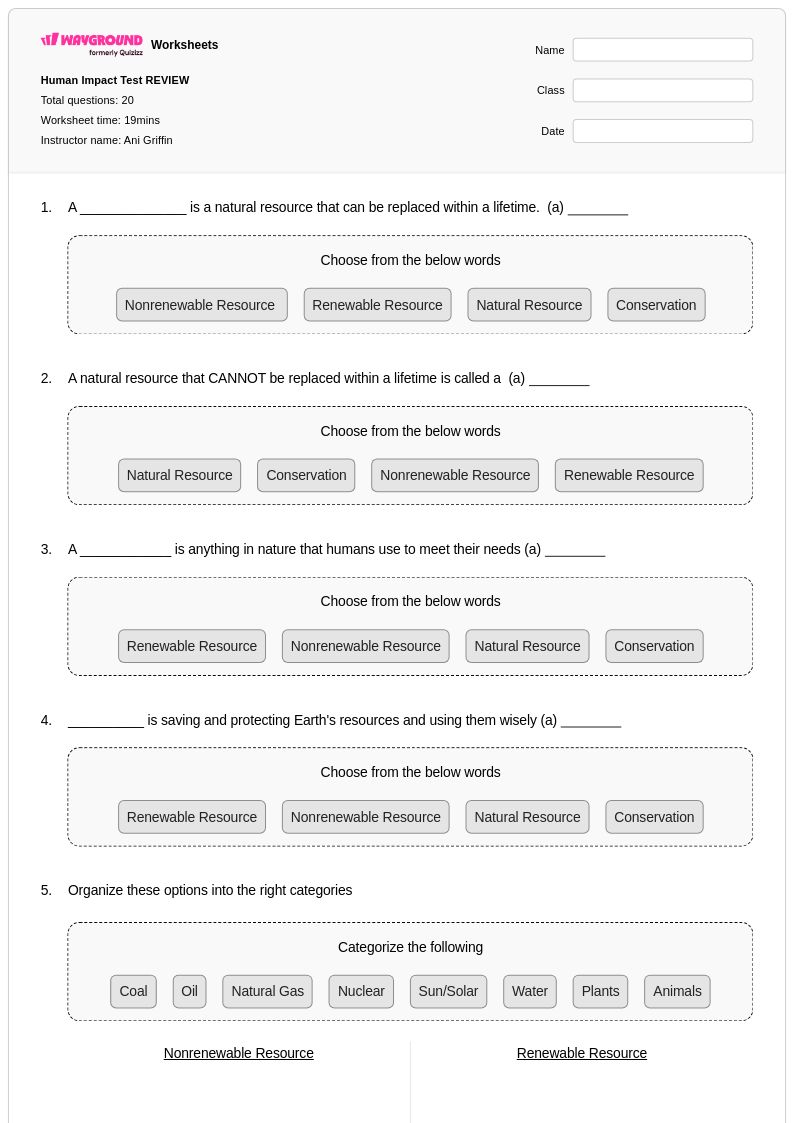
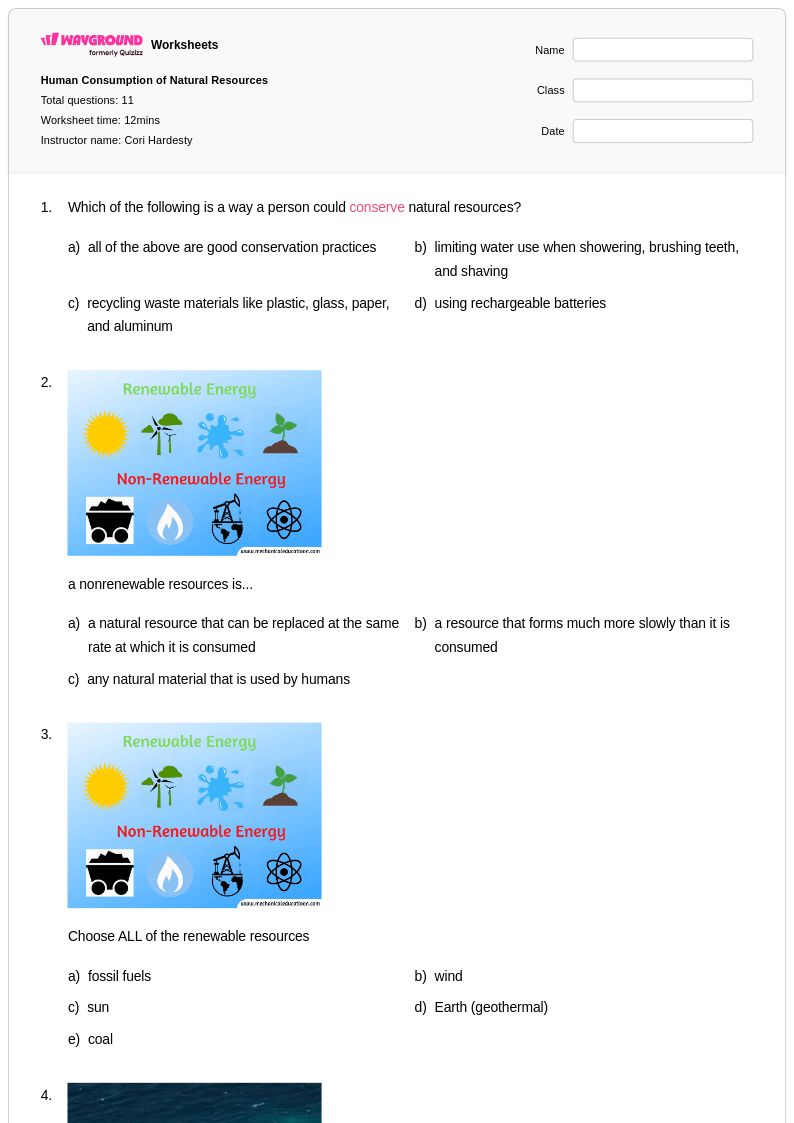
Explore Year 8 recycling worksheets and printables from Wayground that help students understand waste management, environmental conservation, and sustainable practices through engaging practice problems and comprehensive answer keys.
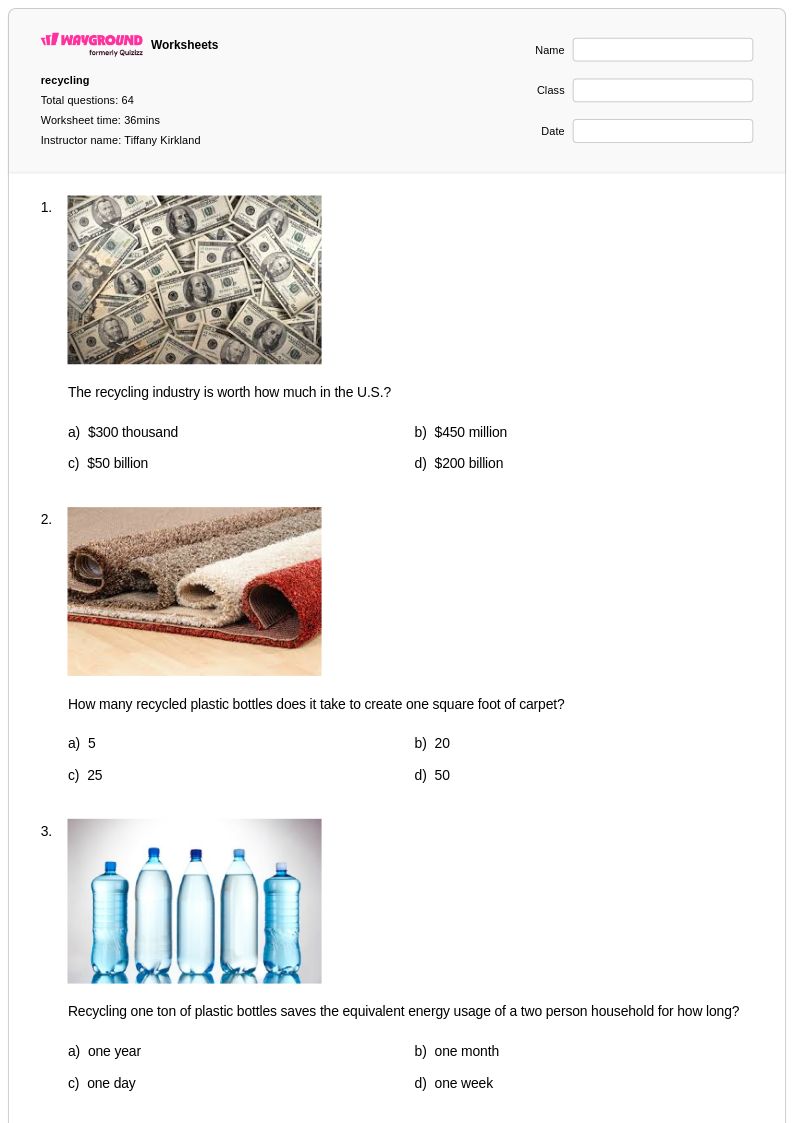
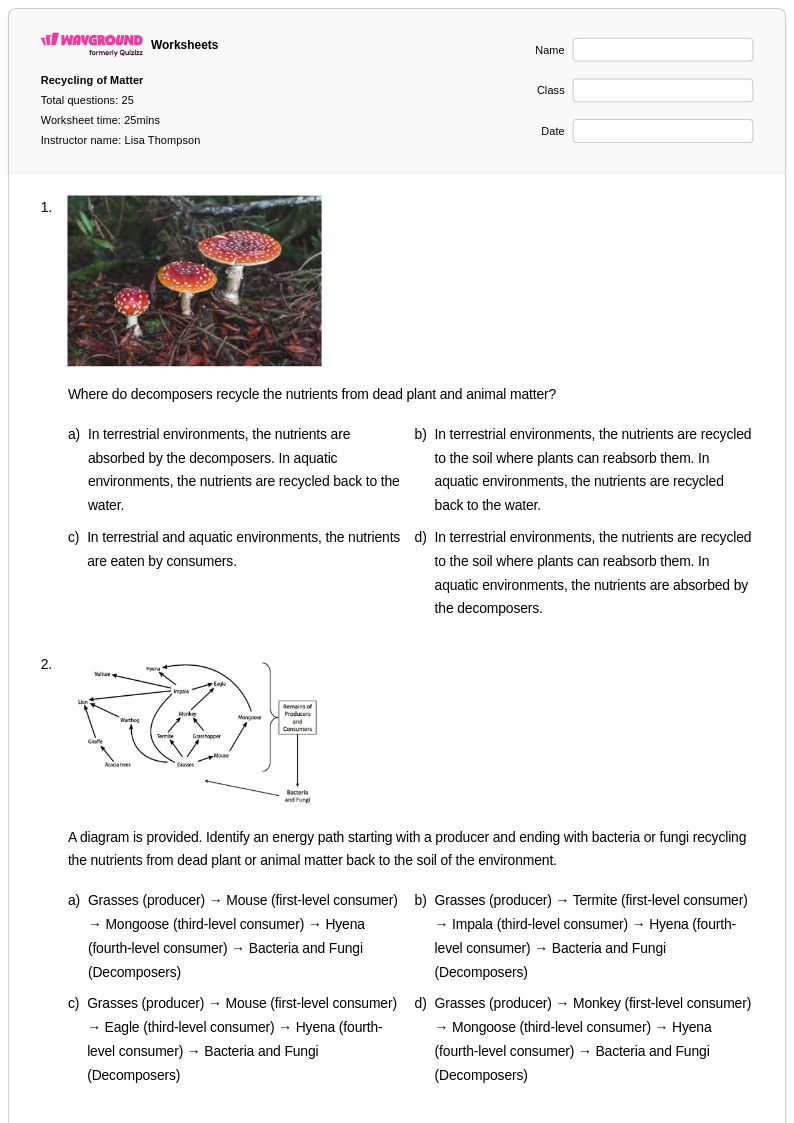
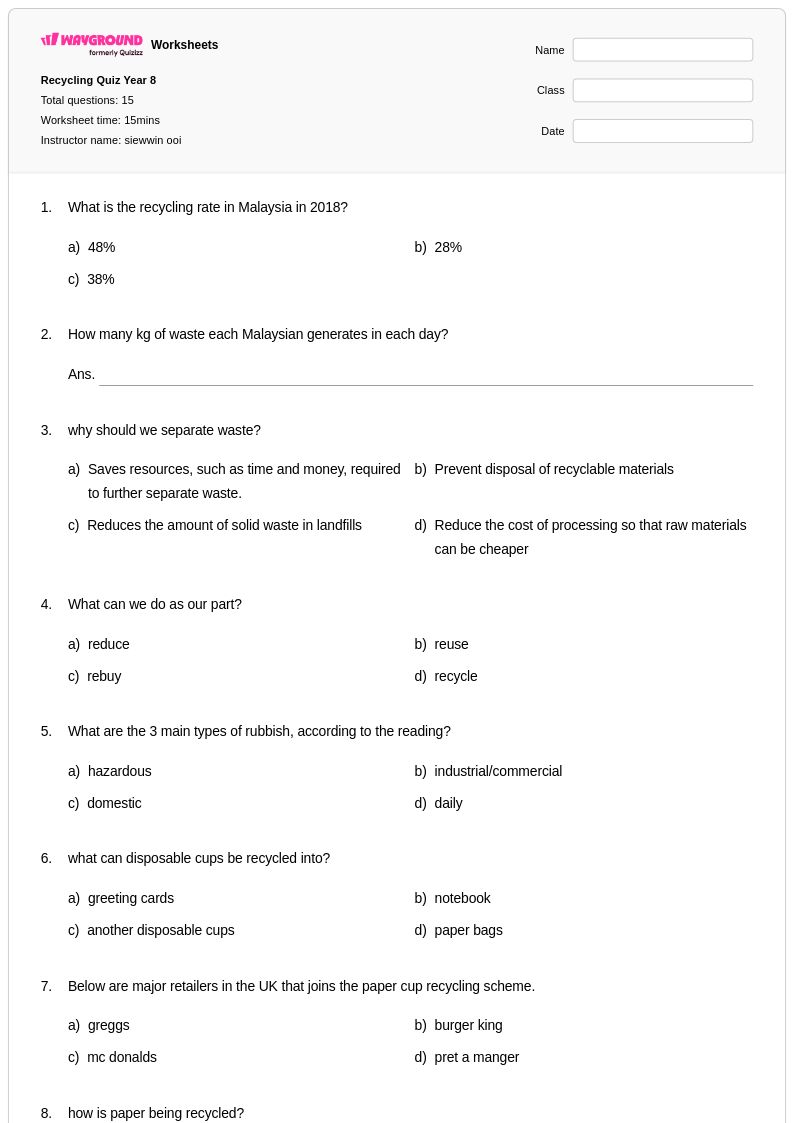
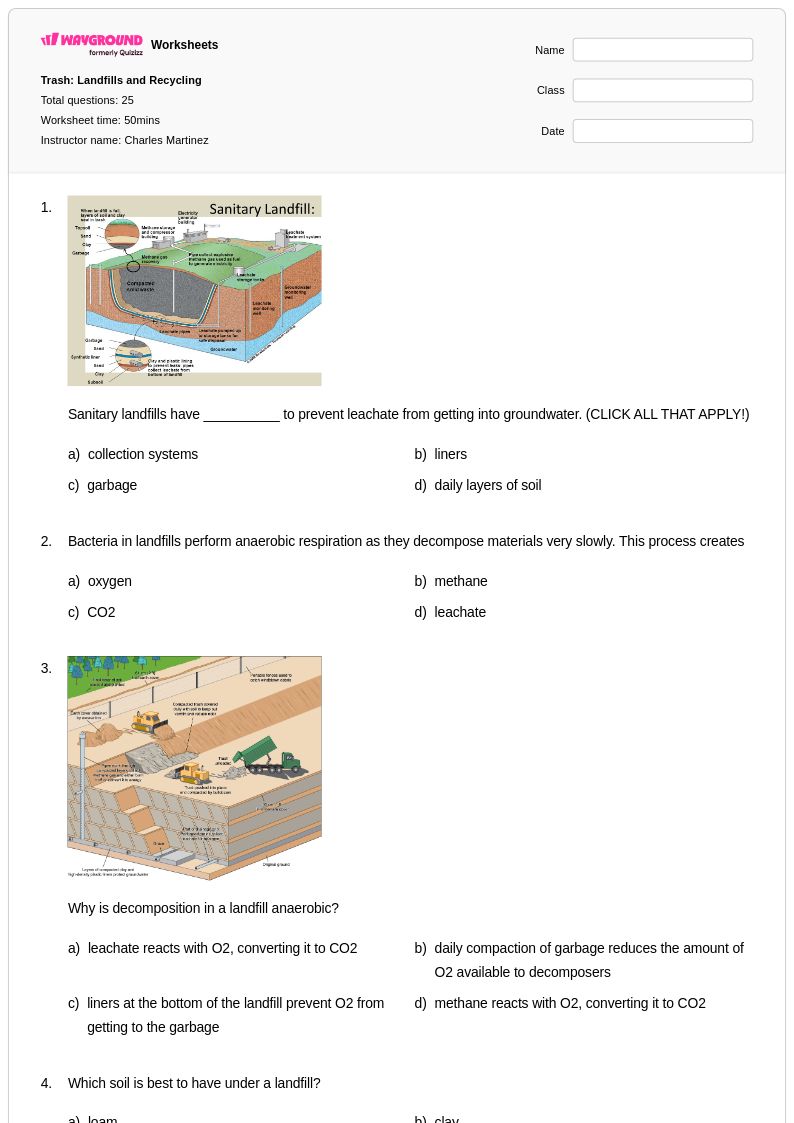
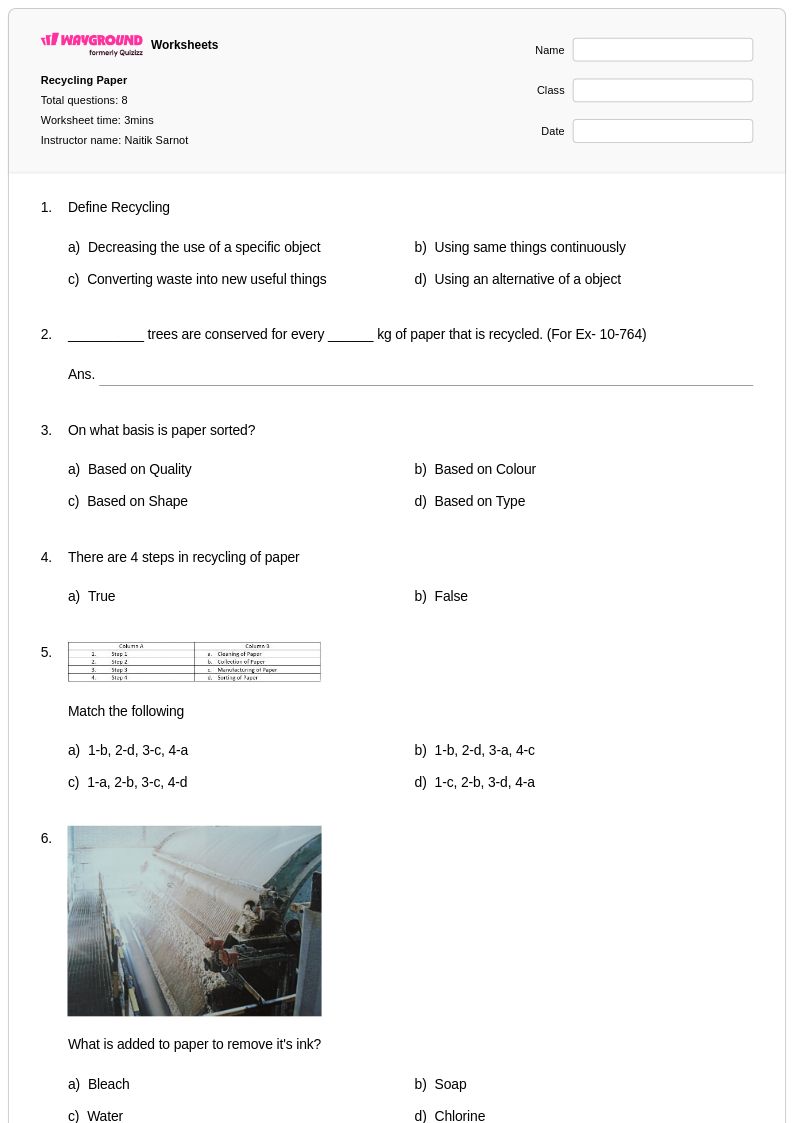
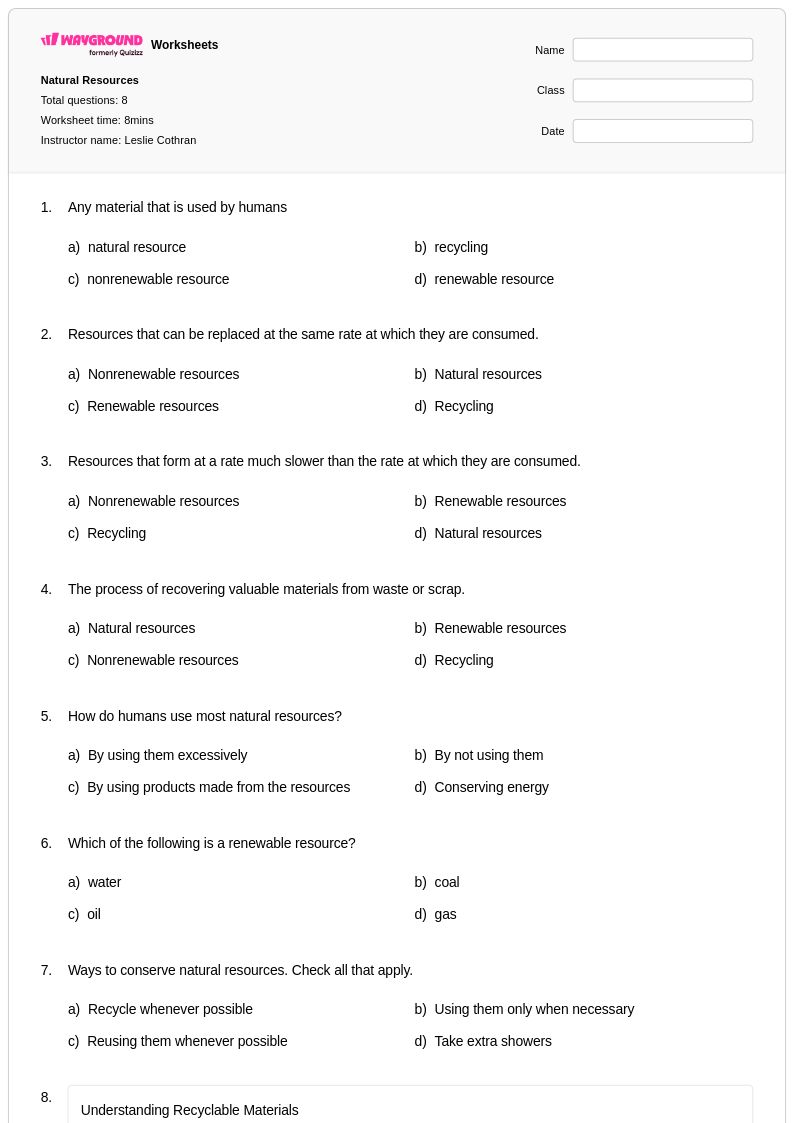
Year 8 recycling worksheets available through Wayground (formerly Quizizz) provide comprehensive educational resources that help students understand the critical role of recycling in Earth and space science. These worksheets strengthen essential skills including analyzing the environmental impact of waste management, understanding material composition and decomposition processes, and evaluating how recycling practices affect Earth's systems and resources. Students engage with practice problems that explore topics such as the carbon cycle, resource conservation, and the relationship between human activities and planetary health. Each worksheet comes with a detailed answer key to support independent learning and self-assessment, while the free printables are available in convenient pdf format for easy classroom distribution and homework assignments.
Wayground (formerly Quizizz) supports educators with millions of teacher-created resources specifically designed for Year 8 Earth and space science recycling instruction. The platform's robust search and filtering capabilities allow teachers to quickly locate worksheets aligned with curriculum standards, while differentiation tools enable customization for diverse learning needs and skill levels. These flexible resources are available in both printable and digital formats, including downloadable pdf versions, making them ideal for various teaching environments and learning preferences. Teachers can seamlessly integrate these worksheets into lesson planning for skill practice, use them for targeted remediation with struggling students, or deploy them as enrichment activities for advanced learners, ensuring comprehensive coverage of recycling concepts within the broader Earth and space science curriculum.
FAQs
How do I teach recycling concepts to students in a science class?
Effective recycling instruction connects classroom content to real-world environmental systems. Start by introducing the three Rs (reduce, reuse, recycle) as a framework, then build toward more complex topics like material lifecycles, waste management infrastructure, and the chemical and physical properties that determine whether a material can be recycled. Grounding lessons in local recycling programs or data about regional waste rates helps students see the relevance of what they're learning.
What kinds of practice problems help students understand recycling and waste management?
Effective practice problems for recycling engage students in identifying recyclable versus non-recyclable materials, analyzing data about recycling rates, and tracing the lifecycle of common items like aluminum cans, plastic bottles, and paper. Scenario-based problems that ask students to evaluate waste management decisions or calculate environmental impact give practice meaningful context. These activities build scientific literacy alongside environmental awareness.
What misconceptions do students commonly have about recycling?
One of the most common student misconceptions is that all materials labeled with a recycling symbol are actually recyclable in their community, when in fact local infrastructure varies significantly. Students also frequently confuse reuse with recycling, not recognizing that recycling involves reprocessing a material into a new product. Another common error is underestimating the energy savings associated with recycling compared to producing materials from raw sources.
How can I differentiate recycling worksheets for students at different skill levels?
For students who need additional support, simplify tasks by focusing on concrete sorting activities and visual identification of recyclable materials before introducing data analysis or lifecycle concepts. Advanced students can be extended through problems that require interpreting recycling rate statistics or evaluating the environmental trade-offs of different waste management approaches. On Wayground, teachers can apply individual accommodations such as read aloud support, reduced answer choices, and extended time to specific students, ensuring each learner engages with the material at an appropriate level.
How do I use Wayground's recycling worksheets in my classroom?
Wayground's recycling worksheets are available as printable PDFs for traditional classroom use and in digital formats for technology-integrated or remote learning environments. Teachers can also host worksheets as a live quiz directly on Wayground, making them suitable for whole-class instruction, independent practice, or formative assessment. Each worksheet includes a complete answer key, reducing prep time and making it easy to provide immediate feedback.