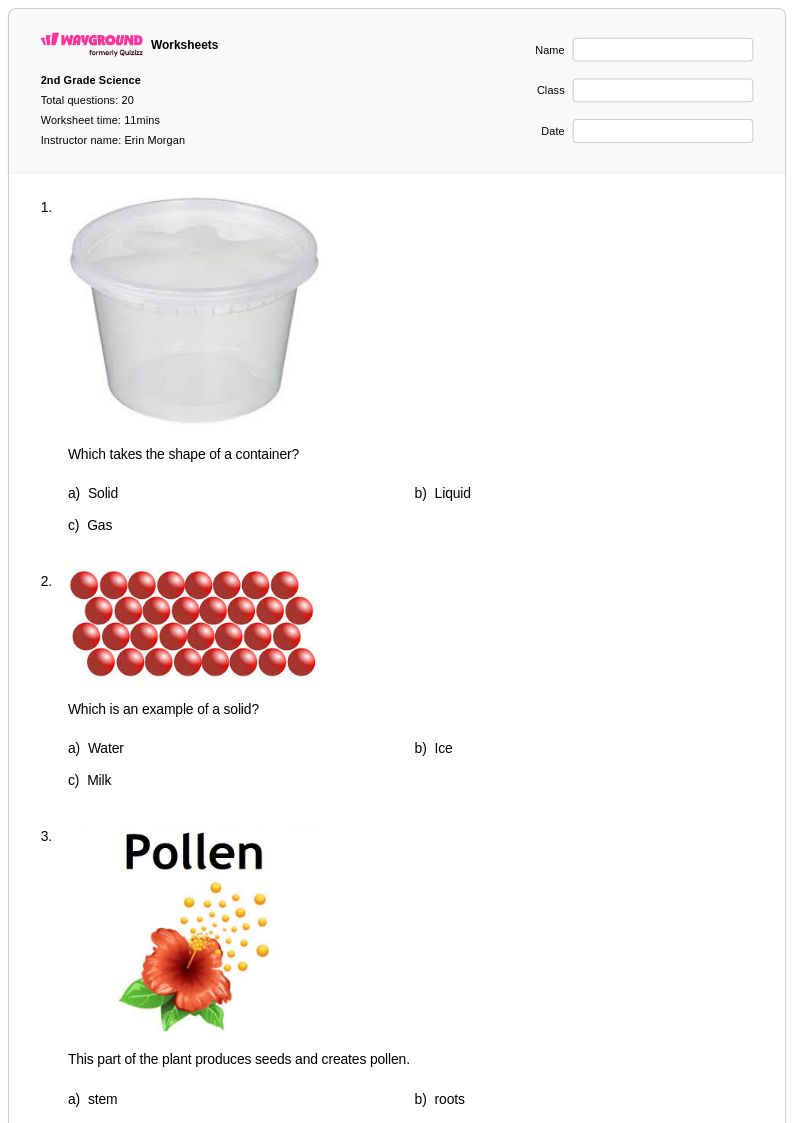
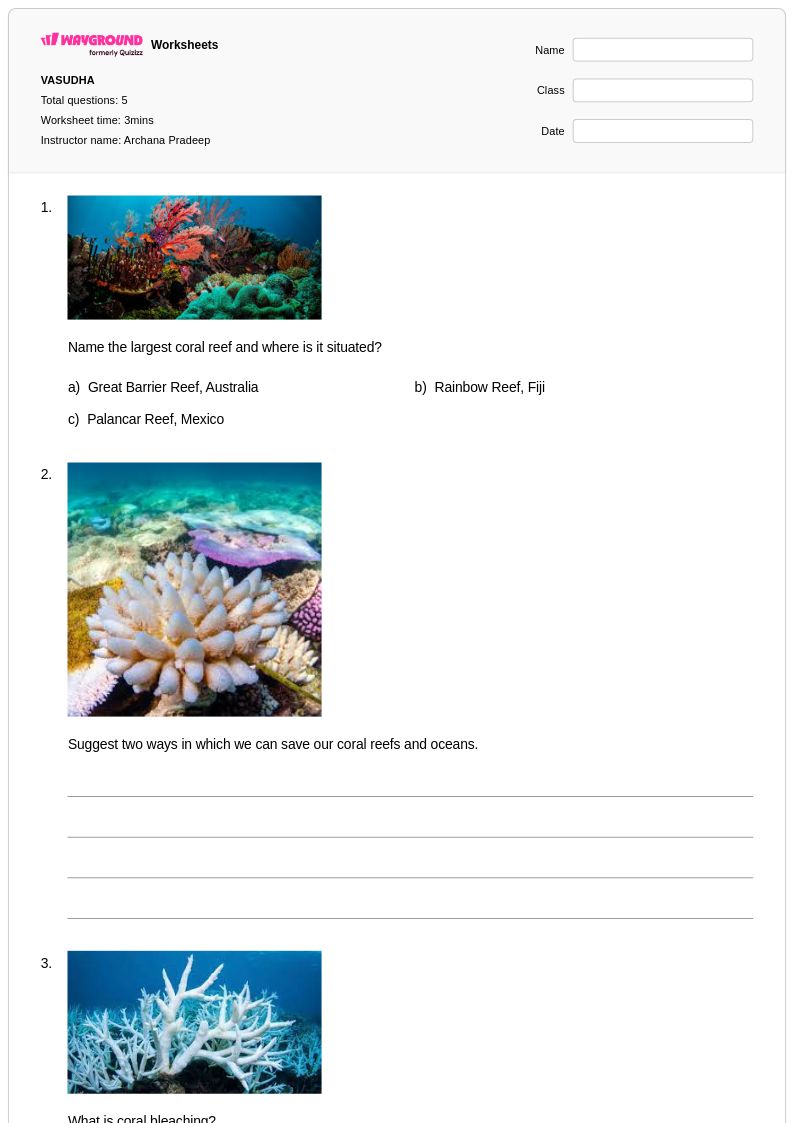
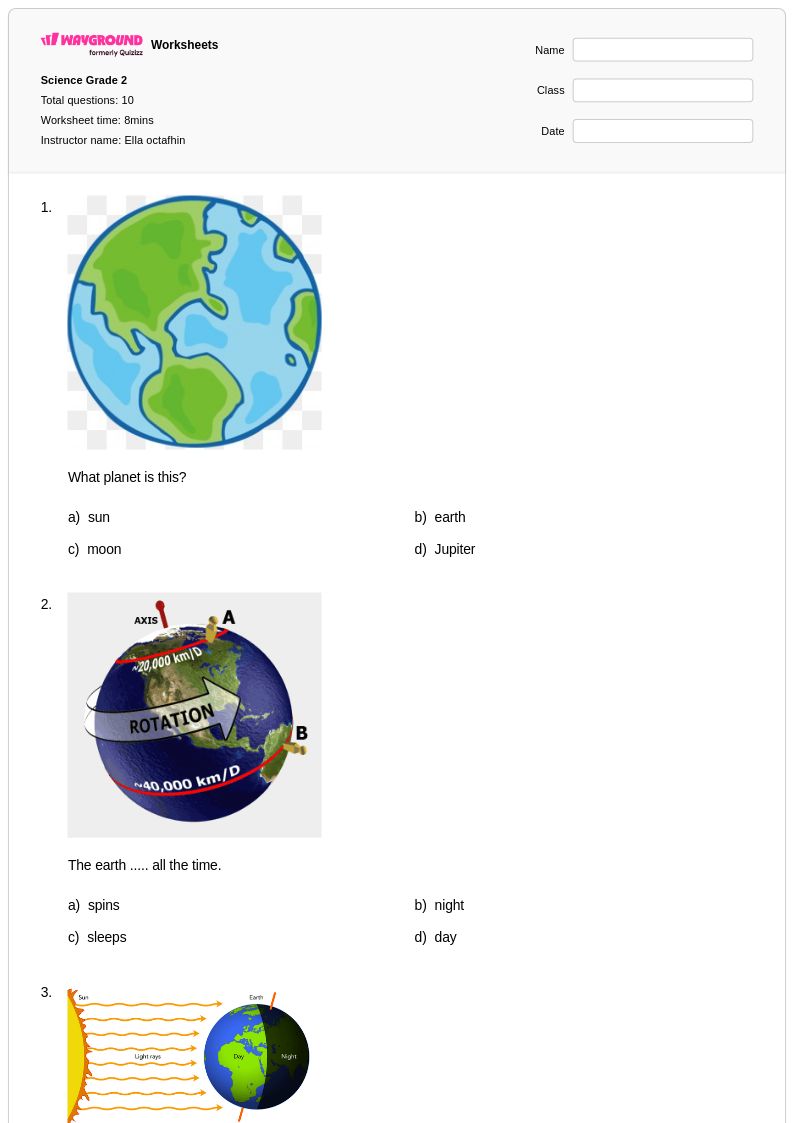
Explore Wayground's free Year 2 ecology worksheets and printables that help young students discover ecosystems, habitats, and animal relationships through engaging practice problems with complete answer keys.
Year 2 ecology worksheets available through Wayground (formerly Quizizz) provide young learners with foundational understanding of how living things interact with their environment and each other. These carefully designed printables introduce students to basic ecological concepts such as habitats, food chains, animal homes, and the interdependence of plants and animals in nature. The worksheets strengthen critical thinking skills as students observe, classify, and make connections between organisms and their surroundings through engaging practice problems that make complex ecological relationships accessible to second-grade minds. Each resource includes comprehensive answer keys and is available as free pdf downloads, ensuring teachers have reliable materials to support hands-on learning experiences that bring ecological science concepts to life in the classroom.
Wayground (formerly Quizizz) empowers educators with an extensive collection of millions of teacher-created ecology resources specifically tailored for Year 2 students, featuring robust search and filtering capabilities that allow quick identification of materials aligned with specific learning standards and curriculum requirements. The platform's differentiation tools enable teachers to customize worksheets for diverse learning needs, while flexible formatting options provide both printable pdf versions for traditional classroom use and digital formats for interactive learning environments. These comprehensive features streamline lesson planning by offering ready-to-use materials for skill practice, targeted remediation for students who need additional support, and enrichment activities for advanced learners, ultimately helping teachers create meaningful ecological learning experiences that build scientific inquiry skills and environmental awareness in young students.
FAQs
How do I teach ecology concepts to middle and high school students?
Effective ecology instruction begins with concrete, observable relationships before moving to abstract systems thinking. Start with food webs and predator-prey dynamics, then layer in energy flow, biogeochemical cycles, and ecosystem interactions. Using real-world case studies such as wolf reintroduction in Yellowstone or coral reef bleaching helps students connect ecological principles to environmental change. Scaffolded practice problems that build from single-species analysis to multi-trophic interactions reinforce understanding at each stage.
What exercises help students practice food webs and energy flow in ecosystems?
Students benefit most from exercises that require them to construct and interpret food webs, trace energy transfer across trophic levels, and calculate energy loss using the 10% rule. Practice problems that ask students to predict how removing a species affects the rest of the web build systems thinking alongside content knowledge. Supplementing these with diagram-labeling activities and scenario-based questions reinforces both vocabulary and conceptual understanding of how energy moves through ecosystems.
What are the most common mistakes students make when learning ecology?
One of the most persistent misconceptions is confusing food chains with food webs — students often treat ecosystems as linear rather than networked systems. Many also misapply the concept of energy flow, assuming energy is recycled rather than lost at each trophic level. Students frequently conflate symbiotic relationships, particularly mutualism and commensalism, due to imprecise definitions. Targeted practice problems that require students to justify their reasoning, rather than simply select an answer, help surface and correct these errors.
How do I assess student understanding of ecological succession and population dynamics?
Assessing ecological succession effectively requires students to sequence events, explain the mechanisms driving change, and distinguish between primary and secondary succession rather than just recall definitions. For population dynamics, assessment tasks that ask students to interpret population growth graphs, identify limiting factors, and apply concepts like carrying capacity reveal deeper understanding than vocabulary matching. Short constructed-response questions tied to real ecosystem scenarios are particularly effective for capturing whether students can apply these concepts, not just name them.
How do I use Wayground's ecology worksheets in my classroom?
Wayground's ecology worksheets are available as printable PDFs for traditional classroom use and in digital formats for technology-integrated learning environments, including the option to host them as a live quiz on Wayground. Printable versions work well for guided practice, lab follow-ups, or homework assignments, while digital formats allow for immediate feedback and progress tracking. Each worksheet includes a detailed answer key, making them practical for both independent student work and whole-class instruction.
How can I differentiate ecology instruction for students at different skill levels?
Differentiation in ecology instruction often means adjusting the complexity of the systems students are asked to analyze — struggling learners benefit from simplified food webs with fewer species, while advanced students can work with multi-trophic networks and quantitative energy calculations. On Wayground, teachers can apply student-level accommodations such as read aloud support, reduced answer choices, and extended time, which can be configured individually without affecting other students' experience. These settings are saved across sessions, reducing setup time for recurring accommodations.