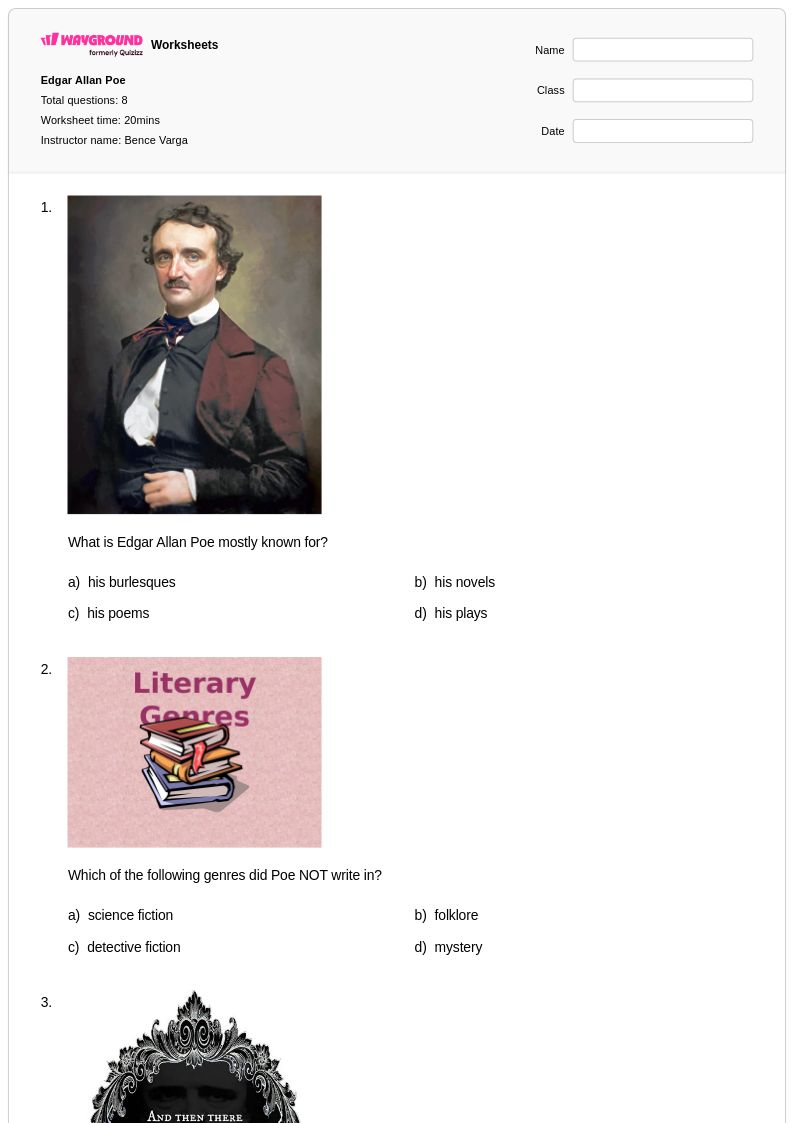
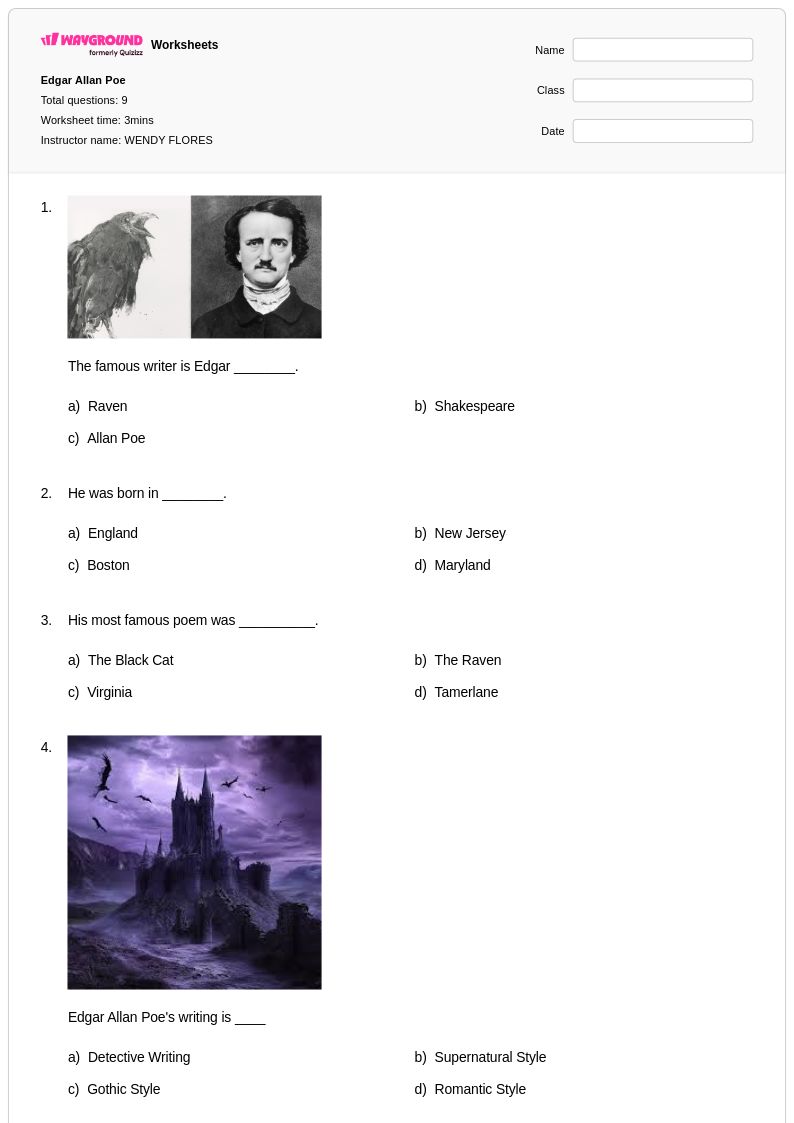
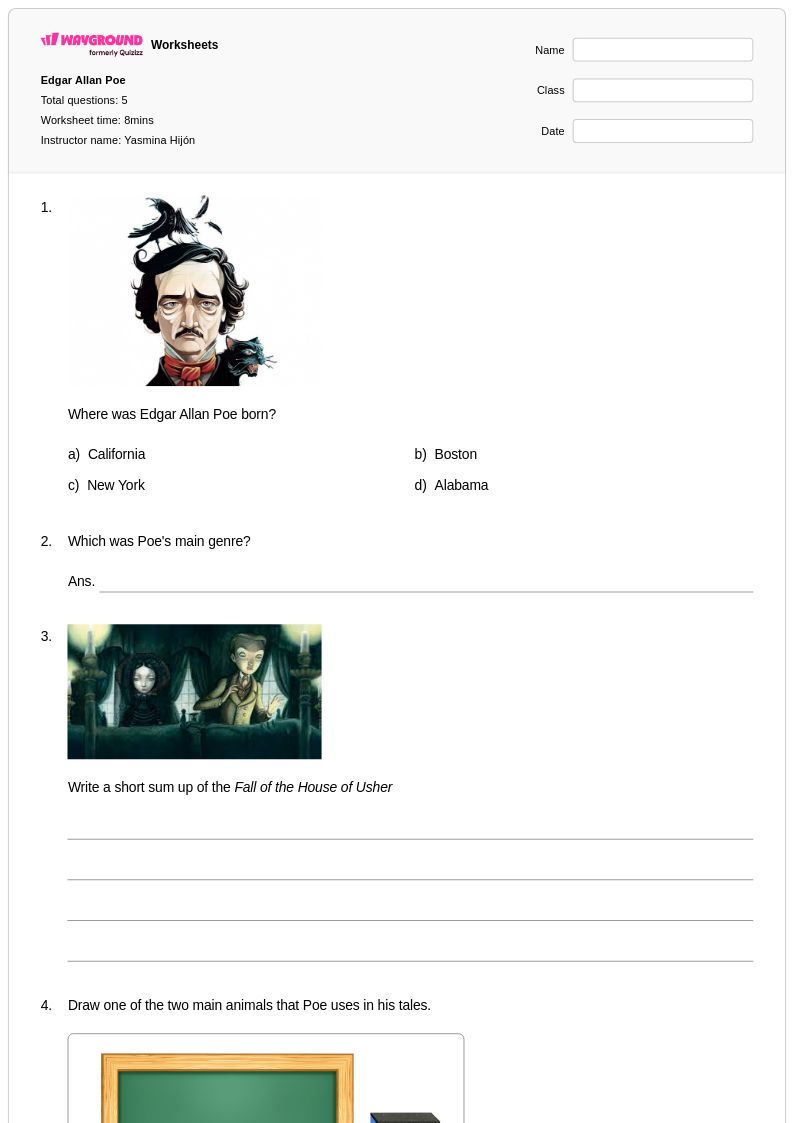
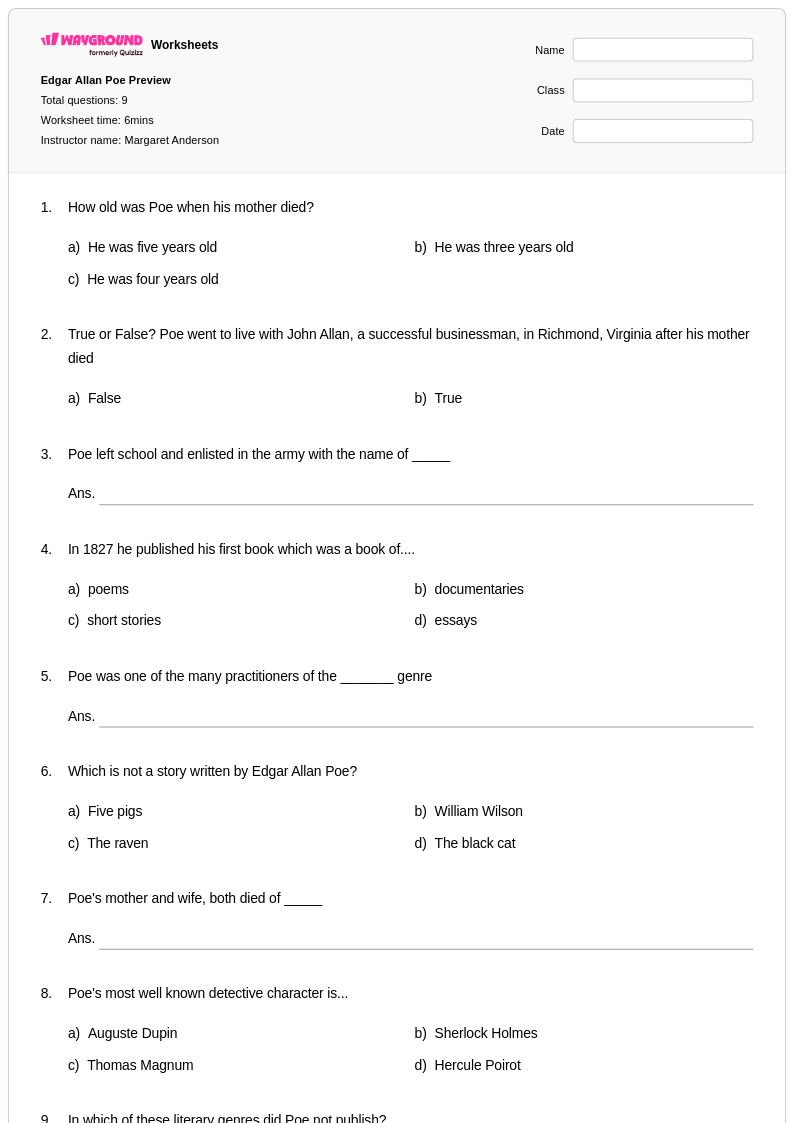
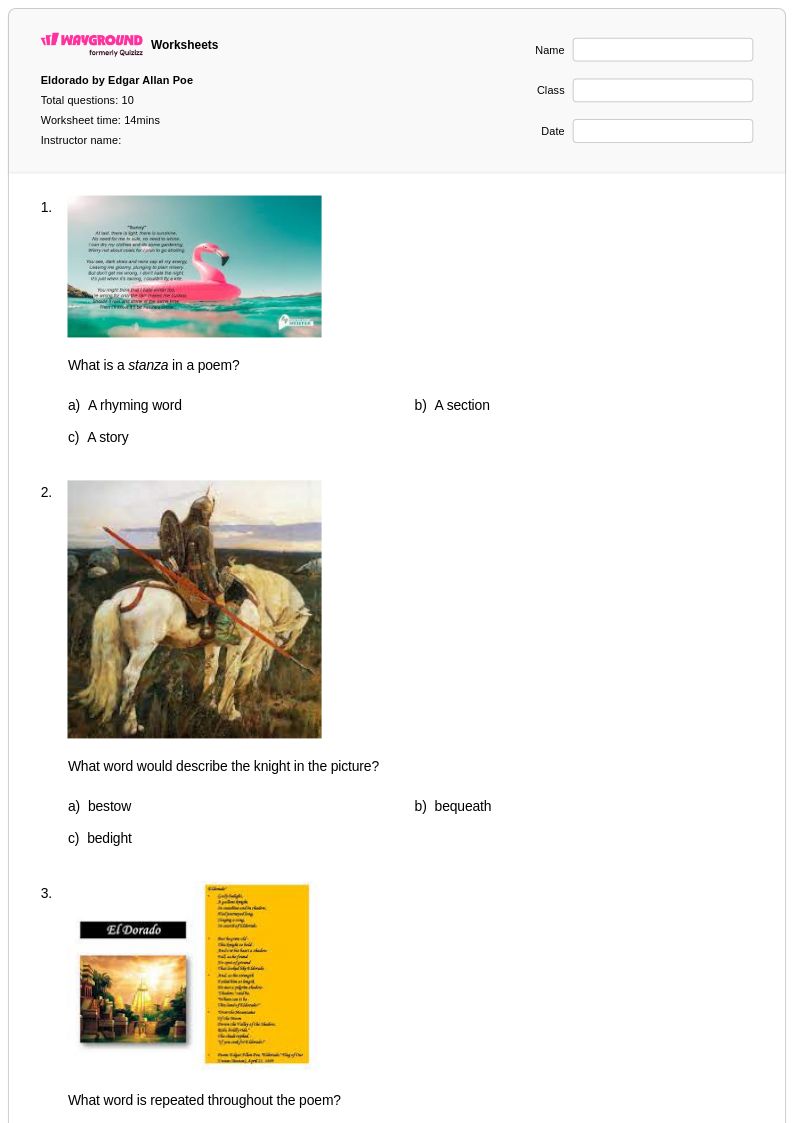
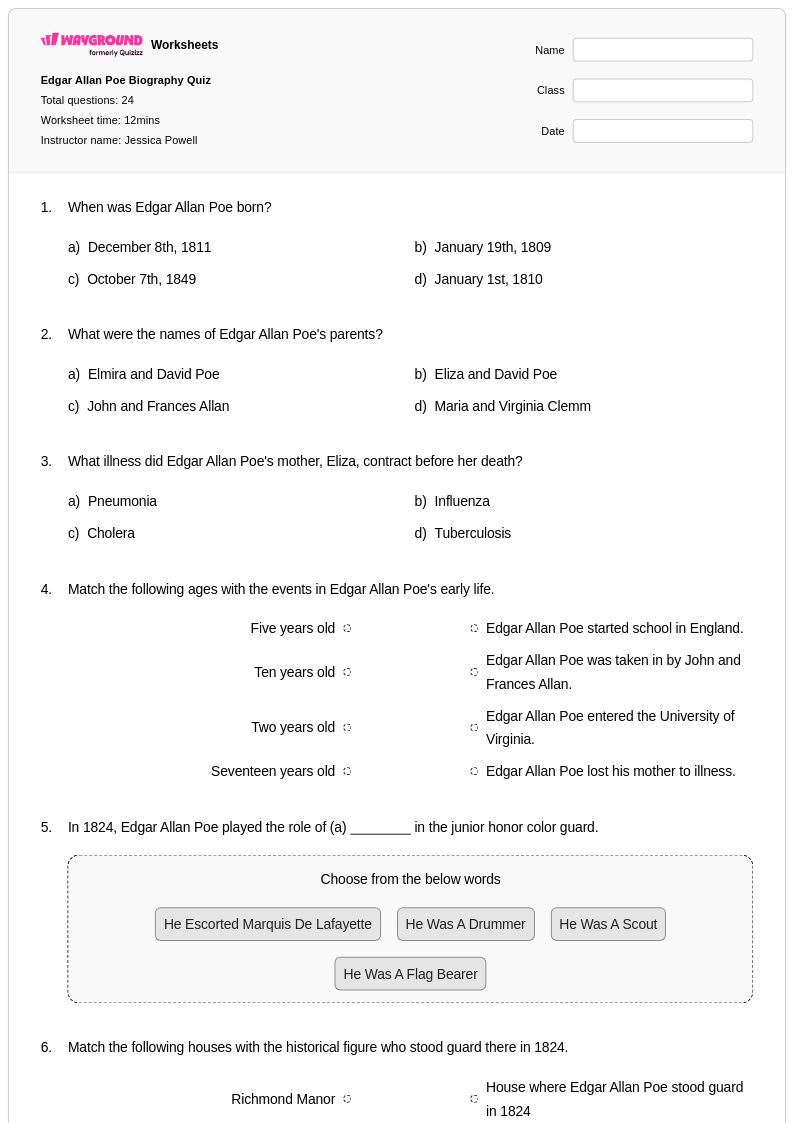
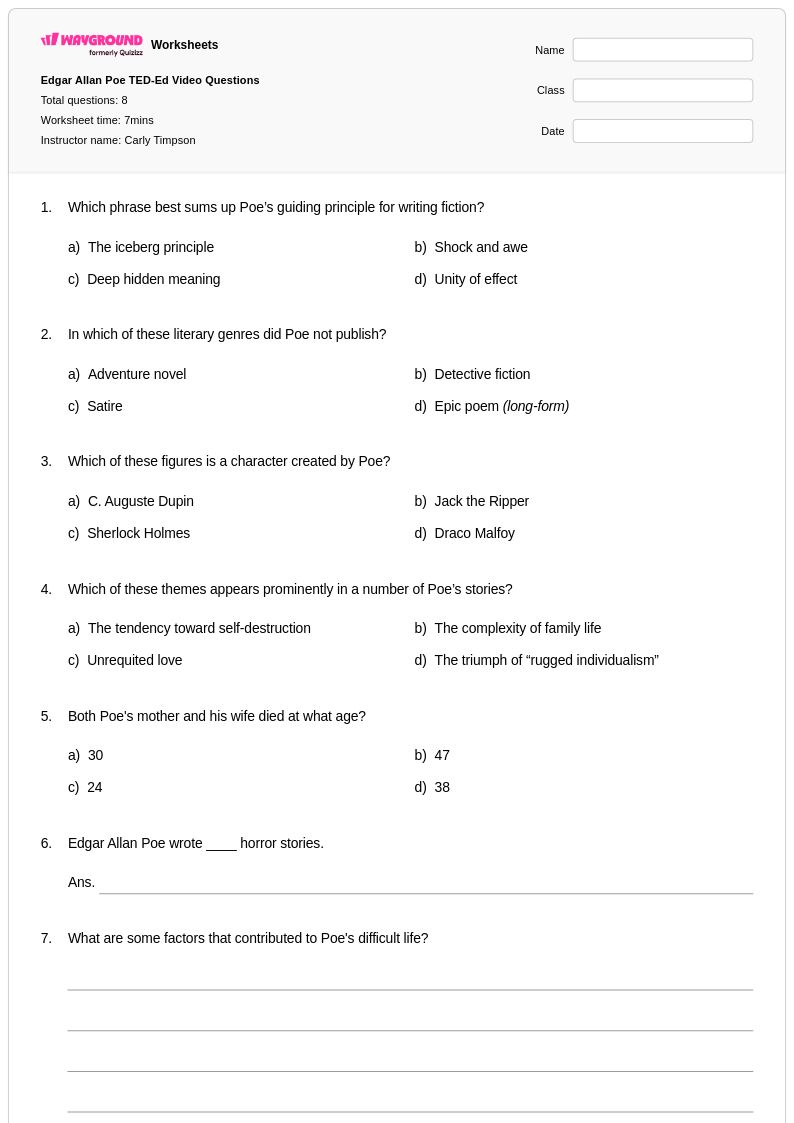
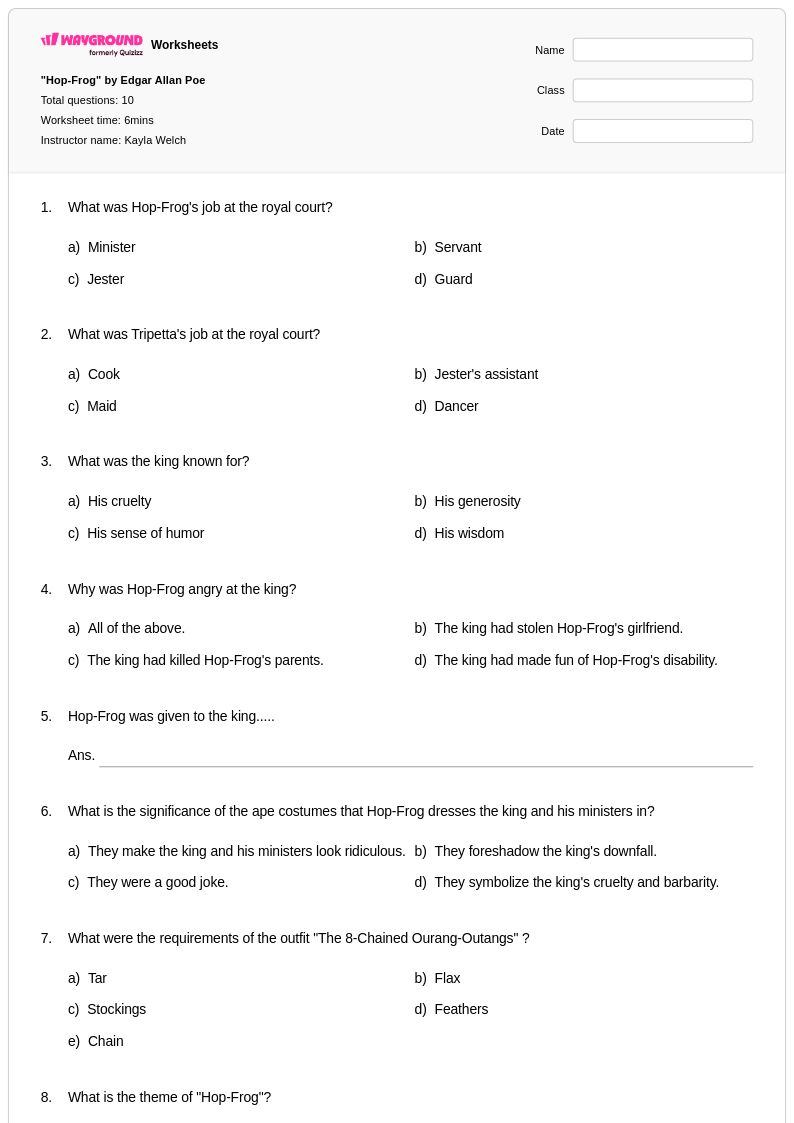
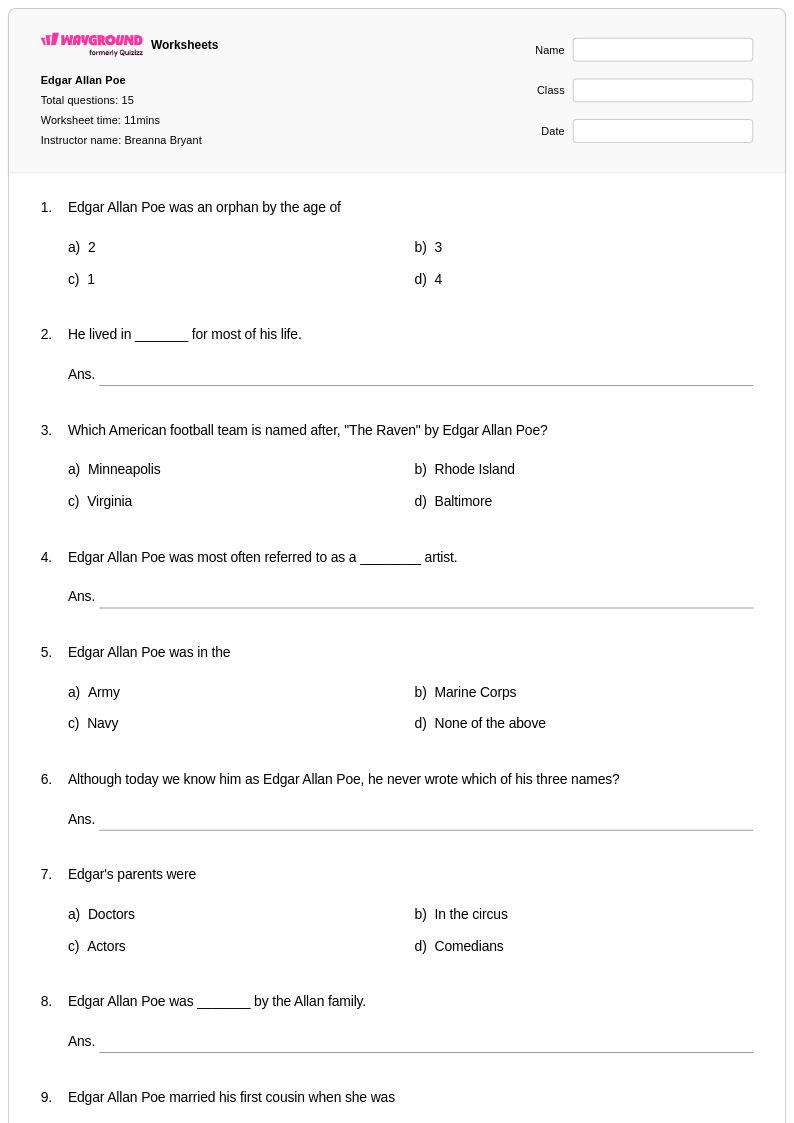
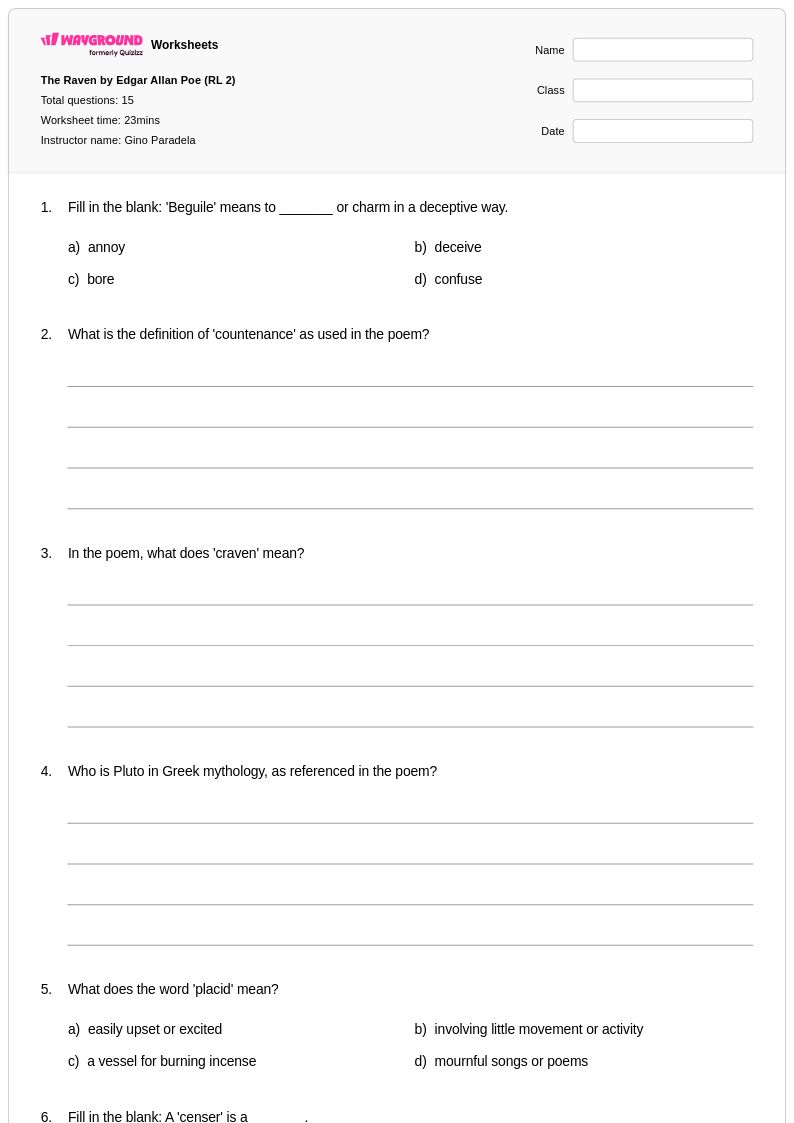
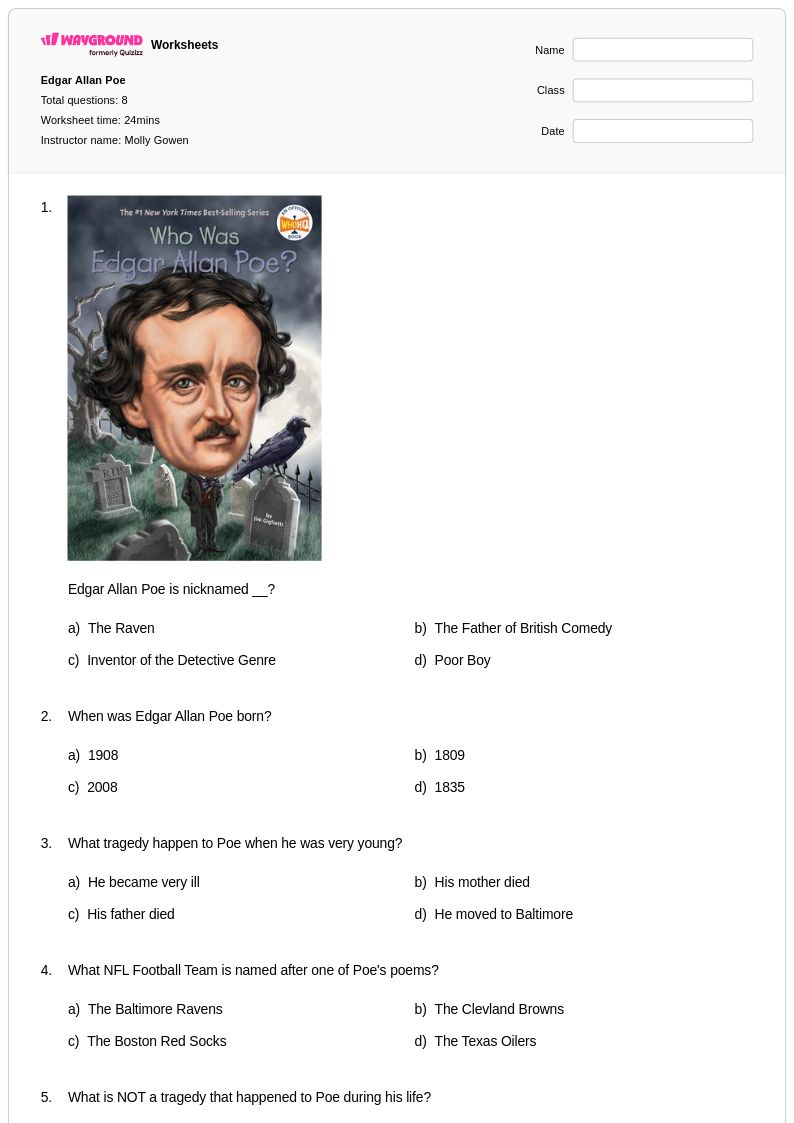
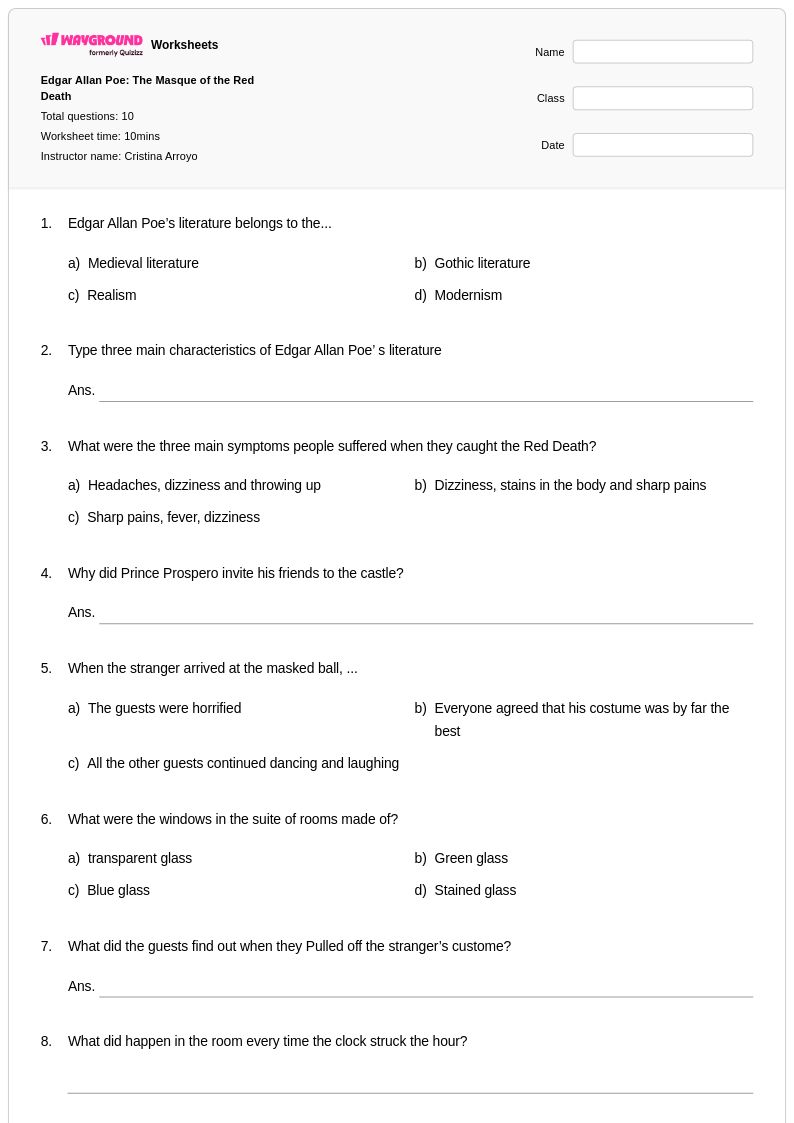
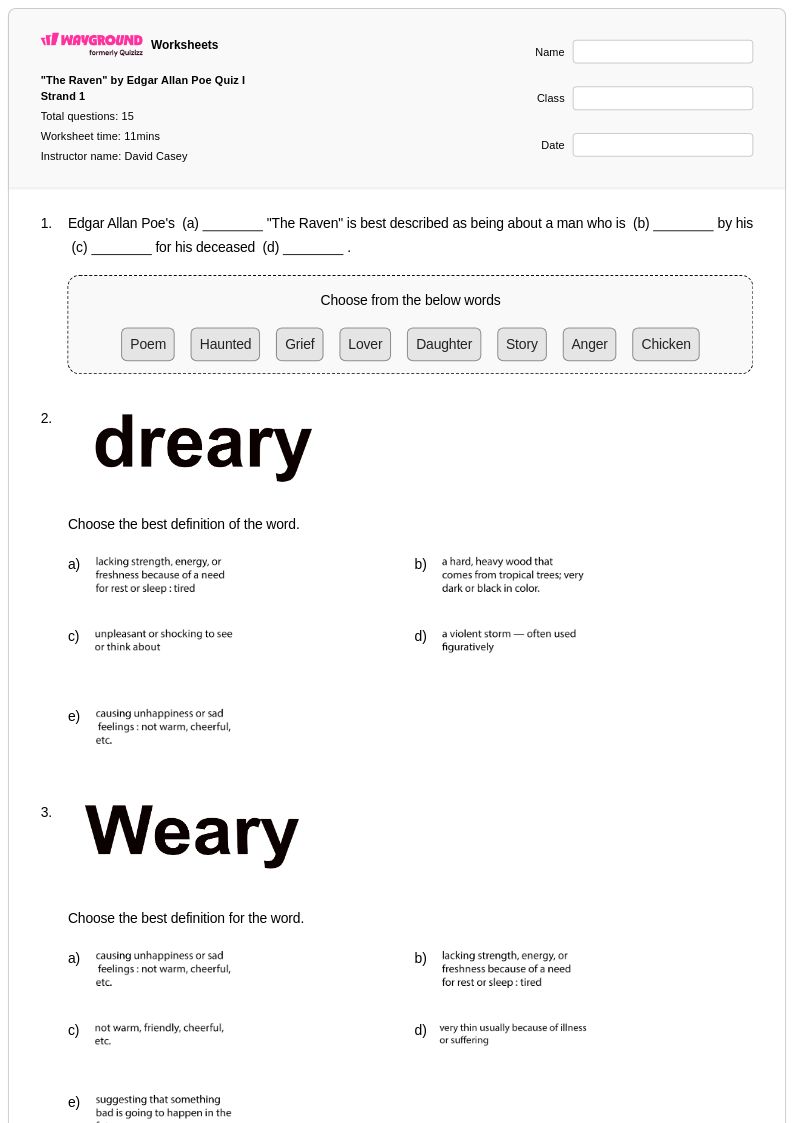
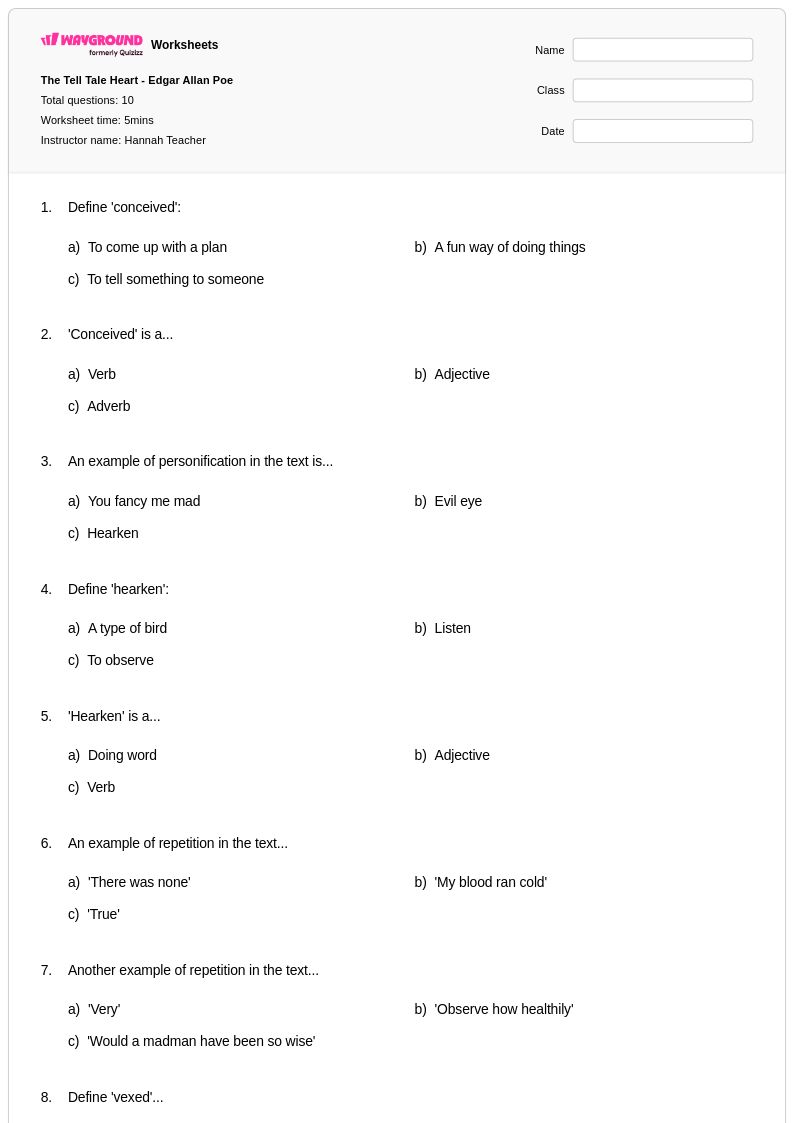
Explore Wayground's comprehensive collection of Edgar Allan Poe worksheets and printables that help students analyze his gothic literature, poetry techniques, and storytelling methods through engaging practice problems with complete answer keys.
Edgar Allan Poe worksheets available through Wayground (formerly Quizizz) provide comprehensive exploration of one of America's most influential Gothic writers and his enduring literary contributions. These expertly crafted resources guide students through close analysis of Poe's masterworks including "The Raven," "The Tell-Tale Heart," "The Fall of the House of Usher," and "Annabel Lee," developing critical thinking skills through examination of his signature themes of death, madness, and psychological terror. The worksheets strengthen essential literary analysis capabilities by focusing on Poe's innovative narrative techniques, symbolism, and pioneering contributions to detective fiction and horror literature. Students engage with practice problems that explore his rhythmic verse patterns, unreliable narrators, and atmospheric mood creation, while printables with comprehensive answer keys support independent study and classroom discussion of his complex psychological portraits and Gothic aesthetics.
Wayground's extensive collection draws from millions of teacher-created resources specifically designed to support Edgar Allan Poe instruction across diverse classroom needs and learning objectives. The platform's robust search and filtering capabilities enable educators to locate precisely targeted worksheets that align with curriculum standards while offering differentiation tools to accommodate varying student abilities and interests. Teachers benefit from flexible customization options that allow adaptation of existing materials, whether focusing on biographical context, literary devices, or thematic analysis of Poe's works. These comprehensive resources are available in both printable pdf formats for traditional classroom use and digital formats for interactive learning environments, supporting effective lesson planning, targeted remediation of literary analysis skills, enrichment activities for advanced learners, and systematic skill practice that builds deeper appreciation for Poe's revolutionary impact on American literature and the horror genre.
FAQs
How do I teach Edgar Allan Poe's gothic literature effectively in the classroom?
Start by grounding students in the defining features of Gothic literature — psychological terror, atmospheric settings, and themes of death and madness — before introducing Poe's specific works. Pairing biographical context with close reading helps students understand why Poe returned repeatedly to these themes. Works like 'The Tell-Tale Heart' and 'The Fall of the House of Usher' are ideal entry points because they demonstrate his signature unreliable narrator and mood-building techniques in compact, high-impact texts.
What literary devices should students focus on when analyzing Edgar Allan Poe's writing?
The most essential devices in Poe's work are the unreliable narrator, symbolism, and atmospheric mood creation. In poetry, students should also examine his use of internal rhyme, repetition, and rhythmic verse patterns — all highly deliberate in works like 'The Raven' and 'Annabel Lee.' Teaching these devices together helps students see how Poe constructs psychological tension at both the structural and stylistic level.
What mistakes do students commonly make when analyzing Edgar Allan Poe's stories and poems?
The most common error is taking the narrator's perspective at face value without questioning reliability. In 'The Tell-Tale Heart,' for example, students frequently accept the narrator's self-justifications rather than identifying the unreliable narration as the central literary mechanism. Students also tend to treat Poe's symbols — the beating heart, the raven, the crumbling mansion — as decorative details rather than thematically loaded elements that carry psychological and Gothic meaning.
What exercises help students practice literary analysis of Edgar Allan Poe's work?
Effective practice exercises include close-reading annotations focused on mood and tone, symbol identification tasks tied to specific passages, and structured response prompts asking students to trace how Poe builds psychological tension across a narrative. Comparing two works — such as 'The Raven' and 'Annabel Lee' — on the theme of death and loss also deepens analytical thinking by requiring students to distinguish technique from theme.
How do I use Wayground's Edgar Allan Poe worksheets in my classroom?
Wayground's Edgar Allan Poe worksheets are available as printable PDFs for traditional classroom use and in digital formats for technology-integrated learning environments, giving teachers flexibility in how they assign and collect student work. Teachers can also host worksheets as a quiz directly on Wayground. All worksheets include complete answer keys, making them practical for independent study, guided class discussion, or targeted remediation of literary analysis skills.
How can I differentiate Edgar Allan Poe instruction for students with varying reading levels?
For students who struggle with Poe's dense vocabulary and complex syntax, scaffolding through vocabulary pre-teaching and guided annotation frames can reduce cognitive barriers before independent reading. On Wayground, teachers can apply individual accommodations such as read-aloud support, extended time, and reduced answer choices to specific students without affecting the rest of the class, making it easier to support diverse learners within the same assignment.