Free Printable Elbow Stretch Worksheets for Year 9
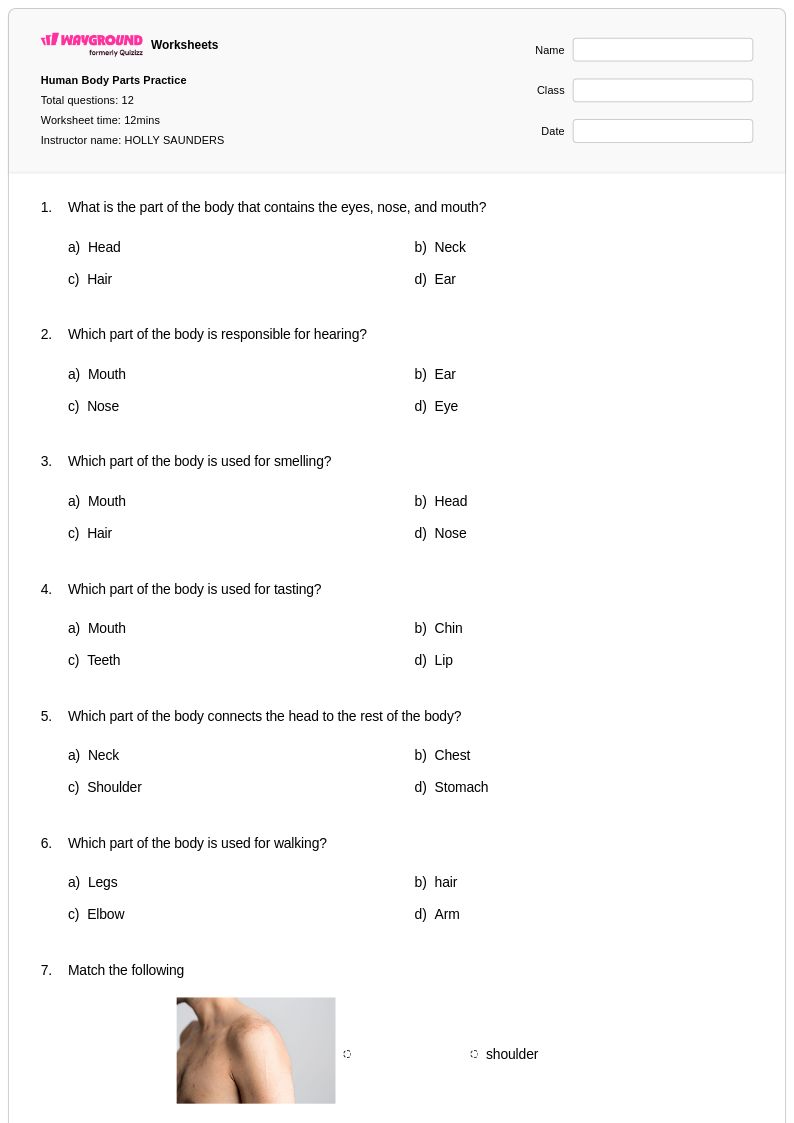
Year 9 elbow stretch worksheets from Wayground provide comprehensive printables and free practice materials with answer keys to help students master proper stretching techniques for injury prevention and flexibility improvement.
Explore printable Elbow Stretch worksheets for Year 9
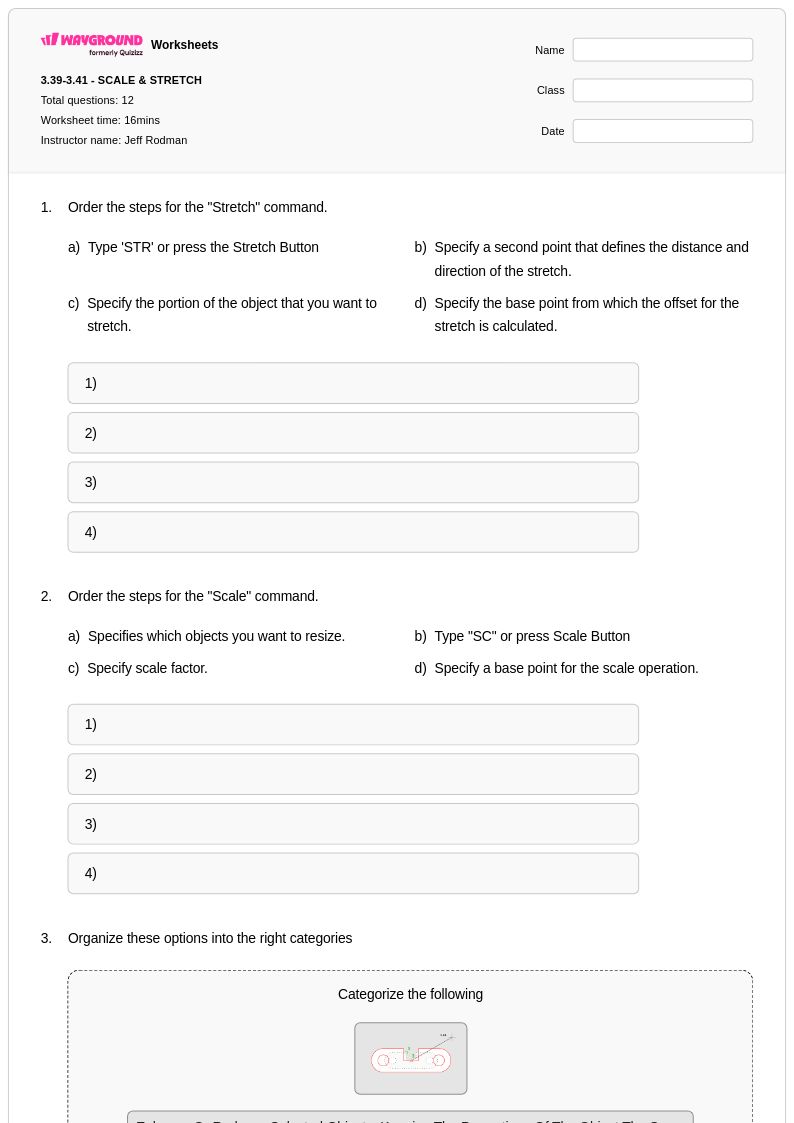
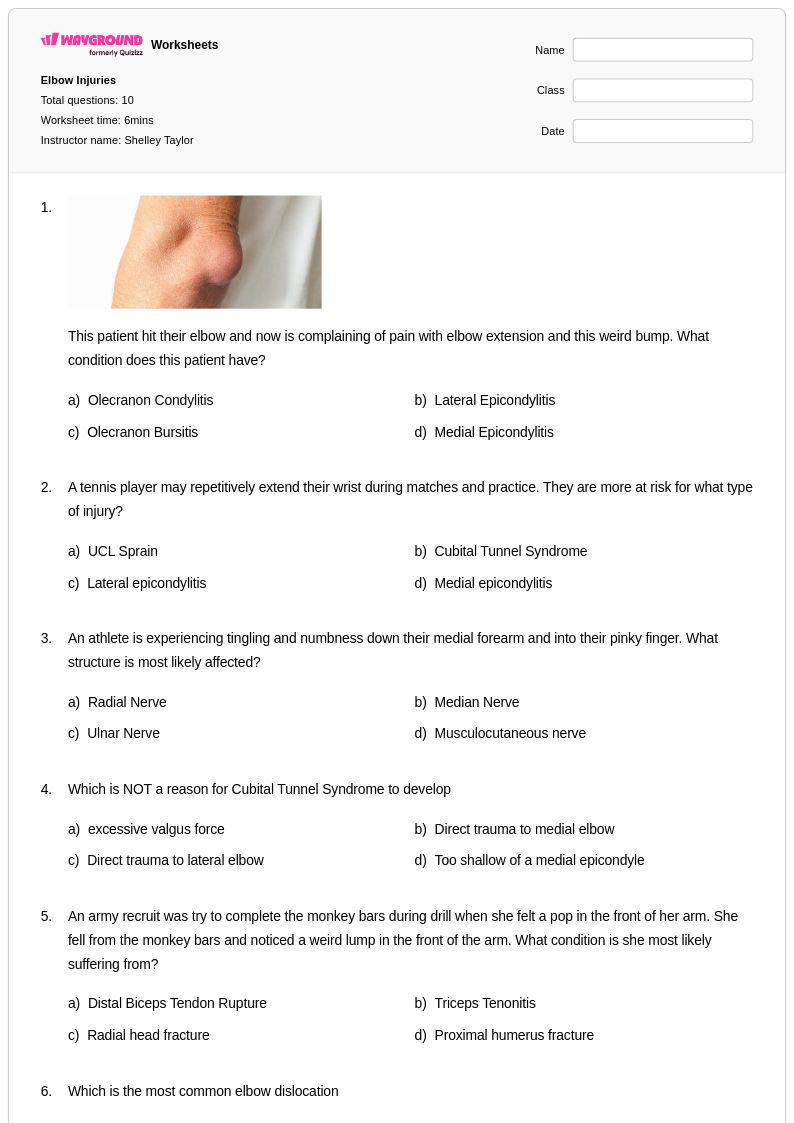
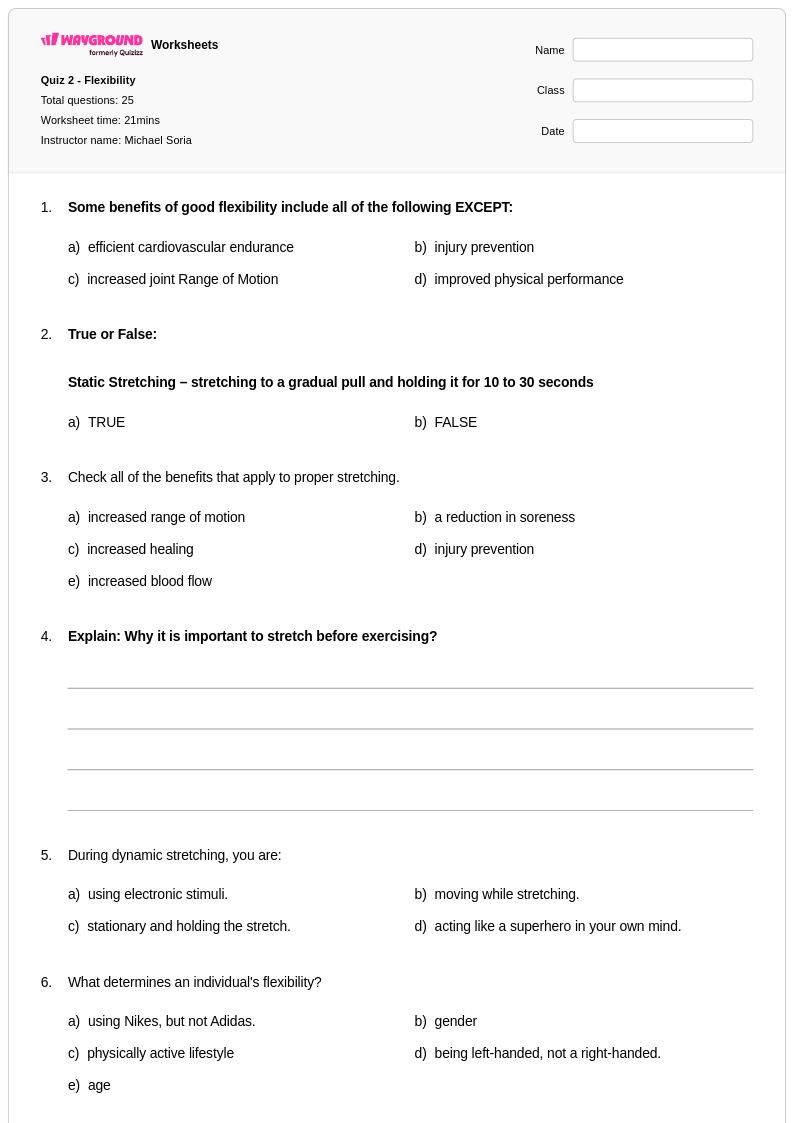
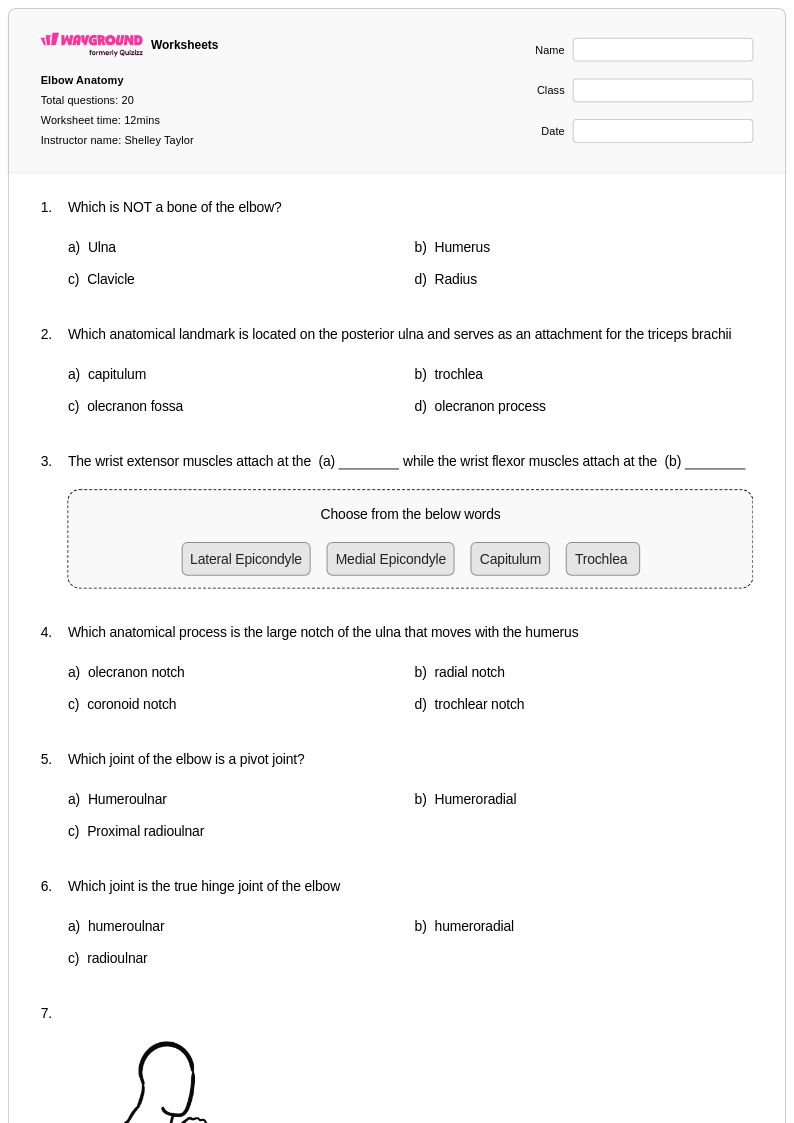
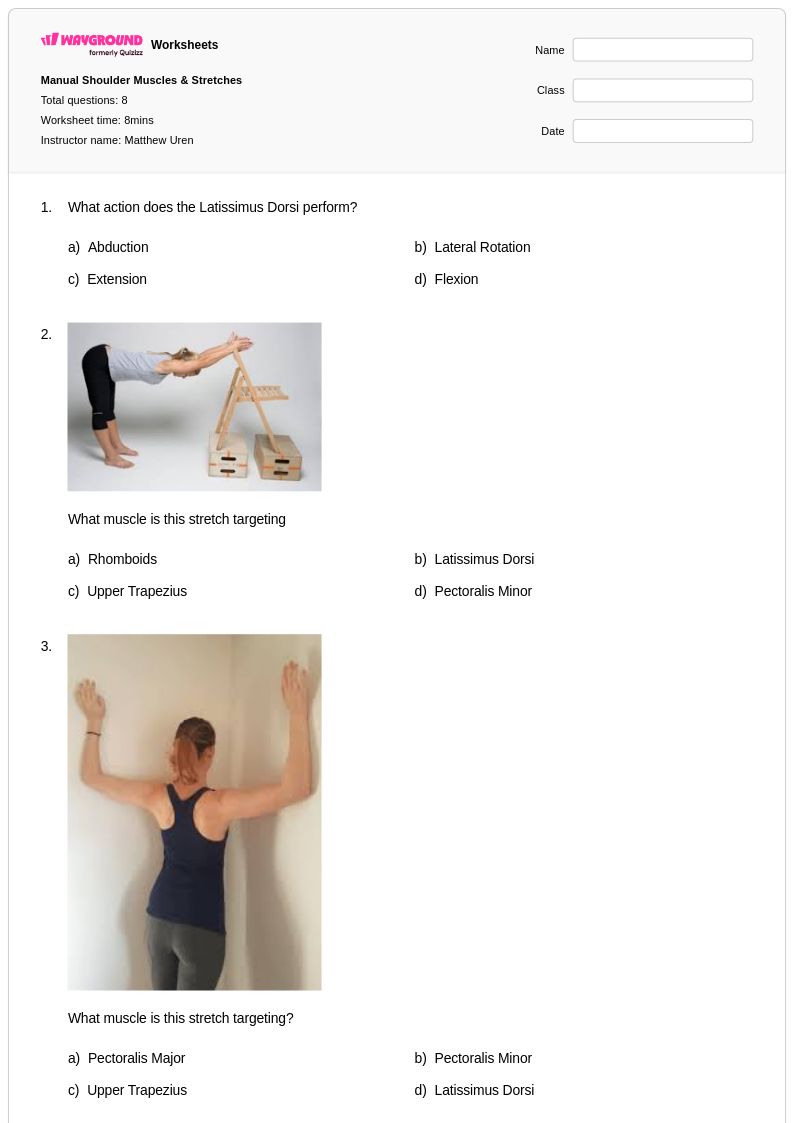
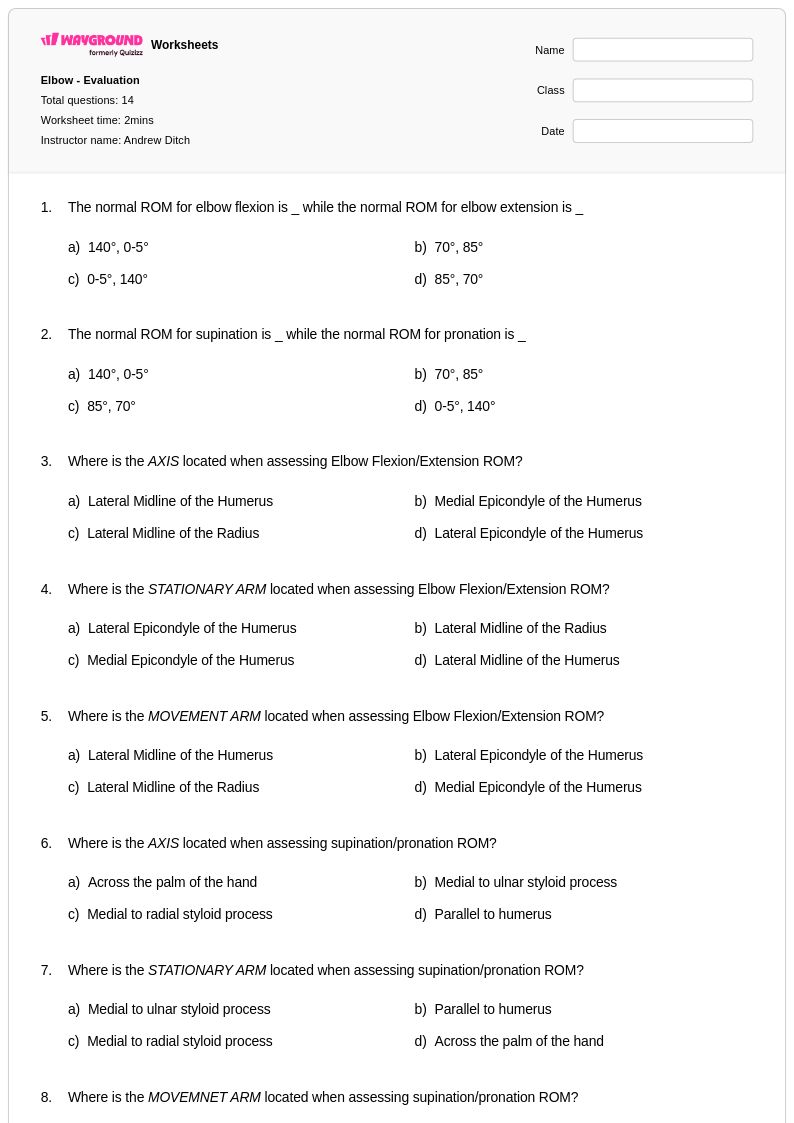
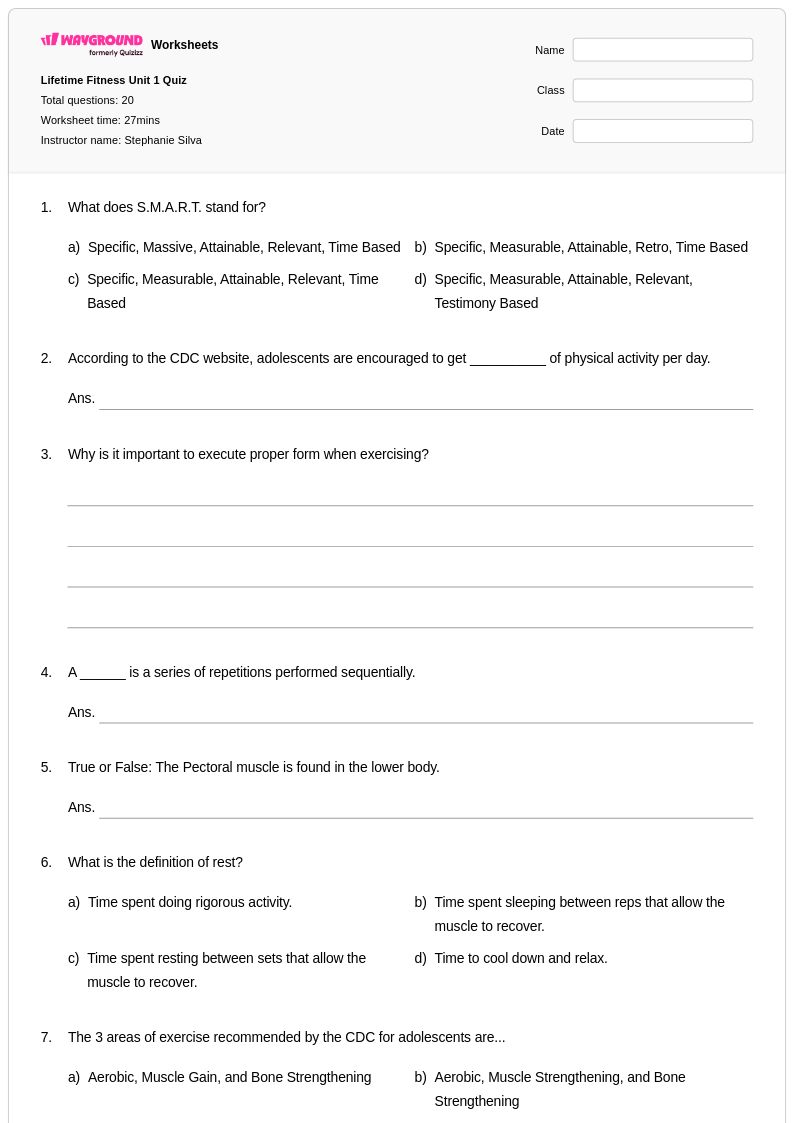
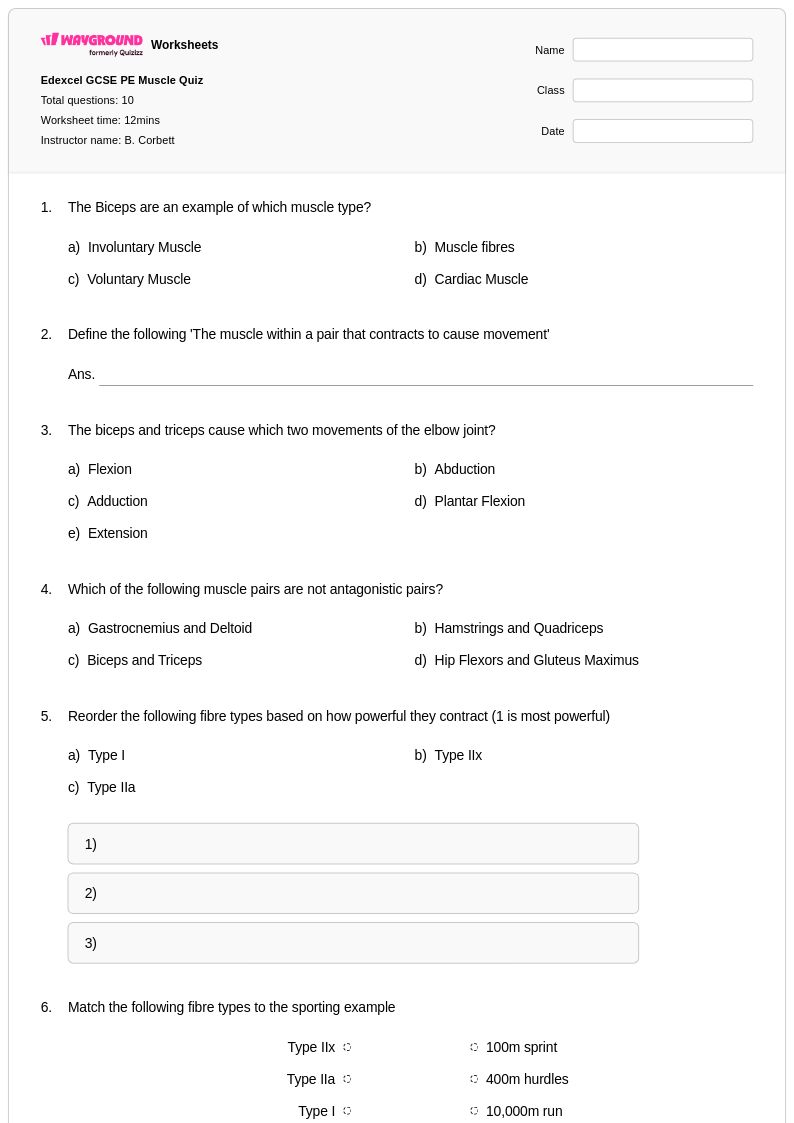
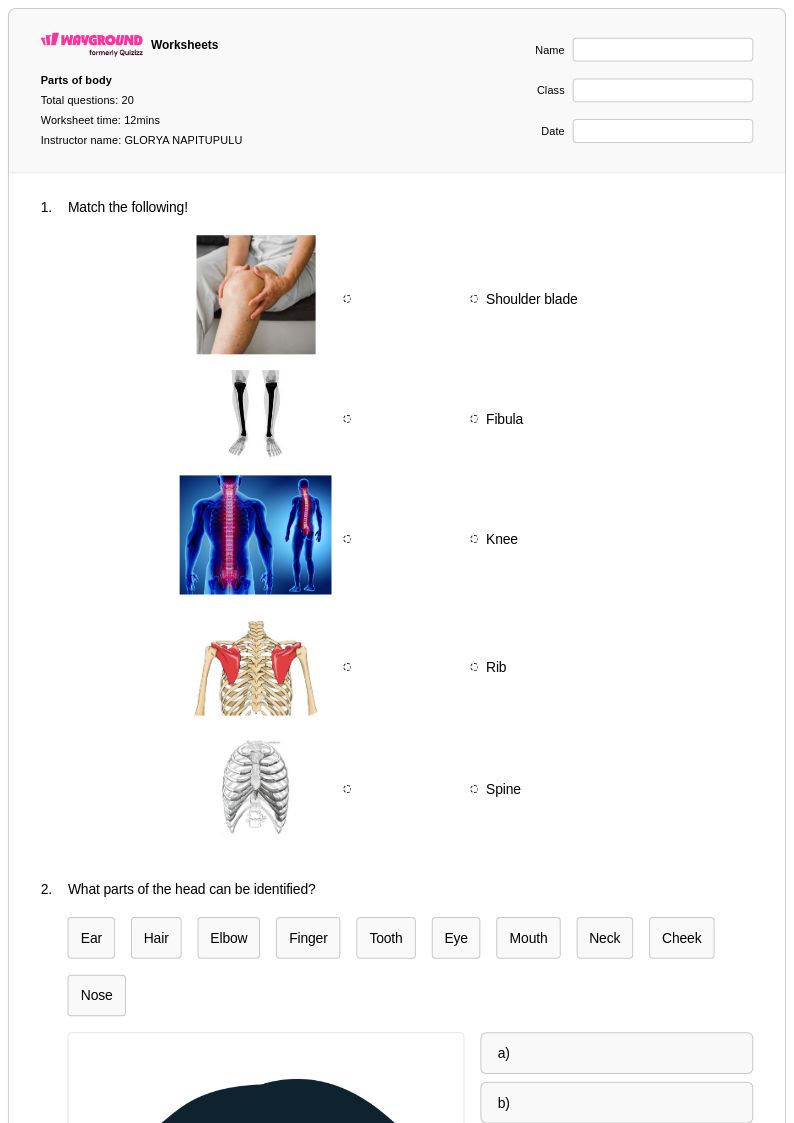
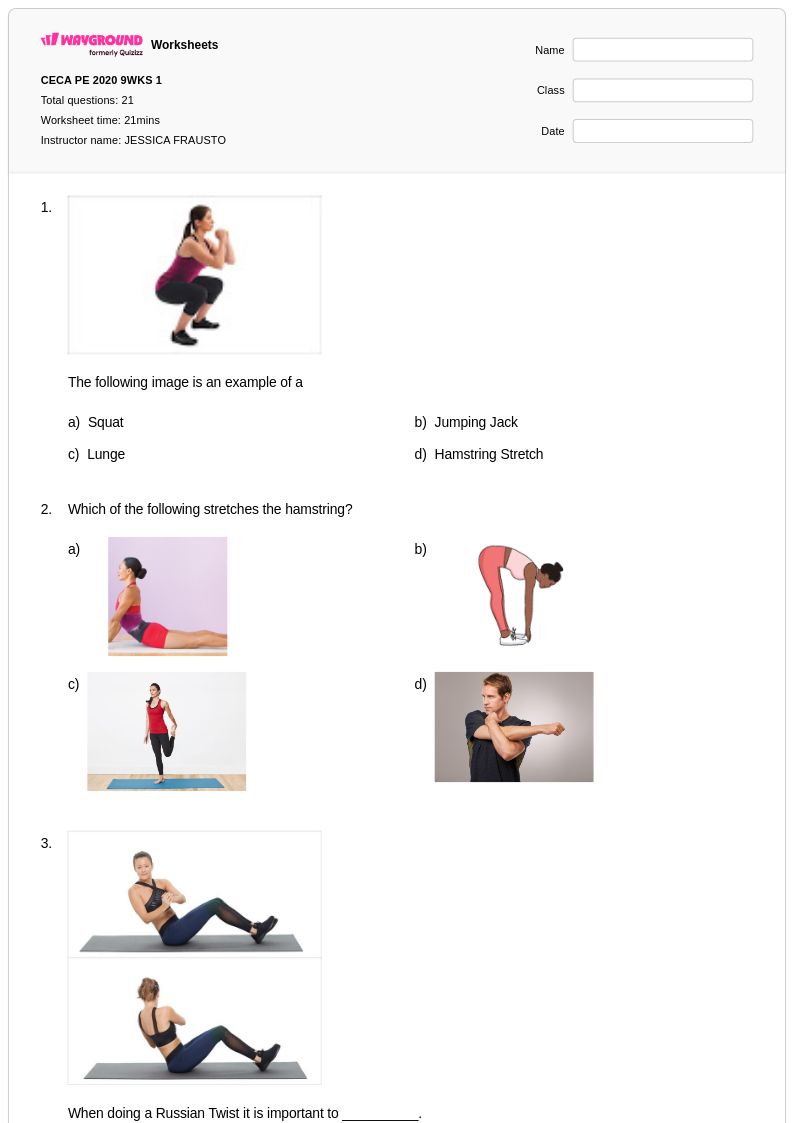
Elbow stretch worksheets for Year 9 Physical Education students available through Wayground (formerly Quizizz) provide comprehensive educational resources that systematically teach proper upper body flexibility techniques and injury prevention strategies. These expertly designed worksheets guide ninth-grade students through anatomically correct elbow stretching protocols, emphasizing the importance of warming up the triceps, biceps, and forearm muscles before physical activity. Students engage with detailed practice problems that require them to identify muscle groups targeted by specific stretches, analyze proper form and technique, and evaluate the benefits of consistent stretching routines for athletic performance and daily movement. The free printable materials include visual diagrams, step-by-step instructions, and comprehensive answer keys that enable students to master essential concepts about joint mobility, muscle flexibility, and safe stretching practices that will serve them throughout their athletic and fitness journeys.
Wayground's extensive collection of millions of teacher-created Physical Education resources empowers educators to deliver targeted instruction on elbow stretching techniques through carefully curated worksheet collections that align with national health and fitness standards. Teachers can efficiently search and filter content based on specific learning objectives, student ability levels, and curriculum requirements, while utilizing powerful differentiation tools to modify materials for diverse learning needs within their Year 9 classrooms. The platform's flexible customization options allow educators to adapt existing worksheets or create personalized assessments, seamlessly transitioning between printable pdf formats for traditional instruction and digital versions for technology-enhanced learning environments. These versatile resources support comprehensive lesson planning by providing structured materials for initial skill introduction, targeted remediation for students requiring additional support, enrichment activities for advanced learners, and ongoing practice opportunities that reinforce proper elbow stretching techniques and broader flexibility concepts throughout the academic year.
FAQs
How do I teach proper elbow stretching technique in physical education?
Effective elbow stretch instruction starts with teaching students to identify the relevant muscle groups, including the triceps, biceps, and surrounding connective tissue, before introducing any movement. Demonstrate proper anatomical positioning first, emphasizing a neutral wrist and controlled range of motion to avoid hyperextension. Pairing visual anatomical diagrams with live demonstration helps students internalize correct form before practicing independently. Reinforce that stretches should produce mild tension, never sharp pain, and hold for 15 to 30 seconds per repetition.
What exercises help students practice elbow stretches correctly?
Practice activities that combine visual identification with physical execution are most effective for reinforcing elbow stretch technique. Students can label anatomical diagrams of the upper extremity, sequence step-by-step stretching protocols, and match muscle groups to their corresponding stretch positions. These written exercises build conceptual understanding that transfers to safe physical performance, making them strong complements to hands-on movement practice in PE class.
What mistakes do students commonly make when performing elbow stretches?
The most common errors include overstretching by forcing the joint beyond a comfortable range, holding breath during the stretch instead of breathing steadily, and rushing through the movement without holding long enough for the muscle to release. Some students also apply uneven pressure when using one arm to assist the other, which can strain the joint rather than mobilize it. Worksheets that walk through step-by-step sequencing and proper positioning help students self-correct these habits before they become ingrained.
How can I use elbow stretch worksheets to support injury prevention in PE?
Elbow stretch worksheets reinforce the physiological rationale behind flexibility training, helping students understand why proper technique prevents injury rather than just following instructions. Activities that connect anatomical positioning to muscle function give students a framework for self-monitoring during physical activity. When students understand what each stretch is targeting and why controlled movement matters, they are more likely to apply safe stretching habits independently, both in class and in everyday physical activity.
How do I use Wayground's elbow stretch worksheets in my classroom?
Wayground's elbow stretch worksheets are available as printable PDFs for traditional classroom or gymnasium use and in digital formats for technology-integrated environments, making them flexible for a range of physical education settings. Teachers can also host the worksheets as a quiz directly on Wayground, enabling real-time student responses and streamlined feedback. All worksheets include complete answer keys, so teachers can efficiently assess student understanding of stretching technique, anatomical positioning, and injury prevention concepts.
How can I differentiate elbow stretch instruction for students with varying ability levels?
For students who struggle with the conceptual side of stretching technique, simplified diagrams and reduced-complexity sequencing tasks help build foundational understanding before introducing biomechanics vocabulary. Advanced learners can explore the physiological mechanisms behind flexibility gains and research injury prevention protocols relevant to specific sports. On Wayground, teachers can apply accommodations such as read aloud, extended time, and reduced answer choices to individual students without disrupting the rest of the class, supporting diverse learners within the same lesson.