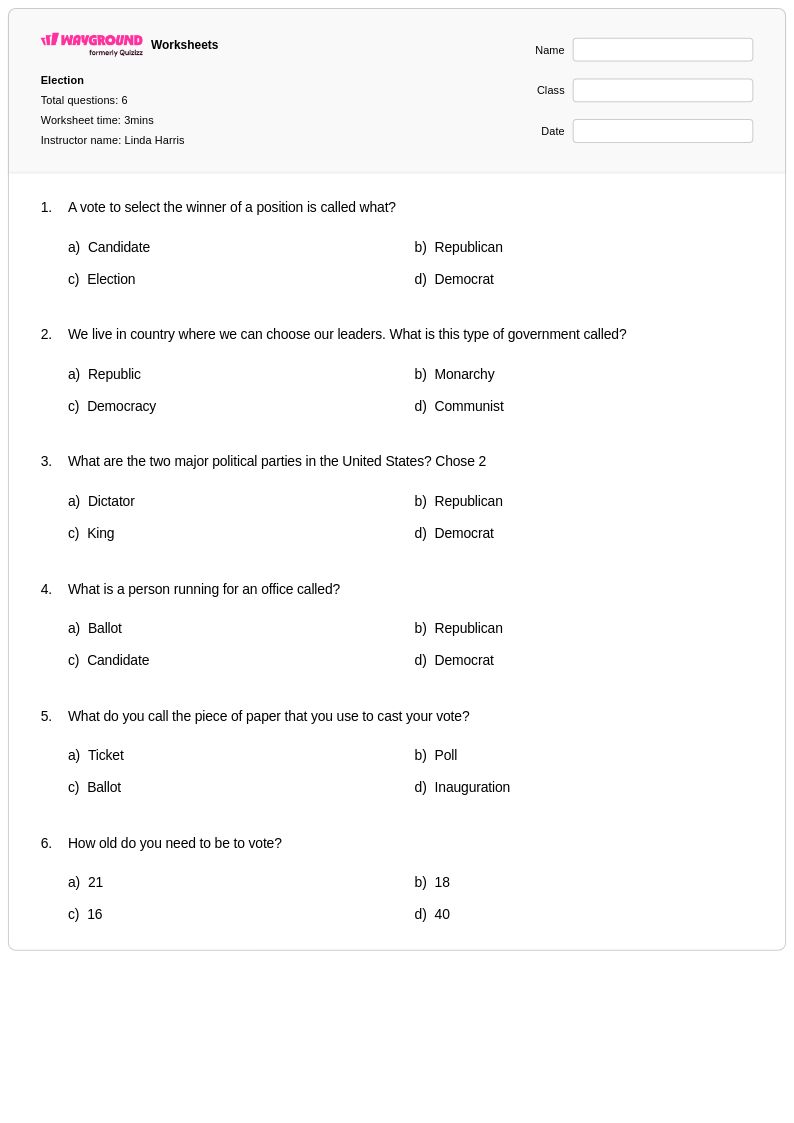
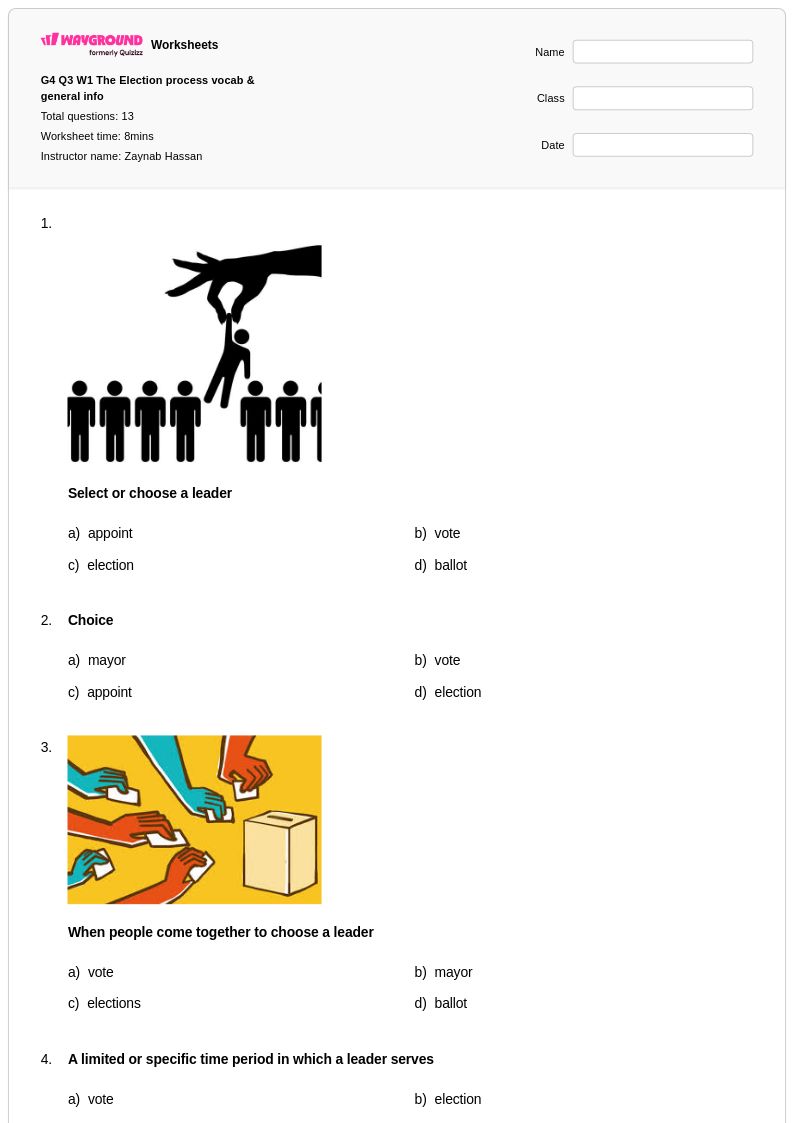
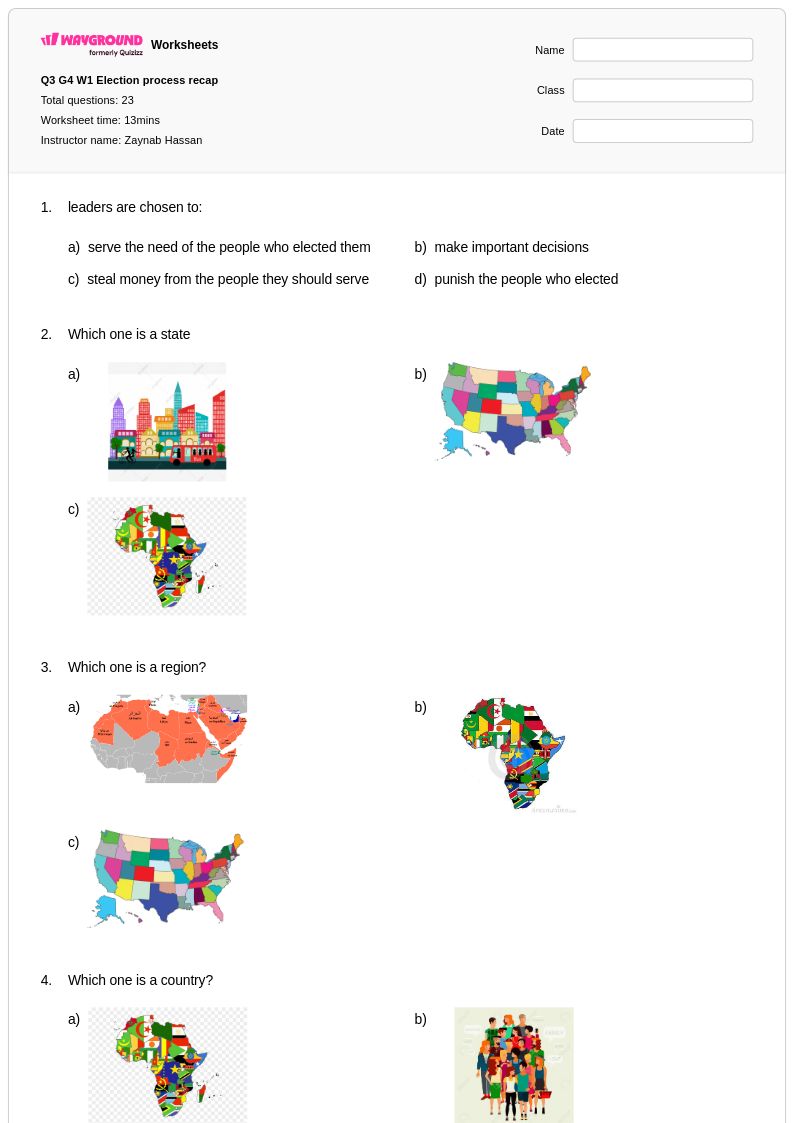
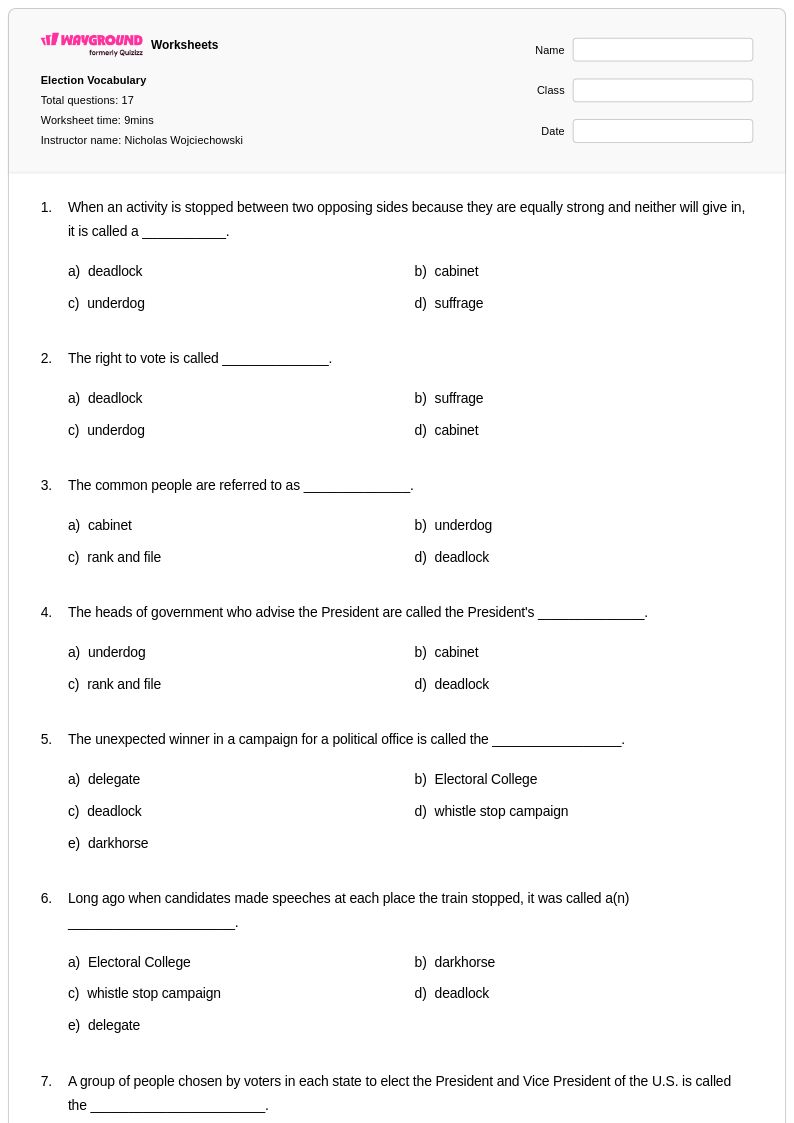
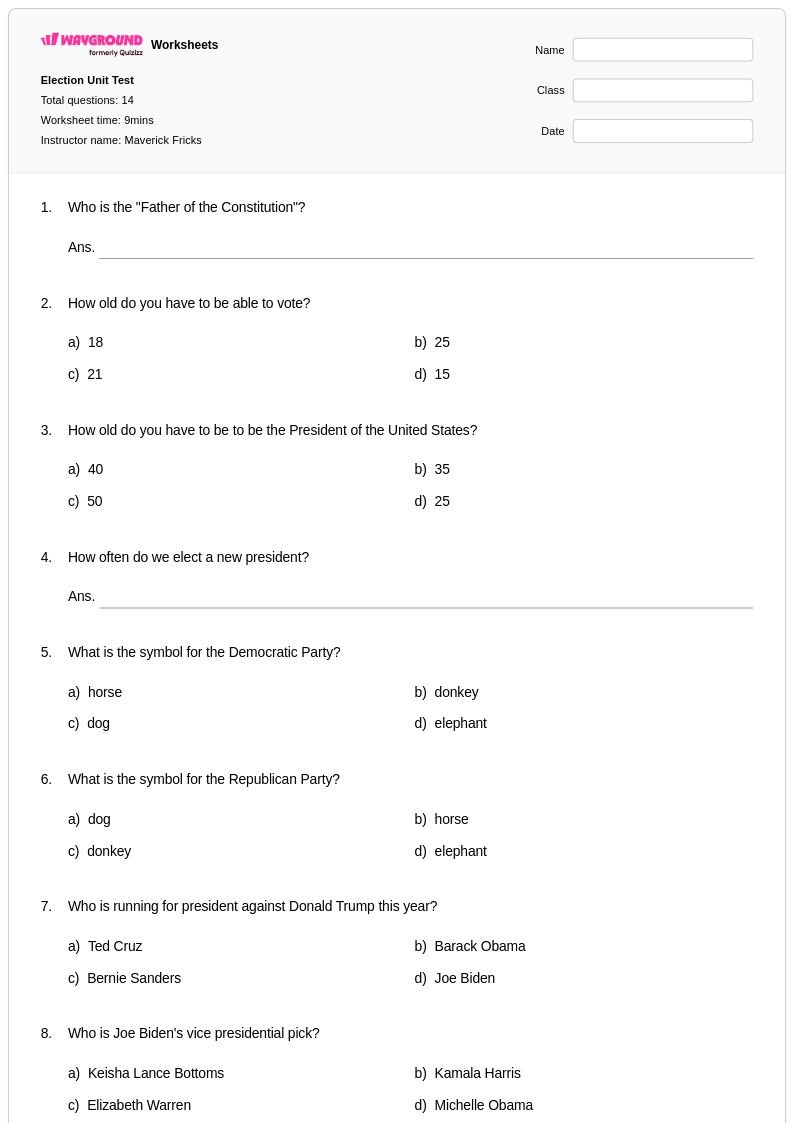
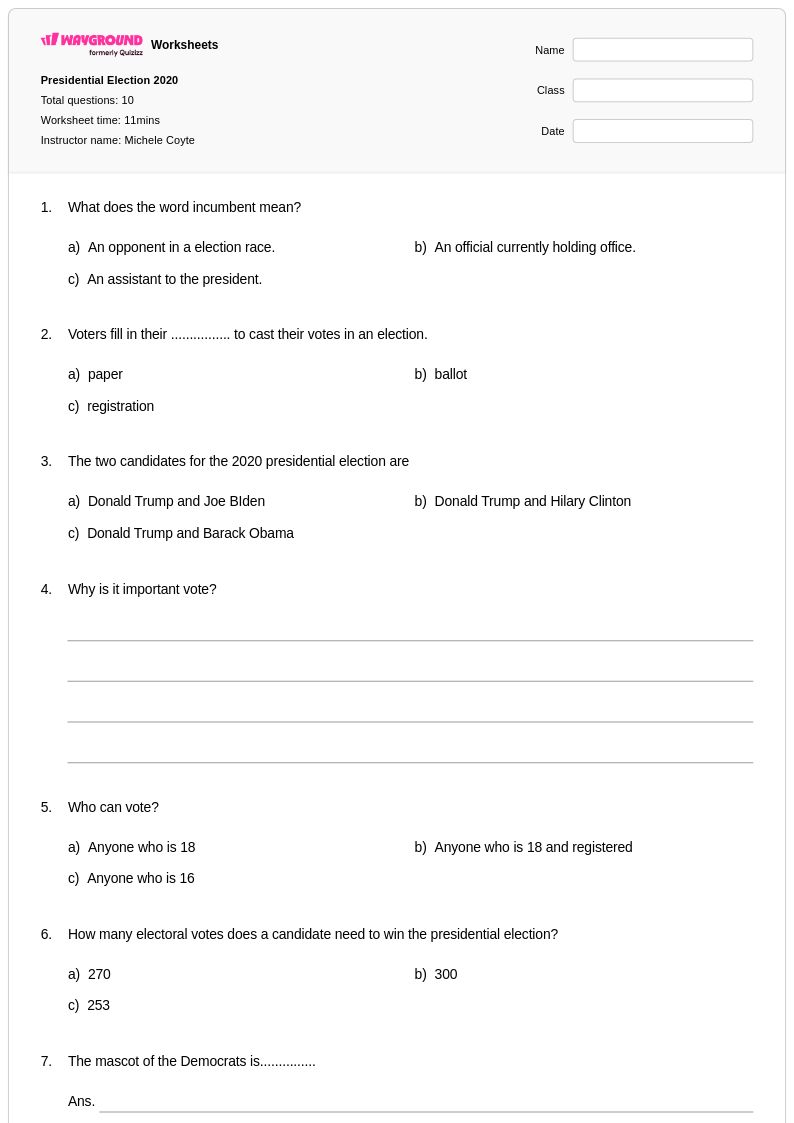
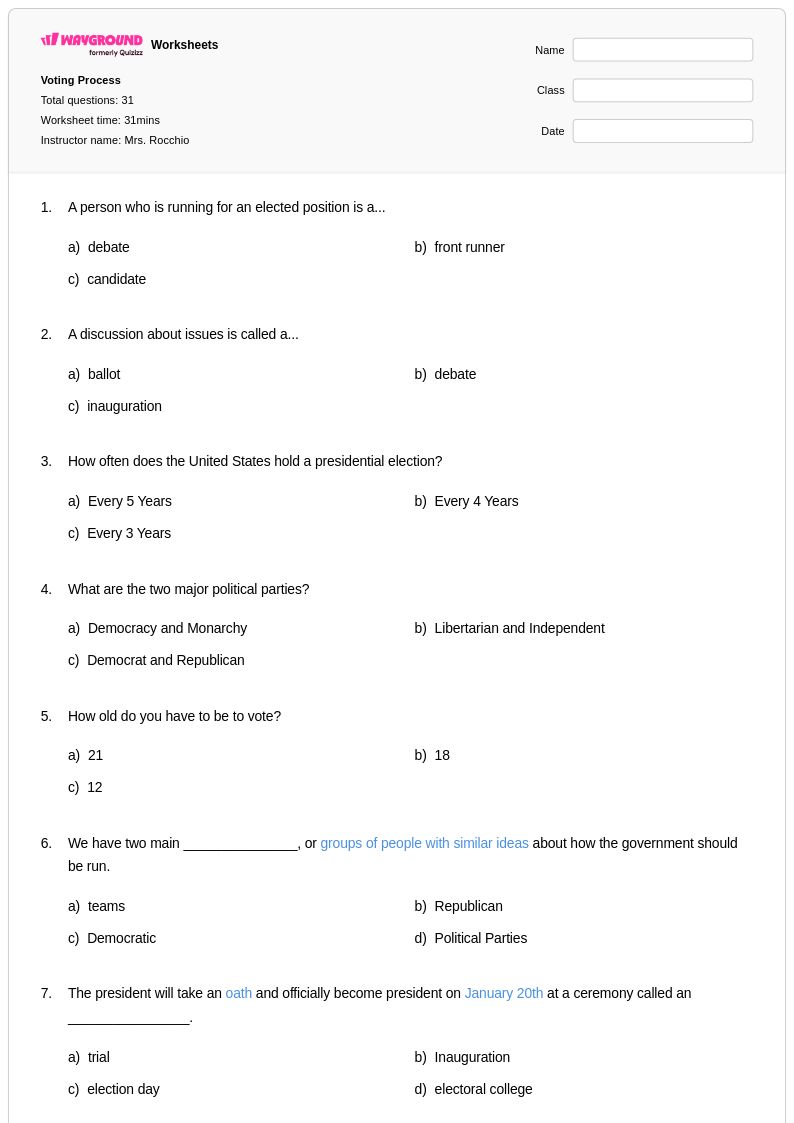
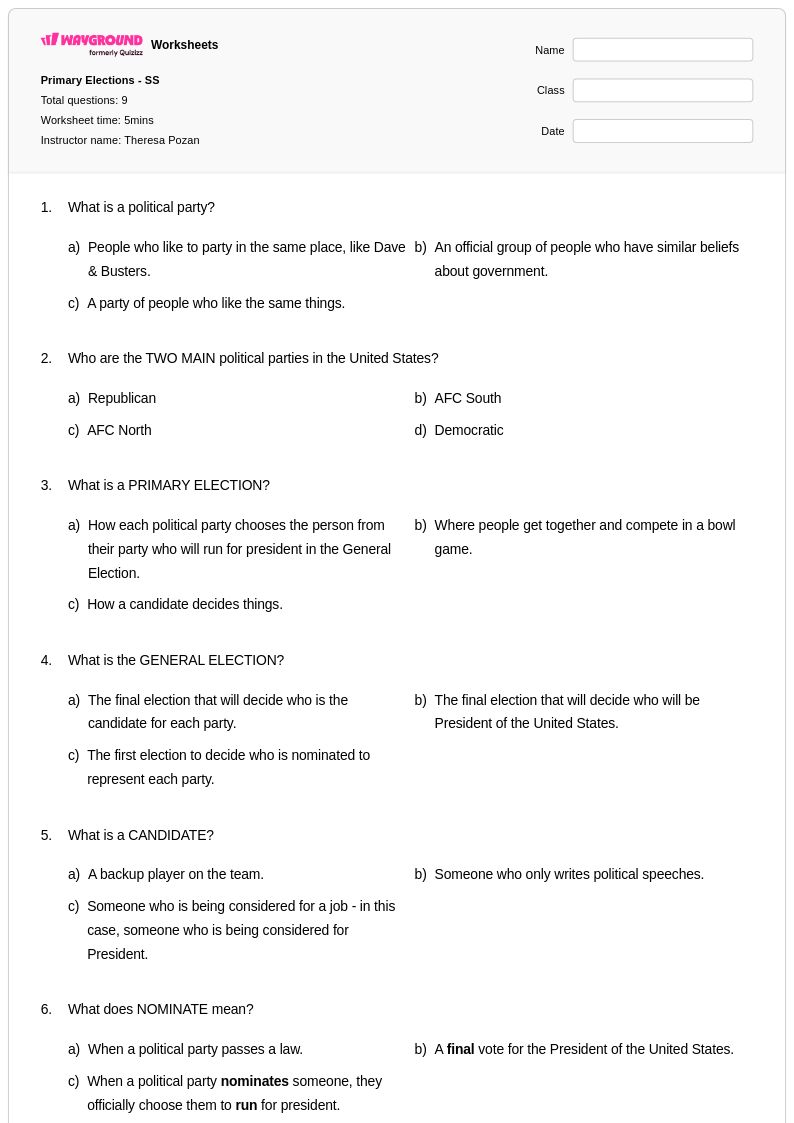
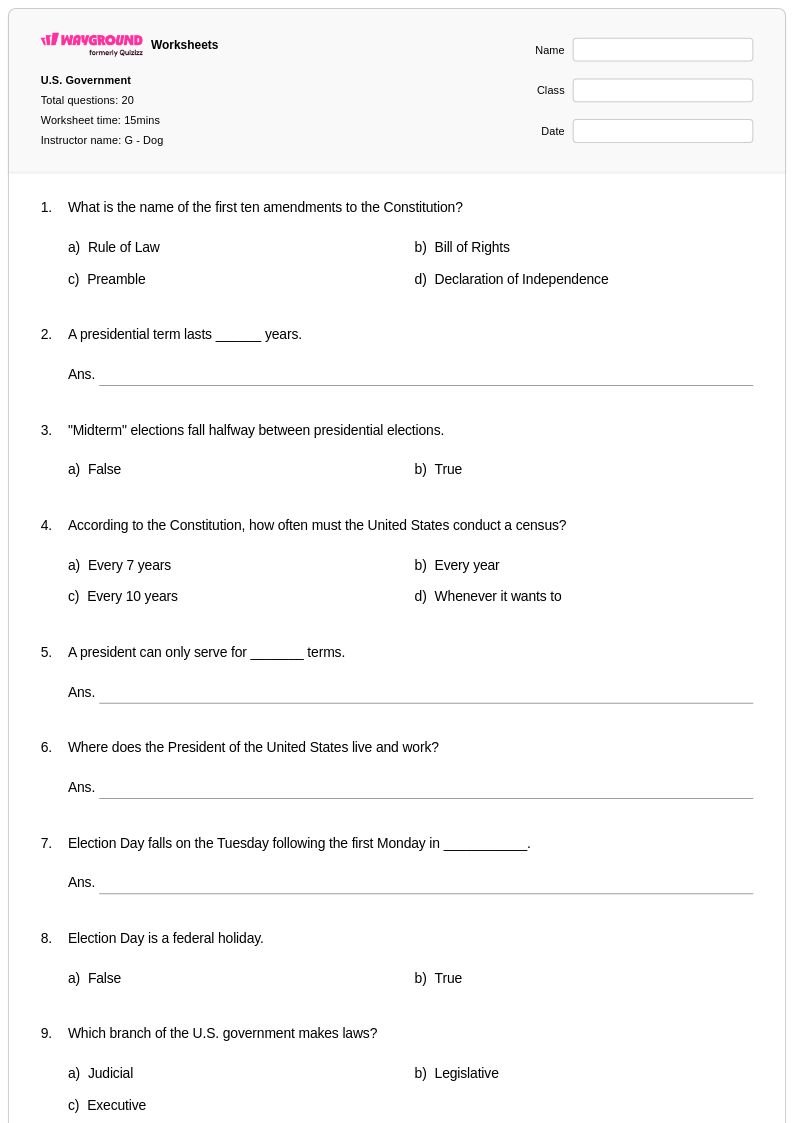
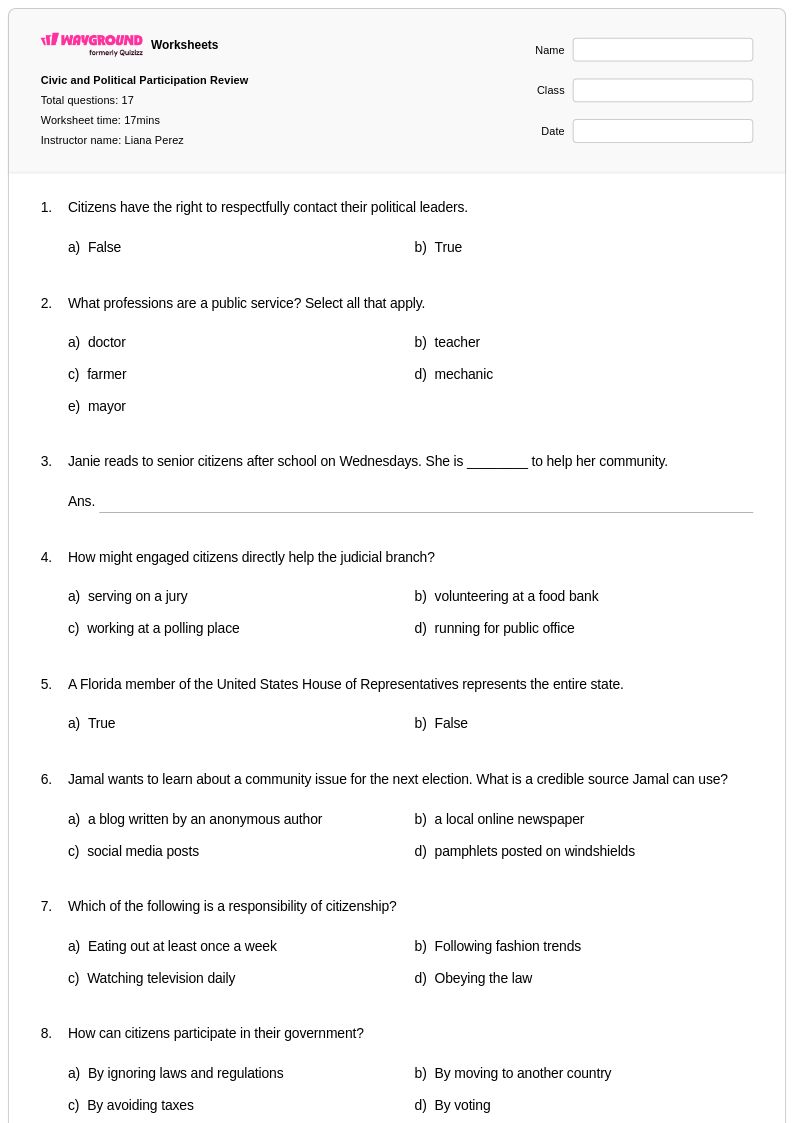
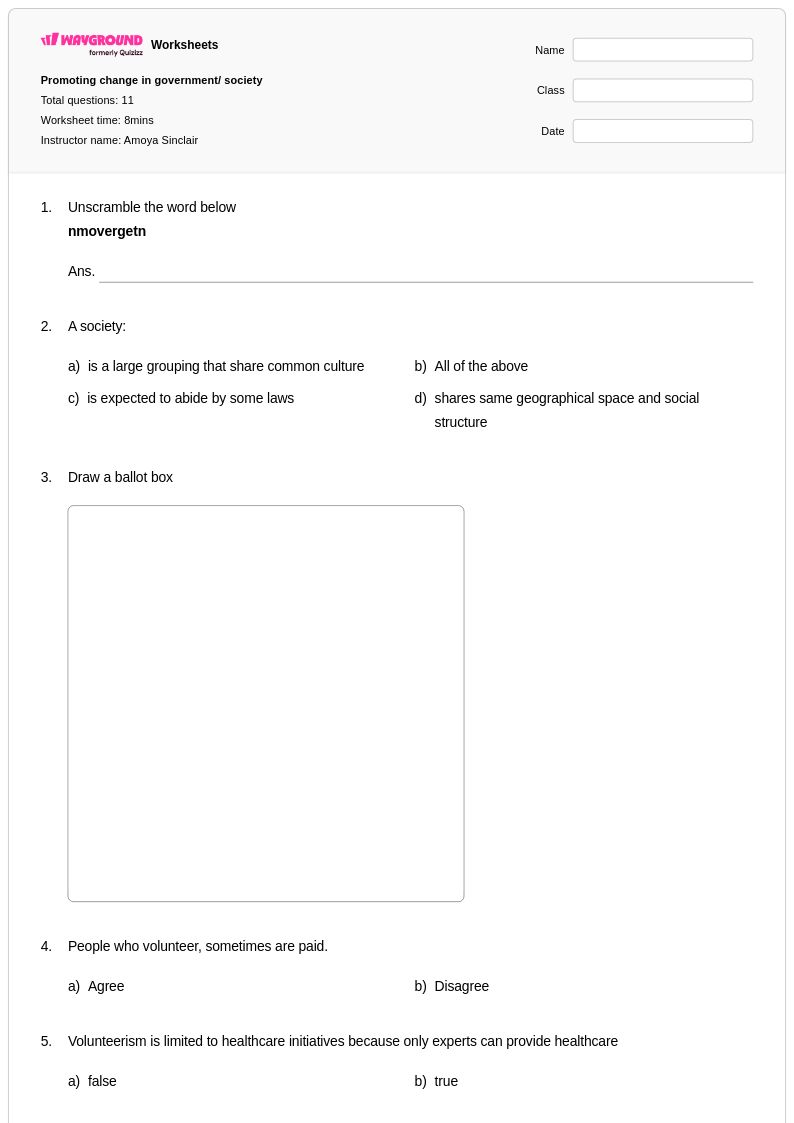
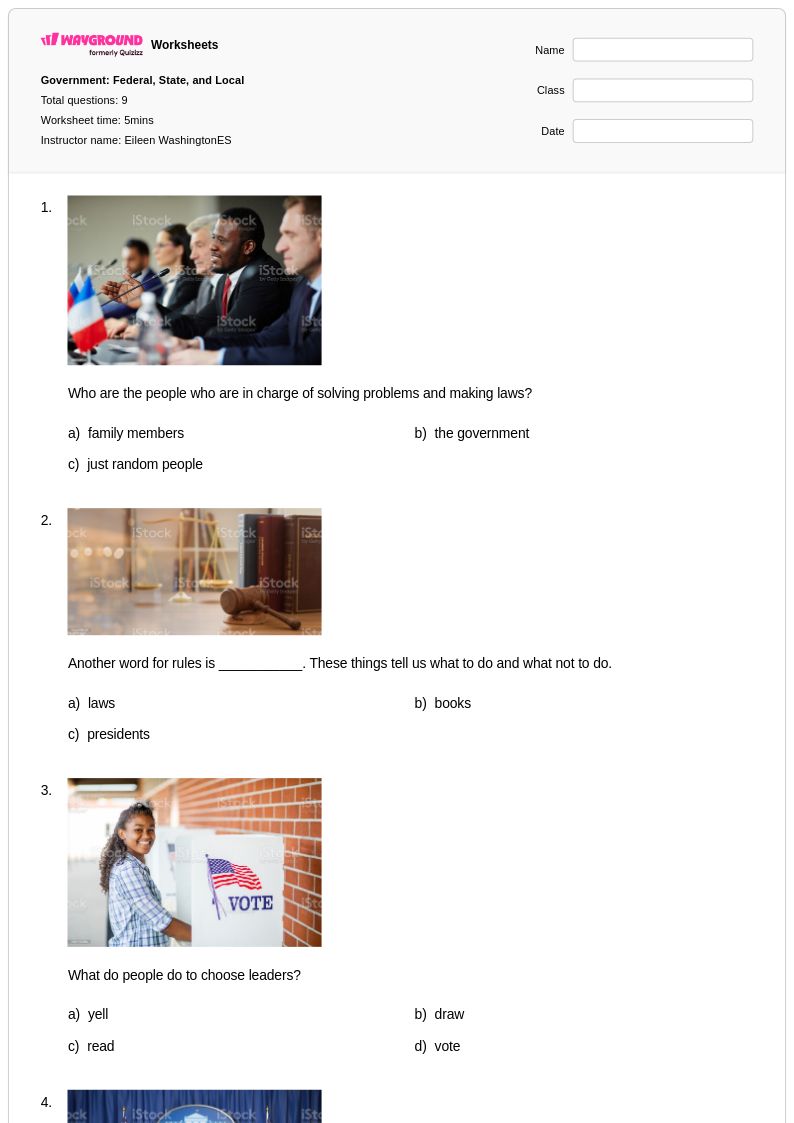
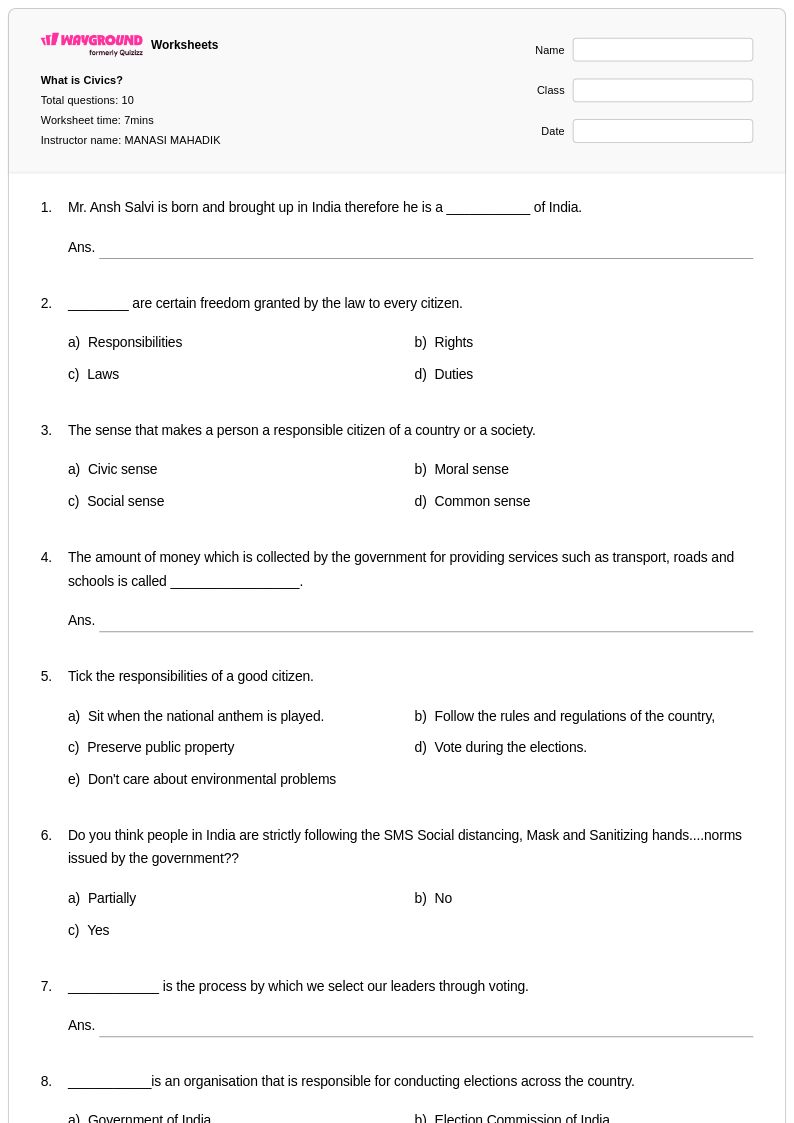
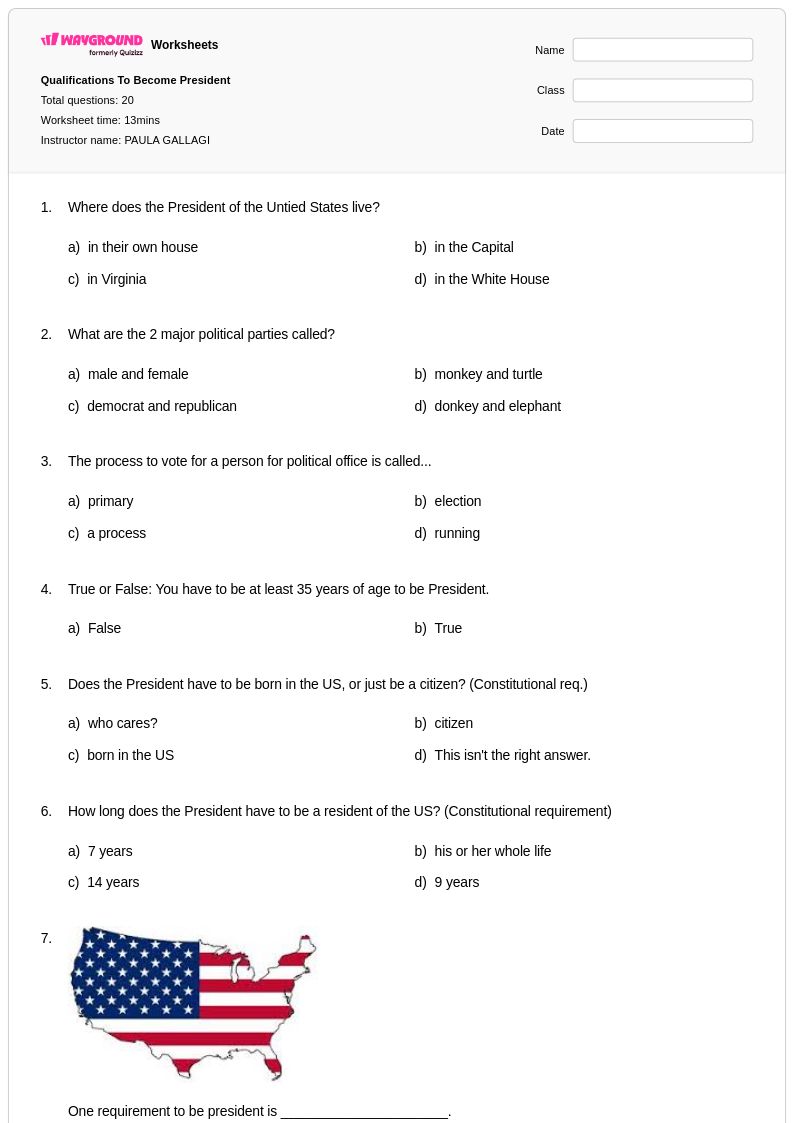
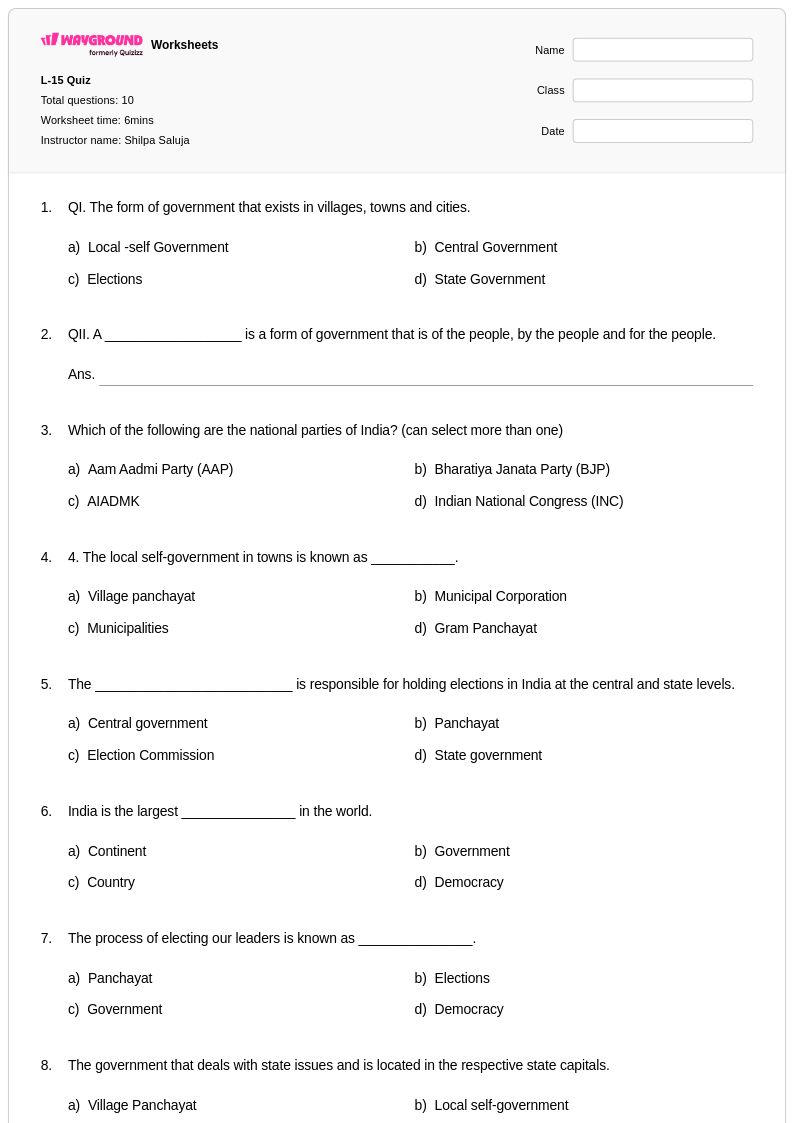
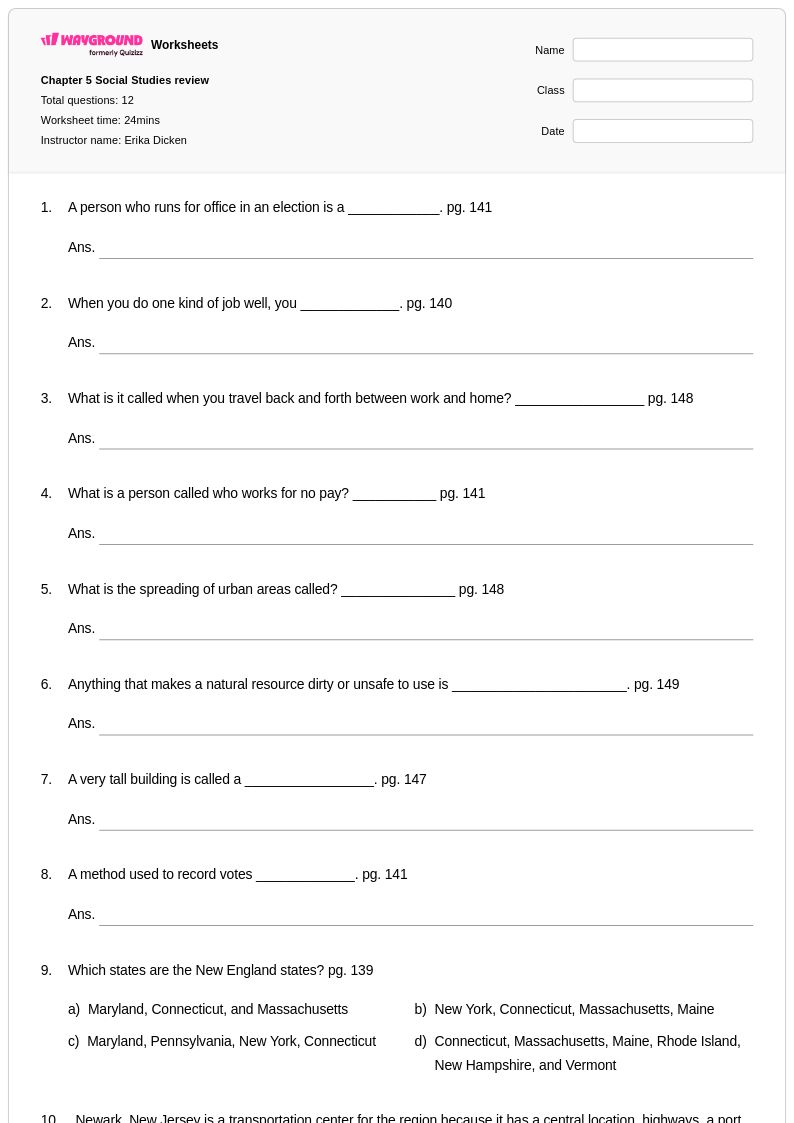
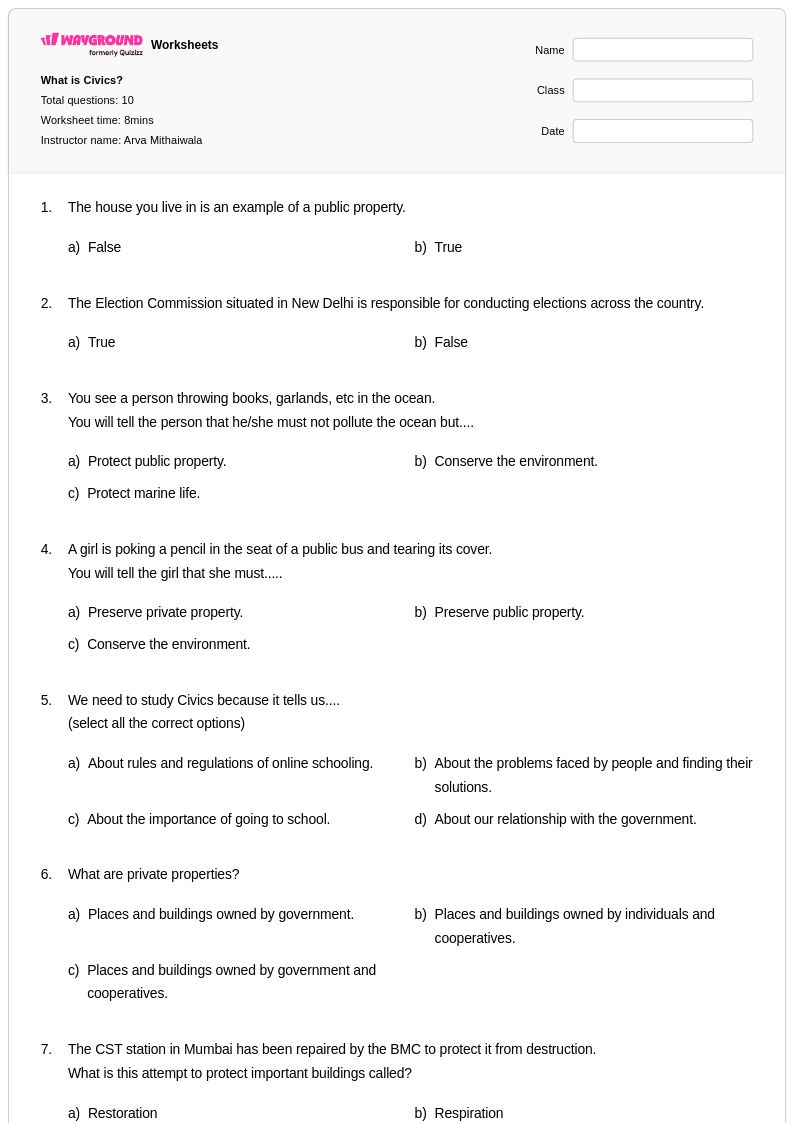
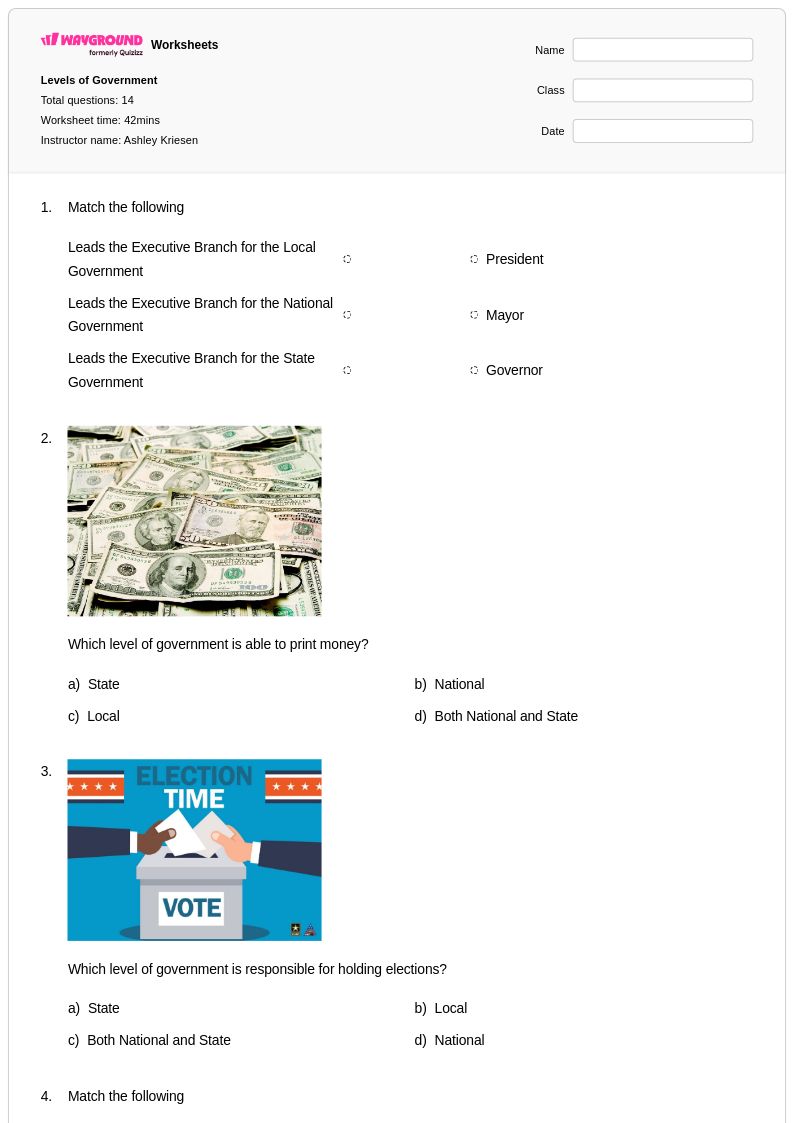
Year 4 elections worksheets and printables help students explore the voting process, candidate selection, and democratic principles through engaging practice problems with comprehensive answer keys available as free PDF downloads.
Elections worksheets for Year 4 provide students with essential practice in understanding the democratic process and their role as future citizens. These comprehensive resources help fourth graders explore key concepts including voting procedures, candidate selection, campaign processes, and the importance of civic participation in a democracy. Through engaging practice problems and interactive activities, students develop critical thinking skills about government representation, learn to identify different types of elections, and understand how citizens influence their communities through voting. The collection includes printable materials with answer keys, free pdf downloads, and varied formats that accommodate different learning styles while reinforcing fundamental civics knowledge.
Wayground, formerly Quizizz, empowers educators with millions of teacher-created elections resources specifically designed for Year 4 social studies instruction. The platform's robust search and filtering capabilities allow teachers to quickly locate standards-aligned materials that match their specific curriculum needs and student ability levels. Advanced differentiation tools enable instructors to customize worksheets for remediation or enrichment, ensuring all learners can access age-appropriate content about electoral processes. Available in both printable and digital formats including downloadable pdfs, these resources streamline lesson planning while providing flexible options for classroom instruction, homework assignments, and skill-building practice that reinforces students' understanding of democratic participation and civic responsibility.
FAQs
How do I teach elections and voting systems to students?
Teaching elections effectively means grounding abstract democratic concepts in concrete, real-world examples students can connect to. Start with the mechanics of how votes are cast and counted, then build outward to cover primary versus general elections, the Electoral College, and the roles of candidates, political parties, and election officials. Anchoring each concept in current or historical examples helps students understand why electoral systems are designed the way they are, rather than simply memorizing definitions.
What activities help students practice civic participation and election concepts?
Worksheets that walk students through the stages of an election cycle, from voter registration to ballot counting, give students a structured way to practice election concepts in sequence. Practice problems covering the Electoral College, campaign finance rules, and the difference between primary and general elections are especially useful for building familiarity with how democratic institutions operate. Scenario-based exercises, where students analyze how different electoral rules affect outcomes, can deepen critical thinking beyond basic recall.
What misconceptions do students commonly have about how elections work?
One of the most common misconceptions is that the candidate who wins the popular vote always wins the presidency, which makes the Electoral College a frequent source of confusion. Students also tend to conflate primary and general elections, misunderstanding the distinct purpose each serves in the candidate selection process. Another common error is underestimating the role of voter registration, with many students assuming eligible citizens can simply show up and vote without prior enrollment.
How can I differentiate elections worksheets for students at different levels?
For students who need additional support, reducing the complexity of answer choices or focusing on foundational concepts like what a ballot is and how votes are counted can lower the barrier to entry. More advanced students can be challenged with analysis tasks, such as evaluating the pros and cons of different electoral systems or interpreting real election data. On Wayground, teachers can apply individual accommodations including read aloud, reduced answer choices, and extended time so every student engages with the material at an appropriate level.
How do I use Wayground's elections worksheets in my classroom?
Wayground's elections worksheets are available as printable PDFs for traditional classroom use and in digital formats for technology-integrated or remote learning environments. Teachers can also host the worksheets as a live quiz directly on Wayground, making them suitable for formative assessment, class discussion warm-ups, or independent review. Each worksheet includes a complete answer key, so teachers can distribute materials confidently without additional preparation time.
Why is teaching elections important in a K-12 civics curriculum?
Elections are the primary mechanism through which citizens exercise democratic power, making them a foundational topic in any civics curriculum. Understanding how electoral systems work, who participates, and why civic participation matters prepares students to become informed voters and engaged community members. Without this foundation, students are less equipped to critically evaluate political information or understand how government decisions connect to the voting process.