Free Printable Electromagnet Worksheets for Year 11
Year 11 electromagnet worksheets from Wayground provide comprehensive printables and practice problems with answer keys to help students master magnetic field principles, electromagnetic induction, and practical applications through engaging free PDF resources.
Explore printable Electromagnet worksheets for Year 11
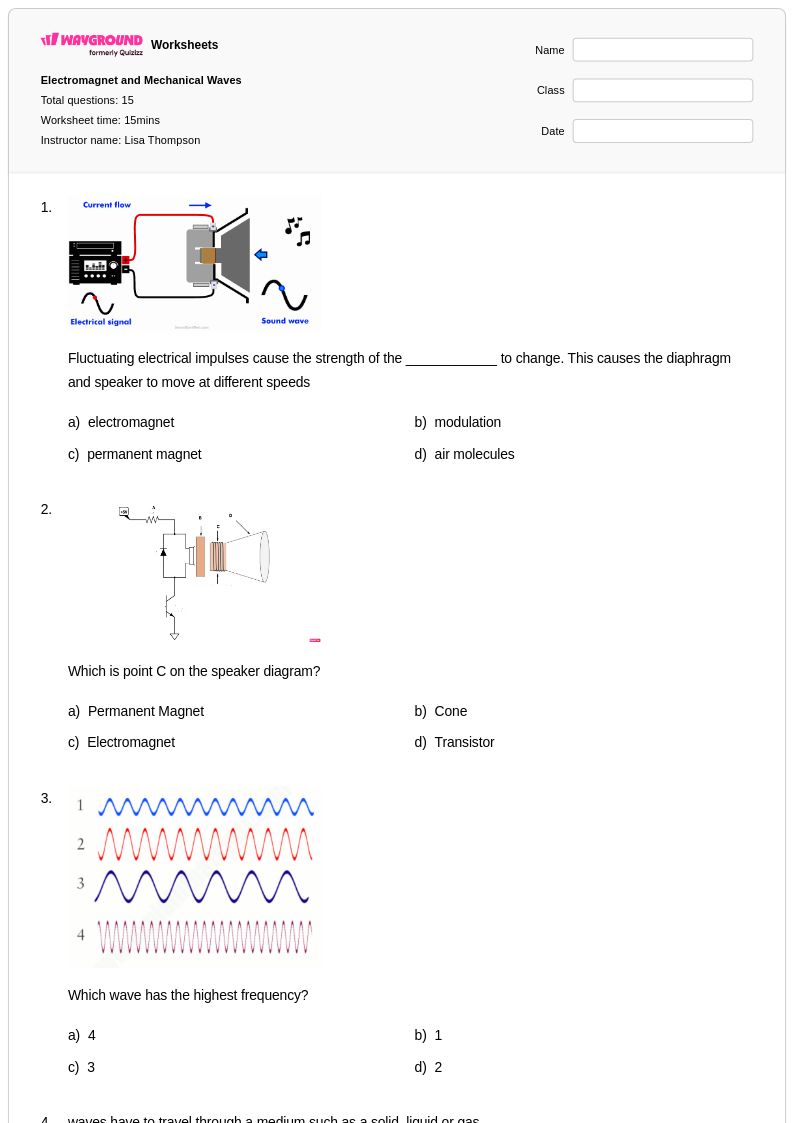
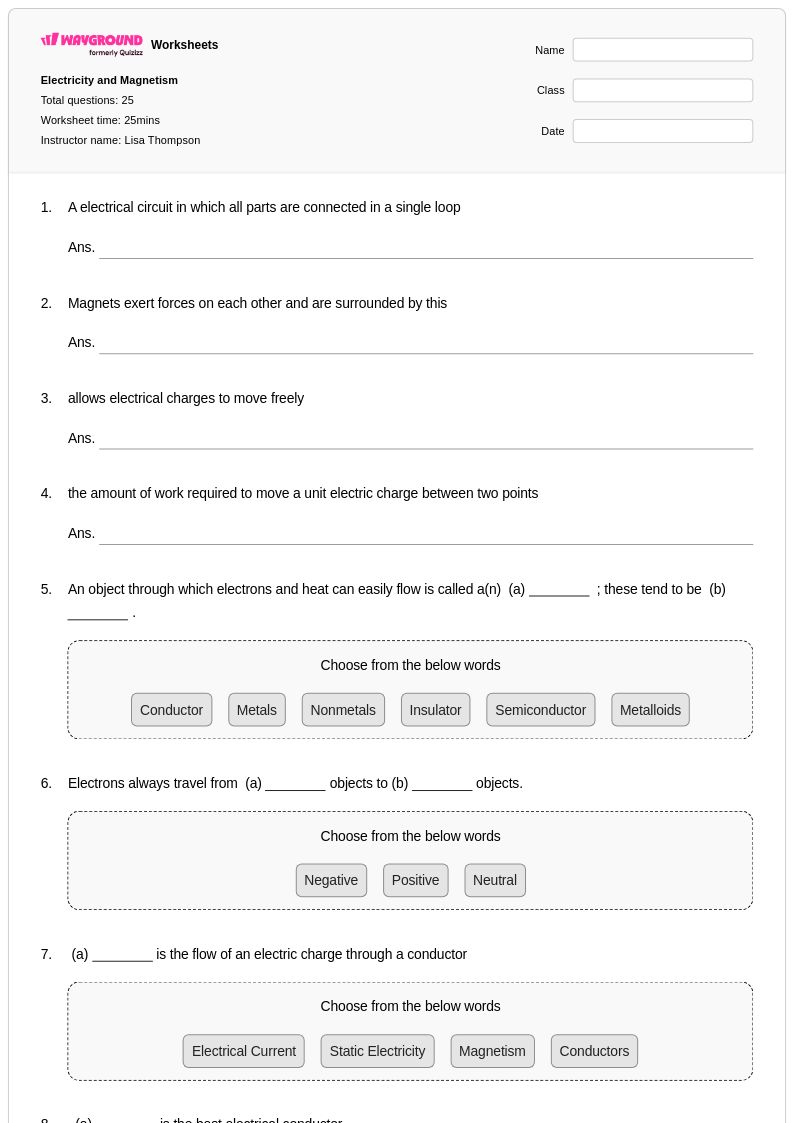
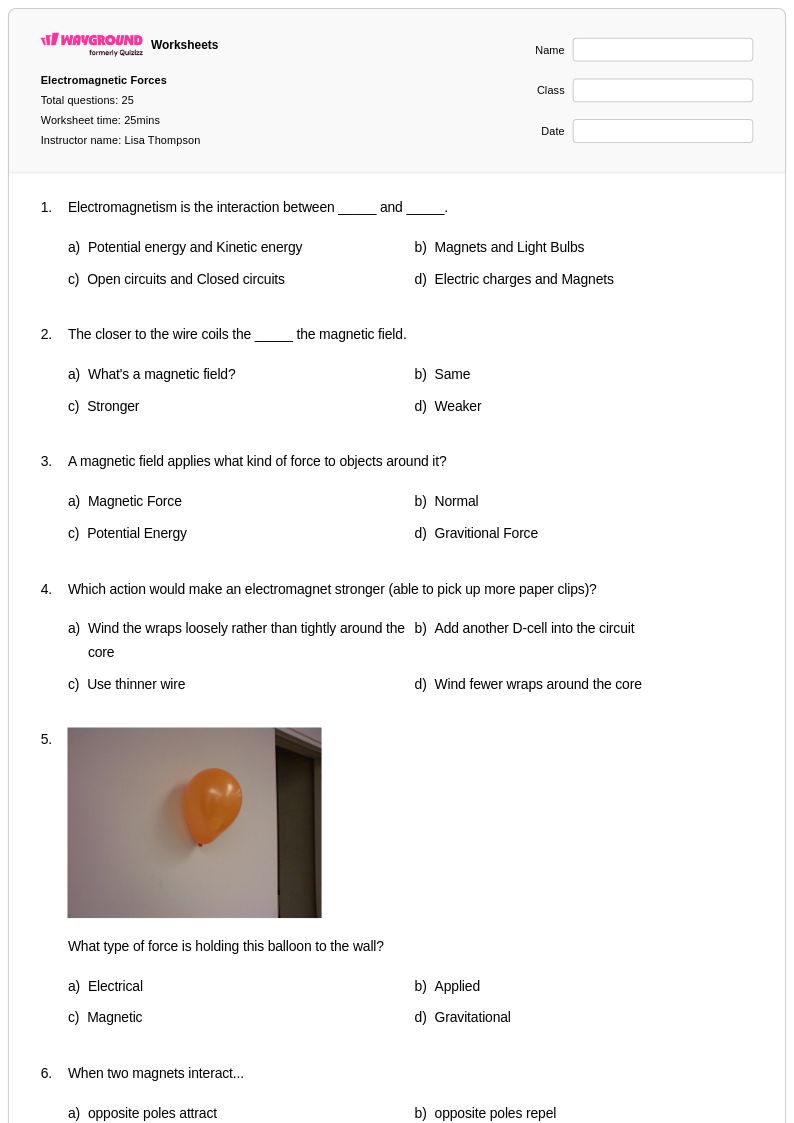
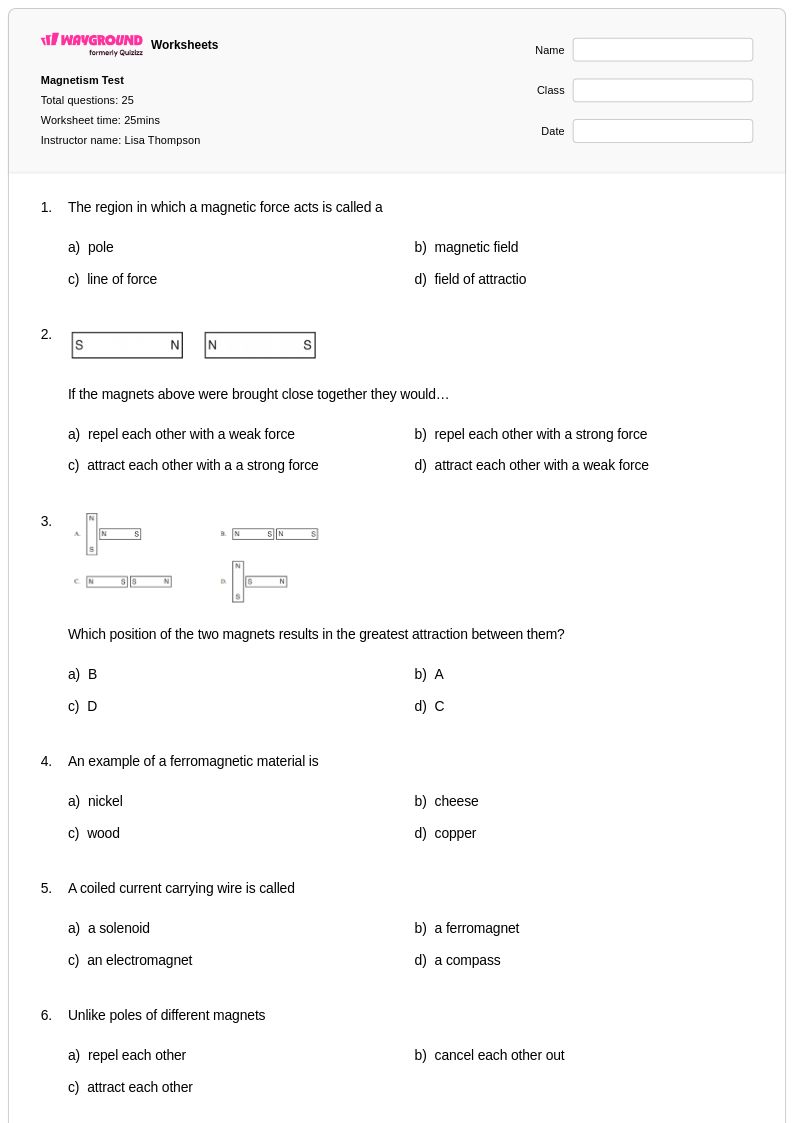
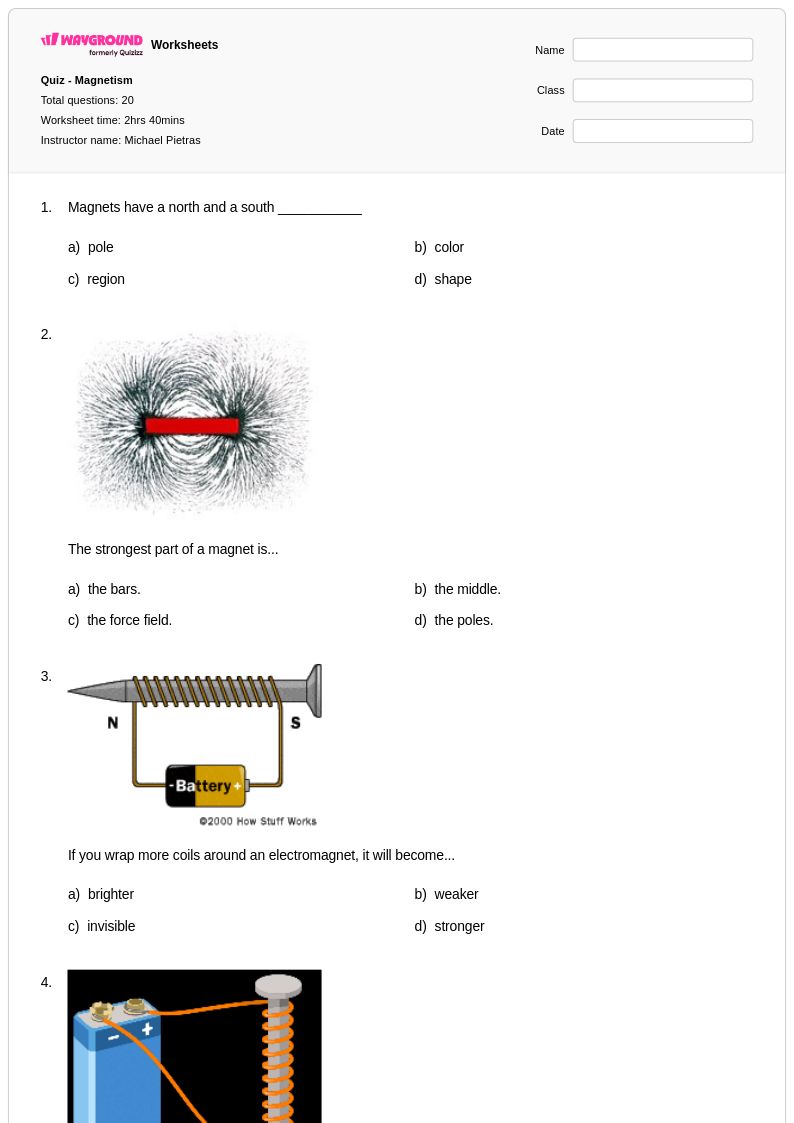
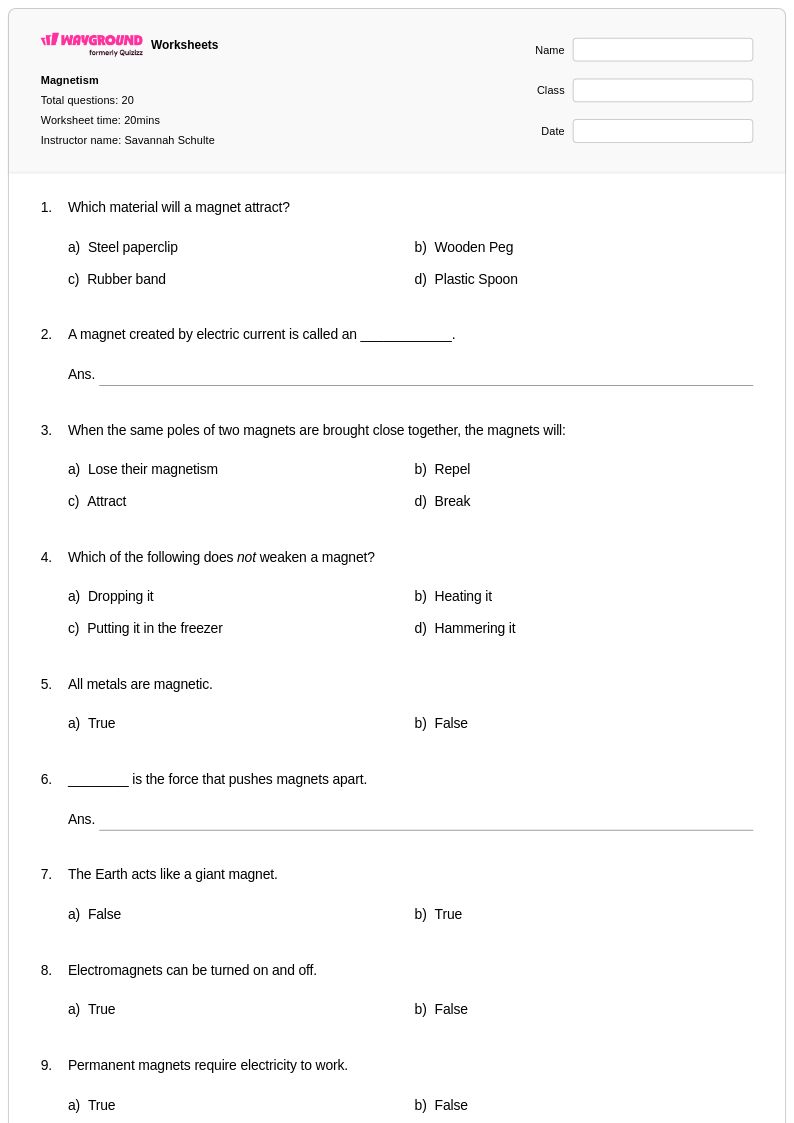
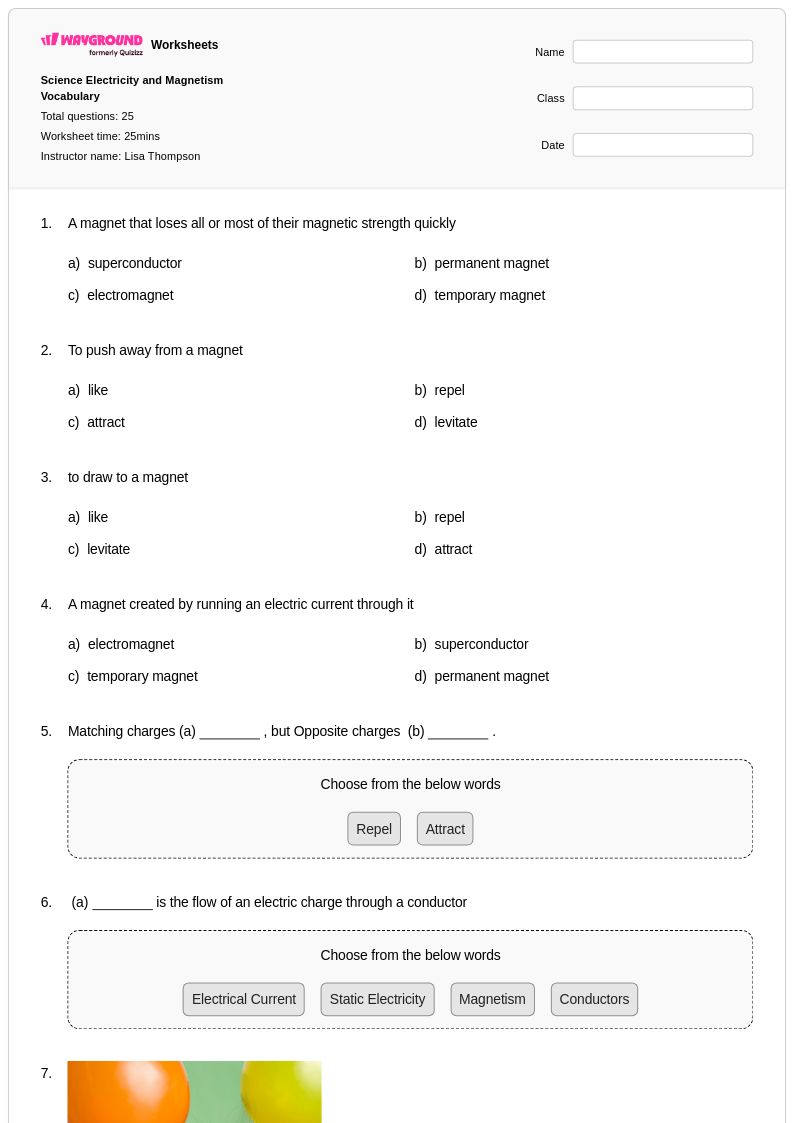
Year 11 electromagnet worksheets available through Wayground (formerly Quizizz) provide comprehensive practice materials that help students master the fundamental principles of electromagnetic induction, magnetic field interactions, and the practical applications of electromagnets in modern technology. These expertly crafted resources strengthen critical physics skills including calculating magnetic field strength, analyzing the relationship between current flow and magnetic force, understanding Faraday's law of electromagnetic induction, and exploring real-world electromagnet applications in motors, generators, and magnetic levitation systems. Students benefit from structured practice problems that progressively build understanding of complex concepts like flux density, permeability, and the right-hand rule, while teachers can access complete answer keys and printable pdf formats that facilitate both classroom instruction and independent study sessions.
Wayground's extensive collection of electromagnet worksheets draws from millions of teacher-created resources, offering educators powerful search and filtering capabilities to locate materials that align with specific physics standards and curriculum requirements. The platform's differentiation tools enable teachers to customize worksheets for varying skill levels within Year 11 classrooms, supporting both remediation for students struggling with electromagnetic concepts and enrichment opportunities for advanced learners ready to explore more sophisticated applications. These flexible resources are available in both printable and digital formats, including downloadable pdf versions, making them ideal for diverse teaching environments and learning preferences. Teachers can efficiently plan comprehensive electromagnet units, create targeted skill practice sessions, and provide students with the structured support needed to develop proficiency in this essential physics domain.
FAQs
How do I teach electromagnets to students?
Start by grounding students in the relationship between electric current and magnetic field generation, using simple coil-and-battery demonstrations before introducing variables like coil turns and core materials. Build from the principle that current-carrying conductors produce magnetic fields to the concept of ferromagnetic cores amplifying those fields. Connecting electromagnets to real-world applications such as electric motors, MRI machines, and speakers helps students see why these principles matter and increases engagement with abstract concepts.
What exercises help students practice electromagnet concepts?
Effective practice includes field mapping exercises where students diagram magnetic field lines around coils, quantitative problems analyzing how coil turns, current strength, and core material affect electromagnetic force, and application-based questions connecting electromagnets to devices like speakers and magnetic levitation systems. Worksheets that mix conceptual questions with calculation problems help students develop both procedural fluency and deeper understanding of electromagnetic principles.
What common mistakes do students make when learning about electromagnets?
A frequent misconception is that electromagnets work the same way as permanent magnets, leading students to overlook the essential role of continuous electric current in sustaining the magnetic field. Students also often confuse the direction of the magnetic field relative to current flow, misapplying the right-hand rule. Another common error is assuming that more coil turns always produce a proportionally stronger magnet without considering the effects of resistance, core saturation, or current limitations.
How do I differentiate electromagnet instruction for students at different skill levels?
For students who need additional support, focus on qualitative relationships first, such as more current means stronger magnet, before introducing quantitative analysis. Advanced learners can be challenged with problems involving electromagnetic induction, force calculations, or device design scenarios. On Wayground, teachers can apply accommodations such as reduced answer choices to lower cognitive load for struggling students, or enable Read Aloud for students who benefit from audio support, while the rest of the class works with standard settings.
How do I use Wayground's electromagnet worksheets in my classroom?
Wayground's electromagnet worksheets are available as printable PDFs for traditional classroom distribution and in digital formats for technology-integrated or remote learning environments. Teachers can also host worksheets as interactive quizzes directly on Wayground, enabling real-time student responses and automated grading. Complete answer keys are included with every worksheet, supporting both teacher-led review and independent student self-assessment.
How do electromagnets differ from permanent magnets, and how should I explain this to students?
Unlike permanent magnets, which maintain a constant magnetic field due to the alignment of magnetic domains in their material, electromagnets generate a magnetic field only when electric current flows through the coil. This temporary nature is actually a practical advantage, since the magnet can be switched on and off and its strength can be controlled by varying the current. Teaching this distinction explicitly helps students understand why electromagnets are used in applications like cranes, MRI machines, and electric motors where controllability is essential.