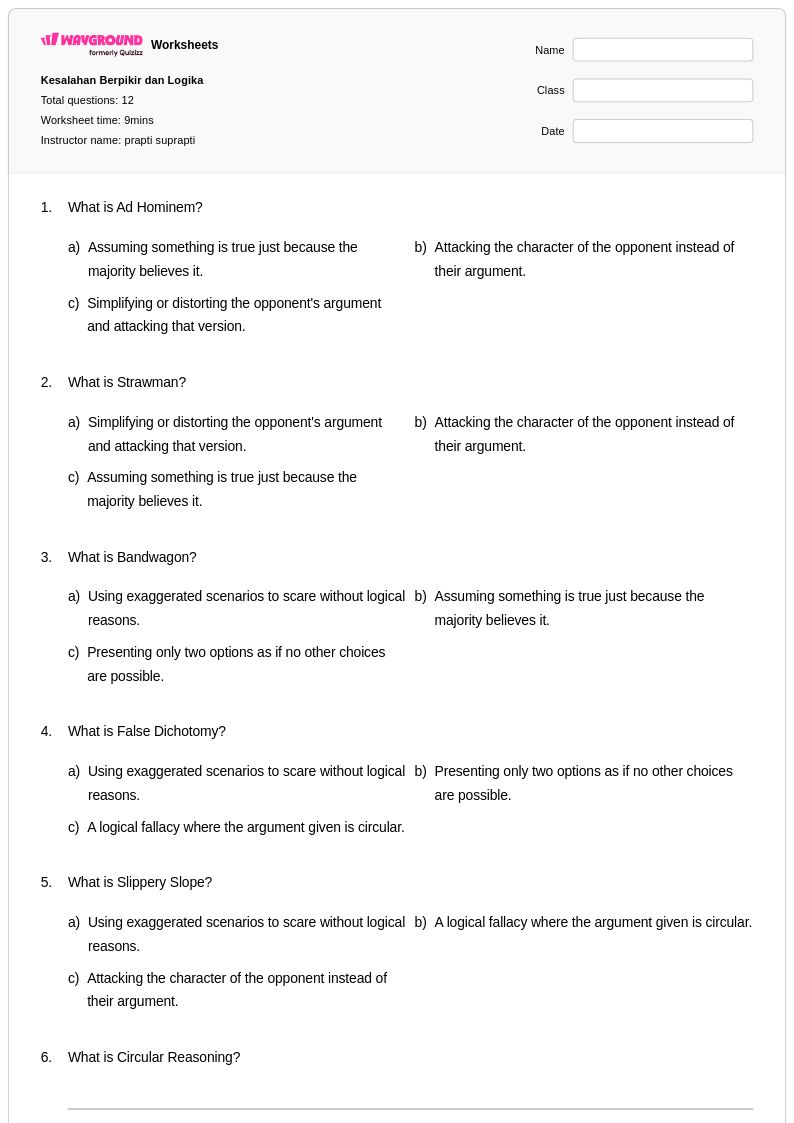
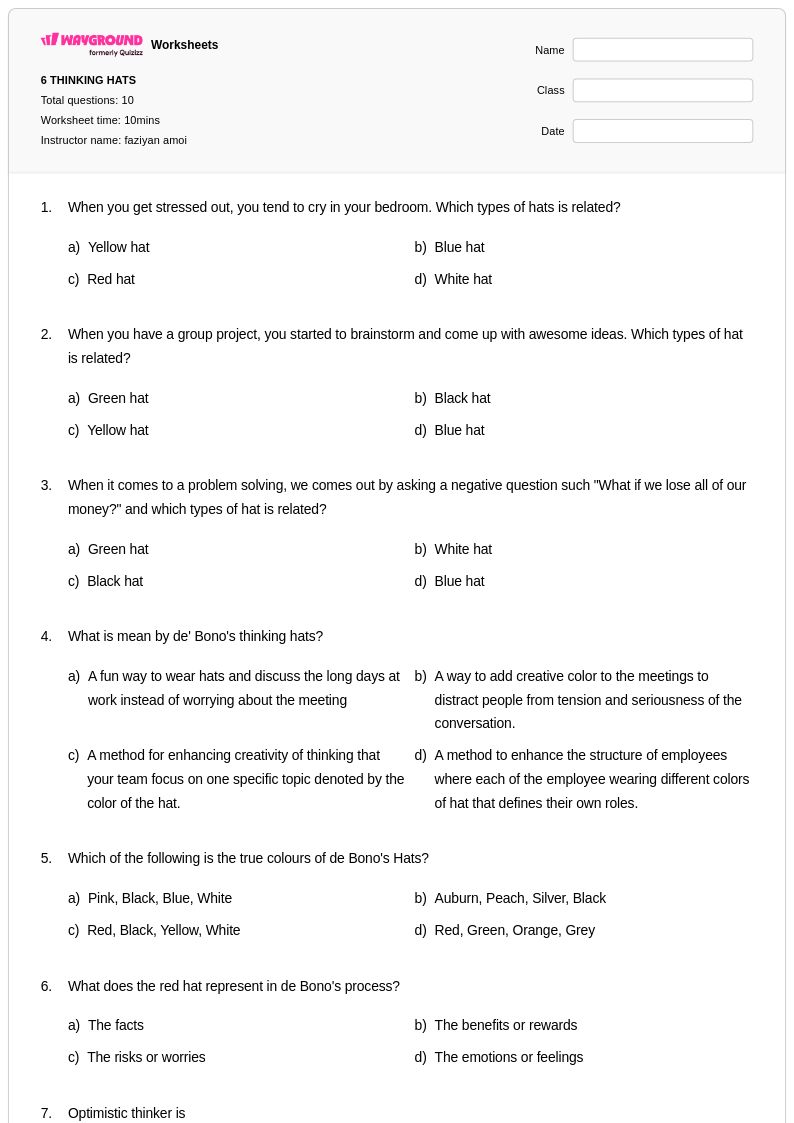
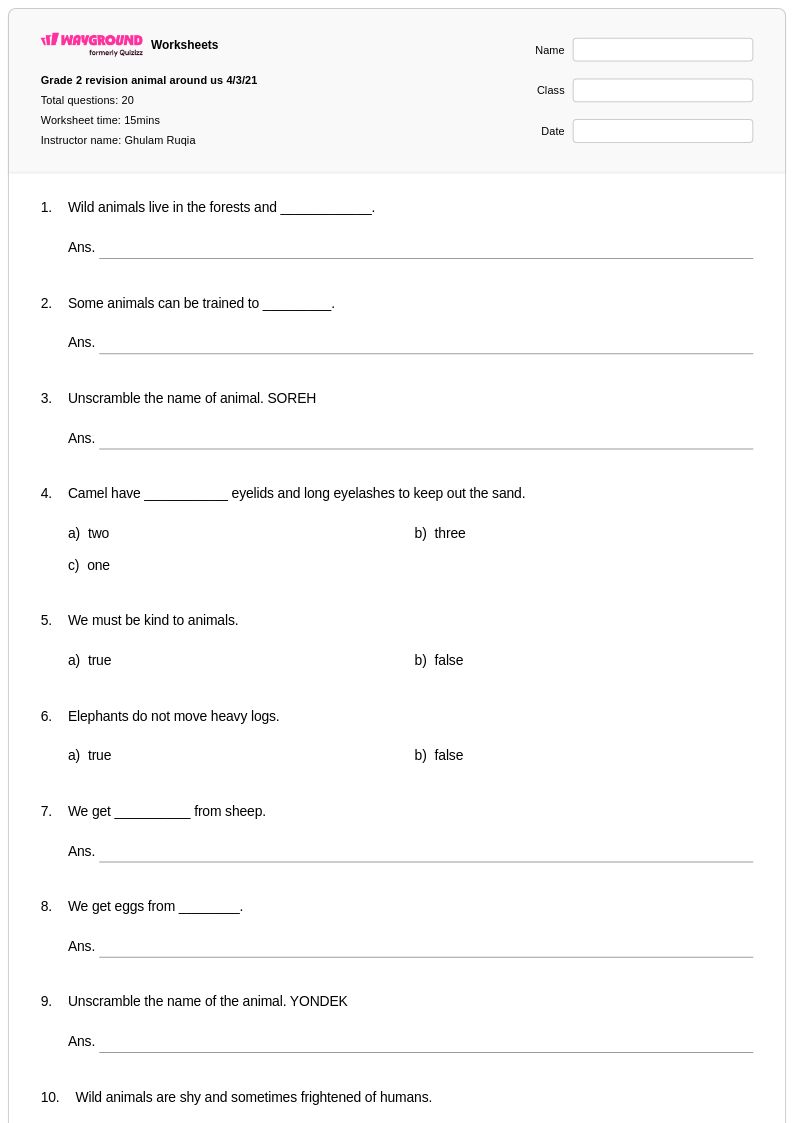
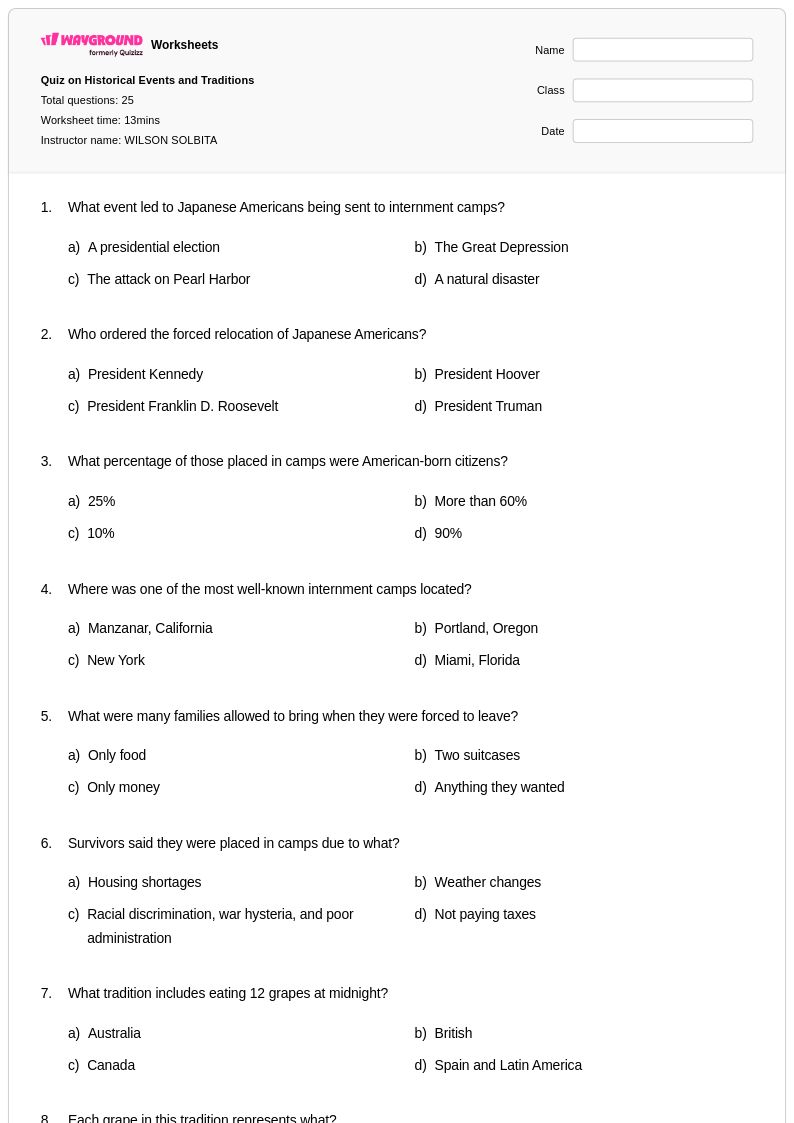
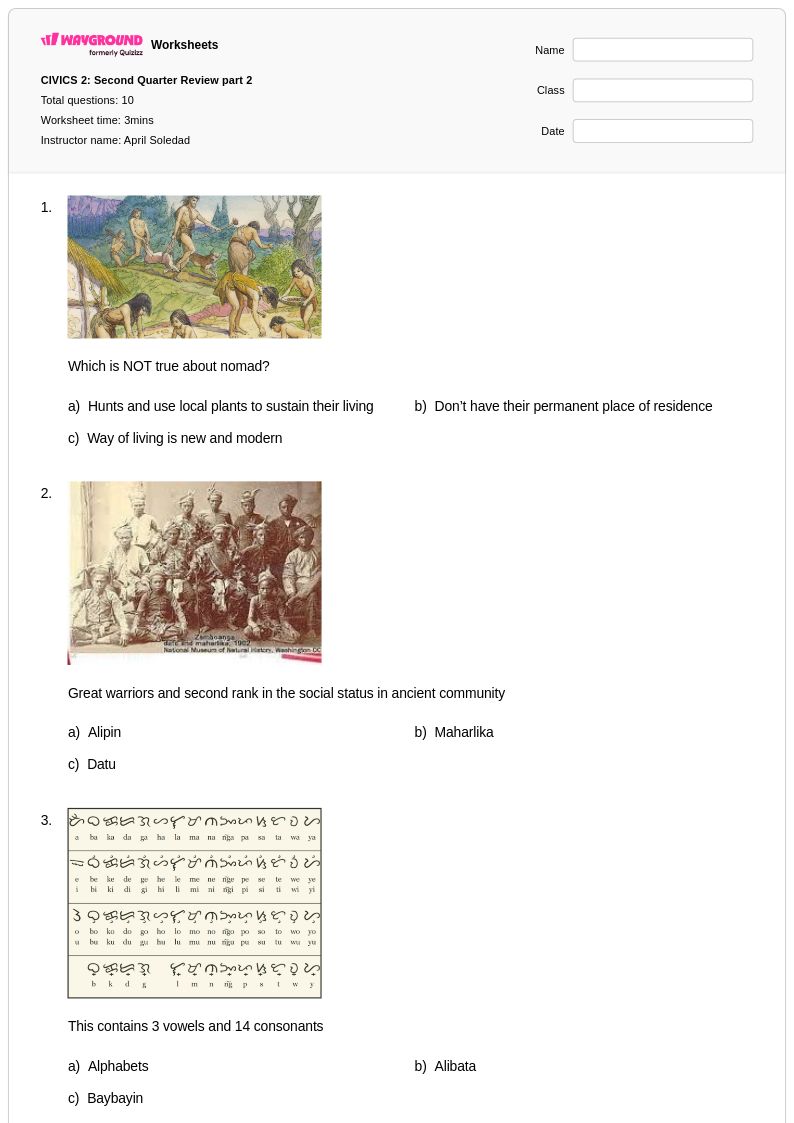
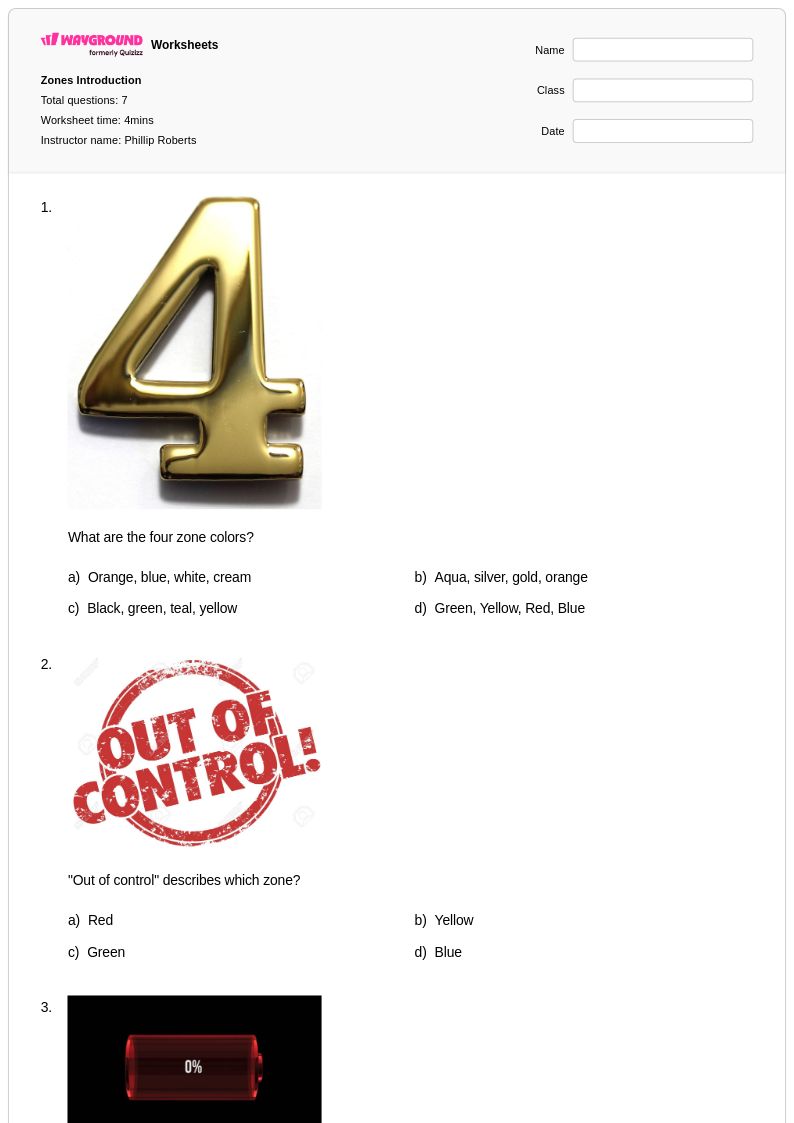
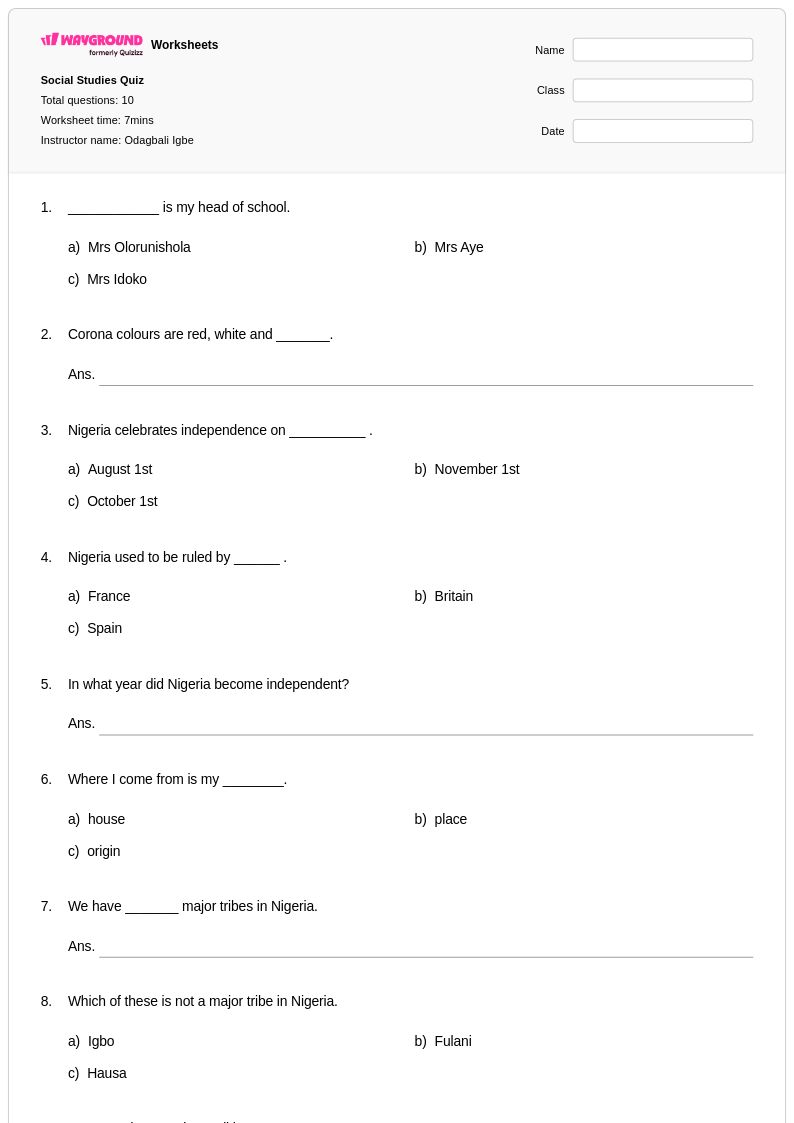
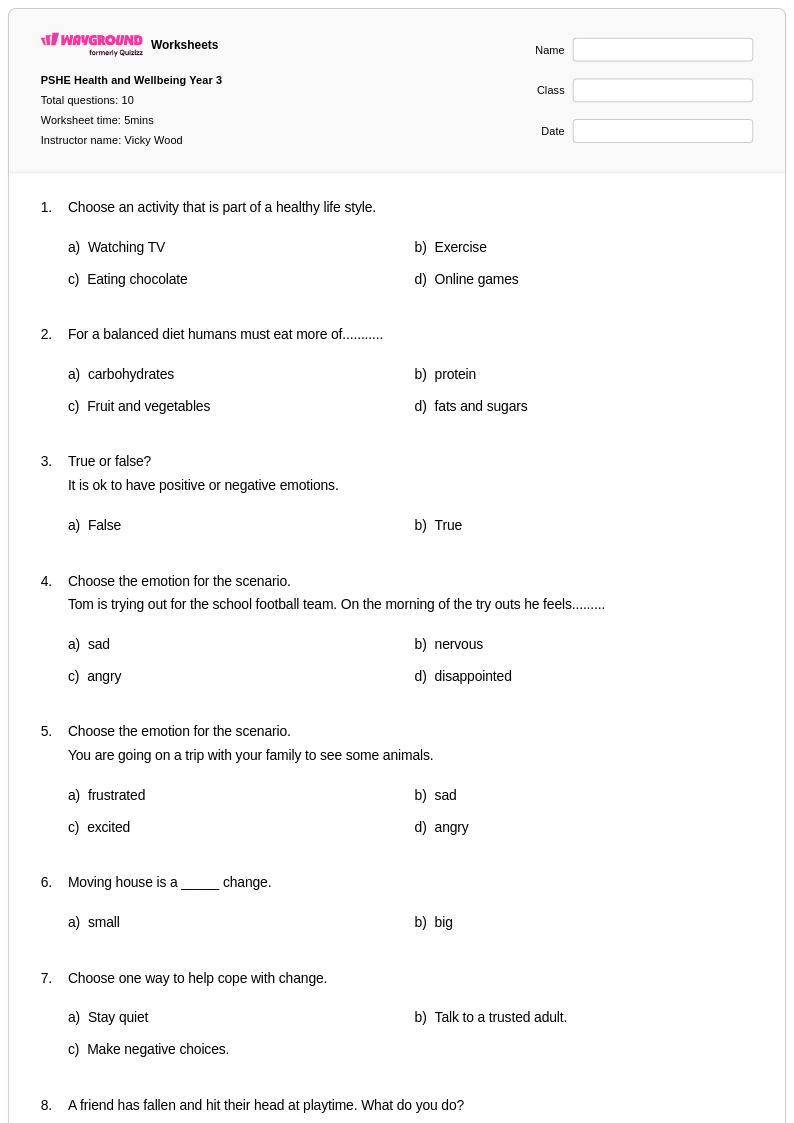
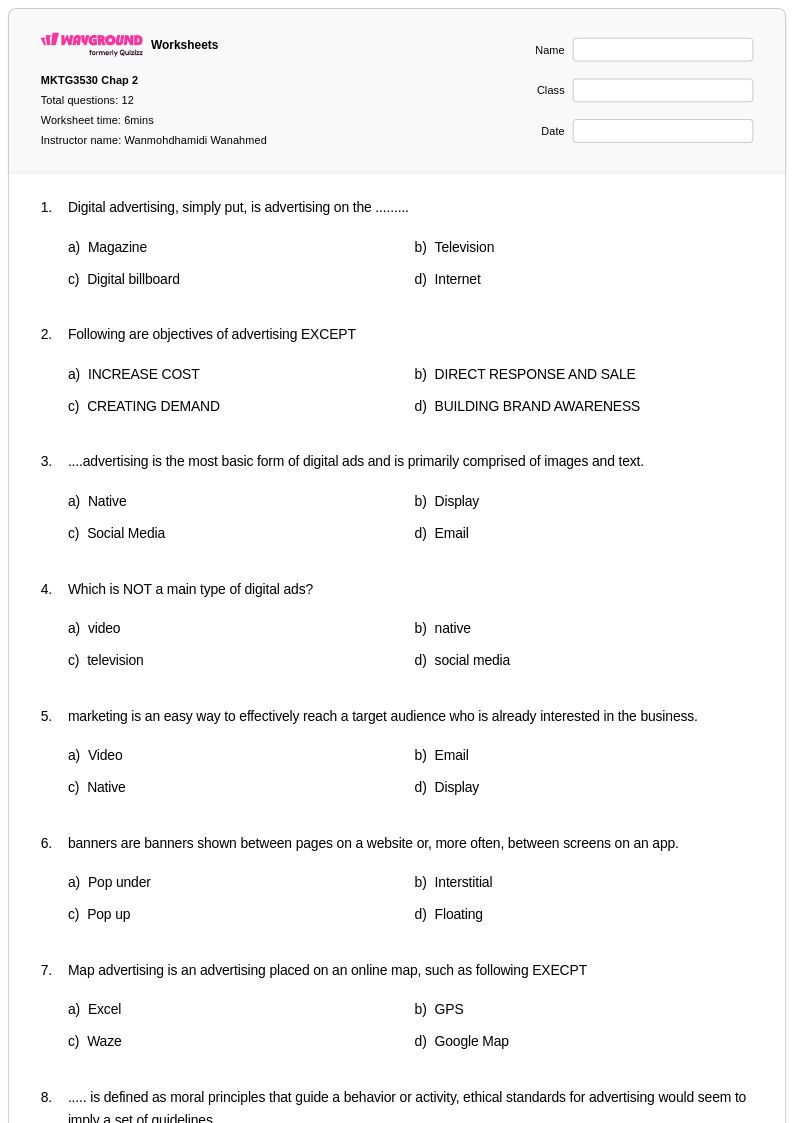
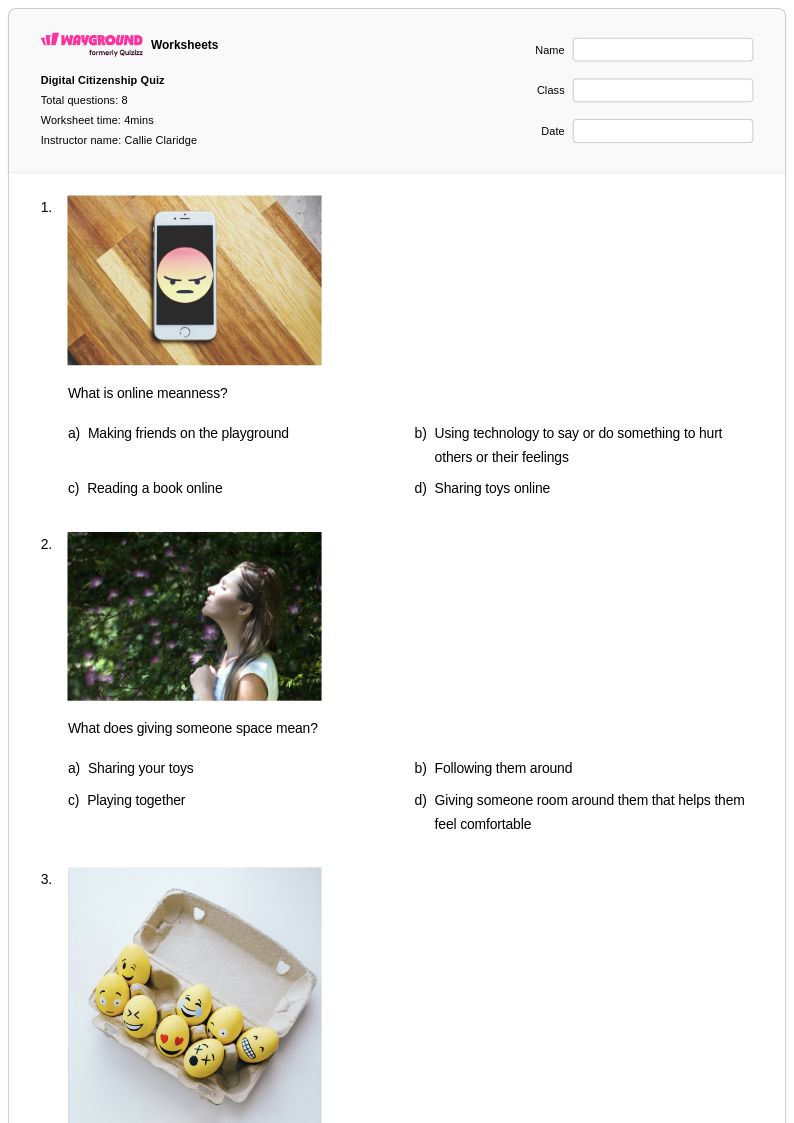
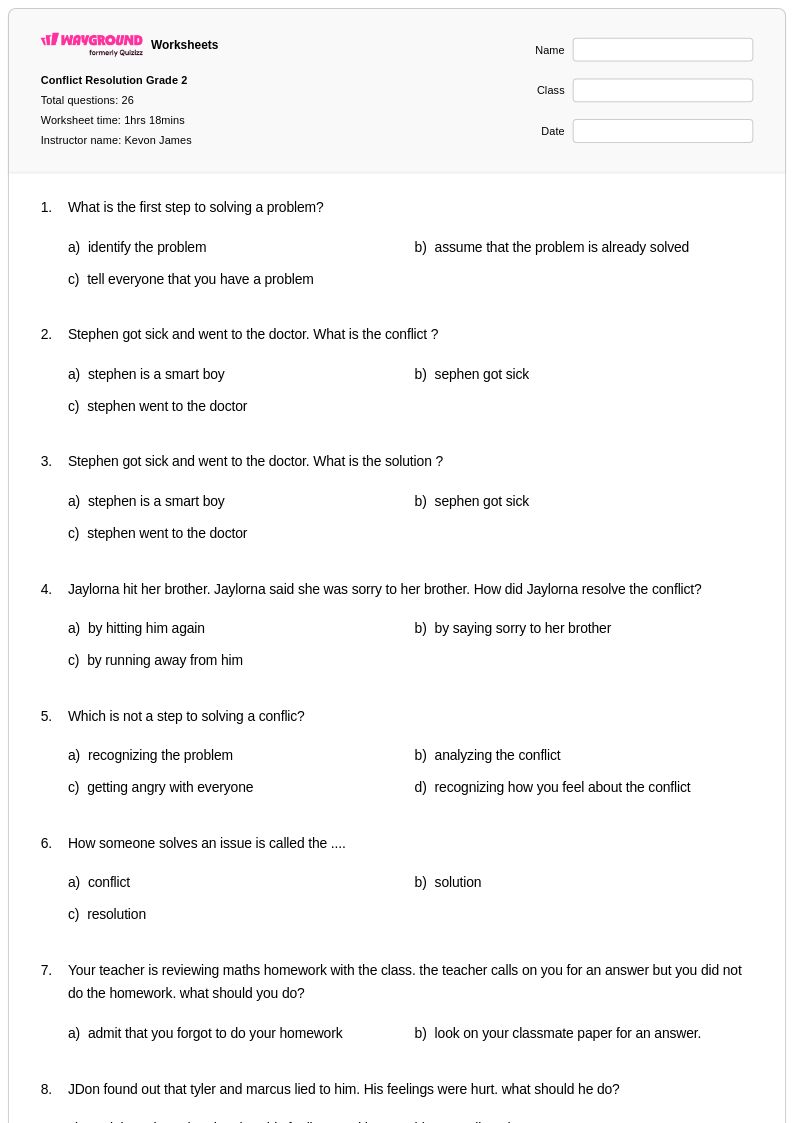
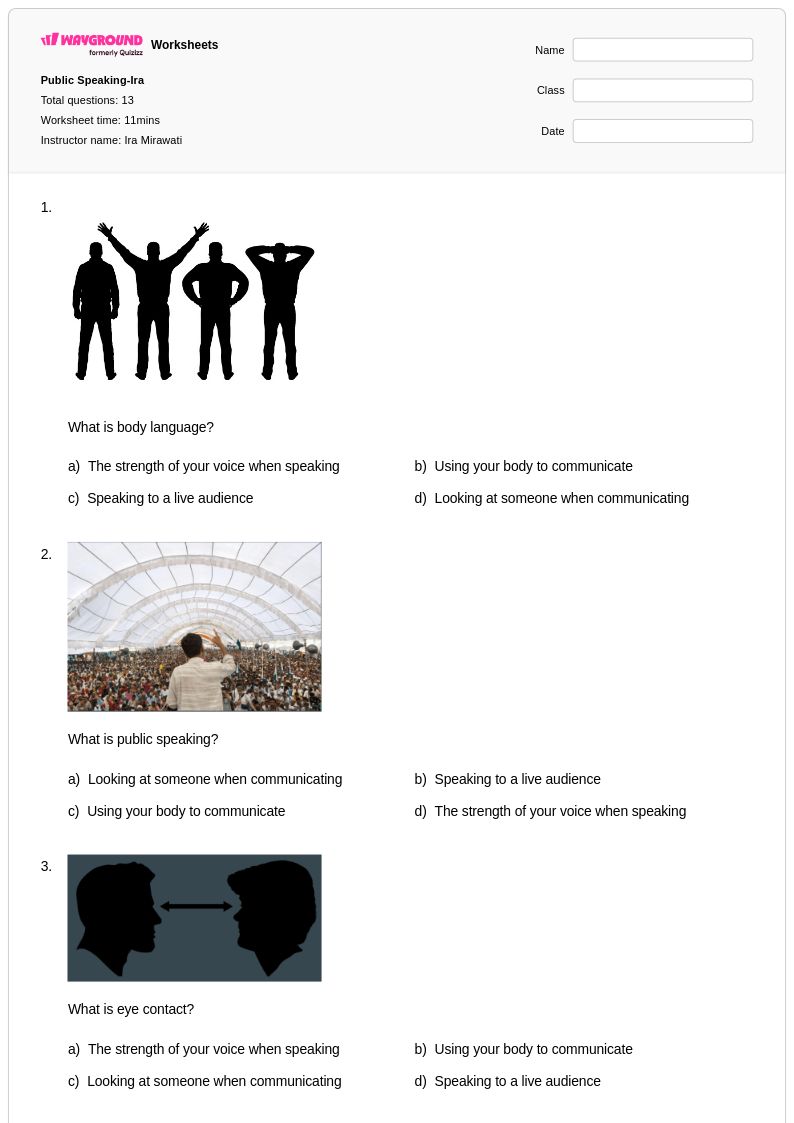
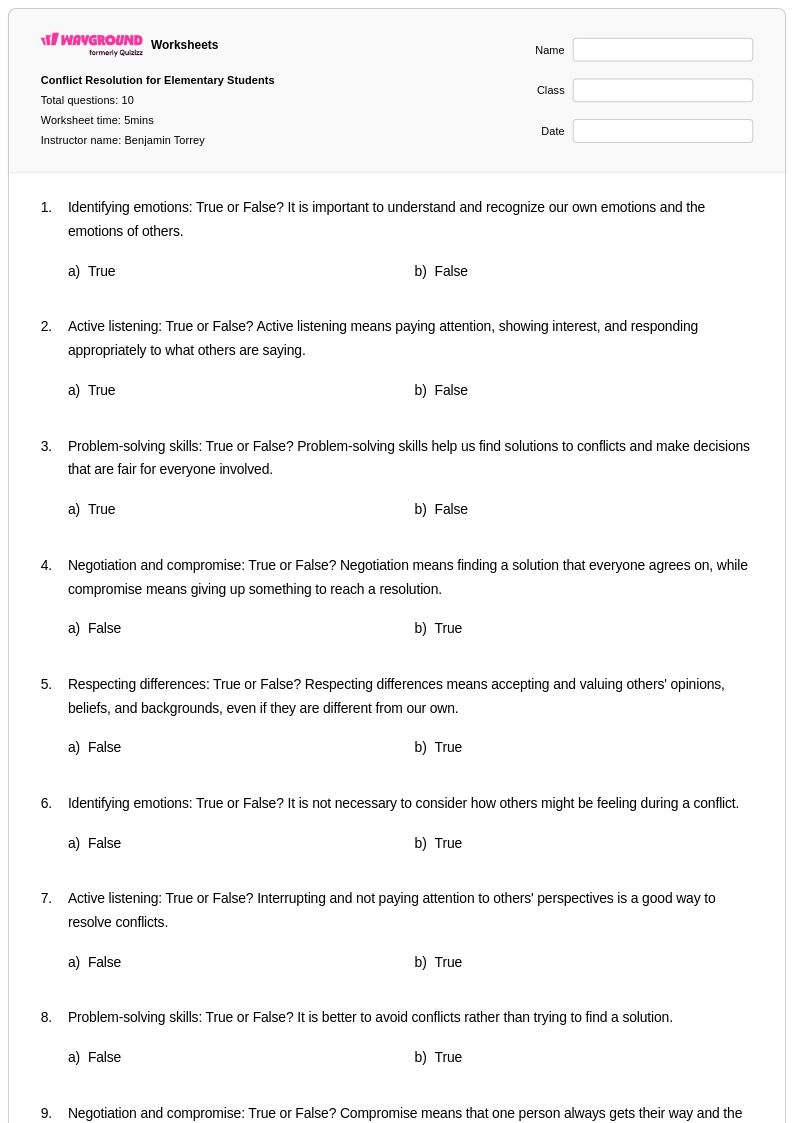
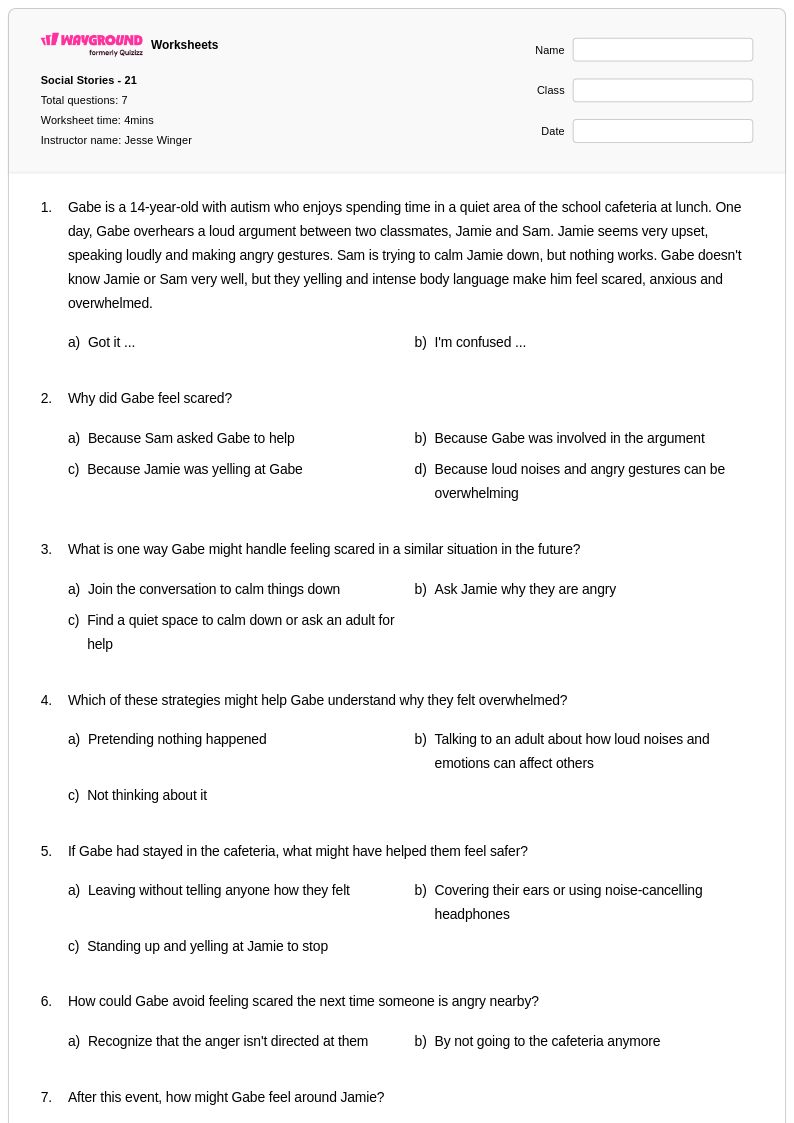
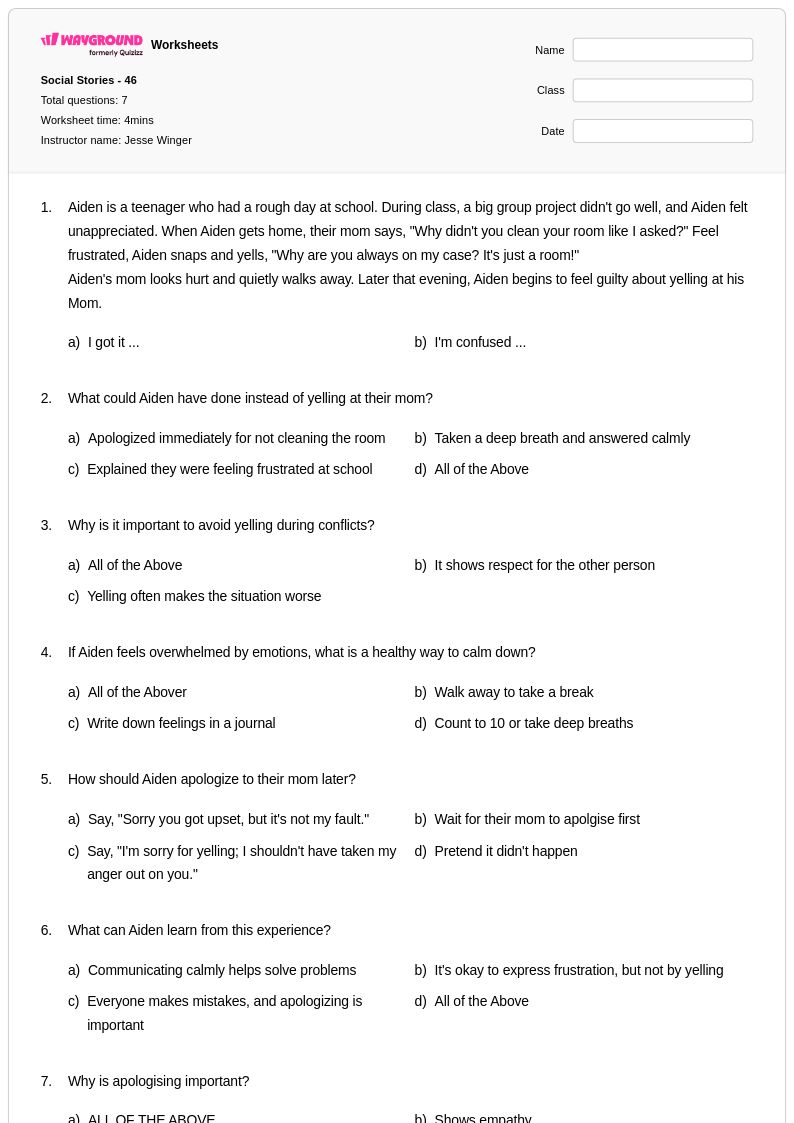
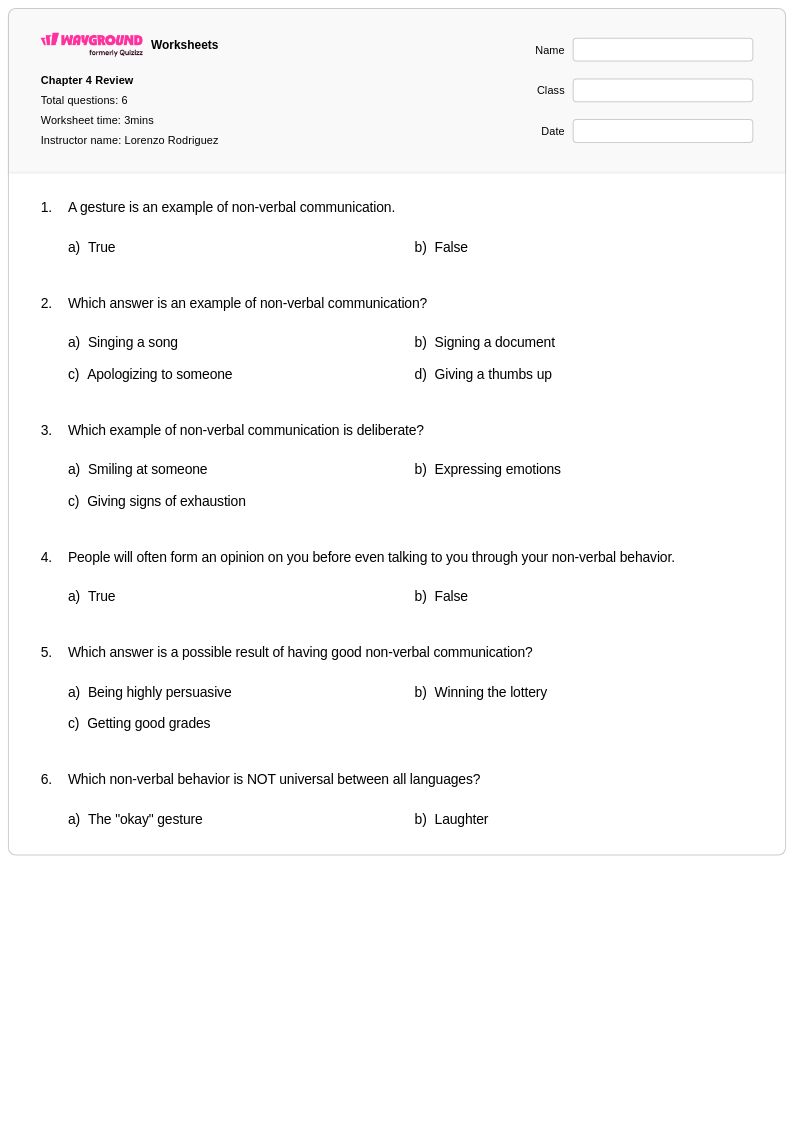
Explore our collection of free Year 2 emotions worksheets and printables that help young learners identify, understand, and express their feelings through engaging practice problems and activities with complete answer keys.
Emotions worksheets for Year 2 available through Wayground provide young learners with essential tools to develop emotional intelligence and self-awareness as part of their social studies curriculum. These carefully crafted educational resources help second-grade students identify, name, and understand various emotions through engaging activities that include picture recognition exercises, feeling identification scenarios, and emotion-matching practice problems. The worksheets strengthen critical social-emotional learning skills by teaching children to recognize facial expressions, understand the connection between situations and feelings, and develop vocabulary for expressing their own emotions appropriately. Teachers can access comprehensive materials that include detailed answer keys for efficient grading, free printable options for classroom distribution, and pdf formats that ensure consistent formatting across different devices and printing systems.
Wayground's extensive collection of emotions worksheets supports Year 2 educators through millions of teacher-created resources specifically designed to address diverse learning needs and classroom requirements. The platform's robust search and filtering capabilities allow teachers to quickly locate materials that align with social-emotional learning standards while providing differentiation tools to accommodate varying skill levels within the same classroom. Teachers benefit from flexible customization options that enable them to modify existing worksheets or combine multiple resources to create targeted lessons for specific student needs. The availability of both printable and digital formats, including easily downloadable pdf versions, streamlines lesson planning while supporting various instructional approaches, from traditional paper-based activities to technology-integrated learning experiences that enhance student engagement with emotional literacy concepts.
FAQs
How do I teach students to identify and name their emotions?
Start by building an emotional vocabulary through direct instruction, introducing feeling words in clusters such as variations of happy, sad, angry, and scared before expanding to more nuanced emotions like frustrated, anxious, or proud. Visual aids like emotion charts, facial expression cards, and anchor posters help students connect words to physical and situational cues. Regular low-stakes check-ins, such as asking students to identify how a character feels in a read-aloud, reinforce this vocabulary in context.
What exercises help students practice recognizing emotional cues in themselves and others?
Scenario-based worksheets are particularly effective because they ask students to read a situation and identify likely emotional responses, which builds both self-awareness and empathy. Cause-and-effect activities that pair an event with a feeling response help students understand the relationship between circumstances and emotions. Practice that includes facial expression matching, body language identification, and perspective-taking prompts gives students multiple entry points for recognizing emotional cues.
What common mistakes do students make when learning about emotions?
A frequent misconception is that emotions are binary, meaning students default to 'happy' or 'sad' and struggle to identify more complex or mixed feelings. Students also commonly confuse the cause of an emotion with the emotion itself, describing a situation rather than naming the feeling. Another error pattern is assuming that the same event produces the same emotion in everyone, which is why perspective-taking activities are essential to address this early.
How can I use emotions worksheets to support students with different learning needs?
On Wayground, teachers can apply student-level accommodations including Read Aloud, which audibly reads questions and content aloud for students who need it, and reduced answer choices to lower cognitive load for students who find multiple options overwhelming. Extended time can be configured per student for those who need additional processing time during digital activities. These settings are reusable across sessions, so once set up, they apply consistently without requiring manual adjustment each time.
How do I use Wayground's emotions worksheets in my classroom?
Wayground's emotions worksheets are available as printable PDFs for traditional classroom use and in digital formats for technology-integrated environments, giving teachers flexibility to assign them as independent work, small-group activities, or whole-class lessons. Digital versions can also be hosted as a quiz directly on Wayground, making it easy to collect student responses and review results. Each worksheet includes a complete answer key, supporting both teacher-led instruction and independent student practice.
How do I teach healthy coping strategies alongside emotions education?
Coping strategy instruction is most effective when it is explicitly connected to specific emotions rather than taught generically. For example, pairing the feeling of frustration with concrete strategies like taking deep breaths, asking for help, or taking a short break gives students actionable responses they can recall in the moment. Worksheets that guide students through identifying an emotion, its trigger, and a matching coping strategy help build this connection systematically and make it easier to transfer into real situations.