Free Printable Exponential Equations Worksheets for Year 12
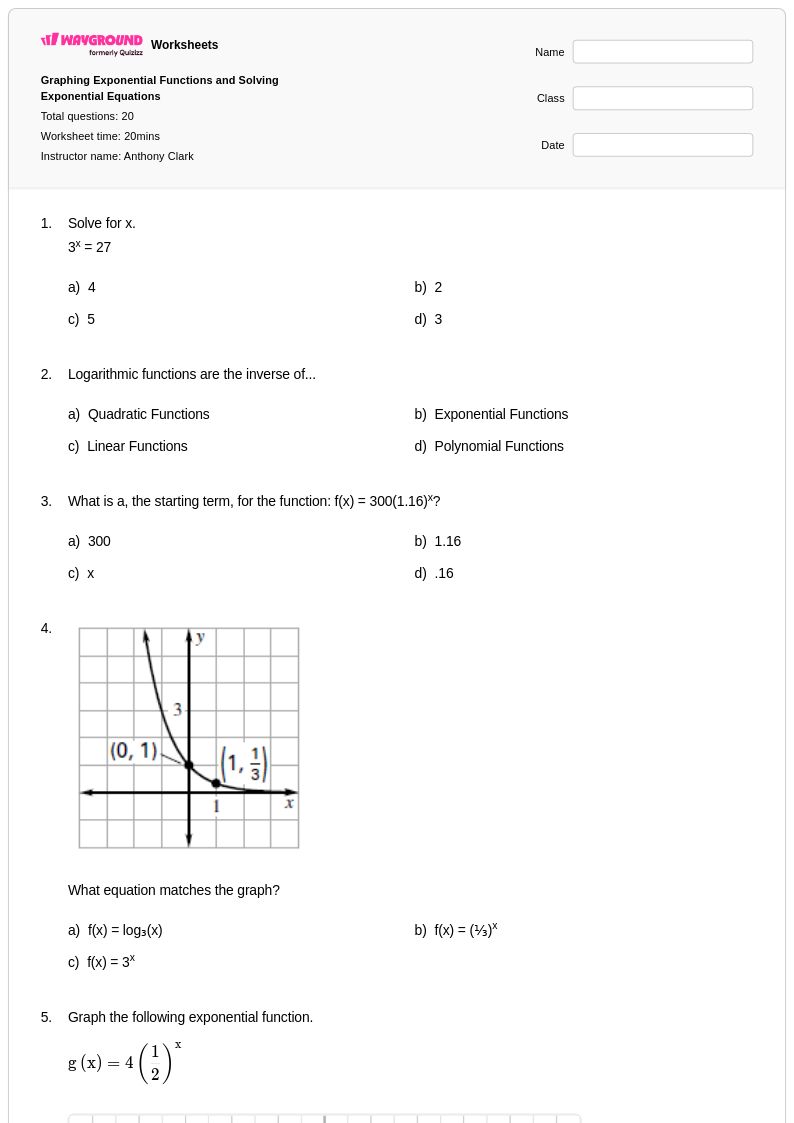
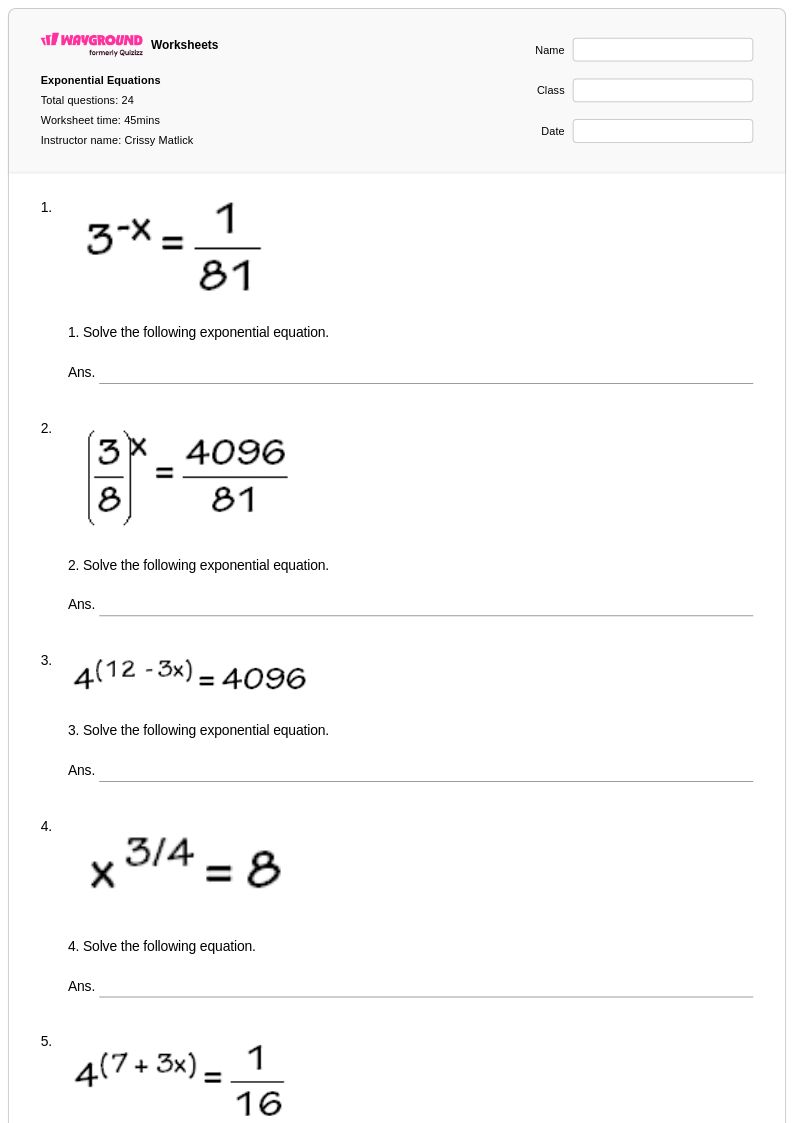
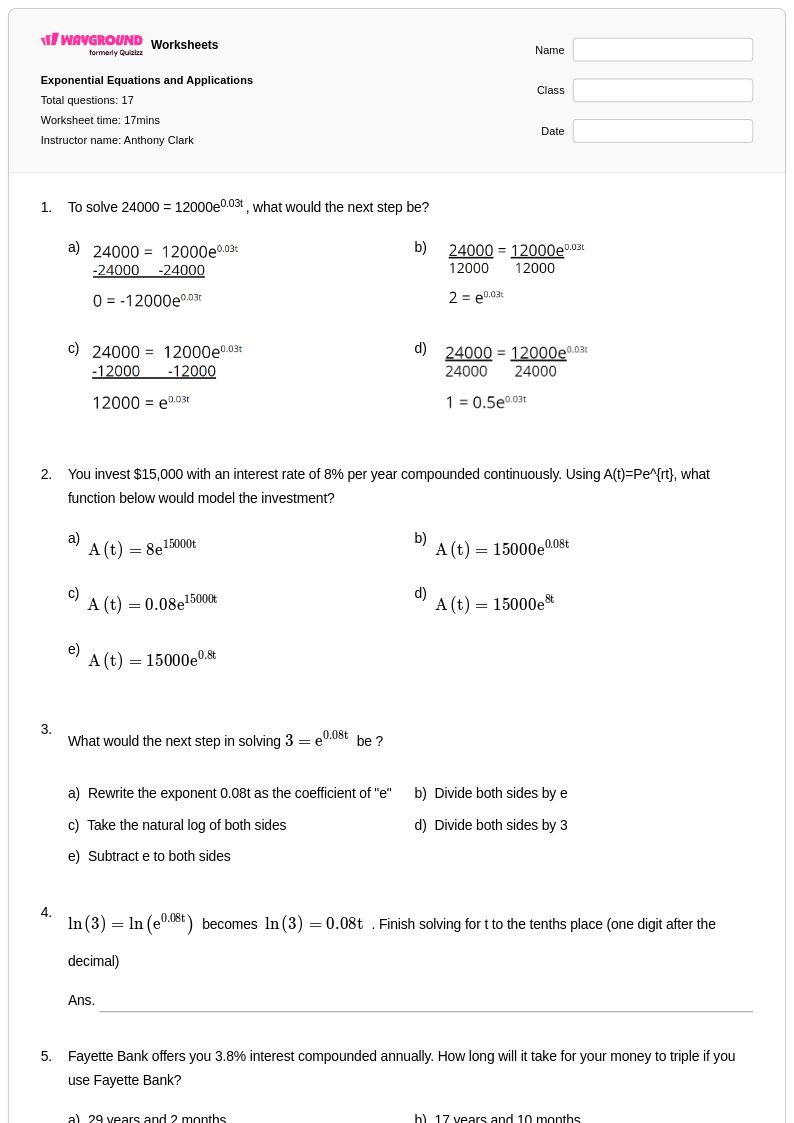
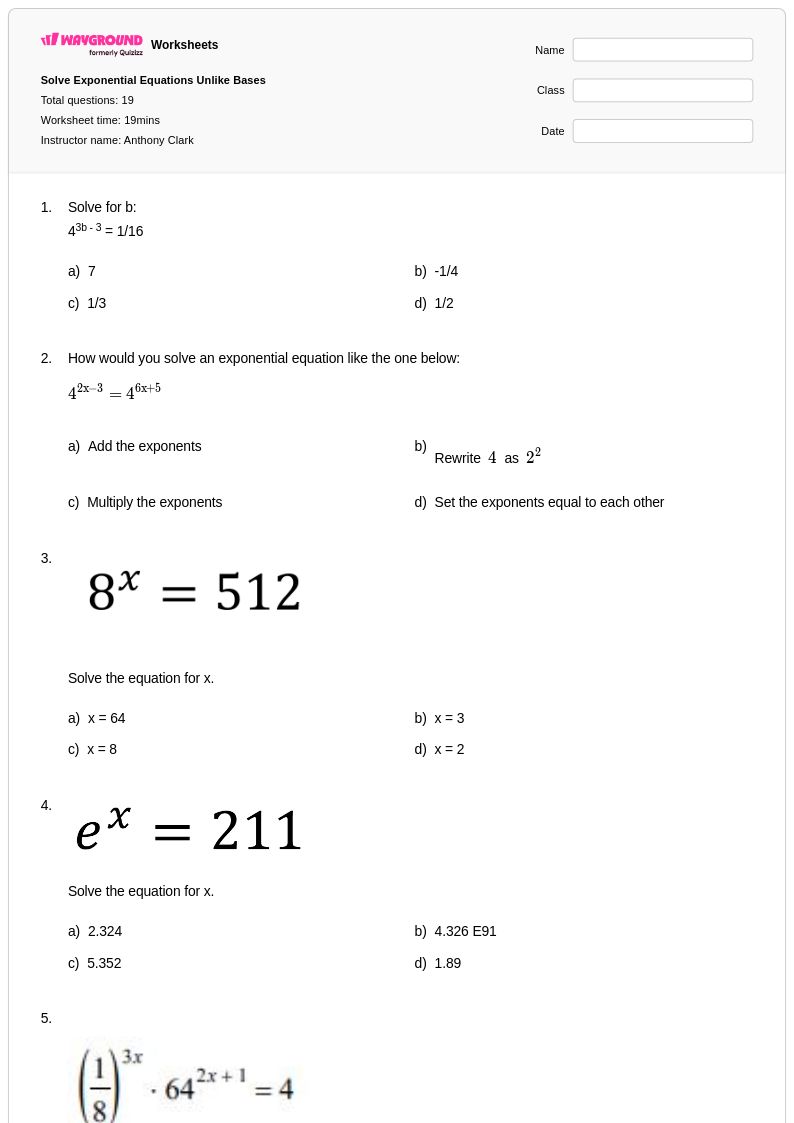
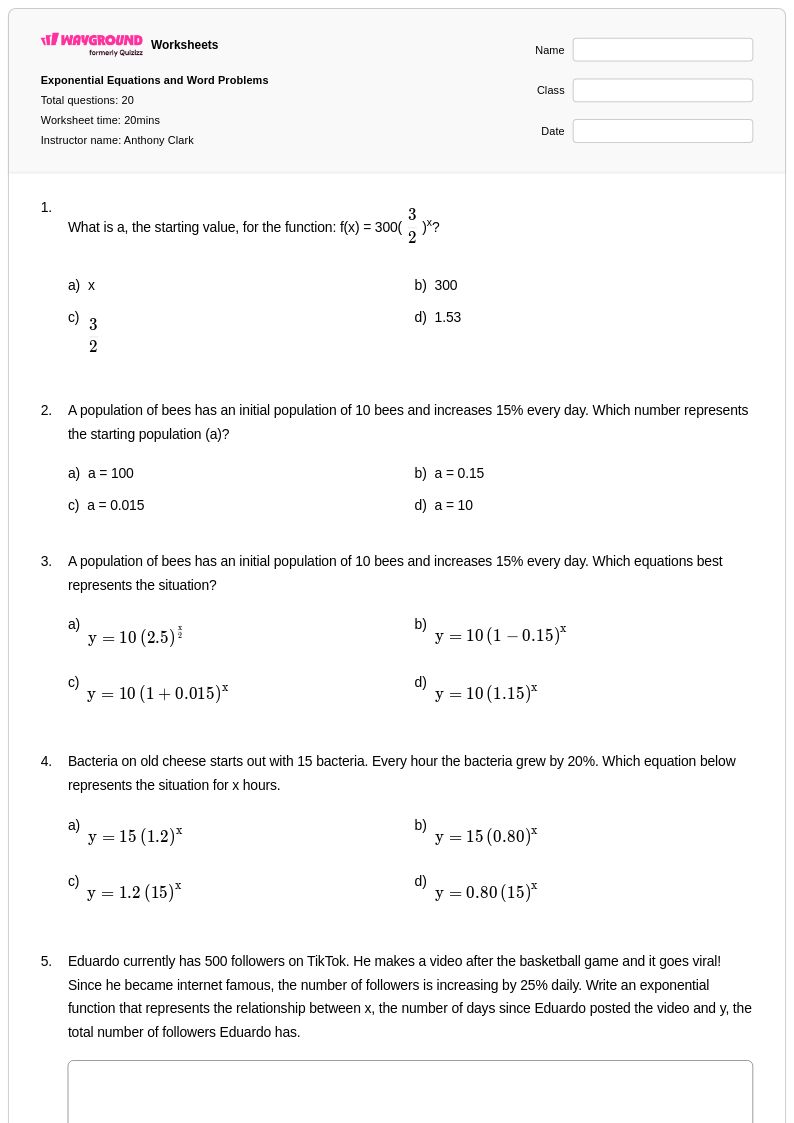
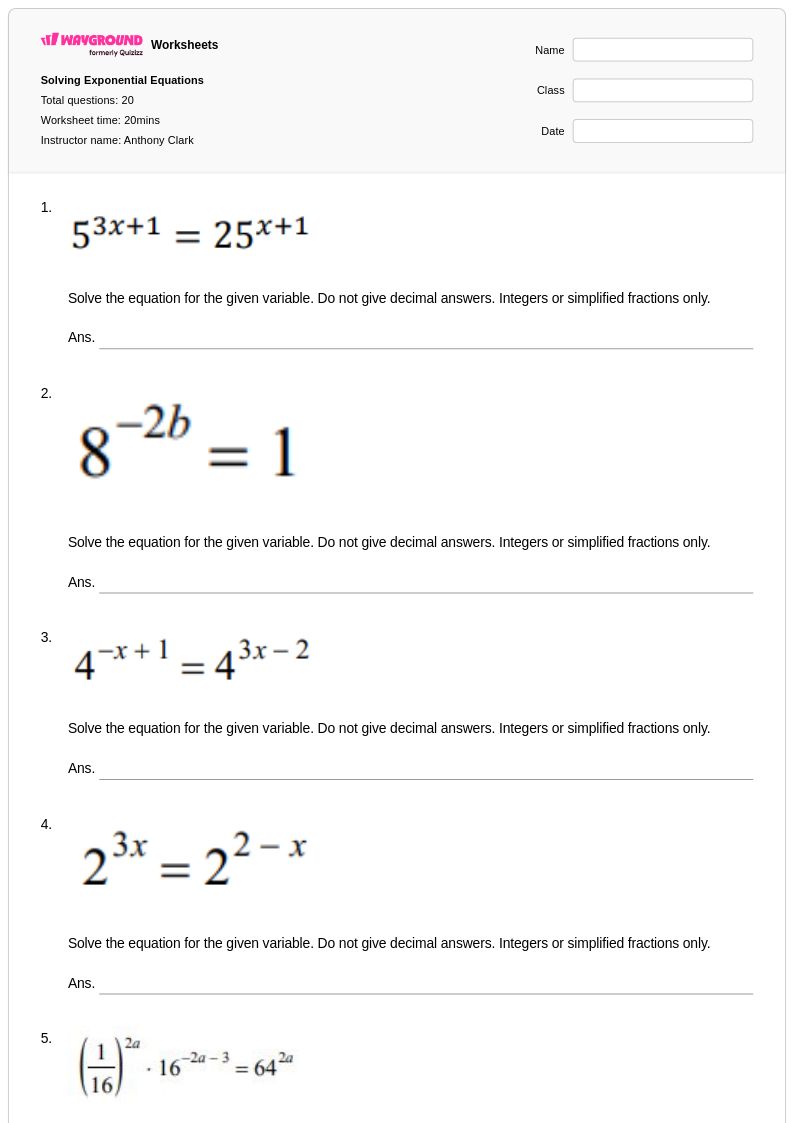
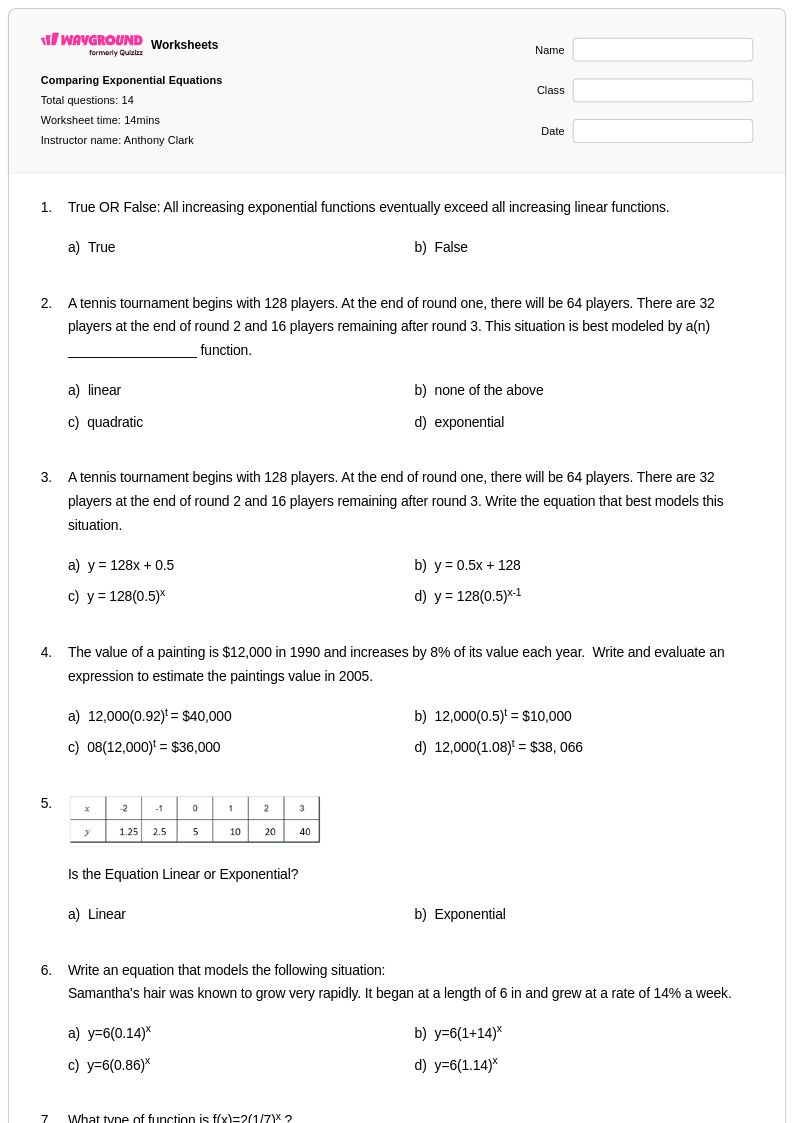
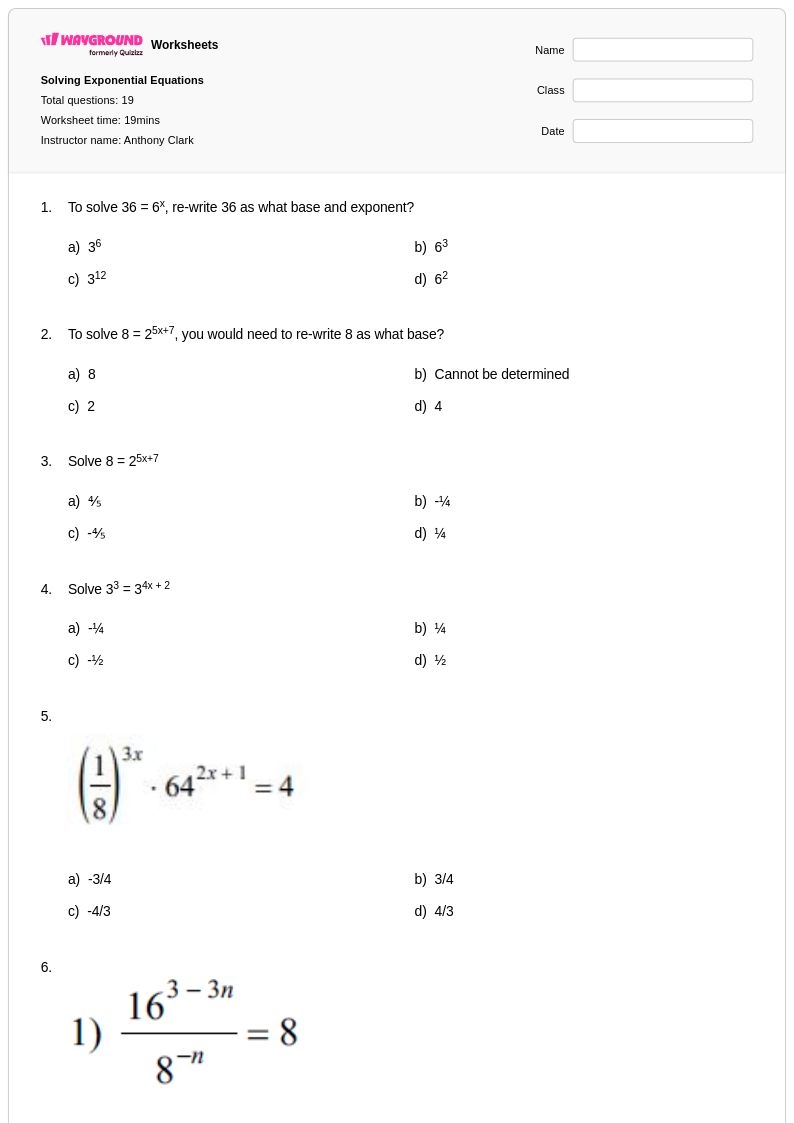
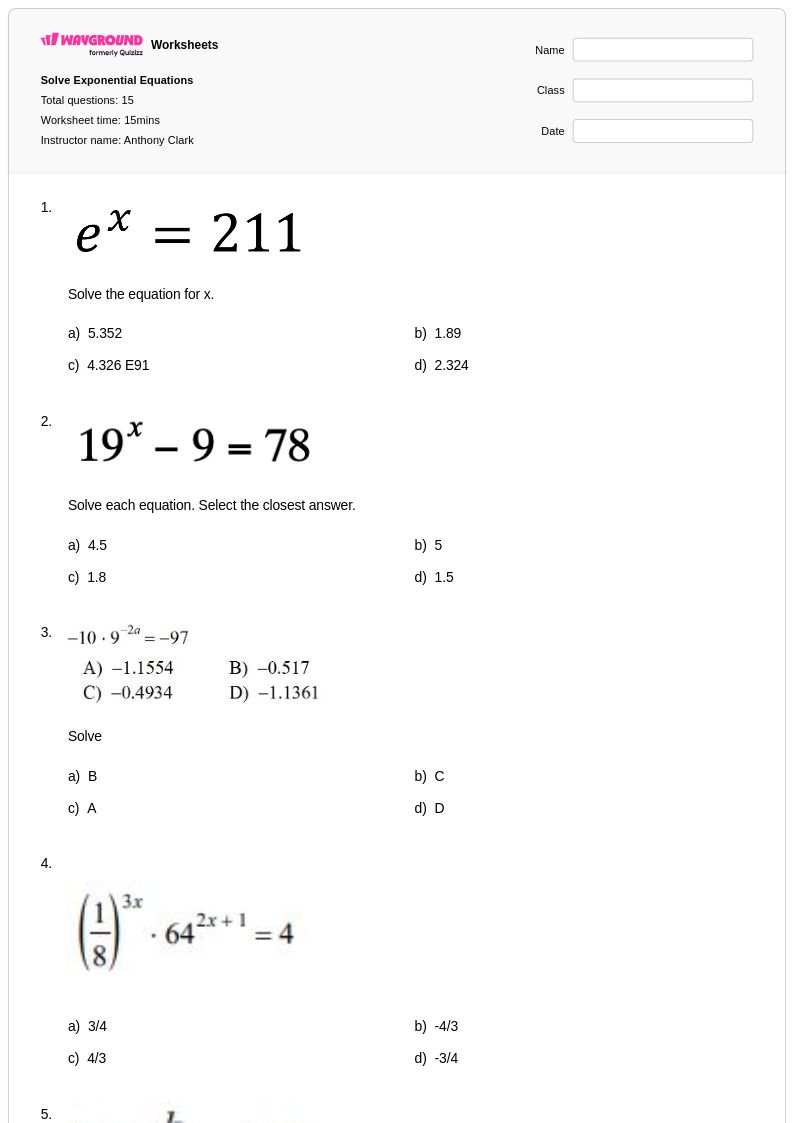
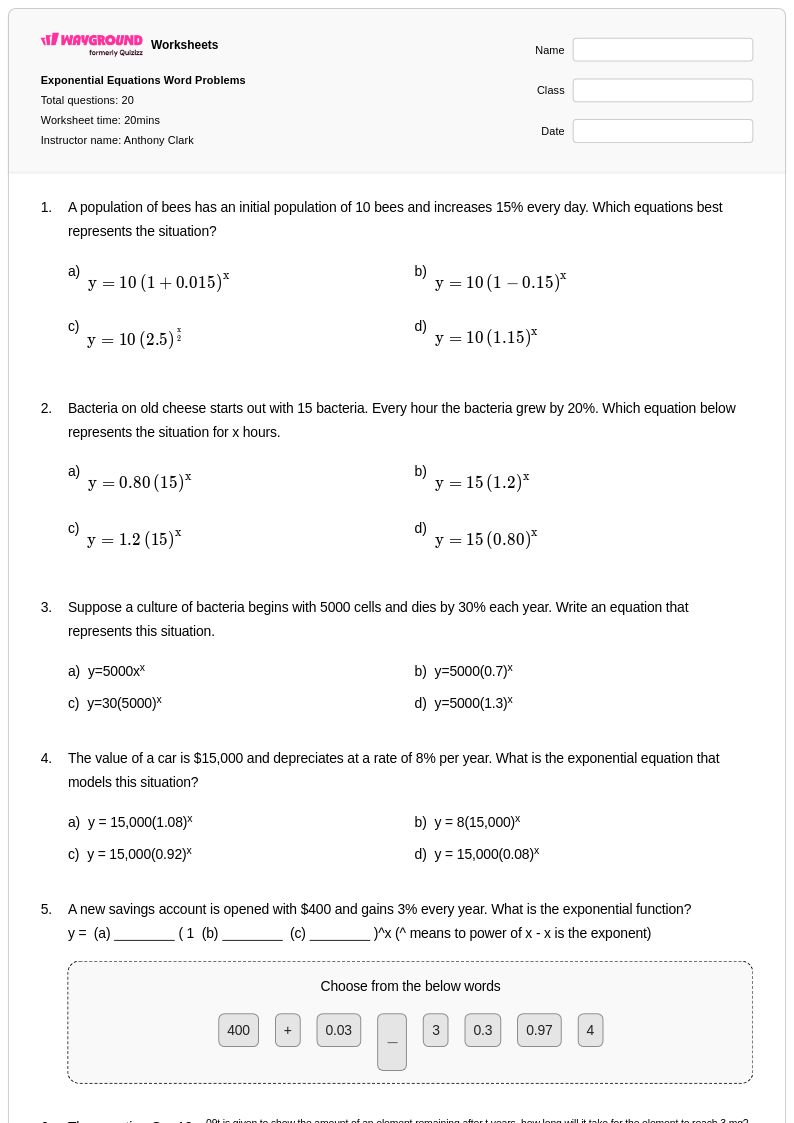
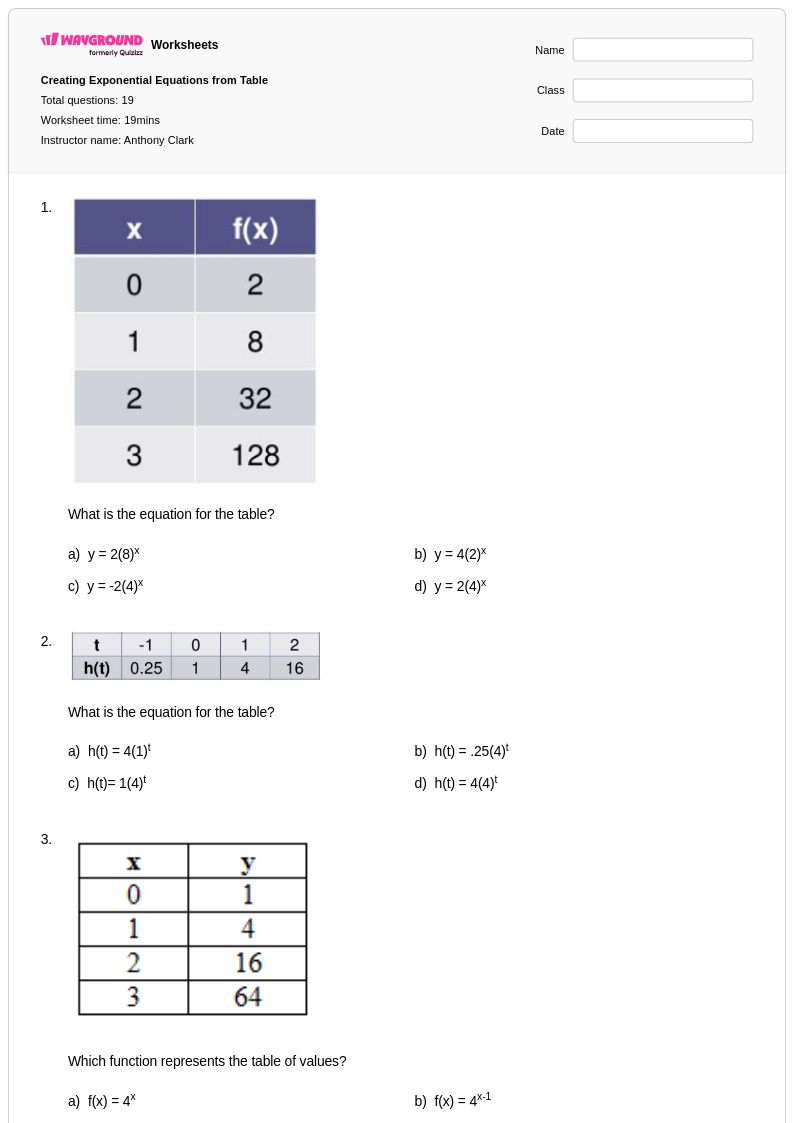
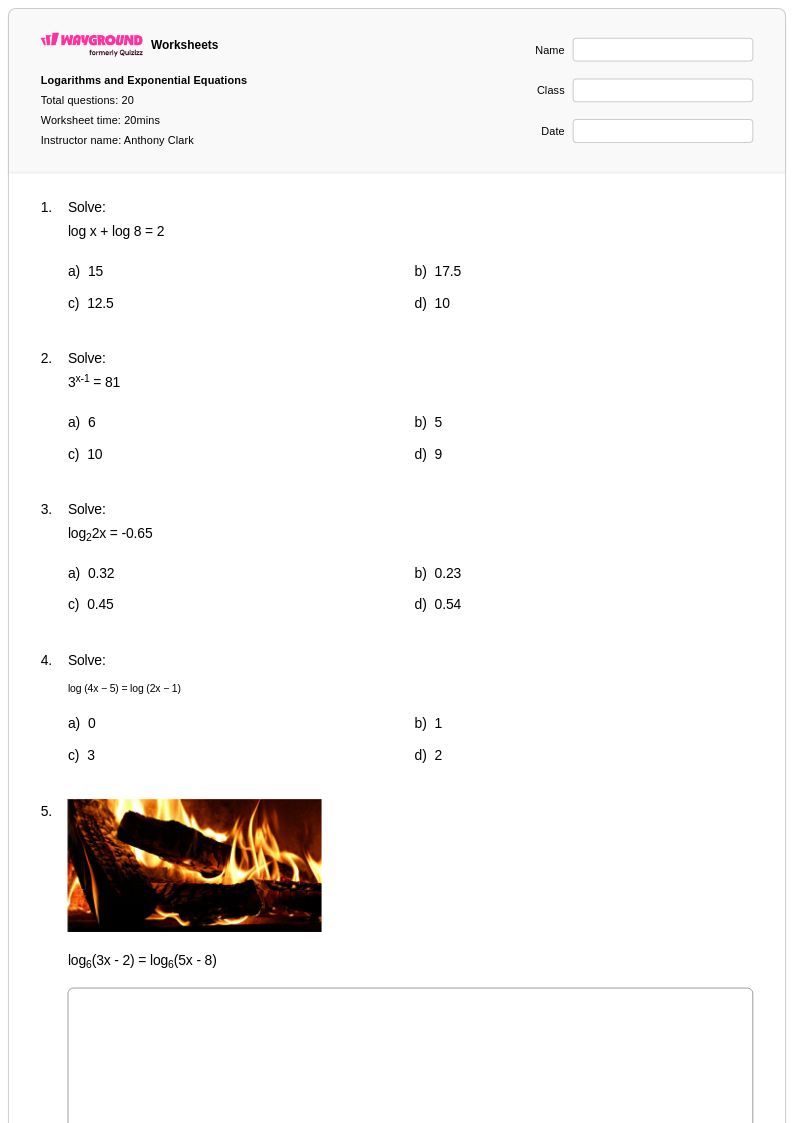
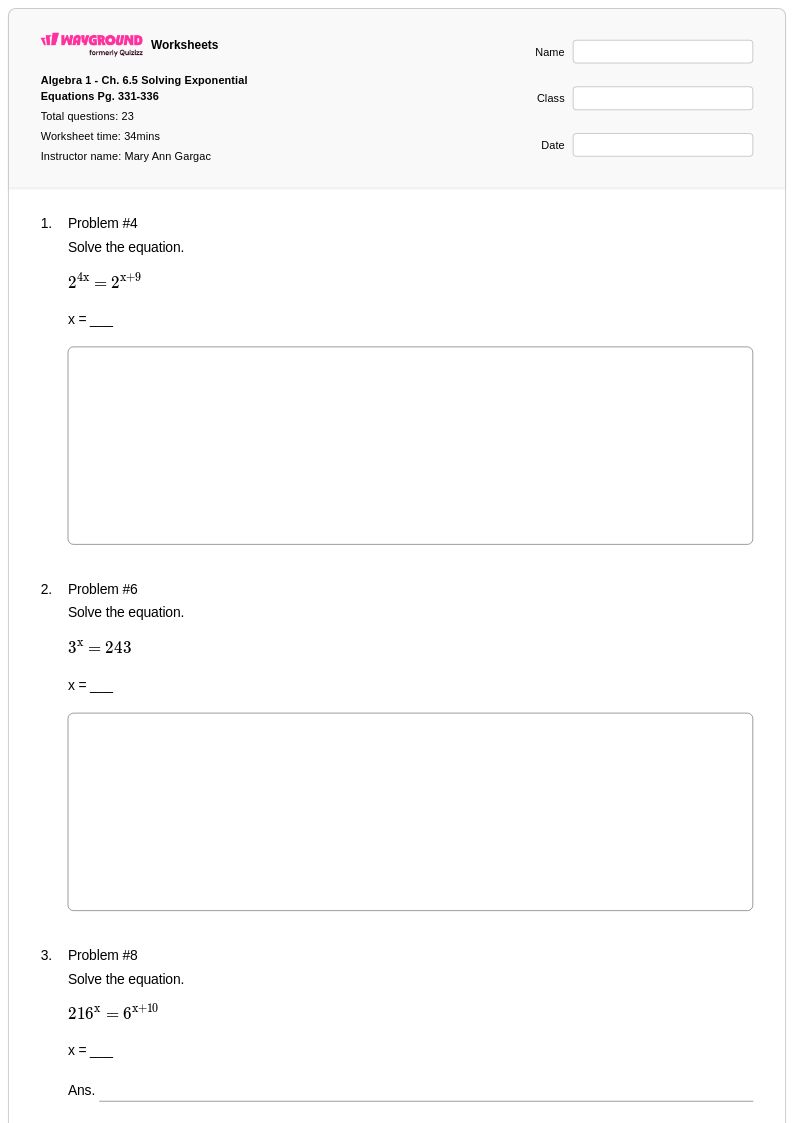
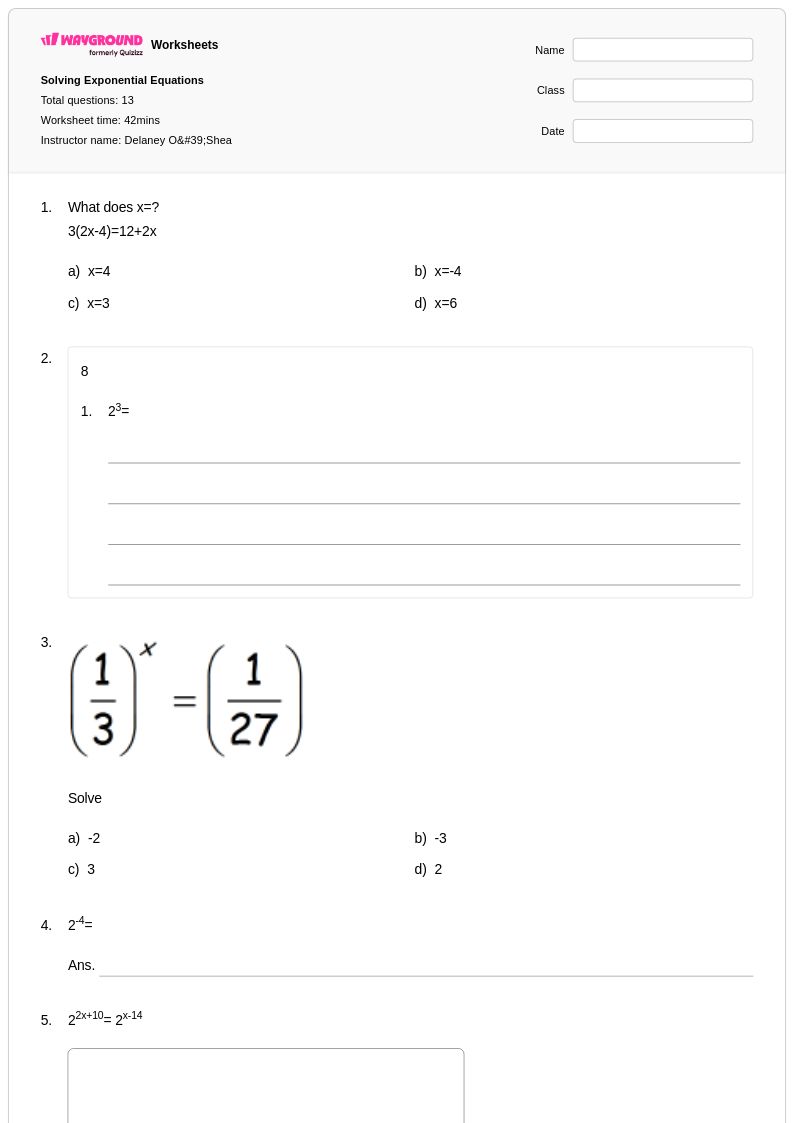
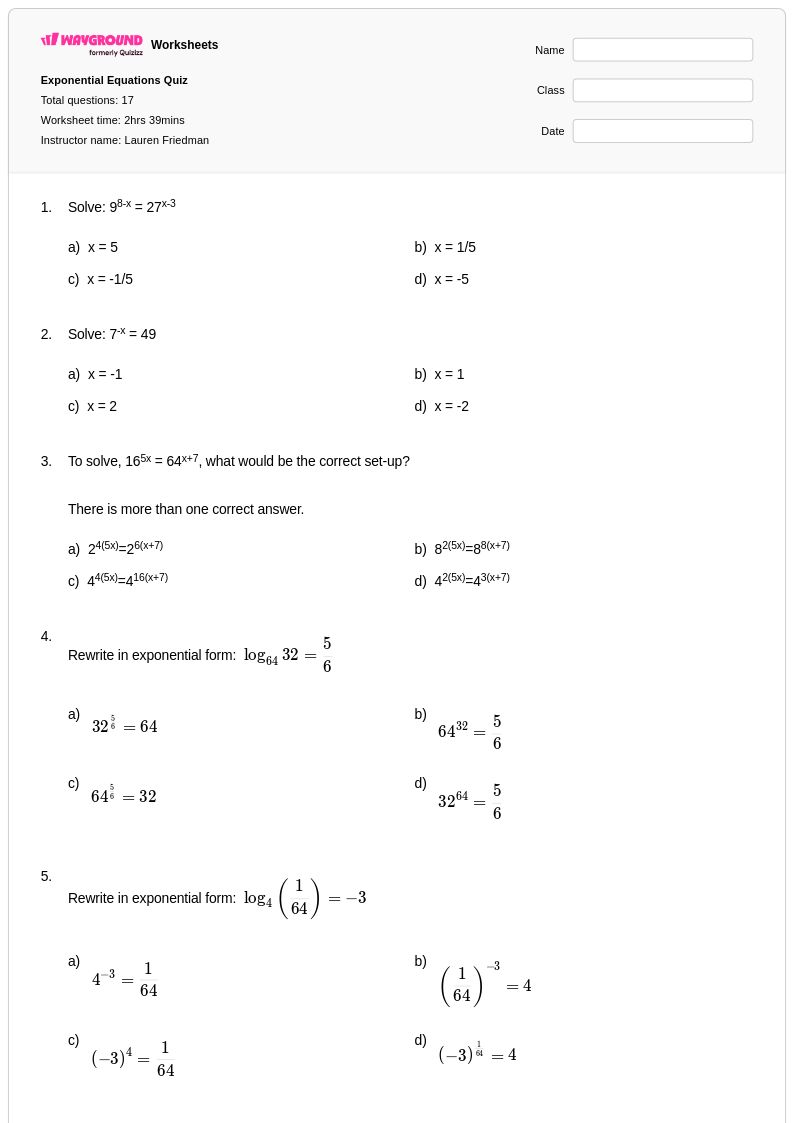
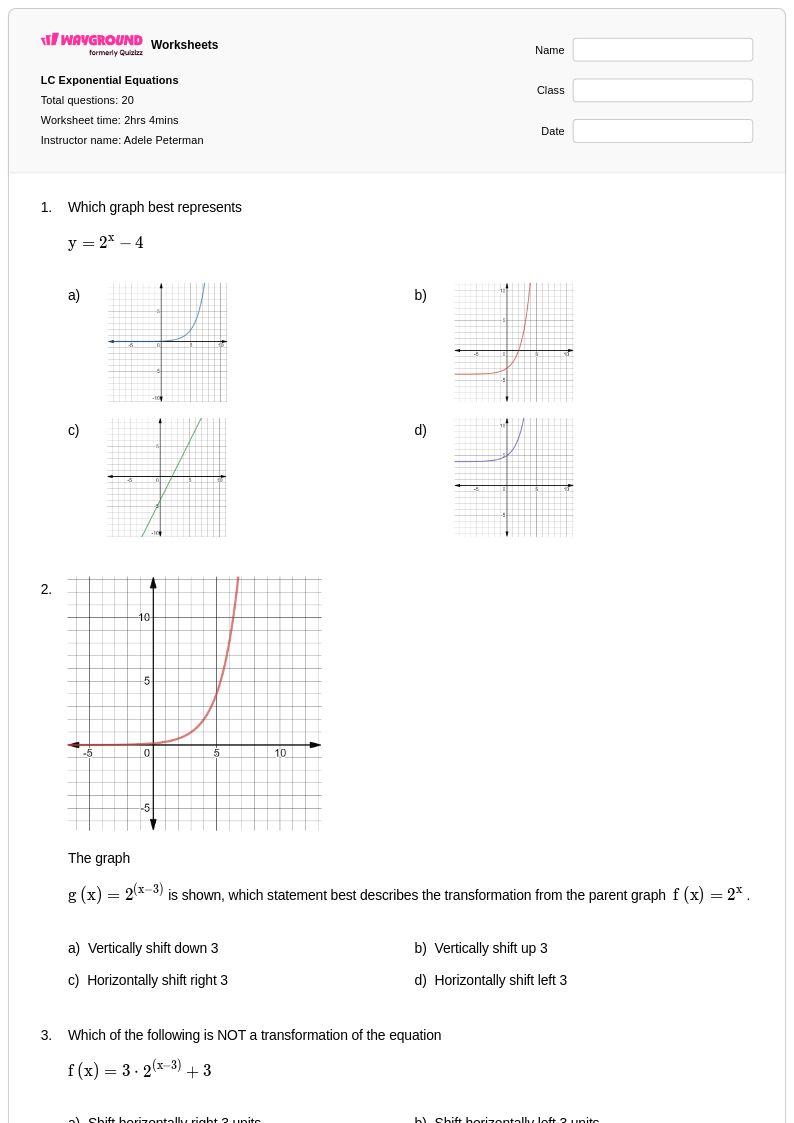
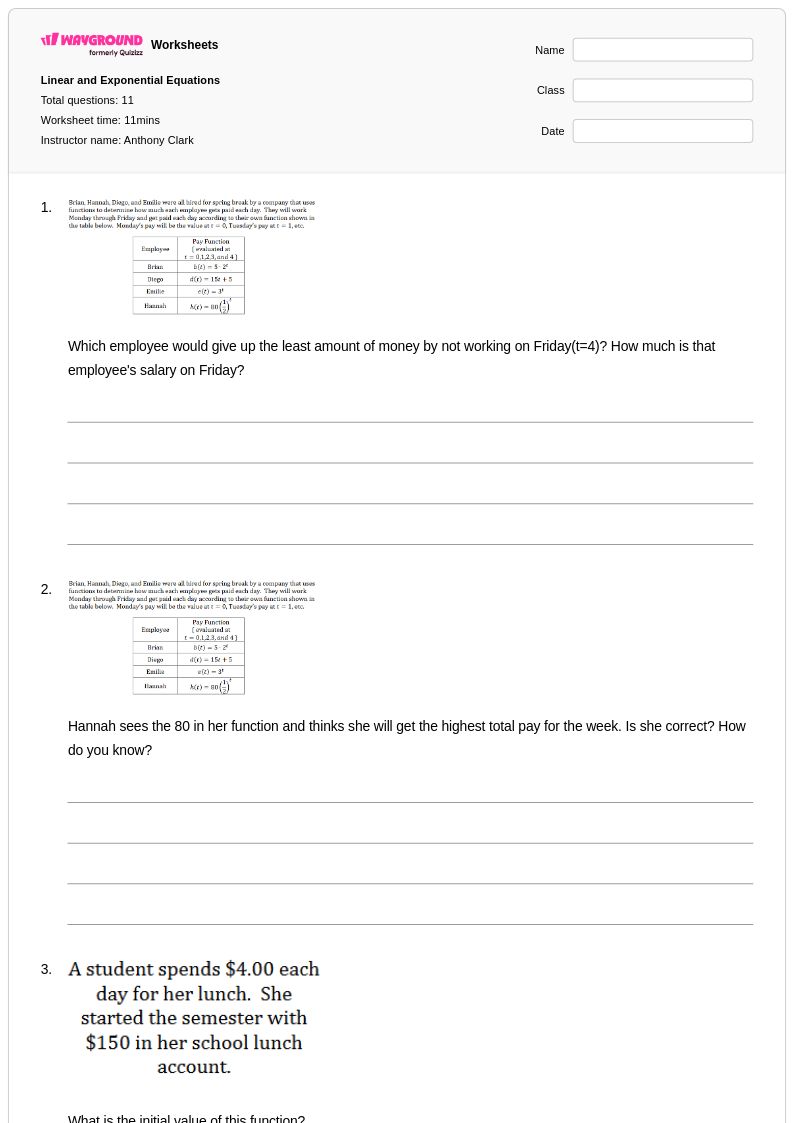
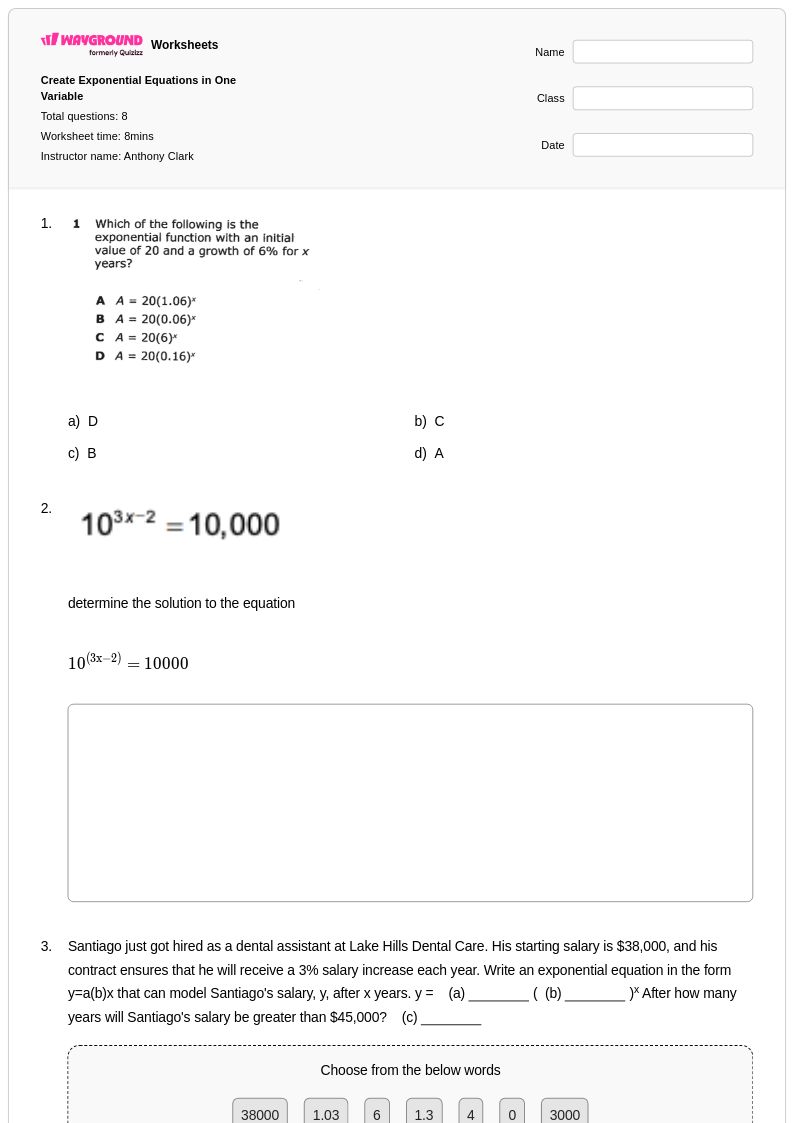
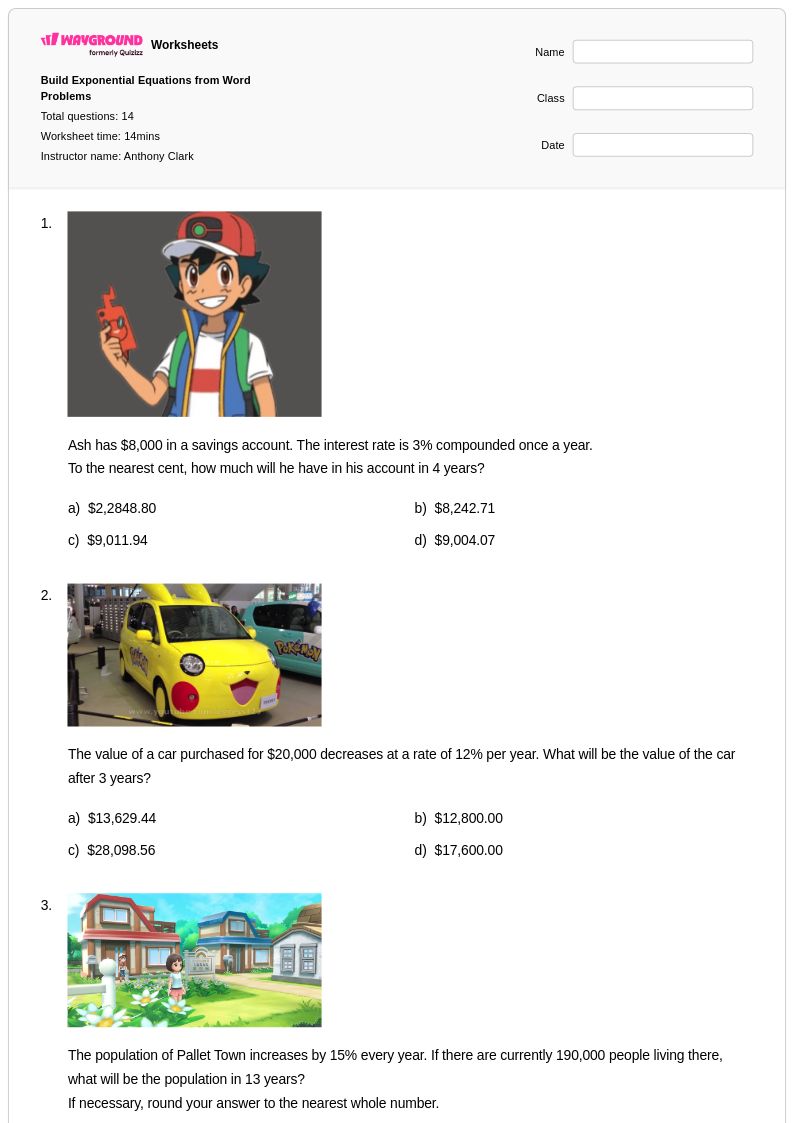
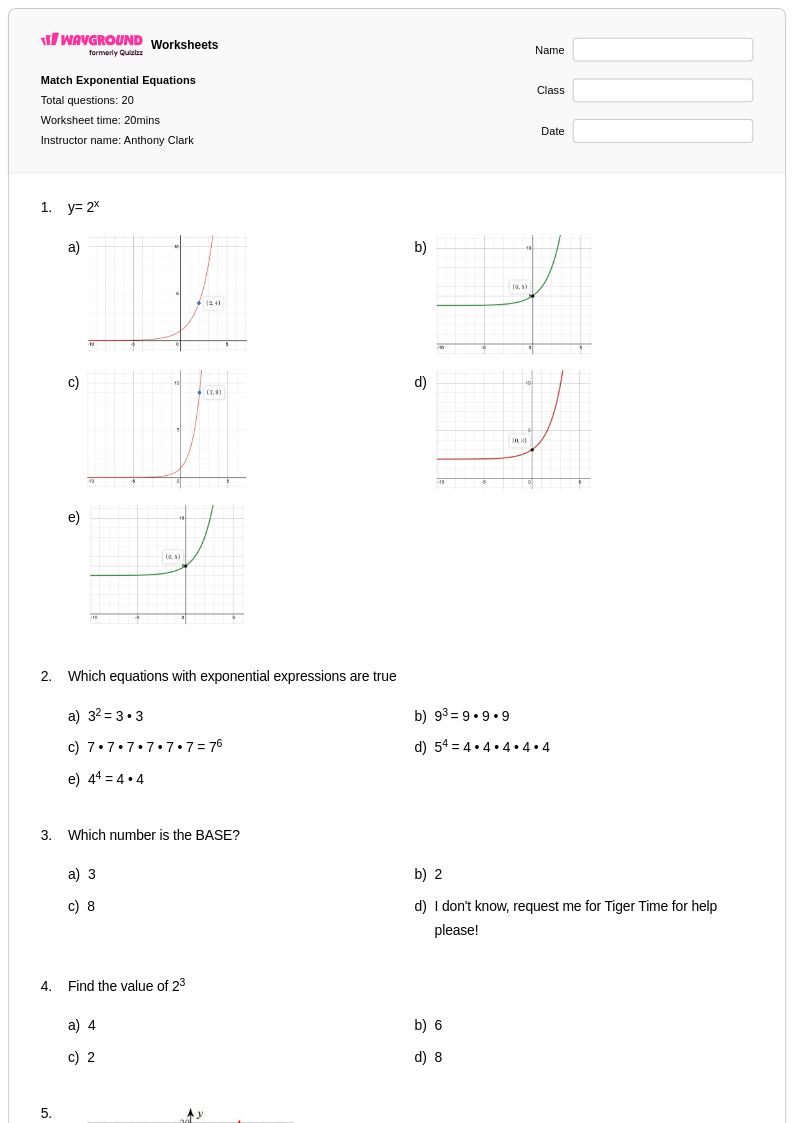
Year 12 exponential equations worksheets from Wayground provide comprehensive practice problems and answer keys to help students master solving exponential functions through engaging printables and free PDF resources.
Explore printable Exponential Equations worksheets for Year 12
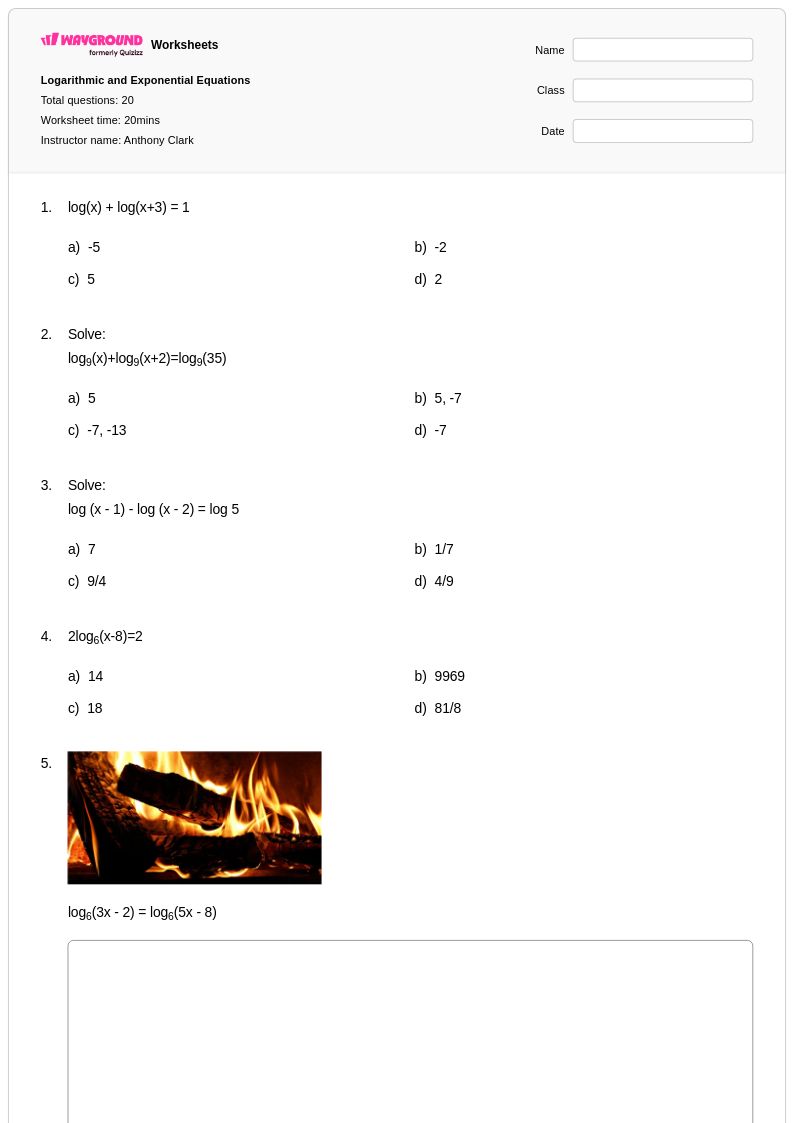
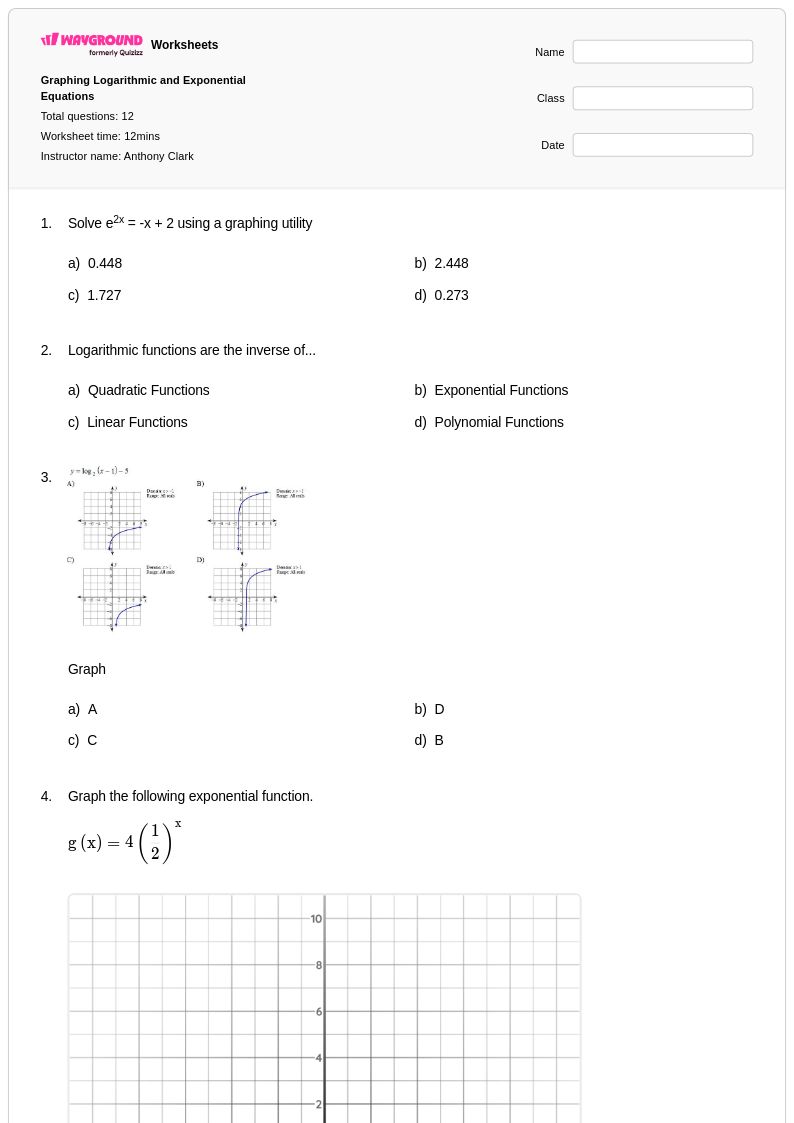
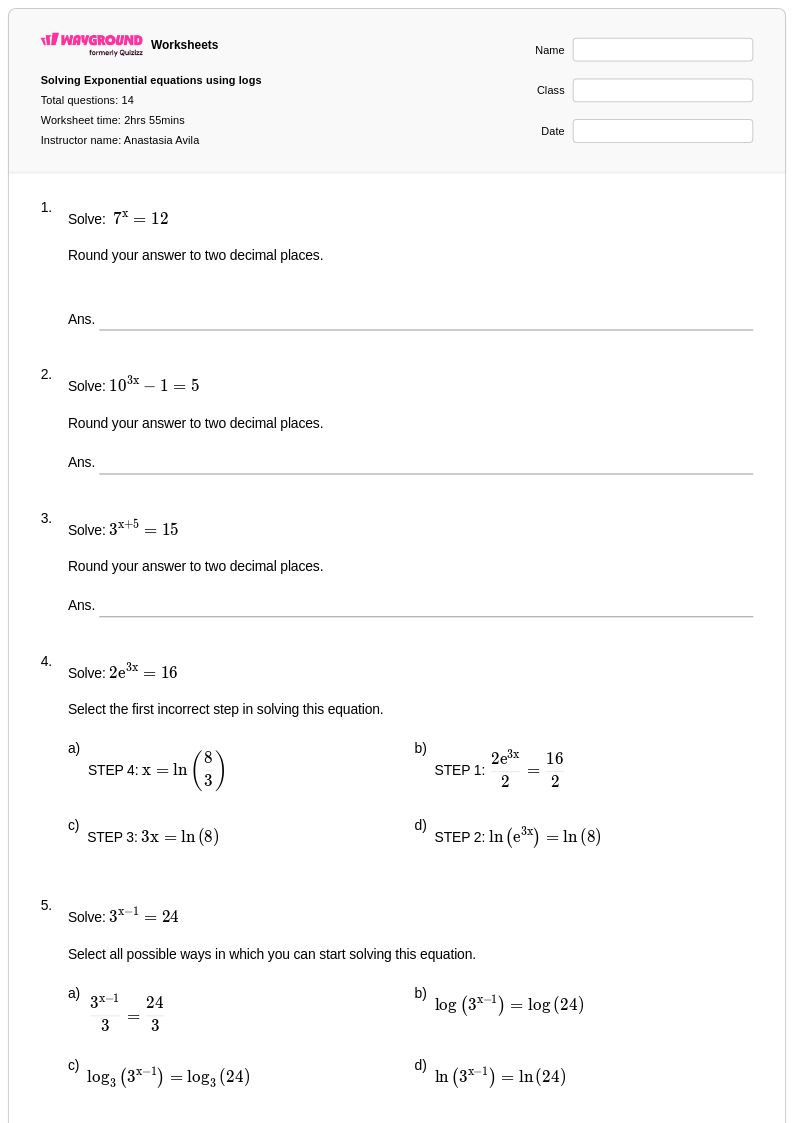
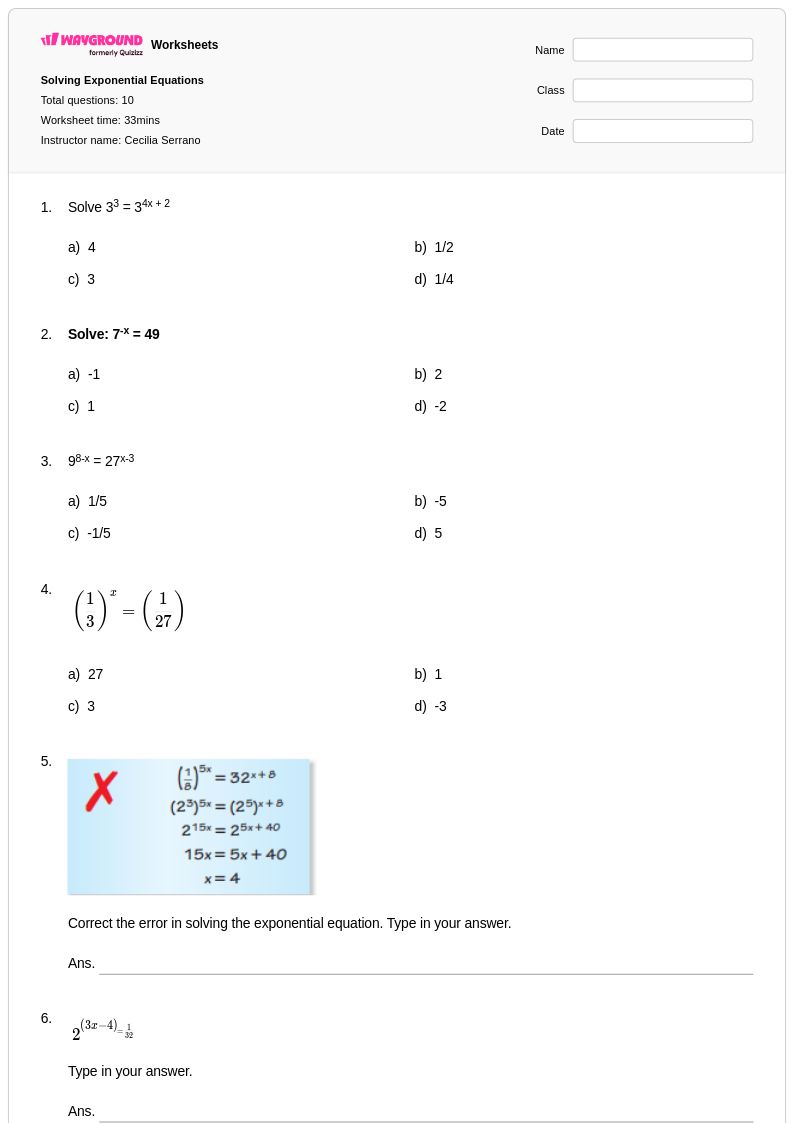
Exponential equations represent a critical component of Year 12 algebra that challenges students to solve complex mathematical relationships where variables appear in exponents. Wayground's comprehensive collection of exponential equations worksheets provides students with targeted practice problems that develop essential skills in logarithmic manipulation, graphing exponential functions, and applying properties of exponents to real-world scenarios. These carefully crafted printables strengthen students' ability to recognize exponential growth and decay patterns, solve equations using both algebraic and graphical methods, and understand the inverse relationship between exponential and logarithmic functions. Each worksheet includes a detailed answer key that supports independent learning and allows students to verify their problem-solving strategies, while the free pdf format ensures accessibility for both classroom instruction and home practice.
Wayground's extensive library of millions of teacher-created resources empowers educators to effectively deliver exponential equations instruction through carefully curated worksheet collections that align with rigorous academic standards. The platform's advanced search and filtering capabilities enable teachers to quickly locate materials that match their specific curriculum requirements and student proficiency levels, while built-in differentiation tools allow for seamless customization of content difficulty and complexity. These exponential equations worksheets are available in both printable pdf formats for traditional classroom distribution and digital formats for online learning environments, providing flexibility for diverse instructional approaches. Teachers can efficiently plan comprehensive lesson sequences, design targeted remediation activities for struggling learners, and create enrichment opportunities for advanced students, all while accessing immediate feedback through integrated answer keys that streamline grading and assessment processes.
FAQs
How do I teach exponential equations to Grade 12 students?
By Grade 12, the goal is integration rather than introduction. Students should be connecting exponential equations to their graphs, understanding the inverse relationship between exponential and logarithmic functions at a conceptual level, and applying both algebraic and graphical methods fluently. A useful instructional move at this level: present a problem and ask students to solve it two ways — algebraically and graphically — then discuss why both methods yield the same solution. That kind of dual-representation thinking is what precalculus and calculus will demand.
What exercises help Grade 12 students practice exponential equations?
Grade 12 practice should emphasize: solving equations using both algebraic and graphical methods, working with natural logarithms in continuous growth and decay models, and interpreting solutions in context rather than just computing them. Problems that ask students to verify a solution graphically after solving algebraically are particularly effective — they reinforce the connection between the equation and the function it represents.
What mistakes do Grade 12 students still make with exponential equations?
Even at Grade 12, two errors persist. First, students mishandle the inverse relationship when converting between exponential and logarithmic forms under pressure — especially with natural log, where the base e is implicit. Second, on graphing problems, students sketch the correct shape but place asymptotes incorrectly, which leads to wrong intersection estimates when using graphical methods to solve.
How do I use these Grade 12 exponential equations worksheets?
The worksheets include detailed answer keys that support independent learning — useful for Grade 12 students doing exam review or self-directed practice. For paper-based use, print the PDF; schools focused on reducing screen time before exams will find the printable format practical. For digital sessions, host the worksheet as a Wayground quiz for auto-scored results, which works well for quick formative checks before a unit assessment.
Are Grade 12 exponential equations aligned to Common Core?
Common Core's high school standards expect Grade 12 students to demonstrate a complete understanding of exponential and logarithmic functions — solving equations algebraically and graphically, interpreting the inverse relationship between the two function families, and applying exponential models to real-world scenarios. At this level, the emphasis is on connecting representations: students should move fluidly between an equation, its graph, and its contextual meaning, which is the foundation for calculus-level work with exponential functions.
How can I support diverse learners in Grade 12 with exponential equations?
For students who need more time on complex multi-step problems — especially those combining logarithmic manipulation with graphical interpretation — Wayground's extended time accommodation can be configured per student. For ELL students working through application problems involving financial or scientific contexts, the worksheet translation tool makes the language accessible without simplifying the math. Both adjustments are invisible to other students.
What's the difference between solving exponential equations algebraically vs. graphically?
Algebraically, you isolate the variable using logarithms or base-matching — you get an exact answer. Graphically, you plot both sides of the equation as separate functions and find their intersection — you get an approximate answer, but you also see the behavior of the equation (how many solutions exist, what happens near asymptotes). Grade 12 students should know both methods and understand that graphical approaches are especially useful when the equation is too complex for clean algebraic manipulation.