Free Printable Exponentiation Worksheets for Year 7
Enhance Year 7 students' exponentiation skills with Wayground's comprehensive collection of free worksheets, featuring printable PDFs with practice problems and answer keys to master powers and exponential notation.
Explore printable Exponentiation worksheets for Year 7
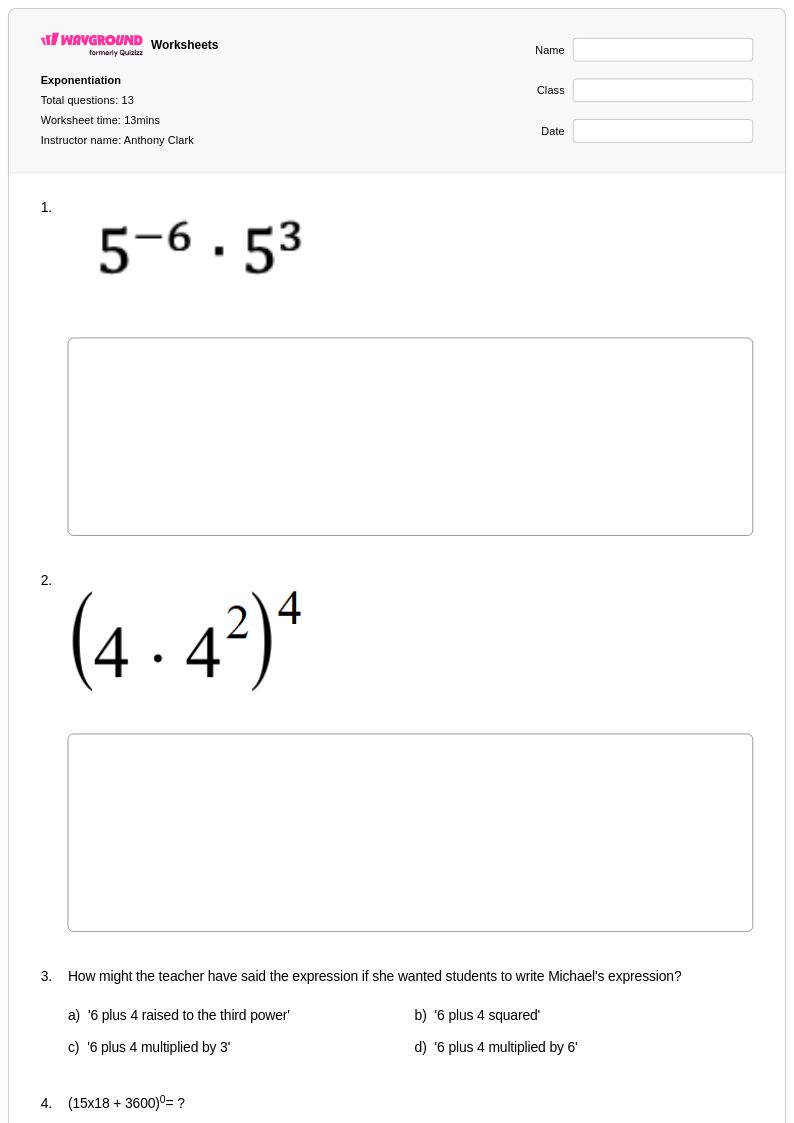
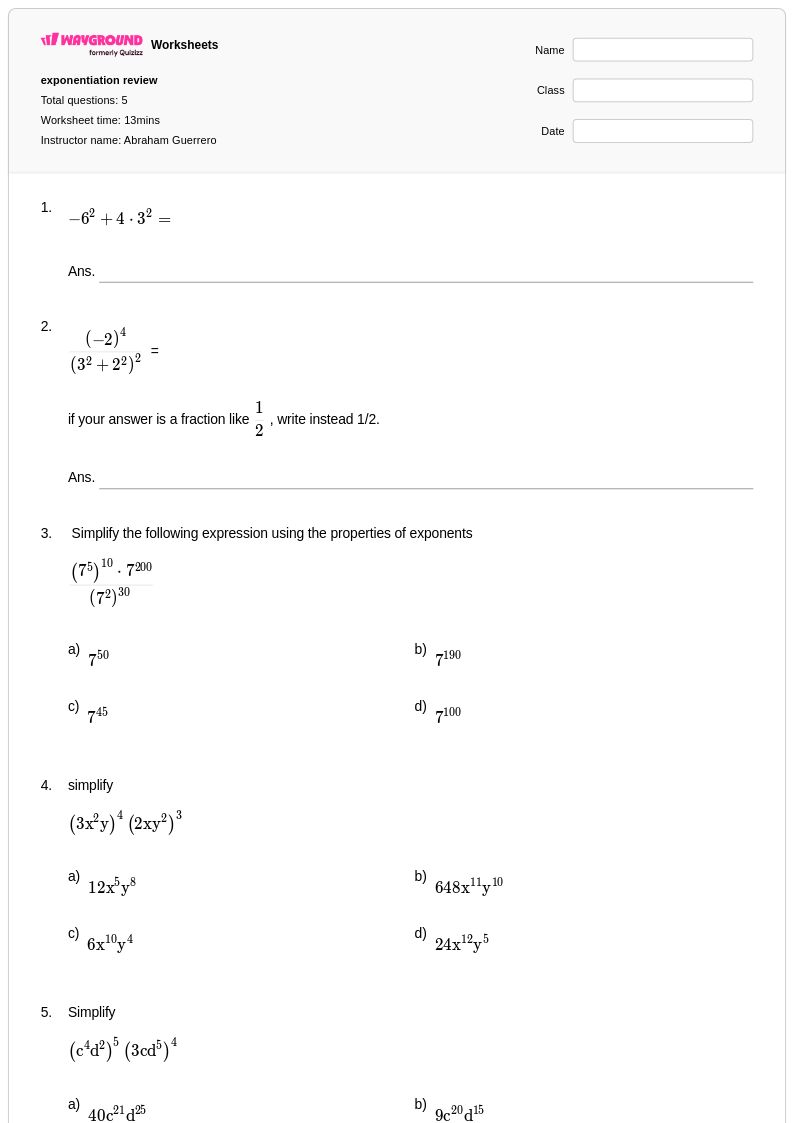
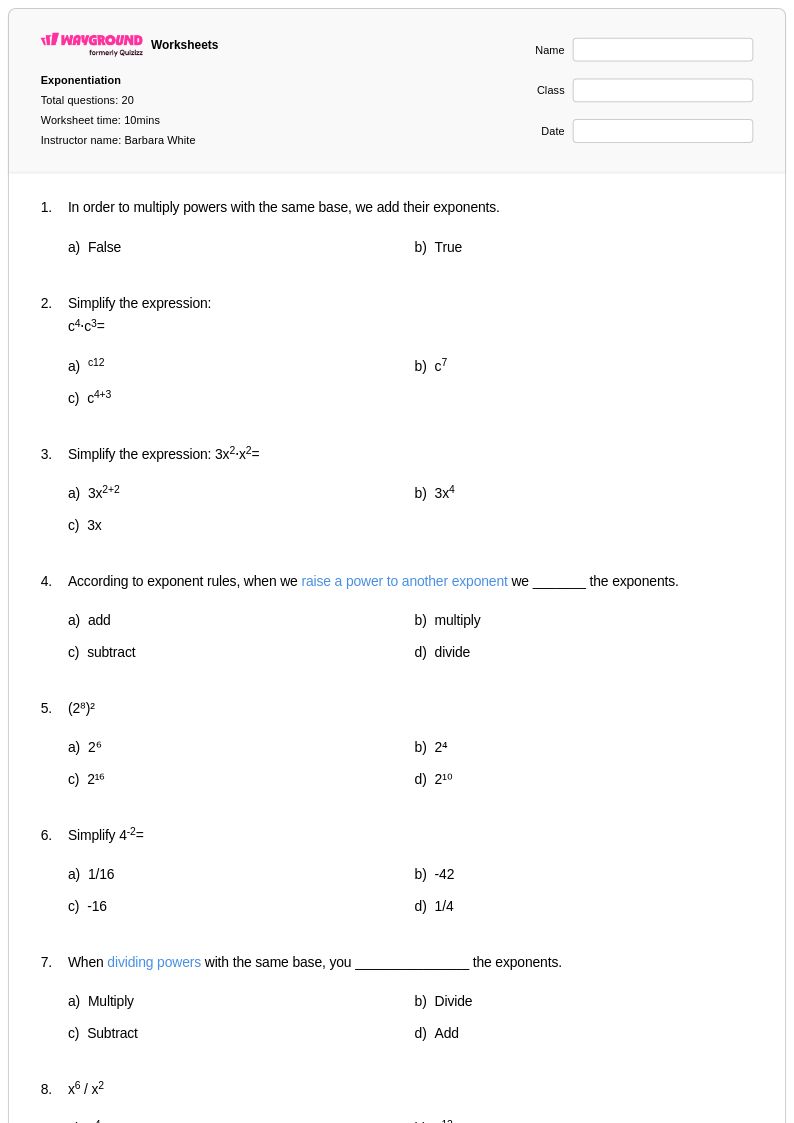
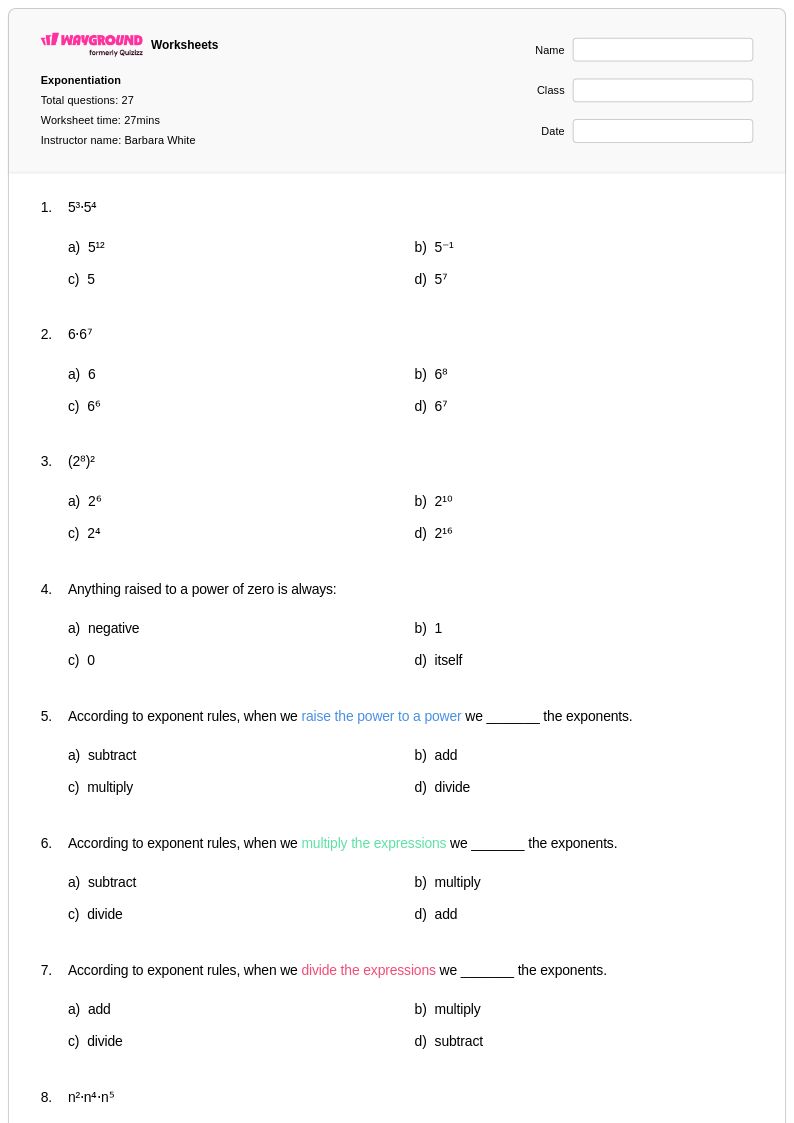
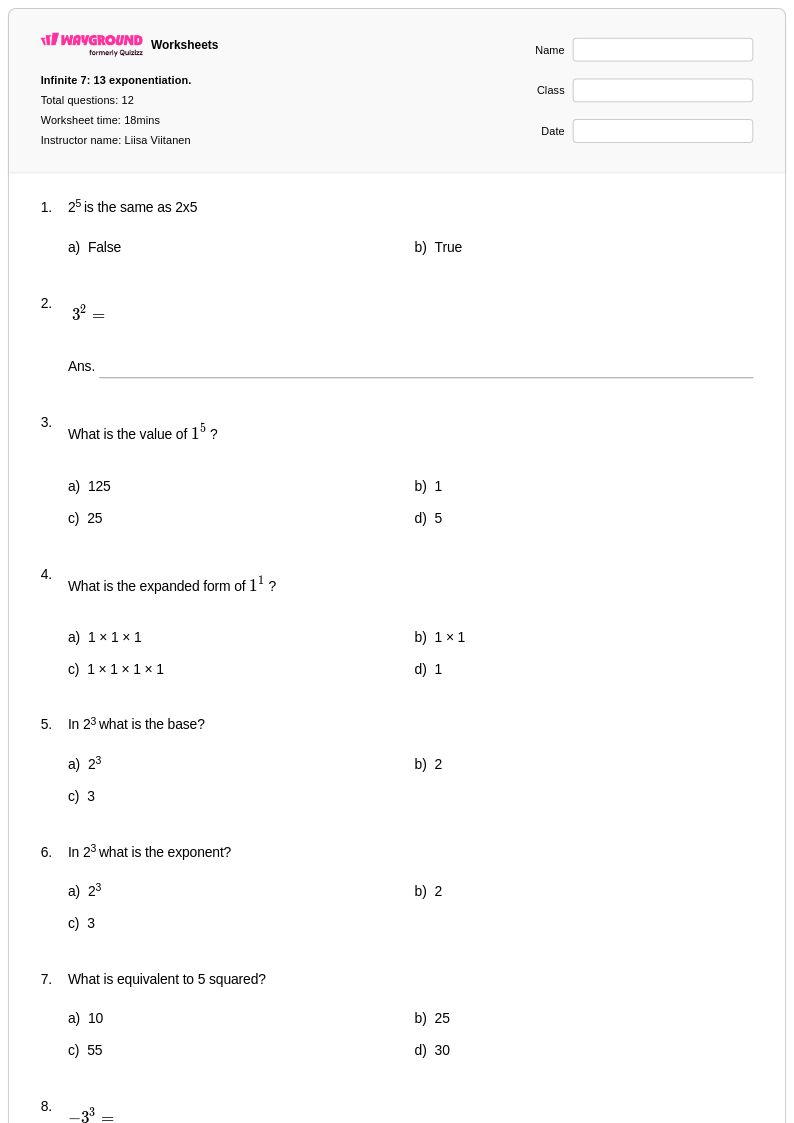
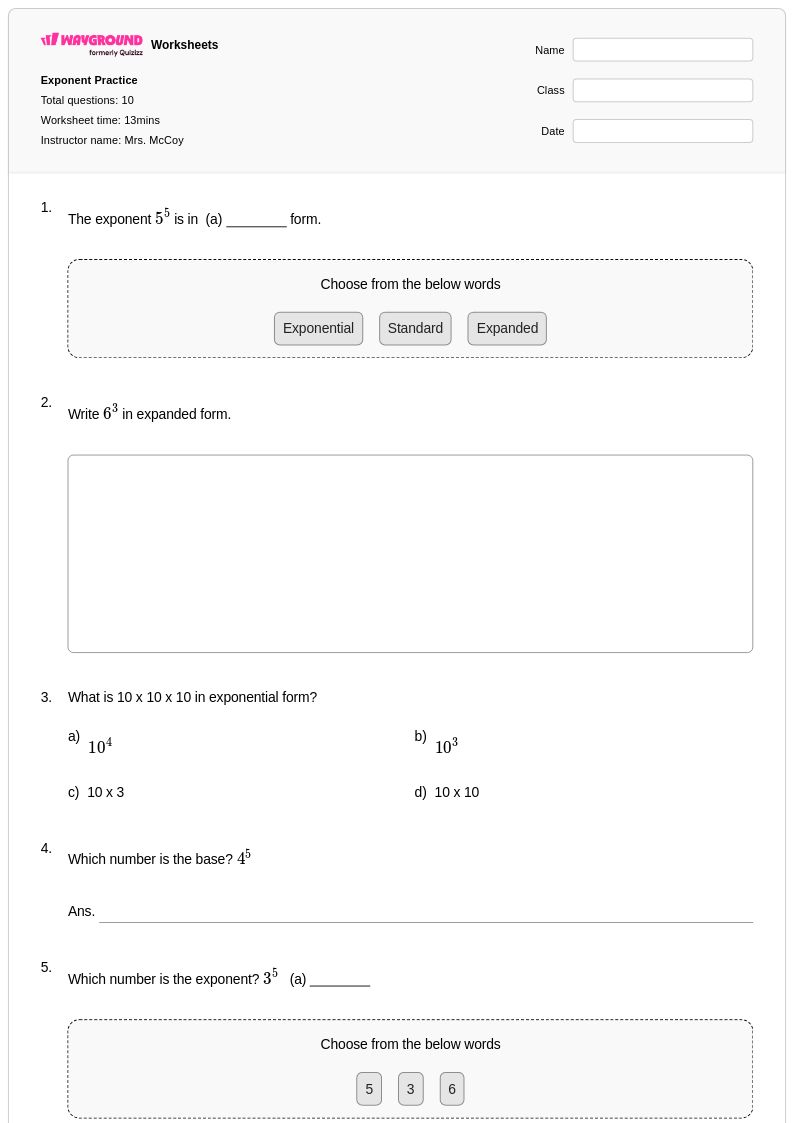
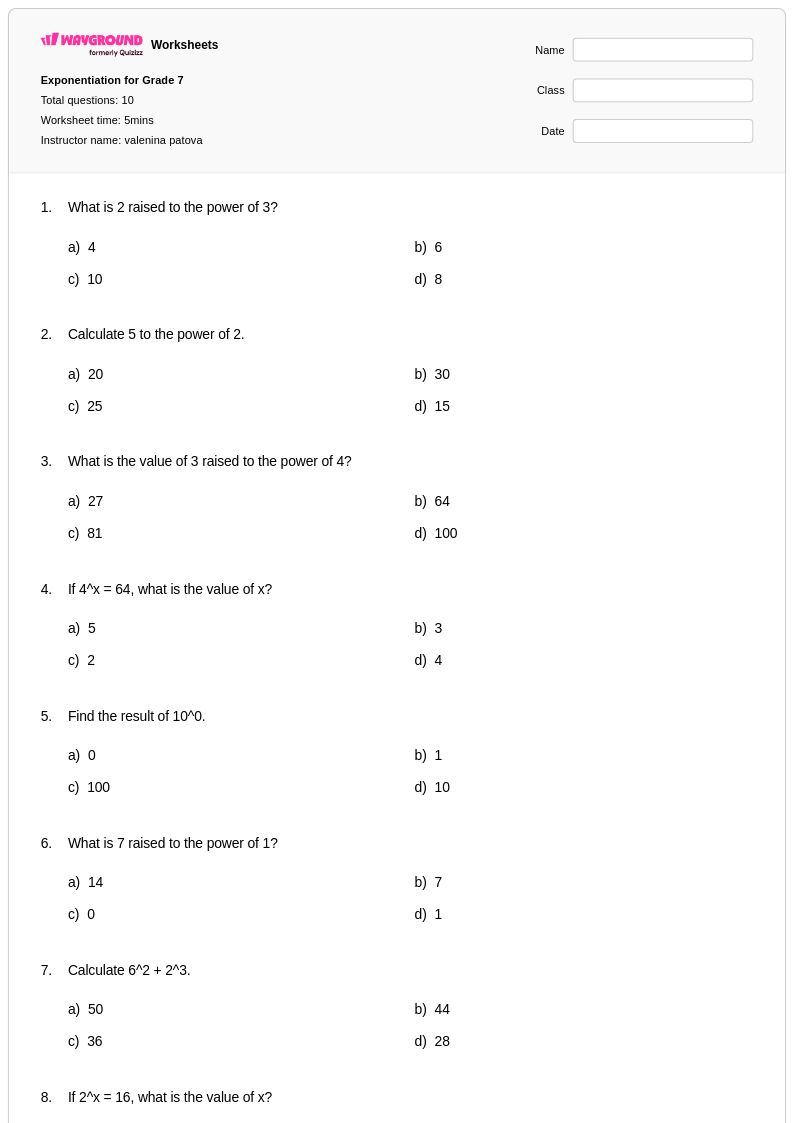
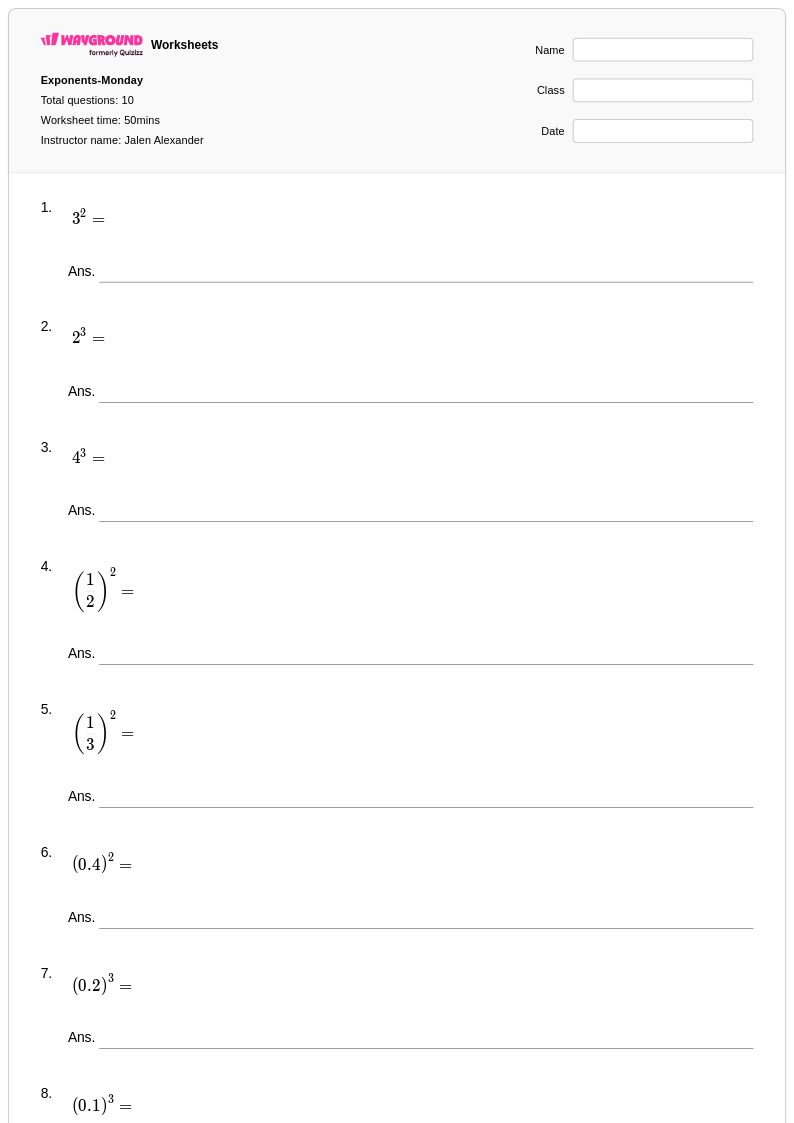
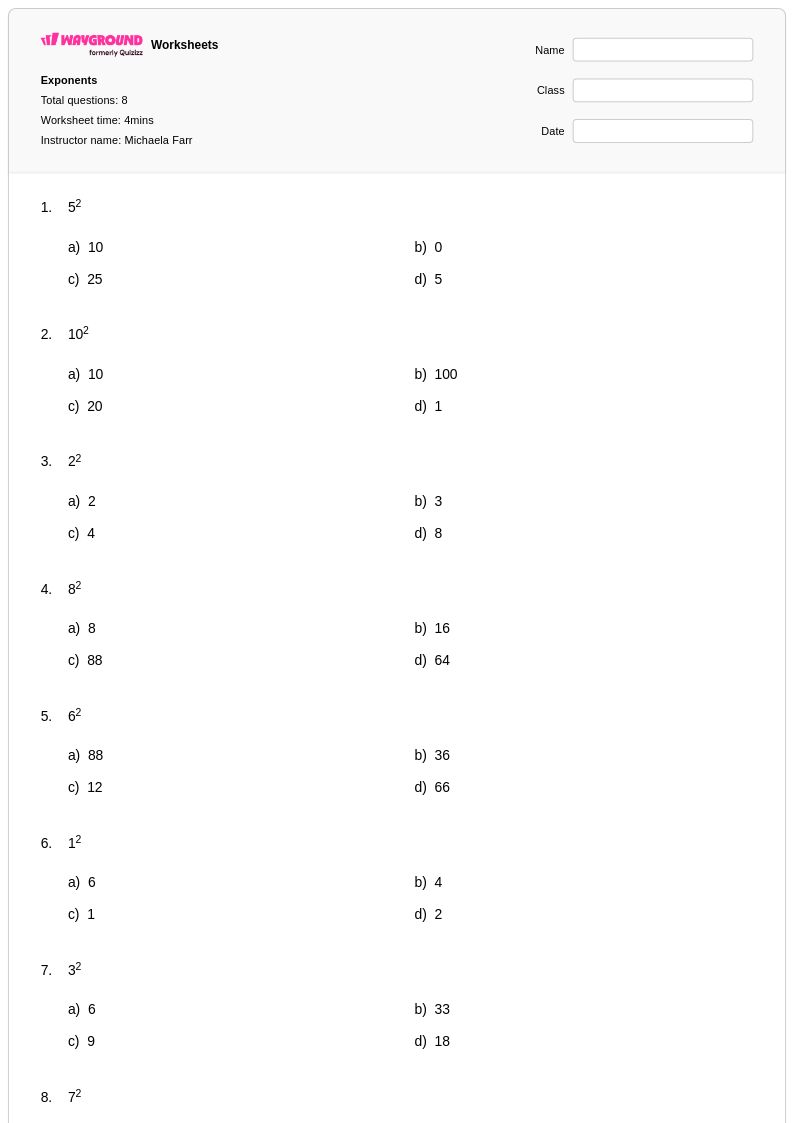
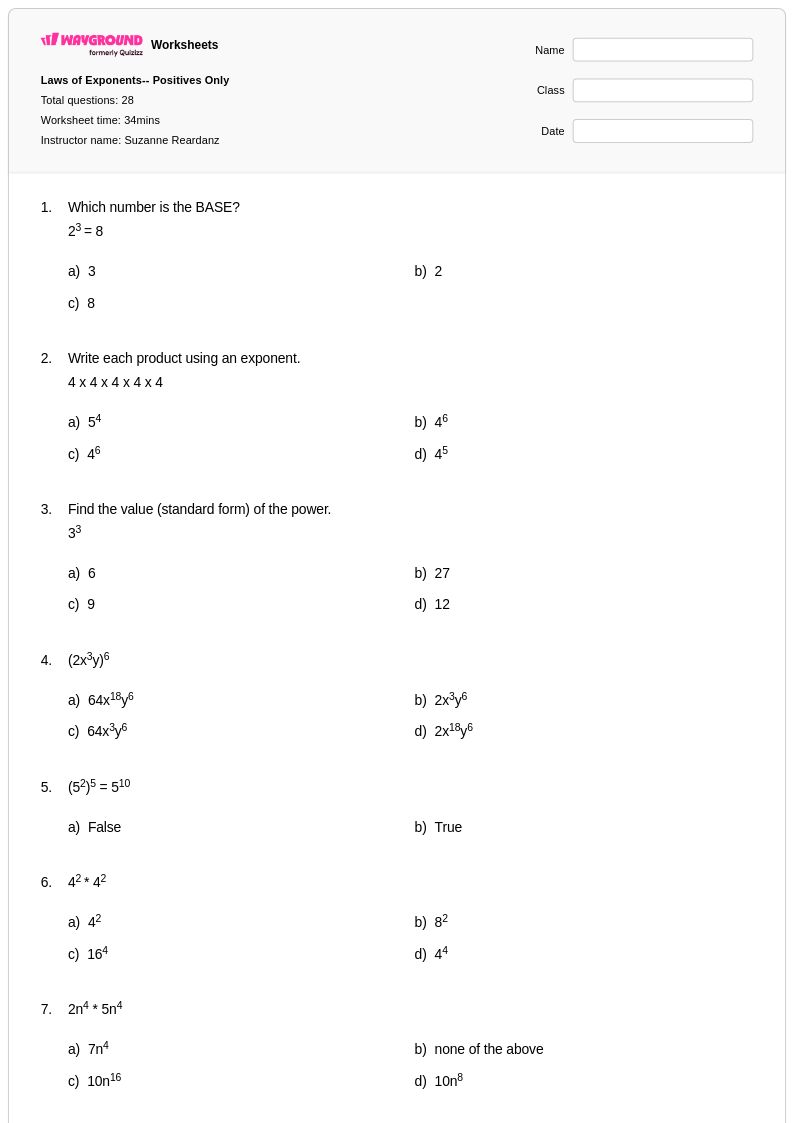
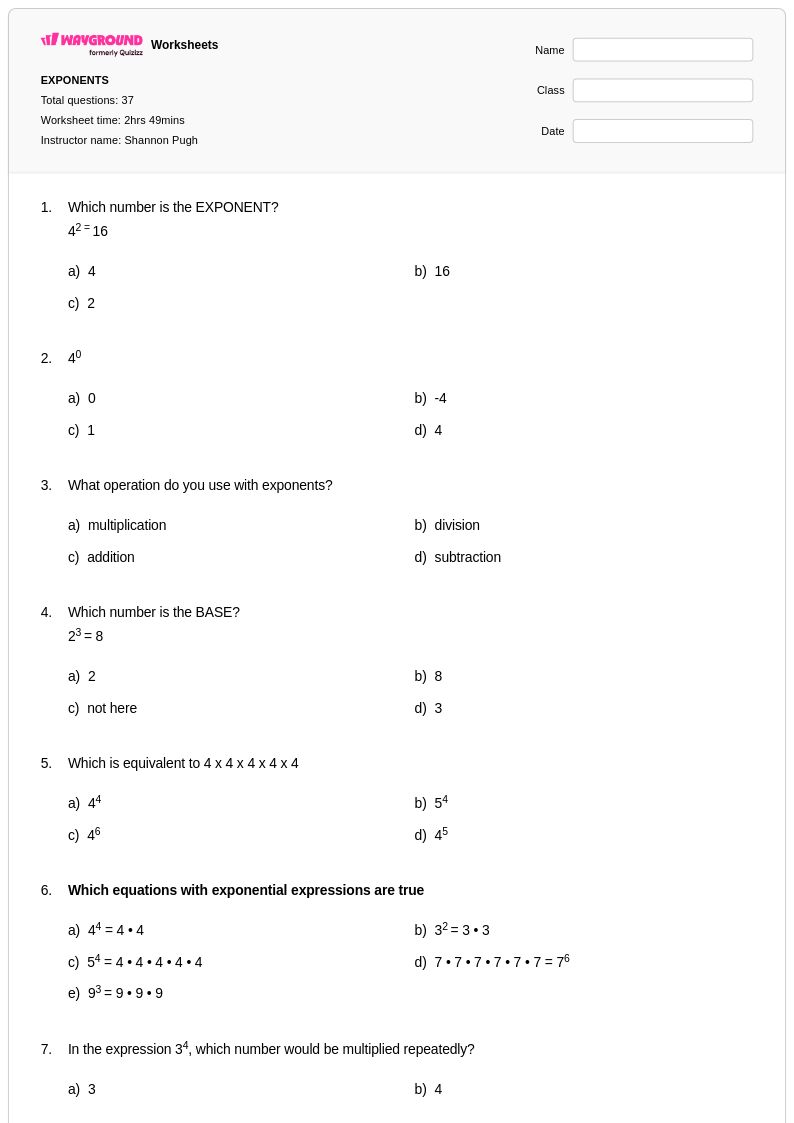
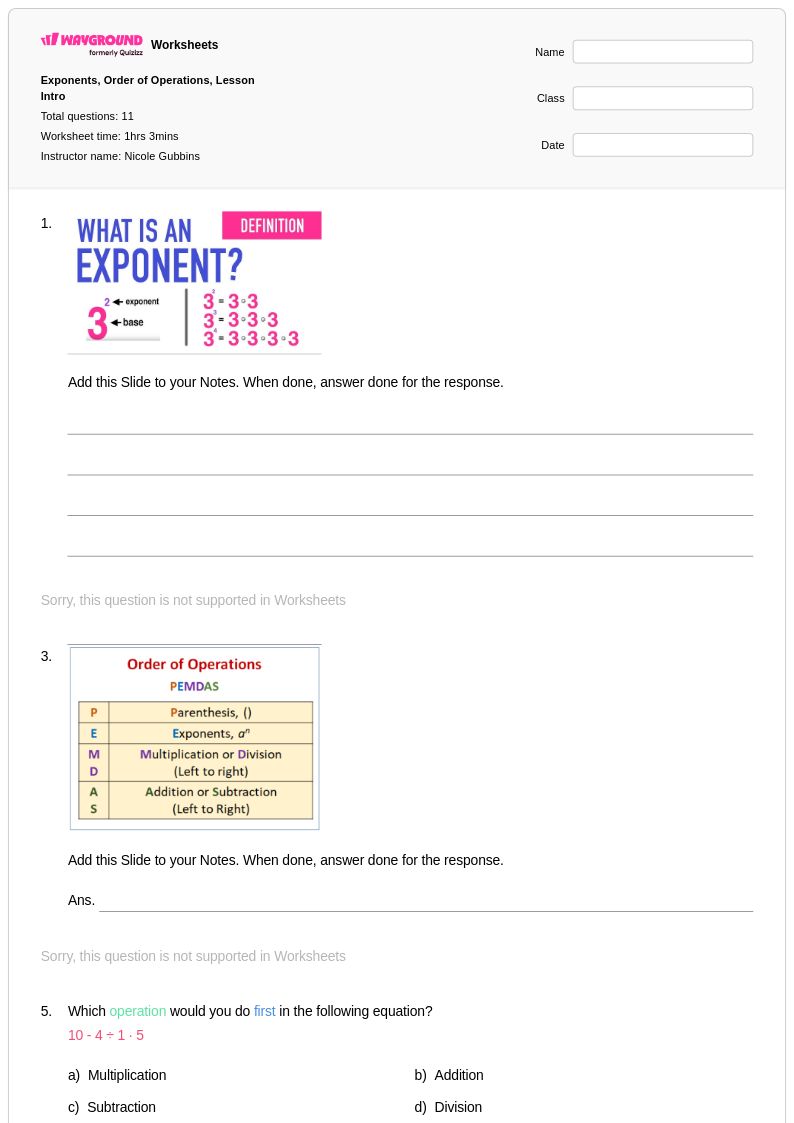
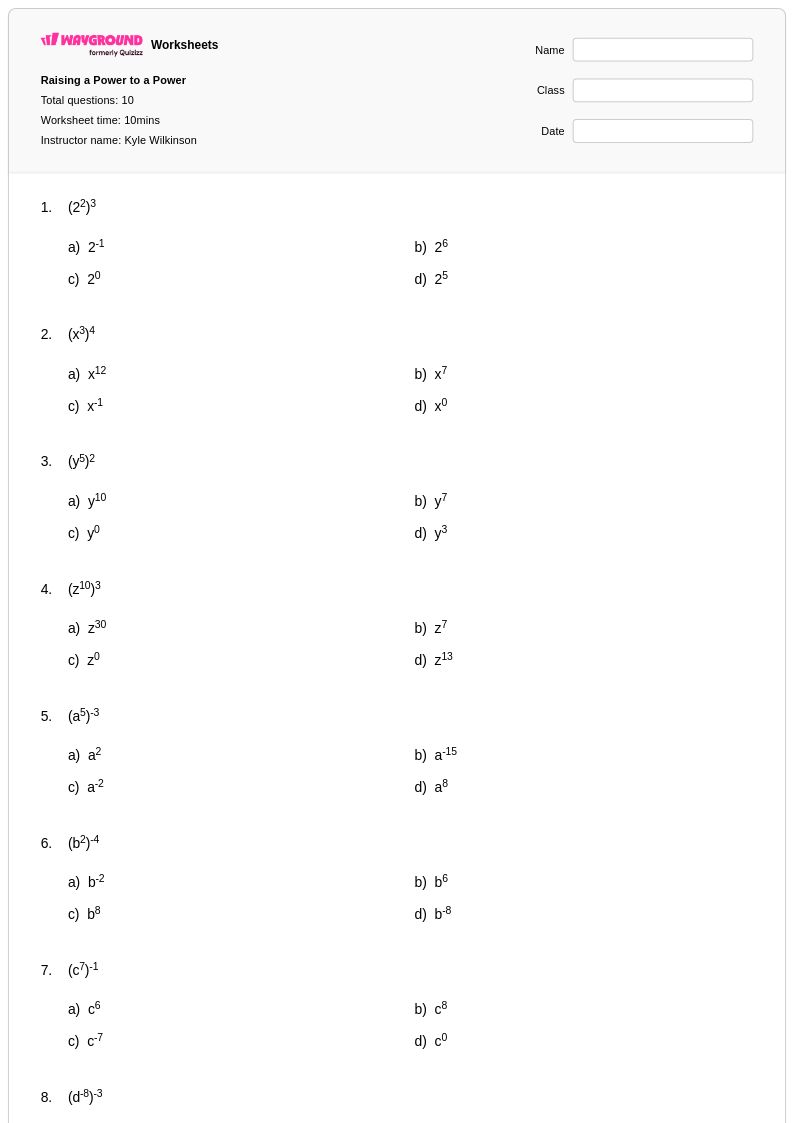
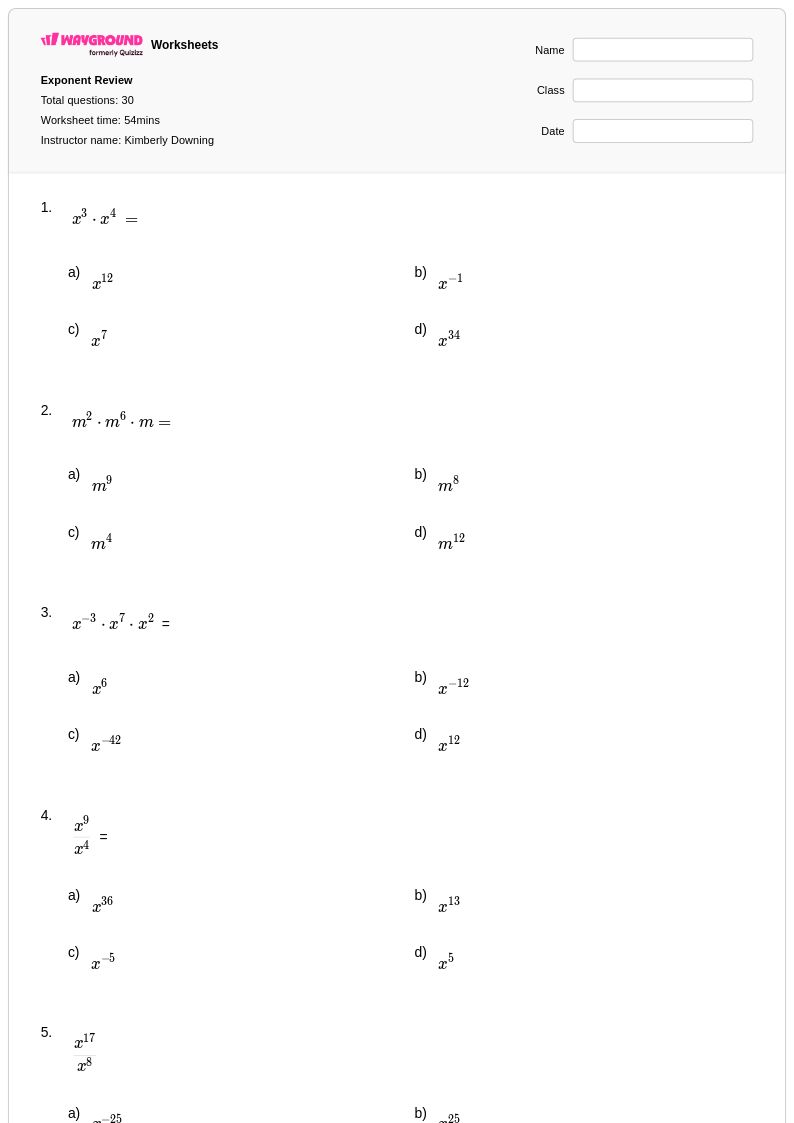
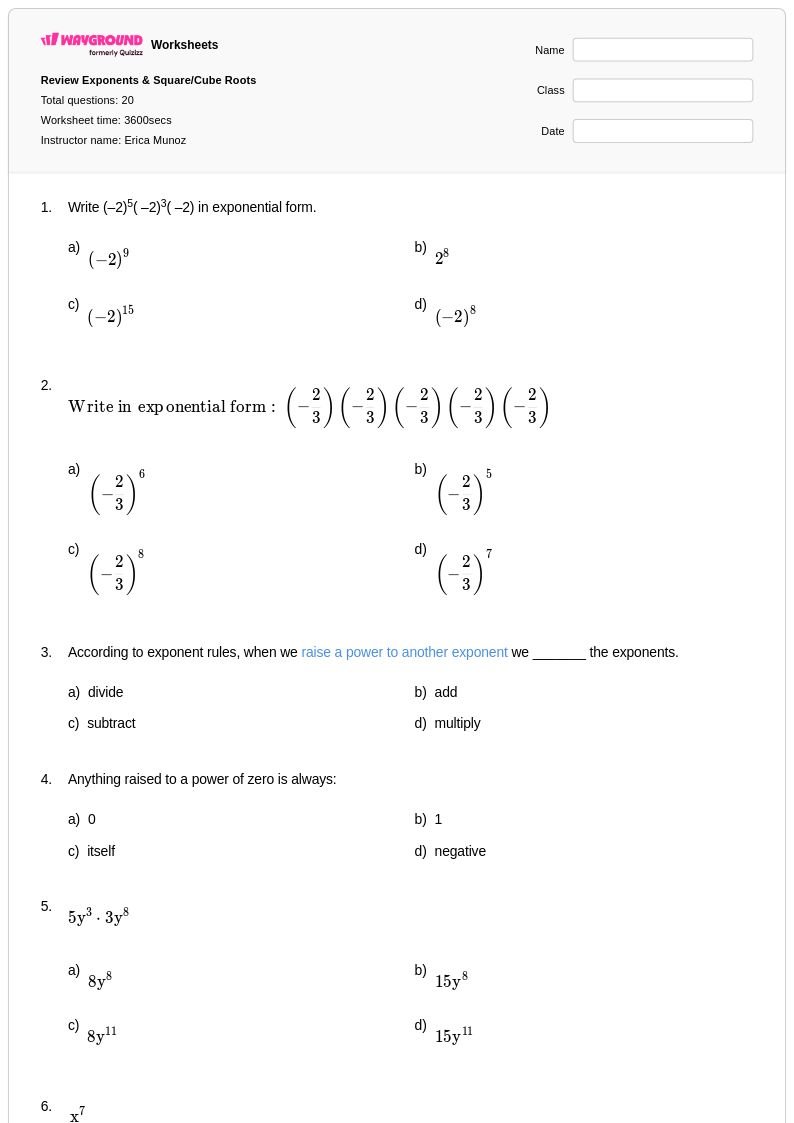
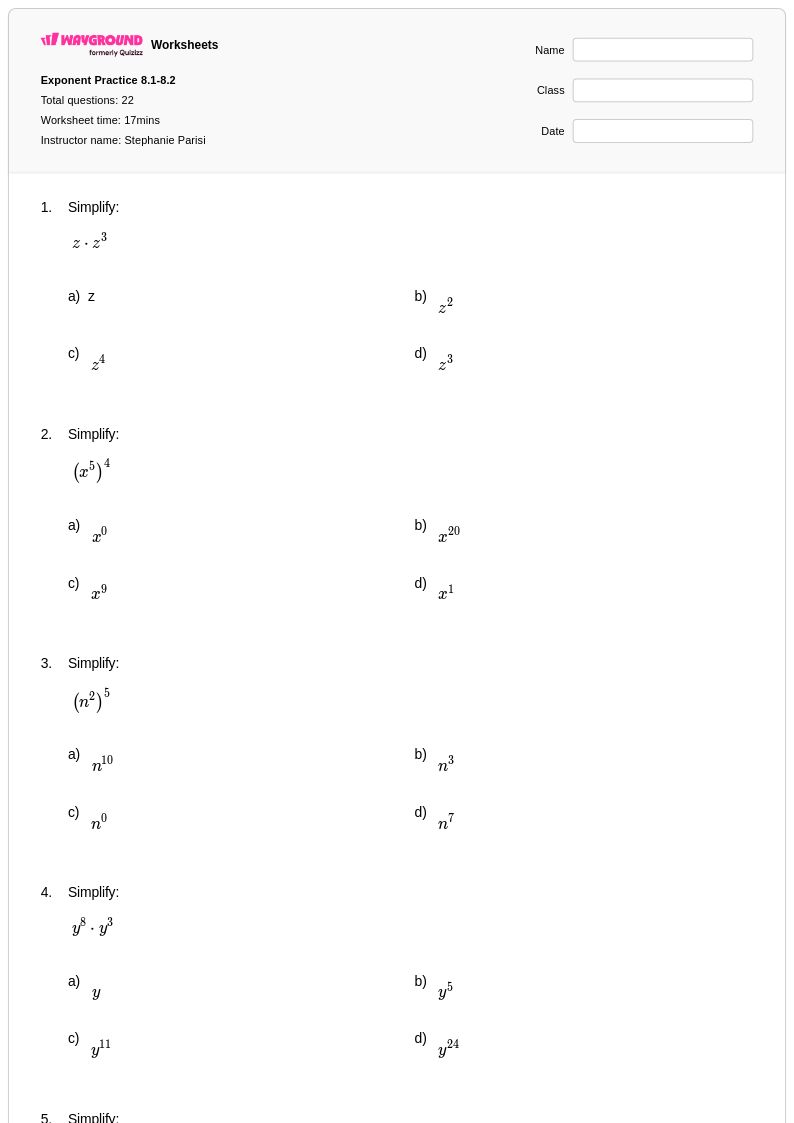
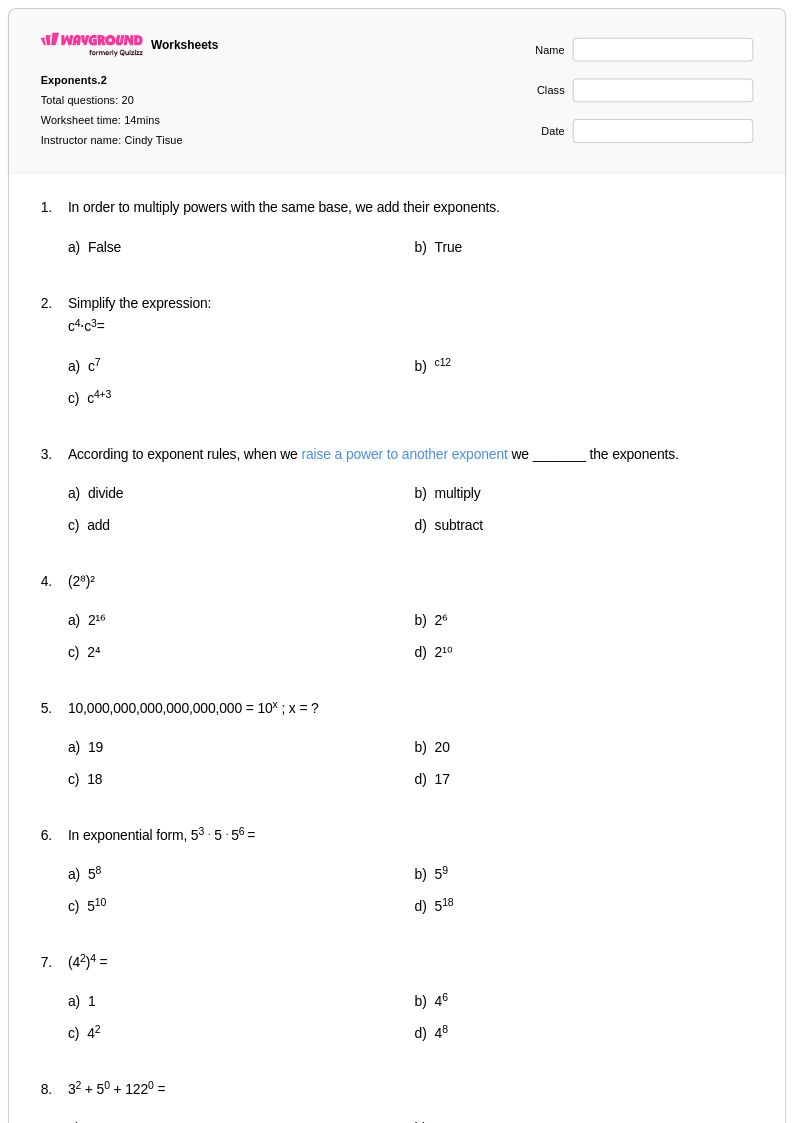
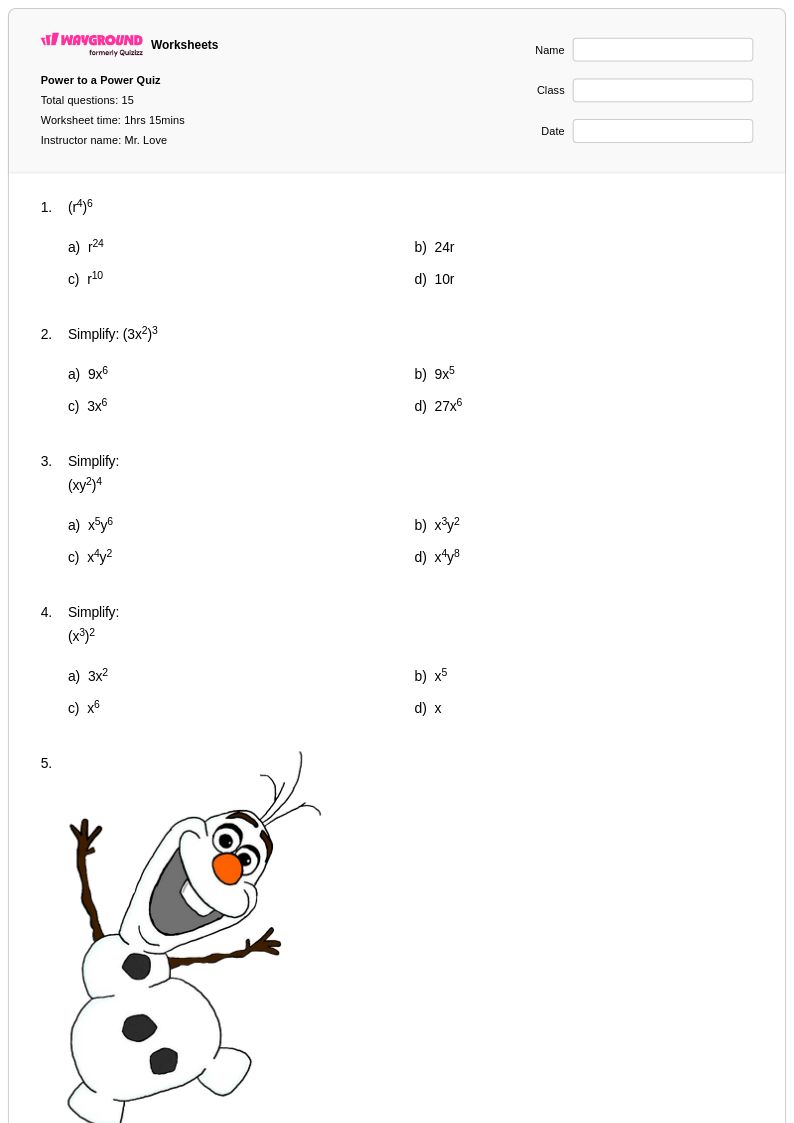
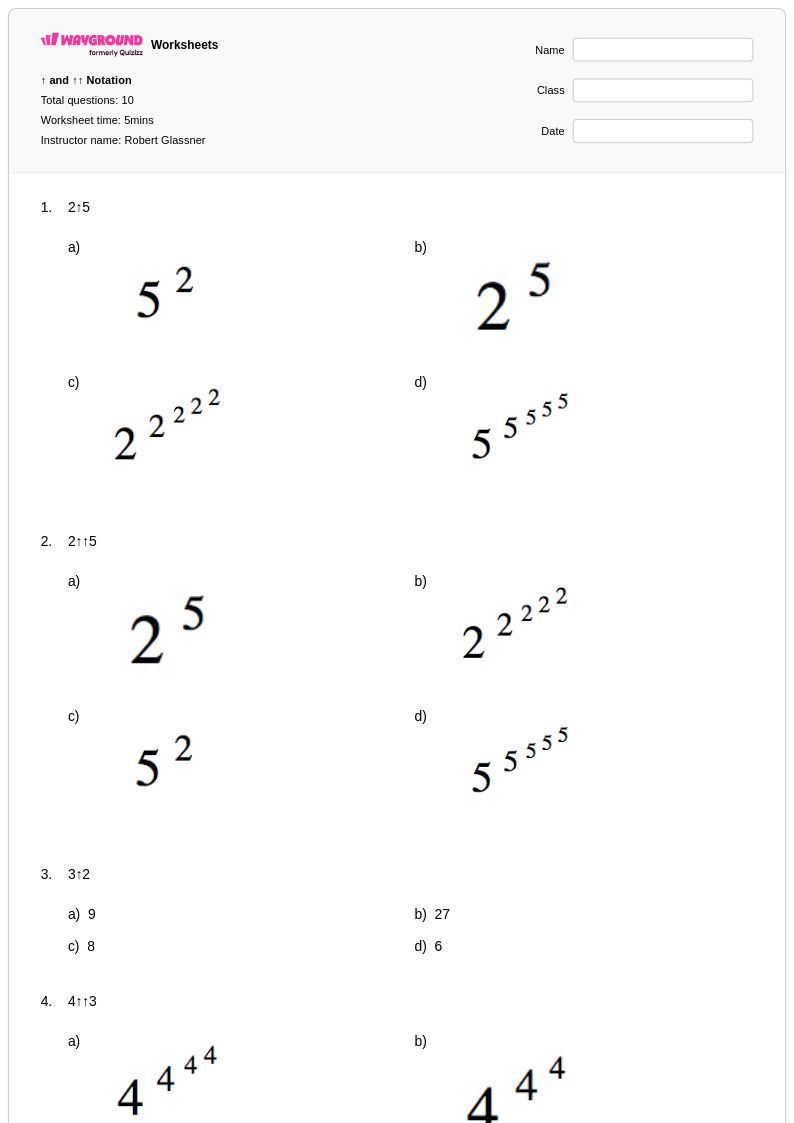
Exponentiation worksheets for Year 7 through Wayground provide comprehensive practice opportunities for students developing mastery of powers, bases, and exponential notation. These carefully designed resources strengthen fundamental skills including calculating powers of whole numbers, understanding exponential expressions, applying the laws of exponents, and recognizing patterns in exponential growth. Students work through practice problems that build confidence with both positive and negative integer exponents, while developing fluency in converting between exponential and standard form. Each worksheet includes a complete answer key, making them ideal free printables for independent study, homework assignments, or classroom assessments that reinforce critical number sense concepts.
Wayground's extensive collection draws from millions of teacher-created resources, offering robust search and filtering capabilities that allow educators to locate precisely the right exponentiation materials for their Year 7 mathematics curriculum. The platform's standards alignment ensures worksheets meet educational requirements, while differentiation tools enable teachers to customize content for diverse learning needs and skill levels. These flexible resources are available in both printable pdf format and interactive digital versions, supporting varied instructional approaches from traditional paper-based practice to technology-enhanced learning experiences. Teachers can efficiently plan lessons, provide targeted remediation for struggling learners, offer enrichment challenges for advanced students, and deliver systematic skill practice that builds computational fluency with exponential expressions.
FAQs
How do I teach exponentiation in 7th grade?
By Grade 7, students should already know what an exponent means, so the instructional focus shifts to extending that understanding. The two big moves are negative exponents and the laws of exponents. For negative exponents, use the pattern approach: if 2³ = 8, 2² = 4, 2¹ = 2, then 2⁰ and 2⁻¹ follow logically by halving each time. For exponent laws, have students discover the product rule by expanding expressions like 2³ × 2⁴ before giving them the shortcut.
What exercises help 7th graders practice exponent laws?
Start with expansion: have students write out 3² × 3³ as repeated multiplication, count the factors, and see why the exponents add. Then move to applying the rule symbolically, and finally to simplifying multi-step expressions that combine product and quotient rules. Problems that mix positive and negative exponents in the same expression are the best test of whether students have genuinely internalized the rules or are just pattern-matching.
What errors do 7th graders commonly make with exponents?
Two errors dominate at this level. First, students add exponents when they should multiply bases — applying the product rule to expressions like 2³ × 3⁴ where the bases are different. Second, negative exponents get confused with negative numbers: students write 3⁻² = −9 instead of 1/9. Both errors are worth addressing explicitly, because they compound badly once students hit scientific notation and algebraic expressions.
How do I use these Grade 7 exponentiation worksheets?
Every worksheet comes with a complete answer key, so they work well for independent practice or homework. You can host any worksheet as a digital quiz on Wayground or print the PDF for paper-based work — printable PDFs are a good fit for schools managing screen time. Either way, the content and answer key are identical.
How does Grade 7 exponentiation fit into the Common Core progression?
Common Core builds exponent work progressively across the middle grades. Grade 6 establishes what an exponent means and how to evaluate simple powers. Grade 7 extends this to integer exponents — including negative values — and introduces the laws of exponents. That foundation feeds directly into Grade 8, where students apply exponent rules to scientific notation and begin connecting exponential expressions to linear and nonlinear patterns.
Can I differentiate exponentiation practice for my 7th grade class?
Yes. For students still shaky on the basic definition, you can generate a simplified version of the worksheet with wider spacing and a larger font so the layout doesn't add friction. For students who need it, Wayground's reduced answer choices option narrows multiple-choice items to fewer options, which helps when the cognitive load of evaluating several plausible-looking expressions is the barrier rather than the math itself. Advanced students can be routed to problems that combine multiple exponent laws in a single expression.