
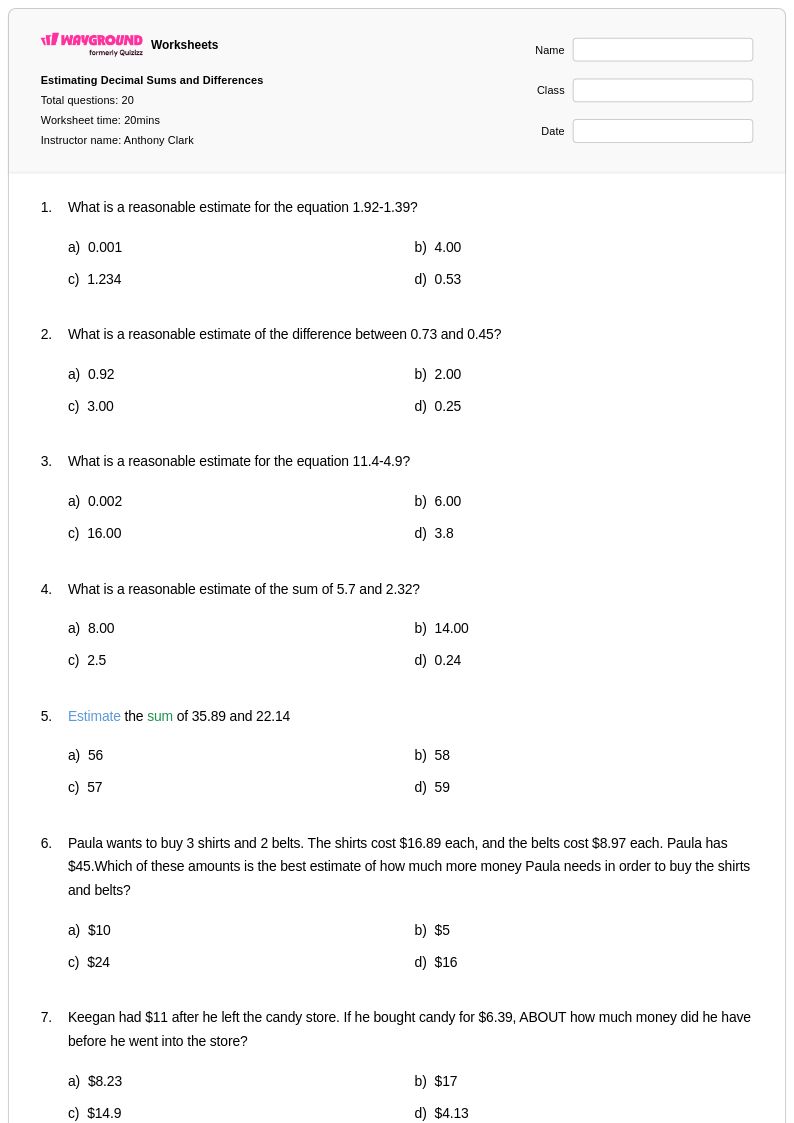
20 Q
5th - Uni
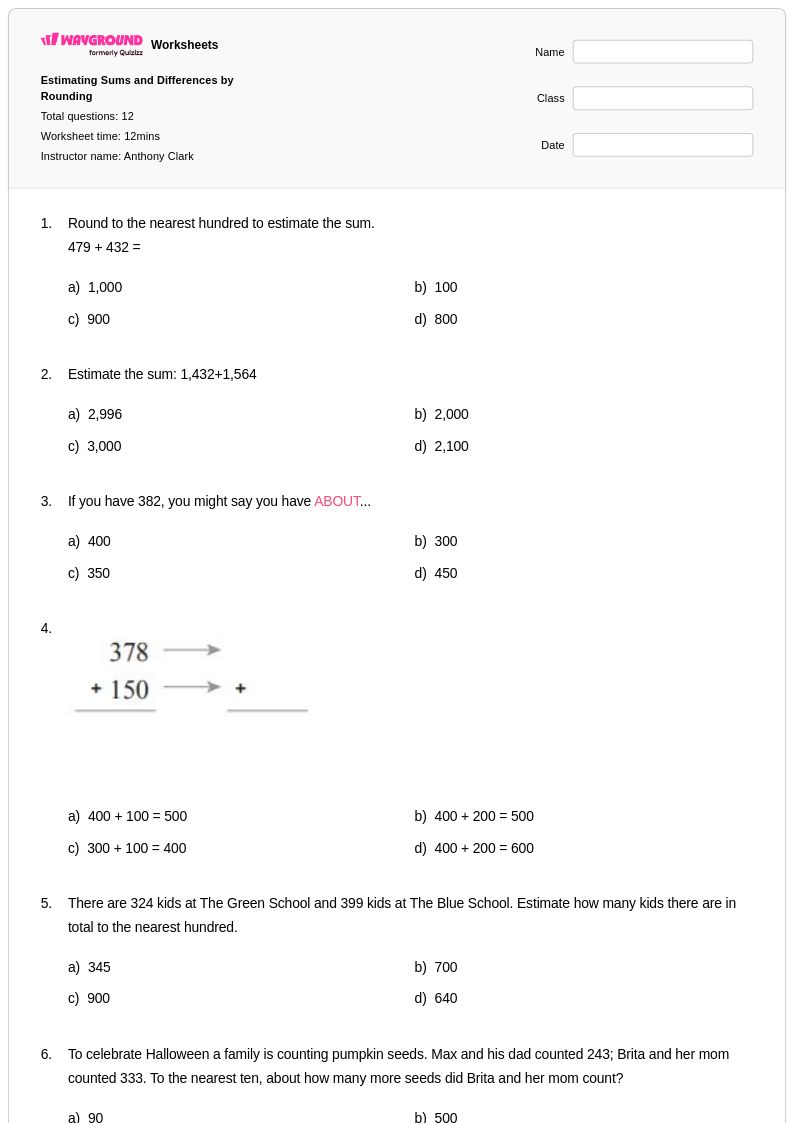
12 Q
4th - Uni
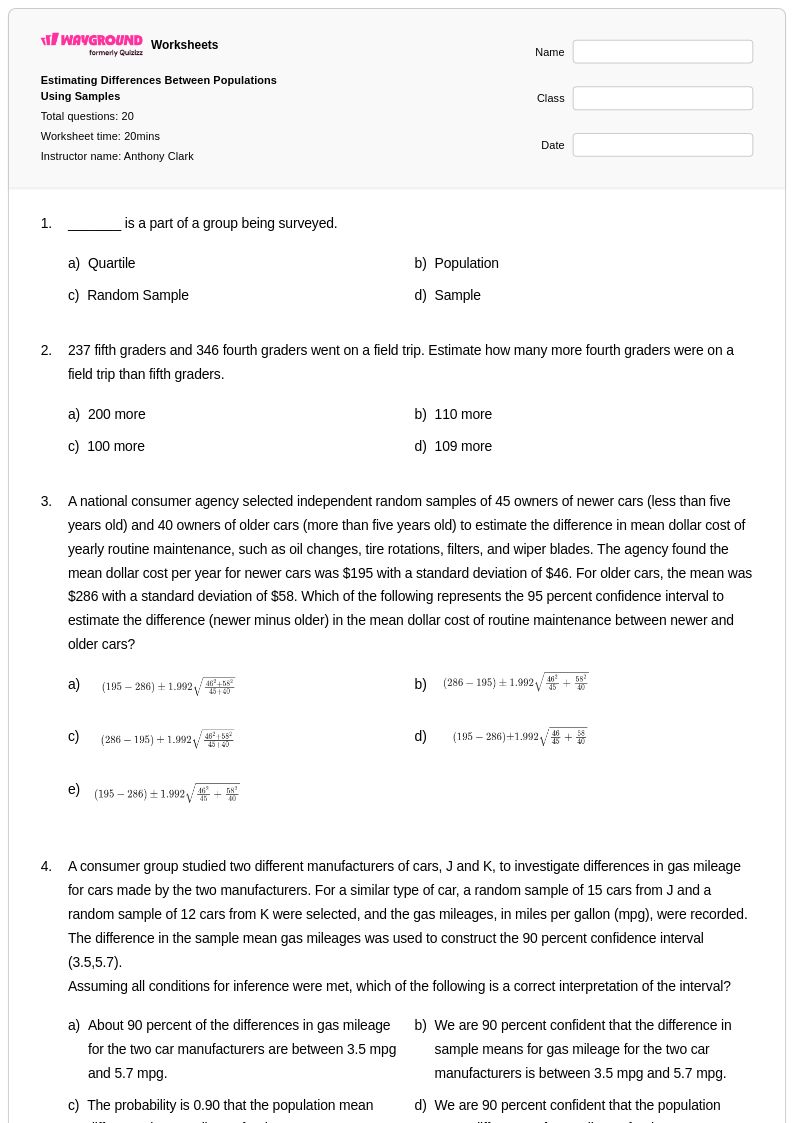
20 Q
7th - Uni
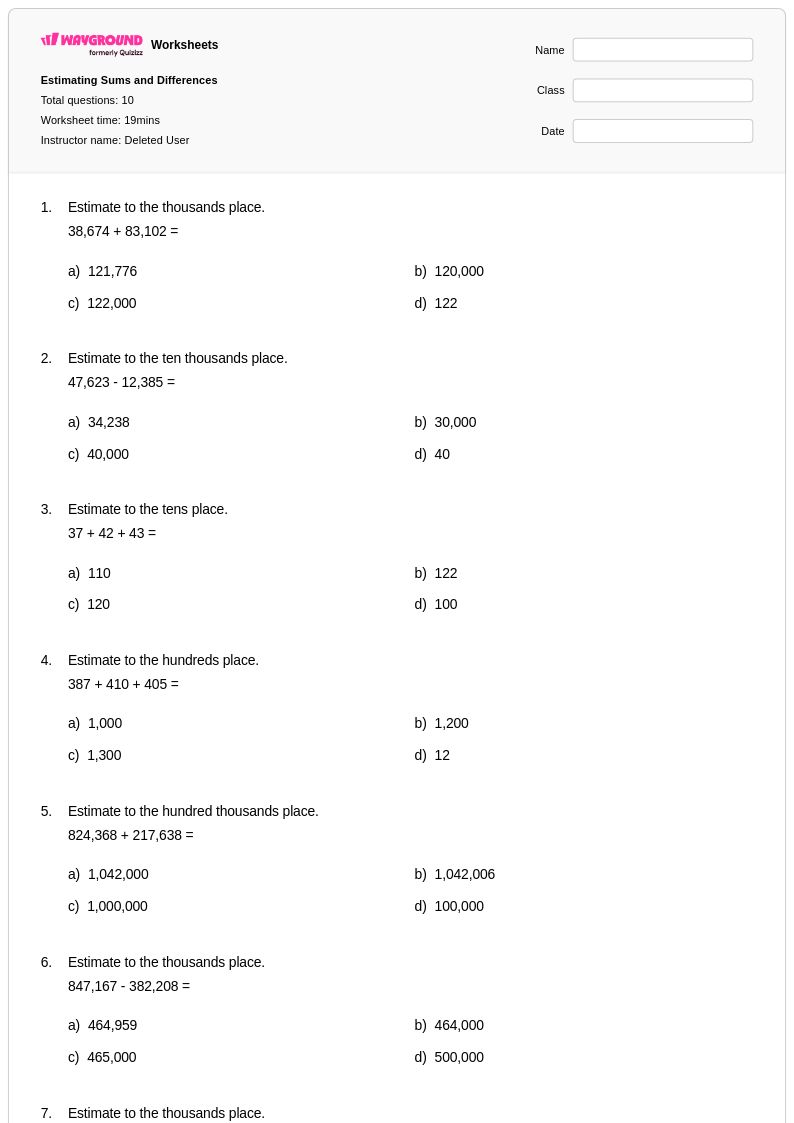
10 Q
4th - 8th
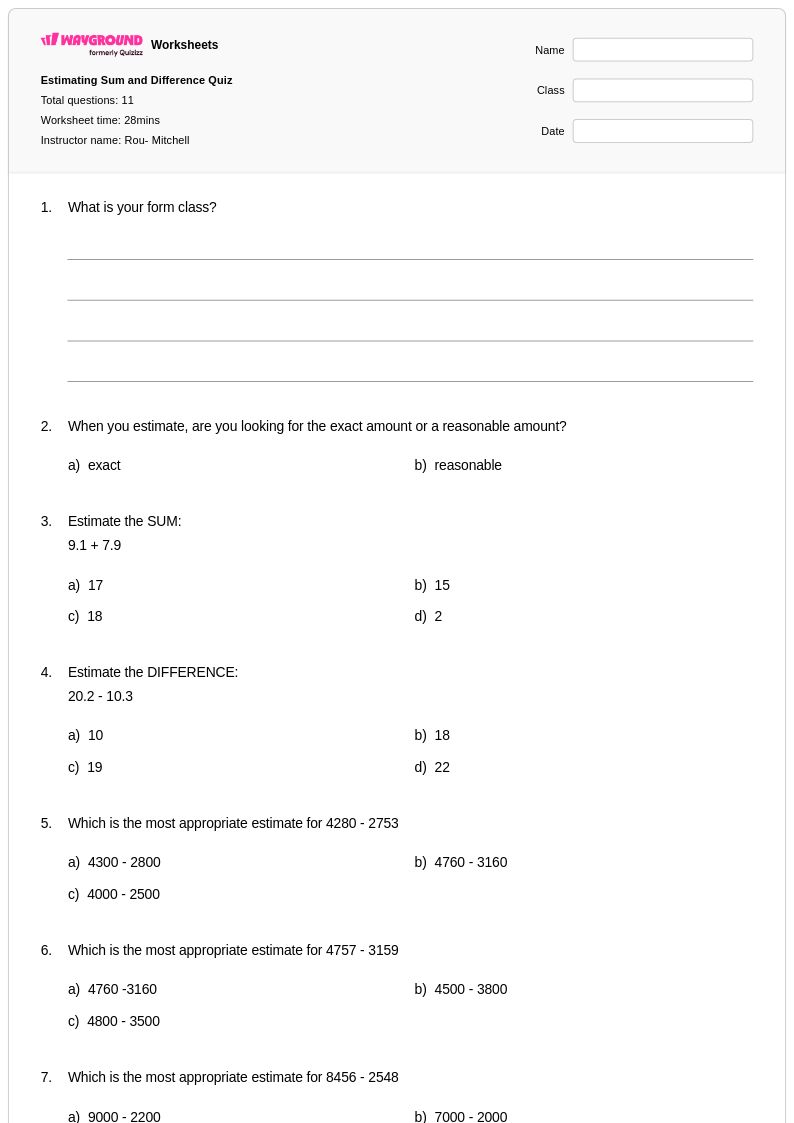
11 Q
7th
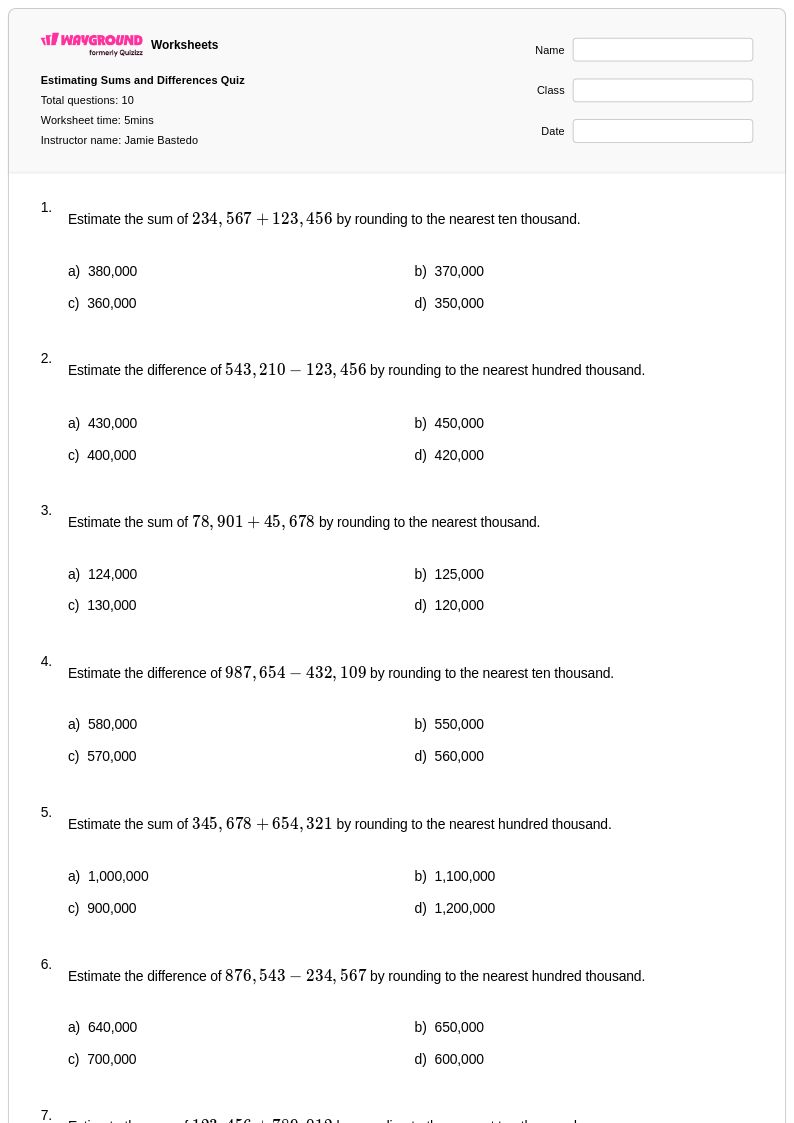
10 Q
4th - Uni
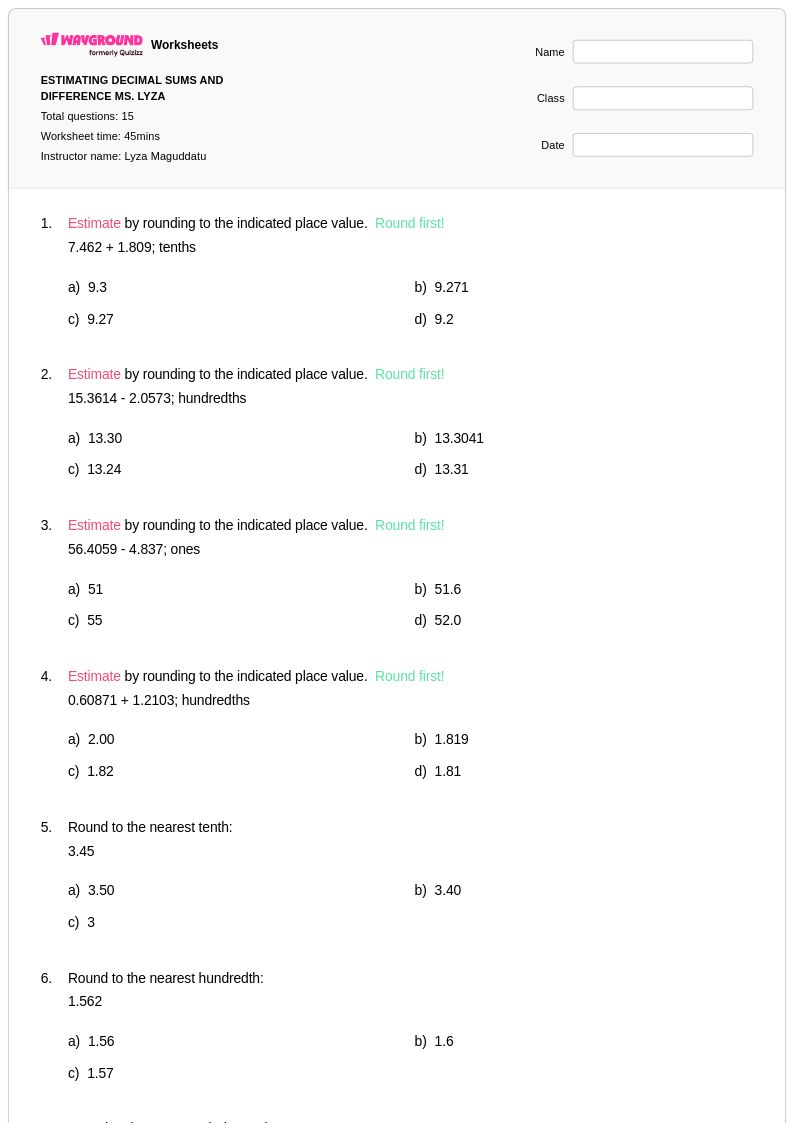
15 Q
7th
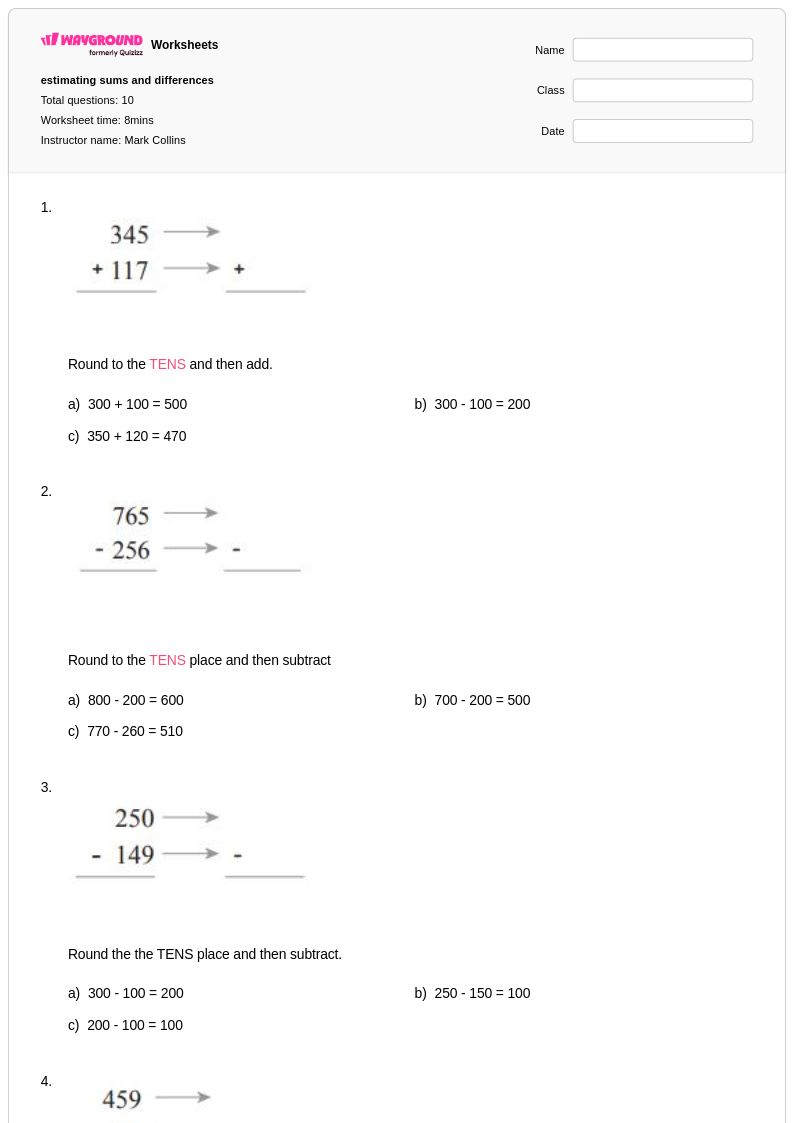
10 Q
3rd - 7th
20 Q
4th - Uni
20 Q
5th - Uni
23 Q
5th - 9th
20 Q
4th - Uni
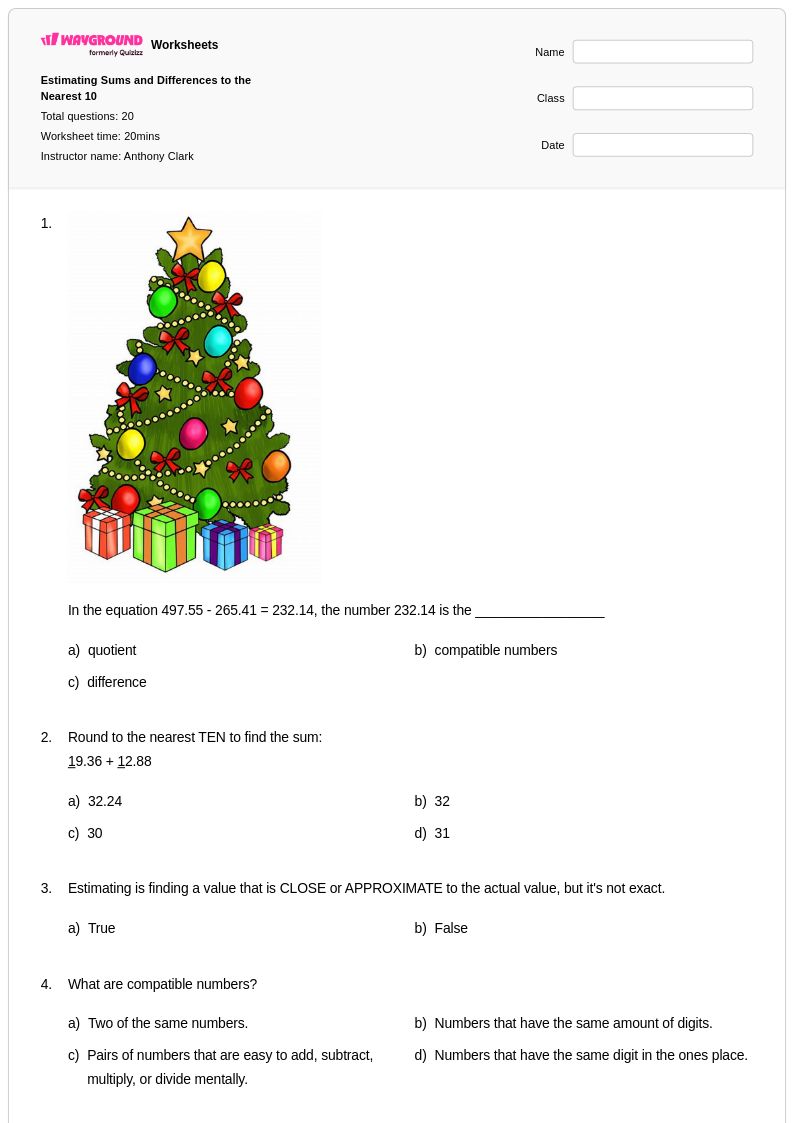
20 Q
5th - Uni
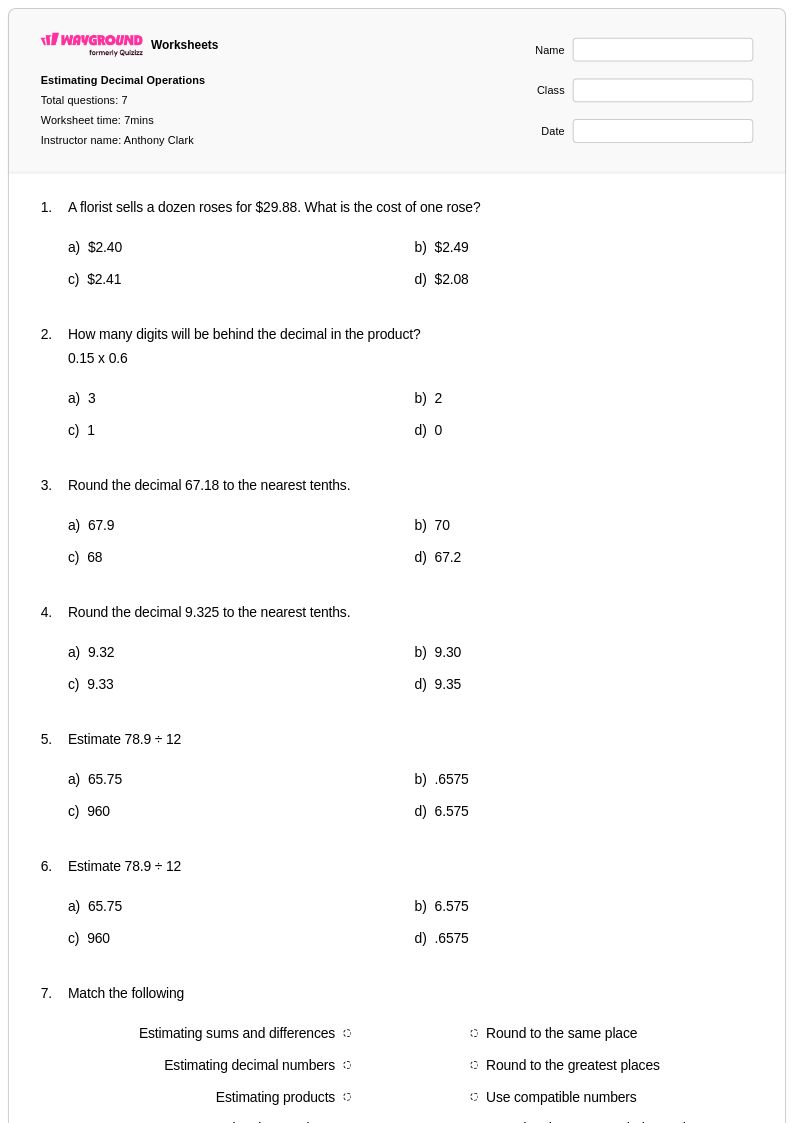
7 Q
7th - Uni
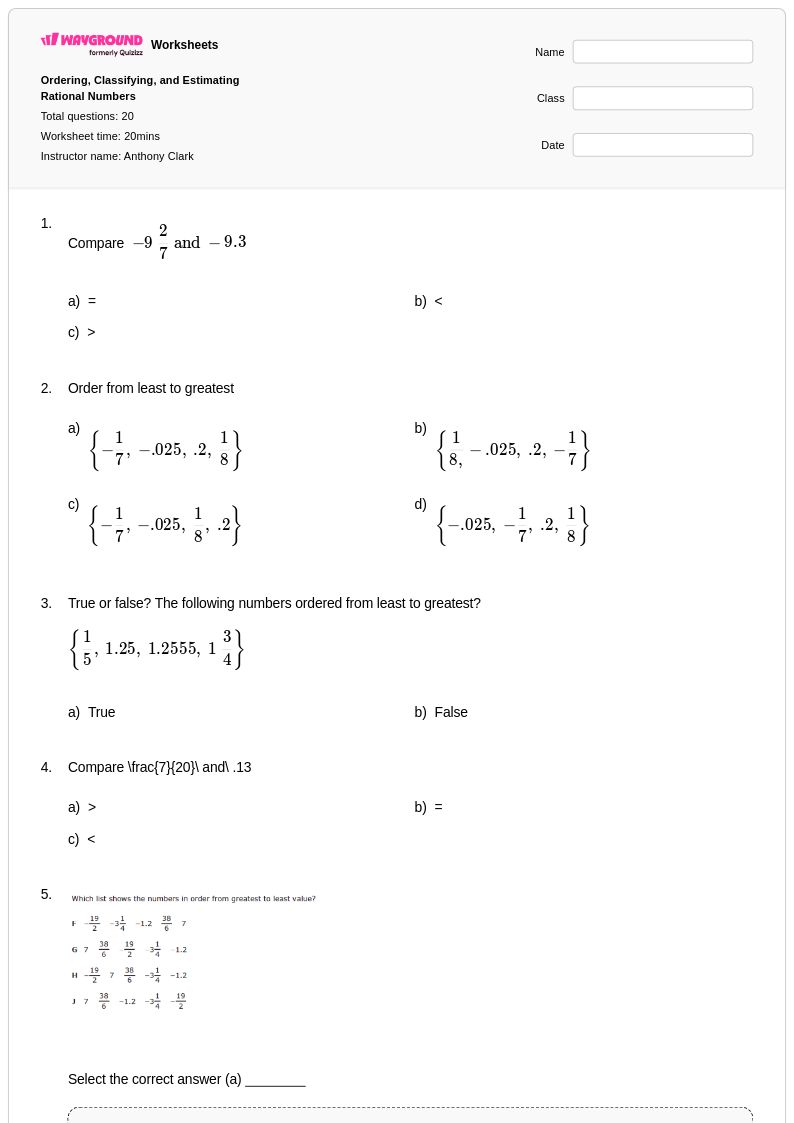
20 Q
6th - Uni
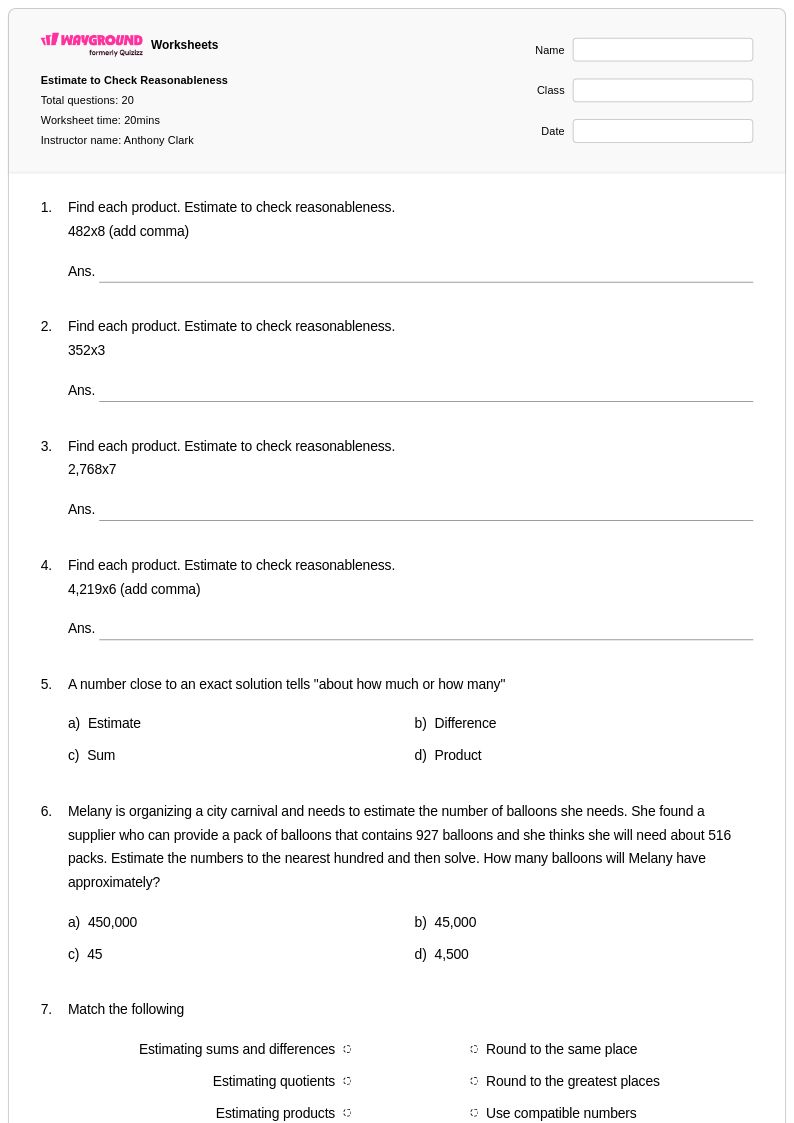
20 Q
4th - Uni
20 Q
6th - Uni
20 Q
2nd - Uni
15 Q
5th - Uni
8 Q
4th - Uni
20 Q
3rd - Uni
16 Q
3rd - Uni
20 Q
3rd - Uni
10 Q
4th - Uni
Explore Other Subject Worksheets for year 7
Explore printable Estimating Differences worksheets for Year 7
Estimating differences worksheets for Year 7 students through Wayground (formerly Quizizz) provide comprehensive practice in developing critical number sense skills that form the foundation of mathematical reasoning. These carefully designed resources help seventh-grade students master the art of making reasonable approximations when subtracting numbers, including whole numbers, decimals, and fractions, without performing exact calculations. The worksheets strengthen students' ability to round strategically, use compatible numbers, and apply front-end estimation techniques while building confidence in their mathematical intuition. Each printable resource includes detailed practice problems that progress from basic whole number estimation to more complex scenarios involving mixed numbers and decimals, with complete answer keys provided to support independent learning and immediate feedback.
Wayground (formerly Quizizz) empowers educators with access to millions of teacher-created estimating differences worksheets that can be seamlessly integrated into Year 7 mathematics instruction. The platform's robust search and filtering capabilities allow teachers to quickly locate resources that align with specific curriculum standards and match their students' diverse learning needs. Whether educators require materials for initial skill introduction, targeted remediation, or advanced enrichment activities, the extensive collection offers flexible customization options that support differentiated instruction. Teachers can access these high-quality resources in both printable PDF formats for traditional classroom use and digital formats for technology-enhanced learning environments, making it effortless to provide consistent skill practice across various instructional settings while tracking student progress and identifying areas requiring additional support.
FAQs
How do I teach seventh graders to estimate differences?
What exercises help Grade 7 students practice estimating differences?
What mistakes do students make when estimating differences?
How can I use an estimating differences worksheet on Wayground?
How does estimating differences fit into the Grade 7 Common Core math progression?
How can I differentiate estimating-differences practice for a mixed-ability class?
What grade do students learn to estimate differences with fractions and decimals?