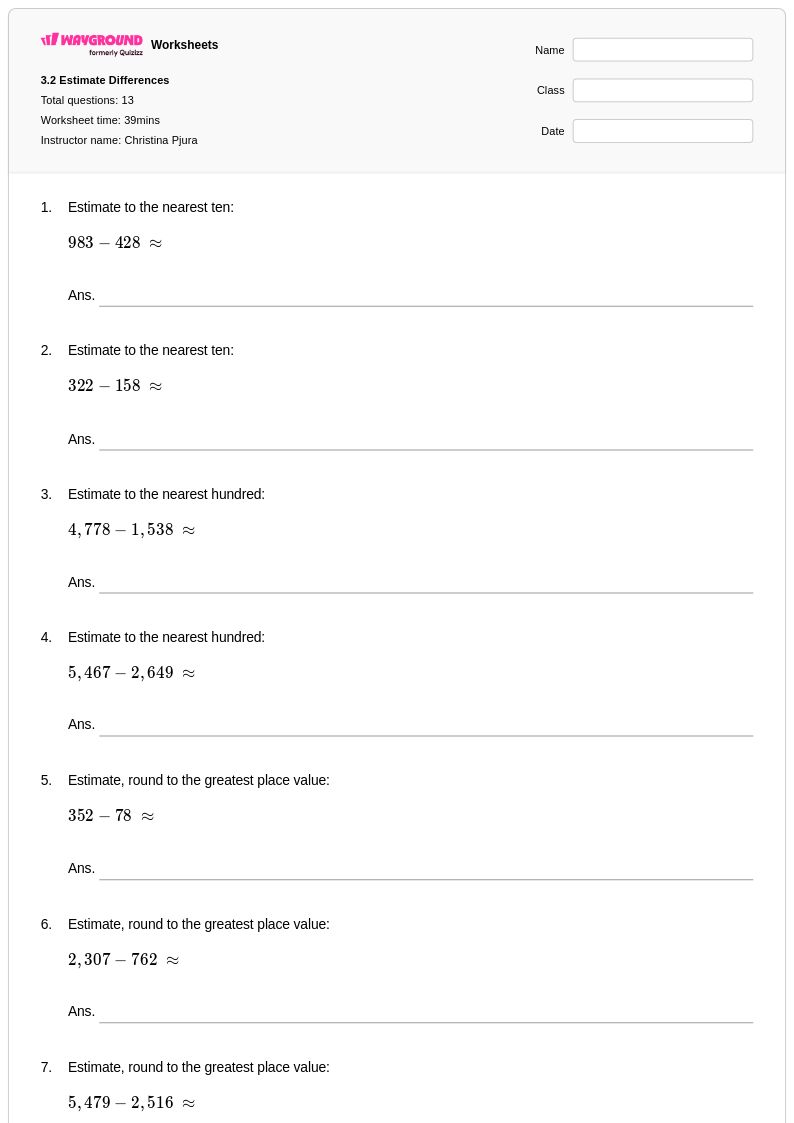
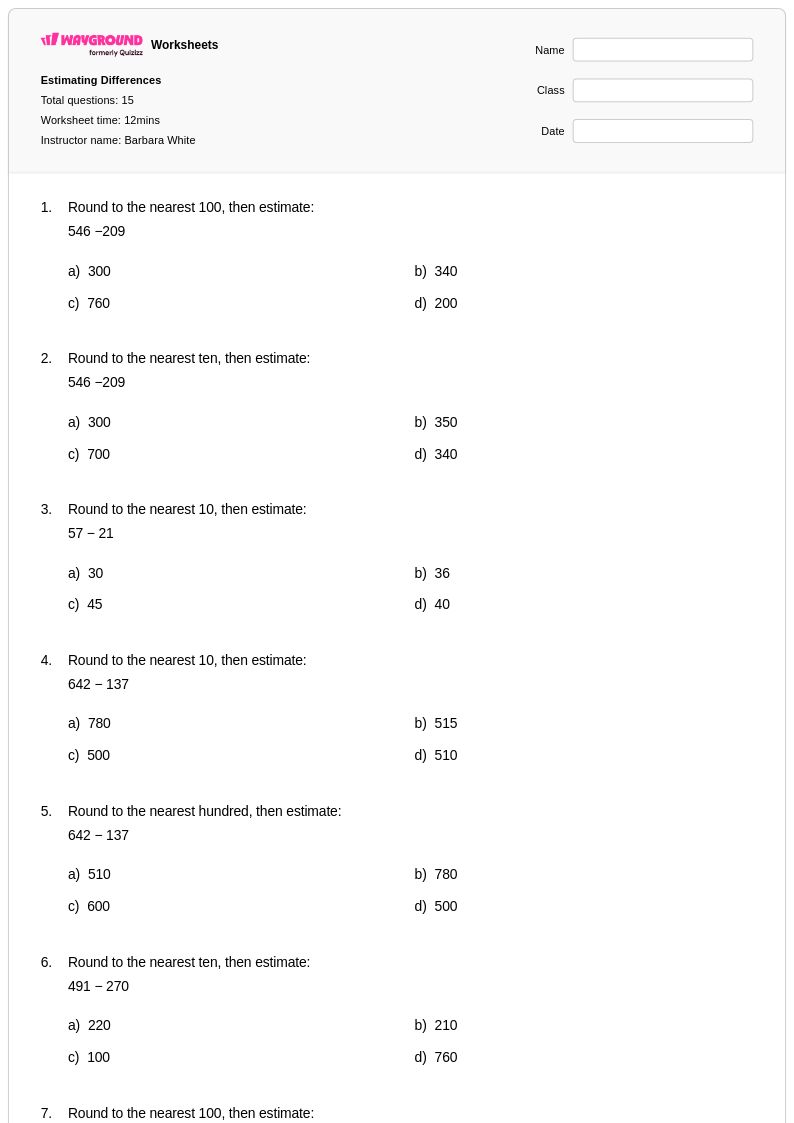
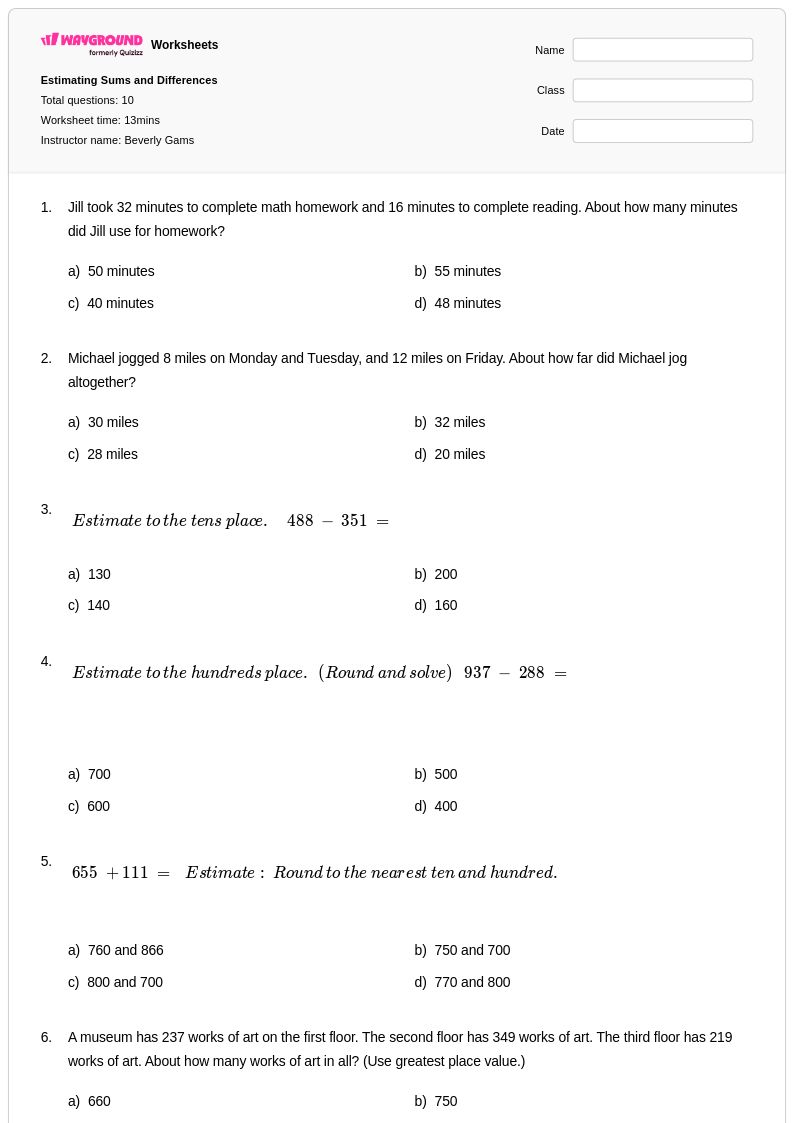
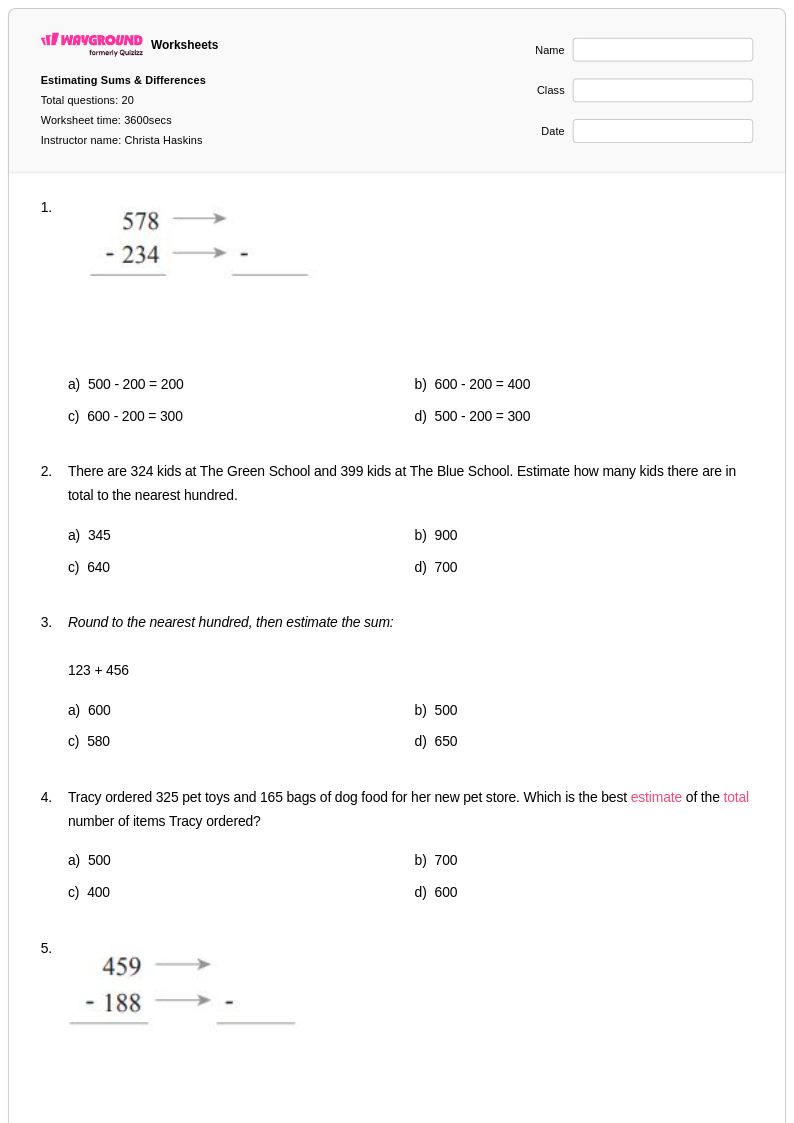
Free Printable Estimating Differences Worksheets for Year 3
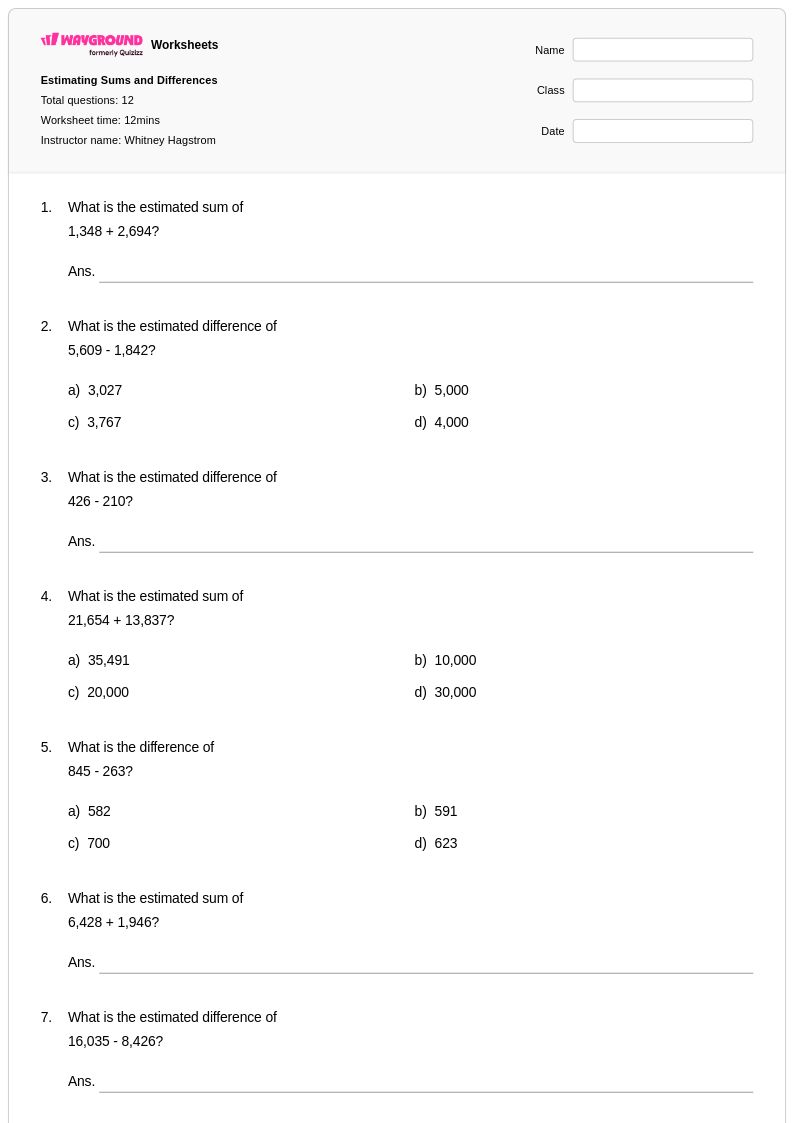
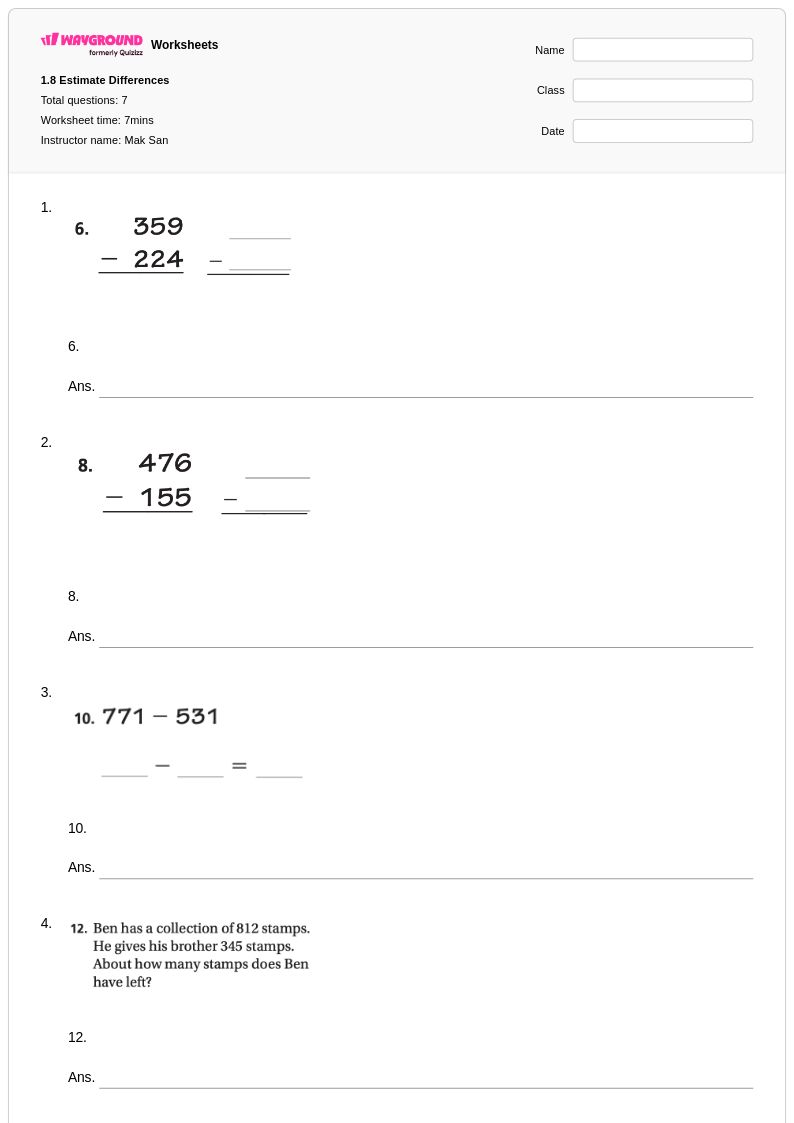
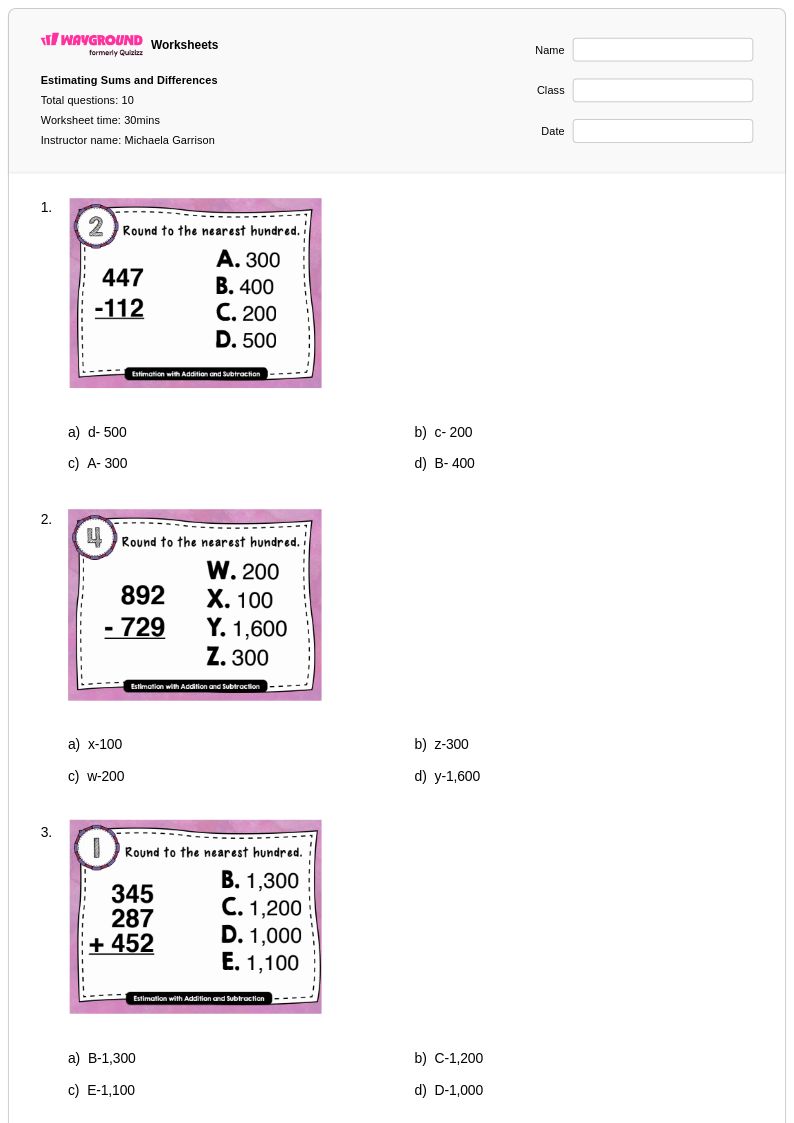
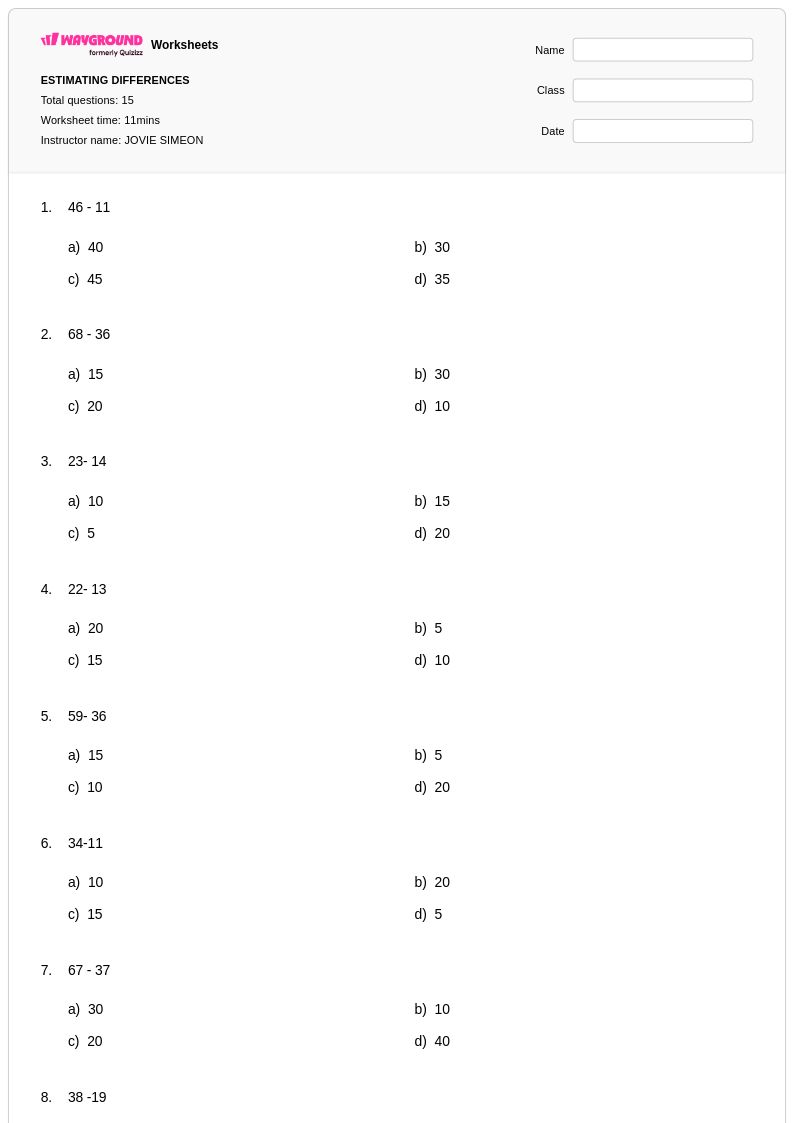
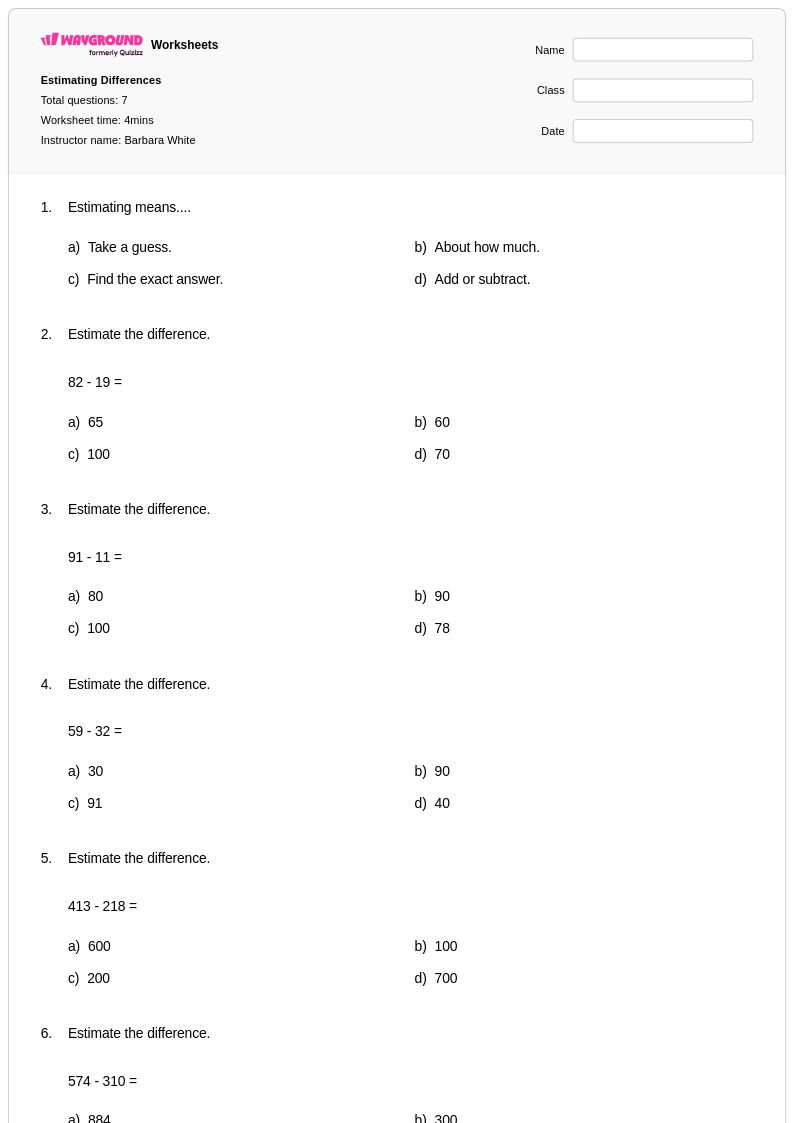
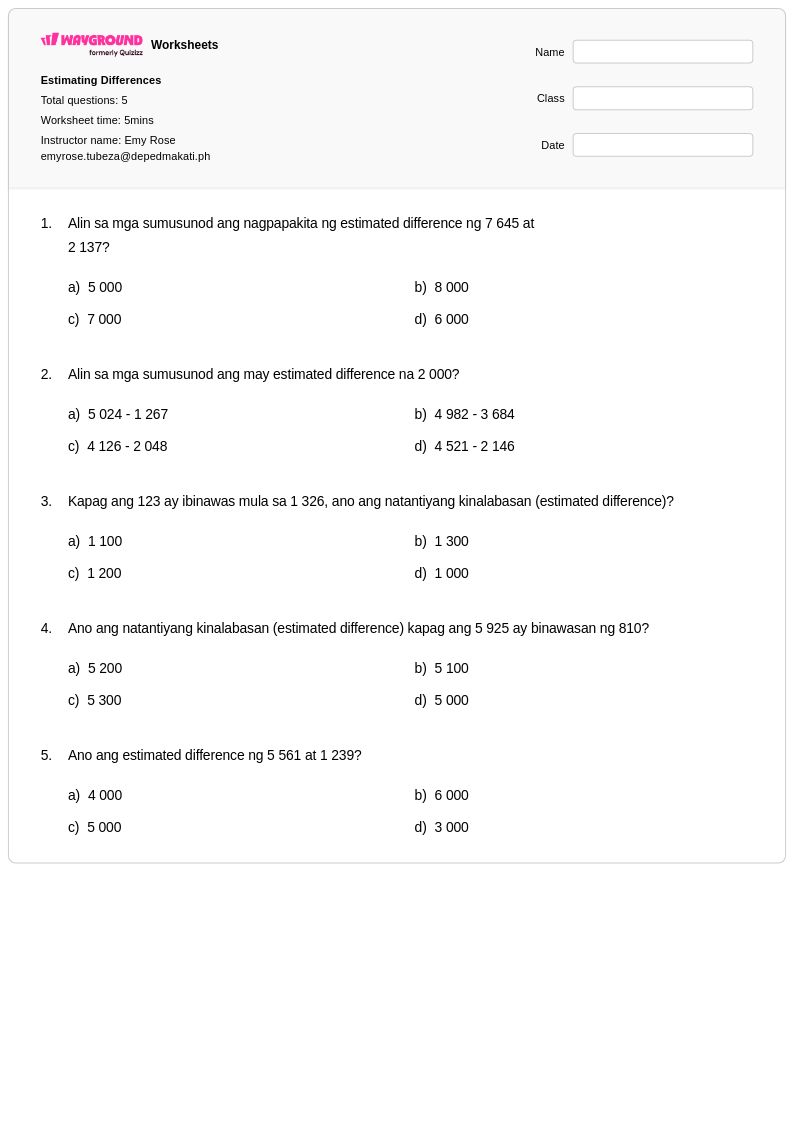
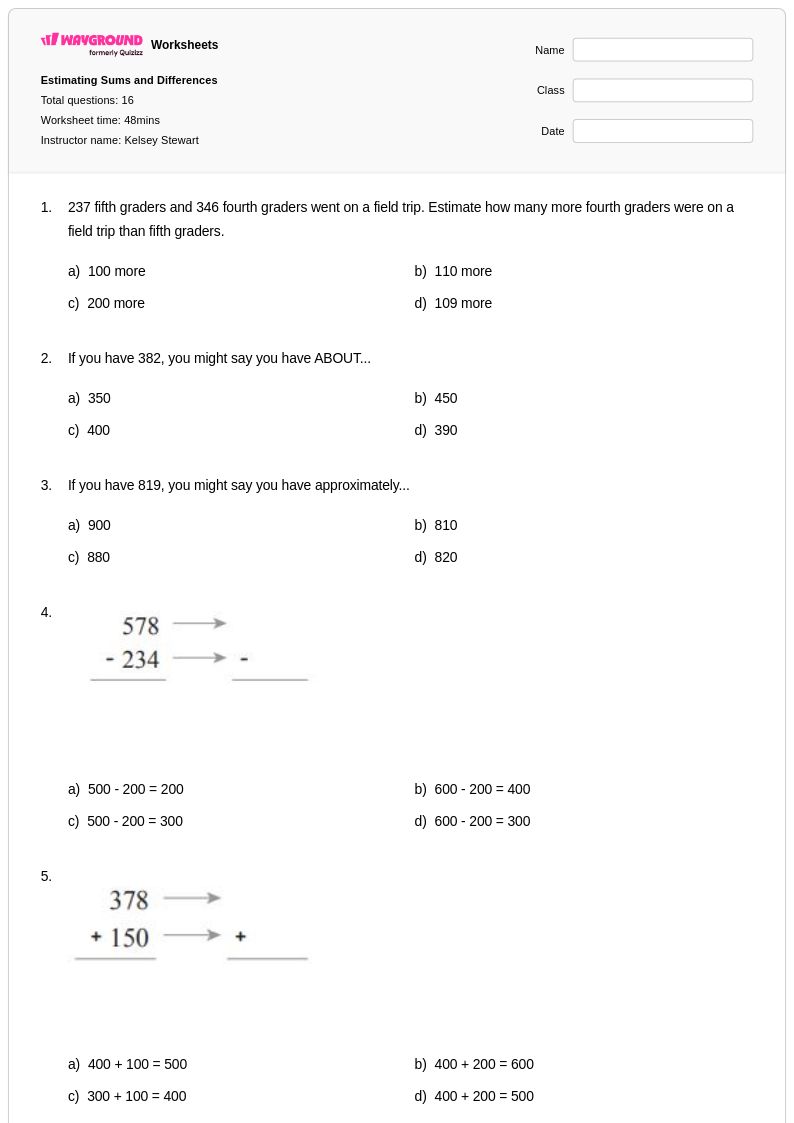
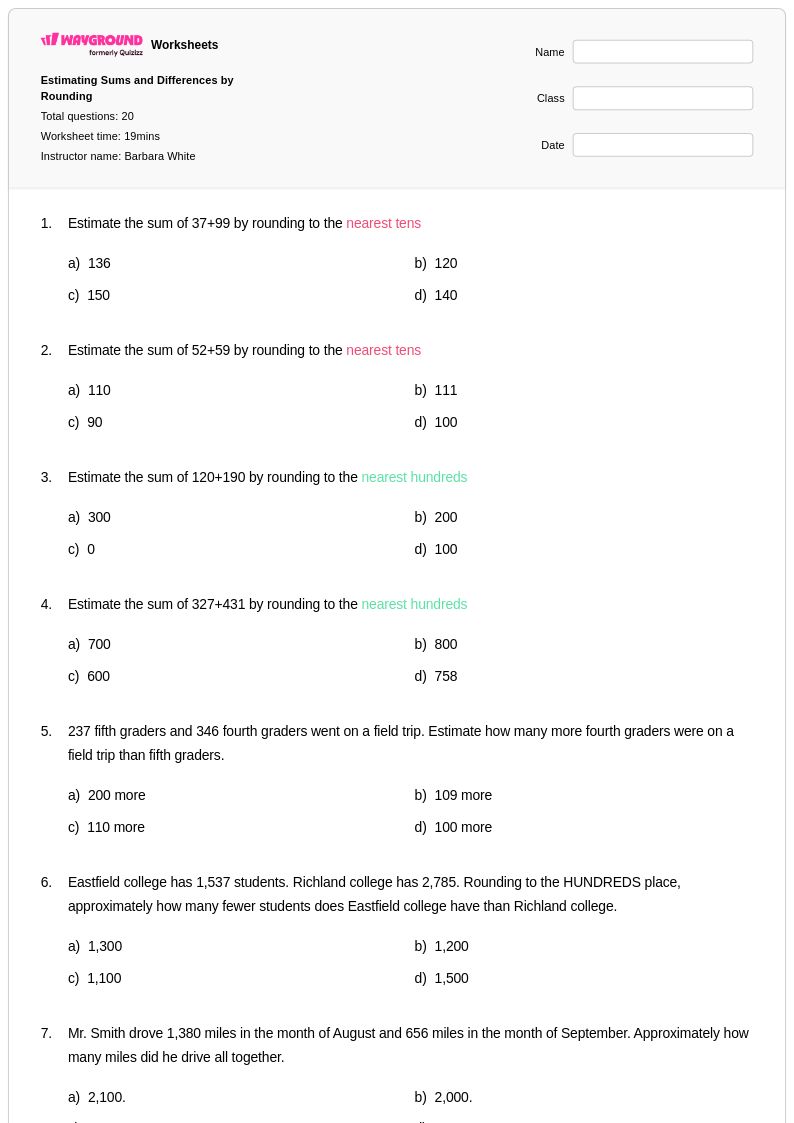
Year 3 estimating differences worksheets from Wayground provide free printables and practice problems that help students develop number sense skills through guided estimation activities, complete with answer keys and downloadable PDFs.
Explore printable Estimating Differences worksheets for Year 3
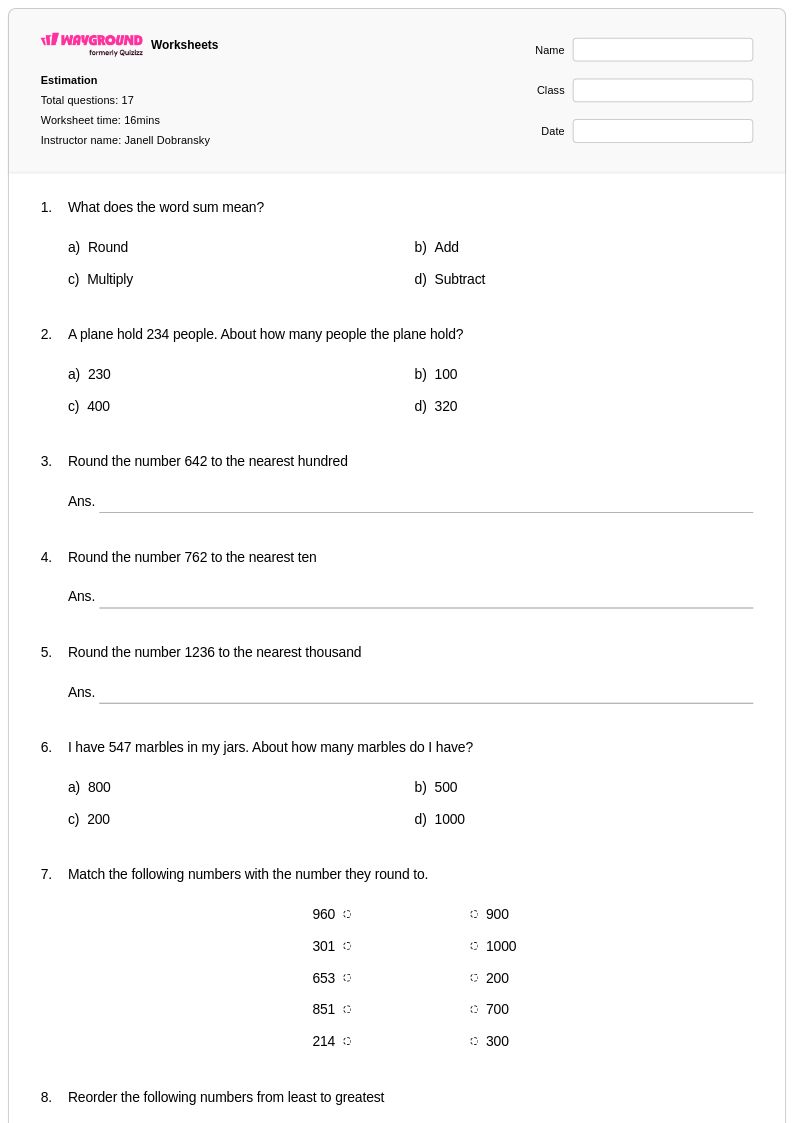
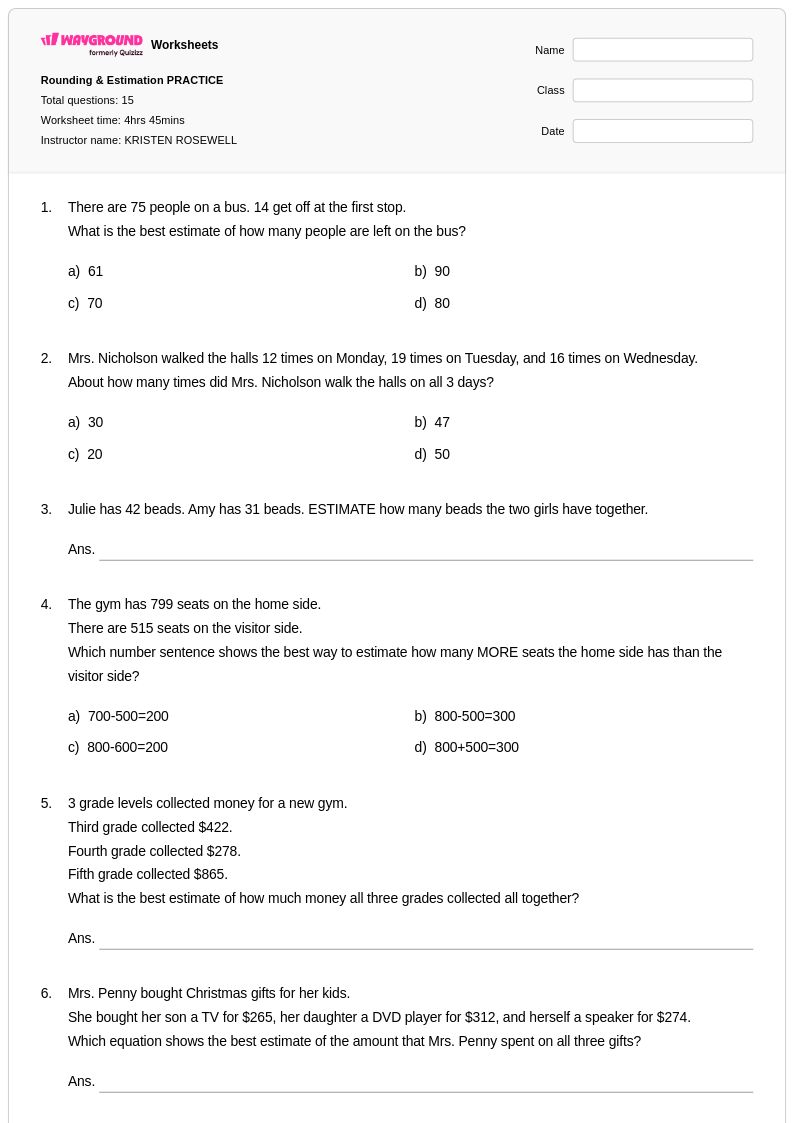
Estimating differences worksheets for Year 3 students available through Wayground (formerly Quizizz) provide essential practice in developing computational reasoning and mental math strategies. These carefully designed worksheets help third-grade students build confidence in approximating the results of subtraction problems before performing exact calculations, strengthening their number sense foundation and mathematical intuition. Students engage with practice problems that teach them to round numbers to friendly values, use benchmark numbers, and apply front-end estimation techniques to determine reasonable differences. Each worksheet collection includes comprehensive answer keys and is available as free printables in convenient pdf format, allowing educators to seamlessly integrate estimation skills practice into their mathematics instruction while supporting students in developing critical thinking about numerical relationships.
Wayground (formerly Quizizz) empowers teachers with access to millions of teacher-created resources specifically focused on estimating differences and other essential Year 3 number sense concepts. The platform's robust search and filtering capabilities enable educators to quickly locate worksheets that align with curriculum standards and match their students' specific learning needs. Teachers benefit from built-in differentiation tools that support both remediation for struggling learners and enrichment opportunities for advanced students, while flexible customization options allow for modification of difficulty levels and problem types. These comprehensive worksheet collections are available in both printable and digital formats, including easily downloadable pdf files, making lesson planning more efficient and providing versatile options for classroom instruction, homework assignments, and targeted skill practice sessions.
FAQs
How do I teach estimating differences to 3rd graders?
Third graders need a concrete reason to estimate before they'll buy into it. Start with a scenario they recognize — 'You have 43 stickers and give away 18; about how many do you have left?' — and show that rounding to the nearest ten gets you a fast, useful answer. Teach rounding to the nearest ten first, since that's the place value third graders know best, and keep early problems to two-digit numbers. The goal at this grade is building the habit of asking 'does my answer make sense?' — estimation is the tool that makes that question answerable.
What exercises help 3rd graders practice estimating differences?
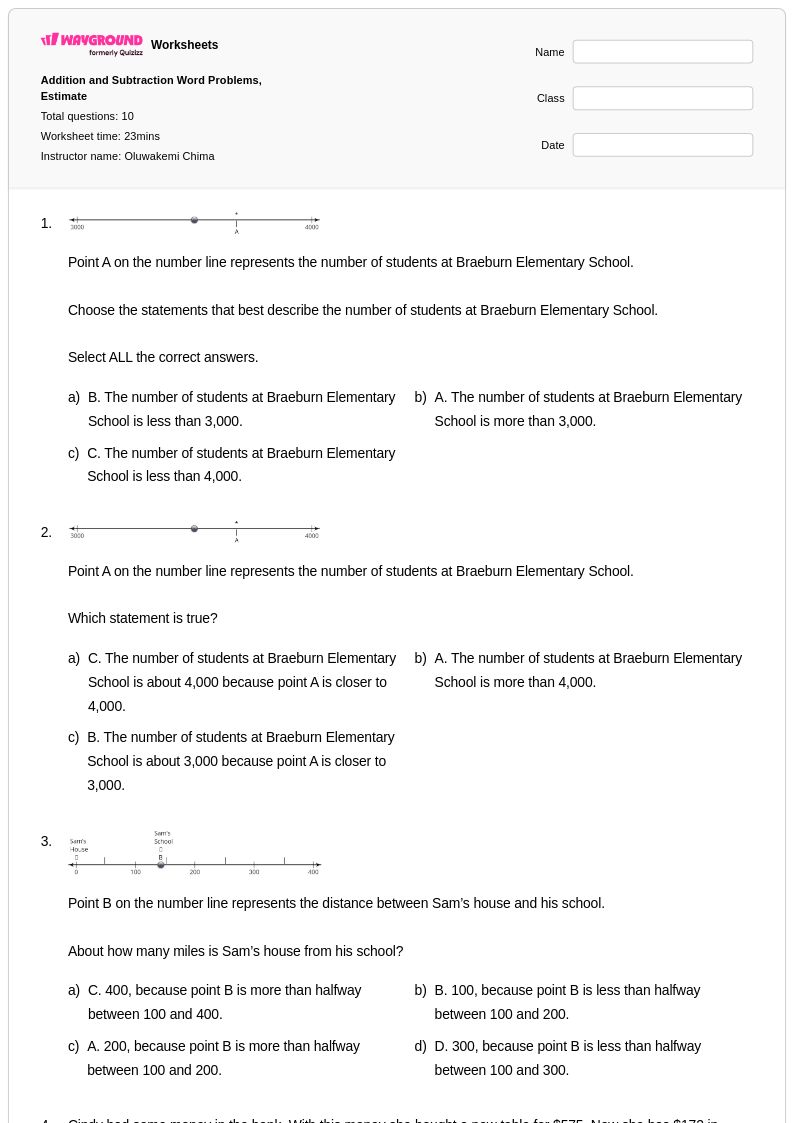
Two-digit subtraction estimation problems are the right starting point — students round both numbers to the nearest ten, then subtract. Number lines are a strong visual support here: students can see where each number rounds before doing any mental math. Once that's comfortable, introduce simple word problems so students practice deciding when to estimate rather than always being told to. Short, frequent practice sessions (5–8 problems) work better at this grade than long worksheets.
What mistakes do 3rd graders commonly make when estimating differences?
The most frequent error is rounding only one number — usually the first one — and leaving the second number exact. The result looks like an estimate but is really just a slightly modified exact calculation. Some students also round correctly but then perform the subtraction wrong, which is a reminder that estimation still requires mental math fluency. A quick classroom fix: have students say their rounded numbers out loud before subtracting, which catches rounding errors before they compound.
How do I use Wayground's Grade 3 estimating differences worksheets?
You can run these as a digital quiz on Wayground — students answer on a device and get immediate feedback — or print the PDF for paper practice, which works well for schools managing screen time. Either way, every worksheet comes with a complete answer key. If you go the paper route, the Wayground for Teachers app lets you scan student work to grade it quickly, so you're not spending prep time marking by hand.
What grade level covers estimating differences?
Estimating differences is introduced in Grade 3, where students round two-digit numbers to the nearest ten. The skill builds through Grades 4 and 5 as numbers get larger and decimals enter the picture. By Grade 3, students are expected to have enough place value understanding to round to the nearest ten and hundred — which is exactly what makes estimation accessible at this stage.
Is estimating differences part of the Common Core Grade 3 math standards?
Yes. Common Core's Grade 3 number and operations work emphasizes rounding whole numbers to the nearest ten and hundred, and using that rounding to assess whether answers are reasonable. Estimating differences is the direct application of that rounding skill to subtraction. It builds on the place value concepts students developed in Grade 2 and sets them up for the multi-digit addition and subtraction fluency expected by the end of Grade 3.