Free Printable Estimating Differences Worksheets for Year 4
Year 4 estimating differences worksheets from Wayground help students develop number sense skills through engaging printables and practice problems, complete with answer keys for effective math learning.
Explore printable Estimating Differences worksheets for Year 4
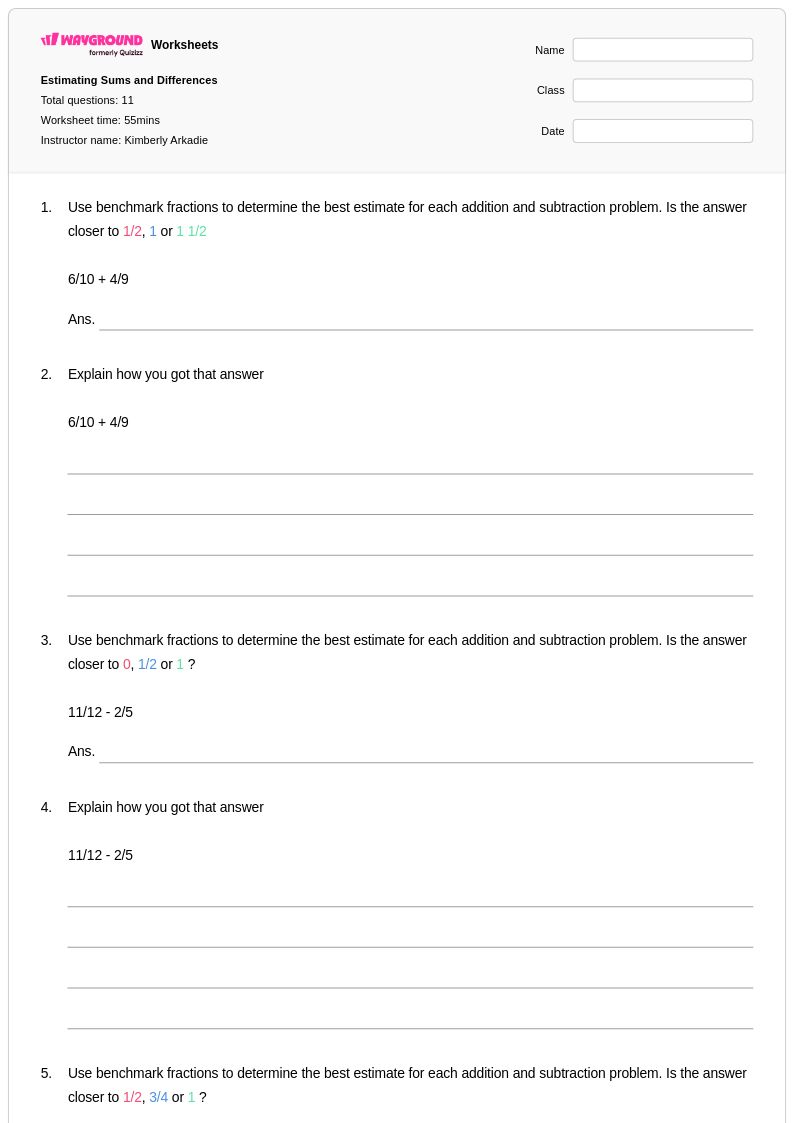
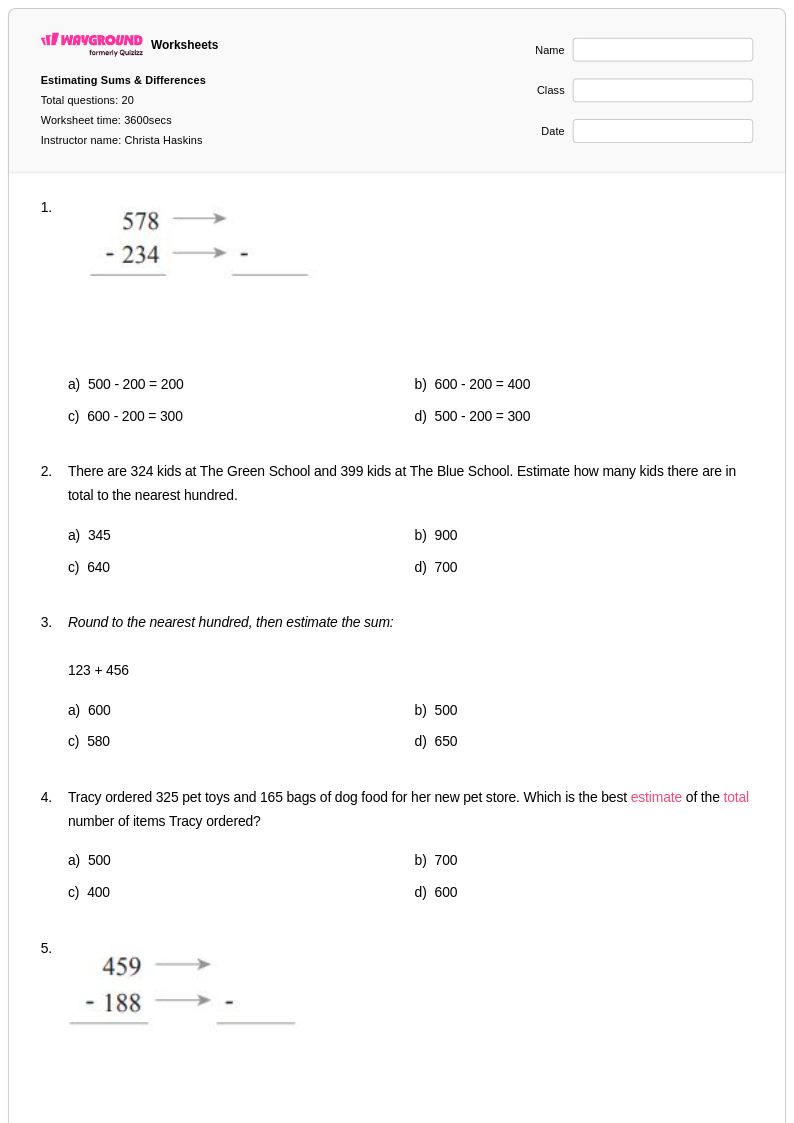
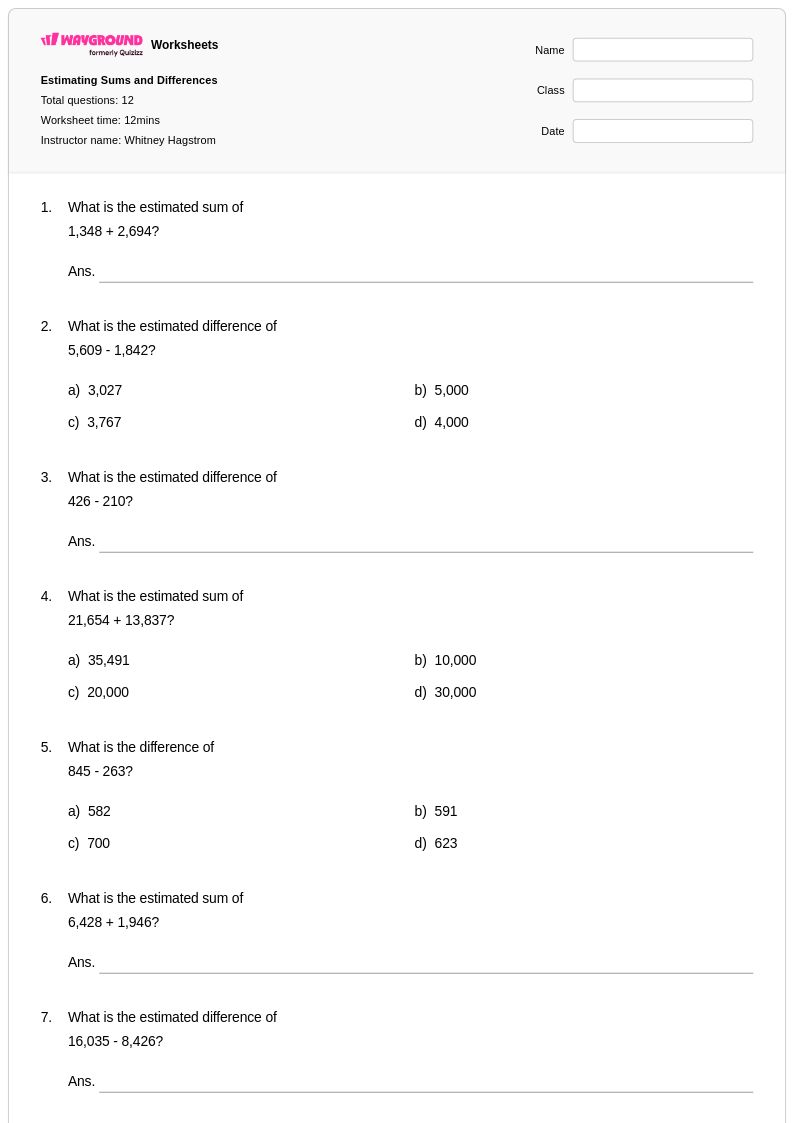
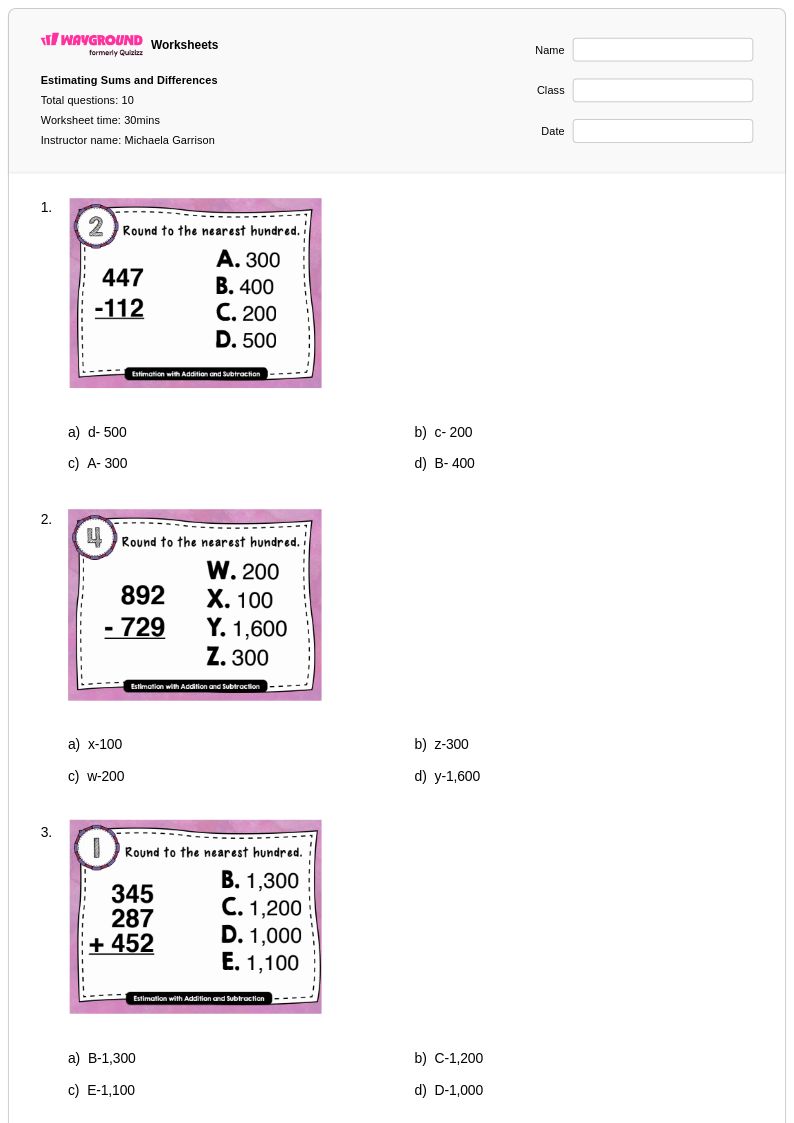
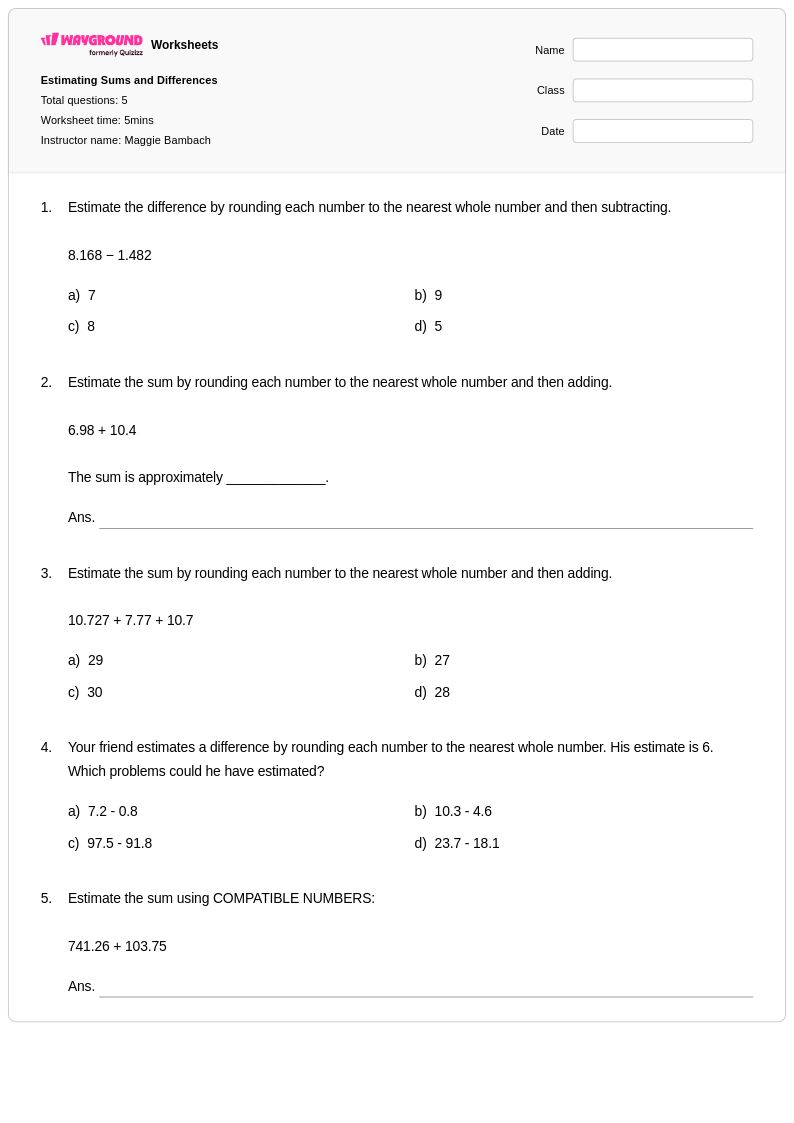
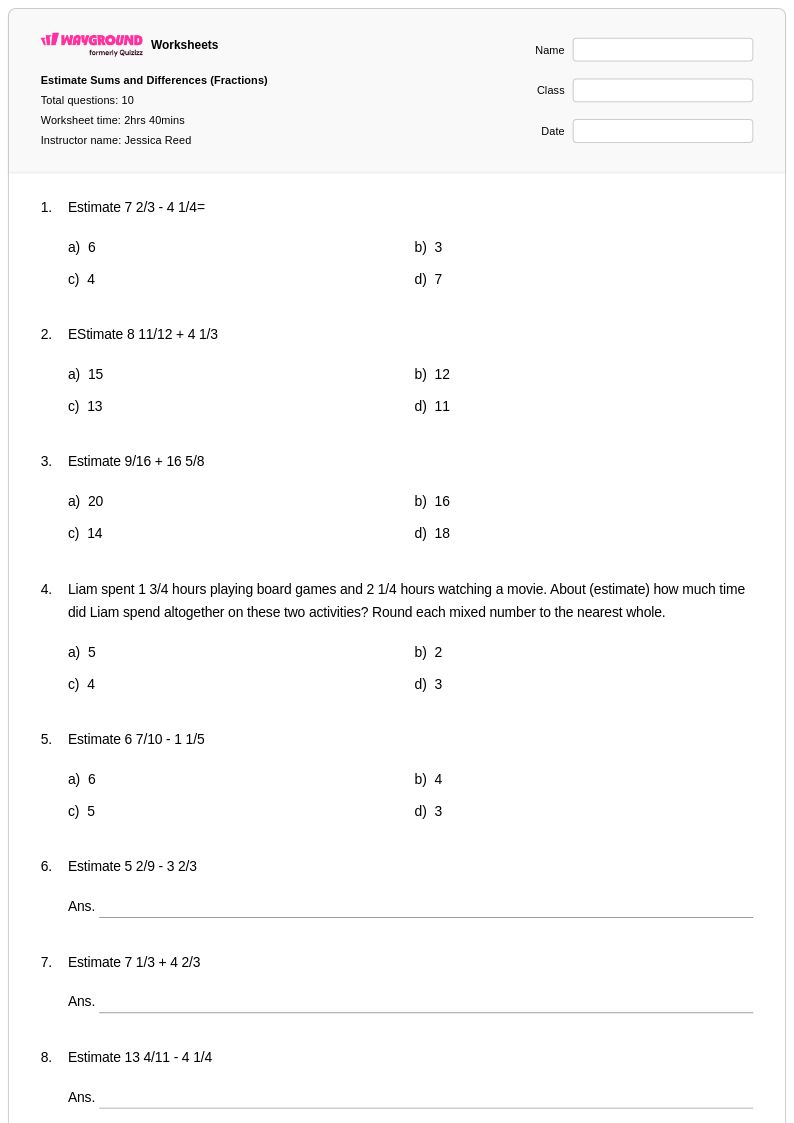
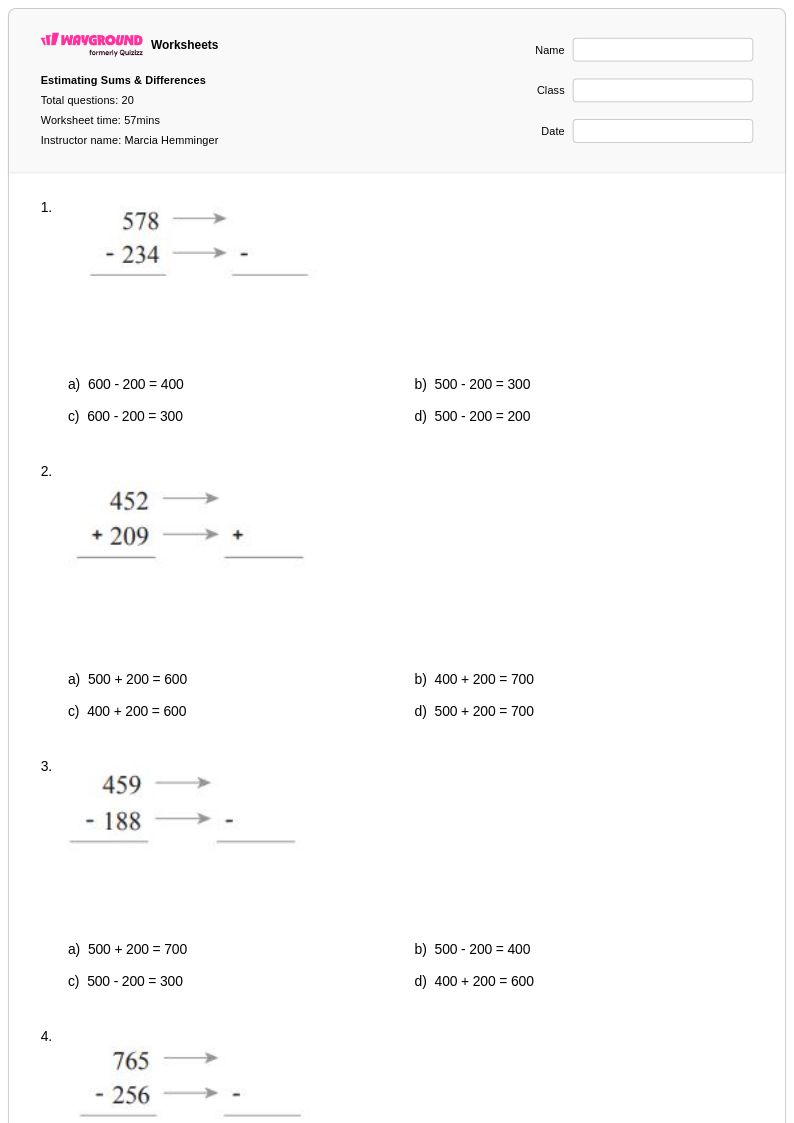
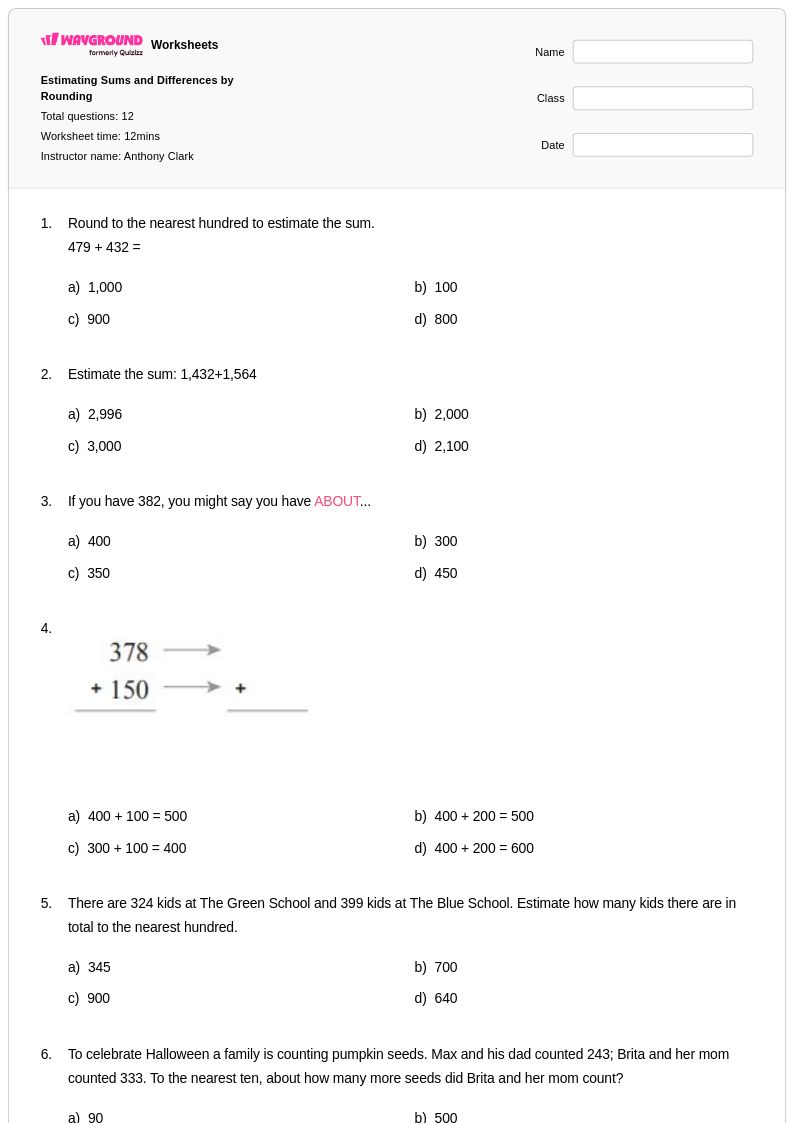
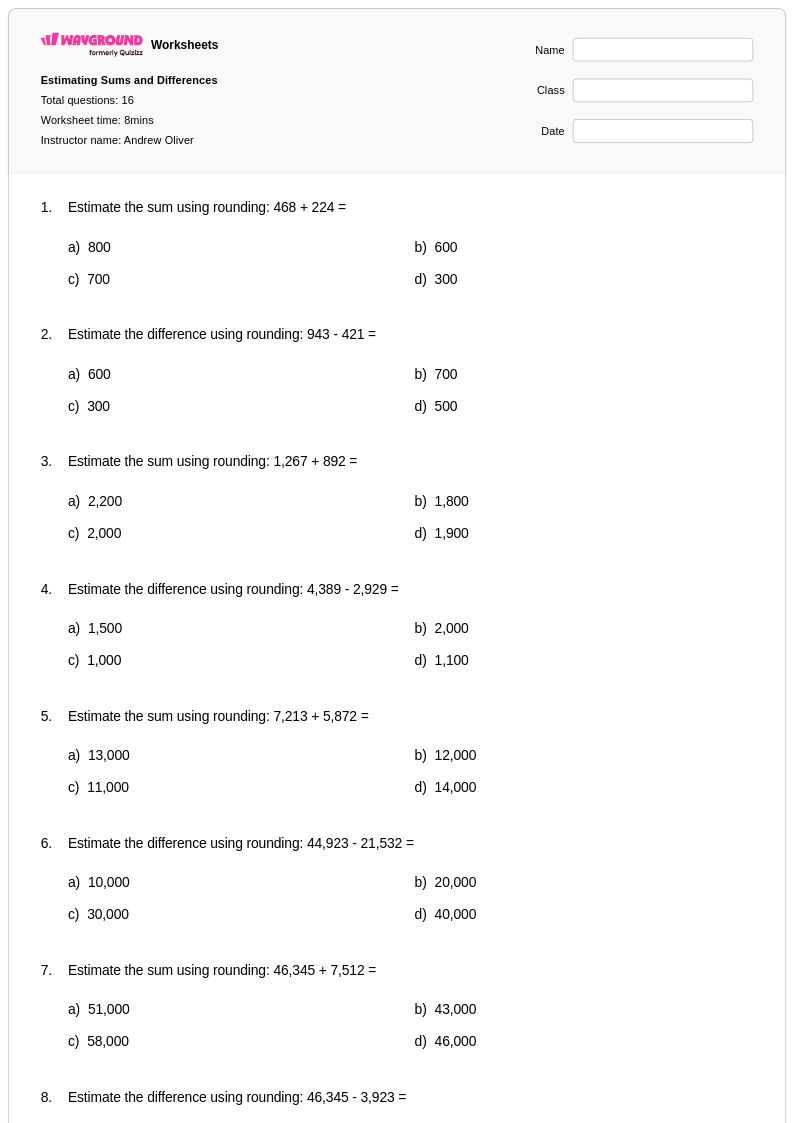
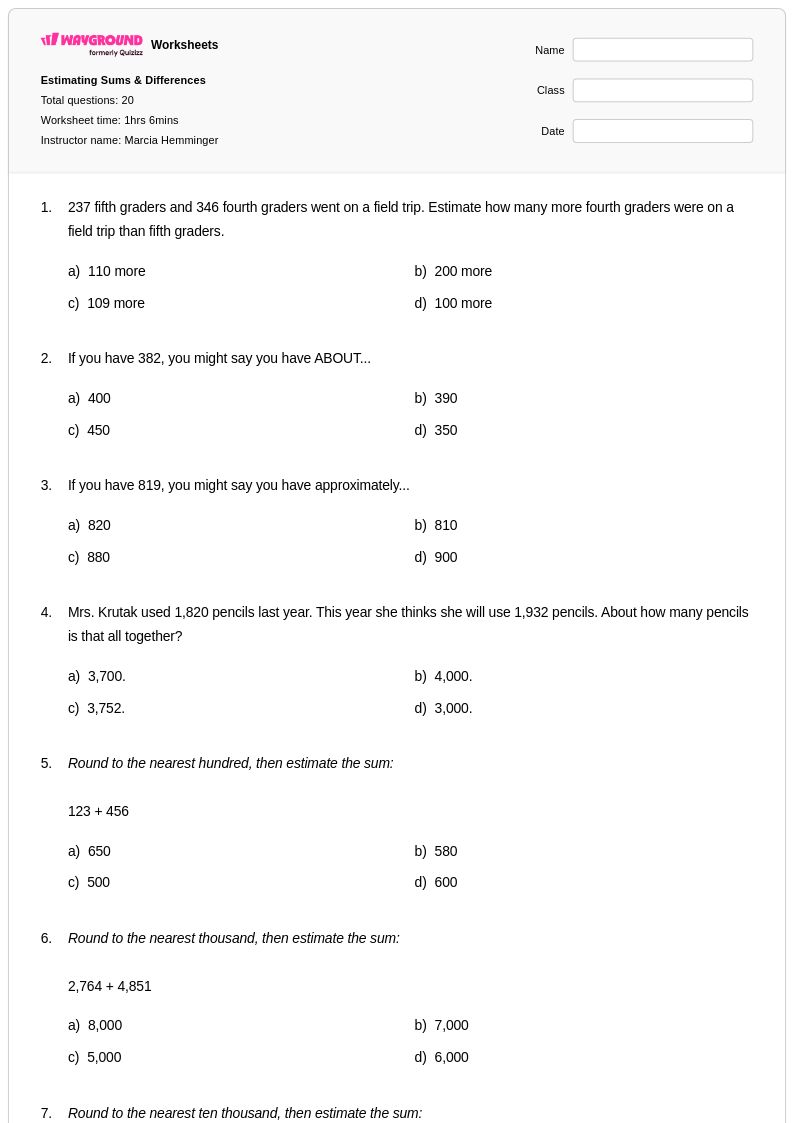
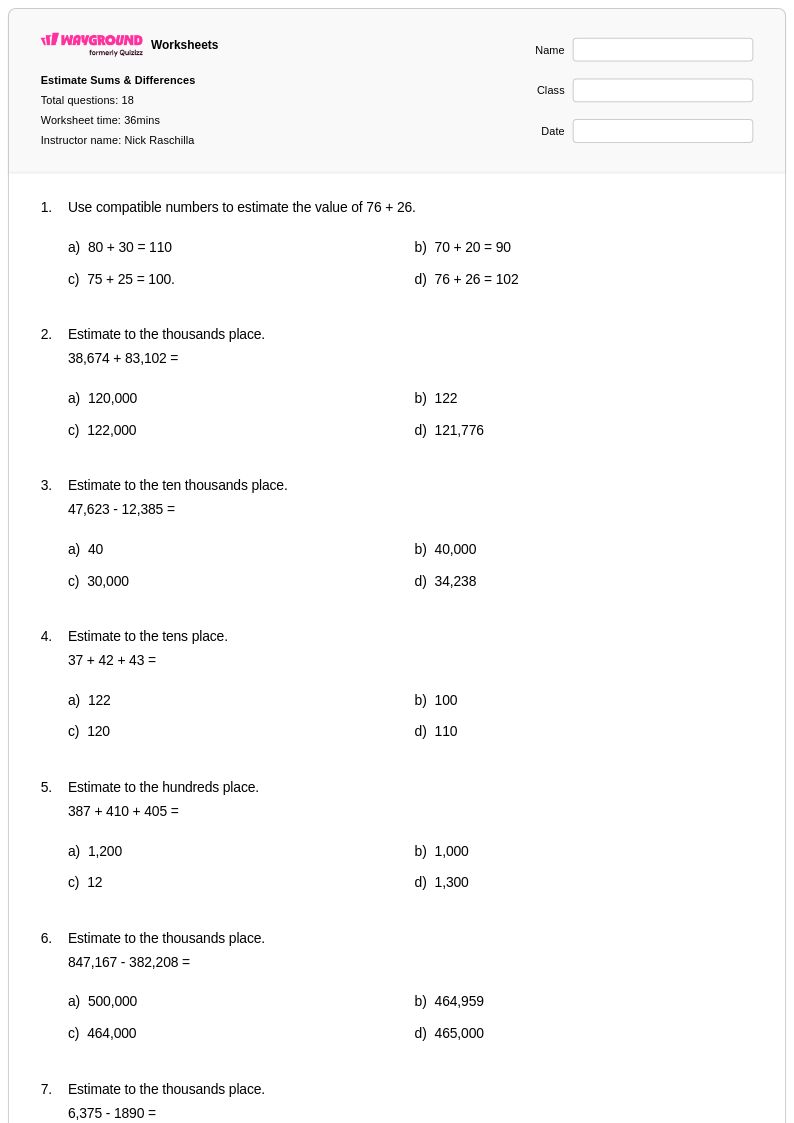
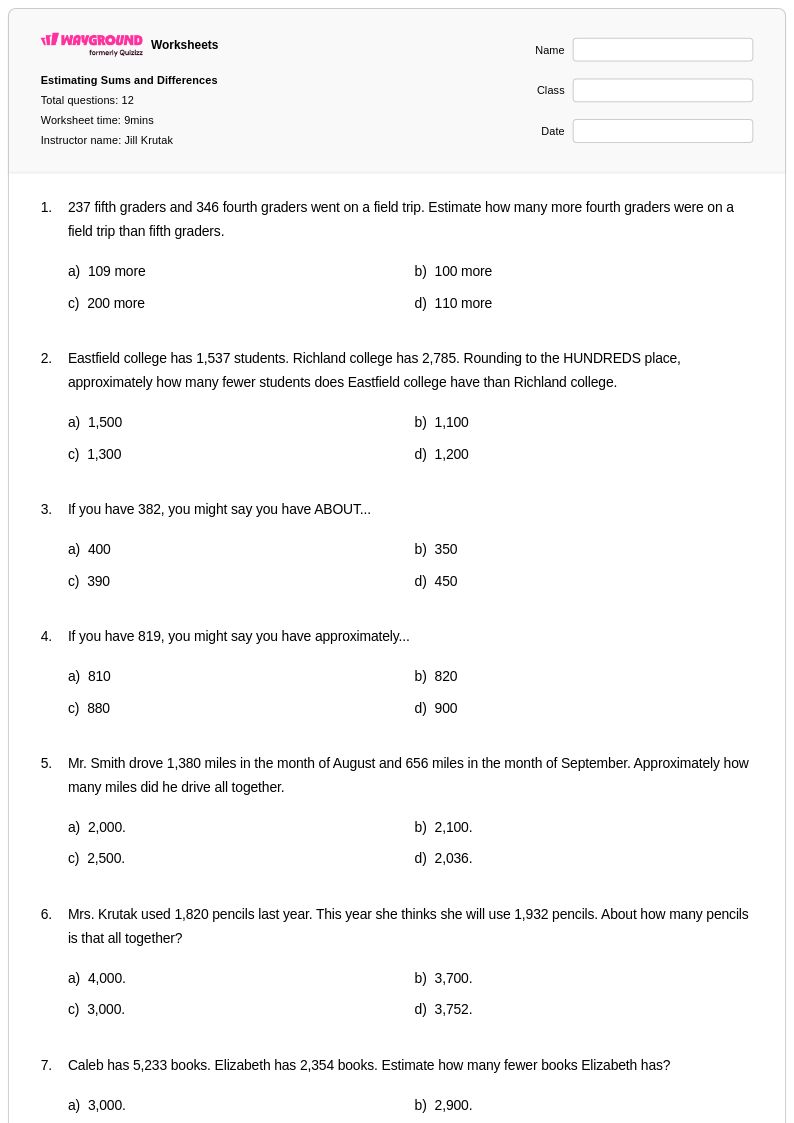
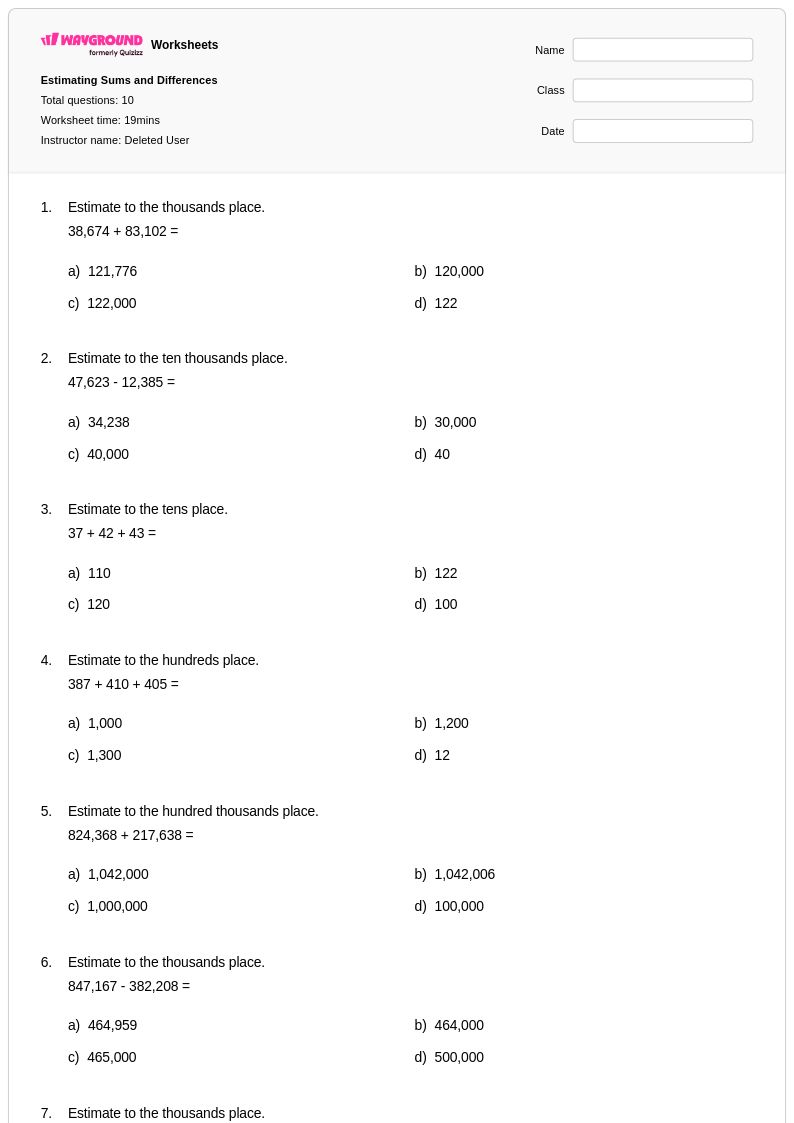
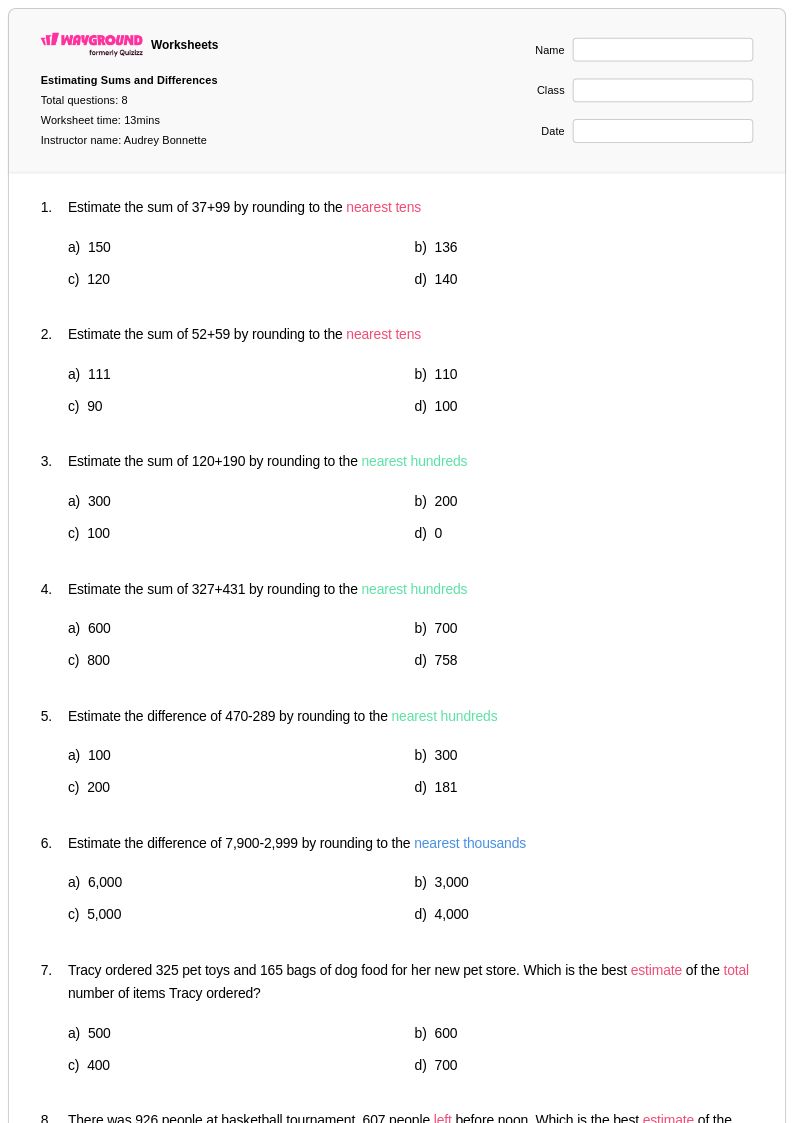
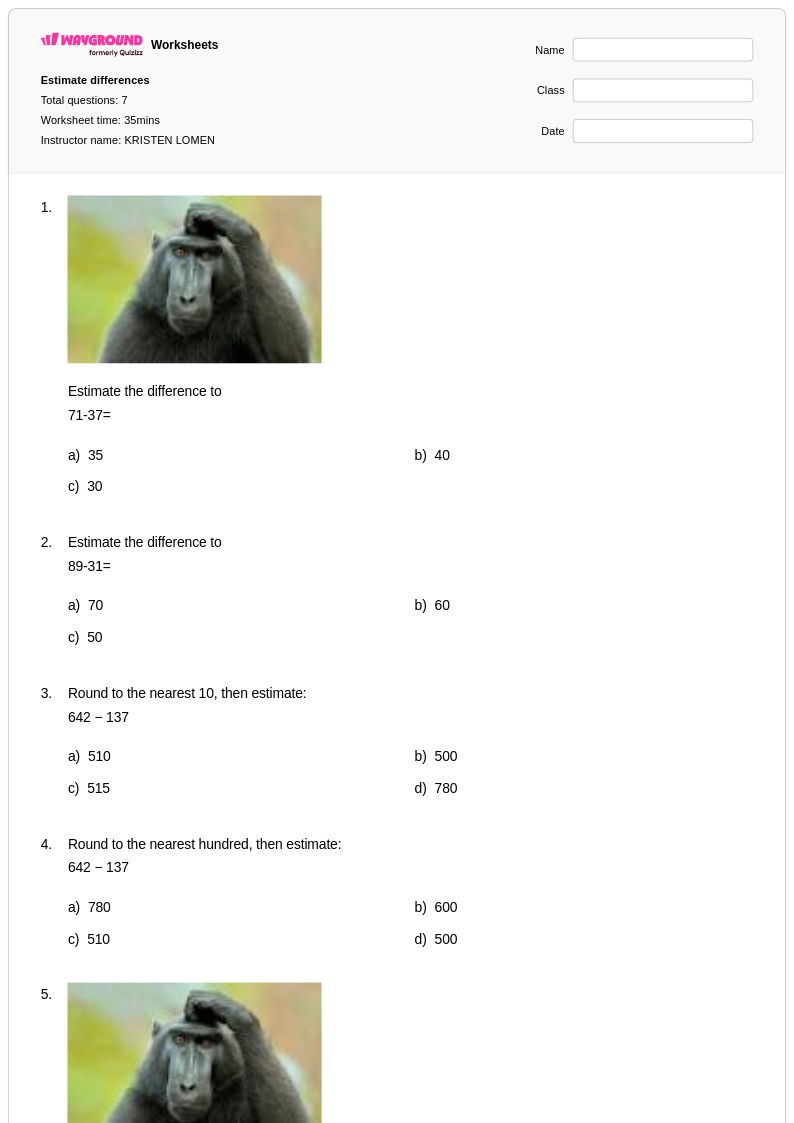
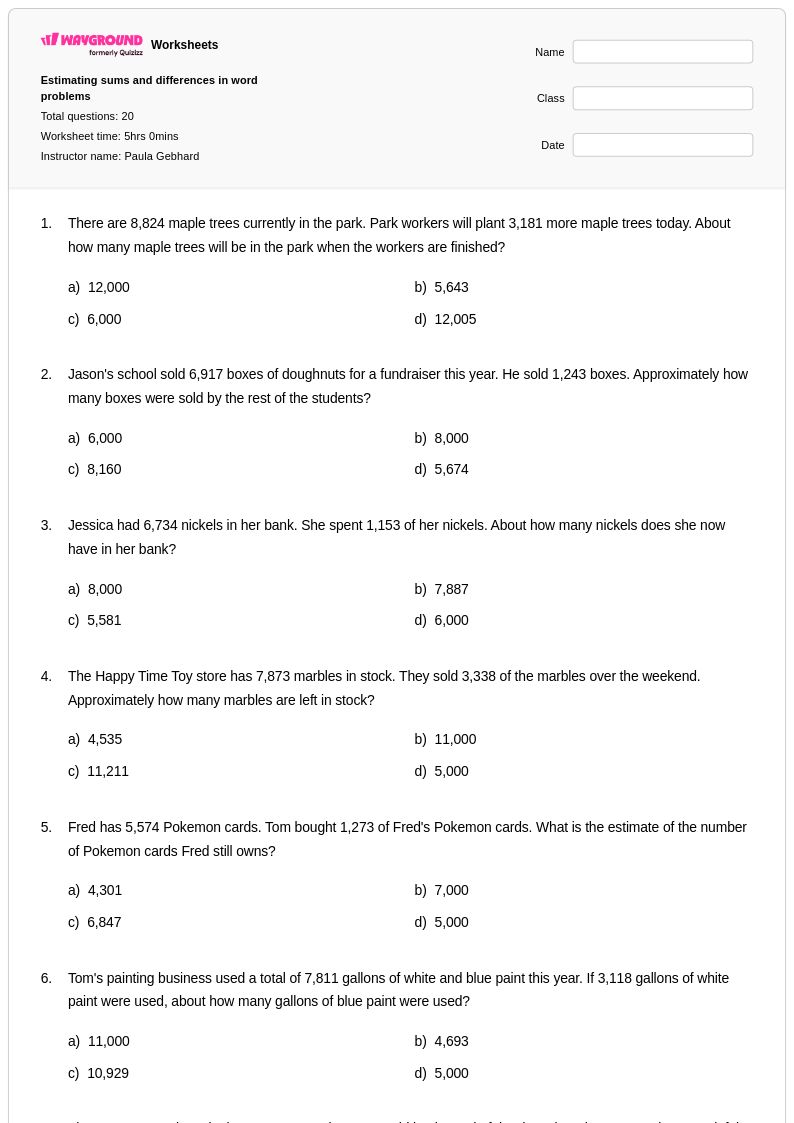
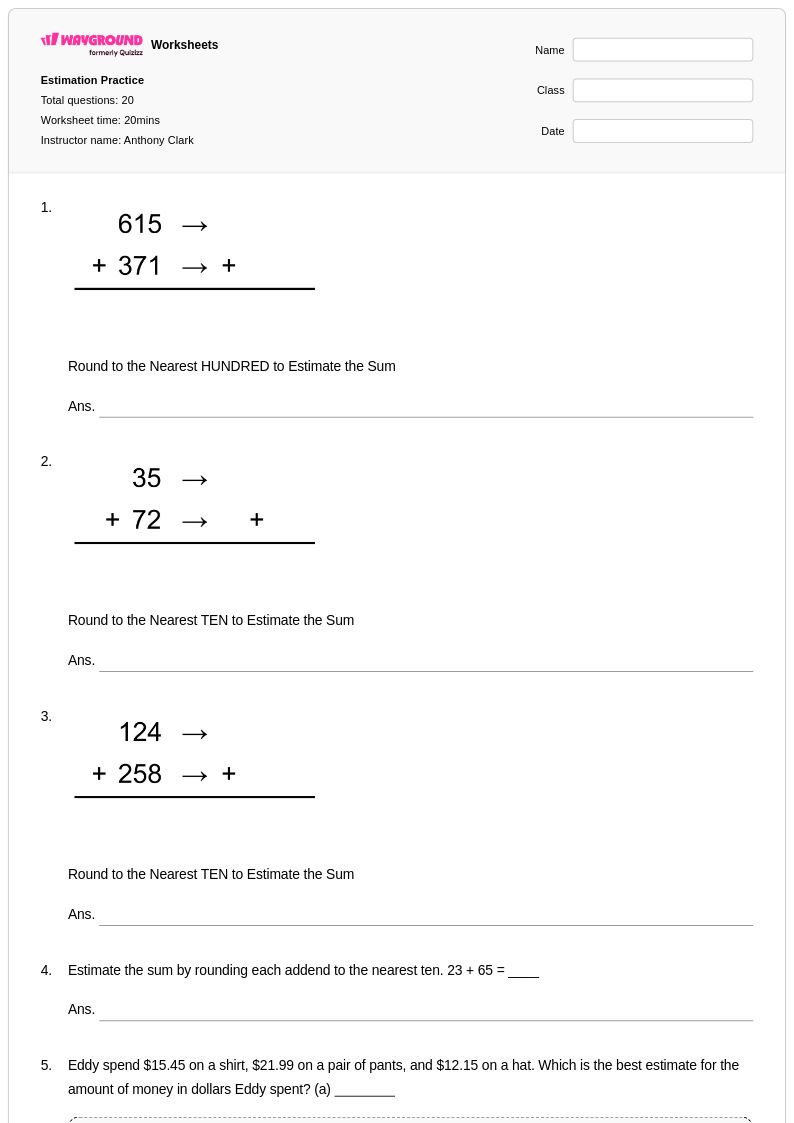
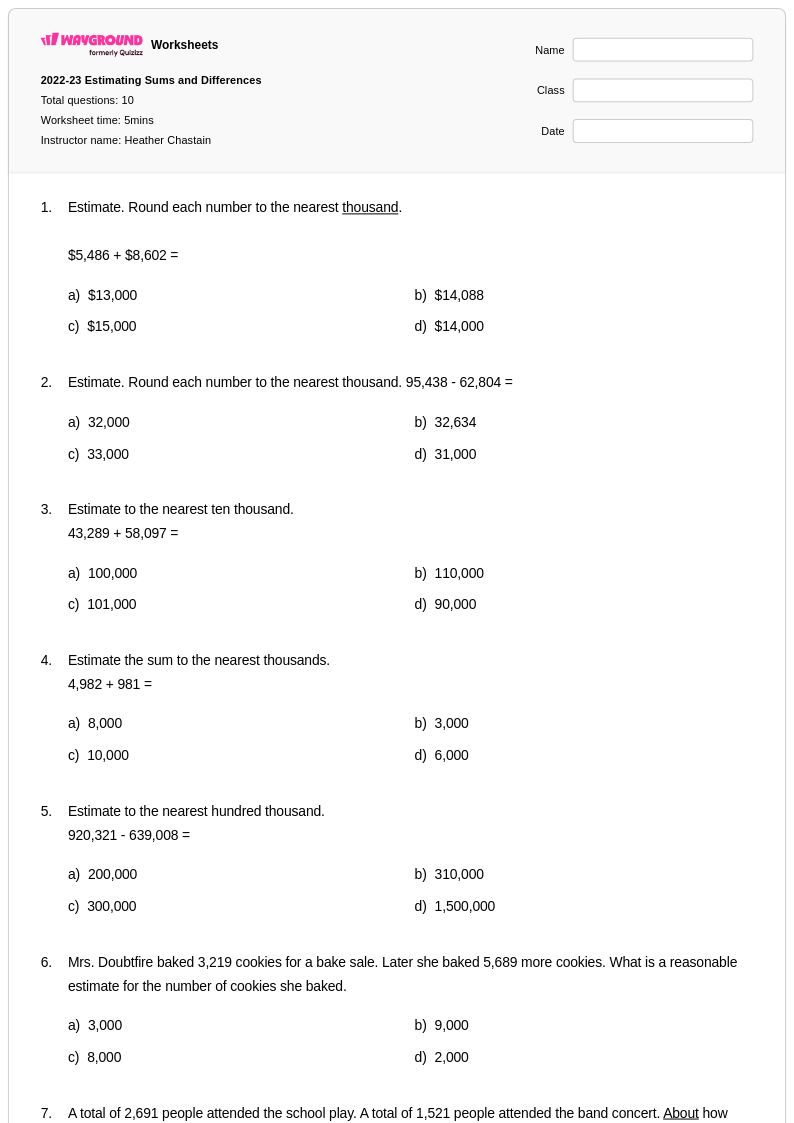
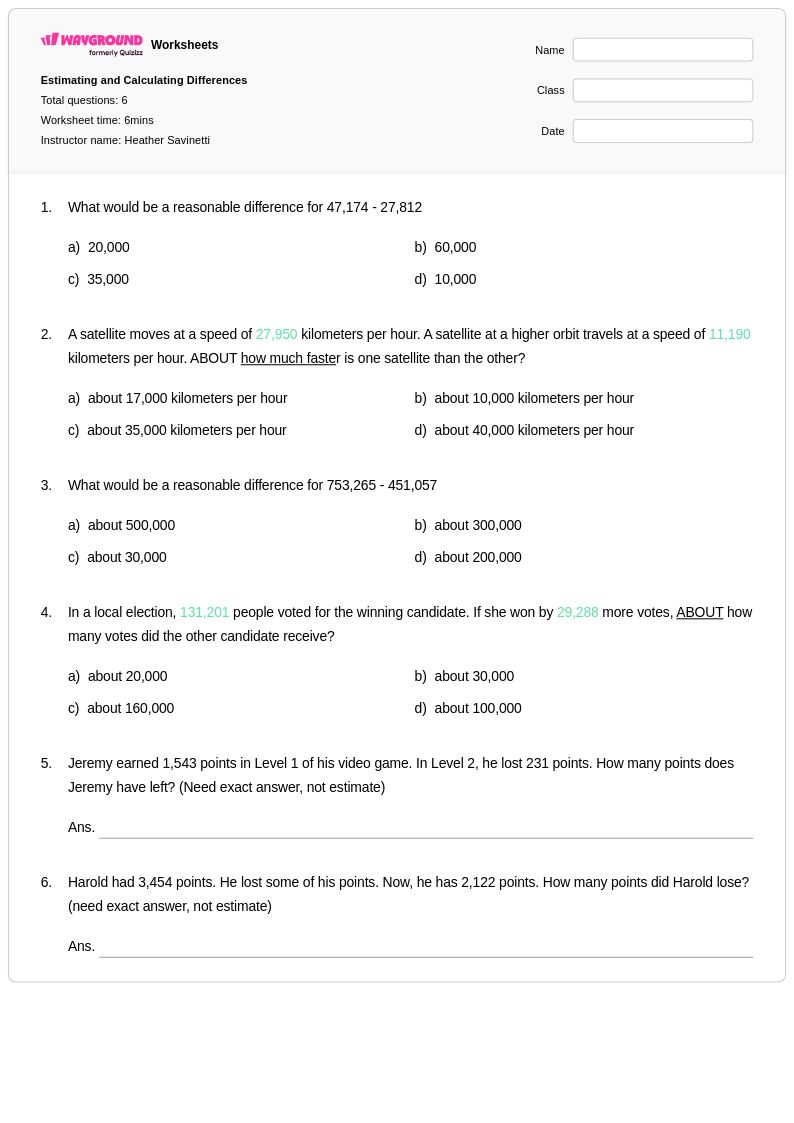
Estimating differences represents a fundamental mathematical skill that Year 4 students must master to develop strong computational fluency and number sense. Wayground's comprehensive collection of estimating differences worksheets provides fourth-grade learners with targeted practice in rounding numbers and calculating approximate differences between multi-digit numbers. These carefully designed printables strengthen students' ability to use estimation strategies such as front-end estimation, rounding to the nearest ten or hundred, and compatible numbers to quickly assess whether their calculated answers are reasonable. Each worksheet includes structured practice problems that progress from simple two-digit differences to more complex four-digit subtraction scenarios, with complete answer keys that allow teachers and students to verify understanding and identify areas needing additional support. The free pdf format ensures easy access and distribution, making these valuable resources readily available for classroom instruction, homework assignments, and independent practice sessions.
Wayground, formerly Quizizz, empowers educators with millions of teacher-created resources specifically designed to support Year 4 mathematics instruction in estimating differences and related number sense concepts. The platform's robust search and filtering capabilities enable teachers to quickly locate worksheets that align with specific learning standards and match their students' current skill levels. Advanced differentiation tools allow educators to customize existing materials or create modified versions that address diverse learning needs, from remediation support for struggling students to enrichment challenges for advanced learners. These estimating differences resources are available in both printable and digital formats, providing flexibility for traditional classroom settings, hybrid learning environments, and remote instruction. Teachers can seamlessly integrate these materials into their lesson planning process, using them for skill-building practice, formative assessment, homework reinforcement, and targeted intervention to ensure all students develop confidence and accuracy in mathematical estimation strategies.
FAQs
How do I teach estimating differences to 4th graders?
By Grade 4, students should already know how to round — so the teaching focus shifts to strategy choice. Present two or three approaches side by side: rounding to the nearest ten, rounding to the nearest hundred, and front-end estimation. Then give students a problem and ask which strategy gives the most useful estimate and why. That metacognitive step is what separates fourth graders who can estimate from those who are just following a rounding procedure. Use multi-digit problems (three- and four-digit numbers) to match where students are in their computation work.
What exercises help 4th graders practice estimating differences?
Problems that require students to choose a rounding place value — rather than being told which one to use — are the most valuable at this grade. Mixed practice sets work well: include some problems where an estimate is clearly sufficient and others where the numbers are close enough that an exact answer matters, so students develop judgment about when estimation is appropriate. Word problems set in real contexts (distances, money, measurements) reinforce that estimation is a practical tool, not just a math-class exercise.
What mistakes do 4th graders make when estimating differences?
Fourth graders often round to the nearest ten out of habit, even when the numbers involved make rounding to the nearest hundred far more efficient. The result is an estimate that took almost as long as the exact calculation. A related issue: students sometimes round both numbers up, which inflates the estimate significantly for subtraction — unlike addition, rounding direction matters more when you're finding a difference. Pointing this out explicitly, with a counterexample, tends to stick.
How do I use Wayground's Grade 4 estimating differences worksheets?
These worksheets are available as printable PDFs and as digital quizzes on Wayground. The digital format gives students instant feedback on each problem, which is useful when you want them to self-correct in real time. Every worksheet includes a complete answer key, so it's ready to use for independent practice or homework without any additional prep. For paper assignments, the Wayground for Teachers app lets you scan and grade student submissions directly from your phone.
Is estimating differences aligned to Common Core Grade 4 math standards?
Yes. Common Core expects Grade 4 students to round multi-digit whole numbers to any place and use that rounding to estimate and assess the reasonableness of answers. Estimating differences is a direct application of that expectation — students who can round a four-digit number to the nearest hundred and subtract mentally are demonstrating exactly the number sense Common Core targets at this grade. The skill also bridges into Grade 5, where estimation extends to decimals.
How can I differentiate estimating differences practice for my 4th grade class?
For students who are still shaky on rounding, the Read Aloud feature in Wayground's digital mode removes the reading barrier so they can focus on the math. Reducing answer choices is a practical support for students who get overwhelmed by options before they've even started estimating. For the worksheet itself, you can generate a version with wider font spacing or a larger font size for students who find dense problem layouts distracting — same math, easier to navigate.