Free Printable Expanded Notation Worksheets for Year 4
Wayground's free Year 4 expanded notation worksheets help students master place value concepts through engaging printables with practice problems and answer keys in convenient PDF format.
Explore printable Expanded Notation worksheets for Year 4
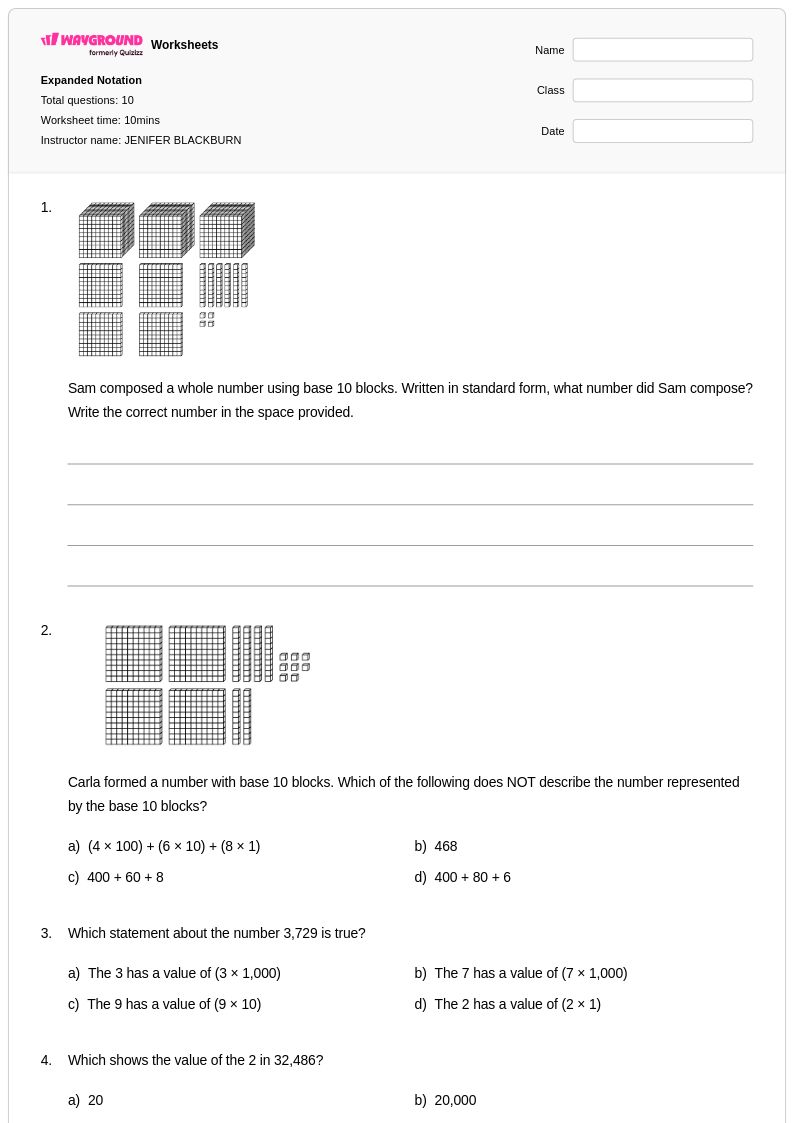
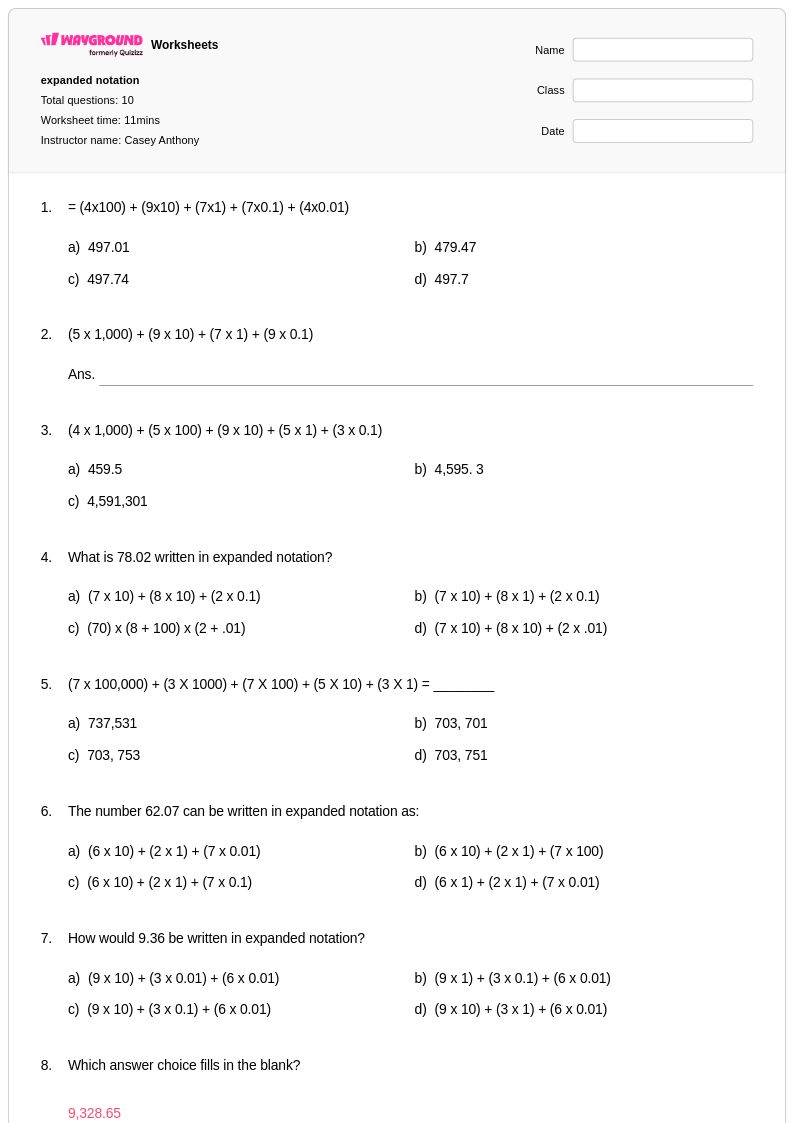
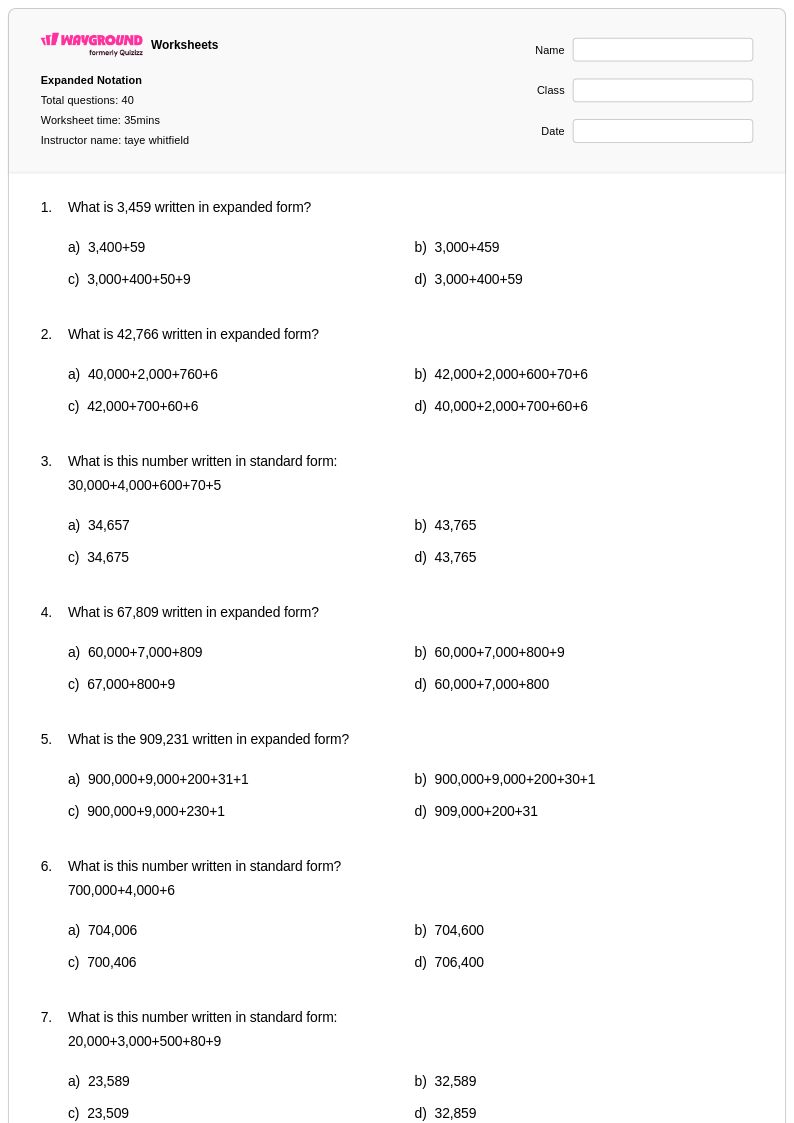
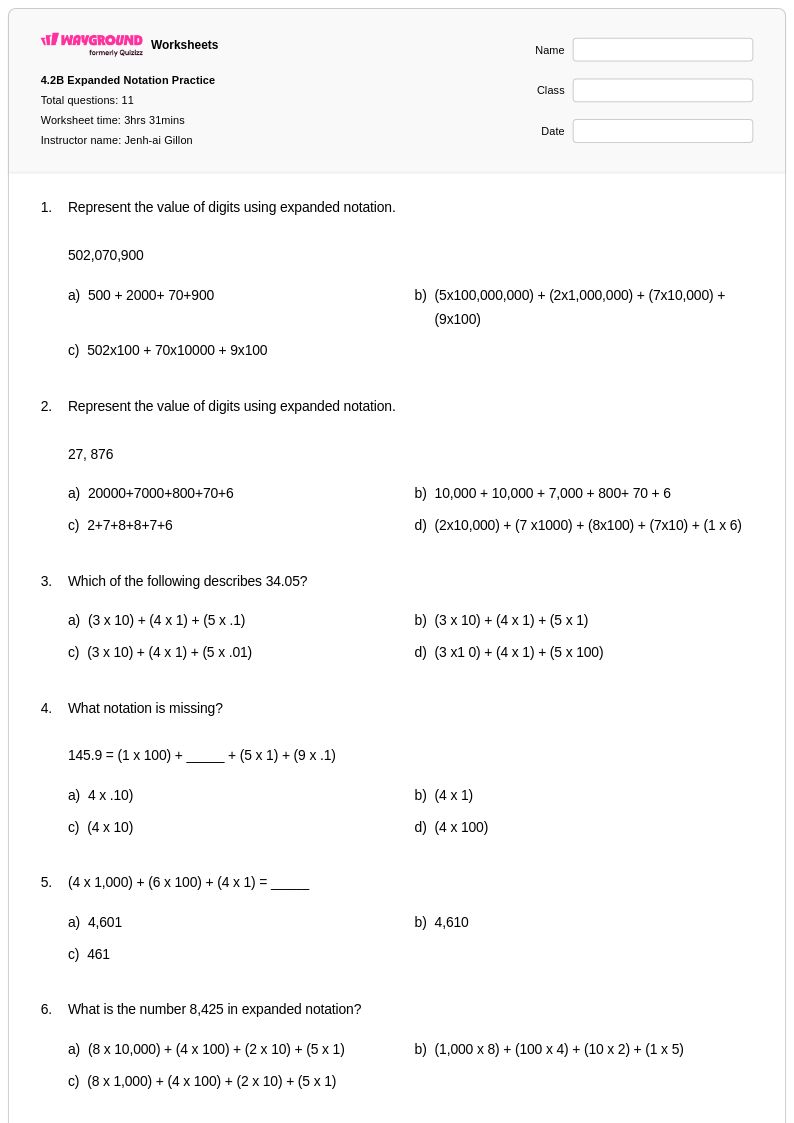
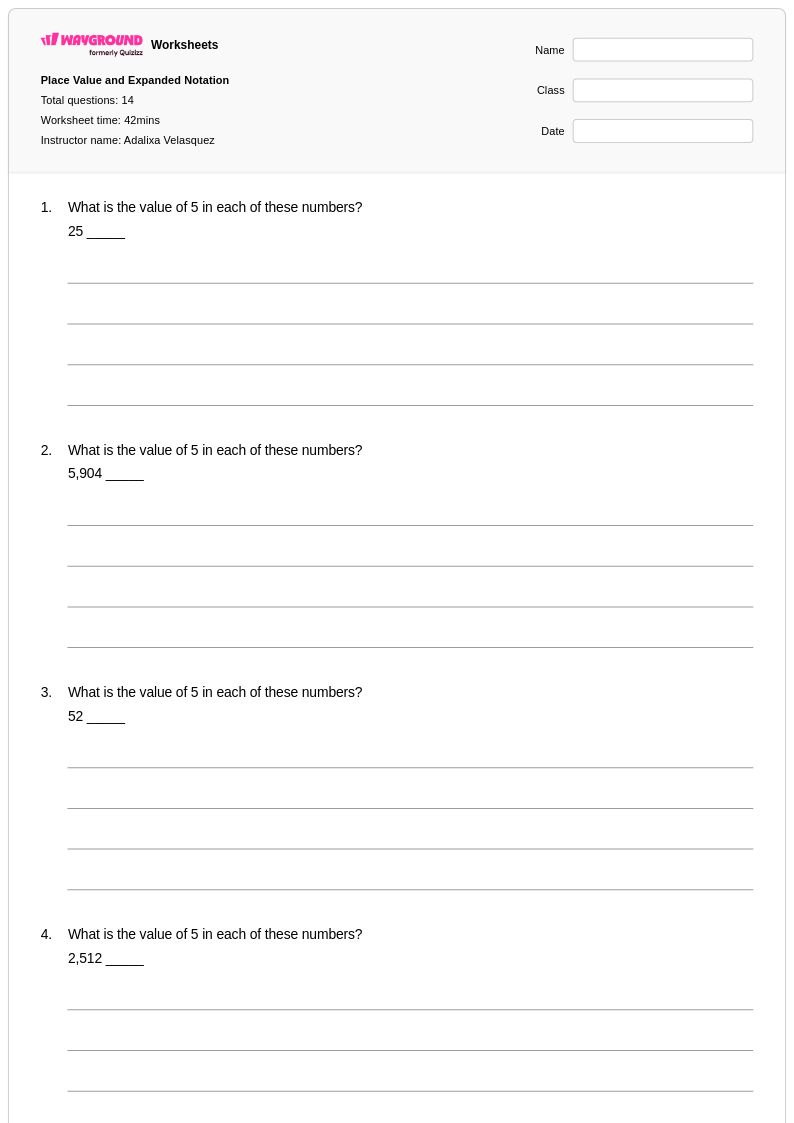
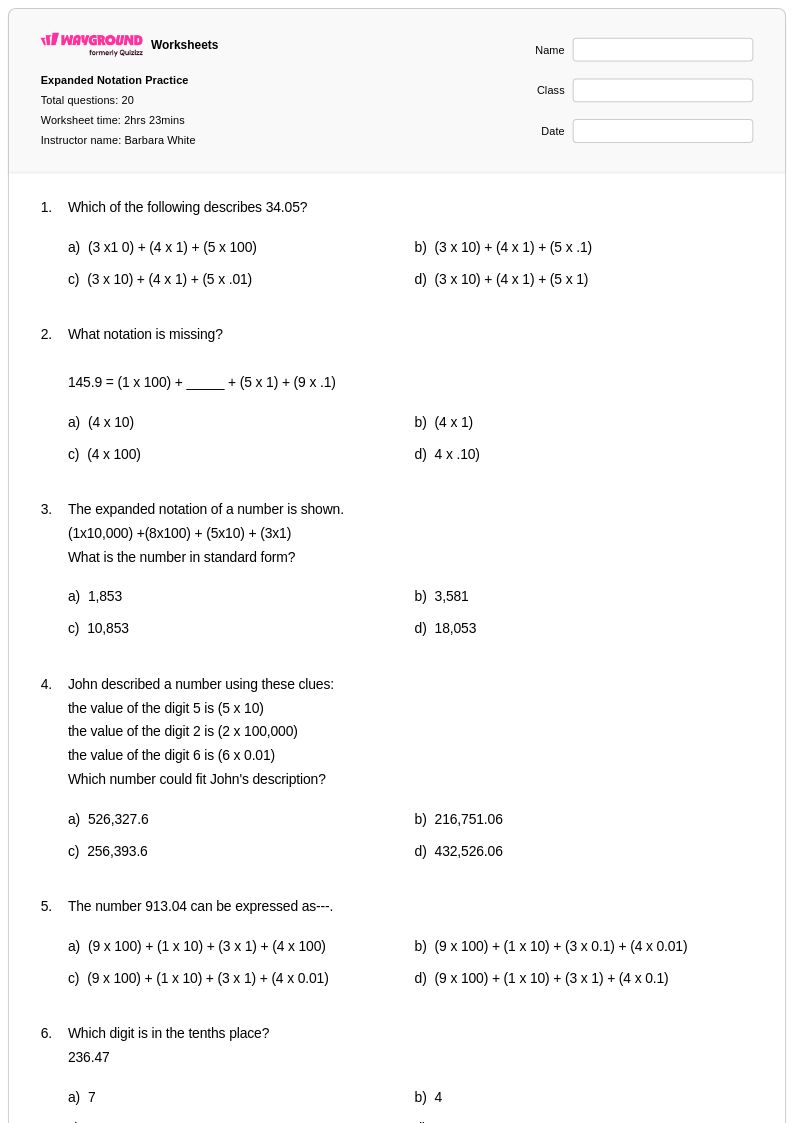
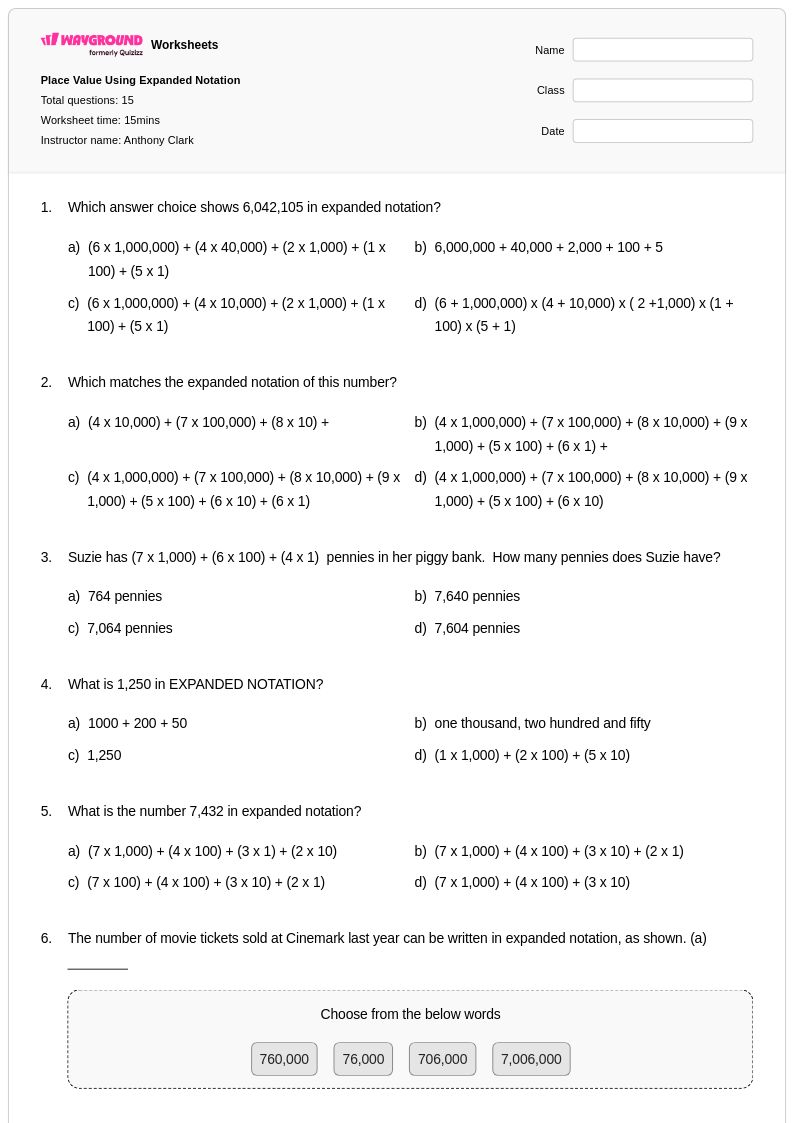
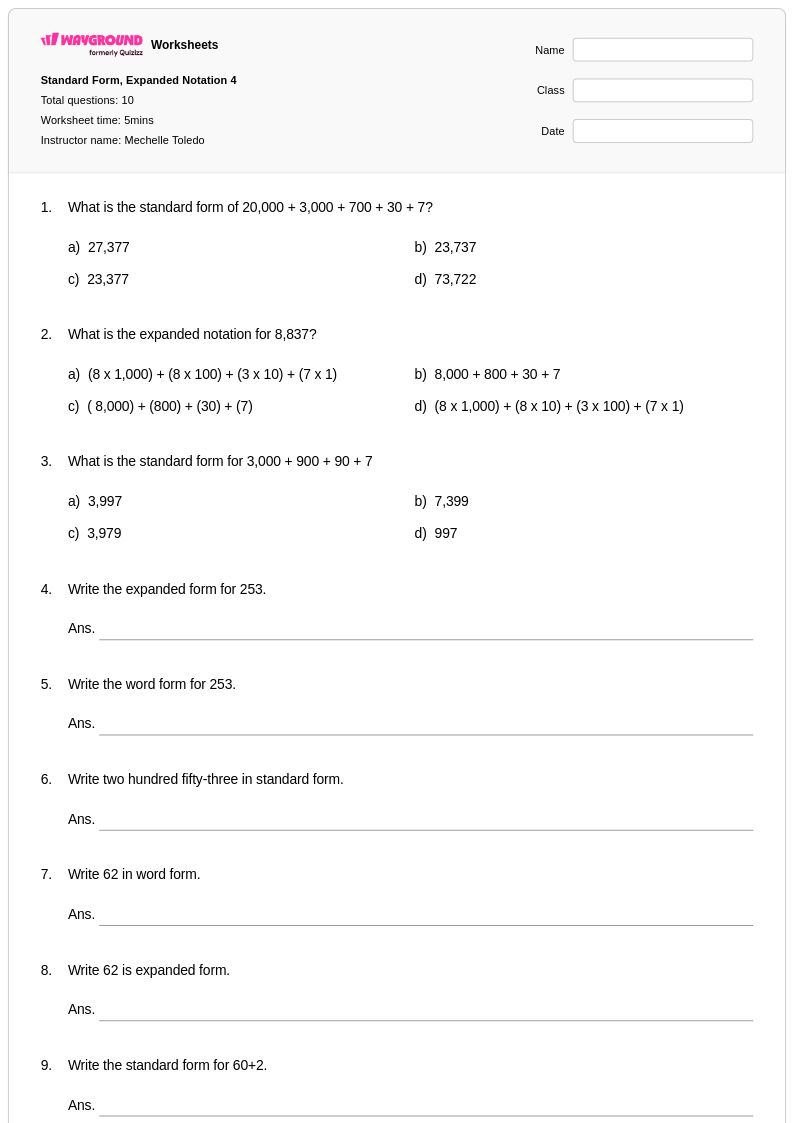
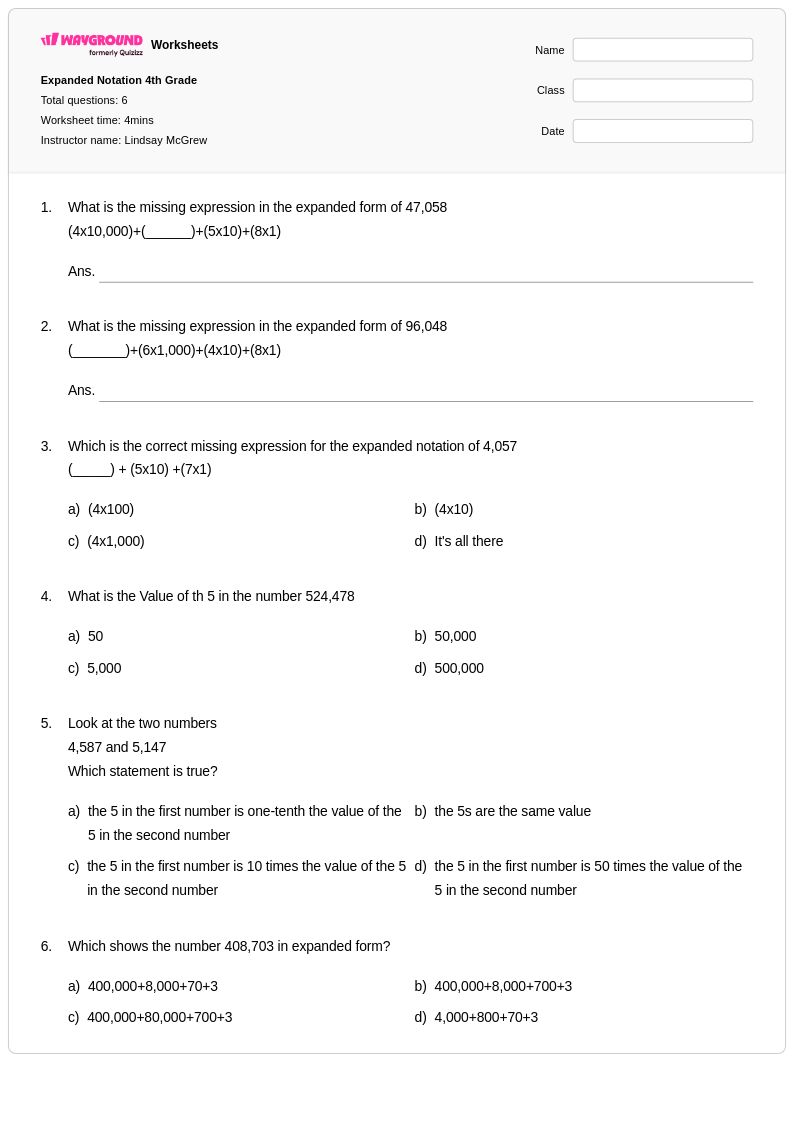
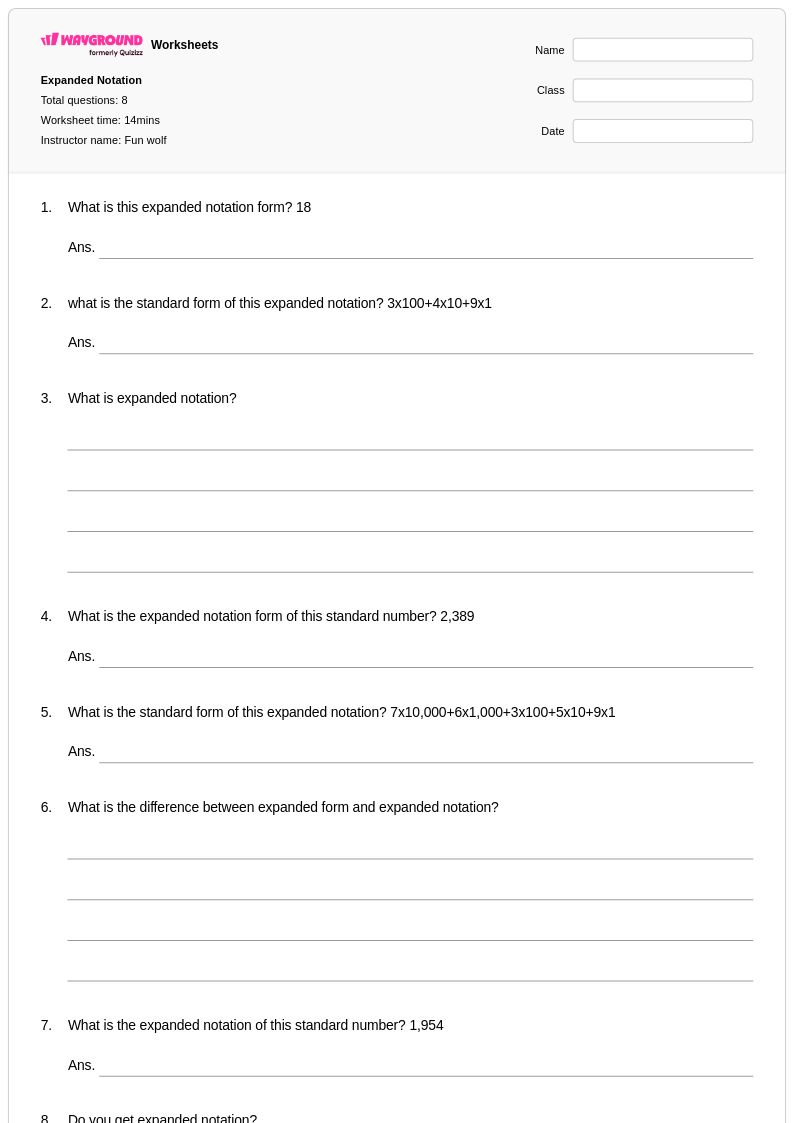
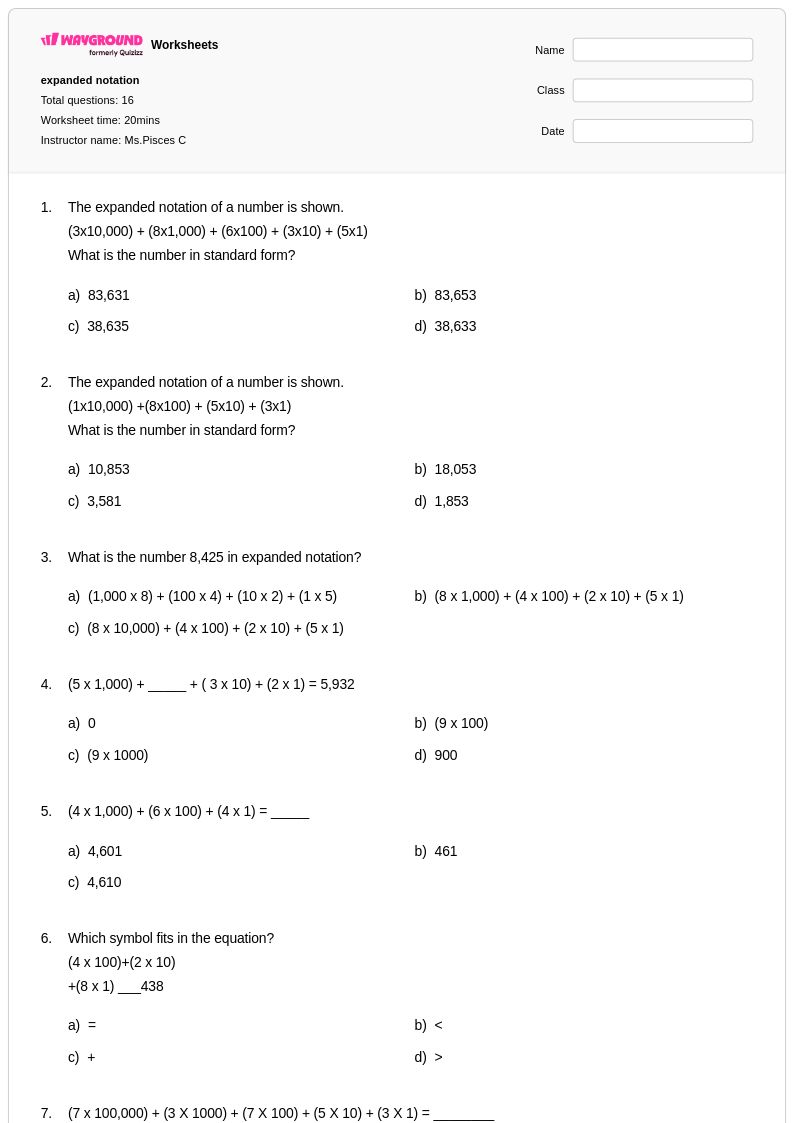
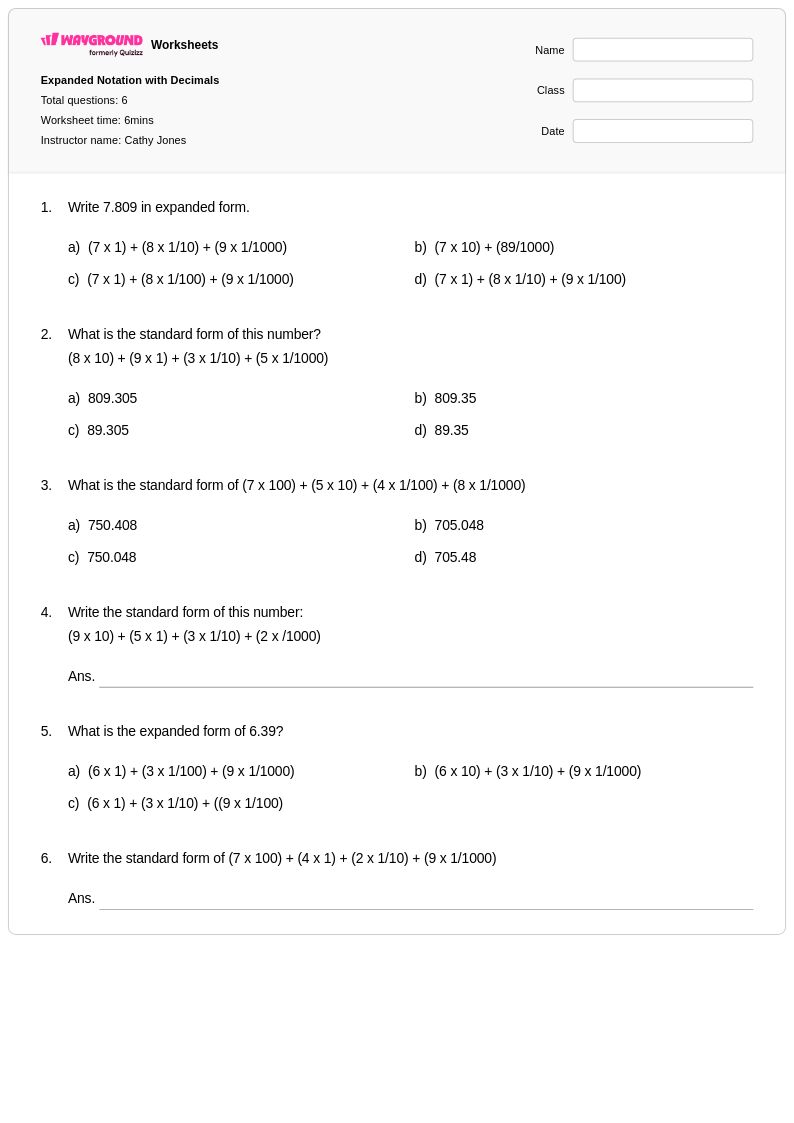
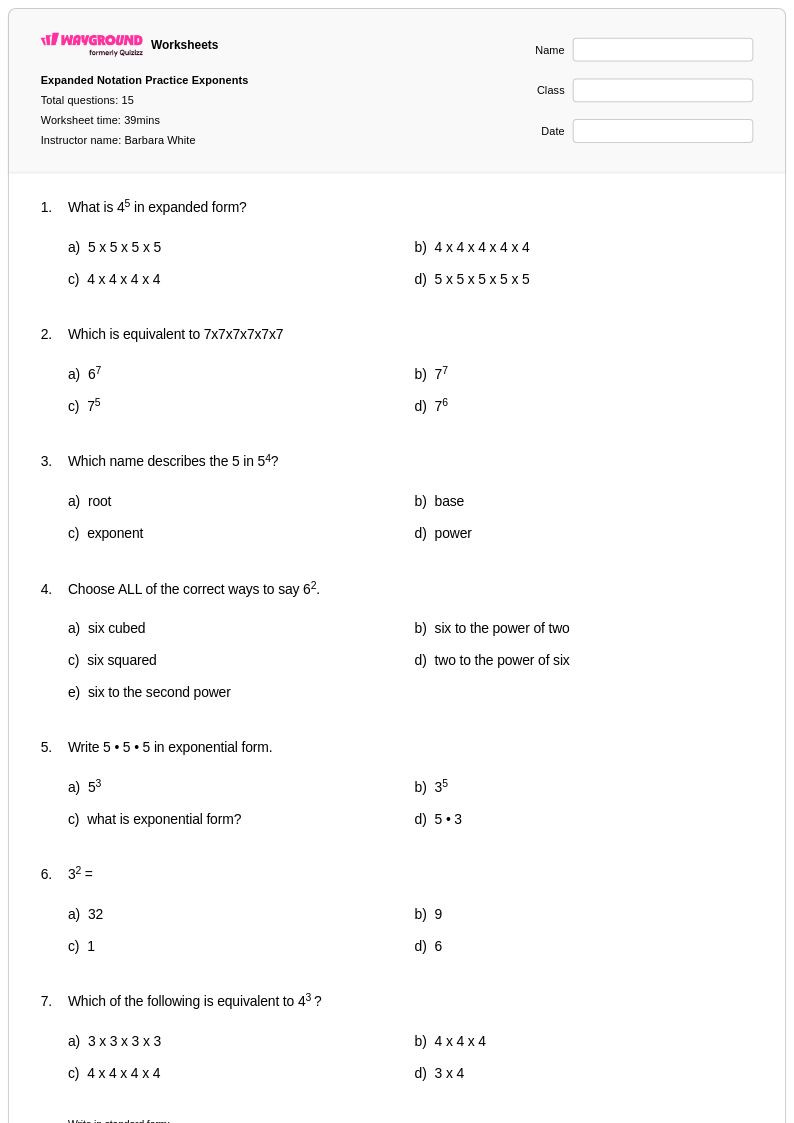
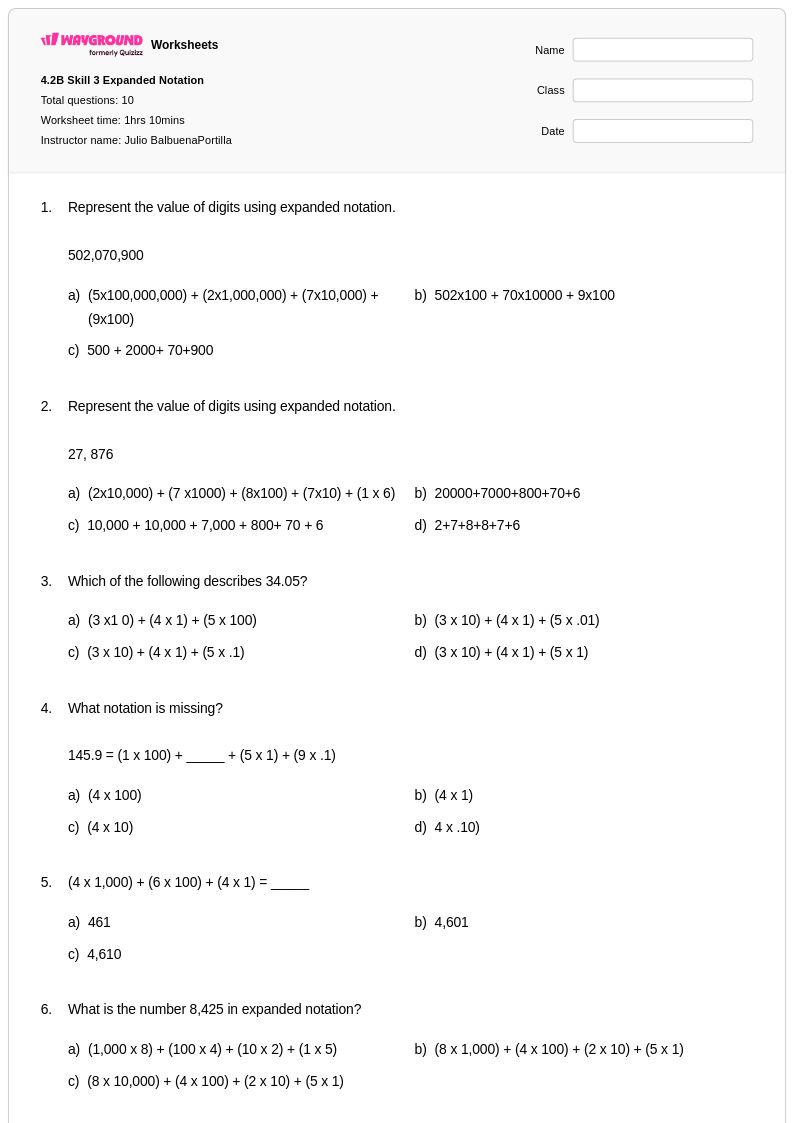
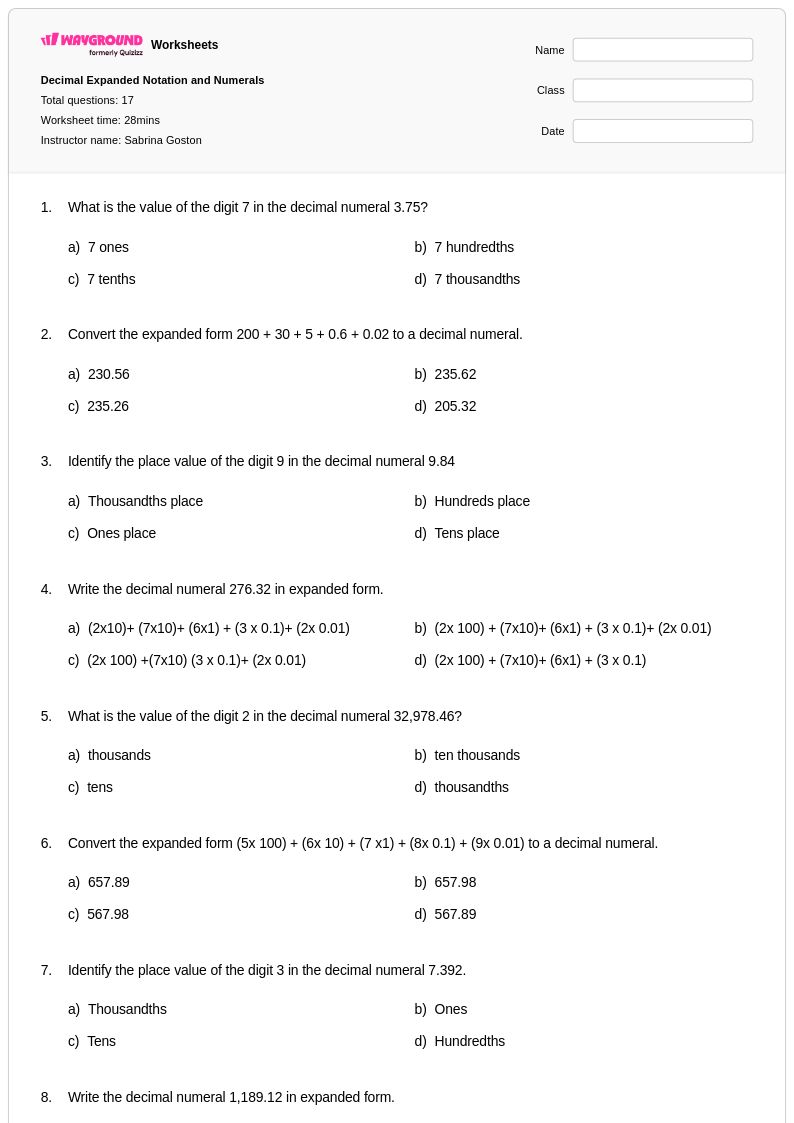
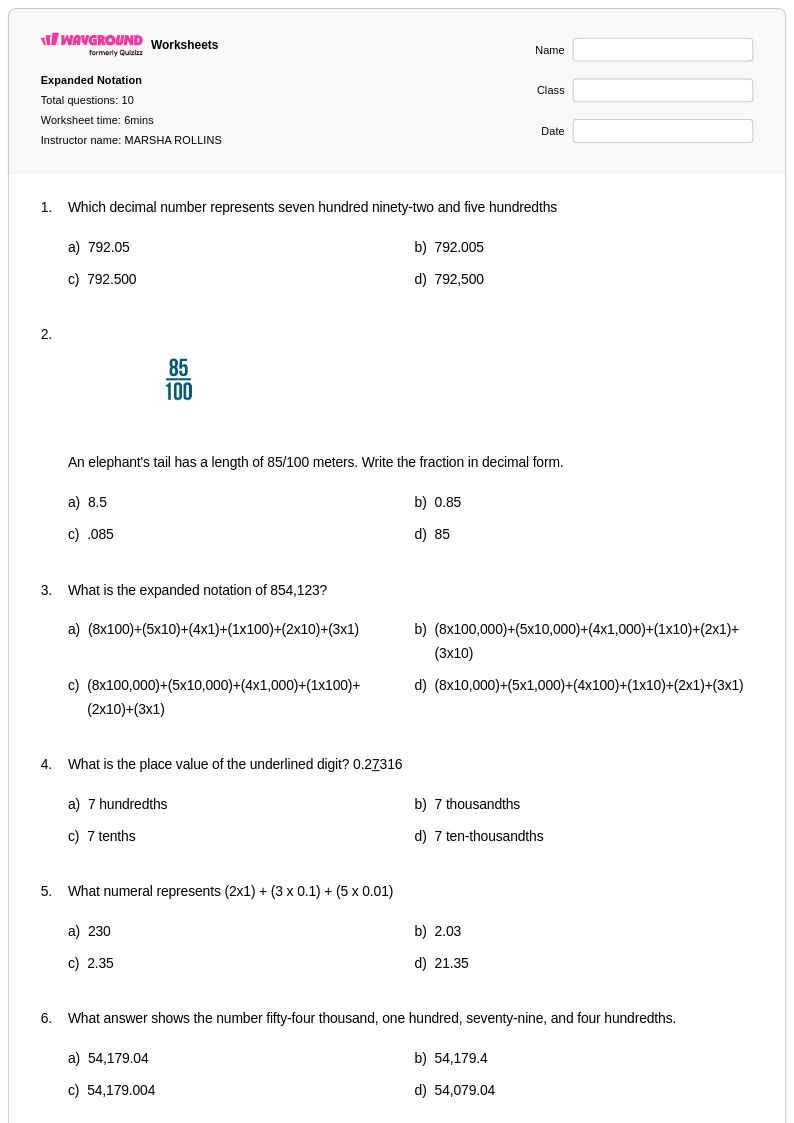
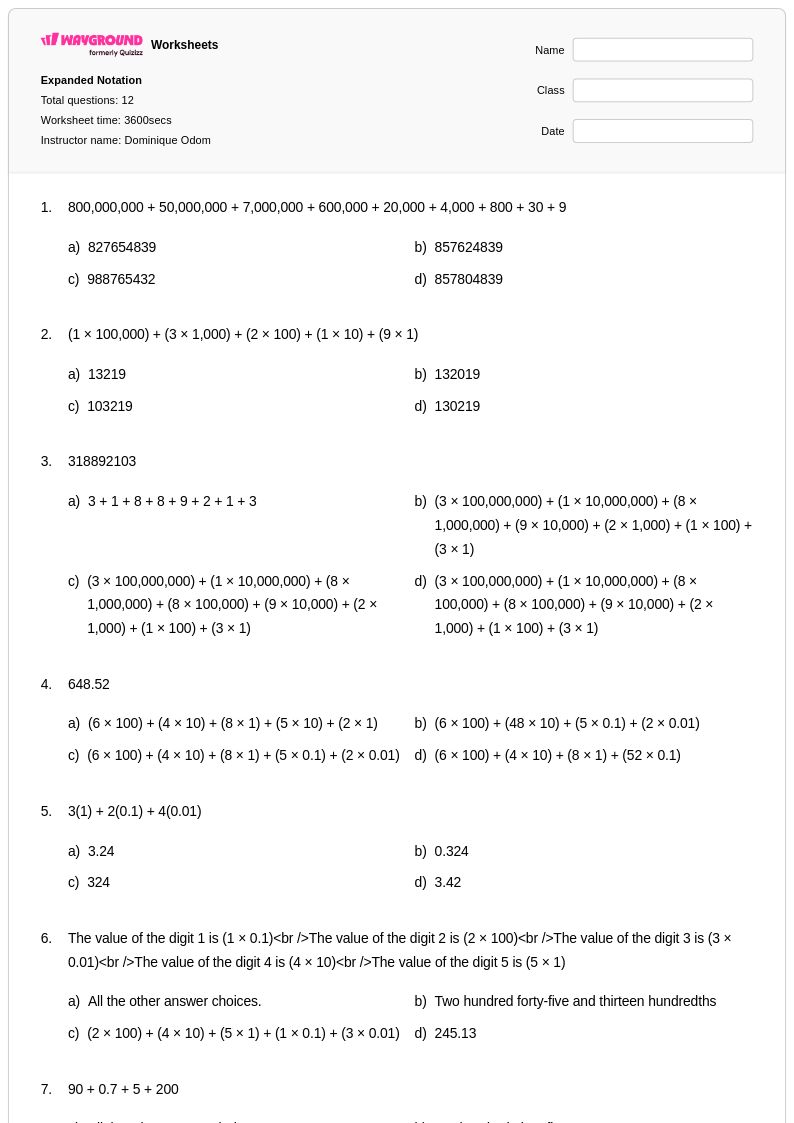
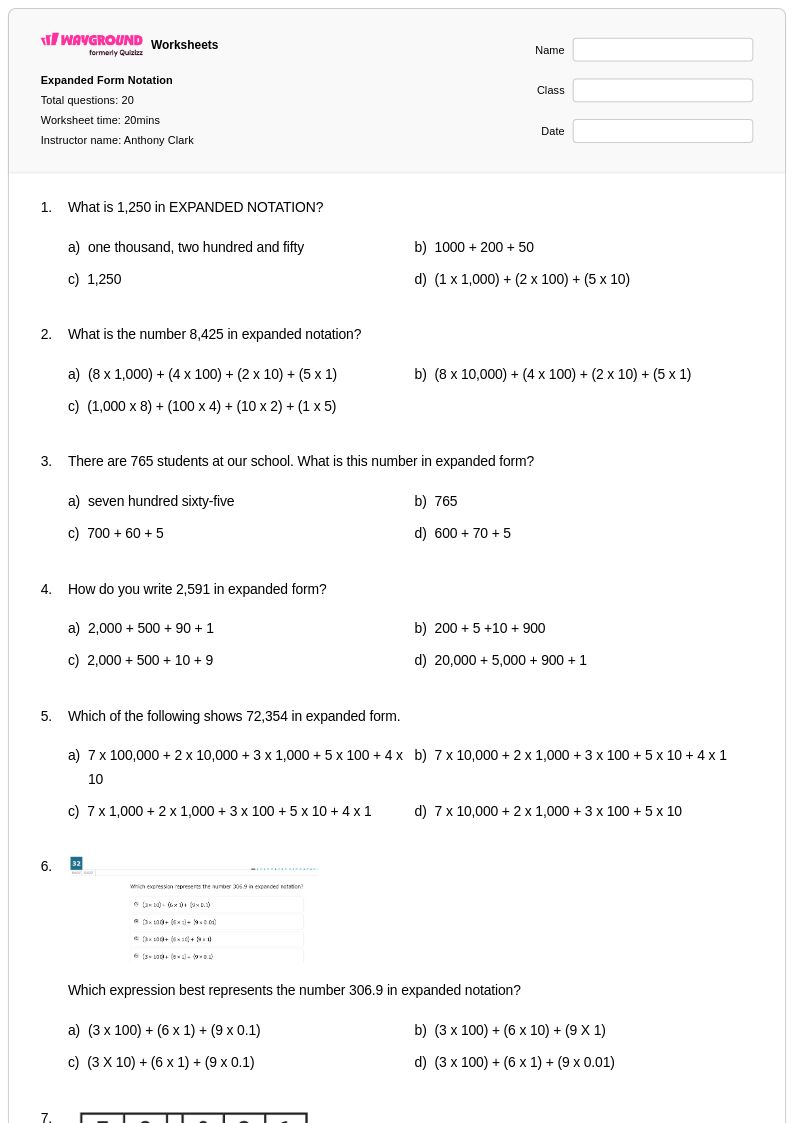
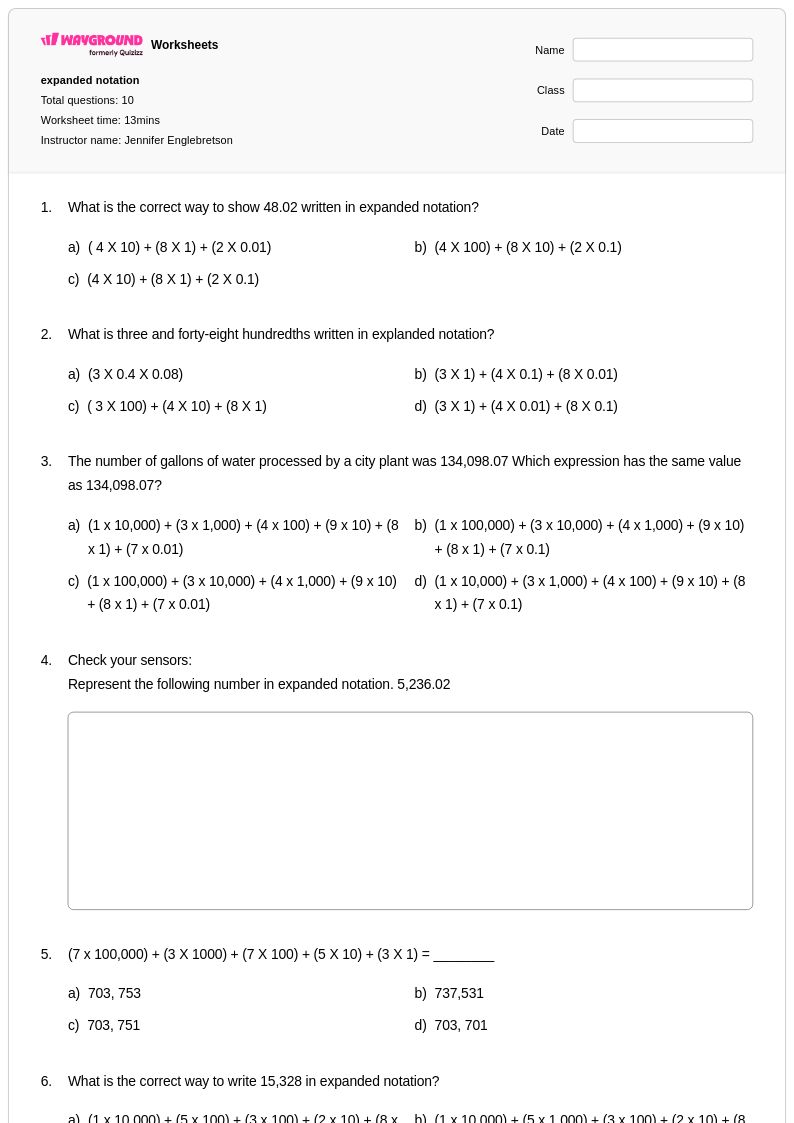
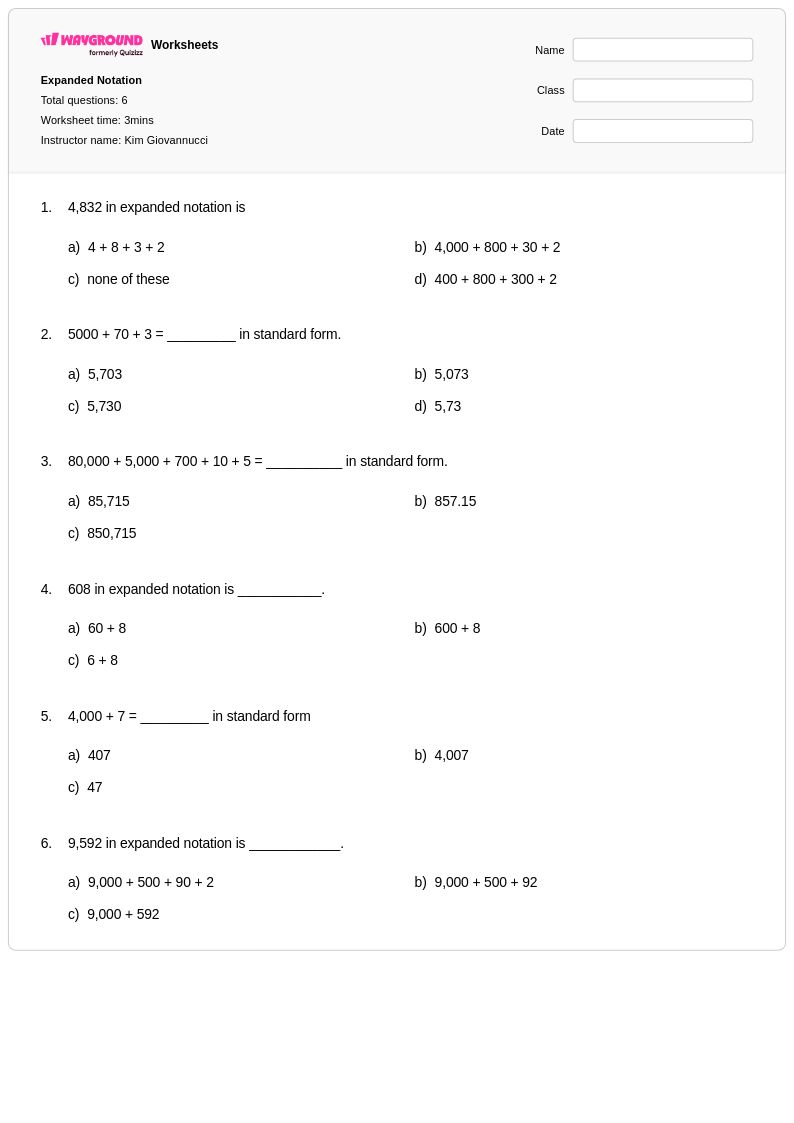
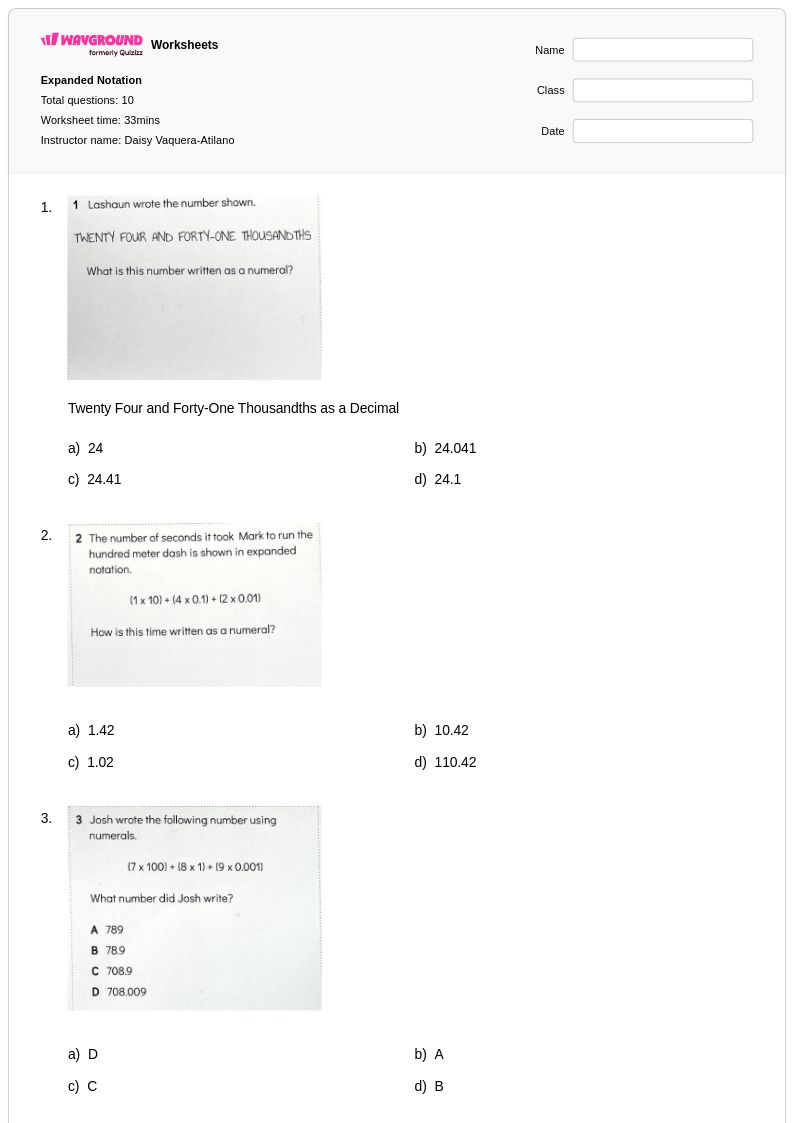
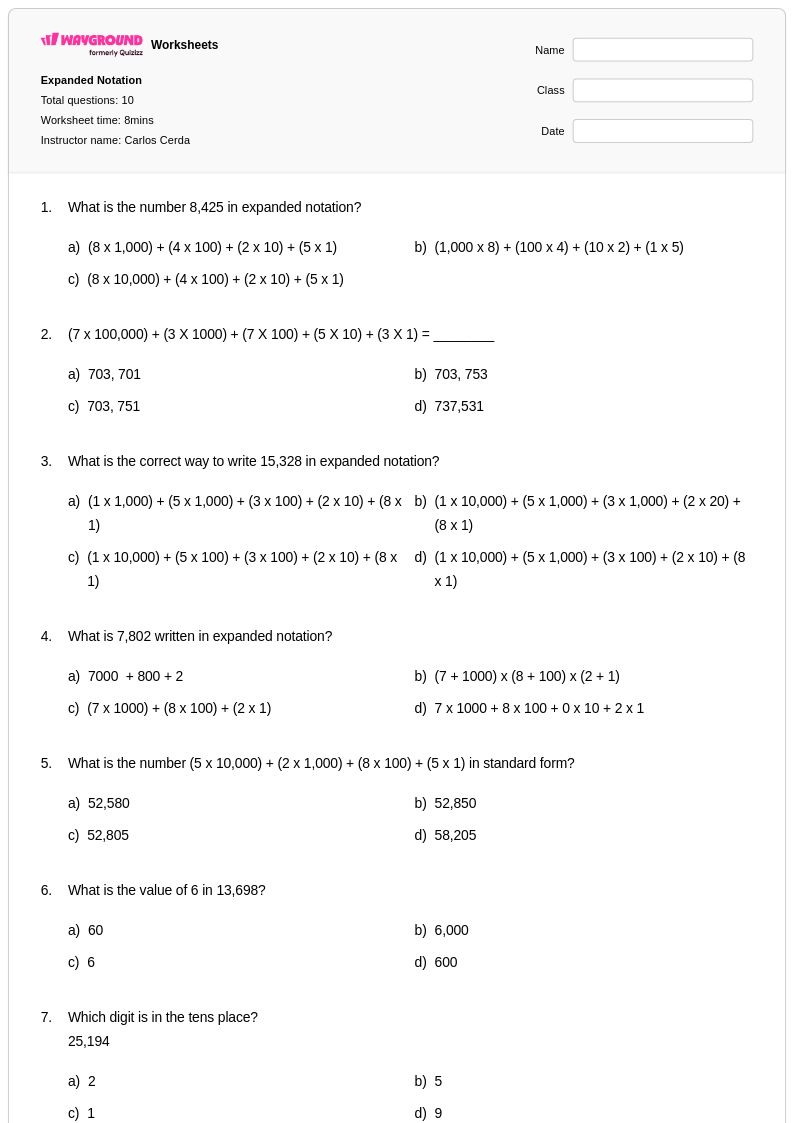
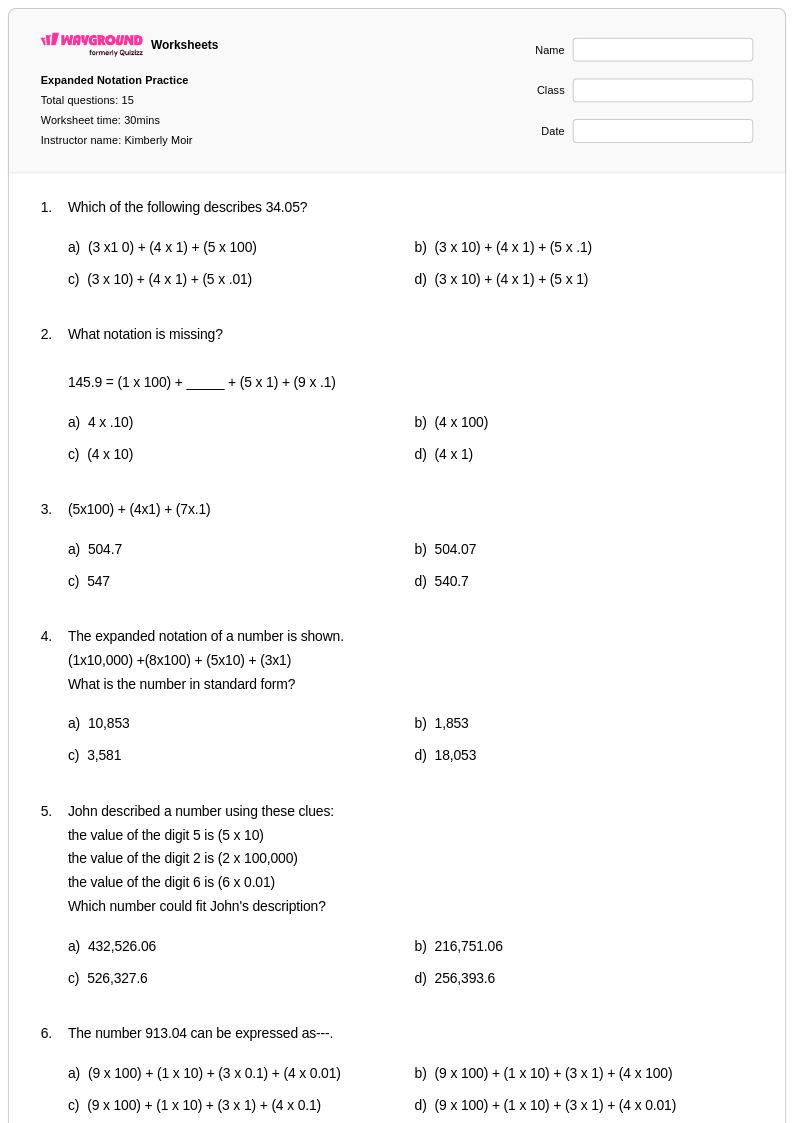
Expanded notation worksheets for Year 4 students available through Wayground (formerly Quizizz) provide comprehensive practice in breaking down multi-digit numbers into their component place values. These carefully crafted educational resources help fourth-grade students master the fundamental skill of expressing numbers as sums of their place value components, such as writing 3,247 as 3,000 + 200 + 40 + 7. The worksheets strengthen students' understanding of place value concepts while building essential number sense skills that serve as building blocks for more advanced mathematical operations. Each printable resource includes detailed practice problems that progress from basic three-digit numbers to more complex four and five-digit numbers, with comprehensive answer keys provided to support both independent learning and teacher assessment.
Wayground (formerly Quizizz) empowers educators with access to millions of teacher-created expanded notation worksheet collections that can be easily searched and filtered to match specific Year 4 curriculum standards and learning objectives. The platform's robust differentiation tools allow teachers to customize worksheets for diverse learning needs, whether providing remediation support for struggling students or enrichment activities for advanced learners. These versatile resources are available in both printable PDF format for traditional classroom use and digital formats for online learning environments, making lesson planning more efficient and effective. Teachers can seamlessly integrate these standards-aligned materials into their number sense instruction, using them for skill practice, formative assessment, homework assignments, and targeted intervention activities that help students develop confidence with place value concepts.
FAQs
How do I teach expanded notation to 4th graders?
Fourth graders are ready to move beyond hundreds into thousands, so anchor the lesson there. Write 3,247 on the board and ask: "What is the 3 actually worth?" Once students say 3,000, you're halfway there. A place value chart with labeled columns (thousands, hundreds, tens, ones) gives them a scaffold to lean on until the decomposition becomes automatic. From there, practice both directions — breaking a number apart and reassembling it from its parts.
What exercises help 4th graders practice expanded notation?
These worksheets progress from three-digit numbers up to four- and five-digit numbers, which is the right range for Grade 4. The most useful practice type at this level is converting between standard form and expanded form in both directions — students who can only go one way are usually pattern-matching, not understanding. Mixing in a few numbers with interior zeros (like 4,008) quickly reveals who has the concept and who doesn't.
What mistakes do 4th graders commonly make with expanded notation?
Two errors show up constantly. First, students write the digit instead of its value — 3 + 2 + 4 + 7 instead of 3,000 + 200 + 40 + 7. Second, they skip zeros entirely, so 3,047 becomes 3,000 + 40 + 7 with the hundreds place missing. Both errors signal that the student sees digits as symbols rather than quantities. A targeted fix: have them fill in a place value chart before writing the expanded form.
How do I use these Grade 4 expanded notation worksheets?
Each worksheet includes a complete answer key, so it works well for independent practice or homework without extra prep on your end. You can assign it as a digital quiz on Wayground — students complete it online and results come back automatically — or print the PDF for paper practice. If you print, the Wayground for Teachers app lets you scan student submissions to grade them quickly rather than marking each one by hand.
Is expanded notation a 4th grade Common Core skill?
It's a central one. Common Core expects fourth graders to read, write, and compare multi-digit whole numbers using place value understanding, and expanded notation is the clearest way to make that understanding visible. At this grade, students extend what they learned about hundreds in Grade 3 to numbers in the thousands and ten-thousands — building the foundation they'll need for multi-digit multiplication later in the year.
How can I support struggling 4th graders with expanded notation worksheets?
For students who find the visual layout of multi-digit numbers overwhelming, increasing font size or widening character spacing in the printable version can reduce errors caused by misreading digits. Wayground's reduced answer choices accommodation is also useful for students who get stuck on multiple-choice problems — fewer options lower the cognitive load so they can focus on the place value reasoning itself.