
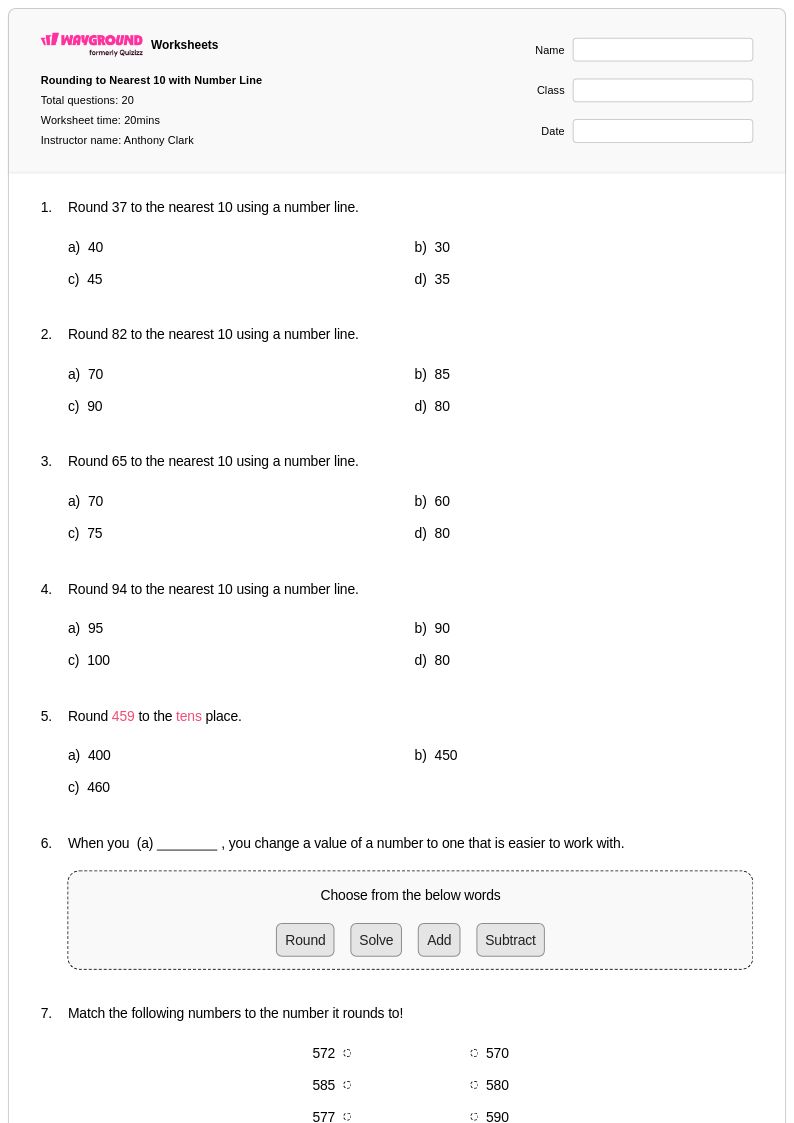
20 Q
3rd - Uni
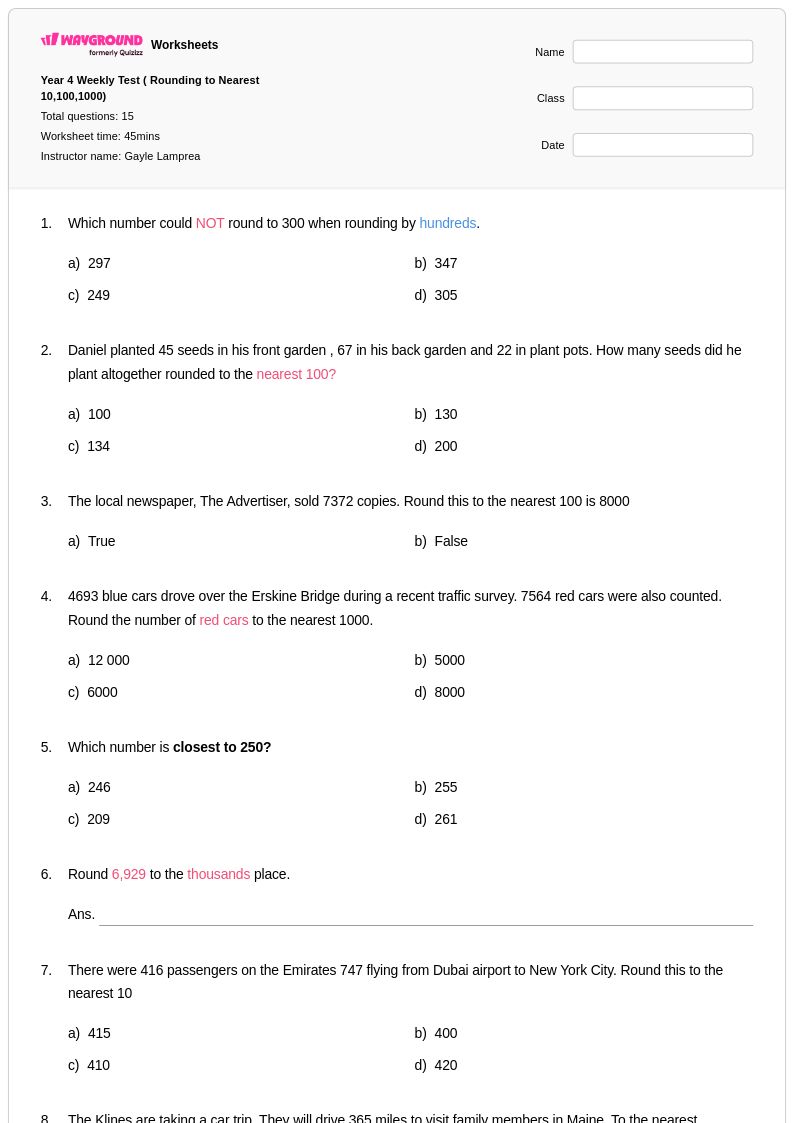
15 Q
4th
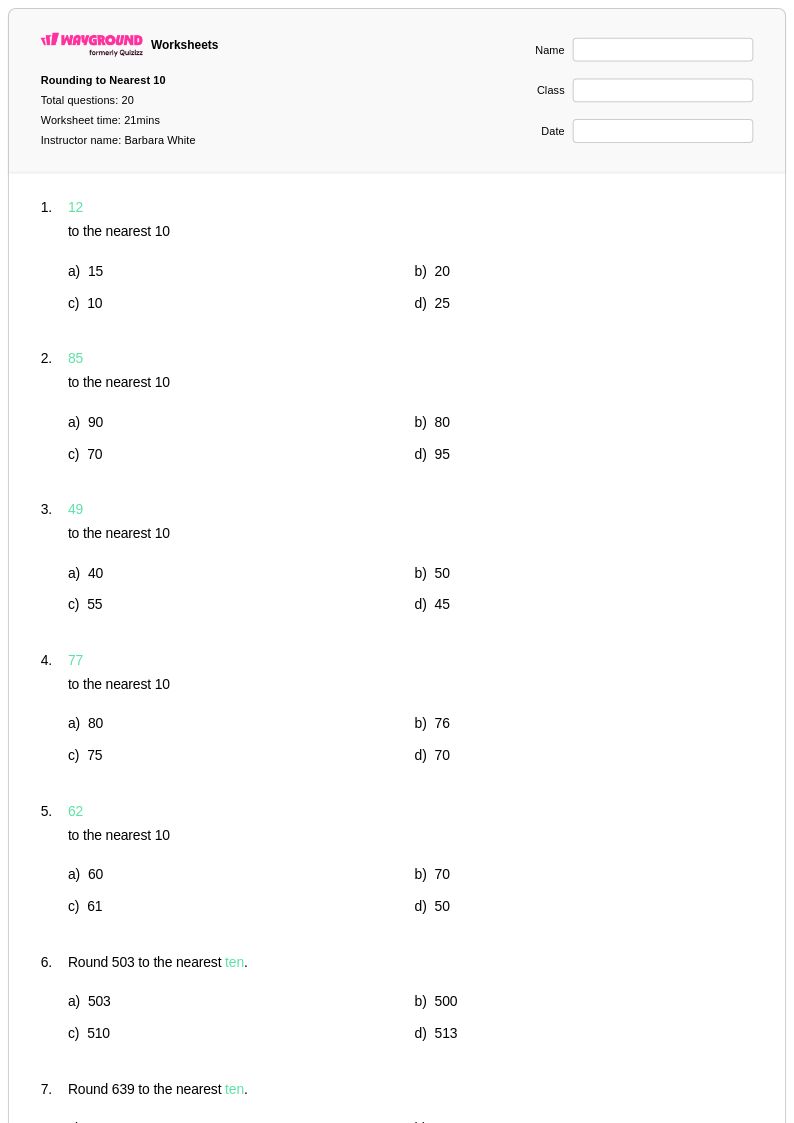
20 Q
2nd - 4th
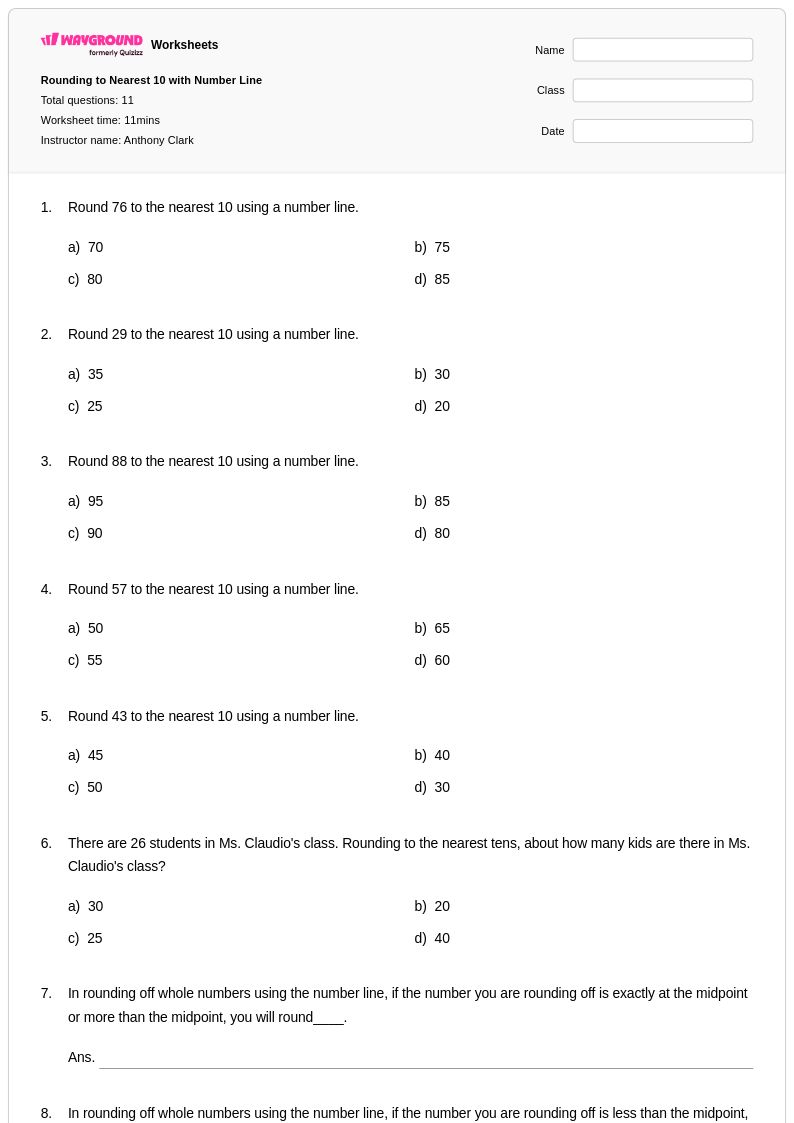
11 Q
3rd - Uni
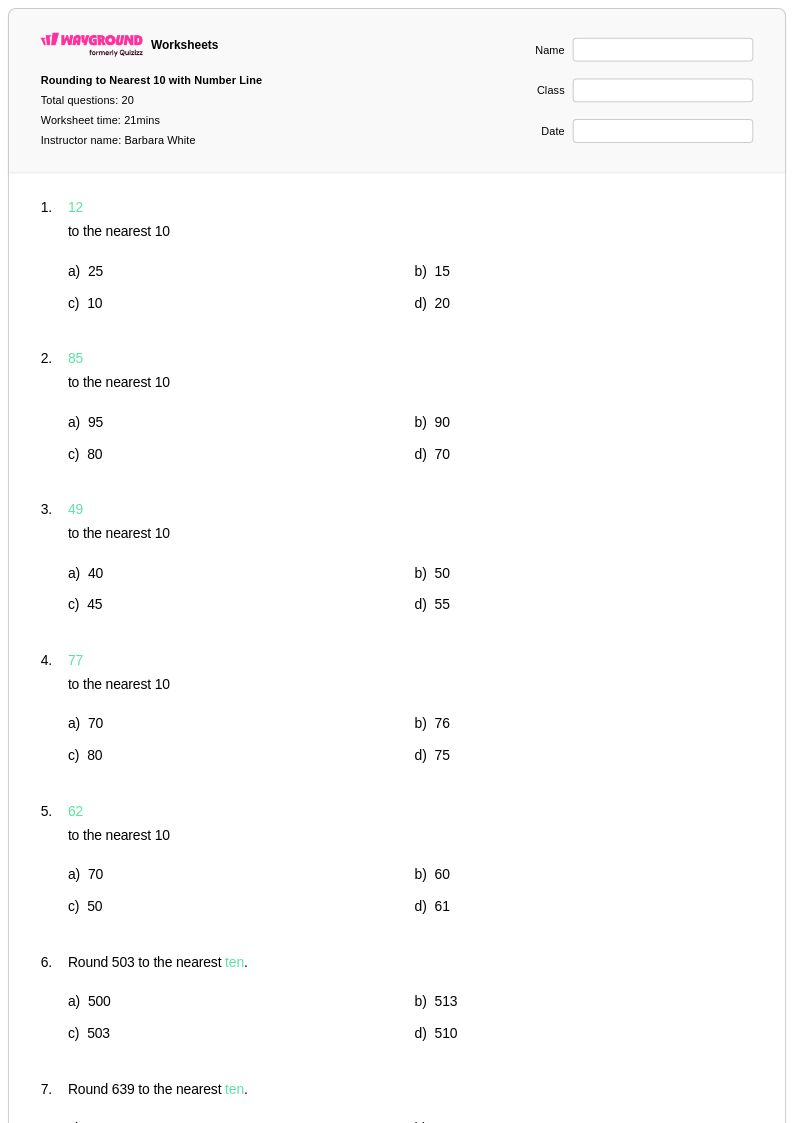
20 Q
2nd - 4th
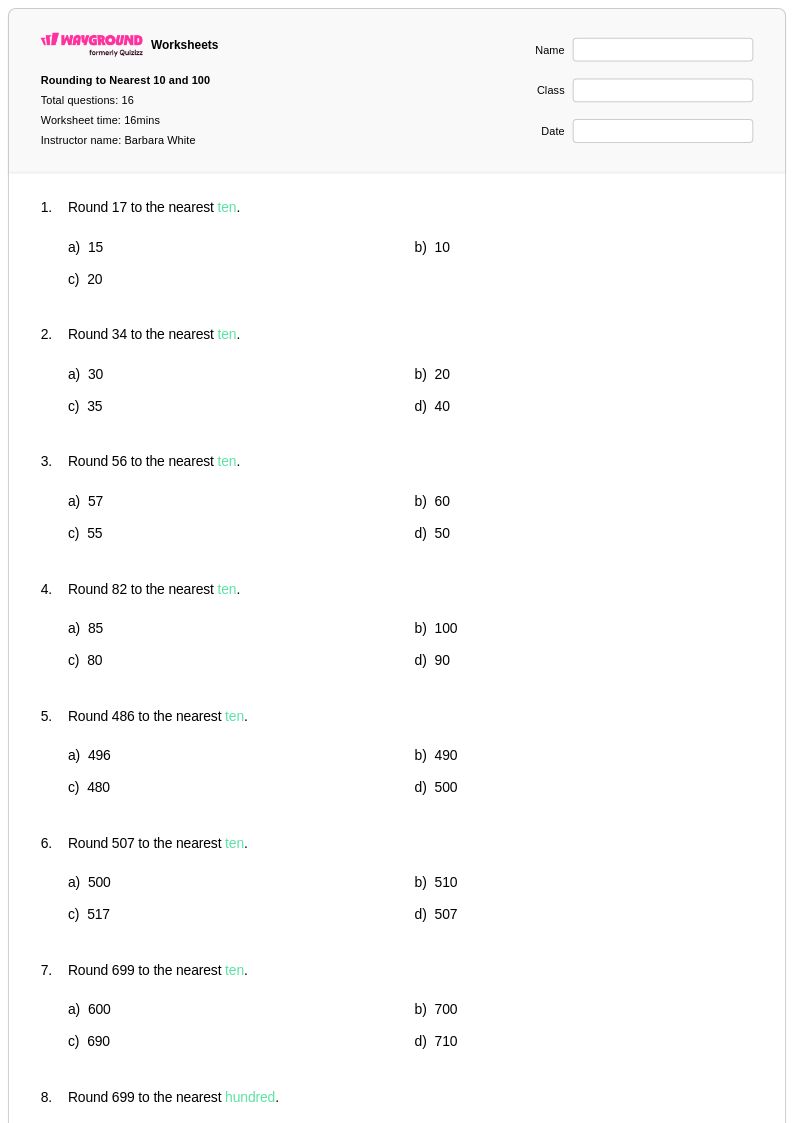
16 Q
2nd - 4th
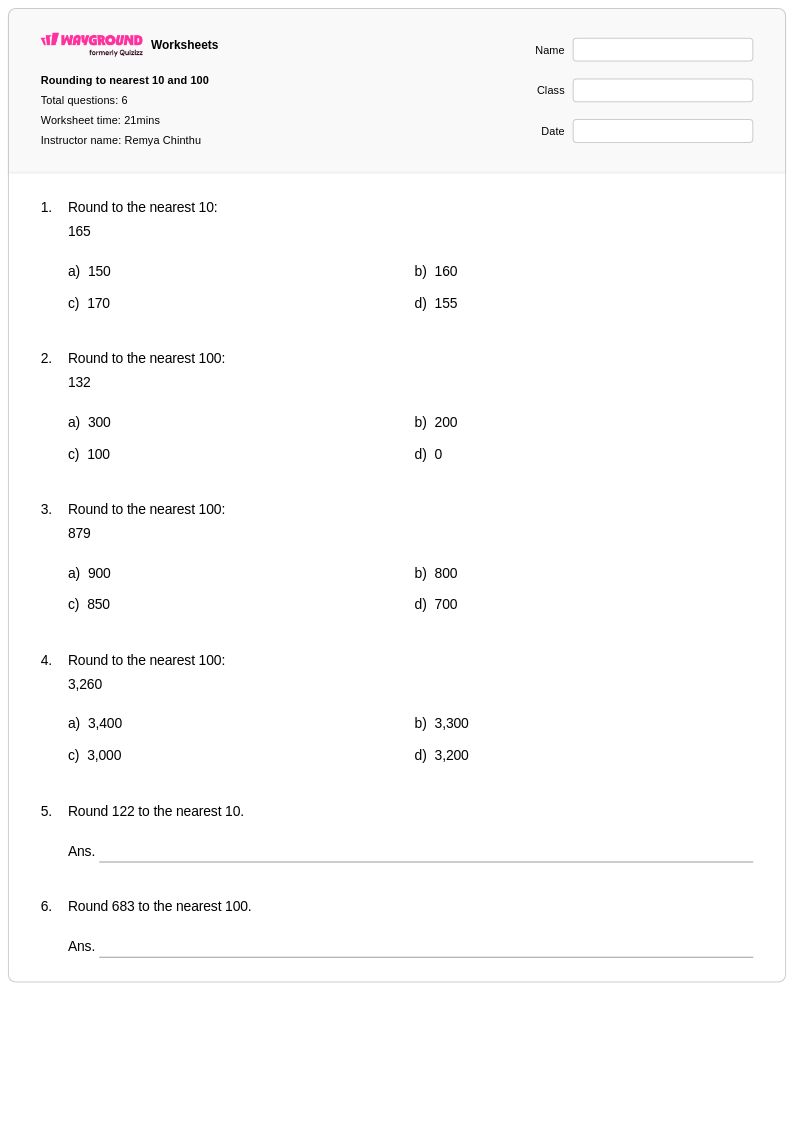
6 Q
4th
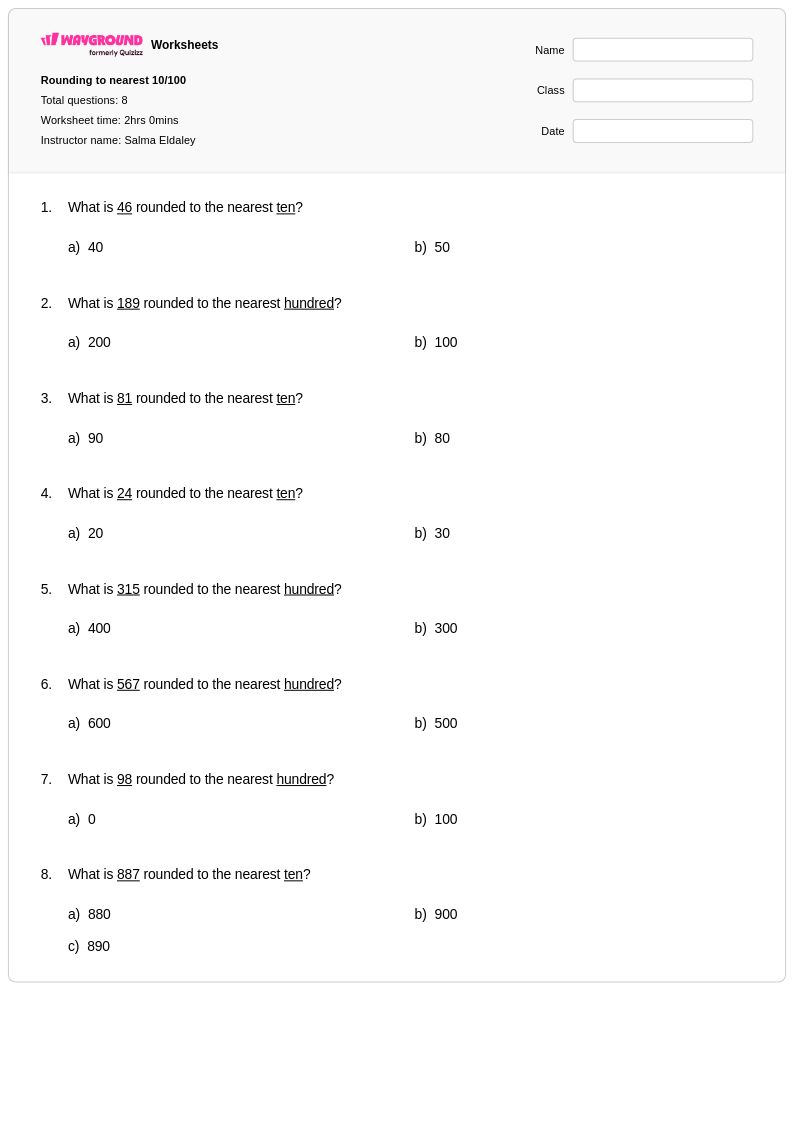
8 Q
2nd - 4th
6 Q
4th
19 Q
3rd - Uni
20 Q
4th
20 Q
2nd - 4th
20 Q
4th - Uni
20 Q
4th - Uni
10 Q
2nd - 4th
20 Q
3rd - Uni
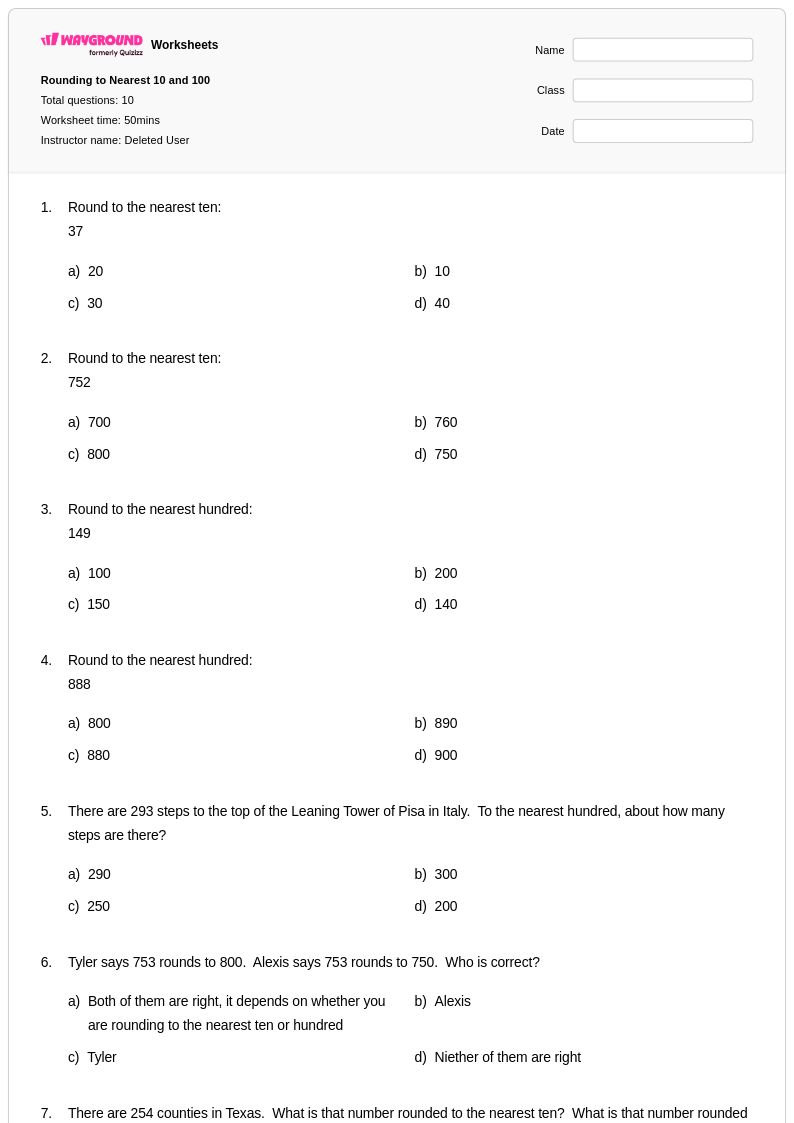
10 Q
KG - Uni
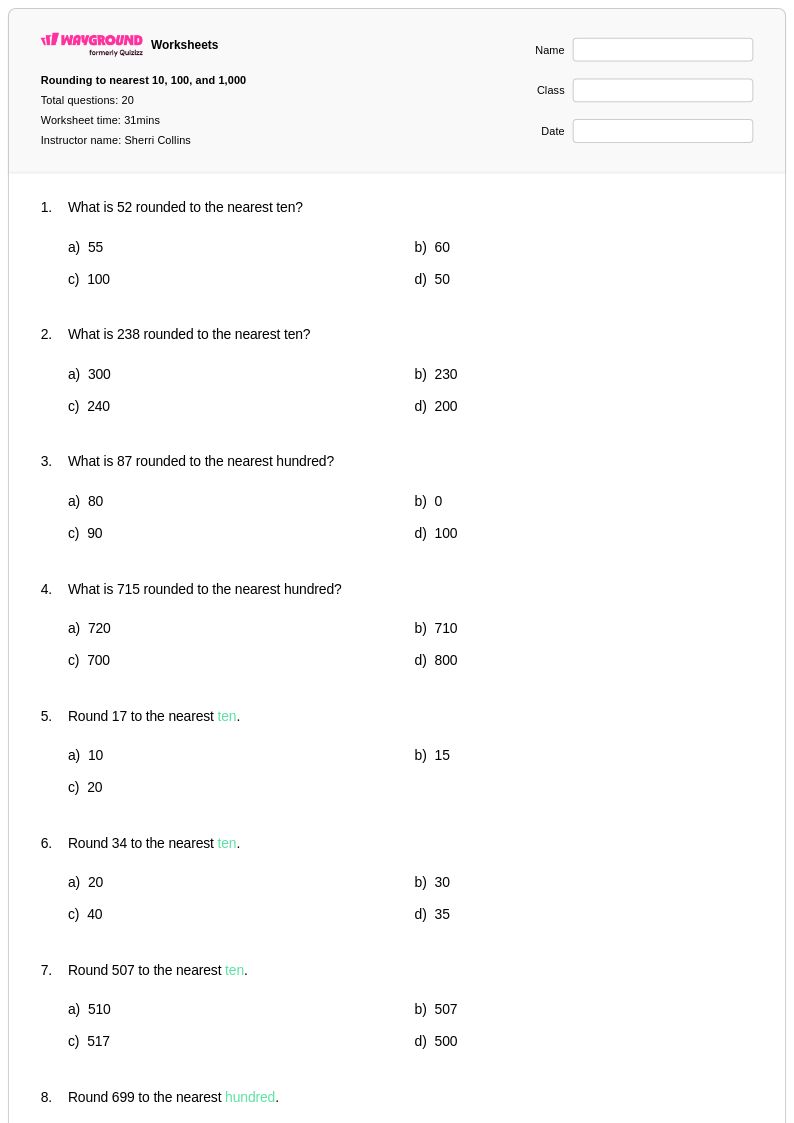
20 Q
3rd - 4th
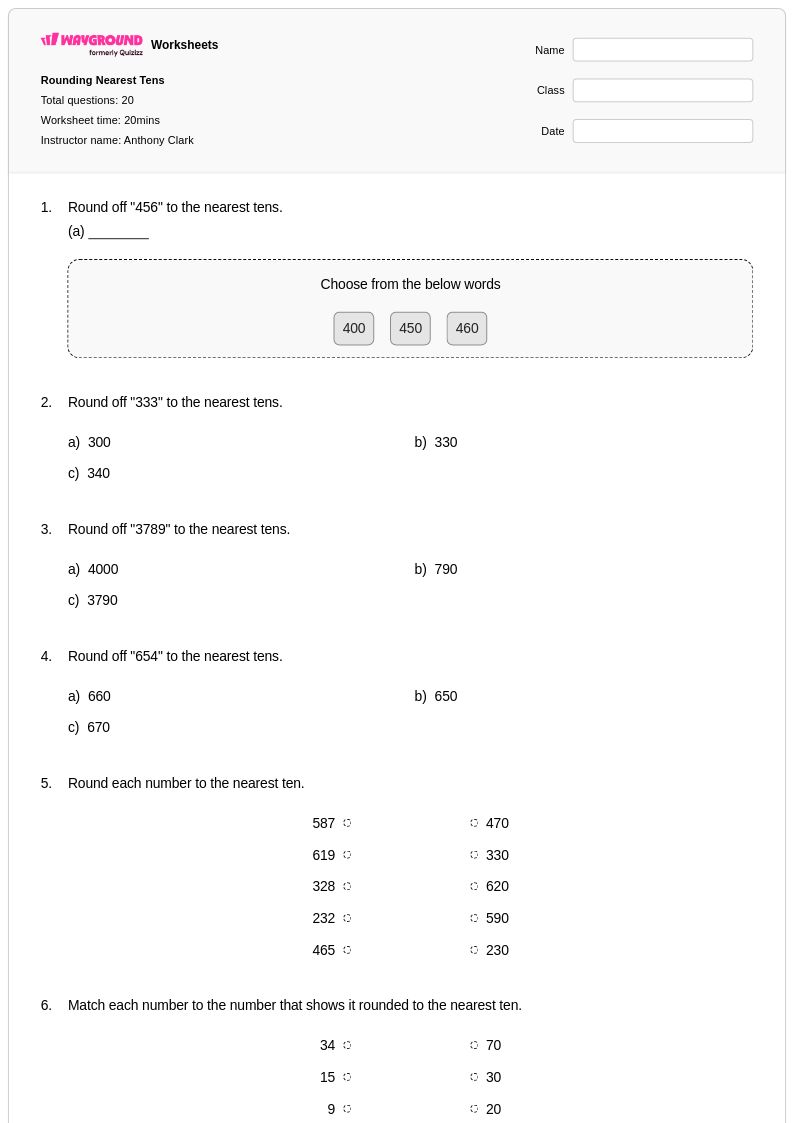
20 Q
3rd - Uni
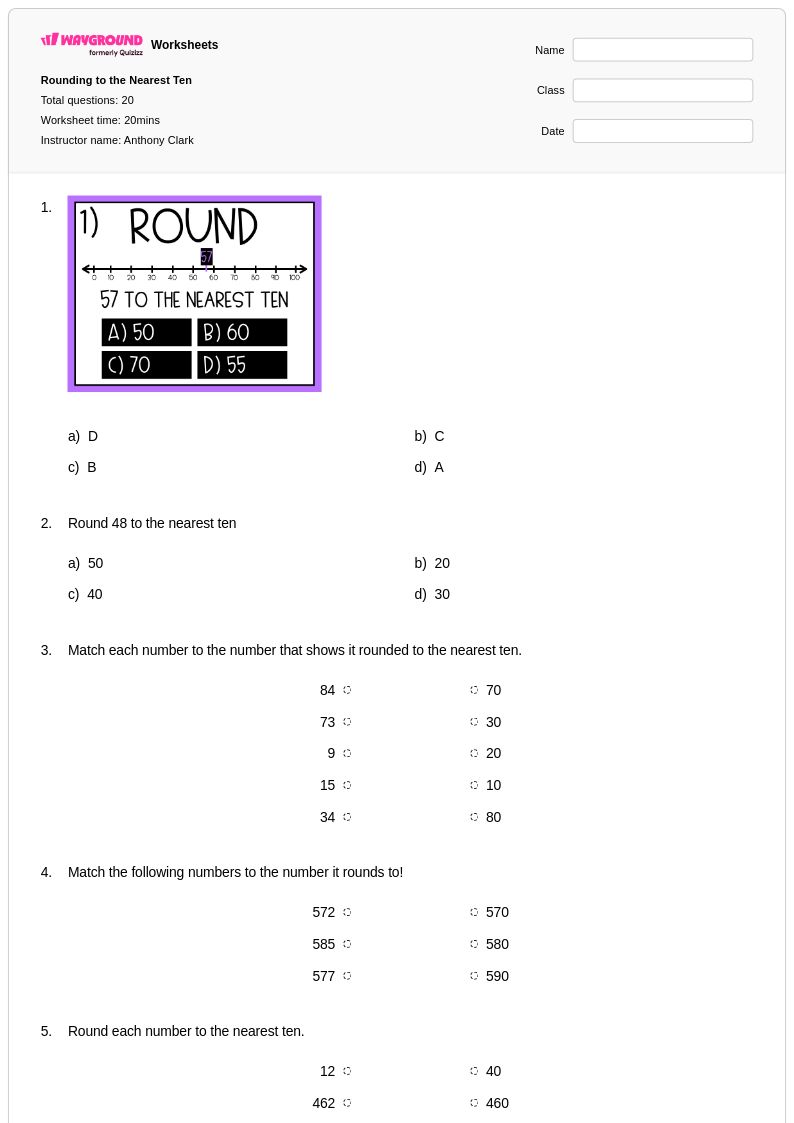
20 Q
3rd - Uni
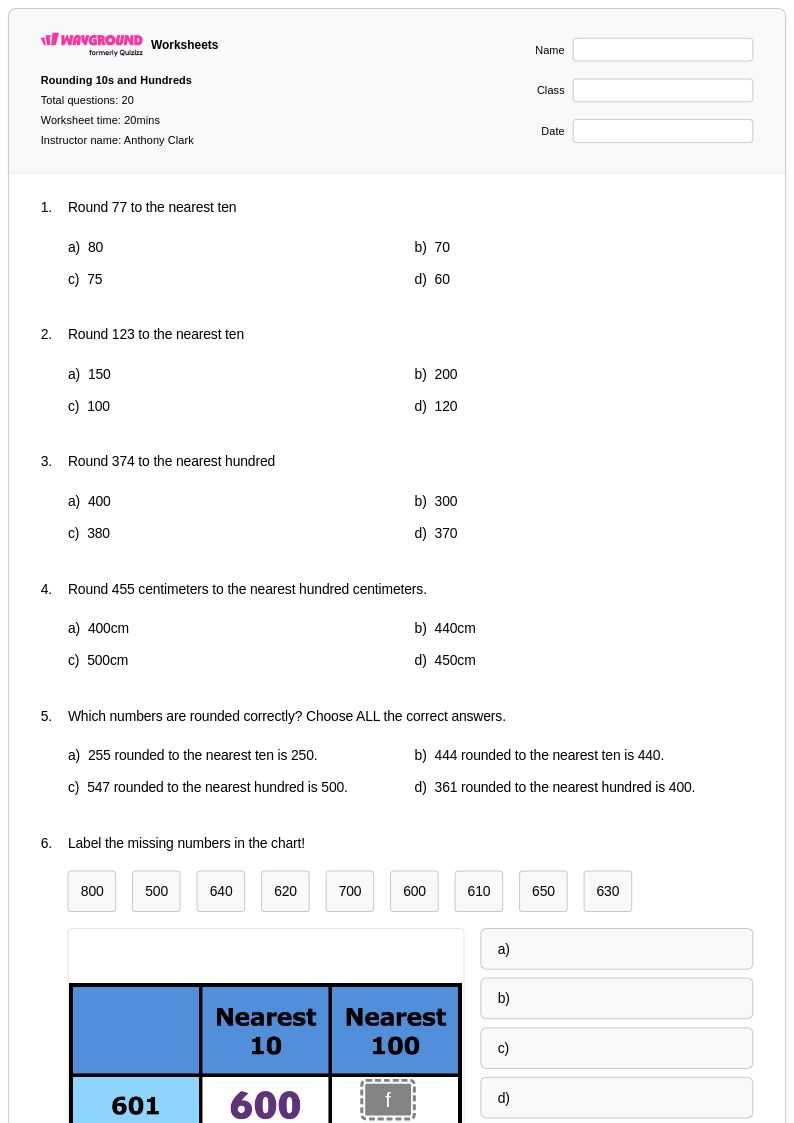
20 Q
3rd - Uni
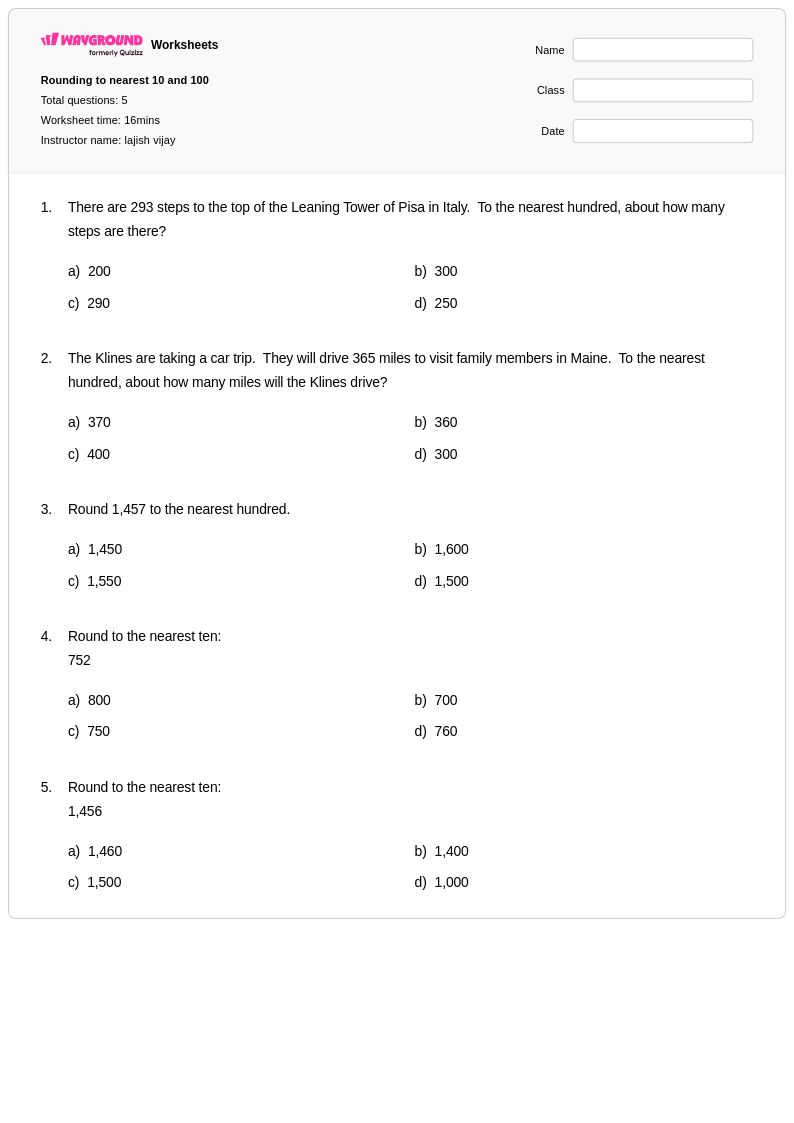
5 Q
4th
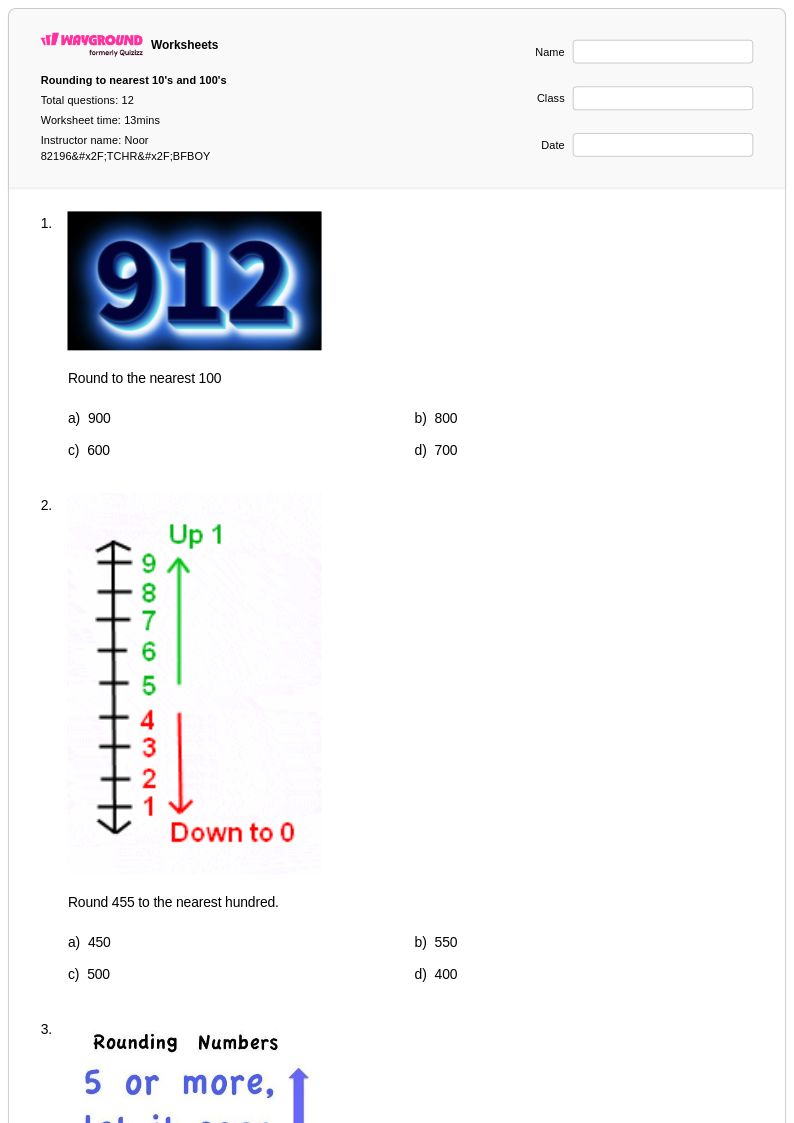
12 Q
4th
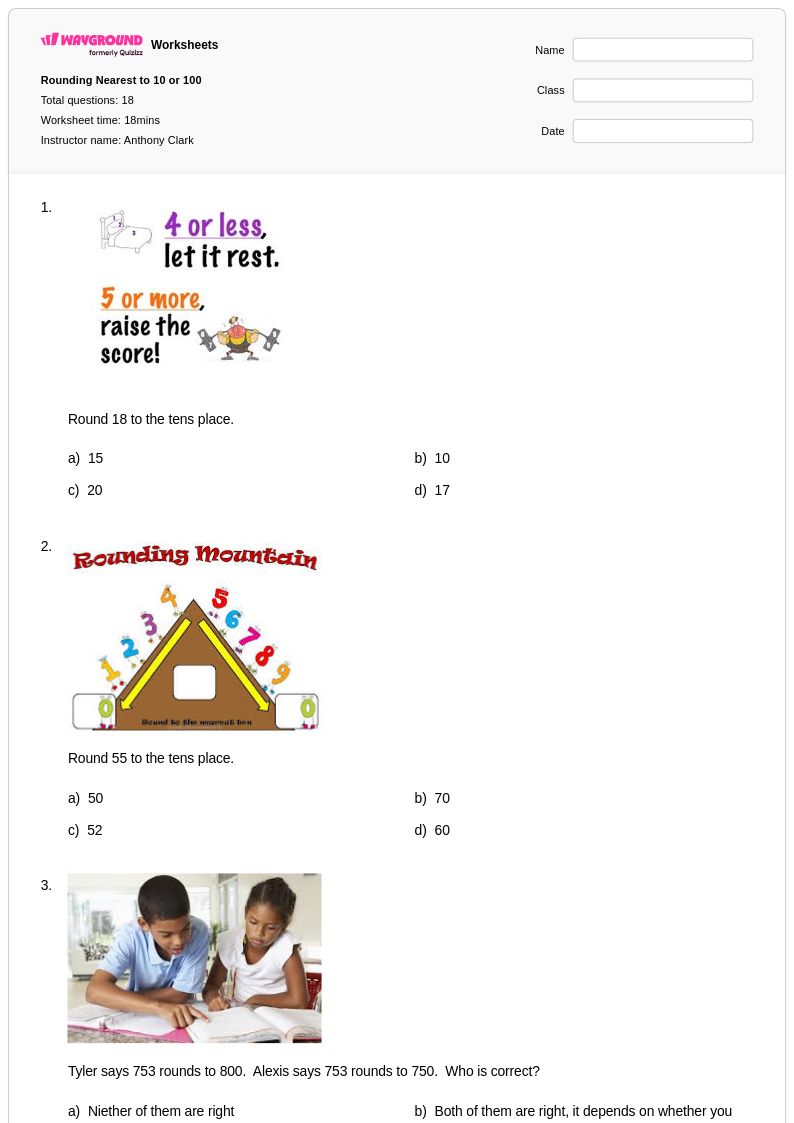
18 Q
3rd - Uni
Explore Other Subject Worksheets for year 4
Explore printable Rounding to Nearest 10 worksheets for Year 4
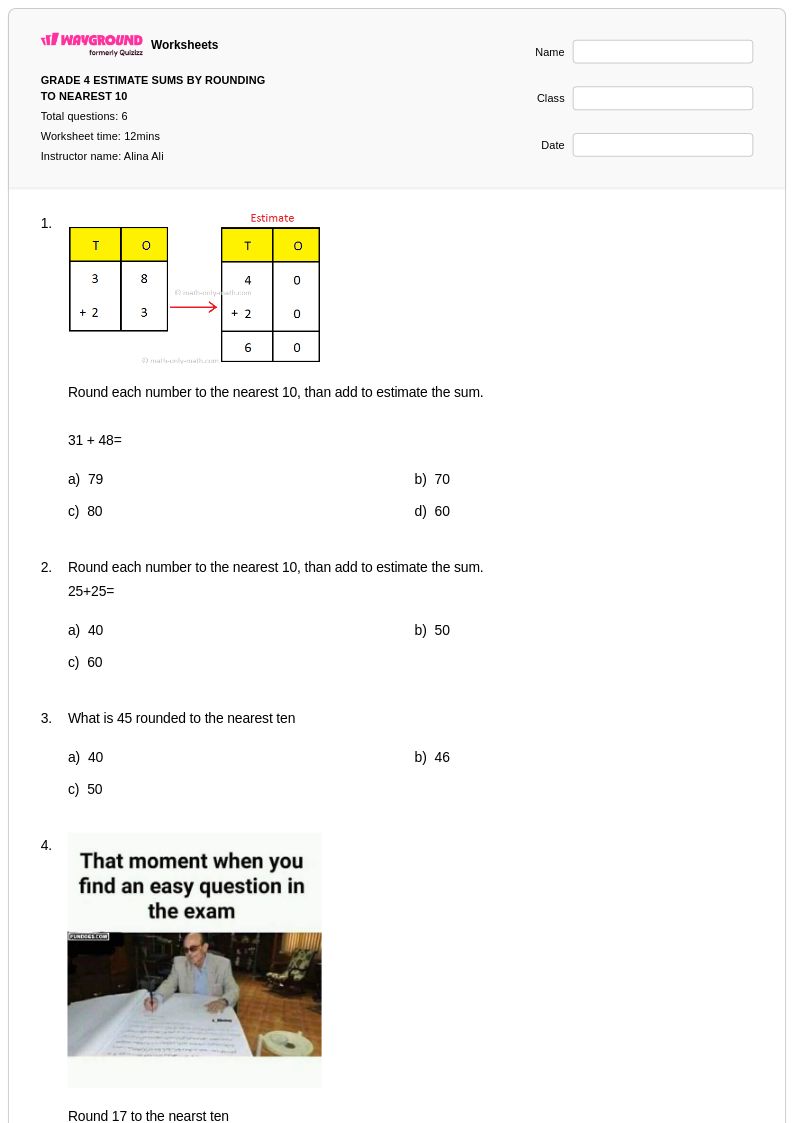
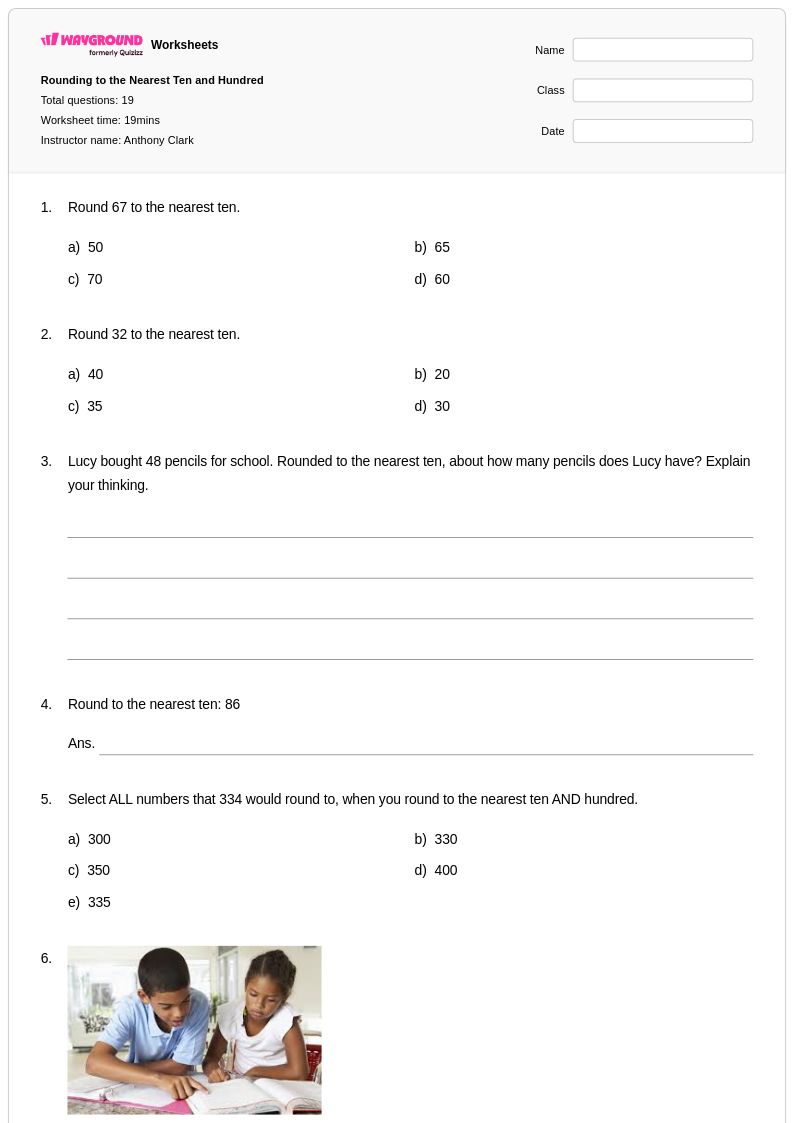
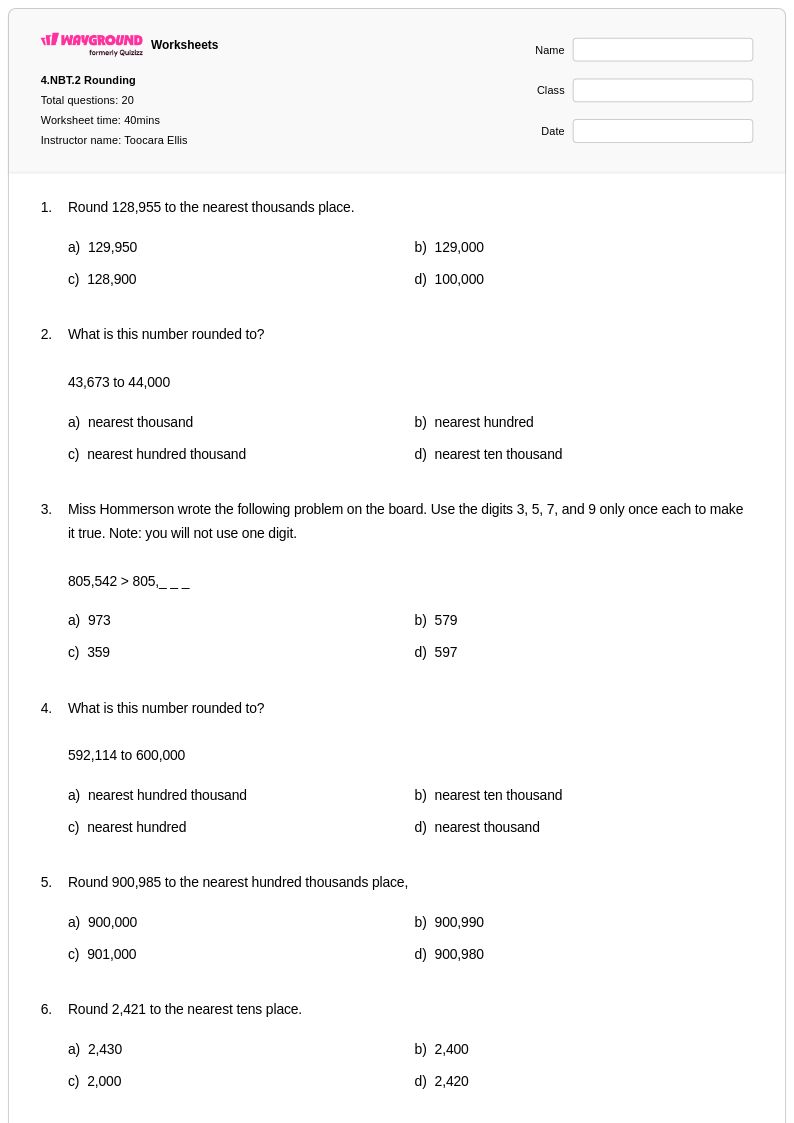
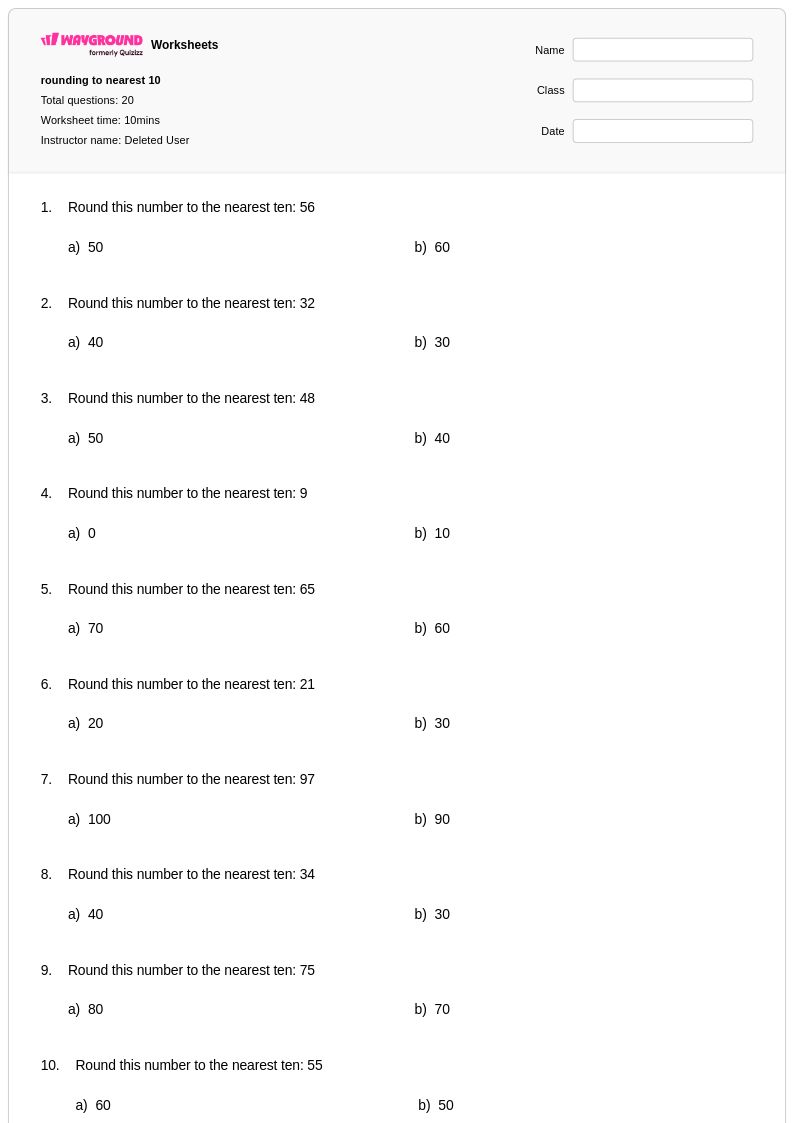
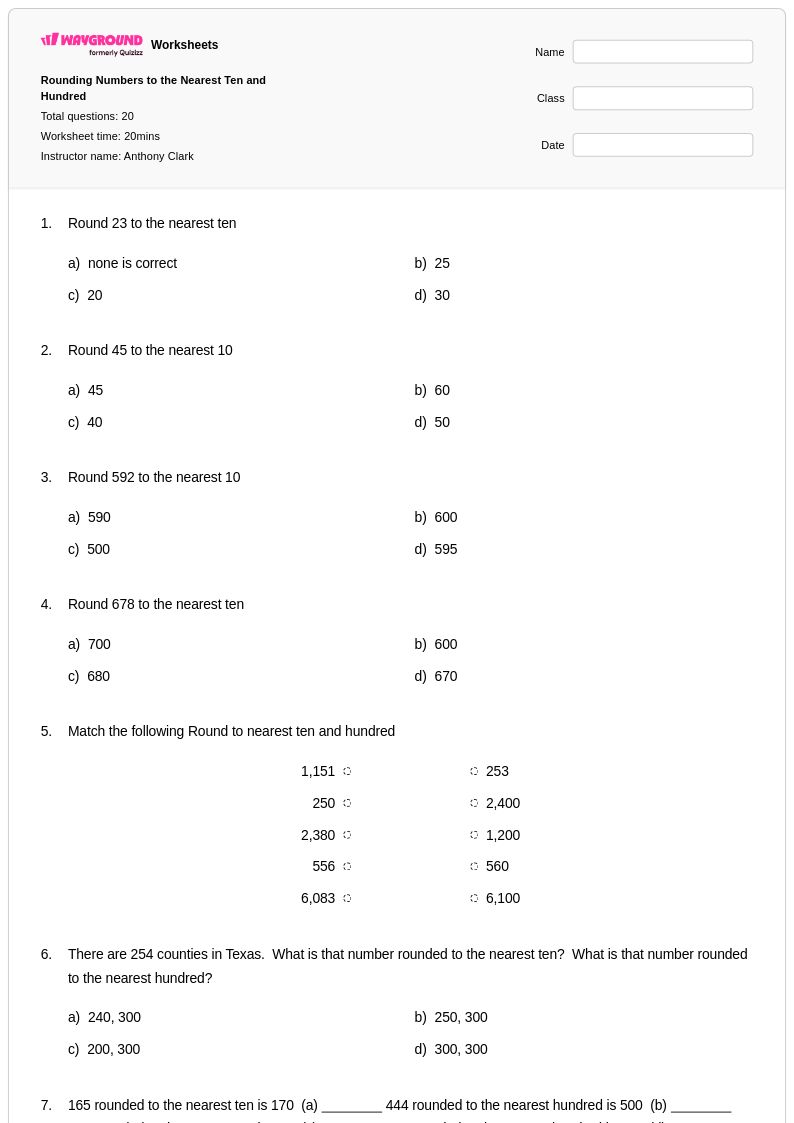
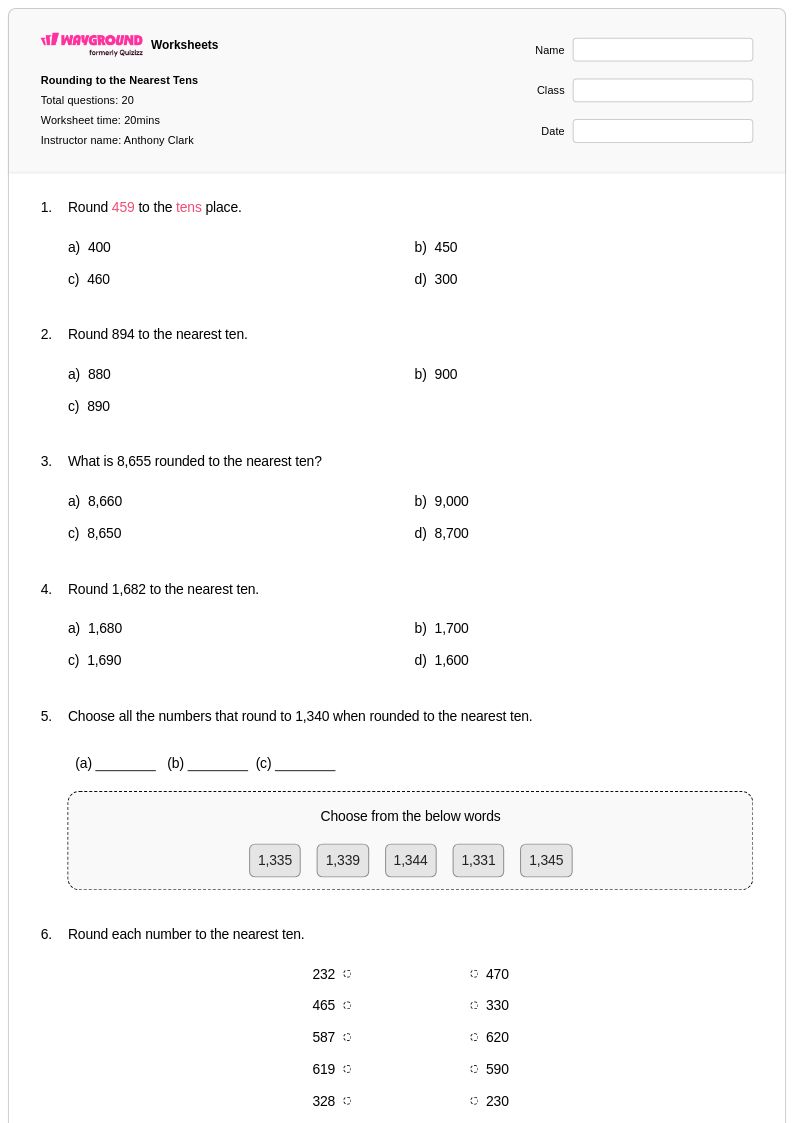
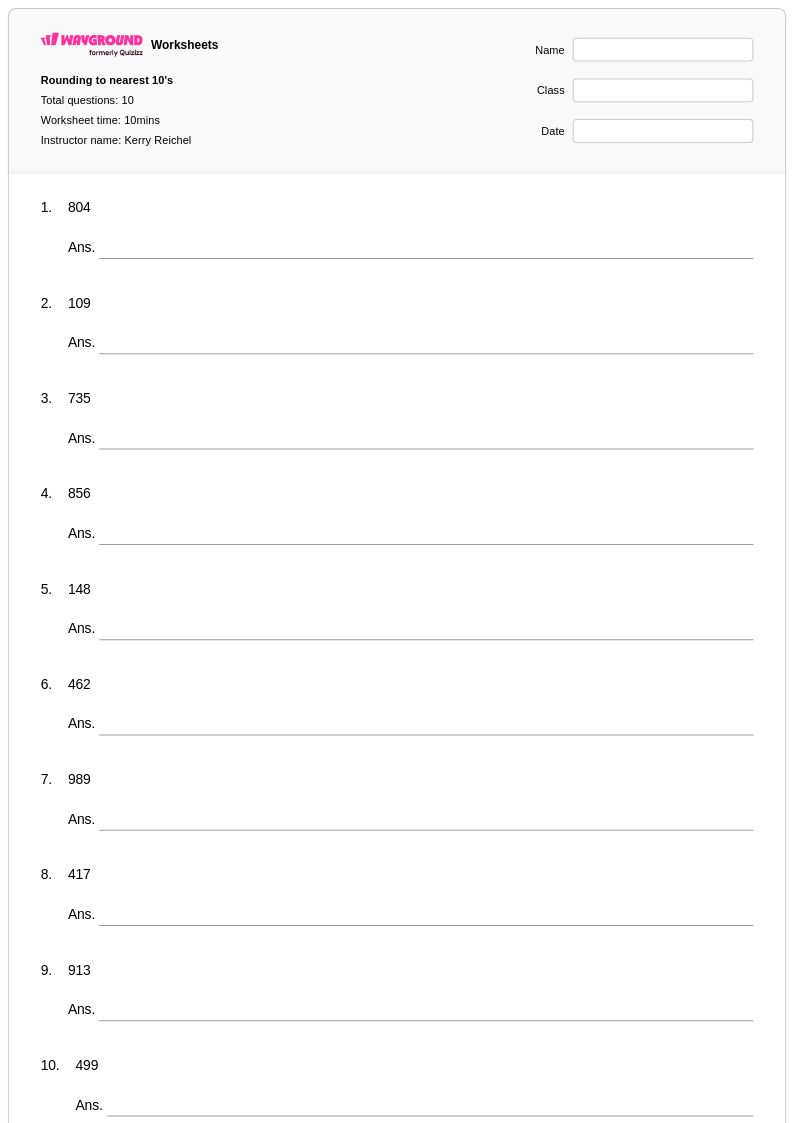
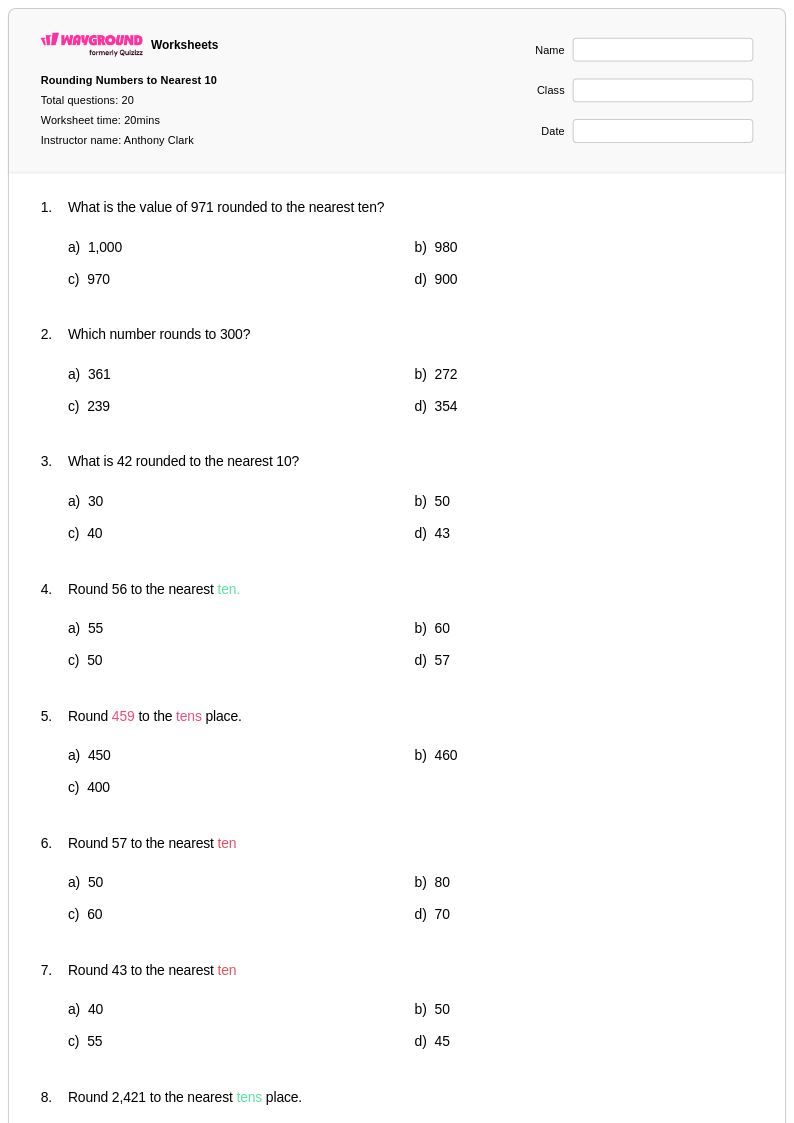
Rounding to the nearest 10 represents a fundamental mathematical skill that Year 4 students must master to build strong number sense foundations. Wayground's comprehensive collection of rounding worksheets provides structured practice opportunities that help students understand place value relationships and develop estimation strategies essential for advanced mathematical reasoning. These carefully designed printables feature progressive difficulty levels, starting with two-digit numbers and advancing to more complex three and four-digit problems that challenge students to identify the tens place and apply rounding rules consistently. Each worksheet includes detailed answer keys that enable immediate feedback and self-correction, while the free pdf format ensures accessibility for both classroom instruction and independent practice sessions that reinforce conceptual understanding through repetitive skill application.
Wayground's extensive library of teacher-created rounding resources empowers educators with millions of expertly crafted materials that align with national mathematics standards and support differentiated instruction across diverse learning needs. The platform's advanced search and filtering capabilities allow teachers to quickly locate worksheets that match specific skill levels, learning objectives, and curriculum requirements, while customization tools enable modification of existing content to address individual student gaps or provide enrichment opportunities for advanced learners. These versatile resources are available in both printable and digital formats, facilitating seamless integration into traditional classroom settings, remote learning environments, and hybrid instruction models that require flexible assignment delivery methods. Teachers can efficiently plan targeted remediation sessions, create homework assignments, and design assessment tools that accurately measure student progress in rounding concepts while building computational fluency essential for future mathematical success.
FAQs
Why are 4th graders still practicing rounding to the nearest 10?
How can I extend rounding skills for 4th graders?
What are common rounding errors with multi-digit numbers?
How can I use this rounding worksheet with my 4th-grade class?
How does rounding in 4th grade connect to the curriculum?
Is this worksheet good for reviewing rounding concepts?