
Recommended Topics for you
15 Q
4th
20 Q
4th - 8th
12 Q
4th - 6th
15 Q
4th - 5th
10 Q
4th - 7th
10 Q
4th - 5th
14 Q
1st - 5th
15 Q
3rd - 10th

9 Q
4th
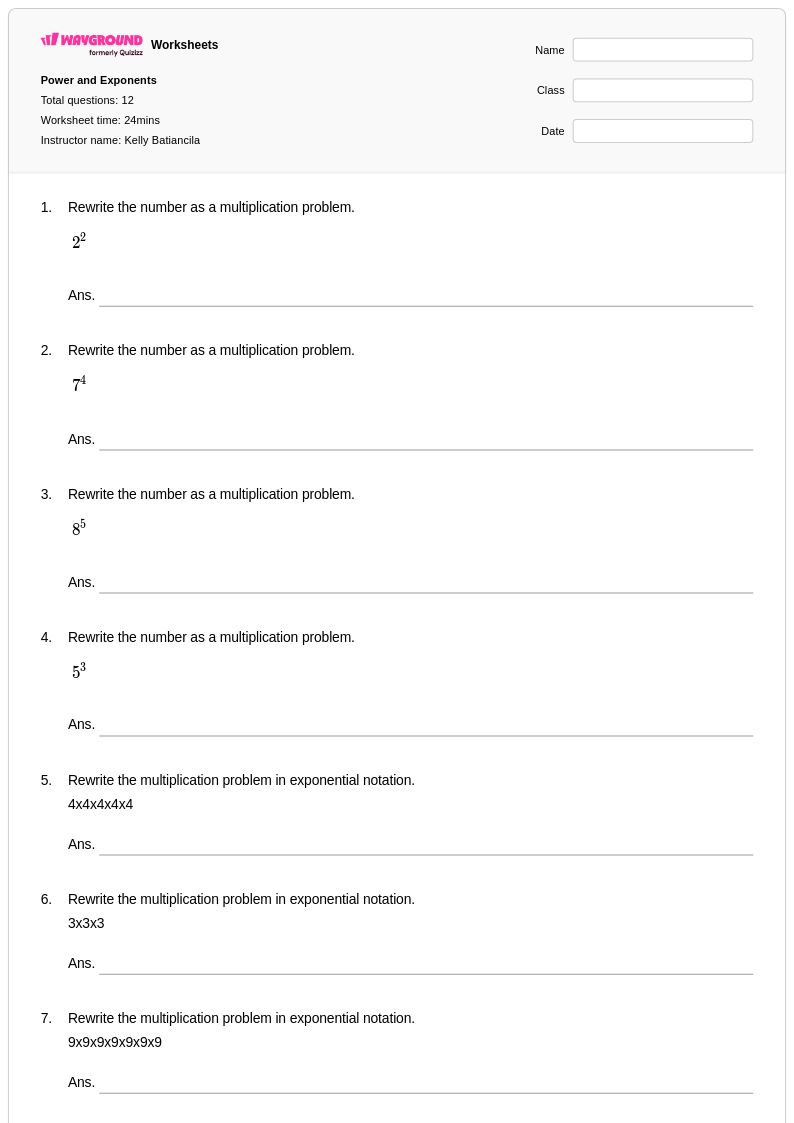
12 Q
4th - 5th
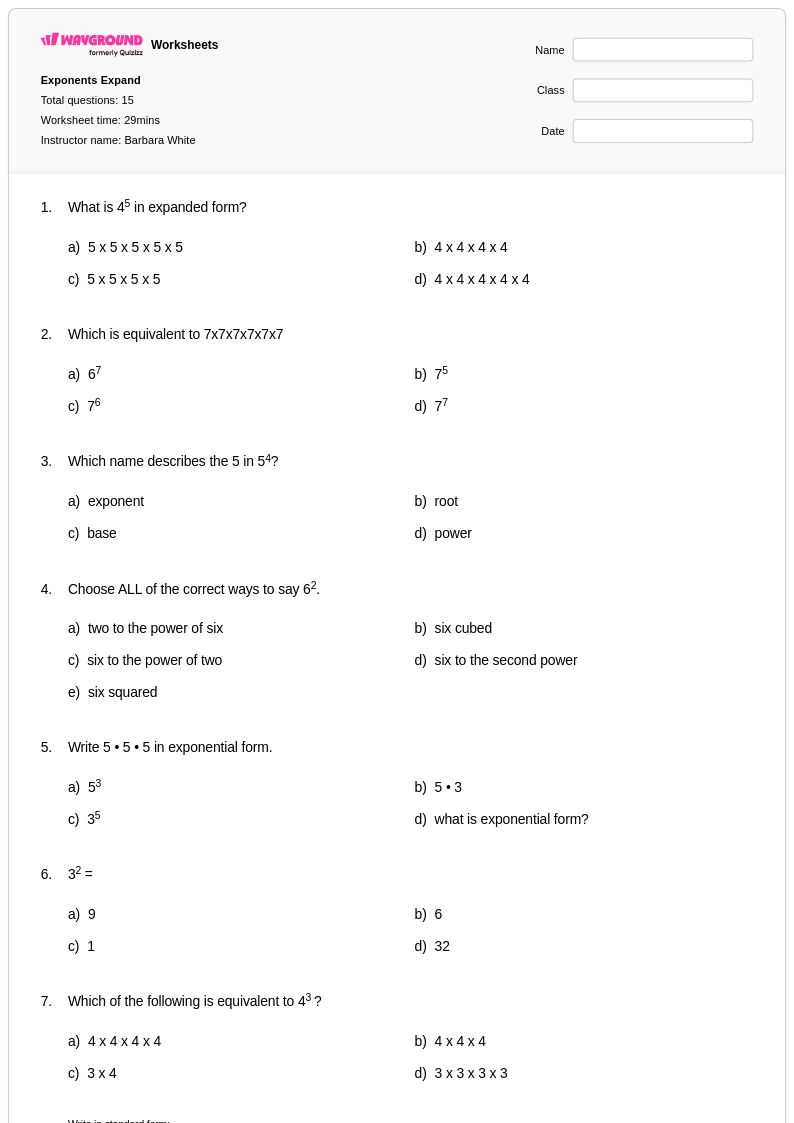
15 Q
3rd - 10th
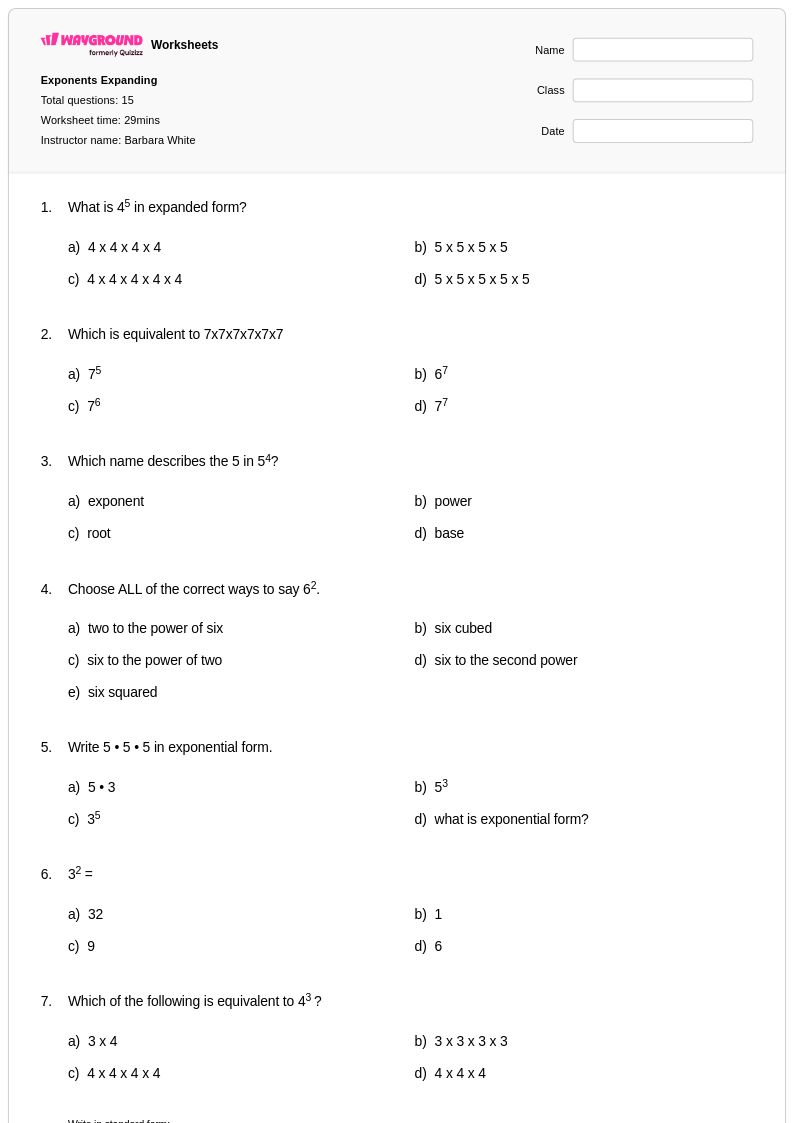
15 Q
3rd - 10th
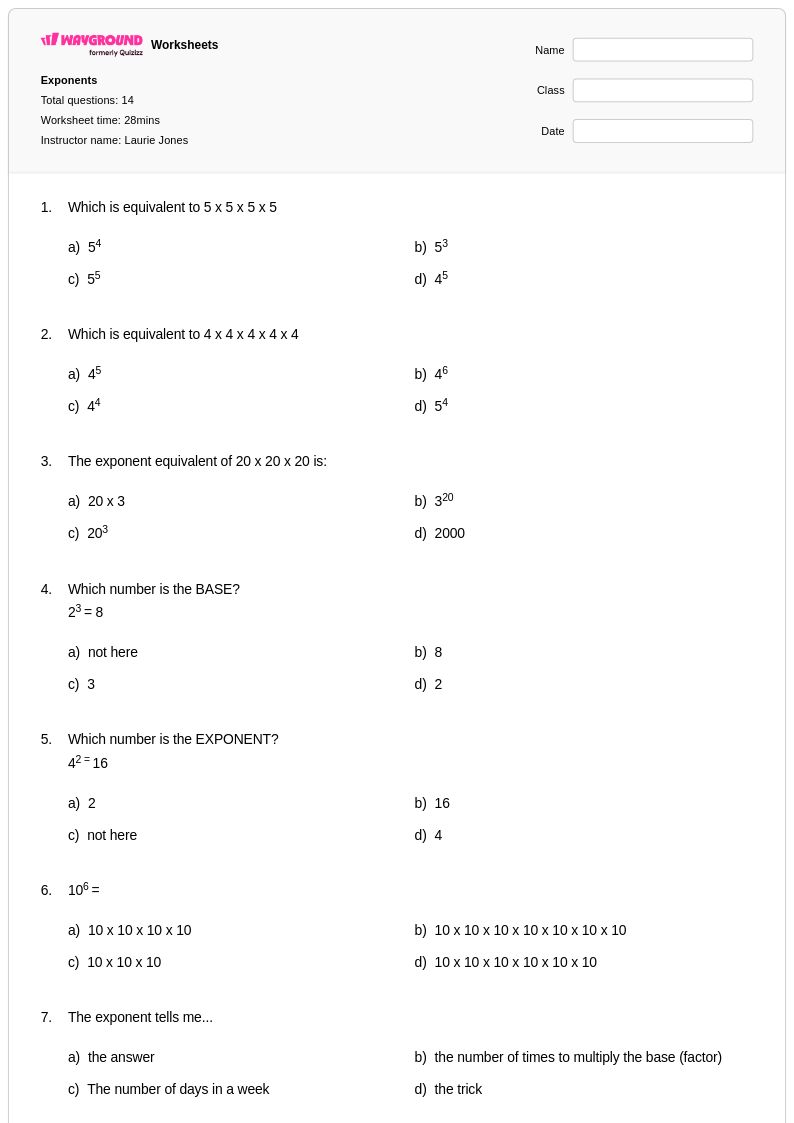
14 Q
4th
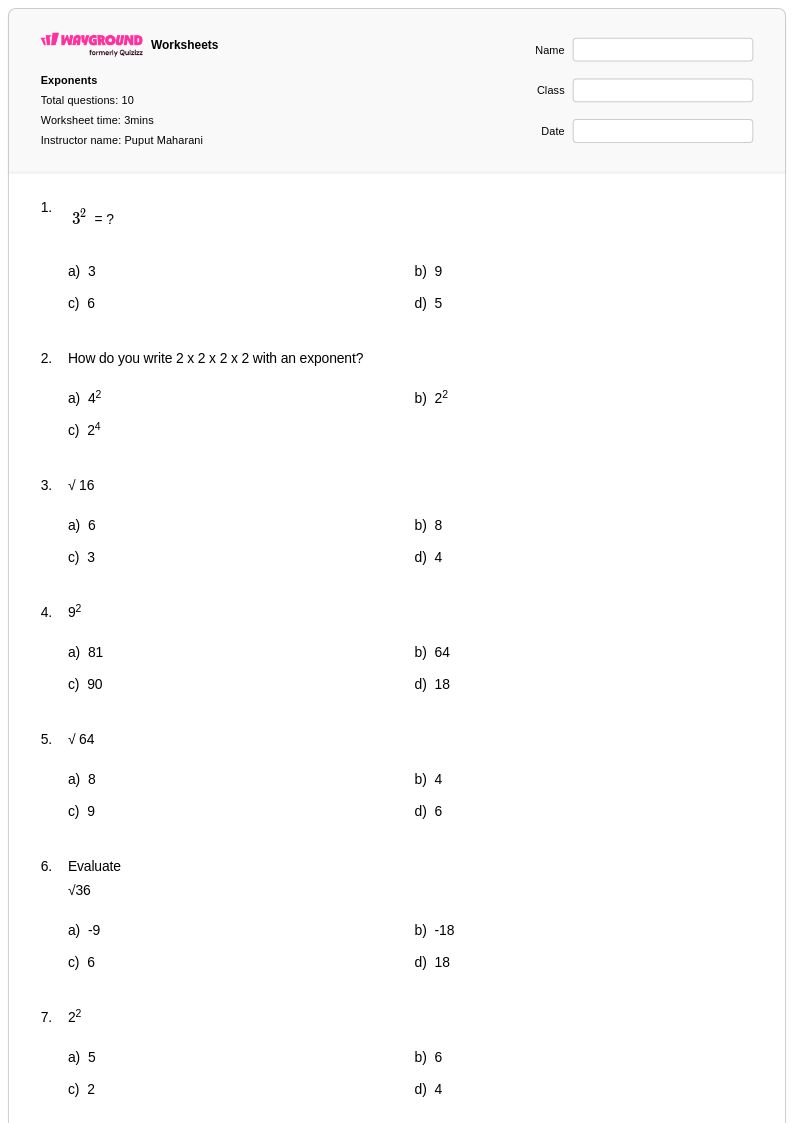
10 Q
4th
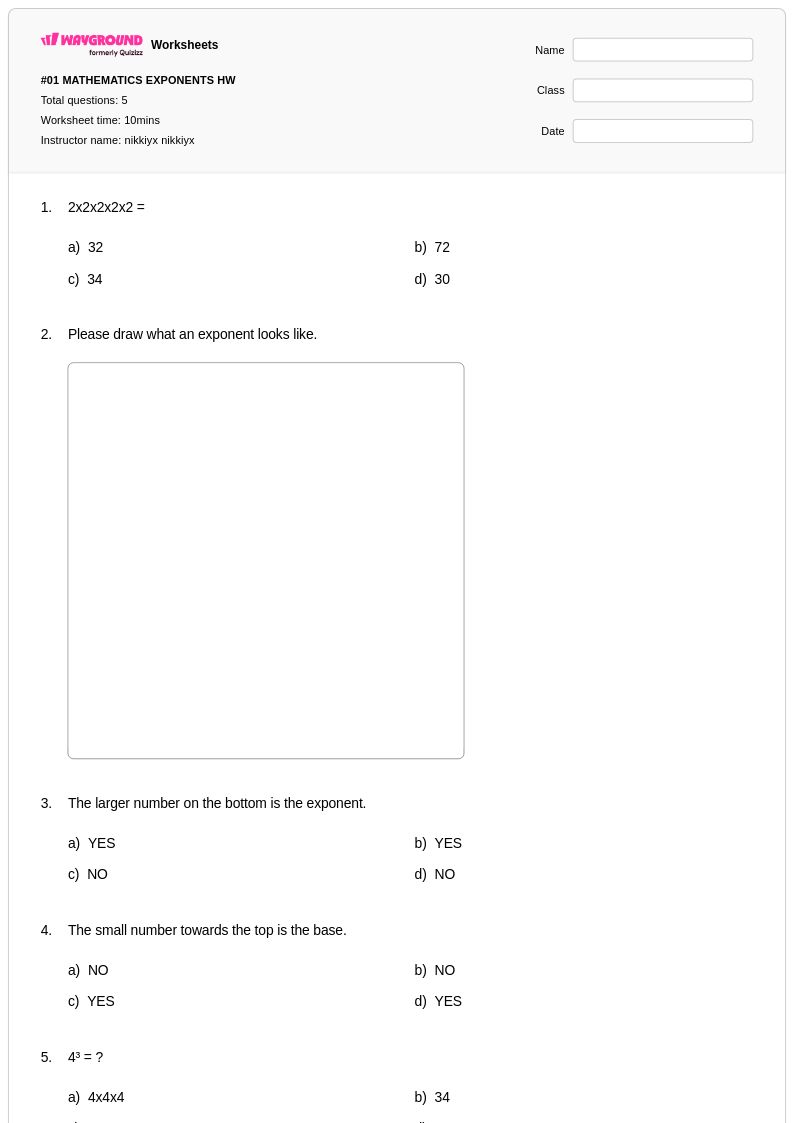
5 Q
4th
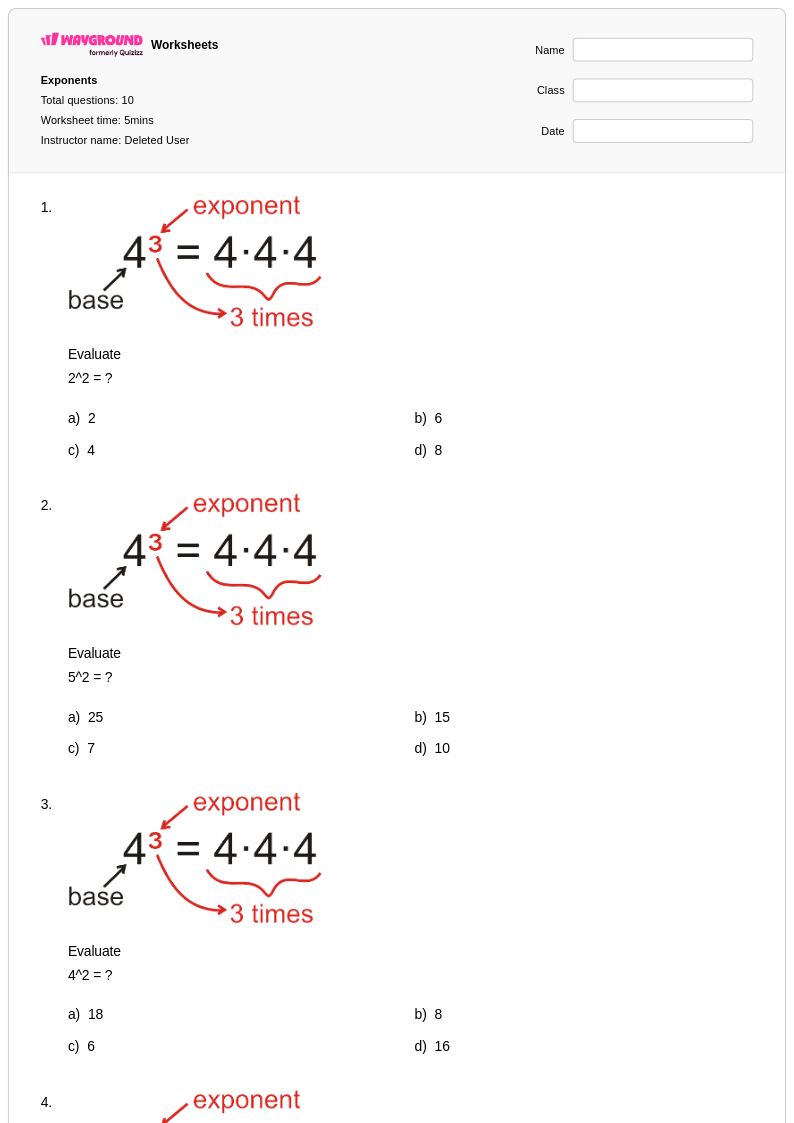
10 Q
4th - 6th
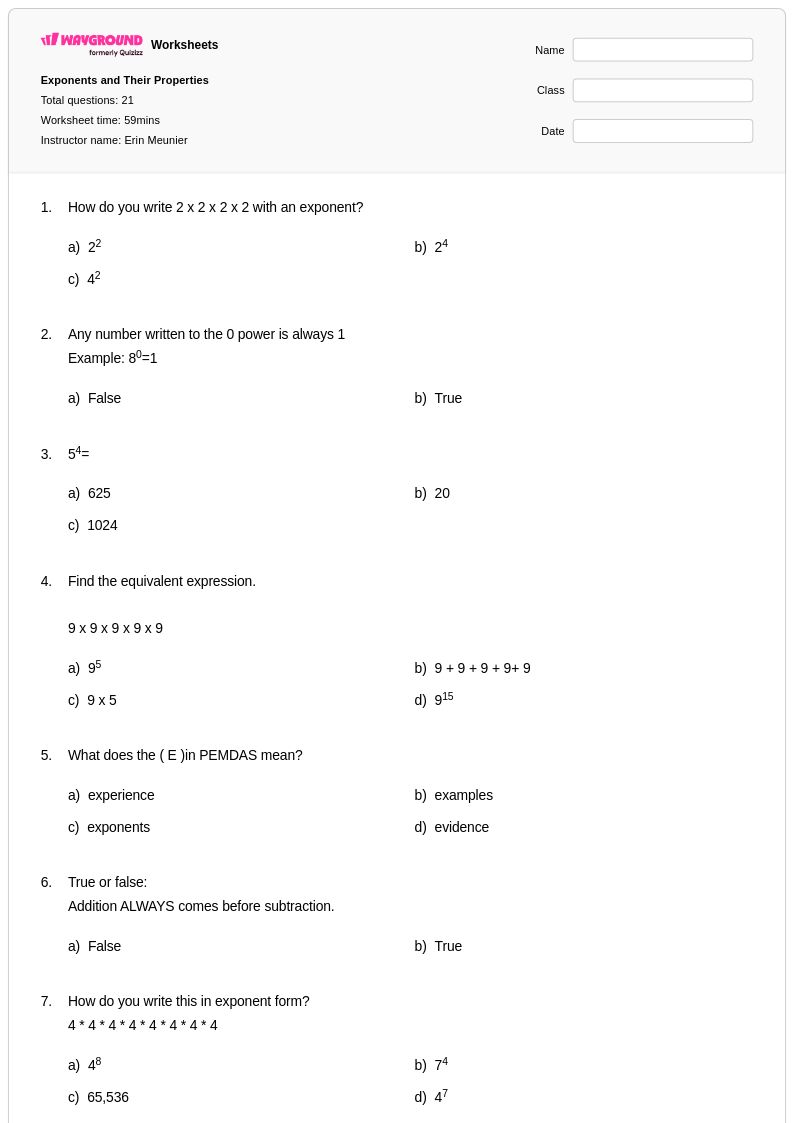
21 Q
1st - 5th
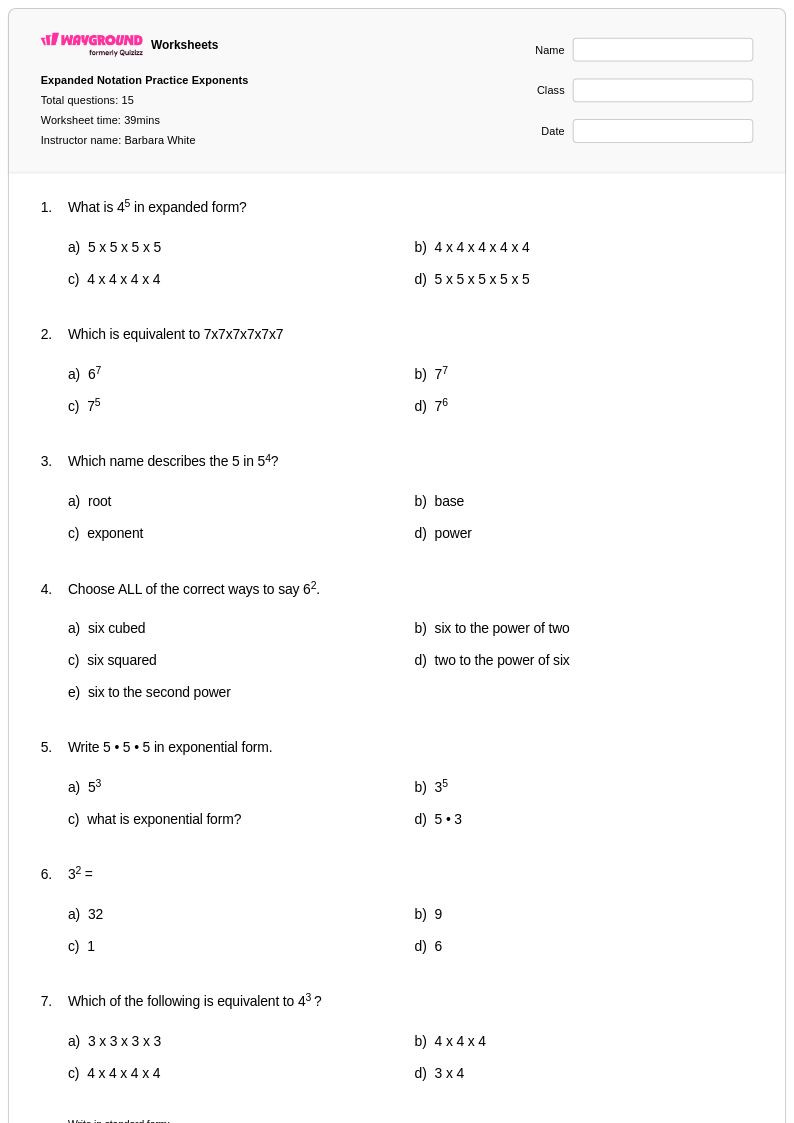
15 Q
3rd - 10th
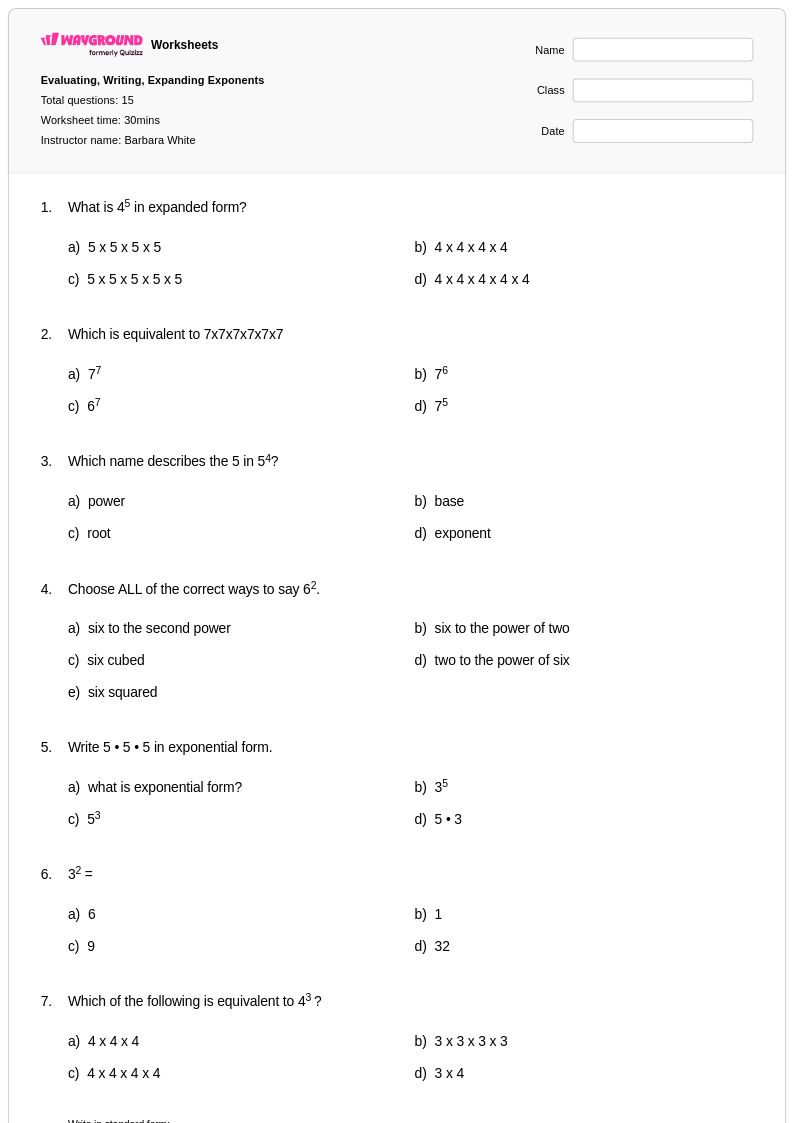
15 Q
3rd - 10th
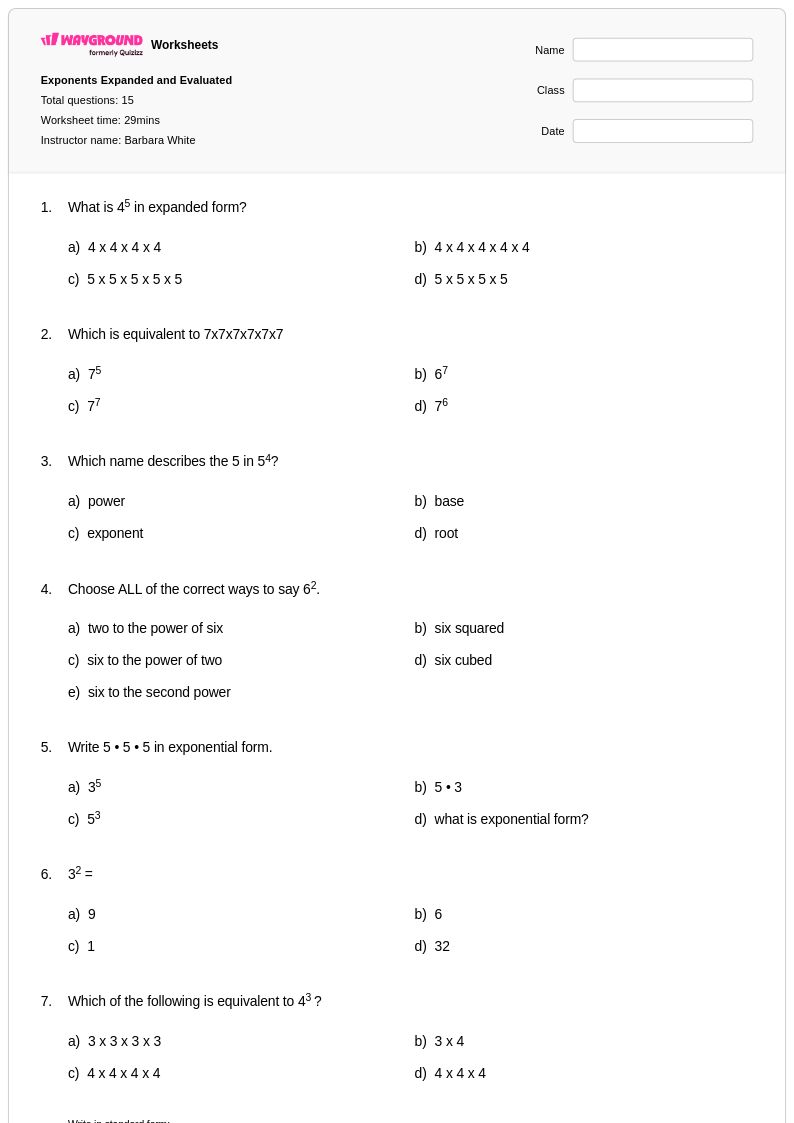
15 Q
3rd - 10th
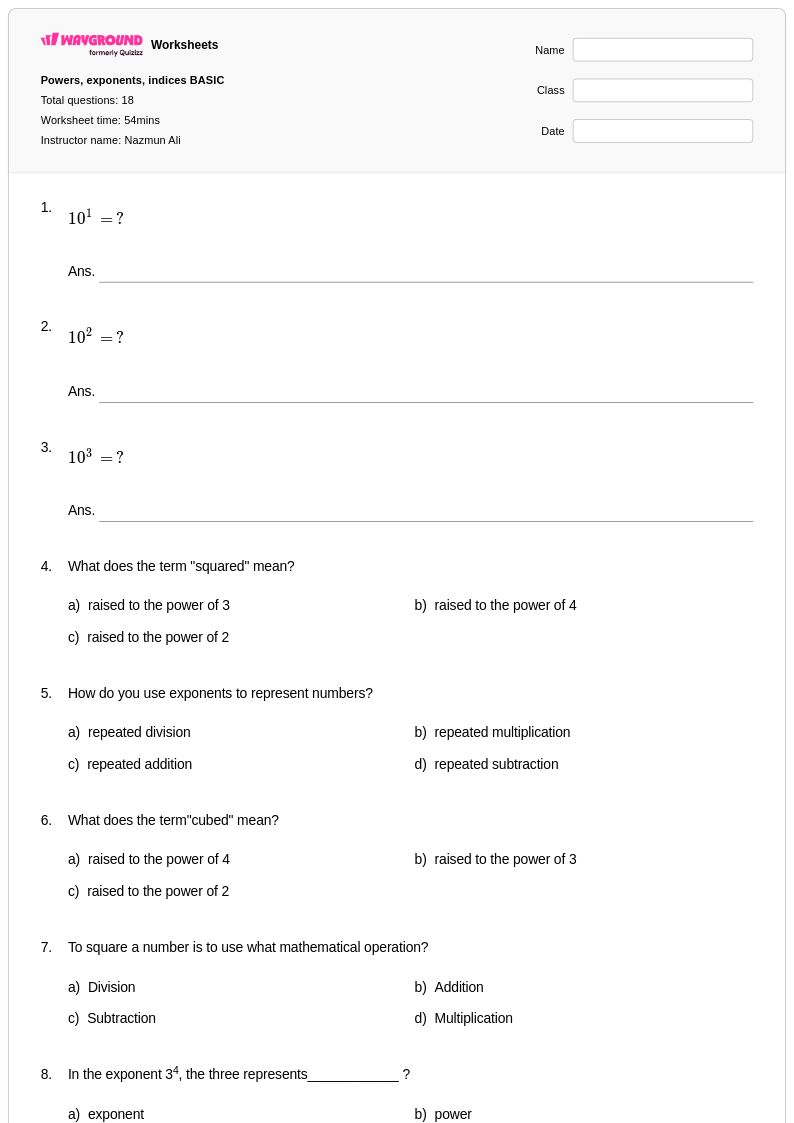
18 Q
3rd - 6th
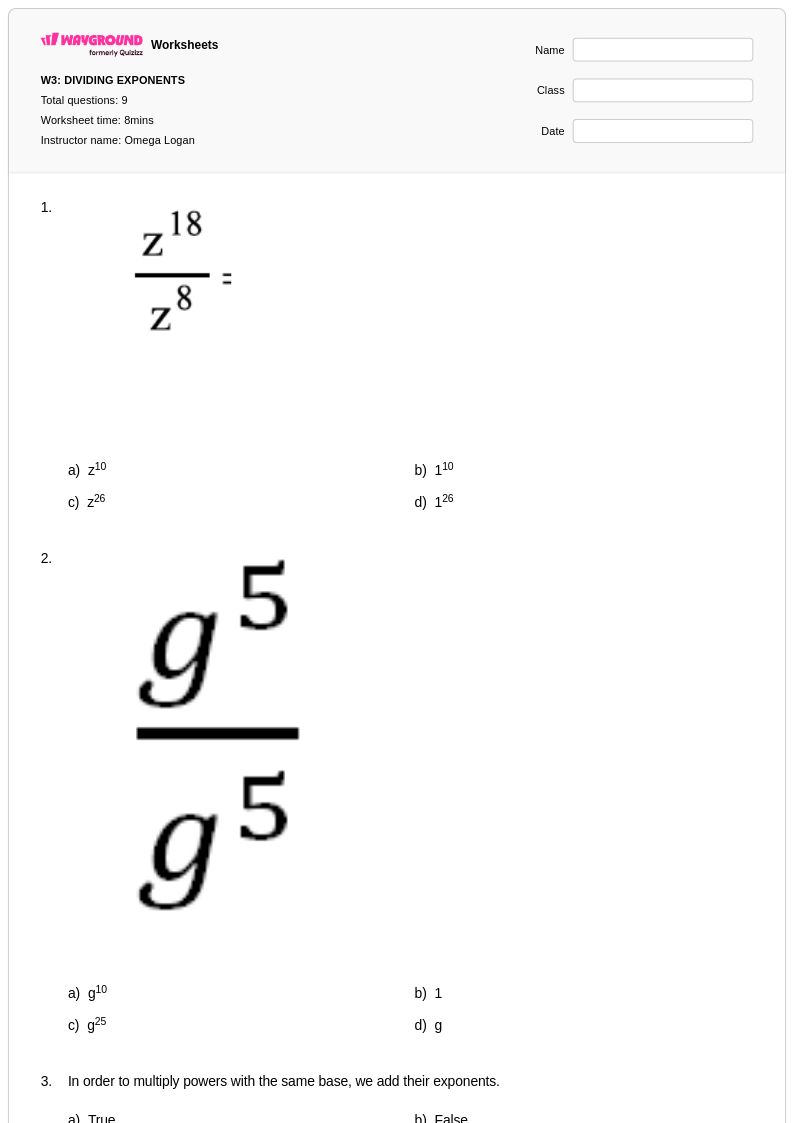
9 Q
2nd - 12th
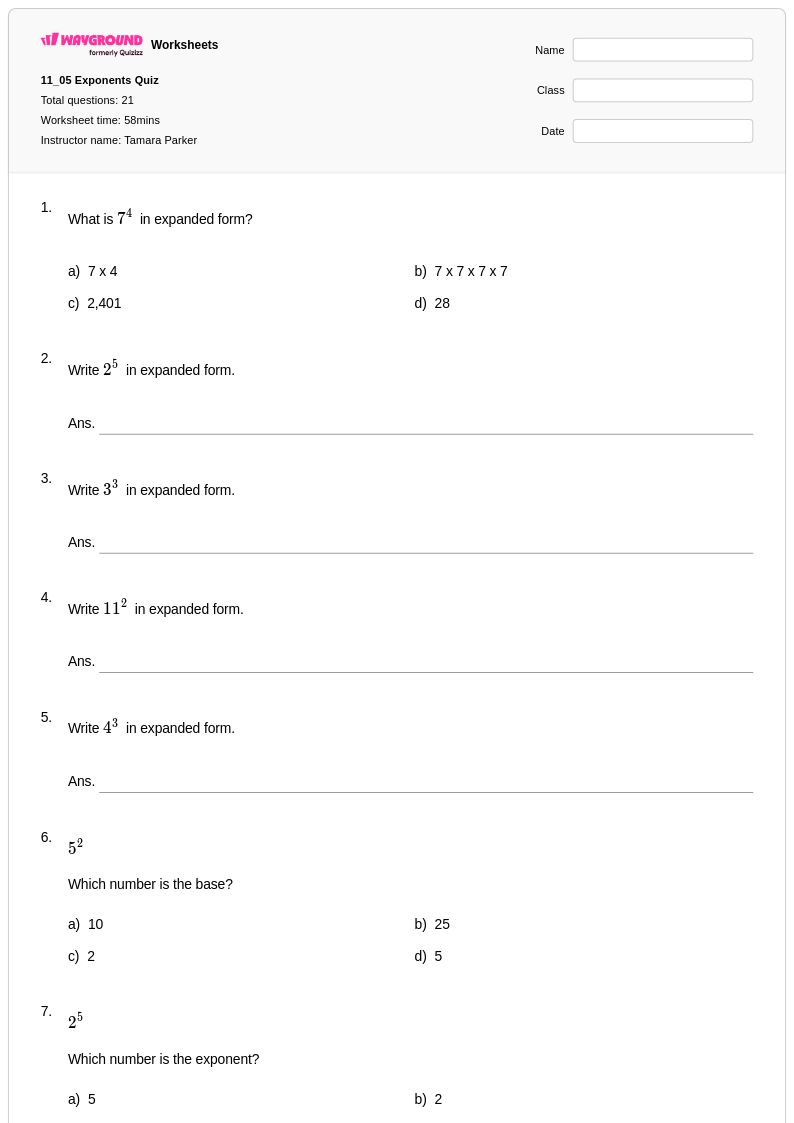
21 Q
4th - 8th
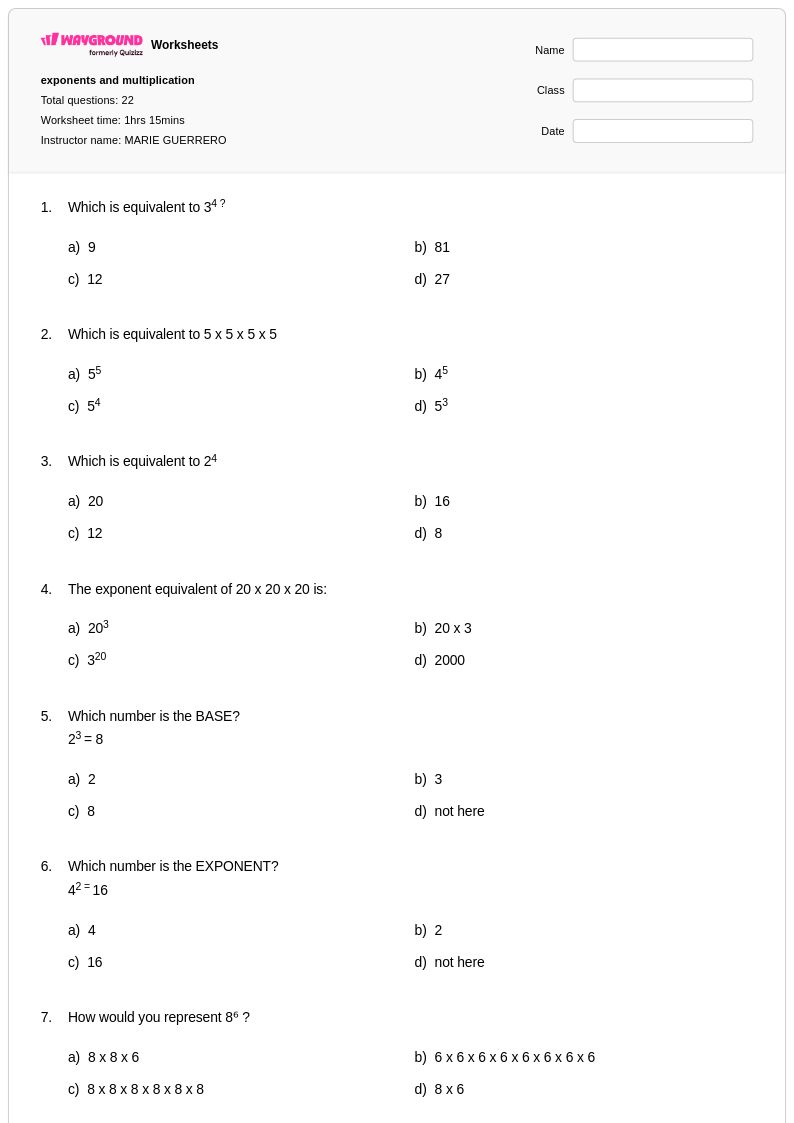
22 Q
4th - 5th
Explore Exponents Worksheets by Grades
Explore Exponents Worksheets for year 4 by Topic
Explore Other Subject Worksheets for year 4
Explore printable Exponents worksheets for Year 4
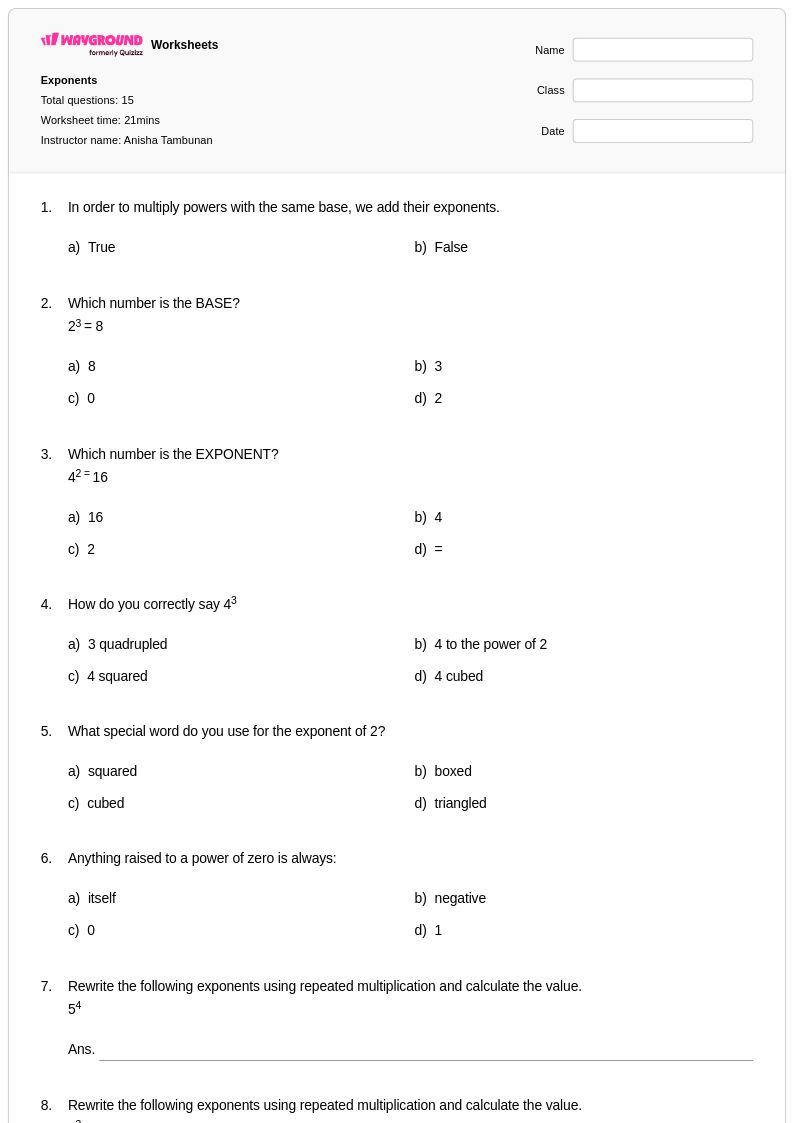
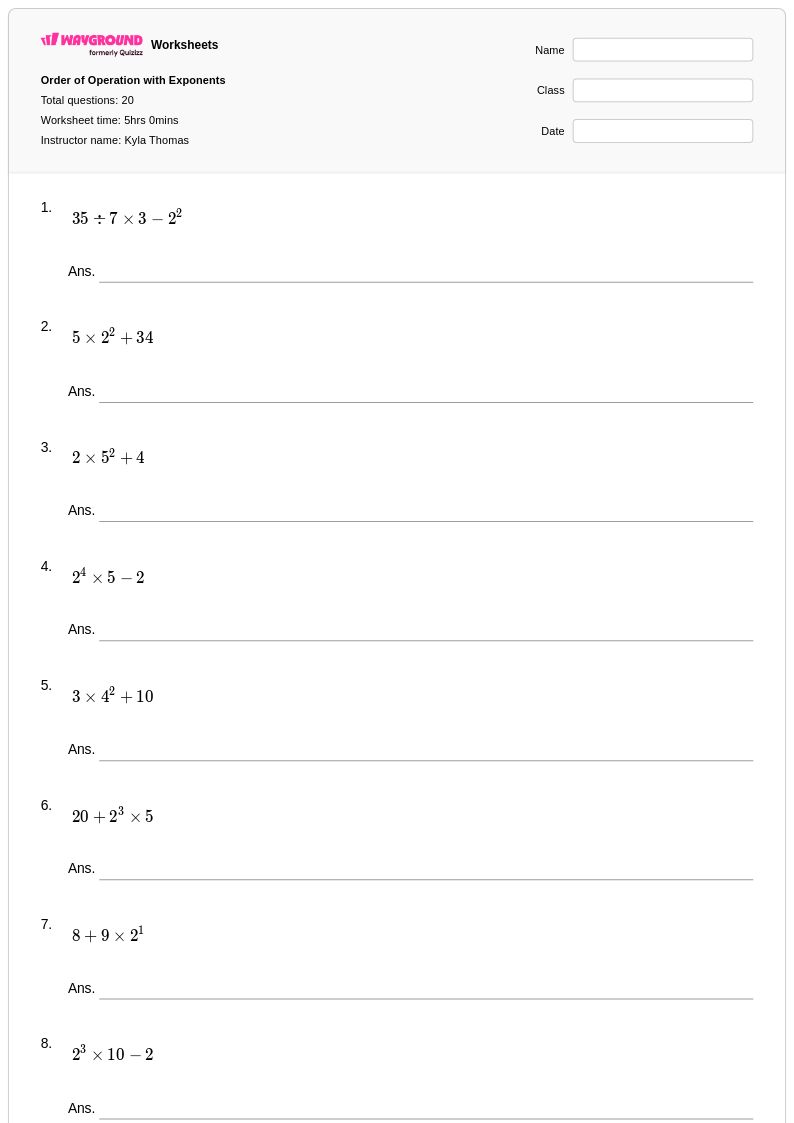
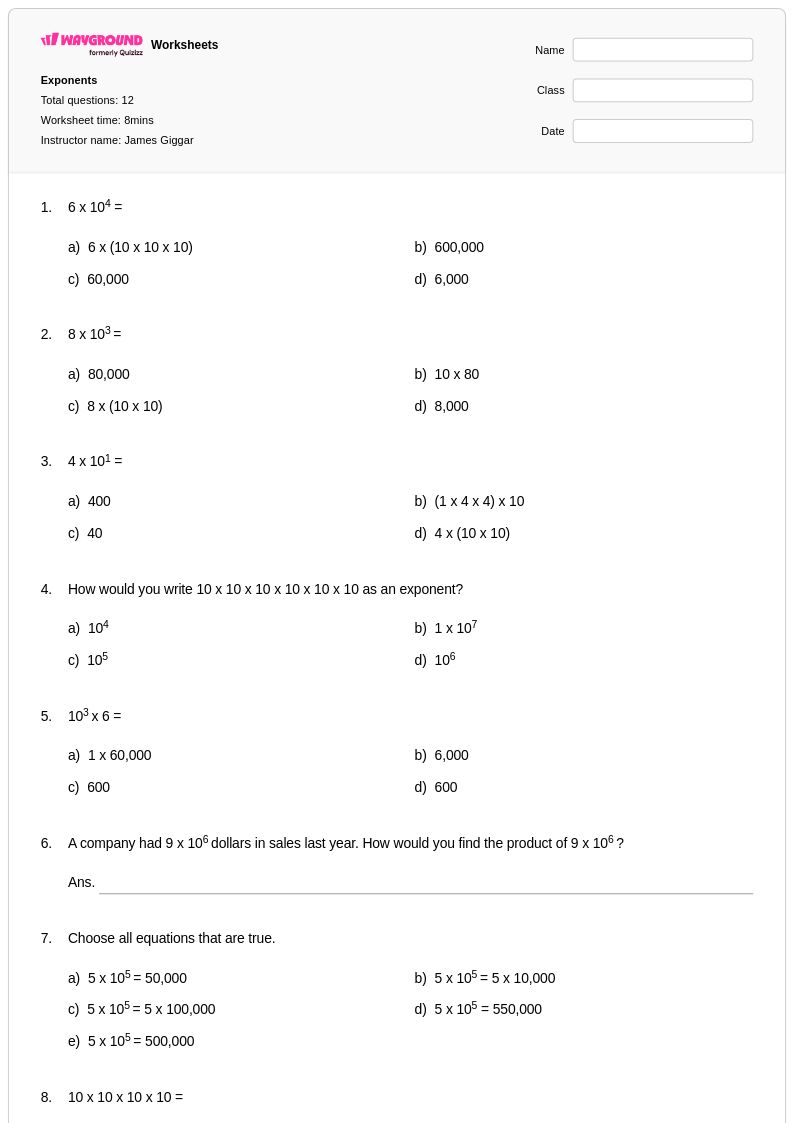
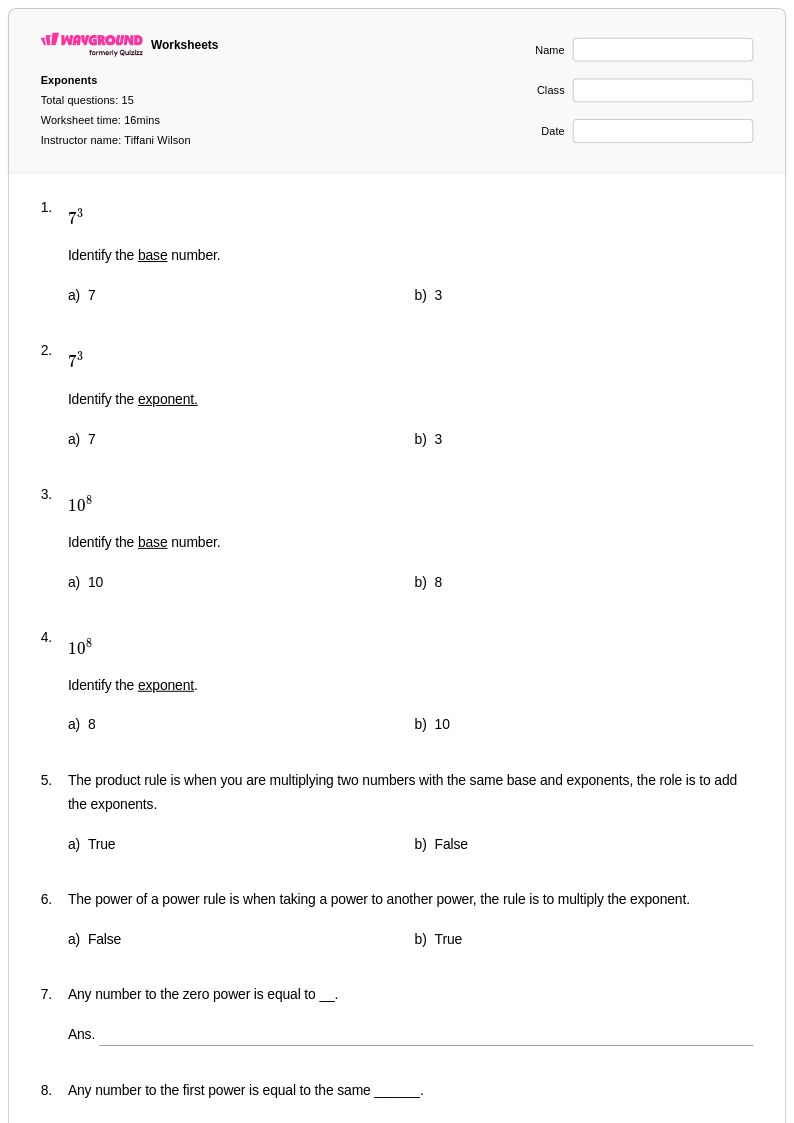
Exponents worksheets for Year 4 students through Wayground (formerly Quizizz) provide essential foundation-building practice in understanding exponential notation and its mathematical applications. These carefully crafted worksheets help fourth-grade learners develop crucial skills in recognizing base numbers and exponents, calculating simple exponential expressions, and connecting exponential notation to repeated multiplication concepts. Students work through progressive practice problems that strengthen their ability to read and write numbers in exponential form, evaluate basic exponential expressions like 2³ and 5², and understand the relationship between exponents and place value patterns. Each worksheet includes a comprehensive answer key and is available as a free printable pdf, making it easy for educators to provide targeted practice that builds confidence in this fundamental mathematical concept.
Wayground (formerly Quizizz) empowers teachers with an extensive collection of millions of teacher-created exponent resources specifically designed for Year 4 mathematics instruction. The platform's robust search and filtering capabilities allow educators to quickly locate worksheets that align with specific learning standards and match their students' varying skill levels. Teachers can easily differentiate instruction by selecting from worksheets with different complexity levels, customize existing materials to meet unique classroom needs, and access resources in both printable pdf format and interactive digital versions. These flexible tools support comprehensive lesson planning while providing targeted options for remediation, skill reinforcement, and enrichment activities that ensure every fourth-grade student develops a solid understanding of exponential concepts at their own pace.
FAQs
How do I teach exponents to fourth graders?
What exercises help fourth graders practice exponents?
What mistakes do fourth graders make with exponents?
How do I use Wayground's Grade 4 exponents worksheets?
How do Grade 4 exponents connect to the broader Common Core progression?
Can I use these worksheets for students who are ahead or behind grade level?