
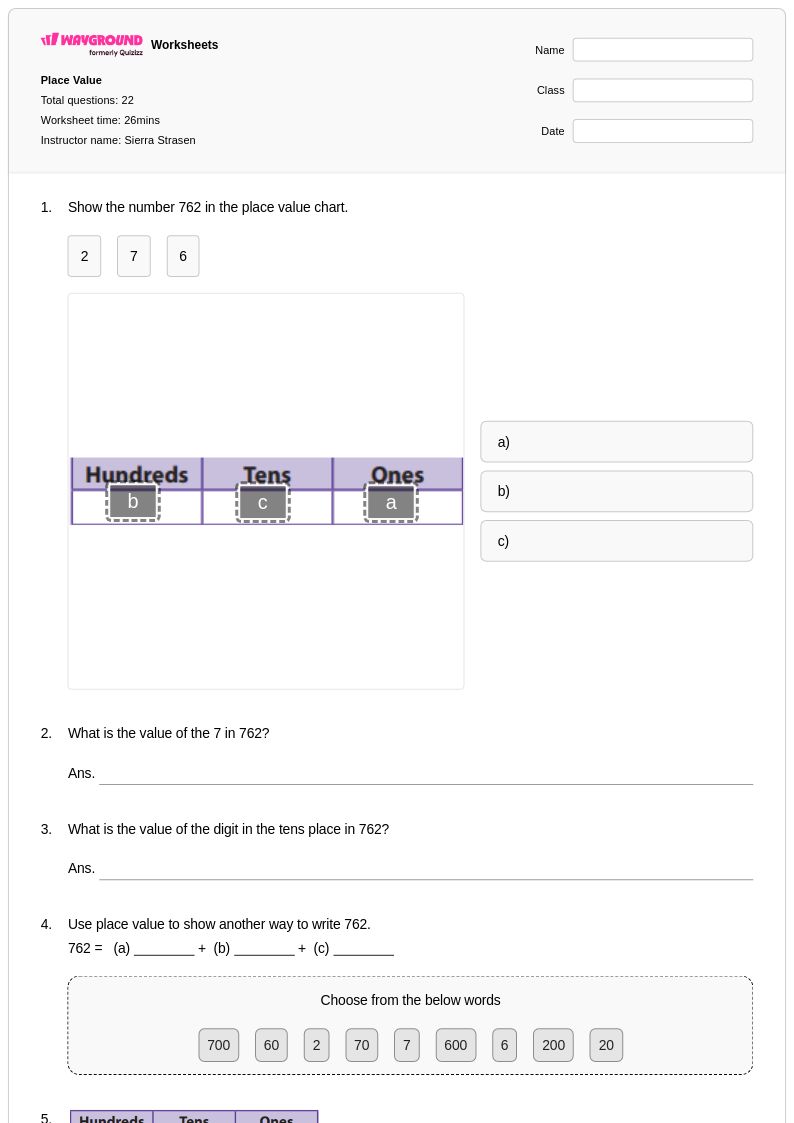
22 Q
4th
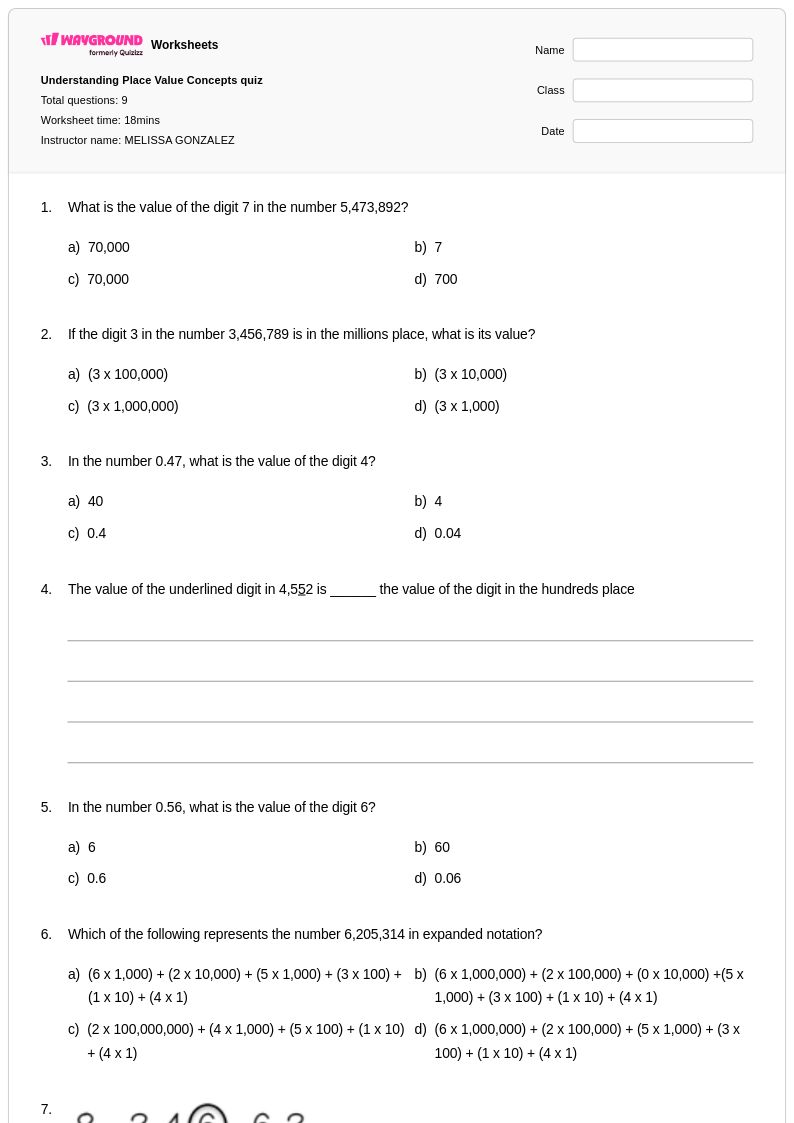
9 Q
4th
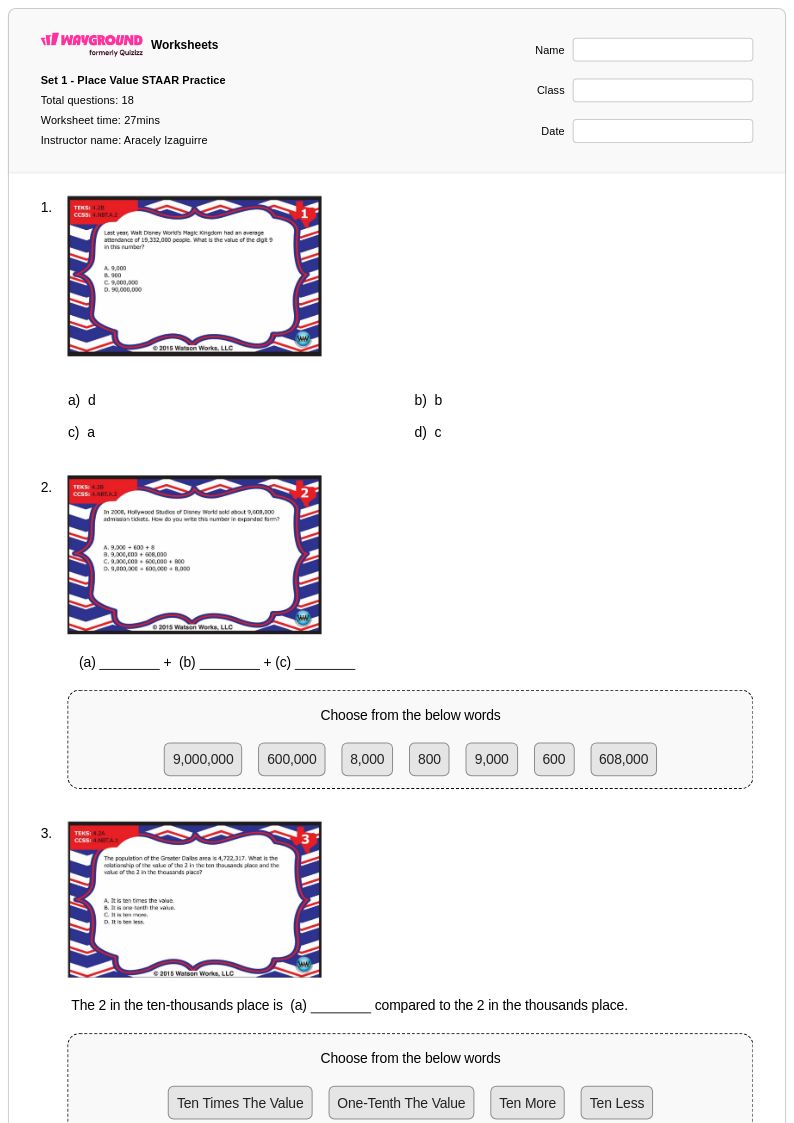
18 Q
4th
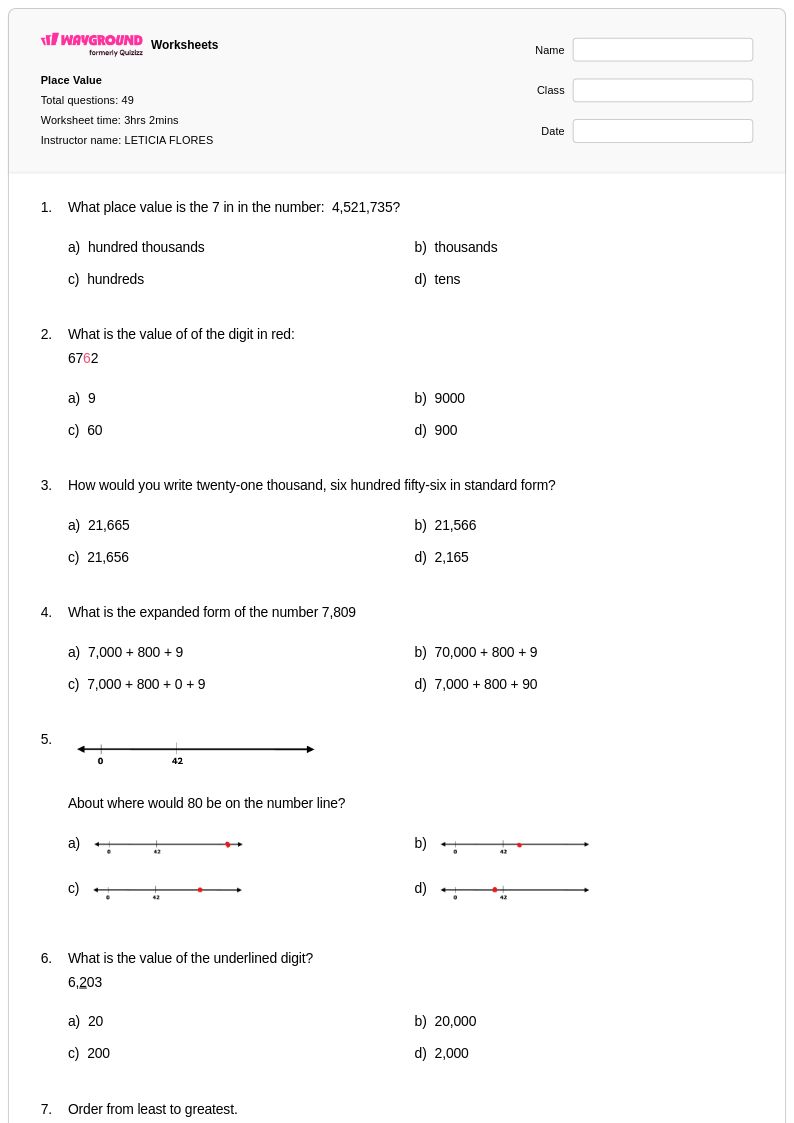
49 Q
4th
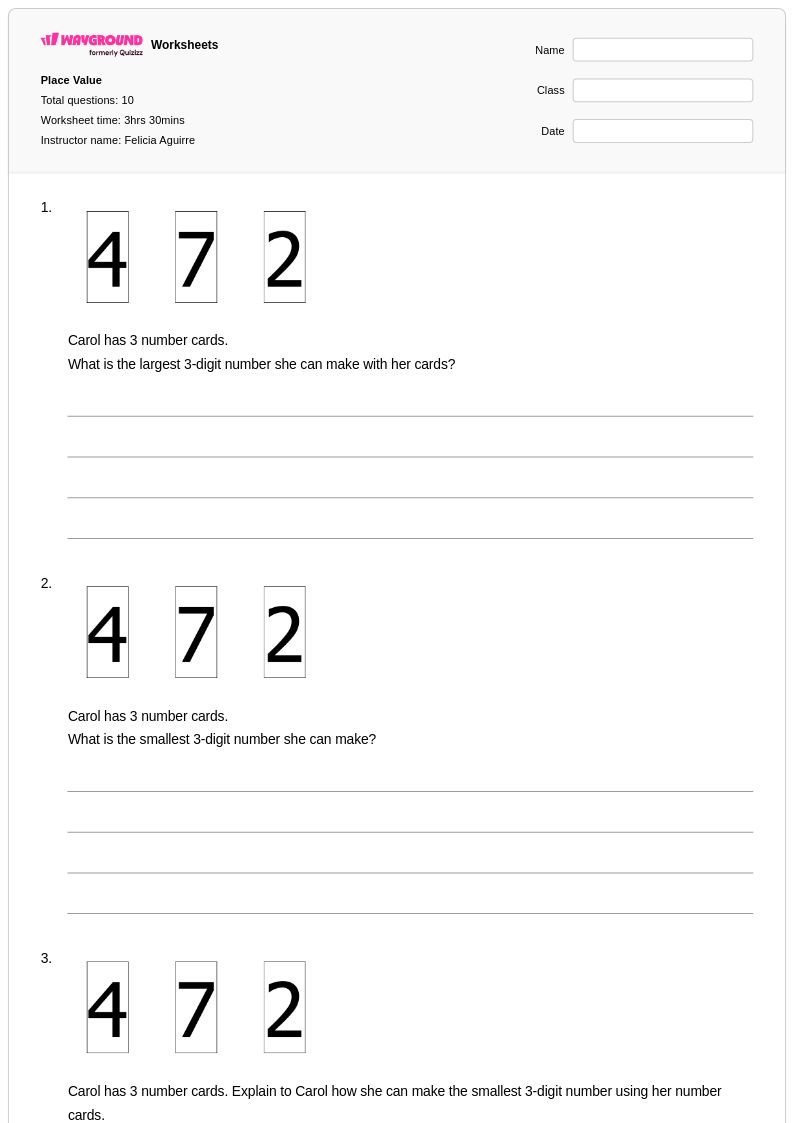
10 Q
4th
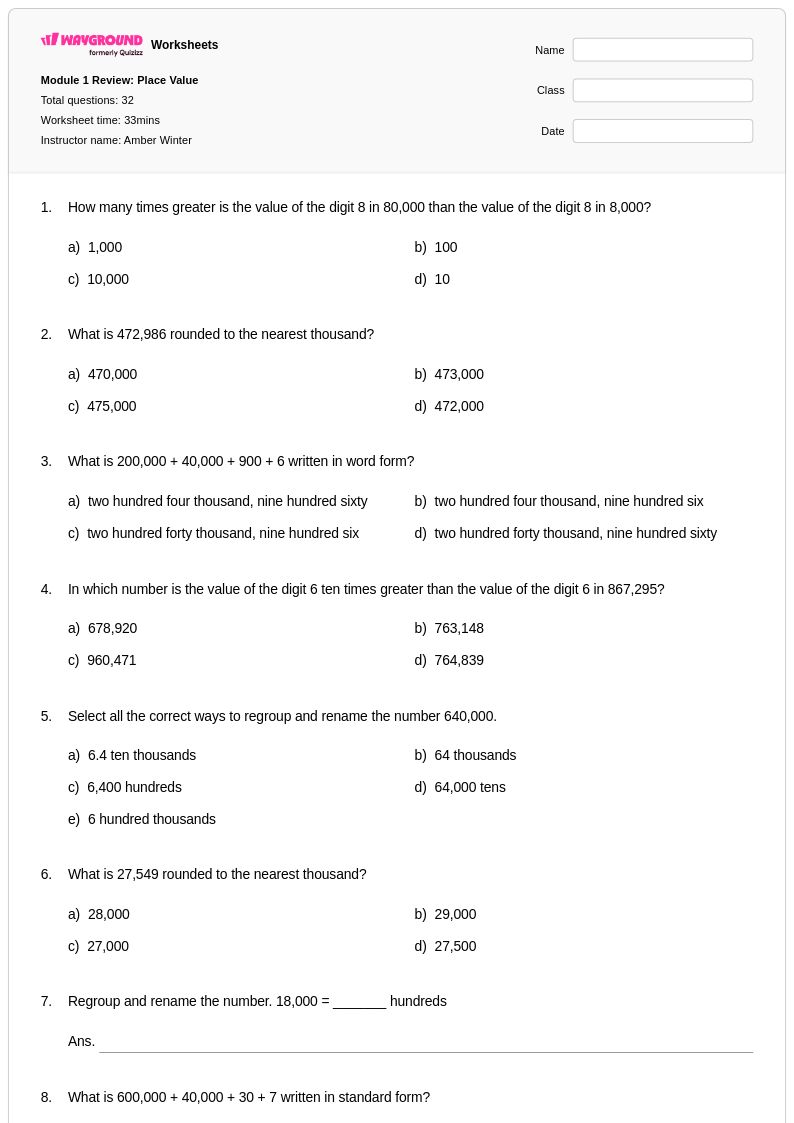
32 Q
4th
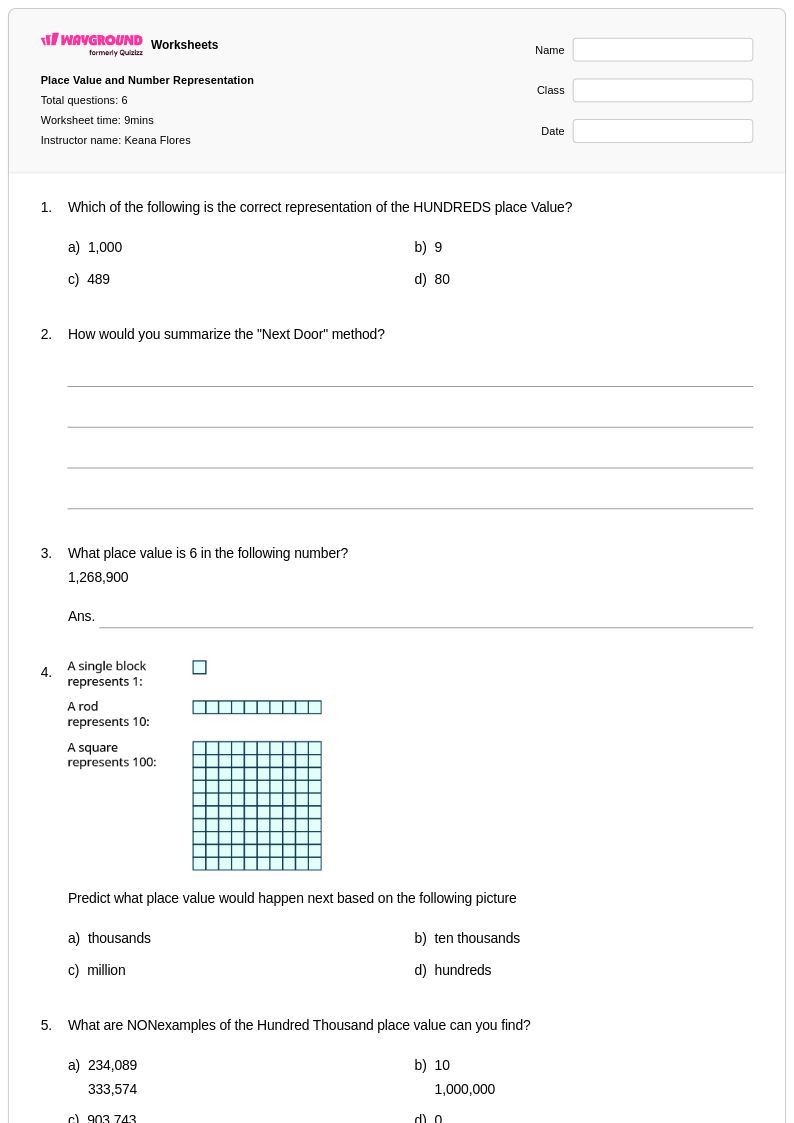
6 Q
4th
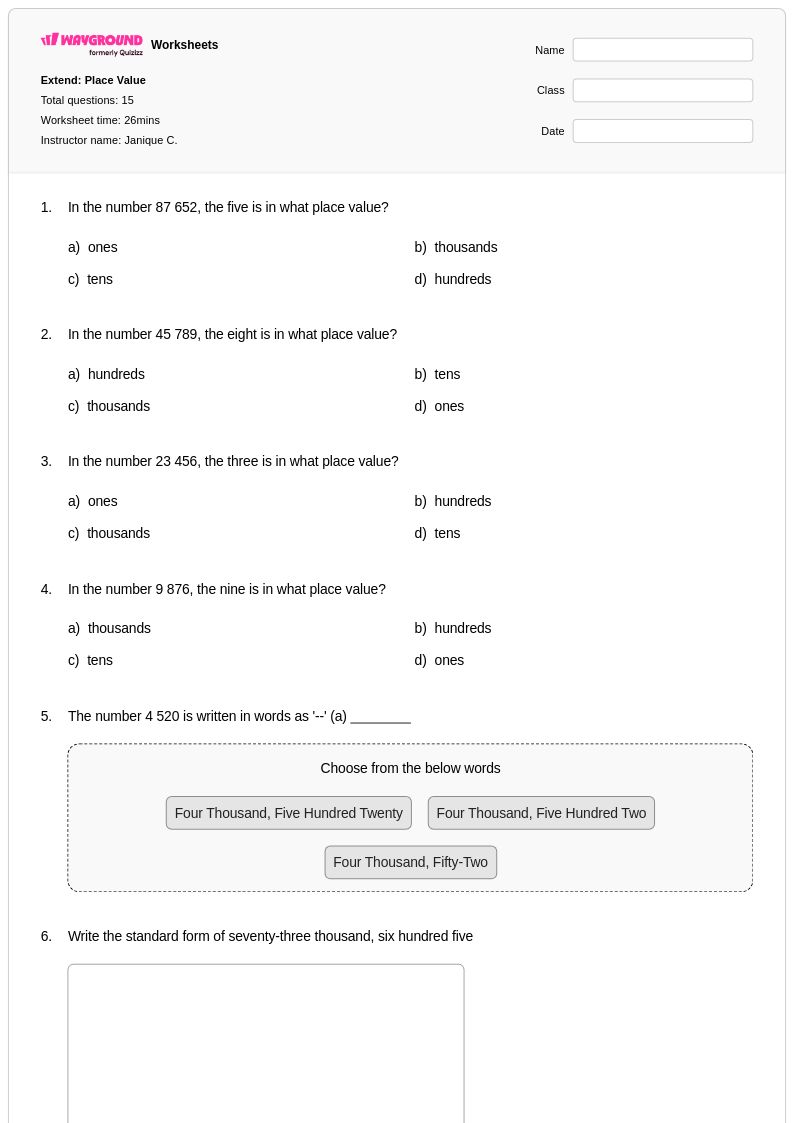
15 Q
4th
10 Q
4th
10 Q
4th
10 Q
4th
10 Q
4th
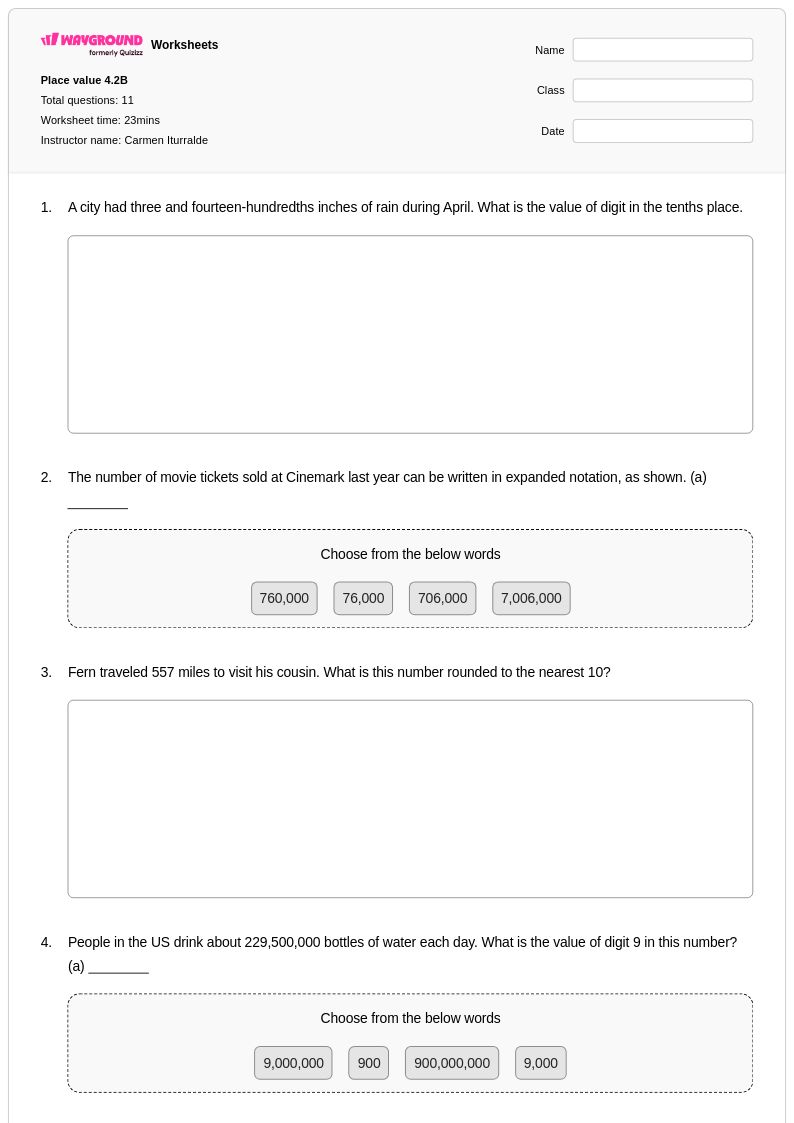
11 Q
4th
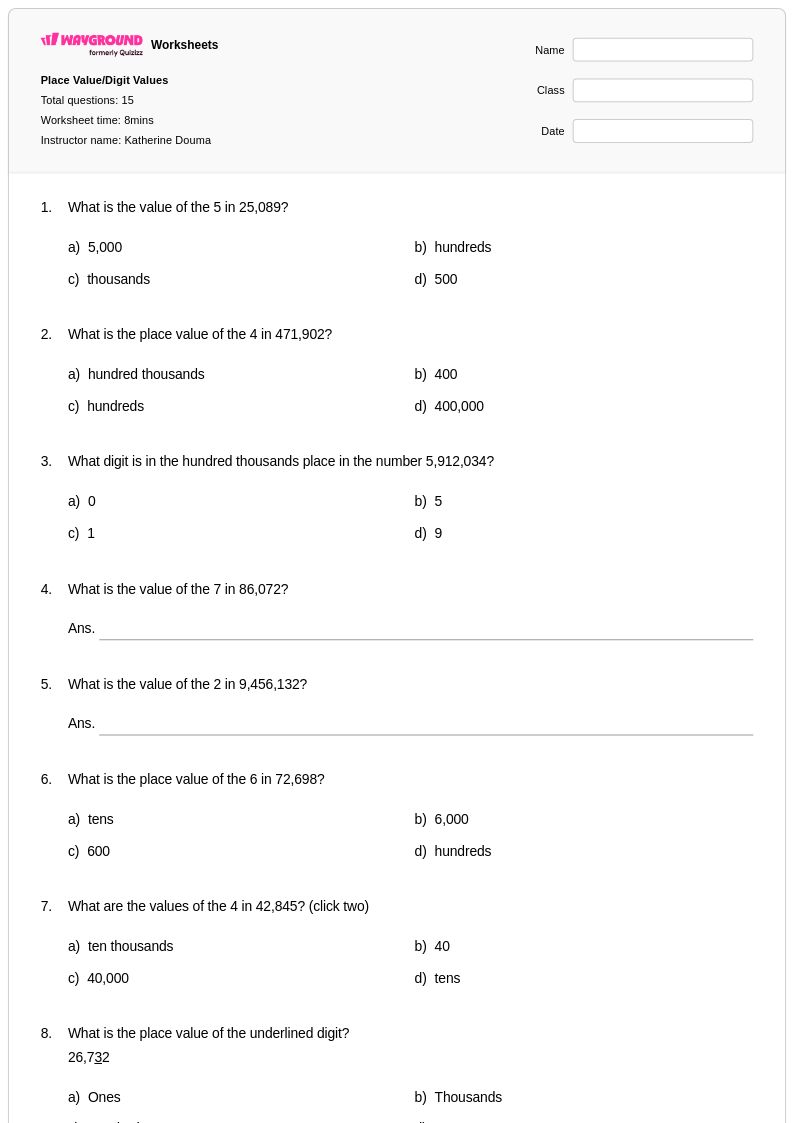
15 Q
4th
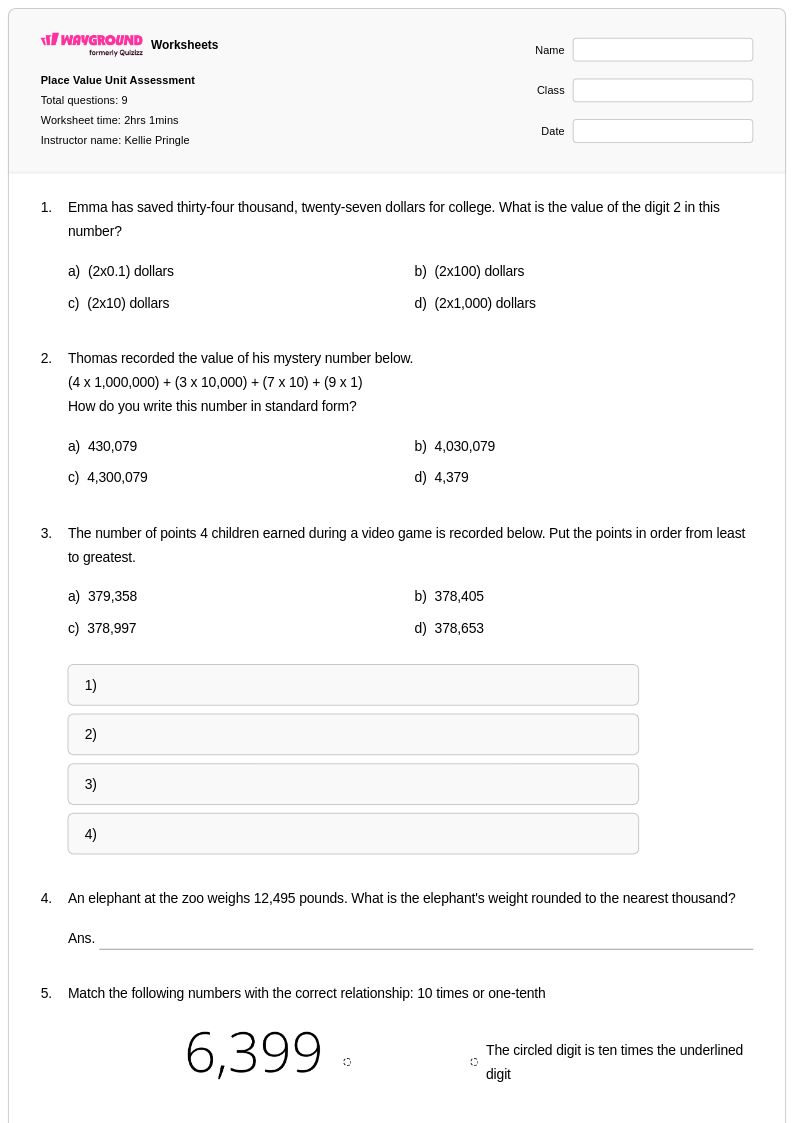
9 Q
4th
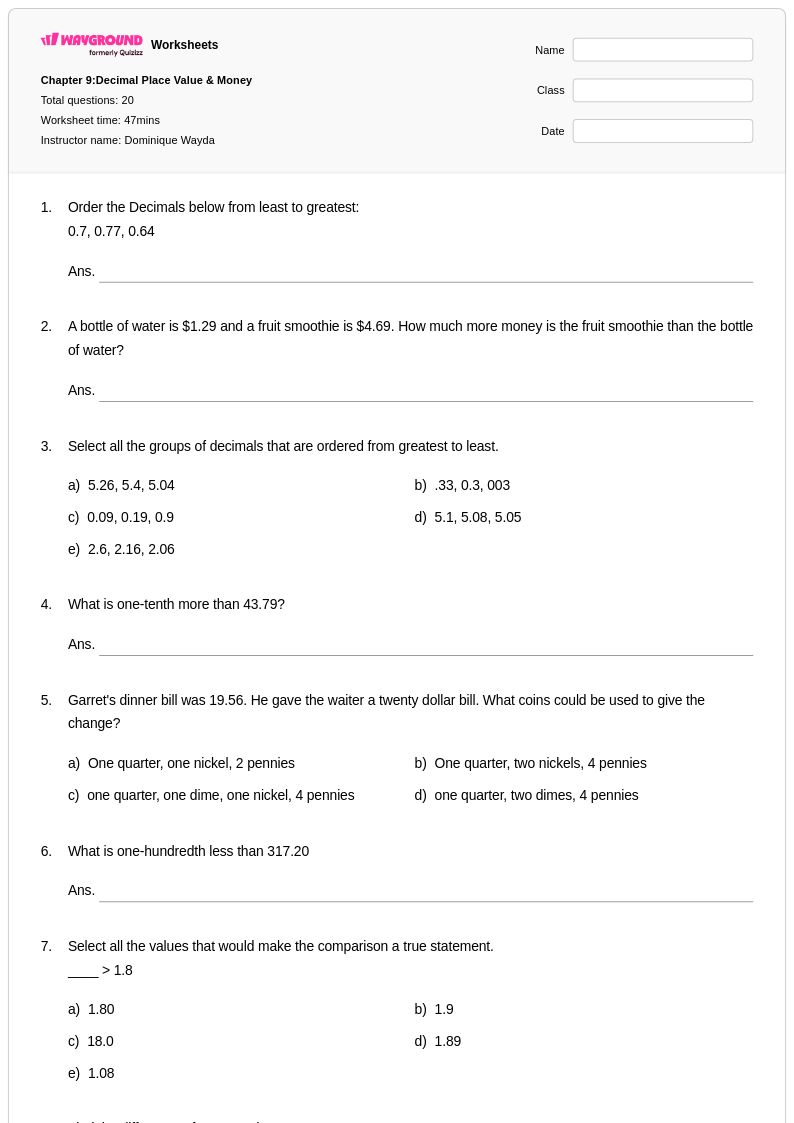
20 Q
4th
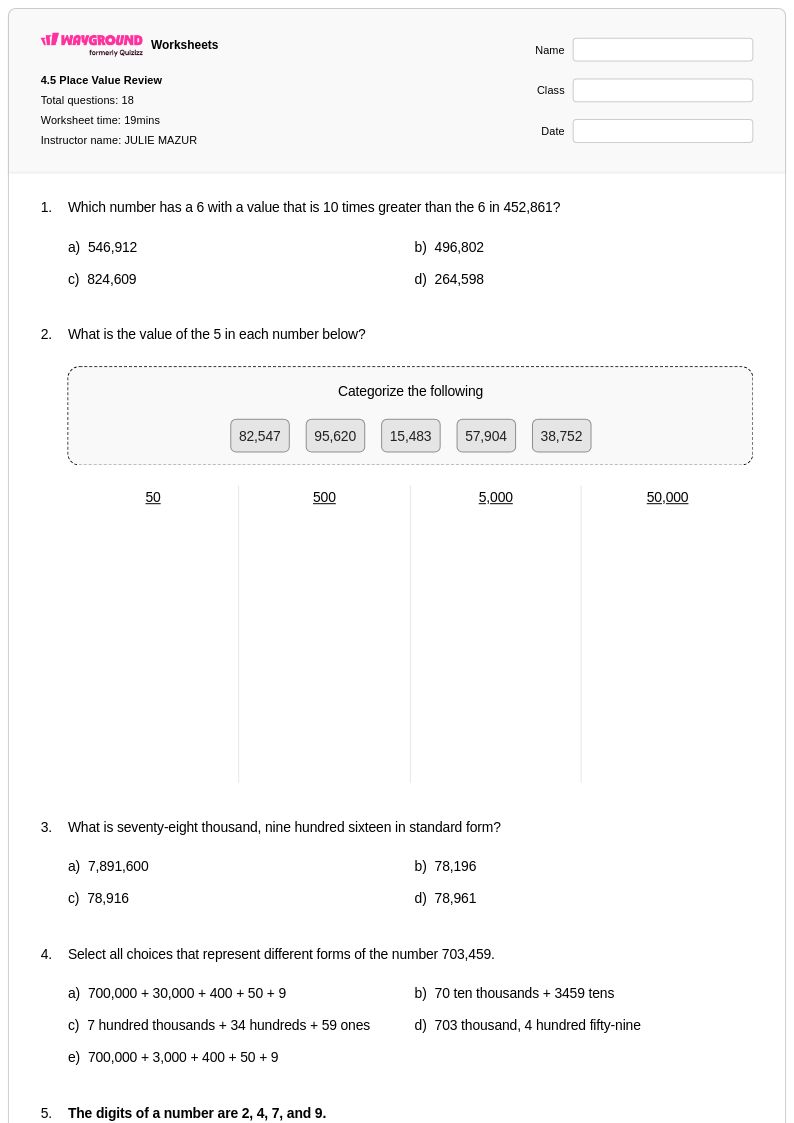
18 Q
4th
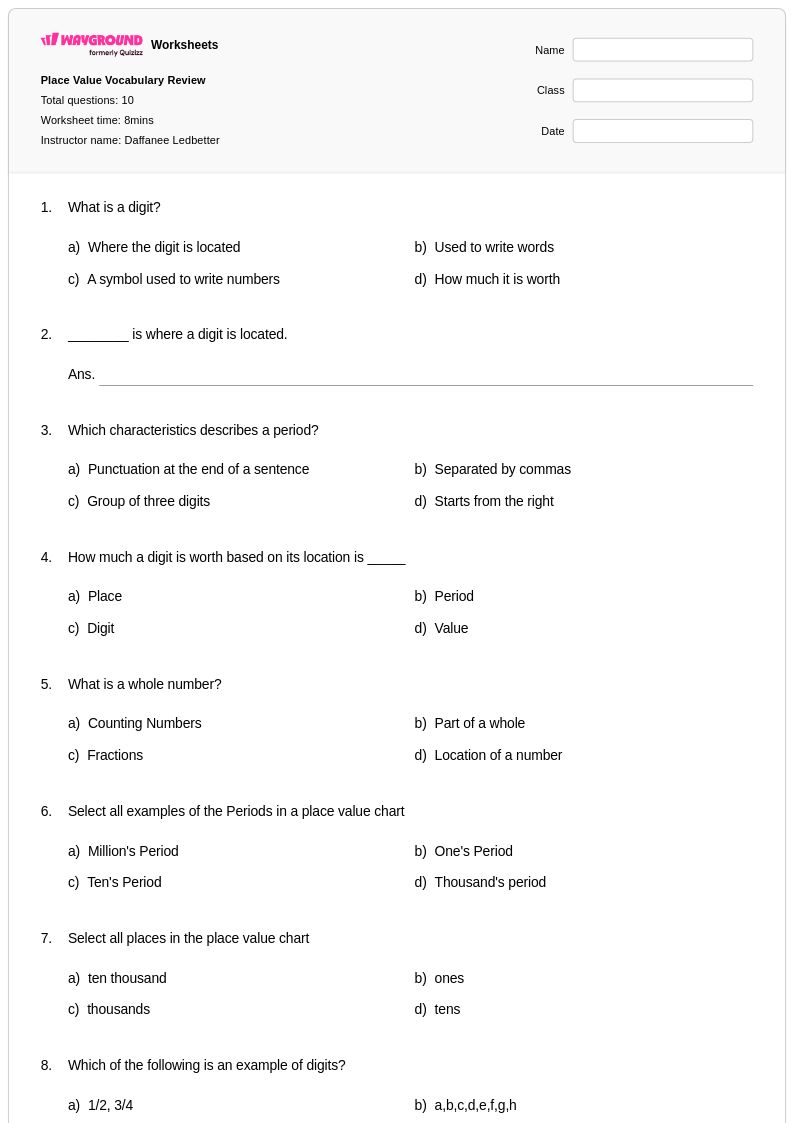
10 Q
4th
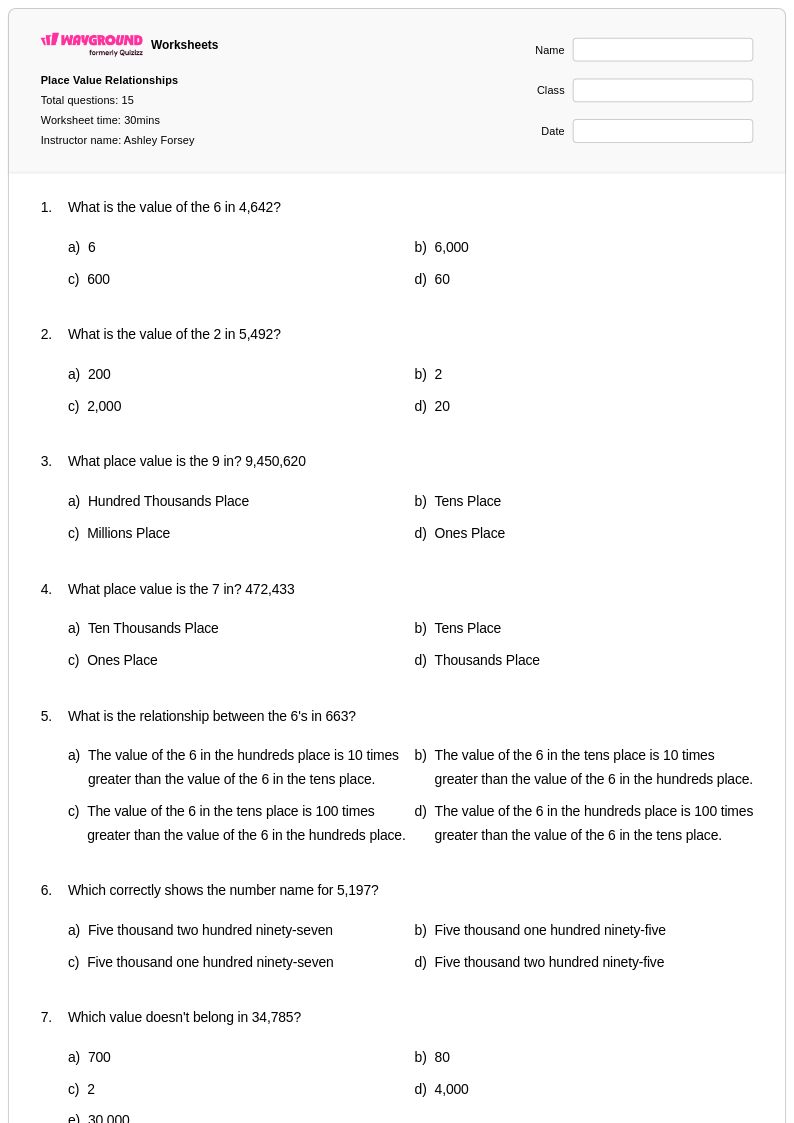
15 Q
4th
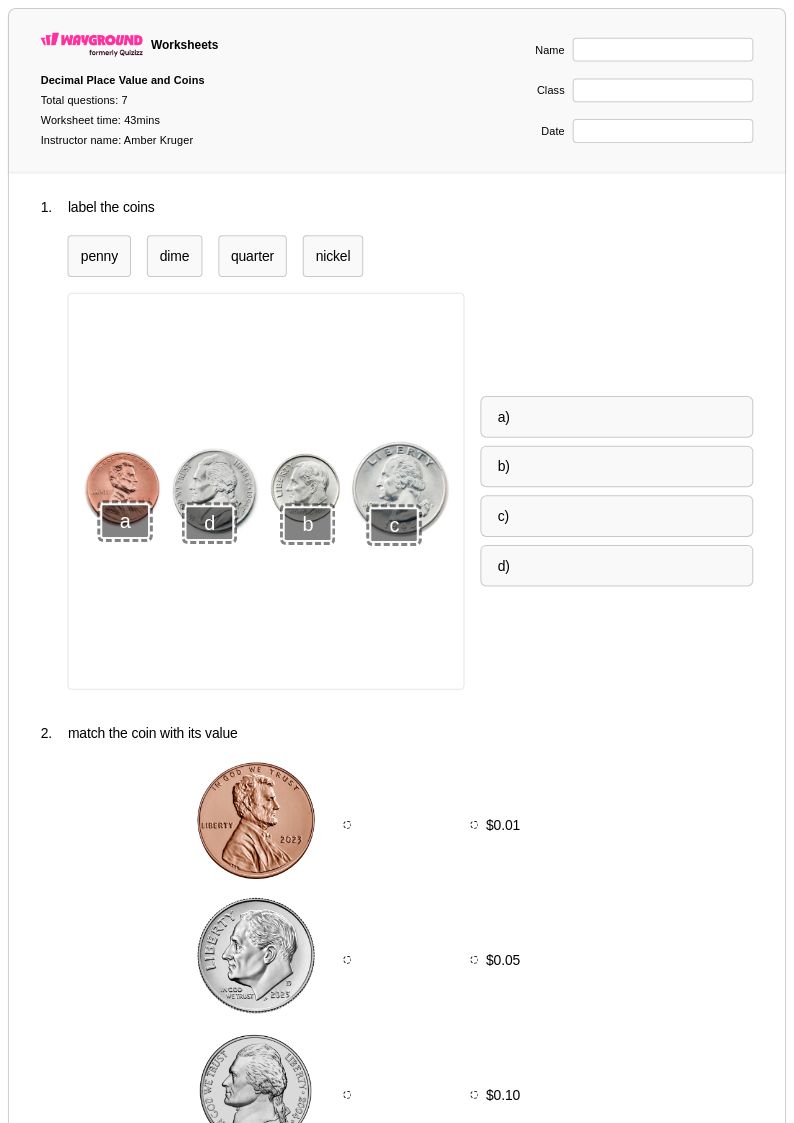
7 Q
4th
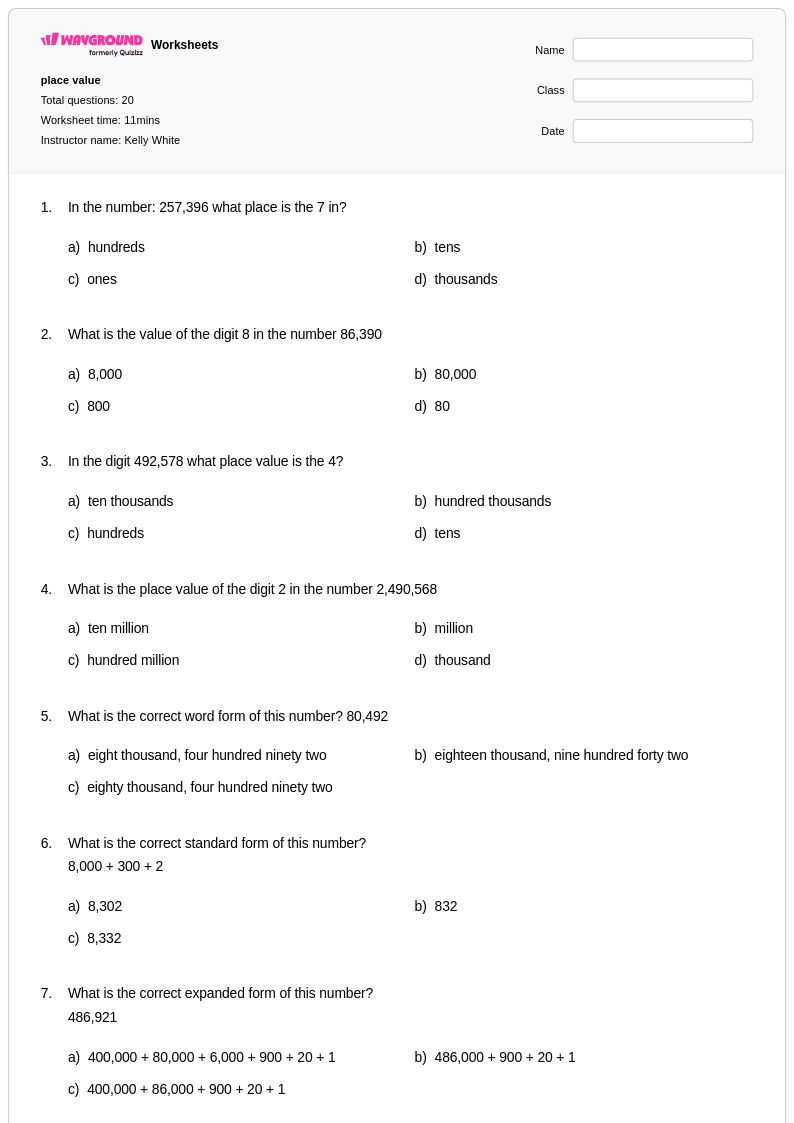
20 Q
4th
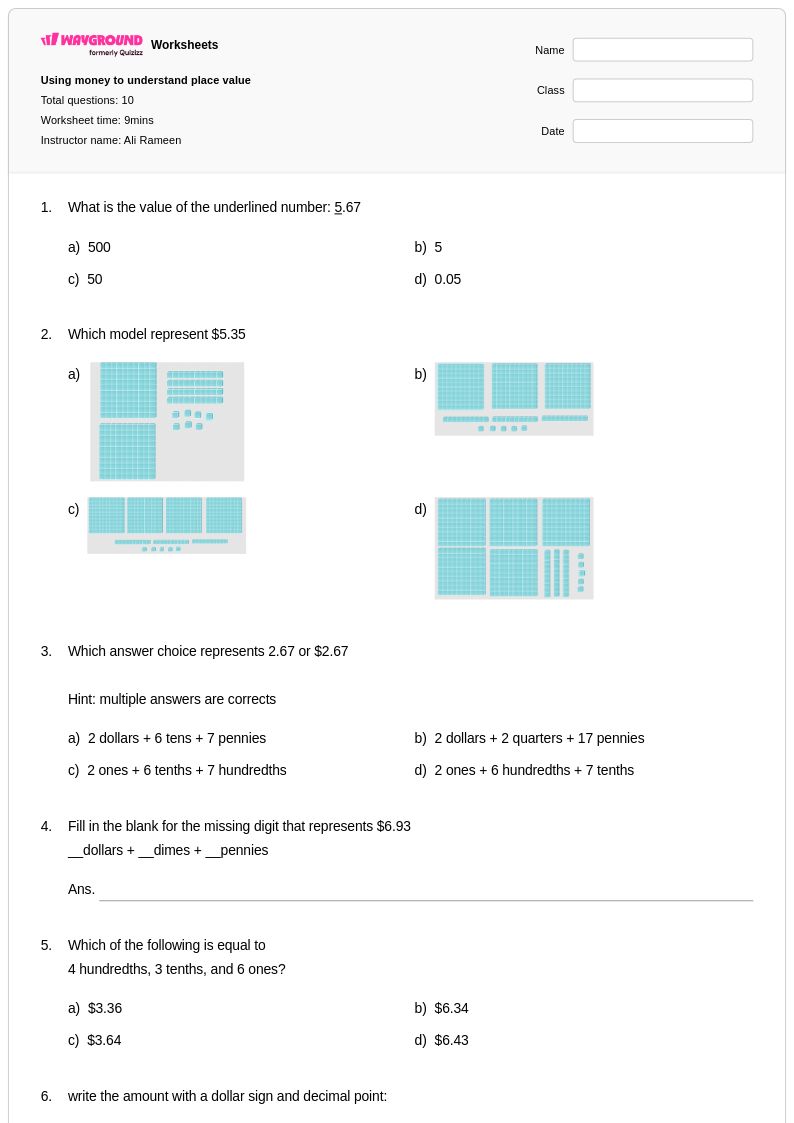
10 Q
4th
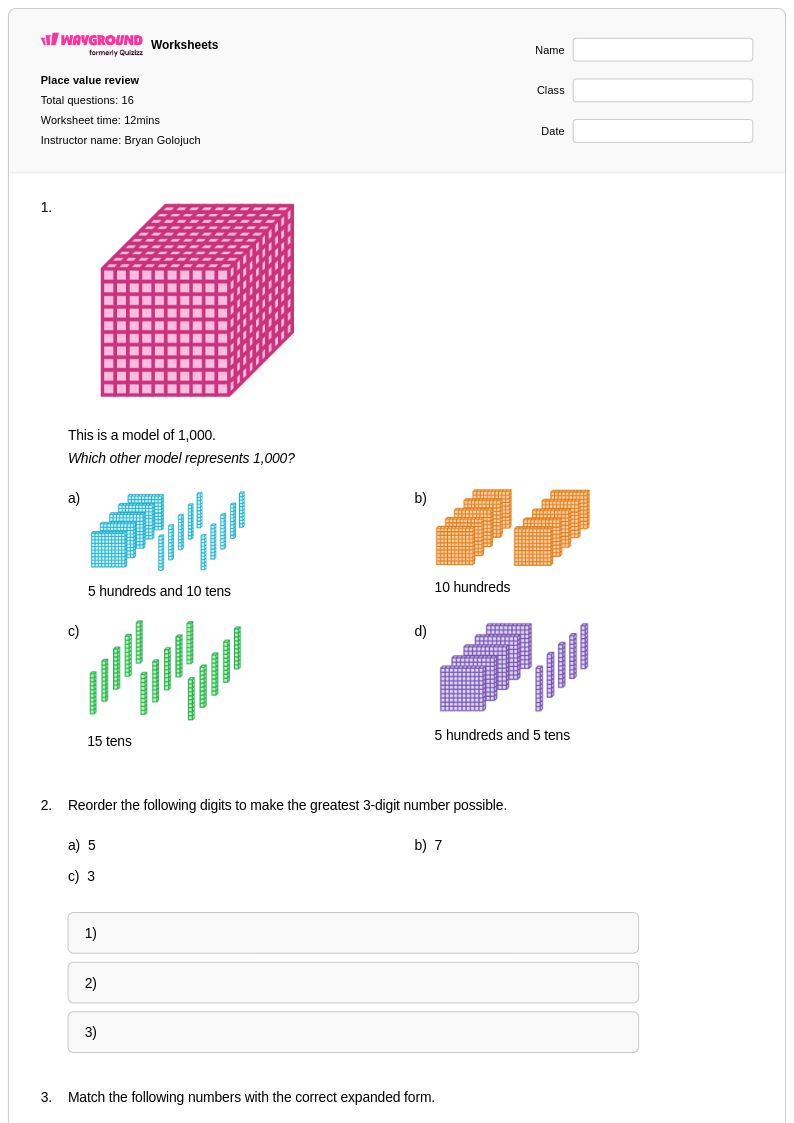
16 Q
4th
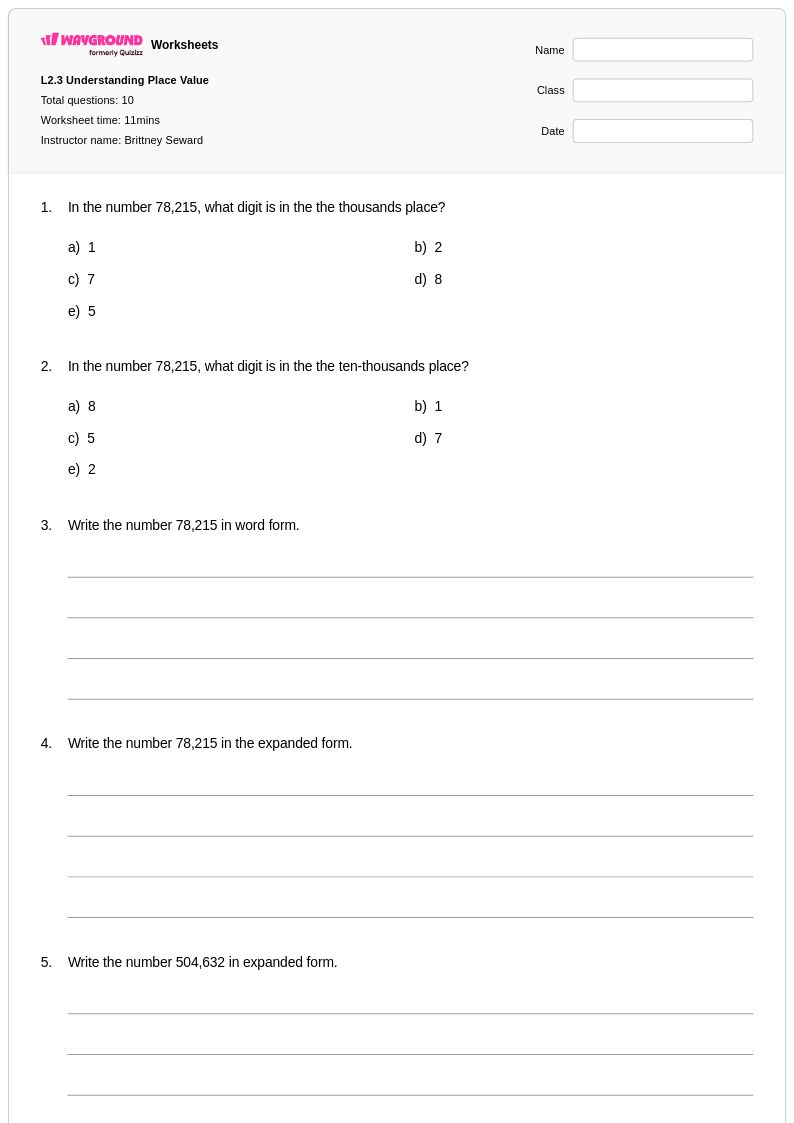
10 Q
4th
Explore Other Subject Worksheets for year 4
Explore printable Place Value Grouping worksheets for Year 4
Place Value Grouping worksheets for Year 4 students available through Wayground (formerly Quizizz) provide comprehensive practice with organizing numbers into meaningful groups based on their positional values. These carefully designed resources help fourth-grade students master the fundamental concept of how digits represent different quantities depending on their position within a number, strengthening their understanding of ones, tens, hundreds, and thousands places. Each worksheet collection includes varied practice problems that guide students through grouping objects, regrouping numbers, and visualizing place value relationships through hands-on activities. Teachers can access these free printables in convenient pdf format, complete with detailed answer keys that support both independent practice and guided instruction.
Wayground (formerly Quizizz) empowers educators with an extensive library of millions of teacher-created place value grouping resources that streamline lesson planning and differentiated instruction for Year 4 mathematics. The platform's robust search and filtering capabilities allow teachers to quickly locate worksheets aligned with specific curriculum standards, while built-in differentiation tools enable seamless customization to meet diverse student needs. These versatile materials are available in both printable and digital formats, including downloadable pdf versions, making them ideal for classroom use, homework assignments, targeted remediation, and enrichment activities. The comprehensive collection supports teachers in developing students' number sense through systematic skill practice, ensuring that learners build a solid foundation in place value concepts that will serve them throughout their mathematical education.
FAQs
What are the key place value concepts for 4th grade?
How do I teach that a digit is 'ten times' the value of the digit to its right?
What types of problems are best for 4th grade place value?
What common errors do 4th graders make with large numbers?
How does this topic relate to 4th grade Common Core standards?
How can I use these 4th grade place value worksheets?