Free Printable Estimating Differences Worksheets for Year 6
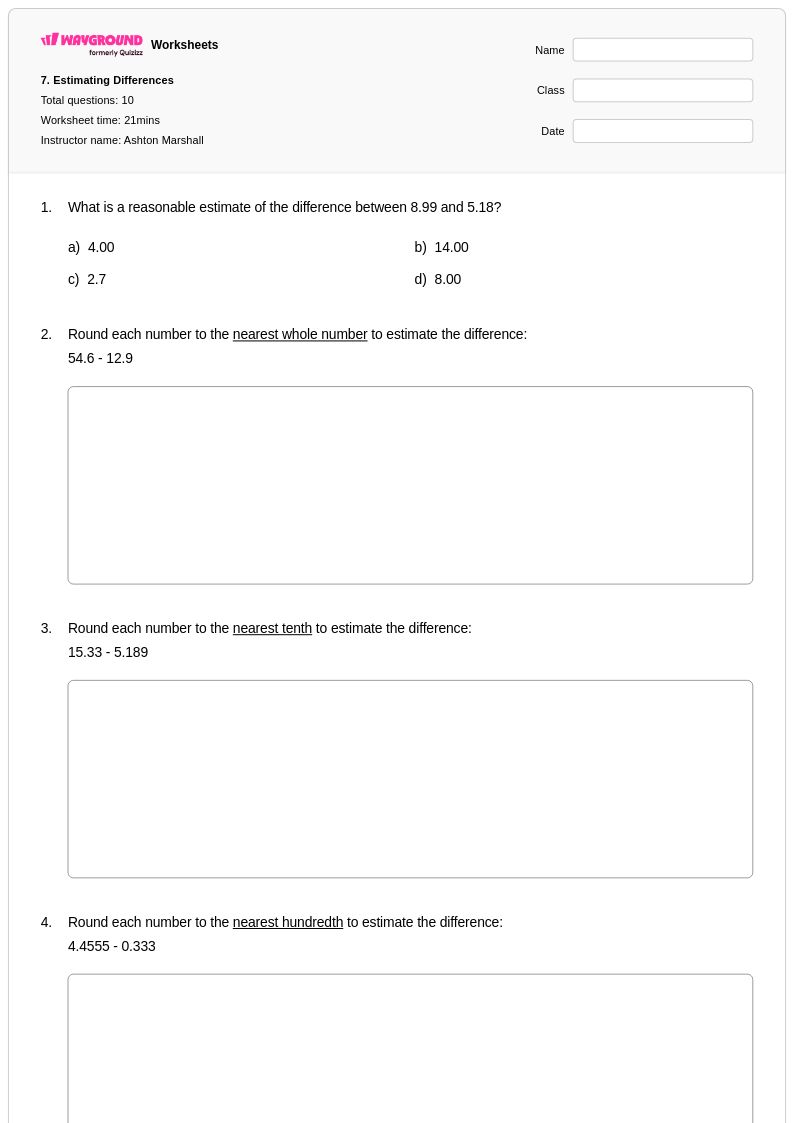
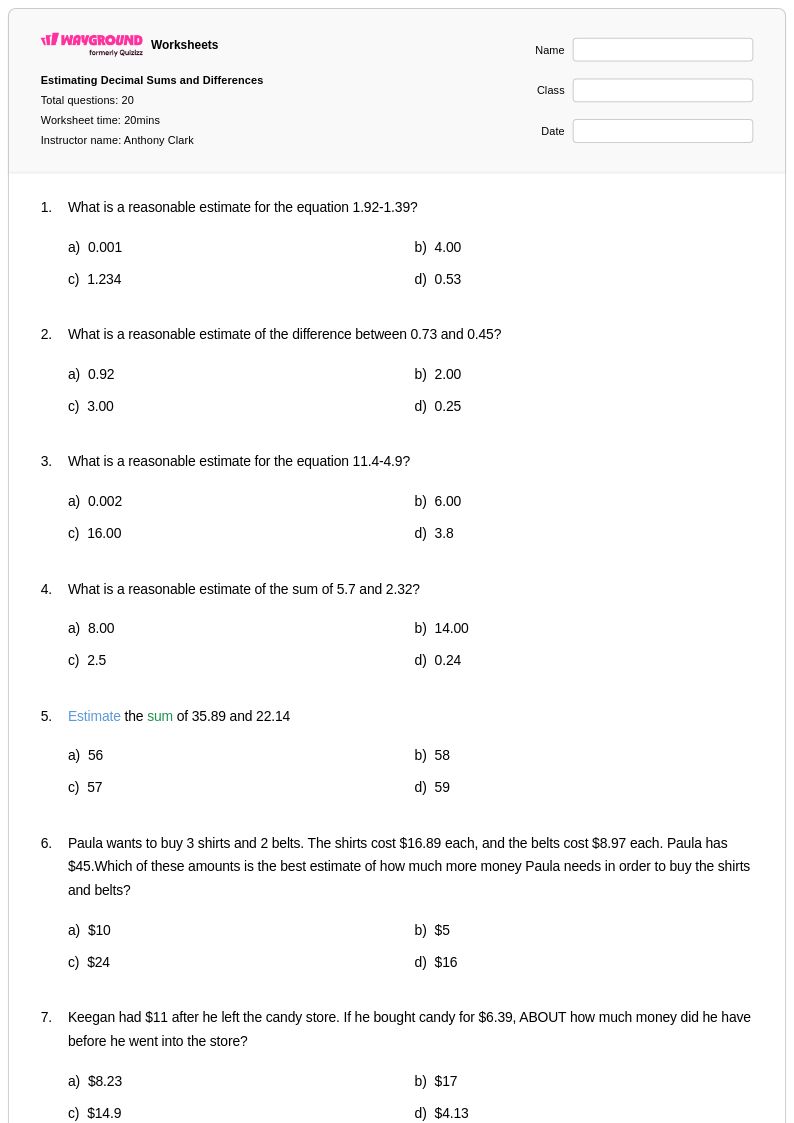
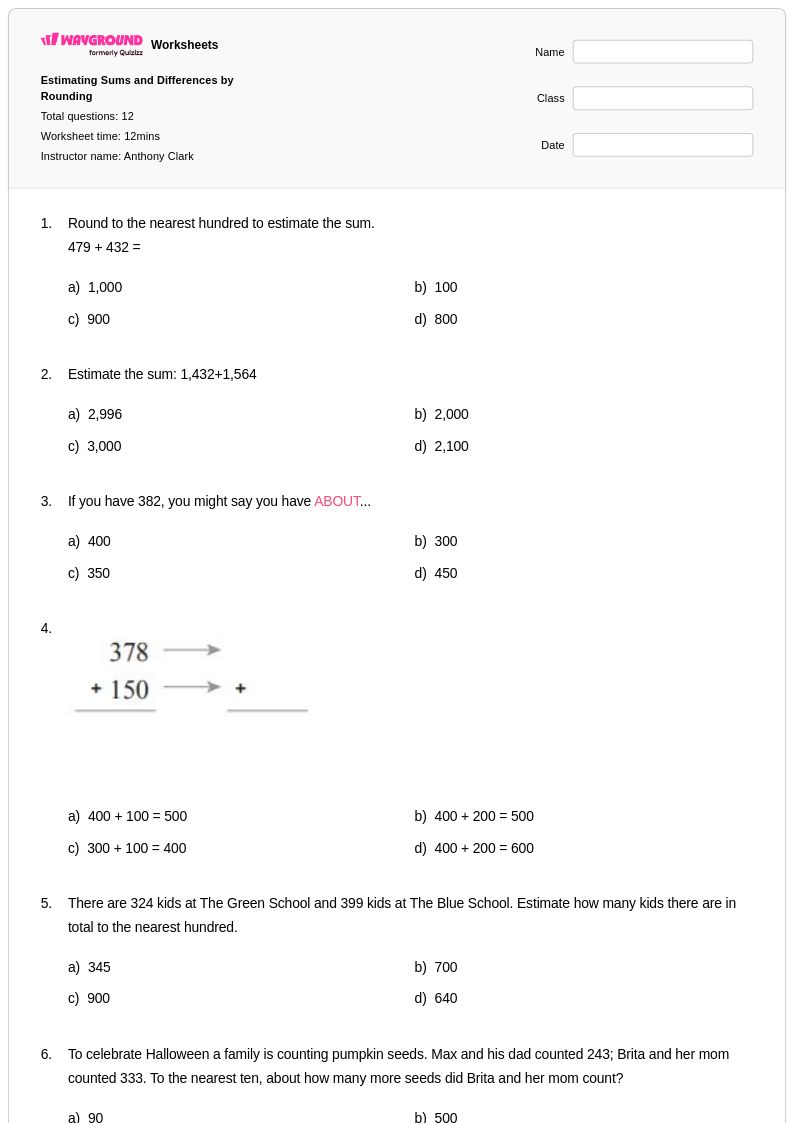
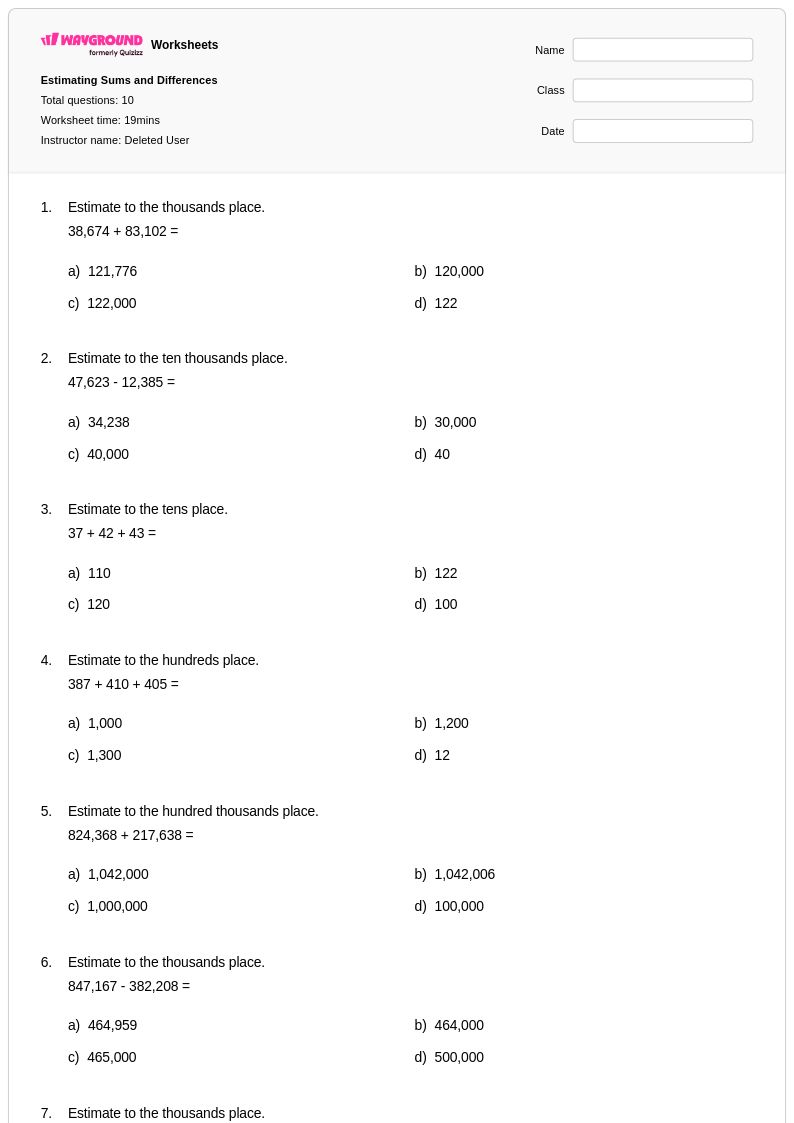
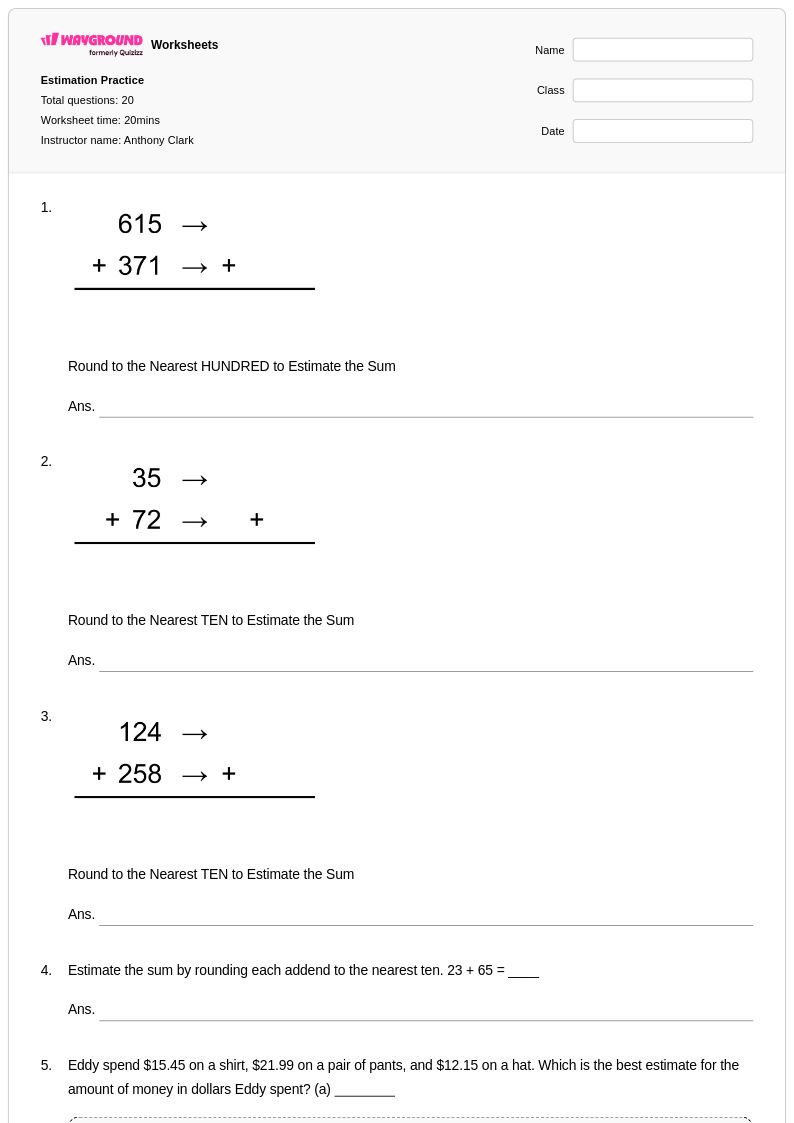
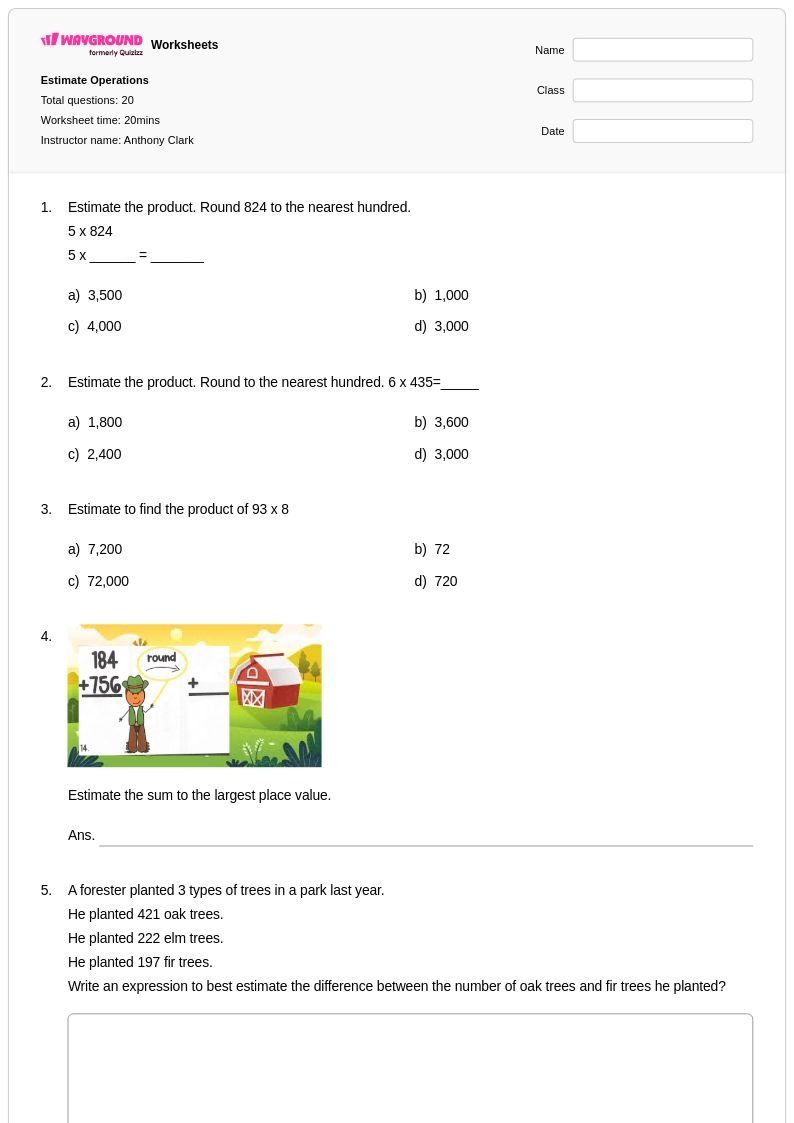
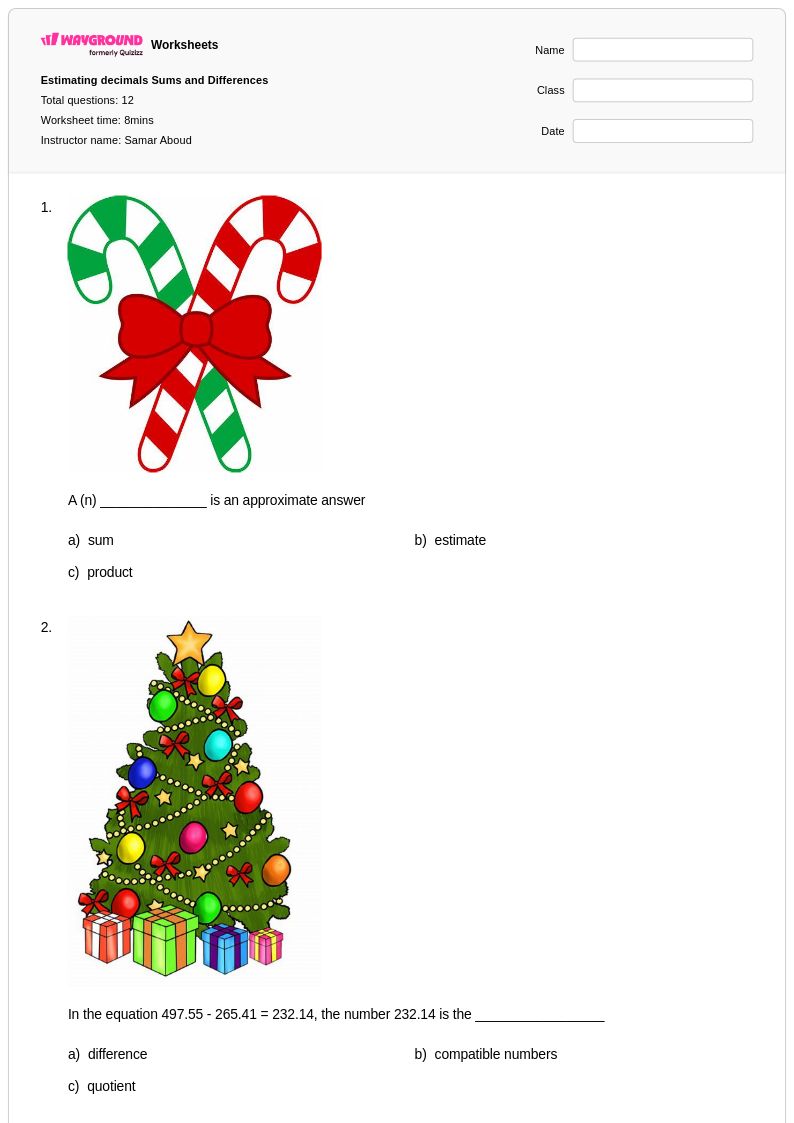
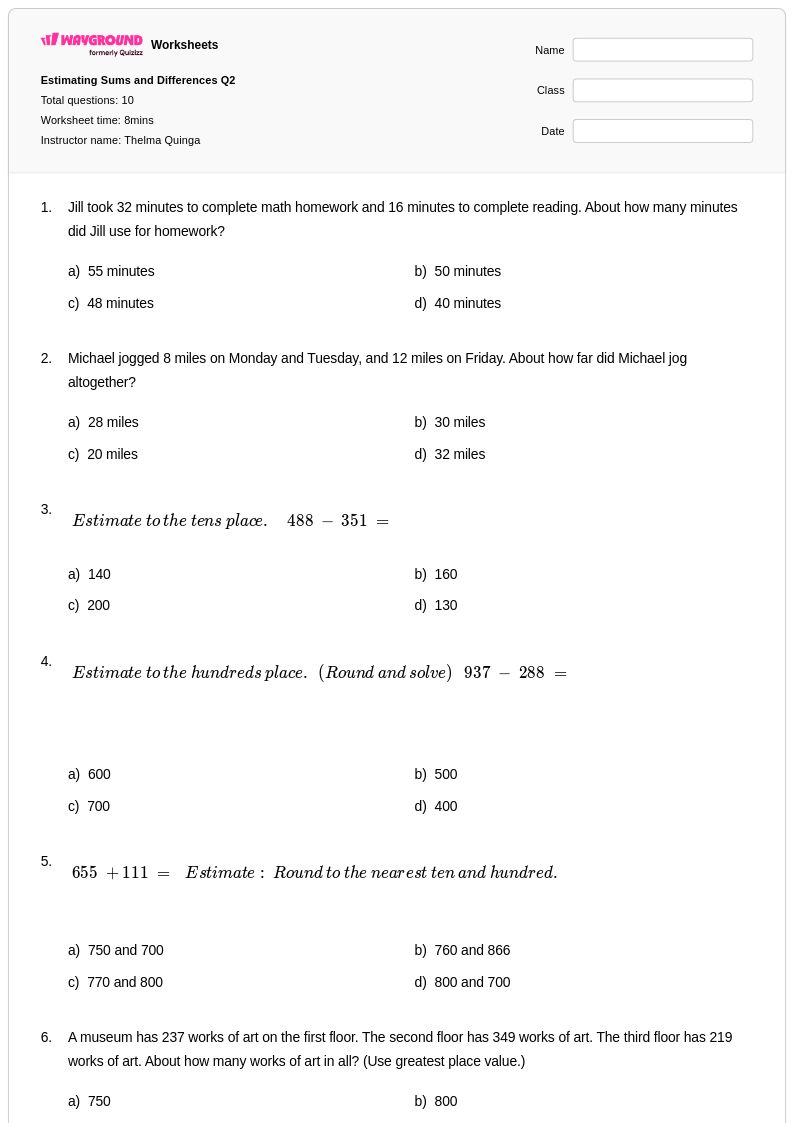
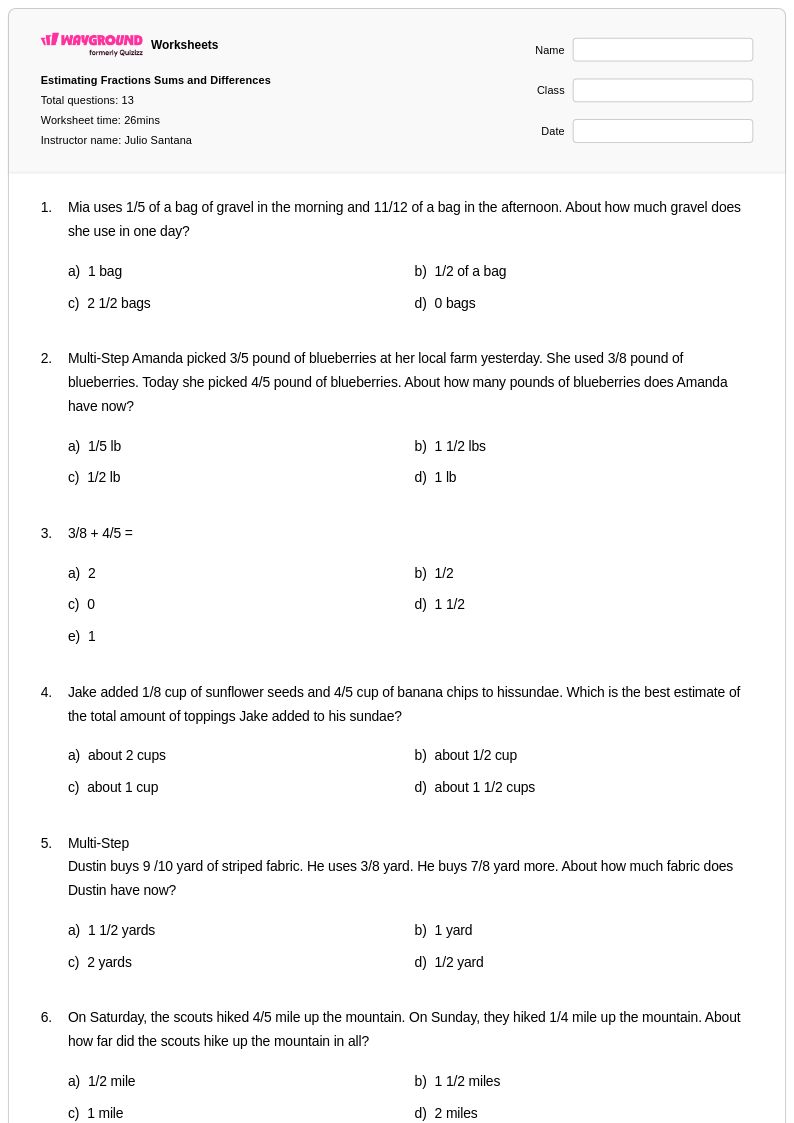
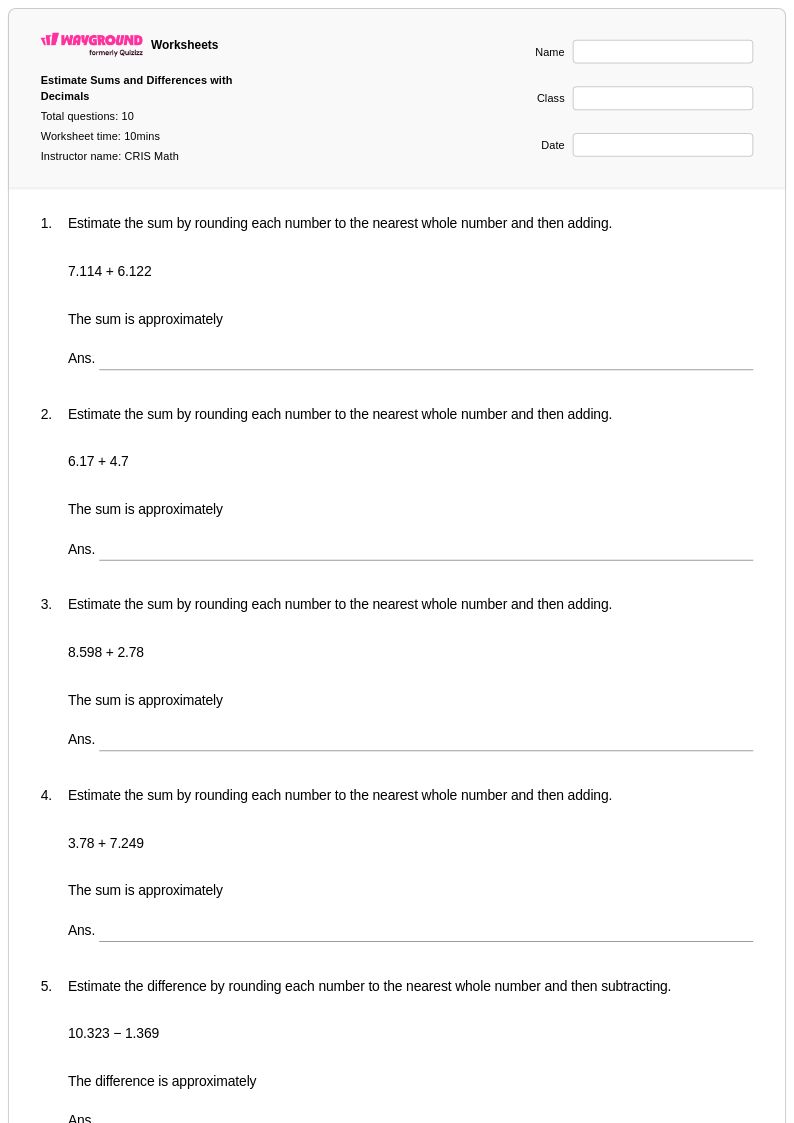
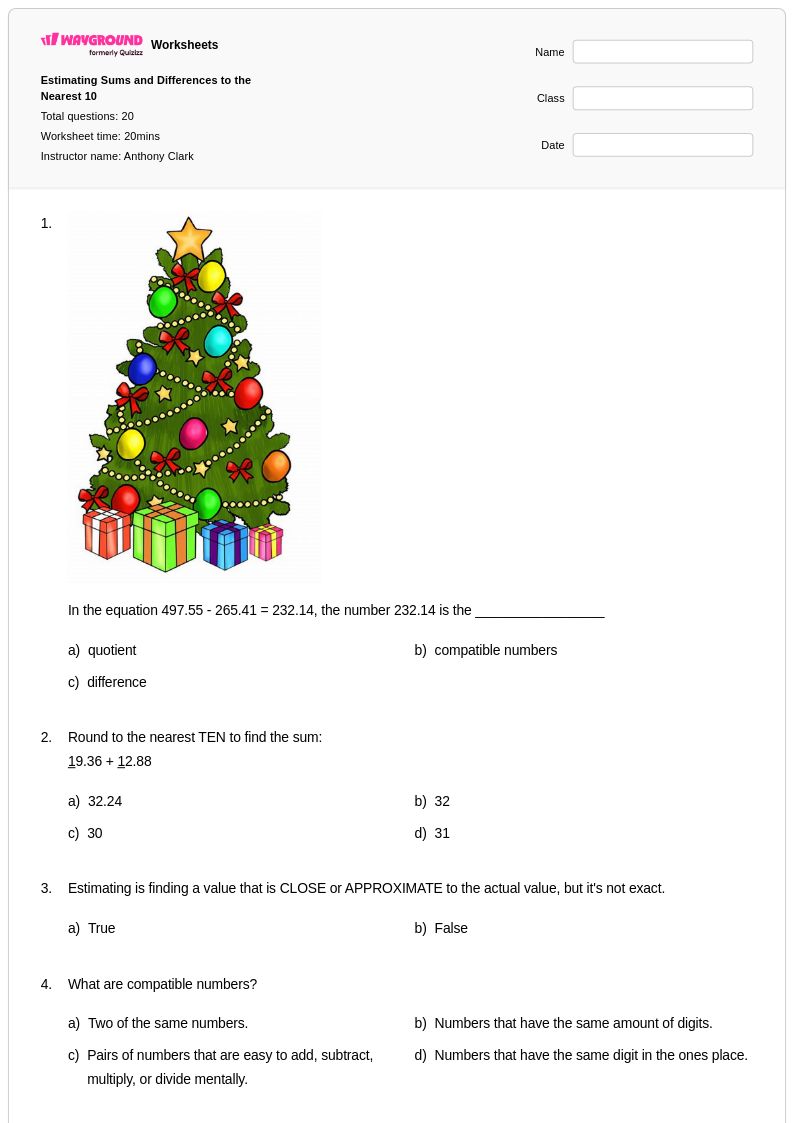
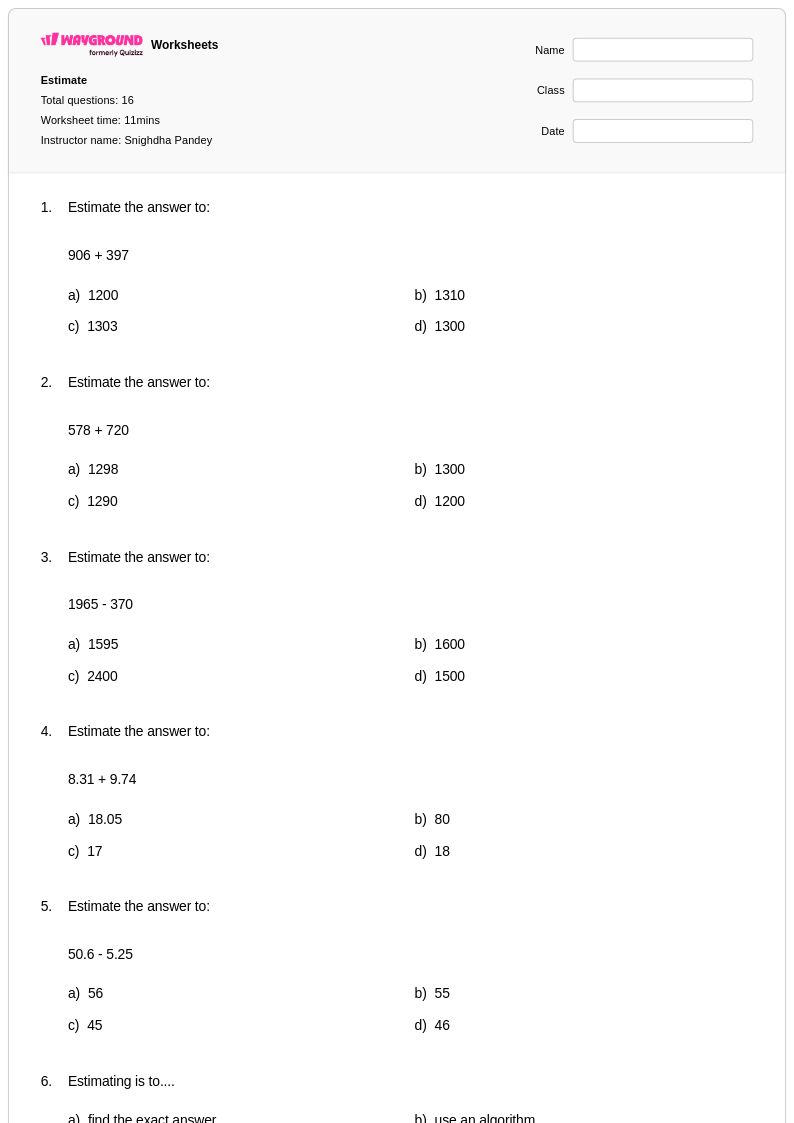
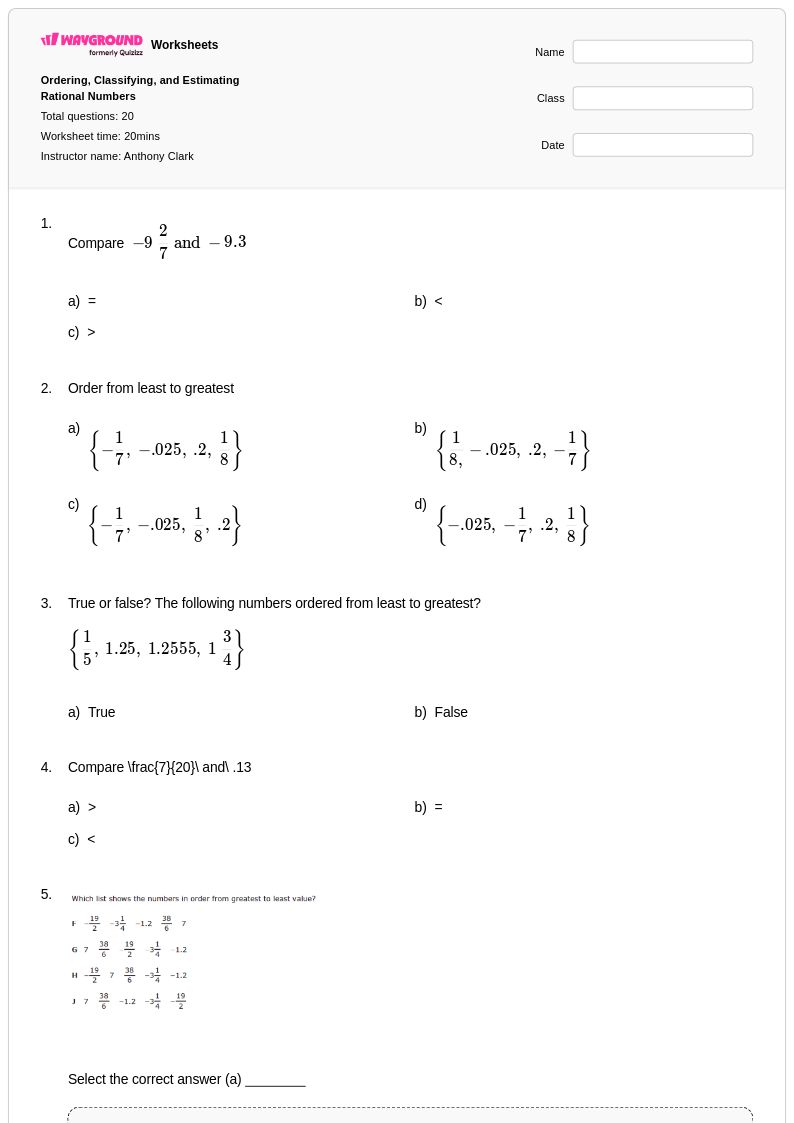
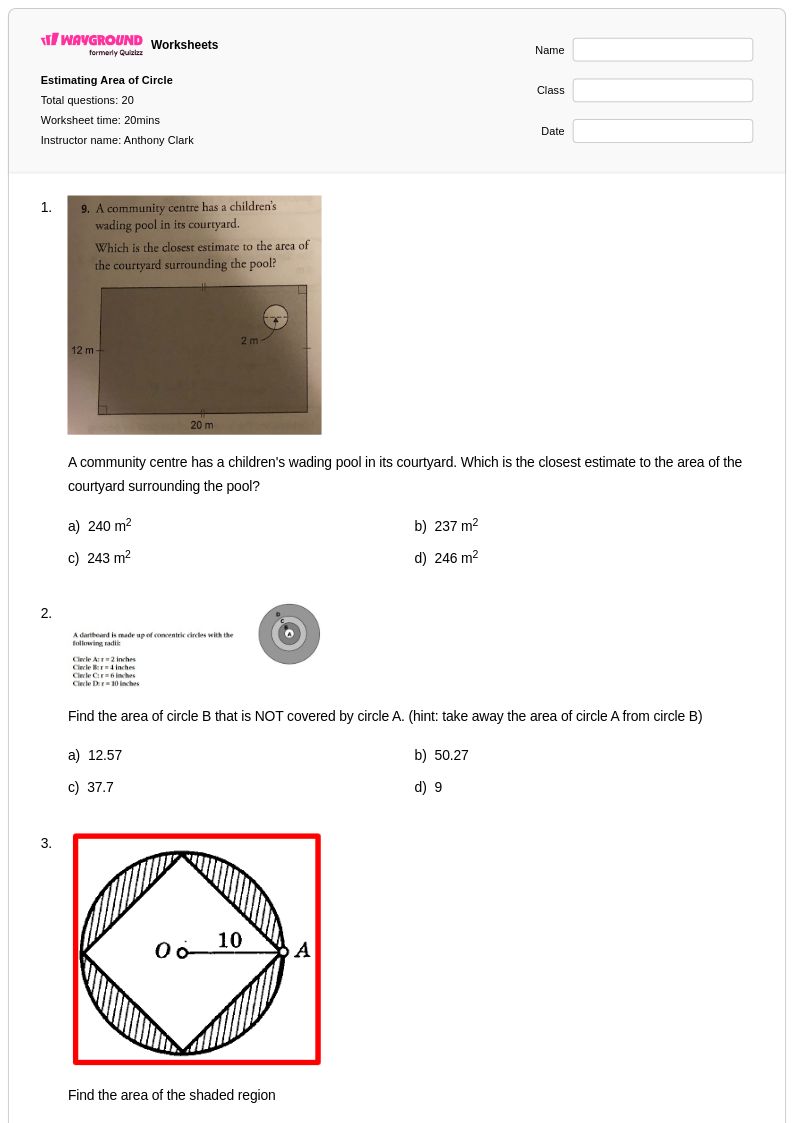
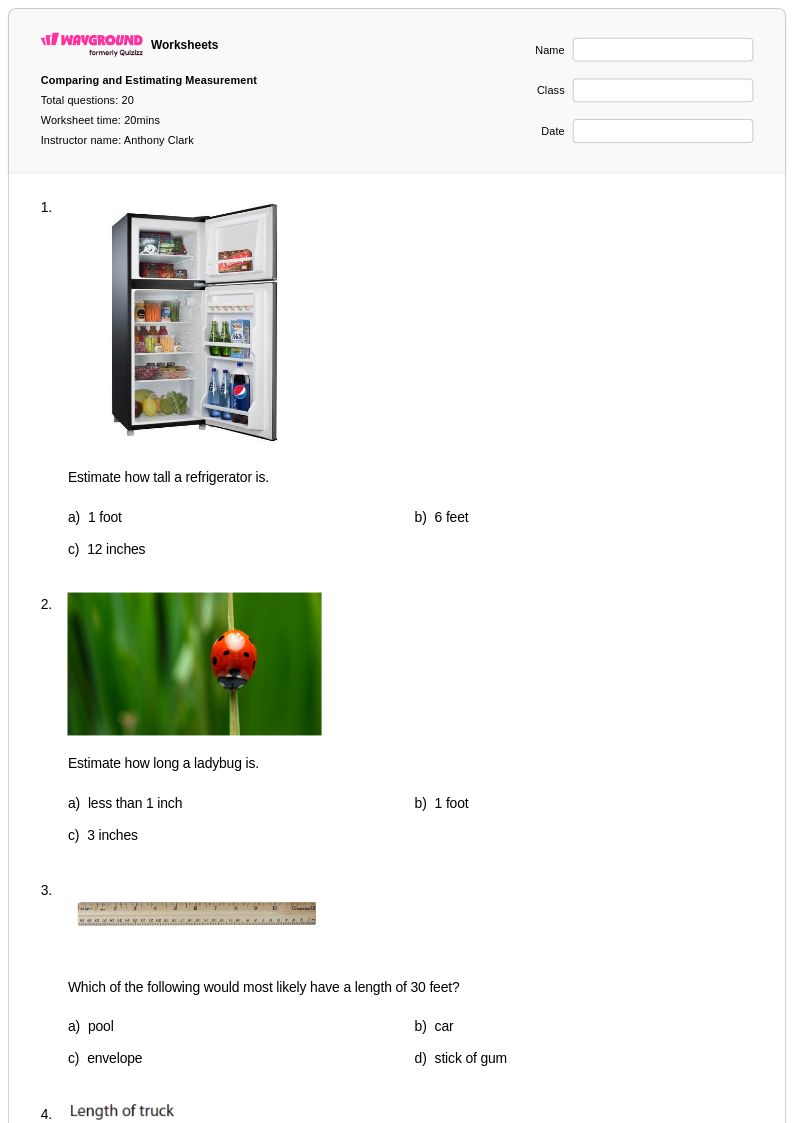
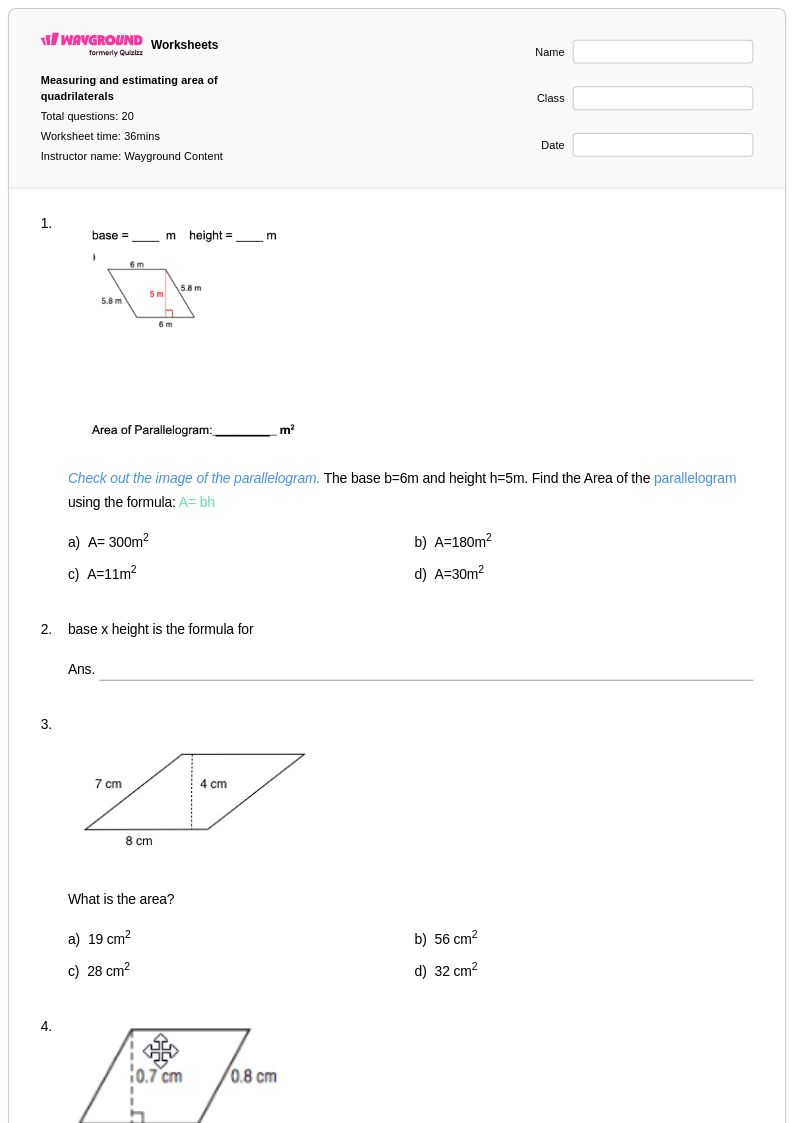
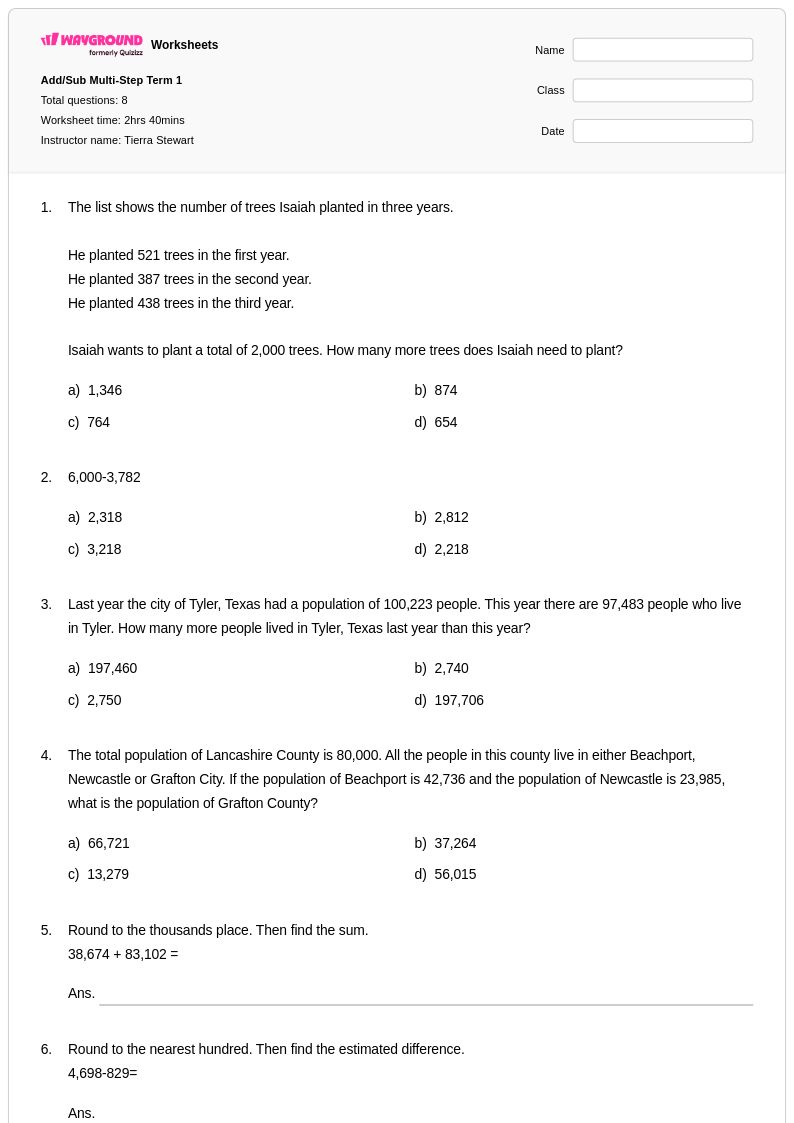
Wayground's free Year 6 estimating differences worksheets provide printable practice problems and answer keys to help students develop strong number sense skills through strategic rounding and mental math techniques.
Explore printable Estimating Differences worksheets for Year 6
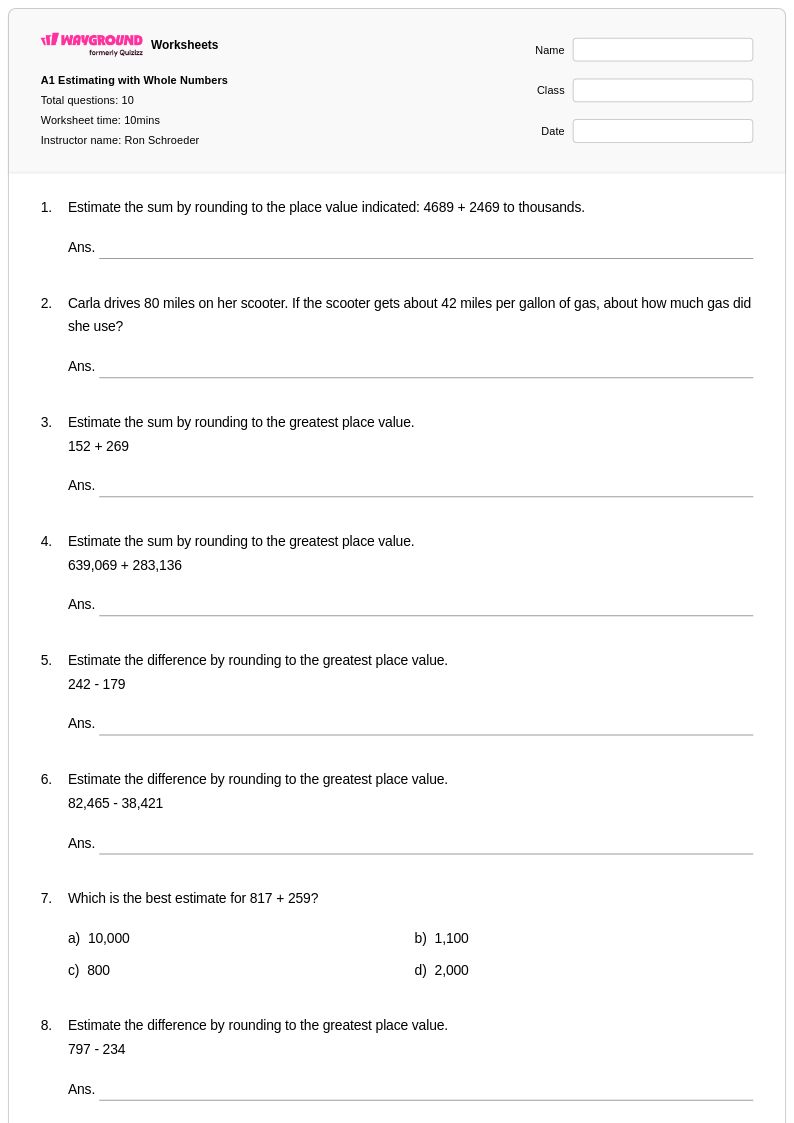
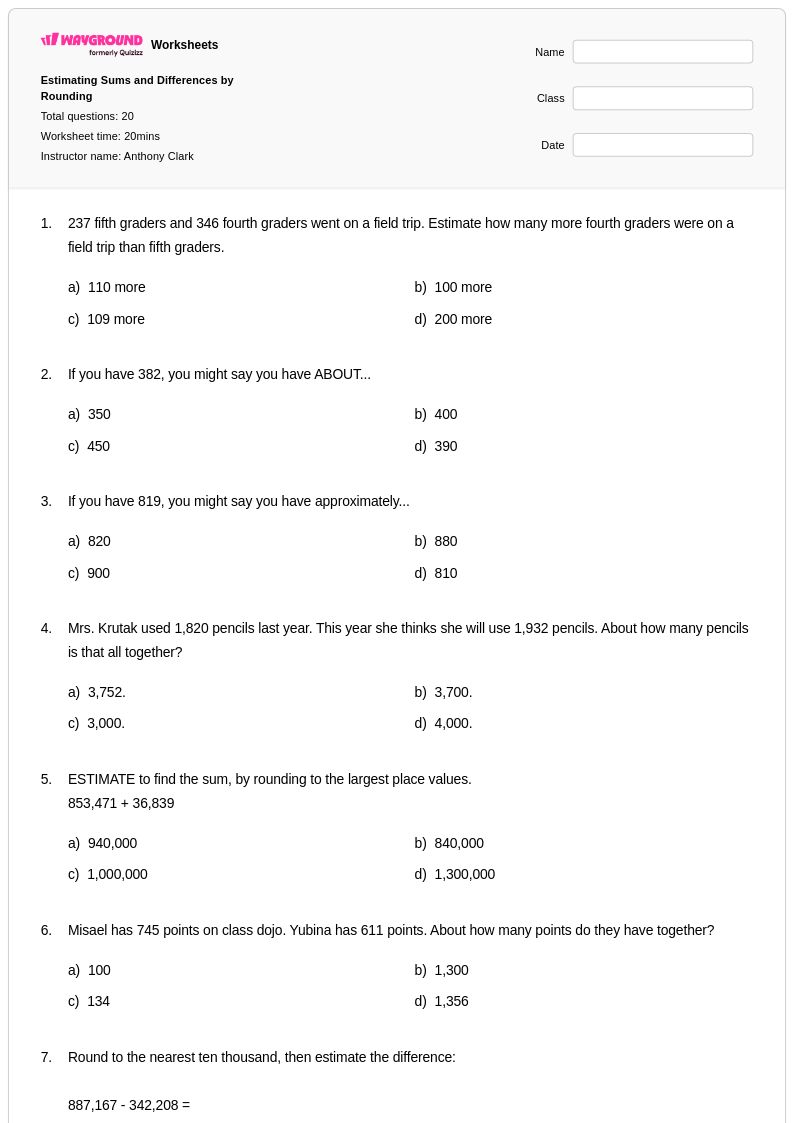
Estimating differences worksheets for Year 6 available through Wayground (formerly Quizizz) provide comprehensive practice opportunities for students developing crucial number sense skills. These carefully designed resources focus on building students' ability to make reasonable approximations when subtracting multi-digit numbers, fractions, and decimals without performing exact calculations. The worksheets strengthen mental math strategies, reinforce place value understanding, and develop computational fluency through systematic practice problems that progress from basic whole number estimation to more complex scenarios involving mixed numbers and decimal operations. Each worksheet collection includes detailed answer keys and is available as free printable pdf resources, allowing educators to seamlessly integrate estimation practice into their mathematics instruction while supporting students' conceptual understanding of numerical relationships and mathematical reasoning.
Wayground (formerly Quizizz) supports educators with an extensive library of millions of teacher-created estimating differences worksheets specifically aligned to Year 6 mathematics standards and learning objectives. The platform's robust search and filtering capabilities enable teachers to quickly locate resources that match their specific instructional needs, whether targeting foundational estimation strategies or advanced problem-solving applications. These differentiation tools allow educators to customize worksheet difficulty levels, modify problem sets, and adapt content for diverse learning needs, making them invaluable for both remediation and enrichment purposes. Available in both printable and digital formats including downloadable pdfs, these resources streamline lesson planning while providing flexible options for classroom instruction, homework assignments, and independent skill practice that builds students' confidence in mathematical estimation and number sense development.
FAQs
How do I teach estimating differences to 6th graders?
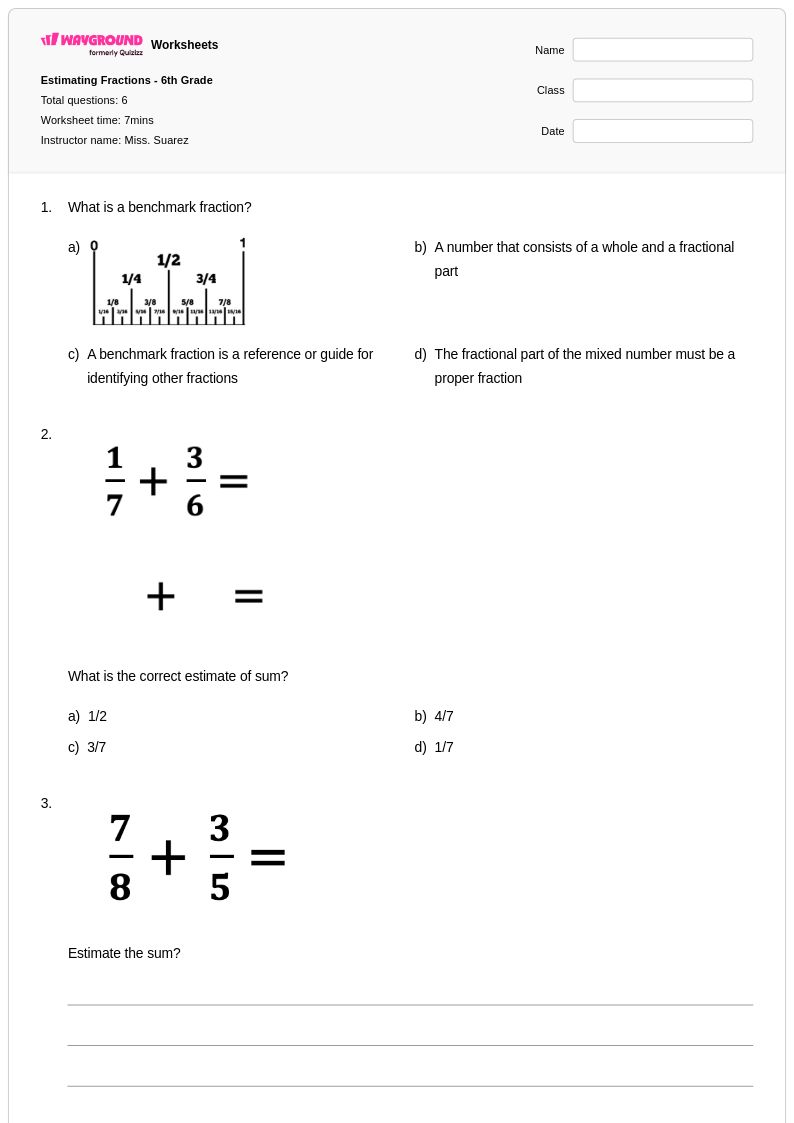
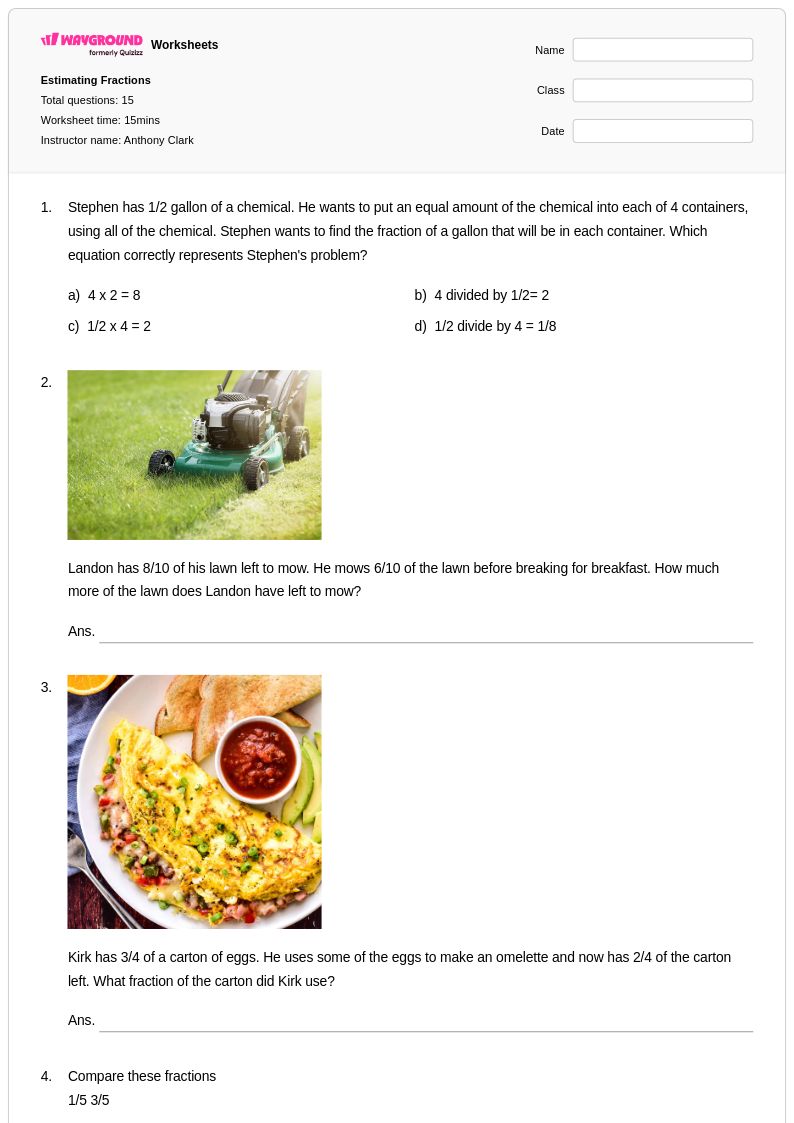
By Grade 6, the content challenge is fractions and mixed numbers — students who can estimate whole-number and decimal differences often struggle when fractions appear. The most effective approach is to teach benchmark fractions first (0, ½, 1) and have students practice placing fractions on a number line before asking them to estimate differences. Once a student can quickly identify that 7/8 is close to 1 and 3/8 is close to ½, estimating their difference becomes straightforward. Connect this explicitly to the decimal estimation they did in Grade 5 — the strategy is the same, only the notation changes.
What exercises help 6th graders practice estimating differences?
Problems that mix number types — whole numbers, decimals, and fractions in the same set — are the most valuable at this grade because they require students to recognize the structure of each number before choosing a rounding strategy. Reasonableness checks are especially effective: give students a completed subtraction problem and ask whether the answer is reasonable, rather than always asking them to produce the estimate. That reversal builds the evaluative thinking that matters most in Grade 6 and beyond.
What mistakes do 6th graders make when estimating differences involving fractions?
The most common error is trying to find a common denominator before estimating — students default to the exact-computation procedure even when an estimate is all that's needed. This defeats the purpose entirely. A related mistake: rounding mixed numbers by rounding the whole number and the fraction separately without considering whether the fraction is closer to 0 or 1, which leads to estimates that are off by a full unit. Both errors suggest students haven't internalized that estimation should be faster and simpler than exact calculation, not a variation of it.
How do I use Wayground's Grade 6 estimating differences worksheets?
You can assign these as digital quizzes on Wayground — students work through problems on a device and get immediate feedback — or download the PDF and assign on paper. Both formats include a complete answer key. For paper assignments, the Wayground for Teachers app lets you scan student work for grading, which is a real time-saver when you're running these as a quick formative check rather than a formal assessment.
Is estimating differences aligned to Common Core Grade 6 math standards?
Yes. Common Core's Grade 6 number sense work expects students to apply and extend their understanding of arithmetic to include fractions, decimals, and rational numbers — and to assess the reasonableness of answers throughout. Estimating differences at this grade is the application of that expectation to subtraction: students who can quickly estimate the difference between two fractions or mixed numbers are demonstrating the number sense fluency Common Core builds toward across the middle grades. This skill also supports the ratio and proportional reasoning work that becomes central in Grade 6 and 7.
How can I differentiate Grade 6 estimating differences practice for mixed-ability classes?
For students who struggle with fraction notation, the Read Aloud feature removes the decoding barrier so they can focus on the estimation strategy. Students who need more scaffolding benefit from reduced answer choices in digital mode, which narrows the decision space while they're still building confidence with benchmark fractions. For students ready for more challenge, problems that mix fractions, decimals, and whole numbers in the same set — without labeling which type each is — push them to identify number structure independently, which is where Grade 6 estimation thinking should be heading.