
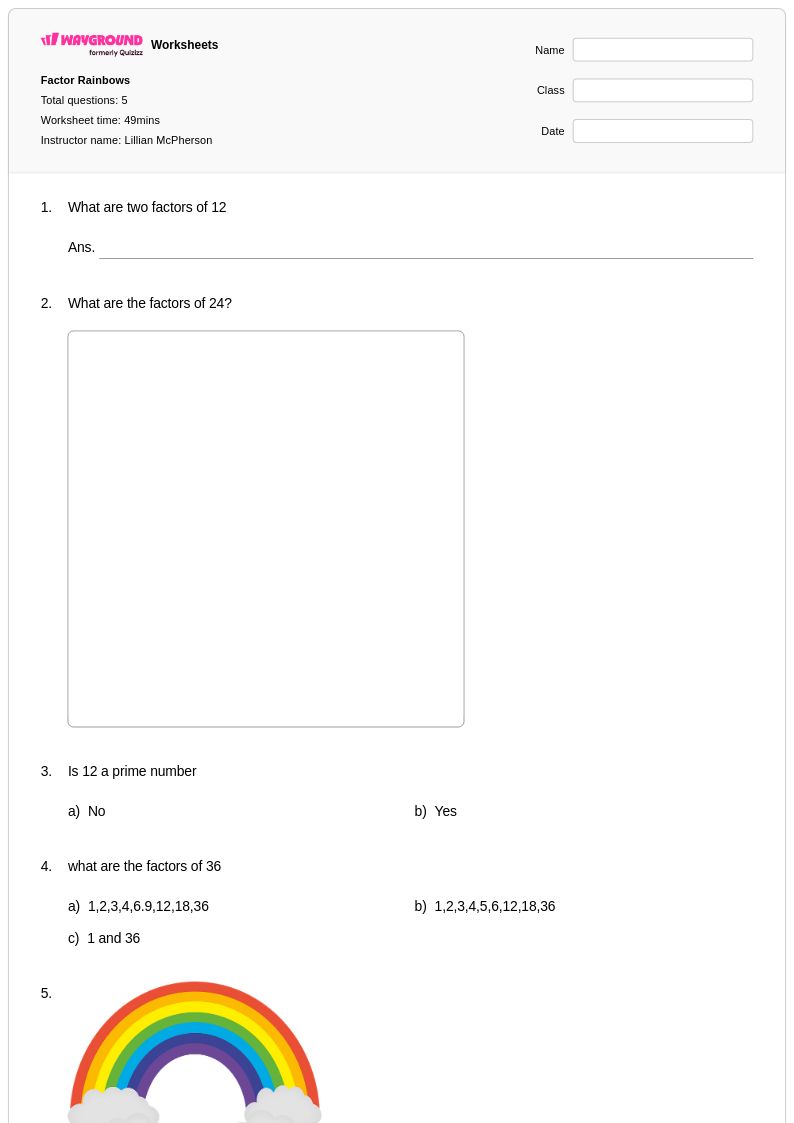
5 Q
6th
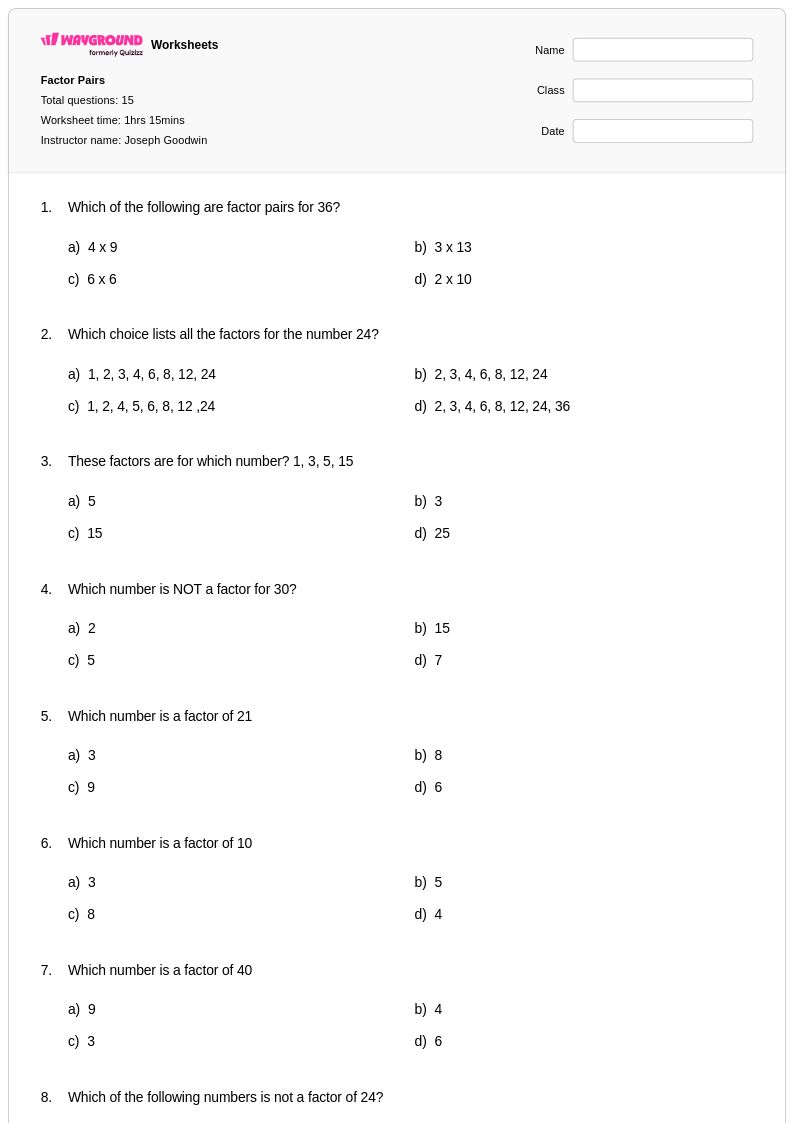
15 Q
6th
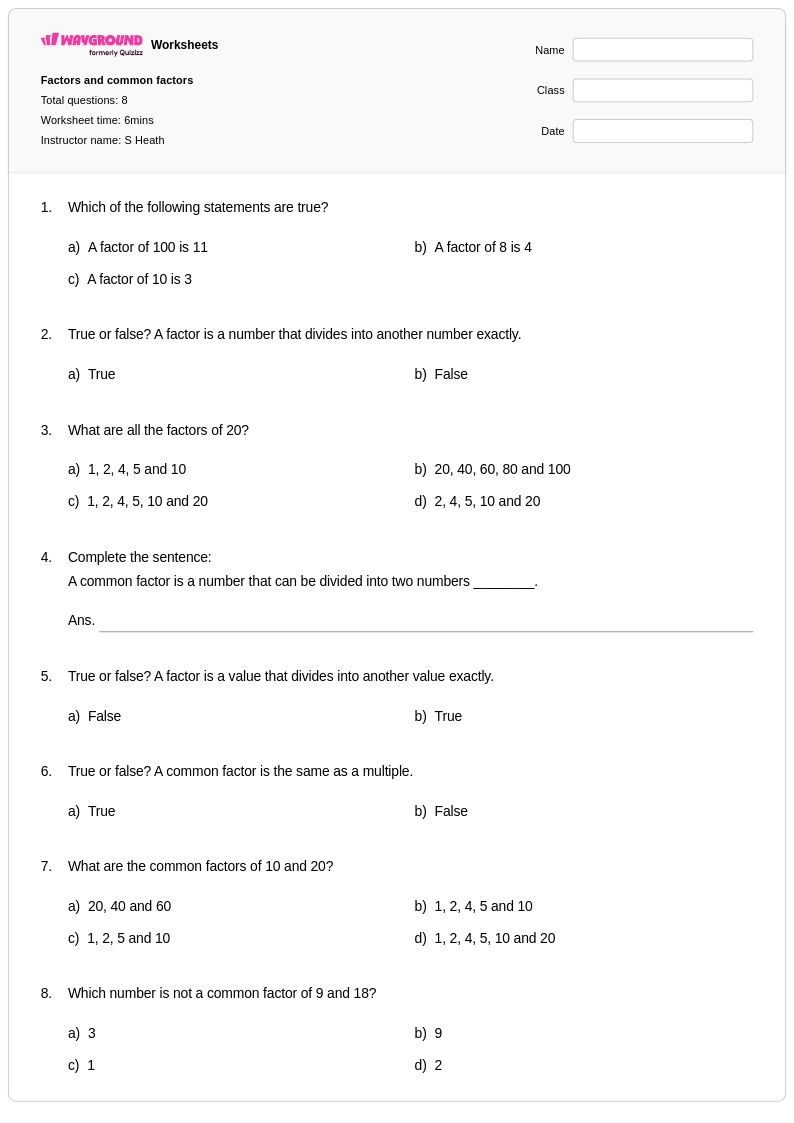
8 Q
6th
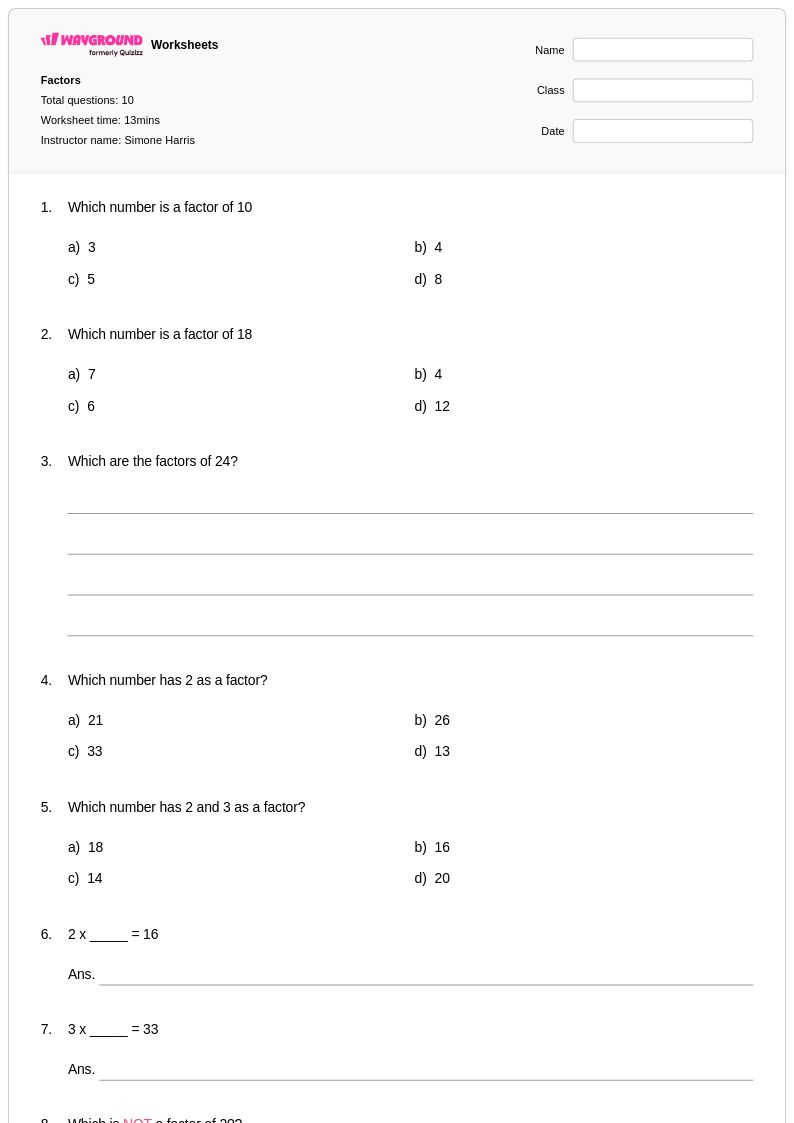
10 Q
6th
20 Q
6th - 8th
10 Q
4th - 6th
20 Q
4th - Uni
18 Q
4th - Uni
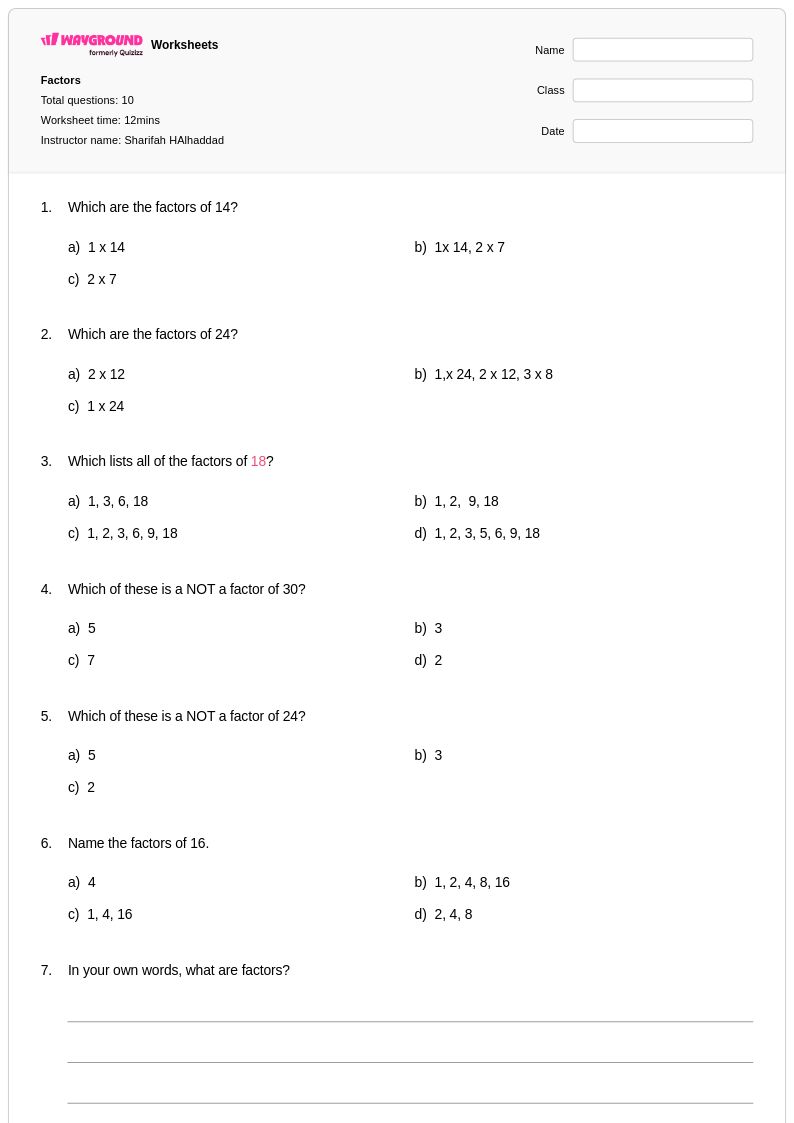
10 Q
6th
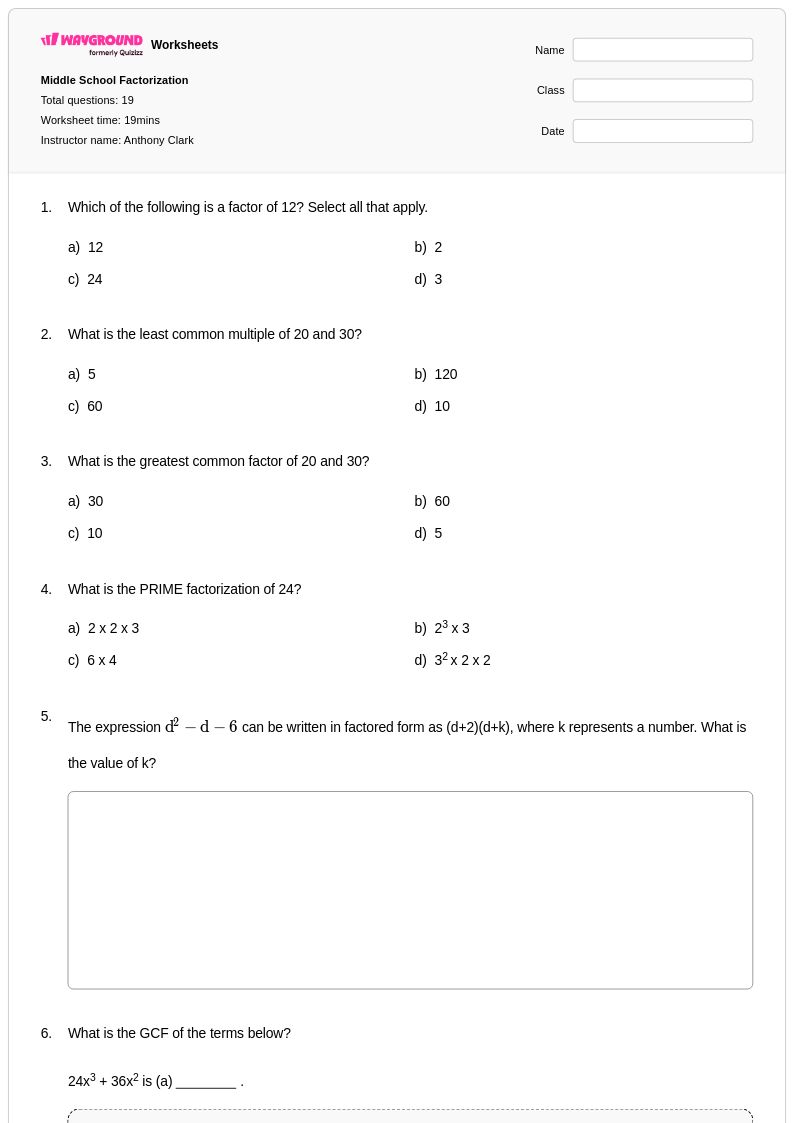
19 Q
6th - Uni
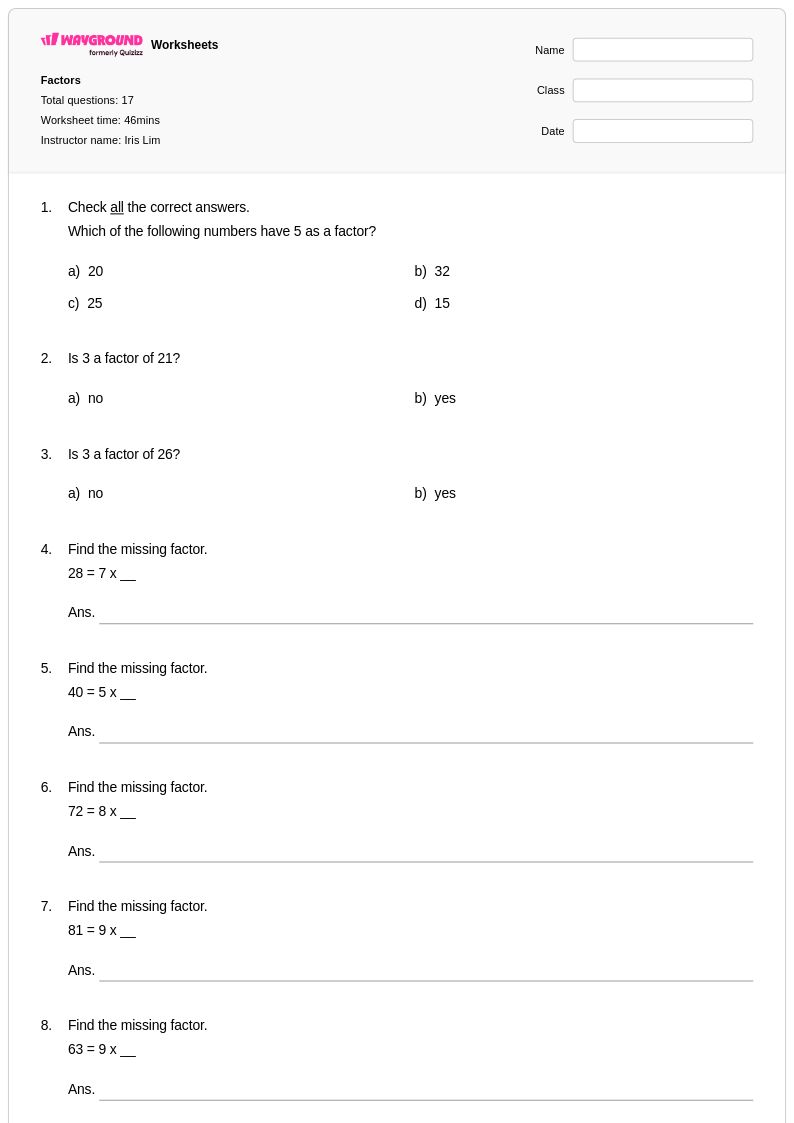
17 Q
4th - 6th
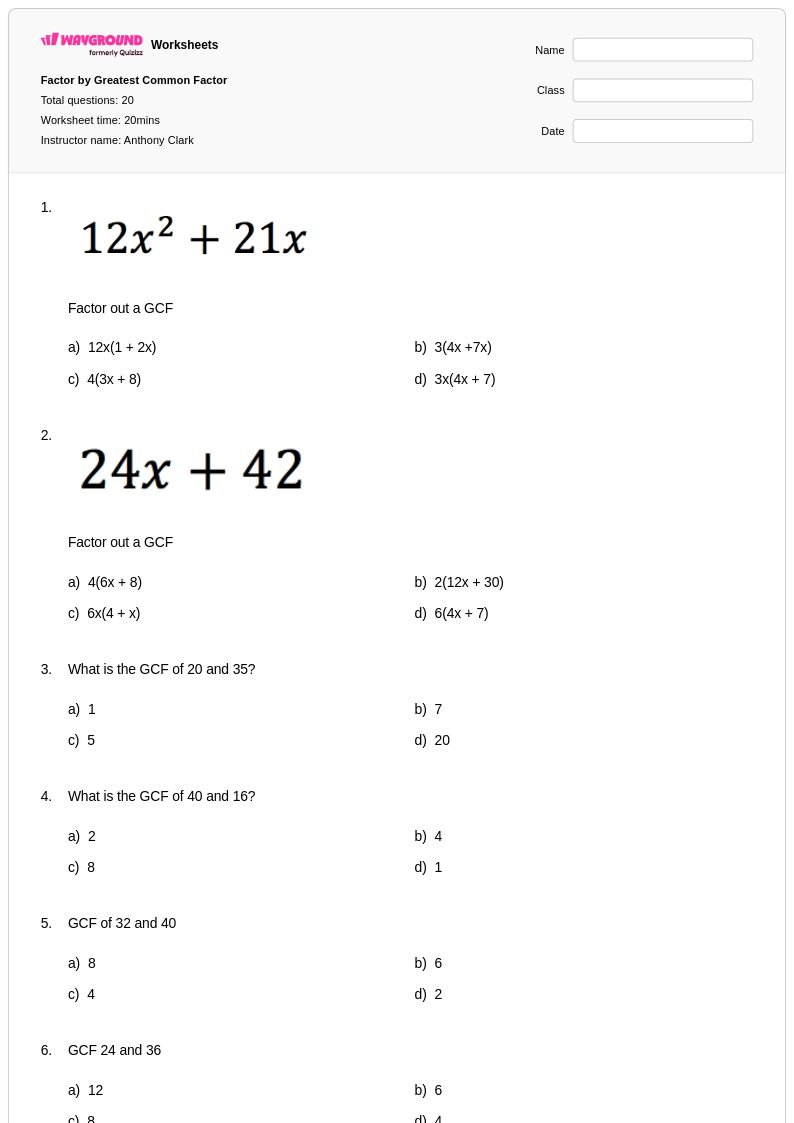
20 Q
6th - Uni
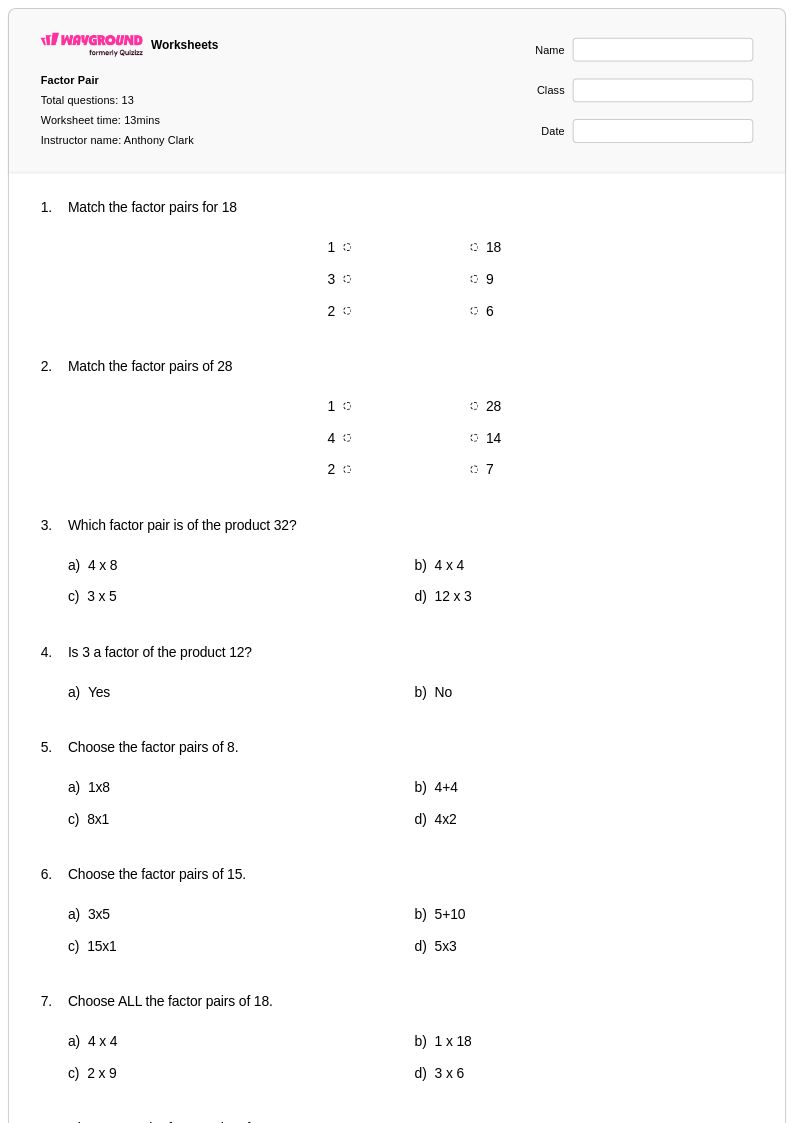
13 Q
4th - Uni
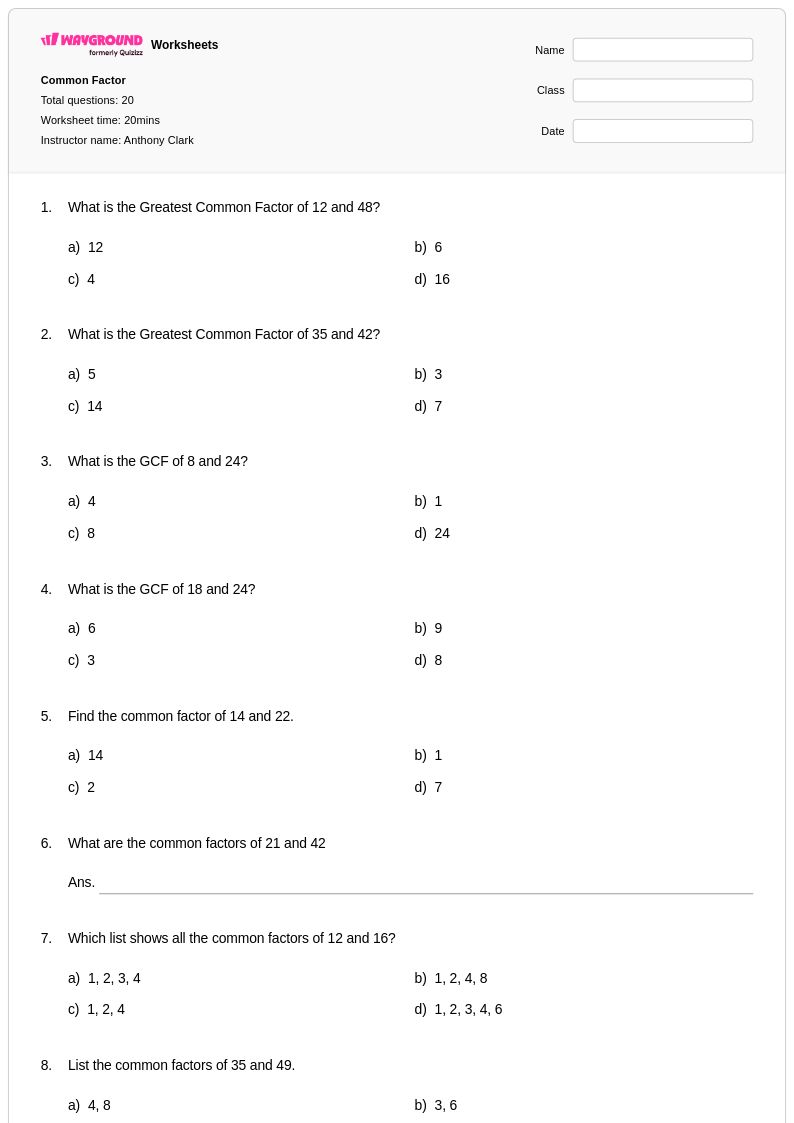
20 Q
6th - Uni
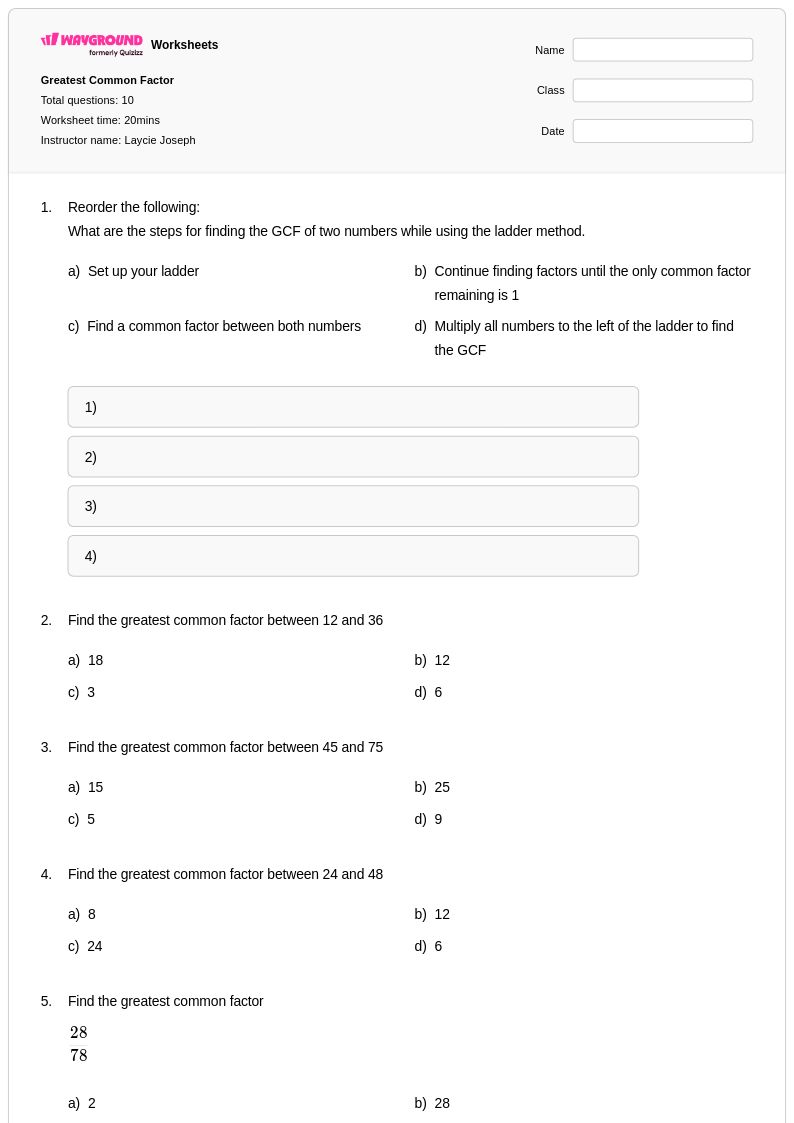
10 Q
6th
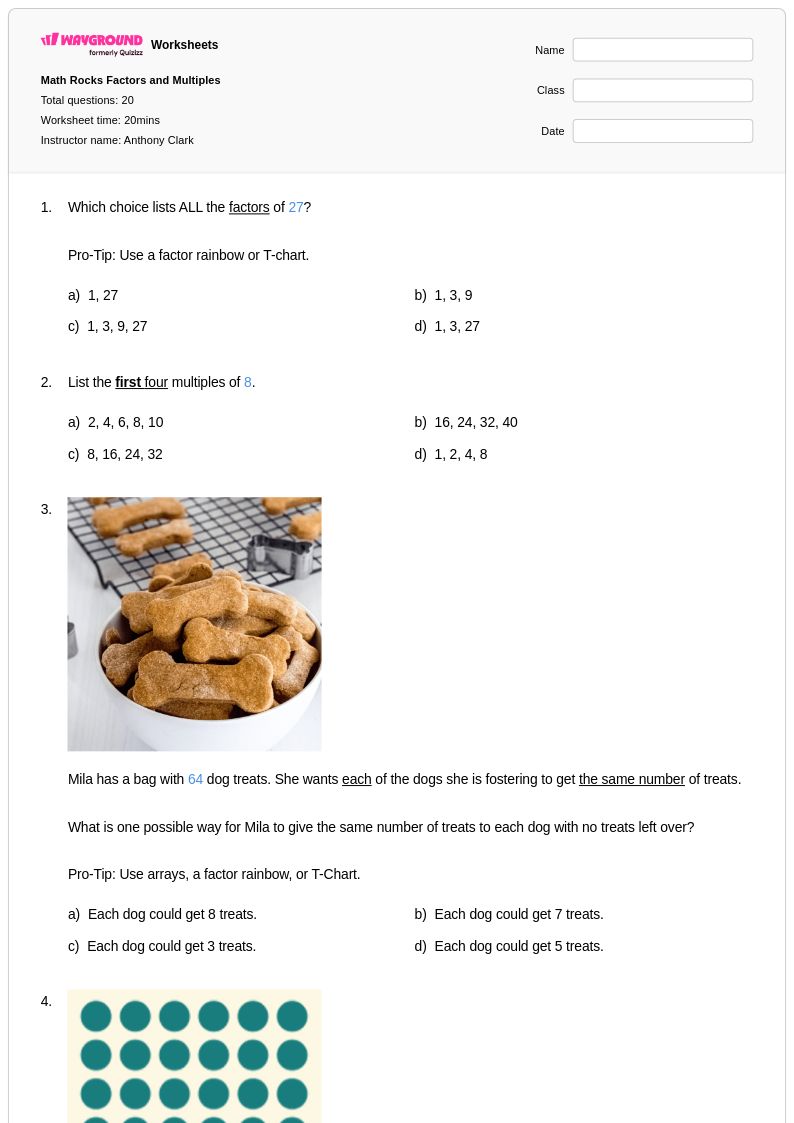
20 Q
4th - Uni
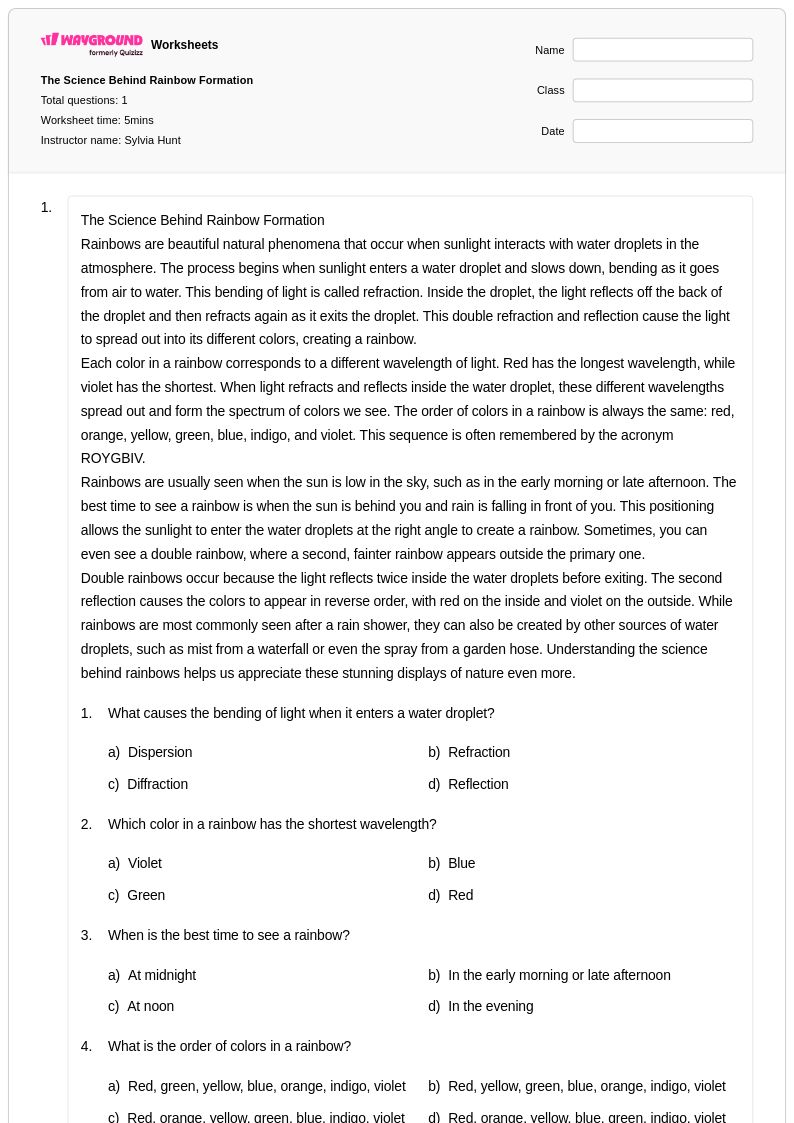
6 Q
6th
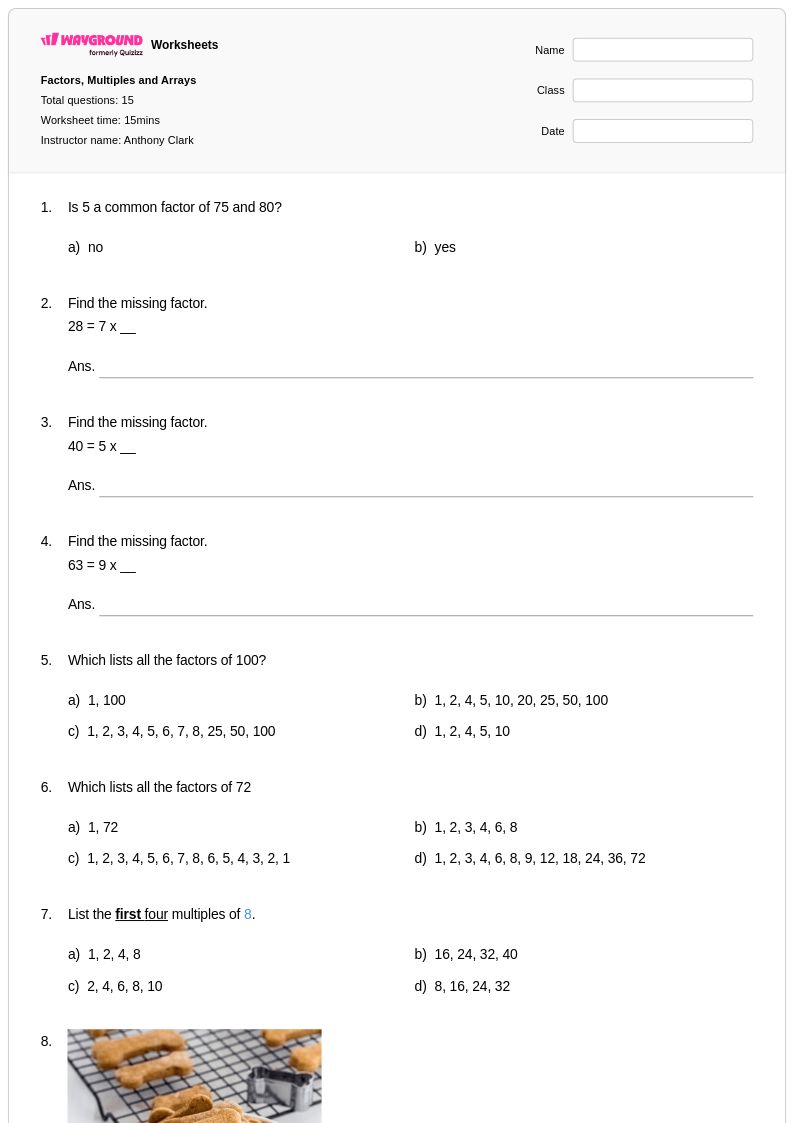
15 Q
4th - Uni
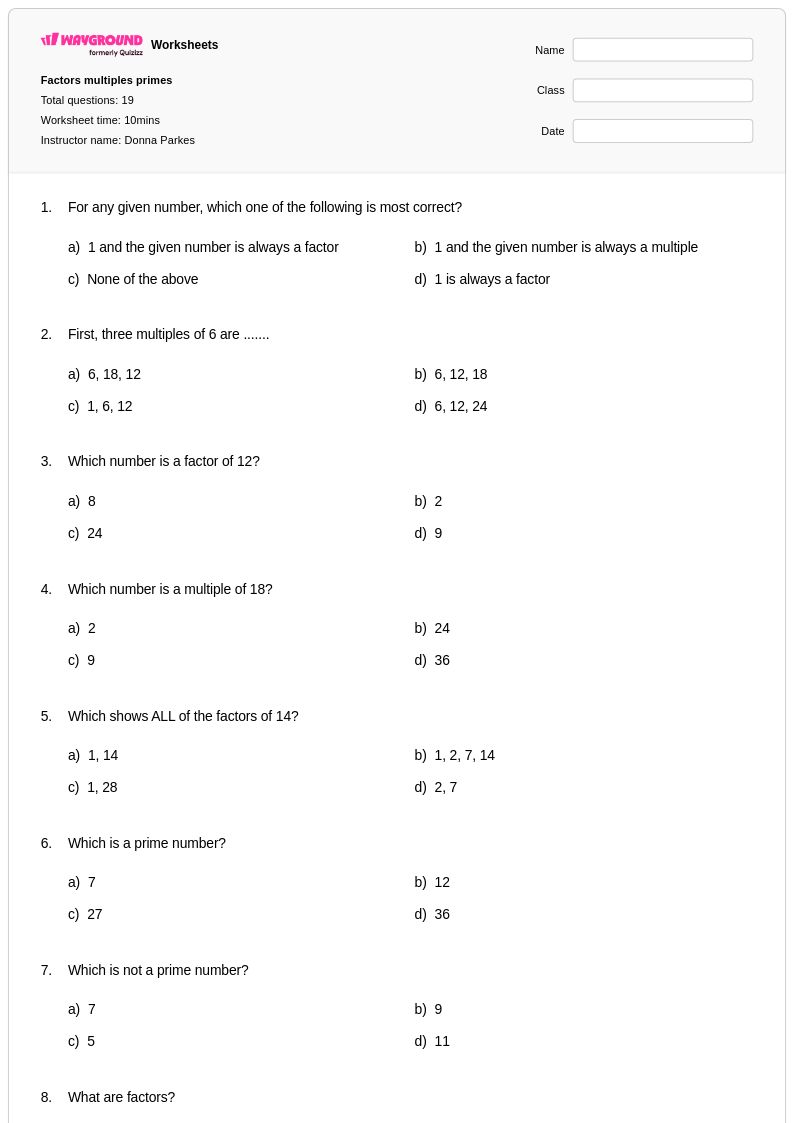
19 Q
4th - 9th
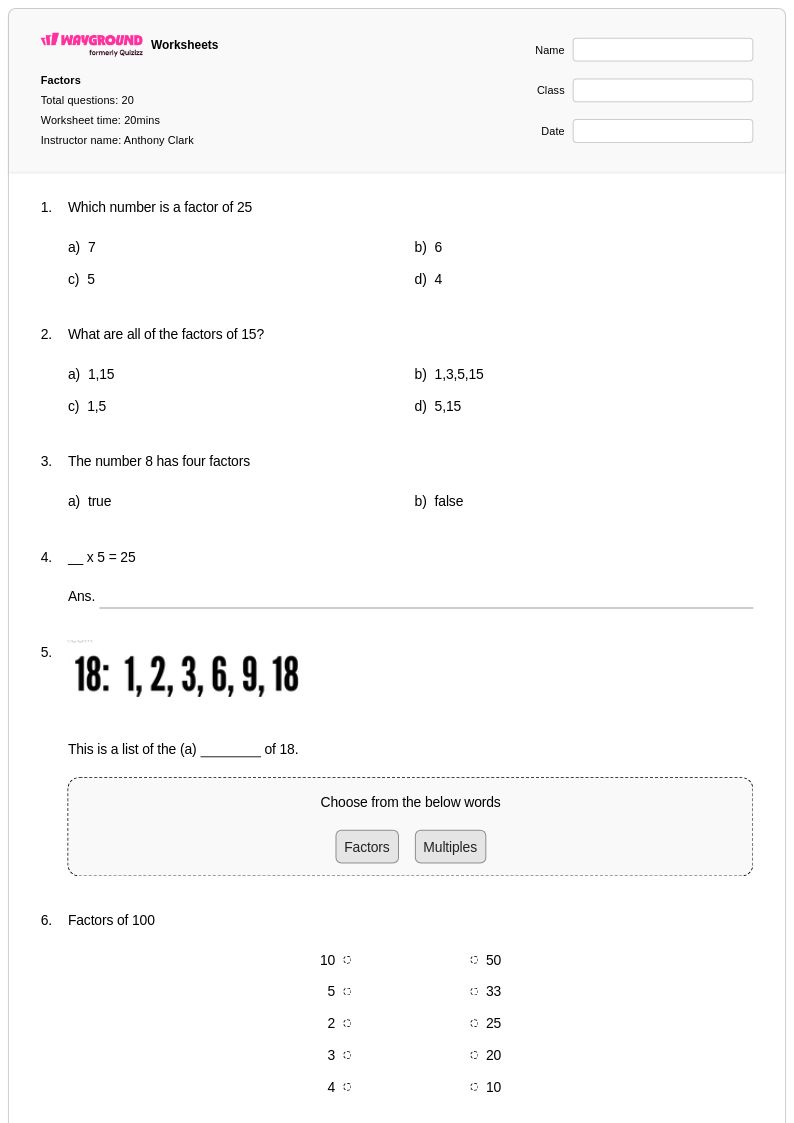
20 Q
5th - Uni
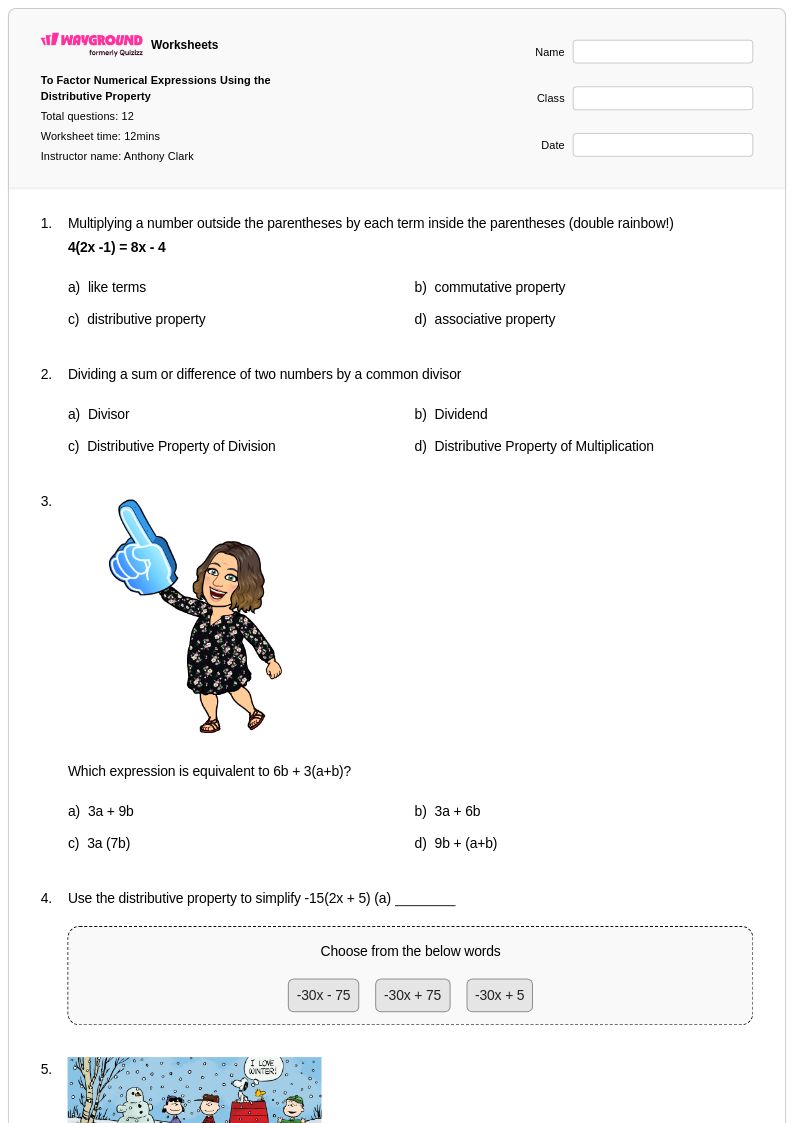
12 Q
6th - Uni
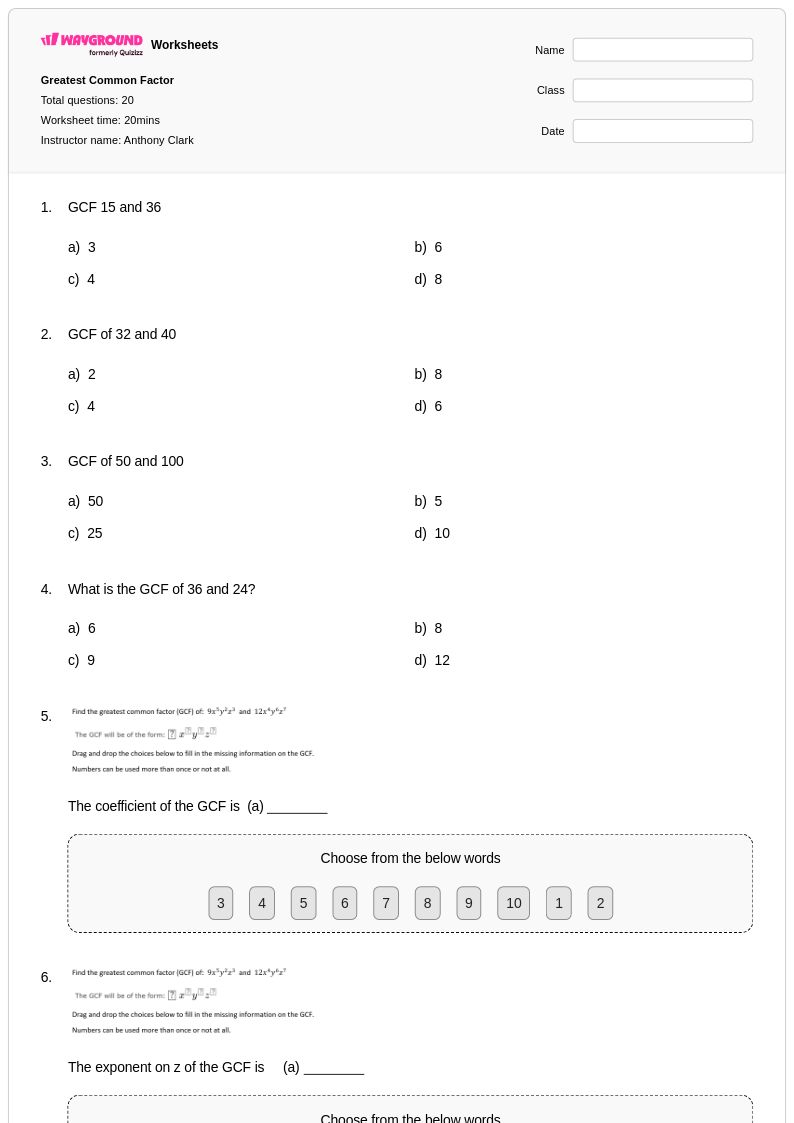
20 Q
6th - Uni
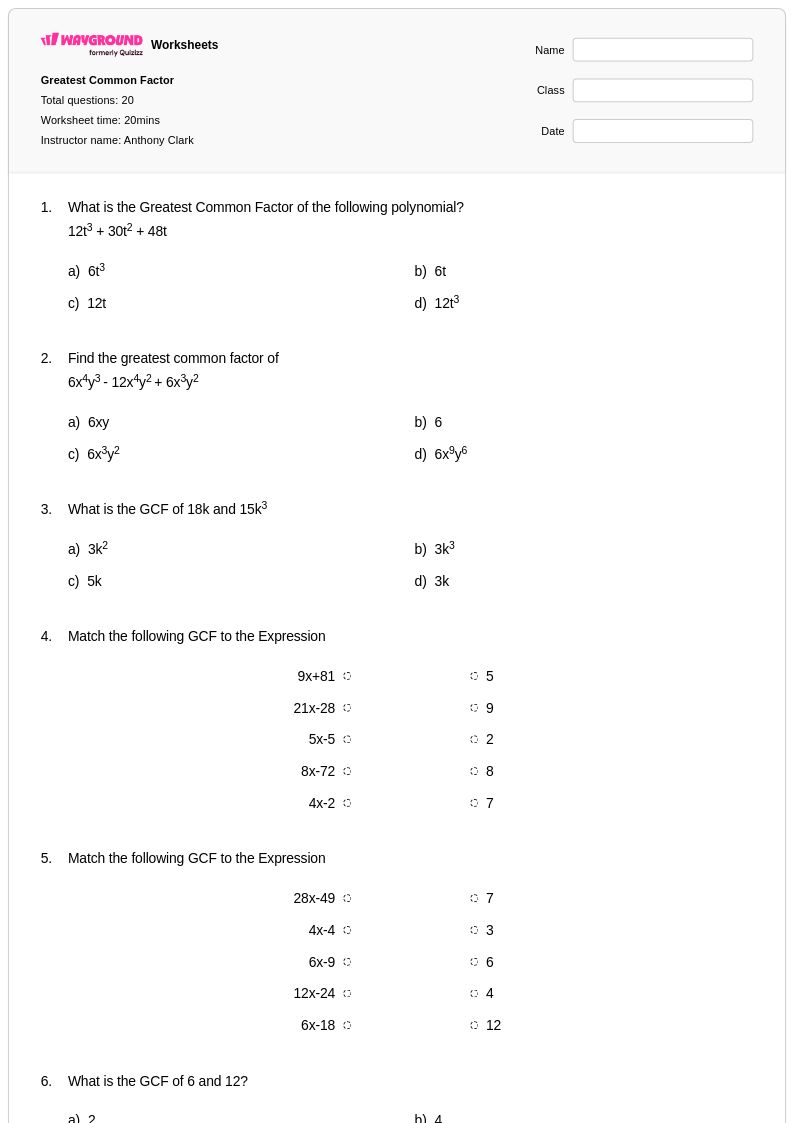
20 Q
6th - Uni
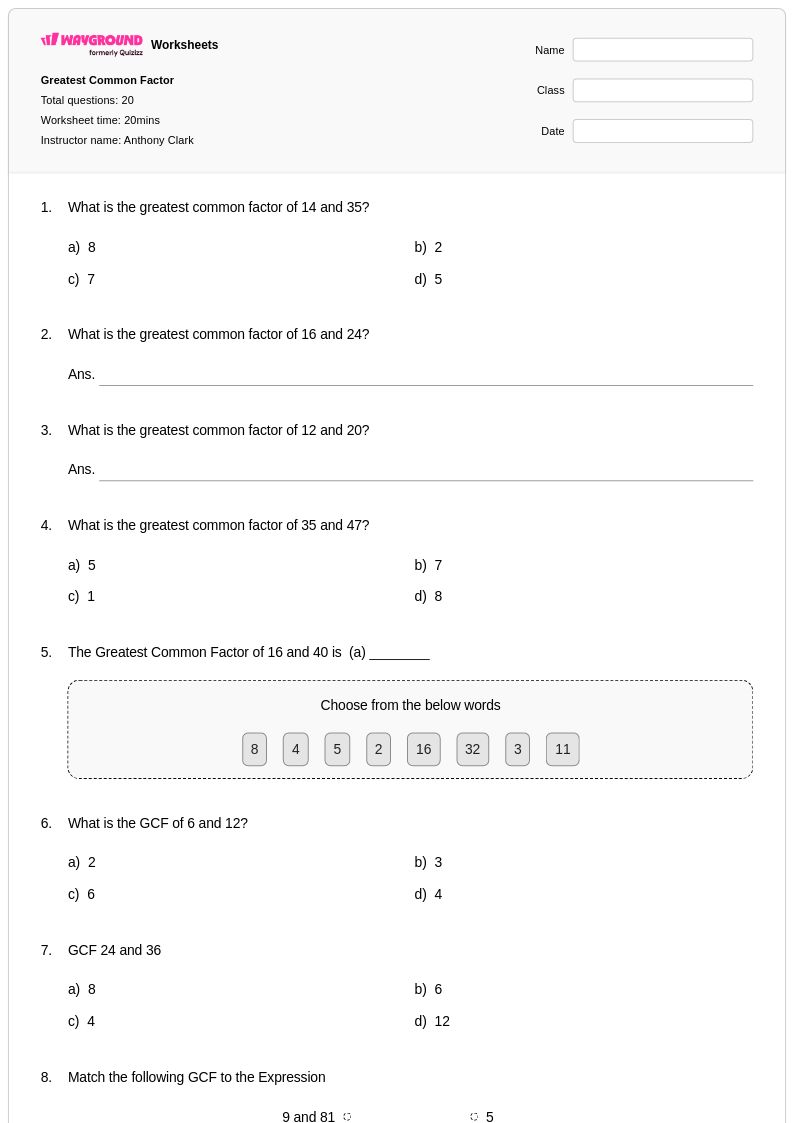
20 Q
6th - Uni
Explore Other Subject Worksheets for year 6
Explore printable Factor Rainbow worksheets for Year 6
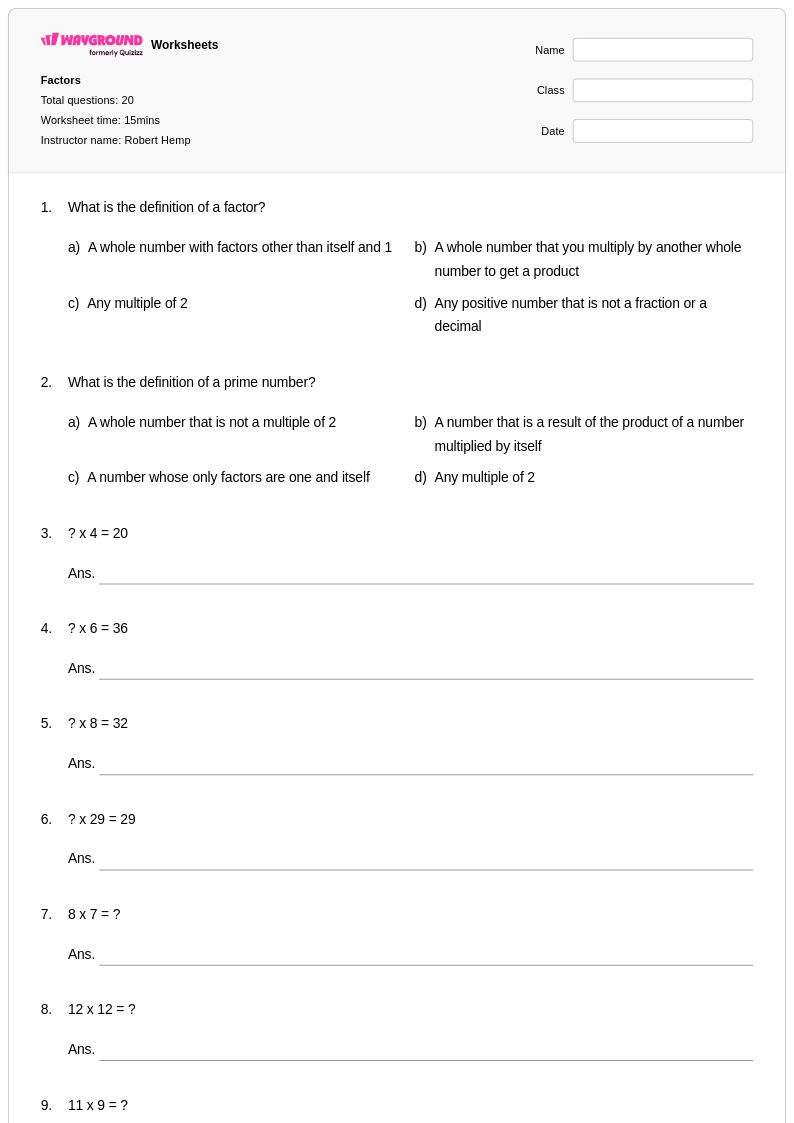
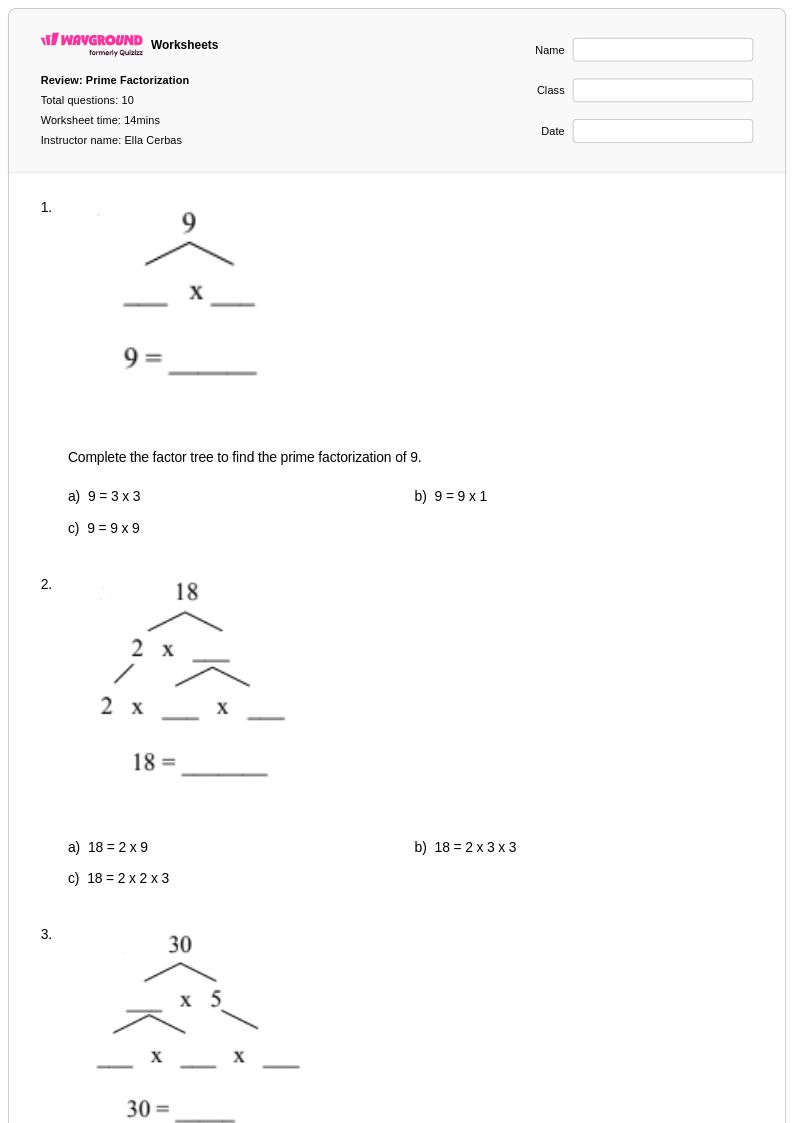
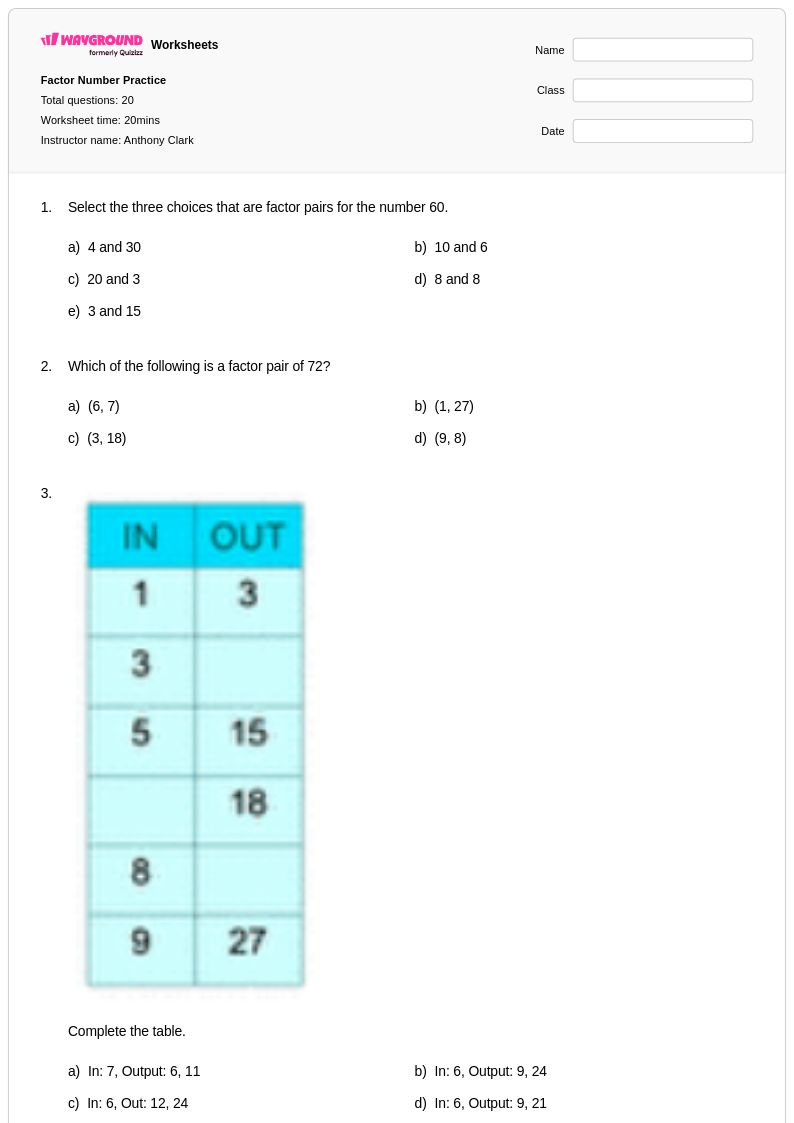
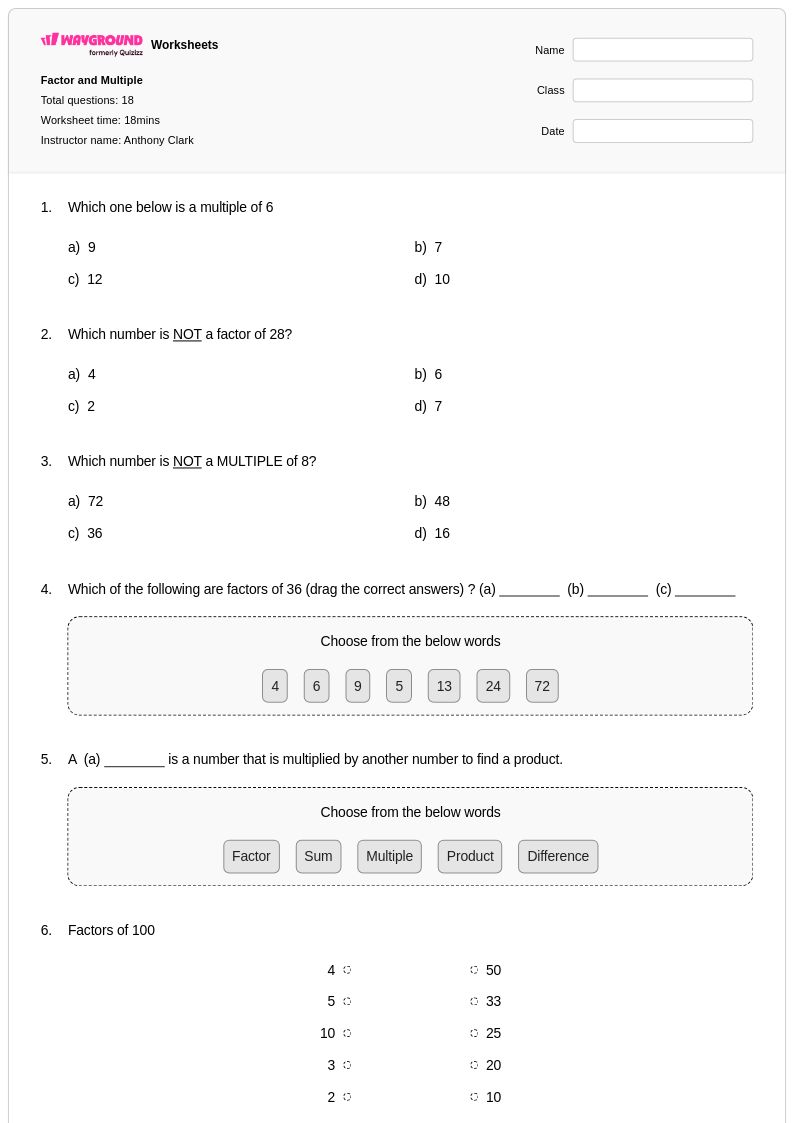
Factor Rainbow worksheets for Year 6 mathematics provide students with a visual and systematic approach to understanding the complete set of factor pairs for any given number. These comprehensive practice resources from Wayground (formerly Quizizz) strengthen students' number sense by teaching them to identify all factors of a number while organizing them in an arc or rainbow pattern that clearly shows the relationship between factor pairs. Students work through carefully structured practice problems that build their ability to find factors efficiently, recognize patterns in factor relationships, and develop a deeper understanding of multiplication and division concepts. Each worksheet collection includes detailed answer keys and is available as free printables in pdf format, making it easy for educators to provide immediate feedback and support student learning both in classroom settings and at home.
Wayground (formerly Quizizz) empowers teachers with an extensive library of millions of teacher-created Factor Rainbow resources that can be seamlessly integrated into Year 6 mathematics instruction. The platform's robust search and filtering capabilities allow educators to quickly locate worksheets that align with specific curriculum standards and match their students' current skill levels. Teachers can customize these materials to provide differentiated instruction, whether students need additional practice with basic factor identification or are ready for more complex problems involving larger numbers and prime factorization concepts. The flexible format options, including both printable pdf versions and interactive digital worksheets, support diverse classroom environments and learning preferences while enabling teachers to efficiently plan lessons, provide targeted remediation for struggling learners, and offer enrichment opportunities for advanced students.
FAQs
How do I teach factor rainbows to 6th graders?
What's the value of factor rainbow practice at the 6th grade level?
What mistakes do 6th graders make with factor rainbows?
How do I use Wayground's Grade 6 factor rainbow worksheets?
How does the factor rainbow fit into the 6th grade Common Core math progression?
How can I differentiate factor rainbow practice for my 6th grade class?