
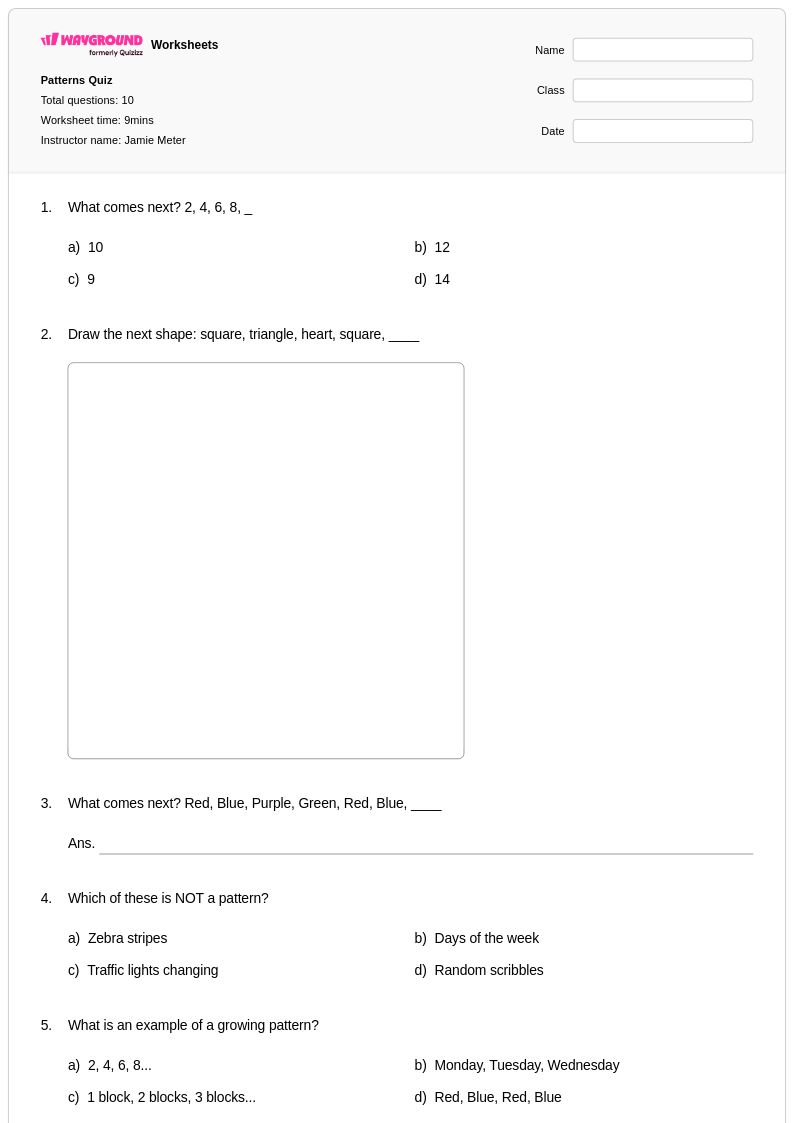
10 Q
3rd
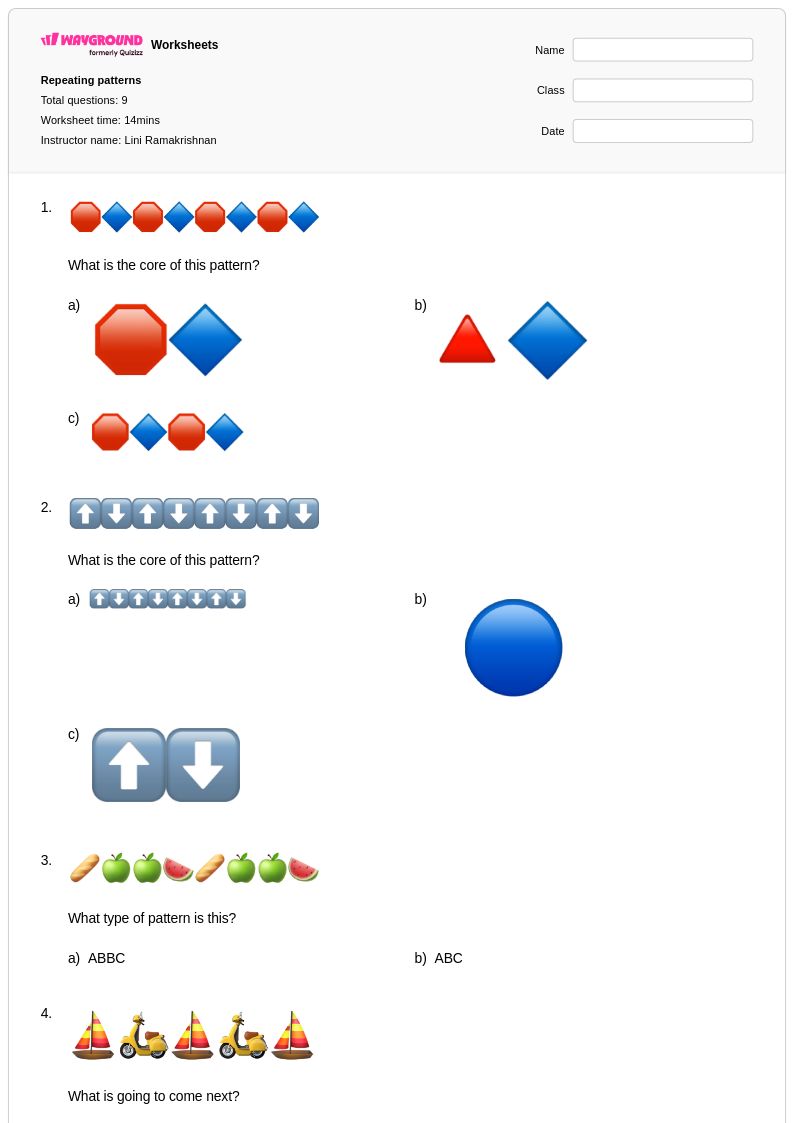
9 Q
3rd
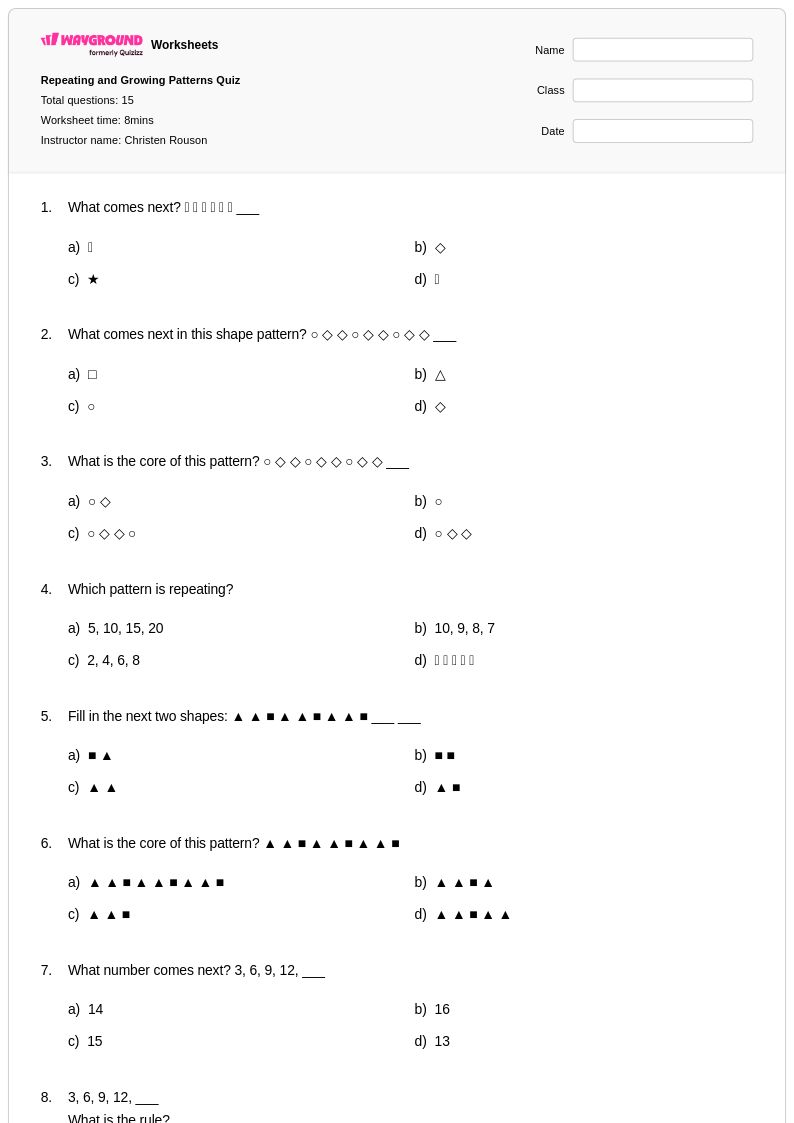
15 Q
3rd
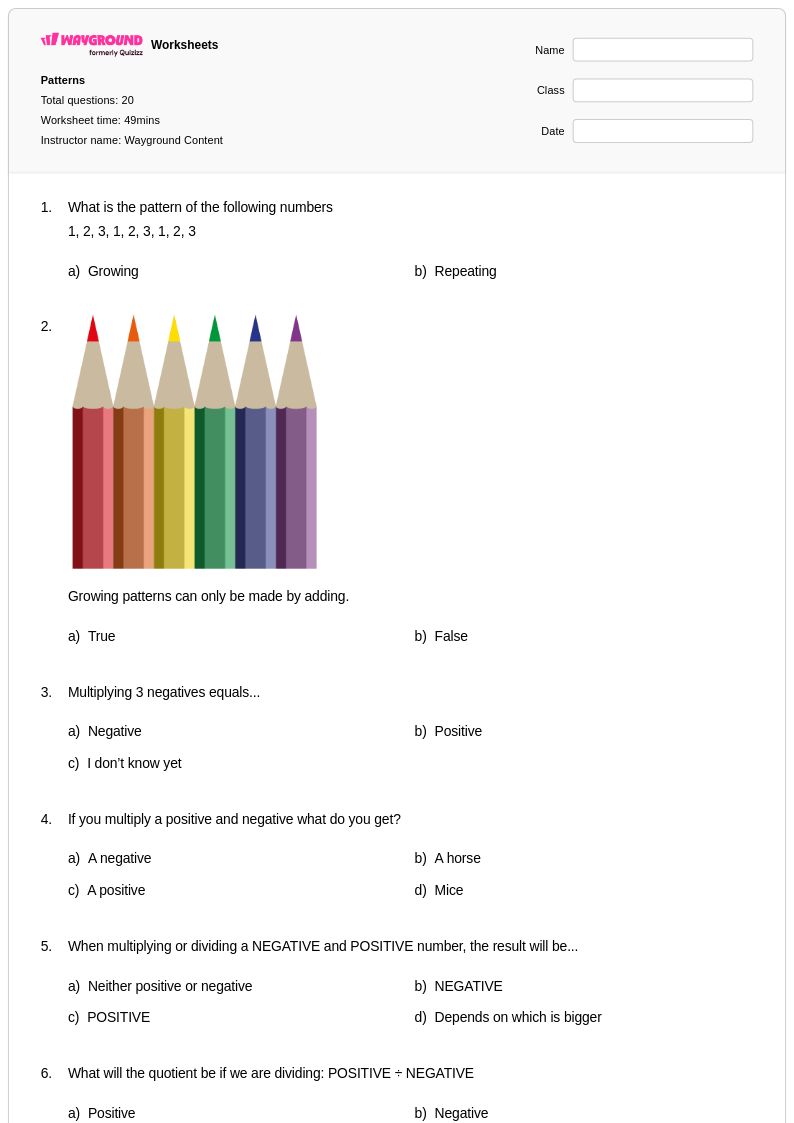
20 Q
3rd
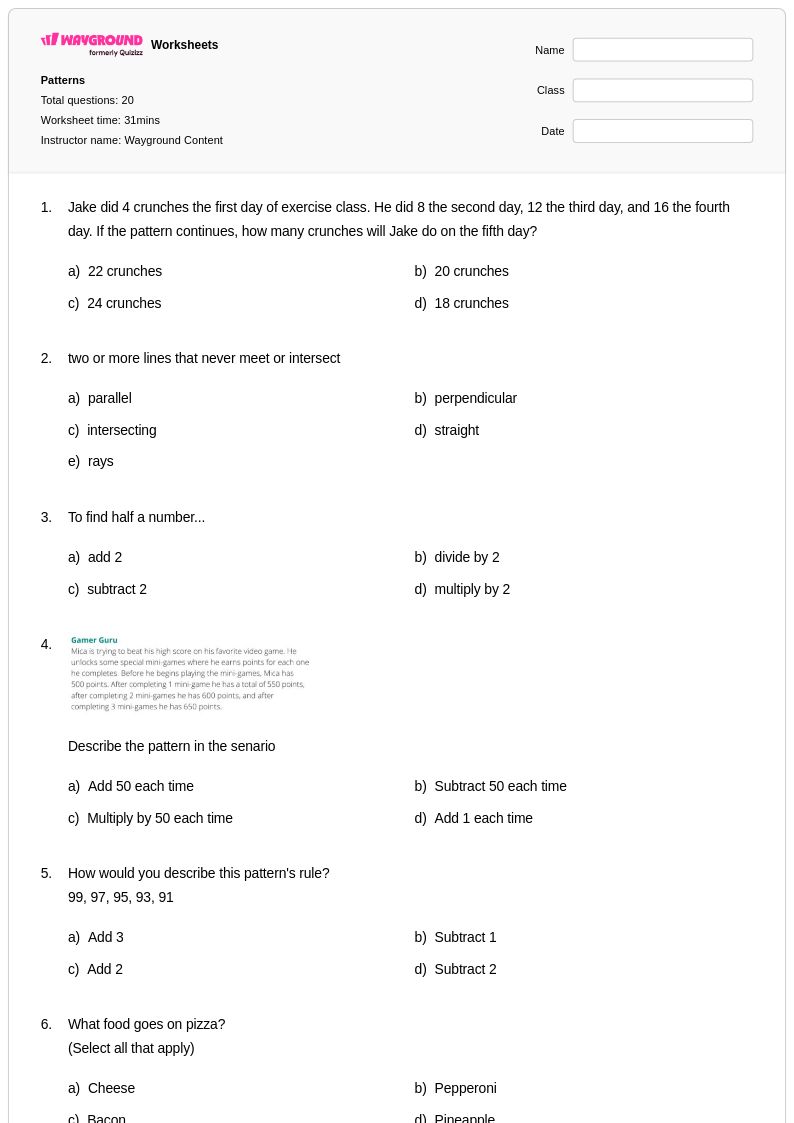
20 Q
3rd
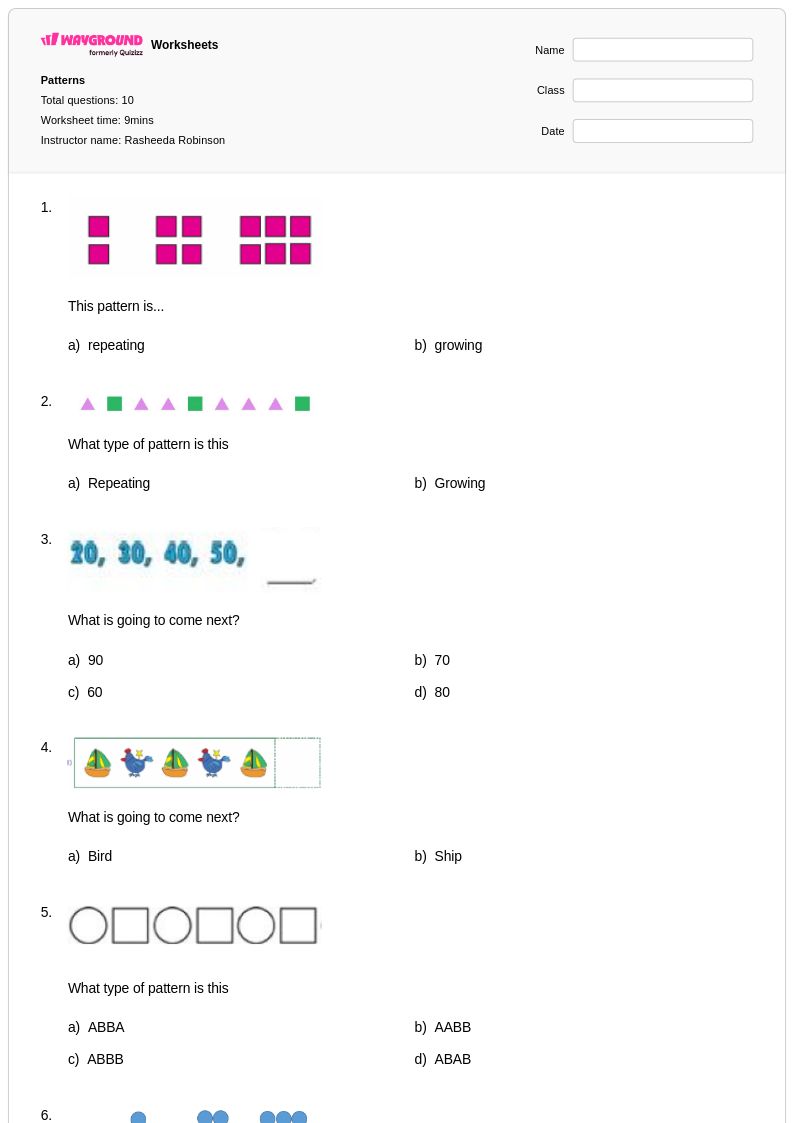
10 Q
3rd
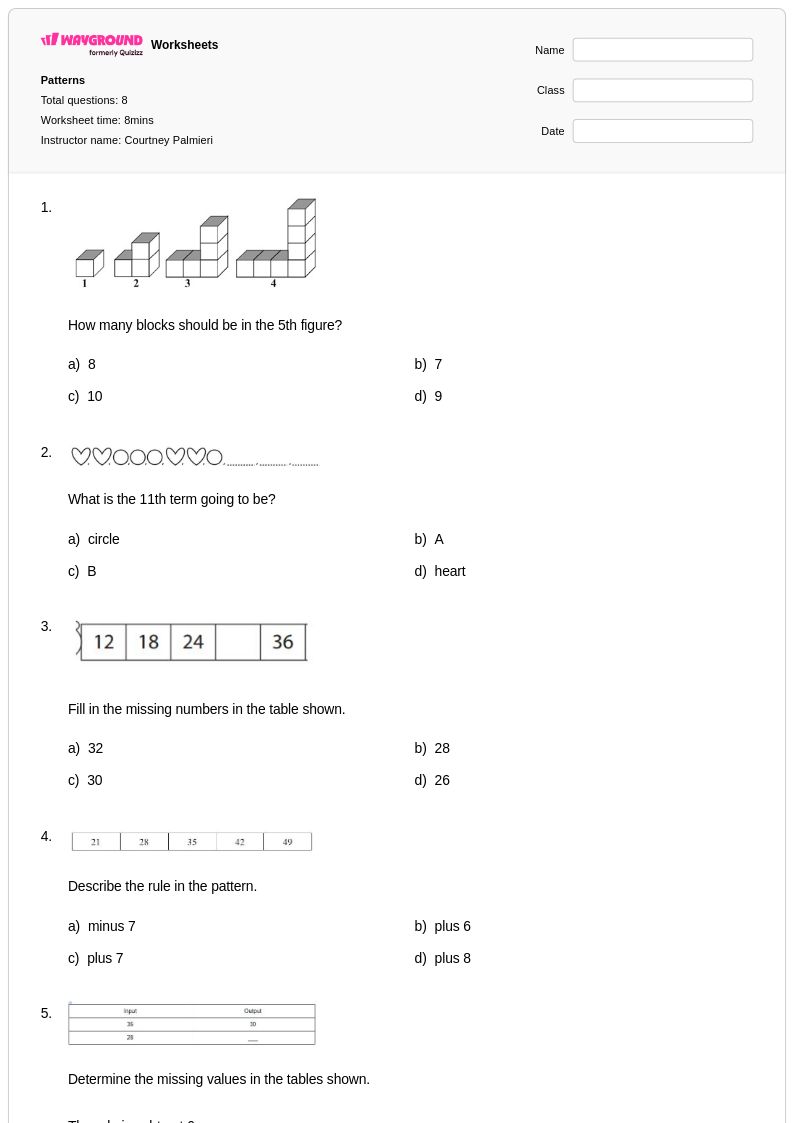
8 Q
3rd
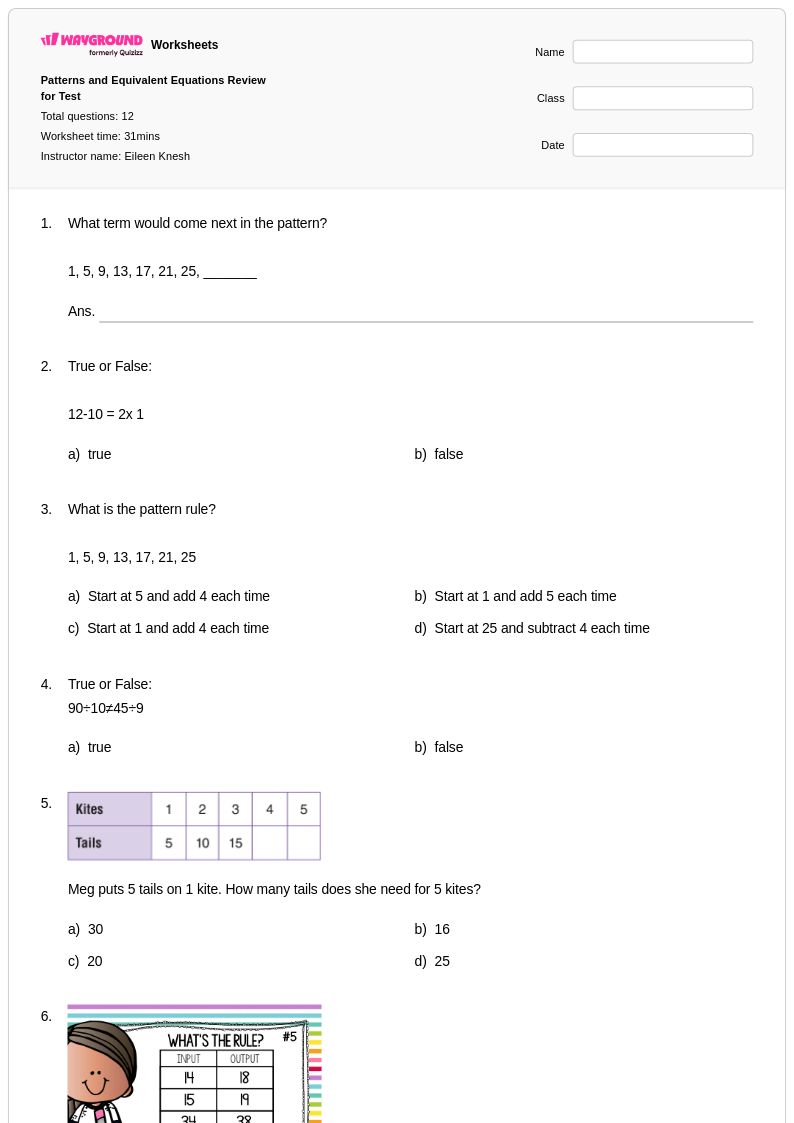
12 Q
3rd
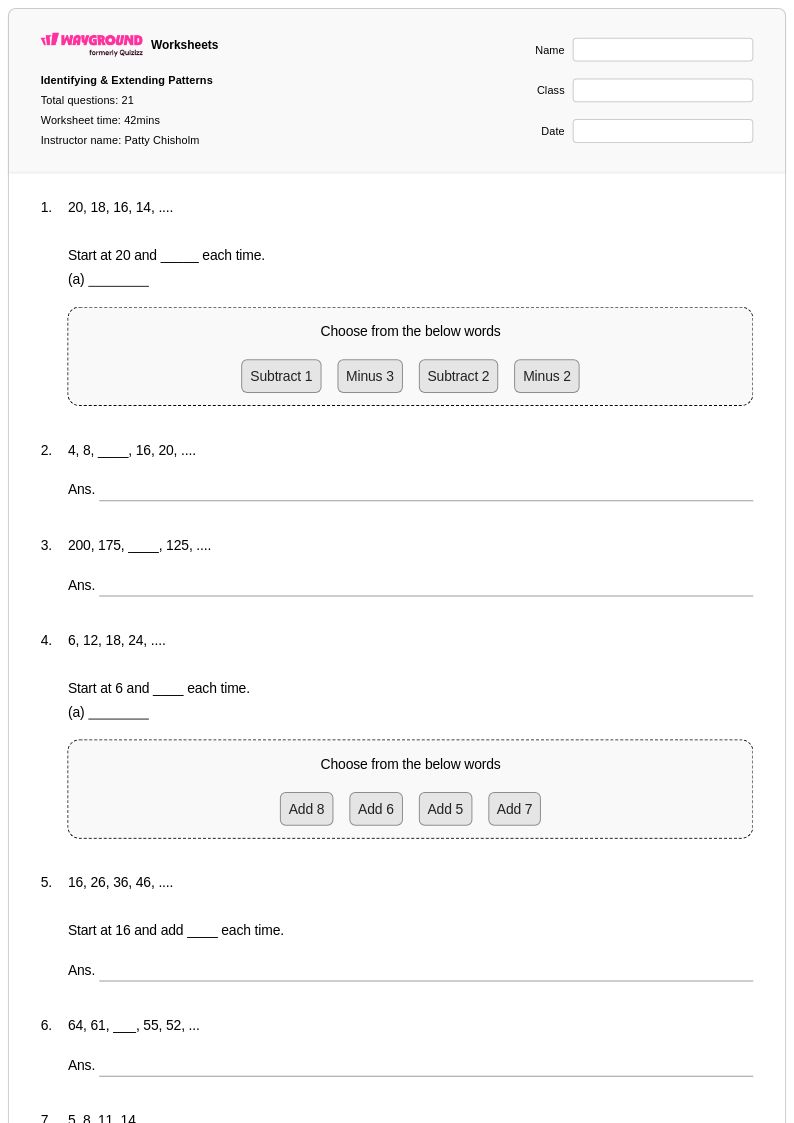
21 Q
3rd
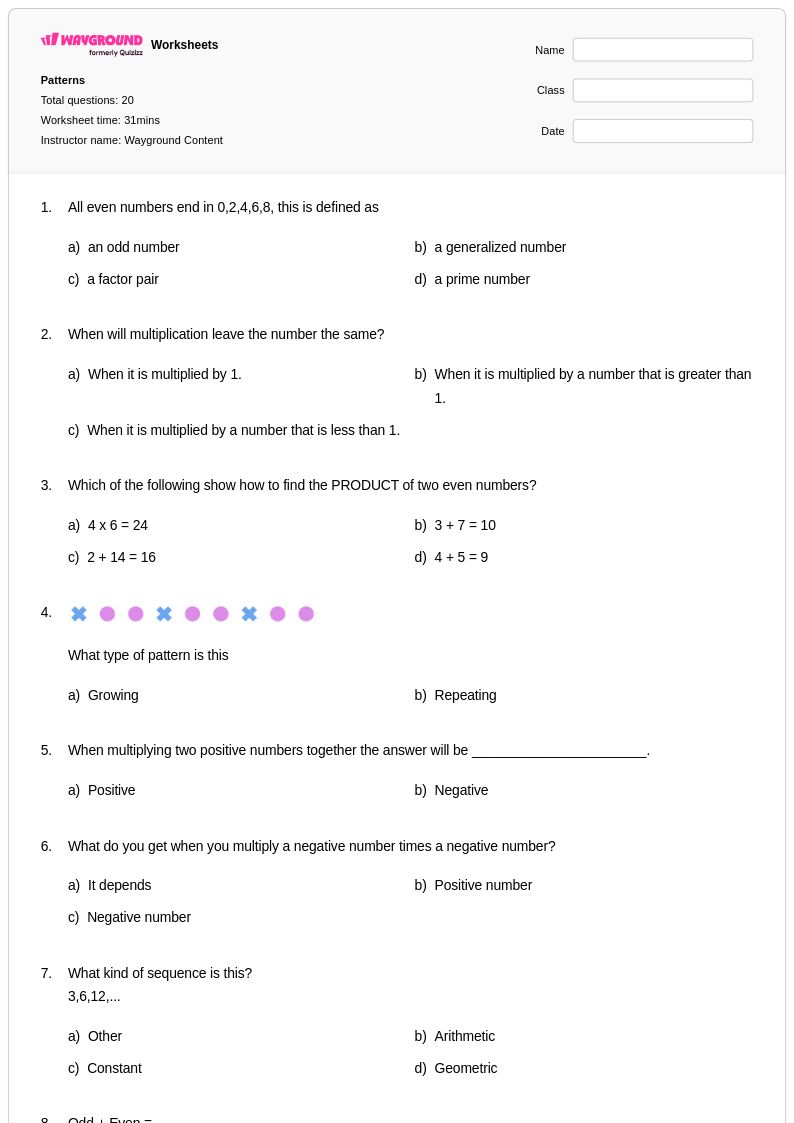
20 Q
3rd
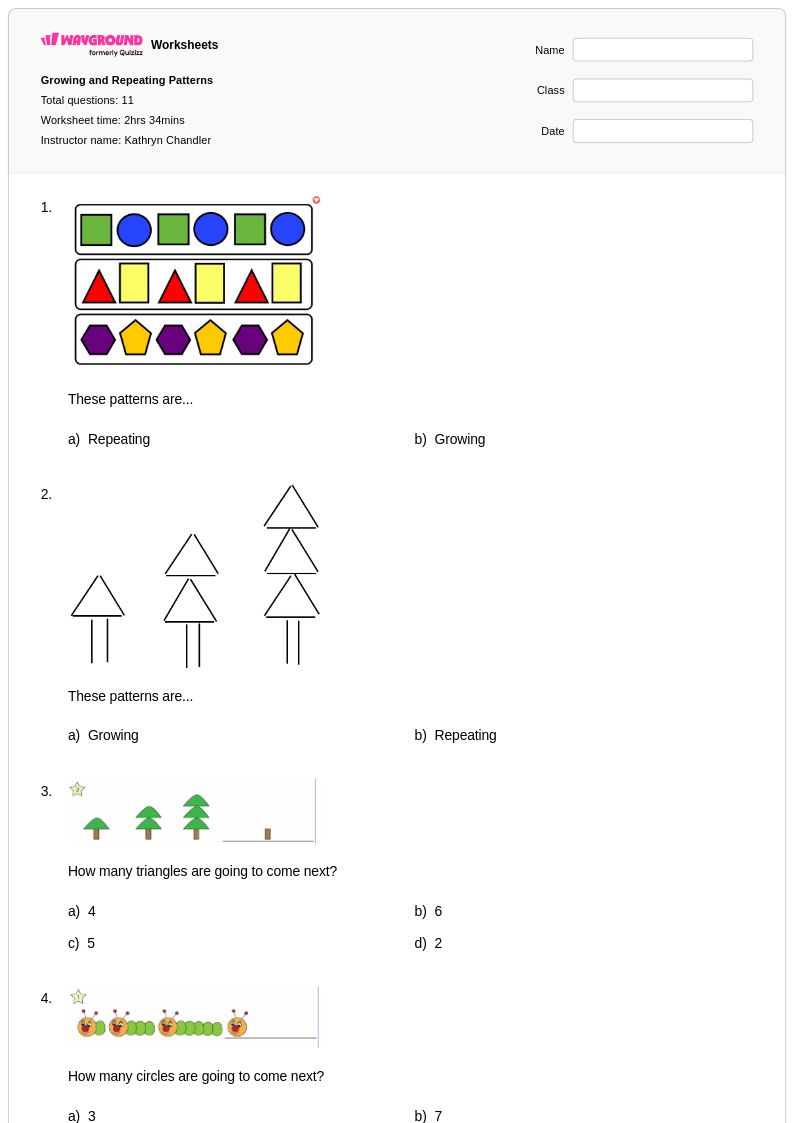
11 Q
3rd
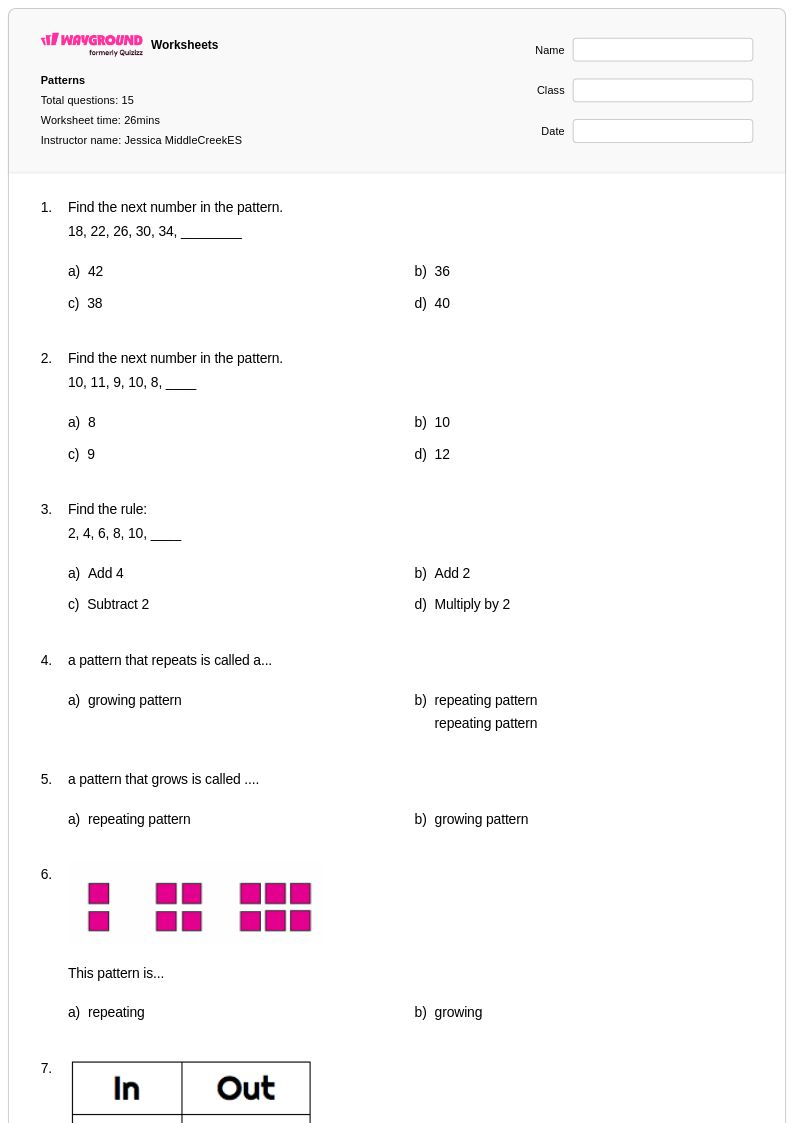
15 Q
3rd
10 Q
2nd - 5th
10 Q
3rd
10 Q
3rd
15 Q
1st - 5th
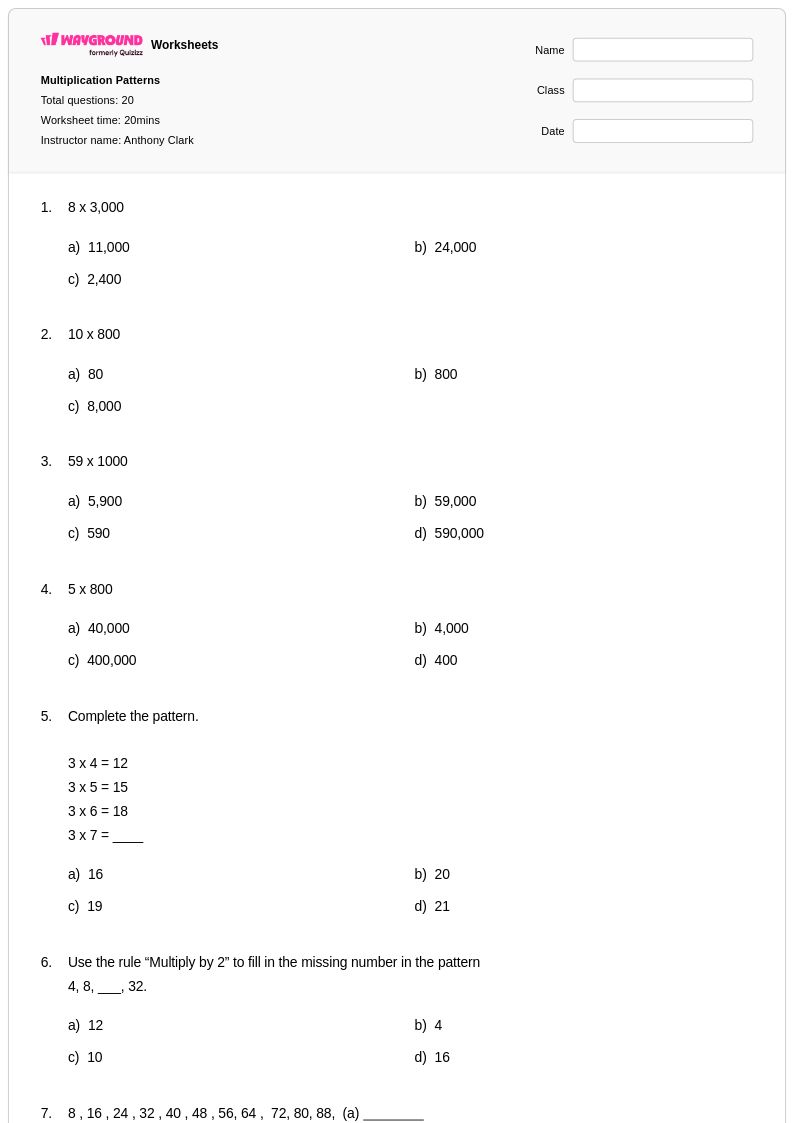
20 Q
3rd - Uni
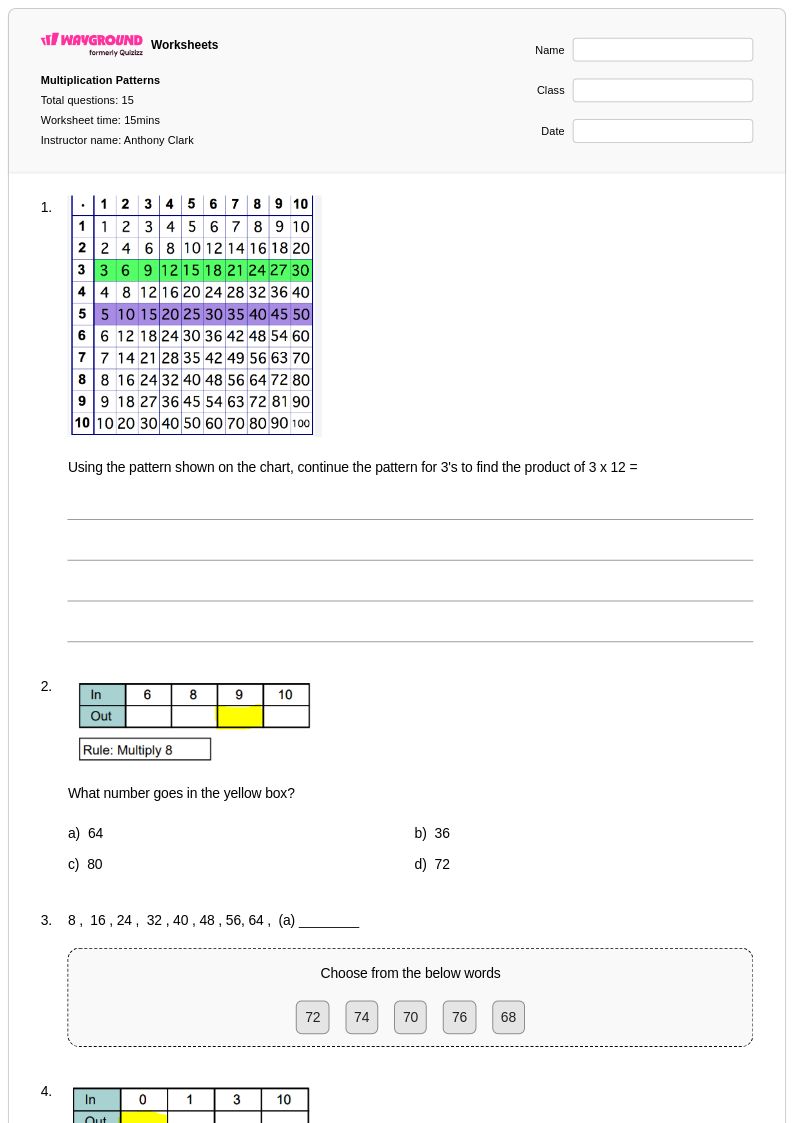
15 Q
3rd - Uni
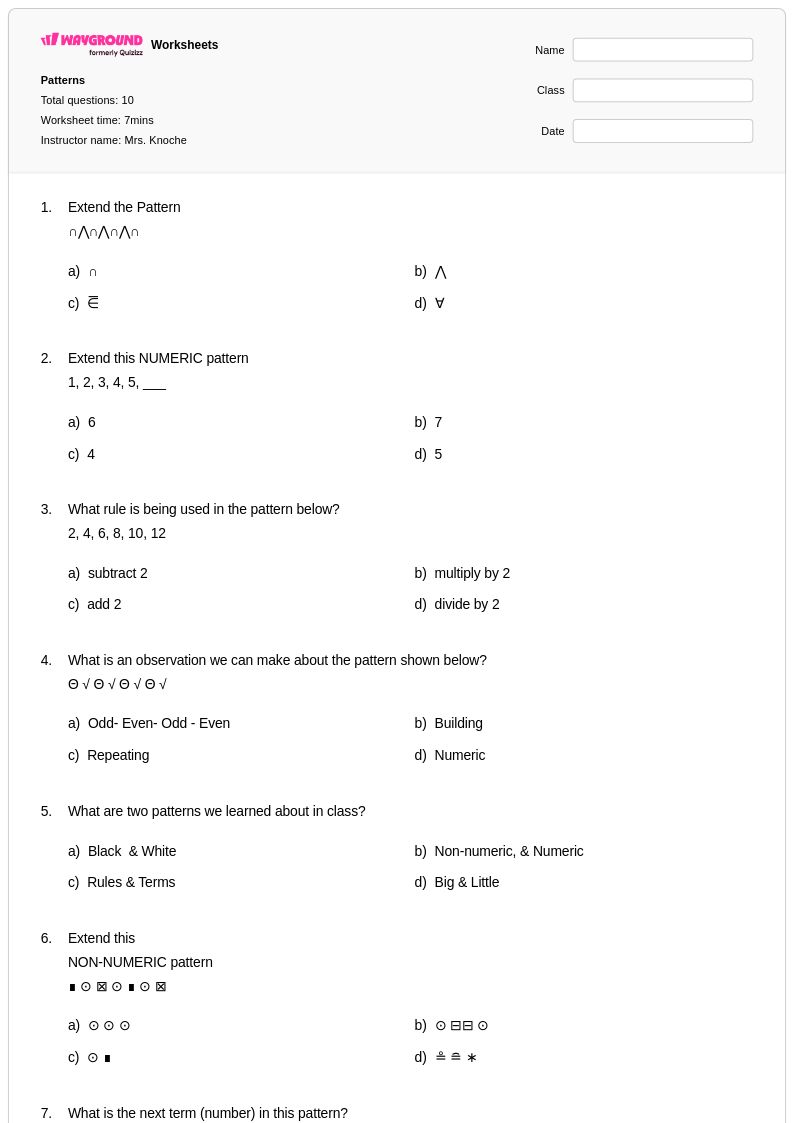
10 Q
3rd - 5th
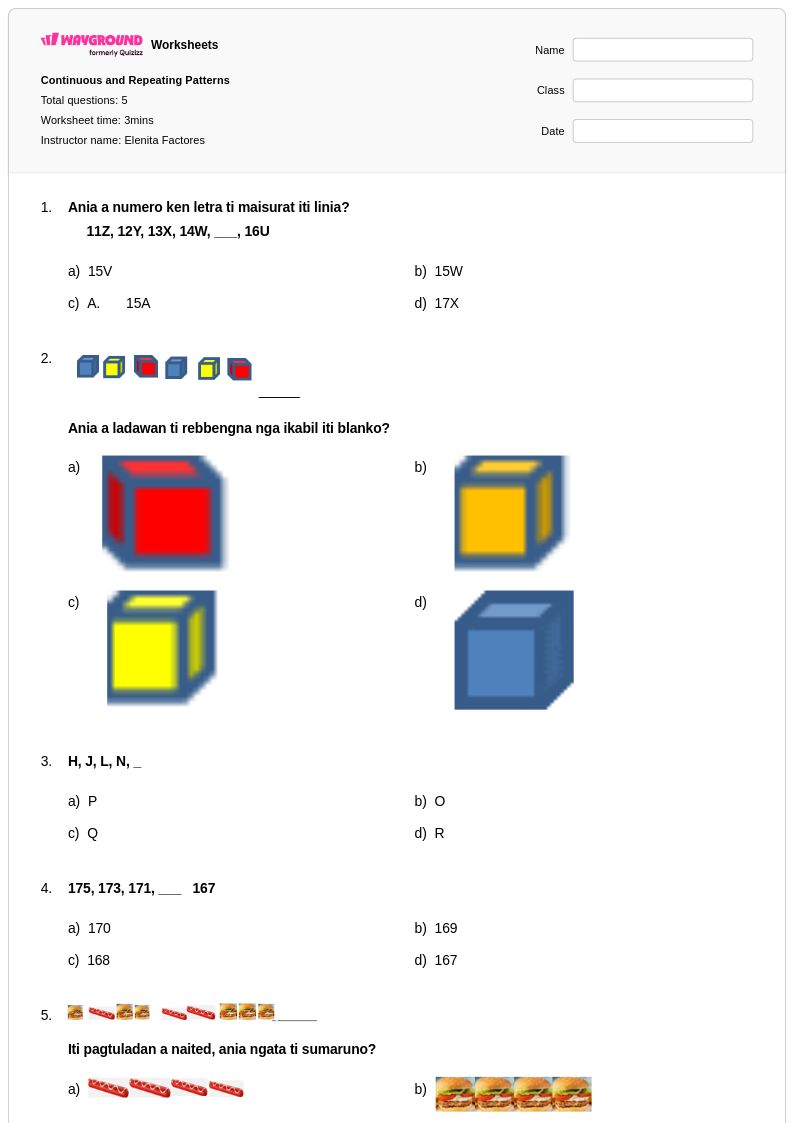
5 Q
3rd
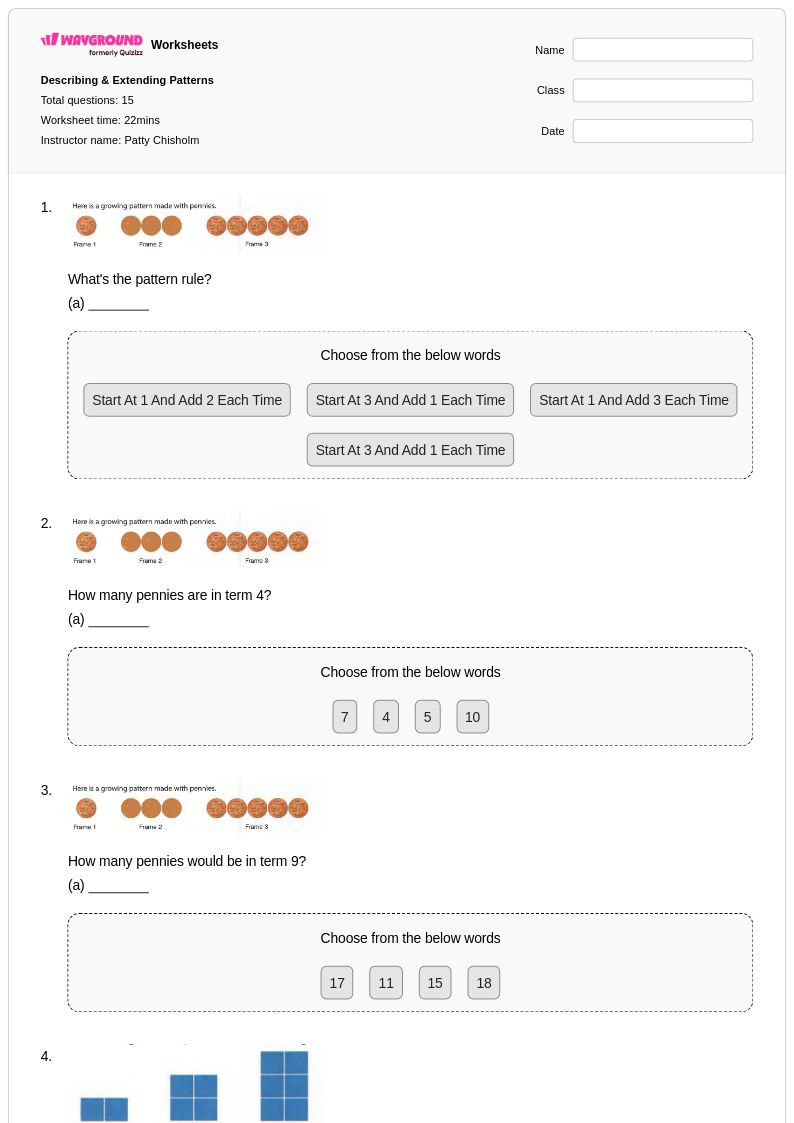
15 Q
3rd
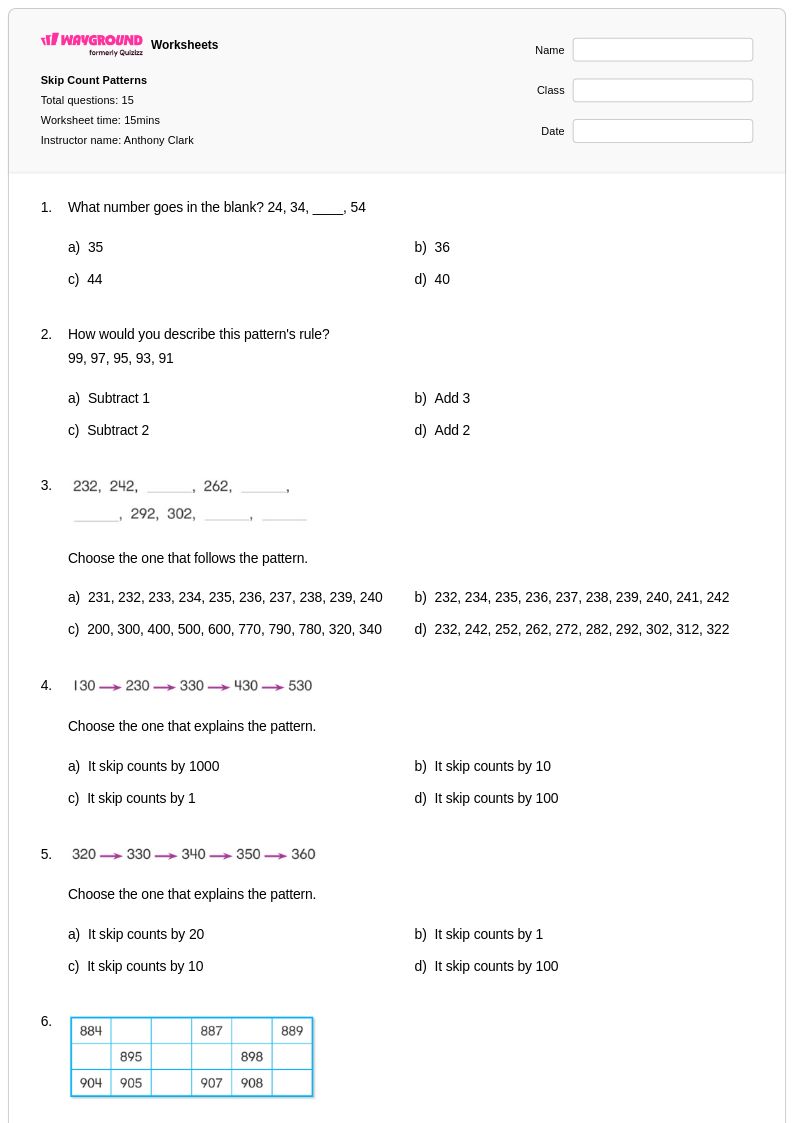
15 Q
2nd - Uni
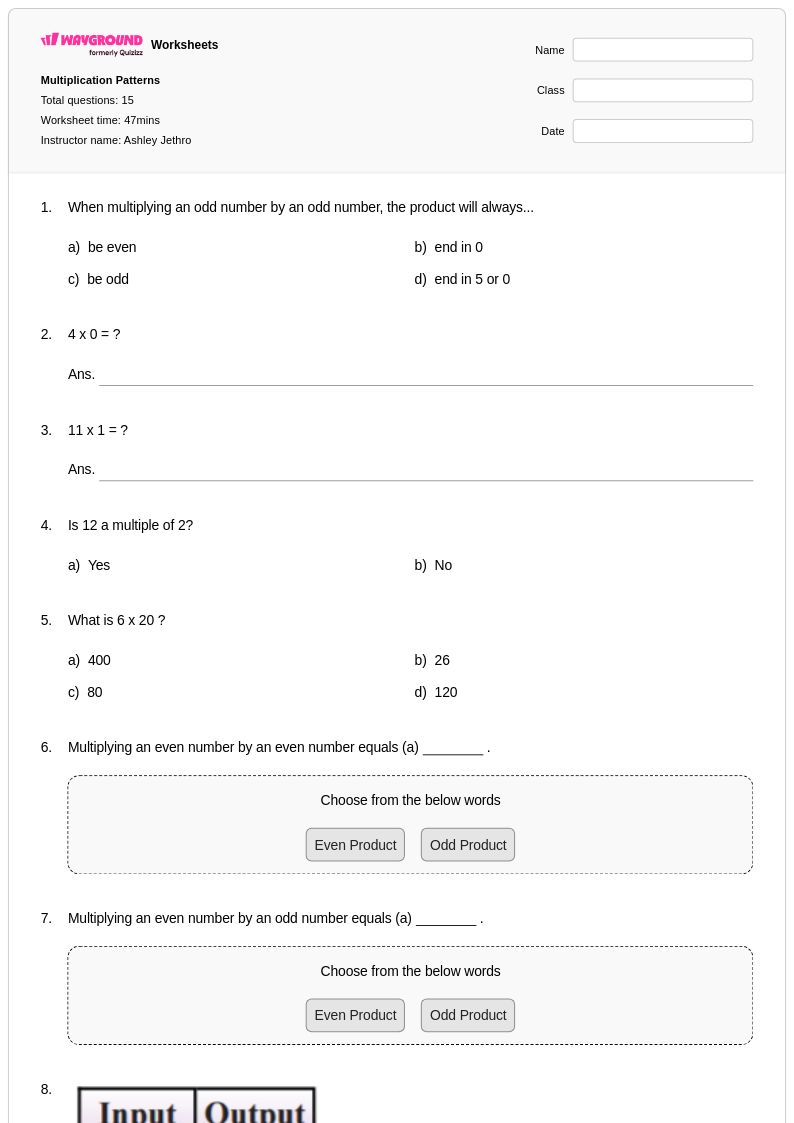
15 Q
3rd
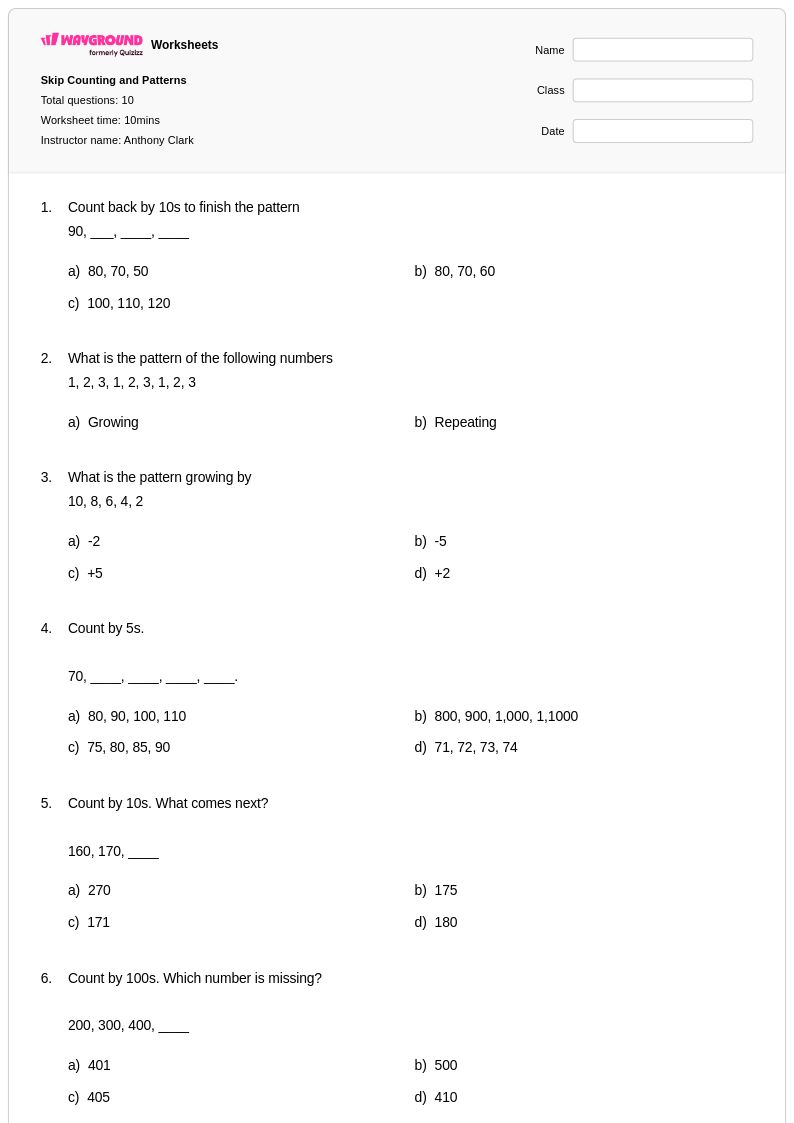
10 Q
2nd - Uni
Explore Other Subject Worksheets for year 3
Explore printable Repeating Patterns worksheets for Year 3
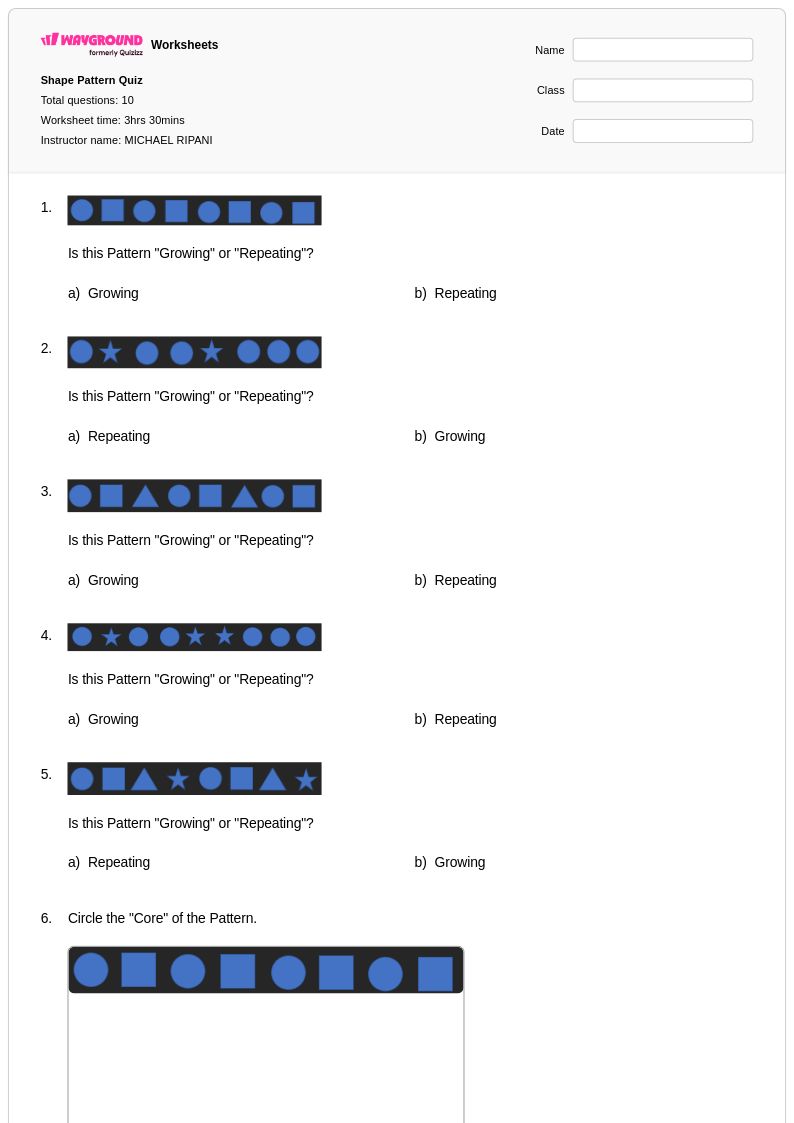
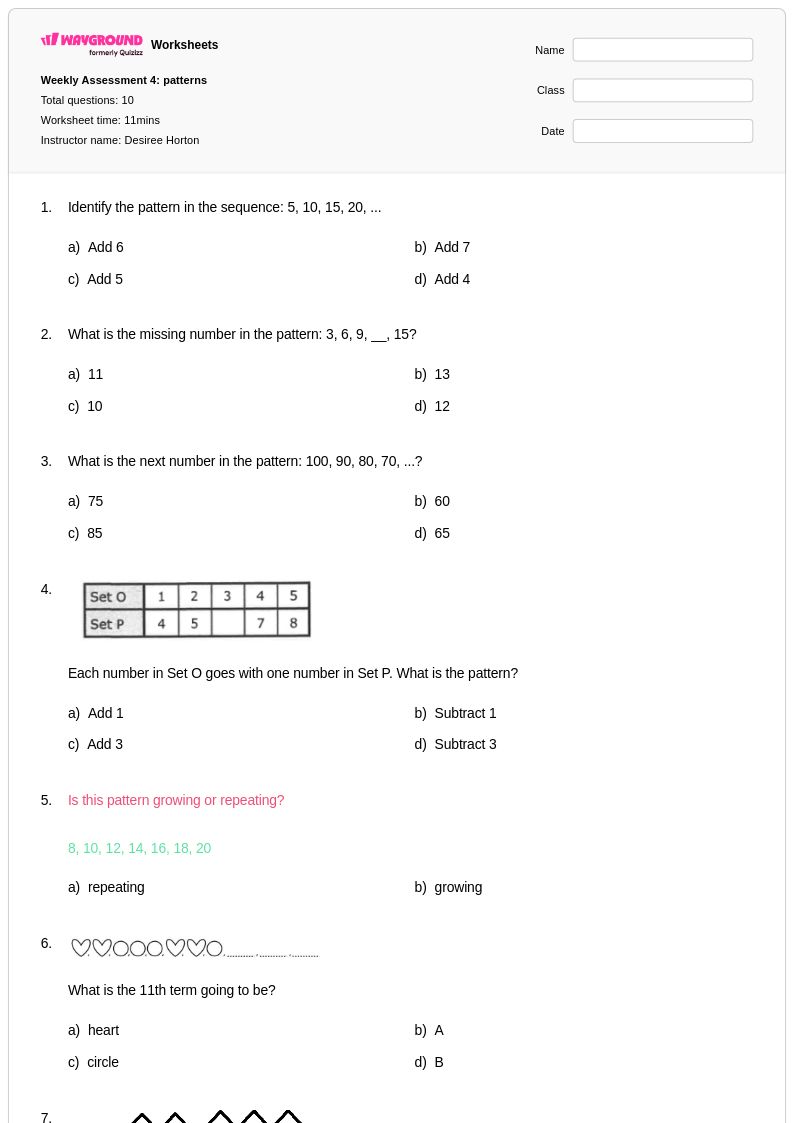
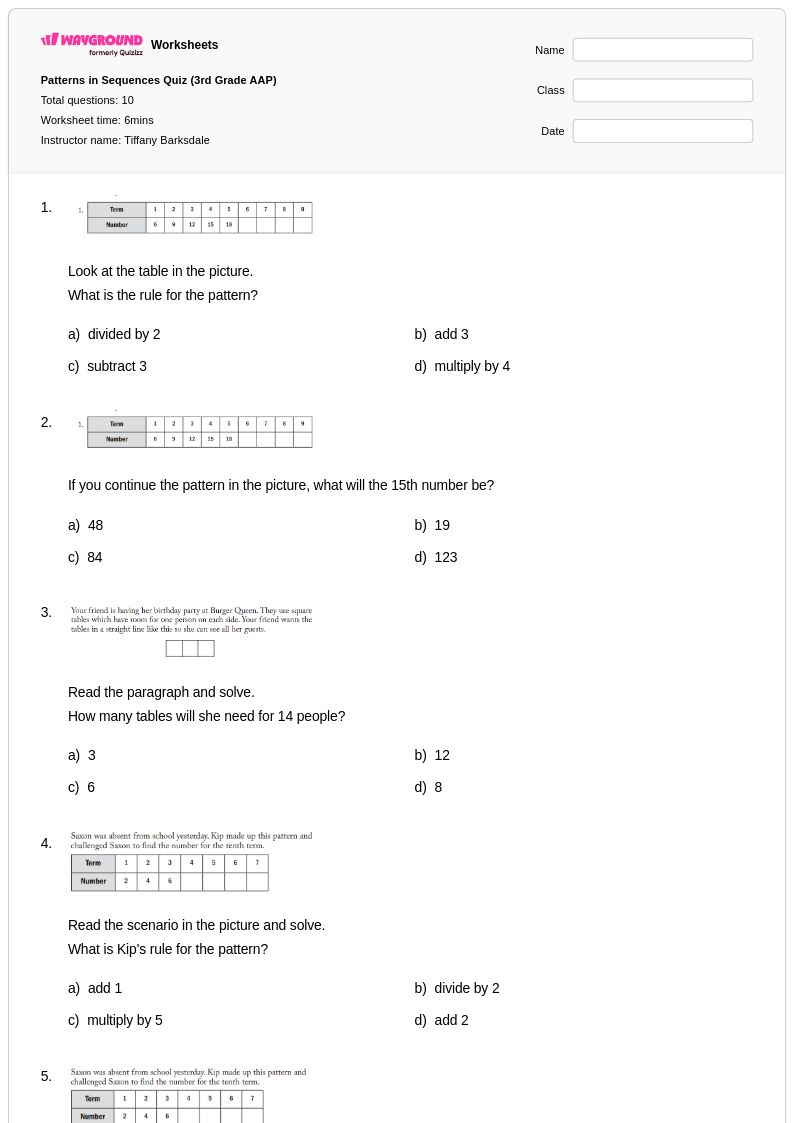
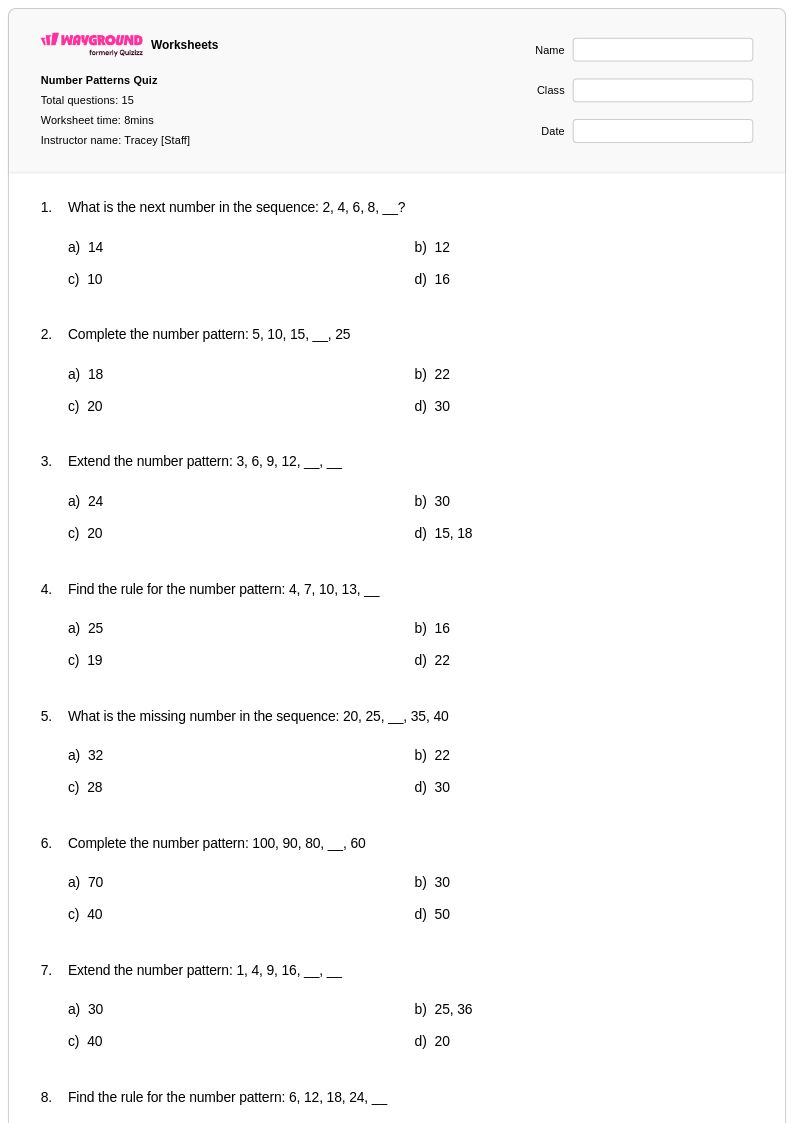
Repeating patterns worksheets for Year 3 students available through Wayground (formerly Quizizz) provide essential practice in recognizing, extending, and creating sequential arrangements that follow predictable rules. These comprehensive worksheets strengthen students' ability to identify pattern cores, predict upcoming elements in sequences, and understand the mathematical relationships that govern repeating structures using shapes, colors, numbers, and symbols. Each worksheet collection includes practice problems that progress from simple AB patterns to more complex ABCD and ABAC arrangements, helping third graders develop critical analytical thinking skills that form the foundation for algebraic reasoning. Teachers can access complete answer keys and printable pdf versions that make it easy to implement these free resources during math centers, independent practice time, or homework assignments.
Wayground (formerly Quizizz) supports educators with millions of teacher-created repeating patterns resources that can be easily located through robust search and filtering capabilities designed specifically for Year 3 mathematics instruction. The platform's standards-aligned worksheet collections enable teachers to differentiate instruction by selecting materials that match individual student needs, whether for remediation of basic pattern recognition or enrichment through challenging multi-attribute sequences. Flexible customization tools allow educators to modify existing worksheets or combine multiple resources to create targeted practice sets, while both printable and digital pdf formats ensure seamless integration into any classroom environment. These features streamline lesson planning and provide teachers with reliable tools for ongoing skill practice, formative assessment, and targeted intervention in number sense development.
FAQs
What types of patterns do third graders work with?
How do I teach patterns in third grade?
What exercises are effective for third-grade pattern skills?
What are common challenges for third graders with patterns?
How can I use this third-grade patterns worksheet with my students?
How do patterns support the third-grade math curriculum?
How can I support diverse learners with this patterns worksheet?