
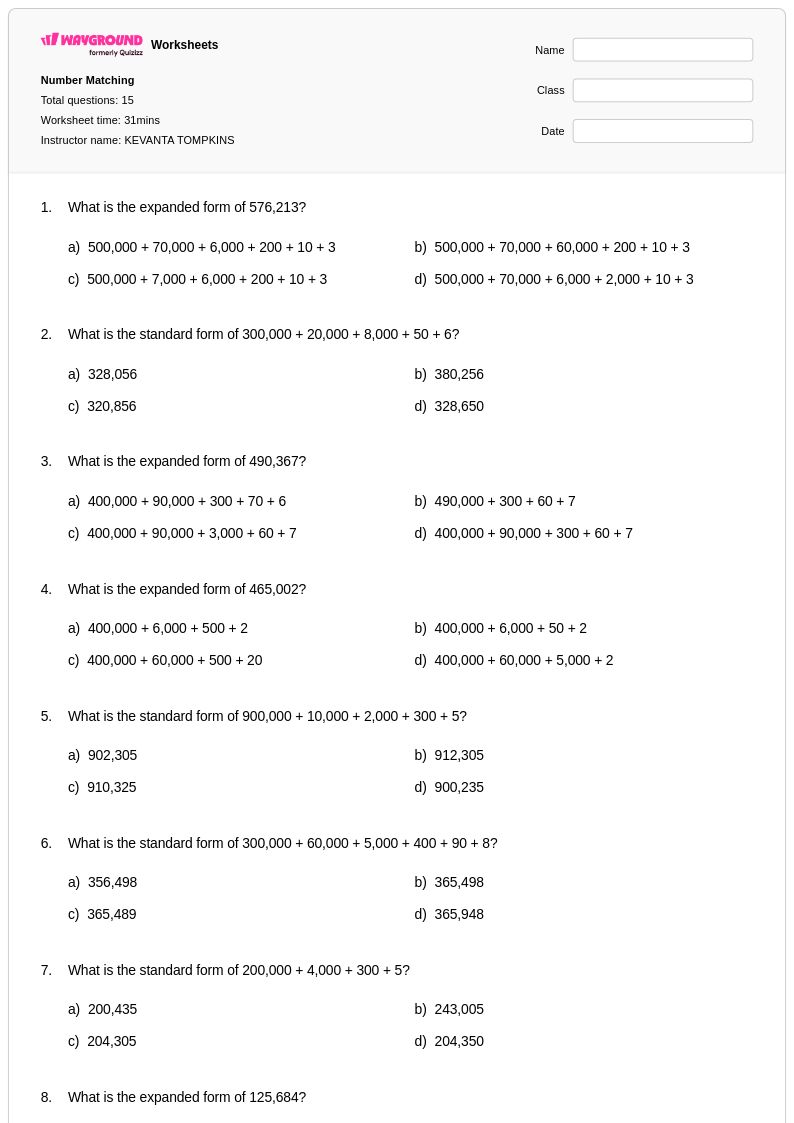
15 Q
3rd
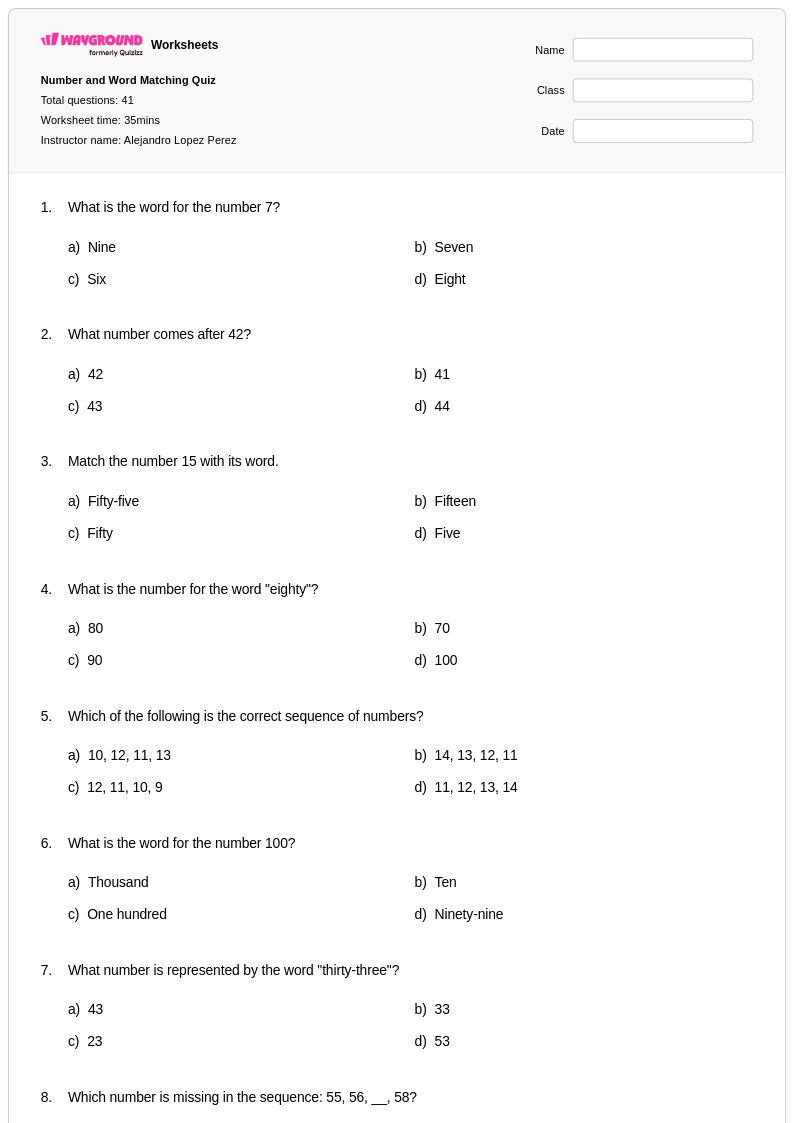
41 Q
3rd - Uni
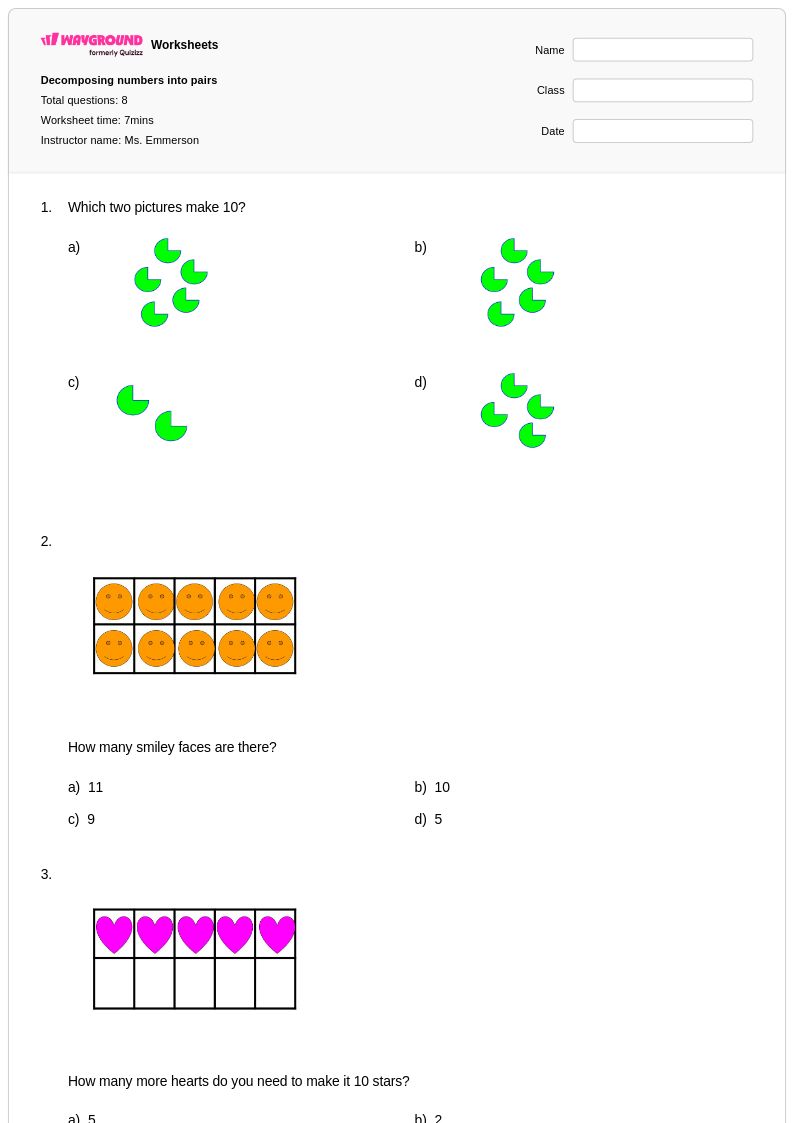
8 Q
KG - 3rd
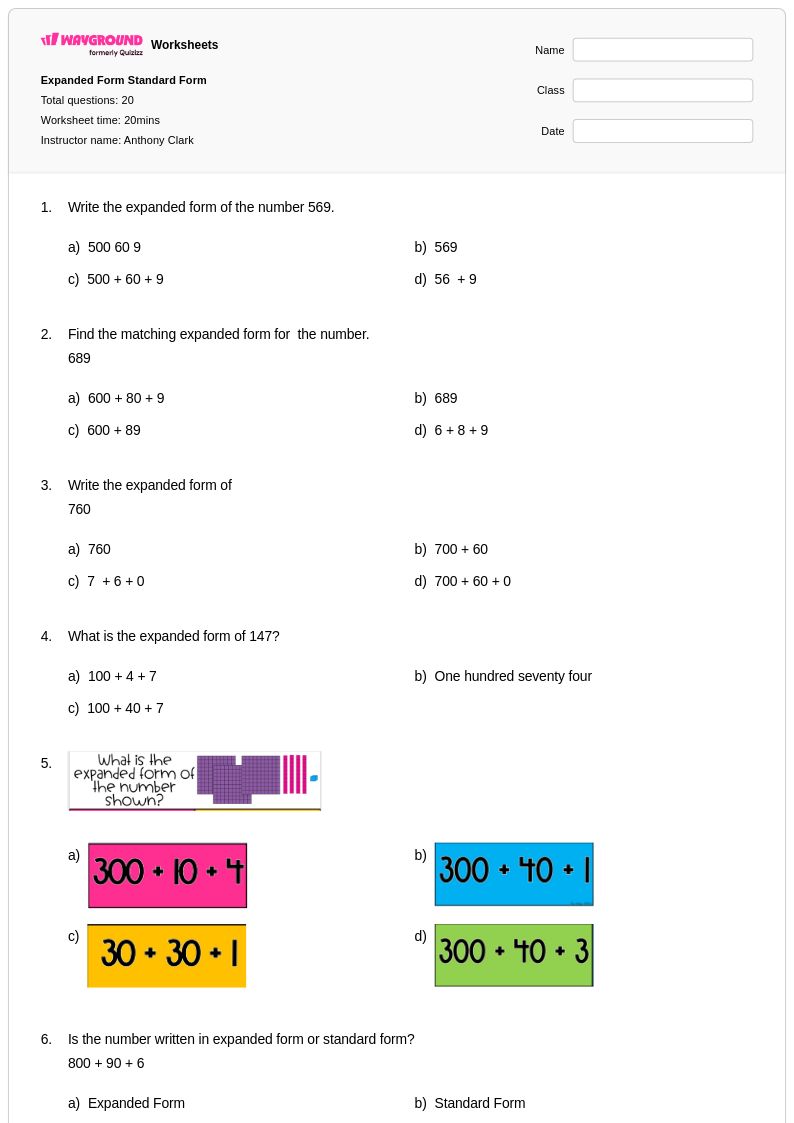
20 Q
2nd - Uni
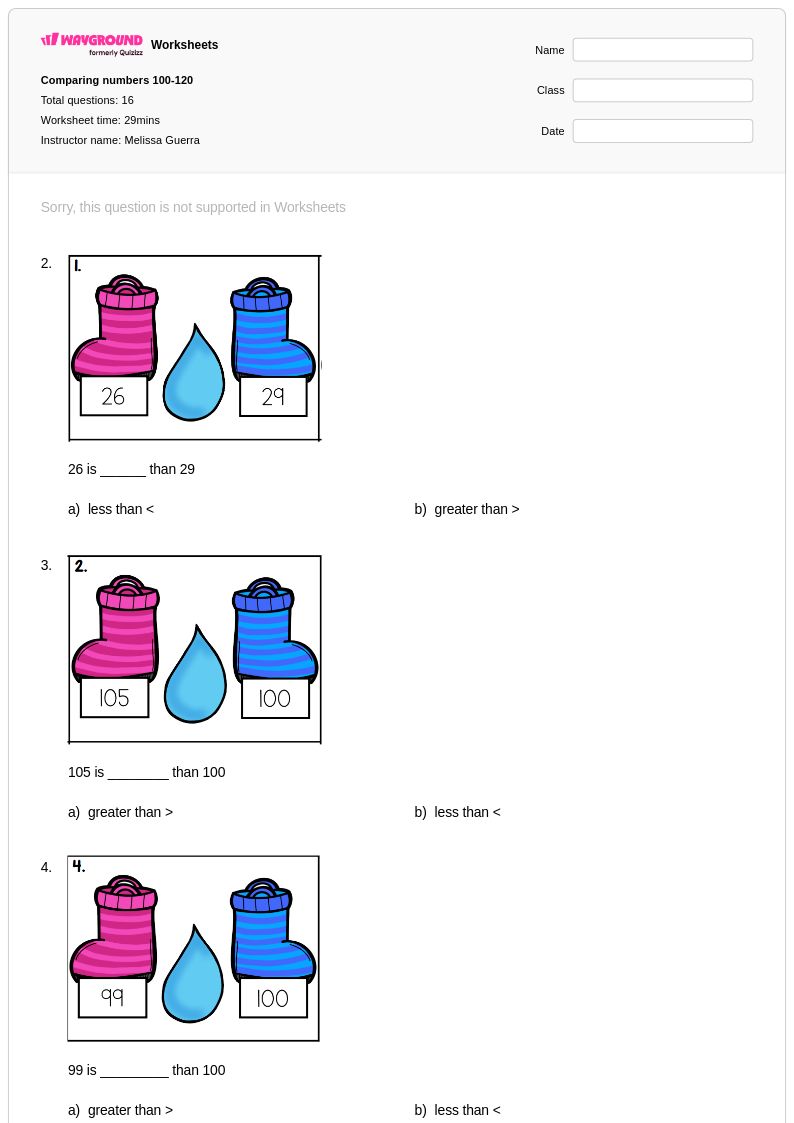
17 Q
1st - Uni
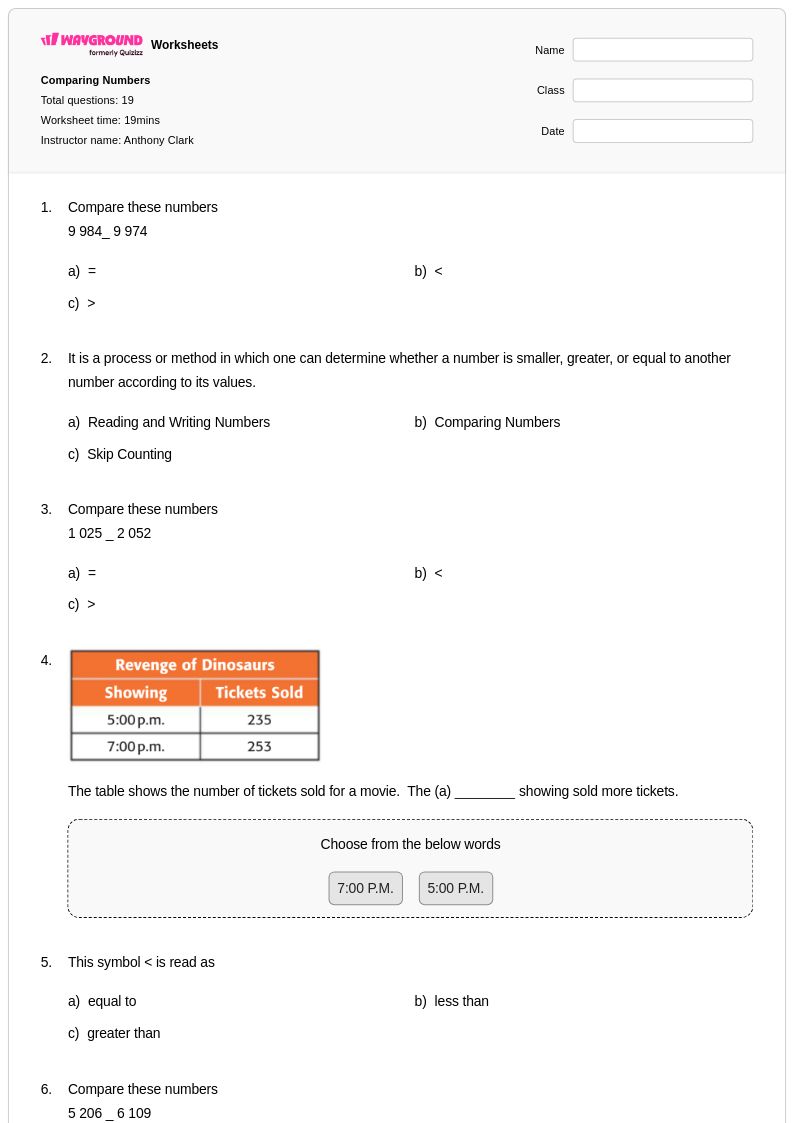
19 Q
2nd - Uni
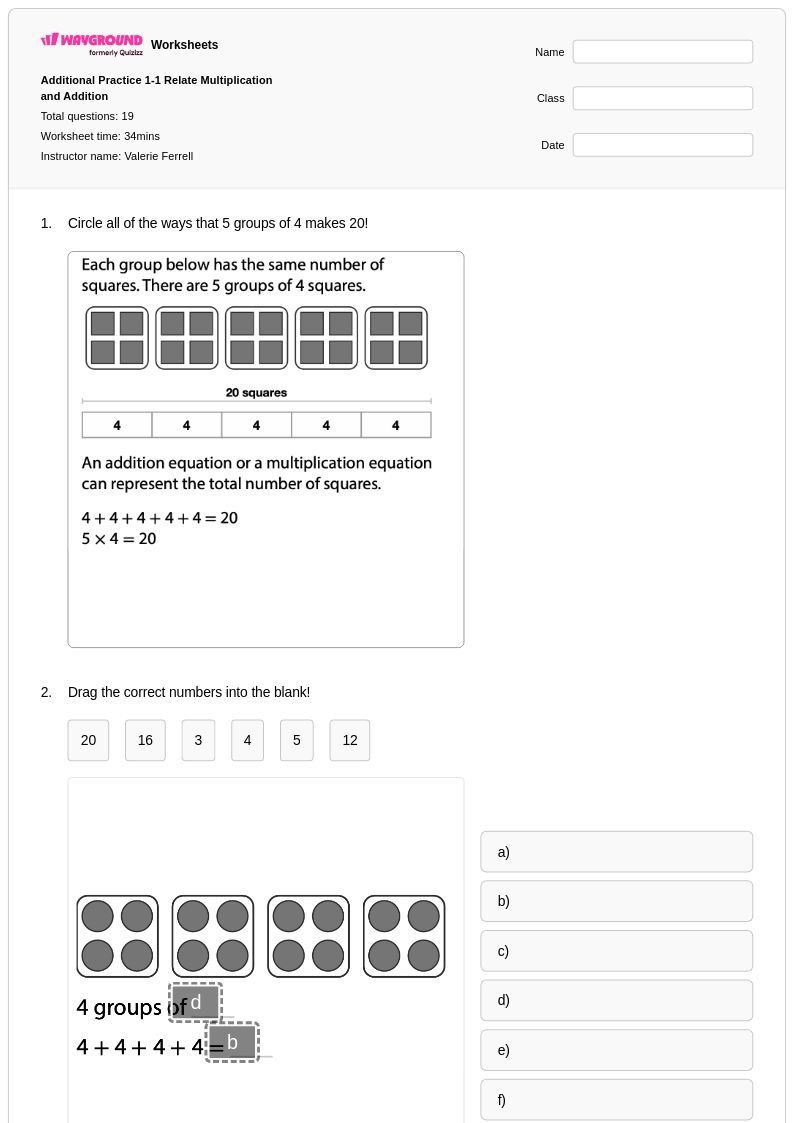
19 Q
3rd
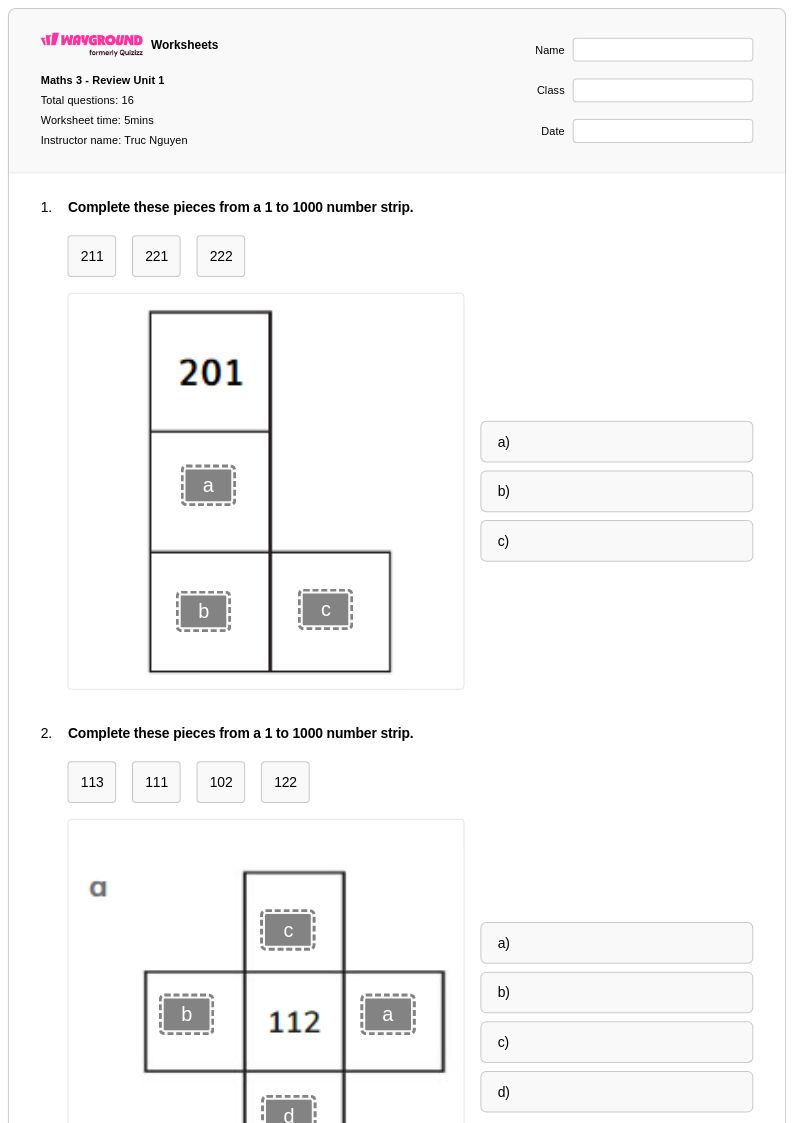
16 Q
3rd
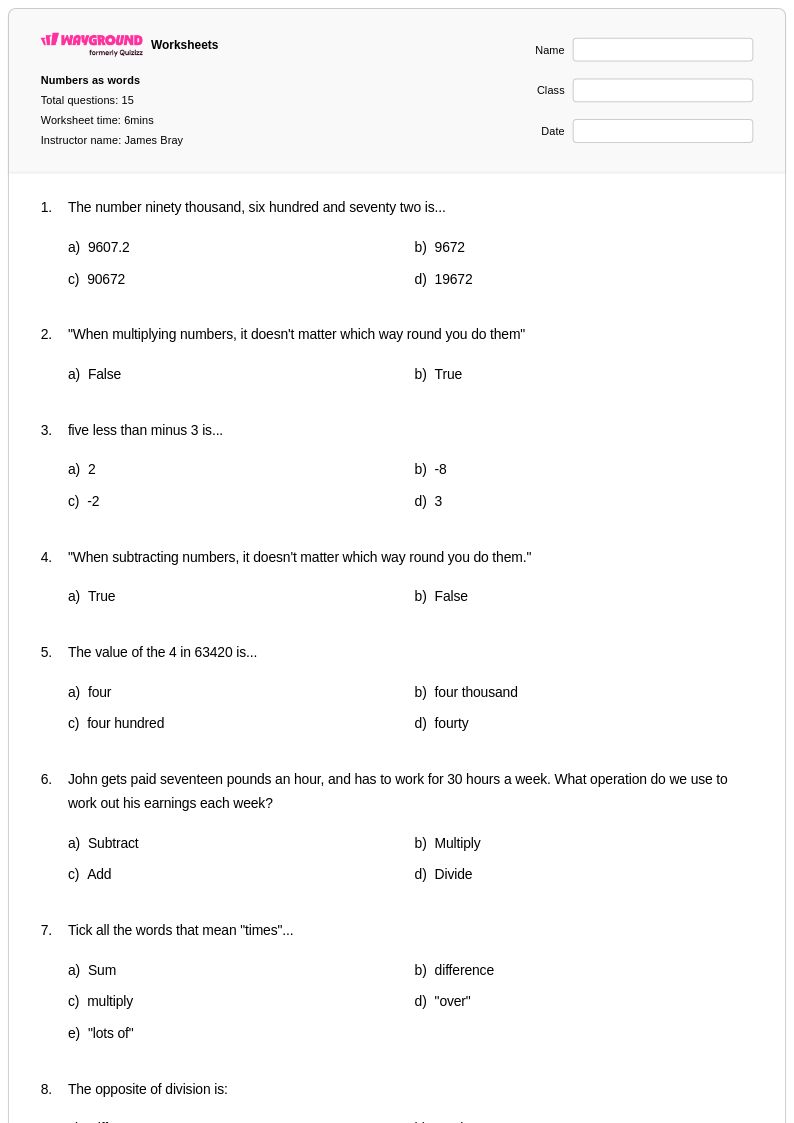
15 Q
3rd - 5th
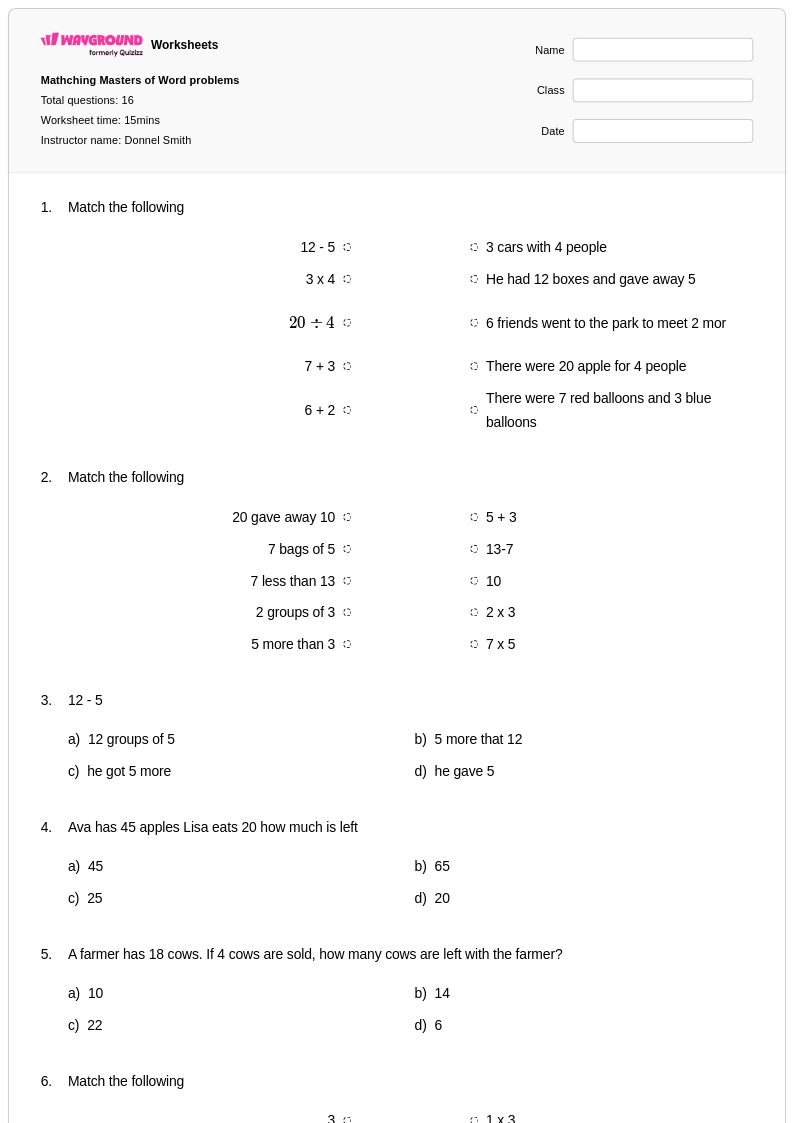
16 Q
3rd
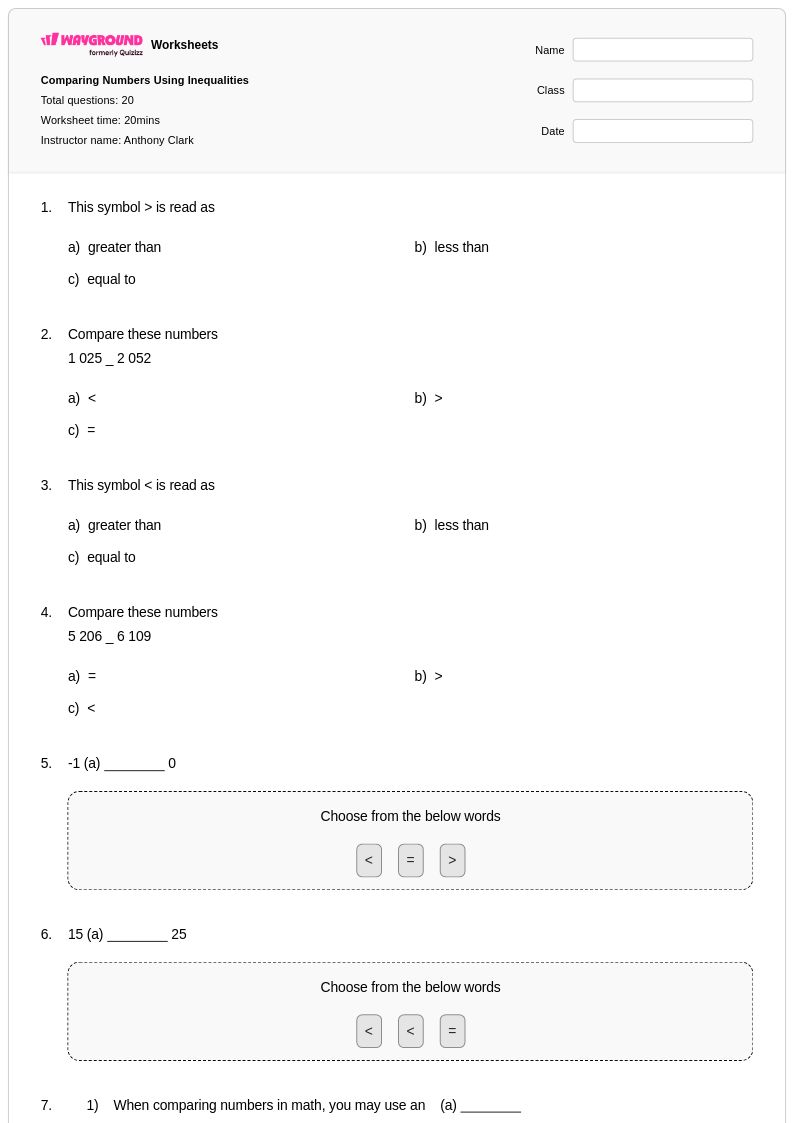
20 Q
2nd - Uni
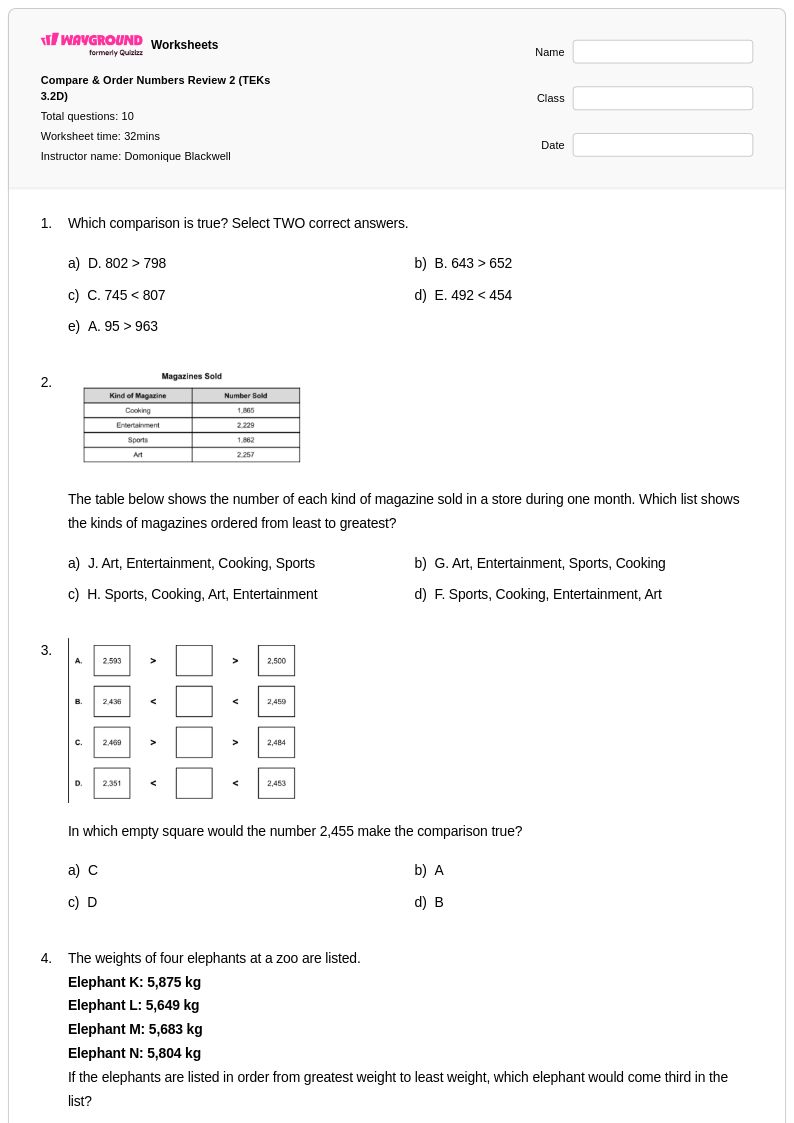
10 Q
3rd
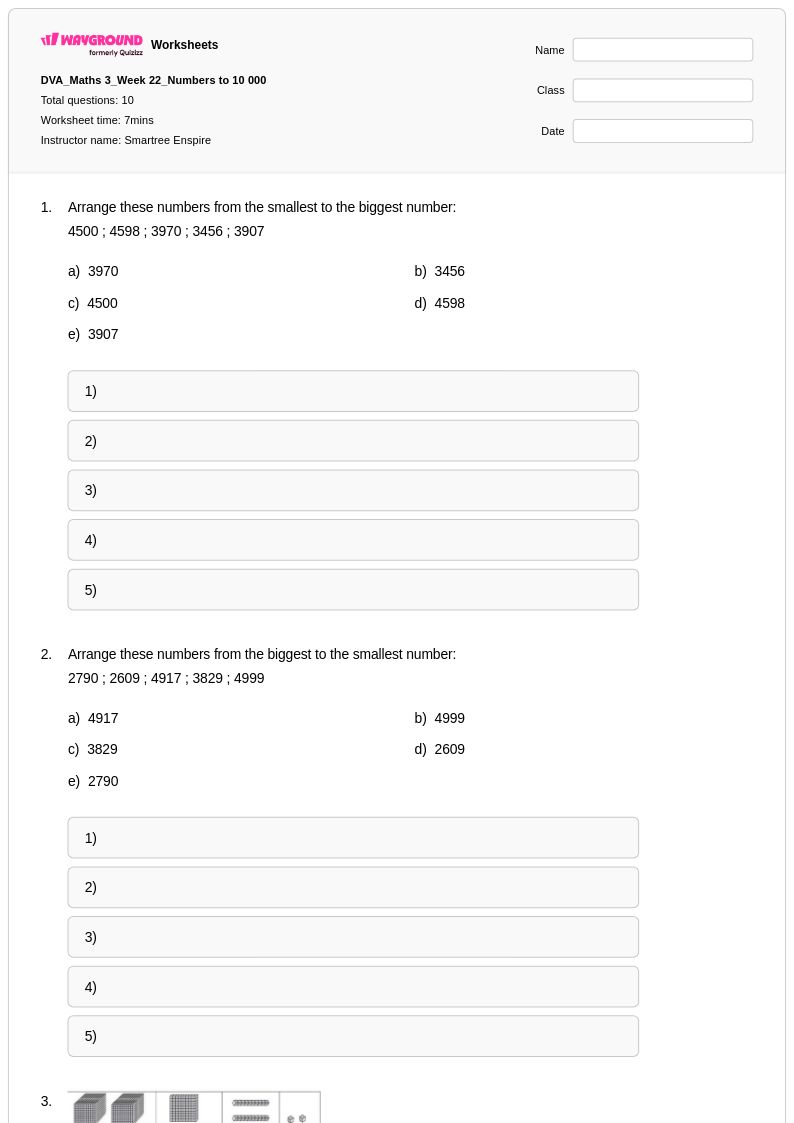
10 Q
3rd
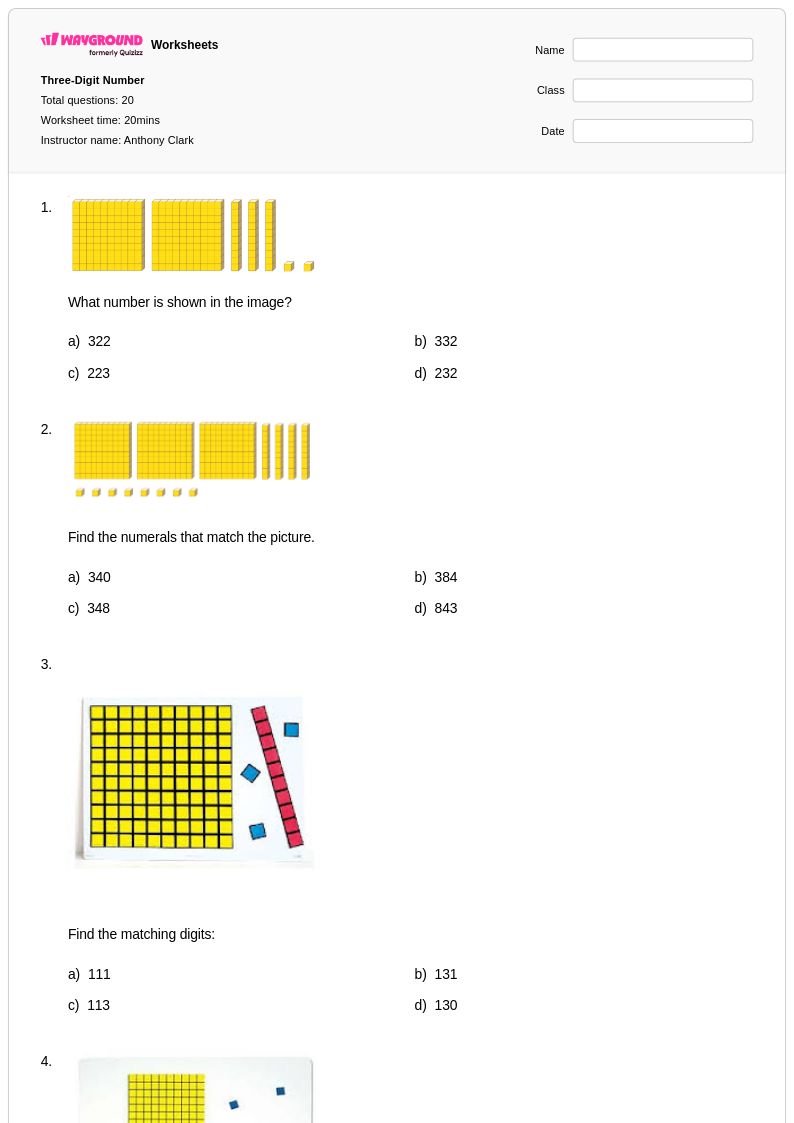
20 Q
2nd - Uni
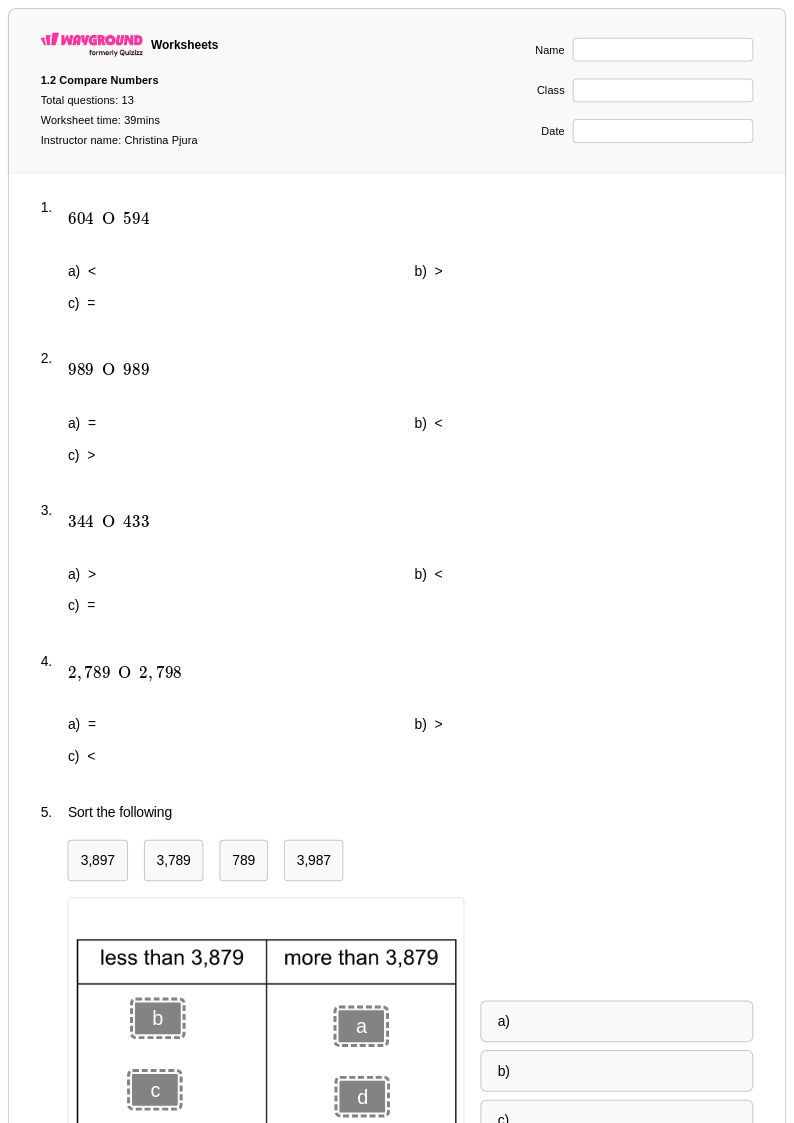
13 Q
3rd
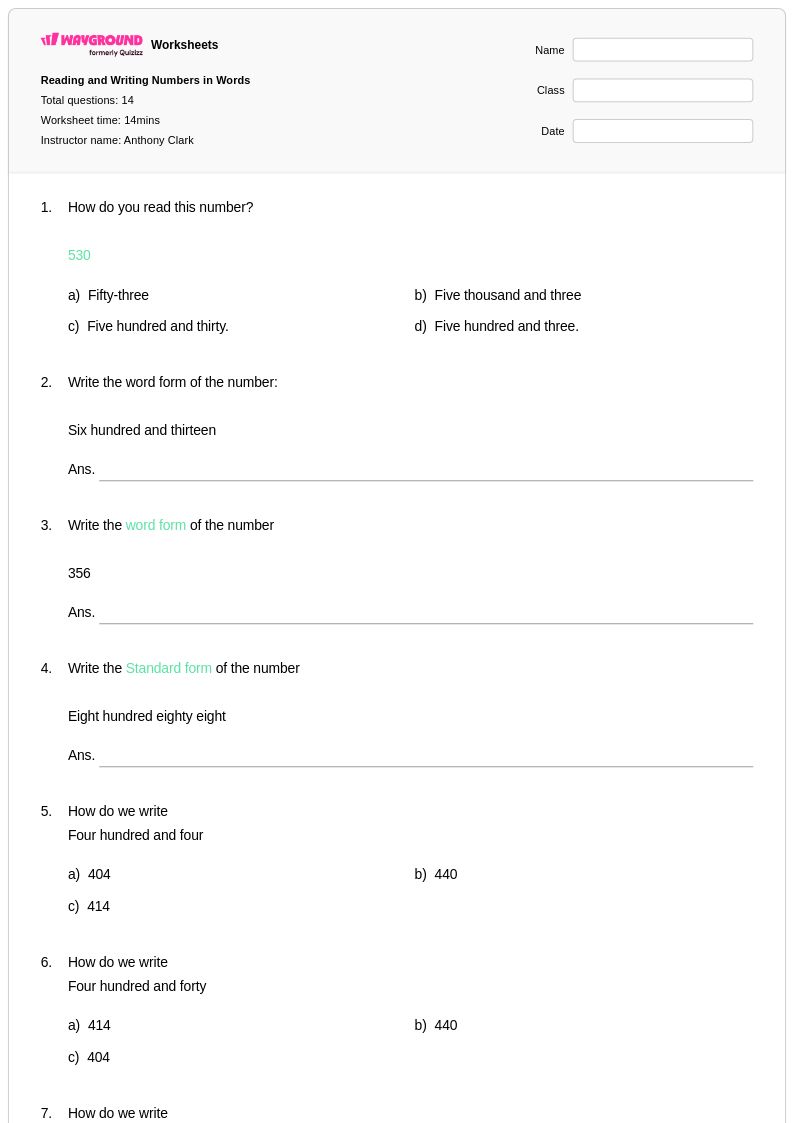
14 Q
2nd - Uni
14 Q
3rd
10 Q
3rd
16 Q
1st - 3rd
15 Q
1st - 5th
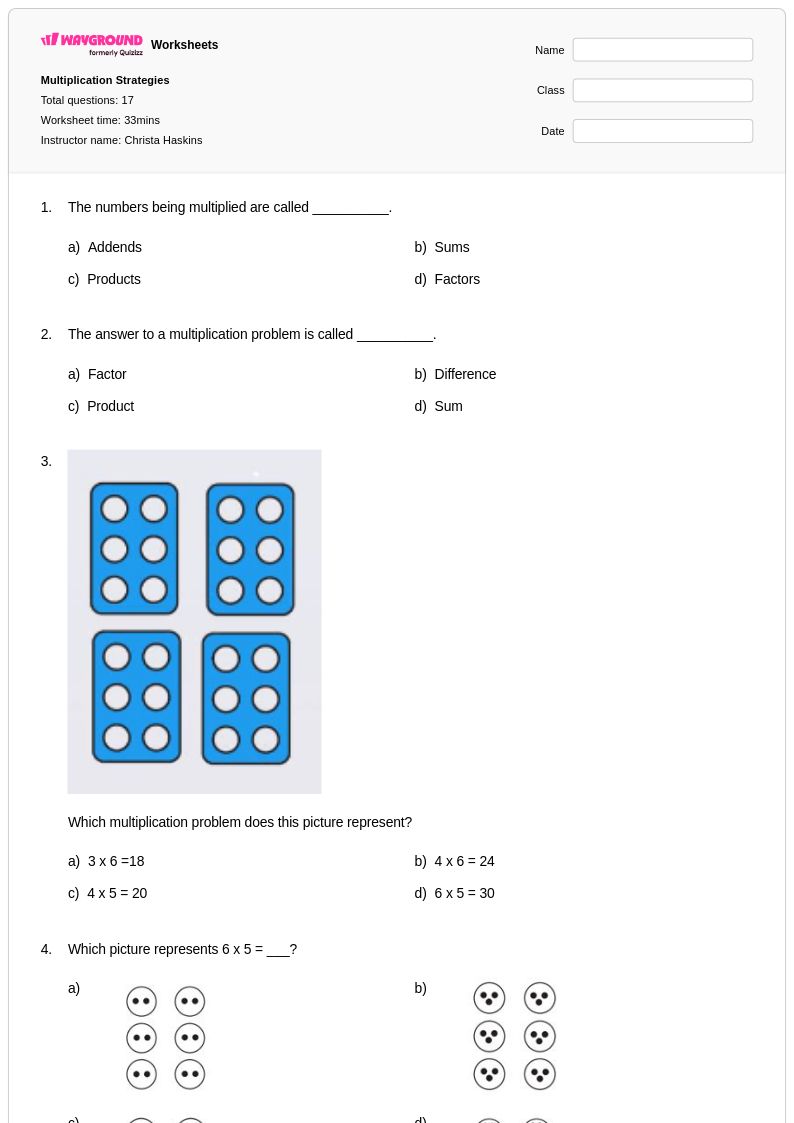
17 Q
3rd
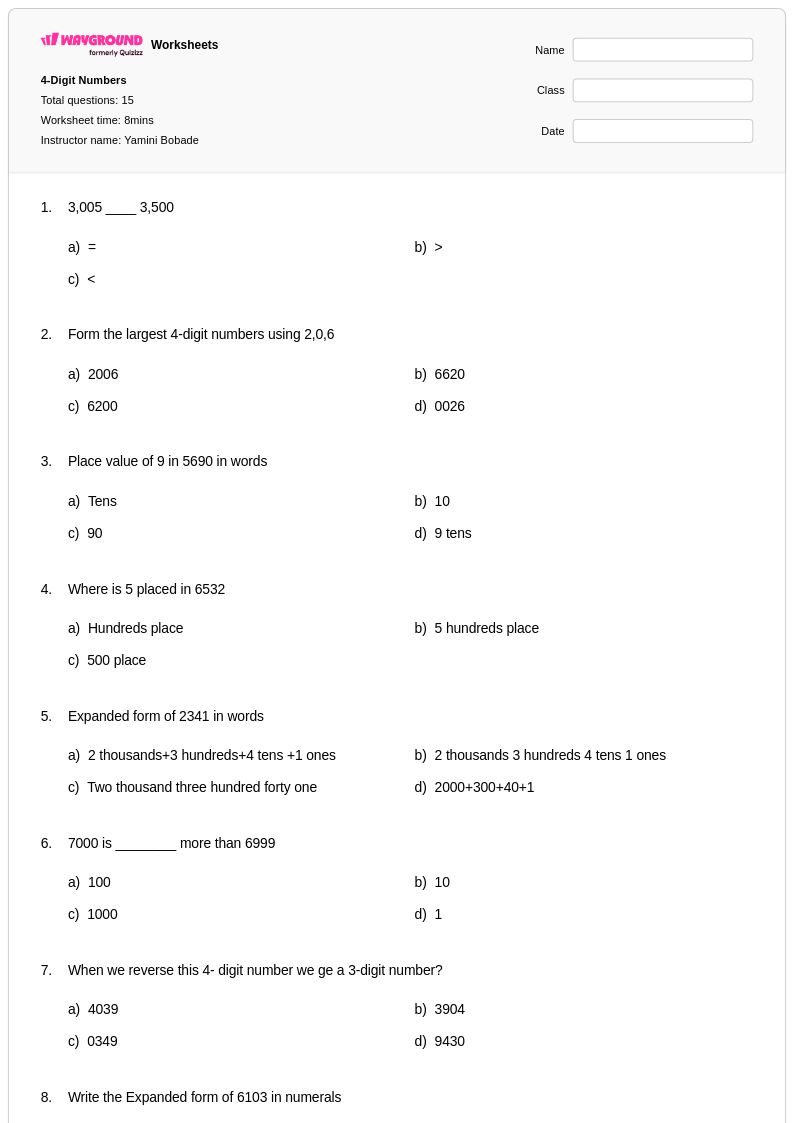
15 Q
3rd - 4th
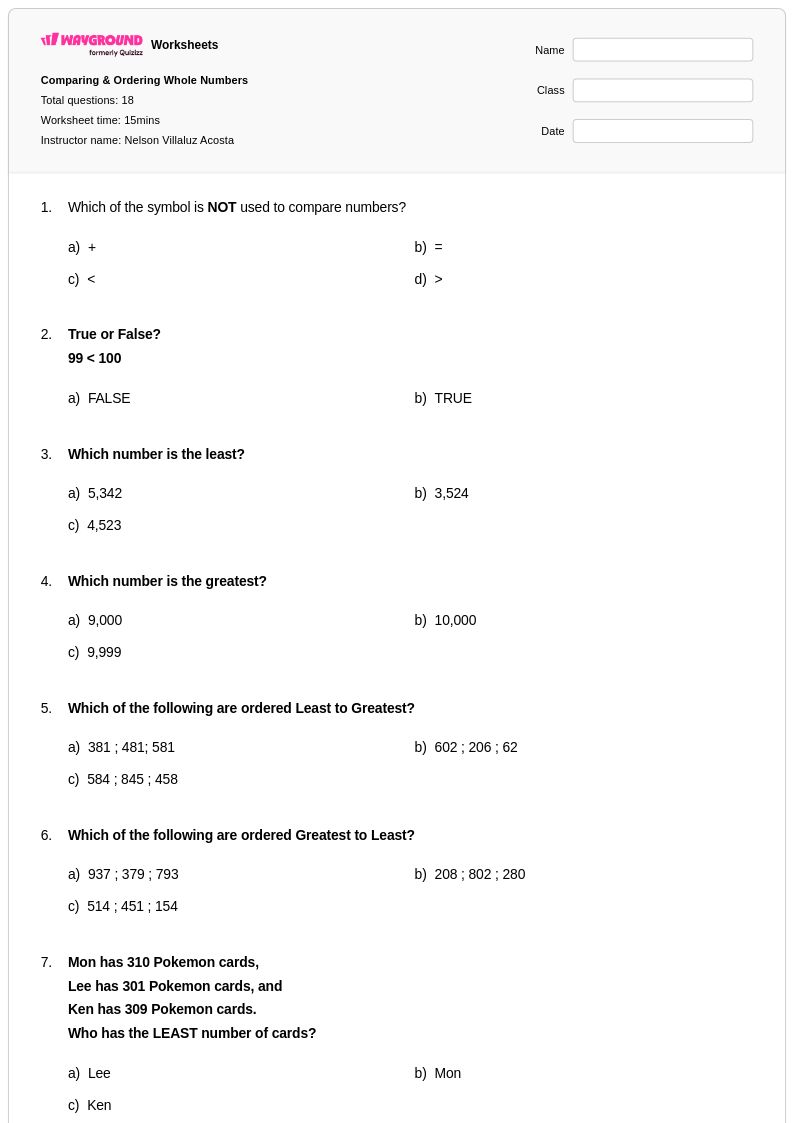
18 Q
3rd
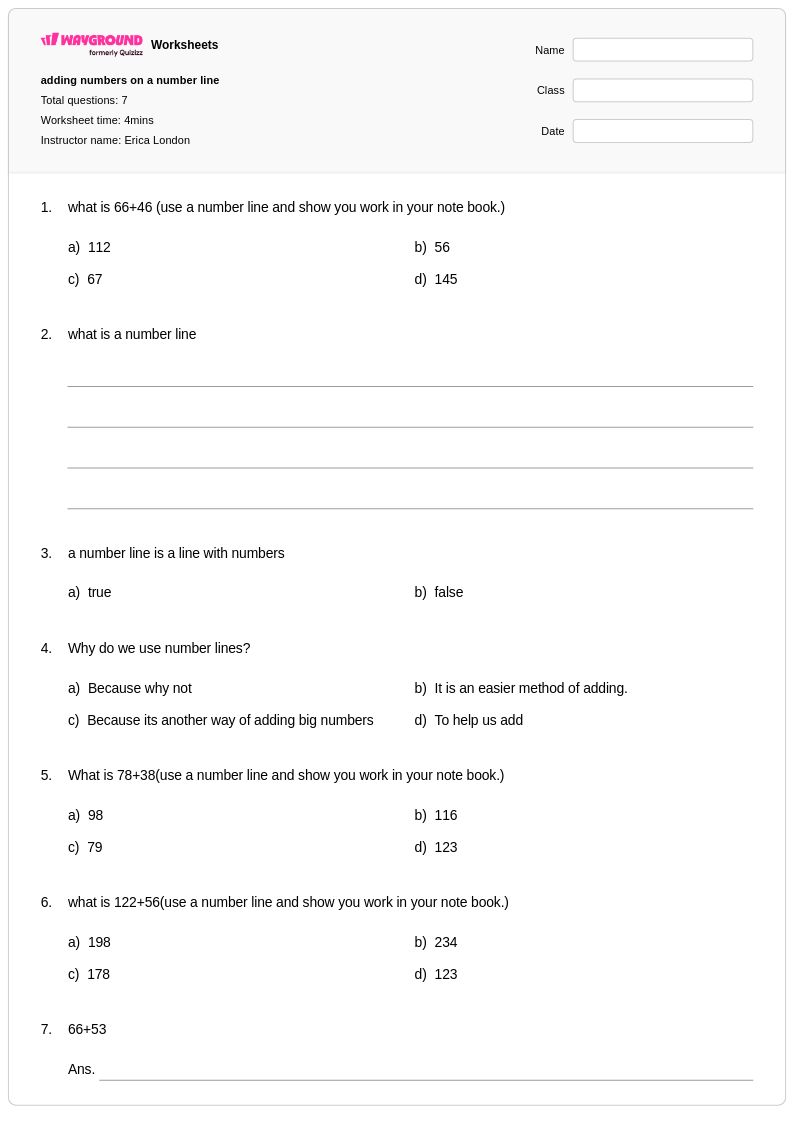
7 Q
3rd
Explore Matching Numbers Worksheets by Grades
Explore Other Subject Worksheets for year 3
Explore printable Matching Numbers worksheets for Year 3
Matching Numbers worksheets for Year 3 through Wayground (formerly Quizizz) provide essential practice for developing foundational number sense skills that third-grade students need to master. These comprehensive printables focus on helping students recognize number relationships, patterns, and equivalencies through engaging activities that require them to match numerical representations, number words, and visual models. Each worksheet includes carefully designed practice problems that strengthen students' ability to connect abstract numbers with concrete representations, building the critical thinking skills necessary for more advanced mathematical concepts. Teachers can access complete answer keys and free pdf downloads that make classroom implementation seamless while ensuring students receive targeted practice in number recognition, comparison, and mathematical reasoning.
Wayground (formerly Quizizz) empowers educators with millions of teacher-created matching numbers resources specifically designed for Year 3 mathematics instruction, offering robust search and filtering capabilities that align with curriculum standards and individual classroom needs. The platform's differentiation tools allow teachers to customize worksheets based on student skill levels, providing both remediation support for struggling learners and enrichment opportunities for advanced students. Available in both printable and digital pdf formats, these flexible resources integrate seamlessly into lesson planning while supporting diverse instructional approaches from whole-group practice to independent skill-building activities. Teachers can efficiently identify gaps in student understanding and provide targeted intervention through carefully curated practice problems that build confidence and mathematical fluency in number sense concepts.
FAQs
What does 'matching numbers' mean for a third grader?
What concepts do third graders practice with these worksheets?
What are common third-grade struggles related to matching number values?
How can I use these third-grade matching worksheets?
How does this support third-grade math standards?
How can I differentiate this third-grade practice?