Free Printable Distance on a Number Line Worksheets for Year 3
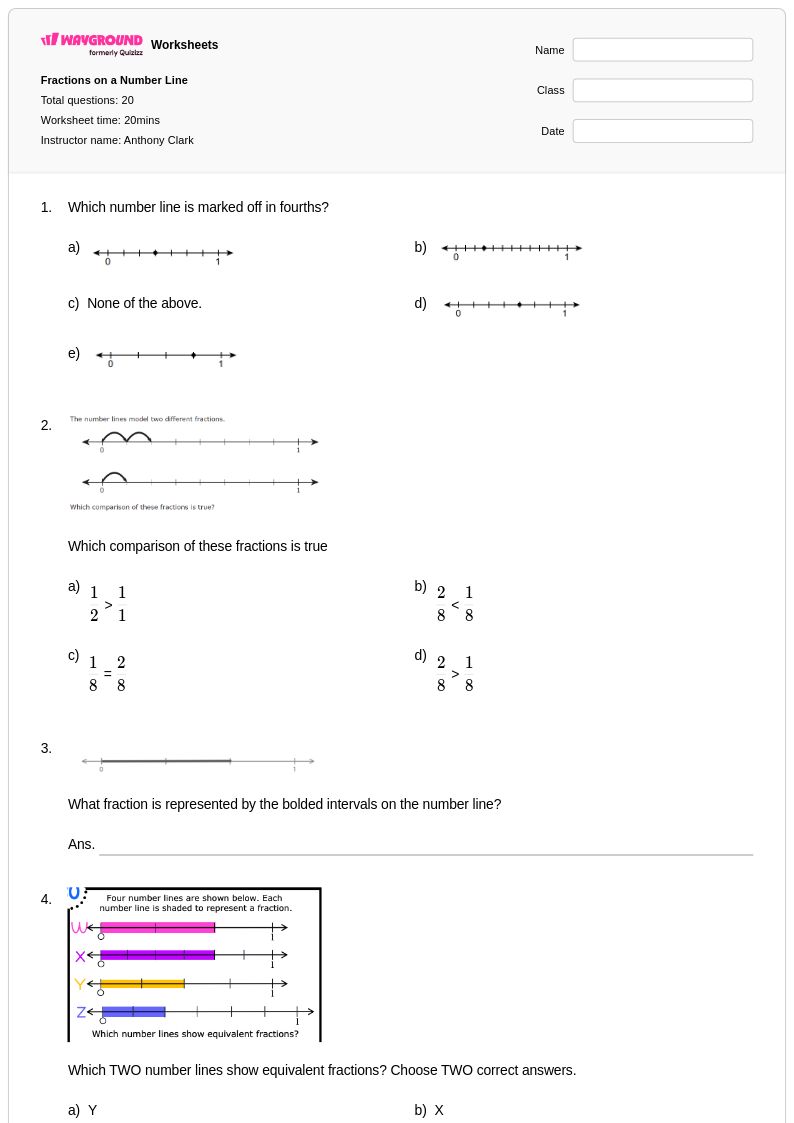
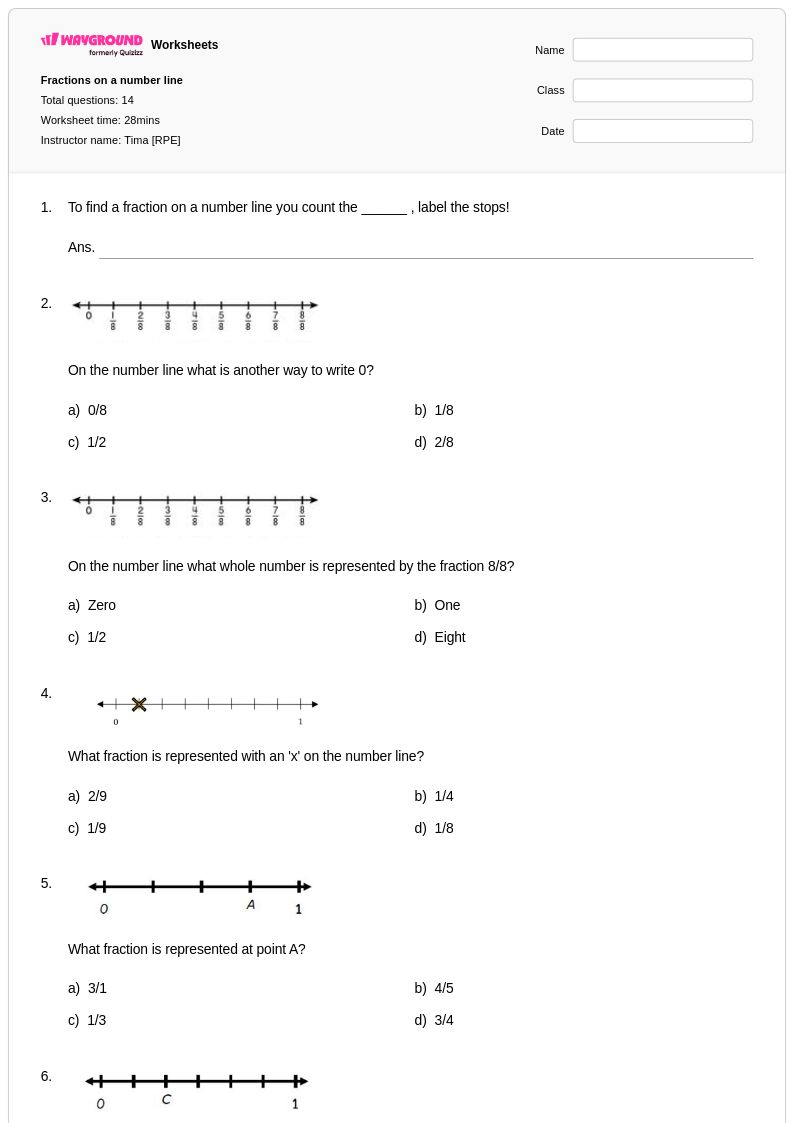
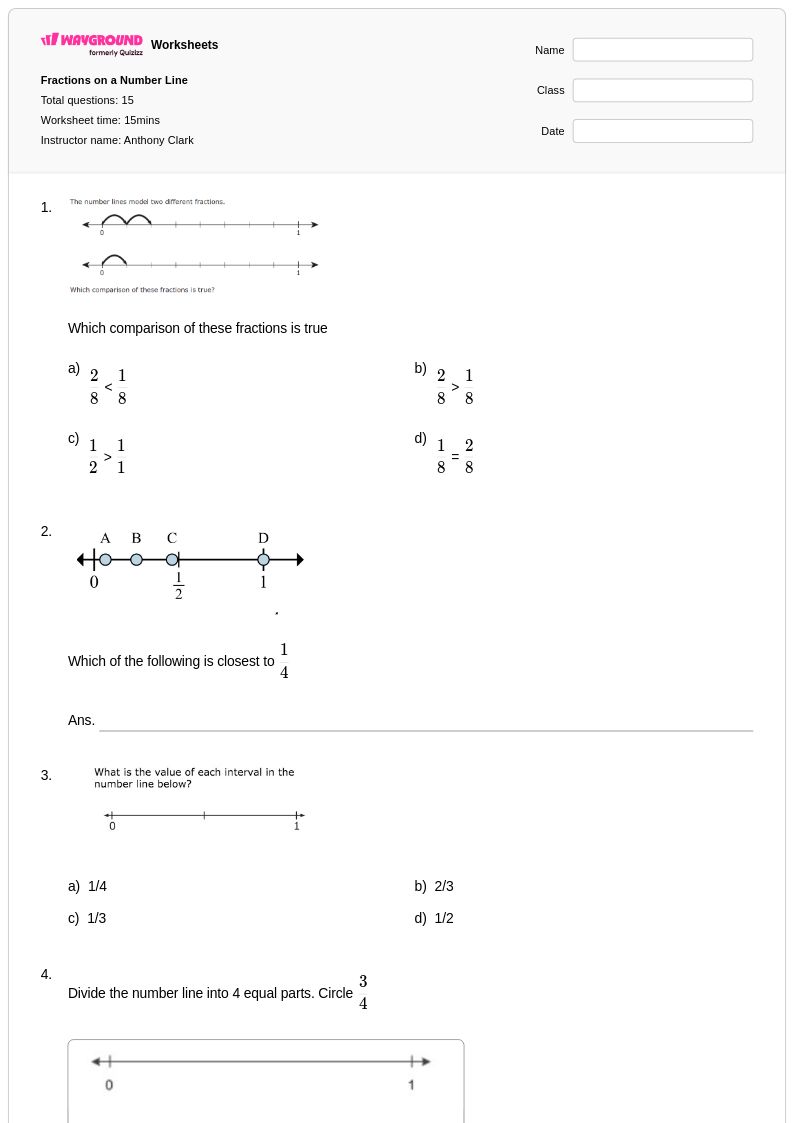
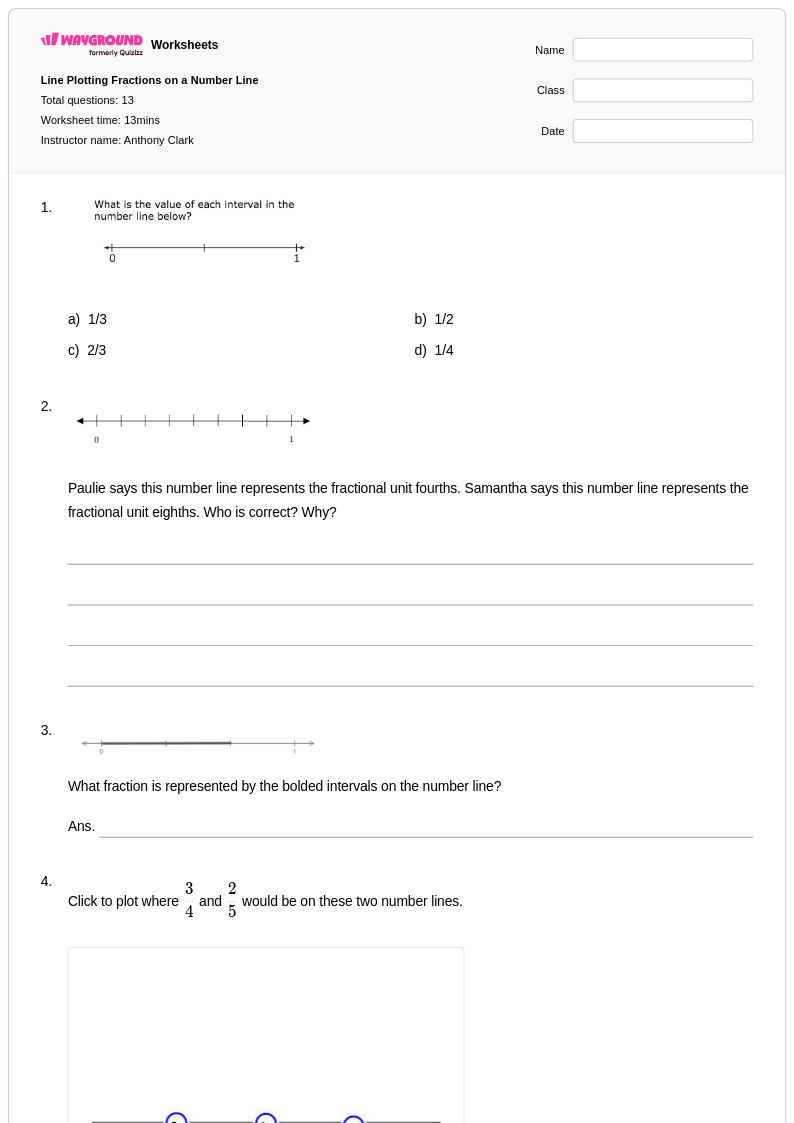
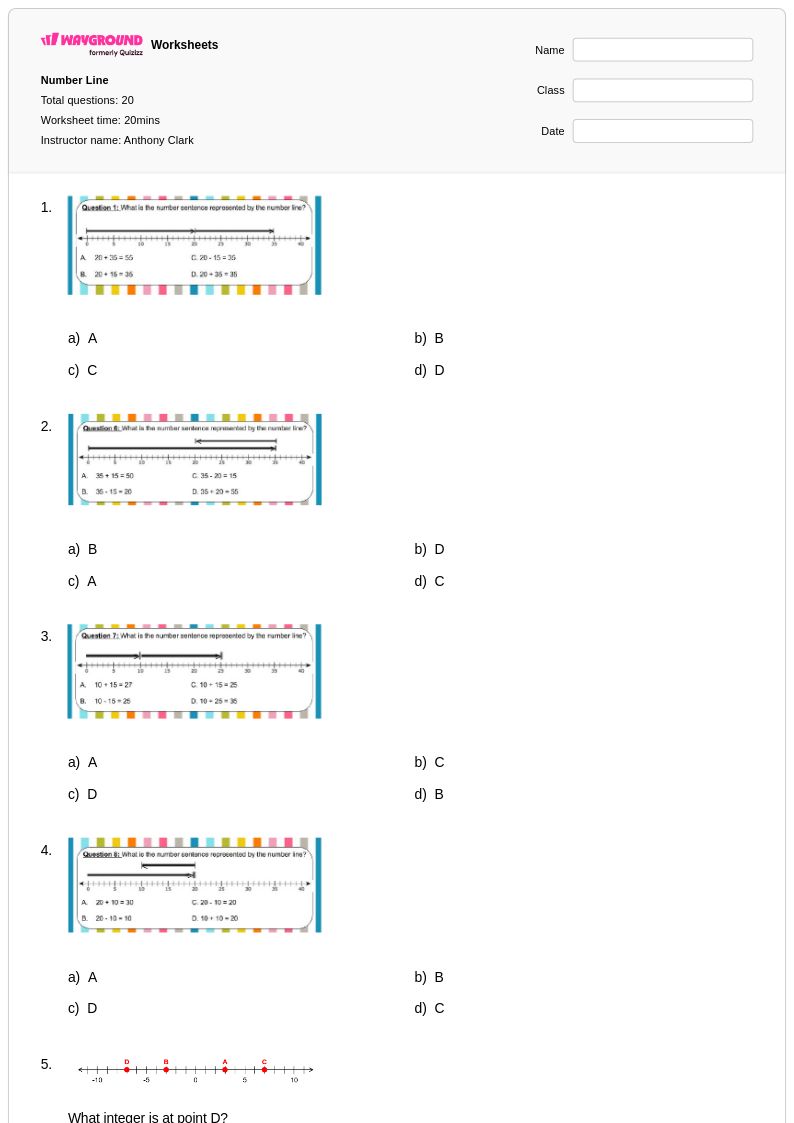
Wayground's free Year 3 distance on a number line worksheets offer printable PDFs with practice problems and answer keys to help students master measuring intervals and understanding numerical relationships on number lines.
Explore printable Distance on a Number Line worksheets for Year 3
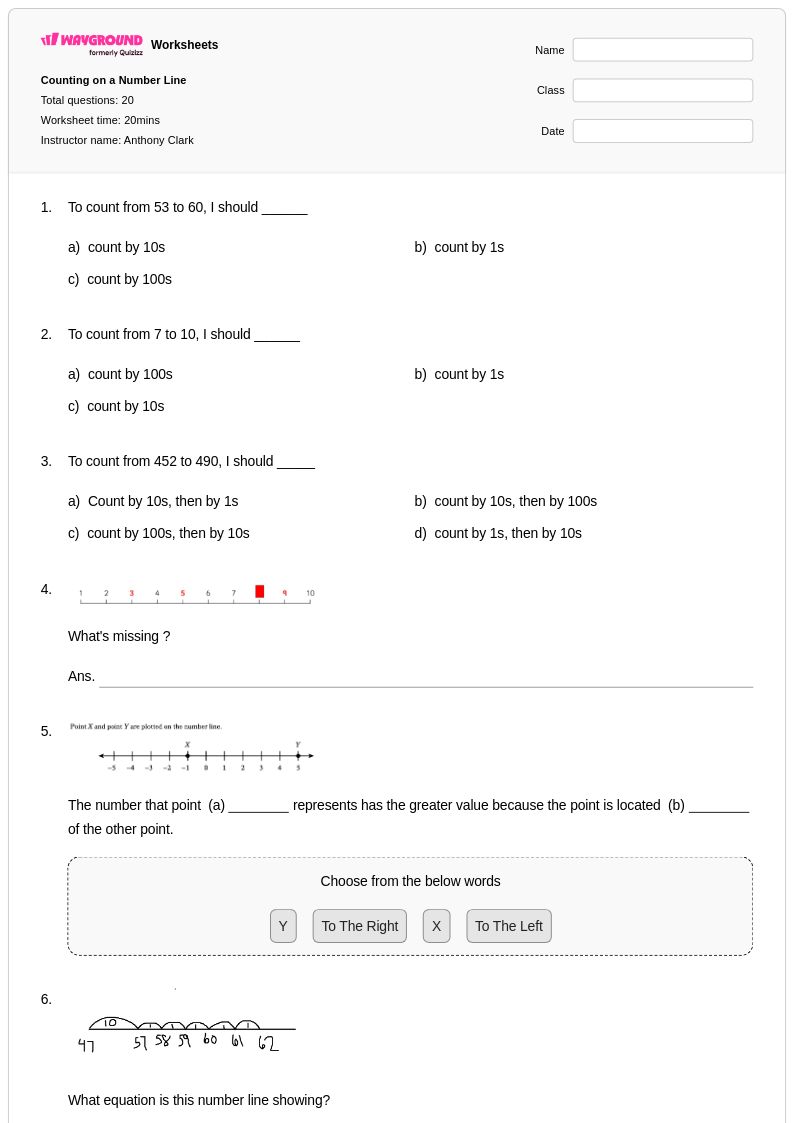
Distance on a Number Line worksheets available through Wayground (formerly Quizizz) provide Year 3 students with essential practice in understanding spatial relationships between numbers and calculating intervals along numerical sequences. These carefully designed worksheets strengthen foundational mathematical reasoning by helping students visualize how numbers relate to one another in space, measure gaps between different positions, and develop fluency with counting forward and backward. Each worksheet collection includes comprehensive practice problems that progress from simple single-digit distances to more complex multi-step calculations, supported by detailed answer keys that enable both independent learning and guided instruction. The free printable resources offer varied problem types that reinforce core concepts while building computational confidence through repeated exposure to number line scenarios.
Wayground (formerly Quizizz) supports mathematics educators with an extensive library of millions of teacher-created distance on a number line resources that streamline lesson planning and provide targeted skill practice opportunities. The platform's robust search and filtering capabilities allow teachers to quickly locate worksheets that align with specific learning standards and match individual student needs, while built-in differentiation tools enable seamless customization for diverse ability levels within the same classroom. These versatile materials are available in both printable pdf format and interactive digital versions, making them ideal for traditional instruction, homework assignments, remediation sessions, and enrichment activities. Teachers can efficiently modify existing worksheets or combine multiple resources to create comprehensive practice sets that address specific learning gaps and reinforce mastery of number line distance concepts through systematic, scaffolded practice.
FAQs
How do I teach distance on a number line to third graders?
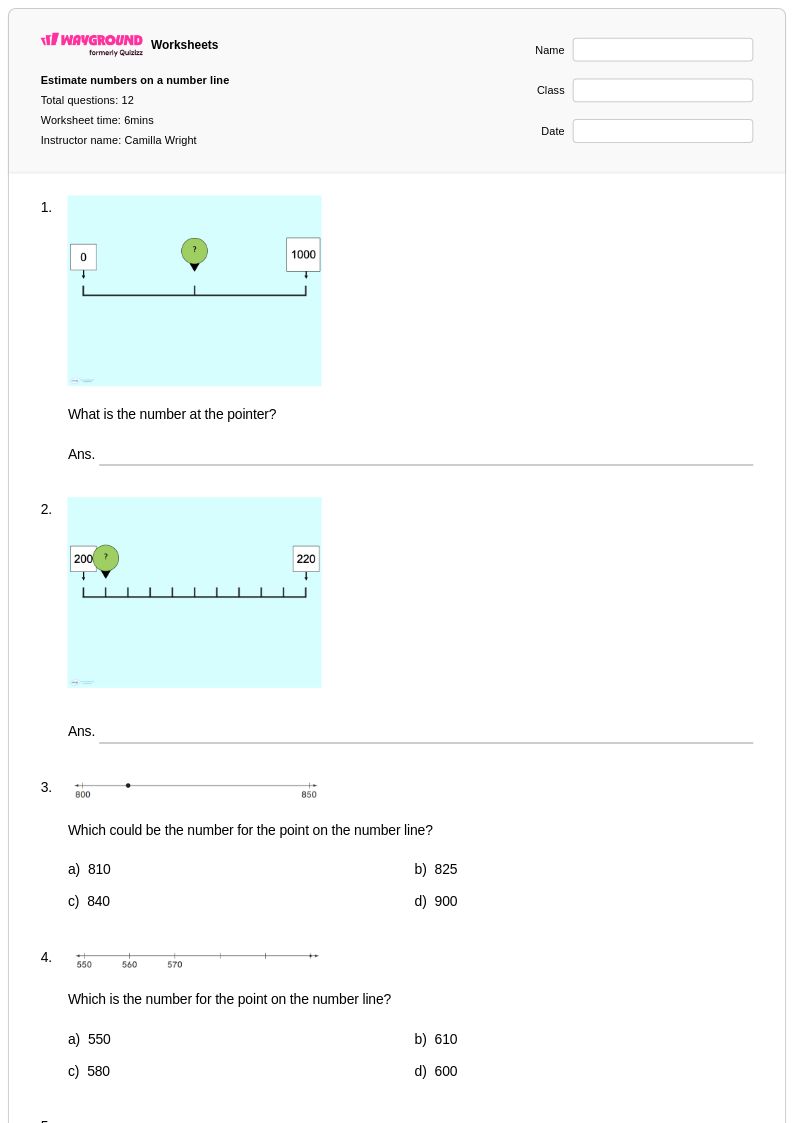
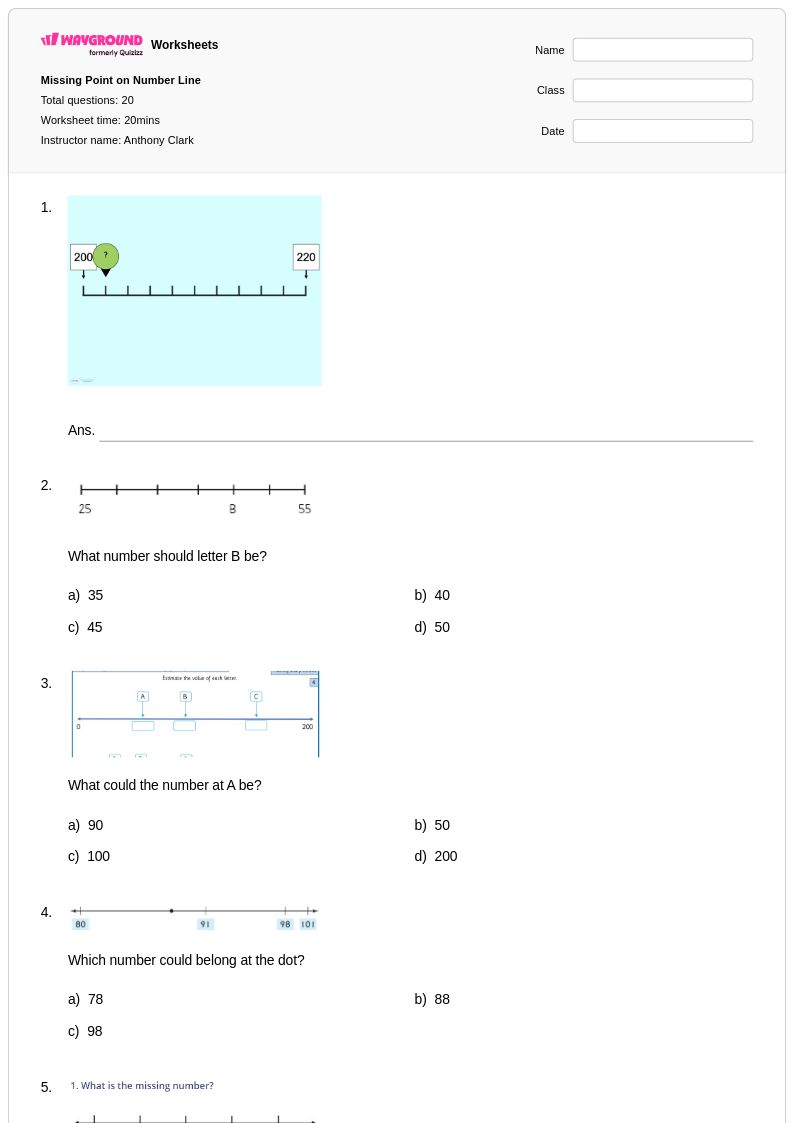
Third graders are ready to work with larger numbers and multi-step distances, so push beyond simple counting. A useful approach is to give students a number line with only a few labeled points and ask them to figure out the scale before finding a distance — this builds the habit of reading the number line rather than just counting spaces. You can also introduce distances that require crossing a benchmark (like 100 or 500) to build flexibility with the number line as a tool, not just a visual aid.
What exercises help third graders practice number line distance?
At Grade 3, effective practice includes: finding distances on number lines with intervals greater than 1 (e.g., each tick mark represents 10 or 25), working backward from a distance to find a missing point, and multi-step problems where students find the total distance across two or three segments. Word problems that use measurement or elapsed time contexts are particularly useful because they give the number line a purpose beyond the abstract.
What mistakes do third graders commonly make with number line distance?
The biggest shift at Grade 3 is working with scaled number lines, and that's where errors concentrate. Students often assume each tick mark equals 1 even when the scale says otherwise, leading to answers that are off by a factor of the interval size. A second common error is misreading the endpoints — students identify the wrong starting or ending point when the number line is partially labeled. Both errors are worth targeting explicitly before moving to multi-step distance problems.
How do I use Wayground's Grade 3 number line worksheets in my class?
You can host any worksheet as a digital quiz on Wayground for automatic scoring, or download the PDF and print it — both come with a complete answer key. For printed work, the Wayground for Teachers app lets you scan student submissions to grade them, which is practical when you're running the worksheet as a quick formative check and don't want to re-enter answers manually.
How does Grade 3 number line distance connect to the Common Core progression?
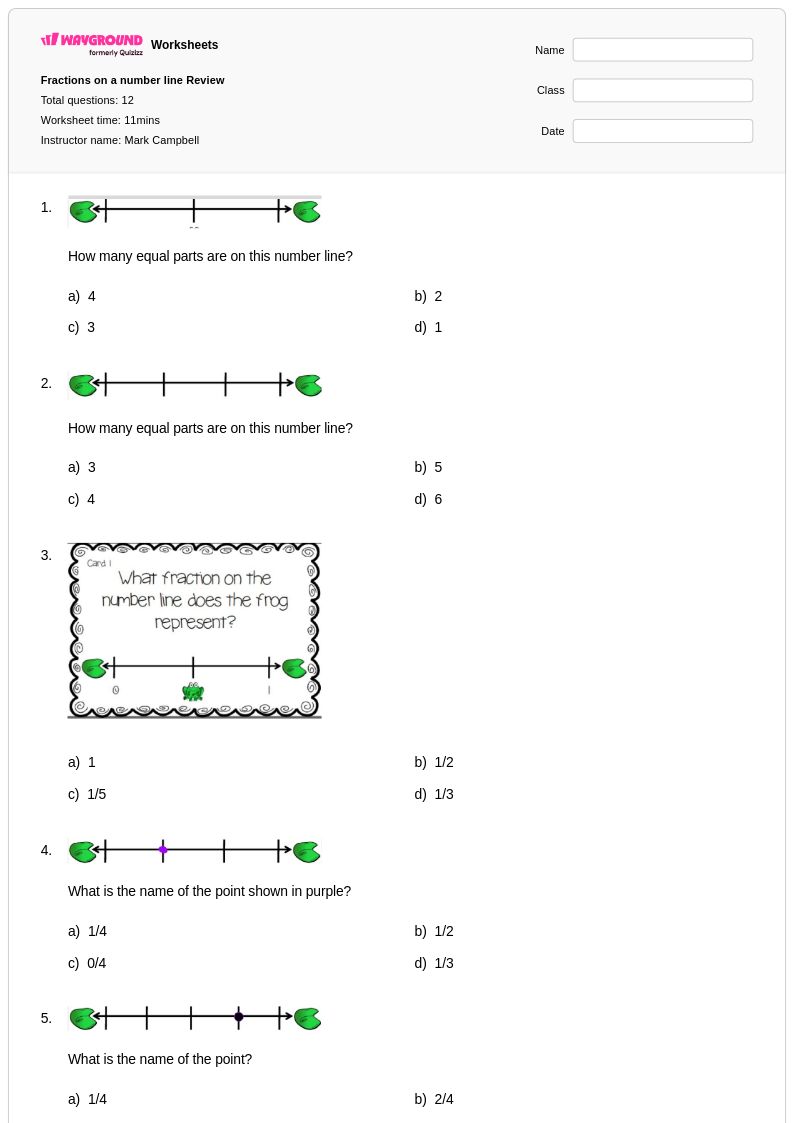
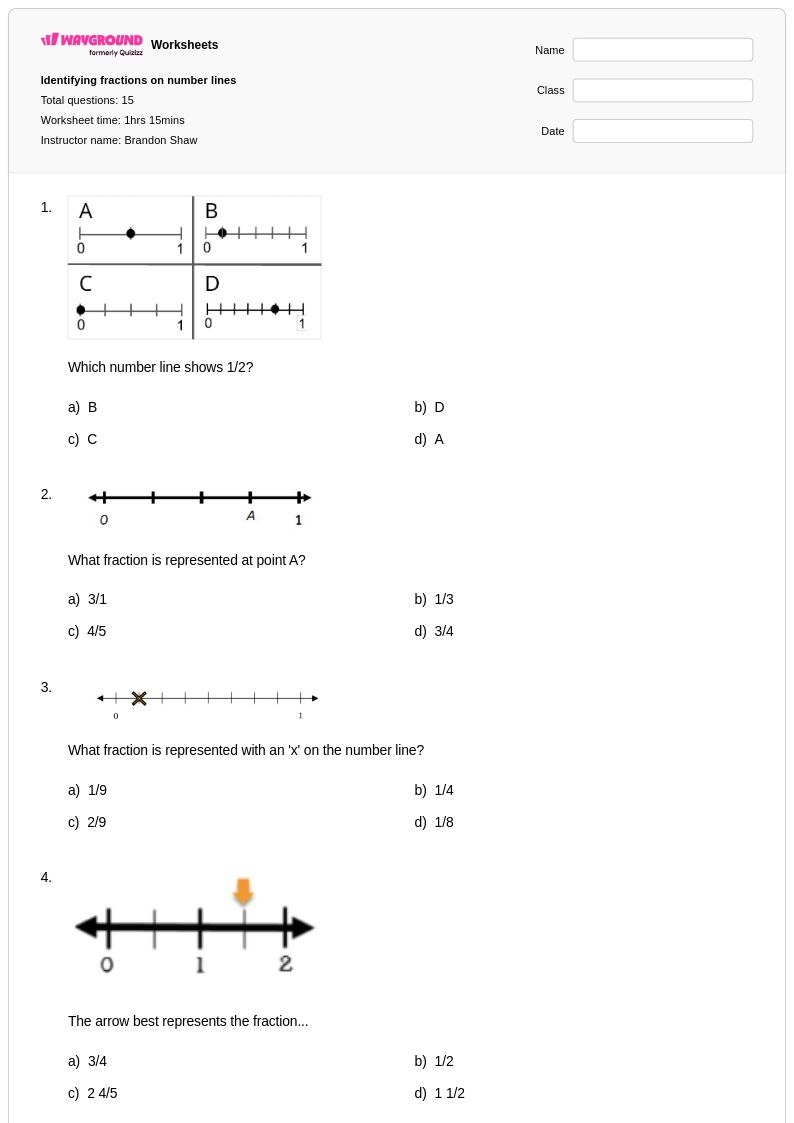
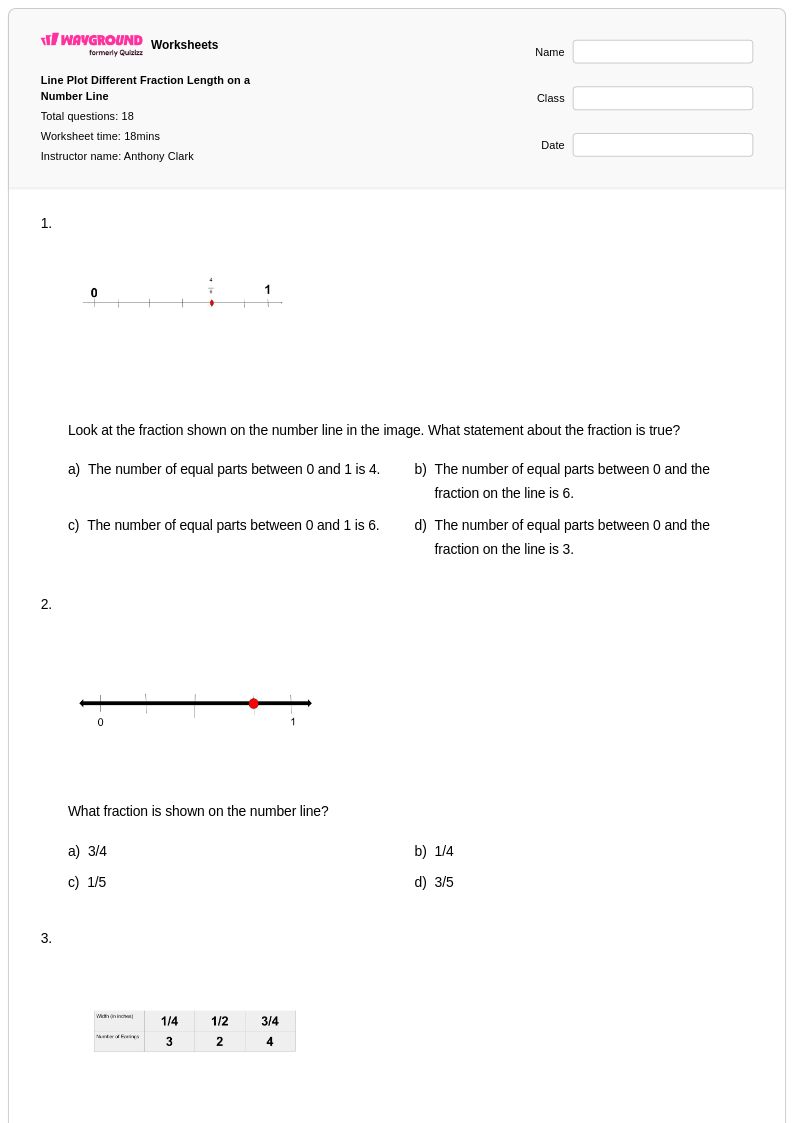
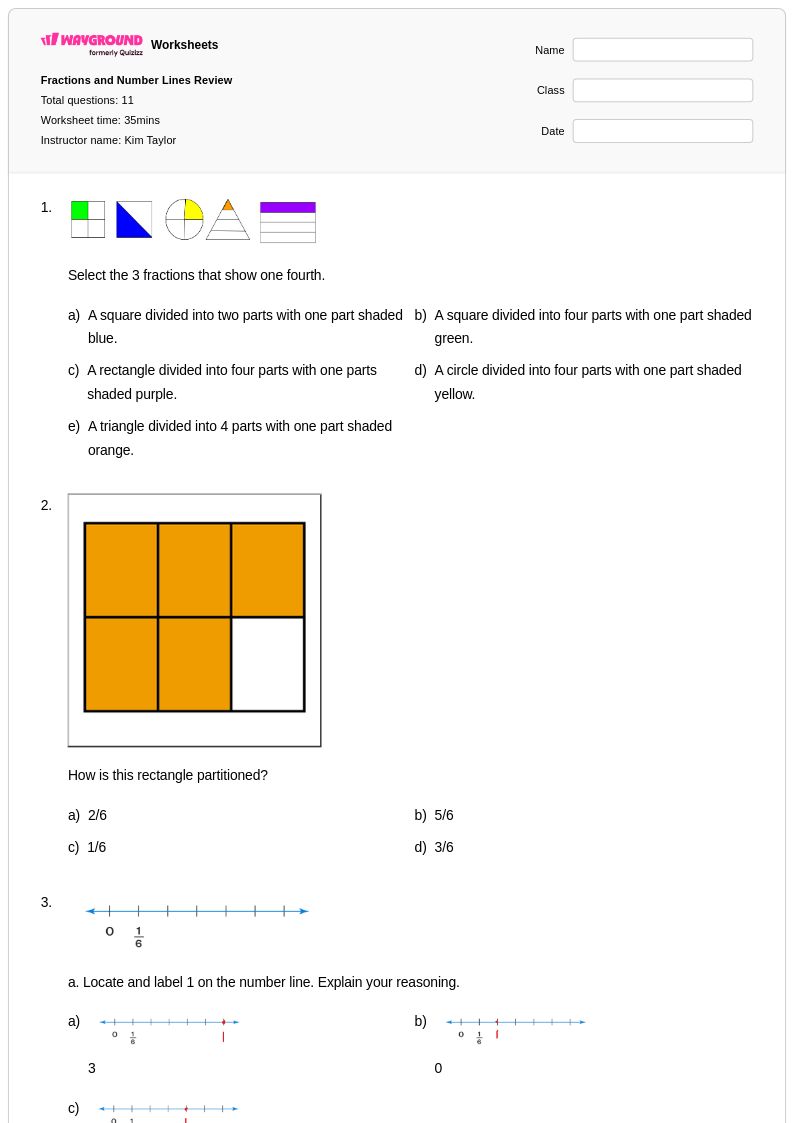
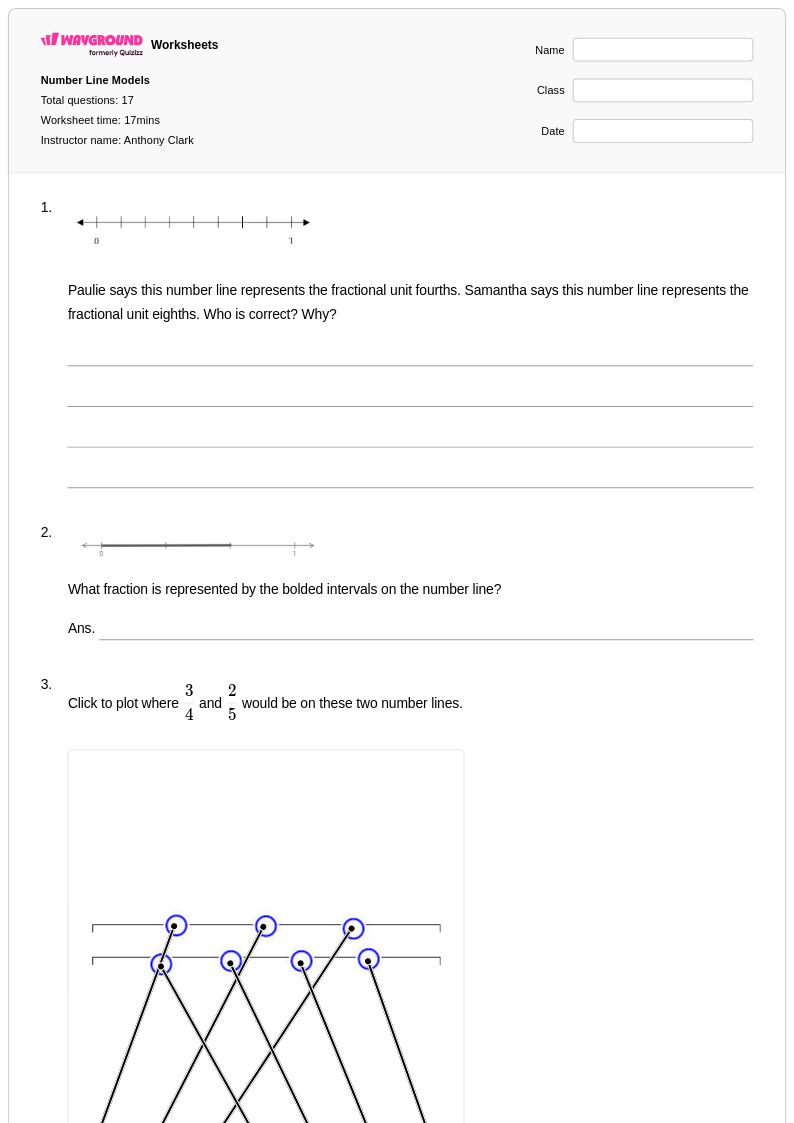
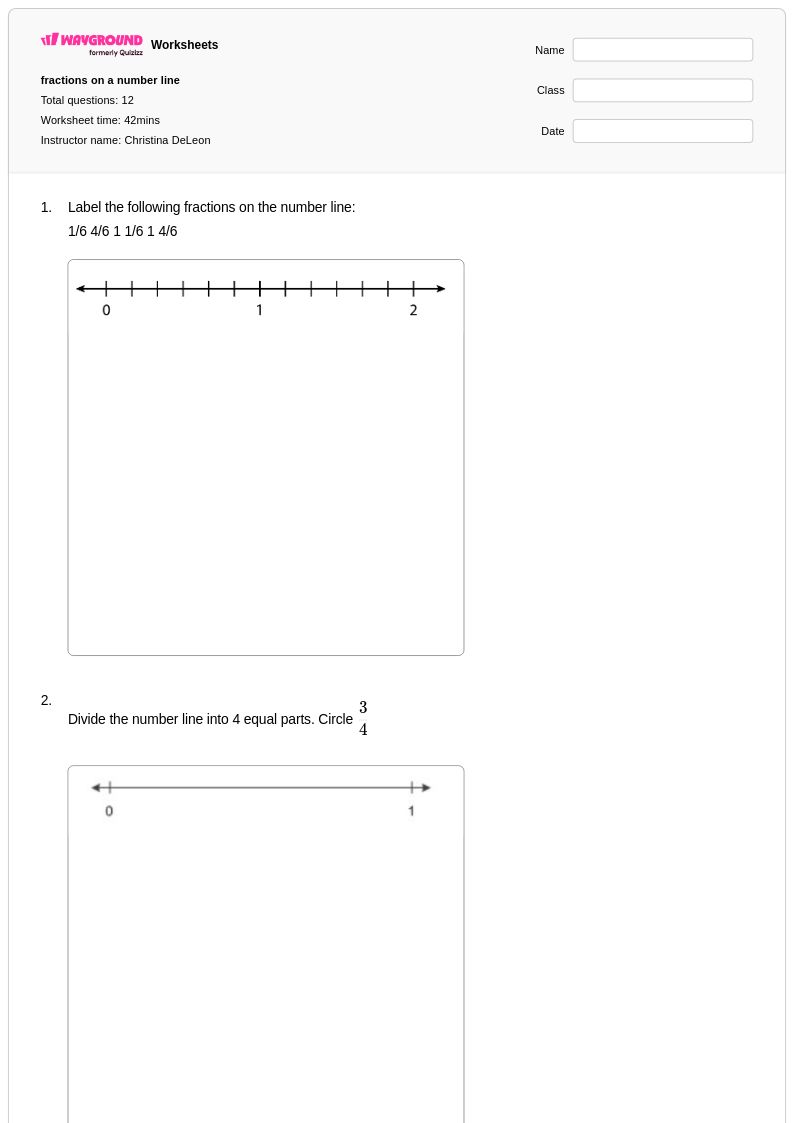
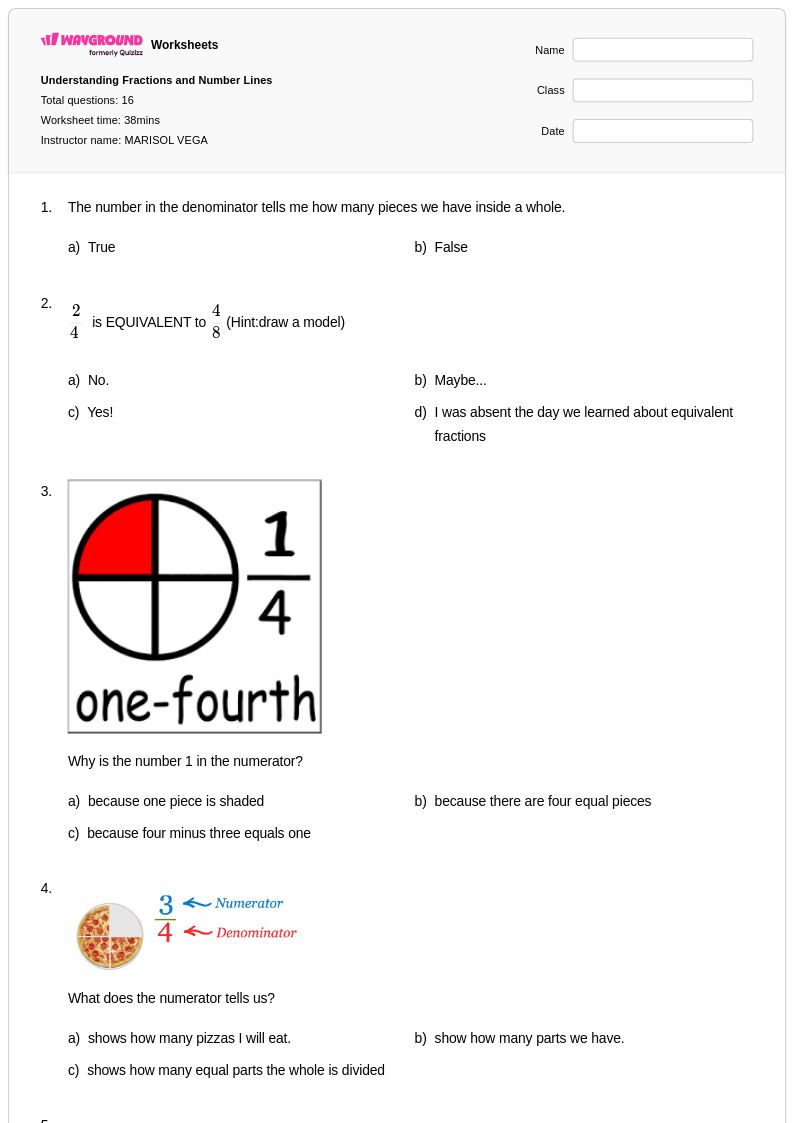
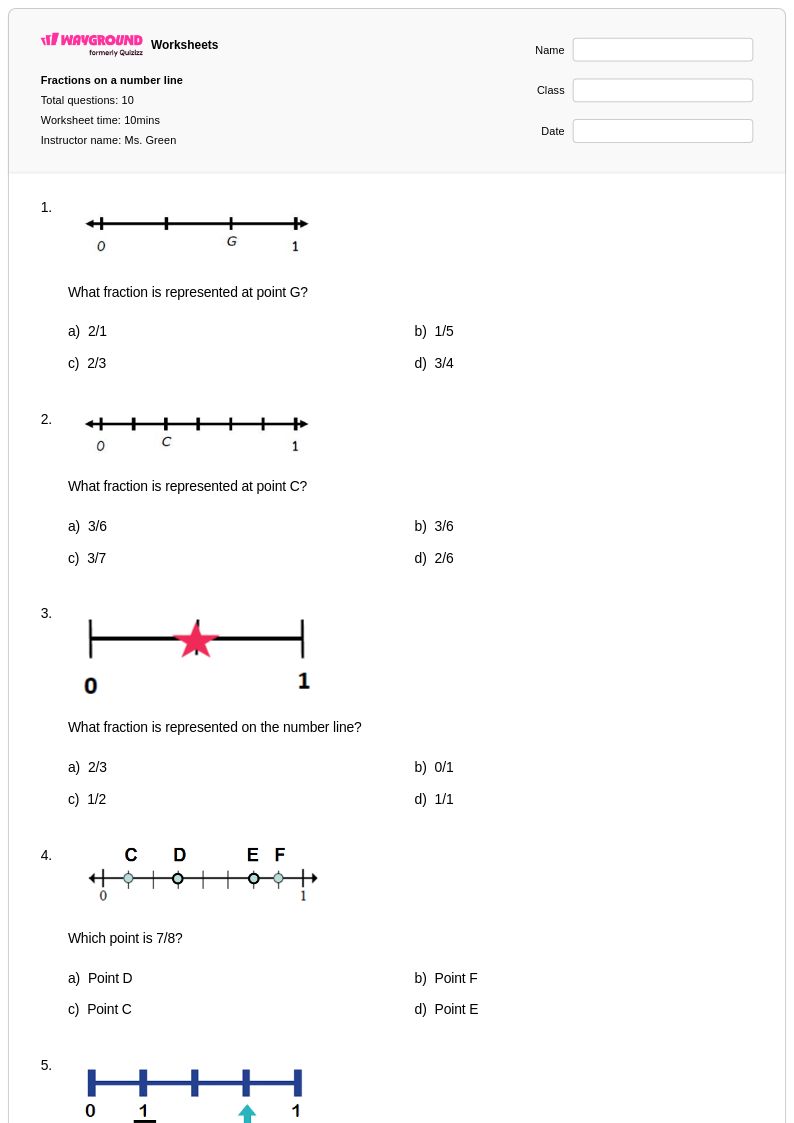
Common Core's Grade 3 measurement work expects students to tell and write time, measure lengths, and represent data on scaled graphs — all of which rely on reading intervals accurately. Distance on a number line at this grade reinforces that interval-reading skill and directly supports the fraction number line work introduced in Grade 3, where students must place fractions like 1/2 and 3/4 at the correct distance from zero. That fraction placement work is one of the most important conceptual steps in the entire elementary progression.
How can I differentiate number line distance practice for my Grade 3 class?
For students who struggle with scaled number lines, Wayground's larger font and wider spacing options make the tick marks and labels easier to distinguish on the printed worksheet. For students who need language support, the worksheet translation feature lets you produce the same problems in another language without changing the math content. On the digital side, the Read Aloud accommodation is useful for students whose reading level is below Grade 3 but whose number sense is on track — it removes the reading barrier so you're actually assessing distance, not decoding.