
10 Q
1st
20 Q
4th
12 Q
KG
14 Q
4th
14 Q
2nd
10 Q
2nd
10 Q
1st
10 Q
3rd
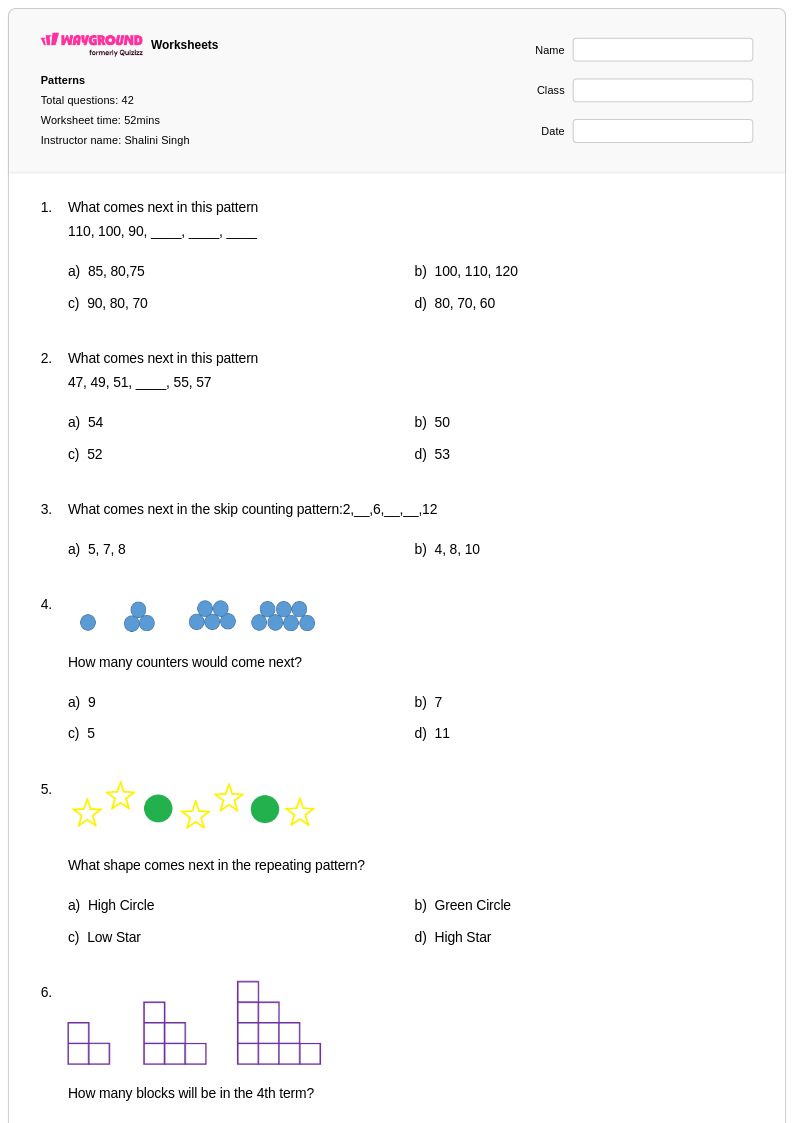
42 Q
2nd
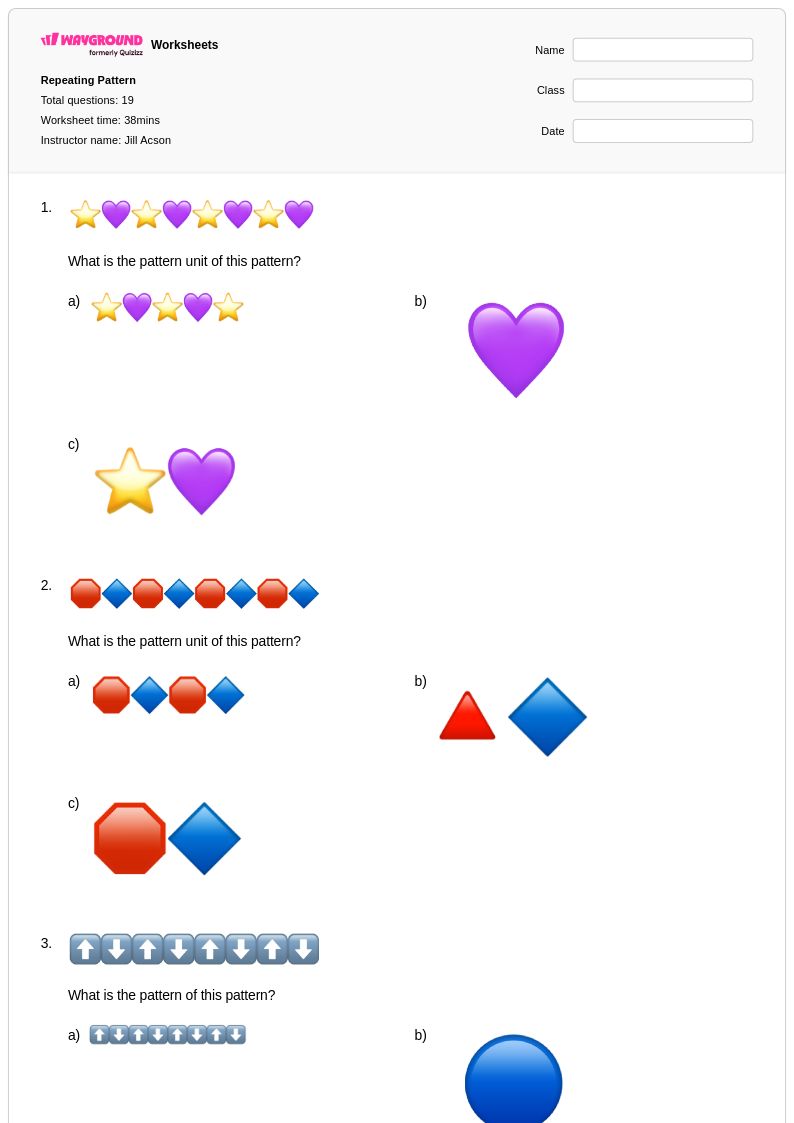
19 Q
1st
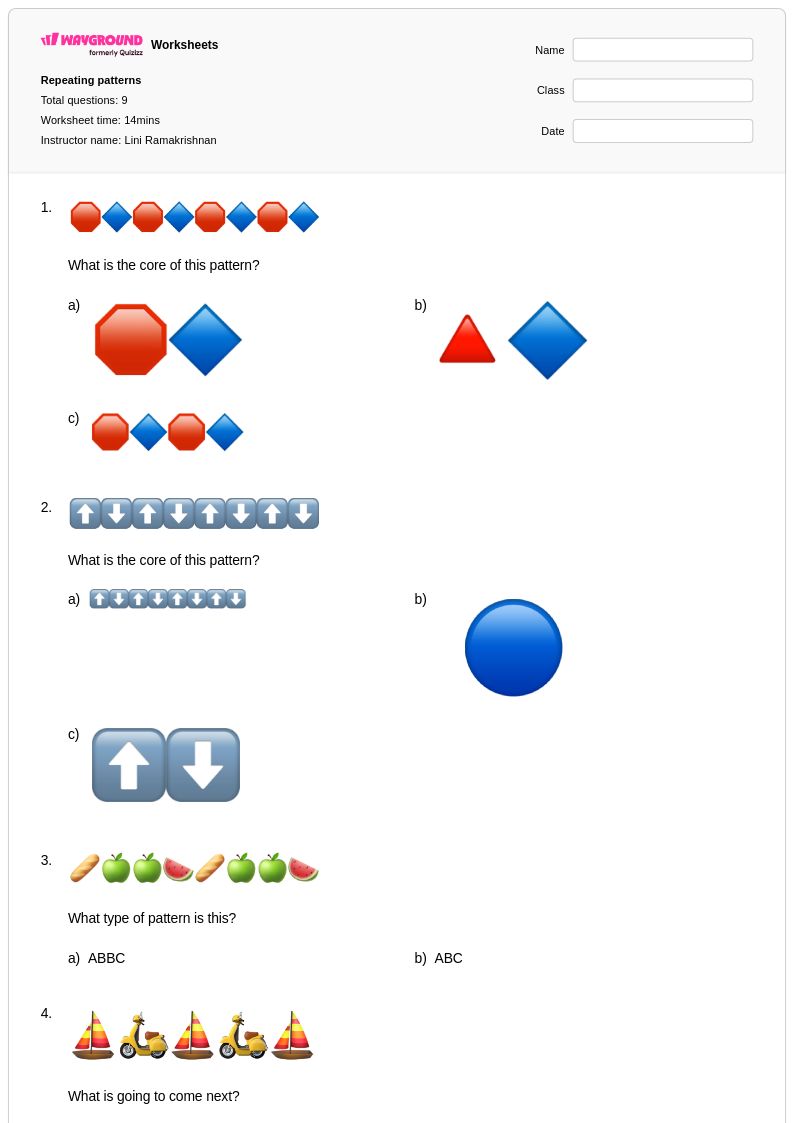
9 Q
3rd
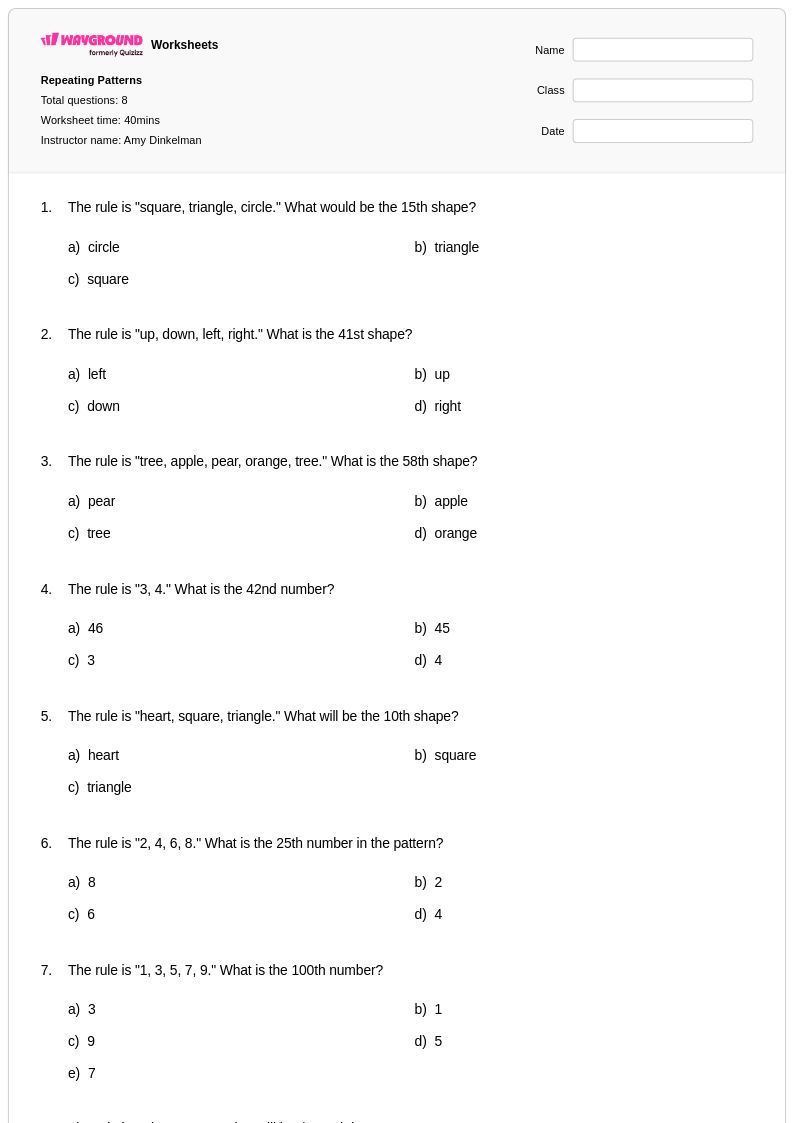
8 Q
4th
10 Q
8th
5 Q
1st
5 Q
1st
12 Q
4th
20 Q
3rd
13 Q
4th
10 Q
2nd - 5th
20 Q
4th - Uni
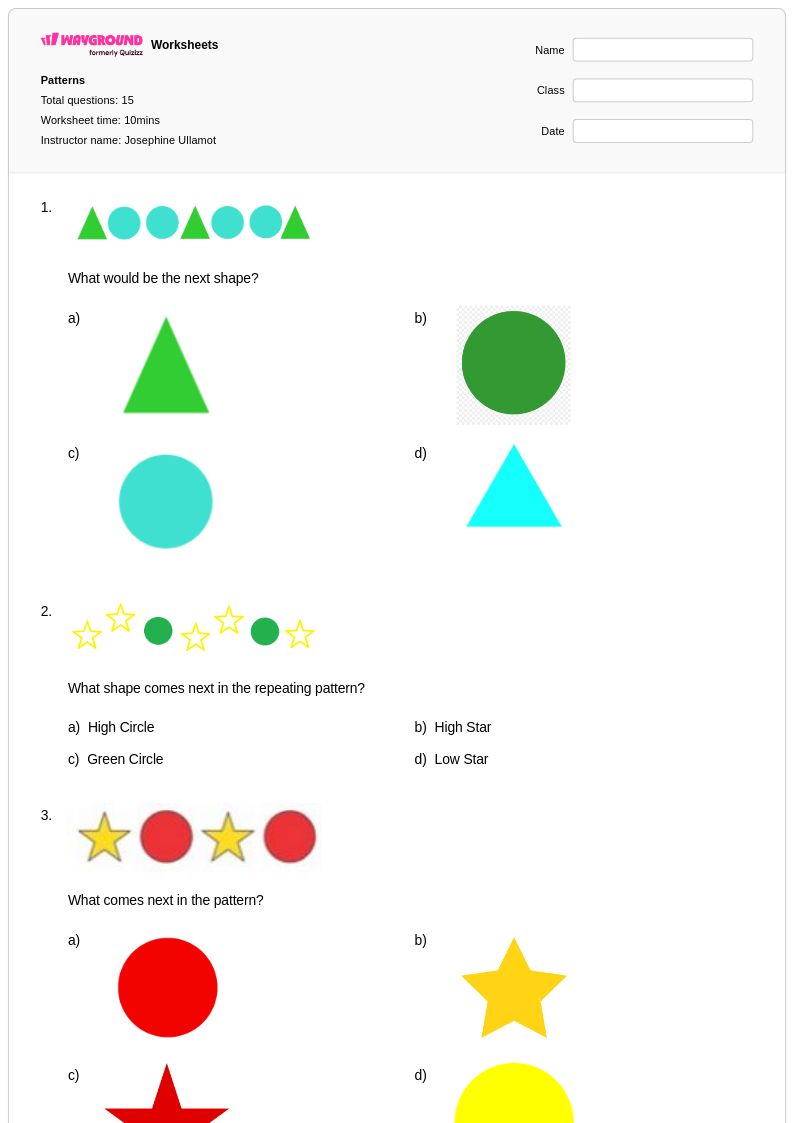
15 Q
1st
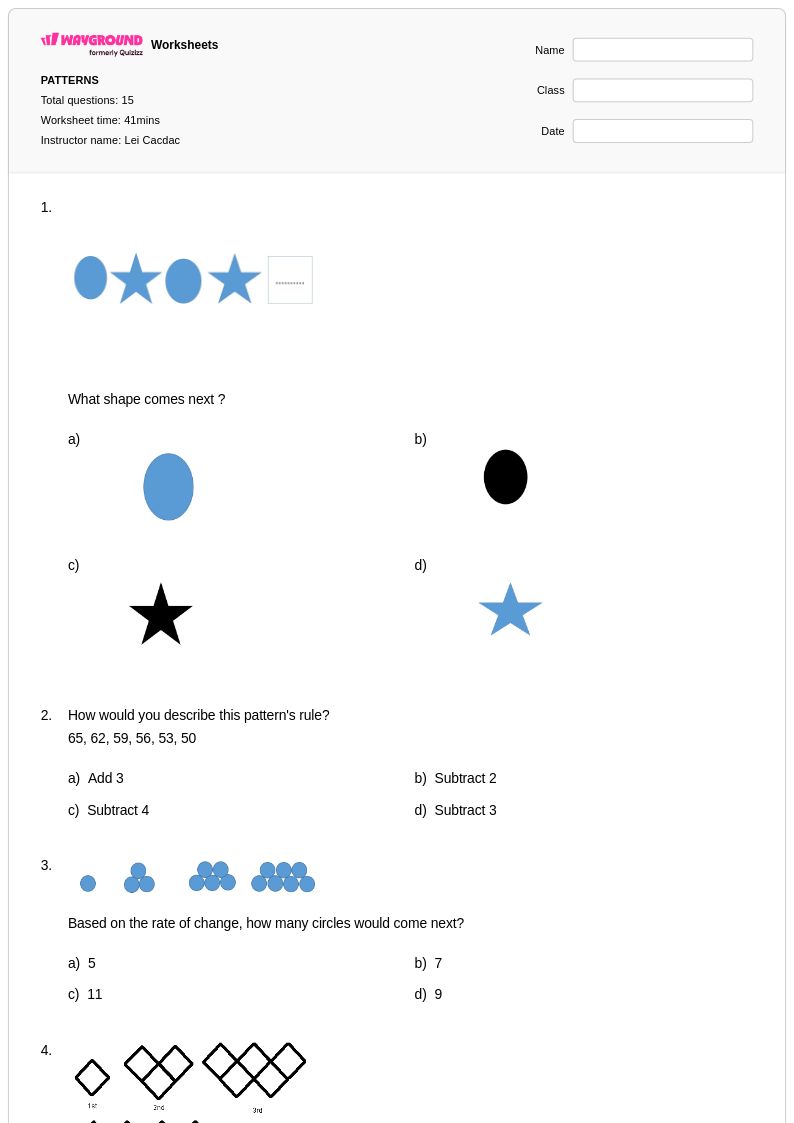
15 Q
6th
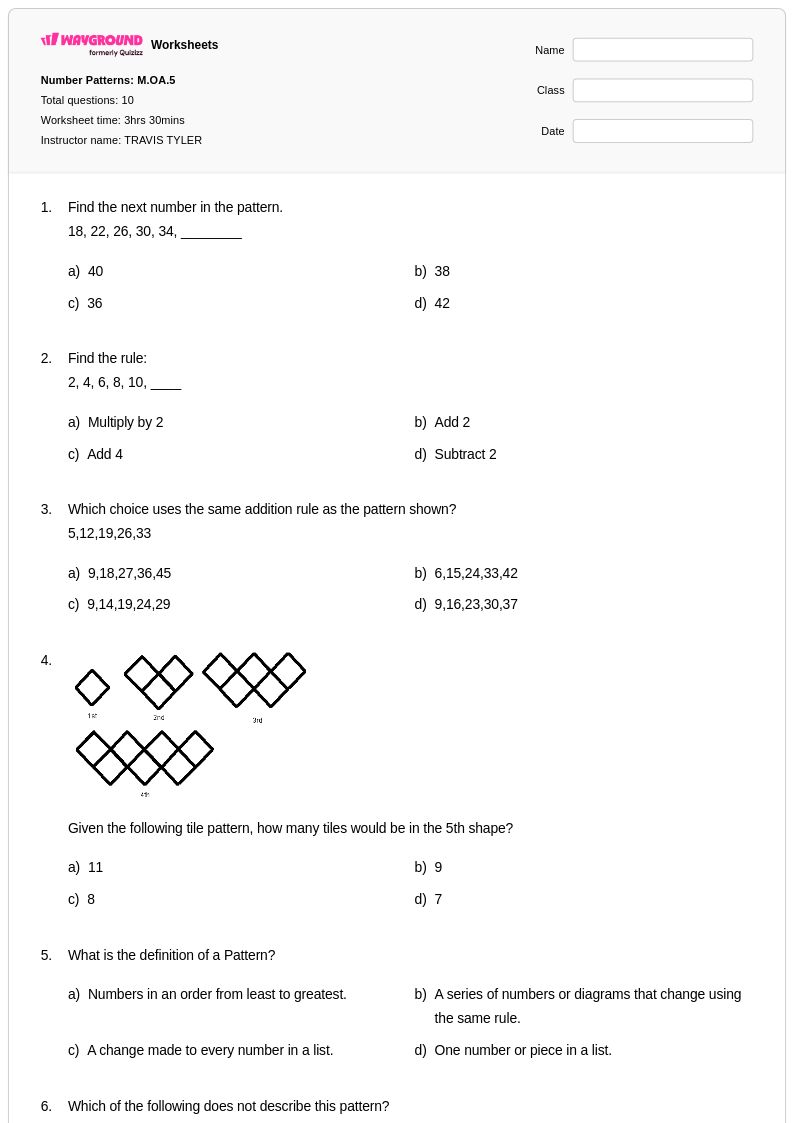
10 Q
4th
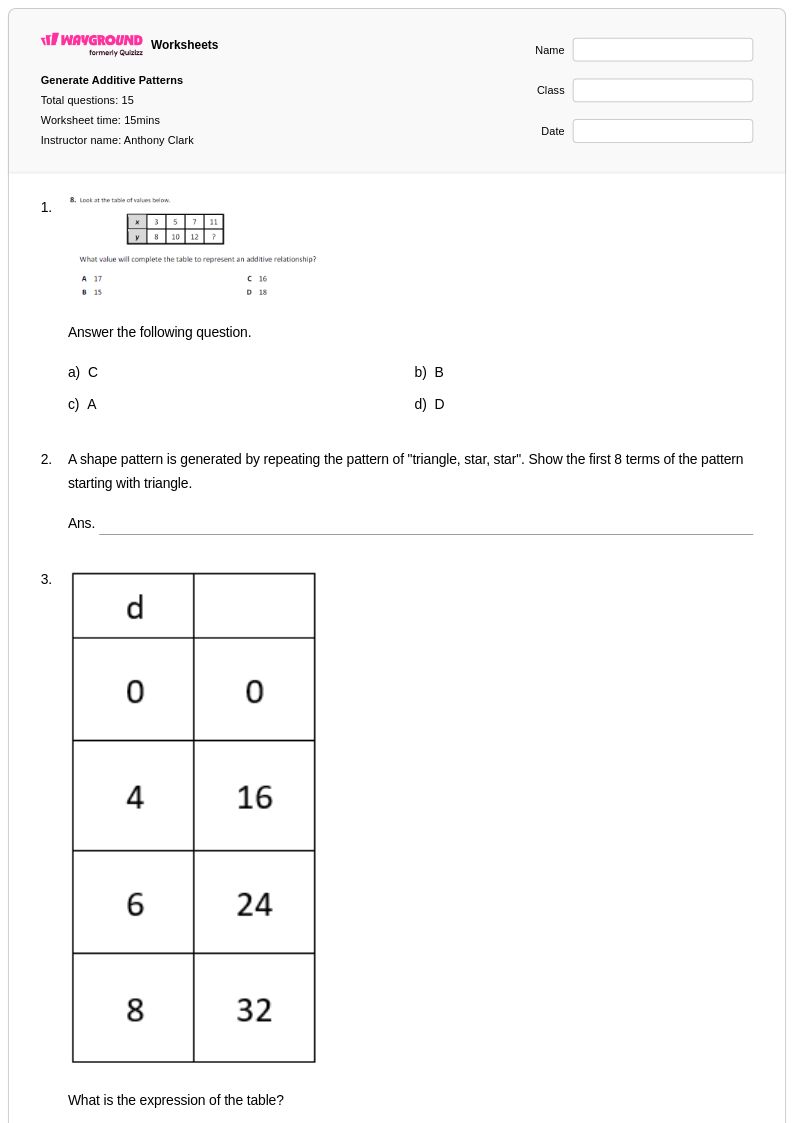
15 Q
5th - Uni
Explore Other Subject Worksheets for kindergarten
Explore printable Repeating Patterns worksheets for Kindergarten
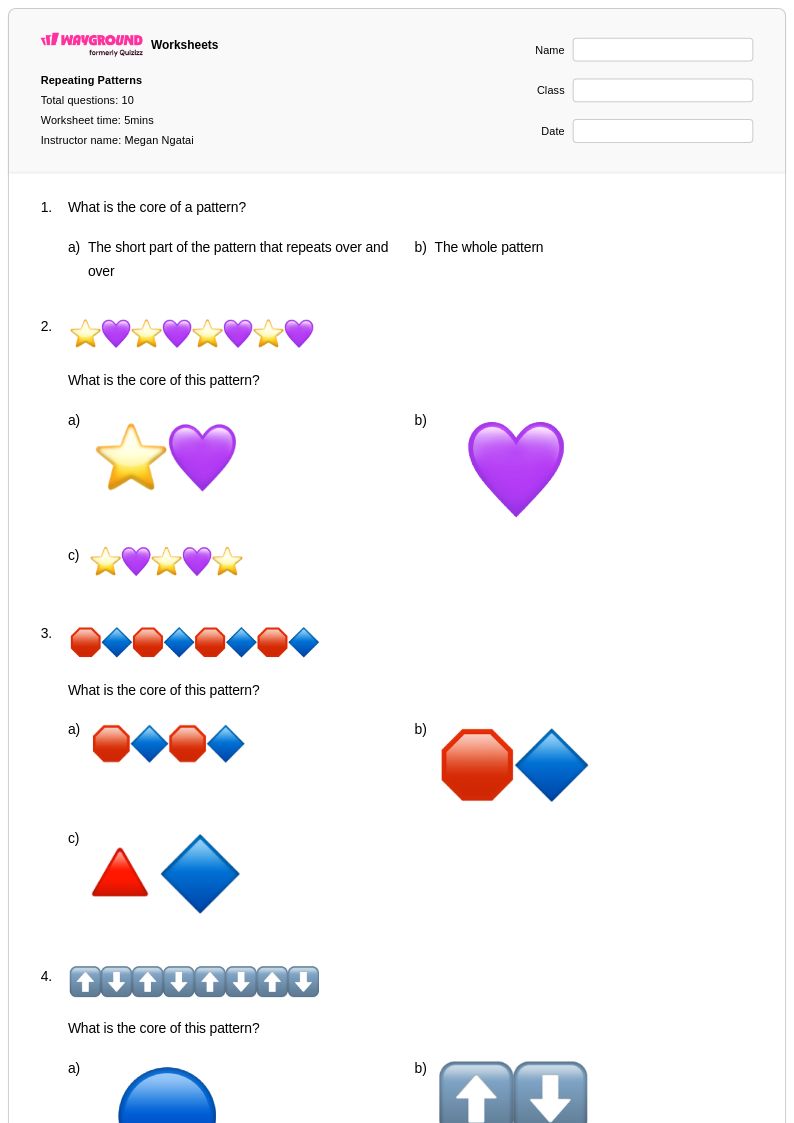
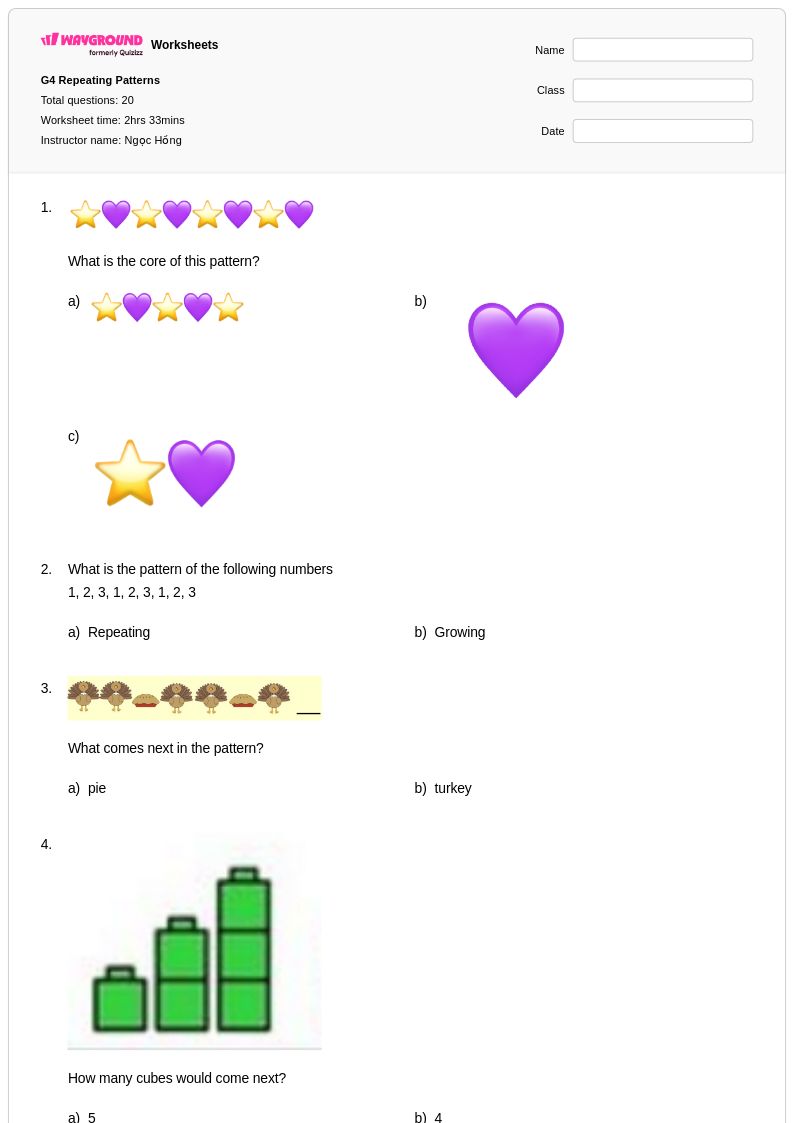
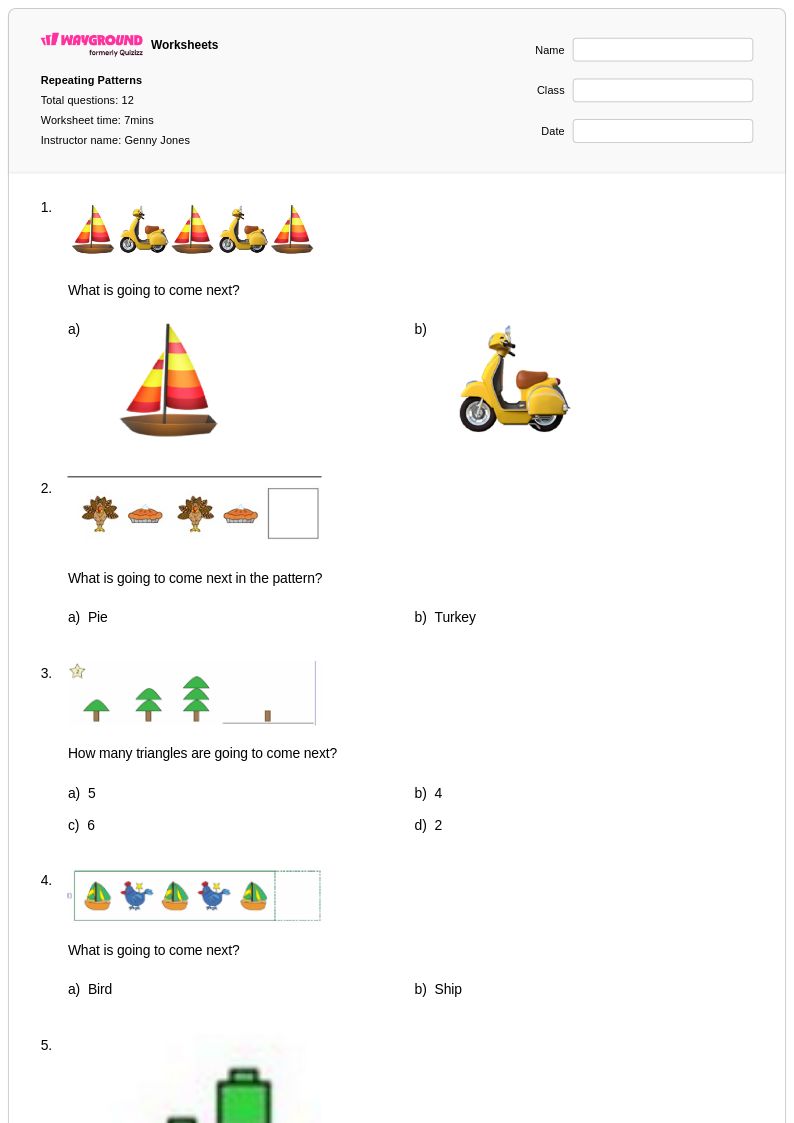
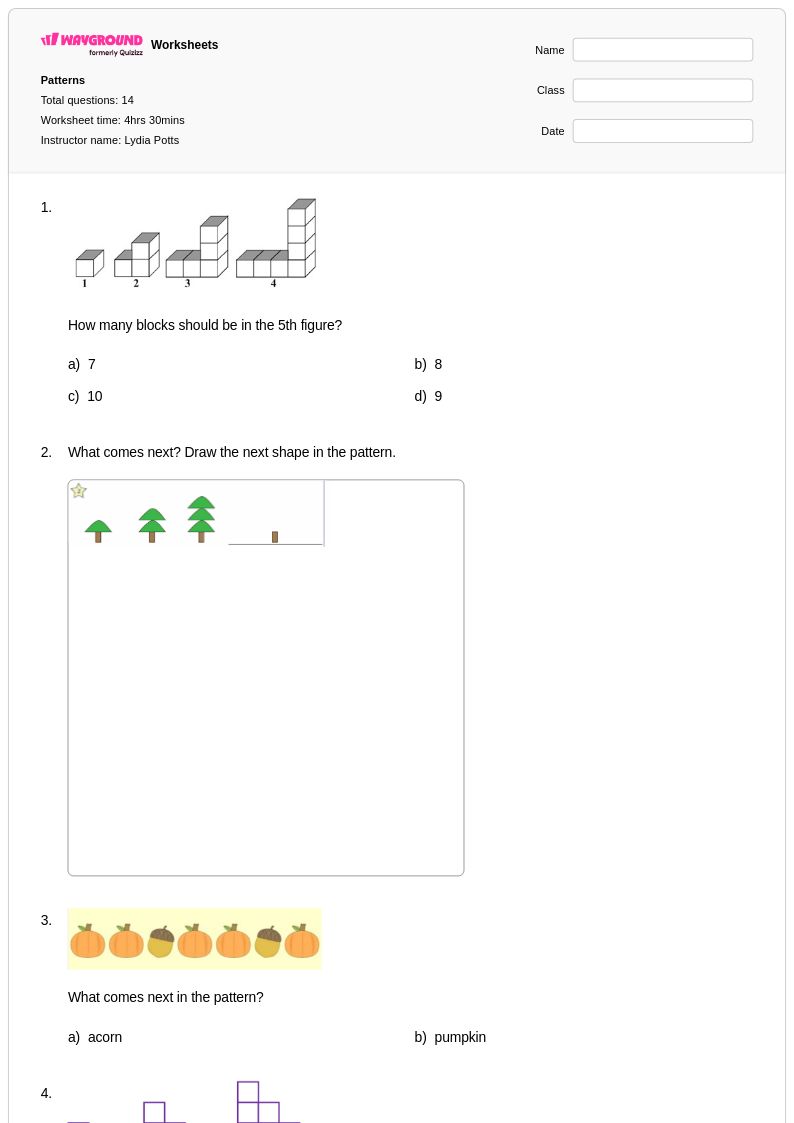
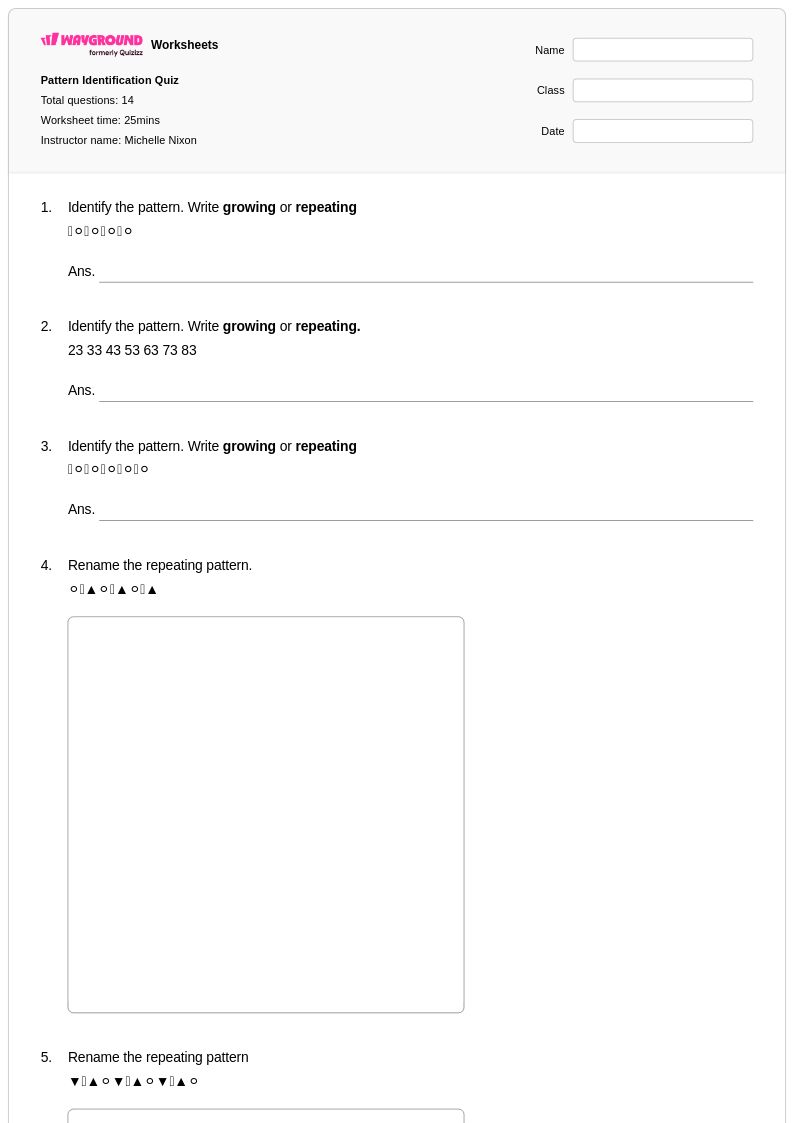
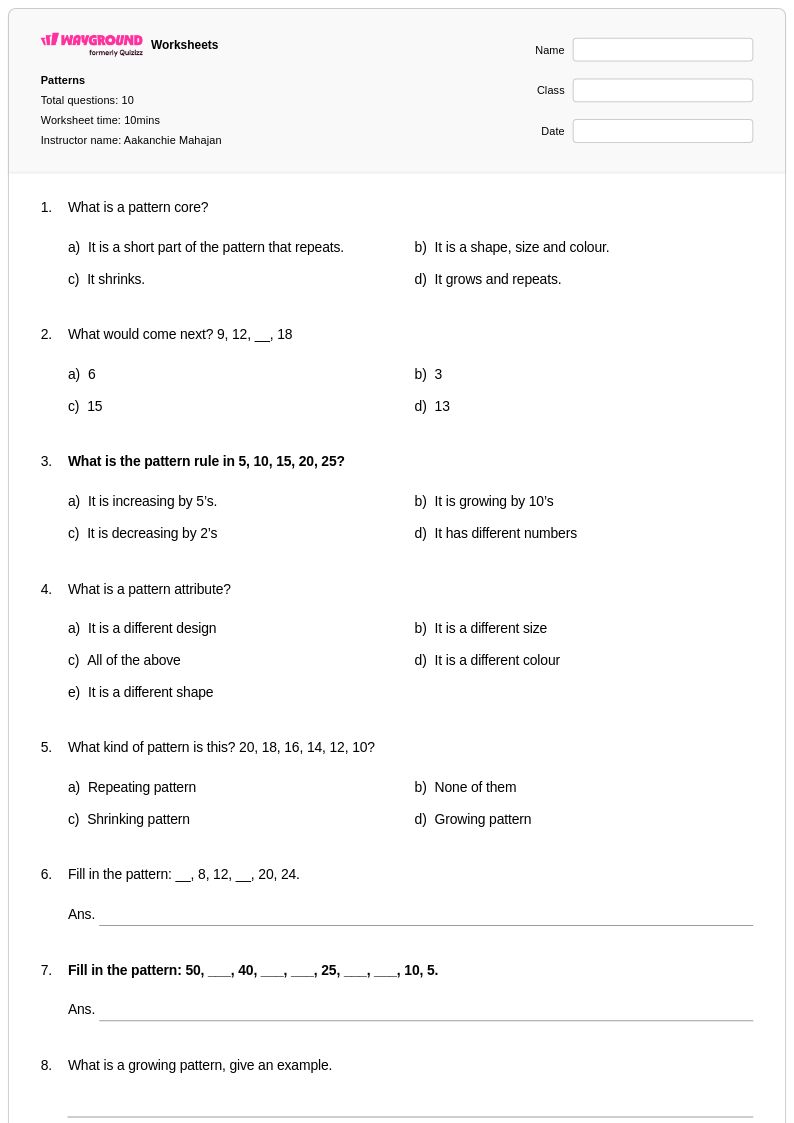
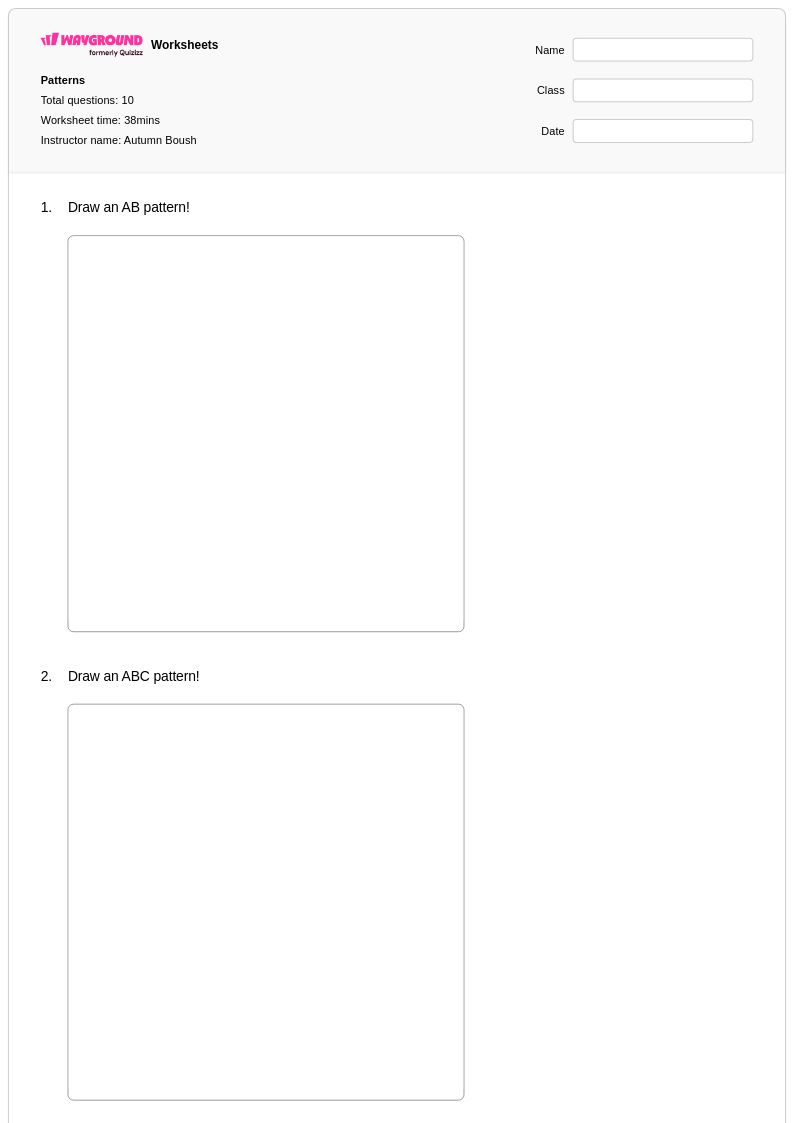
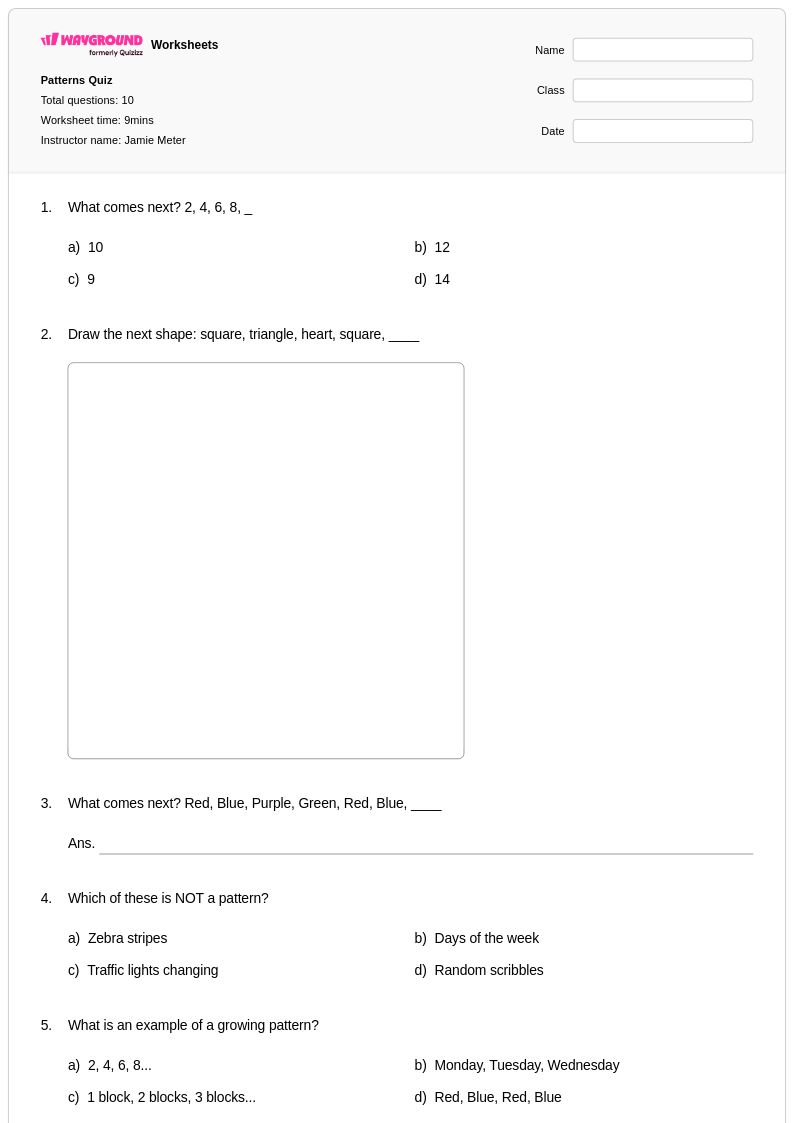
Repeating patterns worksheets for kindergarten students available through Wayground (formerly Quizizz) provide essential foundational practice in recognizing, extending, and creating sequential arrangements using colors, shapes, objects, and numbers. These comprehensive printables strengthen critical thinking skills and logical reasoning abilities that serve as building blocks for algebraic concepts introduced in later grades. Each worksheet collection includes carefully structured practice problems that progress from simple AB patterns to more complex ABC and ABAB sequences, with complete answer keys provided to support both independent learning and guided instruction. The free pdf resources engage young learners through colorful, age-appropriate activities that make pattern recognition enjoyable while developing mathematical reasoning and visual discrimination skills essential for kindergarten number sense development.
Wayground (formerly Quizizz) empowers educators with millions of teacher-created repeating pattern worksheets specifically designed for kindergarten mathematics instruction, featuring robust search and filtering capabilities that allow quick identification of resources aligned with specific learning standards and student needs. The platform's differentiation tools enable teachers to customize worksheet difficulty levels, modify practice problems, and adapt content for diverse learning styles, while flexible formatting options provide both printable pdf versions for traditional classroom use and digital alternatives for technology-integrated lessons. These comprehensive resource collections support strategic lesson planning by offering varied approaches to pattern instruction, facilitate targeted remediation for students struggling with sequential reasoning concepts, and provide enrichment opportunities for advanced learners ready to explore more sophisticated pattern relationships, ensuring every kindergarten student receives appropriate skill practice in this fundamental mathematical concept.
FAQs
What grade do students learn repeating patterns?
How do I teach repeating patterns to kindergarteners?
What are good practice activities for kindergarten pattern skills?
What's a common error kindergarteners make with patterns?
How can I use this kindergarten patterns worksheet?
How do kindergarten patterns prepare students for first grade math?