
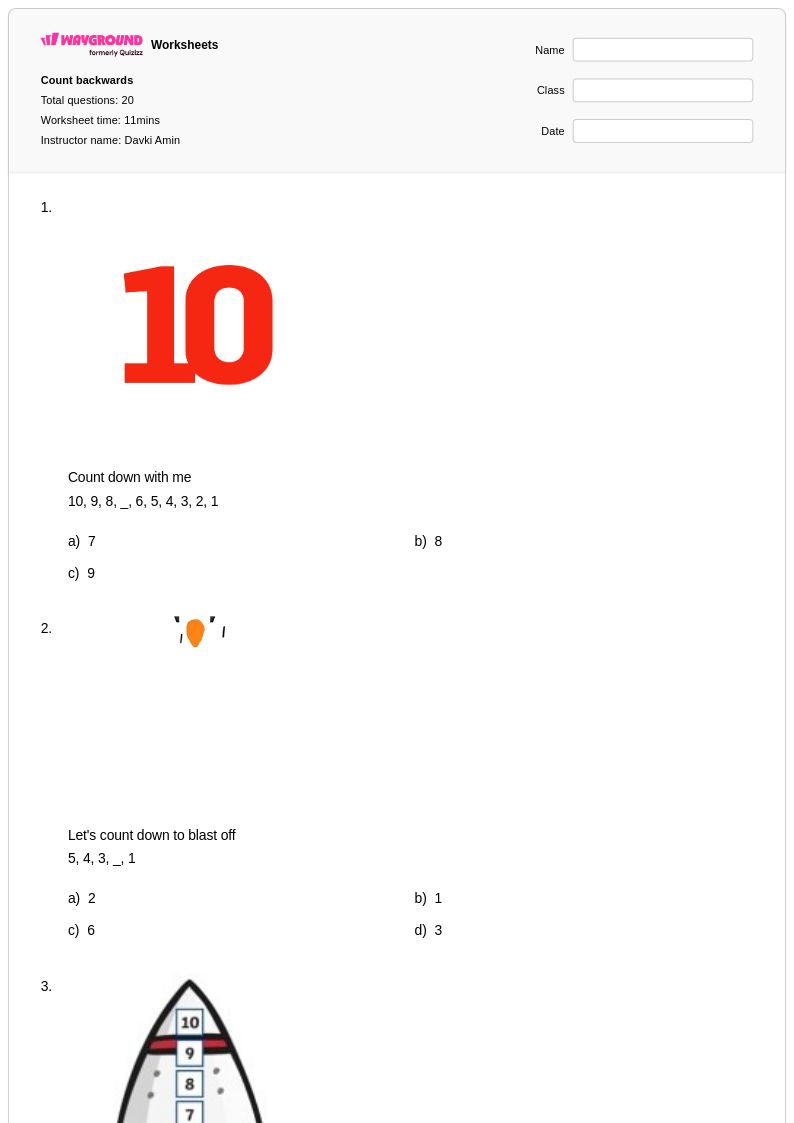
20 Q
1st
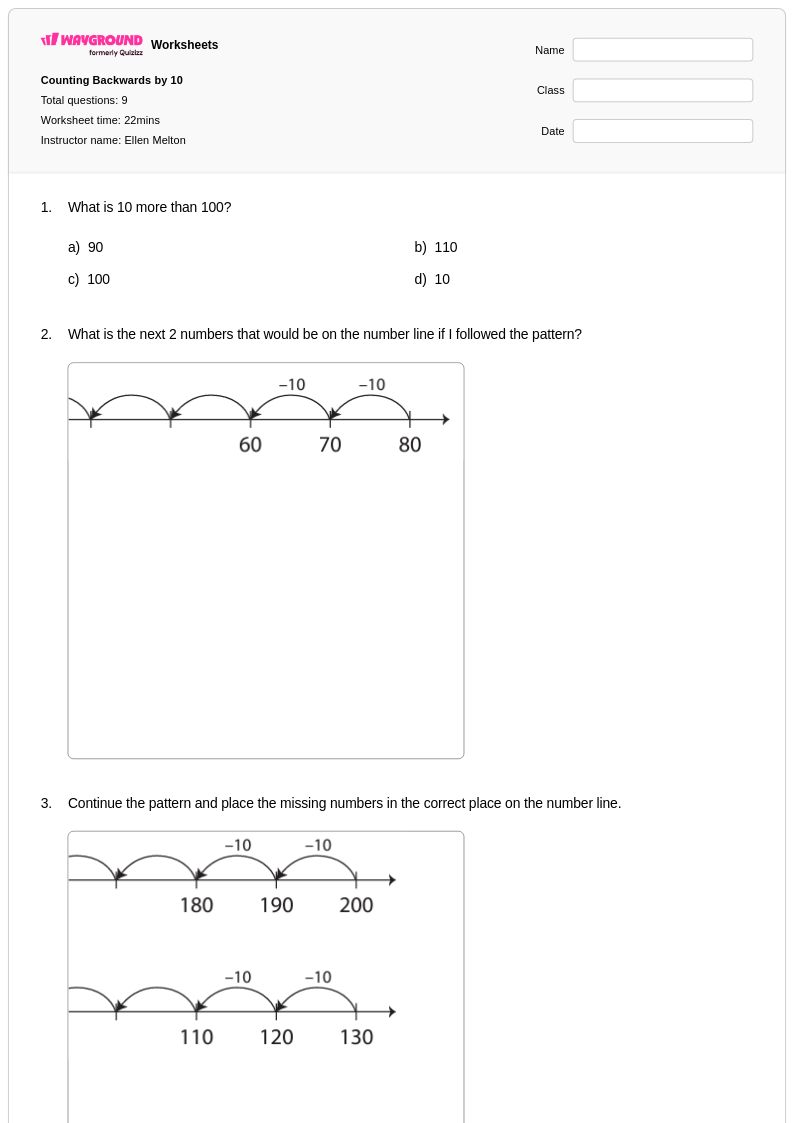
9 Q
2nd
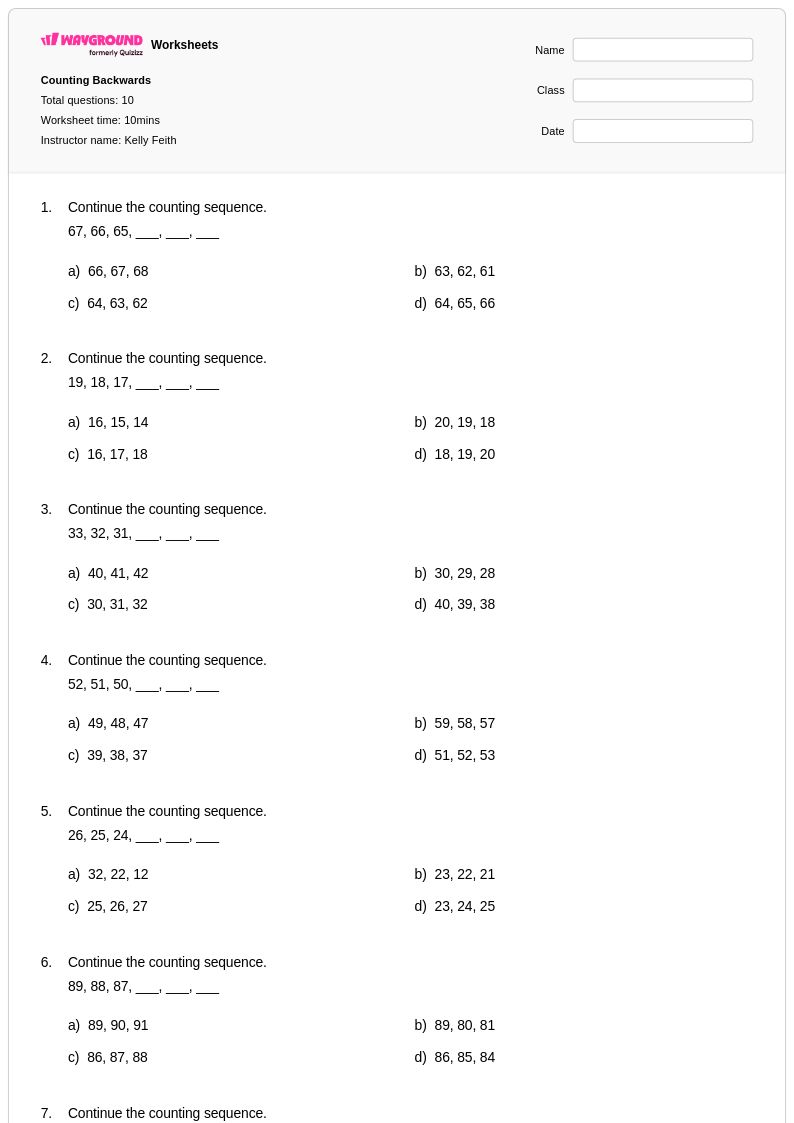
10 Q
1st
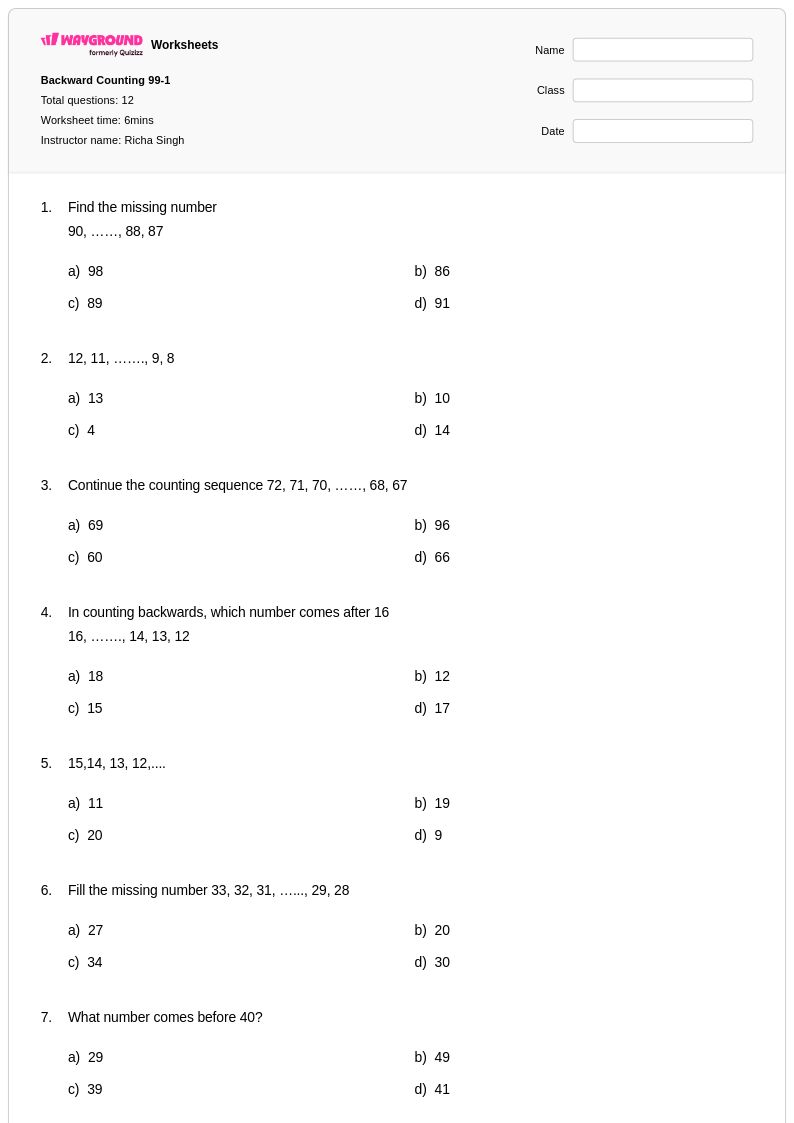
12 Q
1st
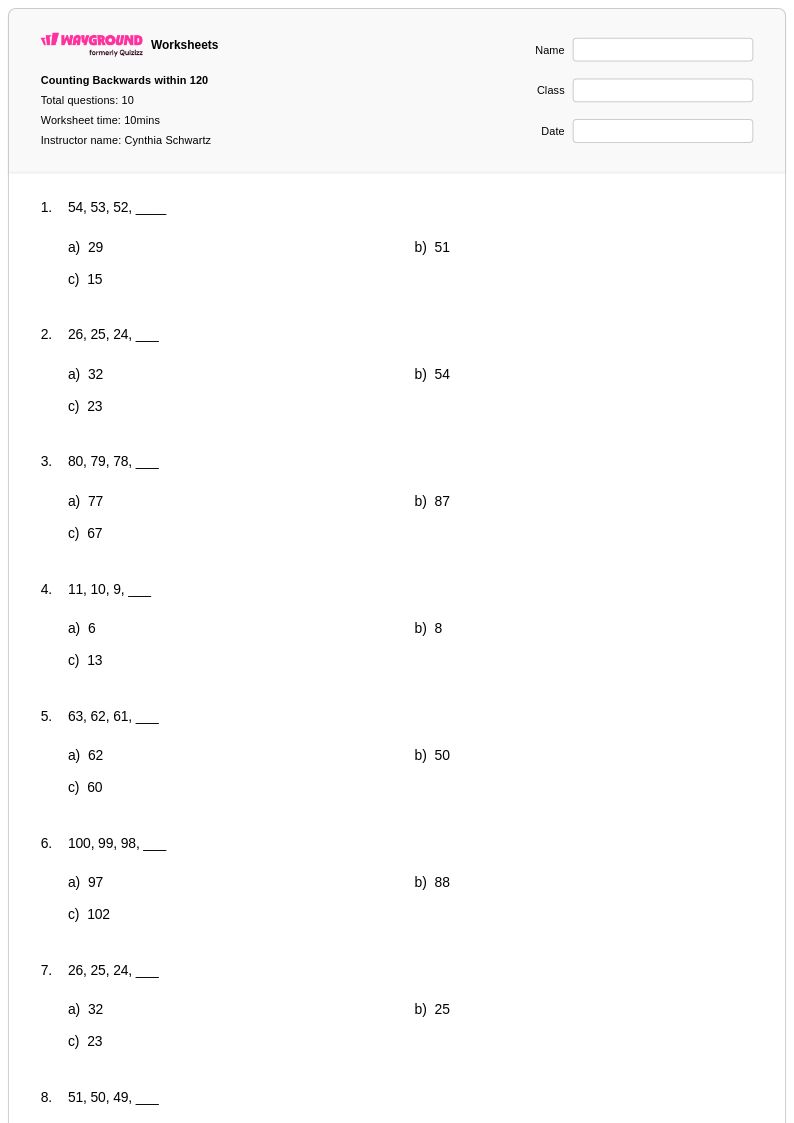
10 Q
KG - 1st
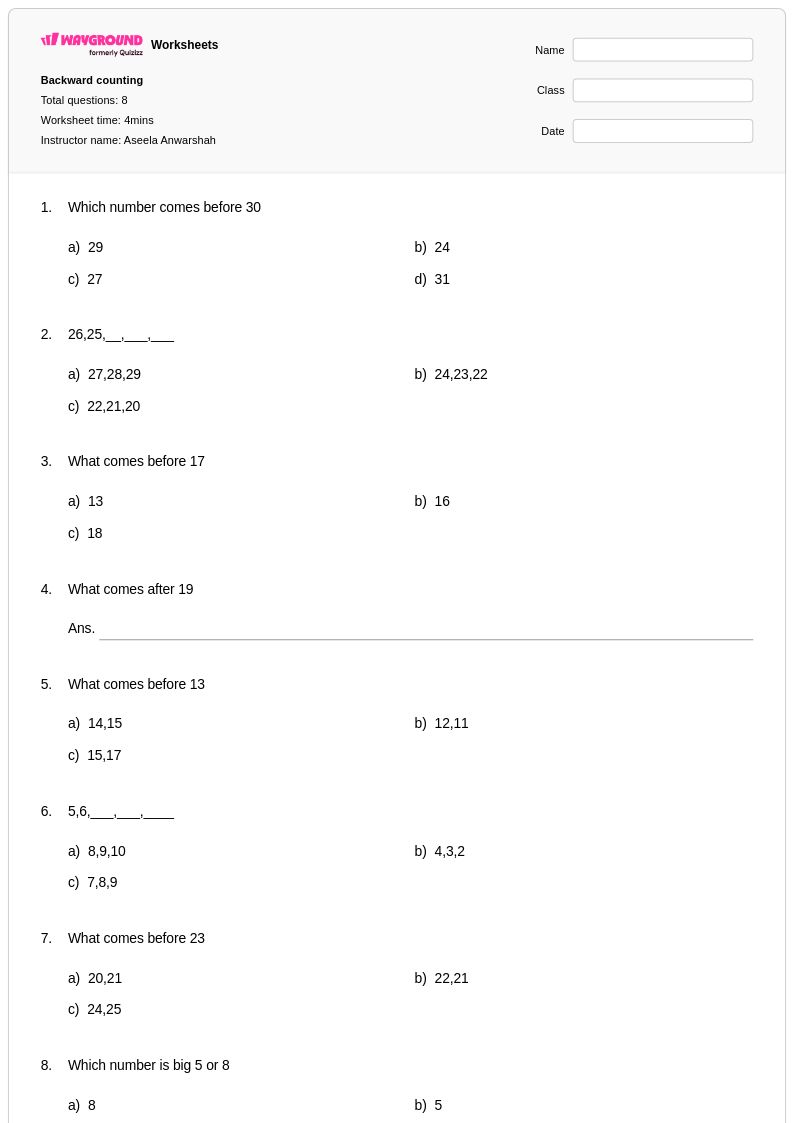
8 Q
KG
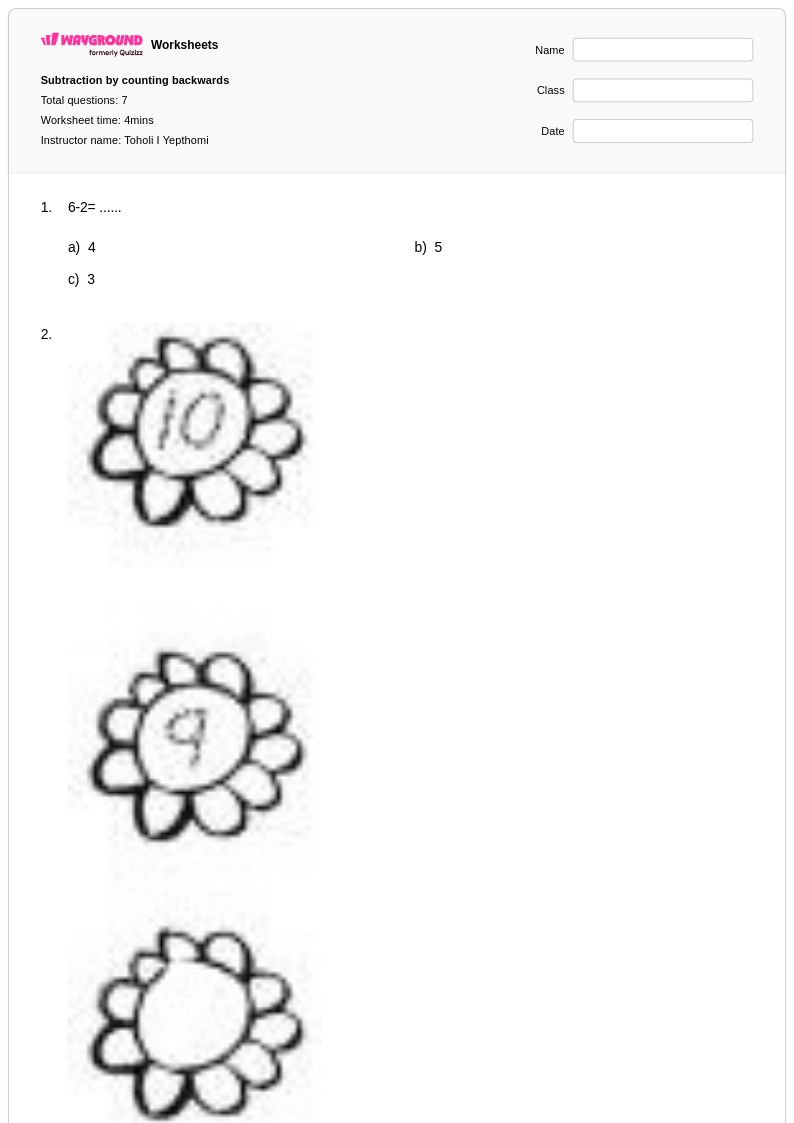
7 Q
1st - 5th
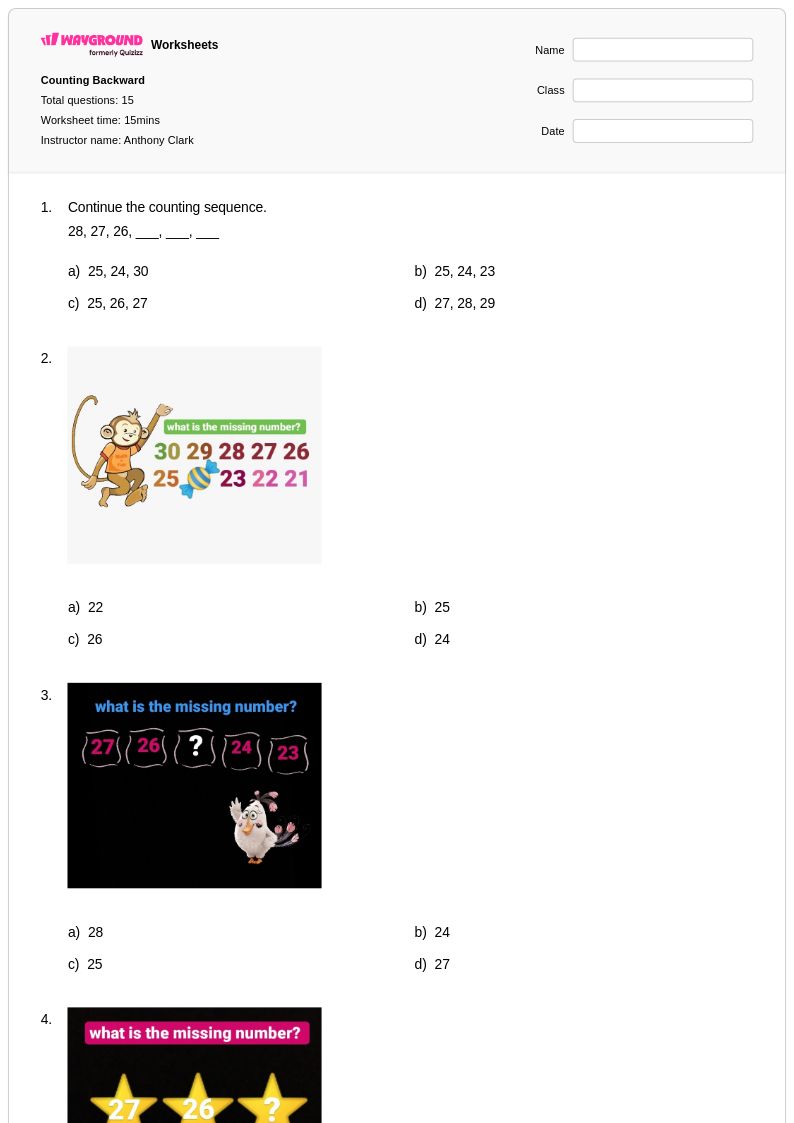
15 Q
KG
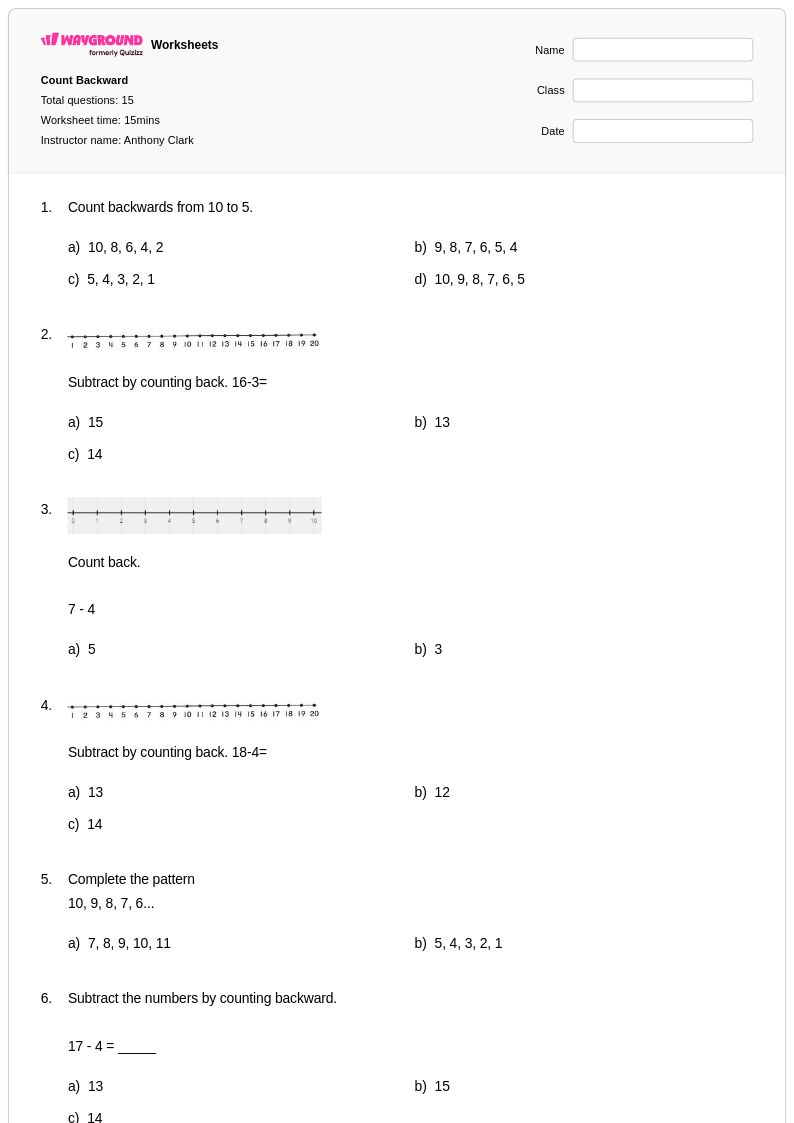
15 Q
1st - Uni
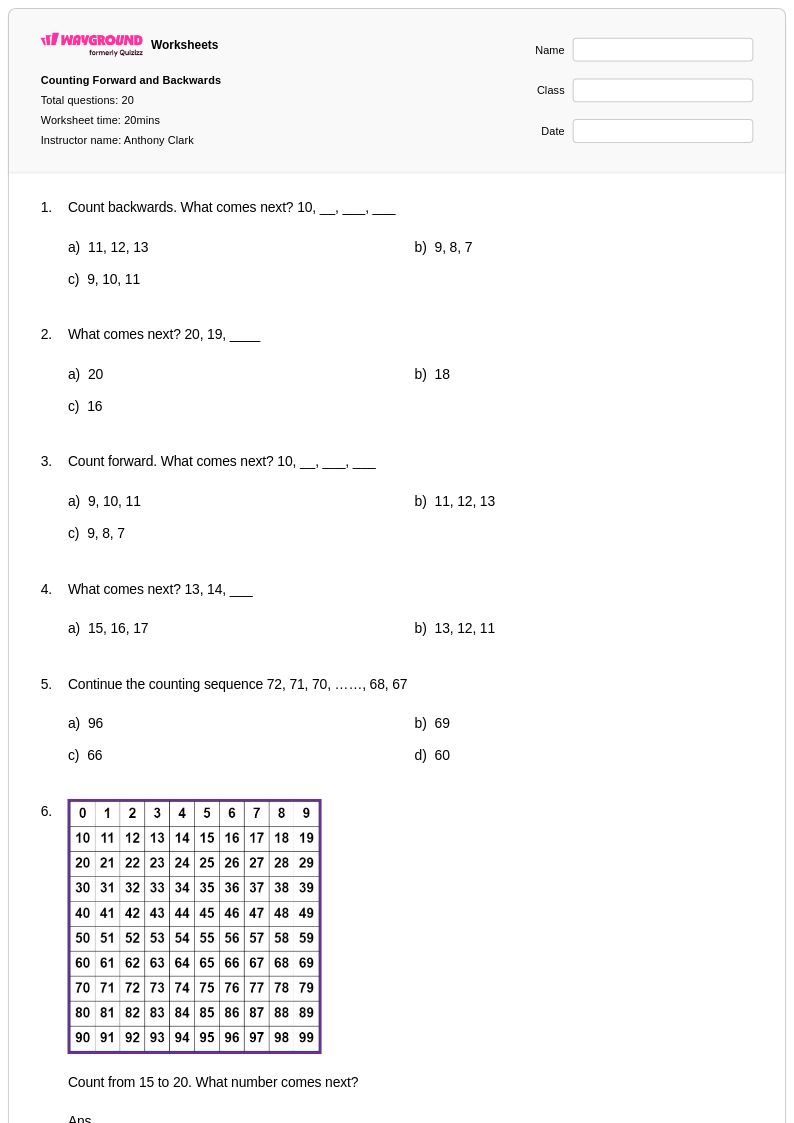
20 Q
1st - Uni
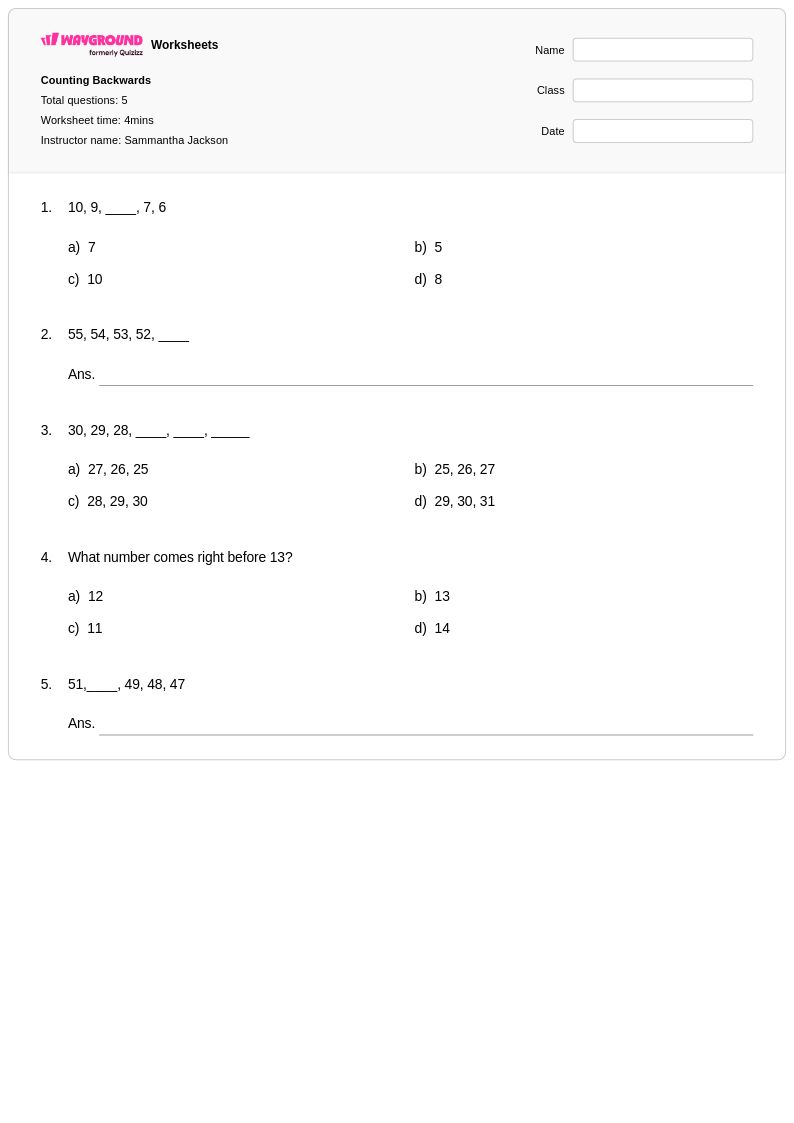
5 Q
1st
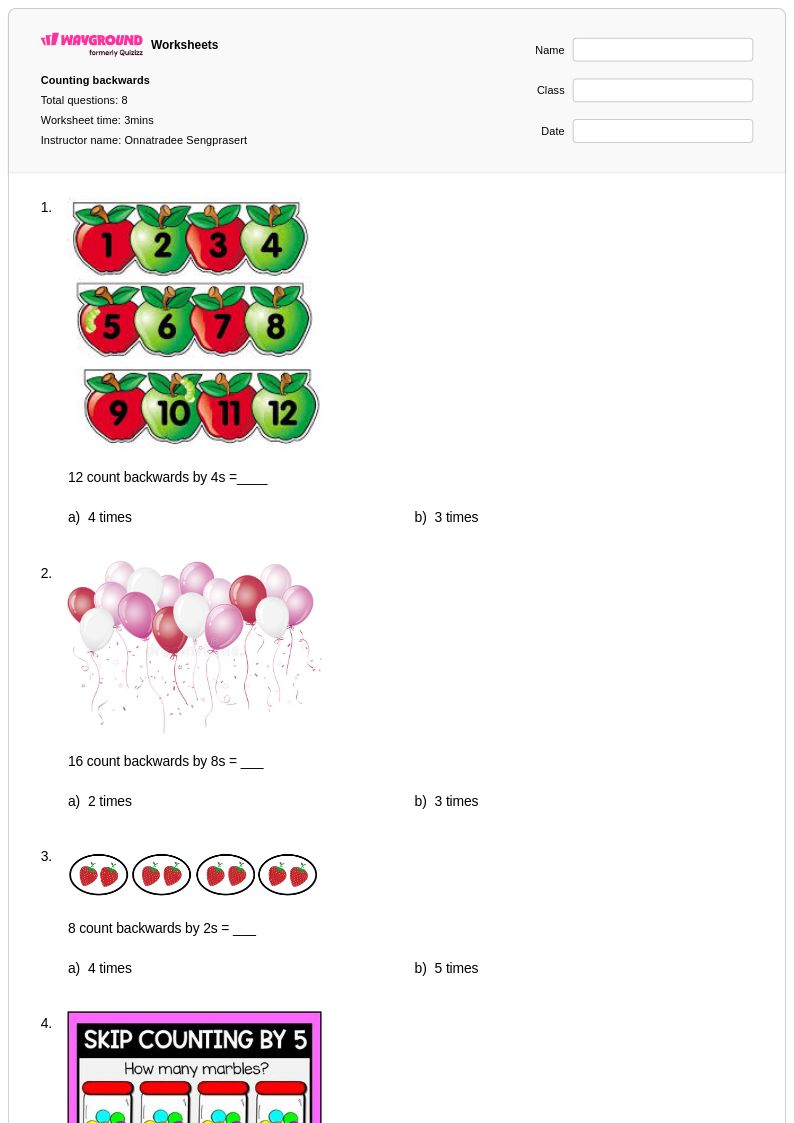
8 Q
2nd
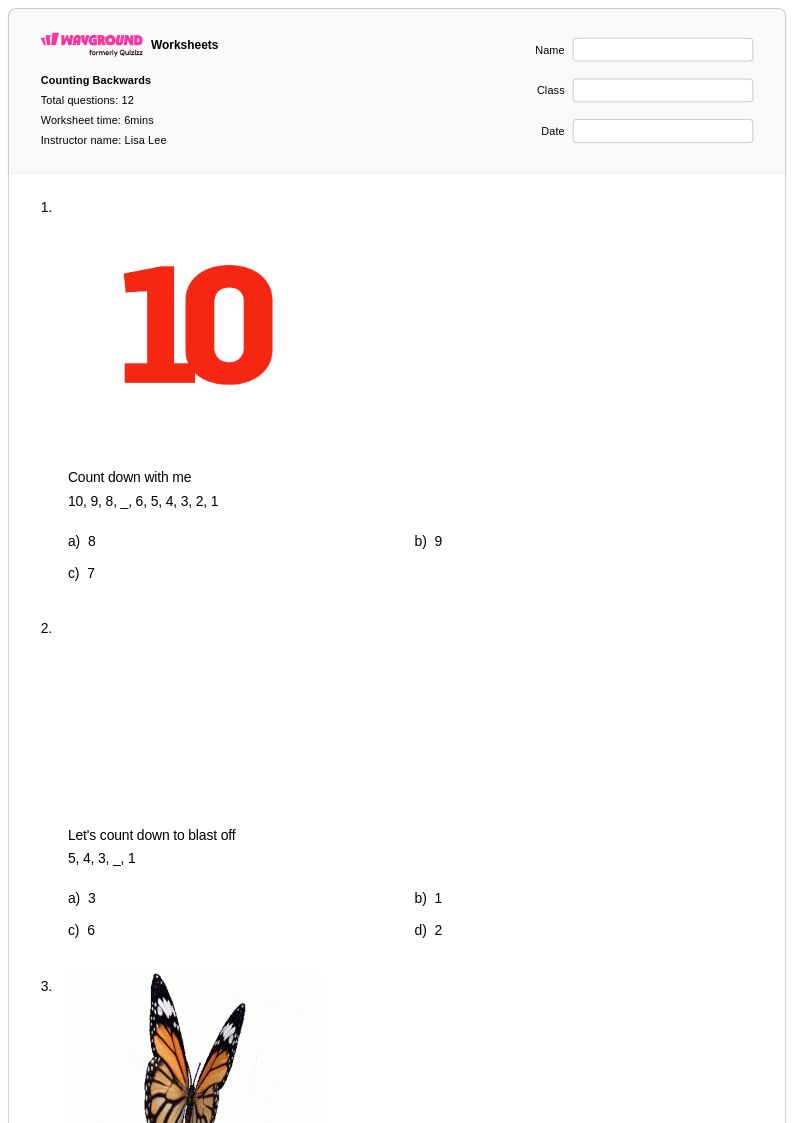
12 Q
KG
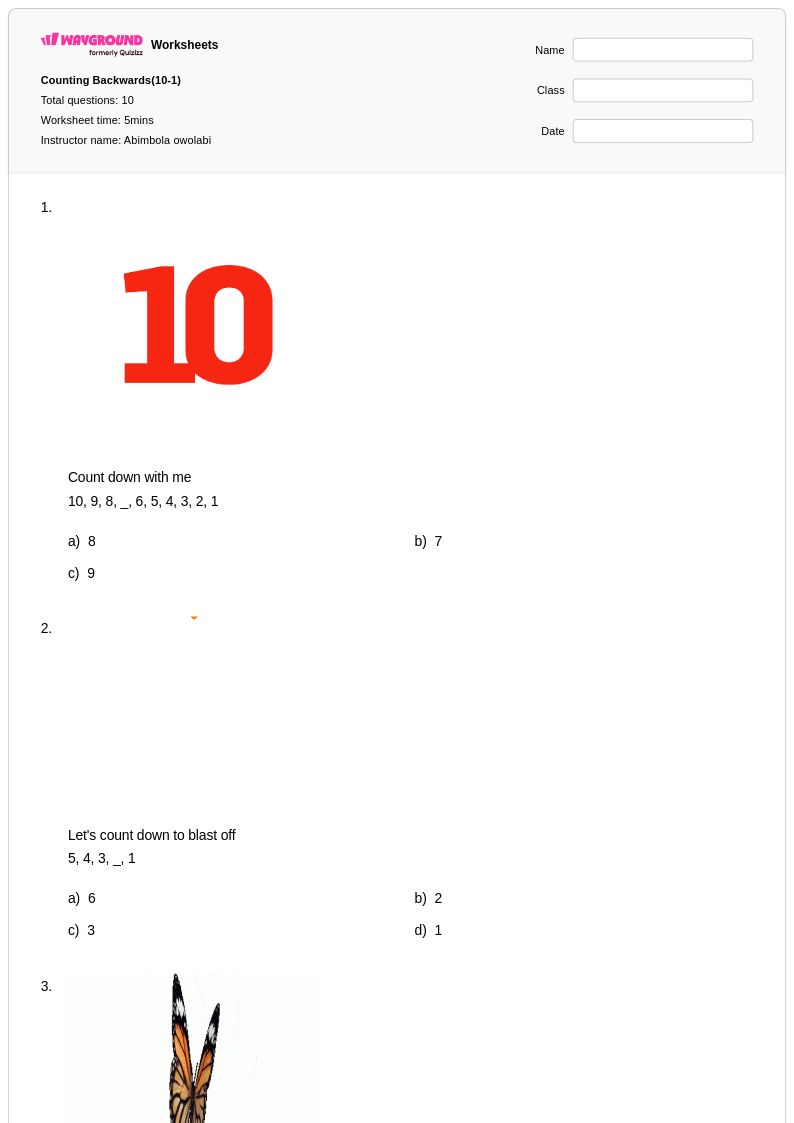
10 Q
KG
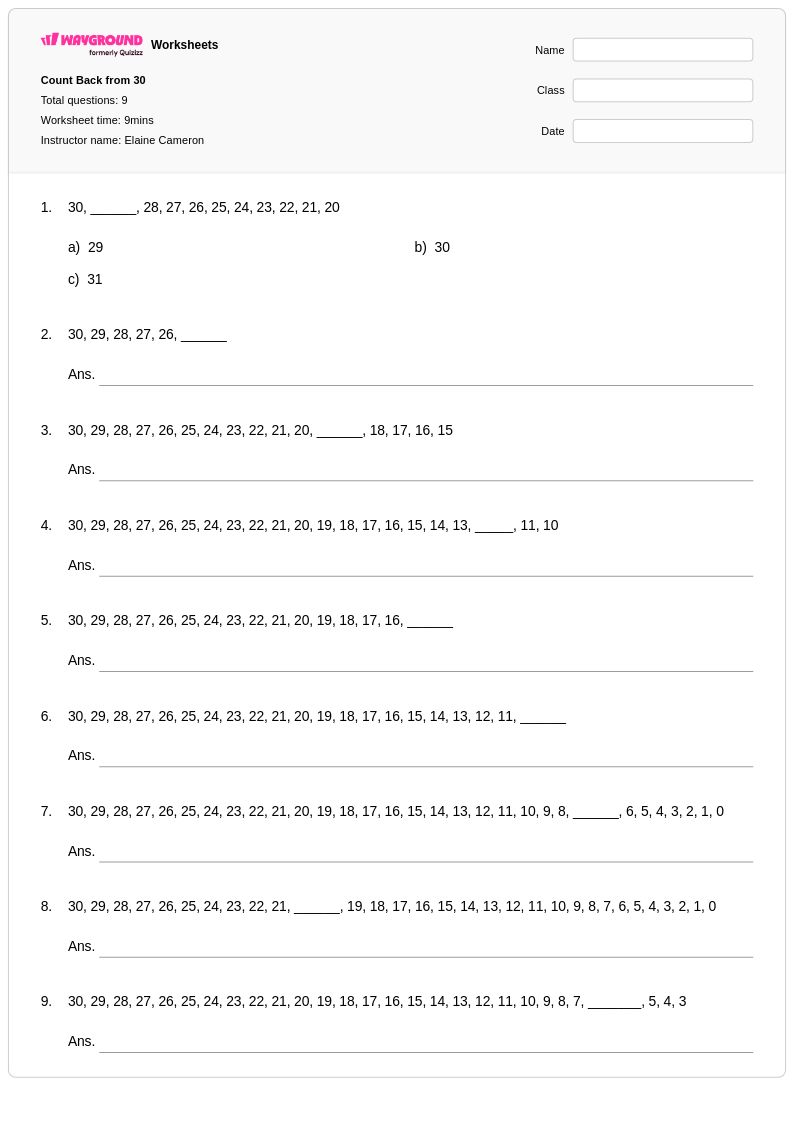
9 Q
1st
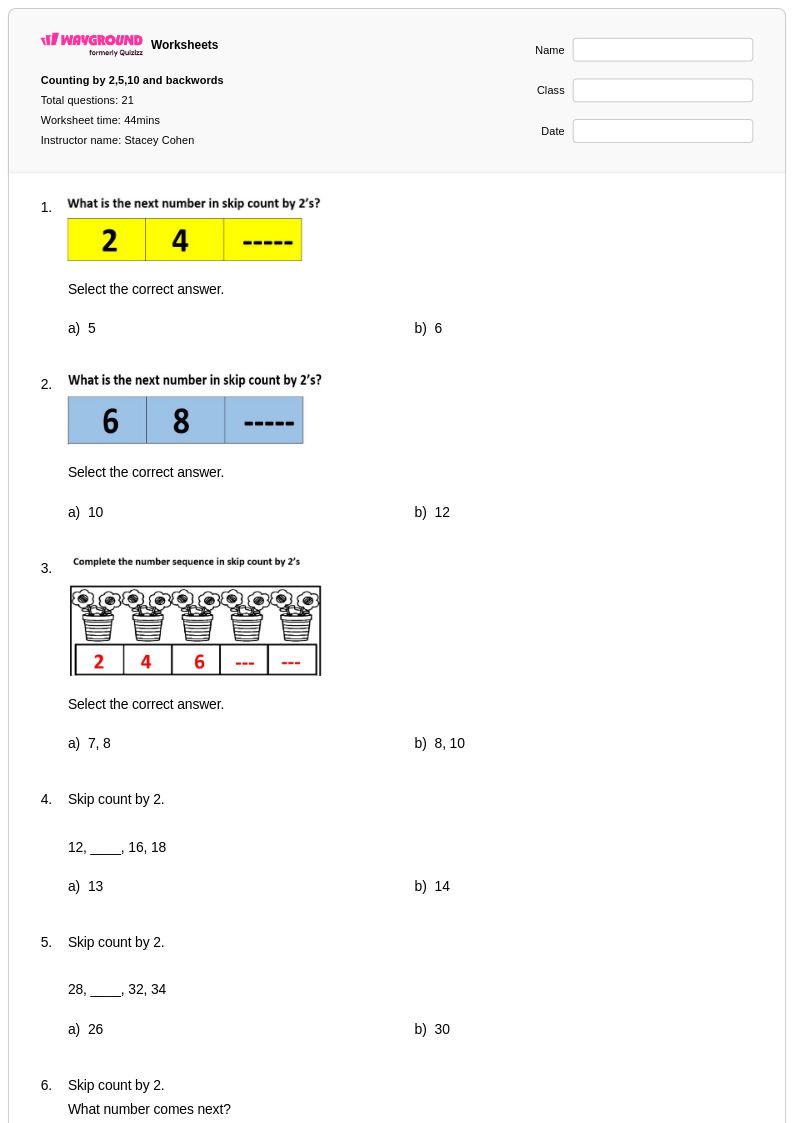
21 Q
1st
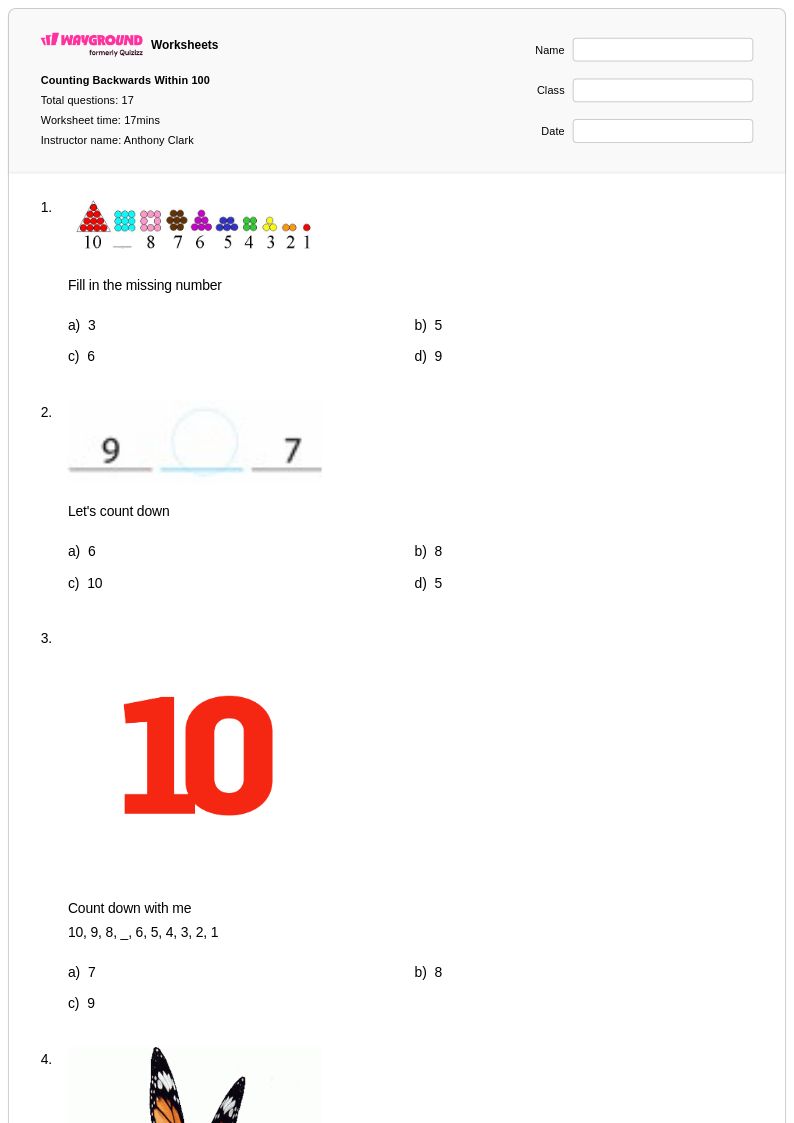
17 Q
1st - Uni
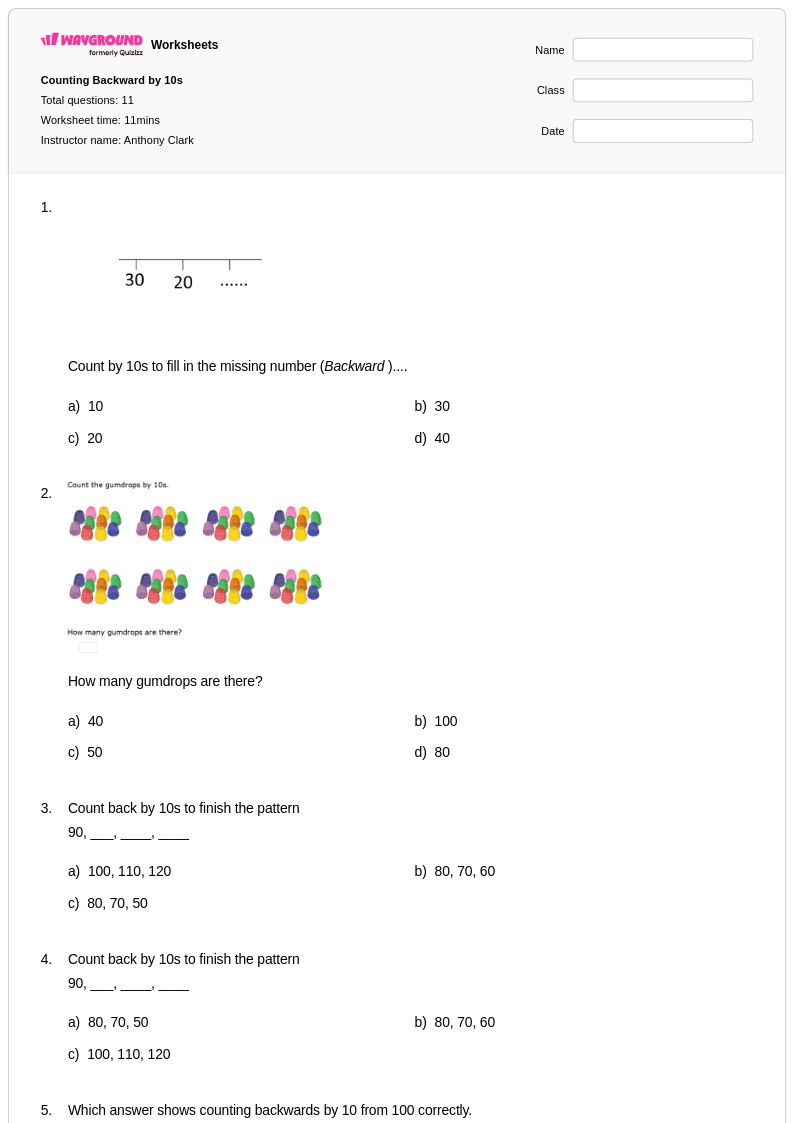
11 Q
1st - Uni
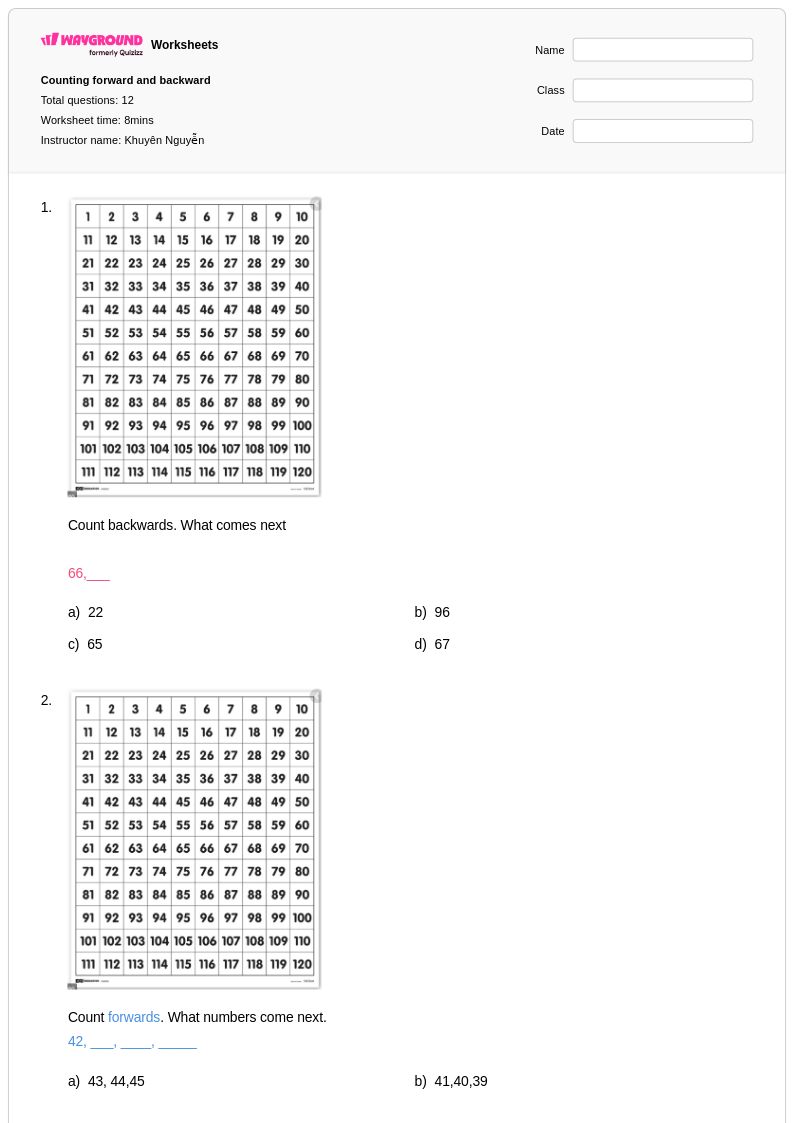
12 Q
1st
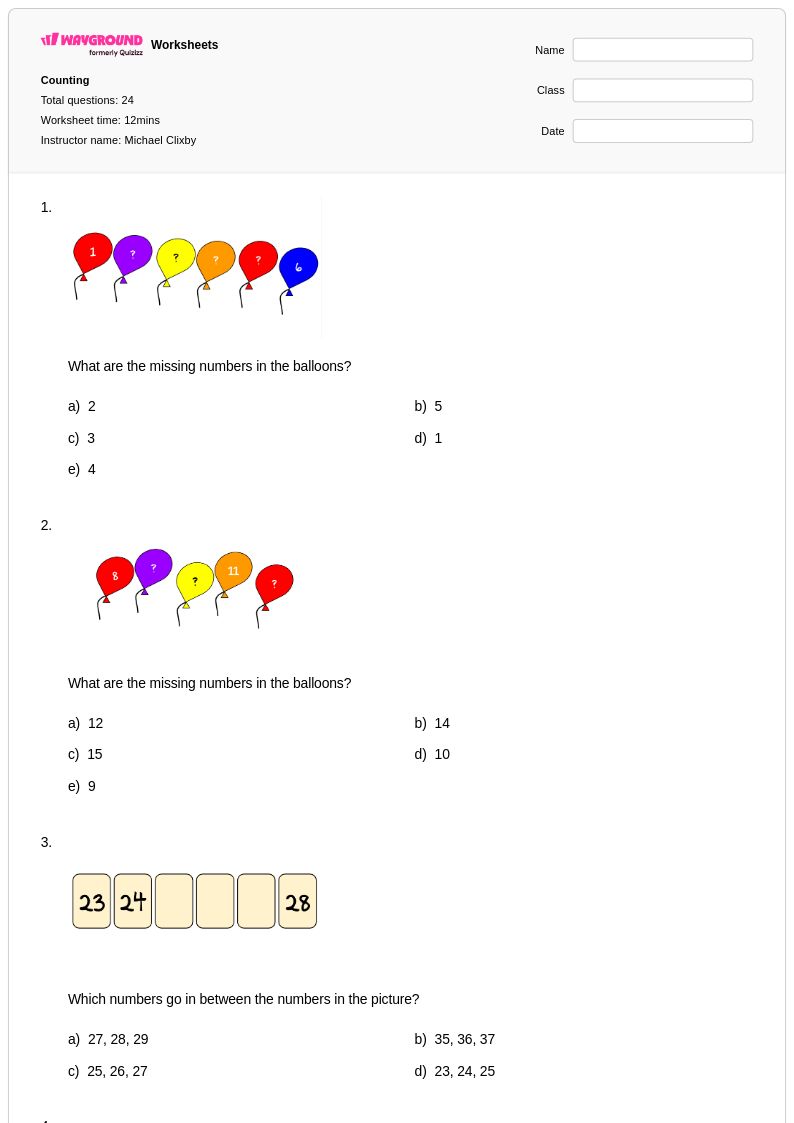
24 Q
KG
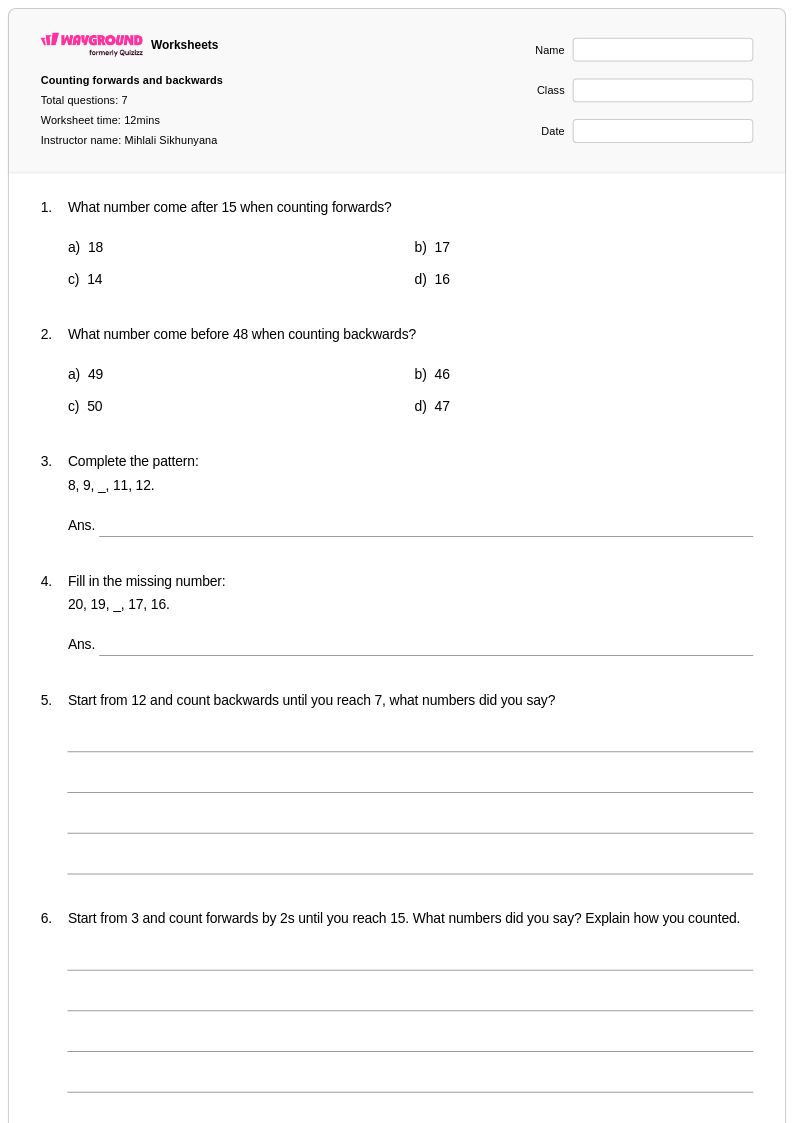
7 Q
2nd
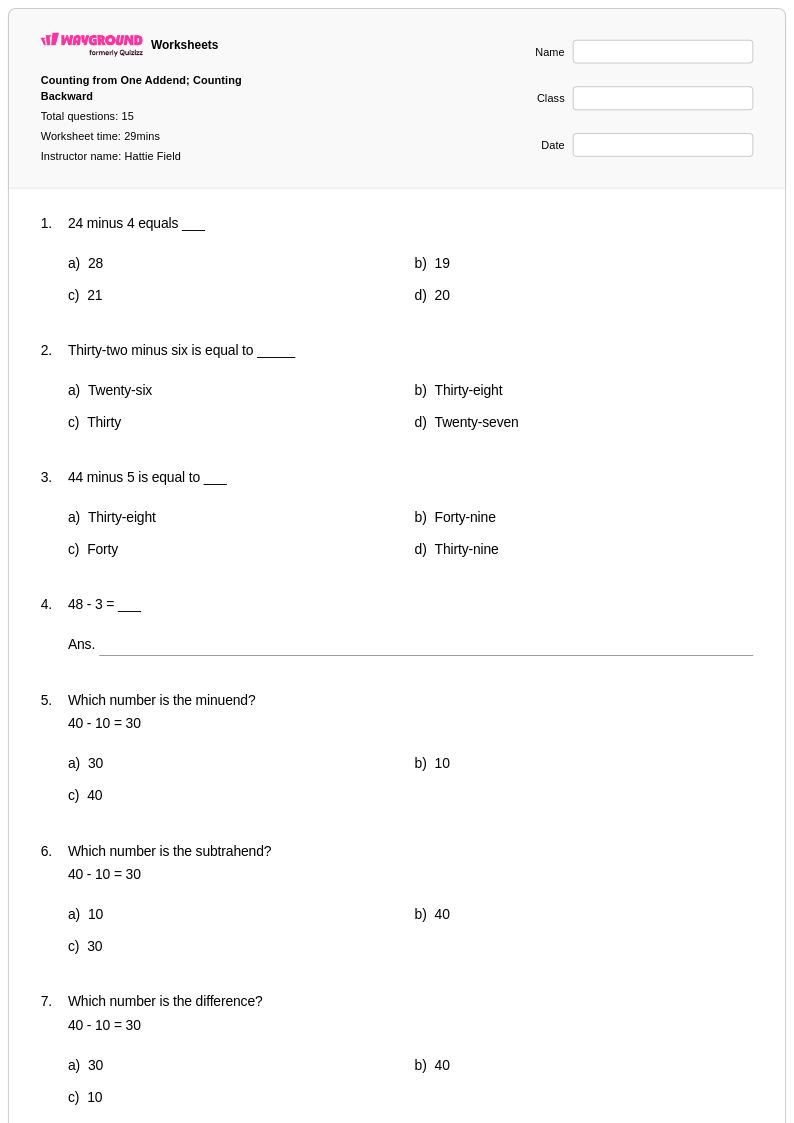
15 Q
2nd
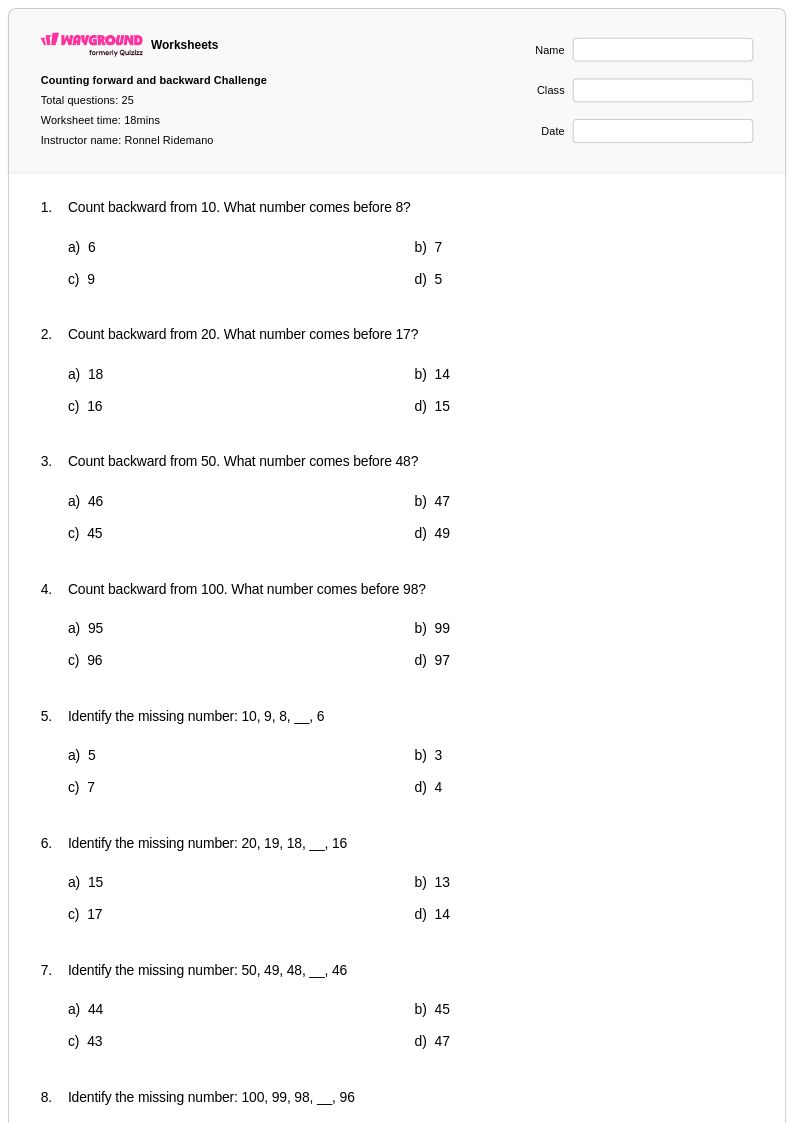
25 Q
1st
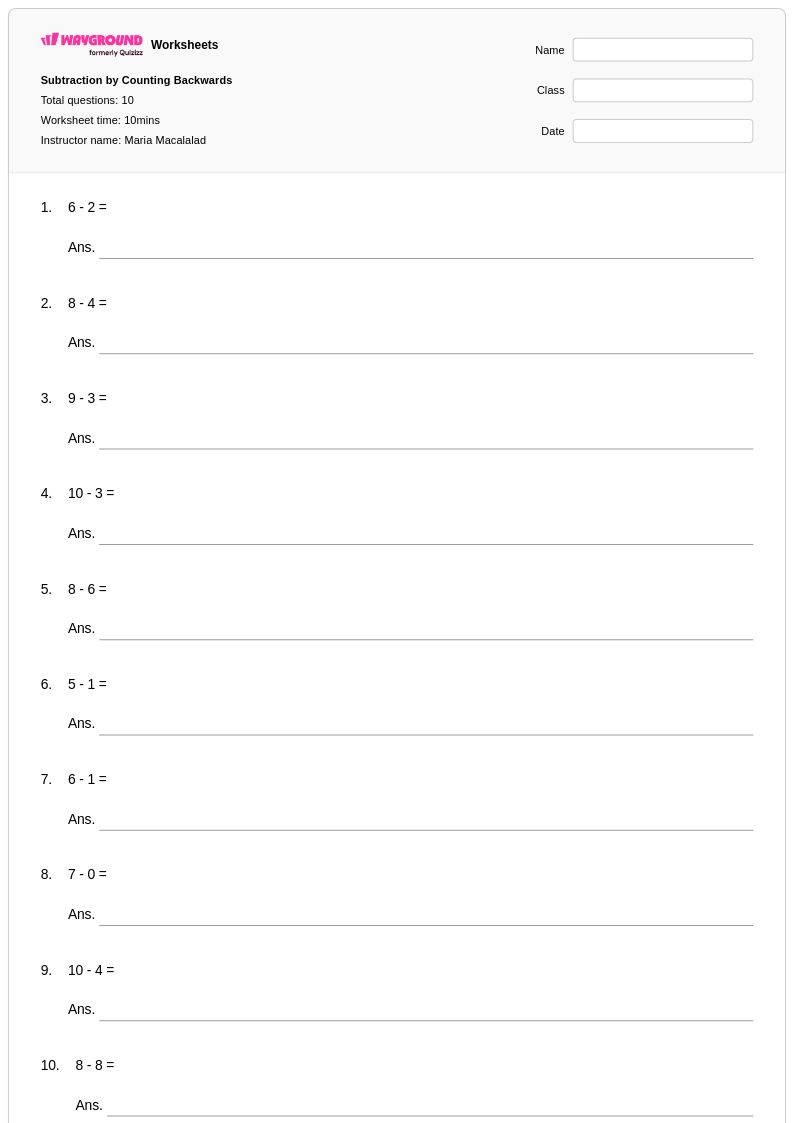
15 Q
1st
Explore Counting Backwards Worksheets by Grades
Explore Other Subject Worksheets for kindergarten
Explore printable Counting Backwards worksheets for Kindergarten
Counting backwards worksheets for kindergarten students available through Wayground (formerly Quizizz) provide essential foundation-building practice for developing reverse number sequence skills. These carefully designed printables help young learners master the challenging concept of counting in descending order, typically starting from numbers within 10 or 20 and working backward to zero or one. Each worksheet strengthens critical mathematical thinking skills including number recognition, sequential reasoning, and numerical relationships while building confidence in basic arithmetic concepts. The practice problems progress systematically from simple backward counting exercises to more complex activities that may include missing number sequences, and every worksheet comes with a comprehensive answer key to support both independent learning and guided instruction. These free pdf resources serve as invaluable tools for reinforcing classroom lessons and providing targeted skill practice that aligns with kindergarten mathematical development milestones.
Wayground (formerly Quizizz) empowers educators with access to millions of teacher-created counting backwards worksheets specifically designed for kindergarten-level instruction. The platform's robust search and filtering capabilities allow teachers to quickly locate resources that match their students' current skill levels and align with curriculum standards, while differentiation tools enable seamless customization for diverse learning needs. These worksheets are available in both printable pdf format for traditional classroom use and digital formats for interactive learning experiences, providing maximum flexibility for lesson planning and implementation. Teachers can efficiently utilize these resources for whole-class instruction, small group remediation, individual enrichment activities, or homework assignments, with the extensive collection ensuring that students receive varied and engaging practice opportunities that support mastery of this fundamental number sense concept.
FAQs
How do I teach counting backwards in kindergarten?
What counting backwards exercises are best for kindergarten students?
What mistakes do kindergarten students make when counting backwards?
How can I use a kindergarten counting backwards worksheet?
Is kindergarten counting backwards aligned with Common Core math?
How can I differentiate counting backwards worksheets for kindergarten?
What numbers should kindergarten students count backwards from?